The alarm goes off. Your eyelids crack open as your brain starts to register the piercing foreign and unwelcome sound chosen out of a list of stock options that came with the device. In that moment, you choose. You can attempt to acknowledge that another day has indeed started or you can prolong this inevitability with one of modern history’s greatest inventions: the snooze button.
Just like all other inevitabilities, it is time to face the fact that another day has come, and with it, your routine. A lot of times, you can pretty much predict or foresee what the day is going to look like. If you have a 9-to-5, you know that you need to get up to make sure you’re out the door in enough time to beat traffic and make it to work on time.
Then you work all day, unwind at home, eat something, go to sleep, and do it all over again. Before you know it, you’re caught in this cycle and your life has become the one word childhood dreams and imaginations dread: mundane.
The Drum Major Instinct
As Christians, we believe fundamentally that we are all created for a God-given purpose. We believe that there is a reason we are on this earth, that our lives mean something. Scriptures like Jeremiah 29:11 and Ephesians 2:10 reinforce this belief. We serve a great (i.e. massive, full of grandeur) God and He made us so surely we are meant to be great, right?
Dr. Martin Luther King, Jr. referred to this feeling of being meant for something greater in his sermon “The Drum Major Instinct.” He states, “We will discover that we too have those same basic desires for recognition, for importance. That same desire for attention, that same desire to be first… It’s a kind of drum major instinct—a desire to be out front, a desire to lead the parade, a desire to be first. And it is something that runs the whole gamut of life.”
It is a natural inclination to want to be significant.
When we consider purpose, we must consider that which we were commanded. We’ve all heard them before: “Love the Lord your God with all your heart, all your mind, and all your strength. Love your neighbor as yourself.”
Then, Jesus’ last instructions before He ascended to Heaven were, “Make disciples of all the nations, baptizing them in the name of the Father and of the Son and of the Holy Spirit, and teaching them to obey everything I have commanded you.”
This is our purpose.
Love God, love people, make disciples. In everything we do, we can point back to these three things. It’s vague and specific at the same time. How can we do these things when we are just normal people?
A word on Purpose from the late Dr. Myles Monroe
Lyle’s Story
Most people will never know Lyle Gash. He was a boy with Downs Syndrome in a rural town in the foothills of North Carolina.
When he was born, his mother and father were told he would not make it through the night. Then, when he did, they were told he wouldn’t make it through the week. Then, when he did, they were told he wouldn’t see a year. And so on, and so forth for his 24 years of life.
Lyle survived multiple open heart surgeries, kidney failure, and various other health complications. He finally went home to heaven at 24.
One might ask, “What was the point of his life? He struggled for 24 years then died. Where’s the purpose?”
Well, one year, Lyle’s mother had an idea. Watching her baby boy suffer in pain, she wanted to do something to make him feel at least a little better.
She noticed whenever he received “get well soon” cards his mood was significantly better. She wrote a simple Facebook appeal to all who would read it: “Let’s collect 10,000 cards for Lyle.”
It seemed like an insurmountable feat. However, once word got out, cards came zooming in from all over the world. Lyle even got a special card from President Barak Obama and his family. All of a sudden, the story of a boy with Downs Syndrome in small-town North Carolina was impacting the lives of thousands of people that he never would’ve dreamed of meeting.
Lyle’s story serves as a very important lesson: as long as there is breath in your body, you have purpose. It’s up to us to seek out that purpose in our everyday lives.
It’s up to us to never lose our wonder. Whether we realize it or not, in our seemingly mundane lives, we have the opportunity to dream, to encourage others, to delight in creation, and to take advantage of every second of every day.
We can search out beauty and joy. We can take pause and acknowledge the miracle of every breath we take in. We can help others. Life becomes so much more meaningful when it becomes about more than just you. Don’t let the mundane steal your purpose.
Open a dictionary and you’ll see Appalachian described as a “native or inhabitant of Appalachia, especially one of predominantly Scotch-Irish, English, or German ancestry.”
Read J.D. Vance’s “Hillbilly Elegy” and you’ll enter a world that’s white, poor and uncultured, with few, if any, people of color.
But as Black poets and scholars living in Appalachia, we know that this simplified portrayal obscures a world that is far more complex. It has always been a place filled with diverse inhabitants and endowed with a lush literary history. Black writers like Effie Waller Smith have been part of this cultural landscape as far back as the 19th century. Today, Black writers and poets continue to explore what it means to be Black and from Appalachia.
Swimming against cultural currents, they have long struggled to be heard. But a turning point took place 30 years ago, when Black Appalachian culture experienced a renaissance centered around a single word: “Affrilachia.”
Upending a ‘single story’ of Appalachia
In the 1960s, the Appalachian Regional Commission officially defined the Appalachian region as an area encompassing counties in Alabama, Georgia, Kentucky, Maryland, North Carolina, South Carolina, Pennsylvania, Tennessee, Virginia and the entirety of West Virginia. The designation brought national attention – and calls for economic equity – to an impoverished region that had largely been ignored.
When President Lyndon B. Johnson declared his “war on poverty” in 1964, it was with Appalachia in mind. However, as pernicious as the effects of poverty have been for white rural Appalachians, they’ve been worse for Black Appalachians, thanks to the long-term repercussions of slavery, Jim Crow laws, racial terrorism and a dearth of regional welfare programs.
A 1935 Farm Security Administration photograph of kids in Omar, West Virginia. Library of Congress
Nonetheless, throughout the 20th century, Black Appalachian writers like Nikki Giovanni and Norman Jordan continued to write and wrestle with what it meant to be both Black and Appalachian.
In 1991, after a poetry reading that included Black poets from the Appalachian region, Kentucky poet Frank X. Walker decided to give a name to his experience as a Black Appalachian: “Affrilachian.” It subsequently became the title of a poetry collection he released in 2000.
By coining the terms “Affrilachia” and “Affrilachian,” Walker sought to upend assumptions about who is part of Appalachia. Writer Chimamanda Ngozi Adichie has spoken of the danger of the single story. When “one story becomes the only story,” she said in a 2009 TED Talk, “it robs people of dignity.”
Rather than accepting the single story of Appalachia as white and poor, Walker wrote a new one, forging a path for Black Appalachian artists.
It caught on.
In 2001, a number of Affrilachian poets – including Walker, Kelly Norman Ellis, Crystal Wilkinson, Ricardo Nazario y Colon, Gerald Coleman, Paul C. Taylor and Shanna Smith – were the subjects of the documentary “Coal Black Voices.” In 2007, the journal Pluck! was founded out of University of Kentucky with the goal of promoting a diverse range of Affrilachian writers at the national level. In 2016, the anthology “Black Bone: 25 Years of Affrilachian Poetry” was published.
Many Affrilachian poems explore this dynamic, along with the tension of participating in activities, such as hunting, that are stereotyped as being of interest only to white Americans. Food traditions, family and the Appalachian landscape are also central themes of the work.
Affrilachian poet Chanda Feldman’s poem “Rabbit” touches on all of these elements.
Her poem shifts from the speaker hunting for rabbits with their father to the hunt as a larger metaphor for being Black in Appalachia – and thus seen as both predator and prey:
        He told me
  of my great uncle who, Depression era,
  loaned white townspeople venison
  and preserves. Later stood off
  the same ones with a gun
  when they wanted his property.
An Affrilachian future
We reached out to Walker and asked him to reflect on the term, 30 years after he coined it.
Walker wrote back that it created a “solid foundation” that “encouraged a more diverse view of the region and its history” while increasing “opportunities for others to carve out their own space” – including other poets, musicians and visual artists of color throughout the region.
In her book “Sister Citizen,” journalist and academic Melissa Harris-Perry writes, “Citizens want and need more than a fair distribution of resources: they also desire meaningful recognition of their humanity and uniqueness.”
Affrilachian artistry and identity allows Appalachia to be fully seen as the diverse and culturally rich region that it is, bringing to the forefront those who have historically been pushed to the margins, out of mind and out of sight.
Early Easter morning, millions awaken before sunrise with a purpose. The dark skies give faint hint of the sunrise within the hour. A stretch of the arms, a wipe through the eyes, feet reaching downward for temporary covering against the floor terrain, and it is time to get moving. Slivers of remaining moonlight provide faint illumination through narrow openings above the bed. The millions have heard the call, and now respond! The time has come to join the line as men and women, even some boys and girls put their feet in the line to the appointed destination to which they are called this Easter Sunday. There they will see familiar faces, hear familiar sounds, and may even smell familiar odors. It is a dawn of a new day, and they are on their way.
Their destination? “Chow call” in the prison refectory or “Meds up!” to the cart the nurse brings on the unit for those requiring morning medication. The stretch of the arms relieves some of the tension from the cell’s hard cot, the eyes crusted literally and figuratively by biology and monotony, the floor’s terrain cold on even the warmest day when one’s address is prison. We do not know how many millions go to church on Easter–but we know how many awaken in state and federal prisons: an excruciating 2.1 million men and women arise at Easter’s sunrise to another day when they seem oblivious to anyone on the other side of the prison walls. Another several million arise in county jails, many not physically far from home but incarnations of “out of sight, out of mind” even to those who are descendants of those to whom Jesus spoke just before his arrest and incarceration “I was in prison, and you visited me.”
Yes, millions have arisen with a purpose: count down the days, occupy the mind, anticipate a visit, and perhaps even attend chapel — purpose is a precious commodity for them. They are inmates, prisoners, convicts peopling America’s jails and prisons in record numbers — over two million in state and federal prison alone — and they arise every morning about the time the Easter Sunrise service crowd shakes the cobwebs from their consciousness to face their annual celebration.
The Easter lens well fits any view of incarceration. After all, when Jesus Christ died on the cross, he was an inmate. We celebrate the truth that God raised his only begotten son from the grave — we overlook the fact that the body which breathed its last before burial belonged to a prisoner. He hung between two thieve or malefactors, but “was numbered” with them as well.
Shame and Stigma of Incarceration
Incarceration in America carries more than the punishment of “doing time.” Shame and stigmatization plague an inmate during incarceration and after release. Those twin maladies spread like a virus to relatives left behind, children separated from fathers and mothers, parents grieving for their children, grandparents serving as caretakers for a generation forty, fifty, and sixty years their junior while fathers stretch their arm in the cell and mothers wipe their eyes on the block. Shame and stigma, contagious and infectious as they manifest in symptoms of silence, rendering the affected loved one incapable of sharing the true hurt with anyone at the Sunrise service in celebration of the Risen Inmate!
It is Easter sunrise…. God listens for the praise of God’s people from the cathedrals and storefronts, the megachurch and mass choirs, parish priests and local pastors, pulpit and pew. But God also listens for the prayers of the prisoner, wrestling with past demons, present conditions, and future uncertainty, all with some hope of the transformation promised by the Risen Inmate who makes all things new. Millions arose this Easter morning to attend a sunrise service. Millions more arose to attend to the business of doing time.
An important connection exists between these two populations — this dual set of early risers on Easter morning. Many of them count people in the other crowd as kin — many who run with one crowd used to sit with the other. Many who heard the sound of the choir’s “Hallelujah Chorus” or “Christ the Lord is Risen Today,” or “Praise is What I Do,” this morning once heard “Chow Up,” or the slow grind of motors turning to open a series of cell doors. The cymbal was the clanging of cages, the tambourine the rattling of chains. And some who this morning donned uniform orange, blue or tan jumpsuits once sported matching white or black robes on a morning such as this.
Preaching seldom reaches the pain felt by the incarcerated and their families. The separation traumatizes, the anger and disappointment of those left behind papered over by Sunday School memories of lessons on forgiveness. Many incarcerated parents long to see their children; some allow shame to hold their children at bay. Many who do seek the comfort of the Risen Inmate to dry their tears and encourage their hearts find disappointment in the prison chapel service when the local church sends well-meaning but poorly trained volunteers to preach sermons that the church’s pastor would never allow on a Sunday morning, especially an Easter Sunrise service.
Seldom do they hear that the Risen Inmate ministered to another convict before dying by telling him that he would be in paradise with him. They rarely hear that the Risen Inmate suffered brutally at the hands of the corrections officers, and was raised with evidence in his hands of eighth amendment violations of cruel and unusual punishment. They do not hear about the Risen Inmate’s long march up the Via Dolorosa to “endure the cross, despising the shame” as an encouragement for them to receive strength from knowing that “Jesus knows all about our struggles…” They hear an Easter message that rehearses the resurrection as saving act, but seldom as the sustaining act which brings “a living hope.”
Gospel of the Risen Inmate
The late Rev. Lonnie McLeod, who completed his first seminary degree in the New York Theological Seminary Sing Sing program said, “In all my time incarcerated, I really only heard one sermon: you messed up, you got caught, get saved …” But not only does salvation come by preaching, but also “faith comes by hearing, and hearing by the “preaching of the Risen Inmate. After his release, McLeod’s preaching both in and out of prisons and jails acknowledged the pain caused by incarceration. At his passing in 2009, he was working on a Christmas sermon that dealt with the pain of incarceration. I asked him how he could make the connection between the manger and the penitentiary, and the good Dr. boldy remarked: “Trulear, this is Christmas. Everybody wants to talk about the first night of Jesus’ life. But no one wants to talk about the last night. And without the events of the last night, the first night loses its meaning! His incarceration, execution, and vindication make his birth worth celebrating!
This does not mean that prison preaching overlooks the responsibility of prisoners to own their sins. Accountability, indeed, signals a recognition of the humanity The Risen Inmate was executed to restore. The “Adam, where art thou” question lives in the Risen Inmate’s heart, for it is precisely for the sinner that he has come. He has come for the one who uses “wrong place, wrong time, wrong crowd” the same way Adam used “wrong crowd” to describe “the woman that You gave me.” He came for the violent defender of a friend’s honor, and will transform and use him even as he did Moses. He came for the popular musician who conspired to put out a hit on another man so he could have his wife, all while singing, “The Lord is my Shepherd, I see what I want.” He counted the transgressions of a contracted hit man, accessory to murder as his own- and that same man later wrote that “while we were yet sinners, Christ died for the ungodly.” The Risen Inmate sees their humanity, and for precisely that reason calls the unrighteous, the violent offender to become a deliverer of his people, the lamp of Israel, and an apostle to the Gentiles.
Not only does the Risen Inmate have a word for those persons arising in America’s jails and prisons on Easter, the Risen Inmate seeks to be seen and heard of the families left behind. Families struggle to hear a word for them in the pain of separation. They sit on the Good Friday side of the sentencing of the Risen Inmate, and don’t always see the potential for a reunion in the garden on Easter Morning. “Touch me not” stares from signs in the visitation room. It wells up in the heads on visitors subjected to searches by the corrections officers before and after time with an inmate. It is not a phrase pointing to ascension, but a descent into deprivation, motivated by security and draped in dehumanization. They want a word that addresses the morning they came to visit with new prison clothes, like the women who cam that first Easter with new grave clothes for the Risen Inmate. But when these families are told “He is not here,” it does not point to the surprise turned joy of a resurrection, but disillusionment turned panic in the discovery of a transfer to another facility, or a confinement to solitary. Does the preacher, in the name of the Risen Inmate, have a word for them?
Reimagining Our Prison Ministry
My colleague Dr. Kenyatta Gilbert once asked me to post a sermon on his website The Preaching Project, with the subject being preaching to families of the incarcerated. The message, titled “Preacher, We Are Dying in Here,” makes the case that preaching to the families of the incarcerated is something we already do! They people our pews, tithe their treasure, sing their songs, pray their prayers every Sunday, but suffer in silence. The church may have a prison ministry, but it often does not touch them, or their incarcerated family member. Prison ministry is institution focused, unlike ministry to the sick. If we replaced ministry to and visitation of the sick with the prison model, we would stop visiting individuals and families connected with the church, and just train three volunteers to give a service and a sermon once a month at the local hospital. The Risen Inmate declared that the church “shall be witnesses unto me, in Jerusalem, in Judea, in Samaria and unto the uttermost parts of the earth.” For most, the jail of prison is the uttermost part of the earth; for the family of the incarcerated, it is Jerusalem.
Preaching often overlooks the scars of the formerly incarcerated, wounded by warehousing, roughed up in reentry. They looked forward to their release date as a time to step into the Promised Land, only to discover a wilderness of collateral sanctions limiting their ability to work, find housing, access education and exercise their franchise. The wilderness extends to congregations that either openly reject them, or buy into the world’s stigmatization process rendering them silent. Theirs is a tacit fellowship of frustration shepherded by shame, silence, and stigma. And the ones who come home to this stony reality find a wilderness where they had expected grapes in bunches for two men to carry.
The newspapers and other media champion the need for jobs for ex-offenders. Employment woes dot the pages of those outlets that give the formerly incarcerated coverage at all. Poor training and education wed the stigma and shame of incarceration in a double ring ceremony that morphs from ties that bind into chains that restrict. A word from the Risen Inmate can minister Easter hope beyond incarceration, and encourage the jobless soul on the other side of imprisonment. The Resurrection says that there is life beyond the dank jail, the taunts of guards and fellow inmates, the pain of separation from loved ones. “I have scars,” Jesus declares, “but I am useful, triumphant, compassionate and giving!” It is Jesus, post-release, who says “Fear not.” It is Jesus, post-release, who says “Feed my sheep.” The post-release Risen Inmate declares “All power has been given unto me in heaven and in earth.”
And he promises his presence “even to the end of the earth.” There is a word for the ex-offender! A promise of a transformative permanent presence that knows how to look at a former accomplice who turned scared on him to avoid arrest, and tell him to feed his lambs. The Risen Inmate knows something about change, and trusting the formerly untrustworthy. He anticipated the change when he told Simon Johnson that he was a rock. So too does he call the formerly incarcerated by names that spell hope and promise, like the term “returning citizens.” But most of all he calls them human, beloved, and even “fearfully and wonderfully made,” and that, the conspirator who put out a hit on Uriah the Hittite knew right well.
And Remembering the Victims
Is there a word from the Risen Inmate for those who have been victims of crime? What is a bold Easter message for families of victims, by walking toughs of town watch, by drive-by or beef, by violence domestic or street? Does God hear their pain on this Easter sunrise, and what evidence is there in the text expounded to let them know that the Healing God knows. The horrific screams heard on a Florida 911 tape may echo those of the sobs of a mother witnessing the unjust execution of her Son by alleged protectors of the common good. Is there no word for her?
“Woman, behold thy son, Son behold thy mother,” comes from the lips of the Preaching Inmate in a message that speaks hope and application in a moment of deep grief. When the Inmate’s visitors go home, they share space and possessions in a family reconfigured to provide care for her misery. The women received a word — but that word became flesh in the ministry of caregiving John supplied surrounding her, the victim of a horrific crime.
The Risen Inmate demonstrates in three days the woman’s vindication by virtue of the Resurrection. In the background, an Easter choir of formerly enslaved Africans, the old Jim Crow, sings: “I’m so glad trouble don’t last always.”
Grabbing Resurrection Hope
Easter brims with the fullness of incarceration and its implications. It celebrates the vindication of the life of a man who did the hardest of time in the shortest of time. It recognizes that the One whose life we celebrate understood the pain of incarceration. Easter brings to judgment our fear of the inmate, our stigmatization of the prisoner, our shunning of those who return for a second chance-or a third chance, or a fourth chance…Simon Johnson elicited a response from the man destined for incarceration of seven times seventy.
Early Easter morning, millions awaken before sunrise with a purpose. The dark skies give faint hint of the sunrise within the hour. A stretch of the arms, a wipe through the eyes, feet reaching downward for temporary covering against the floor terrain and it is time to get moving. Slivers of remaining moonlight provide faint illumination through narrow openings above the bed. The millions have heard the call, and now respond! The time has come to join the line as men and women, even some boys and girls put their feet in the line to the appointed destination to which they are called this Easter Sunday. There they will see familiar faces, hear familiar sounds and may even smell familiar odors. It is a dawn of a new day, and they are on their way.
Early on the first Easter morning, one was risen for all of them.
This essay originally appeared at The Living Pulpit. It is reposted here by permission.
Gospel singer and pastor Deitrick Haddon has lost family and church members to COVID-19, as have many other Americans.
The star of the “Preachers of L.A.” and “Fix My Choir” reality shows has turned to his art form to express that shared sense of grief.
“Sick World” — a single featuring both gospel and trap, a form of hip hop music, premiered on the 2021 Inaugural Gospel Celebration and is available on various platforms, such as Spotify and Amazon Music.
Haddon, who has a Pentecostal background, leads Los Angeles’ Hill City Church, a nondenominational, predominantly Black congregation that is marking its fifth anniversary this month (March). The church hasn’t met in person for a year, due to COVID-19, but he plans to host an outdoor service on Azusa Street — known for being the historic site of a revival in the early 20th century — on Easter Sunday.
Haddon talked to Religion News Service about why he co-created “Sick World,” his personal and national losses from the pandemic and his plans to keep up pandemic practices long after it’s over.
The interview has been edited for length and clarity.
Why did you decide to create the new single “Sick World”?
I could see the world was grieving. I was grieving. I lost my Aunt Celeste (Folmar) last year in 2020. I lost one of my eldest brothers, Shawn (Derrick) Haddon, rest in peace. Even lost a member of my church. I just wanted to write a song that will bring some peace and comfort to people and help people realize there is life beyond this pandemic. We’ve all lost a significant amount of people in a short amount of time. I said, if I had the opportunity to speak to everybody, whether you were Black or white, rich, poor, a believer, or unbeliever, Democrat, Republican, what would I say to everybody? And that was the song that I wrote.
Why did you choose to use music that combines gospel and trap music, a form of hip hop, and work with record producer Zaytoven?
Zaytoven is like a brother of mine. He’s been supportive of my music for years. He’s had success in the trap world. He’s considered to be one of the originators of that sound. He’s produced hit records with (rappers) Gucci Mane, Future and a lot of artists. He has a love for gospel music, and we just brought it together. Gospel music can’t really be put in a box. You can place the message in any form. It just gelled perfectly. The lyrics flowed. Once I heard the music, the song wrote itself.
The lyrics include the words “can’t stand to lose nobody else.” Why did you choose to use those words?
First of all, it was a big blow to lose Kobe Bryant and his daughter at one time. And all the lovely souls that were in that helicopter crash. Then, in the midst of that pandemic, we lost great people like Chadwick Boseman. His career seems like it was just really taking off, skyrocketing, and he’s the king of (the mythical nation of) Wakanda, for God’s sake, in our minds. He’s too strong. We’ve seen how people had succumbed to COVID, and how powerful COVID-19 was. The only thing I can hear in my heart: Man, we can’t stand to lose anybody else. I mean, how much more can we take?
You wanted to capture a broader remembrance of lives lost at this time.
Yeah. Yeah. Just anybody whose lives were lost last year. It’s hard to separate it from the pandemic. It’s just a year of loss, great loss, whether through the COVID pandemic or not, just too many people. One of my favorite No. 1 gospel artists in the world — one of the best — was Rance Allen. I never thought in a million years that we would lose him. And I learned how to sing listening to him.
Have you had to officiate at funerals of church members who have died because of COVID?
We’ve only had one member that belongs to my church. We called her “Cookie.” I had to preach the service under a tent outdoors, outside of the actual funeral home building.
You also sing of the debates about wearing masks and say thousands have died because we cannot agree. Are there other ways you’re trying to move people beyond the debates other than your song?
Making people agree with you is a hard thing to do. But I put my opinion and my perspective in a song. This will all go down in history, that thousands have died ’cause we could not agree. I do believe we extended the pandemic. I do believe we made it worse than what it should have been because of our inability to unite and come together as one as a nation and agree on the simple things like wearing a mask. You asked the question: Am I doing anything outside of my song? No, I’m not doing anything outside of my song because I can’t force anybody to do anything. I put it in the song ’cause the song can go where I can’t go.
What was it like to present your musical message at the time of the inauguration, since it was both a new administration and an administration that’s been focusing on COVID-19 from the beginning?
I thought it was perfect for me because I’ve been an advocate for people wearing masks and keeping their hands clean. So I’m right in sync with Joe Biden’s administration’s calls to get this thing cleared up and get a unified effort as a nation to come together. I was also excited to be a part of such a historic event, where we had the first female vice president of the United States of America.
What are you looking forward to most when more people are vaccinated and the country may experience what everybody’s calling a “new normal”?
I love to take my three kids and my wife on trips to Disney World and everywhere. So hopefully we’ll be able to get back and feel comfortable with traveling and enjoying life and wonderful things that we do, like going to the movies, just the regular things we do that we’ve taken for granted, I believe. But I also hope we will understand the importance of keeping our hands clean and not just touching everything, and I hope we can keep some things going, because that’s how germs transfer. Hopefully, we can continue to comply a little bit with keeping our hands clean and wearing a mask. I think I’ll always keep that in place from now on.
This article has been updated from a previous version originally published in 2019
The church is once again engaged in the celebration of the Easter season. It’s springtime, which is familiarly considered as a time of renewal and new beginnings. We are blessed with another opportunity to reflect on our lives and spiritual condition while embracing the idea of love and sacrifice. But, what is the real meaning of Easter to the church and its believers? While critically exploring the current moral issues and tolerance within the body of Christ, are we genuinely progressive enough to honor our faithfulness? Well, this commentary invokes one simple, yet soul-stirring stream of conscience and inquiry. For the sake of clarity, let’s define the biblical meaning of the church as described in 1 Corinthians 12:13 “we as believers have all been baptized into one body by one Spirit, and we all share the same Spirit (NLT).” The key emphasis here is placed on the phrase “one body.” Now, hold that thought.
When we prepare for a wedding or marriage anniversary, our focus is on two bodies joined as one. The courtship has advanced to the desire for a lifelong union that includes faith and trust. We prepare for the celebration of the relationship. We declare our hope of endless love and a desire for a continuous commitment. We witness new or renewed vows. Of course, that comes with the anticipation that the lover of our soul will return the same level of truth and their unconditional vow and love to create an eternal bond.
Similarly to the biblical passage in Romans 5:8 “But God showed his great love for us by sending Christ to die for us while we were still sinners (NLT).” We celebrate this juncture with familiar traditions and the belief of future joy, happiness, and sincere appreciation. These events can be paralleled to the profession of our faith and acceptance of our new union with Christ and His biblical teachings.
During these occasions, there is little or no focus on the vague reality of betrayal and disappointment, nor its impact. But, what if you became a jilted lover whose promises are filled with hypocrisy? As Christians get underway to celebrate this Easter season, could we lose focus, leading us to become hypocritical lovers who are jilting Jesus Christ? Would we expect Jesus to honor His promises to give us another chance to win His confidence and love in the future or should He? Let’s ponder the truth of the matter that through His sacrifice, Jesus has offered us forgiveness for generations.
As we approach this Easter season and its true meaning, there is little debate about the fact that we should focus on the biblical perspective of our remembrance of the holy occasion. However, this is where things get a little sticky and please don’t blame the messenger. The portion of this dialogue is a real message to the followers of Christ. Regardless, many Christians will dedicate ample time preparing to spend enormous resources on physical items with far fewer thoughts of the spiritual restoration that this season should resonate for all. We live in a global society that successfully dictates the affairs that govern our lives and can compromise our beliefs. The world marketplace is unfortunately quite intentional. So the question we may ask ourselves is, do we have enough strength in our faith to honor truth despite the mere habit of performing learned behavior and supporting commercialism?
Sharing the truth of the gospel can have a significant impact on those who seek to become followers of Christ. Perhaps the following true story may help us gain a reasonable perspective. As a child minister mentored by older and more seasoned clergy, a young person began his walk of faith at the tender age of only 12-years-old. He enjoyed learning about God and the gospel of Jesus Christ. His mom was a devoted believer and raised all her children based on her genuine understanding of God and His principles. He grew up to become enthusiastic about his service in the church and blessed many through his ministry. However, due to his large family of siblings and obvious limited resources, he was not economically able to dress as well as he wished when called on to deliver his pulpit message. But, with his talent, love for the gospel, a dedicated family, and ministerial support, he persisted. Then something changed. He will not fully disclose any details even today, nearly 49 years later. He only mentioned a brief version of a visiting minister that witnessed his unique potential and offered him a promise of better clothes and shoes in exchange for favors. In his humble opinion, he was subject to hypocrisy. As a result, he did not abandon the entire gospel that he had learned, but his faith was shattered in many ways.
Yes, Christians can make unintentional mistakes, but Matthew 23:27-29 reminds us that “it is the same with you. On the outside, you seem to be doing what is right. But on the inside, you are full of what is wrong. You pretend to be what you are not (NIRV). Hypocrisy and deception still cause many unresolved questions today, especially within the church.
Whether you choose to call it disillusioned or heartbroken, the young adolescent came home and expressed to his mom that he “was never going back to that church!” Surprised, his mother asked for his explanation. He then explained that he had been disheartened by what grownups repetitious spoke about others including untrue things that were not in the bible. He went on to say that even she has not told the truth that “there was no Santa Claus and ask her why she had allowed him to believe in “an Easter bunny that lays eggs?” Perhaps disappointed, his mom’s eyes of understanding were opened to the effect on his spiritual and impressionable misguided journey. Long story short, today he still struggles with some spiritual truths.
Realistically, Christians love celebrations that align with biblical values. Our intentions are good. We believe and love the value of witnessing to non-believers that encourages them to embrace our faith in redemption and eternal salvation. However, if we are truly honest about our faithfulness in Christ’s sacrifice, we must admit that far too many believers are sitting on a fence of societal traditions. Regardless, marketing professionals depend on influencing us for their increased profits, while we provide a continuous financial stream that contributes more and more to support their mission.
There will be baskets, colored eggs, fake grass, new dresses with matching buttons and bows, new suits and shiny shoes, big dinners, and, oh yes, that infamous Easter bunny that will never lay an egg. Certainly, not everyone participates in all of these traditions, but many Christians worldwide will indeed in a number of ways. How many individuals within our faith community are sincerely committed to opening their hearts to confess the level of historical pagan practices included in numerous celebrations? To whom do we teach or what is conveyed to those who are new to our faith? In today’s times with the unbelievable amount of deception we hear, shouldn’t we as Christians have the courage to remain sharp and alert when educating biblical principles that teach our children and others? This issue does not only rest with Christ’s sacrificial efforts to save us from ourselves but in our vulnerability as believers to appropriately dismiss the distractions that the world presents to us. Can our well-intended practices become a source of confusion to the non-believer who is searching for clear answers and a better understanding of our belief in Jesus Christ?
Easter has a distinct meaning to the church as the one body of Christ. This meaning is described as all those who have placed their faith in Jesus Christ for salvation. Honestly speaking, the truthful bond in our Easter celebration is simple. Jesus should never become our jilted lover for He has demonstrated His true love to all believers and non-believers within the following passage of Scripture as we remain mindful that “this is how much God loved the world: He gave his Son, his one and only Son. And this is why: so that no one need be destroyed; by believing in him, anyone can have a whole and lasting life. God didn’t go to all the trouble of sending his Son merely to point an accusing finger, telling the world how bad it was. He came to help, to put the world right again. Anyone who trusts in him is acquitted; anyone who refuses to trust him has long since been under the death sentence without knowing it and why? Because of that person’s failure to believe in the one-of-a-kind Son of God when introduced to him (John 3:16-18 (MSG).”
Therefore, it is crucial to remain cognitive as we are directed in 2 Timothy 2:15, “the believers within the body of Christ are indeed obligated to “work hard so you can present yourself to God and receive his approval. Be a good worker, one who does not need to be ashamed and who correctly explains the word of truth (NLT).” The answer does not lie in the value of a bunny nor does it advocate that anyone discontinue celebrating Easter with all the bells and whistles that come with it. As we have learned in Psalm 40: 4-6, “Oh, the joys of those who trust the Lord, who have no confidence in the proud or in those who worship idols. O Lord my God, you have performed many wonders for us. Your plans for us are too numerous to list. You have no equal. If I tried to recite all your wonderful deeds, I would never come to the end of them… I take joy in doing your will, my God, for your instructions are written on my heart (NLT).” Hopefully, this holistic message encourages us to both celebrate and teach the true meaning of Easter to those who are seeking meaningful answers about Christ’s acts of love, sacrifice, and resurrection.
Faith groups are celebrating Virginia’s decision to ban the death penalty, a move considered to be a victory for religious opposition to capital punishment.
Virginia Gov. Ralph Northam signed the ban — the first of any Southern state and the 23rd overall — into law on Wednesday (March 24), declaring it “the moral thing to do.”
“Over our 400-year history, Virginia has executed more people than any other state,” Northam said. “The death penalty system is fundamentally flawed — it is inequitable, ineffective, and it has no place in this Commonwealth or this country. Virginia has come within days of executing innocent people, and Black defendants have been disproportionately sentenced to death.”
The Rev. LaKeisha Cook, a lead organizer at the Virginia Interfaith Center for Public Policy, also spoke at the signing ceremony.
“Today I stand here representing many people of faith all throughout the commonwealth of Virginia,” Cook said. “Virginia Interfaith was very, very happy to join officially in this fight for abolition. Today we turn the page in the history books of this great commonwealth as we celebrate the end of the death penalty.”
Cook pointed to the activism of the state’s “amazing faith community,” such as those who held prayer vigils at sites of lynchings in January to highlight the historical link between early racist killings and the modern death penalty, or the nearly 430 faith leaders who signed on to a letter opposing the death penalty in February.
Cook noted the advocacy of the Virginia Catholic Conference, which also voiced support for the ban on Wednesday. Bishop Michael F. Burbidge of the Diocese of Arlington and Bishop Barry C. Knestout of Richmond released a statement citing Pope Francis, whose 2020 encyclical “Fratelli Tutti” included the line: “The firm rejection of the death penalty shows to what extent it is possible to recognize the inalienable dignity of every human being and to accept that he or she has a place in this universe.”
“Through our Virginia Catholic Conference, we supported this historic legislation as it progressed through the General Assembly because all human life is sacred,” read the statement from Burbidge and Knestout. “We are grateful to those who worked to make this a reality.”
Catholics in the U.S. have long opposed capital punishment, and Francis voiced support for abolishing the practice during his 2015 address to Congress.
But the pontiff made things even more explicit in 2018 when he changed the church’s catechism to declare the death penalty “inadmissible” and insist that the church will work “with determination for its abolition worldwide.”
The Virginia bishops were joined in their celebration by Archbishop Paul S. Coakley of Oklahoma City, who chairs the U.S. Conference of Catholic Bishops’ Committee on Domestic Justice and Human Development.
“Virginia will become the twenty-third state to abolish the death penalty, and I urge all other states and the federal government to do the same,” Coakley said in a statement.
He praised the work of advocates such as the Catholic Mobilizing Network before adding: “We are reminded that God created and loves every person, and we can respond to this love with reverence for the dignity of every human life, no matter how broken, unformed, disabled, or desperate that life may seem.”
Opposition to the death penalty has grown over the past few decades and is common in several faith communities. A 2018 Public Religion Research Institute survey found that 55% of Americans preferred life in prison without parole instead of capital punishment for people convicted of murder, compared with 44% who preferred the death penalty. Majorities of Black Protestants (80%), non-Christian religious groups (57%) and white Catholics (54%) also favored life in prison.
Of those polled, only two groups expressed majority preference for the death penalty: white evangelicals (62%) and white mainline Protestants (54%).
Virginia Catholics were echoed by other stalwart faith-rooted opponents of the death penalty this week, such as Christian activist and author Shane Claiborne. He championed the ban when versions of it first passed both chambers of the state legislature in February, and he called on the federal government to do the same.
“President (Joe) Biden is poised to do the same thing Virginia just did: reckon with the mistakes of our past and use that past to help us envision a better future — one without the death penalty,” Claiborne wrote.
Biden, a Catholic, proposed eliminating the federal death penalty in 2019 during his campaign for president, but he has yet to take sweeping action regarding the promise — which would require support from the Supreme Court or Congress — since beginning his term.
Former President Donald Trump was widely criticized by faith leaders for his administration’s 2020 decision to renew the use of the death penalty in federal cases for the first time since 2003. Among various protests, more than 1,000 faith leaders signed a letter that summer demanding Trump and then-Attorney General William Barr end the practice.
Biden has already heard from fellow Catholics on the issue: During the first Mass he attended as president, the priest delivered a homily blasting the Trump administration’s renewed use of the death penalty and referring to the former commander in chief as an “execution president.”
When White House press secretary Jen Psaki was asked during a press briefing on Monday whether Biden would support the Supreme Court if it reinstated the death penalty for Boston Marathon bomber Dzhokhar Tsarnaev, she noted that Biden has “grave concerns about whether capital punishment … is consistent with the values that are fundamental to our sense of justice and fairness,” but referred specific questions about the case to the Department of Justice.
This is an updated version of an article published in April 2019.
On April 4, Christians will be celebrating Easter, the day on which the resurrection of Jesus is said to have taken place. The date of celebration changes from year to year.
The reason for this variation is that Easter always falls on the first Sunday after the first full moon following the spring equinox. So, in 2022, Easter will be celebrated on April 17, and on April 9 in 2023.
I am a religious studies scholar specializing in early Christianity, and my research shows that this dating of Easter goes back to the complicated origins of this holiday and how it has evolved over the centuries.
Easter is quite similar to other major holidays like Christmas and Halloween, which have evolved over the last 200 years or so. In all of these holidays, Christian and non-Christian (pagan) elements have continued to blend together.
Easter as a rite of spring
Most major holidays have some connection to the changing of seasons. This is especially obvious in the case of Christmas. The New Testament gives no information about what time of year Jesus was born. Many scholars believe, however, that the main reason Jesus’ birth came to be celebrated on December 25 is because that was the date of the winter solstice according to the Roman calendar.
Since the days following the winter solstice gradually become longer and less dark, it was ideal symbolism for the birth of “the light of the world” as stated in the New Testament’s Gospel of John.
Similar was the case with Easter, which falls in close proximity to another key point in the solar year: the vernal equinox (around March 20), when there are equal periods of light and darkness. For those in northern latitudes, the coming of spring is often met with excitement, as it means an end to the cold days of winter.
Spring also means the coming back to life of plants and trees that have been dormant for winter, as well as the birth of new life in the animal world. Given the symbolism of new life and rebirth, it was only natural to celebrate the resurrection of Jesus at this time of the year.
The naming of the celebration as “Easter” seems to go back to the name of a pre-Christian goddess in England, Eostre, who was celebrated at beginning of spring. The only reference to this goddess comes from the writings of the Venerable Bede, a British monk who lived in the late seventh and early eighth century. As religious studies scholar Bruce Forbessummarizes:
“Bede wrote that the month in which English Christians were celebrating the resurrection of Jesus had been called Eosturmonath in Old English, referring to a goddess named Eostre. And even though Christians had begun affirming the Christian meaning of the celebration, they continued to use the name of the goddess to designate the season.”
Bede was so influential for later Christians that the name stuck, and hence Easter remains the name by which the English, Germans and Americans refer to the festival of Jesus’ resurrection.
The connection with Jewish Passover
It is important to point out that while the name “Easter” is used in the English-speaking world, many more cultures refer to it by terms best translated as “Passover” (for instance, “Pascha” in Greek) – a reference, indeed, to the Jewish festival of Passover.
In the Hebrew Bible, Passover is a festival that commemorates the liberation of the Jewish people from slavery in Egypt, as narrated in the Book of Exodus. It was and continues to be the most important Jewish seasonal festival, celebrated on the first full moon after the vernal equinox.
At the time of Jesus, Passover had special significance, as the Jewish people were again under the dominance of foreign powers (namely, the Romans). Jewish pilgrims streamed into Jerusalem every year in the hope that God’s chosen people (as they believed themselves to be) would soon be liberated once more.
On one Passover, Jesus traveled to Jerusalem with his disciples to celebrate the festival. He entered Jerusalem in a triumphal procession and created a disturbance in the Jerusalem Temple. It seems that both of these actions attracted the attention of the Romans, and that as a result Jesus was executed around the year A.D. 30.
Some of Jesus’ followers, however, believed that they saw him alive after his death, experiences that gave birth to the Christian religion. As Jesus died during the Passover festival and his followers believed he was resurrected from the dead three days later, it was logical to commemorate these events in close proximity.
Some early Christians chose to celebrate the resurrection of Christ on the same date as the Jewish Passover, which fell around day 14 of the month of Nisan, in March or April. These Christians were known as Quartodecimans (the name means “Fourteeners”).
By choosing this date, they put the focus on when Jesus died and also emphasized continuity with the Judaism out of which Christianity emerged. Some others instead preferred to hold the festival on a Sunday, since that was when Jesus’ tomb was believed to have been found.
In A.D. 325, the Emperor Constantine, who favored Christianity, convened a meeting of Christian leaders to resolve important disputes at the Council of Nicaea. The most fateful of its decisions was about the status of Christ, whom the council recognized as “fully human and fully divine.” This council also resolved that Easter should be fixed on a Sunday, not on day 14 of Nisan. As a result, Easter is now celebrated on the first Sunday after the first full moon of the vernal equinox.
The Easter bunny and Easter eggs
In early America, the Easter festival was far more popular among Catholics than Protestants. For instance, the New England Puritans regarded both Easter and Christmas as too tainted by non-Christian influences to be appropriate to celebrate. Such festivals also tended to be opportunities for heavy drinking and merrymaking.
The fortunes of both holidays changed in the 19th century, when they became occasions to be spent with one’s family. This was done partly out of a desire to make the celebration of these holidays less rowdy.
But Easter and Christmas also became reshaped as domestic holidays because understandings of children were changing. Prior to the 17th century, children were rarely the center of attention. As historian Stephen Nissenbaumwrites,
“…children were lumped together with other members of the lower orders in general, especially servants and apprentices – who, not coincidentally, were generally young people themselves.”
From the 17th century onward, there was an increasing recognition of childhood as as time of life that should be joyous, not simply as preparatory for adulthood. This “discovery of childhood” and the doting upon children had profound effects on how Easter was celebrated.
Yet it was only in the 17th century that a German tradition of an “Easter hare” bringing eggs to good children came to be known. Hares and rabbits had a long association with spring seasonal rituals because of their amazing powers of fertility.
When German immigrants settled in Pennsylvania in the 18th and 19th centuries, they brought this tradition with them. The wild hare also became supplanted by the more docile and domestic rabbit, in another indication of how the focus moved toward children.
As Christians celebrate the festival this spring in commemoration of Jesus’ resurrection, the familiar sights of the Easter bunny and Easter eggs serve as a reminder of the holiday’s very ancient origins outside of the Christian tradition.
Because you will. We’re human. We’re sinners. It happens.
Some Christians desire and expect their pastor’s daughter to be nothing short of the congregation’s symbol of purity and righteousness. Virgin until married. Prayer warrior. Queen of hospitality. Others expect–even without evidence–for the pastor’s daughter to be a rebel; prone to pre-marital sexual exploits behind closed doors to escape the shackles of her father’s rules. There is prejudice and pressure attached to both identities, and no young woman is rigidly one persona or the other, despite the stereotype given in pop culture.
The following are four parameters by which I think one can reasonably formulate an impression of a pastor’s daughter.
Disclaimer: I am not using “judge” in a pejorative sense as in judge to condemn but judge to evaluate or understand better.
What is the parental philosophy of her father?
The importance of the father-daughter relationship is heightened in the context of a church setting because her father isn’t just a man doing the best he can for his family, he’s the spiritual and moral leader of a community. His approach to fatherhood is – at least to those in his home – approved by God, the ultimate Father. His example has a lasting influence.
So if her father puts church business ahead of family business, what message does that send to his daughter about a man’s devotion to his family? What does it teach her about the compromise of time and attention in a relationship? And how will this sacrifice color her feelings for those who devote family time towards the ministry?
If her father works toward establishing a true balance between ministry at home and ministry at work, then how secure will that young girl be? How secure will she be in life knowing that this powerful, influential man makes time to ask about her day at school or attend events to support her interests? Will she be an extremely confident young girl? Will other women, with a different parental experience, confuse her confidence with arrogance? These are questions to ask when assessing the personality and perspective of a pastor’s daughter.
What type of “First Lady” is her mom?
But it’s not [only] the parenting style that is important, it’s the brand of First Lady exhibited that matters. Why? Because the behavior of the First Lady typically sets the standard for all women in the church. Now you may agree or disagree on whether this is a fair or old-fashioned practice, but it still happens in churches today. So what does this mean for the pastor’s daughter?
It means that her demeanor and personality may be inaccurately judged in comparison to her mother’s. Members of a church accustomed to a dynamic preaching, teaching First Lady who frequents the pulpit may think a more reserved, pastor’s daughter isn’t as “passionate for the gospel” or vice versa. An outgoing, extroverted daughter may be deemed “too much” for a congregation used to a quiet, seen but rarely heard from First Lady.
Even with the Pastor and First Lady urging the congregation not to expect their daughter (or son) to be just like them, some members still do. And for the pastor’s daughter, her role in the church can sometimes live in the shadow of her mother.
To what level is she given special treatment?
This question applies to all pastor’s kids, so we have to include it in this discussion. The downside to special treatment for pastor’s kids is obvious. It can breed selfishness and self-centeredness. Another, less spoken about side affect of special treatment, occurs when pastor’s kids are expected and/or eased into leadership positions in church.
This can make church a stressful and burdensome experience if a pastor’s kid is not a natural leader, but is still pushed into those roles. Conversely, some pastor’s kids may have a false sense of confidence and feel entitled to leadership positions because they were always “given” those responsibilities, though they never had the pleasure of earning them.
What is/was life like at home?
This is the most important and yet the most elusive question needed to judge a pastor’s daughter, and it too applies to all pastor’s kids.
The public versus private life of a believer can be as powerful and many times more influential than words from the sermon or even the Bible. When your parents lead the congregation on Sunday, the rest of the week is supposed to be the gospel lived out right in front of your eyes. This is where pastor’s kids learn whether or not a performance is more important than the truth. But if you’re not in a pastor’s home day in and day out – no matter the hit reality show or candidness of the bestselling book — you’ll never really know.
You won’t hear the arguments or the prayers; feel the love or the tension. And without this most integral element of pastoral offspring behavior analysis, your perception of your pastor’s daughter will always be lacking.
So when you see or meet a pastor’s daughter, skip the judgment and spend the mental calories to say a prayer.
Pray sharing her parents with scores of people doesn’t turn her against the work of the spreading the gospel.
Pray that her father’s inevitable failings as a man or minister don’t send her into the arms of Godless men who only have an appearance of what she missed at home.
Pray that she defines herself and her worth according to scripture and not the privileges she did or didn’t get as a member of the first family.
Pray that her family life isn’t flawless, but that it is full of God’s grace, mercy and forgiveness, so that no matter what happens in her home, good or bad, she will choose to develop and embrace her own relationship with God.
Ester Weithers is a 21st century storyteller, writing online as well as for film and television, with a frank and irreverent style that reflects her experiences as the daughter of a pastor and Caribbean immigrants.
Prison Fellowship has joined forces with criminal justice and prosecutorial organizations to support bipartisan efforts to reduce disparities in sentences that punish Black Americans more harshly than white Americans.
The #EndtheDisparity campaign, a partnership with organizations such as Families Against Mandatory Minimums, has recently focused on the 18-1 ratio in federal sentencing for distributing crack cocaine versus the drug in powdered form. Advocates are pushing for a 1-1 ratio instead.
“We think this is so important an issue and that action is needed now to correct this now long-standing injustice,” said Prison Fellowship President and CEO James Ackerman at an online roundtable with journalists on Tuesday (March 9).
After reading from the biblical Book of Proverbs that “The Lord abhors dishonest scales but accurate weights are his delight,” Ackerman said the disparities in cocaine sentencing are unfair to all Americans but especially to African Americans.
According to the U.S. Sentencing Commission, 81% of crack cocaine trafficking offenders in 2019 were Black, when African Americans comprise a much lower percentage of the U.S. population.
“Think about it: the African American community represents 13.4% of the citizenry of America but 81% of the people convicted for crack cocaine distribution in 2019 alone were African American,” said Ackerman, leader of the 45-year-old evangelical prison ministry founded by former prisoner and Nixon aide Chuck Colson.
“That’s not right and this has existed too long.”
The campaign comes at a time when legislation is being discussed on Capitol Hill that would end the sentencing disparities.
In January, Sens. Dick Durbin, D-Ill., and Cory Booker, D-N.J., introduced the EQUAL Act, whose acronym stands for “Eliminating a Quantifiably Unjust Application of the Law.”
On Tuesday, a bipartisan group of House members — Rep. Hakeem Jeffries, D-N.Y., Bobby Scott, D-Va., Kelly Armstrong, R-N.D., and Don Bacon, R-Neb — introduced the House version of the bill.
Previously, Durbin introduced the Fair Sentencing Act, which passed in 2010 and reduced the disparity from 100-to-1, when someone sentenced for distributing 5 grams of crack cocaine served the same amount of time — five years in prison — as someone who was apprehended for distributing 500 grams of powder cocaine.
William Curtis, who was sentenced when the 100-to-1 disparity was in force, told reporters during the online roundtable discussion that he saw the differences in treatment while he was in prison for 20 years and six months for selling $20 and $50 rocks of cocaine.
“I sat in prison many a day and saw people sentenced under powder — white people sentenced under powder — get out of prison, go home, turn around and come back for doing the same thing and then they would get out of prison again, go home, turn around and come back and I’m still here,” he recalled.
Curtis, a Black man, is now continuing the rest of his 327-month sentence under home confinement in Tennessee due to COVID-19 precautions.
FAMM President Kevin Ring said the “political compromise” attained previously to reduce the disparity to 18-to-1 needs to be followed by a complete elimination of the difference in sentencing for distribution of two different forms of the drug.
“The crack powder disparity is the most obnoxious of the discriminatory aspects in our federal justice system,” he said. “Now it is time to finish the job and we think this is a matter of criminal justice and racial justice at a time where our country needs both.”
Heather Rice-Minus, Prison Fellowship’s senior vice president of advocacy and church mobilization, noted that more than 40 states already have laws with 1-1 ratios for punishments related to powder and crack cocaine.
Ring and roundtable participant Frank Russo, director of government and legislative affairs of the National District Attorneys Association, called the disparity a “moral issue” that needs to be addressed.
Russo said his association of local and state prosecutors endorses “common-sense reforms such as the EQUAL Act to improve our nation’s justice system and ensure that we are applying justice equitably.”
Trevis Hall, of Fort Washington, Maryland, credits a continuous glucose monitor with helping him get his diabetes under control. Makers of the device say that the instant feedback provides a way to motivate healthier eating and exercise. But experts point out that the few studies on the monitors show conflicting results. (LYNNE SHALLCROSS / KHN)
A continuous glucose monitor holds a tiny sensor that’s inserted just under the skin, alleviating the need for patients to prick their fingers every day to check blood sugar. The monitor tracks glucose levels all the time, sends readings to patients’ cellphone and doctor, and alerts patients when readings are headed too high or too low.
Nearly 2 million people with diabetes wear the monitors today, twice the number in 2019, according to the investment firm Baird.
There’s little evidence continuous glucose monitoring (CGM) leads to better outcomes for most people with diabetes — the estimated 25 million U.S. patients with Type 2 disease who don’t inject insulin to regulate their blood sugar, health experts say. Still, manufacturers, as well as some physicians and insurers, say the devices help patients control their diabetes by providing near-instant feedback to change diet and exercise compared with once-a-day fingerstick tests. And they say that can reduce costly complications of the disease, such as heart attacks and strokes.
Continuous glucose monitors are not cost-effective for Type 2 diabetes patients who do not use insulin, said Dr. Silvio Inzucchi, director of the Yale Diabetes Center.
Sure, it’s easier to pop a device onto the arm once every two weeks than do multiple finger sticks, which cost less than a $1 a day, he said. But “the price point for these devices is not justifiable for routine use for the average person with Type 2 diabetes.”
Without insurance, the annual cost of using a continuous glucose monitor ranges from nearly $1,000 to $3,000.
Lower Prices Help Propel Use
People with Type I diabetes — who make no insulin — need the frequent data from the monitors in order to inject the proper dose of a synthetic version of the hormone, via a pump or syringe. Because insulin injections can cause life-threatening drops in their blood sugar, the devices also provide a warning to patients when this is happening, particularly helpful while sleeping.
People with Type 2 diabetes, a different disease, do make insulin to control the upswings after eating, but their bodies don’t respond as vigorously as people without the disease. About 20% of Type 2 patients still inject insulin because their bodies don’t make enough and oral medications can’t control their diabetes.
Doctors often recommend that diabetes patients test their glucose at home to track whether they are reaching treatment goals and learn how medications, diet, exercise and stress affect blood sugar levels.
The crucial blood test doctors use, however, to monitor diabetes for people with Type 2 disease is called hemoglobin A1c, which measures average blood glucose levels over long periods of time. Neither finger-prick tests nor glucose monitors look at A1c. They can’t since this test involves a larger amount of blood and must be done in a lab.
The continuous glucose monitors also don’t assess blood glucose. Instead they measure the interstitial glucose level, which is the sugar level found in the fluid between the cells.
Companies seem determined to sell the monitors to people with Type 2 diabetes — those who inject insulin and those who don’t — because it’s a market of more than 30 million people. In contrast, about 1.6 million people have Type 1 diabetes.
Helping to fuel the uptake in demand for the monitors has been a drop in prices. The Abbott FreeStyle Libre, one of the leading and lowest-priced brands, costs $70 for the device and about $75 a month for sensors, which must be replaced every two weeks.
Another factor has been the expansion in insurance coverage.
Nearly all insurers cover continuous glucose monitors for people with Type 1 diabetes, for whom it’s a proven lifesaver. Today, nearly half of people with Type 1 diabetes use a monitor, according to Baird.
A small but growing number of insurers are beginning to cover the device for some Type 2 patients who don’t use insulin, including UnitedHealthcare and Maryland-based CareFirst BlueCross BlueShield. These insurers say they have seen initial success among members using the monitors along with health coaches to help keep their diabetes under control.
The few studies — mostly small and paid for by device-makers — examining the impact of the monitors on patient’s health show conflicting results in lowering hemoglobin A1c.
Still, Inzucchi said, the monitors have helped some of his patients who don’t require insulin — and don’t like to prick their fingers — change their diets and lower their glucose levels. Doctors said they’ve seen no proof that the readings get patients to make lasting changes in their diet and exercise routines. They said many patients who don’t use insulin may be better off taking a diabetes education class, joining a gym or seeing a nutritionist.
“I don’t see the extra value with CGM in this population with current evidence we have,” said Dr. Katrina Donahue, director of research at the University of North Carolina Department of Family Medicine. “I’m not sure if more technology is the right answer for most patients.”
Donahue was co-author of a landmark 2017 study in JAMA Internal Medicine that showed no benefit to lowering hemoglobin A1c after one year regularly checking glucose levels through finger-stick testing for people with Type 2 diabetes.
She presumes the measurements did little to change patients’ eating and exercise habits over the long term — which is probably also true of continuous glucose monitors.
“We need to be judicious how we use CGM,” said Veronica Brady, a certified diabetes educator at the University of Texas Health Science Center and spokesperson for the Association of Diabetes Care & Education Specialists. The monitors make sense if used for a few weeks when people are changing medications that can affect their blood sugar levels, she said, or for people who don’t have the dexterity to do finger-stick tests.
Yet, some patients like Trevis Hall credit the monitors for helping them get their disease under control.
Last year, Hall’s health plan, UnitedHealthcare, gave him a monitor at no cost as part of a program to help control his diabetes. He said it doesn’t hurt when he attaches the monitor to his belly twice a month.
The data showed Hall, 53, of Fort Washington, Maryland, that his glucose was reaching dangerous levels several times a day. “It was alarming at first,” he said of the alerts the device would send to his phone.
Over months, the readings helped him change his diet and exercise routine to avert those spikes and bring the disease under control. These days, that means taking a brisk walk after a meal or having a vegetable with dinner.
“It’s made a big difference in my health,” said Hall.
This Market ‘Is Going to Explode’
Makers of the devices increasingly promote them as a way to motivate healthier eating and exercise.
The manufacturers spend millions of dollars pushing doctors to prescribe continuous glucose monitors, and they’re advertising directly to patients on the internet and in TV ads, including a spot starring singer Nick Jonas during this year’s Super Bowl.
Kevin Sayer, CEO of Dexcom, one of the leading makers of the monitors, told analysts last year that the noninsulin Type 2 market is the future. “I’m frequently told by our team that, when this market goes, it is going to explode. It’s not going to be small, and it’s not going to be slow,” he said.
“I believe, personally, at the right price with the right solution, patients will use it all the time,” he added.
KHN (Kaiser Health News) is a national newsroom that produces in-depth journalism about health issues. Together with Policy Analysis and Polling, KHN is one of the three major operating programs at KFF (Kaiser Family Foundation). KFF is an endowed nonprofit organization providing information on health issues to the nation.
Trevis Hall, of Fort Washington, Maryland, credits a continuous glucose monitor with helping him get his diabetes under control. Makers of the device say that the instant feedback provides a way to motivate healthier eating and exercise. But experts point out that the few studies on the monitors show conflicting results. (LYNNE SHALLCROSS / KHN)
A continuous glucose monitor holds a tiny sensor that’s inserted just under the skin, alleviating the need for patients to prick their fingers every day to check blood sugar. The monitor tracks glucose levels all the time, sends readings to patients’ cellphone and doctor, and alerts patients when readings are headed too high or too low.
Nearly 2 million people with diabetes wear the monitors today, twice the number in 2019, according to the investment firm Baird.
There’s little evidence continuous glucose monitoring (CGM) leads to better outcomes for most people with diabetes — the estimated 25 million U.S. patients with Type 2 disease who don’t inject insulin to regulate their blood sugar, health experts say. Still, manufacturers, as well as some physicians and insurers, say the devices help patients control their diabetes by providing near-instant feedback to change diet and exercise compared with once-a-day fingerstick tests. And they say that can reduce costly complications of the disease, such as heart attacks and strokes.
Continuous glucose monitors are not cost-effective for Type 2 diabetes patients who do not use insulin, said Dr. Silvio Inzucchi, director of the Yale Diabetes Center.
Sure, it’s easier to pop a device onto the arm once every two weeks than do multiple finger sticks, which cost less than a $1 a day, he said. But “the price point for these devices is not justifiable for routine use for the average person with Type 2 diabetes.”
Without insurance, the annual cost of using a continuous glucose monitor ranges from nearly $1,000 to $3,000.
Lower Prices Help Propel Use
People with Type I diabetes — who make no insulin — need the frequent data from the monitors in order to inject the proper dose of a synthetic version of the hormone, via a pump or syringe. Because insulin injections can cause life-threatening drops in their blood sugar, the devices also provide a warning to patients when this is happening, particularly helpful while sleeping.
People with Type 2 diabetes, a different disease, do make insulin to control the upswings after eating, but their bodies don’t respond as vigorously as people without the disease. About 20% of Type 2 patients still inject insulin because their bodies don’t make enough and oral medications can’t control their diabetes.
Doctors often recommend that diabetes patients test their glucose at home to track whether they are reaching treatment goals and learn how medications, diet, exercise and stress affect blood sugar levels.
The crucial blood test doctors use, however, to monitor diabetes for people with Type 2 disease is called hemoglobin A1c, which measures average blood glucose levels over long periods of time. Neither finger-prick tests nor glucose monitors look at A1c. They can’t since this test involves a larger amount of blood and must be done in a lab.
The continuous glucose monitors also don’t assess blood glucose. Instead they measure the interstitial glucose level, which is the sugar level found in the fluid between the cells.
Companies seem determined to sell the monitors to people with Type 2 diabetes — those who inject insulin and those who don’t — because it’s a market of more than 30 million people. In contrast, about 1.6 million people have Type 1 diabetes.
Helping to fuel the uptake in demand for the monitors has been a drop in prices. The Abbott FreeStyle Libre, one of the leading and lowest-priced brands, costs $70 for the device and about $75 a month for sensors, which must be replaced every two weeks.
Another factor has been the expansion in insurance coverage.
Nearly all insurers cover continuous glucose monitors for people with Type 1 diabetes, for whom it’s a proven lifesaver. Today, nearly half of people with Type 1 diabetes use a monitor, according to Baird.
A small but growing number of insurers are beginning to cover the device for some Type 2 patients who don’t use insulin, including UnitedHealthcare and Maryland-based CareFirst BlueCross BlueShield. These insurers say they have seen initial success among members using the monitors along with health coaches to help keep their diabetes under control.
The few studies — mostly small and paid for by device-makers — examining the impact of the monitors on patient’s health show conflicting results in lowering hemoglobin A1c.
Still, Inzucchi said, the monitors have helped some of his patients who don’t require insulin — and don’t like to prick their fingers — change their diets and lower their glucose levels. Doctors said they’ve seen no proof that the readings get patients to make lasting changes in their diet and exercise routines. They said many patients who don’t use insulin may be better off taking a diabetes education class, joining a gym or seeing a nutritionist.
“I don’t see the extra value with CGM in this population with current evidence we have,” said Dr. Katrina Donahue, director of research at the University of North Carolina Department of Family Medicine. “I’m not sure if more technology is the right answer for most patients.”
Donahue was co-author of a landmark 2017 study in JAMA Internal Medicine that showed no benefit to lowering hemoglobin A1c after one year regularly checking glucose levels through finger-stick testing for people with Type 2 diabetes.
She presumes the measurements did little to change patients’ eating and exercise habits over the long term — which is probably also true of continuous glucose monitors.
“We need to be judicious how we use CGM,” said Veronica Brady, a certified diabetes educator at the University of Texas Health Science Center and spokesperson for the Association of Diabetes Care & Education Specialists. The monitors make sense if used for a few weeks when people are changing medications that can affect their blood sugar levels, she said, or for people who don’t have the dexterity to do finger-stick tests.
Yet, some patients like Trevis Hall credit the monitors for helping them get their disease under control.
Last year, Hall’s health plan, UnitedHealthcare, gave him a monitor at no cost as part of a program to help control his diabetes. He said it doesn’t hurt when he attaches the monitor to his belly twice a month.
The data showed Hall, 53, of Fort Washington, Maryland, that his glucose was reaching dangerous levels several times a day. “It was alarming at first,” he said of the alerts the device would send to his phone.
Over months, the readings helped him change his diet and exercise routine to avert those spikes and bring the disease under control. These days, that means taking a brisk walk after a meal or having a vegetable with dinner.
“It’s made a big difference in my health,” said Hall.
This Market ‘Is Going to Explode’
Makers of the devices increasingly promote them as a way to motivate healthier eating and exercise.
The manufacturers spend millions of dollars pushing doctors to prescribe continuous glucose monitors, and they’re advertising directly to patients on the internet and in TV ads, including a spot starring singer Nick Jonas during this year’s Super Bowl.
Kevin Sayer, CEO of Dexcom, one of the leading makers of the monitors, told analysts last year that the noninsulin Type 2 market is the future. “I’m frequently told by our team that, when this market goes, it is going to explode. It’s not going to be small, and it’s not going to be slow,” he said.
“I believe, personally, at the right price with the right solution, patients will use it all the time,” he added.
KHN (Kaiser Health News) is a national newsroom that produces in-depth journalism about health issues. Together with Policy Analysis and Polling, KHN is one of the three major operating programs at KFF (Kaiser Family Foundation). KFF is an endowed nonprofit organization providing information on health issues to the nation.
To the Rev. Fer’Rell Malone of Waycross, Georgia, the actions by his state legislators that could curtail Sunday “Souls to the Polls” activities are akin to a form of apartheid.
“They are literally evil, and they’re coming from men and women who say that they are Christians,” the Black pastor told reporters Wednesday (March 10) in a virtual news conference.
He said the lawmakers are focused on reducing effective strategies Black churches have historically employed to mobilize voters.
“They’re trying, with the voter suppression laws, to create a system of apartheid where they who have the power will retain the power,” he said.
Malone’s is one of more than 500 signatures on a Faith in Public Life petition delivered to Governor Brian Kemp that condemns proposed changes in voting policies they say will particularly harm people of color.
The Georgia House bill, which passed the Republican-majority body by a vote of 97-72 on Monday, would permit at least one Saturday for voting near the time of a future Election Day but would allow registrars to choose whether to offer voters an additional Saturday or Sunday to vote.
In recent elections in the state, Black church leaders have spearheaded “Souls to the Polls” campaigns that led worshippers directly from their pews to their polling places.
The nonpartisan Brennan Center for Justice reported this month that Georgia’s Black voters accounted for 36.5% percent of Sunday voters but only 26.8% of people who voted early on other days of the week.
Former Georgia House Minority Leader Stacey Abrams said this week there are more than 250 bills related to voting restrictions being considered by state legislators across the country.
Georgia’s House and Senate proposals, which Abrams said would particularly harm people of color, relate not only to Sunday voting but also would eliminate automatic voter registration and no-excuses absentee balloting and would require a copy of a driver’s license with mailed-in ballots.
“Black people, people of color have always been the target of voter suppression because it is when we lift our voices, it is when we participate in elections, it is when we have the right to full citizenship that the trajectory of this nation changes,” Abrams, who has a United Methodist background, said Tuesday on a Facebook Live program hosted by the African Methodist Episcopal Church’s newspaper, The Christian Recorder.
In January, the Rev. Raphael Warnock and Jon Ossoff, her state’s first Black and Jewish senators, respectively, were sworn in, giving the U.S. Senate a Democratic majority. Two months before on Election Day, a record Black voter turnout helped flip the Peach State from red to blue for the first time since 1992.
The Georgia state legislators are also proposing limitations that would criminalize volunteers — who are often connected to faith groups — if they provide food and drink to voters waiting in line outside polling places.
“The lines were so incredibly long that we had multiple reports of people fainting in lines for having to stand up for too long,” said Fair Fight Action organizing director Hillary Holley of the 2020 election, speaking during the news conference. “We saw ambulances have to get called because our elders were passing out while trying to vote.”
The Rev. Cassandra Gould, an AME minister who is the executive director of Missouri Faith Voices, said in an interview that her group has been fighting laws restricting voting, including as a co-plaintiff in a suit against the secretary of state that was dismissed on Tuesday.
Though Missouri doesn’t have early voting as Georgia does, Gould said her organization continues to oppose other kinds of voting restrictions that she says disproportionately affect African Americans. In February, the Missouri House passed a bill that requires voters to provide a photo ID or cast a provisional ballot.
“For me it’s really egregious when there are concentrated efforts to minimize democracy, to actually shrink the electorate,” said Gould, who is also the religious affairs director for the state’s NAACP chapter.
The developments in Georgia came during the anniversary week of Bloody Sunday, when church leaders and other civil rights activists were attacked by state troopers as they fought and bled for voting rights in Alabama in 1965.
Min. Shavonne Williams, an Augusta-based organizing ambassador for Faith in Public Life, recalled that historic time and said voting has long been a unified front for Black church members.
But, in addition to concerns about Black voters, the legislators’ actions have prompted questions about constitutionality and religious freedom, according to Graham Younger, Georgia director for Faith in Public Life.
Early weekend voting opportunities are vital to many residents who are unable for various reasons to vote on a weekday. Limiting which weekend day polls may be open, however, can affect worshippers of a variety of faiths and racial/ethnic groups, including Jewish congregants and members of Seventh-day Adventist churches who cannot vote on Saturdays, due to Sabbath restrictions.
“The choice that counties will now be making is between different groups’ holy days,” Younger said. “Not everyone’s holy day is Sunday.”
Conservative religious groups, including Family Research Council, support “ election integrity ” state-level provisions such as ones that require voter identification and limit no-excuses mail-in voting.
Pastor Mike McBride, a Pentecostal minister based in California who was involved in 2020 Black church voter mobilization initiatives, said organizers are pushing back against legislators seeking to reduce “Souls to the Polls” and other activities.
As they work on signing letters and raising awareness about state proposals, they also will urge passage of the For the People Act, which he hopes will “take the teeth out of a lot of these very wicked Republican schemes.”
“I believe this is tantamount to the church bombings the Ku Klux Klan did to terrorize Black people from engaging in voter registration and engagement,” said McBride, a founder of the Black Church Action Fund, in an interview. “Rather than using church bombs, they’re trying to use these kinds of state policies.”
To the Rev. Fer’Rell Malone of Waycross, Georgia, the actions by his state legislators that could curtail Sunday “Souls to the Polls” activities are akin to a form of apartheid.
“They are literally evil, and they’re coming from men and women who say that they are Christians,” the Black pastor told reporters Wednesday (March 10) in a virtual news conference.
He said the lawmakers are focused on reducing effective strategies Black churches have historically employed to mobilize voters.
“They’re trying, with the voter suppression laws, to create a system of apartheid where they who have the power will retain the power,” he said.
Malone’s is one of more than 500 signatures on a Faith in Public Life petition delivered to Governor Brian Kemp that condemns proposed changes in voting policies they say will particularly harm people of color.
The Georgia House bill, which passed the Republican-majority body by a vote of 97-72 on Monday, would permit at least one Saturday for voting near the time of a future Election Day but would allow registrars to choose whether to offer voters an additional Saturday or Sunday to vote.
In recent elections in the state, Black church leaders have spearheaded “Souls to the Polls” campaigns that led worshippers directly from their pews to their polling places.
The nonpartisan Brennan Center for Justice reported this month that Georgia’s Black voters accounted for 36.5% percent of Sunday voters but only 26.8% of people who voted early on other days of the week.
Former Georgia House Minority Leader Stacey Abrams said this week there are more than 250 bills related to voting restrictions being considered by state legislators across the country.
Georgia’s House and Senate proposals, which Abrams said would particularly harm people of color, relate not only to Sunday voting but also would eliminate automatic voter registration and no-excuses absentee balloting and would require a copy of a driver’s license with mailed-in ballots.
“Black people, people of color have always been the target of voter suppression because it is when we lift our voices, it is when we participate in elections, it is when we have the right to full citizenship that the trajectory of this nation changes,” Abrams, who has a United Methodist background, said Tuesday on a Facebook Live program hosted by the African Methodist Episcopal Church’s newspaper, The Christian Recorder.
In January, the Rev. Raphael Warnock and Jon Ossoff, her state’s first Black and Jewish senators, respectively, were sworn in, giving the U.S. Senate a Democratic majority. Two months before on Election Day, a record Black voter turnout helped flip the Peach State from red to blue for the first time since 1992.
The Georgia state legislators are also proposing limitations that would criminalize volunteers — who are often connected to faith groups — if they provide food and drink to voters waiting in line outside polling places.
“The lines were so incredibly long that we had multiple reports of people fainting in lines for having to stand up for too long,” said Fair Fight Action organizing director Hillary Holley of the 2020 election, speaking during the news conference. “We saw ambulances have to get called because our elders were passing out while trying to vote.”
The Rev. Cassandra Gould, an AME minister who is the executive director of Missouri Faith Voices, said in an interview that her group has been fighting laws restricting voting, including as a co-plaintiff in a suit against the secretary of state that was dismissed on Tuesday.
Though Missouri doesn’t have early voting as Georgia does, Gould said her organization continues to oppose other kinds of voting restrictions that she says disproportionately affect African Americans. In February, the Missouri House passed a bill that requires voters to provide a photo ID or cast a provisional ballot.
“For me it’s really egregious when there are concentrated efforts to minimize democracy, to actually shrink the electorate,” said Gould, who is also the religious affairs director for the state’s NAACP chapter.
The developments in Georgia came during the anniversary week of Bloody Sunday, when church leaders and other civil rights activists were attacked by state troopers as they fought and bled for voting rights in Alabama in 1965.
Min. Shavonne Williams, an Augusta-based organizing ambassador for Faith in Public Life, recalled that historic time and said voting has long been a unified front for Black church members.
But, in addition to concerns about Black voters, the legislators’ actions have prompted questions about constitutionality and religious freedom, according to Graham Younger, Georgia director for Faith in Public Life.
Early weekend voting opportunities are vital to many residents who are unable for various reasons to vote on a weekday. Limiting which weekend day polls may be open, however, can affect worshippers of a variety of faiths and racial/ethnic groups, including Jewish congregants and members of Seventh-day Adventist churches who cannot vote on Saturdays, due to Sabbath restrictions.
“The choice that counties will now be making is between different groups’ holy days,” Younger said. “Not everyone’s holy day is Sunday.”
Conservative religious groups, including Family Research Council, support “ election integrity ” state-level provisions such as ones that require voter identification and limit no-excuses mail-in voting.
Pastor Mike McBride, a Pentecostal minister based in California who was involved in 2020 Black church voter mobilization initiatives, said organizers are pushing back against legislators seeking to reduce “Souls to the Polls” and other activities.
As they work on signing letters and raising awareness about state proposals, they also will urge passage of the For the People Act, which he hopes will “take the teeth out of a lot of these very wicked Republican schemes.”
“I believe this is tantamount to the church bombings the Ku Klux Klan did to terrorize Black people from engaging in voter registration and engagement,” said McBride, a founder of the Black Church Action Fund, in an interview. “Rather than using church bombs, they’re trying to use these kinds of state policies.”
Four years after the assassination of Martin Luther King, Jr., the novelist James Baldwin would write on the pages of Esquire magazine, “Since Martin’s death, in Memphis, and that tremendous day in Atlanta, something has altered in me, something has gone away.”
Baldwin wrote about how “the act of faith” – that is, his belief that the movement would change white Americans and ultimately America – maintained him through the years of the black freedom movement, through marches and petitions and torturous setbacks.
After King’s death, Baldwin found it hard to keep that faith.
Nearly two weeks after King’s funeral, in April of 1968, King’s confidant and former strategist Wyatt Tee Walker tried to renew this faith. Drawing on a tradition of black faith, Walker encouraged a grieving community to embrace hope even in the face of despair.
Black public faith has a storied place in American life.
The black church has been a place of fellowship and affirmation from colonial America to modern day, empowering individuals to undertake public acts to transform politics and society.
The 19th-century National Negro Convention movement, which ran from 1831 to 1864, demonstrated this black faith in action. Its leaders advocated for the abolition of slavery and full citizenship for African Americans. One activist reflected years later that the “colored conventions” were “almost as frequent as church meetings.”
The civil rights movement carried this faith in action forward. Theologian Dwight Hopkins has written how the sermons and songs of black faith empowered and sustained African Americans, even in bleak times.
These practices on Sunday morning, he noted served to “recharge the worshipers’ energy” so they could deal with the “rigors and racism of ‘a cruel, cruel world’ from Monday though Saturday.”
Civil rights and Union leaders sing ‘We Shall Overcome’ at the conclusion of the Selma to Montgomery civil rights march on March 25, 1965 in Montgomery, Alabama. Stephen F. Somerstein/Getty Images
It was this faith that empowered many African Americans to maintain their faith in the possibilities of democracy while facing entrenched white opposition to their civil rights. Marches, sit-ins, demonstrations and mass meetings were all public displays of black faith.
Urban rebellions erupted in the wake of King’s death. With parts of over 100 cities smoldering or in ruins, chaos seemed a more likely future in 1968 America than community.
Deftly navigating the tension between hope and despair, Walker based his message on the response of the Hebrew prophet Elisha in the Book of Kings who faced crisis and despair with an invading Syrian army, widespread famine and people ready to give up.
Drawing inspiration from the faith of the community, Elisha encouraged the community to keep faith in their nation.
Horizon of hope
Elisha’s example powered Walker’s message. At Princeton, Walker encouraged the black seminarians not to countenance a nostalgia for the past. In moments of deep discouragement, Walker said, distressed people tend to retreat into a romanticized past.
“In the jargon of the street,” Walker said, “it sounds like this: ‘Child, don’t you wish it was like it was back in the good old days… .”
“And yet,” he declared, “not by any wishing or hoping or praying or anything else can we find any day when things were better. There was no such day!”
Walker proceeded to caution his audience against maintaining the status quo. Walker proclaimed, “Whatever dream of life it is we envision for our children, ourselves, our community, our church, we will never bring it to our fingertips unless it begins first with some initial risk.”
For Walker, challenging the status quo was a fundamental aspect of existence.
“The elemental character of life is one that is moving and dynamic,” he said.
Walker closed his sermon by urging the audience to embrace hope-filled struggle. But he did not deny the desperate reality.
Instead, in the face of despair, he urged the young seminarians to take a risk of faith and build a future that has not been. For Walker, that meant “doing, trying, moving toward things which have never been tried before.”
The lasting testament of black public faith is its affirmation of new possibilities during moments of deep doubt. Rather than relying on a myth of the past or upholding the status quo, Walker offered the seminarians at Princeton a new vision of a political community.
“What I’m saying to you,” Walker declared, “is that I have the ultimate faith that we are going to find a tranquility with justice in this nation, in this world. We must! And it is conceivable it could happen in our time.”
In such times, Wyatt Tee Walker’s words can remind people to muster hope and keep faith with the possibilities of American democracy while continuing the struggle for a just society.
Four years after the assassination of Martin Luther King, Jr., the novelist James Baldwin would write on the pages of Esquire magazine, “Since Martin’s death, in Memphis, and that tremendous day in Atlanta, something has altered in me, something has gone away.”
Baldwin wrote about how “the act of faith” – that is, his belief that the movement would change white Americans and ultimately America – maintained him through the years of the black freedom movement, through marches and petitions and torturous setbacks.
After King’s death, Baldwin found it hard to keep that faith.
Nearly two weeks after King’s funeral, in April of 1968, King’s confidant and former strategist Wyatt Tee Walker tried to renew this faith. Drawing on a tradition of black faith, Walker encouraged a grieving community to embrace hope even in the face of despair.
Black public faith has a storied place in American life.
The black church has been a place of fellowship and affirmation from colonial America to modern day, empowering individuals to undertake public acts to transform politics and society.
The 19th-century National Negro Convention movement, which ran from 1831 to 1864, demonstrated this black faith in action. Its leaders advocated for the abolition of slavery and full citizenship for African Americans. One activist reflected years later that the “colored conventions” were “almost as frequent as church meetings.”
The civil rights movement carried this faith in action forward. Theologian Dwight Hopkins has written how the sermons and songs of black faith empowered and sustained African Americans, even in bleak times.
These practices on Sunday morning, he noted served to “recharge the worshipers’ energy” so they could deal with the “rigors and racism of ‘a cruel, cruel world’ from Monday though Saturday.”
Civil rights and Union leaders sing ‘We Shall Overcome’ at the conclusion of the Selma to Montgomery civil rights march on March 25, 1965 in Montgomery, Alabama. Stephen F. Somerstein/Getty Images
It was this faith that empowered many African Americans to maintain their faith in the possibilities of democracy while facing entrenched white opposition to their civil rights. Marches, sit-ins, demonstrations and mass meetings were all public displays of black faith.
Urban rebellions erupted in the wake of King’s death. With parts of over 100 cities smoldering or in ruins, chaos seemed a more likely future in 1968 America than community.
Deftly navigating the tension between hope and despair, Walker based his message on the response of the Hebrew prophet Elisha in the Book of Kings who faced crisis and despair with an invading Syrian army, widespread famine and people ready to give up.
Drawing inspiration from the faith of the community, Elisha encouraged the community to keep faith in their nation.
Horizon of hope
Elisha’s example powered Walker’s message. At Princeton, Walker encouraged the black seminarians not to countenance a nostalgia for the past. In moments of deep discouragement, Walker said, distressed people tend to retreat into a romanticized past.
“In the jargon of the street,” Walker said, “it sounds like this: ‘Child, don’t you wish it was like it was back in the good old days… .”
“And yet,” he declared, “not by any wishing or hoping or praying or anything else can we find any day when things were better. There was no such day!”
Walker proceeded to caution his audience against maintaining the status quo. Walker proclaimed, “Whatever dream of life it is we envision for our children, ourselves, our community, our church, we will never bring it to our fingertips unless it begins first with some initial risk.”
For Walker, challenging the status quo was a fundamental aspect of existence.
“The elemental character of life is one that is moving and dynamic,” he said.
Walker closed his sermon by urging the audience to embrace hope-filled struggle. But he did not deny the desperate reality.
Instead, in the face of despair, he urged the young seminarians to take a risk of faith and build a future that has not been. For Walker, that meant “doing, trying, moving toward things which have never been tried before.”
The lasting testament of black public faith is its affirmation of new possibilities during moments of deep doubt. Rather than relying on a myth of the past or upholding the status quo, Walker offered the seminarians at Princeton a new vision of a political community.
“What I’m saying to you,” Walker declared, “is that I have the ultimate faith that we are going to find a tranquility with justice in this nation, in this world. We must! And it is conceivable it could happen in our time.”
In such times, Wyatt Tee Walker’s words can remind people to muster hope and keep faith with the possibilities of American democracy while continuing the struggle for a just society.
Music is composed of sounds and silences. The sounds are indicated by notes, the silences by rests. Sometimes when we most want the Lord to speak, He is silent, and when we most want Him to be silent, He speaks!
The desperate Syrophoenician mother made a fervent plea for her daughter, but Jesus answered her “not a word” (Matthew 15:23). David knew that the Lord was aware of his sins, but I think he was hoping the Lord wouldn’t tell anybody especially the outspoken prophet Nathan (2 Samuel 11-12).
The Syrophoenician mother was hoping the Lord would change the melody of her life from minor to major. And David was hoping he wouldn’t have to face the music of his messed up life. In music, the silences are often welcome intervals that enhance the rest of the composition. In life, silences are sometimes frustrating interruptions.
Both in music and in life, rests are pauses, not endings. The mother received her request for her daughter’s healing; David confessed his sins and received forgiveness. The pauses in our lives are temporary.
Are you having a “rest experience?” Be encouraged. After a rest, the music continues.
Thank You, dear Lord, that You are always with us. Help us to remember that Your silences are not absences. Amen.
In her speech at the 2020 Democratic National Convention Kamala Harris saluted seven women who “inspired us to pick up the torch and fight on.”
All but two of them, one of whom was her mother, belonged to Black sororities. Harris also mentioned her own Black sorority, saying: “Family is my beloved Alpha Kappa Alpha.”
Many Americans may have wondered why Harris would invoke sororities on such an occasion. But not me. Like her, I am a proud member of a Black sorority: Delta Sigma Theta, which I joined as a student at Longwood University in Farmville, Virginia. If I were in Harris’ shoes, accepting such an unprecedented leadership role, I, too, would have paid homage to my sorority as a way to thank those on whose shoulders I stand.
This shoutout also resonated with me because I have researched the history of Black sororities and fraternities, including their dedication to combat discrimination and the lifelong family-like bonds they create.
Kamala Harris speaks at the 2020 Democratic Convention.
The forerunners of Black sororities
The nation’s four Black sororities have always differed from white sororities in several ways, in part because of their historical roots.
Their origins are tied to the Black women’s clubs and mutual aid societies that first emerged with the Colored Women’s Progressive Association, established in 1880.
These clubs focused on issues of interest to all American women at the time, including education, health and voting rights. But they also sought to combat racism and discrimination.
A call toward service
Young Black women who liked the groups’ insistence on equality and racial justice responded by creating Black sororities at their colleges. Students at Howard University in Washington, D.C. – Harris’ alma mater – created the first one, Alpha Kappa Alpha, in 1908. Female white students by then had begun to form similar groups on other campuses, many of which barred Black members.
Five of the “Divine Nine” Greek organizations Kamala Harris mentioned in her speech are fraternities, created in response to Black men not being included in traditionally white fraternities.
I believe that African American women created their own sororities as communities of resistance that would allow them to survive and achieve in an oppressive society, refute stereotypes, celebrate their own cultures and fight sexism and racism – including gendered racism.
Mary McLeod Bethune, who established what is today Bethune-Cookman University in Daytona Beach, Florida, in 1904. She also became an honorary member of Delta Sigma Theta in 1923, a dozen years before founding the National Council of Negro Women, an umbrella group that brought together representatives from different organizations seeking to improve the lives of Black women and their communities.
Diane Nash, who became a leader and strategist of the student wing of the civil rights movement while attending Howard and then Fisk University. I have found no evidence, however, that Nash belonged to a Black sorority.
Constance Baker Motley, who was the first African American woman to argue a case before the Supreme Court – winning nine of the 10 cases she argued before the court as an NAACP attorney. She was also the first Black woman to become a federal judge, the first to win a New York state senate seat and the first to represent Manhattan as the borough’s president. Alpha Kappa Alpha made her an honorary member.
But across the board, Black sororities emphasize consequential and sustained community service, while their members are students and also once they’ve graduated from college. This is also true of the few white women who have joined Black sororities over the years.
Like with biological families where members remain in the family no matter what, for Black women, sorority affiliation usually becomes a permanent part of their identity and an enduring source of pride and support.
Many members of Black sororities remain active and engaged for the rest of their lives. They join local chapters, changing their affiliation whenever they move. Through this practice, their bond of sisterhood remains intact.
When I moved to North Texas, for example, local sorority members reached out to me. They helped me acclimate and make connections so that I immediately felt welcome. I also remain engaged with the sorority chapter I joined at Longwood by mentoring students, donating to scholarship funds and through other means.
As Harris made clear in her speech, she believes she stands on the shoulders of phenomenal women who, years after they blazed trails, taught today’s Black women how to be persistent in creating change that benefits our communities, and how to teach others to follow in our footsteps.
School boycott picketers march across the Brooklyn Bridge to the Board of Education in 1964. Bettmann Archive/Getty Images
Whether it’s black-and-white photos of Arkansas’ Little Rock Nine or Norman Rockwell’s famous painting of New Orleans schoolgirl Ruby Bridges, images of school desegregation often make it seem as though it was an issue for Black children primarily in the South.
It is true that Bridges, the Little Rock Nine and other brave students in Southern states, including North Carolina and Tennessee, changed the face of American education when they tested the 1954 Brown v. Board of Education decision that mandated the desegregation of public education. But the struggle to desegregate America’s schools in the 1950s and ‘60s did not take place solely in the South. Black students and their parents also boldly challenged segregated schooling in the North.
The Little Rock Nine form a study group together after being prevented from entering Central High School in 1957. Bettmann/Contributor via Getty Images
Mae Mallory, a Harlem activist and mother, serves as an example. Her name may not be the first one that comes to mind when it comes to 1950s school desegregation battles. Yet Mallory made history – and changed the face of public education – when she filed the first post-Brown suit against the New York City Board of Education in 1957.
Prompted by her children
Mallory got involved in education activism after her children – Patricia and Keefer Jr. – told her about the deplorable conditions of their segregated school, P.S. 10 in Harlem. Mallory joined the Parents Committee for a Better Education and became a vocal advocate of Black children’s right to a safe learning environment.
The turning point came when she indicted the racist school system in her January 1957 testimony before the New York School Board’s Commission on Integration. Mallory embarrassed the board by remarking that P.S. 10 was “just as ‘Jim Crow’” as the Hazel Street School she had attended in Macon, Georgia, in the 1930s. Her testimony was an integral part of the parental complaints that forced the board to construct a new building and hire new teachers.
A larger battle
Encouraged by this victory, Mallory began a fight to end the New York City Board of Education’s segregation practices. Existing zoning maps required her daughter, Patricia, to attend a junior high school in Harlem. Mallory argued that this school was inferior to others in the area and would not adequately prepare her daughter for high school. Instead, she enrolled Patricia in a school on Manhattan’s Upper West Side.
The board blocked Patricia’s enrollment. Mallory took action. With the help of a young Black lawyer, Paul Zuber, she sued, claiming existing zoning policies relegated her daughter – and other Black children – to segregated, inferior schools. Filed three years after Brown, Mallory’s suit forced the Board of Education to face the fact that segregation was a persistent problem in New York City public schools. Eight other mothers joined Mallory’s fight. The press dubbed them the “Harlem 9.”
Making headlines
Once filed, Mallory’s suit became front-page news in The New York Times. A year later, however, the case stalled. In an effort to spur the suit along, the Harlem 9 instituted a boycott of three Harlem junior high schools. Zuber knew that the mothers would face charges of violating compulsory school attendance laws. This, in turn, would force a judge to rule on their suit.
In December 1958, Judge Justine Polier sided with the Harlem 9, declaring: “These parents have the constitutionally guaranteed right to elect no education for their children rather than to subject them to discriminatory, inferior education.” The Harlem 9 gained the first legal victory proving that de facto segregation existed in Northern schools. The decision galvanized local Black parents, causing hundreds to request transfers for their children to better schools.
A compromise
The parties reached a settlement in February 1959. The Harlem 9’s children would not enroll in the schools for which they were zoned. Nor would they be able to engage in “open choice” – the parents’ request to send their children to a school of their choosing.
Instead, they would attend a Harlem junior high school that offered more resources, including college prep courses, although it was still largely segregated. The Harlem 9 would be allowed to continue with their ultimately unsuccessful civil suit against the board. The mothers had also filed a million-dollar lawsuit seeking damages for the psychological and emotional toll their children endured in segregated schools. This was a compromise on all fronts. However, Mallory and the other mothers gained a substantial victory in forcing the court and the Board of Education to confront the segregation that existed in New York City public schools. Their boycott also became a unifying strategy for subsequent struggles, most notably for the 1964 New York City school boycott. During this boycott, hundreds of thousands of parents, students and activists engaged in a daylong protest of segregation and inequality in public city schools.
The Harlem 9’s fight serves as an important reminder that school desegregation protests were popular and successful in the North as well as in the South. It also provides insight into the prominent role Black women had in these struggles and the diverse range of strategies they deployed – from championing “open choice” to school boycotts – to help their children have access to equal education.
Even more importantly, perhaps, their fight demonstrates the importance of appreciating the different ways in which Black women compelled schools to make good on the Brown decision – a fight that, nearly 70 years later, is still being fought. The Supreme Court’s mandate in the Brown decision that public schools desegregate with “all deliberate speed” is unfinished. Nationwide, Black children remain in schools that are segregated, underfunded and overcrowded – much as they were when Mallory began her fight.
Most educators can pinpoint a moment in their lives when they realize what impact they want to make on their students’ lives. Many take inspiration from Nelson Mandela, who once said, “education is the most powerful weapon which you can use to change the world.” Those words continue to echo loudly, especially as we take a moment to reflect on Black History Month and celebrate the contributions and achievements made by those in our community and across the country.
Gerald Boyd Courtesy of IDEA Public Schools
As the executive principal at IDEA Hardy, a high-performing Houston public charter school, I share the same sentiment as so many of my fellow educators: to help students achieve success and change the world. However, what is severely lacking in our education system is leaders in our schools who reflect the population of the students they serve.
Let me tell you why this is so important.
I am from Houston and was the first in my family to graduate high school and attend college. When I got to the University of Texas at Austin, alongside 10 of my high school classmates, I saw first-hand the inequities in access and quality of education. During my first semester, eight of us were put on academic probation, and four years later, only two of us — myself included — graduated. This showed me that we didn’t have the tools and resources to succeed, and without support, most of us had lost faith that we could be successful.
In my second year at UT Austin, I joined the elite Black Greek lettered organization, Kappa Alpha Psi. For the first time, I witnessed young, Black men achieve. One of our brothers graduated from Harvard Law School and another graduated from Nebraska Law. When I saw them succeed, I believed I could, too. This inspired me to join Teach For America after finishing college to teach in my hometown of Houston.
Fast forward a few years, I am proud to have been one of the first principals in IDEA Public Schools to achieve an “A” school rating from the Texas Education Agency, in San Antonio, Texas, at IDEA Mays.
I made the decision to run two schools 15-minutes away from where I grew up. Since this is where I was raised, I understand what many of the students in my community are up against because I’ve experienced much of it myself. Many students in second grade were reading at a kindergarten level, but I knew that with the right support and intervention, they’d be able to succeed. Part of that means being able to show my kids what success looks like, and that it is within reach for them, too.
However, few schools across the country have diverse teaching workforces that represent the student bodies they serve. For instance, recent federal data shows that 79% of public school teachers were white, and less than 7% were Black. Public charter schools in Texas, however, employ significantly more teachers of color than traditional district schools. For instance, about 1 in 4 charter teachers are Black compared to 1 in 25 teachers at district schools.
Students of color need to know that success is possible for them, which cannot happen if we are sidelining educators of color. It should be a top priority to support educators of color determined to pay it forward. That is how we can help the next generation of leaders of color thrive.
We need to make sure that educators of color have mentors who can uplift them and that our leadership teams are diverse. This past year, I was proud to train school leaders on what it means to lead a school and a community. Mentorship like this ensures more leaders of color can succeed and uplift others. Our educators should feel empowered to bring their identities and their stories to their jobs to show up for themselves and our kids. This means that our teachers can talk openly about difficult topics in their classrooms, and our students know that they can turn to their teachers and school leaders for guidance.
Additionally, flexibility around teacher certification — a long, expensive process that research shows doesn’t lead to higher student achievement — would also help more educators of color enter the profession. This would remove the barriers that make it more difficult for people of color to become teachers. Take a look at Texas. Public charter schools here, along with traditional school districts that apply to be Districts of Innovation, are able to hire non-certified teachers in certain subjects and provide them with high-quality training throughout their careers.
As this year’s Black History Month comes to an end and we think about ways to better foster equity in all parts of society, we cannot forget about the classroom. When our children walk into the school building, they should see themselves reflected in their teachers, their principals, and their school staff. But it is going to take more than individual educators to make systems change. We must all be committed to ensuring that every student has the necessary tools and opportunities to flourish.
The turning point in my college career was when I witnessed other Black students and leaders around me achieving things that I had not imagined possible for myself. We must prioritize our students of color by empowering educators who have walked in their shoes and whom they can look to for inspiration and guidance.
The future generation is counting on us.
Gerald Boyd is the executive principal, IDEA Hardy in Houston.
School boycott picketers march across the Brooklyn Bridge to the Board of Education in 1964. Bettmann Archive/Getty Images
Whether it’s black-and-white photos of Arkansas’ Little Rock Nine or Norman Rockwell’s famous painting of New Orleans schoolgirl Ruby Bridges, images of school desegregation often make it seem as though it was an issue for Black children primarily in the South.
It is true that Bridges, the Little Rock Nine and other brave students in Southern states, including North Carolina and Tennessee, changed the face of American education when they tested the 1954 Brown v. Board of Education decision that mandated the desegregation of public education. But the struggle to desegregate America’s schools in the 1950s and ‘60s did not take place solely in the South. Black students and their parents also boldly challenged segregated schooling in the North.
The Little Rock Nine form a study group together after being prevented from entering Central High School in 1957. Bettmann/Contributor via Getty Images
Mae Mallory, a Harlem activist and mother, serves as an example. Her name may not be the first one that comes to mind when it comes to 1950s school desegregation battles. Yet Mallory made history – and changed the face of public education – when she filed the first post-Brown suit against the New York City Board of Education in 1957.
Prompted by her children
Mallory got involved in education activism after her children – Patricia and Keefer Jr. – told her about the deplorable conditions of their segregated school, P.S. 10 in Harlem. Mallory joined the Parents Committee for a Better Education and became a vocal advocate of Black children’s right to a safe learning environment.
The turning point came when she indicted the racist school system in her January 1957 testimony before the New York School Board’s Commission on Integration. Mallory embarrassed the board by remarking that P.S. 10 was “just as ‘Jim Crow’” as the Hazel Street School she had attended in Macon, Georgia, in the 1930s. Her testimony was an integral part of the parental complaints that forced the board to construct a new building and hire new teachers.
A larger battle
Encouraged by this victory, Mallory began a fight to end the New York City Board of Education’s segregation practices. Existing zoning maps required her daughter, Patricia, to attend a junior high school in Harlem. Mallory argued that this school was inferior to others in the area and would not adequately prepare her daughter for high school. Instead, she enrolled Patricia in a school on Manhattan’s Upper West Side.
The board blocked Patricia’s enrollment. Mallory took action. With the help of a young Black lawyer, Paul Zuber, she sued, claiming existing zoning policies relegated her daughter – and other Black children – to segregated, inferior schools. Filed three years after Brown, Mallory’s suit forced the Board of Education to face the fact that segregation was a persistent problem in New York City public schools. Eight other mothers joined Mallory’s fight. The press dubbed them the “Harlem 9.”
Making headlines
Once filed, Mallory’s suit became front-page news in The New York Times. A year later, however, the case stalled. In an effort to spur the suit along, the Harlem 9 instituted a boycott of three Harlem junior high schools. Zuber knew that the mothers would face charges of violating compulsory school attendance laws. This, in turn, would force a judge to rule on their suit.
In December 1958, Judge Justine Polier sided with the Harlem 9, declaring: “These parents have the constitutionally guaranteed right to elect no education for their children rather than to subject them to discriminatory, inferior education.” The Harlem 9 gained the first legal victory proving that de facto segregation existed in Northern schools. The decision galvanized local Black parents, causing hundreds to request transfers for their children to better schools.
A compromise
The parties reached a settlement in February 1959. The Harlem 9’s children would not enroll in the schools for which they were zoned. Nor would they be able to engage in “open choice” – the parents’ request to send their children to a school of their choosing.
Instead, they would attend a Harlem junior high school that offered more resources, including college prep courses, although it was still largely segregated. The Harlem 9 would be allowed to continue with their ultimately unsuccessful civil suit against the board. The mothers had also filed a million-dollar lawsuit seeking damages for the psychological and emotional toll their children endured in segregated schools. This was a compromise on all fronts. However, Mallory and the other mothers gained a substantial victory in forcing the court and the Board of Education to confront the segregation that existed in New York City public schools. Their boycott also became a unifying strategy for subsequent struggles, most notably for the 1964 New York City school boycott. During this boycott, hundreds of thousands of parents, students and activists engaged in a daylong protest of segregation and inequality in public city schools.
The Harlem 9’s fight serves as an important reminder that school desegregation protests were popular and successful in the North as well as in the South. It also provides insight into the prominent role Black women had in these struggles and the diverse range of strategies they deployed – from championing “open choice” to school boycotts – to help their children have access to equal education.
Even more importantly, perhaps, their fight demonstrates the importance of appreciating the different ways in which Black women compelled schools to make good on the Brown decision – a fight that, nearly 70 years later, is still being fought. The Supreme Court’s mandate in the Brown decision that public schools desegregate with “all deliberate speed” is unfinished. Nationwide, Black children remain in schools that are segregated, underfunded and overcrowded – much as they were when Mallory began her fight.
Faith leaders are ramping up their support for an Oklahoma death row inmate as his clemency hearing nears.
Julius Jones, 40, was sentenced to death in 2002, but his advocates say a different person committed the crime in which a prominent Edmond, Oklahoma, businessman was killed during a carjacking. The Oklahoma Pardon and Parole Board is expected to consider Jones’ case at a March 8 commutation hearing.
On Monday (March 1), Jones’ lawyers released a video in which a man imprisoned in Arkansas said that a former fellow inmate told him he was responsible for the killing instead of Jones. His comments follow the signing of sworn affidavits by two other people who support Jones’ claim of innocence.
Jones’ family has said he was home with them when the killing occurred.
In an online event held the day after the video was released, Bishop T.D. Jakes of Dallas megachurch The Potter’s House urged that the new information about Jones’ case be considered.
“We’re not even asking for mercy; we’re just asking for justice,” Jakes said in the video conference call hosted by Values Partnerships that also included reality TV star Kim Kardashian West speaking in support of Jones. “We as people of faith have a responsibility to make sure that we have done everything we could. If Jesus acquitted the guilty, then surely he would advocate for the innocent.”
The Rev. Cece Jones-Davis, founder of the Justice for Julius Coalition in Oklahoma, helped lead a Feb. 25 march and prayer rally in which a crowd of more than 100 gathered outside a United Methodist church in Oklahoma City to sing, advocate and deliver boxes containing more than 6.2 million signatures on a petition to the parole board’s office in support of Jones.
At the prayer rally, a friend of Jones played a taped message from the inmate expressing gratitude for his supporters, The Oklahoman reported. “God has not forgotten me,” he said.
Jones-Davis said in a statement she believes Jones’ innocence is clear.
“Julius Jones did not murder Paul Howell,” she said. “It is unthinkable to proceed with this execution knowing that the real killer is out there and has confessed, on multiple occasions, to his crime.”
During the summer, Jakes wrote a letter to Oklahoma Governor Kevin Stitt and members of the state’s parole board expressing his concern “that the perpetrator of the crime is still at large.”
Others who have signed letters include the Black Ministerial Alliance of Oklahoma City and Christian leaders Tony Campolo, Lisa Sharon Harper, Brian McLaren and Shane Claiborne, who joined Kristyn Komarnicki of Christians for Social Action in a request.
Sojourners founder Jim Wallis expressed his concern that “the risk of false testimony, the evidence of racism, and the finality of a death sentence” are reasons for a commutation for Jones, a Black man convicted in the death of a white man.
Oklahoma County District Attorney David Prater urged the board to deny Jones’ application for commutation and said the prisoner is “fueling a media circus with outright lies,” The Associated Press reported.
In his 2019 commutation application, Jones declared his innocence.
“(A)s God is my witness, I was not involved in any way in the crimes that led to Paul Howell being shot and killed on July 28, 1999,” he wrote. “I have spent the past twenty years on death row for a crime I did not commit, did not witness, and was not at.”
Depending on the outcome of the first commutation hearing, Jones’ case could advance to another stage that could lead to his sentence being commuted. If his application for commutation is denied, he is expected to receive a date of execution.
In the hospital with covid-19 in December, Lavina Wafer tired of the tubes in her nose and wondered impatiently why she couldn’t be discharged. A phone call with her pastor helped her understand that the tube was piping in lifesaving oxygen, which had to be slowly tapered to protect her.
Now that Wafer, 70, is well and back home in Richmond, California, she’s looking to her pastor for advice about the covid vaccines. Though she doubts they’re as wonderful as the government claims, she plans to get vaccinated anyway — because of his example.
“He said he’s not going to push us to take it. It’s our choice,” Wafer said, referring to a recent online sermon that praised the vaccines as God-given science with the power to save. “But he wanted us to know he’s going to take it as soon as he can.”
Helping people accept the covid vaccines is a public health goal, but it’s also a spiritual one, said Henry Washington, the 53-year-old pastor of The Garden of Peace Ministries, which Wafer attends.
Clergy must ensure that people “understand they have an active part in their own salvation, and the salvation of others,” said Washington. “I have tried to suggest that taking the vaccine, social distancing and protecting themselves in their household is something that God requires us to do as good stewards.”
Many Black Americans look to their religious leaders for guidance on a wide range of issues — not just spiritual ones. Their credibility is especially crucial on matters of health, as the medical establishment works to overcome a legacy of experimentation and bias that makes some Black people distrustful of public health messages.
Now that the vaccines are being distributed, public health advocates say churches are key to reaching Black citizens, especially older generations more vulnerable to severe covid disease. They have been hospitalized for covid and died at a disproportionate rate throughout the pandemic, and initial data on who is getting covid shots shows that Black people lag far behind other racial groups.
Black churches have also suffered during the pandemic. African American pastors were most likely to say they had had to delete positions or cut staff pay or benefits to survive, and 60% said their congregations hadn’t gathered in person the previous month, as opposed to 9% of white pastors, according to a survey published in October by Lifeway Research, which specializes in data on Christian groups.
Washington’s 75-member church is in Richmond, which has the highest number of covid deaths in Contra Costa County, outside of deaths in long-term care facilities. The very diverse city, across the bay from San Francisco, also has one of the lowest rates of vaccination.
Offerings to Washington’s church plunged 50% in 2020 due to job loss among congregants, but he’s weathered the pandemic with a small-business loan and a second job as a general contractor remodeling bathrooms and kitchens.
To combat misinformation, he’s been meeting virtually with about 30 other Black pastors once a month in calls organized by the One Accord Project, a nonprofit that organizes Black churches in the San Francisco Bay Area around nonpartisan issues like voter registration and low-income housing. Throughout the pandemic, the calls have focused on connecting pastors with public health officials and epidemiologists to make sure they have the most up-to-date information to pass on to their members, said founder Sabrina Saunders.
The African American church is an anchor for the community, Saunders said. “People get a lot of emotional support, people get resources, and their pastor isn’t just looked upon as a spiritual leader, but something more.”
And guidance is needed.
The share of Black people who say they have been vaccinated or want to be vaccinated as soon as possible is 35%, while 43% say they want to “wait and see” the shots’ effects on others, according to a KFF survey. Eight percent say they’ll get the shot only if required, while 14% say they definitely won’t be vaccinated. Among whites, the first two figures are 53% and 26%, respectively; for Hispanics, 42% and 37%. (KHN is an editorially independent program of KFF.)
Among the “wait and see” group, 35% say they would seek information about the shots from a religious leader, compared with 28% of Hispanics and 14% of white people.
Grassroots outreach to Black churches happens in every public health emergency, but the pandemic has hastened the pace of collaboration with public health officials, said Dr. Leon McDougle, assistant dean for diversity and cultural affairs at the Ohio State University College of Medicine. The last time he saw such a broad coalition across Black churches, medical associations, schools and political groups was during the HIV/AIDS epidemic in the 1980s.
“This is at an entirely different level, though, because we’ve had almost half a million die in a year,” McDougle said of the covid pandemic.
Historically, no other institution in African American communities has rivaled the church in terms of its reach and the trust it enjoys, said Dr. Paris Butler, a plastic and reconstructive surgeon at the University of Pennsylvania Health System. Last month, he and a colleague spoke to leaders from 21 churches in Philadelphia to answer basic questions about how the vaccine was produced and tested.
“Being an African American myself, and growing up in a Baptist church, I understand the value of that trusted voice,” Butler said. “If we don’t reach out to them, we’re making a mistake.”
Leaders with massive social media followings, like Bishop T.D. Jakes, are also weighing in, publishing video conversations with experts including Dr. Anthony Fauci to inform followers about the vaccines.
Church attendance is waning among young Black adults, as it is for other races. But elders can set examples for younger people undecided about the vaccine, said Dr. Judith Green McKenzie, chief of the division of occupational medicine at the University of Pennsylvania’s Perelman School of Medicine.
“When they see their grandma go, they may say, ‘I’m going,’” she said. “Grandma got this two months ago and she’s fine.”
Encouraging vaccine trust is delicate work. The Black community has reason to be skeptical of the health system, said Eddie Anderson, the 31-year-old leader of McCarty Memorial Christian Church in Los Angeles. In one-on-one conversations, congregants tell him they fear being guinea pigs. The low vaccine supply also makes Anderson hesitate to recommend, from the pulpit, that members get the shot as soon as they’re able. He fears frustration with difficult online sign-ups would further sap motivation.
“I want to do that when it’s readily available,” he said. “I want to preach it, and then within a weekend a family can actually go get the vaccine.”
Despite the doubts and fears, Anderson said the majority of his 125-member congregation, about half of whom are senior citizens, want the vaccine, in order to be with loved ones again. One older member is desperately seeking a vaccine appointment so he can help his daughter, who is going through cancer treatments. But the online sign-up process is confusing and nearly impossible for his followers, Anderson said.
For now, he’s focused on asking several vaccinated members to write down everything about their experience and share it on social media. He also plans to record them talking about their shots — and to show that many people of different races were in the same vaccine line — and will broadcast the videos during church announcements.
While he can’t tell people what to do, Anderson hopes he can remove any potential spiritual barriers to the vaccine.
“My biggest fear is for someone to say, ‘I didn’t get vaccinated’ or ‘I didn’t get a test’ because it’s against [their] faith, or because ‘I don’t see that in the Bible,’” he said. “Any of those arguments, I want to get those off the table.”
Faith leaders are ramping up their support for an Oklahoma death row inmate as his clemency hearing nears.
Julius Jones, 40, was sentenced to death in 2002, but his advocates say a different person committed the crime in which a prominent Edmond, Oklahoma, businessman was killed during a carjacking. The Oklahoma Pardon and Parole Board is expected to consider Jones’ case at a March 8 commutation hearing.
On Monday (March 1), Jones’ lawyers released a video in which a man imprisoned in Arkansas said that a former fellow inmate told him he was responsible for the killing instead of Jones. His comments follow the signing of sworn affidavits by two other people who support Jones’ claim of innocence.
Jones’ family has said he was home with them when the killing occurred.
In an online event held the day after the video was released, Bishop T.D. Jakes of Dallas megachurch The Potter’s House urged that the new information about Jones’ case be considered.
“We’re not even asking for mercy; we’re just asking for justice,” Jakes said in the video conference call hosted by Values Partnerships that also included reality TV star Kim Kardashian West speaking in support of Jones. “We as people of faith have a responsibility to make sure that we have done everything we could. If Jesus acquitted the guilty, then surely he would advocate for the innocent.”
The Rev. Cece Jones-Davis, founder of the Justice for Julius Coalition in Oklahoma, helped lead a Feb. 25 march and prayer rally in which a crowd of more than 100 gathered outside a United Methodist church in Oklahoma City to sing, advocate and deliver boxes containing more than 6.2 million signatures on a petition to the parole board’s office in support of Jones.
At the prayer rally, a friend of Jones played a taped message from the inmate expressing gratitude for his supporters, The Oklahoman reported. “God has not forgotten me,” he said.
Jones-Davis said in a statement she believes Jones’ innocence is clear.
“Julius Jones did not murder Paul Howell,” she said. “It is unthinkable to proceed with this execution knowing that the real killer is out there and has confessed, on multiple occasions, to his crime.”
During the summer, Jakes wrote a letter to Oklahoma Governor Kevin Stitt and members of the state’s parole board expressing his concern “that the perpetrator of the crime is still at large.”
Others who have signed letters include the Black Ministerial Alliance of Oklahoma City and Christian leaders Tony Campolo, Lisa Sharon Harper, Brian McLaren and Shane Claiborne, who joined Kristyn Komarnicki of Christians for Social Action in a request.
Sojourners founder Jim Wallis expressed his concern that “the risk of false testimony, the evidence of racism, and the finality of a death sentence” are reasons for a commutation for Jones, a Black man convicted in the death of a white man.
Oklahoma County District Attorney David Prater urged the board to deny Jones’ application for commutation and said the prisoner is “fueling a media circus with outright lies,” The Associated Press reported.
In his 2019 commutation application, Jones declared his innocence.
“(A)s God is my witness, I was not involved in any way in the crimes that led to Paul Howell being shot and killed on July 28, 1999,” he wrote. “I have spent the past twenty years on death row for a crime I did not commit, did not witness, and was not at.”
Depending on the outcome of the first commutation hearing, Jones’ case could advance to another stage that could lead to his sentence being commuted. If his application for commutation is denied, he is expected to receive a date of execution.
In the hospital with covid-19 in December, Lavina Wafer tired of the tubes in her nose and wondered impatiently why she couldn’t be discharged. A phone call with her pastor helped her understand that the tube was piping in lifesaving oxygen, which had to be slowly tapered to protect her.
Now that Wafer, 70, is well and back home in Richmond, California, she’s looking to her pastor for advice about the covid vaccines. Though she doubts they’re as wonderful as the government claims, she plans to get vaccinated anyway — because of his example.
“He said he’s not going to push us to take it. It’s our choice,” Wafer said, referring to a recent online sermon that praised the vaccines as God-given science with the power to save. “But he wanted us to know he’s going to take it as soon as he can.”
Helping people accept the covid vaccines is a public health goal, but it’s also a spiritual one, said Henry Washington, the 53-year-old pastor of The Garden of Peace Ministries, which Wafer attends.
Clergy must ensure that people “understand they have an active part in their own salvation, and the salvation of others,” said Washington. “I have tried to suggest that taking the vaccine, social distancing and protecting themselves in their household is something that God requires us to do as good stewards.”
Many Black Americans look to their religious leaders for guidance on a wide range of issues — not just spiritual ones. Their credibility is especially crucial on matters of health, as the medical establishment works to overcome a legacy of experimentation and bias that makes some Black people distrustful of public health messages.
Now that the vaccines are being distributed, public health advocates say churches are key to reaching Black citizens, especially older generations more vulnerable to severe covid disease. They have been hospitalized for covid and died at a disproportionate rate throughout the pandemic, and initial data on who is getting covid shots shows that Black people lag far behind other racial groups.
Black churches have also suffered during the pandemic. African American pastors were most likely to say they had had to delete positions or cut staff pay or benefits to survive, and 60% said their congregations hadn’t gathered in person the previous month, as opposed to 9% of white pastors, according to a survey published in October by Lifeway Research, which specializes in data on Christian groups.
Washington’s 75-member church is in Richmond, which has the highest number of covid deaths in Contra Costa County, outside of deaths in long-term care facilities. The very diverse city, across the bay from San Francisco, also has one of the lowest rates of vaccination.
Offerings to Washington’s church plunged 50% in 2020 due to job loss among congregants, but he’s weathered the pandemic with a small-business loan and a second job as a general contractor remodeling bathrooms and kitchens.
To combat misinformation, he’s been meeting virtually with about 30 other Black pastors once a month in calls organized by the One Accord Project, a nonprofit that organizes Black churches in the San Francisco Bay Area around nonpartisan issues like voter registration and low-income housing. Throughout the pandemic, the calls have focused on connecting pastors with public health officials and epidemiologists to make sure they have the most up-to-date information to pass on to their members, said founder Sabrina Saunders.
The African American church is an anchor for the community, Saunders said. “People get a lot of emotional support, people get resources, and their pastor isn’t just looked upon as a spiritual leader, but something more.”
And guidance is needed.
The share of Black people who say they have been vaccinated or want to be vaccinated as soon as possible is 35%, while 43% say they want to “wait and see” the shots’ effects on others, according to a KFF survey. Eight percent say they’ll get the shot only if required, while 14% say they definitely won’t be vaccinated. Among whites, the first two figures are 53% and 26%, respectively; for Hispanics, 42% and 37%. (KHN is an editorially independent program of KFF.)
Among the “wait and see” group, 35% say they would seek information about the shots from a religious leader, compared with 28% of Hispanics and 14% of white people.
Grassroots outreach to Black churches happens in every public health emergency, but the pandemic has hastened the pace of collaboration with public health officials, said Dr. Leon McDougle, assistant dean for diversity and cultural affairs at the Ohio State University College of Medicine. The last time he saw such a broad coalition across Black churches, medical associations, schools and political groups was during the HIV/AIDS epidemic in the 1980s.
“This is at an entirely different level, though, because we’ve had almost half a million die in a year,” McDougle said of the covid pandemic.
Historically, no other institution in African American communities has rivaled the church in terms of its reach and the trust it enjoys, said Dr. Paris Butler, a plastic and reconstructive surgeon at the University of Pennsylvania Health System. Last month, he and a colleague spoke to leaders from 21 churches in Philadelphia to answer basic questions about how the vaccine was produced and tested.
“Being an African American myself, and growing up in a Baptist church, I understand the value of that trusted voice,” Butler said. “If we don’t reach out to them, we’re making a mistake.”
Leaders with massive social media followings, like Bishop T.D. Jakes, are also weighing in, publishing video conversations with experts including Dr. Anthony Fauci to inform followers about the vaccines.
Church attendance is waning among young Black adults, as it is for other races. But elders can set examples for younger people undecided about the vaccine, said Dr. Judith Green McKenzie, chief of the division of occupational medicine at the University of Pennsylvania’s Perelman School of Medicine.
“When they see their grandma go, they may say, ‘I’m going,’” she said. “Grandma got this two months ago and she’s fine.”
Encouraging vaccine trust is delicate work. The Black community has reason to be skeptical of the health system, said Eddie Anderson, the 31-year-old leader of McCarty Memorial Christian Church in Los Angeles. In one-on-one conversations, congregants tell him they fear being guinea pigs. The low vaccine supply also makes Anderson hesitate to recommend, from the pulpit, that members get the shot as soon as they’re able. He fears frustration with difficult online sign-ups would further sap motivation.
“I want to do that when it’s readily available,” he said. “I want to preach it, and then within a weekend a family can actually go get the vaccine.”
Despite the doubts and fears, Anderson said the majority of his 125-member congregation, about half of whom are senior citizens, want the vaccine, in order to be with loved ones again. One older member is desperately seeking a vaccine appointment so he can help his daughter, who is going through cancer treatments. But the online sign-up process is confusing and nearly impossible for his followers, Anderson said.
For now, he’s focused on asking several vaccinated members to write down everything about their experience and share it on social media. He also plans to record them talking about their shots — and to show that many people of different races were in the same vaccine line — and will broadcast the videos during church announcements.
While he can’t tell people what to do, Anderson hopes he can remove any potential spiritual barriers to the vaccine.
“My biggest fear is for someone to say, ‘I didn’t get vaccinated’ or ‘I didn’t get a test’ because it’s against [their] faith, or because ‘I don’t see that in the Bible,’” he said. “Any of those arguments, I want to get those off the table.”
“When peace like a river attendeth my way, when sorrows like sea billows roll, whatever my lot, Thou hast taught me to say: ‘It is well, it is well with my soul.’” But …. what if it’s not?
When I first got the idea for this article, I was in a place where I felt like everything in my life was being called into question. Where I belonged in the world, what I should do with my time, and how my future would pan out all felt like amateur self-exploration, lacking definitive, almost-thirty-year-old confidence. The voice of societal pressure to do more, work harder and be better is loud, but the little voice in my head that won’t let me deny my insecurities is even louder.
Being Christian doesn’t equate to having it all together and being happy all the time — the scriptures forewarned that in this world I would face trouble and that long-suffering is a virtue.
It never ceases to amaze me how it can feel like I’m on a long “winning streak” with God, then one or two things fall out of my desired order and my heart is immediately inclined to pull away from Him. Who do I think I am?
I certainly couldn’t answer any of the questions God asked Job when Job felt prime enough in his suffering to question God. I do it anyway. We all do. We want our way. We have enough common sense to understand that God is not a genie in a bottle here to fulfill our every wish, yet we find ourselves shook when every prayer isn’t answered the way we want or as quickly as we’d like. We lift our hands and sing WE SURRENDER ALL to a sovereign God with the final say, yet we still keep a plan B in mind ever so discreetly.
This walk of faith is exactly that–a walk. Along that walk, we might find some of the greatest joys and successes of our entire lives and have the opportunity to walk alongside gems of people. Some parts of the walk might be dark and cold, and we find ourselves dressed inappropriately for the weather. Some parts we’ll walk alone, and the soles of our shoes might give way to blistered toes scaling the earth.
It’s in those times that I find myself in a funk. Here’s what I do to surrender the weight of what I’m carrying and genuinely leave it at His feet.
Adopt a perspective of gratefulness. It is a privilege to work and earn a steady income. I GET to have a challenging job to practice diligence as unto God. I GET to juggle multiple responsibilities because I’m entrusted with those things. I have many freedoms in my life for which others still pray. This shift in perspective alone was enough in most cases to quiet my unrest.
Affirm and encourage myself. At times, the root of our unrest is in what we believe about ourselves. Do my circumstances define me and my capabilities? Is my identity, worth, and value rooted in my 9-5? No to both. I am valuable because He says I am, and that settles it. There is so much love around me, and it has been a blessing to be molded and shaped by the beauty around me into who I am. I am more than capable, and in Christ, I am more than a conqueror.
Be transparent with those I love and trust. Pride has a way of bulking up our chests while causing us to fall apart on the inside quietly. Sharing my experiences with trusted friends and family is a tremendously helpful way in knowing I do not carry my burdens alone, and making room for the listener’s advice, wisdom, and perspective on the situation.
Make room for things I genuinely enjoy. Finding a healthy outlet is very helpful in renewing the mind. For me, that is writing and spending unfettered time with loved ones. For you, that might be playing an instrument, exercising, visiting a new place, etc.
Keep praising. When I feel down, it sometimes feels like the last thing I want to do is muster up the energy to praise, but that’s often exactly what I need to do. Led by Hebrew 13:15, I offer unto God a sacrifice of praise. I might not have it all together, but He does, and He continually calls me to Himself, so I might find rest.
When it is not well with my soul, my task is not to throw in the towel on my faith. It is to dust myself off and take hold of the Mighty Hand that will walk with me, wade through the waters with me, and carry (or pull) me along as necessary.
That Mighty Hand promised He would never leave me nor forsake me, so I’m standing on that.
He said He is faithful to complete the work He has started in me. I’ll believe it.
He tells me suffering produces character, so I’ll write that on the tablet of my heart.
I might kick and scream at times, but I will remain confident that my God will not withhold any good thing from me, and that He ultimately knows what is best. I’ll stay confident that I’ll continue to see His goodness while here on earth, and even after this earth is history. The fact that my home, where I truly belong, is an eternal place is evidence enough to proclaim that it is well with my soul, regardless of any earthly circumstance.
Whatever my lot, thou hast taught me to say…. It is well, and it is well with my soul.
ABOUT THE AUTHOR:
Chriska is a twenty-something Haitian-American attorney with a passion for Jesus, traveling, writing, fashion, and spending quality time with loved ones. She holds a B.A. in Psychology from William Jewell College, and a Juris Doctorate from the University of Missouri (Kansas City) School of Law.
So you’re intelligent. You’re a Christian. You love both of those aspects about yourself. It’s not enough for you to just get your praise on, you also get your study on.
You read the Bible, but you also read widely on many other subjects. You are in college and you don’t dread your courseload, except that one class. That one science class.
You imagine a professor opposed to anything that resembles religion or Christianity. You fear being embarrassed or ridiculed because of your faith. I’ve been there. Many of us who strive to represent our faith and use our minds for God’s glory have been there.
For me, it was Anthropology 101. For others, it was physics or astronomy. As science explores the natural world, it is inevitable that questions about who created this natural world come up. The good thing is that science and your faith can co-exist.
They are not polar opposites, and belief and love of one does not cancel out your belief in and love of the other.
In my pursuit of reconciling faith and science, I have concluded that they both have an authority, but their authority is relegated to two different spheres. Science asks, “What’s out there?” Faith asks, “Why are we here?”
Albert Einstein categorized these two questions as questions of fact and questions of value. Although in many ways these two things overlap and play off of each other, I do not believe they cancel each other out.
Science answers questions about what is observable and what we can quantify. In other words, it doesn’t seek to ask questions regarding the meaning of what we observe and quantify. Those things we believe in before we do any experiments or formulate our theories.
We already enter the science lab or classroom with a bias toward belief or non-belief in a Creator. We already have a religious tradition we hold to or don’t. The answers of science bring these issues to the surface, but they can never give the final answer on these issues.
What’s interesting is that the Christian faith helped aid the development of science. Galileo Galilei, who was sadly opposed by the medieval church, was a Christian and believed God had given us our mental faculties to explore the world.
He believed “the same God who has endowed us with sense, reason, and intellect has not intended us to forgo their use.” It was this belief that prompted Galileo to explore the universe and confirm that the planets revolve around the sun.
Ultimately, this discovery would lead to him placed under house arrest by church authorities. Galileo firmly believed in the two categories of facts and value, as he stated, “The Bible shows the way to go to heaven, not the way the heavens go.”
Although not a Christian, Albert Einstein believed in a higher power. His whole goal in pursuing scientific work was to see the mystery behind nature and to “attempt humbly to grasp with my mind a mere image of the lofty structure of all that there is.”
Einstein did not adhere to traditional religion, but had a particular disdain for atheists, considering them to be missing out on the wonder of the world and “the music of the spheres.”
Einstein could grasp science and the existence of something beyond our world. It is this mindset that motivated him to say “science without religion is lame; religion without science is blind.”
Then there’s the man that conquered the peanut and saved the whole South. A devout Christian man, George Washington Carver always found time to teach Sunday School to the students at Tuskegee University.
His fervent work into the peanut was fueled by his belief of the outdoors being a “great cathedral in which God could be continuously spoken to and heard from.” Carver’s time in the “great cathedral” yielded over 300 uses for the peanut and 100 uses for the sweet potato, as well as numerous synthetic products like the dye still used in Crayola crayons.
When faith and science clash
So what happens when scientific discoveries clash with your beliefs? Discoveries and theories in regards to evolution, cloning, and astronomy may seem to come into conflict with classical interpretations of the Bible.
Here’s what the great African theologian Augustine of Hippo had to say about it:
“If they [the infidel] find a Christian mistaken in a field which they themselves know well and hear him maintaining his foolish opinions about our books, how are they going to believe those books in matters concerning the resurrection of the dead, the hope of eternal life, and the kingdom of heaven, when they think their pages are full of falsehoods and on facts which they themselves have learned from experience and the light of reason?”
Augustine here is saying that instead of continuing to promote ignorance in matters of science, we need to be careful with making dogmatic assertions on things the Bible is not concerned about. The Bible contains science, but it is not a science book.
The Bible’s main purpose is spelled out by Jesus in John 5:39: “You search the Scriptures because you think they give you eternal life. But the Scriptures point to me!” (NLT).
The Bible is the history of God’s interaction with His people pointing to Jesus Christ. Its purpose is to lead you to Jesus and draw you closer to Him. It is not designed to give you a thorough explanation and summary of physics, biology, or astronomy. It is designed to give you one thing: knowledge and love for Jesus.
When faith and science clash, we have to begin questioning our interpretation—not our faith. When we fail to do this, it only serves to cause those who don’t believe to mock and ignore us.
For example: In Psalm 19, David talks about how the sun revolves around the earth. It rises from one end and completes its course at another end like a runner in a race. We know from science that it is actually the earth that revolves around the sun.
This is what got Galileo silenced and put on house arrest by the church. Instead of insisting that we need keep up the belief that the sun moves around the earth, maybe a different
interpretation is needed. David was not a scientist, but he was a poet or a psalmist. Psalm 19 is an example of Hebrew poetry, and we know poetry is never to be taken literally.
So what can we say about David’s assertion that the sun revolves around the earth?
That the psalm’s point is not to assert that the sun revolves around the earth. It was, instead, David’s way of being in awe of nature—something that scientists and Christians can both agree on.
Science and faith are not opposites. They are just different ways of pursuing different types of knowledge. One deals with facts and the other deals with the meaning of those facts.
They both are needed and can help in our pursuit of truth. So instead of dreading interacting with your professor or hanging out with your really smart friend, maybe you could engage them with humility and an openness to see where science and faith can connect instead of clash.
It just might open up a new understanding and love for God for the both of you.
In that spirit, this article – using images from the David V. Tinder Collection of Michigan Photography at the William L. Clements Library at the University of Michigan – examines different ways Black Americans from the 19th century used photography as a tool for self-empowerment and social change.
Black studio portraits
Cabinet card portraits of African Americans from the David V. Tinder Collection of Michigan Photography. Left: Man with Pipe, circa 1887. Right: Woman in Silk Dress, circa 1888. William L. Clements Library
Speaking about how accessible photography had become during his time, Douglass once stated: “What was once the special and exclusive luxury of the rich and great is now the privilege of all. The humblest servant girl may now possess a picture of herself such as the wealth of kings could not purchase fifty years ago.”
To pose for a photograph became an empowering act for African Americans. It served as a way to counteract racist caricatures that distort facial features and mocked Black society. African Americans in urban and rural settings participated in photography to demonstrate dignity in the Black experience.
The first successful form of photography was the daguerreotype, an image printed on polished silver-plated copper. The invention of carte de visite photographs, followed by cabinet cards, changed the culture of photography because the process allowed photographers to print images on paper. Cartes de visite are portraits the size of a business card with several copies printed on a single sheet. The change from printing images on metal to printing on paper made them more affordable to produce, and anyone could commission a portrait.
Collecting kinship: Arabella Chapman albums
Arabella Chapman poses for a portrait from her public carte de visite album, circa 1878 – 1880s. William L. Clements Library
During Victorian times, it was fashionable for people to exchange cartes de visite with loved ones and collect them from visitors. Arabella Chapman, an African American music teacher from Albany, New York, assembled two cartes de visite photo albums. The first was a private album of family pictures, while the other featured friends and political figures for public viewing. The creation of each book allowed Chapman to store and share her photographs as intimate keepsakes.
Innovative entrepreneurs: The Goodridge Brothers
Children stare at the burned remains from the Washington Street fire, circa 1870s. David V. Tinder Collection of Michigan Photography. William L. Clements Library
When photography became a viable business, African Americans started their own photography studios in different locations across the country. The Goodridge Brothers established one of the earliest Black photography studios in 1847. The business, opened first in York, Pennsylvania, moved to Saginaw, Michigan in 1863.
The brothers – Glenalvin, Wallace and William – were known for producing studio portraits using a variety of photographic techniques. They also produced documentary photography printed on stereo cards to create 3D images.
Saginaw, Michigan, was an expanding settlement, and the brothers photographed new buildings in the town. They also documented natural disasters in the area. Photographers would capture 3D images of fires, floods and other destructive occurrences to record the impact of the event before the town rebuilt the area.
Documenting communities: Harvey C. Jackson
Burning the Mortgage of the Phyllis Wheatley Home in Detroit, Michigan, on Jan. 4, 1915. By Harvey C. Jackson.
David V. Tinder Collection of Michigan Photography. William L. Clements Library
The development of Black photography studios allowed communities greater control to style images that authentically reflected Black life. Harvey C. Jackson established Detroit’s first Black-owned photography studio in 1915. He collaborated with communities to create cinematic scenes of important events. In one photo, Jackson documents a mortgage-burning celebration at the Phyllis Wheatley Home, established in 1897. Its mission was to improve the status of Black women and the elderly by providing lodging and services.
Mortgage-burning ceremonies are a tradition churches observe to commemorate their last mortgage payment. Harvey Jackson documented this occasion with each person holding a string attached to the mortgage to connect each person in burning the document.
African Americans’ engagement with photography in the 19th century began a tradition for Black photographers’ use of photography today to promote social change. African Americans, whether they are in front or behind the camera, create empowering images that define the beauty and resilience contained within the Black experience.
]Samantha Hill, 2019 – 2021 Joyce Bock Fellow at the William L. Clements Library at the University of Michigan and current graduate student at U-M School of Information, University of Michigan
In this Sunday, July 10, 2016 file photo, parishioners clap during a worship service at the First Baptist Church, a predominantly African-American congregation, in Macon, Ga. There are two First Baptist Churches in Macon _ one black and one white. (AP Photo/Branden Camp)
Most religious Black Americans say understanding the role of religion in the lives of Black people is essential for understanding the African American experience, a new Barna Group survey finds.
Four out of five Black adults in the U.S. who have ties to a faith group agree to some extent (41% “strongly” and 38% “somewhat”) that “to understand the African American experience, it is necessary to understand the role of religious faith in the lives of Black people.”
The percentage of religious Black Americans who agree with that statement has grown to 79% today from 71% in 1996.
The results are based on responses from some 1,800 Black American adults, including more than 800 who attend a Black church. The California research firm conducted the survey in the spring of 2020.
Half of Black church attendees — defined in the study as African Americans who attend a majority Black church — agree “strongly” that faith is a crucial dimension of the Black experience. Additionally, almost 4 in 10 (38%) agree “somewhat” about that.
But a larger percentage of Black church attendees — 69% — agree that pastors of Black churches are the Black community’s most important leaders. A lower percentage — 63% — agreed with that statement in 1996.
Not unexpectedly, a higher percentage of Black church attendees (77%) agree in 2020 about the role of these pastors in Black communities. But Barna noted that “perhaps surprisingly,” higher percentages of some young Black church attendees agree “strongly” compared to Boomers.
The study found that Black church attendees tend to have stronger positive views about the Black church than African American adults in general. When asked, “When you hear ‘The Black Church’ mentioned, what is your immediate response?” Black church attendees selected “important” and “safe” most often. But about one-third of the general Black population chose “old-fashioned,” and about one-fifth chose “stifling.”
There was a noticeable drop in the percentage of respondents who said church involvement was “desirable.” While 90% of Black adults agreed with that description in 1996, only 74% agreed in 2020. The question did not specify Black church involvement, but a higher percentage of Black church attendees (94%) said in 2020 that they consider being active in a church to be desirable.
Two-thirds of Boomers (66%) who are Black church attendees say church involvement is “very desirable,” compared to about half of younger Black church attendees (55% Gen Xers, 51% millennials, 46% Gen Zers). All of the generational numbers are lower among the general Black adult population (49% Boomers, 44% Gen Xers, 39% millennials, 41% Gen Zers).
“The data speak to the challenge and opportunity facing Black faith leaders as they steward the influence of their Church communities for a new era,” the research firm said as it announced its second report.
The findings were based on an online survey, conducted April 22 to May 6, of 1,083 U.S. Black adults and an additional 822 Black church attendees. It had a margin of error of plus or minus 2.3 percentage points.
The 1996 findings were based on a phone survey of 802 U.S. Black adults and have a margin of error of 3.3 percentage points.
Editor’s note: Amid numerous articles about how Black students lag behind others in educational achievement, occasionally you may hear about a young Black “prodigy” who got accepted into college at an early age. According to Donna Y. Ford, an education professor at The Ohio State University, there could be far more Black prodigies. But it would take the right support from families, who may not be familiar with some of the characteristics of gifted students and the existence of gifted programs, and educators, who often overlook the talents of Black students. Indeed, while Black students represent 15.5% of the student population in the U.S., they represent only 9.9% of all students in gifted and talented programs. In the following Q&A with education editor Jamaal Abdul-Alim, Professor Ford – who has been a consultant for Black families thinking about sending their gifted children to college early – argues that public schools are holding back Black talent rather than cultivating it. The Q&A has been edited for clarity and brevity.
Jamaal Abdul-Alim: Why do public schools so often fail to identify gifted Black students?
Donna Ford: The No. 1 reason for the underrepresentation of Black students in gifted education is the lack of teacher referrals, even when Black students are highly gifted. I definitely think stereotypes and biases hinder educators from seeing Black students’ gifts and talents. In most schools in the U.S., if you are not referred by an educator, you will not move through the identification pipeline for gifted education programs and services, as well as Advanced Placement. It starts and it stops with teachers.
This is why Black families have reached out to me. They’re saying, “This predominantly white-female discipline” – meaning teachers – “is doing my child an injustice.”
They’re saying, “I’m frustrated, I don’t know what to do other than pull my child out and home-school.” You don’t see a lot of Black home-schooling. If the parents are able to do it, they have the means.
Abdul-Alim: Are these children really prodigies or do they just have parents who are just really actively involved and concerned about their children’s education, and recognize the public schools are doing them a disservice?
Donna Y. Ford is a distinguished professor in the College of Education and Human Ecology at The Ohio State University. The Ohio State University
Ford: There’s a lot of controversy in the field about how children become gifted, no less a prodigy. To me, it’s not just nature or nurture. It’s both. So nature is they have the capacity, the potential. And then nurture is they have the experience, the exposure, the opportunity, access. And that includes the families who have the means and wherewithal to advocate for their children or to nurture whatever potential is there. But personally and professionally, I believe that the most important factor – for students being very gifted and prodigies – is the environment. That means their families, and their cultural, social and economic capital.
Abdul-Alim: But doesn’t that kind of point away from the idea of these children being “prodigies”? Because if the thing they have in common is well-educated parents who have high incomes, it seems like almost any child in that situation could achieve similar educational results.
Ford: A prodigy just means that you have children who are performing at the level of an adult; that’s the basic definition of a prodigy. So that has nothing to do with their income and families, education, etc. It is about how they are performing. They’re playing the piano like an adult who has taken lessons. They picked up on these skills and skill sets very easily. Or they are inventing mathematical formulas that you would only see adults doing. They’re in middle school and can do the work of college-level students. You can have this potential, but if you don’t have these opportunities at home, at school, even in the community, then the gifts and talents that you have may not come to fruition at the highest level.
Abdul-Alim: When families come to you about whether or not to enroll their young child in college, what do you generally advise them to do or to consider?
Ford: There’s a lot of variables to consider. One is the child’s emotional and social maturity. I think their size is important. Are they small for their age? That can contribute to some social and emotional issues, in particular bullying or isolation. Do they have siblings who are older who might be intimidated or negatively affected by their younger sibling being accelerated?
Abdul-Alim: What is your advice to families who can’t afford to home-school, but who have children who could very well be higher-performing if given the opportunity? How does society provide opportunities for children who fall in that category?
Ford: I want the families to become familiar with what the barriers are. So when Black families have contacted me about their child not being identified as gifted or not being challenged like their white classmates, then I point them to the Civil Rights Data Collection website, which is run by the U.S. Department of Education. I have them look specifically at what the data says for representation in gifted programs and Advanced Placement classes. I ask them to look at suspension and expulsion by race and corporal punishment, if that exists in their schools, which it does in some states, and very last, take a hard and critical look at all the data.
You can go straight to data for your child’s district or school building. And so, they can come armed with these demographic data showing underrepresentation in gifted and Advanced Placement, but overrepresentation in certain categories of special education as well as discipline, such as suspension and expulsion. And when they come informed, then sometimes – not always – the educators are put on notice. And they do what they’re supposed to do anyway, which is share information with families about how to gain the resources and opportunities that their children need.
UMI (Urban Ministries, Inc.) announced today that its founder Dr. Melvin E. Banks, Sr., died on Saturday, February 13, at 86. Dr. Banks launched UMI in 1970 to provide African American churches and individuals with images reflecting their congregations and relatable, Christ-centered content from an urban perspective.
“Dr. Banks was a revolutionary publisher and giant for the African American church and community,” said C. Jeffrey Wright, CEO of UMI. “He was the first to create contextualized content that portrayed positive images of African Americans in the Bible. Because of his innovation, UMI has reached millions of Black churches and individuals with the Gospel.”
For the last 50 years, under Dr. Banks’ leadership, UMI has developed Christian education resources, including Bible studies, Sunday School, and Vacation Bible School curriculum, websites, magazines, books, and videos for its 40,000+ strong customer base. He wrote a number of books and devotionals and hosted a two-minute daily podcast called Daily Direction. In 1995, he brought on Mr. Wright as CEO to take on the day-to-day management of the company. Many evangelical organizations have recognized his pioneering work, including the Evangelical Christian Publishers Association (ECPA), which presented him with its inaugural Kenneth N. Taylor Lifetime Achievement Award in 2017.
“So many people have been introduced to the life-changing message of Jesus because of Dr. Banks’ ground-breaking initiatives,” said Terri Hannett, Vice President of UMI. “For 50 years, UMI has produced discipleship content that was intellectually rigorous and uniquely relevant for the Black experience.”
Dr. Banks was born in Birmingham, Alabama, in 1934 and made a commitment to salvation at the age of 9 years old. He graduated from Moody Bible College in Chicago in 1955 and attended Wheaton College, earning a B.A. degree in theology in 1958 and his master’s degree in biblical studies in 1960. After graduation, he took a job at Scripture Press Publishers, where he struggled to sell euro-centric Sunday School content to African American churches. This experience led him to create contextual resources for African Americans with imagery and stories unique to their culture. After a few years, he left the company to start his own to expand the publishing content for Black churches.
Dr. Banks had served as board chair since 1994 after the passing of Tom Skinner, the founding board chair of UMI. On February 14, 2021, the UMI Board of Directors voted to appoint Dr. Stanley Long to the role of Chairman after serving as Vice Chairman for the past 45 years.
“Dr. Banks has been one of my closest friends for nearly 50 years,” said Dr. Stanley Long, Chairman of the UMI board. “I will miss him beyond what words can describe. He and I have shared the same vision and burden for as many years as we have been friends. As board chair, I will invest as much energy as he did to continue the work of UMI in the same direction it has journeyed from its inception, to impact the lives of as many men, women, and children as possible.”
Dr. Banks also planted the Westlawn Gospel Chapel church in Chicago and co-founded the Urban Outreach Foundation to reach pastors, lay leaders, and Christian educators through conferences and other resources. He also co-founded Circle Y Ranch, a Christian camp and conference center for urban youth. Dr. Banks received an honorary Doctorate of Literature from Wheaton College in 1992 and served as a Board Trustee.
Dr. Banks died from a month-long illness and is survived by his wife Olive and his three children Melvin Jr., Patrice Lee, and Reginald. In lieu of flowers, the family requests that donations be sent to Circle Y Ranch Bible Camp c/o UMI 1551 Regency Ct., Calumet City, IL 60409 or donate via the website: https://circleyranch.net referencing Dr. Banks. Resolutions and tributes can be sent to [email protected].
Sr. Caroline Ngatia of the Assumption of the Blessed Virgin Mary Sisters of Eldoret shares breakfast with the street families in Nairobi, Kenya. Her center, Kwetu Home of Peace, accommodates homeless boys ages 8 to 14 who are rescued from the streets and slums in Nairobi and inducted into a process of reintegration. (Doreen Ajiambo)
The goal is as simple as it is complicated to achieve: Shift the care of children from institutions like orphanages to a family or family-like environment.
Catholic sisters in three African nations — Uganda, Zambia and Kenya — are leading the way in creating new models for caring for children. Their efforts are the core of the recent launch of Catholic Care for Children International (CCCI) under the auspices of the International Union of Superiors General (UISG) — one of many faith groups leading policy reform and family-based alternatives to institutional care.
In traditional African culture, children were raised by their clan and extended family relations who nurtured them into responsible adults, but various socio-economic factors contributed to a break-up of such family ties. That has led to the formation of large childcare institutions which generally lack the necessary environment for children to thrive and develop.
Decades of research has shown that children living in institutional care are extremely exposed to neglect, physical and sexual abuse. A lack of a stable relationships and interactions among children in institutions affect their foundations for brain development, resulting in poor mental health, academic failure, and increased chances of behavioral problems later in life, studies show.
That’s a key reason the international sisters’ group UISG is encouraging congregations to end the placement of children in large institutions and instead support community-based, family-like alternatives.
During the launch of this global initiative Oct. 2, which was streamed online, religious orders of women and men were urged to join the initiative. “We understand that the family is the best place for a child to grow holistically,” Sri Lankan Good Shepherd Sr. Niluka Perera, coordinator of Catholic Care for Children International, told participants. “Therefore, it is the responsibility of us who are committed to the care of vulnerable children to give the best place and environment for a child to grow.”
Loreto Sr. Patricia Murray, executive secretary of the UISG, noted that there are at least 9,000 Catholic residential institutions or orphanages worldwide serving almost 5.5 million children. She urged religious institutions to learn from what others are doing in different countries to provide the best possible care for the vulnerable children.
Sr. Mary Margaret Itadal of the Little Sisters of St. Francis* poses outside of her office at Budaka Cheshire Home in eastern Uganda. The center, which was started in 1970 to improve the quality of life for children with disabilities, under the Catholic Care for Children program, now serves as a short-term foster care and transition care center where the child is admitted awaiting return to the community so that they are adopted by other families. (Gerald Matembu)
“Catholic Care for Children functions well in three countries — Zambia, Uganda and Kenya. It’s associated very closely with the conference of religious in each country, and we see that as a very good model,” said Murray in an interview with Global Sisters report. “We can move our focus to supporting family life because we know that 80% of children are not orphans but have a living parent or a family structure, and that family structure can be helped to keep the child at home.” UISG is carefully considering other countries where the model can be implemented, she said.
Poverty and family breakdown have contributed to the growth of institutional care, said Kathleen Mahoney, a program officer of GHR Foundation, which has “Children in Families” as one of its program areas. Through the respective religious associations, GHR has been providing funding in the three countries for the training of sisters in social work, case management and child care programs, and assisting in the transition from institutional to family care.
“GHR has a long history of working with Catholic sisters around the globe, and we really see them as tremendous spiritual and social asset for the world,” she said. The social and spiritual aspects came together in Zambia and Uganda and recently in Kenya where “we really see sisters at the helm,” she said. “Catholic Care for Children is a sister-led, charism-driven movement to improve care for children. We see real potential for this to grow.”
Global Sisters Report reported from Uganda, Zambia and Kenya on the program models and how UISG is aiming to play a role in expanding these models to elsewhere in the world and trying to de-emphasize institutional care.
Sr. Mary Lunyolo, a member of Sisters of Mary of Kakamega, explains the new child integration guidelines. (Gerald Matembu)
Uganda
The Catholic Care for Children’s initial pilot project started in Uganda five years ago. The initiative began when the government of Uganda raised a red flag over poor quality of care in childcare institutes across the country, especially those run by the churches. The government threatened to close several children’s homes, including those belonging to the religious sisters because of a lack of training to handle children, according to sisters interviewed for this article.
The East African nation had about 36 residential child care institutions in 1996, and now has an estimated 800 institutional care centers with around 150,000 children, according to available data published in 2019. Only 70 institutions are licensed by the Ugandan Ministry of Gender, Labor and Social Development, according to this report.
Catholic Care for Children in Uganda (CCCU) sought to reform child care institutes with the objective of ensuring a stable and secure family environment for every child. CCCU, which is an initiative of the Association of Religious in Uganda (ARU) and financially supported by GHR Foundation, began by training dozens of religious caregivers on the importance of family care rather than institutional care.
CCCU offered scholarships to more than 80 religious sisters in the areas of social work and social administration. A majority of the sisters attained a bachelor’s degree in social work, some obtained master’s degrees in social work, and others trained in a certificate course on protection of children. The sisters received their training at Makerere University in Uganda, in partnership with the Ministry of Gender, Labor and Social Development.
Sr. Mary Lunyolo, a member of Sisters of Mary of Kakamega, said the motive of training was to help the sisters with skills to support family reintegration, avert future family separation and finally end institutionalization within Uganda, a country of 44 million people.
“Many of the childcare institutes were run by sisters who had inadequate skills on institutional childcare,” said Lunyolo. “But many of our sisters right now have received training in various aspects of childcare.”
Lunyolo is the administrator of St. Kizito Babies Home, which was established in 1968 to care for babies whose mothers died during childbirth. It now serves as a short-term foster care and transition care center. Children are admitted awaiting return to the community so that they are adopted by other families, she said.
Sr. Mary Lunyolo, a member of Sisters of Mary of Kakamega, poses for a photo with Rachael Weginga, a social worker at St. Kizito Baby’s Home in eastern Uganda. (Gerald Matembu)
She said the home, which admits children from newborns to age 3, has been able to reintegrate 18 children, who are monitored in the community by sister caseworkers. Lunyolo estimated that thousands of children have been integrated with family members or adoptive families since the program began in various centers run by religious women in Uganda.
“The initiative is really working well because the community has bought into the idea,” she said, noting that age levels and policies had to be changed. “Previously this home used to keep children up to 9 years, but now we strictly see them off within 3 years under the new policy.” Sisters had been reintegrating dozens of children every week, she said, before the pandemic.
However, the COVID-19 pandemic and lockdown, has hampered the new policy of permanent unification in various centers across the country, Lunyolo said. The institution could not hold social meetings and trainings due to COVID-19 restrictions, which also hampered the ability to place children with foster parents.
“Sisters are not able to receive more children at their centers right now because they do not have the necessary check-up and isolation facilities,” she said. “Visitors and parents are also not allowed to visit the centers for reintegration or adoption.”
The reintegration process can have shortcomings that expose the child to more risk of abuse and neglect in the hands of the caregivers, especially relatives, said Lunyolo.
“Sometimes you find all is well, but sometimes you find there is a problem,” said Lunyolo, clarifying that the majority of caregivers lack parenting skills or financial resources to care for the children. “Some of the resettled children hardly receive the parental care from the caregivers as majority of them often lack parenting skills or are economically handicapped.” The region, which includes Mbale in the eastern part of Uganda, ranks almost double the country’s poverty index, at 40% compared with the national average of 21.4%, according to the Uganda National household survey in 2016-17.
Srs. Caroline Ngatia, at left, in white veil, and Caroline Cheruiyot, far right, and members of the staff work together on behalf of the street children, some of whom are pictured here, at Kwetu Home of Peace in Nairobi, Kenya. The center, which is run by the Assumption of the Blessed Virgin Mary Sisters of Eldoret, since 1993 had been taking in homeless. (Doreen Ajiambo)
Sisters try to address such issues by providing startup kits, which include basic requirements such as food, clothing and bedding. In some cases, they offer income generating activities such as poultry keeping and livestock rearing. The institution also equips economically limited parents with skills such as hair dressing, tailoring and small business to boost their livelihood.
The home sensitizes parents and the community on child protection, which includes parenting skills training prior to the transition. The institution also makes follow up visits for two years to ascertain the welfare of the child. If conditions are not good, their intervention is limited to reporting to the probation officer, who by law reserves discretionary power to delay the unification or recall the child from the caregiver if the child is deemed to be unsafe. Where necessary, the institution links the children to partner non-governmental organizations for further support, said Rachael Weginga, a social worker attached to St. Kizito Babies Home.
Catholic Care for Children Institutes Uganda is emphasizing a holistic approach to transitional care, including family counseling and economic strengthening and parenting, aimed at ensuring that the family or foster care giver is ready to receive the child, based on the “do no harm” principle. “It is not about taking the child home,” said Joseph Ssentongo, an official from the Kampala-based CCCU secretariat.
The Catholic Care initiative in Uganda now works with nearly 20 religious institutes operating 46 child care institutions with almost 2,000 children. The pilot program, which began in 2016 and ends in December 2021, is being implemented in three phases.
The first phase of the project started with CCCU assessing religious caregivers’ skills and qualifications to run the institutional care. In its second phase, CCCU carried out research to find out whether religious sisters running the institutions were implementing the legal frameworks for child protection.
Sr. Winnie Mutuku of the Daughters of Charity of St. Vincent de Paul founded Upendo Street Children (USC), an organization that serves homeless boys in Kitale, Kenya. She is already championing the importance of family care for children. (Provided photo)
The results from the two phases revealed that there was greater need for training to be done on child protection so that sisters caring for children are able to carry out their duties with skills and qualifications required, said Lunyolo.
The issue of funding is also delaying the new model of permanent integration, Lunyolo said. The institutions still need support to care for children on a temporary basis, to identify caregivers and provide needed support and resettlement packages to families and foster parents. This has led the Association of Religious in Uganda to launch a CCCU Fundraising and Transitioning Donors program aimed at winning the hearts of donors to support the new model.
Brian Carroll, founder and chief executive officer of Markempa, company that provides empathy-based marketing services, is championing the donor transition program. The program seeks to address funding gaps that are choking transitional care in many Christian child care institutions.
“Early on, we discovered there was a significant need to establish fundraising basics for the Christian child care institutions that included doing consistent donor outreach to get new donors via phone, email, social media, and face-to-face,” he said. More than 10 institutions have registered tremendous progress in one year, he said, to support the transition into community-based and family care.
Zambia
A three-year pilot program through the Zambia Association of Sisterhoods started in 2019 is reintegrating children from institutions into family and community care, building on practical experience from Uganda and research conducted earlier in Zambia.
The southern African nation had about 8,335 children living in institutional care, according to government data cited in a 2016 research report by Catholic Relief Services (CRS) and sponsored by the GHR Foundation. The children lived in 190 residential care facilities, with 40 being Catholic-affiliated.
The research looked in-depth at Catholic residential care facilities and what was needed to preserve families and promote alternative family-based care. Poverty — being unable to afford school fees or food — was the primary reason for placement in institutions, with the death of a parent as the second-most common reason, the research found. Plans for a Catholic Care for Children Zambia (CCCZ) program began in 2017 with the formal pilot project starting two years later.
Catholic Care for Children Zambia plans to integrate 60 children from institutional care to family care in the three-year pilot project period that ends in December 2021, according to Sr. Cecilia Nakambo, project coordinator for CCCZ. Two residential facilities were identified as initial sites for reintegration efforts, St. Martins Children’s Home in the Lufwanyama district, and Lubatsi Home in Livingstone.
So far, 48 children have so far been reunited with their families from the two residential care facilities, Nakambo said. Notable signs of success include developing processes for proper documentation, planning and preparing the child to bond with its family, and engaging the family for the integration process, including identifying needed resources, she said. Resources can include food, school fees, clothing and transportation costs as most children come from rural areas.
Training of sisters and other caregivers in case management and counseling was particularly important. “We thought that a child could easily reunite with their family without proper assessment or investigations on whether they will easily be embraced back and even when they were not ready to be reintegrated,” she said. The sisters also work with a government department to help find family members and reunite them with the children.
Sr. Cecilia Nakambo of the Little Sisters of St. Francis is the project coordinator for Catholic Care for Children Zambia. (Derrick Silimina)
Catholic Care for Children Zambia aims to improve the wellbeing of children by continuing to provide counseling to family members of the 48 children and others who are reintegrated, in a second phase of the program after the pilot program ends in 2021. A review of the pilot project will determine if the reintegration program expands to include more children, Nakambo said.
Training is also being provided to caregivers within the two residential care facilities, she said. “We have carried out a number of trainings such as in case management, reintegration, trauma counseling, and basic qualification care for children which helps caregivers serve effectively, and how to protect and know a child’s rights in a facility,” said Nakambo, adding that much of the practical knowledge has been acquired from the initial project in Uganda.
As much as Care for Children Zambia favors the idea of child integration, the residential facilities produced notable members of Zambian society, including some senior government officials, she said, opting to not identify them to protect their privacy. However, the new method of reintegration with families has even greater likelihood of producing responsible members of society, she added.
“Through the help of GHR, we are carrying out this pilot activities and I can see that reintegration is possible in the new guidelines, as well as what is needed, how much, who is on board or its challenges among other factors,” Nakambo said.
Recently, the CCCZ organized a counseling workshop for 35 children who are traumatized from various orphanages in Lusaka. Reintegration is key for children in orphanages to alleviate trauma, said Charity Shaba, the professional child counselor who led the workshop.
“We have managed to counsel children against the effects of mental stress, and most of them are now opening up and coming out of the trauma they had been going through,” Shaba said.
The Zambia Association of Sisterhoods is doing a great job to spearhead the reintegration program because children have been living in various orphanages not knowing who they really are, and have been traumatized after being orphaned or abandoned by their parents, Shaba said.
“I feel the program will help children discover who they really are as individuals and find their own family identity. In the near future, I think we will have better family set ups because what they just know is their foster parents from the caregiver institutions and to them that is a normal way of life,” she said.
Children play at Kwetu Home of Peace in Nairobi, Kenya. The home is a rehabilitation center for street boys between the ages 8 and 14 years old. (Provided photo)
Kenya
When the East African nation began taking steps in 2018 to reduce the number of children in institutional care, there were estimated 42,000 children in over 854 children’s homes across the country.
The government announced a long-standing action plan towards deinstitutionalization of children. It also further placed a moratorium on the registration of institutions, revoking some of the licenses of adoption agencies.
The government’s emphasis on deinstitutionalization helped spur research and discussion among sisters in 2018 about a Catholic Care for Children program in Kenya, which formally began a year later. One key aspect is to draw on the long-time experience of one of the local congregations in reintegrating children with families.
Since 1993, religious sisters at Kwetu Home of Peace, a rehabilitation center for street boys, has focused on tracing families of displaced children and preparing these children to return home. Other institutional care centers, especially those run by the Catholic Church, also began following this model of reintegration.
The center, which is run by the Assumption of the Blessed Virgin Mary Sisters of Eldoret, accommodates homeless boys ages 8 to 14 who are rescued from the streets and slums in Nairobi and elsewhere and inducted into a process of reintegration. Three times a year, about 60 boys are taken into the program.
Sr. Hellen Simiyu, administrator of the center, said that using a scorecard during reintegration, sisters assess the family’s needs and provide financial assistance as necessary. The center has reintegrated more than 4,500 children since 1993, with a long-term success rate of about 80%. To ensure that reintegration is successful, it is as vital to invest in families as it is in children, she said.
“We pick boys from the streets; after three weeks, we do home visiting and home tracing where we talk to parents and local leaders on the importance of accepting these children back to the families,” said Simiyu. “Most of the boys we pick from the streets either have one parent or poor guardians who cannot take care of them; therefore, they end up on the streets.”
Simiyu said that the model has been successful because of the strict adherence of all reintegration processes. They usually call the parents, an education officer from the government, and the area government official to ensure the safety of the child and for easy follow-up, she said.
Children should also be at the heart of reintegration efforts, she said. “Children should be listened to and involved in each stage of the process,” she said, admitting that in some cases family reintegration fails because children returning to their families may not be in their best interests. “For children who don’t have parents, we always get willing people from the church, others even volunteer from different institutions and they agree to support the child through foster parenthood.”
Frank Kinuthia, 20, who now lives in a family unit after sisters from Kwetu Home of Peace in Kenya found him a home seven years ago, said he was now doing better socially, emotionally and physically than when he was at the center. (Provided photo)
Children interviewed said they are pleased with the model. Frank Kinuthia, 20, who now lives in a family unit after sisters from Kwetu Home of Peace found him a home seven years ago, said he was now doing better socially, emotionally and physically than when he was at the center.
“I’m happy to be in a family because I have learned to love and cherish every moment,” said Kinuthia, who was taken in from the streets of Nairobi in 2009 after both parents died. The sisters found him a family among members of a parish after searching for several months. “It’s a good feeling to have parents and siblings. They act as a role model. These parents will always encourage you to do good things and live in harmony with others.”
Simiyu said the launching of Catholic Care for Children International will further implement this initiative for the sake of young children. “We are very happy with this initiative because it confirms what we have been doing,” she said. “We are going to double our efforts to ensure every child has a normal life.”
“Since we began reintegration last year in March, we have reintegrated 46 children so far,” she said, adding that now her center aims to restore dignity to the homeless children, educate them and reunite them with their respective families. “I am in total support of the UISG initiative to make sure that every child gets a home. It is the best way to go and also solution to many negative social effects that are currently affecting the youths.”
Mutuku who won a presidential order of service award last year for feeding street children amid COVID-19, said her center hasn’t reintegrated any children this year because they were still doing home tracing.The center rescues 20 to 30 children twice a year from the streets. They stay at the center for three to six months for rehabilitation before the process of reintegration begins, she said.
After reintegration, Mutuku said “we do a follow up at least for a year to ensure the safety and sustainability of the children just to ensure they don’t go back to the streets,”
“When I see children in a loving home or with parents, my heart is at peace,” she concluded. “I hope this noble initiative by UISG will be adopted by many more institutions even if they are not sister- or church-led.”
Sr. Delvin Mukhwana, who is responsible for safeguarding and promoting quality care for children at the Association of Sisterhoods in Kenya (AOSK) and the project manager for Catholic Care for Children Kenya, told GSR that she was planning to reduce the number of children in residential care by holding workshops to bring in important community stakeholders to create family care models that include family reintegration, foster care, and domestic adoption.
The workshops for community members and the training of sisters from various congregations about the guidelines of transitional care began in July 2019, but have been more difficult to continue because of COVID-19 restrictions. The sisters do hold some virtual meetings to discuss the progress of reintegration.
“We are involving everyone in this process of reintegration. We are currently working with the institutions that have already begun this initiative by educating them on how they should proceed moving forward after reintegration,” said Mukhwana, of the Assumption of the Blessed Virgin Mary Sisters of Eldoret. “We specifically educate them on the importance of family to the growth of a child.”
*An earlier version of this story gave the wrong community.
[Gerald Matembu is a reporter in Uganda and Derrick Silimina is a reporter in Zambia.]
Doreen Ajiambo is the Africa/Middle East correspondent for Global Sisters Report. Follow her on Twitter: @DoreenAjiambo.
Gerald Matembu is a multimedia journalist based in Mbale Town, Eastern Uganda. He is a reporter and bureau chief for Next Media Services (NBS Television, Nile Post and Next Radio), a leading media company in Uganda.
Derrick Silimina is an award-winning multimedia journalist based in Lusaka, Zambia, whose work has appeared on many media platforms in Zambia and abroad.
There are no signs in front yards hailing the men and women who sometimes wryly call themselves “last responders.”
But for funeral directors across the country, like medical professionals, this has been a year like no other.
“There is no way to explain it,” said Stephen Kemp, 61, director of Kemp Funeral Home & Cremation Services of Southfield, Michigan, which borders Detroit. “I will never forget it as long as I live. In terms of sheer volume, it was surreal.”
In a normal month, Kemp estimates, he handles arrangements for about 30 bodies. In April, said Kemp, he did 152, mostly African American men. Now, even as his monthly toll has settled to about 40, he’s seeing people with comorbid conditions succumbing to the long-term effects of the disease.
A member of a United Methodist Church, Kemp said that he couldn’t do what he does without spiritual support. “I consider what we do as a ministry. You have to be a person of faith.”
On the other hand, said Kemp, who is Black, there were times when he talked to God and asked, “Lord, what are you doing here? What message are you trying to tell us? Spiritually, it affected me. It just seemed like it (the virus) was killing our community.”
In this April 22, 2020 file photo, friends and family of Larry Hammond who were among only 10 mourners allowed, sit in chairs spaced for social distancing, during his funeral at Boyd Funeral Home in New Orleans. (AP Photo/Gerald Herbert, File)
Less than an hour to the west in Ann Arbor, the numbers of infection were much lower than in the Detroit area, but the emotional toll was no less punishing. With distanced and virtual funerals, many families could not be with their loved ones as they died, due to restrictions on visitors at hospitals.
“It was pretty difficult,” said Douglas “Dutch” Nie, who runs a funeral home founded by his parents. “We know how important it is to grieve as a community. Families were just at a loss.”
Francis X. Givnish, supervisor at Mauger-Givnish Funeral Home in Malvern, Pennsylvania, a Philadelphia suburb, said he’s painfully aware that, because of pandemic restrictions on hospital visitors, many didn’t have a chance to say a proper goodbye. “It’s a sad situation. Sometimes the next time a family sees their loved one is here.”
Givnish, 55, who comes from a family of funeral directors, said he also gets overwhelmed occasionally but he owes it to the people he’s serving not to show it. “You have to have a steady hand,” he said. “Because they are looking to you as a professional.” Instead, he asks God for “help for the families.”
Nie is concerned for his staff as well as his clients. “They’ve got families and they’ve got fears,” he said. The labradoodle who normally visits with grieving families has been getting a lot of attention from employees, he said, “just dealing with the emotions they have.”
Nie currently serves as secretary to the National Funeral Directors Association, which produced resources to help funeral home staff and families through the pandemic. “There’s a saying in our industry that while wedding planners get six months, we get three days to plan a service.”
With safety considerations forcing families to delay memorials, opt for outdoor celebrations or move to online forums such as Zoom, “this year has kind of turned us into wedding planners,” Nie said.
But Nie’s staff members also tell him they are getting a higher amount of positive feedback from clients grateful for their resourcefulness. “Families just seem to be more appreciative of the efforts,” Nie said, “so that they feel fulfilled and, you know, that’s why they are doing what they are doing.”
Nora Menkin, executive director of the People’s Memorial Association, a funeral industry consumer advocacy group in Washington state, said staff meetings at the funeral home run by her organization now include what Menkin calls “‘oh, poor baby’ time, when everyone can decompress.”
Before the pandemic, PMA created a “good news jar,” into which employees tossed notes about encouraging events and pulled them out and shared when needed. It has come in handy in the past 11 months. “We have so many wonderful people that we work with, and so many wonderful situations and stories, that we need to elevate them when the difficult stuff comes around,” Menkin said.
As they reflect on what they have learned from working during the almost yearlong crisis, the word that these funeral directors use again and again is “creative.”
“We do get asked, what would be normal in this situation,” said Menkin. “But there is no normal, especially right now. It’s a lot of conversation about teasing out what’s important to the family.”
Though it’s hard to see any good coming out of tragedy, Amy Cunningham of New York’s Fitting Tribute Funeral Services, which specializes in green burials, said the pandemic’s one upside may be that it has reminded people that “thinking about the end of life is actually a healthy way to live, one that clarifies your mission on earth and helps you move forward.” (Cunningham’s husband is a board member of the Religion News Foundation.)
That principle, she noted, is a tenet of world religions, including Buddhism, Judaism and Christianity.
While nobody wanted to think of death before the pandemic, “now I think it’s very clear to people that it’s really smart to have some thoughts on paper and commit a file into the hands of your family members,” she said.
Now, said Cunningham, she and her colleagues have time to spend at professional meetings comparing notes and asking: What part of that is good, and something we want to continue to do? What have we learned from this crisis about technology, Zoom, memorial events held remotely, streaming services?
She said funeral directors are letting themselves “be proud of just managing.” Last spring, New York City funeral directors scrambled to keep up with more than 24,000 deaths than normal.
“In the end, there was no finer hour for funeral directors in New York City,” Cunningham said.
Navigating a cascade of practical difficulties while addressing the needs of grieving families took “a cool head and a kind of confidence you were doing the best you could,” said Cunningham.
At the same time, she said, “when you’re turning people away, you pick up the sorrow of the families. There was a cumulative despair among all of us. We’re educated and wired to be as helpful as we can be and give people meaningful experiences. Many of us felt we were failing because we couldn’t do enough, fast enough.”
A journalist before getting her funeral director’s license in her mid-50s, Cunningham, now 65, said that though she could not have anticipated the enormous amount of suffering and loss of the past 10 months, she realized that “spiritually, as well as academically, maybe I was in the right place at that right time, and that everything I’ve learned has led me to this point.
“Now I feel like I’m exactly where I want to be, as hard as this is.”
The history of Black Christianity in America will come to television screens this month in a documentary series based on a new book by Henry Louis “Skip” Gates Jr., a Harvard University historian who is simultaneously an admirer and a critic of its influential role in American society.
Gates’ book, “ The Black Church: This Is Our Story, This Is Our Song,” will be released Tuesday (Feb. 16), the same day the four-hour documentary will begin a two-day run on PBS stations, airing at 9 p.m. EST. Musicians John Legend and Yolanda Adams are featured in the series.
Gates, who describes himself as a “spiritual person,” said at a virtual news conference Friday (Feb. 5) that while he is a critic of the Black church’s history of male domination and homophobia, he has celebrated its culture and rejoiced in what it has overcome.
Gates said that during his summer visits to Martha’s Vineyard, he attends services at Union Chapel, which features prominent Black preachers. “We all come together to experience that circle of warmth,” he told Religion News Service at the news conference.
When Black people come together for worship, he said, it is “a celebration of our culture, our history, of who we are, of how we got over, how we survived the madness, the claustrophobic madness of hundreds of years of slavery and then a century of Jim Crow and then anti-Black racism that we saw manifest itself at the Capitol.”
Stacey Holman, who produced and directed the series, spoke to Religion News Service recently about how she and Gates distilled centuries of history into the four-hour series, her thoughts on the Black church’s future and how Oprah Winfrey made the final call on the name of the documentary.
The interview has been edited for length and clarity.
You have worked on films about the Freedom Riders and historically Black colleges and universities. What struck you most about the Black church history you helped present with Henry Louis Gates Jr.?
What struck me was that we did not come here empty-handed. There were Africans who were practicing Muslims who were brought here in the transatlantic slave trade. That connection still exists today. A religion that is very actively practiced among Black people was here when this country was first being formed. Also, just how rich the history is and just how there’s so much connective tissue to Africa, to our worship and to our praise.
Mixed in with the interviews with scholars and clergy are the personal stories of Black celebrities about the Black church. Whose stories did you find to be particularly worth telling?
I think Kirk Franklin ’s story was quite moving. He talked about his friend that he lost, who was killed, and someone who was a good kid, and he was not, so — one of those situations where it’s like, wow, God, you spared my life. And I think even John Legend’s story, hearing how the church has really informed his career, but also how he was brought up and raised going to church and then becoming the choir director.
You’ve worked with Gates before. Was this series different because the subject matter related to him personally? At one point he breaks into song with Episcopal Church Presiding Bishop Michael Curry and tells some of his faith story from the pulpit of the West Virginia Methodist church he joined at age 12.
Yes, very much so. When he was giving, as we say, his testimony, my crew was crying. It was just beautiful, just seeing him coming back home. When I have traveled to my grandparents’ church in southern Ohio, it was like that welcome home. And to see that with Skip just brought fond memories to me.
John Legend, who was an executive producer, as well as Shirley Caesar and Yolanda Adams talk about the importance of music. How did you address its influence in the Black church?
I think having those voices that you just mentioned were important. These are individuals who have used the music — John is more contemporary and pop and R&B, but there’s definitely elements of the church in what he plays. Even Kirk Franklin, the crossover songs that they’ve had, it just speaks to the richness that music has played over the centuries of the Black church.
The series shows various forms of faithful fervor, from ring shout to speaking in tongues. Why was it important to delve into that aspect of Black American faith?
I think that people think that’s all that the Black church is: We go in and people are hooting and hollering and jumping around. I think even just talking about the Great Awakening says, yeah, there were white folks doing it, too. So this whole idea of this fervor in worship is nothing new, but I think (the documentary is) really breaking it down so that people can understand the history of it. And it’s not an act. It’s a feeling. It’s an emotion that people get.
The show makes a revelation about the Rev. Martin Luther King Jr.’s inspiration for the phrase ‘I have a dream.’
(Minister and civil rights activist) Prathia Hall was listed (as an influential preacher) by the pastors we asked — at least a good third or half of them would say Prathia Hall. And I didn’t really know that story until we sat with Reverend Senator (Raphael) Warnock. I was amazed. It just spoke to the testimony of just how influential Black women are in the church and were influencing major iconic speeches. We’re running churches; we are really the staples behind the everyday activity. Our series will really give her the limelight that she’s due.
Franklin and Legend talk about their anger with the Black church for rejecting changes in music and society. Can the Black church survive the rejection of some millennials and some Black Lives Matter activists?
I think it’s a case-by-case situation. It’s a denominational question as well. Certain stories that we left on the cutting room floor were really looking at that question. There are some churches that we spoke to that are really trying to engage that. I know Reverend (Otis) Moss III, his (Chicago) church is engaged in Black Lives Matter. I do believe there are churches that will need to kind of say, hey, we need to kind of catch up with the times and embrace this. But I think the church has always been evolving and will continue to evolve.
How did you distill Henry Louis Gates’ research, and that of so many others, into just a four-show series?
It was a privilege and it was like, “Oh my gosh, I’m telling 400 years in four hours.” Just to work with him was great. He gives you that freedom as a creator (where) you’re able to collaborate and talk with him about your ideas. We did argue about the title of the film. I wanted it to be “How I Got Over,” and he was like, “Oh, ‘Blessed Assurance’ (whose chorus begins ‘This is my story, this is my song’).” And then, who broke the tie but Oprah Winfrey. Skip gave her a list of names and she left a voicemail, singing, “This is our story. This is our song.” And so he’s like, “See? That’s the title.”
Hanging on the wall in my office is the framed cover of the inaugural issue of The Brownies’ Book, a monthly periodical for Black youths created by W.E.B. Du Bois and other members of the NAACP in 1920.
The magazine – the first of its kind – includes poems and stories that speak of Black achievement and history, while also showcasing children’s writing.
Although much of American children’s literature published near the turn of the last century – and even today – filters childhood through the eyes of white children, The Brownies’ Book gave African American children a platform to explore their lives, interests and aspirations. And it reinforced what 20th-century American literature scholar Katharine Capshaw has described as Du Bois’ “faith in the ability of young people to lead the race into the future.”
Most likely inspired by The Brownies’ Book, several Black weekly newspapers went on to create their own children’s sections. While the children’s publishing industry may have shut out Black voices and perspectives, the editors of these periodicals sought to fill the void by celebrating them, giving kids a platform to express themselves, connect with one another and indulge their curiosities.
A pioneering publication
The cover image of that first issue of The Brownies’ Book, published in January 1920, epitomizes this effort. In it, a young Black girl stands on the tips of her toes, dressed in a ballet costume.
Already, this image represented a radically different vision of Black childhood. Children’s literature of the late 19th and early 20th centuries very rarely focused on African Americans. The few Black children who did appear in print were often written or drawn as variations of Topsy, the enslaved young girl from Harriet Beecher Stowe’s “Uncle Tom’s Cabin,” who is initially considered “naughty” only to be redeemed by Eva, who plays the role of the “white savior.”
As children’s literature scholar Michelle H. Martin has noted, “children who wanted to read about black characters in children’s literature could read about buffoons, mammies, Sambos or savages,” but not about “the beauty” of Black children.
The girl on The Brownies’ Book cover offers a vastly different vision of Black childhood than the caricatures seen throughout popular culture of the time. She’s confident, excited and talented. The pages that follow feature an assortment of fiction, commentary, history and news for young readers that honors and extols Black identity.
One of the most compelling recurring sections is titled “The Jury,” which features children’s letters to the editor. In the magazine’s first issue, a boy named Franklin writes to ask about “things colored boys can work at when they grow up.” Eleanor wants the editor to recommend “some books on the Negro” so that she “can learn more about [her] race.” And a 15-year-old girl inquires about possible funding sources so that she can attend a boarding school that accepts African American students.
The Brownies’ Book had a relatively short run – 24 issues from January 1920 to December 1921. But it nonetheless seems to have encouraged a number of other Black newspapers to launch children’s sections in the early 1920s. The Pittsburgh Courier, Baltimore’s Afro-American and the Journal and Guide, published in Norfolk, Virginia, each experimented with children’s sections.
But by far the most successful effort was that of the Chicago Defender, which would launch a periodical section for Black youths that ran for decades.
‘Let us make the world know that we are living’
The Chicago Defender was perhaps the most influential Black newspaper of the 20th century. Its readership extended across the United States, and it helped spur the Great Migration, a time during which millions of African Americans left the South, by promoting job opportunities in Northern industrial cities like Chicago. Roi Ottley, biographer of Defender publisher Robert S. Abbott, wrote that only the Bible was more significant to Black Americans during the first half of the 20th century.
An application form to join the Bud Billiken Club from the April 29, 1922, edition of the Chicago Defender. ProQuest Historical Newspapers
In 1921, the Chicago Defender started publishing a section called the Defender Junior, run by a fictional editor named Bud Billiken. Billiken was really a 10-year-old boy named Willard Motley, who later became a noted novelist, though sometimes the paper’s adult editors wrote under Billiken moniker. In his first column, Billiken tells readers that he wants to fill “this column with sayings and doings of we little folks,” and implores them to submit their poems, questions and opinions.
Young readers could become members of the Bud Billiken Club by mailing in a form with their name, but they could also mail in letters and poetry as a way to correspond with their fellow Billikens. In June 1921, a girl named Ruth McBride of Oak Hill, Alabama, submitted the following letter to Bud:
“As I was reading the Chicago Defender a lovely paper of our Race, I came across some beautiful poems written by some of the members of your club. It filled my heart with joy to read such sweet poems. I am a little girl 9 years old, and I wish to join your club. If there is any space for me. I go to school and am in the fifth grade. My mother gets the Defender every week. Here is a poem I am sending:
  Down in the sunny South, where I was born,
  Where beautiful flowers are adoring,
  The daisies white and the purple lily.
  This is where the land is hilly."
In July 1921, Juanita Johnson of Washington, D.C., sent the Defender Junior her poem:
  "When you are lonely and don’t know what to do,
  When you must admit that you are feeling blue,
  Take your pen in hand, my dear child, I entreat,
  And write the B.B. Club something nice and sweet.
  Your blues will depart, I’ll surely guarantee.
  You’ll cheer up at once, for so it is with me."
Black children could find – or at least attempt to find – their voices on the pages of these periodicals. For Bud Billiken, there was no greater urgency. In his introduction to the April 23, 1921, edition, he tells the story of a fly that “sat on the axle of a chariot wheel and said, ‘What a dust I do make.’”
“The fly imagines that he is causing the wheel to go around,” Billiken continues. “Let us not be like the fly, thinking we are doing something when really we only move as the world moves us.”
He concludes by writing, “The world would move on if we were not in it. This paper would be published just the same without our space. Let us make the world know that we are living and helping to make the noise and dust.”
The Defender Junior proved popular – so popular that the newspaper launched the Bud Billiken Parade in 1929 in Chicago’s South Side. By midcentury, the annual parade had become one of the largest gatherings of African Americans in the U.S., attracting national figures such as Duke Ellington and Muhammad Ali. In 2020, the beloved event was canceled for the first time in 91 years due to the COVID-19 pandemic.
The Brownies’ Book, the Defender Junior and the children’s sections of other African American weeklies gave Black children a space to tell their stories, express their anxieties and assert their ambitions.
In that photograph of the ballerina on The Brownie’s Book’s first cover, I imagine her saying something similar to Bud Billiken’s appeal – “Let us make the world know that we are living.”
President Joe Biden committed the U.S. government to racial equity by issuing four executive orders on Jan. 26 that seek to curb systemic racism. In the orders, he cited the killing of George Floyd in 2020, which sparked months of protests and prompted many U.S. companies to likewise commit themselves – and hundreds of billions of dollars – to helping Black Americans overcome institutional discrimination.
Shortly after the protests began last year, we hosted a panel that addressed this very topic. Held on Juneteenth, the webinar featured four Black women – including one of us – who poignantly shared their own frequent encounters with racial bias in job interviews, shopping for clothes and even working with their peers.
A common question we got from the predominantly white audience was some variation on “How can I be an ally?” That is, a lot of people wanted to know what they can do as friends, colleagues and managers to support African Americans in overcoming ongoing discrimination and bias and achieving success.
This prompted us – business scholars with a keen interest in diversity, one white, one Black – to try to find an answer to these questions of how white people can support their Black colleagues. So we interviewed five successful Black professionals and the mostly white “allies” they said were instrumental to their achievements to see if we could find an antidote to racial bias in the workplace.
Three themes stood out from this ongoing research, which we plan to submit for peer review.
Therefore, we sought to understand the small acts of resolute connection that could shift the tide toward greater justice and equity.
Using our own networks, we reached out to five Black professionals in a range of industries – financial services, packaged foods and sports management – who were all in executive roles in their organizations. We asked them to think of the individuals who were instrumental to their success and describe the specific support these people offered to help manage explicit or implicit moments of discrimination. Next, we interviewed the eight allies they identified – seven white, one Black.
These 13 in-depth interviews yielded key patterns about the simple ways to address racial bias that defy conventional wisdom. Unlike research that relies on surveys to get representative viewpoints, a qualitative approach allowed us to gain a richer, more comprehensive understanding of the factors and variables in these relationships that made them powerful.
Consistent with social exchange theory, we found that these relationships worked best when there was a partnership and both parties benefited.
People of color said they did not want to be objects of pity. Even the question “What can I do?” implies a power dynamic – someone in power reaching out to someone in need.
The people of color we spoke to found the strongest support when their allies recognized their talents and helped them apply these talents more effectively in the workplace. And that support was more authentic and trustworthy when both parties benefited from the relationship and learned from each other.
The Black professionals we interviewed said that they were already performing at a high level and trying to prove themselves invaluable, which made colleagues and managers who benefited from their efforts seek to promote them in the organization. The allies likewise said they supported Black workers because they saw their talent.
For example, one ally reported seeing that the dominant white macho culture in his organization did not appreciate his female Black colleague’s talent and was limiting her success. When he moved to a new company, as soon as he saw an opportunity he actively recruited her. The new role involved much more responsibility than her previous positions, but he convinced her that she could do it.
She told us that his ongoing support in the position encouraged her continued success. The relationship focused on talent, not pity, and benefited both parties.
Don’t avoid uncomfortable conversations
These relationships were not careful or guarded; they were straightforward and honest.
Past research has found that white supervisors often avoid giving critical feedback to Black subordinates and peers out of a fear of being viewed as biased. Yet it can be more biased to say nothing. Avoiding difficult conversations can impede a young professional’s upward mobility.
People of color need advice from more experienced individuals on how to successfully navigate racism traps that may exist in the workplace. They might be unaware that some of their actions or approaches are being perceived negatively in the office. These difficult conversations can strengthen relationships.
For example, an ally observed that although it was difficult, she considered it a managerial responsibility to tell her Black colleague that he was not meeting her expectations. Another ally reported explaining to a junior Black colleague that proving you are right to a supervisor may not always be beneficial if it harms your long-term career prospects.
These difficult but honest conversations helped shape the person of color’s conduct and laid the foundation for lifelong trusting connections.
Connect outside of work
Finally, it made a big difference to the people of color we interviewed when an ally tried to get to know them better as a person, not only in terms of work.
People are more productive at work when they feel that colleagues see them with nuance – with unique passions, talents and interests – rather than pigeonholing or stereotyping them based on race or gender. It also becomes a lot easier to champion and advocate for someone you know well.
But as a result of real or perceived racial barriers, Black professionals often report feeling anxious during work-related social engagements, in part because they say they don’t understand the rules. Black and white professionals also tend to move in different social circles outside of work.
Our interviewees said a key antidote to this came when allies made an effort to connect outside of work. Whether over a cup of coffee or a home-cooked meal, these social encounters allowed relationships to flourish and stereotypes to diminish.
One white ally we interviewed reported realizing that she often had white colleagues to her home for dinner but had never invited a Black colleague. So when discussing her vacation plans – a seven-day chartered Alaskan fishing trip – with a Black woman who worked in the same office, she discovered her co-worker’s husband loved fishing and invited them on the trip, where they bonded and formed a friendship.
Doing this doesn’t require becoming friends. It only means closing the “psychological distance” that can separate people along racial lines at work.
Black people in the U.S. are faced with a world that can make them feel both empowered and vulnerable. Recent scenes at the U.S. Capitol just two weeks apart sum up this jarring narrative.
Americans face great challenges on the road to a more inclusive society. To be sure, addressing institutional racism requires systematic interventions by companies and substantial policy changes by the government. But our research suggests they also could use something simpler from their colleagues, managers and other in their lives: genuine relationships.
Black History 365 includes originally composed music by Grammy-nominated producer Dr. Kevin “Khao” Cates, who has worked with notables such as Jay-Z, the late Nipsey Hustle, and Ludacris. This snippet of video is from a webcast about the project.
Dr. Walter Milton, Jr., remembers the shame he felt back in elementary school when his teacher announced to the class that they were going to learn about Black history and then started with slavery. He said he wanted to hide under the table. But later when he returned home that night, he also remembers the impact his parents had on his spirit when they explained that African Americans are descendants of ancient kings and queens. Dr. Milton and his partner, Dr. Joel Freeman, want other children to have that same impactful, eye-opening experience about Black history and that’s why they created the Black History 365 education curriculum.
“We want to give the students this whole experience about the Moors, the hunting, fishing, gathering, agriculture, all these different aspects how the civilizations began throughout ancient Africa,” said Dr. Freeman, who has included his personal photo collection of artifacts from Africa in the curriculum. “So, there’s images from the collection, where I’ve had people of African descent say, ‘Wow, I almost feel like I’m in that picture. I see my ancestors. I see myself there.’”
Both Milton and Freeman have strong educational and professional bonafides to take on a mission of bringing Black history to life in an innovative and technological way that will capture the heart and spirit of a new generation. Milton served as a school superintendent for twelve years in the states of New York, Michigan, and Illinois, and he taught at several universities across the United States. He’s also published several books addressing issues related to Black parents, schools, and education. Freeman served as player development mentor and character coach for the Washington Bullets/Wizards For 20 NBA seasons. He has also worked with the Association of International Schools for Africa (AISA), traveling extensively throughout the continent of Africa and conducting a number of training events for educators, government, and business leaders. Genuine documents and artifacts from Dr. Freeman’s personal collection have been showcased in exhibitions at the United Nations, White House, and Clinton Presidential Library.
“I met Joel when I was a superintendent back in Springfield, Illinois,” said Milton, adding that a friend of his insisted that he’d have a lot to talk about with the historian, who he called a “brother, but not a brother.” Milton was perplexed. “He’s a white guy? I said, okay, a white guy with Black history. No problem. So Joel and I met each other and the rest is history. He was one of the first persons that I called to start this project,” said Milton.
A Peek Inside Black History 365
When you first see the Black History 365 curriculum book, it looks like any other textbook. But take a peek inside and that’s where the ordinary becomes extraordinary. The artifacts from Dr. Freeman’s collection are sprinkled throughout the beautifully designed schoolbook, which begins with a chapter on Ancient Africa and ends with George Floyd. Students can scan QR codes with their smart phones that lead to originally composed music by Grammy-nominated producer Dr. Kevin “Khao” Cates, who has worked with notables such as Jay-Z, the late Nipsey Hustle, and Ludacris. Cates has a doctorate in education and through his own educational program called Bridging Da Gap, he has produced more than 600 songs for K-12 grade levels. The music is meant to engage listeners, but the QR codes also link to relevant people and places related to the subject matter. The eBook version of the book will have music and videos embedded right in it, no WIFI needed. An app is in development, too, as a way to integrate current events.
“Everyone around the country who downloads the app will get a spritz of information every morning. And then it creates this technological ecosystem where a teacher can start a class with that,” said Dr. Freeman. “Hey guys, what did you think about what you saw this morning…at the dinner table…in the grocery store? Whatever it might be, it can be sparked with these conversations.”
That said, the opportunity to bring in conversations is already a staple in the book. The “Elephant Experience” is a sidebar area to the core content of the text. It represents an opportunity to talk about hot topics that are often not so easy to discuss. In other words, the “elephant in the room.” The co-founders wanted to provide a resource that would invite students, educators, parents, and anyone else who engages with the material to become critical thinkers, compassionate listeners, fact-based and respectful communicators, and action-oriented people with solutions.
“One of the things we wanted to do with this elephant experience is deal with topics like three fifths of the human being and reparations. What about tearing down statues? And are we in a post-racial society since we had a Black president for two terms? Did Africans sell Africans into slavery? Topics that people butt heads about or talk past each other or just unfriend each other on Facebook,” said Dr. Freeman.
The Black History 365 project has expanded beyond the talents of Dr. Milton, Dr. Freeman, and Dr. Cates. The team now includes 30 additional expert educators, trainers, and instructors. Learn more at BlackHistory365education.com.
A new program pairing Black women in ministry with mentors has received a $1 million Lilly Endowment grant.
The Rev. Suzan Johnson Cook, former U.S. international religious freedom ambassador, and her home church, Union Baptist Church in Harlem, New York, have partnered on the R.E.A.L. THRIVE Initiative. The program includes women in the New York and Washington metropolitan areas as well as in Florida, Kentucky, Louisiana and Texas.
The R.E.A.L. acronym stands for relationship building, equipping and expanding, access and leadership and legacy development. It will feature two groups of 25 senior pastors and church planters who will serve as mentors for women representing about a dozen denominations.
The grant is part of Lilly Endowment’s Thriving in Ministry emphasis that supports U.S. religious organizations starting or enhancing programs that help experienced clergy mentor newer pastors as they lead congregations.
“This is truly a blessing and a stain(ed) glass ceiling game changer, not only for the 50 women who are now advancing, being blessed and being placed and elevated in parish ministries, through this grant, but we hope it will help many generations who follow,” said Cook, in a Monday (Feb. 1) announcement.
Cook is the former minister at Mariners’ Temple Baptist Church, where she was the first Black woman senior pastor in the history of the American Baptist Churches USA.
In a recent interview with Religion News Service, Cook said the initiative marks a new juncture in her efforts as a faith leader, entrepreneur and diplomat as she continues to support women in ministry.
“I’m about legacy right now, making sure our people are whole and wholesome,” she said.
Christopher L. Coble, Lilly Endowment’s vice president for religion, said programs like the R.E.A.L. Thrive Initiative especially help clergy as they make key professional transitions.
“When pastors have opportunities to build meaningful relationships with experienced col-leagues,” he said in the announcement, “they are able to negotiate the challenges of ministry and their leadership thrives.”
So another Black History Month is here, and for artists, writers, musicians, and other creative types that hail from the Black community, it’s an opportunity that comes with a burden.
February is a time when your workplace, school, or church might be more open to forms of artistic expression that highlights the achievements of Black people, particularly for those of you who live and/or work in a predominantly White community. And while it’s obviously a great opportunity to highlight the best of our tradition as a community, it also means that from an exposure standpoint, it’s an opening to get your songs, poems, plays, or paintings seen and heard by people who might be able to support you financially.
But the burden is the challenge of successfully executing your art without being swallowed whole by the bitterness of the struggle. I mean, let’s just be honest: struggle might be the catalyst that serves to incubate powerful works of art, but it’s terrible as a sales technique. No one can alienate their audience through their art and simultaneously persuade them to become financial supporters.
The truth is, we’ve come a long way as African Americans. No longer are we restricted to the kinds of gigs and roles that kept us docile and subservient in the minds of the majority. In recent years, there has been a greater level of visibility to the everyday struggle that Black Americans endure, and it’s also helped place a premium on authentic Black art that helps to articulate that struggle.
Still, if we’re not careful, we’ll fall into a false dichotomy, where we feel like either we must keep it fully 100 at all times with our art, or we’re selling out for the money.
But there’s a middle ground.
Discerning the Difference
Ten years ago, I was in a hip-hop duo traveling to a Christian camp to do a concert for a bunch of youth from the inner city. When I arrived onto the campus, I headed to the most logical place for music performance—the chapel.
As I walked into the chapel, I walked up to the sound booth, and told the guy that I was with the hip-hop group that was supposed to perform. He gave me this blank stare, so I thought, “Hey, it’s loud in here, so maybe he can’t hear me that well.” I tried again, a bit louder.
“I’m with the Iccsters… y’know, the hip-hop group.”
Again, he gives me this confused stare. And then he says, “This is Christian camp.”
Right then and there, I almost lost it. I could tell that he didn’t really mean to say anything offensive to me, but it was like all the years of being stereotyped as a young Black man, overlooked and misunderstood as a rap artist, all the times hip-hop had been blamed for all of society’s problems—by other Christians, no less!—almost overwhelmed me. I wanted to set him straight and tell him that there are Christians who perform hip-hop, and his assumption was shortsighted, racist, and insulting.
But I had somewhere to go, so I swallowed that rage, walked out of the room, called my contact, and located my actual destination (a different building with a smaller setup).
Often, when I’m invited to share hip-hop as a form of worship music and find myself in spaces that remind me of that day, I’m tempted to go back to that moment, tap into that rage, and give the audience a piece of my pain.
The wisdom and maturity of age helped me learn how to posture myself, not as someone with an axe to grind, but as someone with something of value to share. And when I share my pain, I do it with an eye toward giving others an opportunity to join me in my struggle, instead of guilting them for not already being onboard.
Sometimes God calls us to stand up and fight; other times, He simply gives as an opportunity to share who we are and how we got here. As an artist, my prayer is for us to flip the script and learn to discern the difference.
In 1851, a concert soprano named Elizabeth Taylor Greenfield embarked on a national tour that upended America’s music scene.
In antebellum America, operatic and concert songs were very popular forms of entertainment. European concert sopranos, such as Jenny Lind and Catherine Hayes, drew huge crowds and rave reviews during their U.S. tours. Lind was so popular that baby cribs still bear her name, and you can now visit an unincorporated community called Jenny Lind, California.
Greenfield, however, was different. She was a former slave. And she was performing songs that a burgeoning field of American music criticism, led by John Sullivan Dwight, considered reserved for white artists. African-American artists, most 19th-century critics argued, lacked the refined cultivation of white, Eurocentric genius, and could create only simple music that lacked artistic depth. It was a prejudice that stretched as far back as Thomas Jefferson in his “Notes on the State of Virginia” and was later reinforced by minstrel shows.
But when Greenfield appeared on the scene, she shattered preexisting beliefs about artistry and race.
‘The Black Swan’
Elizabeth Taylor Greenfield was born into slavery in Natchez, Mississippi, around 1820. As a girl, she was taken to Philadelphia and raised by an abolitionist.
Largely self-taught as a singer, she began her concert career in New York with the support of the Buffalo Musical Association. In Buffalo, she was saddled with the nickname “the Black Swan,” a crude attempt to play off the popularity of Jenny Lind – known as “the Swedish Nightingale” – who was wrapping up one of the most popular concert tours in American history.
In 1851, Colonel Joseph H. Wood became Greenfield’s promoter. Wood, however, was an overt racist and inhumane promoter known for creating wonderment museums in Cincinnati and Chicago that featured exhibits like the “Lilliputian King,” a boy who stood 16 inches tall. With Greenfield, he sought to replicate the success that another promoter, P.T. Barnum, had with Jenny Lind.
Joseph H. Wood’s museum in Chicago. Encyclopedia of Chicago
In a letter to Frederick Douglass, Martin R. Delany, a physician, newspaper editor and Civil War hero, wrote that Wood was a fervent supporter of the Fugitive Slave Act of 1850 and would not admit black patrons into his museums or at Greenfield’s concerts.
For Greenfield’s African-American supporters, it was a point of huge contention throughout her career.
Critics reconcile their ears with their racism
In antebellum America, the minstrel show was one of the most popular forms of musical entertainment. White actors in blackface exploited common stereotypes of African-Americans, grossly exaggerating their dialect, fashion, dancing and singing.
The cover of Zip Coon. Library of Congress
For example, the popular song “Zip Coon” portrayed African-Americans as clumsily striving for the refinement of white culture. The cover of the sheet music for “Zip Coon” shows an African-American attempting to mimic refined fashions of the day and failing. The song goes on to mock its subject, Zip Coon, as a “learned scholar,” while putting him in situations where his apparent lack of intelligence shows.
Greenfield’s performances, however, forced her critics to rethink this stereotype. The Cleveland Plain Dealer described the confusion that Greenfield caused for her audiences:
“It was amusing to behold the utter surprise and intense pleasure which were depicted on the faces of her listeners; they seemed to express – ‘Why, we see the face of a black woman, but hear the voice of an angel, what does it mean?’”
Critics agreed that Greenfield was a major talent. But they found it difficult to reconcile their ears with their racism. One solution was to describe her as a talented, but unpolished, singer.
For example, the New-York Daily Tribune reported that “it is hardly necessary to say that we did not expect to find an artist on the occasion. She has a fine voice but does not know how to use it.” (We see a similar phenomenon today in sports coverage, in which black athletes are often praised for their raw physical athleticism, while white athletes are praised for their game intelligence.)
By performing repertoire thought too complex for black artists – and by doing it well – Greenfield forced her white critics and audiences to reexamine their assumptions about the abilities of African-American singers.
A star is born
On Thursday, March 31, 1853, Greenfield made her New York City premiere at Metropolitan Hall.
Originally built for Jenny Lind, it was one of the largest performance halls in the world. The day before the concert, the New-York Daily Tribune carried an ad that read, “Particular Notice – No colored persons can be admitted, as there has been no part of the house appropriated for them.” The ban resulted in a citywide uproar that prompted New York City’s first police commissioner, George W. Matsell, to send a large police unit to Metropolitan Hall.
Greenfield was met with laughter when she took to the stage. Several critics blamed the uncouth crowd in attendance; others wrote it off as lighthearted amusement. One report described the awkwardness of the show’s opening moments:
“She was timidly led forward to the front of the stage by a little white representative of the genus homo, who seemed afraid to touch her even with the tips of his white kids [gloves], and kept the ‘Swan’ at a respectful distance, as if she were a sort of biped hippopotamus.”
Despite the inauspicious beginning, critics agreed that her range and power were astonishing. After her American tour, a successful European tour ensued, where she was accompanied by her friend Harriet Beecher Stowe.
A singer’s legacy
Greenfield paved the way for a host of black female concert singers, from Sissieretta Jones to Audra McDonald. In 1921, the musician and music publisher Harry Pace named the first successful black-owned record company, Black Swan Records, in her honor.
But these achievements are byproducts of a much larger legacy.
In Stowe’s novel “Uncle Tom’s Cabin,” one of the slave children, Topsy, is taken in by a northern abolitionist, Miss Ophelia. Despite her best attempts, Ophelia can’t reform Topsy, who continues to act out and steal. When asked why she continues to behave as she does – despite the intervention of implied white goodness – Topsy replies that she’s can’t be good so long as her skin is black because her white caregivers are incapable of seeing goodness in a black body. Her only solution is to have her skin turned inside out so she can be white.
Stowe’s argument was not that we should begin skinning children. Rather, Topsy is a critique of the act of “othering” African-Americans by a dominant culture that refuses to acknowledge their full humanity.
After Greenfield’s New York concert, the New-York Daily Tribune recognized the monumental nature of Greenfield’s heroics. The paper urged her to leave America for Europe – and to stay there – the implication being that Greenfield’s home country wasn’t ready to accept the legitimacy of black artistry.
But Greenfield’s tour did more than prove to white audiences that black performers could sing as well as their European peers. Her tour challenged Americans to begin to recognize the full artistry – and, ultimately, the full humanity – of their fellow citizens.
At St. Brigid Catholic Church, the Rev. Kenneth Keke preaches that the gospel of Jesus Christ is not only about eternity, but about “having a human face, loving one another.” Keke’s message stresses unity and that a “common humanity is what we need for us to live in peace.”
“That is liberation theology and that is what we preach here,” said Keke, the St. Brigid priest from Nigeria.
This is the South Central Los Angeles church where 22-year-old Amanda Gorman, the youngest inaugural poet in U.S. history, grew up singing in the youth choir, taking her sacraments and reciting her poetry.
Gorman, who graduated from Harvard University last year, captivated Americans with the recent recitation of her poem on national unity at President Joe Biden’s inauguration. Since that day, she has signed on with IMG modeling agency and has been invited to recite a poem at the Super Bowl on Feb. 7.
“She would always get standing ovations,” said Floy Hawkins, a parishioner and former director of religious education at St. Brigid. “We were in just as much awe of her then, as we were when we all witnessed her at the inauguration.”
St. Brigid, which established in a small rented house in 1920, has a rich history in Los Angeles.
“St. Brigid was one of the first parishes in the Archdiocese of Los Angeles that encompassed the entirety of Black Catholicism,” said Anderson Shaw, director of the African American Catholic Center for Evangelization.
What used to be an Irish parish is now a predominantly Black and Latino congregation where, Keke told Religion News Service, parishioners take pride in their community and often “push me to do something … to fight more.”
“We need to liberate our people more,” Keke said they tell him. “It’s like everybody here is a freedom fighter.”
St. Brigid is an Afrocentric Catholic church in the Archdiocese of Los Angeles that’s overseen by the Josephites — a religious community of Catholic priests and brothers that centers its ministry in African American communities. The Josephites formed in 1871 to meet the needs of newly freed people after the Civil War.
The Josephites arrived at the South Central LA parish in the late 1970s and early 1980s, after African Americans had migrated to the city from Louisiana and Southeast Texas in search of jobs at aircraft construction companies, said the Rev. Thomas Frank, vicar general of the Josephites, who served as pastor at St. Brigid from 2007 to 2011.
Frank said the Josephites took over the parish at the written request of African American Catholics in the area. The church, which could accommodate about 800 people, was struggling with dwindling attendance and was down to about 150 core parishioners, who were mostly Black but also included a significant number of Latinos.
With the Josephites’ arrival, the parish received its first African American priest, the Rev. William Norvell, as well as an Afro-Latino Jesuit priest, the Rev. Fernando Arizti, to connect with the Latino community, Frank said.
Hawkins came to St. Brigid around 1980 after her sister encouraged her to visit. She heard St. Brigid incorporated a gospel choir during Mass, and she thought, “A gospel choir at a Catholic church?” She decided to give St. Brigid a visit and has remained there ever since.
“The relevancy, the comfort of connecting in the community and the nuances of the actual Mass, it’s very culturally relatable,” Hawkins said.
During a typical pre-pandemic Mass, an ensemble wearing dashikis and headdresses would sound African drums to call parishioners to gather for worship. A gospel choir would follow, sending congregants to their feet as they danced and waved their arms, giving God praise, glory and honor.
Inside the church, a Black crucifix is suspended above the altar. Oil paintings of a Black Joseph holding his son, a Black Jesus, and of Martin Luther King Jr. hang on the walls of the parish.
St. Brigid has become known as a pillar in the community.
It’s a member of OneLA, an organization made up of Jewish temples, schools and other nonprofit groups that work to improve housing insecurity, public transportation and criminal justice reform. The church also turns into a voting center during elections and during the coronavirus pandemic has served as a COVID-19 testing site. St. Brigid also has a food distribution ministry.
To Hawkins, the church community was an ideal and welcoming worship space for her four children.
She recalled how Arizti opened up the church space to a Muslim mosque whose building had been damaged after an earthquake.
“That was amazing,” Hawkins said. “The church was a light to the surrounding community.”
Seeing Gorman in the national spotlight now, Hawkins remembers how the poet’s mother went to the church with her twin daughters, Amanda and Gabrielle, with the hope of exposing her children to a Catholic faith “that was relevant to their identity as African American.”
The Gorman sisters were in middle school, became part of the religious education program and stayed throughout their preparation for baptism, first Communion and confirmation, Hawkins said. Amanda Gorman would participate in the church’s Black history programs through her poetry.
“Her mother was very intentional about her girls,” Hawkins said. “That was very clear, and as a result, her girls were very responsive to the African American worship experience.”
“This is a very humble family,” Hawkins added. “They’re a family that loves to share, but they are not imposing people.”
Gabrielle Gorman has made her own strides, in the filmmaking industry. Last year, she edited and directed a voting public service announcement, #Vote4theFuture, in collaboration with her sister, featuring self-taped clips from celebrities such as Oprah Winfrey, Cara Delevingne and Mahershala Ali. Her work, focusing on social change, has been featured in Essence, Bustle and NPR.
In a video created by Gabrielle Gorman, a graduate of UCLA’s School of Film and Television, the sisters deliver a message of solidarity with images of diverse people and protesters across the city of LA. The video shows Amanda Gorman reciting a poem in the bus and in the middle of protesters:
“This is my country-Catholic grandmother on bus-defending hijab-wearing girl-immigrant learning a new language-Native remembers an old one rarely spoken in this world. This is who we are …”
In the days leading up to Jan. 20, Keke said parishioners were calling him to let him know “their very own Amanda Gorman” would be the one reciting a poem at the momentous ceremony. Enthusiasm was high.
“Everybody was excited for the opportunity Amanda received,” Keke said. “There was no doubt that she would do well. She grew to become very articulate and bold.”
Reflecting back on Gorman’s inaugural poem, “The Hill We Climb,” Keke said it was about “democracy and unity,” and the importance of “living in the country as one people, recognizing one another and respecting one another.”
Morgan Harper Nichols describes herself as a quiet and passionate introvert longing for self-expression in a noisy world. In her book, “All Along You Were Blooming: Thoughts For Boundless Living,” Nichols not only expresses herself beautifully in both word and visual art, she holds a microphone to every person familiar with the sting of suffering and offers a poetic balm.
“All Along You Were Blooming” was originally the fruit of one of Nichols’ Instagram campaigns where she invites her 1.4 million followers to share their stories and, in turn, she responds to those stories with encouraging messages. This book is a collection of poetic encouragements and affirmations—each piece designed as an ode to those who were vulnerable enough to share their stories and their journeys to growth.
Nichols’ book appeals to both the soul and the eye. Sprinkled throughout “All Along You Were Blooming” are Instagram-worthy doodles and soft watercolor-esque visuals, giving the work both a therapeutic and aesthetically pleasing angle.
Nichols’ book not only acknowledges the reader’s wounds, traumas and hurts, but offers a constant, unrelenting, yet gentle push towards the Light. “All Along You Were Blooming” is neither a self-help book nor a polished 12-point plan on how to heal from hurt. It is the book you read if you seek encouragement, inspiration and the audacity to hope in the midst of your mess. These are the human-inspired pages you thumb through when your back is against the wall and you feel alone in your suffering. This book offers a breath of fresh air, the warmth of Light and a necessary bear hug for the soul.
To someone desiring a breakthrough but needs a nudge to step out in faith, Nichols encourages you to say: “I will go forth, with all I have now: a breath, a dozen steps, and a pocket full of fears, but no matter what tries to pull me back, I will find the strength to be here” (Page 3).
To someone actively fighting to make it through each day, she encourages you to repeat: “Even if my eyes are heavy, I will push forward with audacity, and I will rise with strength at dawn” (Page 51).
To someone eager to see the light at the end of the tunnel, Nichols proclaims: “May you know this to be true: no matter how dark the night, in the morning, Light pours through, filling every corner of the room” (Page 5).
Each line of Nichols’ work leaps out of the page with hope and welcomed, non-judgmental encouragement. The affirmations contained throughout the work are simple yet profound universal mantras for the hope-seeker. The book is a triumphant victory march for the long suffering, full of warmth and light.
Interestingly, while Nichols’ work and the basis of her encouragements appears to stem from her Christian faith, “All Along You Were Blooming” does not hold itself out as either an explicitly Christian work nor a theological examination of trauma and hope. In fact, the word “God” is only mentioned once in the entire work. Instead, Nichols may be taking a more nuanced approach to expressing her Faith through this work. Throughout the book, references to “the Light” and “Hope” are capitalized, as is typical when referring to God as the object in question. This subtlety is, perhaps, one avenue Nichols has found to be most inclusive—particularly where matters of suffering, trauma, hurt, pain and overcoming are universal experiences. Nichols does not claim to offer answers—theological or not. Through “All Along You Were Blooming”, Nichols offers a sounding board for the soul—a moment in time to feel heard and understood, regardless of where you stand religiously.
Nichols’ book can be summed up in this quote, where she hopes this for the reader: “I hope someday you know the taste of early morning mountain air, and the saltwater waves of the ocean, and the unexpected bliss of some strange sweet-bitter fruit. But I hope you also know the taste of hope on an ordinary Tuesday, when you do not feel okay, and you rise up anyway” (Page 53).
“All Along You Were Blooming” reminds us that, somedays, having and holding onto hope can be a small act of rebellion. Nichols encourages readers to strive for that hope. To go joy-hunting. And to live a life that blooms, regardless.
Morgan Harper Nichols describes herself as a quiet and passionate introvert longing for self-expression in a noisy world. In her book, “All Along You Were Blooming: Thoughts For Boundless Living,” Nichols not only expresses herself beautifully in both word and visual art, she holds a microphone to every person familiar with the sting of suffering and offers a poetic balm.
“All Along You Were Blooming” was originally the fruit of one of Nichols’ Instagram campaigns where she invites her 1.4 million followers to share their stories and, in turn, she responds to those stories with encouraging messages. This book is a collection of poetic encouragements and affirmations—each piece designed as an ode to those who were vulnerable enough to share their stories and their journeys to growth.
Nichols’ book appeals to both the soul and the eye. Sprinkled throughout “All Along You Were Blooming” are Instagram-worthy doodles and soft watercolor-esque visuals, giving the work both a therapeutic and aesthetically pleasing angle.
Nichols’ book not only acknowledges the reader’s wounds, traumas and hurts, but offers a constant, unrelenting, yet gentle push towards the Light. “All Along You Were Blooming” is neither a self-help book nor a polished 12-point plan on how to heal from hurt. It is the book you read if you seek encouragement, inspiration and the audacity to hope in the midst of your mess. These are the human-inspired pages you thumb through when your back is against the wall and you feel alone in your suffering. This book offers a breath of fresh air, the warmth of Light and a necessary bear hug for the soul.
To someone desiring a breakthrough but needs a nudge to step out in faith, Nichols encourages you to say: “I will go forth, with all I have now: a breath, a dozen steps, and a pocket full of fears, but no matter what tries to pull me back, I will find the strength to be here” (Page 3).
To someone actively fighting to make it through each day, she encourages you to repeat: “Even if my eyes are heavy, I will push forward with audacity, and I will rise with strength at dawn” (Page 51).
To someone eager to see the light at the end of the tunnel, Nichols proclaims: “May you know this to be true: no matter how dark the night, in the morning, Light pours through, filling every corner of the room” (Page 5).
Each line of Nichols’ work leaps out of the page with hope and welcomed, non-judgmental encouragement. The affirmations contained throughout the work are simple yet profound universal mantras for the hope-seeker. The book is a triumphant victory march for the long suffering, full of warmth and light.
Interestingly, while Nichols’ work and the basis of her encouragements appears to stem from her Christian faith, “All Along You Were Blooming” does not hold itself out as either an explicitly Christian work nor a theological examination of trauma and hope. In fact, the word “God” is only mentioned once in the entire work. Instead, Nichols may be taking a more nuanced approach to expressing her Faith through this work. Throughout the book, references to “the Light” and “Hope” are capitalized, as is typical when referring to God as the object in question. This subtlety is, perhaps, one avenue Nichols has found to be most inclusive—particularly where matters of suffering, trauma, hurt, pain and overcoming are universal experiences. Nichols does not claim to offer answers—theological or not. Through “All Along You Were Blooming”, Nichols offers a sounding board for the soul—a moment in time to feel heard and understood, regardless of where you stand religiously.
Nichols’ book can be summed up in this quote, where she hopes this for the reader: “I hope someday you know the taste of early morning mountain air, and the saltwater waves of the ocean, and the unexpected bliss of some strange sweet-bitter fruit. But I hope you also know the taste of hope on an ordinary Tuesday, when you do not feel okay, and you rise up anyway” (Page 53).
“All Along You Were Blooming” reminds us that, somedays, having and holding onto hope can be a small act of rebellion. Nichols encourages readers to strive for that hope. To go joy-hunting. And to live a life that blooms, regardless.
Honor her for all that her hands have done and let her work bring her praise at the city gate.
Proverbs 31:31.
Women have been charged with the rigorous tasks of being the backbone of their homes and dare I say it, of nations. Throughout history their contributions were undermined in the church, their communities, or the corporate world due to the ego of the unevolved men who claim that women are just not good enough. It does not matter if the woman is a trifecta of power by giving life through her actions, creations, or children; there is still a glass ceiling that does not honor Proverbs 31. Women have paved their own roads toward success, which has earned them the titles such as billionaire, mogul, revolutionary and so forth to the astonishment of unevolved men. Consequently women of power give off the illusion that they are able to fulfill all gender roles and therefore the rib stands alone and not as an equal partner.
Who Run The World…Girls
Vice President Kamala Harris, Michelle Obama, Shonda Rhimes, Bishop Vashti Mckenzie, Dr. Joyce Banda, Ellen Johnson-Sirleaf, Beyoncè Knowles-Carter– masters of their industries, leaders of countries, spiritual heads, and influencers that are touching lives around the world…all women! These women rose above rickety floors built by their respective governments and institutions then smashed through glass ceilings to achieve their greatness on behalf of all women everywhere. By their influence they contributed to the change of how the world views women. It is an uphill battle, however progress is being made through events like Chime for Change, organizations such as Young Women Leaders Network, efforts such as Let’s Move, and displaying how versatile a woman is in her power one stage at a time. Brute strength may not be a part of their genetic makeup, but their power lies within the gift of life through their efforts and it is to be honored.
Dr. Barbara Davis Founder of the Practical Living Institute and Project Destiny offered her thoughts on how women of color are affected in their hierarchal climb and womanhood balance.
“As an African American woman, I always believed that I received preferential treatment from senior management because of my sex and my race,” Davis explains. “I don’t think that I was perceived as a threat to the establishment as compared to my African-American male co-workers. However I experienced the most discrimination in the Christian community. There are roles I am not allowed to hold and have faced demeaning tones because I am a woman. Nevertheless, I keep pressing my way to fulfill the call that God has placed on my life.”
Dr. Barbara J. Davis
Dr. Barbara J. Davis has over 25 years’ experience in technology and has worked for IBM, Westinghouse, Booz Allen & Hamilton, and GTE to name a few. She also serves as head over the non-profit missionary organization Practical Living Institute which includes the Project Destiny Program. Project Destiny teaches Sudanese and Egyptian women how to own and operate their own businesses based upon Christian values. Additionally she holds a doctorate in Church Leadership and a Masters of Arts.
Throughout the history of the church, women have been known for taking on subservient roles; it was not until the last 30 or so years that the church has welcomed women in leadership roles in the church. Sometimes, however, these women must also fill the heavily-pressured role of being an acceptable wife, mother, and minister/pastor. Being a church leader has its own pressures, however Dr. Davis does not believe that being accomplished defines what womanhood is.
“I definitely do not feel that my accomplishments diminish my womanhood as reflected in scripture. [Referencing] Proverbs 31 as a cornerstone of a Christian woman’s womanhood, every woman would be a great manager, business person, care taker, and leader,” Dr. Davis stated.
With that said, women of power must learn how to be partners, although they can survive very well on their own.
Wearing and Sharing the Pants
I love her ‘cause she got her own.
These lyrics from R&B star Ne-Yo are an example of an evolved man who honors how a woman can take charge of her life without the consequence of losing her ‘womanhood’. When a woman takes on a leadership role she is symbolically ‘wearing the pants’ to ensure the realization of her goals. By doing so she takes a commanding position of power in whatever she’s doing, taking on what is historically viewed as more masculine traits. However, rather than these traits being masculine, they are universal examples of dominance and assertiveness that allow those who possess it to go farther and achieve more than they ever could with a different mindset. These are women considered to have Alpha qualities.
A woman who embodies the strength of an Alpha is more in control of her own fate and what choices are available to her. This in no way limits her to being the powerful, career-driven woman who never has time to make a family, or the family woman who never has time for her career. She is capable of juggling five different career-related activities while simultaneously satisfying the needs of her family, friends, and significant other–if there is one. Having that significant other adds an additional burden to the Alpha woman as she must cater to the needs of her man, especially when it comes to satisfying the male ego. Having a woman who can do for herself what a man typically does can be a challenge to some men who lack the fortitude to deal with an independent woman. Seeing her make as much (if not more) money than him, maintaining home, and looking good while doing it adds fuel to the feminist fire of ‘Who needs a man?’
For centuries women took the back seat to their husband’s/partner’s success while navigating their journey to the top and having dinner ready by 5. The truth is some men cannot fathom marrying Superwoman, they want Lois Lane; someone professional, accomplished, but more willing to be docile and submissive to his power. But does that make them worthless or powerless? No. The power lies within the support of their partner; being the mind, body, and spirit for the man they love when he is too weak. They too must be honored as their husband’s equal. It may not be ideal for the ever-evolving feminist, however it is still an acceptable role for the modern woman to allow the man to ‘wear the pants’ while she stitches them together.
A man AND woman should be willing to embrace roles of support as a gladiator and a goddess. In these roles they will interchange actions that will nurture their respective endeavors as they grow as individuals. By doing so the woman does not lose her identity and becomes equal with her ‘Adam’.
A note to Women of Power
As a woman of power, understand that your gifts are God-given to conquer an unforgiving world; whether alone or coupled. In biblical text, God formed Eve from the rib of Adam. However it is the woman who continues to give life through mind, body, and soul. Recognize and honor your power, you are equal.
The Biden administration has revived a plan to put Harriet Tubman on the US$20 bill after Donald Trump’s Treasury secretary delayed the move.
That’s encouraging news to the millions of people who have expressed support for
putting her face on the bill. But many still aren’t familiar with the story of Tubman’s life, which was chronicled in a 2019 film, “Harriet.”
Harriet Tubman worked as a slave, spy and eventually an abolitionist. What I find most fascinating, as a historian of American slavery, is how her belief in God helped Tubman remain fearless, even when she came face to face with many challenges.
Tubman’s early life
Tubman was born Araminta Ross in 1822 on the Eastern Shore of Maryland. When interviewed later in life, Tubman said she started working as a housemaid when she was 5. She recalled that she endured whippings, starvation and hard work even before she got to her teenage years.
She labored in Maryland’s tobacco fields, but things started to change when farmers switched their main crop to wheat.
Grain required less labor, so slave owners began to sell their enslaved people to plantation owners in the Deep South.
Two of Tubman’s sisters were sold to a slave trader. One had to leave her child behind. Tubman, too, lived in fear of being sold.
When she was 22, Tubman married a free black man named John Tubman. For reasons that are unclear, she changed her name, taking her mother’s first name and her husband’s last name. Her marriage did not change her status as an enslaved person.
A portrait from 1868 of abolitionist Harriet Tubman. AP Photo/Sait Serkan Gurbuz
Five years later, rumors circulated in the slave community that slave traders were once again prowling through the Eastern Shore. Tubman decided to seize her freedom rather than face the terror of being chained with other slaves to be carried away, often referred to as the “chain gang.”
Tubman stole into the woods and, with the help of some members of the Underground Railroad, walked the 90 miles to Philadelphia, where slavery was illegal. The Underground Railroad was a loose network of African Americans and whites who helped fugitive slaves escape to a free state or to Canada. Tubman began working with William Still, an African American clerk from Philadelphia, who helped slaves find freedom.
Tubman led about a dozen rescue missions that freed about 60 to 80 people. She normally rescued people in the winter, when the long dark nights provided cover, and she often adopted some type of disguise. Even though she was the only “conductor” on rescue missions, she depended on a few houses connected with the Underground Railroad for shelter. She never lost a person escaping with her and won the nickname of Moses for leading so many people to “the promised land,” or freedom.
After the Civil War began, Tubman volunteered to serve as a spy and scout for the Union Army. She ended up in South Carolina, where she helped lead a military mission up the Combahee River. Located about halfway between Savannah, Georgia, and Charleston, South Carolina, the river was lined with a number of valuable plantations that the Union Army wanted to destroy.
Tubman helped guide three Union steamboats around Confederate mines and then helped about 750 enslaved people escape with the federal troops.
She was the only woman to lead men into combat during the Civil War. After the war, she moved to New York and was active in campaigning for equal rights for women. She died in 1913 at the age of 90.
Tubman’s Christian faith tied all of these remarkable achievements together.
She grew up during the Second Great Awakening, which was a Protestant religious revival in the United States. Preachers took the gospel of evangelical Christianity from place to place, and church membership flourished. Christians at this time believed that they needed to reform America to usher in Christ’s second coming.
A number of Black female preachers preached the message of revival and sanctification on Maryland’s Eastern Shore. Jarena Lee was the first authorized female preacher in the African Methodist Episcopal Church.
It is not clear whether Tubman attended any of Lee’s camp meetings, but she was inspired by the evangelist. She came to understand that women could hold religious authority.
Historian Kate Clifford Larson believes that Tubman drew from a variety of Christian denominations, including the African Methodist Episcopal, Baptist and Catholic beliefs. Like many enslaved people, her belief system fused Christian and African beliefs.
Her belief that there was no separation between the physical and spiritual worlds was a direct result of African religious practices. Tubman literally believed that she moved between a physical existence and a spiritual experience where she sometimes flew over the land.
An enslaved person who trusted Tubman to help him escape simply noted that Tubman had “de charm,” or God’s protection. Charms or amulets were strongly associated with African religious beliefs.
A runaway slave newspaper offered a reward for the return of Harriet Tubman, who was called ‘Minty’ at the time. AP Photo/Patrick Semansky
An injury becomes a spiritual gift
A horrific accident is believed to have brought Tubman closer to God and reinforced her Christian worldview. Sarah Bradford, a 19th-century writer who conducted interviews with Tubman and several of her associates, found the deep role faith played in her life.
When she was a teenager, Tubman happened to be at a dry goods store when an overseer was trying to capture an enslaved person who had left his slave labor camp without permission. The angry man threw a 2-pound weight at the runaway but hit Tubman instead, crushing part of her skull. For two days she lingered between life and death.
The injury almost certainly gave her temporal lobe epilepsy. As a result, she would have splitting headaches, fall asleep without notice, even during conversations, and have dreamlike trances.
As Bradford documents, Tubman believed that her trances and visions were God’s revelation and evidence of his direct involvement in her life. One abolitionist told Bradford that Tubman “talked with God, and he talked with her every day of her life.”
According to Larson, this confidence in providential guidance and protection helped make Tubman fearless. Standing only 5 feet tall, she had an air of authority that demanded respect.
Once Tubman told Bradford that when she was leading two “stout” men to freedom, she believed that “God told her to stop” and leave the road. She led the scared and reluctant men through an icy stream – and to freedom.
Harriet Tubman once said that slavery was “the next thing to hell.” She helped many transcend that hell.
Not long ago, I was sitting at the bedside of my mother as she lay in a hospital bed in the critical care unit on a ventilator. With a tube in her throat, her voice was silenced. We had no idea who she wanted to make decisions for her. We didn’t know her wishes should she experience a decline — we didn’t even know if she wanted to be intubated in the first place. In this case, her right to make decisions about her healthcare was not stripped of her but rather was not exercised.
As a justice-seeker and end-of-life spiritual care practitioner, I often bring up advanced care planning to my family’s dismay. My mother had been reluctant to have any conversation about it, shrugging me off, quipping, “Just make sure they don’t put any makeup on me in the casket.” Thank God, she has recovered and is doing well, but the reality is that she, like many African-Americans, do not participate in advanced care planning and making end-of-life decisions.
Poet and social activist Langston Hughes wrote, “There is no color line in death.” Yet, when it comes to advanced care planning and end-of-life care, the color line is obvious. African-Americans disproportionately engage in advance care planning and utilize hospice and palliative care at lower rates than whites, thus affecting the quality of life as death approaches. The reasons are myriad: cultural factors, economic concerns, negative perceptions of hospice and palliative care, and mistrust of physicians and the healthcare system. African-Americans have a strained relationship with the healthcare industry rooted in historical facts such as the exploitation of Black bodies for medical research throughout American history, such as the Tuskegee experiment, a decades-long “study” on African-American men with syphilis performed without informed consent and leaving the disease untreated, even after an effective cure had been found. Also, embedded in this lack of advance care planning and underutilization of hospice and palliative care is the theological understanding that pain and suffering are part of God’s plan for our lives. There are many people I have encountered in my work in hospice and in church ministry that bear unnecessary suffering, whether physical pain or emotional burdens because they believe that is their cross to bear. This is not solely my experience, but a widely held belief that hinders patients from managing their pain and families from receiving the additional services that would ease their burden of care.
Besides, we’re living our best lives and who has time to plan for healthcare crisis or think about death?
But what if living our best lives means considering healthcare decisions and end-of-life planning? What if making healthcare decisions is not merely a matter of physical health, but a matter of justice? In addition to racial, gender, economic, and educational equity, quality healthcare is a justice concern. And I would argue, given my particular role as a hospice chaplain providing spiritual care and emotional support to patients and families during end-of-life, that advanced care planning and comprehensive end-of-life care are part of quality healthcare. In the National Hospice and Palliative Care “Outreach to African Americans Guide,” Dr. Richard Payne, Professor of Medicine and Divinity at the Duke Institute of End of Life Care wrote, “Hospice offers the best hope not to be alone, to be with family, to have pain controlled, and to be connected to your faith and beliefs. We are as entitled as anyone else to have these hopes fulfilled.”
If Black lives matter, and they do, then one way we proclaim that we matter is by exercising agency in our healthcare, including making decisions about who can speak for us when we are unable, whether or not we want aggressive treatment such as resuscitation and intubation, and how we want to be treated at the end of life. Given the historical exploitation of Black bodies in medical research—often carried out without our consent or after death—raising our voices and making our own decisions related to healthcare is an act of resistance, declaring our dignity and worth in a country where our personhood is devalued a daily basis.
I hear you. People of a certain age should engage in those conversations and make their healthcare decisions known. But I’m young, I’m healthy, and I’m living my best life. I have plenty of time before I have to think about advanced care planning.
Just as there is no color line in death, there is also no age line. Crisis, disease, terminal illness, and death can come at any age—including in your twenties and thirties. And while healthcare decisions can be made at any time, the best time to make healthcare decisions is during times of calm, clarity of mind, and relatively good health.
Not sure where to start? Here are some practical suggestions:
Consider: Reflect upon what quality of life and a good death means for you. Think about the person who would best speak for you in the event you cannot make decisions for yourself.
Voice: Use one or more of the many tools available (living will, power of attorney, advance directive, or the Five Wishes document) to put your healthcare decisions on paper. If you have a chronic health issue, consider completing a Physician Order for Life-Sustaining Treatment (POLST) with your physician. When choosing a healthcare proxy, but sure to dialogue with them about your wishes and their ability to carry them out.
Engage: Share your decisions with your loved ones and friends and encourage them to have the conversation and make their choices known. Move the discussion beyond your immediate circle to your congregation and community. As a matter of justice, the conversation on advanced care planning should be had far and wide.
Revisit: Healthcare decisions will evolve as we do. It is important to note that these are not static documents, but that they should be revisited and revised as our lives and perspectives change. A general rule of thumb would be to revisit the document every ten years and with major life changes (marriage, children, the onset of disease, etc.).
Making healthcare decisions is not only wise for personal quality of life, but it also bears witness to the power of agency, advocacy, and the humanity of African-Americans. For some, it may seem like just a document, but for African-Americans, it is an act of resistance, and an act of freedom, and an act of justice.
Encountering Nelson Mandela in person for the first time, I remember thinking he looked more daunting and noble in person than he did in photographs.
It was December 1999, and I had gone to South Africa to help organize the youth program of the Parliament of the World’s Religions. Mandela was the keynote for the event. After the thunderous applause died down, and after a chant from the Xhosa tribe washed over the crowd, Mandela began to speak. He related how proud he was that people from a range of religions, races, ethnicities and tribes were working together to build a “rainbow nation.”
The apartheid past, he emphasized, was a foreign country. South Africa needed to forge ahead, focusing on reconciliation and cooperation. He advised this as the way forward for all the peoples of the world.
It is easy to forget how justified Mandela would have been in choosing a different path, the path of retribution. The apartheid regime not only oppressed entire racial and ethnic groups in South Africa, it sought to destroy Mandela specifically, imprisoning him for 27 years on Robben Island.
But as his close friend Archbishop Desmond Tutu was fond of saying, there is no future without forgiveness. And Mandela was all about the future.
Together, Mandela and Tutu organized the Truth and Reconciliation Commission, which invited both the perpetrators of racist evils and the victims of those evils to give public testimony. In this way, the brutality of the apartheid system was laid bare for all to see. The victims could begin healing, and the perpetrators would be allowed to apply for amnesty.
Putting the brutality of evil regimes on public display has long been a strategy of social justice movements. Martin Luther King Jr. knew that peaceful marches would be met with violent police truncheons, vicious dogs and punishing fire hoses. The images would unstick people from the status quo, and move their sympathy squarely to the side of social change.
The ugliness of the Trump era has always been visible to those with eyes to see, from the racist “birther” campaign against President Barack Obama, to the racist Muslim ban, to referring to COVID-19 with the racist phrase “China virus.”
But on Jan. 6, reality was undeniable, even for those who did their best to ignore the brutality and bigotry that went before. A crowd, fired up and sent forth by President Donald Trump, chanted “Hang Mike Pence,” swarmed into the Capitol building with weapons and attacked police officers, killing one.
The rioters were roundly condemned, and even their family members reported them to authorities. The public placed the responsibility squarely on Trump, sending his approval rating plummeting. Liz Cheney and nine other House Republicans voted for impeachment. Major companies pulled their support from elected representatives who continued to embrace the debunked conspiracy theory that Trump had actually won the election.
As more details emerge of the nature of the insurrection, the level of premeditation and coordination, I suspect that the number of people willing to follow the so-called Q Shaman deep into crazyville will dwindle further and further. Yes, we will see a rise in recruits for right-wing militias, but a significant number of the 74 million Americans who voted for Trump in 2020 will be looking for an off-ramp.
That is the group President Joe Biden should have top of mind. He should craft a strategy that welcomes the willing from the other side back into the circle of decency. He should look to rebuild the American big tent, the civic center, that every president from Ronald Reagan to Obama has extolled.
I am not proposing some kind of truth-and-amnesty for Trump or for his political allies and enablers. I am certainly not advocating for the insurrectionists to get off without appropriate time in prison.
I am simply suggesting that Biden keep the Oval Office and the bully pulpit focused elsewhere.
Let the American majority get to work stitching the fabric of our nation back together, led by Biden following the model of Mandela.
There are many examples of Mandela reaching out to those who worked in the apartheid regime, from forming friendships with his guards at Robben Island to speaking to the white staff holdovers in the South African government in their native Afrikaans and requesting that they remain in their posts.
But perhaps the most dramatic example of Mandela’s commitment to reconciliation and cooperation was his very public embrace of the Springboks rugby team, the subject of the film “Invictus.” Long a favorite symbol of white Afrikaner pride, the Springboks were generally hated by Black South Africans. Mandela made it clear that the Springboks were his team, and should indeed be viewed as the team of all South Africans as they competed in the World Cup.
His message was clear: For the future to have a chance at all, parts of the past had to be left behind, and all of us have to convene around common symbols.
Along the way, Mandela found a powerful partner in team captain Francois Pienaar, a white South African of Afrikaans ancestry who welcomed Mandela’s embrace of the Springboks and insisted that his teammates learn the Black liberation song “Nkosi Sikelele.”
To move the nation forward, Biden must fully embrace this template. He must choose to embrace a symbol that is generally associated with red America and find partners in that world willing to convene around a common symbol and meet on common ground.
My suggestion: decent policing, the sort that is needed in both Black communities and on Capitol Hill. The sort that would have kept Black people like George Floyd and Laquan McDonald alive, and the kind that would have properly prepared to protect Congress from a white mob.
Biden has knelt with Black Lives Matter protesters, an act of reverence for the lives that have been lost to violent and racist policing. What if he stood now with police chiefs committed to positive reform, perhaps at an interfaith prayer service, an act of commitment to a more perfect union?
Following the example of Nelson Mandela, Joe Biden can be a commander in chief of cooperation and unity.
Following Biden, we can all play a role in uniting our nation.
( Eboo Patel is founder and president of Interfaith Youth Core and author of “Out of Many Faiths: Religious Diversity and the American Promise.” The views expressed in this commentary do not necessarily reflect those of Religion News Service.)
Across America, Black, brown, and Asian students look to the Biden administration with hope, pride, and great expectations.
As Kamala Harris becomes the first woman, the first African American, and the first person of South Asian descent to become U.S. vice president, many girls of color will be celebrating the multiple historic barriers coming down with a single oath.
In the days leading up to the inauguration of Joe Biden and Harris, Chalkbeat spoke with Black, brown, and Asian teenagers about the significance of this moment. They discussed the importance of having elected officials who look like them, wondered why it took so long to get here, and told us how they plan to hold the new administration accountable. These young women also shared their wide-ranging policy priorities, including COVID relief, combatting climate change, increasing the minimum wage, and defunding the police.
Their stories are interspersed with poetry by younger girls, and a performance of “Represent” by 16-year-old spoken-word artist Ife Martin of Detroit. “Do you feel that?” she asks. “The roar of change rumbling under our feet, under our All Star Chucks and church shoes. It’s hard to find but long overdue.”
Kellen Zeng, 17, Staten Island, NY
Senior, Staten Island Technical High School
I saw something on Twitter about all the vice presidents throughout the years. It’s all white men and then, all of the sudden, you see Kamala. I find that really inspiring.
I want to follow in her footsteps in a way. I’ve always had an interest in policy and advocacy and activism but I told myself: “No, you have to play it safe. You have to reach financial security.” And then there’s the whole idea that as a woman of color, you have to work twice as hard. But now, having a female vice president and seeing BIPOC women in office, I want to be able to pursue that path, too. I’d love to see the day that having a woman in office isn’t something to celebrate. It’s not a success story; it’s just a norm.
Courtesy photoKellen Zeng is a member of the nonprofit civic engagement organization YVote.
For now, there’s a lot of pressure on Biden and Harris during their first 100 days. What are they going to do about the pandemic? How are they going to help Americans who are currently unemployed? The economy is not doing the best right now, and that should be one of the priorities. Both of my parents were unemployed at the beginning of the pandemic. My dad helps out in his friends’ restaurants, and my mom has a beauty salon that wasn’t open for a long time. They are immigrants from China, and I had to help them apply for unemployment.
The most pressing thing right now is rolling back some of the damage done during the Trump presidency. A lot of LGBTQ rights were violated. I know that the fight isn’t over. Just because Biden and Harris won the election, it doesn’t mean America is great again.
Ife Martin, 16, Detroit, Michigan
Junior, West Bloomfield High School in West Bloomfield, Michigan
Ife Martin performs an original poem titled “Represent,” reflecting on Harris’ historic role. Ife is a member of InsideOut Literary Arts and the Mosaic Youth Theatre of Detroit. She is the winner of the 2021 National YoungArts Award in spoken word.
Ashton Mayo-Beavers, 18, Chattanooga, Tennessee
Freshman, Mercer University in Macon, Georgia
When I moved from Tennessee to Georgia to start college last fall, I was expecting, well, another version of Tennessee.
Growing up in Knoxville and Chattanooga, I saw policies that impact women’s health designed by men. I saw a lack of representation of Black women in government. I saw police brutality and inequitable justice systems.
Photo by Nathalie LopezAshton Mayo-Beavers started college during the pandemic.
I still see many of those things in Georgia from my dorm room. But now, I also see Stacey Abrams. I see Kamala Harris. I see the importance of local elections, and that every single vote really does matter.
Fall of 2020 was a crazy time to start college. The COVID-19 pandemic meant that some of my classes were online and some were in person, and I had to navigate the tension of trying to focus on friends and classes while staying safe. As we were trying to prepare for our first final exams — and on top of the pandemic — there was this election. One of my professors called it the most important election of our time. For me, it was the first election I ever voted in.
On Election Day, which was more of an election month, we were told by older African American students that we shouldn’t go out. Even though Kamala Harris, a Black woman, was on the path to one of the most powerful positions in our nation, I, as a Black student, didn’t feel comfortable going to all-campus debate watch parties. I worried that the color of my skin would make me a target if tensions escalated.
Even now, I’m not sure I have processed how big it is that Kamala Harris is going to be so many firsts. For so long, I was waiting for the results to be official. I was waiting for the carpet to be dragged out from under us. It’s happened before.
No one is fully processing how big it is or how long it took. There already are so many great local leaders that are women of color, and that’s amazing. But the fact is, we will have a woman vice president who is a person of color that’s going to open the doors for so many people to envision themselves as our nation’s future.
Kimora Guy, Memphis, Tennessee
First grade, Power Center Academy Elementary School in Memphis
I can
I can do what she can do…
She went to a Black college.
I can too.
She wrote a book.
I can too.
Look! She’s running to be Vice President for the United States.
Can she do that?
Not only can she do it, but she has done it!!
So I can too!
Munaja Mehzabin, 17, Queens, New York
Senior, Academy of American Studies in Queens
Growing up South Asian, I saw brown actors and actresses while watching Bollywood movies with my parents. When it came to Hollywood films, Jasmine from “Aladdin” was the closest it came. Of course, when I was younger I didn’t think about representation, about not seeing people like me in TVs or movies. (The exceptions were side characters in stereotypical roles — a math whiz, or an owner of a gas station store.)
Courtesy photoMunaja Mehzabin has critiqued Harris’ record as a prosecutor.
These days, there are more and varied roles for South Asians, and I’m extremely glad. But representation is about more than entertainment. Representation also matters when it comes to who is representing us in government.
Kamala Harris will be the first-ever South Asian vice president, even though that tends to go over people’s heads, and the first-ever African American vice president. She will also be the first-ever woman to be vice president. In this role, she is changing things for women of color. It is so important to see people who look like you make a change because it can push people to be “the next first.” Young girls can look to Kamala Harris and feel like it’s possible to have a seat in the White House. Sure, there will always be men who don’t think a woman is capable of an important job, but we must prove them wrong.
Even though Kamala Harris has accomplished something so extraordinary, she’s far from perfect when it comes to racial justice. She was previously a prosecutor, and has sometimes sided with the police. As California’s attorney general, her office fought to keep a man named George Gage behind bars even though there was evidence that he had been wrongly convicted. She also opposed a state bill that would have regulated the use of police body cameras.
As citizens, we have to hold our leaders accountable. We have to make sure they hear us. Vice President Kamala Harris will inspire others and hold open doors. I am extremely grateful for that. At the same time, I will not glorify her.
Brooklyn Cauley, 16, Rockwall, Texas
Sophomore, Rockwall High School
I live in a predominantly white community and attend a predominantly white school, where I’m a National Honor Society student and participate in several clubs. I’m the only Black girl and the only Black person on my robotics team. I used to mentor a younger robotics team, and I felt like I was showing others that Black girls — and girls in general — can excel in STEM. That’s a big, progressive step.
Courtesy photoBrooklyn Cauley has mentored younger students who are interested in robotics.
In a political office, where there is not that much diversity, Kamala Harris’ win is a big thing. It shows that people are moving forward. It’s making a change. Our voices are being heard.
Biden talks about raising the federal minimum wage from $7.25 to $15. This increase would bring so many people out of poverty in the U.S. This could help make so many Black communities better.
I also hope they get more vaccines out, and they actually focus on the coronavirus. [President Trump] made a joke out of it. I know a lot of kids at school don’t believe that the virus is dangerous. I’m also in the agriculture program at school, and a lot of the students tend to be big Trump supporters, which is fine. I’m not judging anyone based on their political views. We are required to wear masks to school, but a lot of students don’t keep it up over their nose. Some won’t even wear them at all when school staff is not around.
Biden’s message at the inauguration should be something like: I know the country hasn’t been the greatest this past year. I know we have had a lot of racial issues, but we can persevere. A lot of people are struggling financially with job losses, and some are struggling mentally. We can’t just break away and say, we hate this person or that person. We have to come together to fix these issues. They are not going to be resolved by violence or fighting with our neighbor. I believe we need to pray more.
Sharona Nagamuthu, 17, Queens, New York
Junior, Scholars Academy in Queens
When the election was called for Biden and Harris, I was sleeping because [since Election Day] I was staying up until ridiculous hours of the night, glued to my TV. I checked my phone at about 11 a.m., and all of my friends were texting me: “Oh my God. They won.” It was an instant sense of relief. It had been this whole week; it was this whole long process. I’d be in my classes online, and I’d have another tab with the news open just so I could keep myself updated. After I heard, I actually went back to sleep — that’s how relieved I was, that I could finally sleep.
Courtesy photoSharona Nagamuthu said the new administration comes as “a relief.”
It was a relief because it showed me that this state that we’re in right now hopefully won’t always continue to exist, and we can ultimately improve on our lives and — especially, as a person of color — that new policies can be enacted that will help me and many others.
I’m an immigrant from Guyana. My family immigrated to the U.S. when I was 2. [Through YVote], I’ve done a lot of research on immigration policies, and we know the Trump administration has enacted a lot of policies that have impacted immigrants negatively — the travel ban from some Middle Eastern countries and countries in Africa and also the construction of the southern border wall. I know the border wall has done a lot of environmental damage. To add onto that, I’d also like to see policies that combat climate change. I think it’s kind of ridiculous that you have people who don’t recognize that climate change is real when scientists are literally proving it, and you can see the impacts in our life.
Megan Davis, Memphis, Tennessee
Fourth grade, Power Center Academy Elementary School in Memphis
A Little Girl’s Dream
Roses are red and violets are blue
The next Vice President is Black and she’s a woman, too!
2020 has been hard, but also great.
I can’t believe a woman is part of the Head of State.
This changes everything, history too.
Madam Kamala Harris, I want to be just like you.
The path you’ve set out for me and others means we can do anything,
if we help one another.
I’m proud to be Black and a young girl, too, so I can grow up and be just like you.
Melanie Gonzalez Castillo, 19, Newark, New Jersey
Freshman, Villanova University in Villanova, Pennsylvania
As a feminist, I am happy a woman is becoming vice president in the U.S. for the first time. This inspires me. Kamala Harris’ parents were immigrants to this country. I moved to New Jersey from Mexico when I was 14 years old. This gives me hope for me and for my future children.
I have been watching old interviews with Kamala, and she said that DACA recipients — undocumented young people, brought to the U.S. as children — come here believing in the democracy of the United States, and it’s beautiful to see them trust in this democracy.
A lot of people don’t trust in this country right now.
With everything that happened in the Capitol this month, I’ve been thinking more about what it means to believe in democracy. Throughout history, a lot of negative things have happened in this country, but it is my second home and has given me much. Yet people from this nation are the ones tearing it apart.
It’s so disturbing to see what this has come to, but I do have a lot of hope for the future. I have hope because of my dad, who came to this country and works hard every day. He taught me how important the work ethic is when paired with honesty and positivity. I have hope when I think about my sister, who is about to graduate college with a psychology degree.
Even though there’s still a lot to be done, and many things we must change, I have hope when I think about the generations that will come after me. They won’t think of it as revolutionary to have a woman in the White House. I hope the new generation grows up in a world where they can see equality and opportunity as something normal — not something they have to tirelessly fight for. It is up to each of us to create that change.
Ama Russell, 17, Detroit
Senior, Cass Technical High School
When I heard Biden and Harris had won, I was with my 92-year-old grandma, so it was a really big deal. She didn’t think we’d have Barack Obama [in her lifetime], so it was special to share the moment with her.
Later that day, organizers in Detroit held a Count Every Vote action, celebrating that we got Trump out and gearing up to hold the Biden-Harris administration accountable. We were very excited because Detroit, and most importantly its Black voters, carried Michigan [for Biden].
Courtesy photoAma Russell says representation is important, but it’s not enough.
Holding the Biden-Harris administration accountable means they are centering Black people in their policy, making sure that people don’t think that just because we got Trump out that injustices are solved. We will put pressure on them to do more for environmental issues and more for social justice, that we are pushing them to defund the police and to push the envelope to liberate Black people. Representation is important, but it’s not enough.
Before Biden chose Kamala Harris, there was talk that he was going to pick a Black woman as his running mate. When my father announced it was Kamala, I was like, “Oh, yay,” even though I really wanted it to be my girl Stacey Abrams. It was Stacey Abrams who ultimately made it possible for Democrats to win back the Senate. I think it’s important to honor her and all of the Black organizers who made space for Kamala.
For young girls, like myself, Kamala will make them see themselves in American politics. It will make them feel like they belong, in some sense, and see that they can do this. This isn’t a “when pigs fly” kind of thing. This is something achievable, it’s attainable, and it’s not something that has to happen in the next century. This is something I can do now.
This article originally appeared on Chalkbeat, a nonprofit news site covering educational change in public schools.
The high-stakes U.S. Senate race in Georgia catapulted the historic Ebenezer Baptist Church back into the spotlight. For 135 years, the church played a vital role in the fight against racism and the civil rights movement. It was the spiritual home of the civil rights leader, the Rev. Martin Luther King Jr.
It is now the home of the state’s first Black senator – the Rev. Raphael Warnock, the senior pastor at the church.
As a scholar of African American religion and Christian theology, I believe it is important to understand how the Ebenezer Baptist Church has been a seat of Black power and organizing for generations in Atlanta.
‘Stone of help’
Ebenezer Baptist Church, a predominantly African American congregation, was founded in 1886, nearly 20 years after the end of the Civil War. The pastor, Rev. John Andrew Parker, served as Ebenezer’s first pastor from 1886 to 1894. Little is known about Parker and Ebenezer’s early years. But according to historian Benjamin C. Ridgeway, Parker organized the church in a small building located on Airline Avenue in Atlanta.
The name Ebenezer, meaning “stone of help,” comes from the Hebrew Bible. In the First Book of Samuel, the Israelites are said to have gathered in the town of Mizpah to offer burnt offerings to God. When their enemies, the Philistines, received notice that the Israelites were in Mizpah, they sent forces to attack them.
With God’s help, the Philistines were eventually defeated. Prophet Samuel then named a large stone “Ebenezer” to remind the Israelites of God’s intervention in their battle against the Philistine army.
As historians Roswell F. Jackson and Rosalyn M. Patterson observed in their 1989 article, “The selection of the name Ebenezer, ‘Stone of help,’ was profoundly prophetic.” In their view, Ebenezer’s name proved fitting to describe the role the church would come to have in the subsequent civil rights movement.
Growth of the church
The Rev. Adam Daniel Williams, the maternal grandfather of King, served as second pastor from 1894 to 1931. Williams led the Ebenezer Church into the 20th century as a religious community mobilized to fight the segregationist policies plaguing the African American community in the state of Georgia.
By 1913, the church had grown from 13 to nearly 750 members. Williams developed a distinct form of the social gospel, which emphasized the importance of African Americans owning businesses and taking social action against racial and economic injustice in their local communities.
Known for his powerful preaching, impressive organizing and leadership skills, Williams led several initiatives, including boycotts against a local Atlanta newspaper, “The Georgian,” which was known for using racist language against African Americans.
In 1906, Williams led a fight to end the white primary system which prohibited African Americans from voting in the Georgia primaries. In 1917, Williams helped establish the Atlanta chapter of the National Association for the Advancement of Colored People, the NAACP.
A year later, he was elected as branch president of the Atlanta chapter of the NAACP, and, within five months of his tenure, the chapter’s membership grew to 1,400.
As religious historian Lewis Baldwin remarks in his book “The Voice of Conscience,” “Clearly, Williams used the [Ebenezer] church as a power base and rallying point for such activities, an approach that would also be used by [Martin Luther] King, Sr. and King, Jr.”
Working for social change
Following Williams’ death in 1931, the Rev. Martin Luther King Sr., Ebenezer’s assistant pastor and Williams’ son-in-law, became the church’s third pastor. During his 40-year tenure as pastor, “Daddy” King, as he was affectionately known, led Ebenezer with a mixture of evangelical faith and progressive social action.
Finding warrant for social action in the Christian scriptures, King Sr. challenged other Black churches to embrace the social gospel – a late 19th-century Protestant movement that emphasized the application of the Christian message to the social and moral concerns of society.
Moreover, King Sr. led marches and rallies to protest discriminatory and segregationist policies in the city of Atlanta, including the desegregation of the Atlanta Police Department and the Atlanta Board of Education. In the first 15 years of King Sr.‘s pastorate at Ebenezer, church membership grew to 3,700.
MLK’s spiritual home
Martin Luther King Jr. Annual Commemorative Service at Ebenezer Baptist Church on Jan. 21, 2019 in Atlanta, Ga. Paras Griffin/Getty Images
Ebenezer came into the global spotlight when Martin Luther King Jr. accepted the call to join his father as co-pastor in 1960. Before then, King had pastored Dexter Avenue Baptist Church in Montgomery, Alabama from 1954 to 1959.
During his tenure at Dexter Avenue, King served as president of the Montgomery Improvement Association, the organization which successfully led the Montgomery Bus Boycott from Dec. 5, 1955 to Dec. 20, 1956. In 1959, King resigned from his position as pastor at Dexter Avenue to serve alongside his father as well as serve as president of the Southern Christian Leadership Conference, which is also based in Atlanta.
From the pulpit of Ebenezer, King preached some of his more memorable sermons. In one of his sermons published in a collection titled “The Strength to Love,” King describes racial prejudice as indicative of “softmindedness,” a person’s tendency to uncritically adhere to unsupportable beliefs.
In the same sermon, titled “A Tough Mind and a Tender Heart,” King argued, “Race prejudice is based on groundless fears, suspicions, and misunderstandings.” To overcome this, King argued that human beings must cultivate both a tough mind and a tender heart, a joining of a critical mind with a concern for fellow human beings.
This message reverberates in contemporary movements for racial equity and justice, including the Black Lives Matter movement. While many BLM members are not affiliated with any organized religion, the movement emphasizes the importance of spiritual wellness for African Americans as they fight for Black liberation.
Since its inception, Ebenezer Baptist Church has been an institution in which evangelical fervor and progressive social activism joined to foster societal change.
This year, the COVID-19 pandemic has prevented the spiritual home of King from hosting the annual commemorative service in honor of the slain civil rights leader, which usually draws 1,700 attendees. But attention to the church has been renewed following the election of Pastor Warnock to the U.S. Senate.
One cannot appreciate the importance of MLK Day without understanding the tradition that formed one of America’s most influential civil rights leaders.
Vice President-elect Kamala Harris’ swearing-in Wednesday will highlight two other trailblazers, as well as a woman who had an impact on her as a young girl.
The ceremony will reflect her lived experience as she makes history as the first woman, African American and South Asian to become the second most powerful person in the country. Harris is set to be sworn in by Supreme Court Justice Sonia Sotomayor, the first Latina member of the court, who was nominated by the first Black president, Barack Obama, in 2009, according to the transition team. The plan was first reported by ABC News.
Harris will take the oath of office on a pair of Bibles. One was owned by Regina Shelton, who lived two doors down from Harris’ family in Oakland and who was considered a second mother by Harris and her sister, Maya. Harris used the same Bible when she was sworn in as the first Black person and woman to serve as attorney general of California and the only Black woman currently serving as a U.S. senator.
The second Bible belonged to Supreme Court Justice Thurgood Marshall, the first African American to serve on the court and a personal hero of Harris’. Marshall and Harris also share an alma mater — he the valedictorian of the 1933 class at Howard University School of Law, and she a 1986 graduate of the historically Black college.
Harris and President-elect Joe Biden’s inauguration had already been altered dramatically by the novel coronavirus pandemic, and now security measures have gotten even tighter after the Jan. 6 attack on the Capitol by supporters of President Donald Trump.



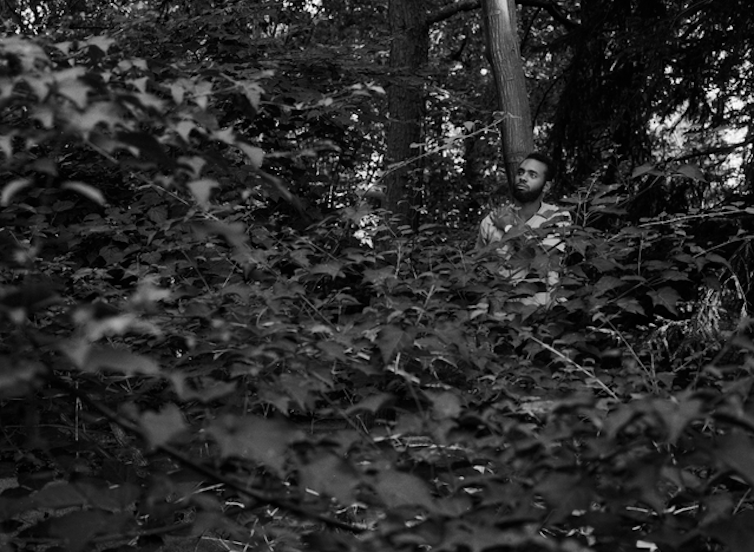
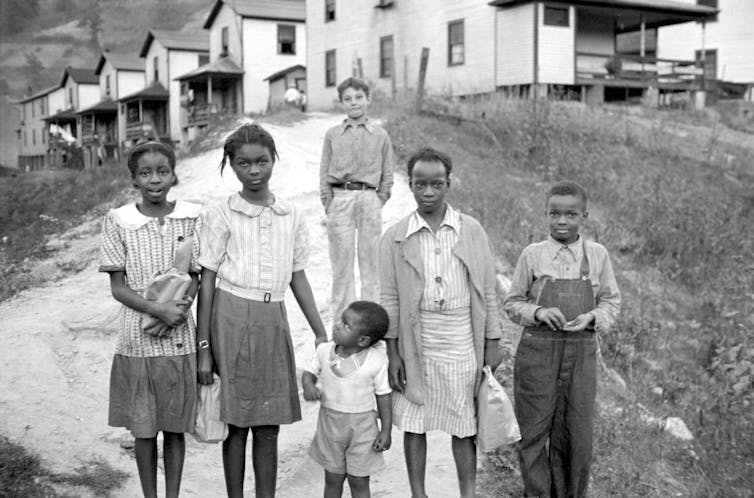

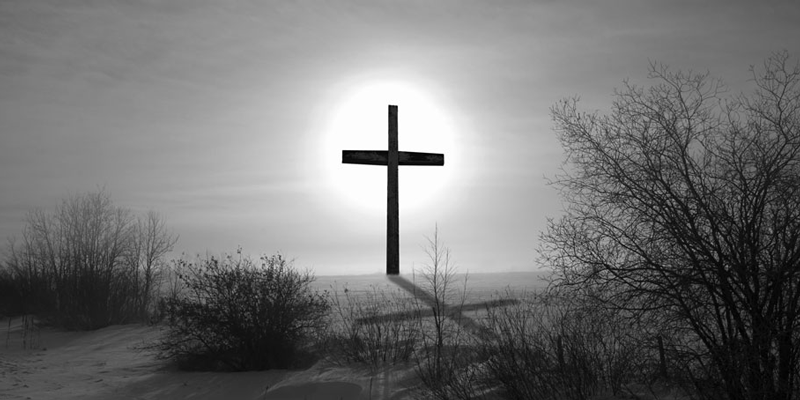





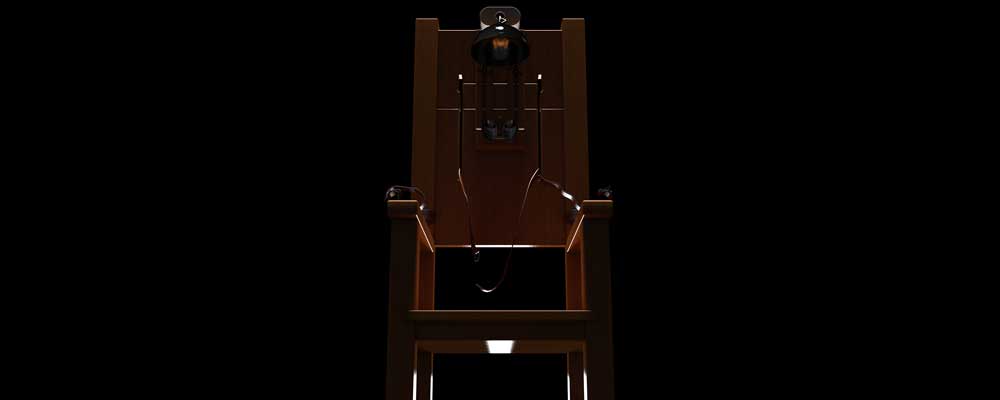



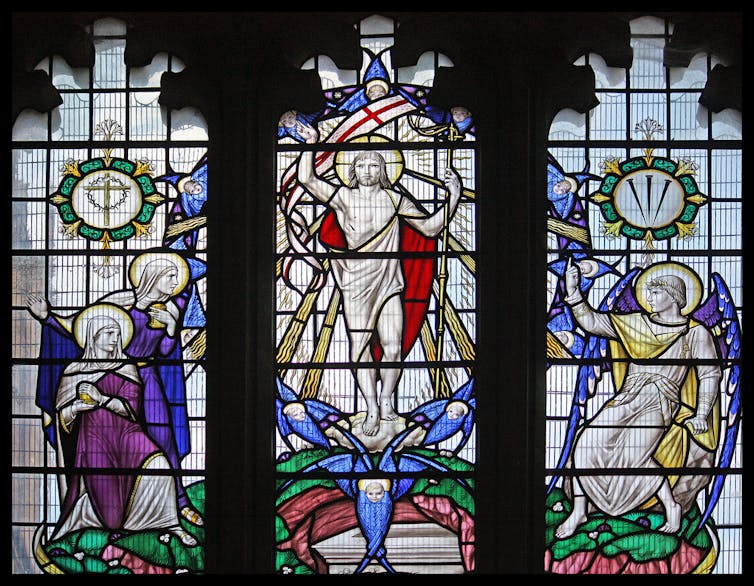
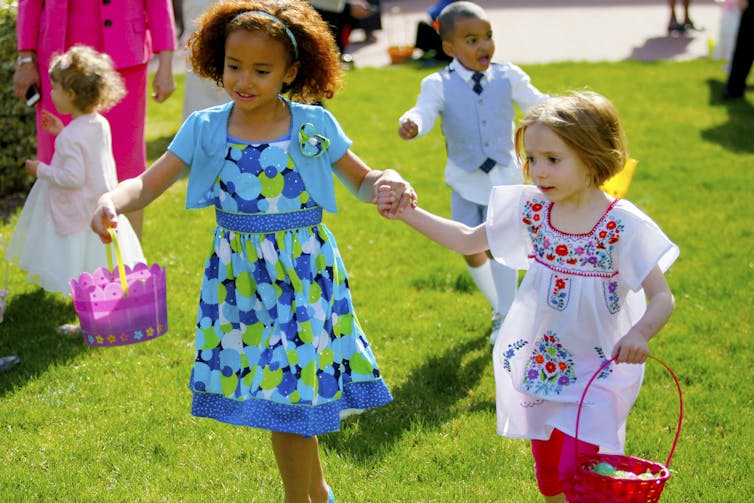

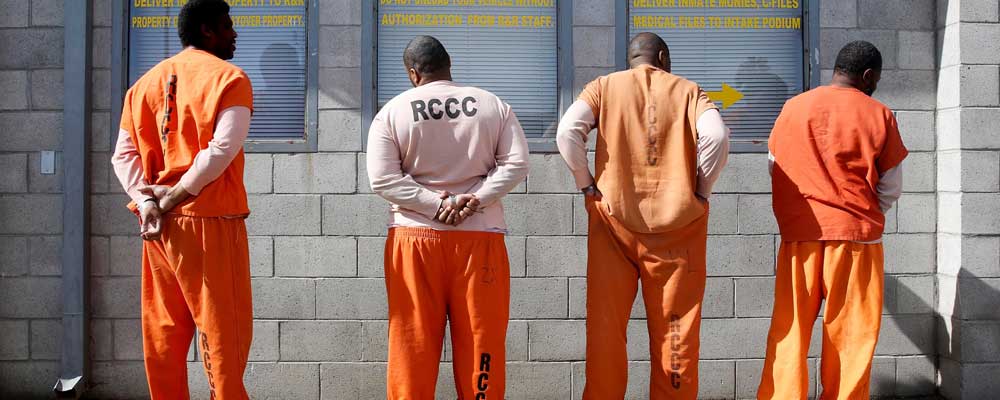
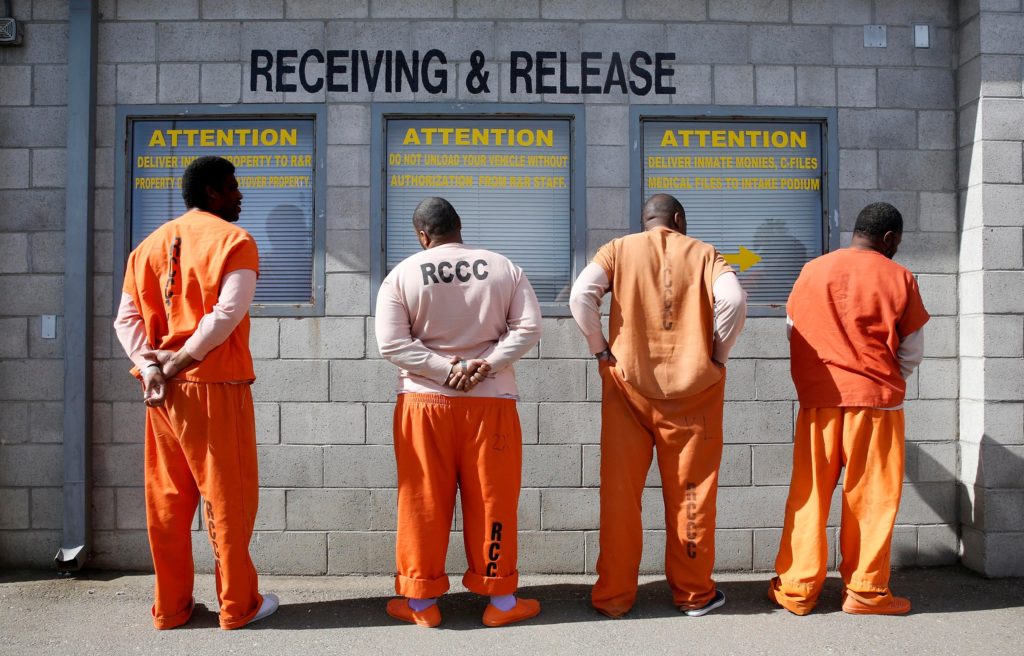
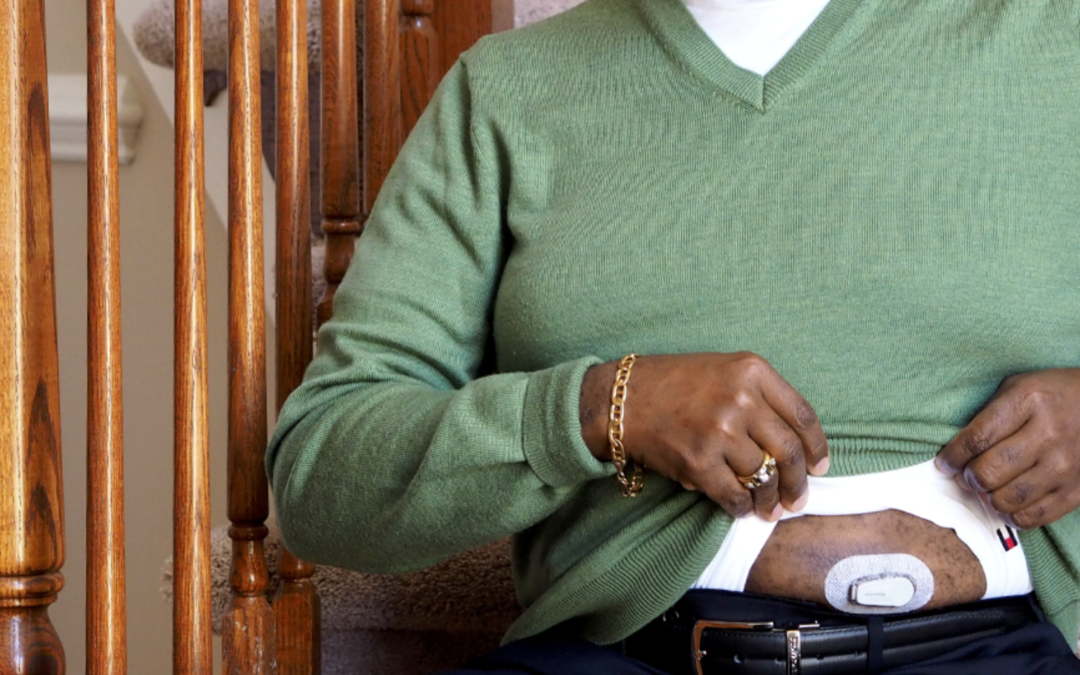
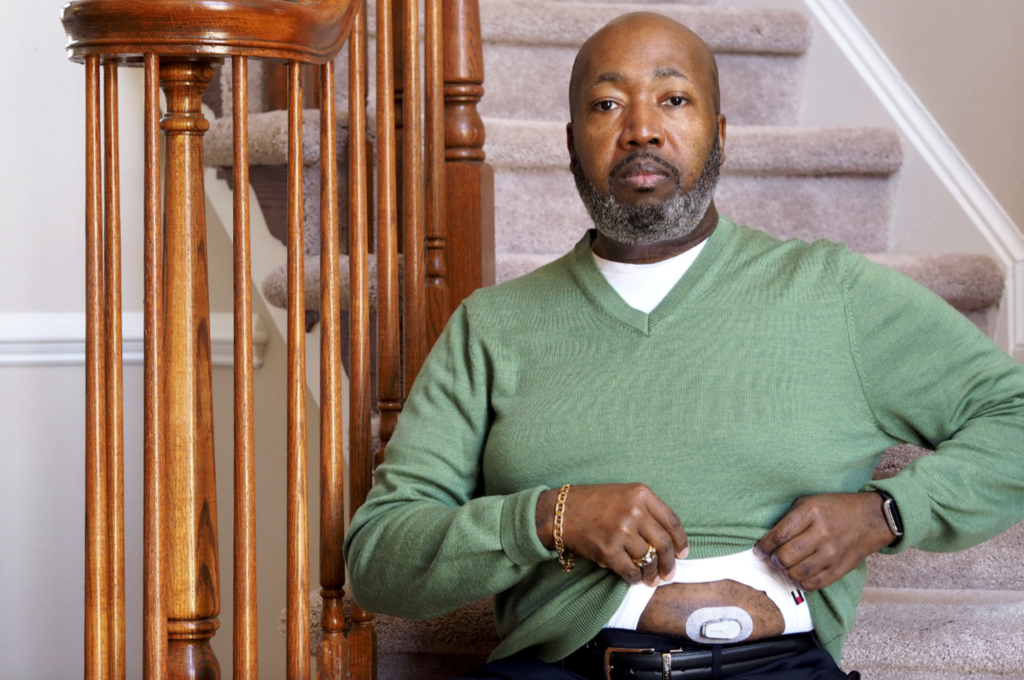
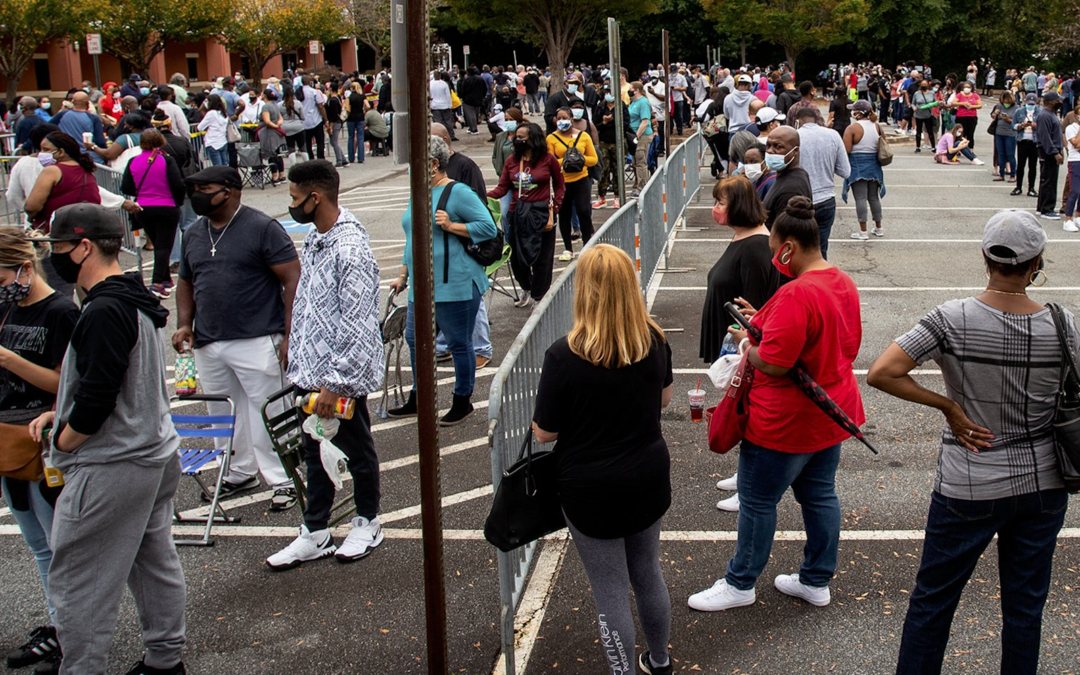
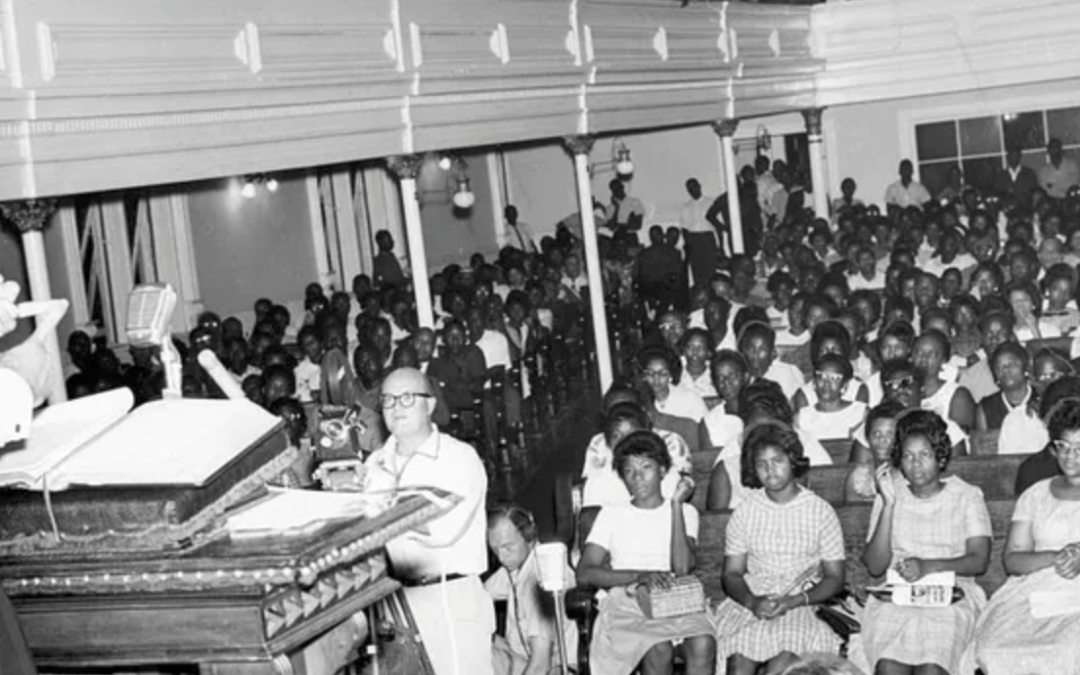
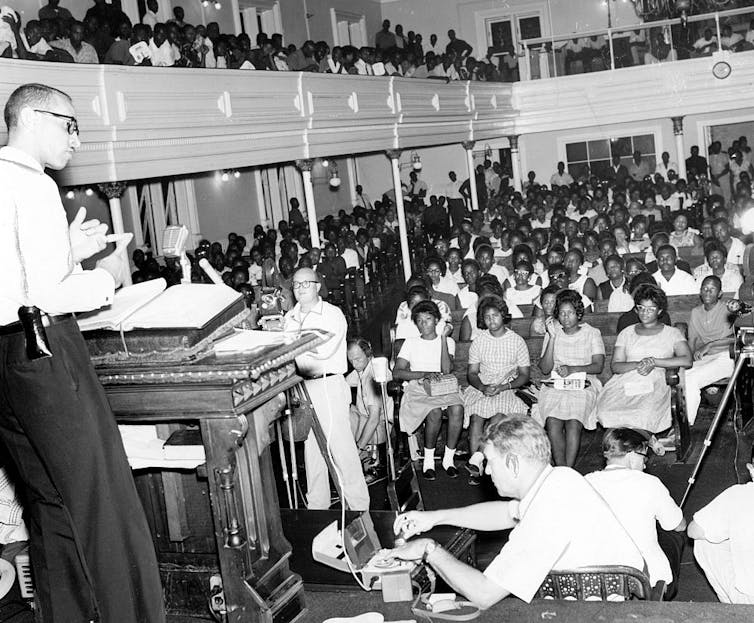
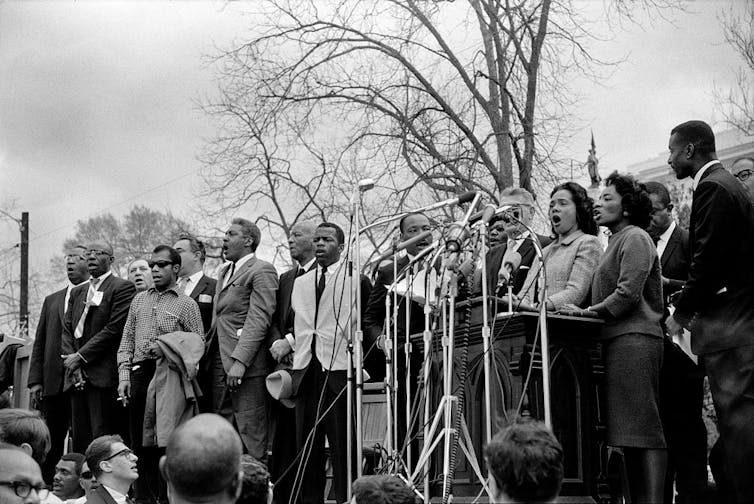
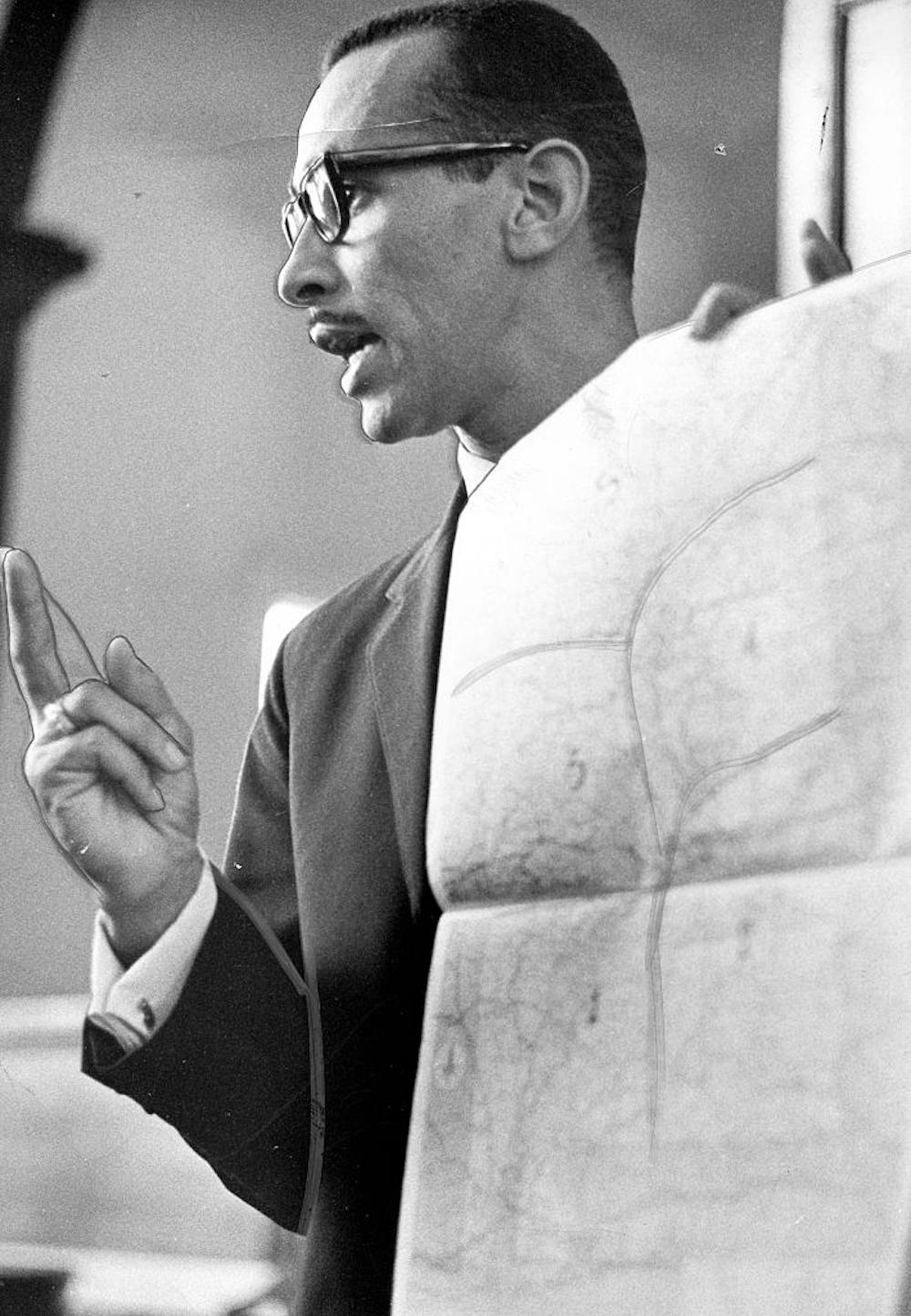


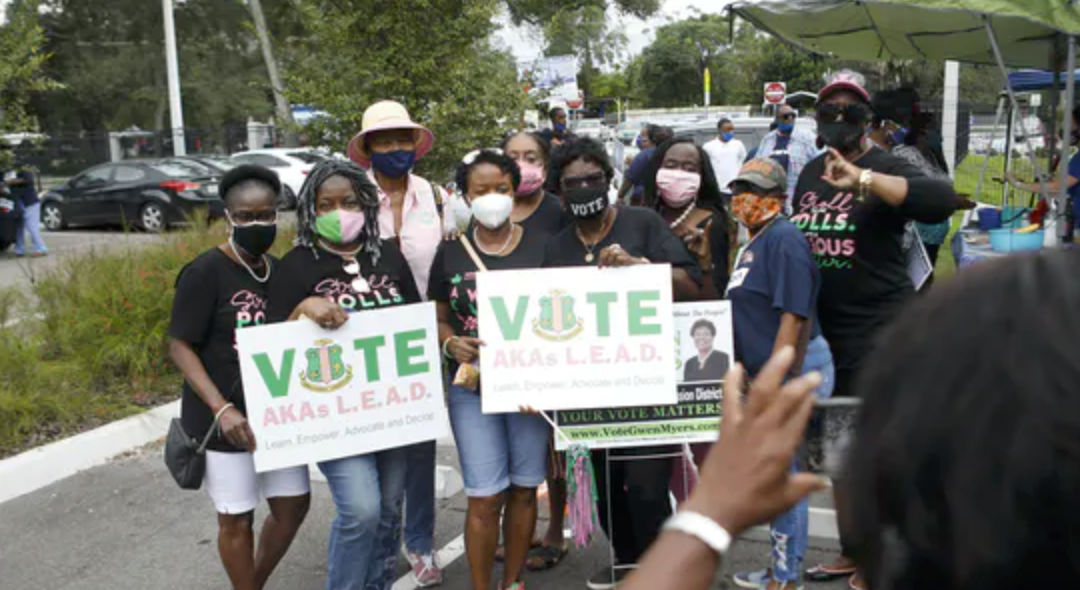
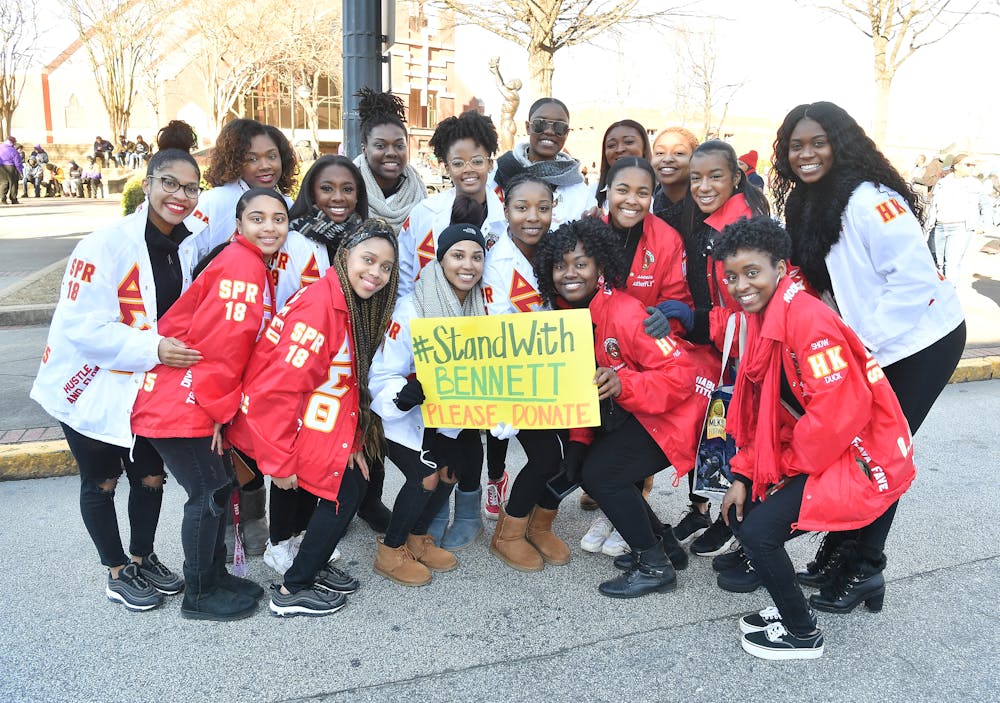
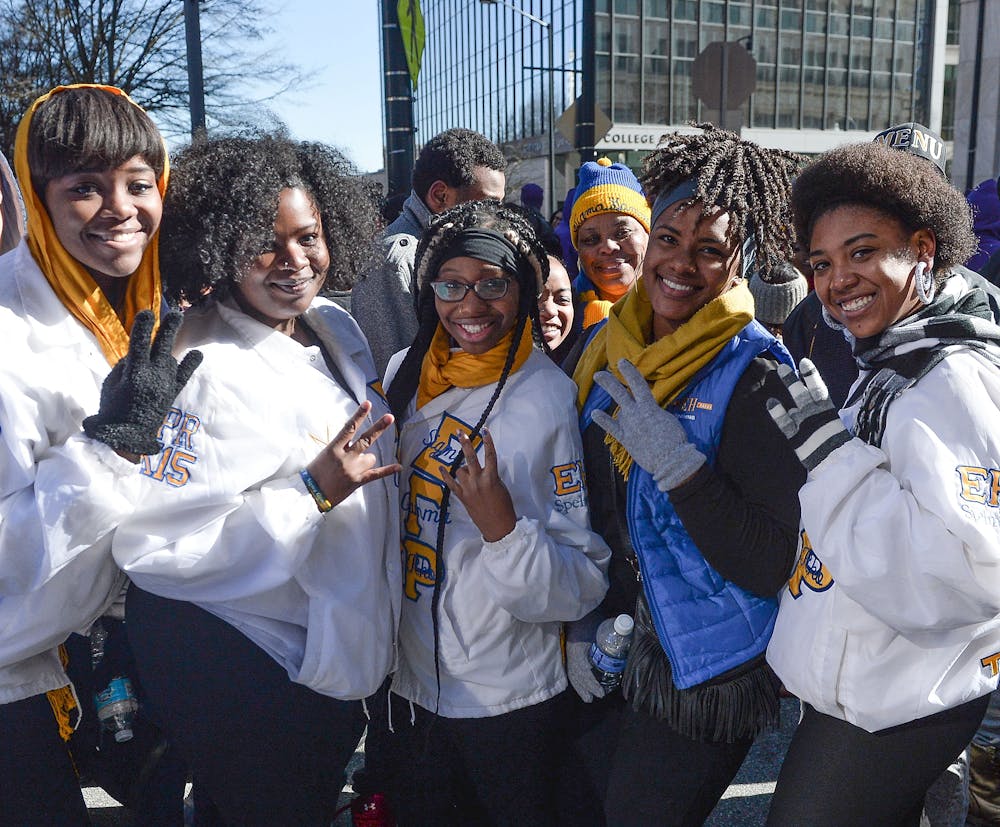
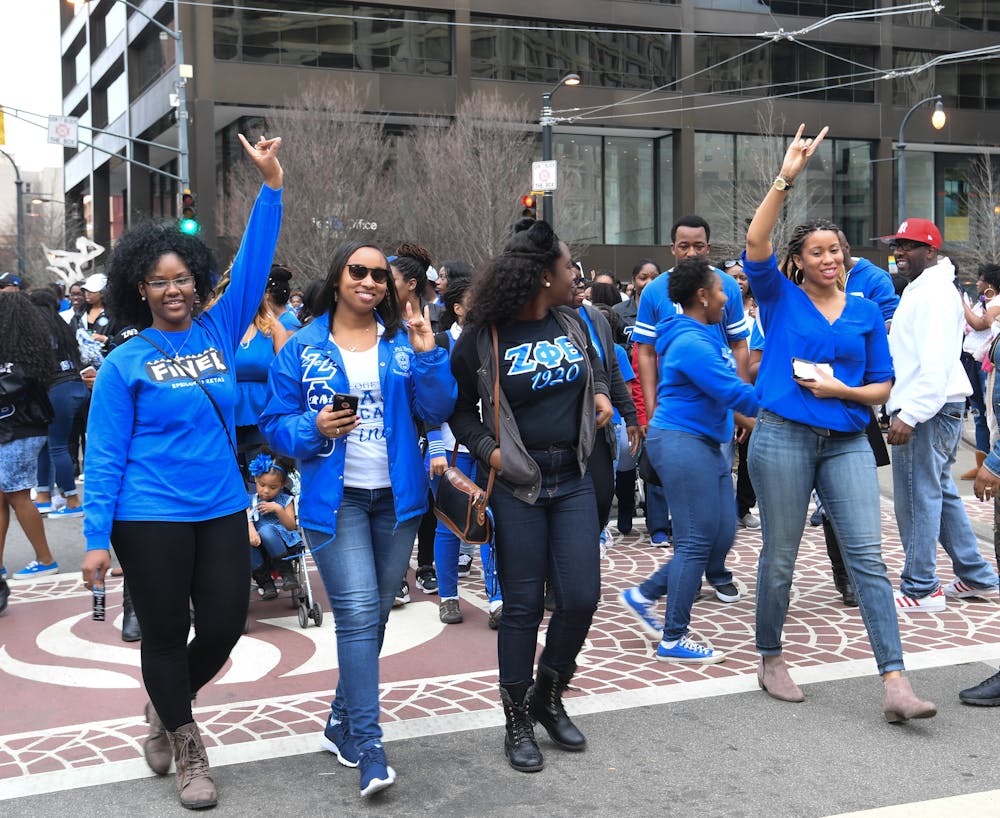

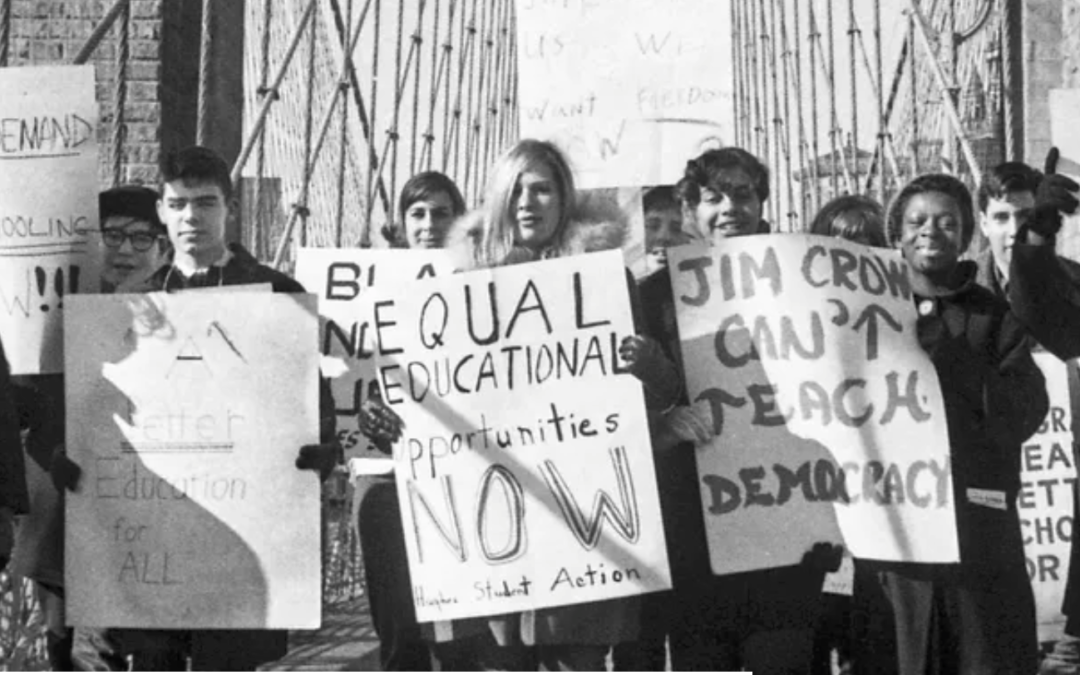
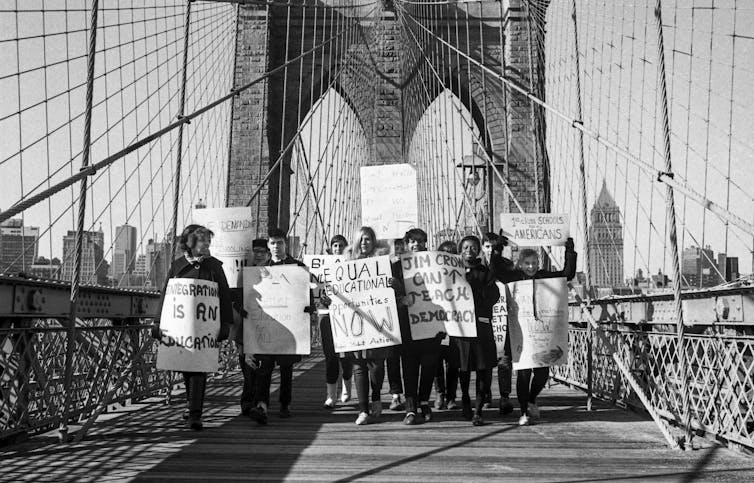



:no_upscale()/cdn.vox-cdn.com/uploads/chorus_asset/file/22331994/boyd_gerald.jpeg)
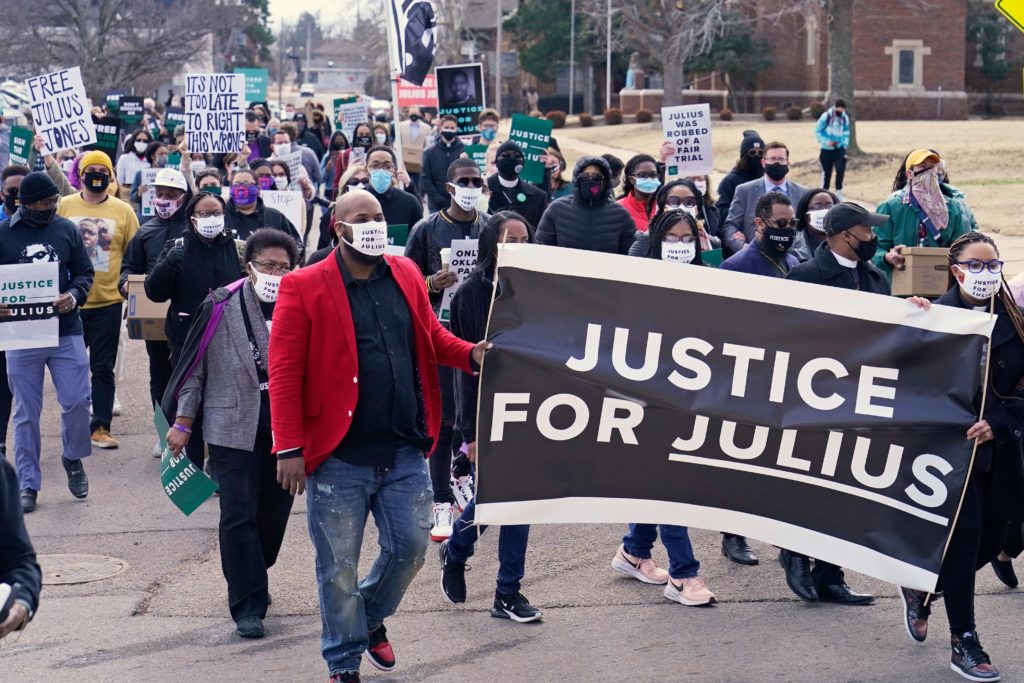 Faith leaders are ramping up their support for an Oklahoma death row inmate as his clemency hearing nears.



 Chriska is a twenty-something Haitian-American attorney with a passion for Jesus, traveling, writing, fashion, and spending quality time with loved ones. She holds a B.A. in Psychology from William Jewell College, and a Juris Doctorate from the University of Missouri (Kansas City) School of Law.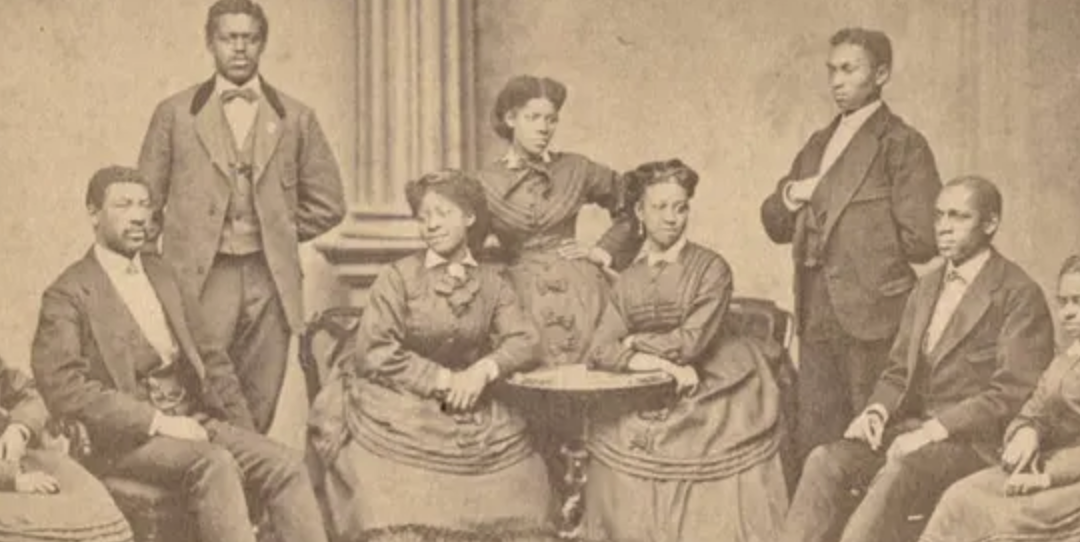
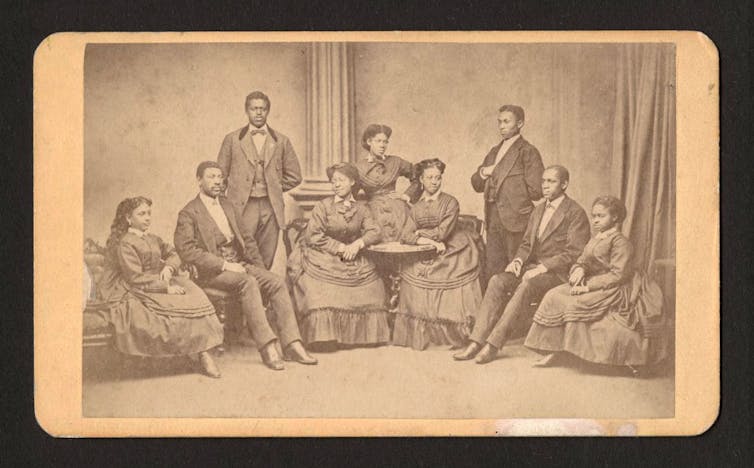
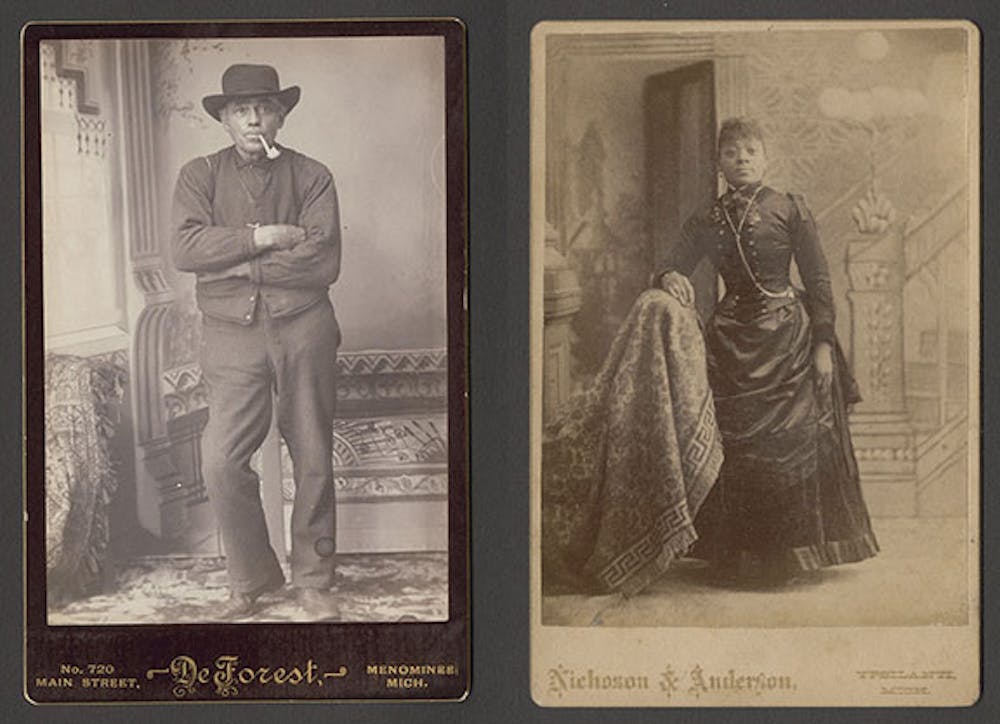

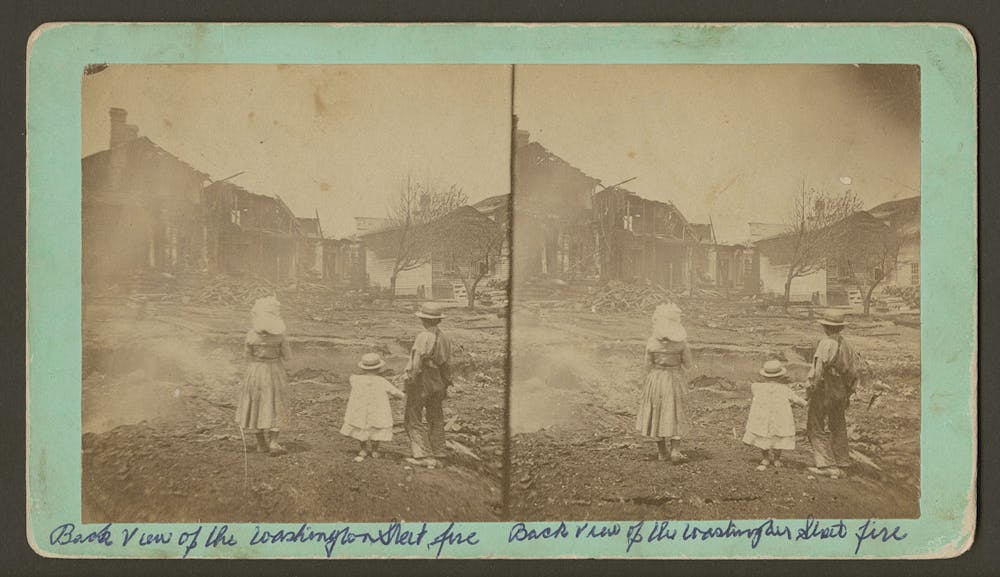

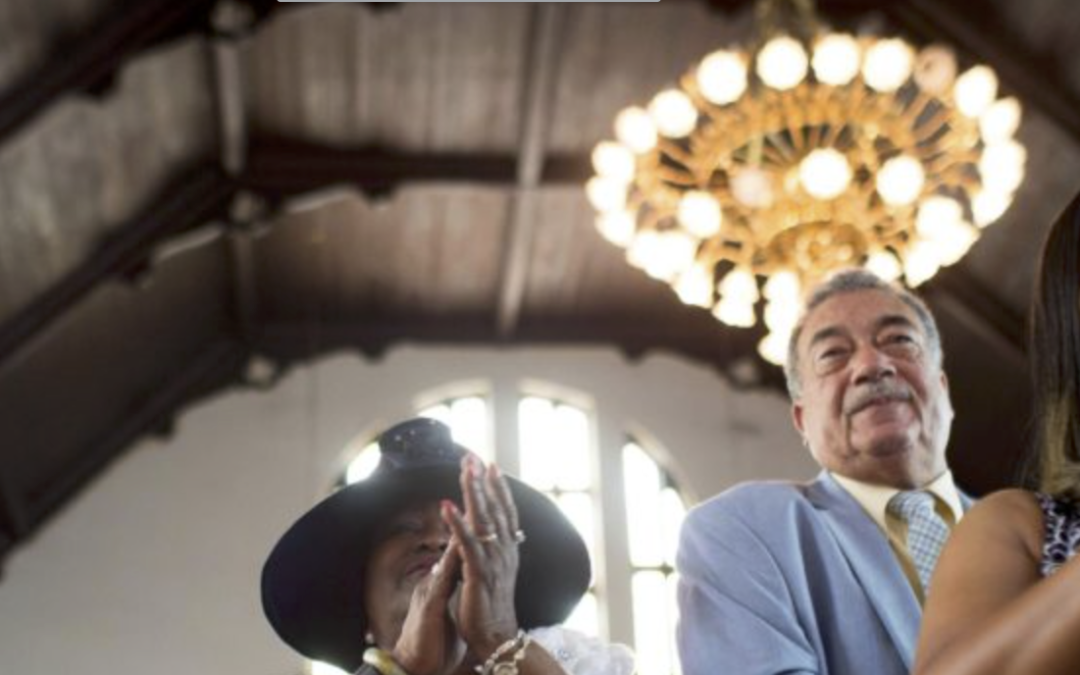
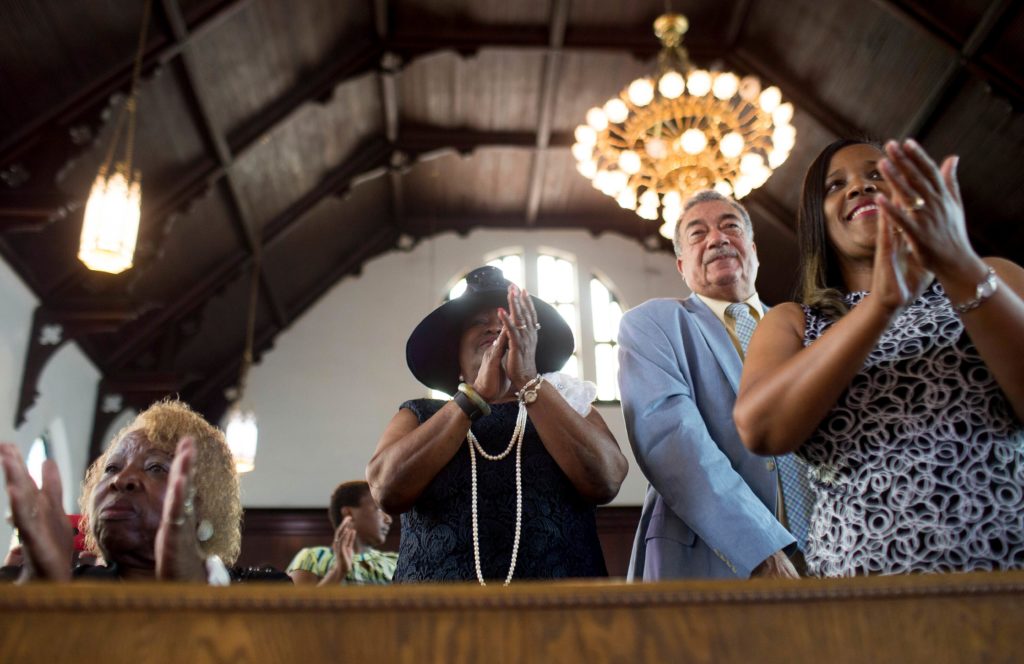


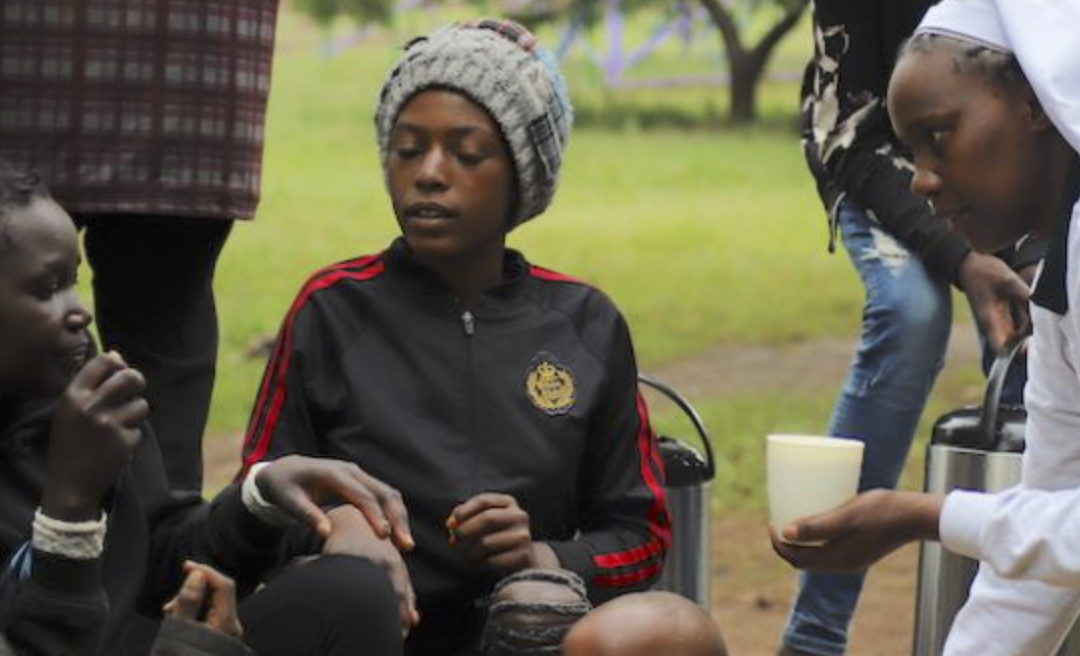


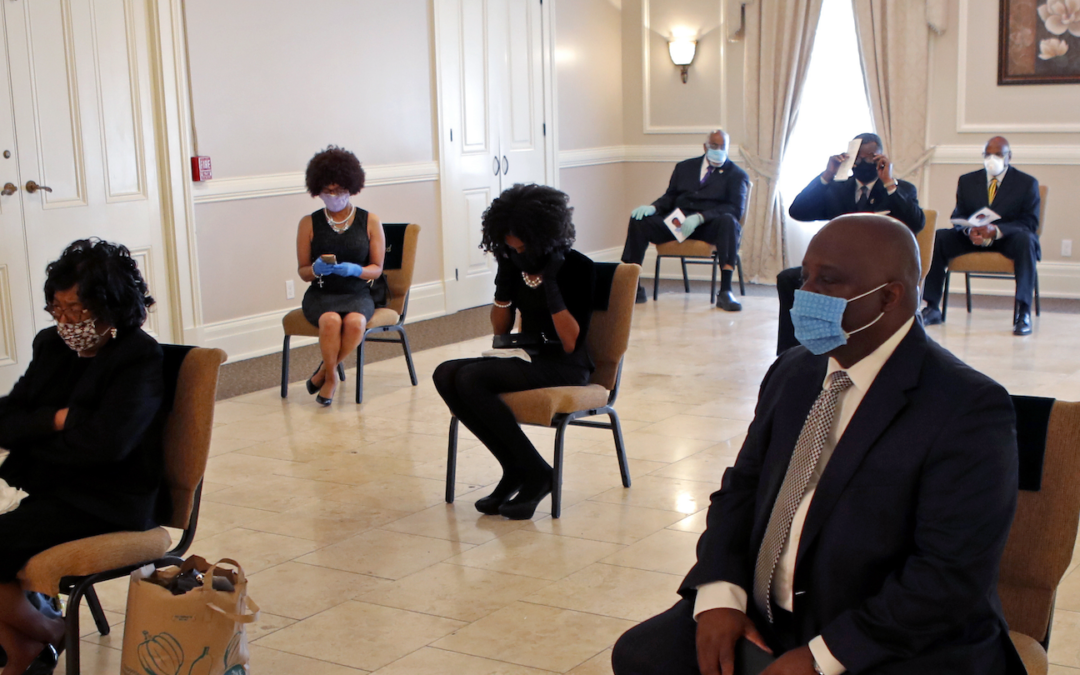
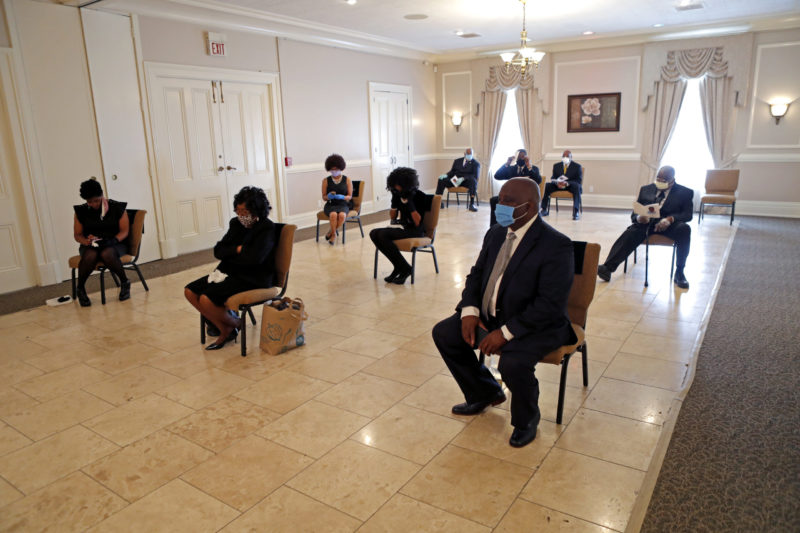
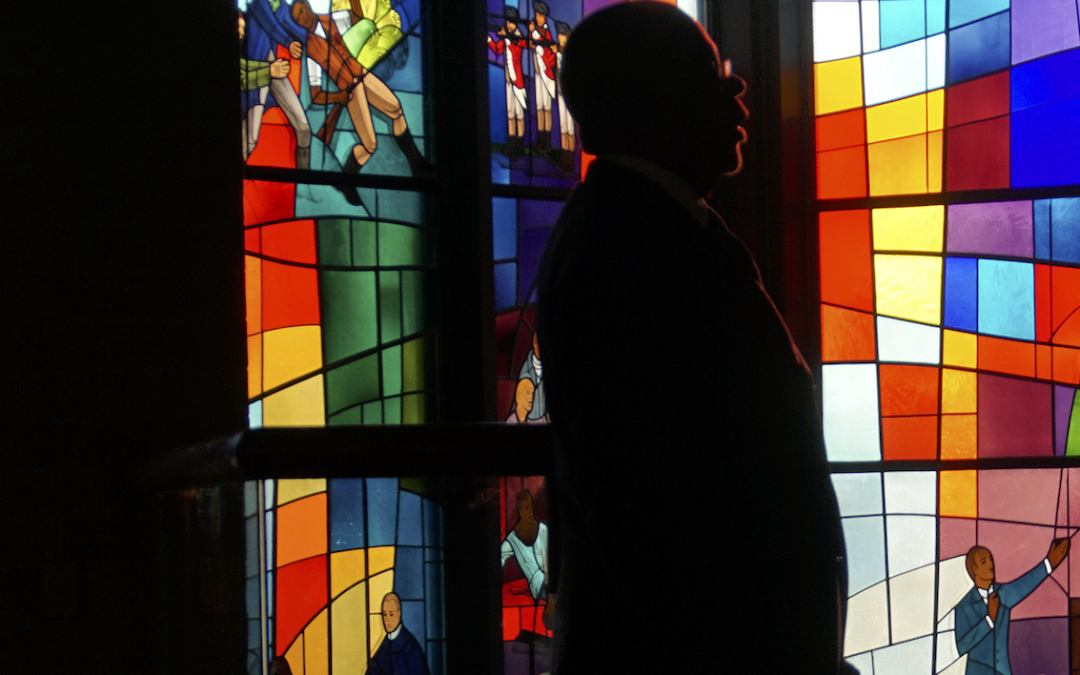

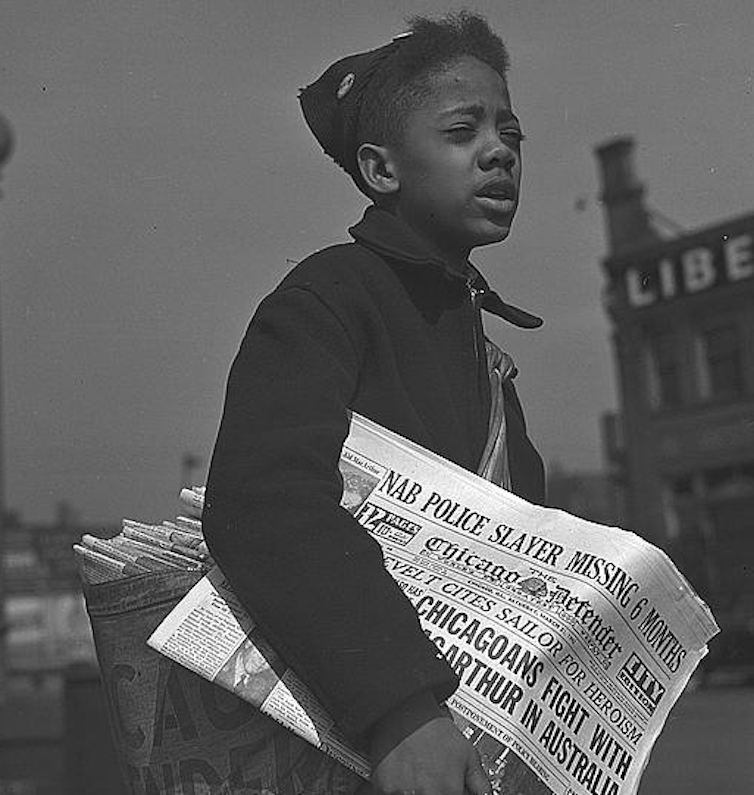
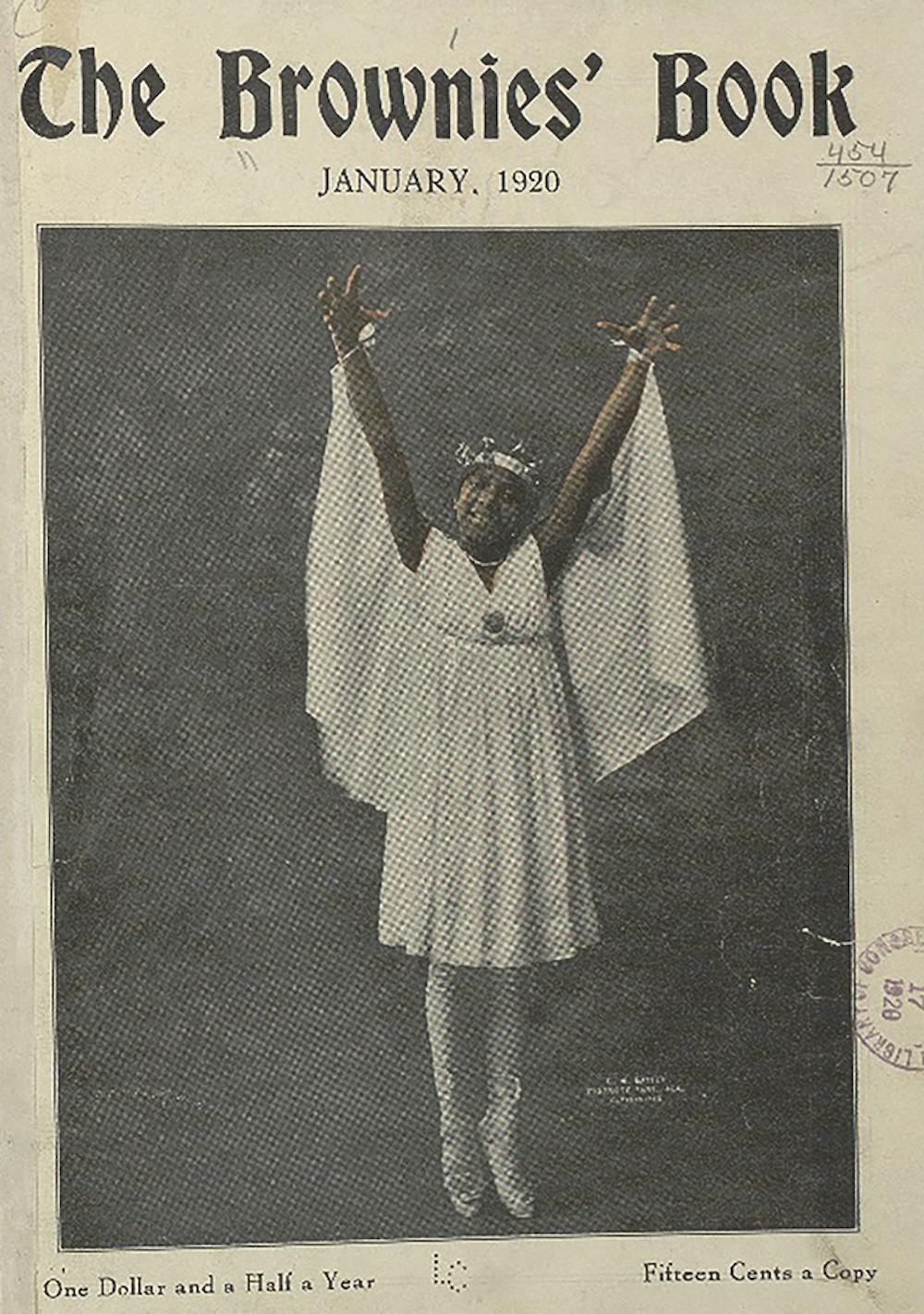
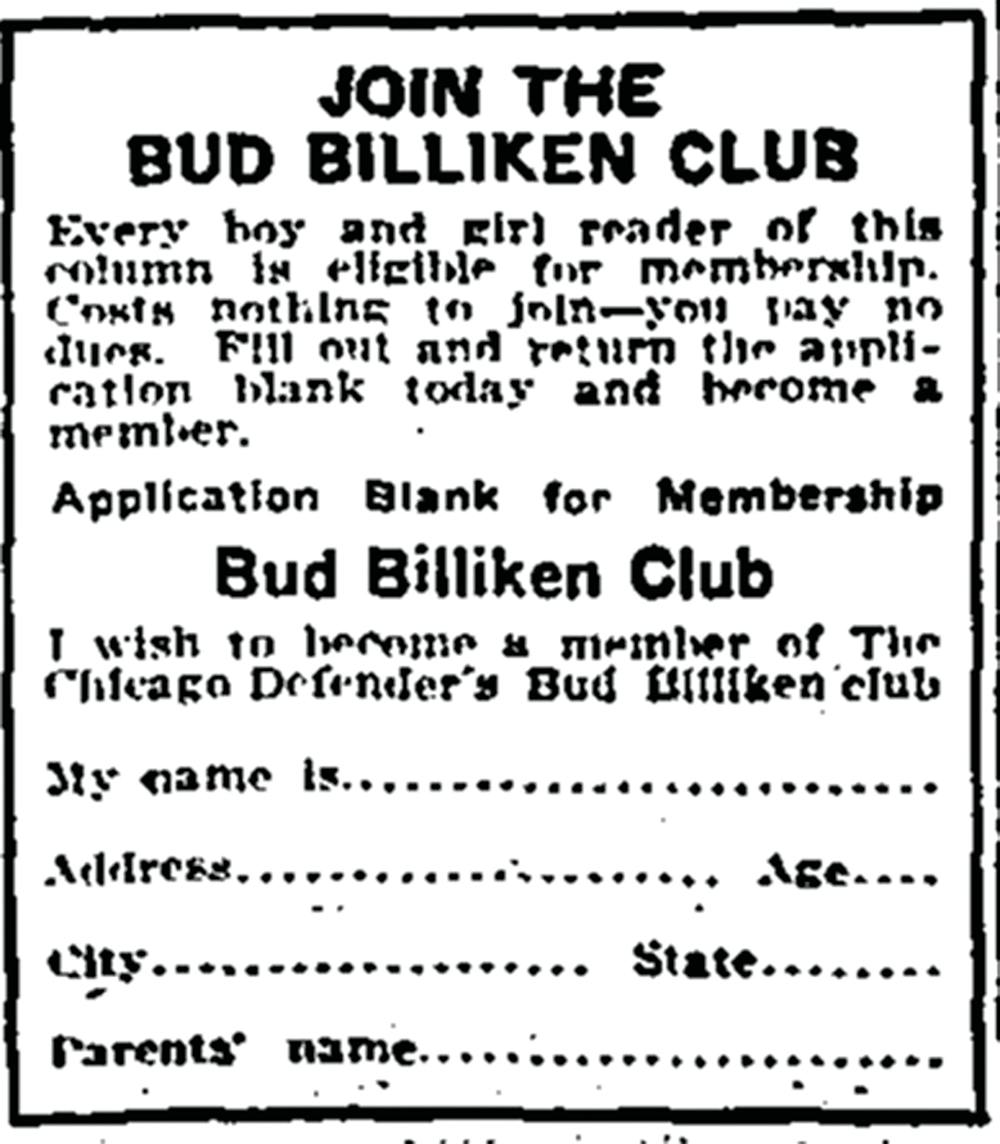
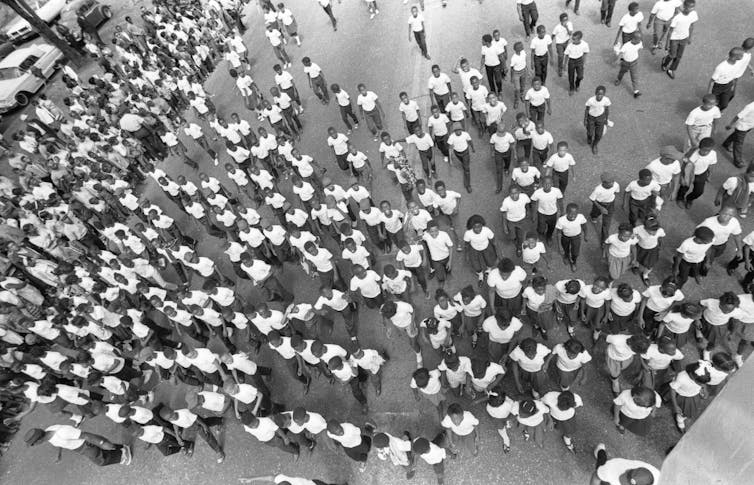



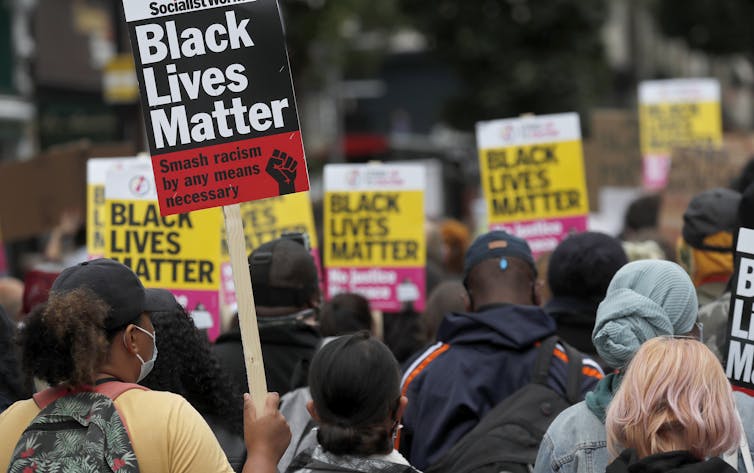
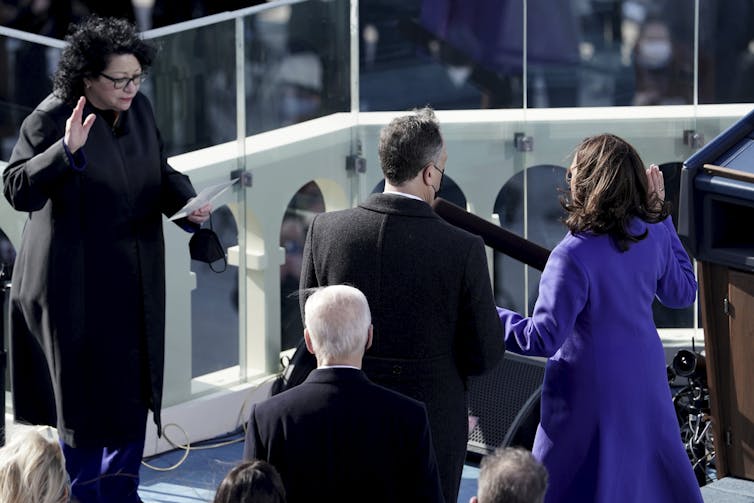

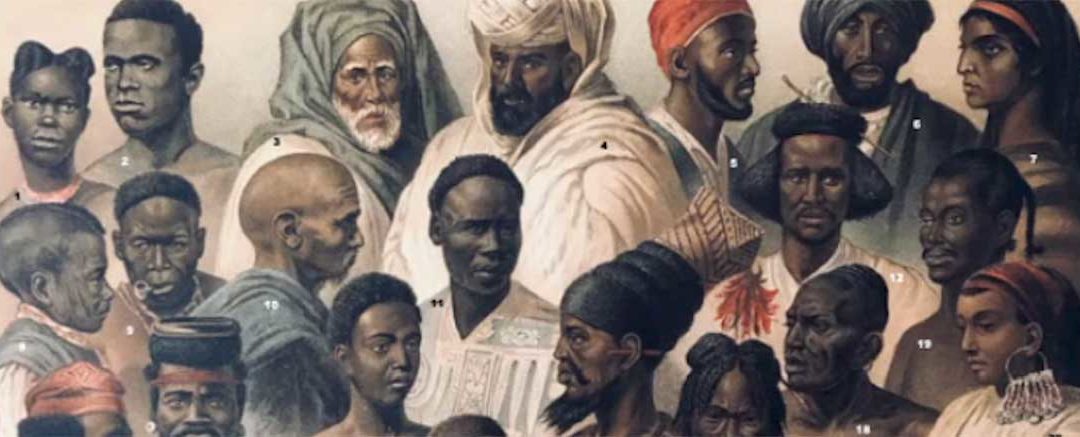

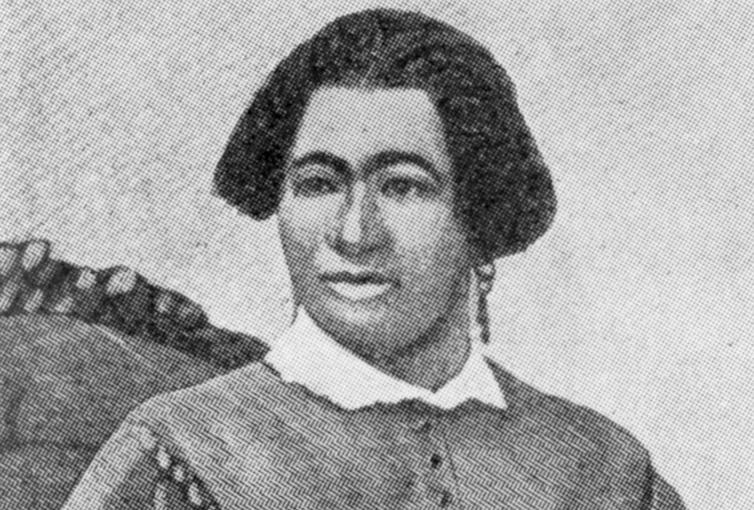
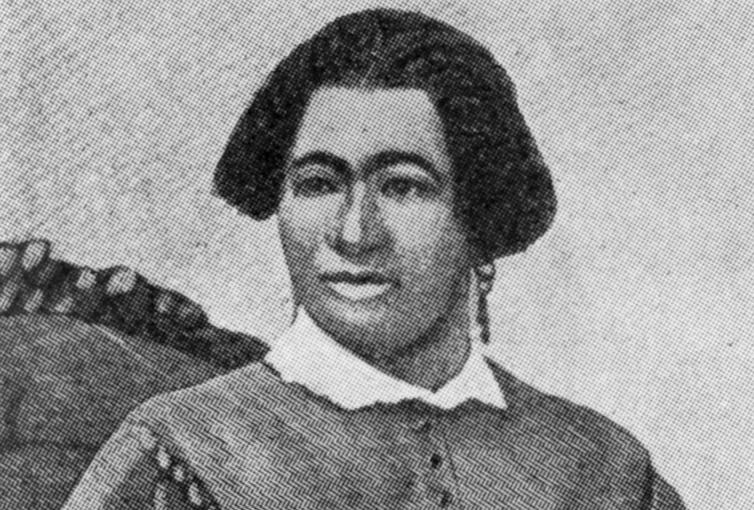
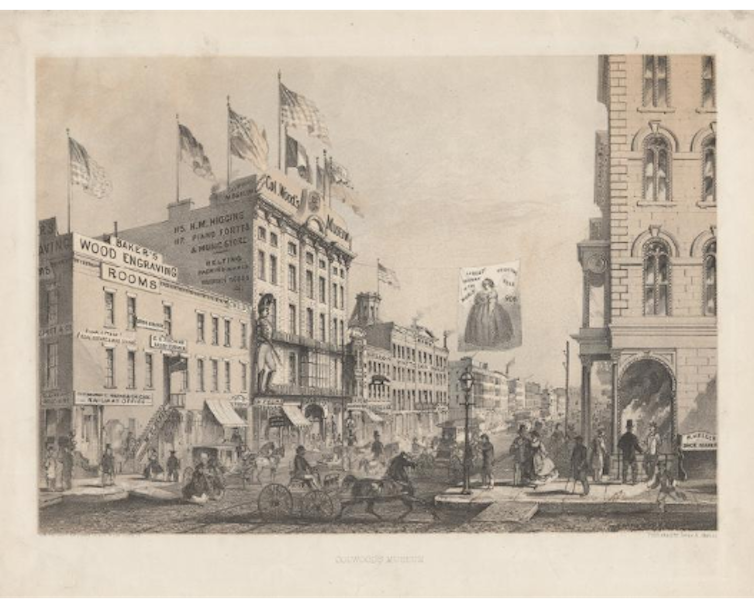
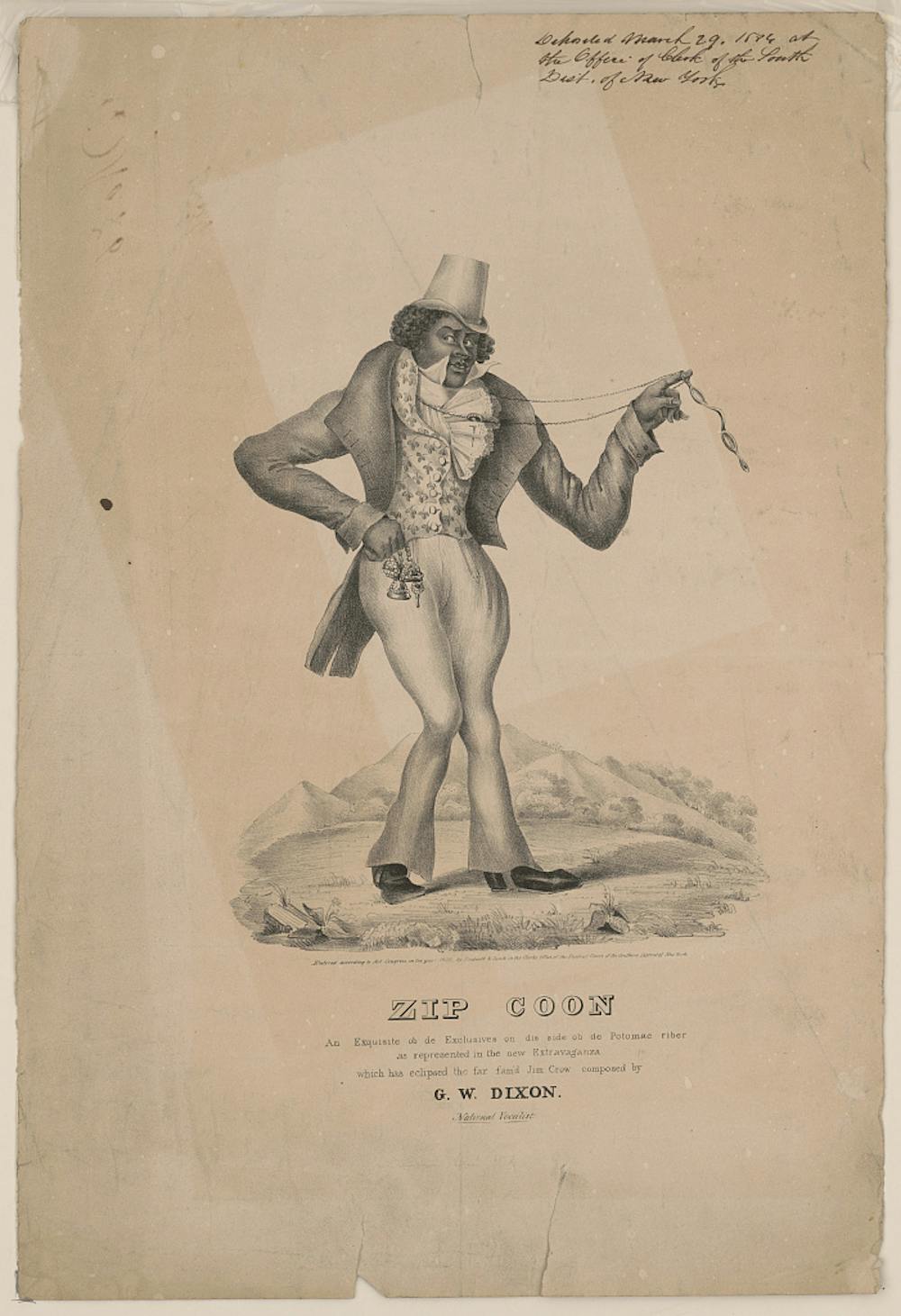





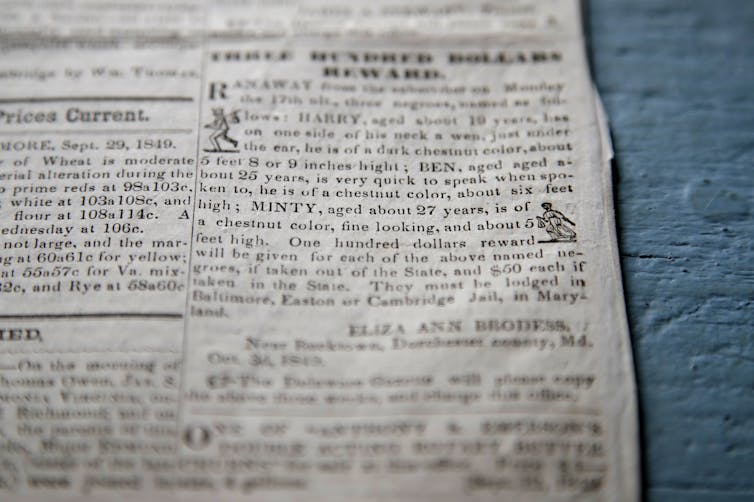

 Courtesy photo
 Photo by Nathalie Lopez
 Courtesy photo
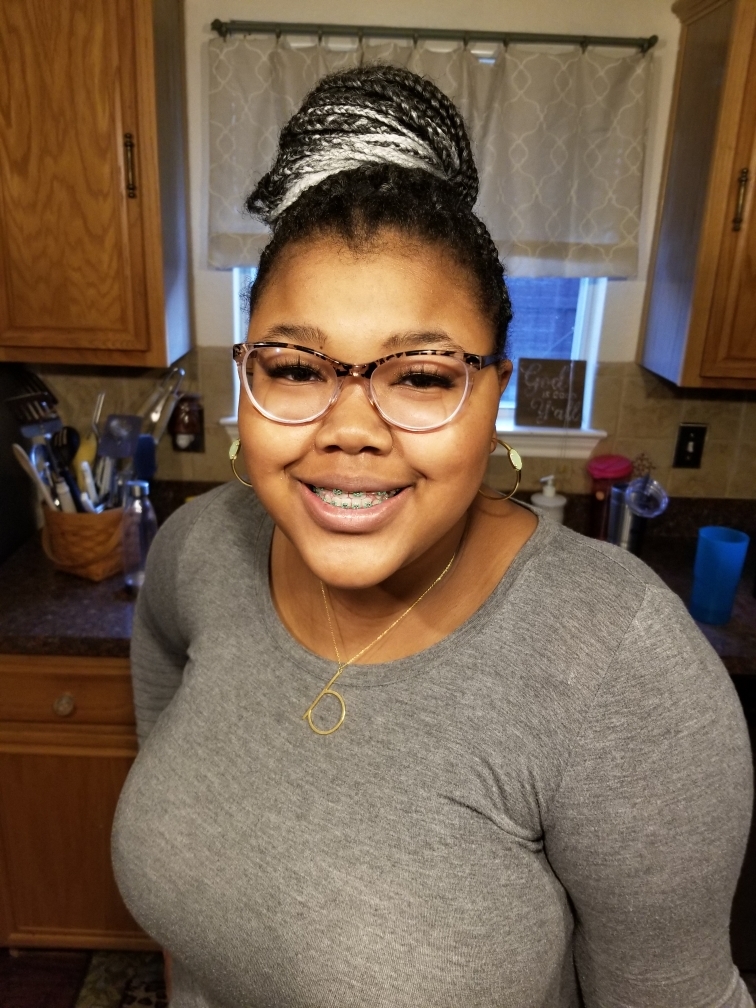 Courtesy photo
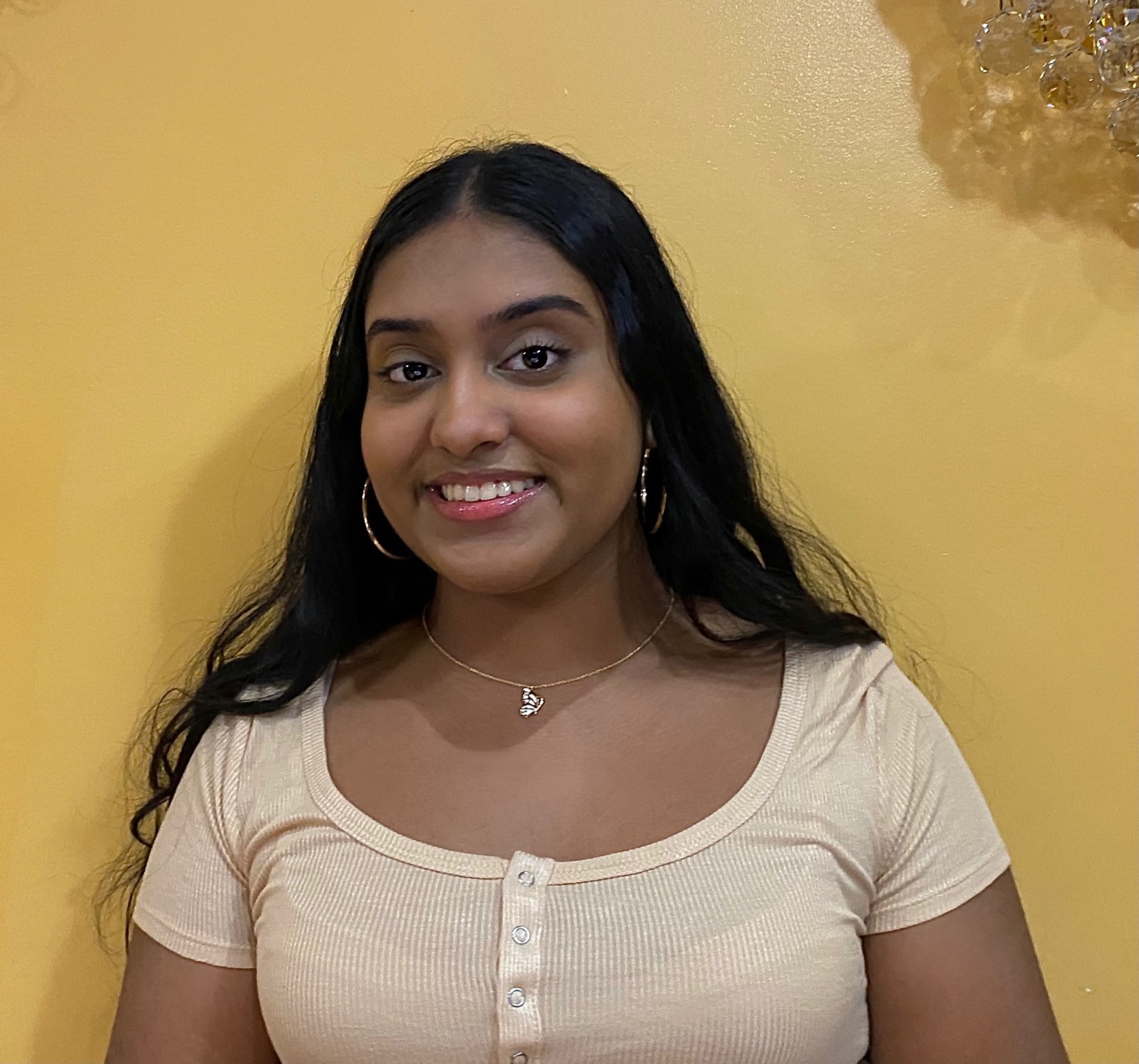 Courtesy photo
 Courtesy photo
 Courtesy photo