Summer is in full swing, and people all across the country have fired up their grills, purchased their summer wardrobes, and started traveling. For Black folks, summer often means family reunions (especially after the pandemic lockdown), barbecues (cookouts/kickbacks/get-togethers/BBQs), and finding things for the kids to do (like sports, activities, or playing outside). We all look forward to summer vacations, summer hours, and summer…denominational general conferences?
For whatever reason (probably the pandemic), 2021 has been the year of many denominational general conferences when the saints of God have gathered together to elect new leadership, hear inspiring teaching, and debate church policy. Some people are not looking forward to these conferences every few years, and many believers don’t even know they are happening. A lot of us don’t even have denominations to host conferences, and we’re fortunate if our church leadership gets together with other leaders to decide how to more effectively love God and love people.
But more than ever, people are actually hearing about these conferences, usually because of controversy. We have heard everything from debates about same sex marriage to whether systemic racism is real. We have seen rejoicing and anxiety over the appointment of new leaders, reports of how to handle abuse and instructions on how to handle finances. And many Christians ask, why are we having these conferences? Why are these issues being debated? Why aren’t we just doing what the Bible says?
Well, we are actually doing exactly what the Bible says. The Bible is where we find the church resolving debates over contemporary issues and developing administration together in Acts 6, the commissioning of Barnabas and Paul (Saul) in Acts 13, and the first church-wide conference at Jerusalem in Acts 15. At that conference, the Gospel was articulated for Gentiles. Plus, we see Apollos teaching right doctrine after meeting with Priscilla and Aquila in Acts 18. There is no law in scripture for every situation, especially as the world changes and God continues calling us to follow Him. We need a relationship with God and the power of the Holy Spirit to lead us into all truth. It was the Pharisees and Sadducees who believed they could keep the letter of the law perfectly and had no need for God’s Spirit to lead them.
In the Old Testament, we read that before any major decisions were made, the kings of Israel sought wise counsel–not just as advice–but as wisdom from collaboration. The prophets, priests, and advisors would weigh in, and they would all pray to receive God’s wisdom for leadership. In the New Testament, we read that the apostles and elders were accountable to the community of believers and met together to pray and seek God’s guidance and receive instruction for the churches they led. None of these people were perfect.n the contrary, God met them with wisdom in the midst of their flaws.
We should continue to value church conferences and approach them with honor and hope. We cannot take for granted that many believers across the world cannot gather together publicly in general, let alone in large conferences. We should embrace and celebrate our opportunities to do so. If God was able to show up with wisdom for believers in the Bible, we know that despite our flaws and problems, God can show up for us with wisdom as well.
In the 1960s, health care across the Mississippi Delta was sparse and much of it was segregated. Some hospitals were dedicated to Black patients, but they often struggled to stay afloat. At the height of the civil rights movement, young Black doctors launched a movement of their own to address the care disparity.
“Mississippi was third-world and was so bad and so separated,” said Dr. Robert Smith. “The community health center movement was the conduit for physicians all over this country who believed that all people have a right to health care.”
In 1967, Smith helped start Delta Health Center, the country’s first rural community health center. They put the clinic in Mound Bayou, a small town in the heart of the Delta, in northwestern Mississippi. The center became a national model and is now one of nearly 1,400 such clinics across the country. These clinics, called federally qualified health centers, are a key resource in Mississippi, Louisiana and Alabama, where about 2 in 5 people live in rural areas. Throughout the U.S., about 1 in 5 people live in rural areas.
The covid-19 pandemic has only exacerbated the challenges facing rural health care, such as lack of broadband internet access and limited public transportation. For much of the vaccine rollout, those barriers have made it difficult for providers, like community health centers, to get shots into the arms of their patients.
“I just assumed that [the vaccine] would flow like water, but we really had to pry open the door to get access to it,” said Smith, who still practices family medicine in Mississippi.
Mound Bayou was founded by formerly enslaved people, many of whom became farmers.
The once-thriving downtown was home to some of the first Black-owned businesses in the state. Today the town is dotted with shuttered or rundown banks, hotels and gas stations.
Mitch Williams grew up on a Mound Bayou farm in the 1930s and ’40s and spent long days working the soil.
“If you would cut yourself, they wouldn’t put no sutures in, no stitches in it. You wrapped it up and kept going,” Williams said.
When Delta Health Center started operations in 1967, it was explicitly for all residents of all races — and free to those who needed financial help.
Williams, 85, was one of its first patients.
“They were seeing patients in the local churches. They had mobile units. I had never seen that kind of comprehensive care,” he said.
Residents really needed it. In the 1960s, many people in Mound Bayou and the surrounding area didn’t have clean drinking water or indoor plumbing.
At the time, the 12,000 Black residents of northern Bolivar County, which includes Mound Bayou, faced unemployment rates as high as 75% and lived on a median annual income of just $900 (around $7,500 in today’s dollars), according to a congressional report. The infant mortality rate was close to 60 for every 1,000 live births — four times the rate for affluent Americans.
Delta Health Center employees helped people insulate their homes. They built outhouses and provided food and sometimes even traveled to patients’ homes to offer care, if someone didn’t have transportation. Staffers believed these factors affected health outcomes, too.
Williams, who later worked for Delta Health, said he’s not sure where the community would be today if the center didn’t exist.
“It’s frightening to think of it,” he said.
Half a century later, the Delta Health Center continues to provide accessible and affordable care in and around Mound Bayou.
Black Southerners still face barriers to health. In April 2020, early in the pandemic, Black residents accounted for nearly half of covid deaths in Alabama and over 70% in Louisiana and Mississippi.
Public health data from last month shows that Black residents of those states have consistently been more likely to die of covid than residents of other races.
“We have a lot of chronic health conditions here, particularly concentrated in the Mississippi Delta, that lead to higher rates of complications and death with covid,” said Nadia Bethley, a clinical psychologist at the center. “It’s been tough.”
Delta Health Center has grown over the decades, from a few trailers in Mound Bayou to a chain of 18 clinics across five counties. It’s managed to vaccinate over 5,500 people against covid. The majority have been Black.
“We don’t have the National Guard, you know, lining up out here, running our site. It’s the people who work here,” Bethley said.
The Mississippi State Department of Health said it has prioritized health centers since the beginning of the rollout. But Delta Health CEO John Fairman said the center was receiving only a couple of hundred doses a week in January and February. The supply became more consistent around early March, center officials said.
“Many states would be much further ahead had they utilized community health centers from the very beginning,” Fairman said. Fairman said his center saw success with vaccinations because of its long-standing relationships with the local communities.
“Use the infrastructure that’s already in place, that has community trust,” said Fairman.
That was the entire point of the health center movement in the first place, said Smith. He said states that were slow to use health centers in the vaccine rollout made a mistake that has made it difficult to get a handle on covid in the most vulnerable communities.
Smith called the slow dispersal of vaccines to rural health centers “an example of systemic racism that continues.”
A spokesperson for Mississippi’s health department said it is “committed to providing vaccines to rural areas but, given the rurality of Mississippi, it is a real challenge.”
Alan Morgan, CEO of the National Rural Health Association, said the low dose allocation to rural health clinics and community health centers early on is “going to cost lives.”
“With hospitalizations and mortality much higher in rural communities, these states need to focus on the hot spots, which in many cases are these small towns,” Morgan said of the vaccine efforts in Mississippi, Louisiana and Alabama.
A report from KFF found that people of color made up the majority of people vaccinated at community health centers and that the centers seem to be vaccinating people at rates similar to or higher than their share of the population. (The KHN newsroom, which collaborated to produce this story, is an editorially independent program of KFF.)
The report added that “ramping up health centers’ involvement in vaccination efforts at the federal, state and local levels” could be a meaningful step in “advancing equity on a larger scale.”
Equal access to care in rural communities is necessary to reach the most vulnerable populations and is just as critical during this global health crisis as it was in the 1960s, according to Smith.
“When health care improves for Blacks, it will improve for all Americans,” Smith said.
This story is from a partnership that includes NPR, KHN and the three stations that make up the Gulf States Newsroom: Mississippi Public Broadcasting; WBHM in Birmingham, Alabama; and WWNO in New Orleans.
It could be daunting to take over the reins as lead pastor for a church your famous parents planted in 2012, but for Alvin Love III, 35, it was a natural progression that was initially inspired by a powerful encounter he had on a visit to Melbourne Life Church in Australia.
“It was something that was just surprisingly personal and I guess invasive a little bit. I felt like God was looking at me and only me. And that was the first time for me to where I just felt that much attention and that much focus from God and it stopped me in my tracks. I was only planning on staying in Australia for three months. I decided to stay nine months because the discipleship course that the church offered was a nine-month class,” said Love.
From that encounter, Love began sharing his experience with his friends and family and what he felt was in his heart. He learned that a number of his friends were also taking steps to a deeper connection with God. Over the next year, pastors and leaders from Melbourne Life Church came to Nashville and ministered to him and his friends at his parents’ home. It was their ministry that launched Nashville Life Church with 38 members and Pastors Alvin Love II and CeCe Winans as Senior Pastors. Now, in 2020, with about 400 members, he and his friends are leading the congregation. Although some changes are happening, they are learning as they go.
“I’m very different from my parents, but our church has been a collaborative effort. My dad and mom brought me pretty close to the core of what was happening. So though I was never the leader from a governmental and even spiritual point, I’ve always had a prominent voice in the building of the culture and what we have. I think the change is less because I’m in charge and more because I’m evolving and we’re getting better and better,” said Love.
It’s a multicultural church and very diverse in a lot of ways; not just racially, but politically, philosophically, and economically. As would be expected, that naturally has caused some division within the church that Love has had to address head-on. Rather than pick a side or using his platform to speak politically, he emphasizes not letting politics divide the church.
“There’s always been Democrats and Republicans. There’s always been all types of people, and that’s okay. I don’t think that your Christian faith has to dictate where you lean politically, however, as believers, we should never let politics serve as a tool to divide the church that God has called to be one,” said Love.
So what does he believe they should be focused on? What Love says are the “basic beliefs — being a community of faith amidst the social, health, and political unrest. They had to do things a little differently with COVID. Previously, they’d gather more with 12-week small groups. Now, they’re focused on being a source of life and faith for people wherever they are, whether at work, in the neighborhood, or elsewhere. He encourages his members to reach out to people who aren’t part of their church community, or perhaps they’re at the edge of not believing at all.
“Our faith can be that boost they need to come closer to God. I think fear is at an all-time high. I think suicidal thoughts, and mental illness is at an all-time high. And that’s what we’re seeing in our own city. And I think, if nothing else, just the idea of having faith and believing that things are going to turn around and believing that God is still in control and he still loves us, “ said Love.
Love says even as a pastor he has been affected by the woes of 2020 — the isolation, the discouragement, and looking at an Instagram feed and only seeing re-postings of shootings, and deaths, and COVID numbers going up. A lot of the depressing news happened in the months leading to him transitioning as the senior pastor. Not to mention, he had to navigate CDC guidelines for churches and determine whether they should even meet in person. He gets what people are feeling, but he’s trying to lead by example.
“I have been hit by pressures, and I’ve been vulnerable to anxiety, but it’s the fight to stand on the rock of God’s Word that has allowed me to not only still be standing, but to still be thriving, and to be able to preach, and to be able to live life and have joy is a testament that this works, God works. And the Holy Spirit is definitely a sustainer.”
FILE – In this July 6, 2021, file photo, an electronic signboard welcomes people to the Howard University campus in Washington. With the surprise twin hiring of two of the country’s most prominent writers on race, Howard University is positioning itself as one of the primary centers of Black academic thought just as America struggles through a painful crossroads over historic racial injustice. (AP Photo/Jacquelyn Martin, File)
WASHINGTON (AP) — With the surprise twin hiring of two of the country’s most prominent writers on race, Howard University is positioning itself as one of the primary centers of Black academic thought just as America struggles through a painful crossroads over historic racial injustice.
But then, Howard University has never exactly been low-profile.
For more than a century, the predominantly Black institution in the nation’s capital has educated generations of Black political and cultural leaders. Among them: Supreme Court Justice Thurgood Marshall, civil rights icon Stokely Carmichael, Nobel laureate Toni Morrison and Vice President Kamala Harris.
But even by those standards, the school has been on a hot streak lately, with new funding streams, fresh cultural relevancy and high-profile faculty additions. This past week’s hiring of Nikole Hannah-Jones and Ta-Nehisi Coates serves as confirmation that Howard intends to dive neck-deep into America’s divisive racial debate.
FILE – In this July 6, 2021, file photo Nikole Hannah-Jones is interviewed at her home in the Brooklyn borough of New York. Hannah-Jones opted against teaching at the University of North Carolina after a protracted tenure fight centered on conservative objections to her work and instead chose Howard University, where she will hold the Knight Chair in Race and Journalism. (AP Photo/John Minchillo, File)
Hannah-Jones opted against teaching at the University of North Carolina after a protracted tenure fight centered on conservative objections to her work and instead chose Howard, where she will hold the Knight Chair in Race and Journalism. She rose to fame with The New York Times’ “1619 Project,” which reframed U.S. history through a racial equity lens and helped mainstream the idea of critical race theory — a topic that has become a core Republican talking point.
FILE – In this Nov. 21, 2019 file photo, author Ta-Nehisi Coates speaks during the Celebration of the Life of Toni Morrison at the Cathedral of St. John the Divine in New York. This past week’s hiring of Nikole Hannah-Jones and Coates serves as confirmation that Howard University intends to dive neck-deep into America’s divisive racial debate. (AP Photo/Mary Altaffer, File)
Coates has written critically on U.S. race relations for years and is closely associated with the argument for reparations for slavery.
Howard’s president, Wayne Frederick, doesn’t characterize either hiring as overtly political, but merely a natural extension of the university’s motivating ethos.
“Howard University has been on that caravan for social justice for about 154 years,” Frederick said in an interview. “Howard has a rich legacy. … My responsibility is to contemporize that and to bring faculty to the university who are in the contemporary space, speaking to present-day issues.”
Columbia University journalism professor Jelani Cobb, a Howard alumnus, described the moves as a pivotal jump in the university’s national stature. Howard, he said, had gone from traditionally “punching above its weight class” to “moving up a whole division.”
All this is just a few years removed from a period of internal tension and financial scandal. In 2018, six employees were fired amid revelations of more than $350,000 in misappropriated grant funding, and students staged a nine-day occupation of the administration building over demands that included better housing and an end to tuition increases.
But even amid those problems, Howard has seen a boost in applications and enrollment as more Black students choose to attend historically Black colleges and universities. “I do think that we’re seeing a renaissance, and that that’s driven by the students more than the parents,” said Noliwe Rooks, chair of Africana studies at Brown University. Rooks attended Spelman, an all-female HBCU in Atlanta.
Howard University Student Association President Kylie Burke, left, introduces Vice President Kamala Harris to the podium to speaks about voting rights at Howard University in Washington, Thursday, July 8, 2021. (AP Photo/Andrew Harnik)
Vice President Harris returned to Howard days after the hirings were announced. Speaking at a news conference on a voters’ rights initiative sponsored by the Democratic National Committee, she received a rapturous welcome from a packed house that supplied church-style “amens” and burst into applause when she called Howard “a very important part of why I stand before you at this moment as vice president of the United States of America.”
For current students, the school’s rising profile is a confirmation of their choice to attend “The Mecca” — one of Howard’s many nicknames.
“There’s something truly intangible about this university,” said Kylie Burke, a political science major and president of the Howard Student Association, who introduced Harris at the event. Like Harris, Burke came from Northern California to attend Howard, and she served as a legislative fellow in Harris’ office when she was a senator. “Howard teaches you a thing about grit, it teaches you to remain focused, it teaches you to be persistent,” Burke said.
The hirings capped a dizzying stretch for Howard.
FILE – In this July 6, 2021, file photo with the Founders Library in the background, people walk along the Howard University campus in Washington. With the surprise twin hiring of two of the country’s most prominent writers on race, Howard University is positioning itself as one of the primary centers of Black academic thought just as America struggles through a painful crossroads over historic racial injustice. (AP Photo/Jacquelyn Martin, File)
Within the past year, Harris was elected vice president; MacKenzie Scott, ex-wife of Amazon founder Jeff Bezos, donated $40 million; and actor Phylicia Rashad returned to her alma mater as dean of the newly independent College of Fine Arts. That college will be named after the late Chadwick Boseman, a Howard graduate whose role as African superhero Black Panther made him an instant icon and shined a fresh cultural spotlight on the school.
Boseman expressed his love for the university in a 2018 commencement speech, calling it “a magical place.” He cited one of the school’s more modern nicknames, “Wakanda University,” a reference to the movie’s technologically advanced African utopia.
Although there’s rising interest across the HBCU network, Cobb said Howard will always attract a particular demographic of Black student such as Harris with an interest in politics and governance. The school has produced members of Congress, Cabinet secretaries and mayors. One of Cobb’s undergraduate classmates was Ras Baraka, now mayor of Newark, New Jersey.
Rooks said Hannah-Jones’ move could have ripple effects throughout academia.
Traditionally, Rooks said, Black academics were drawn to predominantly white universities because that’s where the funding and the prestige lay. But Hannah-Jones didn’t just bring her reputation; she also brought nearly $20 million in funding.
“It’s a whole other thing when you become the benefactor,” Rooks said. “We all learn how to behave, how to act, in the presence of power. If you’re the power and it’s your money, you’ve taken a whole racial dynamic off the table.”
Still, Howard’s rising prominence does bring the risk that it will overshadow smaller HBCUs. Rooks said Howard and a handful of other big names such as Morehouse, Spelman and Hampton dominate the headlines and the funding. She said, half-jokingly, that most Black American students couldn’t name more than 12 of the 107 HBCUs in the country.
One possible example of the phenomenon: In 2019, NBA star Steph Curry donated an undisclosed amount to allow Howard to launch Division I men’s and women’s golf teams, and fund them for six years. Curry was raised in North Carolina, home to 10 active HBCUs, and holds no particular connection to Howard.
The HBCU world still boils down to “five or six schools that really attract a lot of attention,” Rooks said, and dozens of others that are “desperate for funding.”
Howard’s recent fortune, she said, is “not necessarily going to raise all the boats.”
___
Associated Press writer Hilary Powell contributed to this report.
___
Follow Khalil on Twitter at www.twitter.com/ashrafkhalil
Back in the day, I used to watch this show called, Scrubs. Do you remember it? You know, Donald Faison and some other people? To be honest, I just watched the show for Donald Faison because he was from Clueless, and I loved the movie Clueless when I was younger. There was one thing I loved most about the show — the theme song. I love theme songs in general. Perhaps that makes me weird, but, whatever. Anyway, the theme song for Scrubs went like this:
I can’t do this all on my own. No, I’m no, I’m no superman.
I’m no superman.
I loved the song so much that I looked it up and put the full version on my iPod Nano. Remember those? I’m taking you back down memory lane, aren’t I? The song is by a band called Laslo Bane. I think I played that song at least 25 times a day when I was in high school. It really resonated with me because I was that girl who always felt like she needed to be superwoman. I thought that I needed to do it all, be it all, and do everything perfectly.
I know I’m not the only one who has ever felt this way.
I think part of the reason we tend to have this mentality is because our society tells us that we have to be perfect. Our society tells us that the key to success is to be “busy” and to run ourselves into the ground and to live off of coffee and little sleep. Our society makes us feel like we should be able to do everything perfectly and without help.
This is especially true in the Black community and even more true for us Black moms. This is especially, especially true for Black, Christian mamas. We strive to be the perfect Proverbs 31 woman, so we hold ourselves up to the highest standards and then pride ourselves into achieving those standards with absolutely no help. We are the keepers of the household, we are the makers of the meals, we are the cleaners of the spills, and we do it all without showing an ounce of our exhaustion. If we ask for help, we are viewed as weak and, of course, that is a no-no.
I became a mom 3 months ago, and now that I’m a mom, I have had many moments being trapped inside the “supermom mentality.” I was convinced I didn’t need help when my daughter was first born. I felt like I needed to do it all and I needed to be perfect while doing so.
It took me crying out to God in a state of exhaustion to realize that we put this mentality on ourselves. Who is telling us that we have to be supermom? Besides society and pressure from social media, there is no written document that states that we have to conform to this “supermom mentality.”
I’m here to tell you today that you don’t have to do it all. You don’t have to be supermom. That’s what the Holy Spirit is for! Our God is the One who wants to do it all and be it all for us.
“Each time he said, “My grace is all you need. My power works best in weakness.” So now I am glad to boast about my weaknesses, so that the power of Christ can work through me.” (2 Corinthians 12:9 NLT)
Do you see that? We GET to be weak. Holy Spirit wants us to! No more of this strong front, dear friend. Lean into Christ. Be weak. And let His grace be sufficient for you.
You may be thinking, I hear what you’re saying, but how? I just can’t let myself be weak, or I don’t know where to start!
Girl, I hear you. Let’s talk about it.
Ask the Lord for help
It sounds simple, but of course it isn’t. Hear me out. It can be hard to ask someone else for help. Personally, I don’t want to impose or inconvenience someone, so I just try to do everything by myself. When I had my daughter, I didn’t ask anyone for help except my husband. But, The Lord knew that I needed so much help as a sleep deprived, postpartum mama. He sent me help that I could not refuse. I would receive text messages from faithful friends telling me that they were on the way over to drop off some food. I didn’t have to ask them for the very thing I needed. Holy Spirit guided them to help me when I needed it the most. All I had to do was receive it with open arms and be thankful. When you ask God for help, He will meet you where you are and send you help just as you need it.
Lean on your spouse and loved ones
Mamas, your spouse and loved ones are there for you. They WANT to help and your partner NEEDS bonding time with his child, too. And, of course, your family and friends enjoy spending time with the little ones as well. I know it can be hard to not be the overbearing, overprotective mama bear. Trust me. I’m guilty of this, myself. I have a tendency to hover over my husband instead of just letting him have his time with our little one. Hello? I should be napping as soon as he gets home and takes her! Why do I feel the need to keep hovering? Better yet, why do I feel the need to ask myself, “What needs to be done now?” instead of taking the opportunity to rest. Now, I’m not discouraging productivity, but there is nothing wrong with saying, “no” to those dishes and taking time to recharge when you can.
Also, just talk to your spouse about how you’re feeling. Don’t keep it in. He doesn’t expect you to be supermom, I promise.
Say yes to what matters
Everything is not created equal. As women, and especially as moms, we often say yes to everything. We try to do everything and do it all well. Then, when we get burned out and realize that our efforts created mediocre results. We need to learn to only tackle things that truly matter on a daily basis. For me, that sometimes means putting aside working on the budget to help my stepson with homework. Or, that might mean saying yes to quality time with my spouse and saving that phone call for tomorrow. When we choose just a few things to focus on and do well instead of loading our plates with all of the things, we won’t feel so stretched thin and the “supermom mentality” will fade.
Mamas, we need to realize that our spouse and kids are who’s important. Not what society expects of us, not what we see other moms posting on social media, not what our friends are doing with their kids, etc. Our kids don’t care if our hair is messy or if the house is clean. Our spouse doesn’t care if our kids are perfectly dressed or if we were able to finish that load of laundry today. Our spouses love us and our kids just need us. They beautifully accept us as we are. In their eyes, we are their supermoms. And I know that I don’t have to finish all of the chores for my husband to see me as a “superwife.”
Jesus loves us the same way. He meets us right where we are and gives us grace. We have nothing to prove. Nothing.
Now, go take a deep breath and hug your kiddos. They love you.
Do you have additional tips for today’s busy moms? Share them below.
Moïse’s wife was also shot in the assault that killed her husband. The assailants have not been identified, and Haiti’s prime minister reports he is running the country.
Moïse’s assassination ended a four-and-a-half-year presidency that plunged the already troubled nation deeper into crisis.
Moïse, a businessman turned president, made his way into politics using political connections that stemmed from the business world. Initially he invested in automobile-related businesses, primarily in the north of Haiti, where he was born. Eventually, he ultimately landed in the agricultural sector – a big piece of the economy in Haiti, where many people farm.
But the business brought Moïse prominence. It was as a famed banana exporter that Moïse met then-Haitian President Michel Martelly in 2014. Though he had no political experience, Moïse became Martelly’s hand-picked successor in Haiti’s next election.
Martelly was deeply unpopular by the end of his term, but party leaders assumed that Moïse would be more welcomed given his relatable background in farming.
Protesters flooded into the streets crying “Kot Kòb Petwo Karibe a?” – “where is the PetroCaribe money?”
Protest signs in Port-au-Prince in March 2021 before a protest to denounce Moïse’s efforts to stay in office past his term.Valerie Baeriswyl/AFP via Getty Images
Lacking the trust of the Haitian people, Moïse relied on hard power to remain in office.
Existing street protests exploded in early 2021 after Moïse refused to hold a presidential election and step down when his four-year term ended in Feburary. Instead, he claimed his term would end one year later, in February 2022, because Haiti’s 2016 election was postponed.
For months before his assassination, Haitian protesters had been demanding Moïse’s resignation.
For many Haitians, Moïse’s undemocratic power grabs recall the 30-year, U.S.-backed dictatorships of François Duvalier, known as “Papa Doc,” and his son, Jean-Claude “Baby Doc” Duvalier.
François Duvalier with bodyguards and his wife, Simone, after they voted in Haiti’s 1957 presidential election, in which Duvalier was a leading candidate.AFP via Getty Images
When mounting Haitian protests ended the regime in 1986, Baby Doc fled the country. The Duvaliers had enriched themselves, but Haiti was left in economic collapse and social ruin.
The 1987 Haitian Constitution that Moïse sought to change was written soon after to ensure that Haiti would never slide back into dictatorship.
Beyond Moïse’s use of state violence to suppress opposition, anti-Moïse protesters before his killing pointed out another similarity with the Duvalier era: the United States’ support.
In March, the U.S. State Department announced that it supported Moïse’s decision to remain in office until 2022, to give the crisis-stricken country time to “elect their leaders and restore Haiti’s democratic institutions.”
That stance – which echoes that of Western-dominated international organizations that hold substantial sway in Haiti, such as the Organization of American States – sustained what was left of Moïse’s legitimacy to remain president.
Protesters in Port-au-Prince in 2019 highlight the role of foreign governments in supporting President Jovenel Moïse, who was accused of corruption.CHANDAN KHANNA/AFP via Getty Images
From its invasion and military occupation of Haiti from 1915 to 1934 to its support of the Duvalier regime, the U.S. has played a major role in destabilizing Haiti.
Ever since the devastating Haitian earthquake of 2010, international organizations like the United Nations and nonprofits like the American Red Cross have also had an outsize presence in the country.
Now, the unpopular president that foreign powers supported in hopes of achieving some measure of political stability in Haiti has been killed.
This story is a substantially updated and expanded version of an article, originally published on May 10, 2021.
Sam Collier just started his tenure as the new lead pastor of Hillsong Church’s Atlanta location and it has come with tremendous interest. Pastor Sam is pursuing many firsts; he is the first African American pastor at a Hillsong Church, he is the first black pastor in the Hillsong global network, and this is his first time as a lead pastor after spending years serving at 20,000+ member North Point Community Church with Pastor Andy Stanley. Hillsong Church is one of the most popular church movements in the world with locations on every continent except Antarctica, music that has influenced a generation, conferences attended by hundreds of thousands, and ministries that reach around the globe. Yet in the midst of racial unrest, a global pandemic, and economic uncertainty, Hillsong church has not had an African American in pastoral leadership…until now. UrbanFaith contributor Maina Mwaura sat down to interview Pastor Sam Collier about his decision, the challenges, and his hopes in his role as the first black pastor in one of the largest most recognized church movements in the world. Full interview is above.
NAIROBI, Kenya (RNS) — In Kenya’s coastal region, interfaith efforts to slow down or end youth recruitment into the militant Islamist group al-Shabab are gaining progress, with some recruits abandoning the extremist group’s training grounds in Southern Somalia to return home.
The group — al-Qaida’s affiliate in East Africa — had stepped up secret recruitments in the coastal and northeastern regions since 2011, when the East African nation’s military entered southern Somalia. The radicalized youth, many of them younger than 30, were often sent across the border to train as jihadists.
But now, the activity has slowed down, partly due to efforts by the interfaith groups. More than 300 such youths who had traveled to Somalia for training as jihadists had been rescued and brought back to the country.
Across Africa, hijab in schools divides Christians and Muslims
The reports attributed to security officials last week indicated that the youths will be vetted and de-radicalized before being reintegrated into their communities.
Shamsa Abubakar Fadhili, the chairperson of the Mombasa Women of Faith Network, a branch of the Inter-Religious Council of Kenya, has been leading interfaith efforts to resettle the returned former militants. The Inter-Religious Council of Kenya brings together Christians, Muslims, Hindus and Buddhists.
“We need to bring them back to the communities,” said Fadhili. “We use the youth to find others who have been led away and try to change them. Some have police records, or pending court cases.”
“I applaud the efforts. Something is happening and I think there is hope that those who have been recruited into militancy can be rescued,” said retired Anglican Bishop Julius Kalu of Mombasa, who is involved in peace efforts in the coastal region.
Although the recruitment has slowed, there are still thousands of Kenyans fighting alongside al-Shabab. In 2015, the government announced an amnesty for those who had joined the group. Some of the recruits returned home, but human rights organizations raised concerns over the returnees’ disappearances and extra-judicial killings.
Clerics familiar with the matter have described the efforts as a balancing act, using faith to combat hopelessness, marginalization and unemployment while working with government authorities. “It’s a delicate matter, but I think what we need now are closer collaborations, even with the security agencies,” said Kalu.
According to the Rev. Stephen Anyenda, a Baptist who is the chief executive officer of the Coast Interfaith Council of Clerics, youth are recruited through a gradual process in which recruiters offer incentives and make promises until the targeted youth acquires full trust.
“Many of them are unemployed, so they are vulnerable to recruitment. They see little meaning in life. They also feel bullied by the society and start engaging in unhealthy activities, sometimes due to peer pressure,” said Anyenda. “Recruiters targeting the youths may offer money for a new lifestyle or even support the families to start small businesses.”
According to Fadhili, many of the young people have no spiritual nourishment and are therefore susceptible to radical political ideas.
However, said Fadhili, “Many of them are eager to change, so we stay with them.” She said she had recently rescued 12 youths who had already started their journey to Somalia to join al-Shabab.
Fadhili has been helping the youth start small businesses, giving them seed capital so that they can improve themselves and avoid the lure of criminality.
Islamist militants fuel Christian persecution in Kenya, faith leaders say
According to Fadhili, the work has also reduced crime in the most dangerous areas of the city of Mombasa by 45%, in addition to helping slow al-Shabab recruitments.
At the same time, she fears that limited resources may force her to stop, and she fears for the worst when that happens. “I am concerned the youths will simply slide back,” said Fadhili.
PHILADELPHIA — When doctors at a primary care clinic here noticed many of its poorest patients were failing to show up for appointments, they hoped giving out free rides would help.
But the one-time complimentary ride didn’t reduce these patients’ 36% no-show rate at the University of Pennsylvania Health System clinics.
“I was super surprised it did not have any effect,” said Dr. Krisda Chaiyachati, the Penn researcher who led the 2018 study of 786 Medicaid patients.
Many of the patients did not take advantage of the ride because they were either saving it for a more important medical appointment or preferred their regular travel method, such as catching a ride from a friend, a subsequent study found.
It was not the first time that efforts by a health care provider to address patients’ social needs — such as food, housing and transportation — failed to work.
In the past decade, dozens of studies funded by state and federal governments, private hospitals, insurers and philanthropic organizations have looked into whether addressing patients’ social needs improves health and lowers medical costs.
But so far it’s unclear which of these strategies, focused on so-called social determinants of health, are most effective or feasible, according to several recent academic reports by experts at Columbia, Duke and the University of California-San Francisco that evaluated existing research.
And even when such interventions show promising results, they usually serve only a small number of patients. Another challenge is that several studies did not go on long enough to detect an impact, or they did not evaluate health outcomes or health costs.
“We are probably at a peak of inflated expectations, and it is incumbent on us to find the innovations that really work,” said Dr. Laura Gottlieb, director of the UCSF Social Interventions Research and Evaluation Network. “Yes, there’s a lot of hype, and not all of these interventions will have staying power.”
With health care providers and insurers eager to find ways to lower costs, the limited success of social-need interventions has done little to slow the surge of pilot programs — fueled by billions of private and government dollars.
Paying for Health, Not Just Health Care
Across the country, both public and private health insurance programs are launching large initiatives aimed at improving health by helping patients with unmet social needs. One of the biggest efforts kicks off next year in North Carolina, which is spending $650 million over five years to test the effect of giving Medicaid enrollees assistance with housing, food and transportation.
California is redesigning its Medicaid program, which covers nearly 14 million residents, to dramatically increase social services to enrollees.
These moves mark a major turning point for Medicaid, which, since its inception in 1965, largely has prohibited government spending on most nonmedical services. To get around this, states have in recent years sought waivers from the federal government and pushed private Medicaid health plans to address enrollees’ social needs.
The move to address social needs is gaining steam nationally because, after nearly a dozen years focused on expanding insurance under the Affordable Care Act, many experts and policymakers agree that simply increasing access to health care is not nearly enough to improve patients’ health.
That’s because people don’t just need access to doctors, hospitals and drugs to be healthy, they also need healthy homes, healthy food, adequate transportation and education, a steady income, safe neighborhoods and a home life free from domestic violence — things hospitals and doctors can’t provide, but that in the long run are as meaningful as an antibiotic or an annual physical.
Researchers have known for decades that social problems such as unstable housing and lack of access to healthy foods can significantly affect a patient’s health, but efforts by the health industry to take on these challenges didn’t really take off until 2010 with the passage of the ACA. The law spurred changes in how insurers pay health providers — moving them away from receiving a set fee for each service to payments based on value and patient outcomes.
As a result, hospitals now have a financial incentive to help patients with nonclinical problems — such as housing and food insecurity — that can affect health.
Temple University Health System in Philadelphia launched a two-year program last year to help 25 homeless Medicaid patients who frequently use its emergency room and other ERs in the city by providing them free housing, and caseworkers to help them access other health and social services. It helps them furnish their apartments, connects them to healthy delivered meals and assists with applications for income assistance such as Social Security.
To qualify, participants had to have used the ER at least four times in the previous year and had at least $10,000 in medical claims that year.
Temple has seen promising results when comparing patients’ experiences before the study to the first five months they were all housed. In that time, the participants’ average number of monthly ER visits fell 75% and inpatient hospital admissions dropped 79%.
At the same time, their use of outpatient services jumped by 50% — an indication that patients are seeking more appropriate and lower-cost settings for care.
Living Life as ‘Normal People Do’
One participant is Rita Stewart, 53, who now lives in a one-bedroom apartment in Philadelphia’s Squirrel Hill neighborhood, home to many college students and young families.
“Everyone knows everyone,” Stewart said excitedly from her second-floor walk-up. It’s “a very calm area, clean environment. And I really like it.”
Before joining the Temple program in July and getting housing assistance, Stewart was living in a substance abuse recovery home. She had spent a few years bouncing among friends’ homes and other recovery centers. Once she slept in the city bus terminal.
In 2019, Stewart had visited the Temple ER four times for various health concerns, including anxiety, a heart condition and flu.
Stewart meets with her caseworkers at least once a week for help scheduling doctor appointments, arranging group counseling sessions and managing household needs.
“It’s a blessing,” she said from her apartment with its small kitchen and comfy couch.
“I have peace of mind that I am able to walk into my own place, leave when I want to, sleep when I want to,” Stewart said. “I love my privacy. I just look around and just wow. I am grateful.”
Stewart has sometimes worked as a nursing assistant and has gotten her health care through Medicaid for years. She still deals with depression, she said, but having her own home has improved her mood. And the program has helped keep her out of the hospital.
“This is a chance for me to take care of myself better,” she said.
Her housing assistance help is set to end next year when the Temple program ends, but administrators said they hope to find all the participants permanent housing and jobs.
“Hopefully that will work out and I can just live my life like normal people do and take care of my priorities and take care of my bills and things that a normal person would do,” Stewart said.
“Housing is the second-most impactful social determinant of health after food security,” said Steven Carson, a senior vice president at Temple University Health System. “Our goal is to help them bring meaningful and lasting health improvement to their lives.”
Success Doesn’t Come Cheap
Temple is helping pay for the program; other funding comes from two Medicaid health plans, a state grant and a Pittsburgh-based foundation. A nonprofit human services organization helps operate the program.
Program organizers hope the positive results will attract additional financing so they can expand to help many more homeless patients.
The effort is expensive. The “Housing Smart” program cost $700,000 to help 25 people for one year, or $28,000 per person. To put this in perspective, a single ER visit can cost a couple of thousands of dollars. And “frequent flyer” patients can tally up many times that in ER visits and follow-up care.
If Temple wants to help dozens more patients with housing, it will need tens of millions of dollars more per year.
Still, Temple officials said they expect the effort will save money over the long run by reducing expensive hospital visits — but they don’t yet have the data to prove that.
The Temple program was partly inspired by a similar housing effort started at two Duke University clinics in Durham, North Carolina. That program, launched in 2016, has served 45 patients with unstable housing and has reduced their ER use. But it’s been unable to grow because housing funding remains limited. And without data showing the intervention saves on health care costs, the organizers have been unable to attract more financing.
Often there is a need to demonstrate an overall reduction in health care spending to attract Medicaid funding.
“We know homelessness is bad for your health, but we are in the early stages of knowing how to address it,” said Dr. Seth Berkowitz, a researcher at the University of North Carolina-Chapel Hill.
Results Remain to Be Seen
“We need to pay for health not just health care,” said Elena Marks, CEO of the Houston-based Episcopal Health Foundation, which provides grants to community clinics and organizations to help address the social needs of vulnerable populations.
The nationwide push to spend more on social services is driven first by the recognition that social and economic forces have a greater impact on health than do clinical services like doctor visits, Marks said. A second factor is that the U.S. spends far less on social services per capita compared with other large, industrialized nations.
“This is a new and emerging field,” Marks said when reviewing the evaluations of the many social determinants of health studies. “The evidence is weak for some, mixed for some, and strong for a few areas.”
But despite incomplete evidence, Marks said, the status quo isn’t working either: Americans generally have poorer health than their counterparts in other industrialized countries with more robust social services.
“At some point we keep paying you more and more, Mr. Hospital, and people keep getting less and less. So, let’s go look for some other solutions” Marks said.
The covid-19 pandemic has shined further light on the inequities in access to health services and sparked interest in Medicaid programs to address social issues. Over half of states are implementing or expanding Medicaid programs that address social needs, according to a KFF study in October 2020. (The KHN newsroom is an editorially independent program of KFF.)
The Medicaid interventions are not intense in many states: Often they involve simply screening patients for social needs problems or referring them to another agency for help. Only two states — Arizona and Oregon — require their Medicaid health plans to directly invest money into pilot programs to address the social problems that screening reveals, according to a survey by consulting firm Manatt.
The Centers for Medicare & Medicaid Services, which is funding a growing number of efforts to help Medicaid patients with social needs, said it “remains committed” to helping states meet enrollees’ social challenges including education, employment and housing.
On Jan. 7, CMS officials under the Trump administration sent guidance to states to accelerate these interventions. In May, under President Joe Biden, a CMS spokesperson told KHN: “Evidence indicates that some social interventions targeted at Medicaid and CHIP beneficiaries can result in improved health outcomes and significant savings to the health care sector.”
The agency cited a 2017 survey of 17 state Medicaid directors in which most reported they recognized the importance of social determinants of health. The directors also noted barriers to address them, such as cost and sustainability.
In Philadelphia, Temple officials now face the challenge of finding new financing to keep their housing program going.
“We are trying to find the magic sauce to keep this program running,” said Patrick Vulgamore, project manager for Temple’s Center for Population Health.
Sojourner Ahebee, health equity fellow at WHYY’s health and science show, “The Pulse,” contributed to this report.
This story is part of a partnership that includes WHYY, NPR and KHN.
During the COVID-19 pandemic many people faced homelessness, hunger, and loss as a result of the coronavirus and related shut-downs. But one newly opened restaurant outside Sacramento, California was able not only to survive the pandemic, but thrive and help others survive in the midst of it.
UrbanFaith sat down with Chef Q who is the Executive Chef & Owner of Q1227 restaurant outside of Sacramento as he shared his recipe not only to survive, but thrive as an restauranteur, person of faith, and community catalyst in the midst of the pandemic. His restaurant was able to feed over 40,000 homeless and in need families in 2020 and he has made his restaurant one of the most impactful and successful institutions in his community. The full interview is above.
States want to prevent schools from telling the truth about racism in America. Here’s what educators can do about it.
Rann Miller, Chalkbeat
It’s not enough to quote Martin Luther King Jr. and point to stories of Black success.
At least half a dozen states have introduced legislation to prevent the teaching of Critical Race Theory in schools. Educators in states where such bills become law would be blocked from teaching about the racist roots of Western society, generally, and the United States, specifically, and how racism continues to plague us. Some states are trying to ban the use of the 1619 Project, as well.
Courtesy photoRann Miller
To understand why Critical Race Theory, or CRT, and the 1619 Project — a New York Times magazine series about how slavery has shaped the U.S. — draw the ire of many Republican legislators, we can look to the late Brazilian philosopher Paulo Freire for guidance:
Conditioned by the experience of oppressing others, any situation other than their former seems to them like oppression. Formerly, they could eat, dress, wear shoes, be educated, travel, and hear Beethoven; while millions did [none of those things]. Any restriction on this way of life, in the name of rights of the community, appears to the former oppressors as a profound violation of their individual rights.
But it is not oppression.
It is entirely plausible that the lawmakers passing these bills feel that any restriction to or challenge of teaching and learning from a Eurocentric lens is a profound violation of their rights and those of their constituents, specifically because they’re white. That would explain why so many white people levy the claim of reverse racism on CRT or the 1619 Project.
There’s anxiety regarding America’s changing demographics and perceived direction, but the reality is that, even in this increasingly diverse nation, power and authority remain largely in the hands of white people. Roughly 80% of all teachers and administrators in U.S. public schools are white. These are the individuals who set the tone for what is taught and how it is taught.
By contrast, white students make up only 46% of American public school students.
In New Jersey, where I live, where I’ve taught, and where I currently direct after-school programming, lawmakers have chosen to embrace the teaching of Black history with the passage of its Amistad Law, which mandates that all public schools teach Black history. The commission notwithstanding, white teachers comprise the the vast majority of those making curriculum decisions about Black History.
In the district where I currently work, of the six curriculum supervisors of curriculum, only one is Black, while 24% of our district students are Black.
There is a common and specific rationale among those who argue against teaching the truth of American history. It goes something like this:
While enslavement and segregation did happen. It happened long ago and was not instituted by anyone alive today. Black people, like Barack Obama and Kamala Harris, have succeeded in spite of racism. Therefore we can move on. … Besides, I don’t see color; as Dr. Martin Luther King said, I judge people based on the content of their character alone.
I’ve heard these arguments numerous times from colleagues and superiors alike who didn’t understand the need for things like culturally relevant pedagogy and culturally responsive texts, more Black and Latinx teachers, and a Black Student Union. I’ve heard it in personal conversations with white people. I’ve heard it from some Black people, too.
But as a teacher and student of history, I am well aware of the truth of our society’s white supremacist roots, its racist systems, and its white spaces. It is responsible, for example, for white teachers suspending Black children at disproportionately high rates.
I understand the trepidation white teachers may have teaching enslavement and segregation; some of my colleagues have shared that with me. Some have told me that they don’t want to offend. Others have said that there’s information they just don’t know.
I also understand that white teachers may be unaware of the systemic racism within the Constitution or the nation’s history oppressing Black and brown people outside of its borders, such as in Haiti and its role in overthrowing governments in Black and brown lands like Hawaii. I never learned those truths in school. Why would teachers and parents and politicians be comfortable with history lessons they were never taught and ones that debunk much of what they always believed to be true?
So what is the solution? Thankfully, there are some things that district leaders can do.
First, they must really invest in their professional development programs — ones that teach about historical truths surrounding white supremacy and racism and ones that teach educators how to apply this knowledge to their content area and the grade levels they teach.
Second, district leaders must identify teachers willing to teach — or willing to learn how to teach — these necessary truths to students in all content areas. It certainly doesn’t hurt to hire more Black teachers. Not that white teachers can’t do it, but speaking as a former Black social studies teacher, I wanted to teach about racism, enslavement, and the Africans who arrived in the Americas before African enslavement, and I wasn’t scared to do it.
In addition to hiring more Black teachers, hire Black curriculum supervisors and directors — those with the power to select and distribute culturally relevant and responsive texts, teaching strategies, and assessments.
State policymakers can attempt to outlaw what students learn. But they cannot outlaw what teachers learn, and they cannot prevent school districts from hiring more Black educators. This is a way to circumvent their legislative efforts.
Certainly, some will disagree with these suggestions, just as my children disagree with eating their vegetables. However, it doesn’t stop me from putting the vegetables on their plate, nor should we fail to teach the truth of American history.
Rann Miller is an educator from New Jersey. He is a former social studies teacher and a director of a local after-school and summer program. In addition, Miller is a professional development presenter and public speaker. His writings on race, education, politics, and history are featured in the Hechinger Report, Education Week, and the Grio. You can follow him on Twitter @UrbanEdDJ.
Chalkbeat is a nonprofit news site covering educational change in public schools.
In this May 9, 2021, photo, Rev. Joseph Jackson Jr. talks to his congregation at Friendship Missionary Baptist Church in Milwaukee during a service. He is president of the board of directors for Milwaukee Inner City Congregations Allied for Hope, which along with Pastors United, Souls to the Polls and the local health clinic Health Connections, is working to get vaccination clinics into churches to help vaccinate the Black community. He’s also been urging his congregation during Sunday services to get vaccinated. (AP Photo/Carrie Antlfinger)
MILWAUKEE (AP) — Every Sunday at Friendship Missionary Baptist Church, the Rev. Joseph Jackson Jr. praises the Lord before his congregation. But since last fall he’s been praising something else his Black community needs: the COVID-19 vaccine.
“We want to continue to encourage our people to get out, get your shots. I got both of mine,” Jackson said to applause at the church in Milwaukee on a recent Sunday.
Members of Black communities across the U.S. have disproportionately fallen sick or died from the virus, so some church leaders are using their influence and trusted reputations to fight back by preaching from the pulpit, phoning people to encourage vaccinations, and hosting testing clinics and vaccination events in church buildings.
Some want to extend their efforts beyond the fight against COVID-19 and give their flocks a place to seek health care for other ailments at a place they trust — the church.
In this May 9, 2021, photo, Rev. Joseph Jackson Jr. talks to his congregation at Friendship Missionary Baptist Church in Milwaukee during a service. He is president of the board of directors for Milwaukee Inner City Congregations Allied for Hope, which along with Pastors United, Souls to the Polls and the local health clinic Health Connections is working to get vaccination clinics into churches to help vaccinate the Black community. He’s also been urging his congregation during Sunday services to get vaccinated. (AP Photo/Carrie Antlfinger)
“We can’t go back to normal because we died in our normal,” Debra Fraser-Howze, the founder of Choose Healthy Life, told The Associated Press. “We have health disparities that were so serious that one pandemic virtually wiped us out more than anybody else. We can’t allow for that to happen again.”
Choose Healthy Life, a national initiative involving Black clergy, United Way of New York City and others, has been awarded a $9.9 million U.S. Department of Health and Human Services grant to expand vaccinations and and make permanent the “health navigators” who are already doing coronavirus testing and vaccinations in churches.
The navigators will eventually bring in experts for vaccinations, such as the flu, and to screen for ailments that are common in Black communities, including heart disease, hypertension, diabetes, AIDS and asthma. The effort aims to reduce discomfort within Black communities about seeking health care, either due to concerns about racism or a historical distrust of science and government.
The initiative has so far been responsible for over 30,000 vaccinations in the first three months in 50 churches in New York; Newark, New Jersey; Detroit; Washington, D.C.; and Atlanta.
The federal funding will expand the group’s effort to 100 churches, including in rural areas, in 13 states and the District of Columbia, and will help establish an infrastructure for the health navigators to start screenings. Quest Diagnostics and its foundation has already provided funding and testing help.
Choose Healthy Life expects to be involved for at least five years, after which organizers hope control and funding will be handled locally, possibly by health departments or in alignment with federally supported health centers, Fraser-Howze said.
The initiative is also planning to host seminars in churches on common health issues. Some churches already have health clinics and they hope that encourages other churches to follow suit, said Fraser-Howze, who led the National Black Leadership Commission on AIDS for 21 years.
FILE – In this file photo taken June 6, 2021, first lady Jill Biden, center left, Dr. Anthony Fauci, director of the National Institute of Allergy and Infectious Diseases, Choose Healthy Life public health navigator Linda Thompson and Choose Healthy Life Founder Debra Fraser-Howze, far right, speak to a person as they visit a vaccine clinic at the Abyssinian Baptist Church in the Harlem neighborhood of New York. The church is part of Choose Healthy Life, a national initiative involving Black clergy, United Way of New York City and others, that has just been awarded a $9.9 million U.S. Department of Health and Human Services grant to expand vaccinations and provide screening and other health services in churches. (AP Photo/Craig Ruttle, File)
“The Black church is going to have to be that link between faith and science,” she said.
In Milwaukee, nearly 43% of all coronavirus-related deaths have been in the Black community, according to the Milwaukee Health Department. Census data indicates Blacks make up about 39% of the city’s population. An initiative involving Pastors United, Milwaukee Inner City Congregations Allied for Hope and Souls to the Polls has provided vaccinations in at least 80 churches there already.
Milwaukee is one of the most segregated cities in the country, according to the studies by the Brookings Institution. Ericka Sinclair, CEO of Health Connections, Inc., which administers vaccinations, says that’s why putting vaccination centers in churches and other trusted locations is so important.
“Access to services is not the same for everyone. It’s just not. And it is just another reason why when we talk about health equity, we have … to do a course correction,” she said.
She’s also working to get more community health workers funded through insurance companies, including Medicaid.
The church vaccination effort involved Milwaukee Inner City Congregations Allied for Hope, which is faith organization working on social issues. Executive Director and Lead Organizer Lisa Jones says the effect of COVID-19 on the Black community has reinforced the need to address race-related disparities in health care. The group has hired another organizer to address disparities in hospital services in the inner city and housing, and lead contamination.
At a recent vaccination clinic in Milwaukee at St. Matthew, a Christian Methodist Episcopal church, Melanie Paige overcame her fears to get vaccinated. Paige, who has lupus and rheumatoid arthritis, said the church clinic helped motivate her, along with encouragement from her son.
“I was more comfortable because I belong to the church and I know I’ve been here all my life. So that made it easier.”
___
Associated Press religion coverage receives support from the Lilly Endowment through The Conversation U.S. The AP is solely responsible for this content.
As parents or adults with young children in our lives it can often feel like our children’s childhoods are flying by and we want to capture moments and memories as we are experiencing them. We must find intentional balance in how to instill wisdom in the next generation while nurturing creativity and innocence that life can often be challenged as we grow older. UrbanFaith interviewed Linsey Davis, Emmy award winning journalist and children’s book author about her newest book Stay This Way Forever which captures moments of the joys and challenges of kids growing up. The full interview is linked above with excerpts below which have been edited for clarity.
Allen
Welcome to UrbanFaith. We are so glad to have Linsey Davis with us today. She is an amazing Emmy Award-winning news anchor, a mother, and a children’s book author. We are so glad to talk about her book Stay this Way Forever. We will talk about this book and how it’s impacting children, [as well as Linsey’s writing] process. We’re so glad to have you with us today, Linsey. So, my first question for you is, what inspired you to write a children’s book after all of the work that you’ve done in journalism and being successful there? What got you interested in writing a book like this?
Linsey
Well, Allen, like you, I have a seven-year-old. And after he was born, I was reading children’s books to him. And I started thinking, you know, I could do this. And ultimately, that could turned into a should because I started thinking about how intentional and deliberate I had to be to find books with characters who look like my son. A lot of times people think that writing children’s books is such a departure from the news industry. At my core, I really consider myself to be a storyteller. And so it’s really kind of more of the same, except that I get to really tell the good news and focus on positivity, letting my creative juices flow in this way, where[as], my day job is often doom and gloom. So, this is kind of a nice release. Additionally, I felt my son wanted to watch me on TV. [But] quite often with the news, I feel like the themes and the storylines are just too heavy for his young mind. [I want] to try to preserve his innocence as much as I can. And so the book was something that I could 100% share with him. He could really be a part of the process, and ultimately we could read the books together. I could kind of guide the inspiration and what was going into his mind–the things that I wanted to instill in him.
Allen
That makes so much sense. You know, as a father–I’ve got three daughters: seven, five months, and an 11-year-old–and I really relate to the importance of trying to find ways to shape them in positive ways. One of the things you mentioned really sticks out. There’s a lot about creativity there. And then in the beginning of the book, you talked about imagination and trying to encourage that. What are some of the ways that imagination and creativity play a role in the work that you do, or even in writing this?
Linsey
I think being an effective storyteller is all about creative writing and using the language in the most expressive way. My son loves Legos. He likes to kind of create, so we’ll get him a [Lego] set that’s intended to be one thing, and he takes the head from that and the wings from this other thing and comes up with his own creation. And I love that–the idea of thinking outside of the box. Quite often as we become adults, we get kind of pigeon-holed into a certain way of thinking, where for kids, they just are starting from the ground up as far as whatever they can dream they can create and build. I have started being more intentional with my son, and he just got a journal. He had asked me what a diary is. And so I said, “Would you like to kind of write your thoughts down?” He said yes. I think that writing is such a key way for us to express ourselves–whether we’re young or old, or just hoping to remember and hold on to certain moments that we’re going to forget decades from now. We can go back and relive some of those moments and think about how we processed them at the time.
Allen
So that actually gives me a really great segue to another question. I felt like when I was reading this book, I was capturing feelings from raising my girls and from being a child myself, and you did such a good job capturing feelings and memories. Thank you. Were there any particular moments that came to mind for you, or can you talk about some of those memories or feelings that stuck out as you were writing this?
Linsey
So I have a journal, but I do a terrible job at actually keeping up with it and regularly doing entries. So I treated this book as every mom and dad’s thoughts with regard to childhood, and really kind of trying to press the pause button or freeze these moments before they all slip away.
And so yes, in particular, the pitter patter of my son’s feet in the morning before he jumps into bed with us, especially on the weekends. I thought so many times, I’m going to miss this one day when he no longer wants to jump in bed with mom and dad. And with so many of the aspects of childhood, you never know when it’s going to be the last time. When they’re going to cuddle up in your lap and fall asleep or reach for your hand. When you’re walking along, think sometimes they become, you know, too cool. They’re ready to go off with their friends. But for right now, I’m really cherishing this time. And I think that so many parents will really be able to relate, and it’ll kind of resonate with them about this intimacy and this shared time.
Additionally, when my son was falling asleep, he’d want somebody to be in the room. I would keep my phone with me while the lights were out, and I would try and write down different ideas from the day that I just really wanted to keep with me. And one of those nights, he said, “You know what I’m going to do tomorrow?” And he was telling me about how he was gonna have certain ice cream, and he was gonna have this play date, and he said, “It’s gonna be the best day ever!” And I love that idea.
I really hope that no matter if he’s 30, or 50, or 70, the idea of tomorrow is still so pregnant with possibility and excitement for him. I think that when we stop being excited about the future, it’s a detriment for us. And so I’m hoping that so many of these things–his curiosity, his creativity, his excitement–these are the aspects of childhood that I think that he can take with him into adulthood. He doesn’t have to, you know, kind of put away [those with the] childish things. At some point, when he becomes a man, I hope that he’ll take those with him.
Allen
Absolutely. And one of the other things that you mentioned is everything that’s going on in the world. Now we’ve got kids who have just lived through a pandemic and all of this unrest, and there’s uncertainty. I hear my daughter asking, “Why is this happening? What are we supposed to do?” What are some ways that you can encourage your son or help other parents to encourage their kids as they’re seeing and hearing some of this stuff, whether it’s in class or elsewhere? How can we keep encouraging our kids?
Linsey
Well, if you look at studies, kids are so resilient, right? I think that in some ways, while this has been hard for every age range, I think that the kids are going to be the ones who really snap back, the fastest. And that gives me hope. And so in our household, we really try to be hopeful about the different phases of what we’re going through.
It was my son’s birthday at the end of March, right as everything started shutting down in New York. We were supposed to go to Disney for the first time. And then we’re thinking, well, things are going to be better in September. So we replan the trip, but things were not better at all.
It’s been about really focusing on the positives through it. So we’ve talked about how we’ve gotten to have breakfast and lunch together as a family for almost a year, and we were able to really have this quality time that otherwise, we wouldn’t have. Otherwise, my son would be at school, and then I go to work at a later shift. So we really would only see each other on weekends. This has given us this renewed family time. And I think that there are ways in the midst of the toughest of times to find something that kind of sparkles a little bit in the midst of it. We’ve really tried to hold on to that and be intentional about counting our blessings. Because we know that there are people who do have those empty chairs at their tables. We’ve talked to our son about that–both the good and the bad–and what we have to still be so thankful for. The journal that we just got my son is a gratitude journal. Again, a very intentional way to try to focus on the positives.
Allen
Yeah, those daily devotions can be huge. That’s something I’m leaning into. And we’re trying to be more aware of something that else you talked about in the beginning–the lack of images and that need for your son to see characters that look like him. Why is it important for us to have books that speak to children in their context, especially as African Americans? Why, are books like yours important?
Linsey
Sure. You know, there was an essay that I read years ago called Windows, Mirrors, and Sliding Glass Doors. And the point was that for every children’s book to really be effective, it needs to have a mirror so the child can see themselves reflected in the pages. It needs to have a window also so a child can peer into a world that’s perhaps unfamiliar to their own. And if that window is really transformative, it can serve as a way to transport them into that world that may be unfamiliar.
So initially, I was writing this thinking I needed to have black and brown characters for my son so he sees himself. I was really only thinking about the mirror of it. But then as I started kind of having this shift where I was seeing justice as just as important. The book needs to have the windows because of this climate that we continue to be in, even in the midst of the so-called racial reckoning. And there’s been so much talk about how we’re different.
And people often say that kids don’t see color, but I totally disagree with that. Kids do see color–they just don’t assign a value to it. It’s adults who do. It’s learned behavior that the children get from their parents and their environment, people they’re around. And so I think that it’s just as important that I provide those windows.
In many scenarios, parents really need to examine their own bookshelves and see how diverse their book collection is. If you live in an area that doesn’t have a lot of diversity, or if your school or place of worship is not diverse, I always recommend to parents that they start with their toys and their books. That’s an easy way that you can expose your children to a child who doesn’t necessarily look like them.
Quite often we fear what we don’t know. The more that you have a sense of, “Oh, yes, I’ve seen people who are that color before,” or “I’ve seen people who have that belief before that religion,” or whatever it is. My son goes to school or camp or something, when he comes home and has met a new friend, he tells me immediately what they have in common. “They like Legos, just like I do. They like Star Wars, just like I do. We ate popsicles together.” Adults will often think of how we’re different from each other, but kids just are looking at how we’re alike.
That’s why I wrote my second book, celebrating how we are more alike than different. I felt like, let’s just confront it. Yes, our hair is different, our skin is different, our features are different, our beliefs are different. But in the end, God gave us one big heart, that’s the most important part, because that’s where love starts. I think that’s kind of a continuation through all three of my books. It’s very deliberate that on at least one or two of the spreads in each of my books, there’s a group setting. So they’re going to be at a school, in a classroom, or an airport or a block party–we have a lot of different people. So anybody who’s looking at the pages of these books or reading them will see somebody who they can identify with who looks like them, or a family member or relative.
When people talk about diversity and inclusion, I think that they’re not necessarily looking at the big picture, unless you’re including everybody, right? It’s not just about bringing only black and brown people to the table. It’s about bringing Native Americans and Asians. But when I was looking [at this data] seven years ago, more than 90% of the children protagonists in children’s books were white. And meanwhile, if you look at the U.S. Census Bureau, half of the kids in this country are kids of color. Additionally, a 2018 from the University of Wisconsin found that 27% of children’s books have animals as the central character. And so that means that children are more likely to see an animal than children of color in their books. So that’s really a problem. And so rather than complain about it, I figured I’d just be part of the solution and start creating some books that have black and brown characters.
Allen
It’s great. So let’s pivot to the message that you wanted to communicate to children reading this book. My daughter has just started reading in the past couple of years. She’s trying to grasp some of these words, but she looked at your book and she knew what it said. She said, “Stay this way forever.” she could read that out loud, and that stuck out to her right away. What are some of the messages that you want to pass on to kids who are reading this? Maybe new readers or even those who are hearing their parents read?
Linsey
You know, I think that that’s where it’ll be really profound. Hearing your parents or grandparents reading these words, knowing that you’re loved and cherished. I think that there’s something really special and meaningful when somebody tells you, “I love that the way you smile,” or the way you throw your head back when you laugh–not [just that] you love them, but the examples of the ways in which you love and the qualities that you love in a very unconditional way. We go through the book with the very specific aspects of children that again, I think that everybody is going to relate to. Like the belly laughs or the tickle fights or whatever it is that you do in your home, chances are a lot of families are doing the same thing–just going through these different stages of childhood. Mainly, I hope that the children who are reading this or being read to just feel cherished and adored by their loved ones.
Allen
You have a line in there that really touched me. You said [may] your heart would stay open wide, so that love can rush in. Can you talk a little bit about what that may mean? And how we can stay open?
Linsey
Sure. Well, I think that it’s anyone I don’t even think it’s just having a black son. But I do worry about how when he gets older, he could become guarded based on the world’s perceptions of him just because of his skin color. I really don’t want that for him. I really don’t want to have the albatross around his neck and that waiting list that can come along with that. And, and so I’m really hoping that he’ll still love so freely and that he won’t feel that he’s been boxed in.
But I think that any parent can relate to that, whether it’s bullies or whatever we could be ostracized about in our community in a way that we feel that, you know, we don’t measure up or people kind of keep us distant or that we’re not going to be they’re not going to be friends with us for whatever reason, it could be kids have unfortunately so many reasons that they end up kind of guarded and boxing themselves off from the hurt or the pain. And, and so I really am just hoping for as long as he can, that he can really preserve and children in general can can hold on to that idea of just loving it’s kind of like, you know, when people talk about, you know, dancing, like no one’s watching and that kind of thing. Just you know that that freedom that unbridled, just, you know, excitement and wide eye, you know, love of life and joy. That is what I’m really you know, talking about in that in that line, that sense of just loving and being loved and giving it in exchange. He very easily very, in a very fluid way.
Allen
So, my last question. I really appreciated being able to read this. I honestly started to tear up when I got to the end. It’s a beautiful book, and I’m so glad that you wrote it and that I’m able to share it with my daughters. What’s something that you want to leave parents with as we think about how to help our children maintain these qualities of openness to life and love?
Linsey
First of all, just spend quality time with our children. And even in the midst of this turbulent past year, I have tried to be really intentional about going out on dates with my son. Just taking him to lunch and really trying to put the phone down during that time–talking to him about what he’s thinking and what he’s feeling. And I think that whatever it is that we can do, if it’s that reading time, right before bedtime, prayer time, or the mealtime–whatever it is, the time that we’re able to kind of set aside. I think in the same way that kids are resilient, they’re going to remember even though you’re busy, you’re going off to work or you’ve got a hectic schedule on Zoom calls all day, I think that they will be very forgiving if they know that. But at the end of the night, you were there to tuck them in at the end of the day, you were there, at dinner time, and you kind of talked through their day or whatever it is. I would like to think that, but maybe I’m being too optimistic. When I think about my own childhood, I think you’re willing to let a lot of things ride if you felt fulfilled at the end of the day. I think many parents would be surprised about how a little bit can go a long way in the heart and eyes of a child.
Allen
Fantastic. Well, thank you so much for this again. I’m just touched to have Stay This Way Forever and share it with my daughters. My five-month-old loved the pictures. She tried to eat it, but couldn’t. But it’s just a joy. And I thank you so much, Linsey, for sharing with us today and just look forward to continuing these conversations with our children and our audience.
The fact that centuries-old relics of slavery still support the economy of the United States suggests that reparations for slavery would need to go beyond government payments to the ancestors of enslaved people to account for profit-generating, slave-built infrastructure.
Through our geographic and urban planning scholarship, we document the contemporary infrastructure created by enslaved Black workers. Our study of what we call the “landscape of race” shows how the globally dominant economy of the United States traces directly back to slavery.
Looking again at railroads
While difficult to calculate, scholars estimate that much of the physical infrastructure built before 1860 in the American South was built with enslaved labor.
Railways were particularly critical infrastructure. According to “The American South,” an in-depth history of the region, railroads “offered solutions to the geographic barriers that segmented the South,” including swamps, mountains and rivers. For inland planters needing to get goods to port, trains were “the elemental precondition to better times.”
Our archival research on Montgomery, Alabama, shows that enslaved workers built and maintained the Montgomery Eufaula Railroad. This 81-mile-long railroad, begun in 1859, connected Montgomery to the Central Georgia Line, which served both Alabama’s fertile cotton-growing region – cotton picked by enslaved hands – and the textile mills of Georgia.
The Eufala Railroad also gave Alabama commercial access to the Port of Savannah. Savannah was a key cotton and rice trading port, and slavery was integral to the growth of the city.
The Eufala Railroad closed in the 1970s. But the company that funded its construction – Lehman Durr & Co., a prominent Southern cotton brokerage – existed well into the 20th century.
Examining court affidavits and city records located in the Montgomery city archive, we learned the Montgomery Eufaula Railroad Company received US$1.8 million in loans from Lehman Durr & Co. The main backers of Lehman Durr & Co. went on to found Lehman Brothers bank, one of Wall Street’s largest investment banks until it collapsed in 2008, in the U.S. financial crisis.
Some of these same rail lines still drive Georgia’s economy. According to a 2013 state report, railways that went through Georgia in 2012 carried over US$198 billion in agricultural products and raw materials needed for U.S. industry and manufacturing.
The 1872 Vicksburg & Brunswick Depot, a passenger and freight station in Eufala, served the Eufala and Georgia Central rail lines, among others.Library of Congress
Rethinking reparations
Savannah, Atlanta and Montgomery all show how, far from being an artifact of history, as some critics of reparations suggest, slavery has a tangible presence in the American economy.
And not just in the South. Wall Street, in New York City, is associated with the trading of stocks. But in the 18th century, enslaved people were bought and sold there. Even after New York closed its slave markets, local businesses sold and shipped cotton grown in the slaveholding South.
Geographic research like ours could inform thinking on monetary reparations by helping to calculate the ongoing financial value of slavery.
Like scholarship drawing the connection between slavery and modern mass incarceration, however, our work also suggests that direct payments to indviduals cannot truly account for the modern legacy of slavery. It points toward a broader concept of reparations that reflects how slavery is built into the American landscape, still generating wealth.
Such reparations might include government investments in aspects of American life where Black people face disparities.
Last year the city council in Asheville, North Carolina, voted for “reparations in the form of community investment.” Priorities could include efforts to increase access to affordable housing and boost minority business ownership. Asheville will also explore strategies to close the racial gap in health care.
It is very difficult, perhaps impossible, to calculate the total contemporary economic impact of slavery. But we see recognizing that enslaved men, women and children built many of the cities, rail lines and ports that fuel the American economy as a necessary part of any such accounting.
WASHINGTON (RNS) — Earlier this month, the White House announced a “month of action” to help ensure 70% of U.S. adults are at least partially vaccinated by July 4. Officials have since outlined a flurry of faith-based partnerships, hoping to leverage the clout and know-how of faith groups to aid in immunizing the public against COVID-19.
To help explain the role of faith groups in the national vaccine push, Religion News Service spoke with Francis Collins, an evangelical Christian who also serves as director of the National Institutes of Health. Collins discussed the program, as well as his faith and how he views the intersection of religion and science. This interview has been edited for length and clarity.
Why is the government is looking to religious groups for help in vaccination efforts?
It’s nice to be able to have this conversation. As a scientist and a person of faith, this is right in my sweet spot.
People of faith have issues (with vaccines), and every person has some different set they’re concerned about. When getting an answer from a guy like me, a scientist who works for the government, maybe they say, “Well, maybe he has a reason to want us to do this.” But if your pastor says, “I’ve looked at this information and I want what’s best for my congregation. I don’t want to see more people die from this terrible illness that’s taken almost 600,000 American lives. So I’ve educated myself, and I’d like you to know, from me, the benefits and risks. Can we talk about it?” — that gets people’s attention.
While vaccine hesitancy or anti-vaccine sentiment is not unique to any faith group, a recent poll found white evangelicals have a higher-than-average rate of vaccine refusals. But the same poll also found many of them said they could be persuaded by faith-based overtures. Have you seen evidence these overtures are moving the needle?
Yes, although it’s hard to collect really solid data to say how many people changed their minds because they heard from a faith leader. I could give you lots of anecdotes — although the plural of anecdotes is still not data.
I do think it is not a stretch to say, for all of us who’ve prayed for deliverance from COVID-19, the vaccines are an answer to that prayer. That is very much consistent with the way God often responds to our needs — by working through human capabilities that we’ve been given as a gift by the Creator. Why wouldn’t you want to take that gift and not just look at it, but open it up and then roll up your sleeve?
You noted federal government officials aren’t always the most effective messengers to some communities. But as an evangelical Christian, what about your faith compels you to want to embark on this vaccine push?
When you look at what we know about the time Jesus spent on this earth, it is interesting — read through the four Gospels — how many instances where he is involved in healing. If we are called to be followers, as I am, then shouldn’t we also find opportunities to provide healing as well?
If anybody asks you, “Has it been that bad?” Well, gosh, we’ve lost almost 4 million lives on the planet, and almost 600,000 right here in the United States of America. It’s not over, and if we don’t get the vaccinations up to a high enough level, we may see in the fall and the winter a resurgence — particularly in areas where vaccines were least adopted. Then here we are all over again with people in ICUs, people dying that didn’t have to. As believers, is that something we can look away from? I don’t think so.
Many religious communities of color have not only been disproportionately impacted by the pandemic, but also suffer from access issues when it comes to vaccines. Have you seen dividends from efforts by the White House and others to partner with faith groups to help combat those access issues?
Absolutely. That has included some churches that have volunteered to be sites for immunization — right in their fellowship hall. That’s a great thing to do. In this national month of action, we have done additional outreach to those communities that haven’t felt necessarily like they had access, making it possible to get immunized in the barbershop or in the beauty salon, or providing child care for people who might otherwise have trouble figuring out “How am I going to get a shot when I have these two little kids with me that are going to need my attention every second?”
The federal government’s partnership with faith groups in this vaccine push seems unusually robust. What is it about faith communities that makes them particularly beneficial when it comes to vaccination?
As the director of the National Institutes of Health for the last 12 years, we have had partnerships with faith communities for things like hypertension screening, diabetes management and asthma management, but nothing quite like this.
It has been an inspiring occasion, I have to say, to have the opportunity to work side by side with leaders of the faith community to try to get this healing information in front of people. And I hope when we get through COVID-19, which we will, that we won’t lose that.
As a medical expert and a person of faith, what do you think gets left out of disputes between faith groups and the medical community during this pandemic?
One of my goals as a person of faith and a scientist is trying to get people to see the wonderful complementarity and the harmony of scientific and spiritual worldviews.
But I think a lot of people in faith communities haven’t found that to be the case, and maybe have even heard things from the pulpit like “You can’t really trust those scientists because they’re all atheists.” Well, here’s one who’s not, and I’m not alone: About 40% of working scientists are believers in a God who answers prayer. There’s a lot of us out there.
Maybe this is another occasion to try to get a broader understanding about how science and faith are wonderfully complementary. Science is great at answering questions that might start with “how?,” and faith is really good at answering questions that start with “why?” Don’t you, as a person on this planet for a brief glimpse of time, want to be able to ask and maybe get answers to both those types of questions?
Have you seen some of that distrust slip away?
I have, yeah. Going back more than 20 years ago, it did seem like there was a lot of tension for me as an evangelical. There were times where I wasn’t sure I was welcome in the church, and then I’d go to the lab, and I wasn’t sure I was feeling welcomed there either. I wrote a book about this called “The Language of God” back in 2005, trying to put forward arguments about how science and faith really are different ways of looking at God’s creation. It got a lot more attention than I expected.
I think out of that, and a number of other efforts … I do see there has been a shift here, more of a willingness to consider what the harmony is instead of what the battle is.
Are you optimistic the U.S., with the help of faith communities, can meet this July Fourth deadline to partially vaccinate 70% of the adult population?
I am optimistic, but it’s going to be a stretch. It’s going to take the full efforts of lots and lots of people — and especially faith communities — to get us there over what is just another three weeks.
The number of immunizations happening each day is just barely on that pathway, and it actually looks as if some of those immunization levels are dropping instead of going up. We need everybody to line up behind this goal, recognizing this isn’t about pleasing Joe Biden, because a lot of evangelicals are not that interested in pleasing Joe Biden. This is about saving lives.
In March, the Bureau of Justice Statistics, the federal agency tasked with gathering data on crime and the criminal justice system, published a report that found roughly two in five – 38% – of the 24,848 incarcerated people they surveyed across 364 prisons reported a disability of some sort. Across the entire incarcerated population, that translates to some 760,000 people with disabilities living behind bars.
Around a quarter of those surveyed reported having a cognitive disability, such as difficulty remembering or making decisions. A similar proportion reported at some point being told they had attention deficit disorder, and 14% were told they had a learning disability.
As a scholar who has researched disability in prison and conducted in-depth interviews with several adults with intellectual and developmental disabilities in the criminal justice system, I’m all too aware of the problems that incarcerated people with disabilities face. Prisoners with these disabilities are at greater risk of serving longer, harder sentences and being exploited and abused by prison staff or other incarcerated people.
Stigma and crimes of survival
The rate of both physical and intellectual disability among the prison population is disproportionately high. According to the Centers for Disease Control and Prevention, 26% of Americans report any kind of disability. Of those, 10.8% reported a cognitive disability.
High as they are, these rates are likely to be an underestimate. They are based on self-reports, and research has shown many people fail to report a disability – particularly an intellectual or cognitive disability – to avoid stigma or because they simply don’t know they have one.
The Bureau of Justice Statistics has also found that people with cognitive, intellectual and developmental disabilities are more prevalent in jails – where people are sent immediately after arrest, to await trial or to serve a sentence of one year or less – than prisons. Jails tend to be associated with what have been called “crimes of survival,” such as shoplifting and loitering. These offenses are linked to unemployed people and people experiencing homelessness – communities in which rates of disabilities are higher.
As a result, a disproportionate amount of people with disabilities enter America’s criminal justice system. I see this in my research on intellectual and developmental disabilities – diagnoses like autism, fetal alcohol syndrome, ADD/ADHD, Down syndrome, and general cognitive impairment are common in our criminal justice system.
In jail, no one listens
Between 2018 and 2019, I interviewed 27 people with these disabilities about their interaction with the criminal justice system. Eighteen reported having been arrested and/or incarcerated.
Many spoke of the harm and difficulties they face throughout the criminal justice system, from courts to being behind bars.
One man I interviewed who had various learning and attention-related disabilities and was in special education as a child told me: “I was in jail one time [because] when I didn’t understand the questions the judge was asking me, and she sentence me to three months in [county jail] because I didn’t understand.” Officially, this was for disorderly conduct.
Confusion in prison and jail can lead to violence or danger. Needing time to process instructions, particularly in high-stress situations, can be interpreted as obstinacy by staff and officers in charge. One middle-aged man who experienced incarceration on a few occasions told me that if you can’t process instructions, sometimes you are physically forced to comply. He provided the example of seeing someone with mental health needs not going to the shower when requested: “In jail, they don’t have time for that. They’ll just throw you in the shower. They’re not supposed to, but I’ve seen that before.”
Further, being seen as obstinate can lead to disciplinary reports in prison or jail, which could result in added time to someone’s sentence or the removal of certain privileges. It could also result in solitary confinement – something known to exacerbate and create mental health concerns and which has been labeled as torture by the United Nations and human rights groups. One study from 2018 found that over 4,000 people with serious mental health concerns were being held in solitary confinement in the U.S. Again, this is likely to be an underestimate.
Incarcerated people with intellectual, developmental and cognitive disabilities risk being exploited by both officers and fellow inmates. One person I interviewed who had experienced incarceration said officers look for those who have a disability by noting who only watches TV and never reads, marking them for exploitation. He went on to say that “some of the corrections officers, they be doing things they ain’t got no business doing. So they’ll slide up onto the disability boy and use him, you know, because he’d making him feel like ‘This is my dog. This is my boy right here. Come and do this for me.’ And they’ll run and do it. So I think people with disabilities are used more by deceptive corrections guards than people that read.”
One woman with cerebral palsy and unidentified intellectual disabilities I spoke with said that in most jails she’d report her disability, but no one would listen to her.
Hidden behind bars
The disproportionate rates of cognitive, intellectual and developmental disability in U.S. prisons and jails have rarely formed part of the conversation on reforming our police and prison system. When discussing mental health in prison, often the focus is on psychiatric disabilities, like schizophrenia and bipolar disorder. There is good reason for this – people with these kinds of disabilities are also at high risk for incarceration.
But, I believe, it has meant that the needs of incarcerated people with intellectual and developmental disabilities have been neglected. At present, there is little support for people with these disabilities in incarcerated settings. Prisons and jails could ensure staff are better trained to interact with people with intellectual and developmental disabilities.
We could also explore strategies to divert people with intellectual, learning and cognitive disabilities away from the criminal justice system. Cities are increasingly exploring alternatives to police for responding to mental health crises, like the CAHOOTS model in Oregon in which a medic and mental health expert are deployed as first responders. Additionally, there could be more attention to these disabilities in mental health courts, which combine court supervision with community-based services. They have been shown to be somewhat effective at reducing recidivism, but which seem to focus on people with schizophrenia, bipolar, major depression or PTSD.
But before that, awareness about the presence of disability in incarcerated settings needs to be higher. The plight of incarcerated prisoners with intellectual disabilities has long been an issue lost amid America’s sprawling prison network.
Juneteenth, observed June 19 each year, has a long history of commemoration among African Americans in the United States. It has been observed by Black people in Galveston, Texas and the immediate surrounding area for generations. But within the past few years, Juneteenth has become a national Black holiday. This year, I have seen advertisements for Juneteenth merchandise, Juneteenth celebrations, and Juneteenth marketing from major corporations and institutions. Why is this small commemoration that was lost from mainstream history now becoming such a big deal in the media? I offer a few observations that I believe are making Juneteenth the new national Black summer holiday.
Juneteenth commemorates the day when former slaves in Galveston received the news that they had been freed after the U.S. Civil War on June 19, 1865. President Abraham Lincoln had issued the Emancipation Proclamation freeing slaves in rebelling states under Confederate control two years prior, in 1863. The Union Army won the Civil War, making that action permanent, and Congress officially freed all slaves through the thirteenth amendment in January of 1865. But because Texas was the westernmost former Confederate territory and Galveston an island in the far south of the state, it took a long time to bring the news to the Union Army from the battlefields in the southeastern United States of America. The soldiers shared the news that the over 250,000 formerly-enslaved Africans in the state of Texas were free on Juneteenth. As a result, to the Black community starting in Texas and spreading over the decades, Juneteenth became a second Independence Day for African Americans–the day that the last slaves received freedom. But why is Juneteenth going viral now when it wasn’t even on most Americans’ radar a decade ago?
Black Pride Is Making A Resurgence
In the post-Obama era, it became clear that a backlash of White supremacy would continue to expose racism at the individual and systemic levels across the nation. While literal chants of White power became more prevalent in cities across the United States, African Americans who had in many cases taken a position of assimilation were faced with a choice to feel uncomfortable and complicit with the societal racism around them or respond with messages and attitudes of Black empowerment and self-determination.
This was, of course, not a new choice or a new phenomenon. There was a similar dynamic of racial tension after WWI that gave birth to the Red Summer of 1919, the Tulsa Massacre of 1921, and the resurgence of the KKK codified in the film Birth of A Nation. In response, the Harlem Renaissance provided a focus of Black empowerment and self-determination in the midst of the Great Migration. This happened again during the Black power movement after the hope of the Civil Rights era ended in Rev. Dr. Martin Luther King Jr. and Malcolm X’s assassinations, as White Americans pushed back against integration around the nation. In response, African Americans embraced Black power, which fueled reinvestment in Black communities, the creation of Black political parties, and the beginning of Black theologies. In our current historical moment, the Black disengagement from White systems has looked like reinvestment in HBCUs, the proliferation of Black businesses, and Black artists creating Afro-centric art and entertainment. It has become meaningful to be “Black Black” again, and to embrace African American identity in every layer of culture. Juneteenth has become a national way to celebrate Black Identity at the moment when the COVID-19 pandemic is becoming manageable and society is opening back up.
Black Lives Matter Is Mainstream
In the wake of George Floyd’s murder and the global pandemic that gave it context, Americans were forced to pay attention to the ongoing racism and trauma that Black people face on a daily basis. The Black Lives Matter movement, which began in 2015 after the killing of Michael Brown by police officers in Ferguson, Missouri, has reached mainstream status in a remarkably short time as a result of mass organizing, social media, and the focus created by the pandemic. This was now most evident in the outcry of support for Black Lives Matter in mainstream sports, business, and government during the summer of 2020 after the deaths of George Floyd and Breonna Taylor–which served as major catalysts for hundreds of non-violent protests on behalf of Black lives globally. People of every background across racial lines came together to protest the unjust treatment of Black Americans. As major corporations and politicians became aware of the demographic and economic trends supporting Black Lives Matter and more and more stories of black people losing their lives at the hands of police and vigilantes came to light, a flurry of companies and politicians rushed to voice their support in an election year where police brutality and racism became major topics of conversation.
That political and socioeconomic force has continued in the sometimes unbelievable turnarounds of institutions that now publicly voice support against racism and for Black Americans. With the demographic winds in favor of supporting Black lives and billions of dollars to be made in voicing support, Juneteenth has provided another opportunity for institutions to be caught on the right side of history and the economy.
Black Institutions Are Promoting It
Juneteenth has become a reason for celebration and remembrance for Black institutions around the country, most notably Black churches. Black churches and denominations who have lived under the specter of White evangelicalism have begun to disentangle themselves from White Christianity in the last few years Because of the political and cultural loyalty to racism many White evangelical personalities and institutions have shown, reclaiming Blackness while being Christian has become more pronounced. Black Churches are hosting Juneteenth panels, celebrations, festivals, and even economic empowerment events. Friendship West Baptist Church outside of Dallas has facilitated weeks of events remembering the Tulsa Massacre and now celebrating Juneteenth. Black churches are finding creative ways to come together virtually, outside, in hybrid ways, or returning to in-person worship after the pandemic. Black companies, schools, and organizations are finding key events to gather and build engagement and morale as recovery from the pandemic continues. Juneteenth has provided the perfect summer outlet for Black institutions to promote events and gatherings affirming their African American heritage.
Black institutions now empowered by social media are still the best at convening Black people across the country. Juneteenth, which celebrates the freedom of all Black people from slavery, has become an opportunity to celebrate the freedom of all Black people to enjoy ourselves and determine our direction after the pandemic.
Juneteenth may not have been on the minds of most Americans a decade ago, but it is in the mainstream media and the minds of the masses today. The transformation from commemoration and celebration for formerly enslaved Africans to a national holiday for Black folks has been more than a century in the making. The recent interest has been driven by cultural, economic, political, and social factors; but there is a spiritual reformation happening in the midst. Juneteenth has provided an opportunity for Black people to celebrate intentional Blackness in their faith expressions. And as a Black man in America, I am glad more people are saying out loud “I’m Black, free, and proud.”
In South Florida, when people want to find a Black physician, they often contact Adrienne Hibbert through her website, Black Doctors of South Florida.
“There are a lot of Black networks that are behind the scenes,” said Hibbert, who runs her own marketing firm. “I don’t want them to be behind the scenes, so I’m bringing it to the forefront.”
Hibbert said she got the idea for the website after she gave birth to her son 15 years ago.
Her obstetrician was white, and the suburban hospital outside Miami didn’t feel welcoming to Hibbert as a Black woman pregnant with her first child.
“They had no singular photos of a Black woman and her Black child,” Hibbert said. “I want someone who understands my background. I want someone who understands the foods that I eat. I want someone who understands my upbringing and things that my grandma used to tell me.”
In addition to shared culture and values, a Black physician can offer Black patients a sense of safety, validation and trust. Research has shown that racism, discrimination and unconscious bias continue to plague the U.S. health care system and can cause unequal treatment of racial and ethnic minorities.
Black patients have had their complaints and symptoms dismissed and their pain undertreated, and they are referred less frequently for specialty care. Older Black Americans can still remember when some areas of the country had segregated hospitals and clinics, not to mention profoundly unethical medical failures and abuses, such as the 40-year-long Tuskegee syphilis study.
But even today, Black patients say, too many clinicians can be dismissive, condescending or impatient — which does little to repair trust. Some Black patients would prefer to work with Black doctors for their care, if they could find any.
Hibbert is working on turning her website into a more comprehensive, searchable directory. She said the most sought-after specialist is the obstetrician-gynecologist: “Oh, my gosh, the No. 1 call that I get is [for] a Black OB-GYN.”
For Black women, the impact of systemic racism can show up starkly in childbirth. They are three times as likely to die after giving birth as white women in the United States.
Nelson Adams is a Black OB-GYN at Jackson North Medical Center in North Miami Beach, Florida. He said he understands some women’s preference for a Black OB-GYN but said that can’t be the only answer: “If every Black woman wanted to have a Black physician, it would be virtually impossible. The numbers are not there.”
And it’s also not simply a matter of recruiting more Black students to the fields of medicine and nursing, he said, though that would help. He wants systemic change, which means medical schools need to teach all students — no matter their race, culture or background — to treat patients with respect and dignity. In other words, as they themselves want to be treated.
“The golden rule says, ‘Do unto others as you would have them do unto you,’ so that the heart of a doctor needs to be that kind of heart where you are taking care of folks the way you would want to be treated or want your family treated,” he said.
George Floyd’s murder in Minneapolis in May 2020, and the subsequent wave of protests and activism, prompted corporations, universities, nonprofits and other American institutions to reassess their own history and policies regarding race. Medical schools were no exception. In September, the University of Miami Miller School of Medicine revamped its four-year curriculum to incorporate anti-racism training.
New training also became part of the curriculum at Florida Atlantic University’s Charles E. Schmidt College of Medicine in Boca Raton, where students are being taught to ask patients about their history and experiences in addition to their bodily health. The new questions might include: “Have you ever felt discriminated against?” or “Do you feel safe communicating your needs?”
“Different things that were questions that we maybe never historically asked, but we need to start asking,” said Dr. Sarah Wood, senior associate dean for medical education at Florida Atlantic.
The medical students start learning about racism in health care during their first year, and as they go, they also learn how to communicate with patients from various cultures and backgrounds, Wood added.
These changes come after decades of racist teaching in medical schools across the United States. Adams, the OB-GYN, completed his residency in Atlanta in the early 1980s. He recalls being taught that if a Black woman came to the doctor or hospital with pain in her pelvis, “the assumption was that it was likely to be a sexually transmitted disease, something we refer to as PID, pelvic inflammatory disease. The typical causes there are gonorrhea and/or chlamydia.”
This initial assumption was in line with a racist view about Black women’s sexual activity — a presumption that white women were spared. “If the same symptoms were presented by a Caucasian, a white young woman, the assumption would be not an STD, but endometriosis,” Adams said. Endometriosis is not sexually transmitted and is therefore less stigmatizing, less tied to the patient’s behavior.
That diagnostic rule of thumb is no longer taught, but doctors can still bring unconscious racial bias to their patient encounters, Adams said.
While they revamp their curricula, medical schools are also trying to increase diversity within their student ranks. Florida Atlantic’s Schmidt College of Medicine set up, in 2012, a partnership with Florida A&M University, the state’s historically Black university. Undergraduates who want to become doctors are mentored as they complete their pre-med studies, and those who hit certain benchmarks are admitted to Schmidt after they graduate.
Dr. Michelle Wilson took that route and graduated from Schmidt this spring. She’s headed to Phoebe Putney Memorial Hospital in Albany, Georgia, for a residency in family medicine. Wilson was drawn to that specialty because she can do primary care but also deliver babies. She wants to build a practice focused on the needs of Black families.
“We code-switch. Being able to be that comfortable with your patient, I think it’s important when building a long-term relationship with them,” Wilson said.
“Being able to relax and talk to my patient as if they are family — I think being able to do that really builds on the relationship, especially makes a patient want to come back another time and be like, ‘I really like that doctor.'”
She said she hopes her work will inspire the next generation of Black doctors.
“I didn’t have a Black doctor growing up,” Wilson said. “I’m kind of paving the way for other little Black girls that look like me, that want to be a doctor. I can let them know it’s possible.”
This story is part of a partnership that includes NPR, WLRN and KHN.
KHN (Kaiser Health News) is a national newsroom that produces in-depth journalism about health issues. Together with Policy Analysis and Polling, KHN is one of the three major operating programs at KFF (Kaiser Family Foundation). KFF is an endowed nonprofit organization providing information on health issues to the nation.
Rodman Allen hugs his mother after the 2021 Wilberforce University Commencement, Saturday, May 29, 2021, in Wilberforce, Ohio. Courtesy photo
(RNS) — There are usually lots of cheers and applause at university commencements.
But 2020 and 2021 graduates of Wilberforce University, a school affiliated with the African Methodist Episcopal Church, had an extra reason to celebrate during their ceremony on Saturday (May 29) in Wilberforce, Ohio.
Their president announced that any debts they still owed to the historically Black university had been forgiven.
“Because you have shown that you are capable of doing work under difficult circumstances, because you represent the best of your generation, we wish to give you a fresh start,” said President Elfred Anthony Pinkard. “So therefore the Wilberforce University board of trustees has authorized me to forgive any debt. Your accounts have been cleared and you don’t owe Wilberforce anything. Congratulations.”
As soon as Pinkard said the words “forgive any debt,” the masked students started screaming, shouting and jumping, prompting him to smile and laugh before he continued his surprise announcement, which was streamed live on Wilberforce’s YouTube channel.
When he added “accounts have been cleared” there were more cheers, jumps and hand-waving among the black-robed students wearing green and gold stoles.
In a statement on the university’s website, the school said the amount of debt forgiveness for both classes totals more than $375,000 for the 166 new alumni.
It said the “zero balance” was the result of scholarships from the United Negro College Fund Inc., Jack and Jill Inc. and other institutions that aided students in the spring and fall semesters of 2020 and the spring of 2021.
It noted all student also benefited from the Higher Education Emergency Relief Fund established through the CARES Act. In particular, that financial assistance had previously helped the students whose balances due to the school would have prevented them from registering for their fall classes in 2020.
One student spoke of the difference the debt forgiveness will make for him in the years ahead.
“I couldn’t believe it when he said it,” Rodman Allen, now a 2021 alumnus, said in a statement. “It’s a blessing. I know God will be with me. I’m not worried. I can use that money and invest it into my future.”
During the ceremony the university also awarded posthumous doctorate degrees to civil rights leaders Fannie Lou Hamer and Medgar Evers.
Wilberforce, the oldest private historically Black school operated and owned by African Americans, was founded in 1856.
As you lay in your bed at night, maybe you feel a sharp, persistent pain in your chest that will not leave. Or perhaps it is a sunken feeling in your stomach that feels like you swallowed a golf ball. For another person, it might be an inability to click the off-switch on your thoughts. Like waves, one thought continually crashes over the other until, eventually, it feels like you’re drowning in an ocean of thoughts that you cannot escape. Still, for another, the opposite may be true. Instead of a flood of thoughts, there is an obsession or a constant preoccupation with a single thought. Whatever it feels like for you, we have all felt it. It’s worry. It is one of many things that God warns us against, and yet, countless people still wrestle with this feeling on a daily basis.
For me, worrying was a way of life. In the morning, I would lie awake in bed and work myself up over all that I had to do that day. As I dwelled on the what-ifs, I could feel my heart pounding in my chest as it beat faster and faster. What if I fail? What if the money never comes in? What if I drop the ball? What if they don’t like me? What if I’m not as intelligent as they say I am? What if my child gets sick? The shackles of worry became so familiar to me that I did not realize I was bound by them. I had no concept of life without worry. As a result, I became dependent on my worry and anxiety, and I stopped depending on God. I relied on my endurance to overcome each day. I trusted my intelligence and my accomplishments to assure me of my future. I put my hope in measurable and calculated outcomes that I analyzed over and over in my mind. Slowly, my faith began to dwindle. Deep down, my heart was satisfied with wallowing in worry, and I started to think that God had left me stranded.
My story, and so many others, remind me of how God’s chosen people lost their faith even though God redeemed them from hundreds of years of oppression and slavery. When the Israelites were challenged by difficult circumstances, they worried and they complained. Their immediate reaction to trouble was not to trust God—instead they trusted their worries. When the Egyptians chased after them, they worried that they would die at the hand of their oppressors (Exodus 14:10-12). Two months after they escaped Egypt, they came to a wilderness and the waves of worry came crashing down on them again (Exodus 16:1-3). There was probably no food or water in sight and they all thought, what if we die out here? They complained to Moses and Aaron saying “You’ve brought us out into this wilderness to starve us to death, the whole company of Israel.” (Exodus 16:3 The Message). Like me, they became so comfortable in their fear and worry that they thought God had left them stranded to die.
Yet, it was not too long before that moment in the wilderness that God instructed his people to remember their redemption through the celebration of the Passover meal. Could it be that God instituted Passover because He knew the Israelites would succumb to their worries? Could it be that God knew that their worries would chip away at their faith, so He gave them a strategy to rebuild it? For the Israelites, Passover was their wake-up call. It was a reminder of God’s redemptive power, and if God could free them from slavery, He could save them from anything.
So, why worry? One could only speculate, what if the Israelites’ story would have unfolded differently? If they had clung to the story of their redemption instead of worrying, maybe they would not have crafted a powerless god made of gold. If they had remembered the day they were set free, maybe they would have mustered up enough faith to escape their worrying in the wilderness. If they had only remembered the meaning of their Passover meal, and the freedom that it represented, perhaps we would be reading a different story today.
Our story, however, is not finished. Every single day, when life’s troubles seem to be closing in on us, we have to make a choice—will we worry or will we remember? As we reflect on the Passover story and its representation of freedom, we should also remember our own redemption stories. I remember mine quite well. When I was a little girl, my parents thought I was going to die. After a severe allergic reaction, I laid on my parent’s bed in my childhood home, breathless. As my father administered CPR he cried out to God in his heart. He began to make plans for funeral arrangements and he thanked God for the six years that he spent with me. And then, as he retells the story to me, he heard a gentle voice affirmatively tell him that I was not going to die. Seconds later, I coughed—and then I took a breath. In my adulthood, I now often recall the day that God saved my life. I really mostly recall waking up in the hospital, because I was unconscious during the most severe moments of the allergic reaction. And when I awoke, I saw my mother and father by my side and they said to me, “You almost died.” When I think about that moment in time, it reminds me that God saved me, and my worries slowly begin to disintegrate. The pain in my chest goes away, and the waves of anxious thoughts transform into still waters of peace and clarity. Thinking back on my day of redemption freed me, and the freedom from worrying was in the remembering.Remember your day of redemption. Remember the day that God freed you. Remember the day He rescued you. Remember, and watch as your worries melt away into triviality.
Racism Derails Black Men’s Health, Even as Education Levels Rise
Virginia Anderson
More education typically leads to better health, yet Black men in the U.S. are not getting the same benefit as other groups, research suggests.
The reasons for the gap are vexing, experts said, but may provide an important window into unique challenges faced by Black men as they try to gain not only good health but also an equal footing in the U.S.
Generally, higher education means better-paying jobs and health insurance, healthier behaviors and longer lives. This is true across many demographic groups. And studies show life expectancy is higher for educated Black men — those with a college degree or higher — compared with those who have not finished high school.
But the increase is not as big as it is for whites. This comes on top of the many health obstacles Black men already face. They are more likely to die from chronic illnesses like cardiovascular disease, diabetes and cancer than white men, and their life expectancy, on average, is lower. Experts point to a variety of factors that might play a role, but many said the most pervasive is racism.
Researchers note that Black women face many of the same challenges as Black men, but Black women generally have a longer life expectancy than Black men. (They also point out that it is hard to draw conclusions about Hispanic residents because of a lack of studies on the issues.) As a result, many experts said that the health problems stem from a persistent devaluation of Black men in U.S. society.
“At every level of income and education, there is still an effect of race,” said David Williams, a professor of public health at Harvard University who developed a scale nearly 30 years agothat quantified the connection between racism and health.
The precise difference in health gains between educated white men and educated Black men is hard to pinpoint because of differences in study designs. Some studies, for example, look at life expectancy, while others look at disease burden or depression.
Experts said, however, that the evidence is strong and convincing that these gaps have persisted over many years. A 2012 study published in Health Affairs, for example, found that life expectancy for white men with the most education was 12.9 years longer than for white men with the least education. For Black men, the difference was 9.7 years.
In addition, other research shows how that gap plays out. A 2019 study examined years of “lost life” — years cut off because of health challenges — between the groups. Educated Black men lost 12.09 years, while educated white men lost 8.34 years, according to the study, published in the Journal of Health and Social Behavior.
Racism affects Black men’s health and it is persistent, experts said.
“No matter how far you go in school, no matter what you accomplish, you’re still a Black man,” said Derek Novacek, who has a doctorate in clinical psychology from Emory University and is researching Black-white health disparities at UCLA.
S. Jay Olshansky, a professor of epidemiology and biostatistics at the University of Illinois in Chicago and lead author of the 2012 study, said possible risk factors for various diseases and environmental issues could also play a role: “I’d be very surprised if this wasn’t part of the equation. The risk of diabetes and obesity is much higher among the Black population, even those that are highly educated.”
Among other possible causes that researchers are probing are stress and depression.
“When you follow other groups, with more education depression declines,” said Dr. Shervin Assari, associate professor of medicine at Charles R. Drew University of Medicine and Science in Los Angeles County, California, who studies race, gender and health. “But when you look at Black men — guess what? Depression goes up.”
Depression is often an indicator of physical well-being as well as a contributing factor to many chronic illnesses, such as hypertension, obesity and diabetes.
Isolated at Home and Work
Researchers who study the health of various racial and ethnic groups, as well as the social factors that influence health outcomes, see cause for concern. The findings suggest that the power of discrimination to harm Black men’s lives may be more persistent than previously understood. And they could mean that improving Black men’s health may be more complicated than previously believed.
“What has surprised me is how powerfully and consistently discrimination predicts poor health,” said Williams.
Covid-19 has underscored the issue. As early as last April researchers noticed higher death and hospitalization rates for Black people. The patterns have persisted, with Black patients being nearly two times as likely as whites to die of the virus and Black men have the highest rates of covid deaths.
The covid outcomes, Williams and others suggested, helped point out that the health and well-being of middle-class, educated Black men have been overlooked.
Higher education hasn’t brought about the health equity many experts had expected. While Black men have worse health than other groups if they are not educated, they can’t catch up to their white peers even when they are.
“What society has done to Black men is to corner them,” Assari said.
Black men, even with an education, have less of a financial and social safety net than white men. That brings added stress, the experts said. Also, as Black men climb a corporate, academic or managerial ladder, many feel isolated. And social isolation harms health.
Thomas LaVeist, a sociologist and dean of the school of public health at Tulane University, said that in a white-dominated society Black men are less likely to have family members with high incomes or social and business connections who can open doors for them. And once hired into the workplace, they are less likely to have mentors, LaVeist said, and that lack of connections is associated with stress, depression and other factors that can lead to poorer health.
“There needs to be a designated effort to provide an on-ramp” for Black men, he said.
And they may have experienced more cumulative adversity and continued racism.
“Your high socioeconomic status doesn’t protect you from the impact or from the incidence” of racism, said Dr. Adrian Tyndall, associate vice president for strategic and academic affairs at University of Florida Health.
“That is difficult,” added Tyndall, who is Black. “If I were to walk out of this institution and into the community, where people don’t know me, I could be called the N-word. And yeah, that’s pretty depressing.”
The Need to Prove Yourself
The cumulative effect of discrimination takes a toll psychologically and physiologically — but so does the anticipation of it.
“It’s not just the actual exposure in dealing with these kinds of experiences, but it’s ‘What do you do before leaving home?’ You’re careful about your dress, your behavior, the way you look because of the threat of discrimination, and so you react,” said Williams, the Harvard professor.
For example, when Williams, who is Black, first became a professor at Yale University, he wore a coat and tie every day. No one else in his department did that. And yet, he said, he kept up the practice for years.
LaVeist remembers getting onto an elevator at an academic medical center around 1990, shortly after earning his Ph.D., and a passenger wearing a white coat — presumably a doctor — assumed LaVeist worked in housekeeping. The man asked LaVeist, who was dressed in a suit, to clean up a spill on the sixth floor.
“When I told him that I was a professor, he didn’t speak,” said LaVeist. “He simply didn’t speak.”
Greg Pennington, 67, of Atlanta, has a doctorate in clinical psychology from the University of North Carolina and an undergraduate degree from Harvard, owns a professional consulting firm and has worked with hundreds of men individually as well as dozens of Fortune 500 companies. “It’s not so much that [Black men] experience discrimination and depression ‘even after’ they have advanced degrees,” he said. “It’s more descriptive to say ‘throughout the whole process.’”
Despite their academic credentials, Black men said, they often feel they need to prove themselves, which adds another layer of stress.
“It’s almost like I can’t fail; I’m representative of other Black males,” said Woodrow W. Winchester III, director of professional engineering programs at the University of Maryland-Baltimore County. “Your value and your success are around advancing the collective.”
The bottom line, experts agreed, is that discrimination has a lingering effect on health.
Dana Goldman, director of the USC Schaeffer Center for Health Policy and Economics, was co-author of the 2012 Health Affairs study on these chasms. Goldman said he agrees that the underlying cause is racism and added that he thinks one solution is to improve education.He and others suggested that schools, starting in the lower grades, need to provide Black students with more culturally appropriate curricula that bolster their self-image and help build social relationships between white and Black youngsters. Those efforts need to continue as students progress into higher education.
“The policy remedy is not just less racism but to improve the quality of our schools, occupational safety and public health,” Goldman said.
Others agree that the findings suggest a need to reconsider broad policy changes — in education, housing and the justice system — so that Black males feel confident and supported in pursuing better educations and jobs.
It will be a long-term project, said Williams, the Harvard professor.
“We need a Marshall Plan for all disenfranchised Americans,” he said, but one that especially addresses implicit biases and how American society views and treats Black males.
The COVID-19 pandemic has revealed uncomfortable and distressing truths about American society: namely, the struggle many Americans face just getting by.
Yet, while the pervasive food insecurity that has always existed in the U.S. became more visible, how the problem disproportionately affects people with disabilities has received less attention.
As an ethnographer of food, poverty and welfare, I study how people respond to economic scarcity through caregiving networks. Although caregiving networks like neighborhood mutual aid groups and pop-up food banks quickly emerged to support vulnerable groups during the pandemic, people with disabilities have continued to face additional challenges.
High risk of food insecurity
An estimated 25% of U.S. adults have some form of physical or intellectual disability. Functional disabilities – such as the inability to walk more than a quarter of a mile, climb stairs or lift objects weighing over 10 pounds – are among the most common.
Collectively, these factors put them at greater risk for food insecurity, which the USDA defines as limited or uncertain access to adequate food.
Yet people with disabilities are underrepresented in accounts of pandemic-related poverty and food insecurity. Given their reduced access to food shopping, they are less likely to be included in research on disruptions to the food system. This is prompting demands from health researchers and disability activists for greater attention and solutions.
In the early stages of the pandemic, many Americans endured long lines and stocked up on groceries to avoid repeat trips to the stores. But these inconveniences – as well as going from store to store in search of scarce goods – can be physically and emotionally grueling for people with limited mobility or stability, or who are easily exhausted. And although many supermarkets created special shopping hours for elderly and disabled customers, getting there at specific times required people to either be able to drive or navigate the scheduling uncertainties of public transportation.
Once inside stores, disabled persons are further disenfranchised by the physical limitations of shopping. Shopping for one to two weeks – as public health officials had recommended – is especially difficult while using a wheelchair or motorized scooter that holds only a small basket of goods. The same is true for pushing a cart or carrying a basket while using a walker or cane.
Customers who are able to drive themselves to shop may also find themselves unable to get their items from the store into their vehicles. Stores that once offered assistance stopped these services in order to protect their employees.
For some individuals with disabilities, going to a food bank or community service center was also an important social encounter – an opportunity to visit friends, access news and interact with social workers. Once those programs were shuttered or made contactless, many people were further isolated in their homes. Studies have shown that social isolation among people with disabilities reduces not only access to food but also the motivation to prepare and eat food.
While new digital technologies have allowed customers to outsource their food shopping to gig workers, they require basic infrastructure, equipment and knowledge that may be unaffordable to low-income people with disabilities. Moreover, reliance on others to choose one’s food can cause people to feel a loss of control and autonomy over their food choices.
In many ways, the stories that have been most visible around food insecurity have been those of the people who were in fact able to stand in lines, stock up on groceries and even barter with neighbors for supplies. During a pandemic that has made life much more difficult for billions of people around the world, I believe the experiences of disabled persons have become further marginalized and less visible.
(RNS) — On the first Wednesday in May, as the centennial of the Tulsa massacre approached, the Rev. Robert R.A. Turner stood outside Tulsa City Hall with his megaphone, as he does every week.
“Tulsa, you will reap what you sow and that which you have done unto the least of these my children, Jesus said, you have done also unto me,” said Turner, 38, the pastor of Historic Vernon African Methodist Episcopal Church, captured on a video posted on Facebook.
“We come here to say, for your own benefit, you ought to do reparations not tomorrow, not even next week, not next month, not next year, but we demand reparations now!”
Turner’s Vernon AME is one of the plaintiffs in a suit filed in September that calls for the city of Tulsa and other defendants to pay reparations to relatives of victims and survivors of the May 31, 1921, massacre that destroyed a part of town known as “Black Wall Street.”
Beginning with false rumors spread though the Oklahoma city that a young Black man had assaulted a white female elevator operator, within about 16 hours, a white mob killed an estimated 300 Black people and destroyed thousands of homes, businesses and churches.
As Tulsa pauses to mark the somber centenary in its Greenwood district, where Black Wall Street was located, Turner and other Black people of faith are among those saying the time has come to repay as well as to remember.
The lawsuit argues that the tragedy is a continuing “public nuisance” that Tulsa should remedy through monetary means.
Among the suit’s petitions to the Tulsa County District Court are payments to descendants of those who were killed, injured or displaced by the massacre; development of educational and mental health programs for individuals and organizations in Greenwood and North Tulsa; and a scholarship program for “Massacre descendants” for post-secondary education in Oklahoma.
The suit states that Vernon AME Church, “founded in 1905, is the only standing Black-owned structure from the Historic Black Wall Street era and the only edifice that remains from the Massacre. Vernon’s sanctuary burned in the Massacre. The basement was the only part of the red brick building that remained.”
The church joins other plaintiffs in charging that they never received resources to recover from the trauma and damage of the massacre.
The city, responding in court documents to the suit, questioned the framing of its claims and the idea that the city’s current problems can be attributed to 100-year-old wrongs.
“At its base level, Plaintiffs are attempting to seek reparations for the events of June 1921 while working around the inherent statute of limitations problems that have thwarted other lawsuits bringing similar claims,” the city argued.
It added that the suit’s claims of continuing racial inequalities are “nebulous” and said “community wide issues such as racial disparity are caused by a number of factors and cannot be traced to specific actions or omissions to act of or by the City, nor is it a nuisance that can be simply abated by the City.”
In 2001, the Oklahoma Commission to Study the Tulsa Race Riot of 1921 called for reparations for the massacre, including payment to survivors and descendants, a scholarship fund, establishment of an economic development zone in the historic area, and a memorial for reburial of remains of victims found in unmarked graves.
“Perhaps this report, and subsequent humanitarian recovery events by the governments and the good people of the state will extract us from the guilt and confirm the commandment of a good and just God — leaving the deadly deeds of 1921 buried in the call for redemption, historical correctness, and repair,” wrote then-state Rep. Don Ross in the prologue of the report.
Turner, who arrived in the city in 2017 to lead his church, agrees with all of the commission’s recommendations and hopes for a full criminal investigation. His petition for reparations has been signed by more than 26,000 people.
“This is about sin and an abominable sin — racism,” said the minister, who calls the massacre a “genocide of people simply because of the color of their skin.”
Gregory Thompson, co-author of a new book, “Reparations: A Christian Call for Repentance and Repair,” said the Tulsans’ demands show how the movement for reparations has extended beyond atonement for the United States’ involvement in slavery to repairing societal ills, and that not just the federal government but local and regional officials are being called to account.
“It’s not to say that I don’t think the federal government should be involved — I do,” said Thompson, a white scholar who directs Voices Underground, a team of researchers and community members focused on the history of the Underground Railroad in the Philadelphia area. “But I think community-based reparations allow African American leaders a lot more agency in this conversation than if it’s located at the federal government, which is not equitably representative of African Americans.”
Regional reparations initiatives have become more common of late. Since the 1990s, descendants of survivors of the 1923 massacre in the majority-Black enclave of Rosewood, Florida, have received state scholarships.
In March, the Evanston City Council, in Illinois, began approving reparations that provide mortgage and other housing assistance to local Black residents to make amends for racially discriminatory housing practices. In April, Virginia Gov. Ralph Northam signed a bill mandating that five of the state’s older public universities pay for scholarships or community redevelopment programs, starting in 2022, to benefit descendants of enslaved workers who built them.
Vernon AME is one of 23 churches in Greenwood that predate the massacre, of which 13 survived, according to a tally by Faith Still Standing, an ecumenical group of congregations that have rebuilt in the area or beyond it.
The Rev. Robert Givens pastors Christ Temple Christian Methodist Episcopal Church, a congregation that was founded in Greenwood but has since moved. Its original building was still new when it was destroyed in the massacre.
“When we think of Black Wall Street, it was tremendously a thriving area of all-Black businesses,” said Givens. “So a lot of the churches were just now getting started in that area” when they were burned down.
“Nothing was ever done for them or to help them in that situation,” said Christ Temple’s trustee board chairperson, Annette Gathron, of the people who lost homes, businesses and belongings along with their churches.
Some of those whose families survived the massacre have become key figures in the city’s Black history. The late John Hope Franklin, the famed historian, was a member of Christ Temple, and his father, attorney B.C. Franklin, helped pay off the church’s mortgage on the brick building it constructed after the massacre.
Gathron said she hopes to attend some of the worship services marking the centennial.
A ” Unity Day Worship Guide ” for congregations to use on the last Sunday in May is included in an online list of options for commemorative activities.
Gathron said she also intends to keep younger members of her family aware of the history of the city where she has lived for more than 60 years.
“I think that it’s good that we are remembering and I plan to take my great-grands to some of this so they can understand the struggles that we have had,” she said.
She traditionally takes nieces and nephews visiting from across the country on a walking tour through historic Greenwood, including a stop at Vernon AME.
“I think it’s important for them to know that they can achieve because this, at one time, was a very thriving community.”
On May 31, Tucker’s 130-member church, which opened in a rebuilt sanctuary in 1928, plans to dedicate “a prayer wall for racial healing” that will include an exterior wall of the basement that survived 100 years ago.
Once built, Turner hopes it will draw people of all faiths and none for prayer and meditation. “The idea behind it is to have people of all nations come and to pray and talk to God to help us with this racial healing that we need in the world,” he said.
You can hear from Pastor Robert Turner alongside other leaders virtually tonight (June 2, 2021) at Friendship West Baptist Church in Dallas, TX as they commemorate the Tulsa Race Massacre of 1921 in A Sankofa Moment. Conversation will also feature Nancy St. Jacobs, VP of Community Business Development for Truist Bank, and Lamar Tyler, Founder of Traffic Sales & Profit moderated by Dr. Frederick D. Haynes III.
Last year the pandemic disrupted the world as we know it–leaving most college students grappling with how to live in a world without access to community, coupled with the pressure of continuing their education.
For Black students, the exposure of racism locally, nationally, and globally made the Great Disruption even more difficult. The nation witnessed the deaths of Black men and women at the hands of law enforcement and vigilantes while being forced to quarantine. White supremacy and racist rhetoric were often unveiled from the mouths of people who identified as Christian, which left many students wrestling with their faith on multiple fronts without the normal practices and people to help encourage them.
But in the midst of the turmoil and testing, leaders of campus ministries sought to support Black students. I had the opportunity to interview Shaylen Hardy, the President of Intervarsity’s Black Campus Ministries, about her experiences and insight leading one of the largest networks of Black campus ministries through the pandemic. Some highlights of our conversation are below, and the full interview can be viewed above and on UrbanFaith.com!
The interview has been edited for clarity.
Allen:
I’ll open up our first question, Shaylen. From your perspective, what are some of the challenges that you have seen Black students face in the last year as they’ve lived through this pandemic and the social unrest in our country?
Shaylen:
Yeah, I mean, I think you named some of the major things that they’re facing. I think another thing with Generation Z is mental health issues. We already knew coming into this year, or pre-pandemic, that Generation Z experiences significantly higher amounts of mental health issues. So as you think about it, some of the racial reckoning that we’re seeing in the nation, plus the weight of the pandemic, are actually just compounding the mental health issues that those students were experiencing already. So some of the ways in which they may have negotiated or worked through their mental health challenges, like being with friends, or engaging in activities that are life giving to them, were taken away instantly. So, the challenges of coping with mental health complications are something that we’re seeing.
And also their academic coursework. I mean, many of us remember getting up in the morning, going to class, and just the weight of that. But there’s a different [pressure] when you have to be virtual and on Zoom calls all day long. They are expected to retain everything that they’re hearing without the personal interaction with their teachers and other students, and just the fatigue. Many of us working via Zoom for this last year were also experiencing fatigue, but we’re not being tested week in and week out on what we heard during those calls.
Allen:
That makes a lot of sense. A follow-up question that I have is, how are the students able to gather together in life giving ways with organizations like Intervarsity, or with one another? How, in the midst of being virtual, are they finding community?
Shaylen:
Yeah, I think part of it is being somewhat creative. And so we recognize that one of our only ways of interacting is virtually. And we know that we’re inviting them to come back into a virtual space after they’ve spent most of their day on it. But we think through developing community in a couple of different ways.
Yes, we still do our Bible study, and yes, we still have prayer meetings and things like that. But we host virtual game nights where we invite students to come play Spades or stUno, and we have virtual movie nights where we play a movie and students can chat about what they’re experiencing. So we think that community is still very, very vital to their mental, emotional, and spiritual well-being. We just have to be creative in how we use virtual mechanisms to help build that community so that when we are able to go back to the new normal, they can pick up where they left off with one another
Allen:
Yeah, that makes a lot of sense. I think that hybrid is kind of the future of the world at this point, right? Like, things are not going back to the way that they were. You just mentioned how people are using these hybrid mediums in order to engage in order to strengthen themselves and their faith. What are some of the ways that you’ve seen students really be able to feed their faith or keep themselves encouraged?
Shaylen:
I think part of it is we do small groups on different campuses and across the country, and we have had a national virtual conference for students to engage. I think one of the things that we’re learning about Generation Z is that because they have so much content available to them, just showing them a video isn’t enough. They’re like, help me figure out what I’m supposed to do with what I just heard. And so we’ve actually been able to have a couple breakout sessions [that are] conversations about what’s happening in the world and what Jesus has to say about justice. And students are like, “Yeah, that was great.” And then we have to follow up by sharing the next two steps to take if you want to figure out how to be more active and engage in what’s happening in the world. So I think part of it is yes, content. But if you think about it, this generation has more access to more content than anyone has ever had. So what we’re seeing is this generation is like, “Yeah, give me content. And when you give it to me, make sure it looks good, but also help me figure out what you want me to do with what I just heard.”
Allen:
Wow, that’s huge. The application part makes a big difference for them. Now, the other thing that has been impacting us is not just a pandemic, but also this racial unrest. And I’m really curious, how have you been hearing Black students talk about this deal with this with their faith? How is the racial unrest been impacting them in particular in these times?
Shaylen:
I think in some ways, it’s connected to some of the mental health issues. Like, it is hard for me to show up because of all of the trauma that I’m experiencing, and so that is compounded with that mental health tension, and then I have to show up and engage academically. But also, I have to be social and be competent in my interaction with my classmates. So it’s like they’re having to pull it all together to be okay, when they don’t feel okay. So that’s definitely a tension that they’re experiencing.
I will say that we’ve tried to have conversations to help students think through what Jesus has to say about what is happening right now. And I think that a lot of people who would challenge the Christian faith or the Christian perspective will point to broader White evangelicalism of: “That is why Jesus cannot be trusted.” And so some of our students are trying to wrestle with, if this is the fruit [meaning racism], and they say they love Jesus,, can this be compatible with me following Jesus?
Part of what we’ve had to do is actually expose some of the lies of White evangelicalism. And yes, you can fully follow Jesus as a Black person, as a nAfrican American, as an African [person]. All of those things are compatible with Jesus. But in some ways, I think in order to make that case, we’ve had to k pull back the curtain and say things like, “These are the lies that have been intertwined with American Christianity, and this is why Jesus is trustworthy.” On the one hand, [we] also speak to what Jesus has to say about the Black experience. And I think that there have been moments when [for Black students and myself] I see what’s happening in the world and I live as a Black [person] experiencing it [and], I’m like, “Lord, when will you show up?”
Allen:
That makes a lot of sense. What are some of the other ways that you’re coming alongside these students or ministering to them with Intervarsity? Or even the wider campuses? I know that you guys do work, not just with students, but with folks who are supporting students on campuses. So what have you all been doing in the midst of all this to support campuses?
Shaylen:
I think I’m connected to some of our spaces. So we’ve had a psychologist come in and talk about racial trauma, sharing her insights. And then we had breakout rooms where students were able to discuss what they were experiencing. And then from that point, we have prayer ministry rooms. So we’re getting into spaces where students can actually share their story and not just about what they have been experiencing, but also connect to prayer ministry.
And similarly, at our virtual student conference we had over 300 students and about 10 faculty join us. So we had a conversation and then invited people into prayer ministry rooms. One of the things that was really surprising to me is that I felt like we recruited really well for our prayer ministry rooms, but we were continually having to call in reinforcements because the need and the hunger for prayer was so strong. In a virtual space, we had a Zoom room with music playing [where people could wait for a minister to be available]. There was one point, when I was recruiting people in there who jumped on 20 minutes after we started because they needed people. And there were students just waiting quietly in the prayer room until somebody was available. I think that that was such a stark picture of how we categorize youth often, like they aren’t interested in spiritual things or they don’t love Jesus. [But] they are hungry for what Jesus wants to give them. These students sat through an hour and a half or two hours of programming. And they are sitting in a Zoom call, listening to worship music because they want somebody to pray with them.
I think just giving those opportunities for people to have encounters with the Lord [is important]. One of the things that we’re learning about Generation Z is that they want access to experts. I think millennials want to be the experts. Generation Z is like, “Just connect me with somebody who knows what they’re doing.” I don’t know that we anticipated this or actually know how it would work virtually. But offering that prayer ministry space has been super significant for students.
And then I think the second piece that I mentioned earlier, is just opportunities for helping them figure out how to actually do it– how to apply the message to their lives.
Allen
So that provides a really great segue for another question I have, especially for a lot of the folks in our audience. We’re touching people who are Christians and especially churches all over the place. And it sounds like there’s a space for the church and an opportunity to reach some of these students. What kind of roles do you think the church can offer to these students as they’re dealing with things on campus and going through this this time?
Shaylen
I think one of the things that as I’ve been working on and trying to identify is, how do we actually care for Black college students, and what are the support structures that exist on college campuses? For HBCUs, there’s much more of a community of people already there who can pour into you and to develop you. For students who end up at predominantly White institutions, that looks quite different.
[On HBCU campuses] there are often support structures and Black professionals who can help pour into you in the same way you were used to in high school. It sticks out to me that Generation Z wants to be developed. They want people who know what they’re doing to guide them.But on PWI campuses, it is very hard to have access to that. And that’s compounded. Most PWIs are surrounded by churches. White churches have money, so they surround the campus. But in most campus contexts, Black churches are about 10 to 15 minutes away from most campuses. And then basically, you’re saying for a Black college student to be connected to community, or to be connected to an older people who could pour into them, pray for them, and care for them, they have to find a way to get there.
And so I think that my question would be, are there ways that Black church communities can be intentional about supporting Black students on college campuses? Now that’s a little bit complicated due to COVID because we just don’t know how accessible campuses will be, right? But as they open [there are opportunities].
My church has been thinking through things like, how do we care more for Black college students? And so I [gave them suggestions’ and we actually started partnering with a student organization. We attended their meeting every so often and brought a whole bunch of food–wings, pizza.e would let them do their meeting, then do an icebreaker and ask if anyone needed prayer.
And then we ended up having a college day later in the semester, and we had never had so many college students at our church. I want to say that over 100 college students came over to the event. And part of it was because they saw us being active on campus–they saw us caring about them. We didn’t do a full church service. That’s something we could consider down the road. But basically, we were saying, “We just want to know what you’re going through.” We want to support you.
Churches might think that they have to have a robust strategy for recruiting for building a whole separate ministry, but I don’t think that they need to do all that. Are there two or three students that somebody in your congregation has trust with? If the answer is yes, ask them, or, for Generation Z, tell them how you want to support them. Say, “Hey, I know that I have meetings on campus. Would it be okay, if our church sponsors dinner for you at one meeting per month? We would just love to meet them and see if there’s a way for us to pray for them.” And then figure out ways that you can invite them to partner with you for something that you’re doing in the community or invite them to church. We don’t have to have a whole robust strategy. It can really start off with relationships.
Allen
Wow, I love that relationship piece. And just allowing us to again build relationships as churches with students and be able to support them where they are. So my last question is, with all of that’s going on, are there other people who may be around campuses who can continue to make an impact with Gen Z?
Shaylen
Yeah, so we have a ministry in a university that’s targeted towards Black graduate students and Black faculty. It is called Black Scholars and Professionals, and they recently had a prayer call with Black faculty across the country. I want to say there were 45 faculty who jumped on [the call]. art of that was for encouragement and to tell testimonies of where they’re at and to pray together.
As we think about faculty, they are carrying tremendous weight. There is the leadership that they already have on campus, but often for Black faculty, they have the unwritten roles of caring for Black students and speaking for diversity issues. And so they are carrying tremendous weights. One of the things that we try to do is to see how we can care for this spiritual life and help a faculty. As we think about wanting to see transformation on campus, students are there for four to five years, but faculty actually have significant influence on both students [and campuses]. If we can care for the spiritual life of faculty, they have access into [students’] lives in ways that we don’t.
We’re trying to think through what faculty need so we can be present to their needs, but also for prayer and fellowship. On the student side of things, we have a point person on most campuses who can provide discipleship and engagement. But also, we’ve been trying to kind of brainstorm how to do this work, even if we don’t have a staff available.
The reality is, for the amount of Black students who are on college campuses across the U.S., we don’t now, nor will we ever, have enough campus staff to reach all of them. How can we actually empower students to reach other students? How can we empower volunteers to reach other students? We are trying to be creative [about] how to partner churches, alumni, people in the community and students to do the work of reaching other people on campus.
Allen
Absolutely. I thank you for naming just the needs of the faculty because they don’t get thought about a lot. Is there anything else you wanted to just say?
Shaylen
So, I would say that being in college is a really, really important time. You’re figuring out who you are, what you believe, and also what you’re going to be about. A lot of the decisions that you make in college shape who you are for the next 40 to 50 years. One of the difficult parts about college is that those decisions are made when you’re the most distant you’ve ever been from your spiritual community and [broader] community. So I want to encourage college students to look for people who can support them on the journey, because it’s significant– these are important decisions. Ask your parents and pastors who they know in the school or college town. If they don’t know anyone, reach out to different networks to try to figure out who in your community will support you.
I think about my local church community when I moved into the town. They were so extremely helpful people wanting to pour into me–people wanting to know what I was passionate about. Generation Z, doesn’t like the idea of taking the risk and going to somebody’s church or a place you don’t know. Having to socially interact with them in person might seem very, very risky. But I think thatB the benefit will far outweigh the risk. That’s where you can have intergenerational fellowship. I think you will get much more than you are giving, and it will be worth much more than you risk. Ask your spiritual community where you are, if there’s any connections to where you’re going, and then seek those out. And if they aren’t a good fit for you, I promise there’s someone in the community who can help you develop into who the Lord is calling you to be.
Allen
Well, thank you so much for this interview, Shaylen. It has been fantastic. It’s awesome work that the Intervarsity Black Campus Ministries is doing all around the country. You guys are impacting so many students, faculty, and grad students. It’s wonderful to be with you again. And I hope that people are able to take something from this. I know that I’ve learned a lot about what’s going on on campuses, especially in the pandemic with racial unrest. God bless you in this work.
Shaylen
Thank you. And lastly, I’ll just say, we are on social media if people kind of want to see some of the things that we’re doing. It’s under Black Campus Ministries on Instagram, and we’re on Facebook. If you want more information, you can check out our website at BCM.intervarsity.org
Our rural and urban Black communities deserve better. Take the stories and biblical connections in Building a City on a Hill and use them to make a difference.
On May 30th, 1921, in Greenwood, Oklahoma, a blood-thirsty mob burned down a wealthy and prosperous Black community because of a false accusation.
Tulsa’s north side was a prosperous community, exclusively Black because Jim Crow law had prohibited Negroes from living in white neighborhoods, where it was said more than 3,000 Klu Klux Klan members resided in the area. At that time, there were countless all-Black communities like Greenwood scattered throughout the US. 60 in Oklahoma territory alone. Greenwood, however, was the jewel of Negro America. Though white Tulsan’s called it Little Africa, Booker T. Washington gave it the name we know today, Black Wall Street. And it was the wealthiest Black community in America where Black men and women came to pursue the American dream. It boasted Black-owned banks, pharmacies, grocery stores, movie theaters, restaurants, churches, newspaper publishing, law offices, a bus company, its own school district where the average student wore a uniform with a suit and tie, a business college, a hospital with an entire Black staff and an internationally acclaimed surgeon, Black millionaires, which Greenwood was known to have had more millionaires residing there than the entire United States combined.
One of the only two airports in the state of Oklahoma was for the half dozen private airplanes owned by its Black oil tycoons. To top it off, the minimum wage and living standard of a resident of Black Wall Street far exceeded Tulsa’s average white citizen, but on May 30th, 1921, all that changed. Dick Rowland, a shoeshine boy, entered the Drexel building elevator to use only a few colored bathrooms in downtown Tulsa. On the top floor, Sarah Page, a 17-year-old white elevator operator, began operating the elevator when it lurched, causing Rowland to stumble. He bumped into Sarah, and she screamed. Rowland knew what Frederick Douglass had penned as the truth regarding the treatment of Black men in America. To be accused was to be convicted, and to be convicted was to be punished.
In this case, when it came to a white woman’s accusations, punishment meant death, and knowing her scream was a likely death sentence, young Rowland ran away. He was later seized and apprehended with the intent of being lynched. Word of a Black man raping a defenseless white girl spread throughout the Tulsa area. Dozens and then hundreds of white men grew to a mob of over 2000 white men gathered at the County courthouse demanding justice. But justice for what? Sarah Page wasn’t assaulted, her clothes weren’t ruffled, and though her story wavered during questioning, she ultimately affirmed she was not harmed.
Moreover, she refused to sign a statement saying that she had been raped. But don’t let the facts get in the way of a false accusation of a Black man who needed to be put in his place — at the end of a rope. The Tulsa Tribune headlines screamed, “A Negro Assaults a White Girl.”
And later, “To Lynch Negro Tonight.”
With no basis and fact for the allegations of rape, the mob persisted in their demand for justice of a white girl who emphatically stated that no injustice had been done. Walter White of the New York Evening Post wrote, “Chief of police, John A Gustafsson, sheriff McCullough, mayor T.D. Evans and many reputable citizens, among them a prominent oil operator, all declared the girl had not been molested, that no attempt at criminal assault had been made. Victor F. Barnett, the managing editor of The Tribune, stated that his paper had since learned that the original story that the girl’s face was scratched, and her clothes torn was untrue.”
And there you have it, fake news. But the damage had already been done, and the wheels were set in motion. Armed Black World War 1 veterans were among the less than 100 members of the Greenwood community who came to prevent another lynching of a Black man, as thousands had been lynched since the generation of reconstruction. A verbal confrontation led to a shot being fired, triggering what would soon become the bloodiest racial conflict in American history. Some 500 members of the white mob were armed and deputized by city officials, and those who didn’t own weapons looted stores to obtain guns and ammunition along the way. Thousands of angry white men descended upon “Little Africa” as a few white families provided sanctuary to those fleeing from violence.
For 24 hours, the mob looted, murdered, and raised the wealthiest Black city in America to the ground. Eyewitness testimony stated a dozen or more planes circled the Black area, dropping burning turpentine balls over Greenwood’s city and firing bullets at Black residents, young and old, gunning them down in the streets. It was the first and only time Americans used planes to attack and kill their own citizens, as it destroyed an entire city. Authorities engaged in a concerted effort to prevent help from arriving until considerable damage was done by cutting off communication, requesting help, blocking transportation ways of firefighters and ambulances, and even preventing the Red Cross from coming in earlier to help the injured and terrorized community.
“As they passed the city’s most traveled street, they held both hands high above their heads, their hats in one hand, as a token of their submission to the white man’s authority. They will not return to the homes they had on Tuesday afternoon, only the heaps of ashes, the angry white man’s reprisal for the wrong inflicted on them by the inferior race,” reported the Tulsa Tribune.
Following the massacre, insurance companies refused to compensate the residents though the city and its officials were found negligent in preventing it. Decades of silence about the terror, violence, and theft passed. There were no convictions for any of the charges related to the murders or violence. Not one white person was ever held responsible for these crimes, though dozens of Black men were indicted for inciting a riot. Government and city officials not only failed to invest and rebuild the once thriving Greenwood community but blocked efforts to do so and even actively sought to appropriate their land. The crime wasn’t acknowledged by the city or the state of Oklahoma for over 70 years, rarely mentioning it in the history books, classrooms, or even in private. Most residents grew into middle age, completely unaware of what had taken place. Even a report detailing Tulsa’s fire department’s history from 1897 to 2017 made no mention of the massacre.
And on that Memorial Day weekend, June 1st, 1921, Greenwood, Oklahoma, was brought to an abrupt end. Black wall street was wiped off the map. 300 African Americans murdered, possibly more. Thousands injured. More than 10,000 left homeless. Forty city blocks burned to the ground. And the few homes left were completely looted. The Tulsa Real Estate Exchange estimated property losses amounting to the equivalent of more than $32 million in today’s money. Unbeknownst to most, Tulsa’s Black Wall Street wasn’t the only Black town to be ethnically cleansed in America. It wasn’t the only city forgotten, nor was it the only Black town no one was ever arrested, prosecuted, or where victims were never compensated. Time has passed, memories have faded, and survivors have died, taking the knowledge of not only how the cities were destroyed but arguably even more tragic, the knowledge of how these countless all-Black towns were built. Can a biblical blueprint be extrapolated from what we found? That is indeed our challenge, to cooperate, coordinate, and collaborate to turn our desolate neighborhoods into thriving communities and build them up by utilizing the keys to economic and societal development. Let us rediscover, let us reunite, and let us rebuild a new Black Wall Street.
A visitor pauses at the Vietnam War Memorial in Washington, D.C.AP Photo/J. David Ake, File
Memorial Day, a national holiday to honor the 1.17 million men and women who have died to create and maintain the freedoms outlined in our Constitution, is not the only Memorial Day.
The holiday emerged from the Civil War as a celebration almost exclusively for veterans of the Union Army to remember those who had died. Veterans and their families from Confederate states held their own celebrations. Thus, it remains fraught with conflict and ambiguity.
In 2017, seven states – Alabama, Florida, Georgia, Mississippi, South Carolina, Texas and Virginia – chose to also celebrate some form of Confederate Memorial Day. It’s usually celebrated on April 26 – the day associated with the surrender of General Joe Johnston, nine days after General Robert E. Lee’s surrender at Appomattox at the end of the Civil War.
Tension between North and South remains. We see it not only on days dedicated to remembrance. It surfaces daily as communities such as New Orleans wrestle with whether or not to keep memorial statues honoring Confederate leaders like Robert E. Lee.
Seaman Daniel Odoi of the Navy Operational Support Center of New York City presents the American flag on Memorial Day 2013.AP Photo/John Minchillo
One poet who does not ignore these divides is Yusef Komunyakaa, an Army veteran who served in Vietnam from 1969 to 1970 and earned a Bronze Star. He is now a professor at New York University.
In “Facing It,” a poem about visiting the Vietnam War Memorial, Komunyakaa, an African-American, confronts the wall and issues linked to war and race. He writes:
“My black face fades / hiding inside the black granite.”
But he is also a veteran honoring those who died; he is balancing the pain of loss with the guilt of not being a name on the wall:
“I go down the 58,022 names, / half-expecting to find / my own in letters like smoke. / I touch the name Andrew Johnson; / I see the booby trap’s white flash.”
The poem ends with two powerful images that offer a glimmer of hope:
“A white vet’s image floats / closer to me, then his pale eyes / look through mine. I’m a window. / He’s lost his right arm / inside the stone. In the black mirror / a woman’s trying to erase names: / No, she’s brushing a boy’s hair.”
The image of the speaker becoming a “window” addresses how two vets, one white and one black, bridge the racial divide and become linked through shared acts of sacrifice and remembrance. Yet even with such a positive affirming metaphor, the speaker’s mind and heart are not fully at ease.
The next image creates dissonance and worry: Will the names be erased? The concluding line relieves that worry – the names are not being erased. More importantly, the final image of a simple act of caring calls to mind the sacrifices made to protect women and children by those whose names are on the wall. As a result, their image in the stone becomes a living memorial.
Memory and reflection
We can also learn from Brock Jones, an Army veteran who served three tours of duty in Iraq and one in Afghanistan. He named his award-winning book “Cenotaph,” the name for a tomb to honor those whose graves lie elsewhere. By using the name of a monument for those not present, a monument with historical ties to ancient Greece and Egypt as well as our own culture, Brock highlights how honoring the dead goes beyond culture and country.
Jones’ poems do not focus outward toward social strife, but inward. They address language’s inability to capture or express loss linked to memories of war. They also point to how those remaining alive, particularly those who have not served, might come to understand the depth of the sacrifice expressed by memorials and, by extension, Memorial Day.
In “Arkansas,” a poem that takes place at the Arkansas pillar, one of 56 pillars at the National WWII Memorial in Washington, D.C., the speaker remembers a journey with his grandfather:
“dead eight years ago this summer / to the Atlantic pavilion engraved / with foreign names he never forgot. / Bastogne. / Yeah, we was there. / St. Marie Eglise. / We was near there.”
The poem ends with the grandfather described as “a hunched figure, in front of ARKANSAS. Still, in front of ARKANSAS.” The grandfather is burdened by memories he carries, memories that render him “still” (motionless), memories that will remain with him “still.”
“Memorial from a Park Bench” offers a broader perspective, one that any visitor sitting on a bench in front of a memorial might experience. For the visitor, the memorial becomes “an opened book,” a place where “A word loses its ability to conjure / trapped inside a black mirror.”
The words are “names,” which “could be lines / of poems or a grocery list. / They could be just lines.” But they are not “just lines.”
At poem’s end, when all is contemplated, “Here are names and black stone / and your only reflection.”
Jones shifts the emotional and intellectual burden from the person on the bench to the poem’s readers, and thus to broader society. These words cannot be just lines or lists; they become, by being memorialized in a black stone, a “mirror,” the reader’s and thus society’s “reflection.” All on the bench are implicated; the names died for us, and, as a result, are us.
Memorial Day and mindfulness
Memorial Day may have “official” roots honoring Union dead, but veteran poets of recent wars serving a United States have found ways to honor all those who have died in battle.
Our country may be divided, but by taking a moment to pause and reflect on names etched on monument walls or gravestones, everyone on benches may see their own reflections, and in so doing further the task President Abraham Lincoln outlined in his 1865 Second Inaugural Address “to bind up the nation’s wounds…to do all which may achieve and cherish a just and lasting peace among ourselves and with all nations.”
By being mindful, we might understand what Robert Dana, a WWII vet wrote in “At the Vietnam War Memorial in Washington, D.C.”: that “These lives once theirs / are now ours.”
FILE – In this April 13, 2021, file photo, Tennessee State University President Glenda Glover smiles during a press conference in Nashville. Tennessee State University announced on Wednesday, MAY 26, 2021, that it will begin offering an online app design and coding class in two African countries this fall. (George Walker/The Tennessean via AP, FILE)
NASHVILLE, Tenn. (AP) — Tennessee State University announced on Wednesday that it will begin offering an online app design and coding class in two African countries this fall.
Robbie Melton, who runs TSU’s coding program, said the idea is to get African students interested in STEM careers and increase the number of Black students entering those fields. App design and coding is an easy introduction.
The courses are offered through a partnership between the historically Black university and the African Methodist Episcopal Church, which operates several schools in Africa. The participating schools are the African Methodist Episcopal University and its feeder high school, Monrovia College, both in Monrovia, Liberia, and Wilberforce Community College, which serves high school and college students in Evaton, a township in South Africa.
TSU already offers the app coding program to more than 30 historically Black colleges and universities in the United States, and more than 2,000 students have participated since it started in 2019, Melton said. Around 20% have gone on to pursue STEM degrees, she said.
In addition to teaching students, TSU faculty members train participating school faculty to be able to give the courses themselves. The same will be true for the African schools, which have signed up 500 students to take the course over the next three years. That includes both college students and high school students who will take advantage of dual-enrollment.
If some of the students decide to continue their studies with TSU, the school is now able to offer degrees remotely through virtual classes, TSU President Glenda Glover said.
“Our global mission is to empower underserved populations,” Glover said. “Access to education is challenging in parts of Africa. We’re meeting that challenge and breaking those barriers.”
This month is National Foster Care Awareness Month, an opportunity for people across the nation to learn about and speak about the challenges and opportunities of the foster care system in the United States. In honor of this month we are glad to share this interview with Steve Pemberton. Steve Pemberton is a man with an incredible story of resilience, determination and vision. After spending years as an executive, philanthropist, and speaker he decided to tell his story in his new USA Today Best Selling Memoir: A Chance In The World. Our UrbanFaith Contributing Writer Maina Mwaura had the opportunity to sit down with Steve and discuss the book and how his faith was at the center of his incredible journey from Foster Care to Fortune 500 companies and philanthropy.
This Sunday, July 10, 2016 photo shows the First Baptist Church, left, the First Baptist Church of Christ, center, and Saint Joseph’s Catholic Church in Macon, Ga. About 170 years ago, the two Baptist churches were one congregation, albeit a church of masters and slaves. Then the fight over abolition and slavery started tearing badly at religious groups and moving the country toward Civil War. The Macon church, like many others at the time, decided it was time to separate by race. (AP Photo/Branden Camp)
The faith community should guide the way on reparations for America’s history of slavery and racial discrimination and help the nation’s process of reconciliation and healing, religious leaders said during a panel held to discuss the issue.
U.S. religious groups have seen widespread interest in reparations, especially among Protestant churches that were active in the era of slavery. Many are starting or now considering how to make amends through financial investments and long-term programs benefiting Black Americans.
“The faith community not only can lead but should lead, and is in a unique position to lead,” the Rev. Iva E. Carruthers, general secretary of the Samuel DeWitt Proctor Conference, said during the Wednesday panel organized by The Associated Press, The Religion News Service and The Conversation.
The Episcopal Diocese of Maryland voted last year to create a $1 million reparations fund, likely to finance programs supporting Black students, nursing home residents, small-business owners and others. The vote followed years of research into how the diocese had benefited from racial inequality and slavery.
“If not the faith community, who? And if not now, when?” said the Right Rev. Eugene Sutton, the first Black cleric to hold the post of bishop of the diocese.
“Perhaps one of the reasons why so many in our society are saying, ‘Well, I can be spiritual, but I don’t have to belong to any religious organization,’ is because religious faith communities have failed to live up to their scriptures and to our words,” Sutton said. “We need to put our money where our mouth is. And reparations is one way to do that.”
Panelists were asked what they tell those who oppose reparations on the grounds that they’re not guilty of slaveholding or racism and shouldn’t be asked to pay for those crimes. Sutton said it’s not about guilt but a responsibility to repair the damage caused.
“Reparations is not a transfer of money from white people to Black people,” Sutton said. “It’s rather what this generation will do to correct the wrongs that previous generations have started.”
University of South Carolina history professor Nicole Maskiell, who has worked with congregations involved in reparations initiatives, praised faith communities for being first and leading by example.
“That takes courage,” she said. “It takes commitment, and it also takes a willingness to tell the truth.”
The Minnesota Council of Churches has cited a host of injustices — from mid-19th century atrocities against Native Americans to police killings of Black people — in launching a first-of-its kind “truth and reparations” initiative.
The initiative engages a diverse collection of 25 Christian member denominations, including some that are predominantly Black, and will model some of its efforts on South Africa’s post-apartheid Truth and Reconciliation Commission. It is based in Minneapolis, where the police killing of George Floyd last May sparked global protests over racial injustice.
“When I was growing up, white supremacy was a problem of the South. … Within the last five years, just here in Minneapolis, we’ve had the killing of Jamar Clark, Philando Castile, George Floyd, Daunte Wright,” said the Rev. Jim Bear Jacobs, the council’s director of racial justice. “All of this within 7 miles of each other, each one of those young men all at the hands of police, all unwarranted killings.”
“How did we, as a city of Minneapolis, how did we get to this point? And the only answer one can arrive at is white supremacy.”
Jacobs, who belongs to a Wisconsin-based Mohican tribe but was born in Minnesota, said the initiative seeks to address social justice concerns of African Americans and Native Americans in a unified way: “We are so much stronger together than we are doing our justice work in silos.”
Panelists said they’re hopeful that the latest attempts to address reparations will turn into meaningful action because the country is in the midst of a historic reckoning on racism, because young people are engaged and seeking justice and because faith communities have come together to demonstrate.
“Every night over the roar of the cries for justice, you could hear the indigenous drumbeat. … We’re there,” Jacobs said. “I have linked arm-in-arm with rabbis and imams and bishops and pastors.”
Rep. Sheila Jackson Lee, D-Texas, who has sponsored a bill that would create a commission to study slavery and discrimination in the United States from 1619 to the present, said she hopes it will be passed by the House in late June.
The commission would also recommend ways to educate Americans about its findings and appropriate remedies, including how the government would offer a formal apology and what form of compensation should be awarded.
Support from the faith community, she said, is crucial: “It can help people, Americans, grapple with, understand and feel comfortable with doing the right thing.”
“We’ve come this far by faith, our beliefs, whether or not we’re reading from the Quran or the Torah, we’re reading from the Bible or any other faith book somewhere in there about love and charity and somewhere in there about restoration. I know there’s something in there about redemption,” Jackson Lee said. “That’s what America has to do.”
__
Associated Press writers David Crary and Kevin Freking contributed to this report.
___
Associated Press religion coverage receives support from the Lilly Endowment through The Conversation U.S. The AP is solely responsible for this content.
Republished in honor of Mental Health Awareness Month.
When you see a man walking down the street talking to himself, what is your first thought? Most likely it’s, “He is crazy!” What about the lady at the bus stop yelling strange phases? You immediately become guarded and move as far away from her as possible. I know you’ve done it. We all have.
We are so quick to judge others on the surface level without taking the time to think that maybe God is placing us in a situation for a reason. Maybe it is a test and in order to pass, you must show love and compassion for something or someone that you do not understand.
Perhaps the man or woman you judge are suffering from a mental illness. However, do not be deceived by appearances, because mental illness does not have “a look.”
More Than What Meets The Eye
When most people look at me, they see a successful, 20-something-year-old woman who is giving of herself and her time. In the past, they would only see a bubbly, out-going, praying and saved young lady who is grounded in her faith. When outsiders look at me, they often see someone with two degrees from two of America’s most prestigious institutions, an entrepreneur who prides herself on inspiring others to live life on purpose, and simply lets her light shine despite all obstacles.
However, what so many do not know is that there was a time when I was dying on the inside. On a beautiful summer morning, at the tender age of 25, I suddenly felt sick. It was not the kind of sick where one is coughing with a fever and chills. I felt as if there were a ton of bricks on top of my body and I could not move my feet from the bed to the floor.
Then, there were times when I was unable to stop my mind from racing. I had a hard time concentrating on simple tasks and making decisions. My right leg would shake uncontrollably and I would get so overwhelmed by my mind.
It was in those moments when I inspired to begin researching depression and anxiety. I had the following thoughts as I read the symptoms: “This sounds like me. But, if I’m diagnosed with depression and anxiety, does this mean I am no longer grounded in my faith? Would I walk around claiming something that the Christians deemed as not being a “real” disease? Am I speaking this illness into existence?”
Who Can I Turn To?
According to the National Association of Mental Illness (NAMI), Depression is a chemical imbalance in the brain and mood disorder that causes persistent feelings of sadness, hopelessness, guilt and one cannot “just snap out of it.”
NAMI also describes anxiety as chronic and exaggerated worrying about everyday life. This can consume hours each day, making it hard to concentrate or finish routine daily tasks.
As the months passed, my symptoms became progressively worse and I became so numb to life. I slowly began to open up to my church family and some of the responses I received were so hurtful. I received a variety of suggestions on everything from speaking in tongues for 20 minutes to avoiding medication because it would make my condition worse.
As a result, I did not know what to do. I felt lost and alone, because a community that I turned to first in my time of trial and tribulation did not understand me. I was so deep in my depression that praying and reading my Bible was too difficult of a task to complete.
As time went on, I eventually went to the doctor and guess what? I was right. I went undiagnosed for over 10 years. Imagine the consequences if a person with cancer, AIDS/HIV or diabetes went undiagnosed.
The Breaking Point
I eventually found myself in the hospital after a friend called 911 to notify them of my suicide attempt. I was so removed from life that when the doctor asked me the day of the week and date, I could not tell him.
Honestly, I can tell you a number of reasons why I tried to commit suicide. Some of them were external factors, such as finances. Some of it was burn-out. Some of it was unresolved childhood issues and genetics.
However, after learning my family medical history, I discovered that several members of my family battled mental illness during their lifetime. Both of my parents battled mental illness, and my grandfather informed me about the time he tried to commit suicide at the age of 14. My uncle was admitted to the hospital due to schizophrenia.
A Bright Future
Over time, I’ve come to the conclusion that I have no reason to feel ashamed or embarrassed. God has placed amazing people in my life from family members, friends who are simply extended family, doctors, therapists, and medication.
While my goal is not to rely on medication for the rest of my life, I am grateful that I found something that works while I work through recovery. Looking back to where I was about two years ago, I would have never saw myself living life with depression and anxiety.
I believe in the power of prayer and God’s word. As the scripture states in James 2:17, “Faith by itself isn’t enough. Unless it produces good deeds, it is dead and useless.” This leads me to believe that no matter how difficult the situation is, I will have to work towards healing and recovery even though I have a strong foundation and faith.
Do you have words of encouragement for someone who is battling mental illness? Share your thoughts below.
(RNS) — Violence between Gaza and Israel intensified this week to levels not seen for years, with Hamas shooting hundreds of rockets toward the Tel Aviv metropolitan area and Israel retaliating with heavy strikes on Hamas targets in the Gaza Strip.
The buildup to the current conflagration — some are already calling it a new “intifada” or “uprising” — began several weeks ago in a Jerusalem neighborhood near the Old City, close to the Al-Aqsa Mosque, one of Islam’s holiest sites for more than 1,200 years.
While Muslims pray at Al-Aqsa year-round, the mosque attracts even more worshippers during Ramadan. Wednesday (May 12) marked the end of Ramadan and the start of Eid al-Fitr, a joyous time for millions of Muslims concluding a monthlong fast.
There’s no doubt that the most extreme Jewish nationalists would like Israel to recapture the Al-Aqsa Mosque because they say it sits on top of the ruins of the ancient Jewish Temple, the only remainder of which is the Western Wall.
But except for the setting of the conflict, faith is only tangentially related to the violence. Here’s a quick explainer on the conflict of the past few days, and what, if any, role religion plays.
Why did Israeli police raid the Al-Aqsa Mosque to begin with?
The Israeli government said the police responded after the Palestinians started throwing stones at them. Palestinians say the fighting really began when police entered the mosque compound on May 10 and started firing rubber-tipped bullets and stun grenades. More than 330 Palestinians were wounded. Israel said 21 of its officers were, too.
But the underlying tensions may have more to do with a set of clashes in the larger east Jerusalem area, which was captured by Israel in the 1967 Six-Day War and is home to about 350,000 Palestinians.
For weeks prior to the mosque violence, Palestinians had been protesting the threatened eviction of Palestinian families from the Sheikh Jarrah neighborhood of east Jerusalem. At night they would clash with police and far-right Jewish settlers.
Those clashes are in turn part of a long legal battle over who owns the property. Some Palestinians were relocated to Sheikh Jarrah by the Jordanian government in the 1950s after fleeing their homes during Israel’s War of Independence in 1948.
On May 10, the Israeli Supreme Court was set to decide whether to uphold the eviction of six families from the Sheikh Jarrah neighborhood in favor of Jewish settlers. The court has since postponed the ruling.
So this is a land dispute?
On a large scale, yes. In Sheikh Jarrah, in particular, the dispute originates in the 19th century, when Jews living abroad began returning to what is now Israel and buying properties from Palestinians who lived there. The Jordanians took over the land between 1948 and 1967. Israelis are now claiming it’s theirs again.
The dispute in Sheikh Jarrah takes on political overtones because the neighborhood is part of east Jerusalem, which Palestinians want name as the capital of a future Palestinian state encompassing the West Bank and Gaza. Many Israelis, regardless of their views about a Palestinian state, believe Jerusalem must remain “a Jewish capital for the Jewish people,” and under Israeli control.
What’s Hamas got to do with it?
The clashes between Israel and Palestinians in Jerusalem have united Palestinians far and wide, as have the larger disputes over their displacement and disenfranchisement by Israel. Hamas, the Islamist militant group that controls the Gaza Strip, located about 60 miles south of Jerusalem, sees itself as a defender of Palestinians.
Hamas is at root an Islamic organization born from members of the Muslim Brotherhood, and so it also cares deeply about the Al-Asqa Mosque, which Muslims call the Noble Sanctuary.
On May 12, Israel assassinated several Hamas commanders in retaliation for the barrage of rockets on Tel Aviv, Ashkelon and Israel’s main international airport in the city of Lod.
What role does Judaism or Islam play in this?
At heart, the Israeli-Palestinian conflict is a dispute over land. But religion is often the proxy for those disputes, pitting two different ethnicities and religions. Little wonder those tensions tend to flare around religious holidays, both Jewish and Muslim.
But Hamas’ main goal is not war with Judaism, but rather with Israel, which is occupying land it believes is inherently Palestinian.
As Hamas has become more emboldened over the years, so too, have Jewish nationalists. On Monday, May 10, which was Jerusalem Day, a national holiday celebrating the unification of Jerusalem, Jewish nationalists marched through the Old City of Jerusalem, including the Muslim Quarter, in a display that provoked and angered many Palestinians.
As often happens, the exclusive claims to parts of the holy city often turn deadly.
(RNS) — On Wednesday (May 19), Quintin Jones is scheduled to be executed in Texas. It is the first state execution of 2021, and the first time a state has executed anyone in nine months.
It’s been 40 years since we’ve gone this long without a state execution.
Quintin is not the only person currently scheduled to be executed in Texas this year. So are four other people. Typically, Texas accounts for about half of the executions in the U.S., but this year it could account for all, or almost all, of them. Five of the six executions planned for 2021 are in this one state. Until just this year, Texas has had a law called the “law of parties” that allowed people not directly responsible for a murder to be executed for the crime, sort of guilt by association.
And, even now, Texas considers “future dangerousness” during sentencing, an idea that’s been debunked by most criminologists and experts because it is impossible to predict who someone will become. In some cases, like Duane Buck, court “experts” have even suggested race can be a determinant of future dangerousness … not even subtly suggesting black people are more likely to be violent than white people. Perhaps one of the many reasons African Americans account for a disproportionate number of our executions and of the death row population.
In contrast to other Texas cases like Rodney Reed, where it is quite clear there was a wrongful conviction, Quintin does not claim to be innocent of the crime for which he faces execution. He was 20 years old and addicted to drugs when he killed his great-aunt, Berthena Bryant, with a baseball bat. It is terrible, and he knows it. Early on, he too was convinced he deserved to die, and even attempted to take his own life. But over the past 22 years, Quintin’s story has taken an incredible, grace-filled turn.
His family, and the victim’s sister in particular, have seen the power of forgiveness, redemption and mercy. They are among the most vocal opponents to his execution. Every time they speak you can feel their authentic faith shine through the cracks of their pain. They have seen the changes in Quin’s life, the ways he has embraced his faith, tried to heal the wounds he inflicted, and the steps he’s taken to change his life.
Speaking of his faith, in a viral video produced by The New York Times, Quin quoted a passage from the Bible that says, “When I was a child, I spoke as a child, I understood as a child, I thought as a child: but when I became a man, I put away childish things” (1 Corinthians 13:11). Quin went on to say if he is executed, Texas will be executing the child he was, not the man he is now. He and tens of thousands of others are asking for Texas Gov. Greg Abbott to stop his execution.
Many of us who are asking for Quin’s life to be spared are Christians. And at the heart of our faith is the belief no one is beyond redemption. We are praying. We are calling the governor. We are hoping this is a moment Abbott can show the best of his faith tradition as a Catholic. Pope Francis has called for a worldwide abolition to the death penalty, and the Catholic catechism teaches that the death penalty has no place in modern society.
And yet one of the tragic realities in America is, up until now, the Bible Belt has been the death belt. In the very part of the country where Christians are most concentrated, and under the leadership of Christian governors like Abbott, the executions continue. Despite our claims to be pro-life, Christians have been the firm base of support for the death penalty. But this too is changing. Recent polls of millennial Christians (born after 1980) show overwhelming support for the abolition of the death penalty.
There are many things we are excited to see return to “normal” in our country as it begins to open back up after the massive death and sickness from COVID-19. Worship services. Going to coffee shops and concerts and on a date to the movies. Playgrounds and swimming pools. But resuming state executions is not something on that list.
State executions are not something most Americans want to see “return to normal” after the pandemic. Many of us would like to see the nine-month halt on state executions be “the new normal.” For the first time in my 45-year life, a majority of Americans are done with the death penalty.
Even though it is partially true that it took a pandemic with a massive death toll to slow down the machinery of death when it comes to capital punishment, there’s more going on. Let’s not forget that the Trump administration set a record number of federal executions during the same period state executions were hitting a record low (there were only seven state executions in 2020, the lowest number we’ve seen since the 1980s). After 17 years without a single federal execution, former President Donald Trump carried out 13 executions in the last seven months of his presidency. He executed people at a rate we haven’t seen since the 1800s, and he did it in the middle of the pandemic. When Trump left, federal executions stopped, and President Joe Biden has pledged not to carry out any more.
Meanwhile, a lot of states are recalibrating, trying to figure out if the death penalty has a future. State by state, the number of executions has been dropping nearly every year. So have new death sentences, which are the lowest they’ve been in a generation. Nearly every year, a new state abolishes the death penalty. Early this year, in March, Virginia made history, becoming the first formerly Confederate state to abolish the death penalty.
There is reason to hope the Supreme Court, even a conservative-leaning court, could deem the death penalty unconstitutional — not only because it is cruel, but because it is “unusual.” Executions are rare and arbitrary, and most of the country is ready to move on, along with the majority of the world, from executing people. A mere 2% of the counties in the U.S. generate the majority of executions. Right now, Texas is on the wrong side of life, and Texas is an outlier.
It is also noteworthy the states that continue to hold onto the death penalty are not only the states in the Bible Belt, but they are also the states of the former Confederacy. The states that held on to slavery the longest are the same states that continue to hold on to the death penalty. Where lynchings were happening 100 years ago is precisely where executions continue to happen today.
A generation from now we will look back on the death penalty like we look back at slavery — with shame and horror, with many of our grandchildren asking how Christians used the Bible to defend such a thing. So this is a time for courage. It does not take courage to say slavery was wrong generations after we abolished it. But it took courage to say slavery was wrong when many people thought it was acceptable, even God-ordained. This is a time for courage.
(Shane Claiborne is an activist, author and co-director of Red Letter Christians. The views expressed in this commentary do not necessarily represent those of Religion News Service.)
Members and leaders of Belmont United Methodist Church in Nashville, Tenn., worship in a mostly empty sanctuary Sunday, March 15, 2020, after church leadership encouraged people to worship from home via video livestream in response to the coronavirus. Photo by Mike DuBose, UM News
(RNS) — For communities of faith, COVID-19 has introduced new stress to the already demanding pastoral work of comforting the families and friends of those who have died and ministering from afar to those who are sick. While virtual worship turns out to be possible, it is a less than ideal way to make vital community connections.
But there is another immediate and concrete way that faith communities have been called to action during the pandemic: in feeding the hungry, supporting those who have lost their jobs, income or housing and offering emotional support to families who have increasing requirements as caregivers.
While faith communities often serve as first responders to the needs of people in their communities, it is simply impossible for houses of worship or social service agencies to shore up and sustain everyone in our communities. Our faith convinces us that we have a moral imperative to care for all of those left behind in this crisis. We need the support of our government, a government that works for all the people.
When Congress passed the American Rescue Plan in March, it dramatically shifted how the United States addresses the ravages of the pandemic and the ravages of poverty. Not only was there funding to support vaccine distribution, the legislation provided structural support for people who struggle to pay their monthly bills.
Two popular tax credit programs — the Earned Income Tax Credit and the Child Tax Credit — were expanded, allowing child poverty to be cut in half this year. Imagine what it means to moms and dads who can now afford food, diapers, clothing and utility bills and know they are no longer living on the edge of the chaos that comes from never having enough money.
Recently, Sen. Sherrod Brown of Ohio joined the Rev. Eugene Cho, president and CEO of Bread for the World, and me to discuss the dramatic impact of the American Rescue Plan in helping families who struggle to pay the rent and keep their families from the edge of destitution. As Brown said of his vote on the American Rescue Plan: “The best day of my career. Look what we did. Shots in people’s arms and money in people’s pockets. Kids back in school and people back in jobs.”
The job of addressing the pandemic and poverty is far from over. These effective tax credit programs will need to be made permanent in legislation that Congress will consider later this year. It’s a step that the interreligious faith community will be there to raise its voice for.
Churches will also continue to build trust with their members to become vaccinated. The president has encouraged faith leaders to help build confidence for everyone to get vaccinated, saying, “They’re going to listen to your words, more than they are me, as president of the United States. We need you to spread the word, let people in our communities and your community know how important (it) is to get everyone vaccinated when it’s their turn. … I think this is the godly thing to do. Protect your brother and sister.”
Just as communities of faith have been called on the last 13 months to respond to serve others — with emotional, material and advocacy support — we continue to be called on to support the common good to defeat the pandemic and to defeat poverty.
( Diane Randallis the general secretary of the Friends Committee on National Legislation, a national, nonpartisan Quaker lobby for peace, justice and the environment. The views expressed in this commentary do not necessarily reflect those of Religion News Service or UrbanFaith.)
(RNS) — In a period of significant pressure on our democracy, our health and our overall well-being as a people, faith has provided a hidden infrastructure that has held America together. We miss out on much good when we do not recognize the role of faith and religious institutions in our communities.
Last month, the Bridgespan Group released a report confirming what many of us already knew: While faith-inspired organizations, congregations and individuals make up a large percentage of America’s civic and social landscape — especially when it comes to providing aid to low-income people and those on the margins — they are significantly underrepresented and overlooked by philanthropic institutions who fund in these areas. Although faith is often in the headlines as a subject of political intrigue and a tool of partisan warfare, in the lives of millions of Americans, faith is felt closer to home, helping them to survive and make it week to week, day to day.
If you’re not familiar with the basic state of play, the findings of the Bridgespan Group might strike you as something more problematic than simply a missed opportunity. The report finds that “faith-inspired organizations account for 40 percent of social safety net spending across a sample of six cities, which vary in size and demographics. Yet, while some individual philanthropists and community foundations have recognized faith-inspired organizations as platforms for impact, that perspective has not translated into funding from the largest institutional philanthropies — particularly those seeking to address the effects of poverty and injustice.”
The report quotes Kashif Shaikh, co-founder and executive director of the Pillars Fund, a grantmaking organization that invests in American Muslim organizations, who rightly points out: “Secularism is the dominant narrative in the U.S., but often less so in vulnerable communities, in my experience. It’s a disservice to not even acknowledge it.”
Indeed, while it is certainly within the rights of philanthropic institutions to “not do religion,” such an approach undermines any meaningful, holistic commitment to community or place-based philanthropy in much of this country and in many places around the world. At best, a categorical rejection of religious engagement among institutions working in significantly religious communities amounts to an acknowledgment of an organizational deficiency. At worst, it adds up to a willful act of disruption and disrespect for the values, beliefs and culture of the communities that are “served.”
The problem is not just in philanthropy. In politics and public life, faith is often viewed as a sword or a shield for one’s own agenda. Religious communities are too rarely considered on their own terms, categorized instead as political foe or ally. This dynamic contributed to an unfortunate and harmful tenor of conflict between some governments and religious communities as we sought to mitigate COVID-19. These conflicts emerged, in part, because many elected officials viewed religious communities as a problem to solve rather than a potential partner. Politicians need to start viewing faith communities as not just sources of votes, but sources of wisdom and expertise.
Philanthropy for Active Civic Engagement (PACE) detected a lack of understanding for how faith and civic health are tied together, and in particular, how faith communities are helping people build relationships and work together across difference. In 2019, they launched a funding and learning initiative, Faith In/And Democracy, to support faith-inspired organizations and efforts that are helping to hold our communities and our democracy together.
As an adviser to this program, I have been able to see the tireless, often thankless, work grantees of the program have advanced. We set out to determine if there was a distinct field of faith organizations and actors supporting our civic life, and our efforts have been met with a resounding “yes.” In its pilot year, over 130 qualified organizations applied to the program, and five were selected to participate in a robust learning community that included a range of advisers as well as philanthropic leaders committed to this work. Together, we grappled with what COVID-19 might mean for our grantees’ work, and we saw up close how they discovered creative ways to persist in their mission despite numerous roadblocks. During an election year when some sought to stir up religious resentment and conflict, our grantees were working to strengthen our democracy and build bridges of faith between disparate communities.
Through the crises of this year and my experiences working in the White House under President Obama, I have come to rely on the fact that if there is a crisis or challenge in the news, there are people of faith at work to address it for the common good. Faith is always at work.
As we turn our focus from lockdowns to vaccinations, public officials are turning to religious communities for support. In recent weeks, Dr. Francis Collins and Dr. Anthony Fauci participated in a service with D.C.-area clergy focused on the vaccine. Dr. Fauci has referred to the imperative to get adults vaccinated as a “‘love thy neighbor’ opportunity.” After relative dormancy during the Trump years, President Biden has reestablished and reinvigorated the White House Office of Faith-based and Neighborhood Partnerships, which should ensure the federal government is able to effectively partner with the faith community to keep the national response to COVID-19 on track.
If respected, valued and included, people of faith and religious institutions can be partners on so many of the issues at the top of the national agenda. For example, the Biden administration should not merely welcome the support of people of faith for the anti-poverty provisions in the American Rescue Plan, but rather, invite faith leaders to champion the provisions, to claim them as a harbinger of a new national commitment to better care for the “least of these.”
Likewise, we cannot have a conversation about strengthening our democracy without recognizing the role of faith as a molder of civic character and a shaper of civic consciousness. Faith communities’ value to our democracy does not only show up for “Souls to the Polls,” but in the countless ways in which faith beckons Americans outside of themselves and toward their neighbors. In many communities, congregations serve as civic incubators, forums for strengthening muscles of service, negotiation and love.
Philanthropy, governments and other sectors should never instrumentalize faith, nor impose their values on faith communities. The point is not that faith communities should be viewed as potential avenues for advancing someone else’s agenda — rather, that so much of what we struggle to do and be is already attended to by the resources inherent in many religious communities.
Nothing does what faith does the way faith does it. We’re going to need it in the days ahead, just as it has been here — quietly, at times — all along.
(Michael Wear is founder of Public Square Strategies, LLC, and an adviser to PACE’s Faith In/And Democracy initiative. Heserved in the White House as part of President Barack Obama’s faith-based initiative. The views expressed in this commentary do not necessarily reflect those of Religion News Service.)
Pentecost is only a few weeks away, and for many of us living through the pandemic we have lost track of important days. Amid negative news, racial unrest, and daily frustrations, there is more than enough reason for prayer. Today is the National Day of Prayer, but it is not on a lot of people’s calendars this year. The National Day of Prayer was instituted in 1952 by President Harry Truman and has continued for the past 69 years with various presidents, congress people, and other officials observing it each year. There is a non-profit organization called the National Day of Prayer Task Force that coordinates events surrounding the day with particular themes and bringing some unity to Christians observing the day.No matter the theme or who recognizes it, whether official or informal, it is always a good time to pray.
We all face challenges and we are always in need of God’s peace. It is enough to worry about what is going on in our homes, our classrooms, and our communities without having the constant worry of the world we are aware of through social media. Especially as black believers living in this moment, we are carrying more questions than answers. The world as we know it has been turned upside down, and not in a good way. Many of us are struggling to redefine our faith and feel connected to God and other people we haven’t felt present with in a long time.
Psalm 35:6 encourages everyone who is godly to pray at the acceptable time. The Apostle Paul encourages believers to pray without ceasing in 1 Thessalonians 5:17. Jesus tells His disciples a parable in Luke 18:1 to teach them to always pray and never give up.
Philippians 4:6-7 is one of the most well known passages about prayer in the Bible. Paul says:
6 Don’t worry about anything; instead, pray about everything. Tell God what you need, and thank him for all he has done. 7 Then you will experience God’s peace, which exceeds anything we can understand. His peace will guard your hearts and minds as you live in Christ Jesus. (Philippians 4:6-7 NLT)
This verse in Philippians reminds us that when we pray, the peace we will experience surpasses our understanding! It is peace that we feel, that we can rest in when nothing else makes sense.
I remember the days after my grandfather died of COVID were filled with worry, anger, sadness and frustration. There were so many barriers to getting answers, making arrangements, honoring the life of a man whose legacy I am living. When I realized I was doing worse than I expected I got a phone call from a friend. He had no idea what I was going through but asked could he pray for me. When he finished praying I felt the weight of the world lift from me. I couldn’t explain it, because I had just received peace that exceeded my understanding.
That same peace is available for all of us when we pray, and when we receive prayer from others. Take some time today to pray for yourself. Acknowledge something you are worrying about to God, He cares about all that concerns us. Then pray for someone else. Pray that God will meet them with His perfect peace. Reflect on the fact that today, you are praying alongside millions of Christians across the country. And may the peace of Christ will meet you in a way you do not have to fully understand to fully receive.
(RNS) — Many of North Carolina’s prominent clergy have called for police reform and accountability in the wake of George Floyd’s killing by former Minneapolis police Officer Derek Chauvin.
But the killing of Andrew Brown Jr., a 42-year-old man shot and killed by sheriff’s deputies in eastern North Carolina’s Elizabeth City, a town of 18,000 people on the bend of the Pasquotank River, is personal.
Brown died of multiple gunshot wounds — at least one to the back of the head — on April 21, as deputies served a warrant for drug charges. Coming one day after former Minneapolis police Officer Derek Chauvin was found guilty of second-degree murder of Floyd, Brown’s killing brought out deeper cries for justice from the state’s top religious leaders. His funeral will be held Monday (May 3).
Brown’s death served as a stark reminder that Chauvin’s conviction is not enough to reform a persistent pattern of unarmed Black people dying at the hands of law enforcement.
In North Carolina, where Blacks constitute 21% of the population but are twice as likely as whites to die at the hands of law enforcement, according to a project called Mapping Police Violence, the killing of Brown has stoked a renewed passion for change.
And no one has expressed as much pain and indignation at the killing as civil rights leader the Rev. William J. Barber II, co- chair of the Poor People’s Campaign: A National Call for Moral Revival.
Barber grew up in Washington County, 50 miles south of where Brown was killed. His parents’ lifelong mission was to desegregate the public schools in the region, which resisted desegregation until well into the late 1960s and early 1970s.
On Wednesday, a judge said he would not consider releasing body-cam images for at least another month while the state conducts its investigation.
Barber and other clergy are demanding the full release of body-cam video of the killing and for the case to be handed over to North Carolina’s attorney general. The family of Brown, which has seen a short snippet of the video, has called his killing “an execution.” (An autopsy showed Brown was shot five times.)
“A warrant is not a license to kill, even if a suspect supposedly drives away,” Barber said. “A warrant does not mean a person is guilty. A warrant is not permission to shoot someone, possibly with assault rifles, multiple times.”
A coalition called Justice for the Next Generation, led by the Rev. Greg Drumwright, protested Sunday at the Elizabeth City Courthouse.
In Elizabeth City, where Blacks make up 48% of the population, a march through the city earlier this week drew several clergy leaders. Those included the bishop of the North Carolina Conference of the United Methodist Church, the presbyter of the Presbytery of New Hope and the presiding bishop of the Eastern North Carolina Episcopal District of the AME-Zion Church.
“What I see this time around is, ‘Oh, my gosh, now it happened here, too,'” said the Rev. Jennifer Copeland, executive director of the North Carolina Council of Churches. “When it happens in your backyard you pay more attention to it and you get a little more involved in the different actions occurring. I do believe that’s happening.”
The council is planning a vigil on May 6.
Barber, who has made numerous visits to Elizabeth City, has reminded people of the South’s stumbling efforts to overcome a legacy of racism. He said he could count at least five Black men from Eastern North Carolina who were wrongly accused of murder and later exonerated. To this day, people of color are underrepresented in the court system, the judicial system and the police department.
“This is where I was raised,” Barber told RNS. “It brought back: Why am I 58 years old and still having to see and deal with what my father dealt with when I was 12 and 13 years old?”
Barber will deliver what he called “words of comfort” to the family during Monday’s private funeral for Brown at Fountain of Life Church in Elizabeth City. The Rev. Al Sharpton will deliver the eulogy.
A visitation for family and friends took place Sunday.
Elizabeth City has seen nights of street protests and the imposition of overnight curfews as people from the state and beyond have marched on the city to demand racial justice.
Barber and other clergy are planning another press conference next week.
West side of the Capitol Building at Capitol Hill in Washington DC. Daily photos in the afternoon, good for late autumn, winter and early spring illustration
On the night before President Joe Biden’s 100th Day in office, he gave a speech to a joint session of the United States Congress. This speech was intended to be an opportunity to talk about the president’s accomplishments in his first one hundred days in office, as well as policy proposals for the future. For the past 55 years, after the president gives a speech to a joint session of Congress, there is a response from a member of the opposing political party. In the case of President Biden, a Democrat, the opposition response came from Republican Senator Tim Scott of South Carolina. Both speeches were filled with appealing rhetoric, rehearsal of recent party of achievements, and promises about possibilities for the future given that party’s leadership. However, for many African Americans who watched these two addresses, the discussions of racism stood out most. President Biden called white supremacist terrorism as the most lethal form of racism in the nation right now. Senator Scott talked about how he experienced the pain of discrimination when he pulled over for no reason and followed in a store. Both made statements that stole headlines for Black audiences.
For President Biden, it was:
“We have a giant opportunity to bend the arc of the moral universe toward justice. Real justice. And with the plans I have outlined tonight, we have a real chance to root out the systemic racism that plagues American life in so many ways.”
For Senator Scott, it was:
“From colleges to corporations to our culture, people are making money and gaining power by pretending we haven’t made any progress. By doubling down on the divisions we’ve worked so hard to heal. You know this stuff is wrong. Hear me clearly: America is not a racist country.”
The contrast was stark. A white man holding the highest office in the land spoke openly about the problem of systemic racism, and a Black man, who is the first non-white senator from his state since reconstruction, said America is not a racist country. Both men believe Americans must work together to overcome issues, including racism. But their visions for the extent of the work and the approach to the work are radically different. How should we respond as Black Christians to this politicization of the sin of racism?
Isaiah offers us both challenge and hope in Isaiah 29, as we face the complexity of confronting racism in the United States. The first thing is to acknowledge that God is not looking for great speeches from us. He is looking for true faithfulness. The Lord was disappointed in Israel for saying they loved Him, but their actions showed the opposite. The United States has a history of being hypocritical when it comes to race; it is a clear contradiction that the same Constitution that guarantees equality and freedom to its citizens makes African Americans 3/5 of a human, denies rights to everyone except white land-owning men, and appropriates land taken from American Indians. As a country, we have made amendments to our Constitution, passed legislation to create a more just and equitable society, and had celebrations to recognize the contributions of different cultures. But we often live in denial or outright embrace our historic sins as a nation. We have yet to truly repent for how racism has harmed our nation.
Isaiah calls out the sins of Israel, and then prophesies a day when the Lord’s truth and justice will reign. Isaiah speaks to God’s judgment on the status quo oppression of the vulnerable in the nation, and God’s ultimate redemption of His people. Isaiah assures us that even our intelligence and wisdom are nothing compared to God’s ultimate wisdom. However, we temporarily solve problems that pale in comparison to God’s desire for His children. God’s promise of His Kingdom on earth as it is in heaven is greater than anything we could imagine. God wants to use His people to speak honestly about the sin in the world, and also His hope for the world.
Isaiah says:
“For when they see their many children and all the blessings I have given them, they will recognize the holiness of the Holy One of Jacob. They will stand in awe of the God of Israel” (Isaiah 29:23, NLT).
It is God’s work in our lives, and especially how we impact the next generation, that will cause others to recognize His glory, and His wisdom that will cause others to want to learn His ways. We must do the work to make our nation more just, while having the humility to never mistake our human work as God’s ultimate justice (Micah 6:8). We must build a more just world for our children and the next generation. The sin of racism is a problem we must all confront, but the ultimate justice flows from God. Let us be humble as we continue to seek God’s justice on earth as it is in heaven.
As another high-profile unjust killing fills the headlines across the nation, I can’t help but lament our current state of affairs – and the complicity the evangelical church shares with it.
Yes, the militarization of police is a problem. Yes, the police need better training. Yes, even though some police jurisdictions are using body cameras, there needs to be better civilian oversight regarding their deployment and the use of the resultant footage.
Nevertheless, there’s a connection between disproportionate uses of force (whether by police or civilians) against black people, and a fundamental misunderstanding of a popular passage of Scripture – Ephesians 6, where Paul describes “the armor of God.” As in many tragic illustrations of fallen humanity, the active toxic ingredient is fear.
Bad Experiences Can Generate Fear in the Hearts of God’s People
In the 2003 remake of The Italian Job, there’s a scene with Mos Def (now known as Yasiin Bey) as an explosives expert named Left Ear participating in a stakeout. Left Ear mentions that the person the team is surveilling has a dog on the premises. “I don’t do dogs,” he said. “I had a real bad experience.”
The team leader, played by Mark Wahlberg, chimes in. “What happened?” Left Ear claps back with a quickness.
“I HAD A BAD EXPERIENCE,” he says, stretching out the word ‘had’ for emphasis. It’s a funny moment because you can tell whatever that bad experience was, it left a significant mental scar, and he does not want to talk about it.
Unfortunately, this is the lens by which too many Christians view their engagement with the world around them. Maybe they were victims of crime, maybe they were made fun of for being a Christian at school or at work, maybe they experienced legitimate persecution for their faith, but whatever it was, they had a bad experience, okay?
These bad experiences often generate fear in the hearts of God’s people, and in an effort to avoid those them, sometimes we assume postures that are, let’s say, less than loving. We may get defensive and behave like everyone is a potential threat. (If you grew up in a household where no secular music or television was allowed, you know what I’m talking about.)
Or we may go on the offensive and behave as though it’s our job to eradicate the forces of evil around us. Any potential source of secular encroachment on our religious liberty, we treat like a national crisis. (If you’ve ever known anyone who thought about suing Starbucks because their cups read “happy holidays” instead of “Merry Christmas,” then you know what I’m talking about.)
Again, don’t forget … the operative word here is “fear.” It is fear of unbelieving, secular humanity – and the evil that can sometimes reside in the hearts of those who don’t know God – that drives people into these defensive or offensive stances.
Thus, when someone in this fear-driven mindset reads about the armor of God in Ephesians 6, they subconsciously go into full-on vigilante mode. Even if they don’t own any guns or weapons or whatever, because of how much our broader culture glorifies violence, they can’t help themselves. I mean, I grew up on action movies in the 80s, and I did this too. When I first was presented with teachings on what it means to “put on the full armor of God,” I had an image of Arnold Schwarzenegger gearing up for battle in the first Predator movie.
This is why we must read the Scriptures in context.
See, you can’t fully understand Ephesians 6:10-20 without first reading and taking in the other five chapters of Paul’s letter.
So, here’s an overview of those five chapters:
In Ephesians 1, Paul tells the Ephesians what an incredible, mysterious blessing of inheritance that they have in Christ. In Ephesians 2, he talks about how they were dead but became alive again, and because of this new life, the old ethnic categories that used to divide them would do so no longer.
In Ephesians 3, Paul explains that the mysteries of God that had previously been revealed to Jews like himself were now available to everyone. In Ephesians 4, Paul urges them – in light of the great opportunity for unity that the gospel affords – to live with unified maturity, following up in Ephesians 5 to remind them to reject any improprieties (sexual or otherwise) that could undermine that unity or maturity.
Note the lack of fear mongering! Paul isn’t trying to get them riled up and afraid, he just wants them to live a blessed life. For the rest of that fifth chapter, and going into the sixth, Paul begins to break down how that life of unified maturity applies to various common relationships – between spouses, from children to parents, even from masters to slaves (which in current vernacular is more like boss to servant).
This is the point where Paul then writes this iconic passage:
“Finally, be strong in the Lord, and in his mighty power. Put on the full armor of God, so that you can take your stand against the devil’s schemes” (Eph. 6:10 NIV).
Once you read it in context, it becomes clear – the image isn’t an armed vigilante gearing up, but of a peace officer who vows to serve and protect.
Paul wants the Ephesians to have the armor of God, not in order to strike back at their enemies but to preserve the unity and maturity they are supposed to live out as a witness to others. This is why Paul has to remind them in verse 12 that their enemies aren’t flesh-and-blood people because he knows that it’s easy for people from differing cultural and ethnic backgrounds to fight and feud with each other. This is why he refers to having feet covered with a readiness to share a gospel of peace. Paul isn’t trying to inject fear, he’s trying to remove it.
Don’t Use Fear as a Motivator
But therein lies the rub – often, the people most often who are governed by fear are those who are supposed to be trained to rise above it – actual peace officers. And when officers are, to use the language that is most often employed in defense of these kinds of shootings, “afraid for their lives” then the kind of snap judgments that result in these shootings are often driven by fear.
And fear can be a useful emotion. It can help motivate us to act, in order to neutralize a potentially deadly threat. Soldiers are often trained through the use of fear. A broadened sense of fear can promote the tribal instinct to band together against a dangerous Other.
Unfortunately, too many churches are doing exactly that – promoting a misunderstanding of Ephesians 6 by teaching people they should be afraid of people who aren’t like them, and that they should strike back against those trying to take away their religious freedoms. This climate of fear is toxic for our faith, which is part of the reason why so many churches are in decline. Evangelicals – particularly white evangelical leaders – tend to use fear as a motivator, and not only does it endanger black lives, but it betrays the very Scripture that they profess to love.
But 1 John 4:18 tells us that perfect love casts out fear. So this is where God’s people need to live. Where there is fear – especially when that fear is fed by anti-black bias – it needs to be honestly and consistently addressed and rectified. And those of us who carry firearms, whether as part of law enforcement or for other reasons, absolutely MUST be willing to confront those fears and admit those biases if we want these kinds of tragic shootings to stop.
More importantly, we cannot afford to wait for police agencies to do this work on their own. If we are to hold police accountable to the motto of “serve and protect,” we must also be willing to model servant leadership, extending both grace and discipline in equal measure. Churches full of Christ-following, Spirit-led people can create a spiritual climate where all of God’s people can be loved and valued, and in places where that is happening, it’s easier to hold accountable those who twist Scripture out of context to justify their violence, particularly when that violence is racialized.
If police forces are supposed to serve and protect, let’s be people who love to serve, creating an environment that’s worth protecting. In 2021, the church doesn’t need more soldiers of fear, it needs more servants of peace.
Being healthy is pretty simple, but most people in the United States find it pretty hard. And for an African American, it’s over-the-top hard. Not only is the struggle of getting healthy and maintaining a healthy lifestyle embedded in the culture, but there are sometimes actual physical and financial obstacles to overall health.
There are many things in life that are simple and hard. Like staying committed to your spouse. It’s simple. Just stay faithful to one person for the rest of your life. It’s hard because there are all kinds of ups and downs you go through.
Alongside various temptations, you will also lose that euphoric feeling you had when you first met. That’s what makes it hard for the long haul.
Following Jesus seems simple. Jesus is to be the Ruler and number one priority in your life.
Sounds simple, right? It is but it’s also hard to do it. It means you have to deny yourself. Who wants to do that?
It means that you have to trust someone you cannot see. That’s a pretty high expectation, and if you have ever tried it, it’s extremely difficult.
Application is Key
The simple part about being healthy is summed up in a maxim from Michael Pollan, the author of TheOmnivore’s Dilemma andFood Rules: “Eat [real] food, not too much, mostly plants.” It can also be summed up in the overall guideline of staying active. That seems simple enough but even in the overall culture, it is a tall order. Folks who try often get buried in a mountain of guilt over late-night binges and how that occasional donut in the morning becomes habitual.
There seems to be no end to the people telling us that we need to eat better and stay active. The problem is not more information but application.
Usually where application fails is when we try to break ourselves from our normal routine. It’s all about habits. Habits are what shape our lives.
In his book the Power of Habit, Charles Duhigg says that habits can be broken down into three basic steps.
First, there is a cue or the trigger that tells our brains that we need to do something. The next step is the routine, which is the behavior that leads to the reward. The next step is the reward that reinforces the habit.
This is something he has labeled the habit loop.
Breaking Old Habits
It seems simple to break a habit then. All we need to do is recognize our cues. Then we can choose alternate behaviors that lead to a different reward.
The problem comes when your whole culture is made up of cues that go against the habit you are trying to break. That’s when the mountain of unhealthiness seems insurmountable.
At that point, you have to choose between your cultural identity and your personal well-being. What do I mean by that?
It’s Sunday afternoon at Big Mama’s house and everyone is famished after spending hours at church. Big Mama’s table is full of all kinds of things that are detrimental to your health: creamy mac and cheese. Fried chicken. Chocolate cake.
The only thing that’s decent is the collared greens and those have been overcooked with ham hocks. So the health factor is reduced.
What do you do? Do you skip the meal? You’re hungry and after all, you don’t want to disappoint Big Mama. Plus your family has been eating this way for years.
Besides that not only has your family been eating this way but millions of African American families have been eating this way. It’s embedded in your culture.
You begin to remember that time when your unusual cousin from California came and ate a salad the whole week and everyone ridiculed her and said she had been hanging around white folks too much.
You don’t want to be thought of as betraying your race. So you reach for the fried chicken. It’s only right.
Limited Time and Resources
How about the many African Americans who are single moms? You don’t have time to cook healthy meals for the kids. You are just trying to make it through the day and get some peace once they are finally put to bed.
So what do you do? You give them the quickest and easiest thing.
Most of the time the quickest and easiest thing is also the unhealthiest. It is loaded with sodium and sugar. It is targeted to parents and children and has been tested and refined to produce a bliss point.
I learned about this concept from the book by Michael Moss titled Salt Sugar Fat
The bliss point is the perfect combination of salt, sugar, and fat that will get people craving for more. You don’t want to hear this but you’ve been had.
The food companies are deliberately making you unhealthy so they can make a profit from your lack of time to cook healthy meals for your family.
What if you did choose to live healthy in spite of the inconvenience of cultural identity and time? You still may face other challenges.
Let’s say you decided to follow Michael Pollan’s food maxim of eating real food and mostly plants. The economics are against you. Real food just costs more.
When you’re faced with feeding your family with the amount of money for food in your budget you have to make some choices. If it doesn’t add up you will buy the junk. And then you’re pulled back into the cycle.
There is also the existence of food deserts that totally trump eating healthy. A food desert is a swath of a usually urban community that does not have a grocery store.
There is no access to healthy food and families resort to buying food from the corner store which is usually processed and packaged. No fresh fruits or vegetables in sight.
If you are part of the 23.5 million people (mostly African American and Latino) in the United States who live in a food desert, this is a huge obstacle.
Let’s Talk Money
How about if you said that you wanted to stay active? You want to get a gym membership. That’s going to cost. You also have a family to take care of and a job to go to. You have to find time to squeeze it in.
Not only that but when most of your friends are not active then you won’t be active. Jim Rohn, the popular self-help guru, is often quoted as saying “You are the average of the five people you most spend time with.”
When it comes to being active, most black people don’t hang around other active black people. Watching sports on TV doesn’t count.
This is the essence of the struggle many black people face when it comes to health. On the surface, it seems like the struggle that anyone who wants to make a major change faces.
In many ways it is. What makes it unique is the cultural factors surrounding health.
For most African Americans eating processed, cheap, nutrient-absent foods and sitting on the couch watching reality shows has become a way of life.
Gathering around the table to consume salt, sugar, and fat in copious amounts has become the symbol of what it means to be family.
History of Soul Food
Don’t get me wrong. I love soul food. I think that the distinct flavor of the cuisine that we grew up with is worth having once in a while but I also believe that some of the ingredients have gone the way of just wowing the taste buds instead of delivering the sustenance we need.
Bryant Terry, author of Afro-Vegan, in his article “Reclaiming True Grits” points out that once upon a time African American food was nutrient dense and less processed.
He recalls the meals that his Ma’ Dear made in Tennessee and how they were organic and contained ingredients from the garden. It is important to note that we didn’t always eat like this.
So what happened? Corporate America happened. Concern for profit became more important than concern for humans.
In the 1960s, Soul Food became a hit and the recipes became more dangerous to our health. We have come to equate soul food with the fare showcased in the episode of the Boondocks about the “itis.”
You know, that feeling you get after a big meal and you just want to fall over and go to sleep.
TV or play video games on the couch are not what we are designed to do.
It’s a way of life I’ve seen played out in too many homes. Personally, I’ve tried to break away from it. I do it in fits and starts.
Some leafy greens here. Some HIIT workouts there. Then sooner or later the holidays come. That’s when the temptation levels are the highest.
My mind has two thoughts battling each other. The first thought is to not give in and pursue my highest ideals. The second one is that I’m not only missing out on the stimulation of my taste buds but the community that I’m a part of.
Community Woes
Most African Americans are a part of the church. It would seem that this makes things even worse. When church people get together, they eat.
And they don’t just eat but they eat good (or bad depending on your point of view). Treating our bodies as temples of the Holy Spirit seems to only apply to sex, smoking, and drinking in the church world. Packaged foods and large meals get a free pass.
I can remember when I was a strict vegan for six months in college. I was filled with energy and it was mostly from the food that I was eating and not eating.
I felt like I was lighter than air. My mind was clear and I didn’t have any illnesses. Why did I stop? Family telling me I was eating rabbit food.
To put it simply I had no community to support me. And when it comes to food and many other lifestyle choices, the community always wins. That’s why for most African Americans, eating healthy is simple and hard at the same time.
Dwayne A. Jones with children from the Have Faith Mission Orphanage.
It started with a mission trip to Ghana, West Africa, in 2003, working with Habitat Global Village.
Before Dwayne A. Jones even landed in the country with the nonprofit group, he immediately started seeking out churches, not realizing how big Ghana is. The first church that came up was Amazing Grace Gospel International church. He found a name on the site to contact — Isaac Akorli. When Dwayne arrived in Ghana with the Habitat group, Isaac was waiting for him at the airport, having traveled 8 hours by bus to meet him.
“When he got there, he didn’t have anywhere to stay, so I invited him to stay in the room with my roommate and me from the Habitat group. We talked and chit-chatted. He wanted me to come to visit. I said, ‘No, I can’t separate from my team. This is my first time in the country, and I’m with a group of people.’ So I promised him that I would make another trip and come back,” said Jones.
And he did. It was the beginning of a friendship and shared ministry that would last nearly 20 years. Jones fell in love with the kids, people, and culture in Ghana.
Jones returned the following year and visited Isaac in the Volta Region, west of Togo. Isaac had active ministries there in about eight churches, seven in Ghana and one in Togo. Jones, an ordained Baptist minister at New Olivet Baptist Church in Memphis, TN, preached, baptized people in the ocean, and held a revival for eight days.
“I think it was 26 different locations. It was a great experience and some challenges too. When I was baptizing in the ocean there, they had to tie a rope around me to keep me from being pulled out by the waves,” said Jones.
He returned to Ghana several times with his teams. In addition to his ministry, Jones wanted to help the people. He initially focused on building houses as he did with Habitat. The people were always gracious, but as time went on and he traveled to remote villages and had one-on-one meetings with village chiefs, he started to ask people what they wanted, and housing wasn’t a priority.
“They said, ‘We don’t have a problem with housing. We need something for health care. We need something to educate our children. We’re okay living in little mud huts and little houses,” said Jones.
Have Faith Orphanage children in class learning to speak Portuguese.
With that, Jones, now 54, started to shift the focus of his trips. He partnered up with Americares, a global nonprofit organization focused on health and development that responds to individuals affected by poverty, disaster, or crisis, and arranged for doctors and different health care professionals to provide medical care in churches. On one of his trips, he brought a pediatrician from his church who took care of many kids with childhood obesity, diabetes, blood pressure, colds, and rashes. The medical professionals gave HIV/AIDS tests and educated women about personal hygiene items, birth control, diabetes, and blood pressure.
Have Faith Orphanage teens listening to Jones preach.
Often, well-intentioned foreign volunteers will come with their agenda for helping people in other countries. Jones was able to have a significant impact by simply asking people what they needed. That’s how the idea for creating a school to teach sewing came to fruition. He set up a meeting with the West Africa AIDS Foundation (WAAF), had an informal conversation, and took notes. There he learned about The Almond Tree, an income-generating project created for people living with HIV and AIDS in Accra, Ghana, by WAAF in partnership with the AIDS Committee of London in Canada. In The Almond Tree’s program, people make clothes, hats, and all kinds of items to sell. However, outside of Accra, poor people who wanted to do the same thing didn’t have electricity in the remote areas.
“I went to an internet café where they have old computers connected up to car batteries. I did some research, and I found out we could buy a sewing machine for $50. So I went and bought 15-16 sewing machines. We went to the remote village and took them there. Put them up on a table, and they screened women and brought women in, and they set up training to teach women how to sew and how to become self-sufficient by selling the clothes,” said Jones.
That training facility was named the Amazing Grace Sewing School.
Over the years, Jones’ missionary travels have expanded beyond Ghana and into India and Haiti. He has brought anywhere from two to eight people on various trips, including family, friends, educators, preachers, people who want to do construction, and church members. The only requirement is that they understand it’s a faith-based Christian trip, and they’ll need to participate and accept ministry opportunities, no matter where they are in their faith. It’s not a vacation. That said, it does take a lot out of him.
“Every time I go on a mission trip, I come back more tired than when I left. For one, it’s spiritually draining, and two, the travel … being a team leader, there’s a lot of logistics between food, immunizations, safety, internet access, currency exchange, lodging, coordinating with the host, and just making sure people have a great experience. It’s always stressful for me, but I’ve been doing it long enough it gets easier with time. There’s a lot involved before I go,” said Jones.
Danger and Corruption
Being a missionary can have dangerous consequences. In 2005, Jones was in Togo when Gnassingbe Eyadéma, the president of Togo at the time, died of a heart attack. Eyadéma’s son was attempting to take over the government, and a war broke out. He was trapped in Togo and couldn’t get out. They had shut the country down, and the border was closed.
“In Togo, the country’s national language is French, but they have that native African tongue. I didn’t speak French or the native tongue. There was a guy who was an interpreter, and we’re at the internet café. We see these guys in big pickup trucks with bandanas and suits on, and I said, ‘Oh, we got a soccer gang.’ You know I didn’t know what was going on,” said Jones. “I had to call the embassy, and they were sending some Apache helicopters, but the pastor was able to negotiate with the people at the border, and they got me out of the country.”
And then there are the nefarious activities of corrupt people. In 2020, even with the COVID pandemic raging, he traveled to the Have Faith Mission Orphanage in Haiti. No one came in or left except the teachers. Even he only left twice during his stay. At the orphanage, they follow the US protocols with mask-wearing. However, Jones said around town that wasn’t the case. He pointed out that at the time, very few people were diagnosed with COVID. In the two days he was there, they had zero cases. That said, he was asked multiple times in the airport to see his negative COVID test.
“It was four checks to see if you had your COVID test and a temperature check on your forehead before you could even get to baggage claim,” said Jones.
Like his visits to Africa, he tried to bring the Haitian kids vitamins, medicine, support items for personal hygiene, education supplies, and even some toys and fun things. In Haiti, the orphans haven’t necessarily lost their parents. In many cases, the parents aren’t able to care for their children, but they still maintain a relationship. It’s like foster care, adoption, and an orphanage all in one. However, he didn’t make it out of the airport without people stealing some of his supplies and goodies.
“I had 12 bags of candy for the kids. They stole candy at customs,” said Jones. “I had 14 little fire tablets for them to do wifi and go online. The airport police wanted to take those, but they extorted $100 instead. The guy was there from the orphanage and everything.”
Jones says he’s had customs agents demand money for his medicines, and they’ve confiscated syringes and items to treat diabetes. But in one particular case, the corruption resulted in souls being saved. Jones had to return to the airport a few times to get all of his luggage. One time on his way back to the airport, he saw a little girl walking down the street. The people he was with dismissed her as a peasant girl, but he wanted to talk to her. With a translator, he learned her name was Nadez and that she was from a remote village and hungry. He got her some food and made her one of those twisty balloons entertainers often give young kids.
“I ended up asking her, ‘Do you know Jesus?’ She said no. So I told her a story about Jesus Christ and asked her if she’d like to accept Jesus. She said yes. So I prayed with her right there. She accepted Jesus, and before I left, there were 200 and some people there who accepted Jesus at the airport,” said Jones. “I’d go with one intention, and then something else happened. I’d tell people maybe there was a reason my medicine was confiscated from me so that I could meet Nadez.”
I Build By Faith
Jones and children from Have Faith Orphanage.
Jones is an international missionary, but he also has a construction business. He received a degree in architectural engineering from Tennessee State University and a master’s in management from the University of Phoenix, where he’s currently working toward a Ph.D. in organizational management. Dwayne A. Jones Construction Company, LLC, is what has helped to fund his missionary trips. As much as he’s accomplished around the world, he’s also created a name for himself by taking on poverty in the United States through building personal “tiny houses” for the homeless, organizing bike drives, and sprouting up community gardens. But poverty in the United States still isn’t like it is in Haiti or Africa.
“It’s totally different because even with our people in poverty, they have way more means and access. It’s on a scale that will blow your mind because if a person is in poverty here in the United States, they have access to running water somewhere, even if you take a homeless person. They can go to a restaurant, and they can go to use the bathroom facility. In Haiti, you don’t have running water anywhere,” said Jones.
He puts all of his community service efforts and ministries under the umbrella organization of “I Build By Faith.” It started out as connecting his faith to his construction business and profession, but now it’s all about community building and changing lives. Jones says the most significant difference between Haiti and Africa is the distance when it comes to poverty.
“The same construction, people, same food, same problems, same poverty, they’re just in a different place. It is so similar, it’s eerie,” said Jones. “I would like to provide a facility where young people here in my community, Orange Mound (Memphis, TN), can help rebuild this community and be an international hub to bring children from Haiti and Africa to Orange Mound and take kids from Orange Mound to those countries and get that exposure. I want to make a global educational facility for both sets of children, here and abroad. This is pre-pandemic, but I still believe by faith that it can happen.”
Good parenting advice is hard to find. In fact, many of us have spent a lot more money than we’d like to admit on self-help books when all of the advice we’ve ever needed on being a great parent could be found right in the Bible. Enter the perfect resource for moms of the 21st Century: Successful Moms of the Bible.
Author Katara Washington Patton, a fellow mom-on-the-go, brings us an in-depth look at the stories of ten, strong women of the Bible who serve as great examples of being a successful mother by any means necessary.
“It’s based on biblical characters but it really is for contemporary moms,” Patton says about the first installment of her new 3-part series. Each chapter begins with an overarching lesson based on the stories of each biblical character.
“I really tried to mix it up,” Patton says. “Of course, I had to include my favorite, Ruth, so she came naturally, and of course, I had to include Mary, the mother of Jesus.”
Patton also included ladies that may be a bit less familiar, including Jochebed, the mother of Moses. Patton’s chapter on Jochebed embodies the concept of protecting your children at all costs. “That woman had guts,” she says. “She saved her son’s life!”
Although her goal was to share the stories of other moms, Successful Moms of the Bible also gives us a glimpse of Patton’s own close-knit relationship with her mother. “My mom died ten years ago in May, so writing about moms is very close and personal to me as we honor the 10-year anniversary of her death,” she says.
Patton says we can expect the other two books in the Successful series within the next several months. Successful Women of the Bible is scheduled for release in August 2016 and SuccessfulLeaders of the Bible, the third and final installment, will be available early 2017.
Editor’s Note: Lisa Huisman Koops researches how parents incorporate music into everything from daily chores and routines to family and religious practices. It’s something she believes has taken on more importance now that families are spending more time together in close quarters due to COVID-19. Here, Koops elaborates on the concept of parenting musically and what it involves.
1. What is parenting musically?
Parenting musically is the way I describe what happens when moms and dads use music for many nonmusical tasks and goals. These activities can involve everyday things or ways to better relate to one another. For example, a mother can sing a song to help cue her kids to brush their teeth. Or a father can use a playlist to make Saturday morning chores more fun. Children can also sing songs with grandparents through videoconferencing as a way to deepen their emotional bonds.
An example of parenting musically – helping a child brush their teeth for a certain amount of time. Author provided (No reuse)1000 KB (download)
An example of parenting musically – helping a child speak about their day. Author provided (No reuse)2.02 MB (download)
These are just some of the ways to get children to see the richness in the ways they can experience the world through music.
2. What are the most interesting examples you’ve seen?
Several families in my research project used music to help develop their child’s identity. For instance, by singing Hungarian folk songs she had learned growing up, one mother encouraged her daughter, Francesca, to sing them over Skype with her grandparents in Hungary.
One couple curated a playlist for their daughter Maggie as a way to nurture her identity as an African American girl growing up in a transracial adoptive family with white parents.
This family intentionally introduced a broad range of musicians, including many who are African American, and talked about the importance of familiarity with music as a form of social meaning.
Other families used music for transitions and rituals. One father composed little songs for his son Joel to help him through his bedtime routine. The songs were cues for what each of them needed to do as well as a joyful way to connect.
Another family, who were observant Orthodox Jews, used music throughout their daily and weekly religious practices and holidays. For instance, the children learned songs at home and school about Purim, a Jewish holiday, that explained the background and significance of their celebrations.
3. Does parenting musically involve formal music lessons?
It depends on the family. There can be more than one reason for parents to engage their children in music through formal lessons as well as in everyday life. I’ve found that having several reasons for enrolling kids in music lessons might help keep children interested when enthusiasm flags or practicing becomes a struggle.
Parents should communicate whatever their and their children’s hopes and dreams are to music teachers. If a teacher assumes the goal is for my daughter to be the top violinist in a youth orchestra, when my goal is for my daughter to understand and accept that it’s OK to struggle to master a difficult skill, there can be a mismatch that leads to frustration on all sides.
There’s no one right way to parent musically, and no one best way to be musical. Learning informally with online materials, taking time to explore children’s musical passions through listening to music together or rocking out to quarantine parodies – these are all ways to enjoy and grow with music.
For me personally, the goal of parenting musically is to embrace experiences with my four children today that help us navigate hurdles in life, bring us together as a family and develop skills and interests that will be with them throughout their lives.
This story is from a partnership that includes NPR, KQED and KHN.
For months, journalists, politicians and health officials — including New York Gov. Andrew Cuomo and Dr. Anthony Fauci — have invoked the infamous Tuskegee syphilis study to explain why Black Americans are more hesitant than white Americans to get the coronavirus vaccine.
“It’s ‘Oh, Tuskegee, Tuskegee, Tuskegee,’ and it’s mentioned every single time,” said Karen Lincoln, a professor of social work at the University of Southern California and founder of Advocates for African American Elders. “We make these assumptions that it’s Tuskegee. We don’t ask people.”
When she asks Black seniors in Los Angeles about the vaccine, Tuskegee rarely comes up. People in the community talk about contemporary racism and barriers to health care, she said, while it seems to be mainly academics and officials who are preoccupied with the history of Tuskegee.
“It’s a scapegoat,” Lincoln said. “It’s an excuse. If you continue to use it as a way of explaining why many African Americans are hesitant, it almost absolves you of having to learn more, do more, involve other people — admit that racism is actually a thing today.”
It’s the health inequities of today that Maxine Toler, 72, hears about when she asks her friends and neighbors in Los Angeles what they think about the vaccine. As president of her city’s senior advocacy council and her neighborhood block club, Toler said she and most of the other Black seniors she talks with want the vaccine but are having trouble getting it. And that alone sows mistrust, she said.
Toler said the Black people she knows who don’t want the vaccine have very modern reasons for not wanting it. They talk about religious beliefs, safety concerns or a distrust of former U.S. President Donald Trump and his contentious relationship with science. Only a handful mention Tuskegee, she said, and when they do, they’re fuzzy on the details of what happened during the 40-year study.
“If you ask them ‘What was it about?’ and ‘Why do you feel like it would impact your receiving the vaccine?’ they can’t even tell you,” she said.
Toler knows the details, but she said that history is a distraction from today’s effort to get people vaccinated against the coronavirus.
“It’s almost the opposite of Tuskegee,” she said. “Because they were being denied treatment. And this is like, we’re pushing people forward: Go and get this vaccine. We want everybody to be protected from covid.”
Questioning the Modern Uses of the Tuskegee Legacy
The “Tuskegee Study of Untreated Syphilis in the Negro Male” was a government-sponsored, taxpayer-funded study that began in 1932. Some people believe that researchers injected the men with syphilis, but that’s not true. Rather, the scientists recruited 399 Black men from Alabama who already had the disease.
Researchers told the men they had come to Tuskegee to cure “bad blood,” but never told them they had syphilis. And, the government doctors never intended to cure the men. Even when an effective treatment for syphilis — penicillin — became widely available in the 1940s, the researchers withheld it from the infected men and continued the study for decades, determined to track the disease to its endpoint: autopsy.
By the time the study was exposed and shut down in 1972, 128 of the men involved had died from syphilis or related complications, and 40 of their wives and 19 children had become infected.
Given this horrific history, many scientists assumed Black people would want nothing to do with the medical establishment again, particularly clinical research. Over the next three decades, various books, articles and films repeated this assumption until it became gospel.
“That was a false assumption,” said Dr. Rueben Warren, director of the National Center for Bioethics in Research and Health Care at Tuskegee University in Alabama, and former associate director of minority health at the Centers for Disease Control and Prevention from 1988 to 1997.
A few researchers began to question this assumption at a 1994 bioethics conference, where almost all the speakers seemed to accept it as a given. The doubters asked, what kind of scientific evidence is there to support the notion that Black people would refuse to participate in research because of Tuskegee?
When those researchers did a comprehensive search of the existing literature, they found nothing.
“It was apparently a ‘fact’ known more in the gut than in the head,” wrote lead doubter Dr. Ralph Katz, an epidemiologist at the New York University College of Dentistry.
So Katz formed a research team to look for this evidence. They completed a series of studies over the next 14 years, focused mainly on surveying thousands of people across seven cities, from Baltimore to San Antonio to Tuskegee.
The conclusions were definitive: While Black people were twice as “wary” of participating in research, compared with white people, they were equally willing to participate when asked. And there was no association between knowledge of Tuskegee and willingness to participate.
“The hesitancy is there, but the refusal is not. And that’s an important difference,” said Warren, who later joined Katz in editing a book about the research. “Hesitant, yes. But not refusal.”
Tuskegee was not the deal breaker everyone thought it was.
These results did not go over well within academic and government research circles, Warren said, as they “indicted and contradicted” the common belief that low minority enrollment in research was the result of Tuskegee.
“That was the excuse that they used,” Warren said. “If I don’t want to go to the extra energy, resources to include the population, I can simply say they were not interested. They refused.”
If you say Tuskegee, then you don’t have to acknowledge things like pharmacy deserts, things like poverty and unemployment,
Karen Lincoln
Now researchers had to confront the shortcomings of their own recruitment methods. Many of them never invited Black people to participate in their studies in the first place. When they did, they often did not try very hard. For example, two studies of cardiovascular disease offered enrollment to more than 2,000 white people, compared with no more than 30 people from minority groups.
“We have a tendency to use Tuskegee as a scapegoat, for us, as researchers, not doing what we need to do to ensure that people are well educated about the benefits of participating in a clinical trial,” said B. Lee Green, vice president of diversity at Moffitt Cancer Center in Florida, who worked on the early research debunking the assumptions about Tuskegee’s legacy.
“There may be individuals in the community who absolutely remember Tuskegee, and we should not discount that,” he said. But hesitancy “is more related to individuals’ lived experiences, what people live each and every day.”
‘It’s What Happened to Me Yesterday’
Some of the same presumptions that were made about clinical research are resurfacing today around the coronavirus vaccine. A lot of hesitancy is being confused for refusal, Warren said. And so many of the entrenched structural barriers that limit access to the vaccine in Black communities are not sufficiently addressed.
Tuskegee is once again being used as a scapegoat, said Lincoln, the USC sociologist.
“If you say ‘Tuskegee,’ then you don’t have to acknowledge things like pharmacy deserts, things like poverty and unemployment,” she said. “You can just say, ‘That happened then … and there’s nothing we can do about it.’”
She said the contemporary failures of the health care system are more pressing and causing more mistrust than the events of the past.
“It’s what happened to me yesterday,” she said. “Not what happened in the ’50s or ’60s, when Tuskegee was actually active.”
The seniors she works with complain to her all the time about doctors dismissing their concerns or talking down to them, and nurses answering the hospital call buttons for their white roommates more often than for them.
As a prime example of the unequal treatment Black people receive, they point to the recent Facebook Live video of Dr. Susan Moore. When Moore, a geriatrician and family medicine physician from Indiana, got covid-19, she filmed herself from her hospital bed, an oxygen tube in her nose. She told the camera that she had to beg her physician to continue her course of remdesivir, the drug that speeds recovery from the disease.
“He said, ‘Ah, you don’t need it. You’re not even short of breath.’ I said ‘Yes, I am,’” Moore said into the camera. “I put forward and I maintain, if I was white, I wouldn’t have to go through that.”
Moore died two weeks later.
“She knew what kind of treatment she should be getting and she wasn’t getting it,” said Toler of L.A., contrasting Moore’s treatment with the care Trump received.
“We saw it up close and personal with the president, that he got the best of everything. They cured him in a couple of days, and our people are dying like flies.”
Toler and her neighbors said that the same inequity is playing out with the vaccine. Three months into the vaccine rollout, Black people made up about 3% of Californians who had received the vaccination, even though they account for 6.2% of the state’s covid deaths.
The first mass-vaccination sites set up in the Los Angeles area — at Dodger Stadium and at Disneyland — are difficult to get to from Black neighborhoods without a car. And you practically needed a computer science degree to get an early dose, as snagging an online appointment required navigating a confusing interface or constantly refreshing the portal.
It’s stories like these, of unequal treatment and barriers to care, that stoke mistrust, Lincoln said. “And the word travels fast when people have negative experiences. They share it.”
To address this mistrust will require a paradigm shift, said Warren of Tuskegee University. If you want Black people to trust doctors and trust the vaccine, don’t blame them for their distrust, he said. The obligation is on health institutions to first show they are trustworthy: to listen, take responsibility, show accountability and stop making excuses. That, he added, means providing information about the vaccine without being paternalistic and making the vaccine easy to access in Black communities.
“Prove yourself trustworthy and trust will follow,” he said.
This story is from a partnership that includes NPR, KQED and KHN.
Santa Fe, NM: A roadside memorial to George Floyd Memorial near downtown Santa Fe.
On April 20 as the afternoon grew later, the world awaited one of the most anticipated verdicts in a generation. The case was the State of Minnesota v. Derek Chauvin, but it seemed as though once again the value of Black Life was on trial in the United States of America. Chauvin was accused and found guilty on all accounts for the murder of George Floyd, but the nation and the world knew more was at stake in the verdict. When George Floyd was killed in May 2020, it was a moment wherethe specter of racism and police violence were thrust again into the national consciousness from their home in the daily lives of black people. The murder was particularly cruel and horrific. For nine minutes and twenty-nine seconds the former police officer Derek Chauvin kneeled on the neck and back of George Floyd, suffocating him to death as he cried out for help, for his mother, and for God.
The incident was caught on video by a teenager who shared it to social media. Multiple news outlets picked it up and it’s playing sparked national outrage that ignited protests in large cities and small towns across America. While the world was on pause in the midst of the pandemic, millions got to see with their own eyes what many black families fear: a public death at the hands of a law enforcement officer, and another black man passing from life to become a hashtag.
As the verdict was read, guilty on all counts, a mix of emotions could be seen and heard throughout the nation. Relief, sadness, hope, anger, fatigue, closure. At the same time there was an acknowledgment that this was not the end of the struggle for equal justice under the law for black people, but another point in the middle. For many believers it was on occasion for lamentation more than celebration for a number of reasons. People breathed a sigh of relief for accountability by a law enforcement officer, but many noted that this guilty verdict could not bring restoration of George Floyd’s life. There is still much violence in the land and great need for God’s intervention. There is a lot of change to be had, a lot of work to be done and thousands of other stories that did not end the way George Floyd’s did. Within the same week, in the same state there was yet another case of an unarmed black man who lost his life too soon in an encounter with the police. In this nation there are people who lose their lives every day to violence. It is the reason many law enforcement officers go to work everyday, to protect and serve and prevent people from losing their lives. And yet the shadow of death by violence looms large in our communities. This enduring reality causes many of us to still cry out to God for justice, mercy, and change.
Lamentations is a book of the Bible that doesn’t get read very often, but is filled with violent and difficult imagery. The author wrote it during a time of great trauma when the children of Israel were in exile in Babylon and still facing destruction, disease, and death in the once great city of Jerusalem. They were aware that it was sin that brought the terrible conditions of suffering and injustice they experienced, but they were also aware that their hope was in God’s intervention. Our world in the wake of violence is similar to theirs in many ways, different than theirs in many others, but our hope remains the same in God’s intervention. The writer confesses his faith in the Lord and urges others to remember this time of trouble. This seems like a strange thing to do, remember a time of trouble, but it is instructive for us today.
Lamentations 3:20-23(NLT) says:
20 I will never forget this awful time,
as I grieve over my loss.
21 Yet I still dare to hope
when I remember this:
22 The faithful love of the Lord never ends!
His mercies never cease.
23 Great is his faithfulness;
his mercies begin afresh each morning.
It is tempting to forget pain, trauma, and the difficulty of a struggle; especially when we receive some relief. It is tempting to move on from the case of George Floyd because the verdict has been rendered, but the lessons must be enduring if we are to love in a world that keeps more people like George Floyd alive instead of relieved at their murderer being punished. This is one reason Lamentations may be in the Bible, to give hope to everyone going through a time of individual and societal struggle. It speaks to the presence of pain, but also the endurance of God’s presence in ways that encourage our souls to overcome weariness.
Believers are invited by Lamentations to hear and remember the pain we experience, as well as the pain of others. But also to bear witness to the hope of God in the midst of it. Great is God’s faithfulness, His love never ends. Let us be lovers of ourselves, our neighbors, and our communities as we continue to cry out and advocate for God’s justice in the midst of the weariness and violence that continues to plague our land.
The Supremes, with their polished performances and family-friendly lyrics, helped to bridge a cultural divide and temper racial tensions.
When Sly and the Family Stone released “Everyday People” at the end of 1968, it was a rallying cry after a tumultuous year of assassinations, civil unrest and a seemingly interminable war.
“We got to live together,” he sang, “I am no better and neither are you.”
Throughout history, artists and songwriters have expressed a longing for equality and justice through their music.
Before the Civil War, African-American slaves gave voice to their oppression through protest songs camouflaged as Biblical spirituals. In the 1930s, jazz singer Billie Holiday railed against the practice of lynching in “Strange Fruit.” Woody Guthrie’s folk ballads from the 1930s and 1940s often commented on the plight of the working class.
But perhaps in no other time in American history did popular music more clearly reflect the political and cultural moment than the soundtrack of the 1960s – one that exemplified a new and overt social consciousness.
That decade, a palpable energy slowly burned and intensified through a succession of events: the assassination of John F. Kennedy in 1963, the civil rights movement and the Vietnam War.
By the mid-1960s, frustration about the slow pace of change began to percolate with riots in multiple cities. Then, in 1968, two awful events occurred within months of each other: the assassinations of Martin Luther King Jr. and Robert Kennedy.
At the same time, virtually everyone in the African-American community was directly connected in some way or another to the civil rights movement.
Every year, I revisit this era in an undergraduate class I teach on music, civil rights and the Supreme Court. With this perspective as a backdrop, here are five songs, followed by a playlist that I share with my students.
While they offer a window into the awakening and reckoning of the times, the tracks have assumed a renewed relevance and resonance today.
First made a hit by the folk group Peter, Paul and Mary, the song signaled a new consciousness and became the most covered of all Dylan songs.
The song asks a series of questions that appeal to the listener’s moral compass, while the timeless imagery of the lyrics – cannonballs, doves, death, the sky – evoke a longing for peace and freedom that spoke to the era.
“There are songs that are more written by their times than by any individual in that time, a song that the times seem to call for, a song that is just gonna be a perfect strike rolled right down the middle of the lane, and the lane has already been grooved for the strike.”
This song – along with others such as “A Hard Rain’s A-Gonna Fall” and “Chimes of Freedom” – are among the reasons Bob Dylan received the Nobel Prize in Literature.
During a 1963 tour in the South, Cooke and his band were refused lodging at a hotel in Shreveport, Louisiana.
African Americans routinely faced segregation and prejudice in the Jim Crow South, but this particular experience shook Cooke.
So he put pen to paper and tackled a subject that represented a departure for Cooke, a crossover artist who made his name with a series of Top 40 hits.
The lyrics reflect the anguish of being an extraordinary pop headliner who nonetheless needs to go through a side door.
Singer Sam Cooke stands next to a huge reproduction of his head on the roof of a Manhattan building. AP Photo
Showcasing Cooke’s gospel roots, it’s a song that painfully and beautifully captures the edge between hope and despair.
“It’s been a long, a long time coming,” he croons. “But I know a change is gonna come.”
Sam Cooke, in composing “A Change is Gonna Come,” was also inspired by Dylan’s “Blowin’ in the Wind”: According to Cooke’s biographer, upon hearing Dylan’s song, Cooke “was almost ashamed to have not written something like that himself.”
The Supremes were the Motown act with arguably the broadest appeal, and they paved the way for other black artists to enjoy creative success as mainstream acts.
Through their 20 top-10 hits and 17 appearances from 1964 to 1969 on CBS’ popular weekly live program “The Ed Sullivan Show,” the group had a regular presence in the living rooms of black and white families across the country.
James Brown – the self-proclaimed “hardest working man in show business” – built his reputation as an entertainer par excellence with brilliant dance moves, meticulous staging and a cape routine.
But with “Say it Loud – I’m Black And I’m Proud,” Brown seemed to be consciously delivering a starkly political statement about being black in America.
The track’s straightforward, unadorned lyrics allowed it to quickly become a black pride anthem that promised “we won’t quit movin’ until we get what we deserve.”
If I could choose only one song to represent the era it would be “Respect.”
It’s a cover of a track previously written and recorded by Otis Redding. But Franklin makes it wholly her own. From the opening lines, the Queen of Soul doesn’t ask for respect; she demands it.
The song became an anthem for the black power and women’s movements.
“It was the need of a nation, the need of the average man and woman in the street, the businessman, the mother, the fireman, the teacher – everyone wanted respect. It was also one of the battle cries of the civil rights movement. The song took on monumental significance.”
Of course, these five songs can’t possibly do the decade’s music justice.
In Georgia, faith leaders are asking corporate executives to condemn laws restricting voting access — or face a boycott. In Arizona and Texas, clergy have assembled outside the state capitols to decry what they view as voter-suppression measures targeting Black and Hispanic people.
Similar initiatives have been undertaken in Florida, Michigan, Missouri, Ohio and elsewhere as many faith leaders perceive a threat to voting rights that warrants their intervention in a volatile political issue.
“It is very much in a part of our tradition, as Christians, to be engaged in the public square,” said the Rev. Dr. Eric Ledermann, pastor at University Presbyterian Church in Tempe, Arizona, after the event outside the Statehouse.
“When people say, ‘Let’s not get political in the church’ — Jesus was very political,” Ledermann said. “He was engaged in how his culture, his community was being shaped, and who was being left out of the decision-making process.”
Georgia already has enacted legislation with various restrictive voting provisions. More than 350 voting bills are now under consideration in dozens of other states, according to the Brennan Center for Justice, a public policy think tank. Among the proposals: tightening requirements for voter IDs, reducing the number of ballot drop boxes and curtailing early voting.
African Methodist Episcopal Bishop Reginald Jackson, who oversees AME churches in Georgia, has been urging corporate leaders to do more to fight voting restrictions. So far, he’s dissatisfied with the response, and says he may call for boycotts of some companies.
In this Tuesday, April 13, 2021 file photo, Reverend Kenneth Pierce, 1st VP of the Detroit Branch NAACP, and pastor at Hopewell Missionary Baptist Church, speaks Tuesday, April 13, 2021, during a rally to support voting rights & end voter suppression at the Capitol in Lansing, Mich. In Georgia, faith leaders are asking corporate executives to condemn laws restricting voting access — or face a boycott. In Arizona and Texas, clergy have assembled outside the state capitols to decry what they view as voter-suppression measures targeting Black and Hispanic people. Similar initiatives have been undertaken in Florida, Michigan, Missouri, Ohio and elsewhere. (Matthew Dae Smith/Lansing State Journal via AP, File)
In numerous states, voting rights activism is being led by multi-faith coalitions that include Christian, Jewish and Muslim groups. Here is what some of the faith leaders are saying:
The Rev. Dr. Cassandra Gould, executive director of Missouri Faith Voices, for whom the issue is “very personal”:
“I’m from Alabama, a little town called Demopolis. It’s 47 miles west of Selma, where my mother fought for rights, went to jail on Bloody Sunday (in 1965). … So those are the stories that I grew up with. I never imagined that I would still be fighting the same fight.”
“There is a playbook to suppress votes, to shrink the electorate. And we believe fundamentally, as a tenet of faith, that it should be expanded so that people are included, not excluded.”
___
The Rev. Dr. Warren H. Stewart, Sr., senior pastor at First Institutional Baptist Church in Phoenix and chairman of Arizona’s African American Christian Clergy Coalition:
“If you read the Bible, from Genesis to Revelation, it talks about justice, talks about being on the side of the oppressed, the downtrodden, the orphan, the poor. And this whole voter-suppression issue is about fighting against those who would oppress people of color, the poor, people who are struggling to make it in life. So it is a faith issue as much as a justice issue. They’re not disconnected.”
“The reaction of the Republican Party, to the most people ever voting in the history of the United States, is that ‘we’re gonna lose in the future.’ So it’s very obvious that this is not about accountability or about ethics, it’s about politics. And that’s unjust, and so that’s why we’re out here.”
___
The Rev. Frederick Haynes III, pastor of Friendship-West Baptist Church in Dallas:
“We have those in leadership — in Texas government — who have in their ideological DNA the same mindset of those slave masters who denied the humanity of Black people. The same mindset of those individuals who upheld Jim and Jane Crow segregation. … Gov. (Greg) Abbot and his Republican cronies have decided to dress up Jim and Jane Crow in a tuxedo of what they call voter integrity, but it’s still Jim and Jane Crow. … You are simply trying to create a problem for voters you don’t want to vote.”
___
The Rev. Edwin Robinson, organizer of Dallas Black Clergy:
“No matter what side of the political aisle you find yourself, any attempt to hinder voting is an attempt to take away our greatest freedom and liberty. … We should be doing everything to protect our greatest freedoms — and make ways for our citizens to enthusiastically vote and do so free from fear and intimidation.”
___
The Rev. Anne Ellsworth, priest at St. Augustine’s Episcopal Parish in Tempe:
“I am a pastor in a white congregation. I am a priest in a church, the Episcopal Church, that is famous for our white, Christian, moderate stance. … My interest is in awakening knowledge in other white, moderate, Christian women who have remained silent or who have felt powerless or think that it doesn’t matter to them. My guiding light is a quote from Martin Luther King: ‘There are not enough white people who value or who cherish democratic principles more than white privilege.’”
“White Christian women know what it is to have our voices silenced. And we cannot stand by while other people’s voices are also being silenced. We need to recognize our privilege and use it as leverage to fight voter suppression aimed at Black Americans.”
___
Rabbi Lydia Medwin of The Temple in Atlanta:
“The Jewish community has responded to the call of our African American brothers and sisters since the since the Civil Rights era began. When our partners and people that we care deeply about say to us, ‘We’re hurting, we’re being treated unfairly,’ we have no other response but to step up.”
___
Rabbi David Segal, Texas organizer for the Religious Action Center for Judaism Reform:
“The backlash against Georgia passing legislation is actually helping us in Texas, because we’re able to point to that and organize the anger around those laws to try and stop it here. … People of faith stand for inclusion and stand for respect and stand for acceptance and a different kind of justice.”
___
Associated Press writer Jeff Amy in Atlanta contributed to this report.
___
In this Tuesday, Nov. 3, 2020 file photo, Voters line up outside Vickery Baptist Church waiting to cast their ballots on Election Day in Dallas. In Georgia, faith leaders are asking corporate executives to condemn laws restricting voting access — or face a boycott. In Arizona and Texas, clergy have assembled outside the state capitols to decry what they view as voter-suppression measures targeting Black and Hispanic people. (AP Photo/LM Otero, File)
This article is updated and republished from a version in 2019.
Our rendezvous point was the home of a saint. Together, we climbed the 25 steps that led to the bedroom of Mother Teresa, a five-foot giant of love and mercy. We peered into the small, modestly adorned space where she had slept, prayed, and responded to letters from every corner the world. Slowly, we descended the stairs and walked into the chapel that contained Mother’s tomb. Some of the women kissed the tomb. Some gave alms. Some cried. One showed her daughter how to fold her hands in prayer. They were prostitutes and owners of brothels. I was a woman who was about to journey from ignorance to understanding, and from judgment to love.
This was just one of the many mind-changing and heart-opening encounters I had on a recent mission trip to India. For years, Anita, a missionary and friend of mine, had been asking me to accompany her overseas, but I always had one good excuse or another. I had supported her efforts financially, but I didn’t think I was called to go to other parts of the world to serve when there were enough folks in my own backyard who needed to be served. Mind you, I wasn’t really serving people in my own backyard, but the excuse made me believe that I had my priorities straight. This year though, she had urged me, was the right year for me to go because she would be doing something different. Along with distributing rice, other staples, and the good news of God’s love for everyone, she wanted to offer soul care to religious leaders as well as HIV-positive children living in orphanages, widows, nursing mothers, those attending churches in the jungle, the hearing impaired, and prostitutes. She thought that since I had a certificate in the practice of spiritual direction and a master’s degree in family ministry and spiritual formation, I was well equipped to help people pay greater attention to the quality of their relationship with God.
I knew that I was ill-equipped to speak to such a broad range of audiences, but I decided to go because I was interested in visiting that part of the world and curious about what I could learn from a different culture. Learning, I was to discover, was about to take on a whole new depth after I spent a day with women whom I thought I knew. What I deemed to be knowledge had been prejudice in disguise.
Sharing Life Together
Writer Maisie Sparks at the home of Mother Teresa.
After we left the chapel, the women and I went to the museum that chronicles Mother Teresa’s life. Some of the women couldn’t read English or their own language, but we looked at the pictures and followed the visual narrative about the impact Mary Teresa Bojaxhiu had made on the world.
The women were well-dressed. Not in that I’m-trying-to-pick-up-a-guy kind of way that I had assumed they would be, but in a I’m-going-somewhere-important-and-I-should-dress-for-the-occasion way. Their saris were made of vibrant, colorful, and intricately designed materials. I, on the other hand, was sorely underdressed. I had bought an inexpensive contemporary Indian-styled blouse on the first day of my arrival. My attempt at replicating the culture’s fashion sense was so bad that one of my interpreters convinced a store owner to give me a better price on some souvenirs because I was not a rich American. The evidence of my station in life, she pointed out, was the kind of material my clothes had been made from. Although my pride was hurt, my wallet was happy.
As we walked through the courtyard that connected the buildings that comprised the Mother House of the Missionaries of Charity, I pulled out my journal and began to capture some of my thoughts. I was starting to feel as if this was going to be a watershed day and that I should write down as much of it as I could. But I had to stop. A group photo was being organized, and I hurried over to make sure that I was part of it to memorialize the day that I began to see similarities and not just differences. Even though we didn’t speak the same language and were from different cultures, we all shared the same desires. We wanted better for our lives, and especially, the lives of our children. We had suffered at the hands of others and had been impacted by systems and circumstances that restricted the financial mobility of the poor—especially women. We all, at some point in our lives, had overstepped the bounds of righteousness to secure the life we thought we wanted.
Uncomfortable Truths
In some cultures, prostitution is a viable choice for women who are poor, lack education, and have little, if any, hope for help from charities or government programs. It provides a career path to ownership of bars, hotels/brothels, catering services, and other ancillary services once a woman can earn more money than she needs to survive. Indeed, several of the women I met were business owners.
One of the missionaries who we served with in India told me that the women have been open to hearing the gospel, especially in the engaging ways Anita had shared it on previous visits. Yet, few have been motivated to change their careers. Where she’d seen the greatest change is in the numbers of them enrolling their children in the pre-schools she had established.
As the day continued, I would learn that even before the local missionary opened her pre-schools, many of the women had given their children an education. Some had even put their children through college—both boys and girls. Educating girls is significant because they don’t have equal worth in this and many other cultures. I realized that this belief is pervasive and is manifested in my own culture by unequal pay, glass ceilings to career advancement, and the inability of women to obtain business loans.
Teaching and Learning
After visiting Mother Teresa’s home, we took a short walk to a cloistered hotel with a beautiful lawn and an air-conditioned meeting room. Anita began the teaching part of our day by sharing the good news of the sacrificial love of Christ. The session ended with joyous songs of praise from the women. To take a break from a long spell of sitting, we went outside to play a game.
Anita had each woman find a partner. One partner was blindfolded, and the other had to guide the blindfolded person through a maze of chairs by giving only verbal directions. It was comical to watch and uncomfortable to experience. But it led us into a discussion about what it’s like to walk in darkness, to stumble around, to be fearful. We asked ourselves: Can we trust the voice we hear? Are we good at giving directions? Are we good at taking directions? Do we know our left from our right? The exercise elicited much laughter. Anita transitioned from talking about the darkness to introducing the Light. There is a voice we can trust, she declared. That voice invites us to walk a path that leads to the better life that we all seek.
After a spicy lunch, it was my turn to teach, and I introduced the women to the prayer of examen. Each time I shared this prayer in this culture, I wondered whether it would be experienced as relevant. Poor people don’t need a reflective prayer, I thought. They need a prayer about getting God to do things for them through prayer. What I was to learn, however, is that everyone, everywhere needs time to reflect on what they think about God. We all need to discover that our deepest desire is to know God deeply, no matter where we live, what we’ve done, or what our circumstances are.
As I shared my presentation, I often paused, asking questions, and waiting for feedback to see whether I was explaining the prayer clearly. They responded with answers that let me know that they understood me. Near the end, one woman stood and prayed the prayer using examples from her own life—direct confirmation for me that she got it.
I discovered that prayer – reflective, sincere, and unbiased – can activate compassion and give birth to love. We ended the day singing songs of praise, playing balloon volleyball, giving gifts, and sharing hugs. I no longer experienced their presence as “them and me.” We were one: women united with a universal bond and a desire to know God, each other, and our own selves at a much deeper level.
I had traveled more than 8,000 miles to be part of a mission trip, but in reality, I had taken a longer journey. I had experienced the mysterious lengths God will take to get us out of our heads and into His heart. That is the longest and most significant distance each of us can ever travel.
Maisie Sparks is a spiritual director and the author of Holy Shakespeare and other titles.
When Jesus wanted to teach a lawyer the universal truth about what it means to be a neighbor, He told a story about a man from one ethnic group who helped a man from another ethnic group who had been beaten and left for dead along the Jericho Road. This anonymous brother’s keeper has been venerated as the Good Samaritan, and schools, hospitals, and streets are named after him. But today, if Jesus were telling this story, I wonder if He would only focus on one person helping another person. Today’s Jericho Road is not a one-person problem. If we’re to understand what it means to be a neighbor and straighten out our Jericho Road, we’ll need a national body of determined individuals who come together to fix a dangerous curve in our historical road that has caused damage to many for far too long.
What do I mean by straighten out our Jericho Road? First, a little context. In biblical times, the Jericho Road was the way from Jerusalem to Jericho, a flourishing city. The rich and famous built their vacation homes in Jericho. Religious leaders spent their days off there, perhaps resting under a palm tree. But the road to Jericho had many twists and turns where evil people lurked and attacked unsuspecting travelers. Far too many people taking the four-hour trek down the Jericho Road found themselves victims of evildoers.
Some would question why anyone would knowingly travel such a dangerous roadway, but a better question would be: Why should anyone be unable to travel to Jericho in safety? Are we to surrender our freedom because some would want to deny our right to life, liberty, and the pursuit of happiness? Why are we told to go back to Africa when our forefathers and foremothers helped build this great society—for free? When we gather for Bible study in our own churches, do we have to fear that evil people are going to jump out of nowhere and attack us?
Today’s Jericho Road is a twisted state of mind
Our Jericho Road is not offenders lurking on some mountain path over in Israel. It’s individuals with twisted states of mind who believe they can wait in their own dark shadows and then, without warning, jump out and attack people because they don’t like how they look or falsely believe that individuals searching for peace and rest are a threat to them. How do we straighten out such a mindset? Do we need metal detectors at every church door? Should we take off our shoes off before we enter our places of worship, not because we’re standing on holy ground, but because we want to ensure no one is hiding a bomb in their shoes?
When our nation has experienced natural disasters and terrorist tragedies in the past, we’ve come together, stepped up with celebrity telethons, public service announcements, days of silence, and other forms of active support to tell ourselves and the world that we’re better than this… that we shall overcome all terrorist threats to a humane society.
Go public against racial hatred
When a group of African Americans tried to cross a bridge in Selma and were denied, the country rallied. People of all ethnic stripes came against forces that wanted to infringe upon the God-given dignity of others. In one collective voice, they said, “No more. Not on my watch. Never again.”
Do we have enough Good Samaritans today who are willing to go public with their determination to end racism? Can we get enough people to just say no to racism so that our national consciousness reaches a tipping point that ends racial injustice? Will we call out and straighten out our own family members, friends, co-workers, and associates when they espouse ideas and actions that would undermine the safety and sanctity of others?
There’s been a lot of talk about having conversations about race, but as we all know, talk is cheap—unless it’s meant to broaden our understanding and respect for people who are “other” to us. Should we have such honest and transparent conversations, we’d quickly find out that underneath the skin, we’re all pretty much the same, with the same dreams and aspirations for ourselves and future generations. But until people, famous and anonymous, lock arm in arm and publicly declare that life matters and that racial hatred is wrong and will not be tolerated here, we can expect more of the same.
It’s been said that the only thing necessary for evil to triumph is for good people to do nothing. If that is true, then good people must take just actions until evildoers realize that we the people are intolerant of racial injustice. What Jesus taught must still be shared: We are all neighbors. We all are made in the image of God. Christ died so we could all experience our universal oneness in Him. When a Black child is murdered in the streets, we all suffer. When a White child is murdered in her elementary schoolroom, we all suffer. We are all human. No one else needs to be senselessly gunned down to make this heart-wrenching point.
A bestselling book on prayer has some Christians upset and calling on Target stores to remove it from their shelves.
“ A Rhythm of Prayer: A Collection of Meditations for Renewal ” — edited by progressive Christian author Sarah Bessey — features a number of different types of prayers written by theologians, pastors and authors from various Christian traditions. It hit bestseller lists in both the United States and Canada when it was released in February.
The prayers in the book include a benediction by Bessey, a poem by Potawatomi Christian author and speaker Kaitlin Curtice, a prayer based on a chicken soup recipe by pastor and peacemaker Osheta Moore, “A Liturgy for Disability” by author and disability advocate Stephanie Tait and even blank pages for those times when it feels like there aren’t words.
But it’s the “Prayer of a Weary Black Woman” by clinical psychologist and womanist theologian Chanequa Walker-Barnes that has caught the attention of Fox News and conservative Christians on Twitter, some tweeting at Target to remove the book from its stores.
One line from the prayer in particular has caused the backlash, which reads: “Dear God, Please help me to hate White people.”
Bessey and other contributors to “A Rhythm of Prayer” responded to what they said has been a “firestorm of harassment, criticism, coordinated attacks, threats, and furor against her and the book” with a statement published Thursday evening (April 8) on Bessey’s website, saying critics are missing the point of the prayer.
“Dr. Walker-Barnes’ prayer is faithful, honest lament, modelled on Scripture. It is a gift of intimacy and vulnerability to the Church and we are grateful to her, not only the prayer, but for her work and her witness in the world,” the statement reads.
“The backlash that Dr. Walker-Barnes is facing because of her prayer ironically serves as proof of why such a prophetic, powerful, and potent prayer is necessary.”
The controversy seems to have started — as most controversies do these days — with a tweet.
Over the weekend, a Virginia pastor posted a photo of the first page of Walker-Barnes’ prayer that he said was sent to him by a member of his church who spotted the book at Target. The controversial first line of the prayer was underlined.
In a follow-up tweet, Ryan McAllister, an elder and lead pastor at Life Community Church in Alexandria, Virginia, added, “This kind of thinking is a direct result of CRT and is completely anti-biblical.”
CRT, or critical race theory, is an academic theory examining systemic racism.
The theory has become a lightning rod since the Southern Baptist Convention’s Council of Seminary Presidents issued a statement in November declaring it incompatible with the denomination’s statement of faith. The statement did not define critical race theory or explain how it clashes with the core beliefs of Southern Baptists, and several prominent Black Southern Baptists since have announced their departures from the largest Protestant denomination in the U.S.
Conservative writer Rod Dreher described the prayer as racist and blasphemous Thursday in a blog post.
“What Walker-Barnes and her progressive Christian allies represent is, let’s be clear, the spirit of Antichrist. It is blasphemous to call on God to make you hate people at all, much less on the basis of race,” Dreher wrote.
The statement from contributors to “A Rhythm of Prayer” pointed out Walker-Barnes’ prayer is modeled on biblical Psalms of lament and anger, called imprecatory Psalms.
“Prayers in Scripture often reflect a similar arc of anger and exhaustion and longing that turns the petitioner right back to trust in God’s goodness, hope, and call to love, just as Dr. Walker-Barnes modelled so well,” it reads.
Walker-Barnes tweeted, “Being a professor, I can tell when people haven’t done or understood the reading.”
The author explained on social media that she had written “Prayer of a Weary Black Woman” after a white person she had considered a friend used the “N-word” in casual conversation with her.
“I took my rage to God in prayer. I owned it. I was truthful to God about what I was struggling with. And I prayed for God not to let anger and hatred overwhelm me,” Walker-Barnes tweeted.
While her own personal experiences and her family history — her grandfather fled sharecropping in South Carolina — have given her reason to hate white people, she tweeted, God has given her “a different spirit, one that insists on looking for goodness and possibility, one that holds anger and hope together.”
In the prayer, Walker-Barnes begins by asking God to help her “at least want to hate” white people, to stop her from “striving to see the best in people,” to be “able to walk away from them and their sinfulness without trying to call them to repentance.” But, she continues, “You have kept my love and my hope steadfast even when they have trampled on it.”
The prayer ends: “Thus, in the spirits of Fannie and Ida and Pauli and Ella and Septima and Coretta, I pray and I press on, in love.”
Duke Ellington leads his orchestra in a rehearsal in Coventry, England, on Dec. 2, 1966. Associated Press
At a moment when there is a longstanding heated debate over how artists and pop culture figures should engage in social activism, the life and career of musical legend Edward Kennedy “Duke” Ellington offers a model of how to do it right.
Ellington was born on April 29, 1899 in Washington, D.C. His tight-knit black middle-class family nurtured his racial pride and shielded him from many of the difficulties of segregation in the nation’s capital. Washington was home to a sizable black middle class, despite prevalent racism. That included the racial riots of 1919’s Red Summer, three months of bloody violence directed at black communities in cities from San Francisco to Chicago and Washington D.C.
Ellington’s development from a D.C. piano prodigy to the world’s elegant and sophisticated “Duke” is welldocumented. Yet a fusion of art and social activism also marked his more than 56-year career.
Ellington’s battle for social justice was personal. Films like the award-winning“Green Book” only hint at the costs of segregation for black performing artists during the 1950s and 60s.
Duke’s experiences reveal the reality.
Ellington and his Cotton Club Orchestra playing ‘The Mooche,’ 1928.
Cotton Club to Scottsboro Boys
Ellington first rose to fame at Harlem’s “whites only” Cotton Club in the 1920s. There, the only mingling of black and white happened on the piano keyboard itself, as black performers entered through back doors and could not interact with white customers.
Ellington quietly devoted his services to the NAACP and its racial equality activities in the 1930s. Whether it was demanding that black youth have equal entrance rights to segregated dance halls or holding benefit concerts for the Scottsboro Boys, nine black adolescents falsely imprisoned for rape in 1931, Ellington used his growing fame as a prominent band leader for a greater good.
In our literary and historical research on African American entertainment, Ellington’s ability to travel and perform across national boundaries stands out.
After success in Harlem’s night spots, Ellington composed, recorded and appeared in film shorts like 1935’s “Symphony in Black” as himself. He traveled the world with his orchestra, at first performing in the U.K. in the 1930s. Later, Ellington continued to perform on behalf of the U.S. State Department as a “jazz ambassador” in the 1960s and 70s. Audiences in such places as India, Syria, Turkey, Ethiopia and Zambia were given the opportunity to hear and dance to Ellington’s compositions.
However, not even international popularity ensured that hotels would host Ellington’s all-black ensemble during a tour in the U.K. in June 1933. Members scrambled to find boarding homes in London’s Bloomsbury neighborhood when mainstream hotels turned them away on account of their race.
But when Ellington traveled in the South, he still had to hire a private rail car to avoid crowded, poorly maintained “colored only” train seating, or hotels and restaurants that refused service to black Southerners.
Northern or western engagements in the 1930s and 1940s often proved no better. While there were no “white only” signs on the doors of these hotels or restaurants, establishments enforced segregation by telling black customers to enter through back doors or purchase their meals to go.
Bassist Milt Hinton recalled that Ellington and fellow band leader Count Basie often stayed at black-owned boarding houses rather than risk being thrown out or ignored.
White band managers attempted to protect the black bands they managed from these racist practices, but this still did not prevent Ellington from being denied service in a Salt Lake City hotel’s cafe in the 1940s.
Subtle style
Once the civil rights movement of the 1950s began to fight for racial equality through direct-action techniques like mass protests, boycotts and sit-ins, activists in the early 1950s criticized the older Ellington. His subtle activism style had focused on benefit concerts, and not “in the streets” protests.
But as the movement continued, Ellington included a non-segregation clause in his contracts and refused to play before segregated audiences by 1961. He maintained in an interview in the Baltimore Afro American newspaper that he had always been devoted to “the fight for first class citizenship.”
This was a devotion best seen in his music.
Ellington used his creative musical talents against racist beliefs that African Americans were inferior or unintelligent.
His diverse and wide-ranging catalog of music demanded the kind of serious attention and respect that had previously only been reserved for elite, white composers of classical music.
Songs such as “Black and Tan Fantasy” completely challenged what was then called “jungle music,” a negative term used to reference music inspired by the African diaspora. As a fusion of sacred and secular black culture, both the “Black and Tan Fantasy” composition and film combined the speaking traditions of black preachers with the humor and rhythms of black life.
‘Black and Tan Fantasy’ melded sacred and secular black culture.
“Jump for Joy” combined comedy skits and music into a revue that featured African American stars of the mid-20th century, including actress, singer and dancer Dorothy Dandridge and poet Langston Hughes.
He used his music to showcase black excellence as a resistance tactic against the negative stereotypes of African Americans made popular in American blackface minstrelsy.
Ellington also used “Jump for Joy” to call out those who borrowed from black music without any credit or financial compensation to its creators.
This work shows his ability to infuse the blues into classical music and his commitment to tell the history of black America through song.
From the spirituals developed through the trials of slavery to the fight for civil rights and the modern rhythms of big band swing music, Ellington sought to tell a story about black life that was both beautiful and complex.

 Summer is in full swing, and people all across the country have fired up their grills, purchased their summer wardrobes, and started traveling. For Black folks, summer often means family reunions (especially after the pandemic lockdown), barbecues (cookouts/kickbacks/get-togethers/BBQs), and finding things for the kids to do (like sports, activities, or playing outside). We all look forward to summer vacations, summer hours, and summer…denominational general conferences?
 Well, we are actually doing exactly what the Bible says. The Bible is where we find the church resolving debates over contemporary issues and developing administration together in Acts 6, the commissioning of Barnabas and Paul (Saul) in Acts 13, and the first church-wide conference at Jerusalem in Acts 15. At that conference, the Gospel was articulated for Gentiles. Plus, we see Apollos teaching right doctrine after meeting with Priscilla and Aquila in Acts 18. There is no law in scripture for every situation, especially as the world changes and God continues calling us to follow Him. We need a relationship with God and the power of the Holy Spirit to lead us into all truth. It was the Pharisees and Sadducees who believed they could keep the letter of the law perfectly and had no need for God’s Spirit to lead them.
 It could be daunting to take over the reins as lead pastor for a church your famous parents planted in 2012, but for Alvin Love III, 35, it was a natural progression that was initially inspired by a powerful encounter he had on a visit to Melbourne Life Church in Australia.
 So what does he believe they should be focused on? What Love says are the “basic beliefs — being a community of faith amidst the social, health, and political unrest. They had to do things a little differently with COVID. Previously, they’d gather more with 12-week small groups. Now, they’re focused on being a source of life and faith for people wherever they are, whether at work, in the neighborhood, or elsewhere. He encourages his members to reach out to people who aren’t part of their church community, or perhaps they’re at the edge of not believing at all.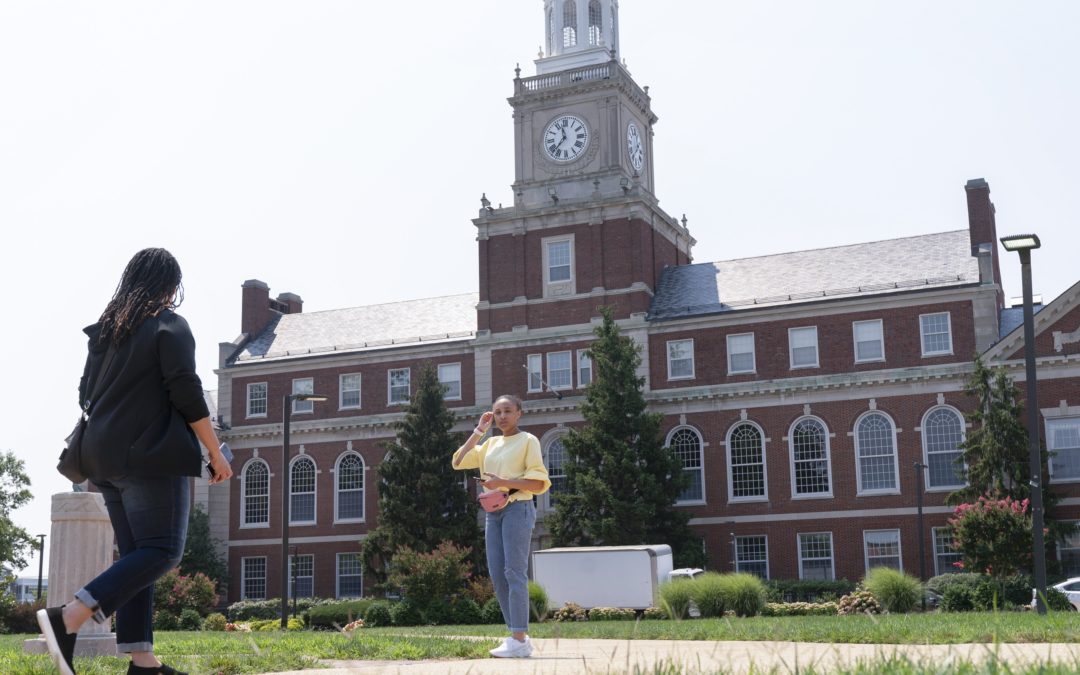
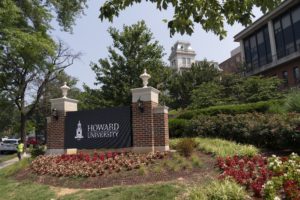
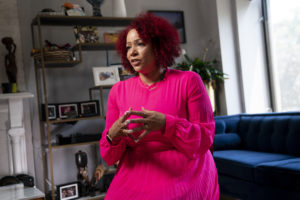
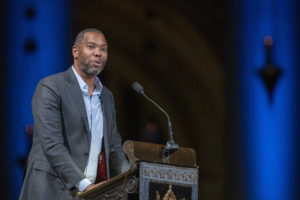
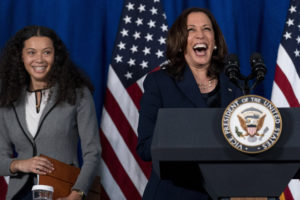
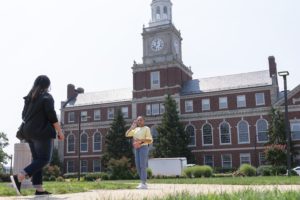


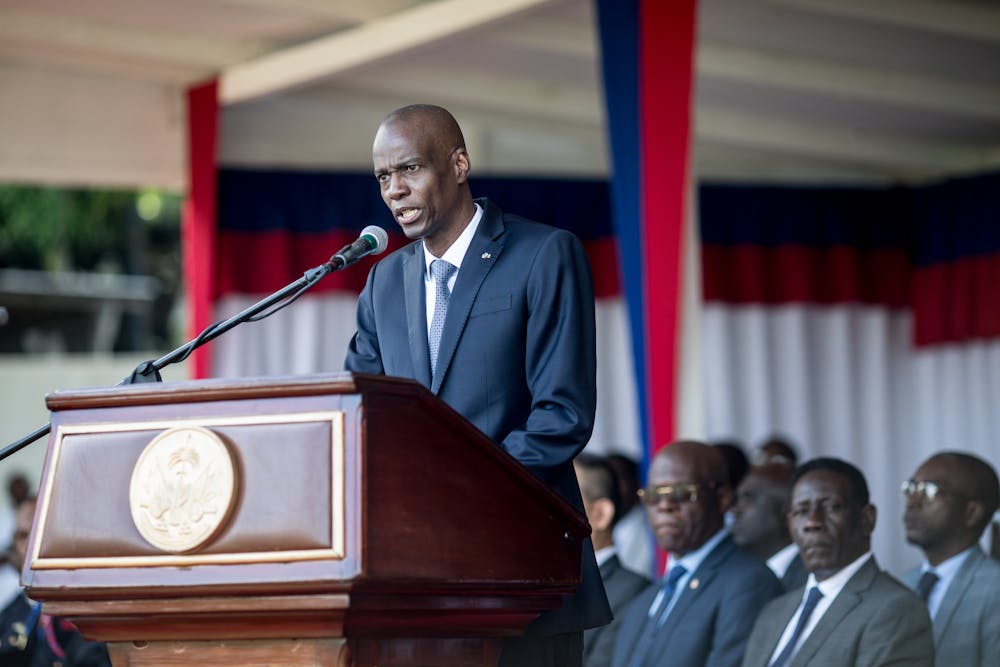
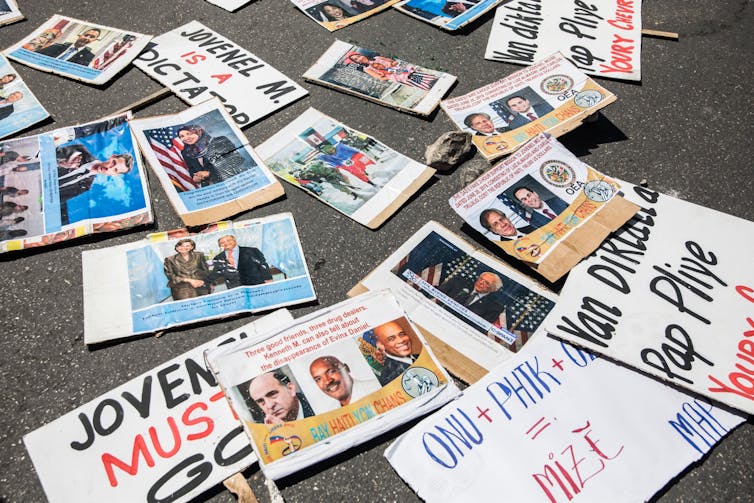
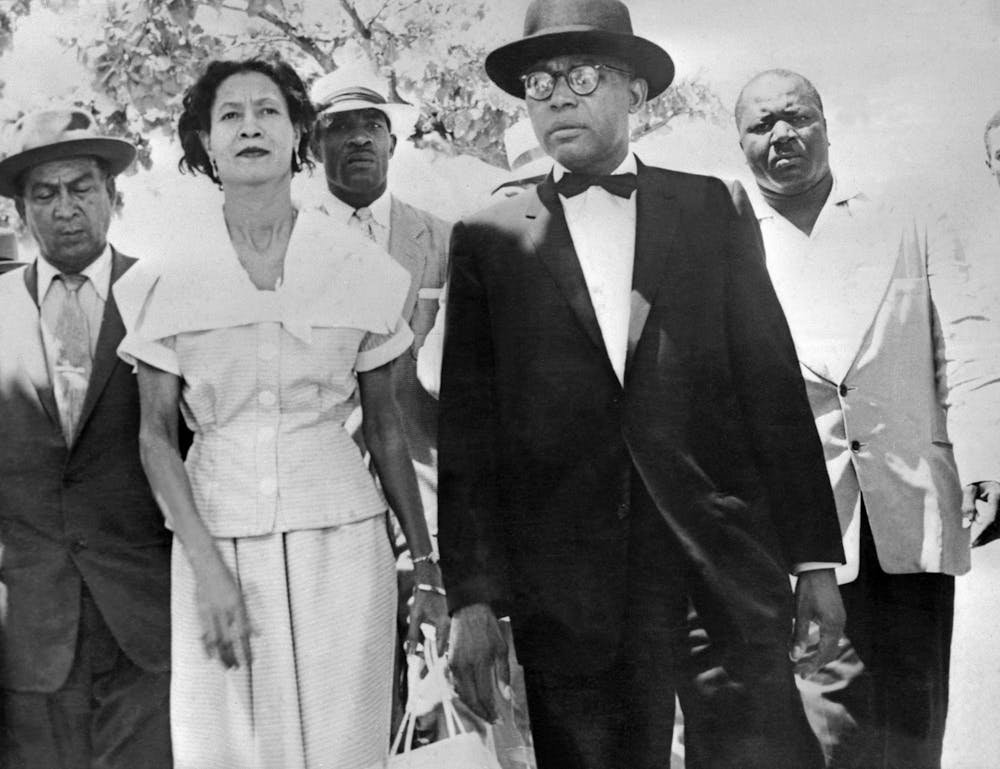


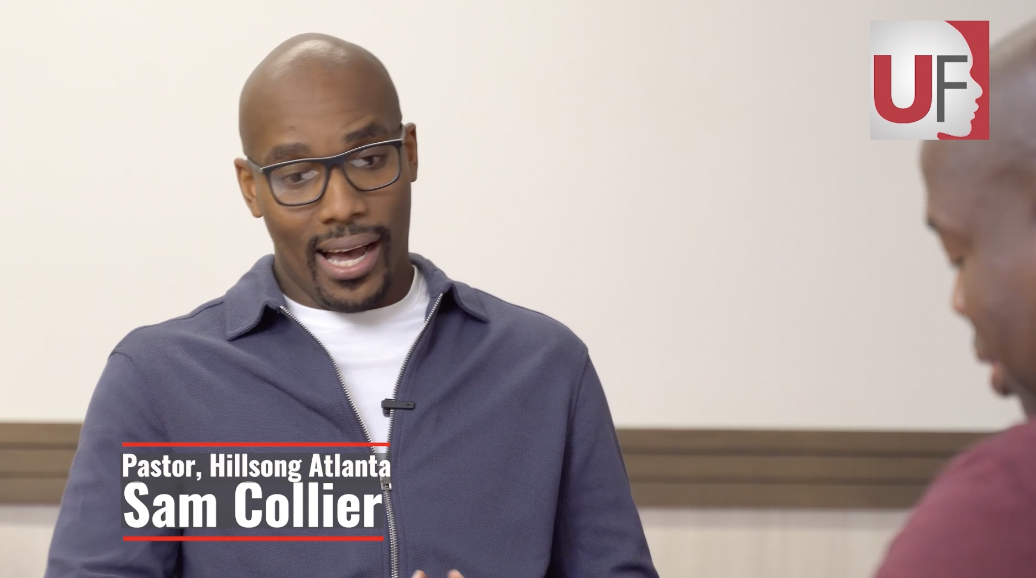
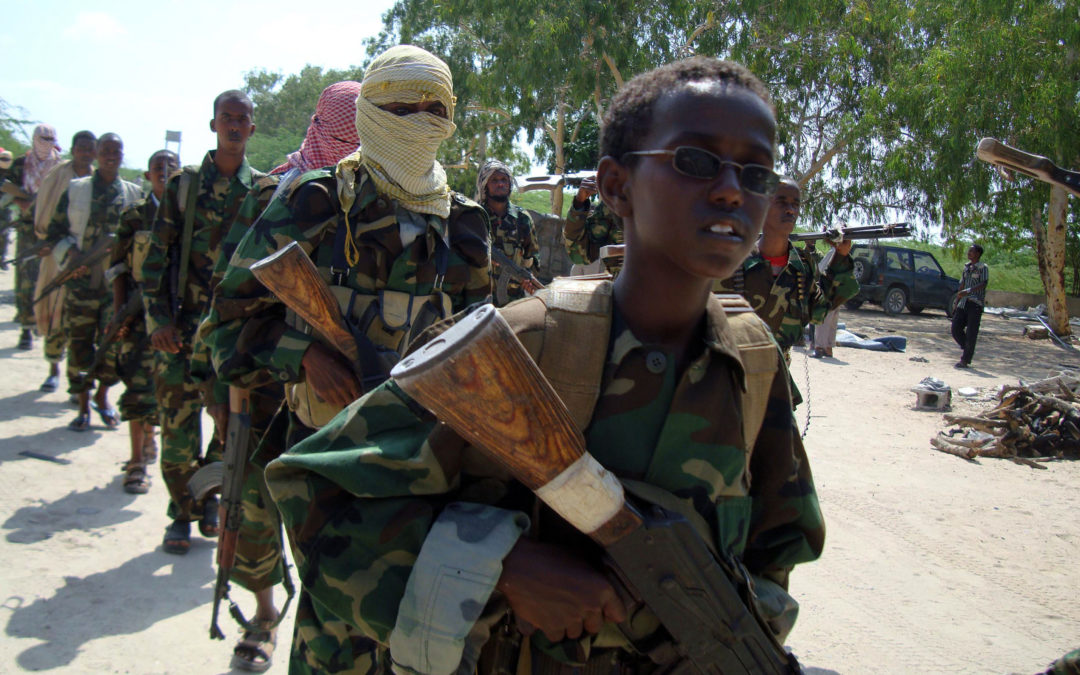
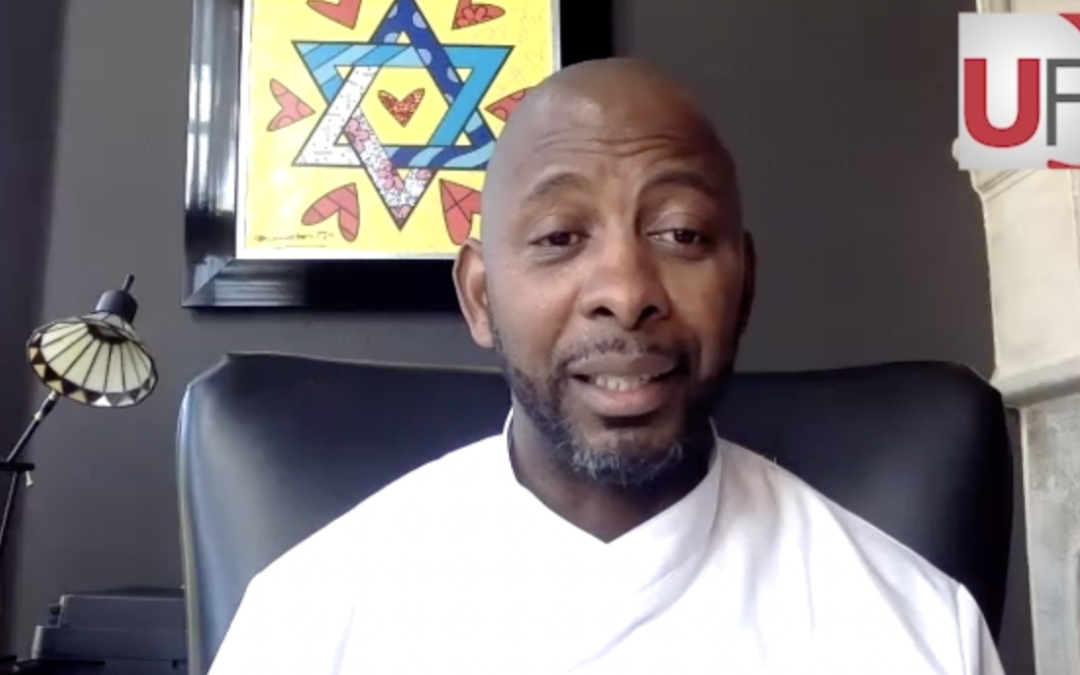

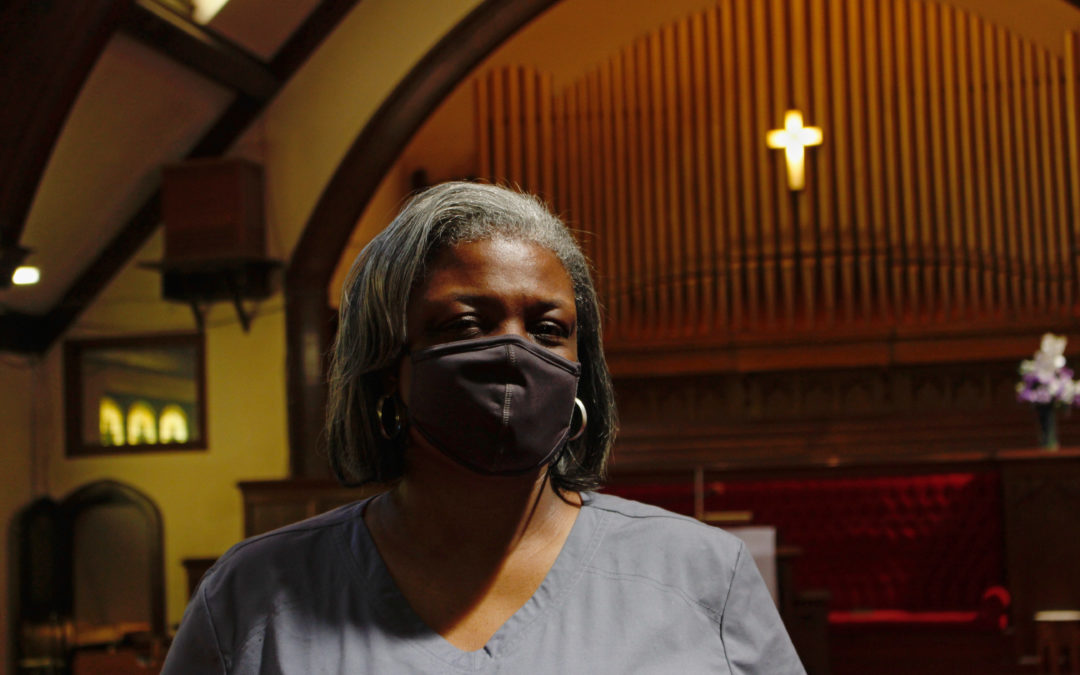
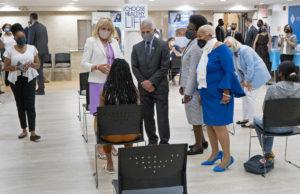
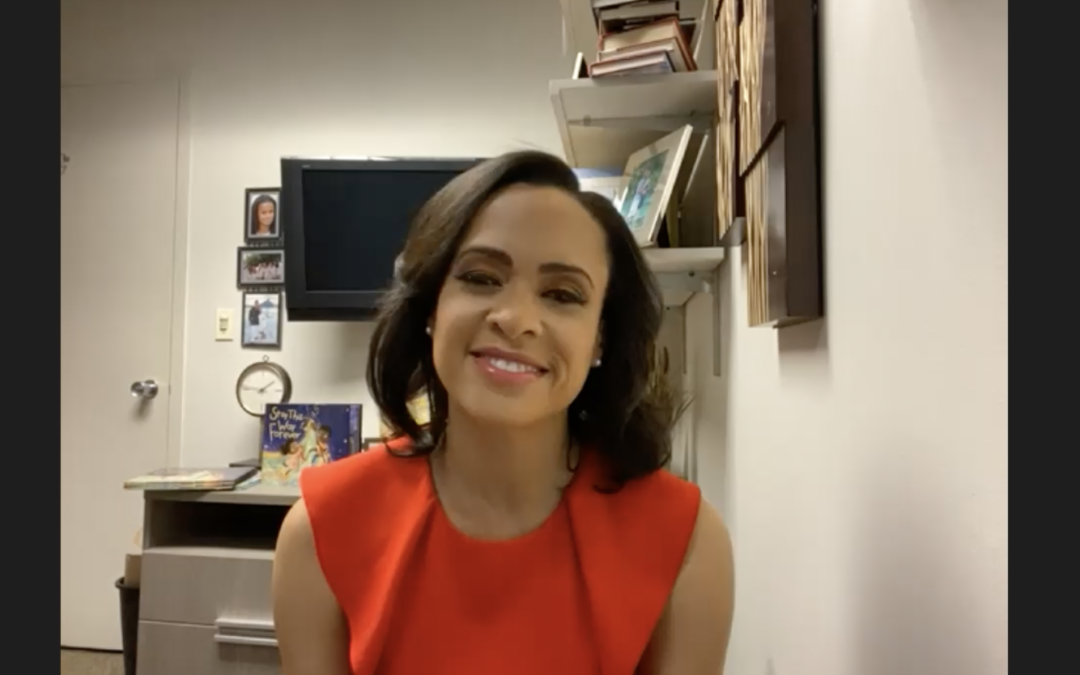
 As parents or adults with young children in our lives it can often feel like our children’s childhoods are flying by and we want to capture moments and memories as we are experiencing them. We must find intentional balance in how to instill wisdom in the next generation while nurturing creativity and innocence that life can often be challenged as we grow older. UrbanFaith interviewed Linsey Davis, Emmy award winning journalist and children’s book author about her newest book Stay This Way Forever which captures moments of the joys and challenges of kids growing up. The full interview is linked above with excerpts below which have been edited for clarity.
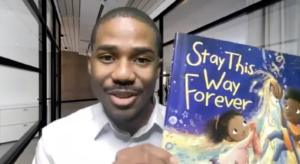

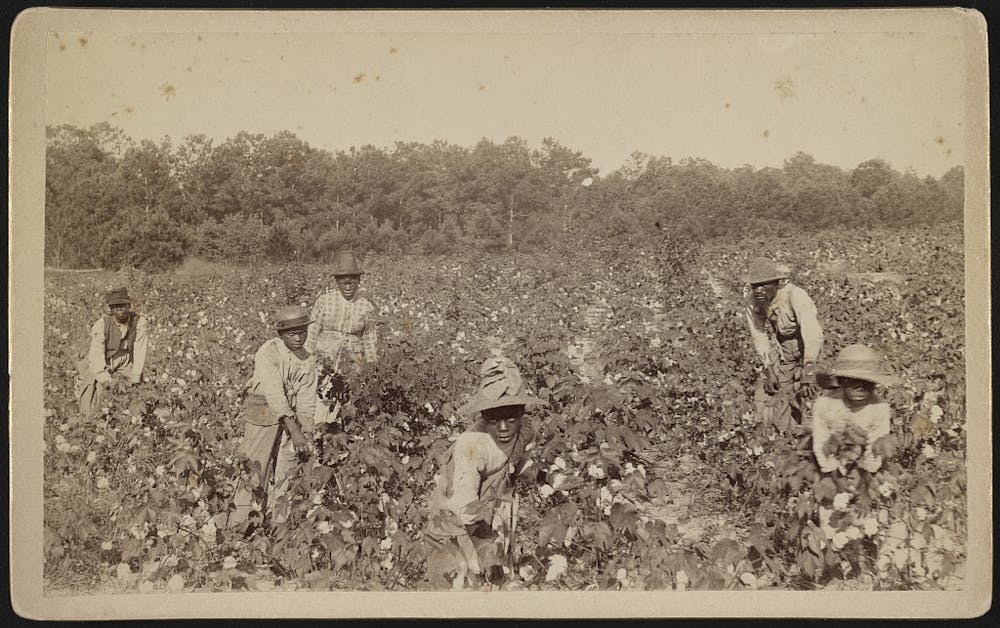
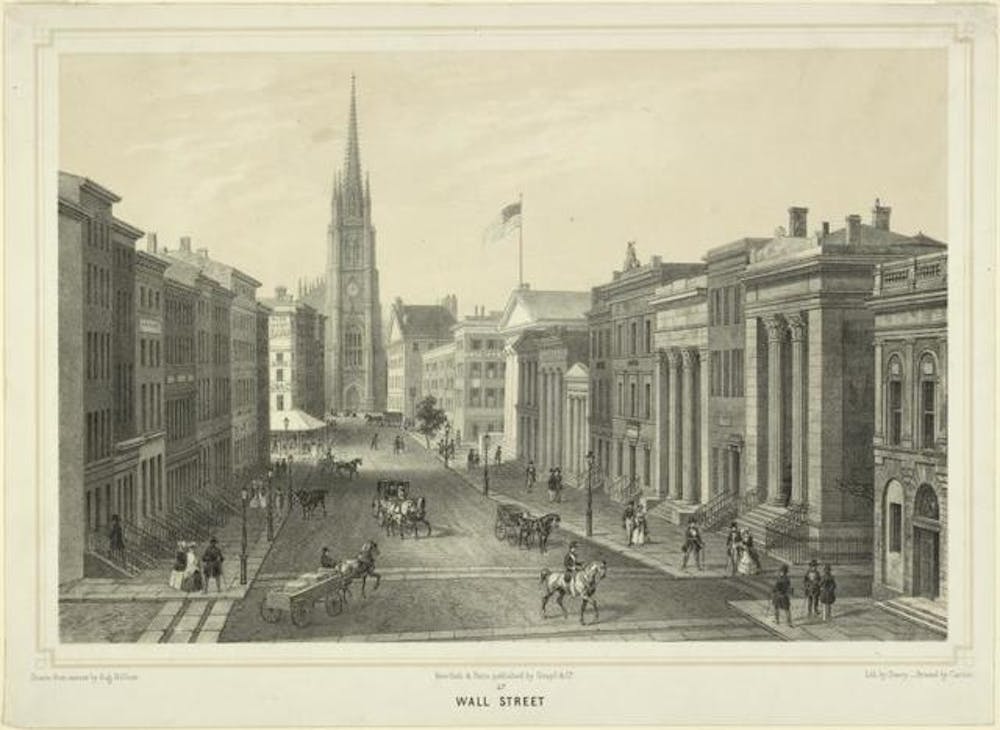



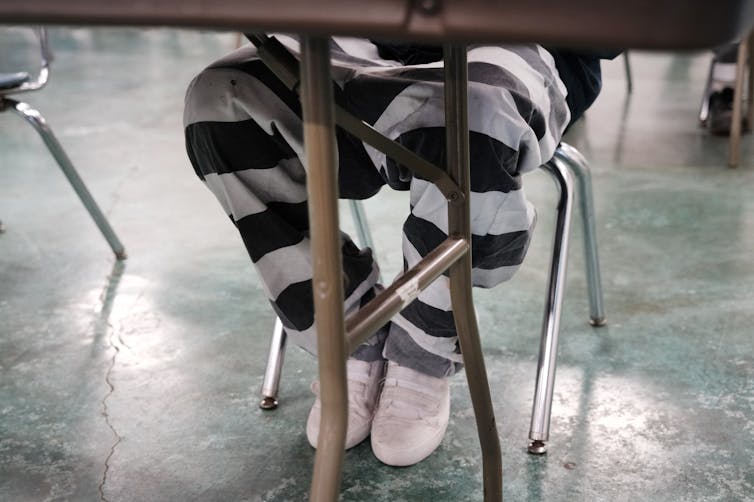



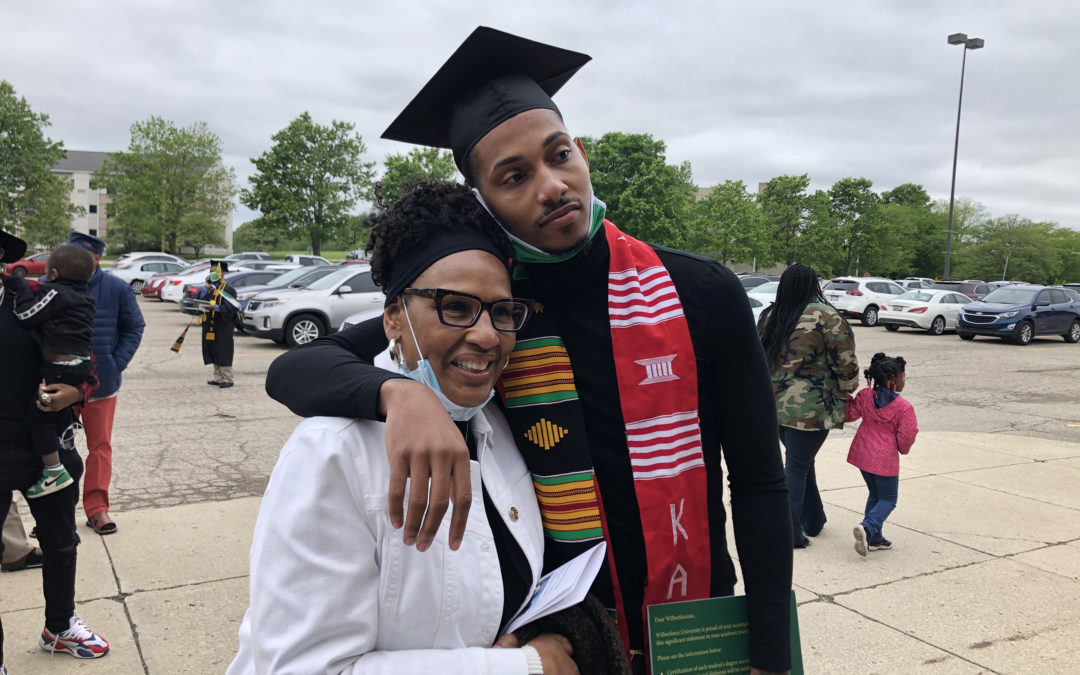


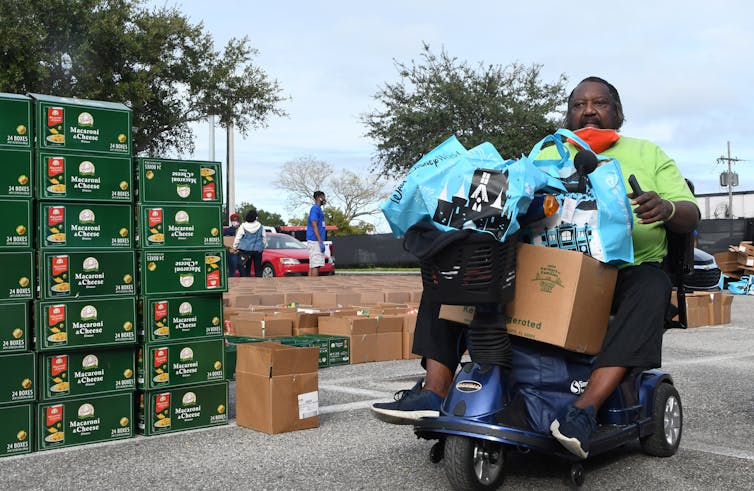

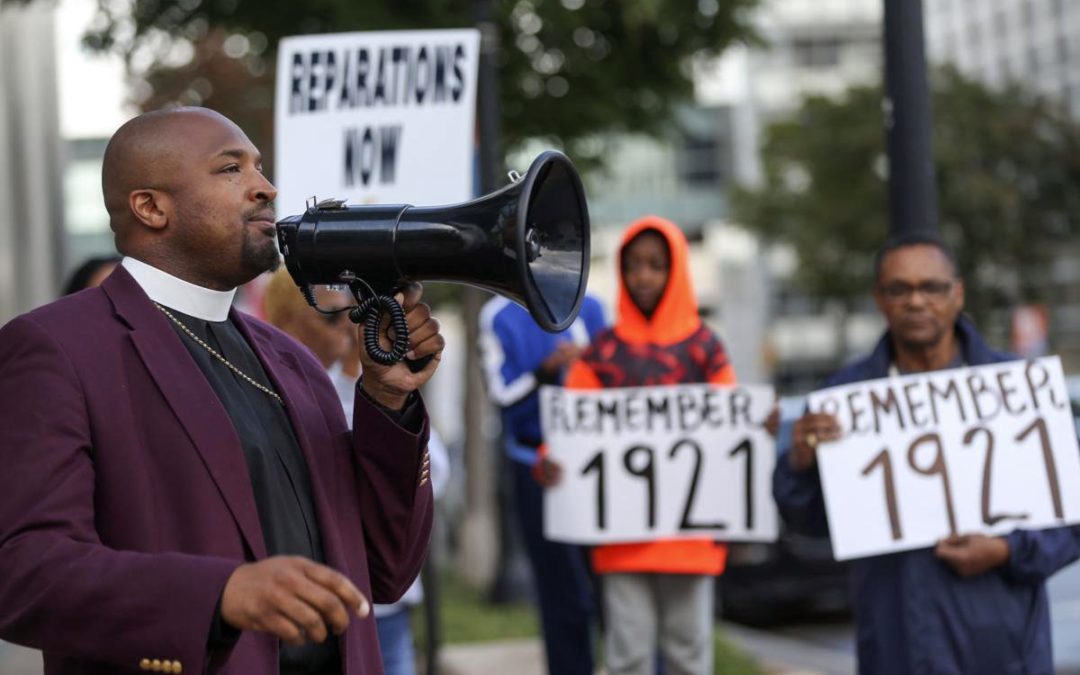

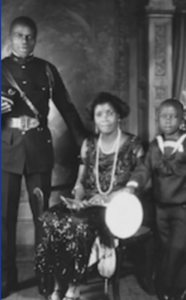 In this case, when it came to a white woman’s accusations, punishment meant death, and knowing her scream was a likely death sentence, young Rowland ran away. He was later seized and apprehended with the intent of being lynched. Word of a Black man raping a defenseless white girl spread throughout the Tulsa area. Dozens and then hundreds of white men grew to a mob of over 2000 white men gathered at the County courthouse demanding justice. But justice for what? Sarah Page wasn’t assaulted, her clothes weren’t ruffled, and though her story wavered during questioning, she ultimately affirmed she was not harmed.
 And there you have it, fake news. But the damage had already been done, and the wheels were set in motion. Armed Black World War 1 veterans were among the less than 100 members of the Greenwood community who came to prevent another lynching of a Black man, as thousands had been lynched since the generation of reconstruction. A verbal confrontation led to a shot being fired, triggering what would soon become the bloodiest racial conflict in American history. Some 500 members of the white mob were armed and deputized by city officials, and those who didn’t own weapons looted stores to obtain guns and ammunition along the way. Thousands of angry white men descended upon “Little Africa” as a few white families provided sanctuary to those fleeing from violence.

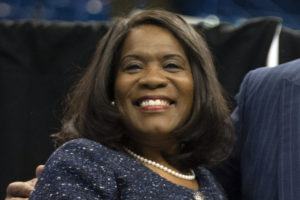
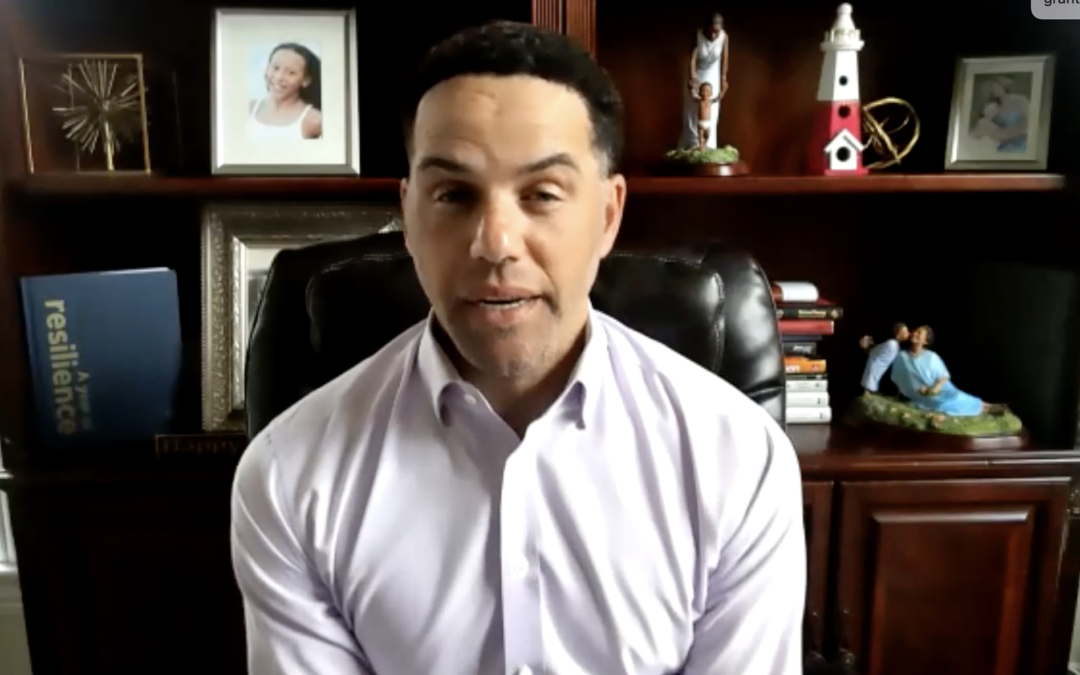

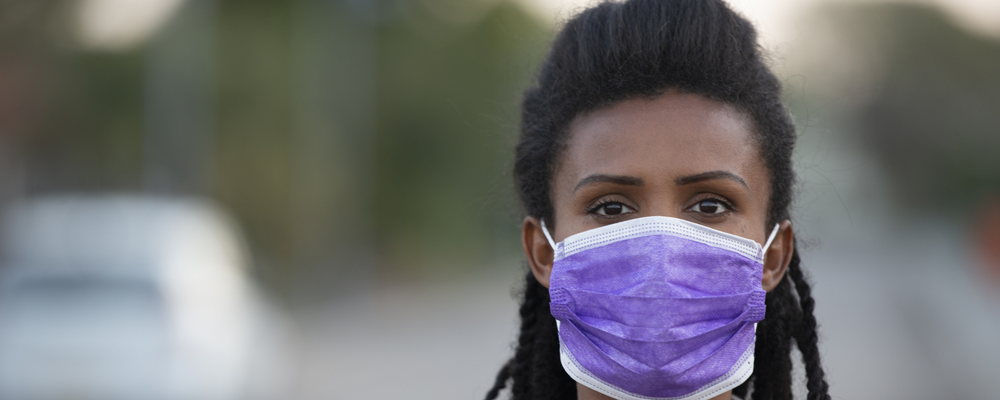




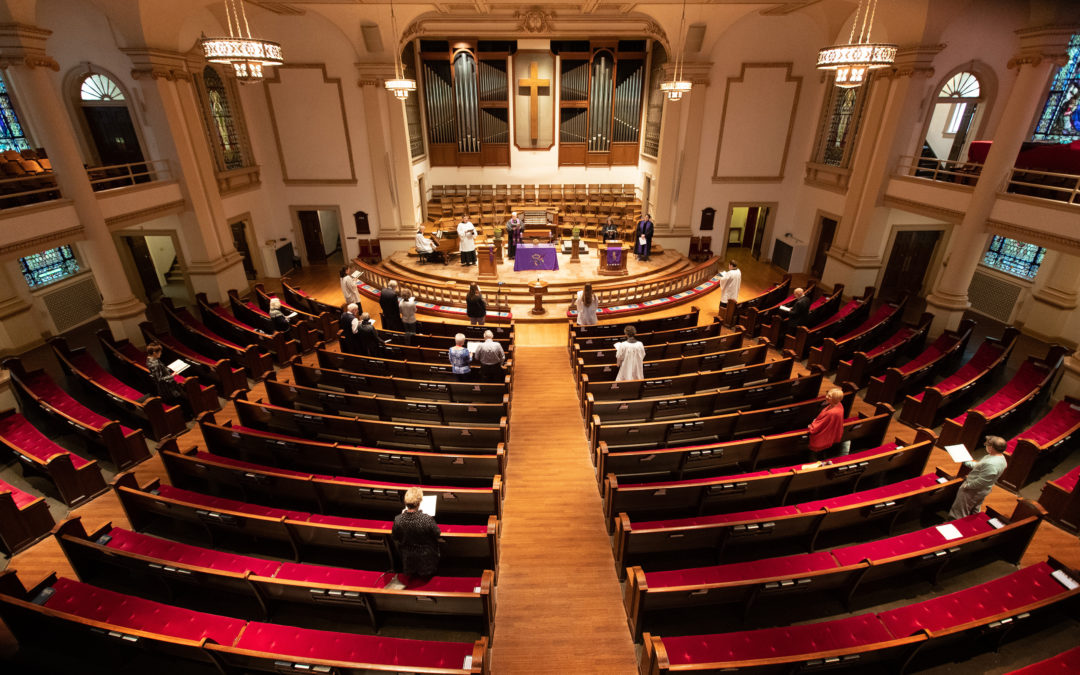
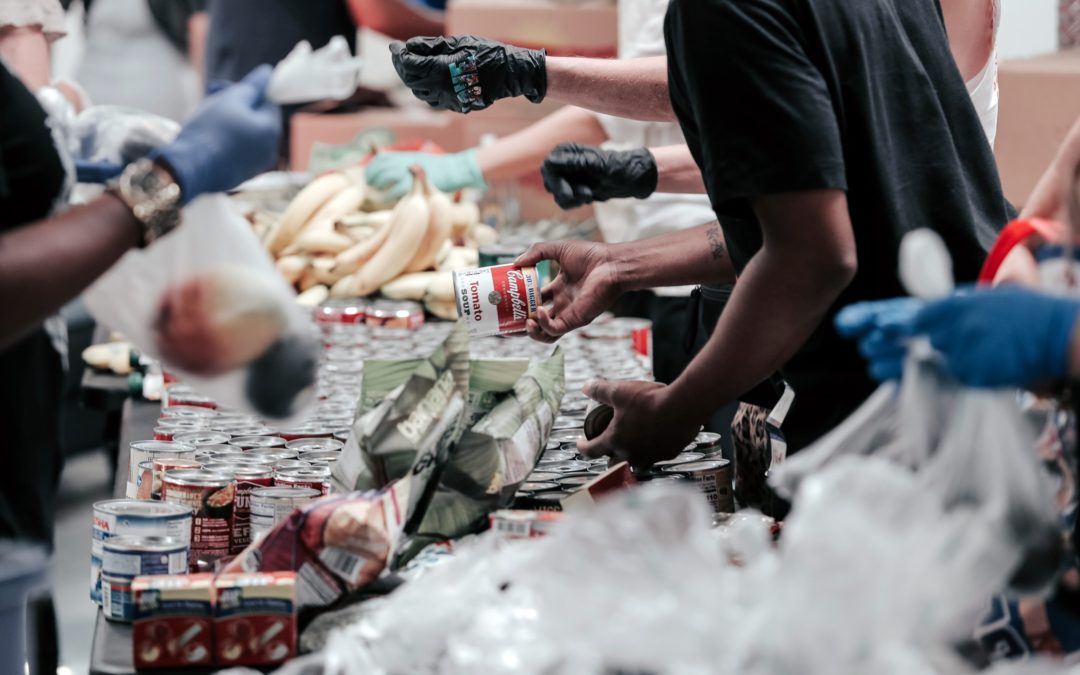
 (RNS) — In a period of significant pressure on our democracy, our health and our overall well-being as a people, faith has provided a hidden infrastructure that has held America together. We miss out on much good when we do not recognize the role of faith and religious institutions in our communities.

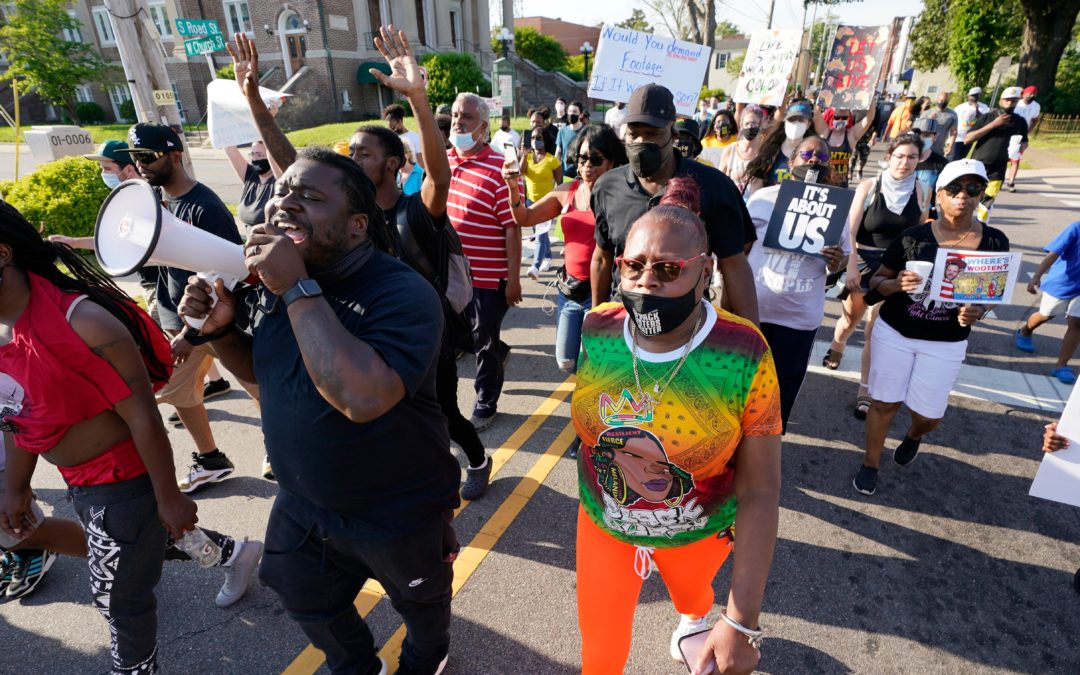

 Being healthy is pretty simple, but most people in the United States find it pretty hard. And for an African American, it’s over-the-top hard. Not only is the struggle of
  It seems simple to break a habit then. All we need to do is recognize our cues. Then we can choose alternate behaviors that lead to a different reward.
 How about the many African Americans who are single moms? You don’t have time to cook healthy meals for the kids. You are just trying to make it through the day and get some peace once they are finally put to bed.
 Don’t get me wrong. I love soul food. I think that the distinct flavor of the cuisine that we grew up with is worth having once in a while but I also believe that some of the ingredients have gone the way of just wowing the taste buds instead of delivering the sustenance we need.