The recent wave of protests against police brutality and systemic racism has inspired numerous comparisons with the civil rights movement of the 1950s and 1960s.
Commentators frequently depict the charismatic leadership of Martin Luther King Jr. and Malcolm X in sharp contrast with the decentralized and seemingly leaderless nature of the current movement.
Despite the efforts of activists and historians to correct this “leaderless” image, the notion persists. Such comparisons reflect the cultural memory – not the actual history – of the struggle for Black equality.
American Civil Rights leader Dr. Martin Luther King Jr., flanked by Rev. Ralph Abernathy (center left) and Nobel Prize-winning political scientist and diplomat Ralph Bunche (center right) during the third Selma to Montgomery, Alabama march for voting rights, March 21, 1965. PhotoQuest/Getty Images
Heroic struggle led by charismatic men
Through collective remembering and forgetting, societies build narratives of the past to create a shared identity – what scholars refer to as cultural memory.
The civil rights movement is remembered as a heroic struggle against injustice led by charismatic men. That is not the whole story.
King’s soaring rhetoric and Malcolm’s unflinching social critiques have supplanted recollection of the significant work performed by legions of local leaders, whose grassroots organizational style more closely resembled the efforts of Black Lives Matter activists and other contemporary social justice groups to build movements full of leaders.
The iconic images of 1950s and 1960s Black protesters marching, kneeling and being arrested while dressed in their “Sunday best” illustrated the respectability politics of the day
These efforts, designed to cultivate white sympathy for civil rights activists, relied on conformity with patriarchal gender roles that elevated men to positions of visible leadership, confined women to the background and banished LGBTQ individuals to the closet.
Yet the movement could not have happened without the extraordinary leadership of Black women like veteran organizer Ella Baker. Baker’s model of grassroots activism and empowerment for young and marginalized people became the driving force of the Student Nonviolent Coordinating Committee, known as SNCC, and other nonviolent protest organizations, past and present.
Flyer announcing a Youth Leadership Meeting, that was to be held at Shaw University, Raleigh, North Carolina, on April 15-17, 1960, and bearing the names of Dr. Martin Luther King Jr. and Ella J. Baker, the president and executive director, respectively, of the Southern Christian Leadership Conference, April 1960. New York Public Library/From the New York Public Library/Smith Collection/Gado/Getty Images).
The decentralized structure of the current movement builds on this history of grassroots activism while working to avoid replicating the entrenched sexism and homophobia of an earlier era.
Amplifying voices
SNCC transformed lives by recognizing talent and empowering marginalized people. As Joe Martin, one of the organizers of a student walkout in McComb, Mississippi, recalled, “If you had a good idea it was accepted regardless of what your social status was.”
Ella Baker, NAACP Hatfield representative, Sept. 18, 1941. Afro American Newspapers/Gado/Getty Images
Endesha Ida Mae Holland, a teenage prostitute, found purpose as a SNCC field secretary, organizing and leading marches in Greenwood, Mississippi. Facing down Police Chief Curtis Lary “made me feel so proud,” she recalled, and “people start looking up into my face, into my eyes” with respect. Holland went on to become an award-winning playwright and distinguished university professor.
Black Lives Matter co-founders Alicia Garza and Patrisse Cullors also encourage strategies that place marginalized voices at the center.
Elevating “Black trans people, Black queer people, Black immigrants, Black incarcerated people and formerly incarcerated people, Black millennials, Black women, low income Black people, and Black people with disabilities” to leadership roles, they wrote, “allows for leadership to emerge from our intersecting identities, rather than to be organized around one notion of Blackness.”
Black women and teens have played a critical role in organizing, leading and maintaining the momentum of recent protests.
Kimberly Jones captured the nation’s attention with an impassioned takedown of institutional racism and debates over appropriate forms of protest. After repeatedly breaking the social contract to keep wealth and opportunity out of reach for black communities, Jones concludes, white Americans “are lucky that what black people are looking for is equality and not revenge.”
Women have organized family-friendly demonstrations, including the “Black Mamas March” in Charlotte, North Carolina, and a “Black Kids Matter” protest in Hartford, Connecticut.
Six young women, aged 14 to 16, organized a peaceful protest attracting more than 10,000 people in Nashville, Tennessee, while 17-year-old Tiana Day led a march on the Golden Gate Bridge in San Francisco.
Full of leaders
Seventeen-year-old Tiana Day leads a march on the Golden Gate Bridge in San Francisco, June 6, 2020, to protest the death of George Floyd. AP Photo/Jeff Chiu
The adaptive “low ego/high impact” leadership model, in which leaders serve as coaches helping groups build their own solutions, has become popular among current social justice organizations, but it is not new.
Baker encouraged civil rights organizations to “develop individuals” and provide “an opportunity for them to grow.” She praised SNCC for “working with indigenous people, not working for them.”
“You don’t have to worry about where your leaders are,” former SNCC organizer Robert Moses reflected. “If you go out and work with your people, then the leadership will emerge.”
Campaigns are exhausting and external recognition as a “leader” can take a heavy toll. Spreading leadership around helps to protect any one person from becoming a target for retaliation while advancing a stream of talent to rise as individual energy wanes.
Returning from a citizenship training program in Charleston, South Carolina, in 1963, Fannie Lou Hamer was arrested and severely beaten, leaving her with permanent injuries. Holland’s mother died when their house in Greenwood, Mississippi, was bombed in 1965 in retaliation for her activism.
Civil rights worker Anne Moodyrecounted how the physical and psychological toll of constant harassment by white supremacists in 1963 forced her to leave a voter registration drive in Canton, Mississippi, saying “I was on the verge of a breakdown” and “would have died from lack of sleep and nervousness” had she stayed “another week.”
In a 2017 interview, Erica Garner, who became a tireless campaigner against police brutality after her father, Eric Garner, died from a New York police officer’s chokehold in 2014, echoed Moody’s comments.
“I’m struggling right now with the stress and everything. … The system beats you down to where you can’t win,” she said. Just three weeks after that interview, Erica Garner died of a heart attack at the age of 27.
Comparisons to the romanticized cultural memory of charismatic leadership in the Civil Rights Movement devalues the hard work of today’s activists – as well as those who worked hard outside of the limelight in the earlier movement. Social change – then and now – derives from a critical mass of local work throughout the nation. Those who cannot find leaders in this movement are not looking hard enough.
Before he was a Democratic congressman and before he was a civil rights activist, Rep. John Lewis preached to the chickens on his family’s farm as a young boy.
It’s a story staffers of Lewis can repeat by heart because they’ve heard it so many times.
“They would bow their heads; they would shake their heads,” he recounts in footage from an appearance at a Houston church in the new documentary “John Lewis: Good Trouble.”
“They never quite said ‘Amen,’ but they tended to listen to me much better than some of my colleagues on the other side listen to me today in the Congress.”
The documentary, presented through a partnership including Magnolia Pictures and CNN Films, traces the journey of Lewis, now 80, from the fields of Alabama to the halls of Congress. The film portrays how Lewis was shaped by his faith and guided by religious leaders such as the Rev. Martin Luther King Jr. and the Rev. James Lawson, two advocates for nonviolent civil rights action.
“Faith is an integral part of Mr. Lewis’ life but also part of his activism,” said Dawn Porter, director of the documentary, who filmed the congressman for more than a year starting shortly before the 2018 election.
Though he is a politician rather than a preacher per se, Lewis considers politics to be his calling, she said.
“He started preaching to chickens and now in many ways even though he’s a layperson he preaches to us,” she said of the man with a seminary degree as well as a bachelor’s degree in religion and philosophy. “That is part of the reason why people find it so motivating and so comforting when he speaks.”
The 96-minute documentary, which is to be released on demand and in select theaters on Friday (July 3), includes what has become Lewis’ mantra in its title.
“My philosophy is very simple,” he says in the film, which is also expected to air on CNN in late September. “When you see something that is not right, not fair, not just, say something. Do something. Get in trouble. Good trouble. Necessary trouble.”
The documentary’s producers have created a “Good Trouble Sunday” promotion for the movie, encouraging houses of worship to host a digital screening starting this Sunday,for which they can keep a portion of ticket sales.
Faith leaders on a mid-June conference call promoting the documentary expressed appreciation for Lewis, who was diagnosed with cancer late last year, and his long service as a role model.
The Rev. Jamal Harrison Bryant, senior pastor of New Birth Missionary Baptist Church outside Atlanta, recalled seeking advice from Lewis in the 1990s, when as the NAACP’s youth director Bryant received pushback for suggesting the civil rights organization reach out to the hip-hop generation.
“He said to me: ‘Jamal, change is never politically correct,’” Bryant recalled. “‘If everybody is in agreement, it’s not that radical.”
In the documentary, Lewis, a member of Atlanta’s historic Ebenezer Baptist Church, recalled his last meal in downtown Washington just before embarking on a trip as a Freedom Rider seeking equal access to accommodations for Black Southerners.
“Growing up in rural Alabama, I never had Chinese food before,” he recalled. “But someone that evening said, ‘You should eat well because this might be like the Last Supper.’”
American civil rights activist John Lewis on April 16, 1964. Photo by Marion S. Trikosko/LOC/Creative Commons
Porter said those comments showed how Lewis and other young civil rights activists did not take their work lightly as they prepared for rides on segregated buses or sit-ins at segregated lunch counters.
“You’ll see in the movie that Rev. Jim Lawson, who was coaching and guiding the students, had them rehearse,” she said of Lewis and his fellow activists. “And I do think he decided that life under a segregated system was not the life that he wanted to live.”
Archival footage — some of which the congressman says he’d never seen before — reviews landmark, as well as lesser-known, moments in Lewis’ history. He was the youngest speaker at the 1963 March on Washington for Jobs and Freedom. On his first attempt on “Bloody Sunday” to cross the Edmund Pettus Bridge in 1965, he was beaten by Alabama state troopers and thought he would die as he protested for voting rights.
The film’s crew followed him as he supported fellow Democrats in the recent election and traveled with a bipartisan group of politicians and faith leaders on the annual pilgrimage to Alabama with the Faith and Politics Institute.
“Congressman Lewis has conveyed to all of us over the course of his lifetime that (the) fundamental right to vote is a foundational right,” said Joan Mooney, CEO of the institute, on the recent conference call. “So more than the transactional act of voting, Congressman Lewis talks about its sacredness, and voter participation in a democracy is the active expression of the values of all human beings.”
Alexis Mann’s life story is a case study in beating the odds. She grew up poor, dropped out of school, had a baby at 16, and ran away from home.
“I was determined to turn the stereotypical fate of teen moms on its face,” said Mann, who went on to graduate from high school and college and earn her master’s degree in special education.
Today, she teaches at Harrison Education Center, a Minneapolis high school for students with emotional and behavioral challenges, many of whom have experienced trauma. Mann’s story of emerging from desperate circumstances and thriving “provides students with hope, and helps them not give up on themselves.”
Her job can be challenging in the best of times. The work is even more demanding now, in light of the coronavirus, which has forced classes online, and the recent police killing of George Floyd, which happened just a few miles from the high school. In recent weeks, Mann has had to facilitate some difficult conversations, like when her 8-year-old grandson asked her if what happened to Floyd was going to happen to him.
“We say we don’t don’t know,” she said, “that we hope not.”
Mann spoke recently with Chalkbeat.
This interview has been edited for length and clarity.
Minneapolis has garnered international attention in recent weeks, following the police killing there of George Floyd and the protest movement that followed. How are your students processing the tragedy?
Most or all of my students have had encounters with the police. Many of them are on probation, and some have served time. They have a genuine lack of trust with the so-called criminal justice system. This is a time when students are asking themselves: What are my priorities? What are my needs? And for some of them school has not been a priority right now. With the protests, they are wanting to be part of that and showing up in large numbers to have their voices heard.
The biggest takeaway for them is to rise up and use their voices, to practice their civic participation and to vote, and to show up in spaces where policies are being made and decisions are affecting them. We do a lot of community engagement work in class; I take them to the state capitol to teach them about the power of their voices and the importance of fighting for equal protection, as is promised under the law.
Were you surprised by what happened to George Floyd?
What took me by surprise was the grim smirk on [the officer’s] face. He had this look like so what. It reminds me of how teachers sometimes treat their students, knowing that they’ll be protected regardless of job performance. Some teachers create a racist environment, a hostile learning environment, where some students get preferential treatment and others are over-punished. If Johnny asks to go to the bathroom, fine; if Tyrone asks, they don’t believe him.
Tell us about your own experience with school and how it impacts your work today.
I grew up in the Rondo neighborhood, a historically black community of St. Paul. When I was in elementary school, my parents bused us out to St. Anthony Park, which was a primarily white school. I remember Miss Buttler, the only black teacher in the school. I always hoped I would be lucky enough to be assigned to her classroom, but I got another teacher. Looking back, having teachers who I did not connect with caused me to lose interest in school.
I started high school in a suburb outside of Atlanta. I skipped class, refused to do my work, flunked, and ran away — back to Minnesota. I decided that my only way out was to become a teen mom, and three months after my daughter was born I struck out on my own at the age of 16, and I never looked back. I was determined to turn the stereotypical fate of teen moms on its face. Ultimately, I graduated from Central High School in St. Paul with my class in 1993, and went on to college and graduate school.
My story gives me a heightened ability to relate to my students and puts me in a place where I can be more considerate of their needs. I did not grow up with opportunities for success readily available, but through all that — what I encountered coming out of poverty — I’m able to provide students with a blueprint.
What’s one thing you’ve read that’s helped you become a better educator?
In recent months, you’ve been teaching your classes remotely and also facilitating at-home learning for your children and grandchildren. What advice would you give to parents who are trying to help their own children during the pandemic?
Try to keep your kids on a consistent schedule, and make sure they are going to bed and waking up at a reasonable time. Create a distance learning space (or spaces) where your kids can focus and work quietly. It may also be a good idea to establish agreements with your children. For example, no pajamas in the distance learning space or no video games during the distance learning day. Lastly, create incentives for meeting milestones that you establish.
Speaking of advice, what’s the best advice you ever received — and how have you put it into action?
My dad once told me, “The ones who know the most say the least, so hear more than you say and think before you speak.” Being a good listener is paramount to establishing respect, building rapport, and cultivating healthy relationships, which has been extremely helpful in building strong connections with my students and preventing and de-escalating behaviors.
What gives you hope at this moment?
Distance learning is giving our students access to learning 21st-century technology skills that they were not getting before, and they will need these skills to compete in the future job market. I hope that we can continue to provide distance learning as an option for students who are uncomfortable in the classroom environment, or who skip school because of safety reasons, or who need to earn extra credit to graduate. I support using distance learning to create more equitable access to education and technology skills.
Before he was a Democratic congressman and before he was a civil rights activist, Rep. John Lewis preached to the chickens on his family’s farm as a young boy.
It’s a story staffers of Lewis can repeat by heart because they’ve heard it so many times.
“They would bow their heads; they would shake their heads,” he recounts in footage from an appearance at a Houston church in the new documentary “John Lewis: Good Trouble.”
“They never quite said ‘Amen,’ but they tended to listen to me much better than some of my colleagues on the other side listen to me today in the Congress.”
The documentary, presented through a partnership including Magnolia Pictures and CNN Films, traces the journey of Lewis, now 80, from the fields of Alabama to the halls of Congress. The film portrays how Lewis was shaped by his faith and guided by religious leaders such as the Rev. Martin Luther King Jr. and the Rev. James Lawson, two advocates for nonviolent civil rights action.
“Faith is an integral part of Mr. Lewis’ life but also part of his activism,” said Dawn Porter, director of the documentary, who filmed the congressman for more than a year starting shortly before the 2018 election.
Though he is a politician rather than a preacher per se, Lewis considers politics to be his calling, she said.
“He started preaching to chickens and now in many ways even though he’s a layperson he preaches to us,” she said of the man with a seminary degree as well as a bachelor’s degree in religion and philosophy. “That is part of the reason why people find it so motivating and so comforting when he speaks.”
The 96-minute documentary, which is to be released on demand and in select theaters on Friday (July 3), includes what has become Lewis’ mantra in its title.
“My philosophy is very simple,” he says in the film, which is also expected to air on CNN in late September. “When you see something that is not right, not fair, not just, say something. Do something. Get in trouble. Good trouble. Necessary trouble.”
The documentary’s producers have created a “Good Trouble Sunday” promotion for the movie, encouraging houses of worship to host a digital screening starting this Sunday,for which they can keep a portion of ticket sales.
Faith leaders on a mid-June conference call promoting the documentary expressed appreciation for Lewis, who was diagnosed with cancer late last year, and his long service as a role model.
The Rev. Jamal Harrison Bryant, senior pastor of New Birth Missionary Baptist Church outside Atlanta, recalled seeking advice from Lewis in the 1990s, when as the NAACP’s youth director Bryant received pushback for suggesting the civil rights organization reach out to the hip-hop generation.
“He said to me: ‘Jamal, change is never politically correct,’” Bryant recalled. “‘If everybody is in agreement, it’s not that radical.”
In the documentary, Lewis, a member of Atlanta’s historic Ebenezer Baptist Church, recalled his last meal in downtown Washington just before embarking on a trip as a Freedom Rider seeking equal access to accommodations for Black Southerners.
“Growing up in rural Alabama, I never had Chinese food before,” he recalled. “But someone that evening said, ‘You should eat well because this might be like the Last Supper.’”
American civil rights activist John Lewis on April 16, 1964. Photo by Marion S. Trikosko/LOC/Creative Commons
Porter said those comments showed how Lewis and other young civil rights activists did not take their work lightly as they prepared for rides on segregated buses or sit-ins at segregated lunch counters.
“You’ll see in the movie that Rev. Jim Lawson, who was coaching and guiding the students, had them rehearse,” she said of Lewis and his fellow activists. “And I do think he decided that life under a segregated system was not the life that he wanted to live.”
Archival footage — some of which the congressman says he’d never seen before — reviews landmark, as well as lesser-known, moments in Lewis’ history. He was the youngest speaker at the 1963 March on Washington for Jobs and Freedom. On his first attempt on “Bloody Sunday” to cross the Edmund Pettus Bridge in 1965, he was beaten by Alabama state troopers and thought he would die as he protested for voting rights.
The film’s crew followed him as he supported fellow Democrats in the recent election and traveled with a bipartisan group of politicians and faith leaders on the annual pilgrimage to Alabama with the Faith and Politics Institute.
“Congressman Lewis has conveyed to all of us over the course of his lifetime that (the) fundamental right to vote is a foundational right,” said Joan Mooney, CEO of the institute, on the recent conference call. “So more than the transactional act of voting, Congressman Lewis talks about its sacredness, and voter participation in a democracy is the active expression of the values of all human beings.”
Black History 365 includes originally composed music by Grammy-nominated producer Dr. Kevin “Khao” Cates, who has worked with notables such as Jay-Z, the late Nipsey Hustle, and Ludacris. This snippet of video is from a webcast about the project.
Dr. Walter Milton, Jr., remembers the shame he felt back in elementary school when his teacher announced to the class that they were going to learn about Black history and then started with slavery. He said he wanted to hide under the table. But later when he returned home that night, he also remembers the impact his parents had on his spirit when they explained that African Americans are descendants of ancient kings and queens. Dr. Milton and his partner, Dr. Joel Freeman, want other children to have that same impactful, eye-opening experience about Black history and that’s why they created the Black History 365 education curriculum.
“We want to give the students this whole experience about the Moors, the hunting, fishing, gathering, agriculture, all these different aspects how the civilizations began throughout ancient Africa,” said Dr. Freeman, who has included his personal photo collection of artifacts from Africa in the curriculum. “So, there’s images from the collection, where I’ve had people of African descent say, ‘Wow, I almost feel like I’m in that picture. I see my ancestors. I see myself there.’”
Both Milton and Freeman have strong educational and professional bonafides to take on a mission of bringing Black history to life in an innovative and technological way that will capture the heart and spirit of a new generation. Milton served as a school superintendent for twelve years in the states of New York, Michigan, and Illinois, and he taught at several universities across the United States. He’s also published several books addressing issues related to Black parents, schools, and education. Freeman served as player development mentor and character coach for the Washington Bullets/Wizards For 20 NBA seasons. He has also worked with the Association of International Schools for Africa (AISA), traveling extensively throughout the continent of Africa and conducting a number of training events for educators, government, and business leaders. Genuine documents and artifacts from Dr. Freeman’s personal collection have been showcased in exhibitions at the United Nations, White House, and Clinton Presidential Library.
“I met Joel when I was a superintendent back in Springfield, Illinois,” said Milton, adding that a friend of his insisted that he’d have a lot to talk about with the historian, who he called a “brother, but not a brother.” Milton was perplexed. “He’s a white guy? I said, okay, a white guy with Black history. No problem. So Joel and I met each other and the rest is history. He was one of the first persons that I called to start this project,” said Milton.
A Peek Inside Black History 365
When you first see the Black History 365 history curriculum book, it looks like any other textbook. But take a peek inside and that’s where the ordinary becomes extraordinary. The artifacts from Dr. Freeman’s collection are sprinkled throughout the beautifully designed schoolbook, which begins with a chapter on Ancient Africa and ends with George Floyd. Students can scan QR codes with their smart phones that lead to originally composed music by Grammy-nominated producer Dr. Kevin “Khao” Cates, who has worked with notables such as Jay-Z, the late Nipsey Hustle, and Ludacris. Cates has a doctorate in education and through his own educational program called Bridging Da Gap, he has produced more than 600 songs for K-12 grade levels. The music is meant to engage listeners, but the QR codes also link to relevant people and places related to the subject matter. The eBook version of the book will have music and videos embedded right in it, no WIFI needed. An app is in development, too, as a way to integrate current events.
“Everyone around the country who downloads the app will get a spritz of information every morning. And then it creates this technological ecosystem where a teacher can start a class with that,” said Dr. Freeman. “Hey guys, what did you think about what you saw this morning…at the dinner table…in the grocery store? Whatever it might be, it can be sparked with these conversations.”
That said, the opportunity to bring in conversations is already a staple in the book. The “Elephant Experience” is a sidebar area to the core content of the text. It represents an opportunity to talk about hot topics that are often not so easy to discuss. In other words, the “elephant in the room.” The co-founders wanted to provide a resource that would invite students, educators, parents, and anyone else who engages with the material to become critical thinkers, compassionate listeners, fact-based and respectful communicators, and action-oriented people with solutions.
“One of the things we wanted to do with this elephant experience is deal with topics like three fifths of the human being and reparations. What about tearing down statues? And are we in a post-racial society since we had a Black president for two terms? Did Africans sell Africans into slavery? Topics that people butt heads about or talk past each other or just unfriend each other on Facebook,” said Dr. Freeman.
The Black History 365 project has expanded beyond the talents of Dr. Milton, Dr. Freeman, and Dr. Cates. The team now includes 30 additional expert educators, trainers, and instructors. Eager readers will have to wait until August to receive the curriculum, but you can pre-order it for $175 at BlackHistory365education.com.
Bob Kendrick, President of the Negro Leagues Baseball Museum in Kansas City, MO, had big plans for celebrating the 100th anniversary of the founding of baseball’s Negro Leagues. He was the driving force behind an effort that would have had all 30 major league teams, for the first time, participate in a salute to the Negro Leagues in an unprecedented show of solidarity. The “Tip Your Cap” campaign originally was tied to the celebrations with teams, players, and fans in those 30 stadiums that, at some point during the game, would tip their cap in honor of the Negro leagues.
“In baseball, there’s nothing more honorable you can do than a simple tip of the cap,” said Kendrick.
Then COVID-19 put the baseball season on hold.
Kendrick was desperate to find a way to salvage the centennial celebration. That’s when he thought of a virtual Tip Your Cap campaign. A few friends who liked the idea agreed to help him. It took them two weeks to pull together the monthlong campaign, which runs from June 29 through July 23. The campaign was a hit right off the bat. Outside of the fact that it’s a warm-hearted, positive activity amid chaos, people can easily participate by submitting a photo or video of themselves tipping their cap in honor of the Negro Leagues and email it to [email protected] or post a tribute on social media with the hashtag #tipyourcap2020. Presidents Barack Obama, George W. Bush, Bill Clinton, and Jimmy Carter have all recorded video tributes, as well as civil rights hero Rachel Robinson, baseball legend Hank Aaron, Derek Jeter, Reggie Jackson, Michael Jordan, Magic Johnson, Billie Jean King, Tony Bennett, and Bob Costas, and many more. NASA Astronaut Christopher Cassidy even joined in the online celebrations from the International Space Station.
Negro Leagues Baseball Museum Celebrates 30 Years
But the centennial isn’t the only celebration happening this year for the Negro Leagues. The Negro Leagues Baseball Museum is the only one of its kind nationwide and celebrating 30 years in 2020. When it opened in 1990, no one gave it a chance.
“Here at historic 18th and Vine, there was nothing. It was like a lot of urban communities. It had died. It had been left abandoned,” said Kendrick. “Everybody thought we were crazy. But basically, it was the infinite wisdom of my dear friend, the late great, John Buck O’Neil, who said, ‘This is where we will build this museum. This is where the origins of the Negro Leagues took root. And we will build this museum here. And in doing so, we will help resurrect what was once this very proud, prominent community.'”
O’Neil was right. The museum has changed the landscape of the community. The same thing that the Negro Baseball league did for urban communities across the countries, the NLBM has done for Kansas City.
“It was never self-serving. It was always about the greater good. And that’s something to appreciate,” said Kendrick.
The innocence of the question did nothing to prevent me from being flabbergasted. As I stared into the almost cartoon-sized blue eyes of this 4-year-old boy, compassion filled my heart. I simply smiled and replied, “Why yes, of course!”
He nodded in understanding and continued playing with the toys that had previously occupied his attention. As I sat there watching his imagination create a world only he would understand, I wondered if this moment would be as memorable for him as I was sure it would be for me.
There’s a temptation to somehow prove my humanity, to validate my existence; especially because I live in a society that labels me a minority. The definition of “minority” is “a racial, ethnic, religious, or social subdivision of a society that is subordinate to the dominant group in political, financial, or social power without regard to the size of these groups.”
My nation, my homeland, defines me as a racial subordinate to the dominant group. It’s a label that follows me every time I check “Black/African-American” on any document. It’s a label that follows me any time I walk into a room and I’m the only one there who looks like me. I have a pre-disposition to believe that I am less than because it is what I’ve been told since I was born. It’s even printed on my birth certificate.
In indignation, I wear my hair natural. I comb through hundreds of photos on Instagram that have the “#BlackGirlMagic” marker. I recite Maya Angelou’s “Phenomenal Woman” at any given opportunity. I go out of my way to compliment any black woman I meet.
I vote knowing what it cost my ancestors to grant me this right. I fight to prove that no quantifiable data could box me in and keep me from living the life I want to live.
It’s funny, all of that effort did nothing to quiet the comparison or stop the Caucasian woman from accosting me and my little cousins. It did nothing to abate the voice in my head that hurls insults every time I’m in front of a mirror. The only thing that has proven strong enough to rectify my identity is the Word of God.
I am black. I am a woman. I am southern. I am a millennial. I can come up with lots of ways to identify myself. I can make a list of a thousand superlatives. However, anything I fathom about who I am does not compare to who I am in Christ.
Society has a lot to say about who we are. In fact, we have a lot to say, ourselves, about who we are, and a lot of times we are better than anyone at putting ourselves down. Is it possible that when we say “yes” to Jesus, when we surrender our lives to Him, in doing so, we subject our idea of identity to Him as well? Identity then becomes more than a list of quantifiers.
If the Word of God created the world and all we see, how much more powerful then would it be to believe His words about us? We are children of the Most High God. We are His handiwork. In the same way He created the earth, He fashioned us together in our mothers’ womb. We are fearfully and wonderfully made. We, the children of God, are His royal priesthood. We are the head and not the tail. We have every spiritual blessing made available to us through Christ. We are chosen.
We aren’t beautiful because of, or in spite of, being black. We are beautiful because we were created by Beauty Himself. My skin color becomes more than a sign of my socio-economic status; it is part of the hand-picked design as imagined by my Creator. We aren’t worthy because our society calls us worthy, but because Jesus thought us worthy enough to die for.
Our choice is this: To live subjected to societal labels or to allow this new identity to supersede what we once believed. My faith then doesn’t just inform my identity. It becomes the lens through which I’m even able to see who I really am. It doesn’t stop there.
When we are able to see ourselves through this lens, we are empowered, nay obligated, to see others the same way. It transforms a “me against the world” ideology into an understanding that it is “us under God.” The need for validation becomes obsolete and pure confidence flourishes as the love of Christ permeates the entirety of our beings.
On the anniversary of America’s independence, the abolitionist leader Frederick Douglass made a biblical Psalm – Psalm 137 – best known for its opening line, “By the Rivers of Babylon,” a centerpiece of his most famous speech, “What to the Slave Is the Fourth of July?”.
Douglass told the audience at Corinthian Hall in Rochester, New York, on July 5, 1852, that for a free black like himself, being expected to celebrate American independence was akin to the Judean captives being mockingly coerced to perform songs in praise of Jerusalem.
Not only did it inspire the famous abolitionist, this 2,500-year-old Hebrew psalm has long served as an uplifting historical analogy for a variety of oppressed and subjugated groups, including African Americans.
Origins of the psalm
Psalm 137, the subject of my book, “Song of Exile,” is unique in the Bible. The only one out of 150 psalms to be set in a particular time and place, it relates to the Babylonian Exile – the period between 587-586 B.C. in Israel’s history, when Jews were taken captive in Babylon and the Jerusalem temple was destroyed.
Psalm 137 in 12th-century Eadwine Psalter. By Anonymous (Fitzmuseum) [Public domain], via Wikimedia Commons
Its nine verses paint a scene of captives mourning “by the rivers of Babylon,” mocked by their captors. It expresses a vow to remember Jerusalem even in exile, and closes with fantasies of vengeance against the oppressors. The Babylonian exile served as a crucible, forcing the Israelites to rethink their relationship to Yahweh, reassess their standing as a chosen people and rewrite their history.
The exile story, which echoes through the Bible, is central to the major prophets, Jeremiah, Ezekiel, Daniel, Lamentations and Isaiah. And the aftermath of exile, when Cyrus the Great conquered Babylon and allowed the Judeans to return to Israel, is narrated in books of Ezra and Nehemiah. Bible scholar Rainer Albertzestimates that “about 70 percent of the Hebrew Bible tackles the questions of how the catastrophe of exile was possible and what Israel can learn from it.”
Inspiring music
Because the psalm deals with music – a famous verse asks, “How could we sing the Lord’s song in a foreign land?” – it has been like “poetic catnip” – intriguing to musicians and composers. Bach, Dvorak and Verdiall wrote musical settings for it. Verdi’s first popular opera, “Nabucco,” retells the story of the captivity.
The psalm has also inspired numerous political leaders and social movements, and immigrants as varied as Irish and Korean have identified with the story.
Statue of Frederick Douglass. West Chester University, CC BY-NC-ND
Frederick Douglass, of course, claimed the message of the psalm for enslaved African Americans.
In the wake of World War II, the dissident actor and singer Paul Robeson saw deep parallels between the plight of Jews and African Americans and loved to perform Dvorak’s setting of the psalm.
Some of the most celebrated African-American preachers, including C. L. Franklin of Detroit (Aretha Franklin’s father), also preached on the psalm. C.L. Franklin answered the psalm’s central question of whether to sing with a resounding yes. So did Jeremiah Wright, who was Barack Obama’s pastor when he lived in Chicago.
Valuing the act of remembrance
So, what is the central message of the psalm for today’s world?
Meanwhile, Bible scholars are working to interpret a trove of cuneiform tablets that give a more nuanced picture of what life was really like in Babylon for the Judean exiles. And rightly so. For in the midst of all the injustices that confront us every time we check news headlines, remembering is as crucial as forgiving.
That was Frederick Douglass’ point as well. He said of his enslaved compatriots,
“If I do forget, if I do not faithfully remember those bleeding children of sorrow this day, ‘may my right hand forget her cunning, and may my tongue cleave to the roof of my mouth!’”
Remembering their history is what many Jews worldwide will do when they observe Tisha B’av, the most somber of Jewish holidays. It commemorates the destruction of the two temples in Jerusalem, first by the Babylonians and centuries later by the Romans. Jews will reflect on these two historic calamities along with many others.
And that is the message of Psalm 137 as well. It captures succinctly the ways people come to grips with trauma: disbelief, turning inward and venting their rage. There is a reason it continues to resonate with people.
It may be the first time the multiple Grammy-winning rapper has run for office, but it’s hardly his first foray into presidential politics. West made headlines in 2005 when he criticized then-President George W. Bush’s response to Hurricane Katrina by declaring that “George Bush doesn’t care about Black people,” a moment Bush himself later categorized as a low point of his presidency. Although West performed at one of President Barack Obama’s inaugural balls, Obama was caught on a hot mic criticizing the performer and calling him a “jackass,” sparking low-grade tensions between the two. And more recently, West has garnered widespread attention for his persistent support of President Donald Trump.
West is also no stranger to matters of faith: In addition to releasing the religion-themed album “Jesus Is King” in October 2019, West staged several “Sunday Services” throughout the country last year that featured gospel hymns alongside rap music.
“I love Jesus Christ. I love Christianity,” West said last year.
But in his interview with Forbes, West — who said that he has never voted before, and has yet to take any formal steps to get his name on ballots come November — hinted that his fledgling presidential run may be his most overt fusion of faith and politics yet, with religion impacting everything from his decision to run to his views on vaccines.
Like many candidates before him, West believes God played a role in his decision to run for president.
Asked about his presidential run, West told Forbes that “God just gave me the clarity and said it’s time.”
Such a claim is not unusual among presidential candidates. In 2012, Republican presidential hopefuls Michele Bachmann, Herman Cain and Rick Perry all reportedly suggested God called on them to seek the highest office in the land.
West also said he believes God “appoints” the president, a view shared by many conservative Christian supporters of Trump, such as Paula White, the special adviser to the White House’s Faith and Opportunity Initiative at the Office of Public Liaison.
“Let’s see if the appointing is at 2020 or if it’s 2024 — because God appoints the president,” West told Forbes. “If I win in 2020 then it was God’s appointment. If I win in 2024 then that was God’s appointment.”
Kanye West speaks during a meeting in the Oval Office of the White House with President Donald Trump, in Washington, Oct. 11, 2018. (AP Photo/Evan Vucci)
West no longer supports Trump but said he approves of the president’s interactions with religion and is calling for “God in all schools.”
West has been a public supporter of Trump but told Forbes he no longer backs the president, saying, “It looks like one big mess to me.” West also called on both Trump and his Democratic rival, former Vice President Joe Biden, to “bow out,” saying, “It’s God’s country, we are doing everything in service to God, nobody but God no more. I am in service of our Lord and savior, Jesus Christ, and I put everything I get on the line to serve God.”
However, West did praise Trump’s faith affiliations when explaining why he supported the president in the first place: “Trump is the closest president we’ve had in years to allowing God to still be part of the conversation.”
West also reflected a view regarding prayer in schools that is popular among conservative Christians, insisting God be brought back into classrooms.
“Reinstate in God’s state, in God’s country, the fear and love of God in all schools and organizations and you chill the fear and love of everything else. So that was a plan by the Devil — to have our kids committing suicide at an all-time high by removing God, to have murders in Chicago at an all-time high because the human beings working for the Devil removed God and prayer from the schools. That means more drugs, more murders, more suicide.”
His running mate is a “biblical life coach.”
West’s running mate is reportedly Michelle Tidball, who describes herself as a “biblical life coach.” She lives in Cody, Wyoming — near where West owns a ranch — and runs Abundant Ministries, which features an online Bible study program. On her website’s biography page, she declares “I pursue God! … Being raised in the church I loved God, encountered Him, but wanted to know more.”
West believes prayer is needed to solve the coronavirus crisis, but he says vaccines may be connected to “the mark of the beast.”
When asked about a coronavirus cure during the Forbes interview, West responded by saying: “We pray. We pray for the freedom. It’s all about God. We need to stop doing things that make God mad.”
Regarding vaccines, West said he is “extremely cautious” about inoculations to protect against the novel coronavirus. He seemed to connect vaccines to “the mark of the beast,” a reference to one of two beasts in the biblical book of Revelation that many Christians believe are associated with the end times. He then referenced what appeared to be a debunked conspiracy theory that Bill Gates and others want to put microchips in people to track their movements.
West went on to suggest that such efforts could bar people from ascending to heaven.
“They want to put chips inside of us, they want to do all kinds of things, to make it where we can’t cross the gates of heaven,” West said. “I’m sorry when I say they, the humans that have the Devil inside them. And the sad thing is that, the saddest thing is that we all won’t make it to heaven, that there’ll be some of us that do not make it. Next question.”
Kanye West performs with Kid Cudi at the Coachella Music and Arts Festival at the Empire Polo Club on April 20, 2019, in Indio, California. (Photo by Amy Harris/Invision/AP)
West says his faith informs his opposition to abortion and the death penalty.
When it comes to abortion rights and capital punishment, West takes a stance that would put him at odds with both major parties — but perfectly in line with his faith, he said.
On abortion, West says he is “pro-life because I’m following the word of the Bible.” It’s a common belief: While not universal, faith-based opposition to abortion is widespread, especially among conservative Christians who attend events such as the massive March for Life gathering that occurs in Washington, D.C., every year.
West also cited his faith when discussing capital punishment, saying: “Thou shalt not kill. I’m against the death penalty.”
That puts him in line with rising opposition to the death penalty, especially among Democrats. However, according to a 2019 Gallup poll, a majority of Republicans still support the death penalty. More than half (58%) opted for the death penalty rather than life in prison (38%), whereas Democrats overwhelmingly backed life sentences (79%) instead of the death penalty (19%).
West’s wife, Kim Kardashian West, has repeatedlyadvocated on behalf of death row inmates, and she celebrated California’s decision to end the use of the death penalty in 2019. Kanye West has also put on religiously themed performances at jailhouses that were described as “part rap concert, part revival meeting.”
In addition, the sentiment echoes one of West’s most recent tracks — the faith-themed “Wash Us in the Blood,” released in late June. The song features an interlude from fellow rapper Travis Scott in which he declares “Execution, thirty states / Thirty states still execute / Thou shall not kill, I shall not spill, Nextels at the rendezvous.”
As for tax policies, West told Forbes he needed to do more research on the subject, but would speak with “the strongest experts that serve God and come back with the best solution.”
West suggested prayer and piety can help heal racial divisions.
When asked about racism and the recent demonstrations in response to the death of George Floyd at the hands of police, West reportedly broke into rhyme, saying, “Well, God has already started the healing/This conversation alone is healing and revealing/We all need to start praying and kneeling … ”
He added: “When a rhyme comes together I’m going to complete it, not inside the lines created by organizations that we know as our reality.”
Musician Kanye West headlined a “Sunday Service” performance on a specially made hilltop stage at the Coachella Valley Music and Arts Festival on Easter Sunday, April 21, 2019, in Indio, California. Video screenshot
Deborah Joy Winans portrays Charity Greenleaf in the OWN series “Greenleaf.” Photo courtesy of OWN
Deborah Joy Winans, the real-life member of a famous musical church family, has spent the past few years living with another faithful bunch that, despite being fictional and more melodramatic, shares something with her own: Mistakes are made, but they just keep coming back to God.
On “Greenleaf,” the original series on the Oprah Winfrey Network, now in its fifth and final season, Winans portrays Charity Greenleaf, the youngest daughter of a family that runs a Black megachurch in Memphis, Tennessee.
Winans’ character has miscarried one of a set of twins, has coped with a husband who is questioning his sexuality and has striven to gain what she views as her rightful place in her family and in her church. As the final season starts, Charity is helping a global church conglomerate take over her family’s Calvary Fellowship World Ministries.
Winans, a 30-something Detroit native who describes herself as a nondenominational Christian, talked with Religion News Service about the show that moved her from stage to screen and about the real-life events the country has faced since production for the show wrapped.
The interview has been edited for length and clarity.
Your character, Charity Greenleaf, is greeted by her mother in this season’s first episode as “Little Miss Benedictine Arnold, traitor to a whole family.” How does it feel to play the outcast?
It feels terrible. But I love the fact that Charity takes it and keeps going. She recognizes the mistake that she’s made, the betrayal she has been a part of, the hurt that she’s created, and she keeps steppin’. She’s not happy about it, but she realizes she has to keep going to make it better.
Charity is part of a fictional Black church dynasty. And you are part of the real-life Winans gospel music family. How would you compare the two, if you can at all?
I’m thankful that I don’t have to compare them in many ways. But with my family, the Winans family, and the Greenleaf family, what I do know is that they’re all human. They all have failed. They all have made mistakes, but they all always go back to their foundation. They go back to the Word of God and they revisit their faith and the next steps to make in order to really stay aligned with the faith, as opposed to the wrong of what they’ve done.
You are the niece of the gospel singers BeBe and CeCe Winans and the daughter of Carvin Winans of the gospel group the Winans. Have you ever been interested in singing?
Singing has never been an interest — not even half an interest. I’ve loved acting since I was a little girl. And so I got my BFA (Bachelor of Fine Arts) in acting. I spent a month studying at the Moscow Art Theatre School in Russia and then I went on to get my MFA (Master of Fine Arts) in acting from California Institute of the Arts. Acting has always been my main passion, my drive, my desire. Music has simply been an additive in these later years, as far as the jobs that I’ve been blessed to have.
Oprah Winfrey sought you out for the role of Charity. How did you connect with her?
I was doing a workshop of my uncle’s musical, “Born for This: The BeBe Winans Story,” in New York in 2015 and Oprah, along with Gayle (King) and Cicely Tyson, came to a reading. Two months later, she called and said that she could not get me out of her mind for this particular role. Unfortunately, nobody (at the network) knew who I was. I said, “Well, yeah, I haven’t done anything yet.” And she said, “That’s OK. I think that they’ll see what I see when it’s time for you to audition. I’m going to open the door for you as wide as I possibly can and when you go, you do what you Winans do.” And I was like, “Yes, ma’am.”
Actors Ketih David, left, and Deborah Joy Winans in the OWN series “Greenleaf.” Photo courtesy of OWN
Has there been pushback from Black church members about the show, given that the Greenleafs deal with murder, abuse and affairs?
I do think that there has been some pushback because there’s so much drama and it’s so juicy. But that’s what you want in a dramatic TV show. That’s what keeps viewers coming back week to week. But I think they recognize that this is not based on someone’s church or some specific pastor or some specific deacon. This is just a world that was created to honor the cornerstone that the church is in our Black community, (while it) allows people to possibly start conversations that maybe previously were just sort of swept under the rug.
Charity did everything she could to become an associate pastor. Do you think her struggle to be a preacher reflects real life for women in some churches, including Black churches?
Oh, absolutely. In the Black community and particularly in the Black church community, for years, women were not seen as equal. Charity fights to do the right thing in the eyes of her parents, to be the perfect child, to listen to herself and really go after this calling that she has felt on her as a little girl. But her family says, “Oh yeah, OK. Maybe. Soon. But just keep singing.” And they don’t agree or see the vision that she feels like God has given her for her own life. And that happens a lot in the church.
If you could talk to Charity, the character you play, what would you tell her?
Oooh, girl! You need to love you. I would tell Charity that she’s been searching for the approval of her family for who she is, for what she wants, for where she believes she’s supposed to be. And because she’s been searching for their approval, she has left the one and only approval that she needs, which is God’s. I would just tell her to look at herself through the lens of Christ, through the lens of love. When you recognize who you are in God and your value and your worth, you don’t need anybody else’s approval.
Deborah Joy Winans portrays Charity Greenleaf in the OWN series “Greenleaf.” Photo courtesy of OWN
Has COVID-19 affected you and your real-life family?
My Uncle Marvin, my dad’s twin brother, came down with COVID-19 and was in the hospital for a couple of weeks. It didn’t look very good at all. But what was beautiful about that is that we came together as a family via Zoom and started having these family meetings every week, catching up with everybody, praying for those that have been affected, those that are hurting. And, thankfully, my uncle is doing very well.
With the country dealing with a pandemic, the George Floyd protests and an economic downturn, how does a show like “Greenleaf” fit into people’s lives right now?
I think that “Greenleaf” does offer a chance for people to let go. But it’s still honoring a Black family. It’s seeing yourself represented, and I think that we need that.
I do think this pandemic of COVID-19 has really brought us together as a world, as a human family. Because everybody was stuck at home, having to figure out how to manage, everybody also had to see this global pandemic of racism. They didn’t get to turn a blind eye to it. I tell people, if you have breath in your body you are able to help make a change in this country. Find your voice, find your way to serve. There is something that you can do to further this fight for justice in our world.
This article originally appeared on ProPublica.org, a Pulitzer Prize-winning investigative newsroom.
Recent Elections
Kentucky and New York held presidential primaries last week with elections also taking place in Massachusetts, Mississippi, the Carolinas, and Virginia.
Kentucky was in the spotlight due to a reduction of polling places; a judge ruled against opening additional sites in the state’s most populous counties. There were long lines reported in Lexington. (Courier-Journal, WAVE)
In Jefferson County, Kentucky there were shuttle buses to the one polling site, a convention center, and Lyft also offered free rides. (WLKY)
About 85% of Kentucky voters cast a mail ballot; only 15% voted in person. (WHAS11)
“Us standing in line for two hours is nothing compared to people who got shot and killed, dogs turned on them, hoses turned on them to vote,” a Kentucky voter said. “So, my two hours in line, even though I got a bad ankle, I’m gonna do it. Because what else are you gonna do?” (WFPL)
A Kentucky voter had to convince officials that her dog literally ate her mail ballot in order for her to vote in person. (Kentucky.com)
In Kentucky, this election was the first time former felons could vote since the law changed late last year. (WFPL, Lex18)
At Jefferson County’s polling site, poll workers cheered when first-time voters checked in. (John Boyle)
Jefferson County is live-streaming workers counting absentee ballots. (Jefferson County Clerk)
In New York, some voters didn’t receive their mail ballots as the state received a large number of requests. More than 1.7 million voters requested ballots, a tenfold increase over 2016. (Gothamist, The New York Times)
In New York City, some voters were given only one of two pages of ballots , and there were other poll-related problems. Some polling sites opened late because of COVID-related subway closures. New York City’s Public Advocate called on the Board of Elections to make changes before November. (The City, Gothamist, AMNY)
During the Pennsylvania primary, most Democrats voted by mail while most Republicans voted in person. (The Philadelphia Inquirer)
More than 1.46 million Democrats are registered to vote by mail in Florida in November, compared to 1.16 million Republicans. (Politico)
A Des Moines Register/Mediacom Iowa Poll found that only 41% of Iowan voters say they are likely to vote by mail in the fall. Democrats were nearly twice as likely to say they’d vote by mail as Republicans. (Des Moines Register)
Close to 7,000 Nevada primary ballots weren’t counted because of signature match problems. (Associated Press)
Ahead of Louisiana’s July primary, there’s already been an uptick in mail ballot requests from senior citizens. (The Advocate)
A left-leaning donor group announced a $59 million effort to support vote by mail. (Associated Press)
President Donald Trump made more false claims about mail voting this week, alleging without evidence that foreign powers would print fake mail ballots. This is a theory originally floated by Attorney General William Barr and has been widely disputed by experts. Asked by a reporter to give examples on vote by mail fraud, the president gave an example that is not actually fraud. (Politico, The Guardian, Seth Masket)
Fifteen Trump officials have voted by mail, as has Trump. (The Washington Post)
This week, former DHS Secretary Tom Ridge, a Republican, said that discouraging vote by mail could hurt GOP candidates. (The Hill)
Ongoing Coronavirus Impacts
A nonprofit group called the Voter Protection Corps released a report on how to protect in-person voting, which some say is getting overlooked in the discussion of ramping up mail voting. (Boston.com)
Poll workers, voters, election board members and election observers testified before the Georgia legislature on the problems they faced during the chaotic primary. (Atlanta Journal-Constitution)
Part of this year’s poll worker recruitment problem involves workers cancelling at the last minute over health concerns. (USA Today)
Kansas City will give city employees paid days off to work the polls during Missouri’s upcoming elections. (Kansas City Star)
After Georgia’s primary, a temporary Dekalb County elections employee tested positive for COVID-19. (The Champion)
A Philadelphia poll watcher tested positive for coronavirus less than 2 weeks after the election, but voters and election workers won’t be notified. (Penn Live)
A Brennan Center for Justice study found that a reduction in polling places and fear of the pandemic affected primary turnout among Milwaukee voters. (Madison 365)
Voting Legislation News
California: The governor signed legislation to require election officials to send a mail ballot to every registered voter in November. State lawmakers approved a ballot measure that will allow Californias to decide whether to restore voting rights to those on parole. (Associated Press, Sacramento Bee)
Delaware: The state House of Representatives passed legislation that would expand vote by mail for the general election. (WDEL)
Georgia: A bill advanced in the House of Representatives that would prevent election officials from sending vote by mail applications to voters. (GPB News)
Pennsylvania: Legislators are considering a bill to allow officials to start counting ballots before Election Day. The governor signed legislation to require the Department of State to publish a report on the primary and identify problems ahead of November. (Penn Live, PA.gov)
New Mexico: The legislature approved a bill that would allow clerks to send absentee ballot applications to all registered voters, but not automatically send ballots themselves. (Santa Fe New Mexican)
South Carolina: The House of Representatives decided not to expand voting options for the general election, which may lead to lawsuits. (Post & Courier)
National: A Republican senator blocked legislation to expand early voting and the amount of time for mail ballots to be counted. (The Hill)
The Latest Election Lawsuits
Arkansas: Voters filed a lawsuit demanding no-excuse absentee voting during the general election. (Arkansas Times)
Connecticut: A group of Republicans filed a lawsuit claiming the secretary of state’s plan for expanding absentee voting is unconstitutional. (Fox 61)
Florida: The governor asked the court of appeals to put a hold on a ruling that lets felons vote. Meanwhile, a federal judge denied requests for injunctions to expand mail voting, and said that requiring postage for mail ballots is not a poll tax. (Tampa Bay Times, News Service of Florida)
Kansas: The ACLU sued the secretary of state asking to disclose the names of voters who voted by provisional ballot in 2018. (AP)
Louisiana: A judge threw out a lawsuit challenging the secretary of state’s emergency voting plan. (AP)
Minnesota: The secretary of state said absentee ballot witness requirements will be waived for the August primary; two judges recently ruled differently on the issue. (Star Tribune)
Missouri: The state Supreme Court sent a case over expanding vote by mail back to a circuit court. (Missourinet)
Pennsylvania: Citing problems during the primary, the NAACP sued the state demanding a variety of changes for the general election, ranging from more polling places to sending mail ballots to all voters. (Philadelphia Inquirer)
Tennessee: The state Supreme Court said it wouldn’t block a ruling to allow for the expansion of vote by mail ahead of the state’s August primary. (AP)
Wisconsin: A progressive group filed a lawsuit over voter ID requirements for college students; two other lawsuits are languishing in the courts. (Wisconsin Watch)
San Francisco mayor London Breed declaring a shelter-in-place order early in the coronavirus pandemic, March 17, 2020. Photo by Justin Sullivan/Getty Images
Mayors are elected to govern their cities, serve and protect citizens, maintain law and order and bring about economic prosperity. Those are tall orders today, as American cities are wracked by COVID-19 and anti-racism protests.
In the decades that followed, just a handful more cities – among them Hartford, Little Rock, Minneapolis, and Washington, D.C. – elected Black women mayors.
Then came 2017, when five African American women held that office simultaneously in Atlanta, Baton Rouge, Baltimore, Toledo and Washington, D.C.
Huffington Post dubbed it the “Year of the Black Woman Mayor.” Among those elected were Vi Lyles in Charlotte and Keisha Lance Bottoms in Atlanta, both still in charge today.
The Black female mayors covered in my book range in age from their 30s to their 70s and represent cities both large and small. They have many things in common.
All but one are Democrats – Acquanetta Warren of Fontana, California, is the lone Republican – and all are very well educated. Twenty-two of the 24 have a doctorate, medical degree, law degree or master’s degree.
Most also worked in a traditional “feeder” occupation for political service like law, business, education or community activism before pursuing politics. All had held another political office before running for mayor, with most serving on the local city council or in the state legislature.
Fifteen of the 24 are members of a historically Black female sorority, primarily Delta Sigma Theta, but also Alpha Kappa Alpha and Zeta Phi Beta. These three sororities prepare Black women for politics with their emphasis on public service – other famous members include Sen. Kamala Harris, singer Aretha Franklin, and authors Toni Morrison and Zora Neale Hurston.
Some Black female American mayors won close elections and others won by large margins, but regardless of margin most won open seats, either because the sitting mayor was term limited or chose not to run for reelection. That removed the added challenge of competing against an incumbent. Only seven of the 24 mayors defeated incumbents.
Anti-racism protests in Charlottesville, Va., May 2020. The city elected a Black woman, Nikuyah Walker, as mayor after a deadly white supremacist rally in 2017. Ryan M. Kelly/AFP via Getty Images
Where she leads
Most Black women govern Southern cities that have a Democratic majority, though the regional exceptions – Tacoma, Pontiac and Rochester – are notable. And unlike many of the country’s first Black male mayors, who were primarily elected in poor cities, Black female mayors lead a socioeconomically and demographically diverse array of communities, including super-wealthy enclaves like San Francisco.
That means they had to attract votes from all kinds of people to win. Perhaps as a result, my research finds, Black women mayors don’t necessarily discuss race as often as America’s first Black male mayors did, campaigning instead on economic development. That’s been a winning stance for Mayor Acquanetta Warren, under whose financial stewardship, Fontana has thrived economically.
Nonetheless, the women I studied in researching my book say they’ve faced both racism and sexism in their political careers – and that racism is a more complex problem. In a recent interview, San Francisco Mayor London Breed said, “The things that African Americans have endured in this country for far too long are things that I sadly have had to endure throughout my entire life.”
In so many of the cities these women lead – from Atlanta and Ferguson to Washington, D.C. and Chicago – Black residents have struggled to achieve political and economic power despite their large population. And, as demonstrated over and over again, they have strained relations with law enforcement.
Add a pandemic to the poverty and police violence that has long plagued African American communities, and today’s Black female mayors are facing crises with little historic precedent.
The powerful Mississippi Baptist Convention on Tuesday called for state leaders to change the Mississippi flag, with its Confederate battle emblem in one corner.
“It has become apparent that the discussion about changing the flag of Mississippi is not merely a political issue,” Baptist leaders said in a statement. “… The racial overtones of the flag’s appearance make this discussion a moral issue. Since the principal teachings of Scripture are opposed to racism, a stand against such is a matter of biblical morality.”
The convention includes about 2,100 churches in Mississippi, and Baptists are the largest denomination in the state, with over 500,000 members. Leaders said their stance on the flag doesn’t represent every member church, but they believe it represents a majority and asked for “Mississippi Baptists to make this a matter of prayer and to seek the Lord’s guidance in standing for love instead of oppression, unity instead of division, and the gospel of Christ instead of the power of this world.”
The convention’s statement said: “Given the moral and spiritual nature of this issue, Mississippi Baptist leaders offer prayers for our state officials to have wisdom, courage and compassion to move forward. We encourage our governor and state Legislature to take the necessary steps to adopt a new flag for the state of Mississippi that represents the dignity of every Mississippian and promotes unity rather than division.”
Under growing pressure to change the flag after decades of bitter debate, Mississippi legislative leaders say they are discussing the issue, but lack votes to change it as their regular session draws to a close.
Mississippi business, church and community leaders have called for a change, and the state faces intensified national scrutiny amid calls for removal of relics of slavery and the Confederacy.
On Monday, Mississippi State’s star running back Kylin Hill tweeted that he would not play football until the flag changed.
The Mississippi Economic Council, the state’s chamber of commerce, has long called for new state flag. In a statement last week, MEC said the current flag “Is offensive to many, not representative of all Mississippians and perpetuates negative stereotypes of our state.”
“MEC feels strongly that adoption of a new flag is a timely and high profile action that would improve Mississippi’s image, advance a new narrative about our state, and set the stage to enhance economic opportunities and improve quality of life in a fair and inclusive manner for every Mississippian.”
Poll: For first time ever, most Mississippians support changing state flag
The state’s chamber of commerce has released a new poll that shows a seismic shift among Mississippi voters in favor of changing the state flag to remove its Confederate battle emblem.
The poll released by the Mississippi Economic Council shows voters favorable to changing the flag 55% to 41%, a flip from a 2019 poll that showed 54% of voters favored keeping the current flag. MEC says polling data supports its call for the Legislature to act this week to “change the flag now.”
The poll was conducted last week by the Tarrance Group, a company with extensive political polling experience in Mississippi that has polled voters on the flag issue for years. It also showed that support for changing the flag jumped to 72% when people were asked about changing to a “state seal flag” that includes the motto “In God We Trust.” The survey showed the state seal version has support from a majority of Black and white Mississippians.
That the poll was backed by MEC will likely carry weight with lawmakers, who often look to the influential chamber of commerce for economic development counsel.
“In the nearly 20 years we have held the position of changing the state flag, we have never seen voters so much in favor of change,” said Scott Waller, president of MEC. “These recent polling numbers show what people believe, and that the time has come for us to have a new flag that serves as a unifying symbol for our entire state.”
Waller continued: “The Mississippi Legislature is poised to do the right thing this week, and we wholeheartedly support their efforts. As we seek to recover from crippling economic losses from COVID-19, we must show Mississippi is open for business to everyone – and no person should feel left out. Our state flag must be the flag for all of our people, and I cannot think of a better change for our state than to include the national motto ‘In God We Trust,’ which was also recently added to our state’s seal.”
MEC also launched an “It’s Time” campaign today to lend support with the efforts to change the flag, with a full-page ad placed in newspapers across the state. The campaign is supported by more than 100 business and industry leaders and includes full-page ads in newspapers across the state.
Separately, the Mississippi Association of Realtors on Wednesday issued a statement calling for lawmakers to change the state flag.
“The current Mississippi flag serves as an unnecessary hindrance to progress and growth,” the statement said, “and the Mississippi Realtors support swift legislative action to retire the current flag and replace it with a flag that reflects the enduring and remarkable qualities that make Mississippi a wonderful state to call home.”
Lawmakers in both the Senate and House have engaged in conversations about changing the state flag the past two weeks as protests about racial equality have continued across the state and nation. Tens of thousands of protesters in Mississippi have focused their demands around the state flag.
Late last week, as pressure to change the flag continued to grow, lawmakers discussed two options: adopting a second official state flag or letting Mississippi voters decide the fate of the current flag. In a 2001 referendum, 64% of voters voted to keep Mississippi’s current flag. Leaders who support changing the flag today fear a similar outcome would stall efforts to change the flag for years to come.
“I trust our leadership to pass this critical legislation at this important moment for our state,” said Mississippi Power President and CEO Anthony Wilson, who serves as Chairman of MEC. “They can take comfort in knowing that many Mississippians stand behind them. MEC not only represents the interests of Mississippi employers but also their employees. Our business members’ long-standing position to see the state flag changed not only reflects their desire to foster a more open business climate in our state but also reflects the overwhelming sentiment of thousands of their Mississippi employees as well.”
The Tarrance poll was conducted from June 16-18, with a sample size of 500 likely voters and a margin of error of 4.5%.
A poll conducted earlier this month by Mississippi-based Chism Strategies found 46% support for retaining the old flag compared to 44.9% who support changing it. In terms of polling, the outcome would essentially be considered a statistical tie. That poll indicated momentum for changing the flag was growing. In September 2017, when Chism polled on the same question, the result was 49% to 41% in favor of the old flag.
Members of Peace Felowship, The Village Church, Anacostia River Church, Revolution Church, Covenant Baptist UCC, and First Rock Baptist Church participate in a peace walk in Washington, D.C. The Rev. Delonte Gholston, fourth from left, regularly helps organize peace walks. Photo courtesy of Delonte Gholston
The Rev. Delonte Gholston collected almost 100 signatures from faith leaders for a letter asking the mayor and other District of Columbia officials to transfer 20% of the police budget into violence prevention programs.
The Rev. Andrew Cheung plans to urge city officials to offer new de-escalation training for the officers that patrol Washington’s streets and enlist more social workers who might instead help the homeless and mentally ill.
The Rev. Ashley Diaz Mejias gained the support of fellow clergy in raising public attention about an outbreak of COVID-19 at a juvenile detention center near Richmond, Virginia, where she co-pastors a church.
The three were part of a predominantly Black but diverse group of clergy and lay people who spent the last nine months in a pilot program exploring how theology applies to issues of police violence and criminal justice.
Participants in the Theology and Racialized Policing Cohort Program meet at the Howard University School of Divinity, Oct. 24, 2019, in Washington, D.C. Courtesy photo
About 45 participants met in person and virtually at Howard University School of Divinity for the “Theology and Racialized Policing Cohort Program” through a partnership with Sojourners, a Christian mobilizing and media organization, and the Christian Community Development Association. It started in October, months before the recent protests following the death of George Floyd — a Black man held for almost nine minutes under the knee of a white Minneapolis police officer.
The certificate program has brought together an intergenerational group of graduate students, social justice and policing consultants and senior pastors to determine what to do before, during and after crises of racial injustice arise. Its last session was led by a minister who was involved in the “Boston Miracle,” an initiative that led to a sharp reduction in youth homicides.
The Rev. Terrance McKinley. Courtesy photo
The Rev. Terrance McKinley, director of racial justice and mobilizing for Sojourners, said the program was designed to particularly help Black clergy who often have in their pews both law enforcement employees and those who have had negative interactions with the police. The program aimed to foster ways faith leaders, across denominations and backgrounds, could not only address the collective grief of congregants over the deaths of Black people at the hands of police but also determine steps for transforming their communities.
“There’s an acknowledgement of the anger, the anger in particular that comes with these kinds of deaths,” said McKinley, 39, who pastors an African Methodist Episcopal congregation. “But as people of faith, we know that that can’t be an ending point, that we’re always pointing toward the wholeness that God wants for his creation.”
As the White House and Congress debate possible nationwide actions, cohort participants say they have come away from their course of study with determination to push for greater change in their local communities.
“I think that a lot of the folks that are in the cohort are waking up to the difference between heartfelt compassionate service and heartfelt and compassionate action, organizing,” said Gholston, a Black pastor who leads a multiethnic nondenominational Washington congregation that grew out of the Mennonite tradition. “I think it’s been helpful to be able to have those conversations honestly.”
The Rev. Yolanda Pierce, dean of Howard University’s School of Divinity, said faculty at her historically Black institution and guest speakers from Sojourners and the CCDA had already been on the front lines of dealing with race relations and policing and could help other faith leaders advance social justice work and community engagement.
“It is absolutely critical that those who work in faith communities are equipped with language, theology and tools to discuss the ways racialized policing has disproportionately affected communities of color,” she said. “The voices, experiences and engagement of people of faith are absolutely critical in reducing harm, violence and distrust in communities that are often overpoliced but underprotected.”
The Rev. Ashley Diaz Mejias. Courtesy photo
Many participants had already been engaged in the criminal justice system in some way. Gholston, 40, leads regular peace walks in Washington with dozens of churches. Diaz Mejias, also 40, is a director of the Richmond Community Bail Fund and has recently been busy helping protesters in that city who have been detained in jail or had their cars impounded.
Diaz Mejias, a white Hispanic woman who co-pastors a Presbyterian Church (U.S.A.) worshipping community at the detention center, said the course affirmed that her faith is a “grounding space for liberation.” She said it has also given her reading material — including Alex Vitale’s “The End of Policing” — to guide her.
“I read that book in like a day and a half,” she recalled, saying the reading came before the recent protests in her city. “It was like a breath of fresh air and really challenging. And getting to encounter that in a faith space was invigorating for me.”
Some of the cohort participants, including Cheung, a Chinese pastor of a predominantly white multidenominational church, have participated in recent protests following Floyd’s death, including one organized by Sojourners, and a vigil where he prayed at the Lincoln Memorial.
Cheung, 46, who moved to D.C. a couple of years ago, has noticed the prominent police presence in the nation’s capital — which has some two dozen police agencies.
The Rev. Andrew Cheung, left, and his wife, Julia, participate in a march and vigil for George Floyd on May 31, 2020, in Washington, D.C. The grassroots-organized group marched from the Washington Monument to the Lincoln Memorial, where Cheung led a prayer of lament and speakers advocated for police reform. Photo courtesy of Andrew Cheung
“We put too much faith as a society in the sense of security and protection that law enforcement offers us,” he said. “I feel like our sense of what safety means and how do we get to safety is kind of skewed.”
The program will conclude in July, when participants are expected to turn in final projects: scorecards on how D.C. police precincts are relating to their communities.
McKinley said Sojourners has received requests to offer the program in other cities, including at Duke University Divinity School.
The Rev. Regina Graham, associate director of the Office of Black Church Studies at the school in Durham, North Carolina, said the spring 2021 program will include the school’s Hispanic House of Studies and Center for Reconciliation and will focus on racialized policing and immigration. It plans to have seven African American pastors and seven Latino pastors participate to help them tangibly follow the biblical admonition of “doing justice and walking humbly” as they seek to transform their local areas.
“We’re hoping that it will provide them with the tools and the resources,” Graham said, “that they’re able to share in their ministries, share in their communities outside of the four walls of the church.”
While some participants in the Sojourners partnership with Howard’s divinity school and CCDA are living out what they learned through protests, letter writing campaigns and congregational action, at least one is contemplating a career change.
Claudia Allen speaks at a community interfaith prayer vigil, planned by Pastor Noah Washington of Emmanuel Brinklow SDA Church, on June 12, 2020, in Montgomery County, Maryland. Courtesy photo
Claudia Allen, an African American Seventh-day Adventist laywoman who writes for an online Adventist magazine, was a teaching assistant pursuing a doctorate of philosophy in English at the University of Maryland when she started the program. Now, after spending months sharing stories, statistics and practical steps with Baptist, Presbyterian and Catholic cohort members, the 29-year-old has applied for full-time work in the social justice field, as well as a position on a county policing advisory commission.
“I think that people don’t know that, hey, these town halls, these boards, these meetings are open to community citizens, and, unfortunately, many church folk aren’t sitting on them,” she said. “That’s kind of what I try to encourage people to do and what I’m trying to do myself.”
The latest lawsuits, cybersecurity issues, and vote by mail.
This article is part of Electionland, ProPublica’s collaborative reporting project covering problems that prevent eligible voters from casting their ballots during the 2020 elections.
The Postal Service Is Steadily Getting Worse — Can It Handle a National Mail-In Election?
Postal delays and mistakes have marred primary voting, and after years of budget cuts and plant closures, mail delivery has slowed so much that ballot deadlines in many states are no longer realistic. Read the story.
Georgia Election Aftermath
The secretary of state announced proposals to prevent a repeat of the chaotic June 9 primary, but said the state would not send absentee ballot applications to every registered voter in the fall like it did for the primary. One new measure would assign a technician to each polling place to offer technical support. (Atlanta Journal-Constitution, GPB News)
The state extended the amount of time voters have to correct signature problems on mail ballots, giving them three business days from the time they’re notified. (CNN)
Voter turnout tripled compared to the 2016 primary. (NBC News)
In the wake of the election, celebrity chef José Andrés said he’d give food and water to voters waiting in long lines in November, and basketball star LeBron James teamed up with other athletes and entertainers to start a voting rights group. (Fox 5, The New York Times)
An NAACP-organized protest convened hundreds who marched in Atlanta to demand criminal justice and voting reforms. (GPB News)
The Latest on Vote by Mail
Michigan voters can now request an absentee ballot online. Last week, a group of Trump supporters burned absentee ballot applications during a protest. (MLive, The Detroit News)
Hawaii, which has a robust vote by mail system, is holding its first all-mail election in August, with “voting service centers” in lieu of traditional polling places. (Hawaii News Now)
Almost half a million New York City voters requested absentee ballots ahead of the June primary, but some haven’t received their ballots yet. (Gothamist)
The Wisconsin Elections Commission agreed to send absentee ballot request forms to most registered voters ahead of November 3. (Milwaukee Journal-Sentinel)
The District of Columbia will send all registered voters a mail ballot in the fall. (DCist)
Because of the delays in counting mail ballots, experts warn it’s unlikely we’ll know the result of the presidential election on election night. (NPR)
Coronavirus Impact Continues
Jefferson County, home to Louisville, has a single polling site open for early voting and on Election Day next week — an exposition center. “I think it’s going to work,” the county clerk said. “And maybe I’ll just have to eat my words, but we’ll see.” Meanwhile, a pending lawsuit calls for more polling locations. (WLKY)
The government of Kentucky is supplying masks, face shields, hand sanitizer and gloves to all 120 counties for poll workers to use during the primary. (Paintsville Herald)
After months of requests from election supervisors, Florida’s governor issued an emergency order giving them some flexibility to address pandemic-related problems in holding elections in August and November. (Tampa Bay Times, Miami Herald)
Alaska will hold two statewide elections and one round of local elections in the coming months, but it also has an acute shortage of poll workers. In Anchorage, 95% of the municipality’s regular election workers decided not to participate this year. (Anchorage Daily News)
Some lawmakers in Georgia’s Dekalb County say poll workers should receive hazard pay. (Atlanta Journal-Constitution)
Minnesota is facing a poll worker shortage ahead of elections in August and November. (Mankato Free Press)
Several North Dakota election officials quit while counting ballots because some workers refused to wear masks. (Valley News Live)
The Brennan Center published a state-by-state resource guide on how elections will work during the pandemic. (Brennan Center)
Cybersecurity Issues
The National Guard will assist with election cybersecurity assistance during the general election. The West Virginia Guard recently helped with cybersecurity protection during this month’s primary. (Bank Info Security, DVIDS)
Delaware dropped its internet voting system amid security concerns. (Delaware Public Media)
A pilot program run by the Election Assistance Commission and the Center for Internet Security will scrutinize epollbook security, though it likely won’t issue a report until after the November election. (The Washington Post)
The Latest Lawsuits
Alabama: A judge lifted certain absentee and curbside voting restrictions during next month’s runoff election. (AL.com)
California: A district court judge temporarily halted the governor’s executive order on the number of in-person voting centers must be set up in each county. (CalMatters)
Florida: A federal judge denied the state’s motion for a stay on his order on felon voting rights. (Tampa Bay Times)
Minnesota: In settling two lawsuits, the state will not require a witness signature on absentee ballots for the August state primary, but the rule doesn’t apply to the general election. (Star Tribune)
Tennessee: A judge threatened to hold the state in contempt for not adhering to her order to allow mail-in voting for voters concerned about getting sick. (Newsweek)
Texas: The Texas Democratic Party asked the U.S. Supreme Court to weigh in on the case to expand vote by mail. (Texas Tribune)
Voting Legislation Updates
Illinois: The governor signed election bills this week that make Election Day a state holiday and require election officials to send absentee ballot applications to those who voted in recent elections. (Block Club Chicago)
Iowa: The legislature concluded its session and passed a budget bill that included language requiring voter ID for early voting. It also passed a bill to limit the secretary of state’s emergency powers. Meanwhile, legislators killed an amendment to enfranchise felons, but the governor promised to sign an executive order to enfranchise felons by the fall. (Des Moines Register, Radio Iowa, KCRG)
Massachusetts: The state Senate approved legislation to expand early voting and vote by mail, including sending an absentee ballot application to every voter. (Mass Live)
North Carolina: The governor signed legislation to expand vote by mail, fund public health measures for in-person voting and mail-in ballots will now require one witness signature instead of two. (News & Observer)
Ohio: Democrats in the state legislature came out against a bill stripped of amendments like allowing online absentee applications and more than one polling location per county. Meanwhile, the secretary of state says Ohio will send an absentee ballot application to all registered voters ahead of the general election. (Columbus Dispatch, Reuters)
Election News Grab Bag
Facebook will launch a “Voting Information Center” and aims to register 4 million voters before the general election. (The Wall Street Journal)
An effort coordinated by the Republican National Committee seeks 50,000 people to act as poll watchers during the general election. In some states, poll watchers can challenge a voter’s eligibility. (NBC News)
The influential Trump lawyer on the frontlines to limit who can vote this year was one of the lawyers involved in the Shelby County v. Holder landmark case that rolled back parts of the Voting Rights Act. (The New York Times)
The Southern Poverty Law Center will disburse $30 million in grants to nonprofits in Alabama, Florida, Georgia, Louisiana and Mississippi to help mobilize voters of color. (NPR)
Trans and nonbinary voters face barriers to voting in states that require photo ID. (The Guardian)
ProPublica is a Pulitzer Prize-winning investigative newsroom.
It is hard to explain what I lost when my father died. It is even more difficult to explain how much of him remains with me, even five years after his death.
As with many women, my father’s influence remains an enduring force in my life. For some of my friends, it’s a scar that threatens relationships and self-worth.
But I am one of the lucky ones.
For me, my father’s love continues to give me courage and confidence even without his physical presence. I have somehow learned to go on without his notes of encouragement, his bear hugs and his”just-to-say-I-love-you” phone calls. But what hasn’t changed is how often I still hear his words in my mind.
Whenever I experience disappointment, I can still hear him say the words I heard since I was a toddler:”I love you and I’m proud of you.” When things go well, I find my first instinct is to tell my father about my accomplishment. To this day, I sometimes reach for the phone before stopping myself, remembering he is no longer there.
As a child, I took my relationship with my father for granted. I assumed everyone had a dad who loved and cared for her.
As a teenager, some friends complained about being beaten by their fathers and their biting words. For the first time I realized my own father wasn’t like all the rest.
As an adult, I have learned how very special he was. Some of my friends spend countless hours in therapy just to let go of the pain caused by their fathers. And I now realize much of my mental and spiritual health was aided by my dad, a man who saw himself as nothing special but who never failed to make me feel like I was.
I marvel at the wisdom of a man who told me,”You deserve to be treated well,”thus enabling me to turn my back on boyfriends who were less than respectful and bullies in business who tried to intimidate me.
I am amazed to think of how often he told me I was beautiful, giving me a deeply rooted sense that I didn’t need to worry about how I looked or seek out men who cared mostly about physical attributes.
My intellect was encouraged, my business sense acknowledged. Never once did my father give me a signal that girls should act differently than boys. And yet by loving me as he did, he encouraged the development of my femininity.
Now I see that I have fewer fears about men than some of my women friends whose earliest encounters with the opposite sex created a sense of dread. And as a mother, I find myself raising my two boys with the goal of becoming men like my dad.
The impact of a father on a daughter is so great that I find myself preaching to my men friends about caring for their girls.
When I see a man stroking his daughter’s hair, I am tempted to say to him, “Do you know that the memory of your touch may get her through something 30 years from now?” And when I see a man ignoring or criticizing his girl child, I want to say, “Please stop and think how hard you will make life for her. Try to understand that your words today will echo through her mind over and over again.” My father never liked to have much of a celebration on Father’s Day. He always said being a dad was such a joy that he couldn’t imagine why anyone made a fuss about it.
But I now know that it is important to girls to make a fuss over their fathers. And it is especially important that fathers make a fuss over their girls.
A man’s relationship with his daughter is a complex mystery, a puzzle containing the possibility of lifelong confidence or disabling misery.
I am one of the lucky ones. This Father’s Day I celebrate the memory of a man who loved me so well he gave me a gift that continues on without him.
June 19 marks Juneteenth, a celebration of the de facto end of slavery in the United States.
For hundreds of thousands of African-Americans stuck in pretrial detention – accused but not convicted of a crime, and unable to leave because of bail – that promise remains unfulfilled. And coming immediately before Father’s Day, it’s also a reminder of the loss associated with the forced separation of families.
On a very personal level, I know how this separation feels. Every Father’s Day since 2011, I’ve been reminded of the unexpected death of my dad at the age of 48. But also on a professional level, as a criminologist who has been researching mass incarceration for the past decade, I understand the disproportionate impact it’s had on African-Americans, destabilizing black families in the process.
Blacks behind bars
Juneteenth is a celebration of African-Americans’ triumph over slavery and access to freedom in the U.S., which occurred in Galveston, Texas, in June of 1865, over two and a half years after President Lincoln’s Emancipation Proclamation.
While Juneteenth is a momentous day in U.S. history, it is important to appreciate that the civil rights and liberties promised to African-Americans have yet to be fully realized. As legal scholar Michelle Alexander forcefully explains, this is a consequence of Jim Crow laws and the proliferation of incarceration that began in the 1970s, including the increase of people placed in pretrial detention and other criminal justice policies.
There are 2.3 million people currently incarcerated in American prisons and jails – including those not convicted of any crime. Black people comprise 40 percent of them, even though they represent just 13 percent of the U.S. population.
Protesters march through Harlem in the March for Justice. Rainmaker Photo/MediaPunch/IPX
Not yet guilty but not free
More troubling is the number of incarcerated individuals currently held in jail for crimes of which they have not yet been convicted.
In local jails alone, over 300,000 people are awaiting trial for property, drug or public order crimes. And again, these disproportionately black defendants are confined and separated from their families, friends and jobs simply because they lack the means to post cash bail – the only reason they can’t get out.
Toll on families
It should be no surprise, then, that 1 in 9 black children now has a parent behind bars, compared with the national rate of 1 in 28.
Being the partner of an incarcerated individual is another often stressful experience that also falls disproportionately on black citizens, particularly women.
Some good news
The good news is that such injustices are receiving growing attention nationwide.
Just City, a nonprofit organization working to reduce the harms of the criminal justice system, has campaigned to raise funds and promote awareness of its Memphis Community Bail Fund project for Father’s Day – in part because nearly half a million of the black men behind bars are dads.
The aim of the project is to provide both financial and legal support for defendants lacking resources to independently secure their pretrial release, with the goal of the campaign being the release of jailed fathers so that they could be with their kids for the holiday.
On one hand, the multiplication of these organizations is encouraging and reason for optimism. On the other, their growth is another reminder that many of the freedoms celebrated on Juneteenth remain unrealized.
Children suffer. Parents struggle. Relationships deteriorate. And as a result, so too do so many African-American communities. Lost wages matter to families, but they also matter to communities. The lower tax base that results makes it more difficult for struggling public institutions, like schools, to progress. And with such a large share of individuals removed from some communities due to incarceration, and branded as felons upon their release, these communities lose potential voters and the political capital they carry. They are too often disenfranchised and stripped of their full power and potential.
Juneteenth celebrates the freedom of black Americans and the long, hard road they were forced to traverse to gain that freedom. But as criminologists like me have maintained time and again, the U.S. criminal justice system remains biased, albeit implicitly, against them.
“The Storm,” taken six months after Kimberly’s dad passed. She’s standing in a storm. You can see more of Kimberly’s work on her website.
A personal tribute from a daughter about her selfless father, a man of unwavering faith who cared deeply for his family and ingrained a ministry of caring for others in his children.
I grew up in Triangle, VA, with my two sisters, Emily and Olivia, and my brother, Gregory. Every night we would have dinner as a family. Afterward, my father would read the Bible. To motivate us to listen he’d put pudding cups, yogurts and sometimes even money in the middle of the table. If you answer the questions right, you win. Out of all my memories, my most precious memory of my childhood is when my father would get up early in the morning and walk around the house and praying. One by one we’d wake up and trickle into the living room. I’d find him kneeling there, and I’d kneel beside him. By the time he was done praying the whole family would have made their way into the living room and be on their knees.
My parents made us volunteer at homeless shelters, food banks, and nursing homes. They had a heart for people and made sure that we did too. My father was always bringing strangers home he had met on the street to live with us. It became second nature for my siblings and me to dig into own closet and find clothes for them to wear. Sometimes we would even give up our beds. We celebrated birthdays, weddings, and mourned losses together. My father would employ the men and teach them his trade. While my mother would drive others around town and help them find stable jobs and file paperwork. Those two were truly a dynamic duo. I cannot count how many people have come to our house, but I thank God for all of them.
At one point our house became too small, so my father built an addition doubling our house size. The community kids would call the house mini-mansion. Our dining room was massive. We had one table that fit 20 people and another table that fit six. During the holidays, my father would invite everyone that he knew who didn’t have families over and mom would cook. Both tables would be filled with additional chairs added. It was a sight to behold.
The thing I loved most about my father is that through all of this he never forgot about his children. He was still at our football games, basketball games, he would come to the track and help us train for meets. The official unofficial coach. Anything and everything we wanted to do, my parents were always right there.
Kimberly Coopwood’s family.
About My Challenges and Dreams
Growing up, I was considered illiterate and took special education classes until the seventh grade. I was bullied and beat up by my classmates. My father, “God bless him” would sit at the kitchen table with me until my homework was complete. There were nights I’d be in tears crying over my papers, but my father never gave up on me. I remember the times were I felt meaningless and wanted to take my life but, “God loves me and Daddy loves.” I promise those words have saved my life many times.
Growing up I was a shy child. Being with my father and helping people gave me confidence but when I was alone, I’d lock myself in my room. In my safe place, I began to talk to God and write.
I could not read what I was writing, but I filled journals. Soon I started having dreams and ideas. I found myself dismantling my electric toys and playing with their engines and batteries. I’d dismantle cereal boxes and design playgrounds and pools with the material. The most lavished thing I ever made was a two-story house completed with a bathroom, living room, dining room, a winding staircase, and an upstairs bedroom all by hand. In the corner of my room doing math equation on a whiteboard became my thing. My teachers would get so upset. I’d never write out my equation because I did the math in my head. Seventh grade marked the end of special education for me, but it also marked the beginning of advanced mathematics.
In middle school, I decided I was going to become an engineer. I went to my guidance counselor and researched all of the schools in the nearby cities, and decided to attend Woodbridge Senior High because of their engineering program. From there, I went to North Carolina Agricultural and Technical State University and studied Civil Engineering.
Kimberly Coopwood
My father was also an engineer, and he and I would bounce ideas and concepts off of each other. We had developed a filtration system that I was pushing my university to sponsor. We wanted to implement it in Tanzania.
In 2014, my father passed. I remember on the day of my father’s wake there was a snowstorm and almost everybody he helped came back, and if they couldn’t come they called. My siblings and I just stared at all of the faces my father had touched; we were overwhelmed. They were coming in waves; had they all came at the same time it would have filled the church three times over. After my father’s passing, I could no longer stomach an engineering class. Neither could my mother afford it for we had lost our house and the money sharks were after us.
Film and Photography
One day while my mother was cleaning up the rest of my father’s things, she gifted me all 11 of my father’s cameras. I prayed and asked God to teach me about them. I rented books from the library, watched online seminars, YouTube videos, and at the time Harvard had put their entire digital media course on Alison.com, and I studied until my body shut down. Then two days later I would be right back at it. During this time my mother was very concerned because she could not understand how I could stay locked in a room for so long. Until one night during a snowstorm, I came to her and said, “I have an idea, and I need your help.” In her PJ’s she grabbed her coat and snow boots, and we ventured out into the cold. I set up my camera, posed on a light pole, and she took my picture. This photo describes everything we had been through, a frozen hell surrounded by waves of grief and tragedy. Whenever I look at this picture, I see the storm, but I also see my father’s Queen my mother weathering the season it with me.
A year in a half later my older sister Emily took her inheritance and paid off my old University bills so that I could attend Liberty University. The University blessed with nine scholarships and grants. When I first came to Liberty I did not like it, I tried doing engineering again and ended up with a 1.4 GPA. For the first time in my life, I was placed on academic probation. In my ear, I kept hearing in my ear “film, photography.” So I made a wager with God. “God I’ve worked my whole life to be an engineer, I will try cinematic arts for one semester and if I make straight A’s this is where I’m supposed to be.” I switched my major to cinematic arts the following semester and made straight A’s. I fell in love with the staff, the students, and the environment. They have truly enriched my life. Since attending Liberty, I have worked on seven short films, one actively running commercial and one feature film.
Even though my father’s death was tragic, it incubated something inside of me and gave birth to a gift I never knew I had. So with this gift, I would like to open a production studio that embodies both filmmaking and commercial photography. If companies can do it all in one place, why not…! But most importantly I want my work and work atmosphere to be a medium to win souls. To give hope and provoke a curiosity that would lead someone to a life-changing conversation about Jesus. Like father like daughter. The apple doesn’t fall too far from the tree.
My Last word to my Father: It is an honor to be your daughter in every way. Even though you will not be able to walk me down the aisle, I am so grateful that God chose you to be my Daddy. I am also thankful that he gave me your eyebrows. I love the fact that I carry a piece of you everywhere I go.
Jennifer Pinckney had hoped to be in Bible study on the evening of June 17, 2015.
But her six-year-old daughter had other plans.
The two were in the senior pastor’s office at Emanuel AME Church in Charleston, S.C., on the night that Dylann Roof opened fire during the church’s Wednesday night Bible study, killing nine people. Among the victims was Clementa Pinckney, the church’s pastor and Jennifer’s husband.
She and her daughter heard the shots, barricaded the door and hid under a desk in a secretary’s office, according to her testimony during the penalty phase of Roof’s trial.
“Be quiet. Don’t say anything,” she told her daughter. The two survived.
In the years since the attack at Emanuel AME, Pinckney has worked hard to pick up the pieces and to give her daughters a sense of a normal life. She was recently in Atlanta, where her daughters were taking part in a dance competition, and sat down for an interview with RNS.
It has been five years since the tragic events of the Charleston shooting. Can you take us back to the day it happened and what you experienced?
In the beginning, you’re in denial. You don’t always register when things happen. Especially as traumatic as the Charleston shooting. You just kind of think to yourself, “Did this happen to me?”
To be honest, at first, I was a little in denial that it really happened at all. I can tell you that I immediately went into mom mode to protect and be there for my two girls, which was and still is my first priority. I can remember getting home that night and seeing police cars everywhere in our yard and allowing my girls to briefly look out the window as I tried to explain to them the reality of what had happened.
Jennifer Pinckney, widow of the Rev. Clementa C. Pinckney, speaks during a Feb. 9, 2016, event at Duke University on the violence that targeted Emanuel AME Church in Charleston, S.C. Photo courtesy of Megan Mendenhall, Duke University
How are you and the kids doing?
We have our good and bad days. We are living in Columbia, S.C. I’m adjusting to being a single parent, and the girls are doing well in school and enjoying participating in dance competitions, which they have been involved in since they were little girls.
When did it become real to you that your husband was gone?
Because he traveled a lot it was easy for me to think that he would be coming home, so at first, it was like he was gone on a trip. It wasn’t until they brought his car home that it became real to me. I can remember sitting in his car and crying. That’s when it became real for me. There have been other moments, but I can remember that one vividly.
Are there any other emotions that you had to deal with after your husband was murdered?
There are just different little things I went through, like when I’d go into his closet, the bedroom, the bathroom, I never moved his pajamas that he had left out. Even when I’m looking at my girls, sometimes I can see him in them.
There has been so much said about your husband, who was he to you?
Reverend Clementa Pinckney’s wife, Jennifer Pinckney, top right, sits with her daughters, Eliana, right, and Malana, left in pink sweater, during services honoring the life of Reverend Clementa Pinckney, on June 26, 2015, in Charleston, S.C., at the College of Charleston TD Arena. (AP Photo/Carolyn Kaster)
There are many people who think they knew him, but they don’t, which is one of the hardest things that I have to deal with.
Clementa was so relatable to whoever he would meet. He was a tall man, so when he would talk to the girls, he would kneel down to their level to speak to them. He was a calm man. Even when he served in the state Senate, his colleagues would say he would hear both sides and would remain calm in listening. One of his favorite sayings was “Have you thought about it this way?” He was truly an attentive man. As busy as he was, Sunday was our time as a family. He would intentionally block that time off for us even after preaching on Sundays.
What type of pastor was he?
I can still remember his sermons. In fact, after his death, I went back and listened to some of them. Although I was in the room when he preached them, listening to them again ministered to me. His sermons felt like he was ministering to me from his grave.
His sermons have ministered to me through some tough moments in my life.
A lot has changed in America the last three years; what are your thoughts?
(Deep Breath) Yeah, a lot has changed, which is why I think much prayer is needed.
What is your life like today?
After the incident took place there were lots of people around, and the phone was constantly ringing, then after a while, everything just stops and people move on. I’m a mom first, and raising my two girls is my first priority in life. I want to make sure that I do that role well.
How do you raise two girls, whose father was killed because of a hate crime?
You know, I try to teach them just because someone may not like you, you have to go beyond that. You’re always going to run into difficult situations and different kinds of people, and you have to get beyond that person’s ignorance.
What would you like for people to remember about your husband?
That he loved God, he loved and respected everyone. It’s also important to note that no matter how busy he got, the girls and I came first. He would always take time for us. Clementa would hear everyone’s point of view. Many of his colleagues called him one of the most peaceful people that they knew.
Do you sometimes ask yourself why this didn’t happen to someone else?
I don’t because it shouldn’t happen to anyone else.
How have you handled the pressure of being in the public eye?
Before the tragedy, most people didn’t even really recognize me. When the tragedy happened and the media started coming around and started coming to my house, I had to go into protection mode to make sure that my girls were cared for.
Early Learning Director Kahlil Mwaafrika gives a presentation at Crispus Attucks High School. Provided by Blake Nathan
After teaching for more than 20 years, Kahlil Mwaafrika said he’s used to being an anomaly in urban Indianapolis schools. As an adjunct professor of early childhood education at IUPUI, only a handful of his hundreds of students are Black men.
“There’s very few people who look like me in buildings,” he said.
So in early 2018, he started working on a program to recruit, train, and place Black men as Indianapolis preschool teachers.
Mwaafrika brought his idea to Blake Nathan, CEO of the Educate ME Foundation, an organization that works to diversify the national teaching population by recruiting and retaining educators of color. Earlier this year, Mwaafrika and Nathan formed the idea into a program called Educate ME Early and partnered with Early Learning Indiana to create 50 two-year fellowships for men of color.
They hope to address the barriers that discourage men of color from working as preschool teachers, including a lack of representation in preschool classrooms and the misconception that teaching preschool is like a babysitting job.
Early Learning Indiana is providing funding for Educate ME to give fellows up to $1,000 in stipends throughout the two-year commitment. Once the fellows complete training and begin working, they’ll be paid $10-14 per hour. Educate ME will place fellows at Early Learning Indiana’s nine child care centers before staffing other sites.
Brittany Krier, chief strategy officer for Early Learning Indiana, said early learning teachers have an “unparalleled opportunity for impact” by working with students in the most formative years of their lives. The organization has been looking to diversify educators while trying to recruit more preschool teachers in general.
“As a field, we have some work to do to welcome more men, and more men of color, into the profession overall,” Krier said. She views this program as a starting point in the push to make Indiana teachers more reflective of their students.
It’s not clear how many Indianapolis preschool teachers are Black, since the state doesn’t track that data. But among full-time K-12 educators statewide, almost 93% are white, according to the state’s education department. Nearly 30% of students in Indiana are people of color, however, creating a disconnect in representation.
In early childhood education, 36% of the nationwide workforce are people of color. In Indiana, that number drops to 14%, according to a press release from Early Learning Indiana. Of Indiana’s some 30,000 early childhood educators, 7% are men.
This poses a challenge for both students and people of color, especially men, who are considering becoming teachers.
“It’s difficult to recruit young Black men if they don’t see themselves represented in the field,” Nathan said.
Preschool teacher Zachary Ferguson has been working at Day Early Learning in Fort Harrison for eight years. Of his 20 co-workers, only one is a man. He advises Black men who might be hesitant about entering the field to “take a chance.”
“I think we just have to strive to do better for our kids,” Ferguson said.
Becoming an early learning educator in Indiana requires much less training than for other grade levels, Mwaafrika said, making it easier to enter the field. But this also contributes to a stigma that can discourage people from considering early childhood education as a career.
Nathan said people often view it as a babysitting job. He hopes this program will help show people the benefits of working with children and the impact they can make. If a Black student has at least one Black teacher in grades three, four, or five, they are more likely to graduate high school, according to a 2017 study by the IZA Institute of Labor Economics.
Black educators can influence students of other ethnicities as well by “opening their cultural lenses,” Nathan said.
“Other races need to see African American teachers in the classroom that are well-educated and very competent in their instruction,” he said.
The Educate ME Early fellows start with an orientation through Early Learning Indiana and a state-required 12-hour training on topics including safety, curriculum, and discipline and child development. The candidates will spend their first year co-leading a classroom and can work as a lead teacher in their second year.
The program also offers a network of support for the new teachers, which Nathan believes is an important step toward keeping them in the field. Educate ME matches the fellows with mentors and connects them with other men going through the program.
The recruitment process has been slowed down by the coronavirus. When Nathan and Mwaafrika started accepting applications in January, they went into schools and organizations to meet people face-to-face. The state’s stay-at-home order forced them to move recruitment online.
Now they’re about a quarter of the way toward their 50-person goal, Mwaafrika said, and are accepting applications on a rolling basis.
While the program offers an opportunity for people who have been laid off due to the economic recession, Nathan said, they “still want people that have it in their heart to want to make a difference and change lives.”
One of the new fellows, Damani Gibson, said he has always enjoyed working with children, and he’s excited about the impact he could have on young students’ lives.
“Sometimes it just takes that one person to say ‘Hey, you can do this, you can do that, I’m here with you, I’m here to walk these steps with you to get you to where you want to be,’” he said.
In the wake of the death of George Floyd – and the protests that it has sparked around the world – public attention is focused on ending police brutality like never before.
Even before Floyd’s May 25 death in Minneapolis, public trust and confidence in law enforcement and America’s legal system were already in a perilous state. The difference now is that calls are being amplified to defund and disband police departments as they are currently known.
What can America’s higher education system do to reduce the use of excessive force among police? As a public policy scholar who examines the interplay between race, policing and public governance, I see multiple things that colleges and universities can do to make a difference.
1. Teach courses that rethink public safety
As a professor, I help students and communities rethink and redesign the policies and practices that shape relations between police and the community. The idea is to foster a shared sense of responsibility for public safety and order.
In one course, I have had students develop guides to get people to make better choices about when to even call the police in the first place.
To aid in this discussion, I use a refrigerator magnet that has a decision tree on when and when not to call the police. It was designed by police and residents in the community of the University of California at Irvine after an incident in 2015 in which a neighbor called police on a 20-year-old black man who was mistaken for a burglar at his own home. The guide continues to be in use and is distributed to new arrivals by members of the University Hills homeowners association and other residents concerned with public safety. With a purpose to lessen unnecessary calls to police, the guide encourages people to question themselves and ask if they are calling the police because of the way the person looks versus what the person is actually doing.
2. Use voices from history
To better understand police practices from various points in American history, universities should create or use digital archives that catalog recordings of people with actual lived experiences from those times. For instance, to hear what it was like to be arrested and subjected to police brutality as a black man or woman at the height of the civil rights era in the 1950s and 1960s or to have experienced the unrest after the Rodney King trial in the early 1990s, students should have easy access to recordings of people who were there.
At the University of Virginia, students and faculty have access to the HistoryMakers Digital Archive, the largest African American video oral history archive in the U.S. The archive offers high-quality videos and audio. It also provides full transcripts for each interview.
3. Make use-of-force policies transparent
Campus police departments – and surrounding police agencies – should collaborate and make transparent their policies and procedures. This is particularly important when it comes to the use of force.
Colleges and universities can host and facilitate community dialogues to help the public better understand when police use of force is permitted under the law and when that force is excessive.
4. Research effective practices
Since research is a key focus of higher education, universities should investigate which practices are most effective – from stop and frisk to community policing – at reducing the use of excessive force, and which practices make it worse.
Universities can also shed light on how people with different backgrounds experience and view the use of force. For instance, one study found that blacks and Hispanics are more than 50% more likely to experience some form of use of force in their interactions with the police when compared to whites. On the other hand, whites and men are more likely to view the use of force as justified than nonwhites and women.
5. Producing diversity within public administration
I argue that in order to better serve the community, bureaucracies, such as police departments, need to reflect the diversity of the communities in which they operate. This is in line with something known as the theory of “representative bureaucracy.” This theory states the more the workforce of a government agency, like a police department, is representative of the people it serves in terms of its demographic diversity, the more likely it becomes that it will ensure that the interests of all groups are considered when decisions are made.
Research on the impact of representative bureaucracy in policing is mixed, however.
Some studies have shown that it improves the delivery of police services and on public perceptions, while others have found that it does nothing to change police culture. This is because, research has found, black and brown officers often feel pressured to not act on the experiences they and their communities have had, but to “represent blue” and align with the cultural values of the police departments in which they work.
Colleges and universities should partner with law enforcement to come up with better ways to understand and address the challenges, such as racial profiling and excessive use of force, that continue to harm relations between law enforcement and the communities they serve.
This article is republished from The Conversation under a Creative Commons license. Read the original article.
UMI hosts its second virtual discussion: “Safety, Science, Spirit: Reopening Church Buildings,” featuring Linda Mobula, MD, MPH, and Rev. Matthew Lawrence Watley.
An evangelical research center focused on disaster response has detailed key steps churchgoers might take as they contemplate attending reopened churches.
Wheaton College’s Humanitarian Disaster Institute in Illinois released a series of documents this week to augment the guidelines of the U.S. Centers for Disease Control and Prevention. The institute previously created a website with coronavirus-related resources with the National Association of Evangelicals.
“We are standing in the gap with a series of new resources since the CDC has been suppressed by the current administration on what guidelines it can provide to U.S. faith communities,” Jamie Aten, executive director of the institute, said in a Wednesday (June 10) announcement about “Deciding When & How You Should Return to Church in Person: A Practical Guide for Church Members.”
“Many churches including their pastors and church members are struggling to sort through misinformation and divisive voices because of the lack of detailed COVID-19 guidance for faith communities being provided at the federal level needed to navigate reopening churches safely.”
The new resources follow other initiatives, such as an ecumenical document released Sunday (June 7) by a consultation of mainline Protestant and Catholic experts, to help church leaders cope with the many questions swirling around reopening churches.
The resources include a 22-page guide — noting the need to be committed to humility, love, persistence and wisdom — and shorter checklists for members and leaders deciding whether to re-approach the doors of their churches.
Here are 10 tips from the guide:
A decision tree to help individuals decide about attending worship services. Image courtesy of Humanitarian Disaster Institute
1. Keep getting updated on the latest about COVID-19.
“There is a rapidly expanding body of scientific knowledge about COVID-19. Experts agree that COVID-19 will be in the US for the foreseeable future, with fluctuating levels of infection in the community. Until a vaccine is available, the virus and the disease will be a threat to our public health.”
2. Stay home if you are concerned about the risks.
“Remember that if you are uncomfortable with the possible risks, you can continue to attend virtual gatherings. Moreover, if you fall into the high risk category, you should plan on continuing to attend virtual gatherings. If you don’t understand the plans in place, ask for clarification or humbly share with your church why you decided not to attend in person at this time.”
3. Speak up to others posing a risk.
“If you think they might be unknowingly taking risks with their safety, it is important to lovingly, patiently, and humbly share your concerns with them. You can pray for them. You can share with them expert advice, like this guide or another resource to help them make their own decision. And you can respect that they may not follow your advice.”
4. Strive for unity amid different views.
“Some in your church will have very similar ideas to you about the reopening process. Others will likely feel very differently, while others are unsure quite what to think. … Find how you can help to nurture unity during the stages of reopening and remember those who are suffering among you.”
RELATED: When churches reopen, don’t sing or shake hands, do make sermons short, says new guide
5. Take a mask and sanitizer with you.
“Wash your hands before leaving and after returning home from church (remember if your mask needs to be washed after wearing it to church).”
6. Be physically distant in parking lot as well as sanctuary.
“Put on your mask and check in the vehicle’s mirror to make sure your mask is properly secured. Use hand sanitizer before exiting your vehicle and again after the service before you head home. Observe social distancing recommendations even while exiting and entering your vehicle, making sure to give space to others as they are exiting or entering their vehicles. Be sure to maintain recommended distancing with others as you walk through the parking lot or sidewalk to the church building and when returning to your vehicle.”
7. Heed cautions about singing.
“Remember that many healthcare professionals, scientists, and choir organizations consider singing and choirs a high risk activity.”
8. Forgo physical contact.
“Avoid ‘high touch’ activities (e.g., greeting with a handshake, passing a collection plate from person to person).”
9. Notify church officials of symptoms.
“If you or others you are staying with start to show signs or symptoms of COVID-19 after attending an in-person church service, consult a healthcare professional and notify your church leadership.”
10. Be patient.
“Reopening is complex, and the church has to consider many factors and take on many new tasks. Patience is one of the fruits of the spirit (Galatians 5:22) that we all need a lot of these days. We should also be humble, understanding that none of us completely understand the nature of COVID-19 and others will likely have very different perspectives than our own. Don’t compromise safety, but be patient and humble.”
This story has been updated to correct the role of the National Association of Evangelicals, which previously created a website with Humanitarian Disaster Institute. The institute is solely responsible for the new resources.
A column by Dr. Minnie Claiborn, Ph.D., a licensed counselor, life coach and author.
There are seven basic areas wherein all human challenges lie. One of these is our relationship with self. We form many of our opinions of ourselves based on what others around us say to us and about us, or how we interpret what they say and do.
In some respects, we do come into the world with a “blank slate” and we write on it based on how we are treated. Some of us encounter rejection, abuse, abandonment, and many other hurtful experiences from our primary families or caregivers when we are young. From these experiences, which may be accompanied by ugly words, we often form unhealthy opinions of ourselves.
I had a young woman client once who in her mind and experience did not fit the societal standard of beauty. When she told me that she had been raped, she asked with incredulity, “Why would anyone rape me?” Her opinion of herself was so low, she felt so unattractive, that she was amazed that even a rapist would want her.
On the other hand, I observed a young lady whose body shape and physical features also did not meet the society standard of beauty, yet she exuded self-confidence. I discovered that she was a daddy’s girl, had a loving, doting mother and had married a man who also adored her.
Many young men who were not affirmed by their fathers suffer from a sense of insecurity, fear, rejection, lack of self-identity and a lack of belonging. Other people contributed to our being broken, but God can heal us (Luke 4:18). We can’t go back and change what was said or done to us or about us, but with new information and truth, we can change how if affects us.
Truth trumps facts. Divine truth (truth from God’s perspective) is greater than the facts of our experiences and thoughts. If you were not told that you are beautiful, or handsome or valuable by anyone else, know that God made you and He thinks you’re all of that (Psalm 139).
How do you change a wrong or bad opinion of yourself? Put God’s Word in your mouth and speak it to yourself out loud. A good place to start is by saying, “God loves me.” The entire Bible bears witness to that truth. I have witnessed the power of Scripture-based affirmations. An affirmation simply means that you affirm and agree with what is being said. Here is an affirmation that you can use every day that will help you to begin to have a winning relationship with yourself. You might know it in your head, but you need to SAY it over and over so that your subconscious will receive truth and your conscious thoughts and behaviors will begin to change. God told young Joshua to meditate on His word day and night and he (Joshua) would have prosperity and good success (Joshua 1:8). I suggest that you say this out loud at least five times per day until you know in your soul that it is true.
AFFIRMATION: God loves me. God accepts me. I love and accept myself. I invite God to change the things that do not please Him and things that are detrimental to me.
My 6-year-old hates the British. To be more specific, the British Empire that ruled over up to a quarter of the world’s land by the early 1900s. Hates that one of the biggest diamonds in the world, found in India over 1,000 years ago, now sits in the queen’s set of crown jewels. Hates that they drew up borders quickly and exited South Asia in the 1940s, resulting in the death of millions, and making his grandfather and great-grandparents refugees in the newly formed nation of India.
How does my 6-year-old know all about this? Well, because we talk about it and have a lot of books at home. We have always read books about South Asian culture and history. And now that we have more flexible schedules since we have to work at home – and the kiddo has to do school at home – we have even more time together. He naturally gravitates to the books with characters that look like him.
Sampling of books at the author’s home. Monisha Bajaj, CC BY-ND
As a scholar of multicultural education, I know that children are able to understand complex issues, like racism, if they are broken down and explained in a way that they can grasp. So, when books talk about subjects like segregation, slavery, colonialism or sexism, my partner and I explain those terms as best we can.
A different worldview
Conversations about world history in our home go a little like this:
Parent: “People from Europe really liked the spices and cloth from South Asia, so they wanted to go there to buy stuff.”
Kiddo: “Even Christopher Columbus was lost and trying to find India, right?”
Parent: “Right! Europeans went to South Asia, first to trade and buy things. But then they wanted more power, and the British decided to take over and bully people around.”
Kiddo: “How did they bully them?”
Parent: “They made people give them money (land-taxes), didn’t let them make their own clothes to wear, and didn’t even let them make salt out of the water in the sea next to where they lived!”
Books like “A Taste of Freedom,” which recounts Gandhi’s famed Salt March to protest British rule, and resources like the website and podcast “Parenting for Liberation,” certainly help with these conversations.
The coronavirus pandemic has brought on a lot of hardship and heartache to families everywhere, and it has also made it easier for parents like us to spend more time with our children. For parents of color, this means a chance to educate our children as we see fit. We have an opportunity to offer counter-stories that focus on people who look like us, as opposed to having our children forced to learn from narratives written from a European or white perspective.
Our family traces our origins to different parts of South Asia, and we are using this time at home to read about anti-colonial and anti-caste activists like B.R. Ambedkar and Dakshayani Velayudhan, people my son wouldn’t ever encounter in his school curriculum.
Racism in schools and society
There’s no shortage of examples of inaccurate textbooks like the one in Texas that made headlines a few years ago for referring to enslaved people as immigrant “workers from Africa.”
There is also a cultural mismatch between America’s teachers and students – 80% of America’s teachers are white, but more than half of the nation’s students are children of color. And this mismatch matters: Studies show that black students are more likely to graduate from high school if they have an African American teacher in elementary school.
No matter the teacher’s ethnic identity, research shows that students are more interested in school and do better when they feel like they can relate to what’s being taught and when the lessons reflect their own heritage and history. This is where schooling your children at home can make a difference. That is, parents can select lessons on historical or contemporary issues that do reflect their children’s history and heritage.
Hard histories
No doubt, some social justice education can get to be too much and provide too early an exposure to graphic images of violence and suffering. For example, a friend’s son at age 5 watched a video at a neighbor’s house that showed the targeting of an African American boy by the police – something that is part of a larger documented issue of police violence against black Americans in the U.S. Afterward, the child would get quiet and scared whenever he saw a police officer.
Don’t let children watch disturbing scenes on their own. davidf/Getty Images
“The talk,” or discussions African American parents have with their children about the police, is both necessary and real. But, all forms of racial justice education have to be done with nuance and from a place of liberation rather than fear.
Earlier this year, when my son and I read a book about abolitionist and Civil War hero Harriet Tubman, we listened to some songs on YouTube from the movie “Harriet,” but I didn’t let him see the video. Studies show that early exposure to graphic violence can cause trauma and distress, so home-based social justice education has to be delivered with care and attention. That means carefully preselecting videos and clips to watch with children to screen for excessive violence, and taking time to explain tough concepts and issues.
In search of liberation
In reading and discussions in our family, we focus on movements and activists. Educator and TV legend Fred Rogers famously said, “When I was a boy and I would see scary things in the news, my mother would say to me, ‘Look for the helpers. You will always find people who are helping.’” I would modify that Mister Rogers quote slightly for parents of color to say “When you see injustice, look for the people who are resisting. You will always find people who are resisting.”
While my kiddo still hates “the British,” he also knows about the British abolitionists who helped former slave, activist and author Frederick Douglass fight for an end to slavery in the 1800s.
Schooling at home provides a unique chance for children of color to build up their knowledge of their histories and larger struggles for social and racial justice locally and globally. Perhaps this moment can be an opportunity, a place of possibility within the overwhelming and daunting task of parenting during the pandemic.
This article was originally published on ProPublica, a Pulitzer Prize-winning investigative newsroom.
WASHINGTON — Last week, when he decided to protest, William Smith, 27, used a red marker to write a message on the back of a flattened cardboard box: “Kill Racism, Not Me.”
As he stood alone, somber, he thought about George Floyd, a fellow black man whom he’d watched die on video as a Minneapolis cop kneeled on his neck eight days earlier. “Seeing the life leave his body was finally the last straw that broke the camel’s back for me,” he said.
But he also thought about people he knew, a handful of them, who died after catching the new coronavirus. “They were living in impoverished areas. Couldn’t get proper treatment. Lived in crowded conditions, so social distancing was hard to do. And they were still forced to go to work and be put in harm’s way.”
When speaking out against the loss of black lives, it is tough to separate those who die at the hands of police from those who die in a pandemic that has laid bare the structural racism baked into the American health system. Floyd himself had tested positive for the coronavirus. Eighteen black protesters interviewed by ProPublica were well aware that black lives were being lost to the virus at more than twice the rate of others, and that societal barriers have compounded for generations to put them at higher risk.
It was fueling their desire to protest and their anxiety about joining the crowd. But they flocked to the White House on Tuesday afternoon, one day after peaceful protesters there were tear-gassed so that President Donald Trump could hold up a bible for a photo op at St. John’s Episcopal Church. There were tanks on the streets, along with a battalion of federal agents, military troops and police. Many of the protesters said they were willing to sacrifice their bodies, either to violence or the virus, to be heard.
In front of the White House stood Caleb Jordan, who turns 21 on Saturday. He showed up with an overstuffed backpack to make sure his 62-year-old grandmother, Carolyn Jackson, had enough water to drink and a hoodie to protect her arms in case of violence. “I don’t know what I would do if anything happened to her,” he said. Some people had on masks. Some did not. Some pulled their masks down to talk or breathe. “I’m not comfortable with that,” he said. She’s got a chronic lung condition, and he had been so worried about her catching the coronavirus in the past few months that he wouldn’t hug her. But then she mentioned that she drove by the protests on Sunday, and immediately he asked, “Why didn’t you take me?”
He had been losing sleep over what he was seeing in social media and on TV, having nightmares in which he was fighting a “real-Jim-Crow-looking white guy in a white button-down shirt, black tie, sleeves rolled up.” His mom told him he was fighting racism. “It’s like obstacle after obstacle,” he said. “If it’s not police beating us up, it’s us dying in a hospital from the pandemic. I’m tired of being tired. I’m so tired, I can’t sleep.” It was something he continued thinking about until he couldn’t help himself, sending a text at 3 a.m. asking his grandmother if they could attend together. “I thought about it and said, ‘This is a teachable moment,’ ” she recalled.
So Jackson took the day off from her job as an accountant at a hospice organization and put on some peace sign earrings and a T-shirt from the 20th anniversary of the Million Man March. On the car ride into the city, her grandson asked about her struggles with race. She explained what it’s like being a professional black woman with over 30 years experience who still feels overlooked for opportunities because of questions about her qualifications. Her awareness of being treated differently dates back to how her white paternal grandmother favored her lighter-skinned cousins. She found solace in her black maternal grandmother, who would comb her hair while she sat between her legs. Jackson wants her grandson to feel that kind of comfort from her.
That desire extends to her mission to help the black community understand palliative care is an option that can offer dignity and support at the end of life. “Because when people hear hospice, their hands go up and they say, ‘I don’t want to hear it.’” She’s also heard that resistance when it comes to getting tested for the coronavirus; she has gotten tested twice and plans to get tested again. She feared being exposed on Tuesday, but being here with her grandson was too important to miss. “We internalized a lot with my generation,” she said, “but I think it’s important for him to see this.”
N.W.A.’s “Fuck Tha Police” blared from a nearby speaker outside St. John’s Episcopal Church until an interfaith group of men and women bowed their heads and began to pray. Among them was Timothy Freeman, pastor at Trinity African Methodist Episcopal Zion Church, who wore a brightly colored kente cloth-inspired mask, its vibrant yellows and reds standing in stark contrast to his ministerial black suit and white clerical collar.
Freeman, 42, knows eight people who have been diagnosed with the virus; one died. For two weeks, a sick friend had a fever and could barely move from fatigue but refused to get tested, running through all the scenarios of what might happen if he had it: What if he wound up isolated in an ICU with no one to advocate at his bedside? Another sick friend worried an ambulance would take him to a hospital that he didn’t trust. These conversations, the pastor said, are always infused with an awareness of the medical system’s record of neglect and abuse of black people, from dismissing their pain to using their bodies for research without consent. The virus has forced this all top of mind.
A licensed occupational therapist for 19 years who spent a decade managing a skilled rehab facility, Freeman said he has seen racial disparities in health care firsthand and that access to adequate insurance coverage is crucial. “I have seen diagnostic tests not performed … and hospitalizations cut extremely short — or not happen at all — because of insurance.” COVID-19 is affecting black and brown people in disproportionate numbers, “and not just because we’re black and brown, but because of the social and economic conditions people are forced to live in,” he said.
“All of it comes together. What happened with George Floyd publicized to the world the experience that we live,” he said. “It’s a conglomeration of everything.”
A block away from the prayer group, Elizabeth Tsehai, 53, drove slowly in her BMW SUV, honking her horn, as federal agents in riot gear began to march past the crowd just behind her. She had a Black Lives Matter T-shirt displayed on the dashboard and a bike rack on the top of her car that she joked made her look like the “caricature of a soccer mom.”
She stopped her car on the road and remained there as protesters to her left took a knee. There was some heckling from the crowd but no one was in anybody’s face. A Secret Service agent warned her to move. Her response: “Arrest me. I can’t breathe!” Agents then pulled her from her car and to the ground and handcuffed her. “I didn’t resist because I know they just arrest you for resisting arrest,” she said. “But the minute they pulled me up on my feet, I was talking all kinds of trash.”
Her car was left unlocked in the middle of the street, where it was protected by protesters. She was questioned and released. She said agents told her they were afraid she was going to hit protesters because people have been using their cars as weapons. They told her to move it and leave. The Secret Service did not respond to questions about this incident.
“Ordinarily, I would not get involved,” Tsehai said. But George Floyd’s death was enraging, as were “all of the things that came before it.”
All of the things.
How a white nurse looked her up and down when she arrived at the hospital to give birth to her son and sneered, “Can we help you?”
How her brothers, who live in Minneapolis, recount being pulled over by police for driving while black.
How a black man couldn’t watch birds in Central Park last week without having the police called on him.
“The pandemic is hitting black people hard and exposing these structural inequalities,” she said. “Then on top of that, you get Amy Cooper … weaponizing her white privilege at a time when he might end up in jail, where infection is rife.
“But when they manhandled protesters who were peaceful, that was a bridge too far,” said Tsehai, who grew up in Ethiopia under an authoritarian regime during a period known as Red Terror. She didn’t know life without a curfew until she moved to the United States to attend Georgetown University 35 years ago.
“Moments like this are quite unusual,” she said. They can also inspire change, a message she shared with her children, ages 12 and 14, when recounting her ordeal with them. “I want these children to live in a different world. It’s not enough to read about it and get outraged and talk about it at the dinner table. Silence makes you complicit.”
Believers in Kenya having a church meeting underneath a tree using materials from Urban Ministries, Inc.
How many of us have an old Bible on a bookshelf, a stack of old curriculum stashed in a closet, or several years of commentaries stored away in a desk? Did you know that in Africa and other parts of the world, some people are willing to walk miles just to get even one of those older pieces of Biblical literature?
Love Packages, a nondenominational nonprofit, takes on the arduous task of sending more than 1,500 tons of donated curriculum each year from churches and individuals nationwide to people all over the world who desperately seek them. They’ve got two warehouses – one in Decatur, Alabama, and one in Butler, Illinois. At various collection points around each state, people bring their used Biblical literature in any way they can – in horse trailers, cars, vans, trucks, and tractor trailers. Nine major publishing houses, including Urban Ministries, Inc., also make donations. Once the materials reach the Love Packages warehouses, more than 1,000 volunteers go through it and sort it into six categories: Bibles, reference materials, Sunday School literature, books, magazines, and daily devotionals (music/tracts/miscellaneous). Then, in the host countries, the materials are delivered in ocean-shipping containers to distribution points where various ministries, such as Every Home for Christ Assemblies of God or Evangelical Fellowship, distribute it.
The organization’s website is filled with testimonials from all over the world. One from South Africa this past February reads: “We had meetings last week at New Stock Road. After the preaching at the campaign, 46 people gave their lives to Jesus and we gave them the Christian material that we got from you, and also the little booklet of John and Romans, it was a great time of joy. Love in Jesus Name.”
Steve Schmidt, the founder of Love Packages, shared an experience he had on a visit to Zambia in 1999. It started when he read an article about the first elected president Frederick Chiluba, who was explaining that he was a born again Christian and he wanted to do everything in his power to bring the principles, precepts and powers of God to bear on his country. However, he didn’t have any literature. He wrote a letter to President Chiluba explaining his organization and he was invited to visit the country to help them out. When he met with a Bishop who oversaw 700 churches, he learned that most of the pastors didn’t have a Bible and none had Sunday School materials.
“That was in ‘99. We’ve improved that some. We’ve sent about 400 tons of literature into Zambia and we’ve been shipping into Zimbabwe now too,” said Schmidt, who said in general they ship 20 to 40 tons of literature every week. The 20-ton containers they use cost between $3,500 to $9,000. “Every 20-ton container has at least a half a million pieces of literature in it.”
A distribution center overseas receives commentaries from Urban Ministries, Inc.
Schmidt started Love Packages in the summer of 1975. He had four-year-old old Bibles and initially thought he’d use it to prepare lessons. But God had other plans.
“I argued with the Lord for about three months. Told him I was going to use it to prepare lessons. He said, ‘No, you’re not,’” said Schmidt, who questioned, “Who am I going to give an old Bible to? I don’t know anybody who wants it.”
But then he thought of some men who had just graduated from a Bible college and were going home to their home countries in Ghana, Nigeria, India, and various other countries. He wrote them a letter, asking if they had any need for old Biblical literature.
“I didn’t know there was a great need,” Schmidt said. “I didn’t know anything! But the letters seemed like they were only gone a couple of days and they were back, and said, ‘Yes, we can use as much as we can get here, as soon as you can get it here.’”
Schmidt and his wife started in the basement of their home and in the first year sent 60 little boxes overseas from August to January. As he went to various small church events held in his community, from the Baptist chicken dinner to the Methodist Pancake breakfast, the donations started to pour in. By the second year, people began dropping off boxes on their front and back porches and their living room was full of boxes.
“It grew that second year to three and a half tons. And then, the next year, seven tons, and eleven tons… And our goal for 2020 is to ship 2,020 tons!” said Schmidt. “Even with COVID-19, we’re still at 660 tons of literature that we shipped this year so far. And that’s just the literature that’s being used in different places. We’ll send enough literature this year for about somewhere between 60 and 80 million people to read.”
Between the two states in Alabama and Illinois, Love Packages maintains three full-time staff members in each state and is supported entirely by donations from churches and individuals. Youth groups or men/women ministries going on short-term mission trips, and even families in Illinois at the Butler warehouse are able to come and stay in two dormitories, one with 25-30 rooms and the other 10-15 rooms. Groups can stay for up to a week.
“You can eat dinner with us. There’s probably a hundred or so stories. We have a chalkboard and there are stories about different testimonies that happened and people who got saved or healed or got a book for the first time or etc. And we tell stories during the lunchtime and try to encourage people to think eternally and pursue God with all their hearts,” said Schmidt.
Supporters of outgoing Senegalese President Macky Sall cheer during a rally ahead of presidential elections in 2019. Seyllou/AFP via Getty Images
Africa Day celebrates the foundation of the Organization of African Unity in 1963. It’s all about recognizing, as the First Congress of Independent African States held in 1958 in Ghana put it, “the determination of the people of Africa to free themselves from foreign domination and exploitation”. Indeed, it was previously called African Liberation Day.
The continent is now formally free of colonial rule. Nevertheless, the aim of remembering and furthering the fight for self determination remains relevant as ever. This year has seen Africa – once again – characterized as a set of helpless states that face devastation by the coronavirus pandemic.
Such lifeless and homogenizing depictions fail to recognize the ability of African communities and governments to overcome major health challenges such as Ebola. They also ignore the remarkably varied and dynamic – and in many cases effective – response of different groups and individuals to the COVID-19 pandemic. As Kenyan writer and political analyst Nanjala Nyabola recently put it:
Africa is not waiting to be saved from the coronavirus.
A new major publication – the Oxford Encyclopedia of African Politics – contains many important chapters that make the same point on a wide variety of topics. With 122 authors, 109 articles and more than a million words, it is one of the largest volumes on African politics ever published.
Chapter after chapter shows the ability of leaders, intellectuals and activists to find their own solutions to national and global problems.
Recognizing African agency
All too often, the achievements of African countries are overlooked. Conflict and controversy make for more attention-grabbing headlines than peace and democracy. Yet, while the continent features more than its fair share of authoritarian repression, in some respects African countries are leading the way.
As political scientist Mamoudou Gazibo points out, countries like Ghana and Senegal became democracies despite the fact that they faced a particularly challenging context. They lacked the kind of national wealth, strong state and large middle class that many theories suggest are necessary for a smooth transition out of authoritarian rule. Yet they have proved that democracy is feasible in Africa.
Similarly, Liberia and Sierra Leone should also be seen as remarkable – but not, as is usually the case, because they had horrific civil wars. Instead they should be recognized for overcoming extreme and prolonged violence to forge a pathway back to democracy. In addition to maintaining political stability, both countries have experienced peaceful transfers of power via the ballot box.
In all these cases a combination of good leadership, institution building, and the support of ordinary people for democratic values has enabled African states to change their futures for the better.
Yet this story is rarely told.
One reason is that stories like this don’t fit with the popular narrative that democracy is somehow “unAfrican”. In other words, that modern governance was introduced to the continent by the West.
This is not only untrue. It also turns history on its head.
As political scientist Kidane Mengisteab shows in one of the chapters of the book, in many countries “traditional institutions of governance” featured important checks and balances on how power could be exercised. These measures were typically destroyed, eroded, or radically transformed by colonial rule. This paved the way for the emergence of authoritarian regimes after independence.
Similarly, multiparty elections were not reintroduced in Africa in the early 1990s simply because the UK and the US decided this was a good idea. These freedoms and rights were fought for by activists, opposition leaders, trade unionists, religious leaders and ordinary citizens who risked their personal safety to bring down authoritarian governments. Some paid with their lives.
Recognizing African Genius
A major casualty of the tendency to overlook the creativity and contributions of African leaders and intellectuals is the neglect of African political thought. Africa has produced some of the most thoughtful and articulate leaders in the world on how political systems can best be designed. These have included Kwame Nkrumah, Tom Mboya and Leopold Senghor. Yet the continent is often treated as if it is devoid of interesting political ideas and ideologies.
This is one reason why many African intellectuals have been attracted to the idea of the African renaissance. In his chapter Sabelo J. Ndlovu-Gatsheni describes this as:
a ‘remembering’ of a continent and a people who have suffered from ‘dismembering’ effects of colonialism and ‘coloniality’.
This concept continues to inspire both ideas and action, and fed into the #rhodesmustfall and “decolonize the university” campaigns that began in South Africa and had ripple effects across the world.
Yet despite this, African contributions continue to be downplayed – even within intellectual movements that are supposed to be all about breaking down racist assumptions and hierarchies. Take post-colonial theory, which analyses the enduring legacies of colonialism and disavows Eurocentric master-narratives. It is often said that African intellectuals have played a minor role in developing post-colonial critiques. Yet Grace Adeniyi Ogunyankin, an expert in gender studies and critical race theory identifies
African thinkers and activists who are intellectual antecedents to the post-colonial thought that emerged in the 1980s and 1990s.
This is often overlooked, she points out, because some – though by no means all – of those working in these frameworks have been “dismissive of African theorizing”.
Recognizing African leadership
The path-breaking leadership shown by many African countries has also been criminally overlooked. When asked to name two of the most advanced and progressive constitutions in the world, how many people would say Kenya and South Africa? Outside of the continent, my guess would be almost no one. Yet as legal and constitutional expert Muno Ndulo argues, the constitutions introduced in these countries over the last years 30 years enshrine democratic norms and values. They also go well beyond their European and North American counterparts by institutionalizing socio-economic rights (South Africa) and the principle of citizen participation in the budget making process (Kenya).
While including a clause in a constitution doesn’t mean that it is automatically respected, historically marginalized groups have mobilized creatively to demand the rights they are supposed to enjoy under the law. African women, for example, are not waiting for others to save them from patriarchy. They are mobilizing across the continent to claim their rights. According to Robtel Pailey, an activist, academic and author,
African women have simultaneously embraced and challenged cultural and socio-economic norms to claim and secure citizenship rights, resources and representation.
Recognizing African diversity
These are, of course, just a small number of the stories that deserve to be told. The encyclopedia includes articles on everything from political parties and elections to the role of China and migration, oil and religion. But despite featuring a chapter on every sub-region, political institution, and major trend, there is still so much more that needs to be said about a continent that is remarkably diverse.
That is one reason why we should celebrate the showcasing of the voices of African journalists and researchers, and share them far and wide.
Back in the 1990s, before cellphones and email and the internet were a thing, when George H.W. Bush was in his final year as president, I headed to college. I had moved from East Tennessee to Philadelphia to go to Eastern University, a little Christian college known for holding together faith and social justice.
As I settled in and began studies, I kept hearing about a guy named Bryan Stevenson, an Eastern alumnus, class of 1981, who was doing some pretty amazing things with his life.
Bryan was a bit of a legend at the university, and his story had already been told and retold to me by our mutual friend and professor, Tony Campolo, a well-known preacher who has a reputation for “remembering big.”
But it turns out Bryan’s life is as big as the story Tony remembered. Bryan turned it into a book, and now a film, titled “Just Mercy,” which opened on Christmas and stars Michael B. Jordan, Jamie Foxx and Brie Larson.
Bryan went from our alma mater in Philly to attend Harvard Law School, where he graduated with honors. Immensely gifted and with a Harvard degree, he could have gotten a job with pretty much any firm he wanted, and name his salary.
Instead, Bryan headed to Alabama, where the residue of slavery is so clearly visible in a criminal justice system that enshrines racism. He moved into a one-room apartment in Montgomery “with nothing but a soccer ball” (according to our friend with the tendency to remember big) and started defending people on death row.
Bryan Stevenson, founder and executive director of the Equal Justice Initiative, attends a special screening of “True Justice: Bryan Stevenson’s Fight for Equality,” at the SVA Theatre on June 24, 2019, in New York. (Photo by Greg Allen/Invision/AP)
A century ago, as Bryan knew well, Alabama was one of the states with the most lynchings, and to this day it’s one of the states with the most executions. It is no coincidence that the states that held on to slavery the longest continue to hold on to the death penalty, in a direct correlation between racism of the past and racism of the present. That’s where Bryan felt led, even called.
Particularly urgent for Bryan were the cases of those who were wrongfully convicted, often because of the color of their skin.
He was not only looking out for the prisoners, but for the system that they had been caught up in. One of the first quotes I ever heard from Bryan was this one: “We have a justice system that treats you better if you are rich and guilty than if you are poor and innocent.” He sought to ensure that “equal justice under the law” was not just an aspirational slogan inscribed on the Supreme Court, but became a reality.
In 1989 he founded the Equal Justice Initiative in Montgomery, which has now helped save the lives of over 125 men on death row and in 2018 opened the Legacy Museum and National Memorial for Peace and Justice, known as the National Lynching Memorial.
His TED Talk got the longest standing ovation in the history of TED Talks and has been viewed over 6 million times. South African Archbishop Desmond Tutu called Bryan “America’s Nelson Mandela.” Time magazine recognized him as one of 100 most influential people. There were even whispers that someday Bryan might be a justice on the Supreme Court.
Stunned by the simplicity and humility of his life, one reporter said to Bryan, “Why would you be this kind of lawyer?” Bryan’s winsome response: “Why would I not be this kind of lawyer?”
The more I learned about Bryan, the more his decisions made sense. He had grown up in segregated public schools and steeped in the historic black church, where liberation and justice flow like baptismal waters. (At Eastern, he had directed the gospel choir.) Early in his career, as he arrived to defend a young white man at trial, he was scolded by the judge who said only “counsel” were allowed in the courtroom.
For many, Bryan Stevenson is a superhero akin to the Avengers fittingly played onscreen by the actor who played Erik Killmonger in “Black Panther.” Jordan has said he was intimidated when he first met Bryan.
Eventually, I got to meet Bryan, and for the past 10 years it has been an honor to call him a friend. He inspired me to write “Executing Grace,” my book on the death penalty, and helped me to craft it. Bryan has been a mentor not only in justice, but also in hope. Indeed, nearly every time Bryan speaks, he talks about “protecting our hope,” a precious, timely message. In his words, “Hopelessness is the enemy of justice.”
“Protecting our hope” means never losing hope that love is more powerful than hatred, life more powerful than death, mercy more powerful than condemnation. As Bryan says, “We are all more than the worst thing we’ve ever done.”
A “Just Mercy” movie poster. Image courtesy of Warner Bros. Pictures
“Just Mercy” is not a film about a man. It is about a movement to heal the wounds of racism and hatred. More than knowing his name, Bryan wants people to know the names of the 4,000 African Americans lynched as victims of racial terror and too often forgotten — people like Mary Turner, who was eight months pregnant when she was hung upside down by a white mob, set on fire and even cut open so her baby could be stomped to death.
He wants people to know the name of George Junius Stinney, who died in the electric chair at the age of 14, convicted by an all-white jury that deliberated for 10 minutes after a trial that lasted less than two hours with no witnesses called and no defense presented, no physical evidence — and whose sentence was vacated 70 years after his execution.
Bryan wants people to know the name of his friend Anthony Ray Hinton, who survived over 30 years on death row for a crime he didn’t commit, one of over 160 wrongfully convicted survivors of death row. Bryan wants us to know their names, not his.
He wants America to know the names of the casualties of racial terror throughout American history, and those who are next in line to be those casualties, as 1 in every 3 black boys born today can expect to go to prison.
During the filming of “Just Mercy,” I was invited on set to watch a scene being shot in an abandoned prison in Georgia. At one point a bitter white corrections officer throws a prisoner against a wall. Undaunted, the man smiles with a defiant hope, eyes set on heaven, and begins singing an old hymn: “I’m pressing on the upward way, new heights I’m gaining every day, still praying as I’m onward bound, Lord, plant my feet on higher ground.”
Later, I got to meet a bunch of the actors, including the man who played the correctional officer. He smiled when I mentioned how good he was at being bad. As we ate, I saw an image of the world Bryan is building: prison guards and death row inmates talking and laughing over lunch. It was a world in which each of us is more than the worst things we’ve done. Where if we have the courage, we can see past the costumes we wear and get to know each other as children of God, and we can recognize and celebrate the dignity of every person.
Please watch “Just Mercy” with this in mind. Don’t just munch your popcorn and go home talking about what a hero Bryan is. Doing so dismisses what Bryan is really about because it lets you off the hook. Walk away from “Just Mercy” dreaming and scheming about the hero you want to be.
Sometimes you have to know when to shut up and pray.
I was listening to the discussion at a staff meeting recently when our consultant made this remark about me: “Paul is so quiet. He doesn’t seem to be passionate about anything, except maybe the person of Jesus.” I smiled, partly because it was funny and partly because on the inside I am like Barney Fife, the nervous deputy on the old Andy Griffith Show. My mind churns with ideas, and my mouth is eager to assist.
So why did I appear so calm that day? Because I was praying, quietly to myself, over and over again: Father, Father, Father. At other times I will pray the name of Jesus or the name Christ. Sometimes I find myself praying a short phrase, such as Come, Spirit.
This is not a mindless chant I practice in order to reach some higher spiritual plane. Just the opposite. I realize I’m on a low spiritual plane, and I am crying out for help like a little child who runs to his mother saying, “Mommy, Mommy, Mommy.” My heart is hunting for its true home. David captured the feel of the praying soul in Psalm 63:
O God, you are my God; earnestly I seek you; my soul thirsts for you;
My flesh faints for you, as in a dry and weary land where there is no water (verse 1, ESV).
Why am I quietly crying out for help? My tendency to interrupt in staff meetings is a “dry and weary land.” When I feel my inner Barney Fife crying out for attention, I pray quietly, Jesus, Jesus, Jesus. Like Augustine, in his Confessions, my heart is restless, and I need to find my rest in God.
I’m at my worst when I’m passionate about a new idea. I can drift into selling instead of listening and can easily become dominating. My heart is a dry and weary land. But when I begin to pray, the energy of my life is directed into the life of God and not into changing people’s minds . . . and I shut up!
When someone shares an idea that was originally mine, I want to mention that I first thought of it. I feel unsettled, as if the universe is out of balance. In short, I want to boast. The only way to quiet my soul’s desire for prominence is to begin to pray: Apart from you I can do nothing.
Interrupting, selling, and boasting are just a few of the things that draw me into continuous prayer, into continual childlike dependence on my Father. Each of us has our own list. We can let it drive us into a praying life.
Poverty of Spirit, Not Discipline
I didn’t learn continuous prayer; I discovered I was already doing it. I found myself in difficult situations I could not control. All I could do was cry out to my heavenly Father. It happened often enough that it became a habit, a rut between my soul and God.
Even now I often don’t realize that I am praying. Possibly, it isn’t even me praying, but the Spirit. Paul said, “God has sent the Spirit of his Son into our hearts, crying, ‘Abba! Father!'” (Galatians 4:6). The Holy Spirit is not assisting us to pray; he is the one who is actually praying. He is the pray-er.
More specifically, it is the Spirit of his Son praying. The Spirit is bringing the childlike heart of Jesus into my heart and crying, Abba, Father. Jesus’ longing for his Father becomes my longing. My spirit meshes with the Spirit, and I too begin to cry, Father.
When Jesus prayed, most scholars think he regularly addressed his Father as abba. It is similar to our word papa. Their logic goes like this: We know the word abba because it burned itself on the disciples’ minds. They were so stunned–no one had ever spoken to God so intimately before–that when they told the Greek Christians about Jesus, they carried over the Aramaic abba word into the Greek translations of the Bible. This so shocked Paul that he used abba in both Romans and Galatians. Translators have continued the pattern set by the early disciples, and no matter what language Scripture is in, they still use abba.
This one-word prayer, Father, is uniquely Jesus’ prayer. His first recorded sentence at age 12 is about his father: “Did you not know that I must be in my Father’s house?” (Luke 2:49). Abba is the first word the prodigal son uttered when he returned home. It is the first word of the Lord’s Prayer, and it is the first word Jesus prayed in Gethsemane. It was his first word on the cross–“Father, forgive them” (Luke 23:34) — and one of his last — “Father, into your hands I commit my spirit!” (Luke 23:46). Father was my first prayer as I began praying continuously, and I find that it is still my most frequent prayer.
I discovered myself praying simple two- and three-word prayers, such as Teach me or Help me, Jesus. The psalms are filled with this type of short bullet prayers. Praying simple one-word prayers or a verse of Scripture takes the pressure off because we don’t have to sort out exactly what we need. Paul told us, “We do not know what to pray for as we ought, but the Spirit himself intercedes for us with groanings too deep for words” (Romans 8:26). Often we are too weary to figure out what the problem is. We just know that life — including ours — doesn’t work. So we pray, Father, Father, Father.
This is the exact opposite of Eastern mysticism, which is a psychospiritual technique that disengages from relationship and escapes pain by dulling self. Eastern mystics are trying to empty their minds and become one with the nonpersonal “all.” But as Christians we realize we can’t cure ourselves, so we cry out to our Father, our primary relationship.
I was driving to work one day, thinking about all the options for a new three-year plan at work. The closer I got to the office, the more overwhelmed I became–I didn’t have the wisdom to sort through the options. The scripture “Lead me to the rock that is higher than I” (Psalm 61:2) came to mind, and I turned it into a simple prayer. I needed a rock higher than myself. That momentary poverty of spirit (I became overwhelmed . . . I didn’t have the wisdom) was the door to prayer. We don’t need self-discipline to pray continuously; we just need to be poor in spirit. Poverty of spirit makes room for his Spirit. It creates a God-shaped hole in our hearts and offers us a new way to relate to others.
A praying spirit transforms how we look at people. As we walk through the mall, our hearts can tempt us to judge, despise, or lust. We see overweight people, skinny people, teenagers with piercings and tattoos, well-dressed women, security guards, and older people shuffling along. If we are tempted to judge an overweight person, we might pray that he or she loses weight. When we see a teenage girl with a nose ring, we can pray that she would find her community in Christ. When we see a security guard, we might pray for his career. When we pass an older couple shuffling along, we can pray for grace as they age.
Paul the apostle was constantly aware of his helplessness and the helplessness of the churches he loved — and so he prayed constantly.
Paul’s Example and Teaching
“Unceasing prayer” is Paul’s most frequent description of how he prayed and of how he wanted the church to pray. This was a real experience for Paul and not a formula. In the twelve times he mentioned continuous praying, he seldom said it the same way twice (emphasis added throughout):
• Without ceasing I mention you always in my prayers. (Romans 1:9-10)
• I give thanks to my God always for you. (1 Corinthians 1:4)
• I do not cease to give thanks for you, remembering you in my prayers. (Ephesians 1:16)
• Praying at all times in the Spirit. (Ephesians 6:18)
• We have not ceased to pray for you. (Colossians 1:9)
• Continue steadfastly in prayer. (Colossians 4:2)
• Always struggling on your behalf in his prayers. (Colossians 4:12)
• Constantly mentioning you in our prayers. (1 Thessalonians 1:2)
• We also thank God constantly for this. (1 Thessalonians 2:13)
• As we pray most earnestly night and day. (1 Thessalonians 3:10)
• We always pray for you. (2 Thessalonians 1:11)
• I remember you constantly in my prayers night and day. (2 Timothy 1:3)
When Paul told the young churches to pray, he encouraged them in this same pattern of “constant in prayer”:
• Be constant in prayer. (Romans 12:12)
• Pray without ceasing. (1 Thessalonians 5:17)
Given Paul’s emphasis, it is not surprising to see examples of continual prayer in the early church.
The Jesus Prayer
The Greek Orthodox Church still uses a simple fifth-century prayer sometimes called the Prayer of Jesus: Lord Jesus Christ, Son of God, have mercy on me, a sinner (see the Philokalia, Vol. 4). The Orthodox tradition calls short prayers like this “breath prayers” because they can be spoken in a single breath.
The earliest version of this prayer came from a blind beggar named Bartimaeus, who cried out as Jesus was passing by, “Jesus, Son of David, have mercy on me!” (Luke 18:38). If you add Paul’s Philippian hymn, “confess that Jesus Christ is Lord” (Philippians 2:11), you’ve got the Jesus Prayer. From the beginning, this prayer was used continuously. When the crowd shushed Bartimaeus, “he cried out all the more” (Luke 18:39). He must have been shouting at the top of his lungs because three of the gospels mention his loud persistence!
My wife, Jill, has her own version of the Jesus Prayer. When we walk the dogs together on Sunday morning, we pass by an incredibly neat house with a well-manicured lawn. It is especially entertaining in the fall, when both the husband and the wife run around with a shoulder-pack leaf blower, chasing individual leaves. With her German heritage, Jill feels the pressure to obsess over neatness. As we walk by this immaculate house, she’ll start praying repeatedly, God, save me from myself. God, save me from myself.
When our kids were teenagers, Jill asked me, “Do you know what our family needs most?” Lots of things came to mind, including a newer car. Her one-word answer took me completely by surprise: “mercy.” We didn’t need to get more organized. We didn’t need more money. We needed mercy. That mindset creates a praying heart.
A praying life isn’t simply a morning prayer time. It’s about slipping into prayer at odd hours of the day — and not because we are disciplined. We are in touch with our own poverty of spirit, realizing that we can’t even walk through a mall or our neighborhood without the help of the Spirit of Jesus.
Fighting through a dark season in your life where you find yourself depressed and at times filled with debilitating sadness is challenging enough for the average person. But it’s hard to imagine what that’s like for those in the public eye, living under social media scrutiny. In his latest book, I am Restored: How I Lost My Religion, but Found My Faith, Lecrae reveals a maturity in his faith after navigating through the uglier side of politics and Christianity, being a celebrity, a Black man, and a believer.
It’s part of a series of initiatives in 2020 focused on his personal restoration as well as serving as a catalyst for others in his faith, the music industry, and within popular culture. In May 2020, he released “Set me Free” featuring YK Osiris, the first track from his forthcoming ninth album, “Restoration.” A documentary about his life also will be coming out this summer.
Lecrae’s journey toward restoration began in his first book, Unashamed, where he didn’t hold back in talking about what he’s been through on his road to salvation—from drugs and abuse to rehab and even suicide.
I recently spoke to Lecrae about restoration issues of race, practical steps for dealing with depression and dark seasons, and how he’ll raise his kids in the faith.
Shari Noland: The full title of your book is I am Restored: How I Lost My Religion But Found My Faith. It’s a provocative title. Can you explain the distinction you’re making between religion and faith?
Lecrae: I would define religion as working to earn God’s love and God’s affirmation, and faith being operating out of already having God’s love and affirmation. So, for me, it was understanding the difference between my devotion to God and God’s devotion to me.
Shari Noland: You spent some time traveling to Biblical places and being rebaptized. How did your travel to those biblical places influence your perspective on your faith?
Lecrae: Yeah, it was pretty intense. I think it’s almost like when my wife was pregnant, I knew there was a child coming, but I hadn’t seen the child. So, there’s a belief—there’s even ultrasounds—which is like I’m reading the Bible. I can get an idea, but it was just different once I saw the actual child. Similarly, it was like I knew these places existed, I knew God was real, but then just being there and then you see the evidence and you see the places that are written about was really mind blowing and just reinvigorated my faith on a different level.
Shari Noland: Do you have any thoughts about Black Jesus vs. White Jesus?
Lecrae: I actually do. If I’m being completely honest, that’s what a large portion of what my book talks about. I ended up in a dark season because of a lot of issues with race in the church. I had to wrestle with how my faith and my Blackness work together. And it wasn’t until I went to Egypt and I realized that we in America have a very Western perspective on the Bible and on God, and that’s okay. I mean, we’re from the West, so we should. However, it’s not always accurate. And I think because in the West, we’ve seen so many depictions of angels as white of Jesus as white, of the disciples as white, sometimes when you see the issues with race in America, that can help create problems within your faith. So, because you’re seeing issues of race or issues with your white brothers and sisters that are frustrating to you, you now begin to wrestle with your faith because it’s like, “Well, God, is this how you are?”
The only other example I can give is that I didn’t grow up with my father in my life. Older men were very abusive, and so for me to consider God being a father was just strange to me. I just couldn’t reconcile it in my mind for a long time. And long story short, I had to understand that. Yes, Jesus came to this earth and He dwelt in a human body, but He does transcend race.
But at the end of the day, your race and your ethnicity matters. There’s beauty in our diversity, and we should embrace that and accept that. Obviously, Jesus is not a white man. He isn’t from Europe, He’s a Palestinian Jew. He’s not an African American. He’s not an African man, but he’s a Palestinian Jew. He’s a person of color. And if that makes a difference to you, awesome. But ultimately, what should make a difference is what He did for you on the cross and how He lived. And that’s what we should pledge allegiance to more than His ethnic identity.
Shari Noland: You’ve mentioned that your grandmother took you to church at an early age. Given what you’ve been through in your life, how will you raise your children in the faith?
Lecrae: My grandmother was very traditional—so there wasn’t quite the children’s ministry. I didn’t really participate in any kind of youth programs or anything like that. It was just sitting in there and hearing her and some of her congregation on the organ. That was my church experience.
A lot of my grandmother’s children walked away from the faith because there were just way too many rules. They weren’t allowed to wear pants or lipstick. There’s so many rules in order to earn God’s love, so to speak. And she’s since changed a lot.
But I think, for me, I want to make sure my kids understand that there’s nothing they can do to make God love them any more or any less and that you live in light of love instead of trying to earn love. I wouldn’t want them to try to earn my love. I’d want them to just understand that daddy loves you and you don’t have to earn it. But because daddy loves you, that may change some of the decisions you make and change some of the actions that you take in life. And I hope they treat God the same way.
Shari Noland: What are your conversations like with God when you’re going through the creative process?
Lecrae: A practical step that I think for me, in my time of prayer or meditation, is that I remind myself that He’s present. The Psalms say that He’s the shade at your right hand. So I’m reminded He’s as close to me as my right hand is from me. So, I can talk to Him like a father. I can talk to Him in a way that my kids would talk to me. I don’t have to come to Him with these verbose wordings. If my kids came up to me and said, “Oh, mighty father, may I please go outside?” I’d say, “Well, why are you talking to me like that?” So, I just talk with God, and I say, “Dad, I’m struggling, and I’m wrestling with some of these things. Can you help me with this or with that?” And that changes the dynamic. He becomes close and present, versus being far and unapproachable.
Shari Noland: With the book, album, and documentary, how are you hoping to impact people? What messages do you want them to take from your initiatives?
Lecrae: For me, it’s being very transparent, very vulnerable. So, I show a lot of my scars, and hopefully, by showing off my scars, other people can realize that their wounds can be healed. So, I go in depth, I talk about my marital struggles, my career struggles, personality struggles, identity, politics, race, all those things that feed into our regular lives. I think sometimes people just say, “I’ll just pray, and it’ll be okay.” And prayer’s definitely a part of it, but there’s some action steps and there’s some struggles that people just don’t want to talk about. I want folks to find freedom by seeing how I’ve struggled through those things.
Shari Noland: In Unashamed you wrote, “If you live for people’s acceptance, you’ll die from their rejection.” and you often have said that these are words by which you live. Why?
Lecrae: Because that’s something I struggle with. Sometimes we get caught in this mindset of living for the acceptance of other people, and that’ll carry you into your ideas about God, as well. You get so wrapped up in trying to be what other people want you to be instead of being who you were created to be. And for myself, I’ve done that for a large portion of my life and my career. Oftentimes, people build you up in order to tear you down. So if you’re just trying to earn everyone else’s approval, at some point in time when they don’t approve of you or when they don’t agree with you, then you’ll be devastated. I want to free people from that thought process.
Shari Noland: Yeah, it’s hard sometimes not to crave acceptance from people. And I see what you’re saying about being true to yourself. But, practically speaking, how can people keep strong and do that?
Lecrae: We live in a comparison culture, so it’s fighting the temptation to compare yourself to other people. We all have our own races to run, so run your race as best as you can. I believe that success isn’t what I do compared to other people, success is what I do compared to what I was created to do. If I’m constantly looking over my shoulder at how everyone else is running and their success or their form, their stride, then I will not pay attention to my own self and my own abilities. So, that’s what I want people to just try to do as much as possible. It’s going to be a lifelong battle. It won’t happen overnight.
Shari Noland: Can you share a few pieces of advice with us? Maybe give a little tidbit of what’s in your book?
Lecrae: I think one is being vulnerable and transparent as far as your mistakes are concerned, as far as your shortcomings are concerned, with a close circle of friends. That’s been one of my steps in terms of getting past things. In terms of wrestling through issues of race or politics, I understand that I don’t have to find a tribe. The tribe that I belong to is God. So, there’s going to be moments in your life where you’re not going to fit in or you’re not going to agree, and that’s okay. It’s accepting that it’s okay and learning how to disagree with people but love them in the process and being okay with other people not agreeing with you and your decisions. So, I think those are some practical pieces of advice or proverbial wisdom that I try to give people.
Shari Noland: You’ve talked about the bouts of depression you’ve had and how God restored you from them. What advice might you give people who are going through similar struggles?
Lecrae: I think one is helping people understand that it’s okay to not be okay. It’s okay to be in seasons of blue and seasons of darkness. The Bible says, “We walk through the valley of the shadow of death.” So one, you’re walking through it, you’re not living in it. And then, it’s the valley of the shadow of death. So shadows are only cast when there’s light present. So, there’s always going to be light in the midst of the shadows.
I want people to know that it’s okay, to feel lesser than or feel strange or not feel like you’ve got to perk up. Embrace that moment. Sometimes we need to grieve.
And then, also there are some mental health or brain health components that are different. Some of what I experienced was different. It wasn’t just a sadness or a grief. It was a serious bout with depression. And when it comes to that, I’m a big advocate of medication, meditation, and mediation. Those three things shouldn’t be frowned upon. If you need medication, then take it. If you need mediation, which is a counselor, then take it. And meditation—spending time clearing your mind and spending time with being present and around Godly presence.
Shari Noland: What was the turning point that made you realize that you needed help beyond what you were doing on your own?
Lecrae: I mean, the basic analogy that I think people use all the time is the guy who’s praying. He’s drowning and he’s like, “God send me some help.” And a helicopter passes, and he says, “No, I’m waiting on God.” And a boat passes, he says, “No, I’m waiting on God.” And then, someone throws him a rope, he says, “No, I’m waiting on God.” And he ends up dying and he goes to heaven and he says, “God, where were you?” And God says, “Man, I sent you a boat, a plane, and a rope, you didn’t take it.”
Similarly, I think oftentimes we think, “Oh, I’m just going to pray it away, I’m going to pray it away,” and we don’t realize, “No, no, no, no, no. God is furnishing you with these options to give you the help that you need.” And so, that is a means of God’s grace and His goodness, and that’s what I felt about Him and how other people should feel. The goal is to be healthy. That’s it. That’s the goal. And if God is giving you a means to be healthy, then take it.
Photo on UrbanFaith.com home page courtesy of Alex Harper
According to mental health professionals, when human beings encounter a threat we respond in one of three ways: fight, flight or freeze.
We can choose to confront the threat by fighting, either physically or verbally. We can run away from the threat in an act of self preservation; again, this can be literal or it can be an emotional and psychological retreat. Finally, we can freeze, an experience of physical or psychic paralysis that won’t let us fight or flee but temporarily immobilizes us.
The fight, flight or freeze reflex may kick in when people of conscience see or hear about the latest incident of Black death. I had this reaction when I first saw the video of George Floyd’s killing this week. A white cop calmly pressing his knee against the back of the neck of a prostrate Floyd, who was Black. Floyd pleaded with the officer, “I can’t breathe,” until Floyd lost consciousness and soon died.
Another human being reduced to hashtags: #JusticeforGeorge and #Icantbreathe
In the flurry of social media posts once the video became public, many people expressed a sense of helplessness. They said they did not know what to say or do. On Twitter, I tried to express my reaction this way:
I'm numb. The kind of numb that doesn't mean you can't feel anything but that you feel all the things at once and don't know how to name it or what to do about it.
“I’m numb. The kind of numb that doesn’t mean you can’t feel anything but that you feel all the things at once and don’t know how to name it or what to do about it.”
A numbness, like when you can’t feel your hands after being outside in the cold without gloves, is honest, even predictable. But as I probed my reaction, I actually discovered a handful of actions that might help get us unfrozen.
Over the past few years, I’ve developed a model called the A.R.C. of Racial Justice that I believe can help us work through feelings of helplessness (and numbness) when we witness racism. It stands for Awareness, Relationships and Commitment. Breaking down racial justice actions into these three areas makes the prospect of moving again more manageable.
Awareness
So often when we hear about another notorious incident of white supremacy and violence enacted upon Black bodies, we get flooded with emotions: anger, despondency, fear, frustration.
We need to sit with the feelings that come in the wake of an injustice. Taking external action without prior or simultaneous inward action will leave us working from an empty reservoir of emotional fuel.
We need to do the hard work of heart work. This fits under the “awareness” heading because we are increasing our self-knowledge.
When he saw my tweet about feeling numb, a therapist friend of mind recommended writing a letter to whiteness … and then burning it. He said, “The trauma needs somewhere to go and be released.”
I did this and it felt so good. I put words to my inchoate feelings and articulated my emotions. And I really liked the burning part. Black people need to do this because, as James Baldwin said, “To be a Negro in this country and to be relatively aware is to be in a rage almost all the time.” We need to put that rage somewhere.
Hundreds of protesters gather May 26, 2020, near the site of the arrest of George Floyd, who died in police custody Monday night in Minneapolis, after video shared online by a bystander showed a white officer kneeling on Floyd’s neck during his arrest as Floyd pleaded that he couldn’t breathe. (AP Photo/Jim Mone)
White folks can do something similar. Writing down your feelings in these moments is healthy. Maybe you have questions of yourself or others that you haven’t been able to verbalize yet. Maybe you have a sense of shame and guilt over your white privilege that you need to put into sentences and paragraphs.
Do it. Put it all out there. Then burn it.
Racism traumatizes both the oppressed and the oppressor, and that trauma needs to go somewhere and be released.
Relationships
Earlier this week, I learned a new hashtag: #BirdwatchingWhileBlack. It came about because a white woman called the cops on a Black man, Christian Cooper, in New York’s Central Park while he was out birdwatching. The woman had a dog that was not on a leash, as the park rules required. When Cooper asked her to leash the dog, she decided to call the police and act as if the Black man was a threat to her physical safety. Good thing the man had his cellphone camera, so we could see what actually happened.
In the aftermath of #BirdwatchingWhileBlack and the unwelcome reminder that Black folk can literally be doing anything and still become the subject of surveillance and abuse, all I wanted to do was be close to my child. I packed up early from work and spent the rest of the night just hanging out and pouring into that relationship.
In a white supremacist society, Black love is a radical act. Building relationships with other Black people and people of color can be a way to fight back against the despair that hounds us.
So, Black people, love each other. Laugh together. Get on a Zoom call. Write letters. Call. Celebrate the relationships you have with other Black folks who know what it’s like to have their bodies perceived as threats yet can find reasons for hope, joy and love anyway.
White people, invest in the Black people you know. Ever since the #BlackLivesMatter movement, which served as a racial awakening for a lot of white people, I’ve had a handful of white folks call, text or email me whenever another horrendous act of racism makes national headlines. They’re not asking for anything. They’re expressing their grief along with mine, they’re asking what I need, they’re letting me know they’re praying for me.
Their words don’t bring dead Black bodies to life. They don’t indict police officers for murder. They don’t change the danger I face as a Black man whenever I leave my house. But they do matter to me. They are a slight sign that others know this is hard, and they don’t want me to feel alone.
So reach out. Be gentle. Don’t demand attention or affirmation. Just let the people of color in your life know you’re present when they’re in pain, and that you’re in pain, too.
Commitment
That feeling of being frozen in the face of Black death comes from the regularity of the tragedy. It’s 2020. I vividly recall the national moment when 17-year old Trayvon Martin was killed for having brown skin and wearing a hoodie — and became a proxy for everyone’s thoughts about race and justice in America. That was eight years ago. Then there was a string of Black deaths, from Sandra Bland and Alton Sterling to Rekia Boyd and the Emanuel Nine.
When does it ever stop? Does anything we do make a difference? Will Black lives ever matter?
If we want to see widespread change in the racial structure of this nation then we have to commit to changing racist policies and practices. In the case of George Floyd’s death, which involved yet another police officer, we need to deeply probe policing in this country.
People participate in a rally May 8, 2020, in Brunswick, Georgia, to protest the killing of Ahmaud Arbery, an unarmed Black man. Two men have been charged with murder in the February shooting death of Arbery, whom they had pursued in a truck after spotting him running in their neighborhood. (AP Photo/John Bazemore)
Activists have an abundance of recommendations. Campaign Zero, a nonprofit dedicated to ending police violence, lists 10 practices to achieve this goal, including: establishing independent review boards for local police departments; better training for police, including implicit bias and de-escalation training; and demilitarizing the police force’s weaponry.
Beyond reforming policing as it currently exists, some activists insist that the entire enterprise, rooted as it is in slave patrols and controlling Black bodies, should be abolished. They advocate defunding police departments and diverting the money to other areas such as mental health care, using restorative justice teams for help resolving conflicts, and decriminalizing many behaviors so that law enforcement is not required.
Some actions to affect policing at a broad level include:
Financially supporting organizations dedicated to eliminating police violence
Calling state and local officials to advocate for changes in their law enforcement platform
Meeting with local mayors, council members, and law enforcement leaders to hear their thoughts on policing and the community and to make your thoughts known
Demanding public transparency in the negotiation of police union contracts
Acclaimed writer Anne Lamott keeps a 1-inch picture frame on the desk where she writes. Whenever she struggles getting started writing, she looks at that 1-inch picture frame. “And it reminds me that all I have to do is to write down as much as I can see through a one-inch picture frame.”
We can do the same with fighting for racial justice.
Whenever the massive problem of fighting white supremacy, racism or police violence freezes us in place, we don’t need a grand vision for reform and revolution. All we have to do is think of a “1-inch” action to get us going. It can be increasing your awareness of an issue, building a relationship or committing to reforming a policy or practice. If we keep going, then the 1-inch actions we take to fight racism can paint a beautiful portrait of justice and equity.
African literature has attracted immense international interest in recent years, and a number of “Afropolitan” icons and rising stars have won acclaim from critics and literary festivals.
Yet most reading lists released by major newspapers and journals are still disproportionately Western-centric, and African literature lacks enough media attention. Despite this, more avid readers across the globe are getting to know names such as Nuruddin Farah, Alain Mabanckou, Ben Okri, Aminatta Forna and Chigozie Obioma, marking the diversification of the literary taste of millennial bibliophiles.
Literature originating from Africa often delves into the legacy of colonialism, sheds light on the tyranny of capital over labor, recounts the identity crisis that many Africans battle with, and represents the unheard voices of ordinary people and unsung heroes.
Chigozie Obioma is a 33-year-old Nigerian novelist and writer who has earned global recognition after publishing three books at such a young age. In 2015 and 2019, he was nominated for the Man Booker Prize. Time magazine described his novel “An Orchestra of Minorities” as a “mystical epic” that confirms his “place among a raft of literary stars.” The Guardian referred to him as the “heir to Chinua Achebe” who is “a good writer whose work has a deeply felt authenticity, combined with old-fashioned storytelling.”
Obioma is currently an assistant professor of literature and creative writing at the University of Nebraska-Lincoln in the US.
Fair Observer talks to Obioma about his career, novels and the representation of colonialism in African literature.
The transcript has been edited for clarity.
Kourosh Ziabari: In “An Orchestra of Minorities,” you depict the ordeal of an unassuming poultry farmer who falls in love with a pharmacy student hailing from a prosperous family. In order to impress the parents of his beloved woman, he sells his entire belongings to take up a position at a northern Cypriot university and fund his studies. Shortly after arriving in Cyprus, he realizes that the middlemen who had promised him a university placement had tricked him and that there was no position available for him at the college whatsoever. Is this suffering a situation that many young Nigerians go through? While crafting the novel, was it your intention to raise awareness of this challenge faced by Nigerians?
Chigozie Obioma: Yes, I always say that fiction is a medium that takes lived experience and molds it into something that can become so new [that] those who have lived the experience may not even recognize it. Even more so, this novel covers how African migrants are treated in the West quite a bit, but people rarely talk about how we are treated in countries outside of the west.
It is, of course, a shame that the selfish culture of African politicians leaves their states in catastrophic states, but when these migrants go to places like India, Turkey, Cyprus, Mexico and other places, they face inhuman treatments. I myself lived in North Cyprus for five years and the travails of Chinonso, the protagonist of the novel, are similar to what I and others experienced. I wrote about my own ordeal in an essay earlier this year for the Paris Review.
Ziabari: In an interview, you said you wanted to chronicle the landmarks of Igbo history and civilization in the “Orchestra,” including the encounter with the Portuguese in the 15th century and the Nigerian Civil War. Do you think your readers have been able to absorb the historical messages you planned to share with them or is it that this pedagogic effort has been overshadowed by the supremacy of the storyline and the ups and downs of the life of Chinonso, his quest for excellence and his love journey?
Obioma: I think that this being a work of fiction rather than non-fiction — I could, for instance, have elected to simply write a historical book — I had to layer the historical portions around a particular story. So, both of them, I hope, go together. The historical portions of the novel are organic to the narrator, for it is the voice of a god. Thus, through its testimony about itself and its host, it also describes the world as it has experienced it over these many centuries.
Ziabari: You consider yourself an ontologist interested in the metaphysics of being and existence. The themes of fate, destiny and sublimity are often missing in the majority of novels written today, but you explore these territories in your fiction extensively. Do you think this approach to existence is what is winning you popularity and helping your work stand out among hundreds of novels by major literary figures?
Obioma: I am not sure why my novels have received some recognition, but I agree that the themes I have focused on are mostly marginal and not often what many writers consider. One of the reasons why I have focused on fate and destiny is because my people, the West Africans, think mostly in these terms. I want to capture the essence of their common worldview.
It is also because Nigeria to me is a paradox. This is a country that could be rich but is poor. There are, of course, deep philosophical reasons why this is so. But on the surface, that paradox stings and stares at you in the face, and it haunts my mind. This makes one ponder things that are subterranean to the consciousness — things that seems to lie beneath the surface and have no easy answers. The meaning of life, the “metaphysics of being and existence” as I always put it, is one such quandary.
Ziabari: You’ve implied on a number of occasions that your relationship with your homeland of Nigeria is a capricious one. On the one hand, it is the home that sends you away because of its lack of provisions and opportunities. On the other, it is the home that embraces you when you return from the US. Is it realistic to say your novels are partly inspired by your own story and your special connection with “home”?
Obioma: Capricious indeed! But I am wedded to it. The truth is that I am a reluctant exile in America. I wish I could live in Nigeria, frankly. That is my home. That’s where I live untrammeled, without any fear of being an immigrant or a racial minority. It is where my ancestors lived and died, and the place whose food I love to eat. But yet, I feel I cannot live there.
There is a wall that has come between my home and me, and it is a wall I do not have the courage to scale. [In a recent interview, I talked of] how this shapes the tone of my fiction in that it often leads to a sort of “tragic vision” which comes about out of the sadness of writing about Nigeria. I said there that such writing is a masochistic act because “Nigeria riles me, wounds me, and heals me at the same time. I love it entirely and loathe it at the same time, and in that kind of relationship, a certain form of despair often gets hold of the mind. My writing is sometimes an effort to rid myself of that despair through the joy of artistic creation. The witness borne then, if I might say, is a witness to my own surrendering to a light that emerges from my own darkness, and in that light, I am refreshed and made alive.”
Ziabari: Why do you think so few prominent writers have shed light on chi in Igbo cosmology and that old African cultural heritage is neglected by the youth? Do you consider the postcolonial influence of the West on Nigeria to be a negative one?
Obioma: I think many African writers and thinkers have tried to encourage an embrace of our heritage. There was Chinua Achebe, for instance, but also, to some extent, Wole Soyinka. The purpose for me is to reassure our identity as people who had some culture and civilization prior to the coming of the West. I think because of colonialism and slavery, followed by the underdevelopment of most African countries, there has set in this self-damaging inferiority complex — the idea that we are no good.
I was in Abuja around two years ago and some people were debating on national radio whether we should be recolonized. Now, this is a mistake. We only need to learn history, to look back at the sophisticated sociopolitical systems we had, the economic systems, the egalitarian political structures to see that precolonial Africa was not one night from which the West rescued us. I think without this reassurance, this strengthening of our identity, this solving of our identity crisis, we cannot recover.
Ziabari: Your debut novel, “The Fishermen,” was acclaimed by critics and shortlisted for a 2015 Man Booker Prize. Why do you think the novel captured so much attention and elicited positive reactions globally, considering that it was your first novel? Many aspiring writers, who happen to write captivating novels, struggle for years to win publicity for their work. What was the key to the success of “The Fishermen” as a debut?
Obioma: If I knew the reason why anyone enjoyed my work, I would be very glad. I think, humbly, it is simply to work hard and believe in the vision you have for a particular project and to be true to that vision. I have always wanted to write a novel about siblinghood and that celebrates family and consanguinity. I think that is what “The Fishermen” does well above anything else.
In that sense, it has universal appeal and touches on aspects of humanity that are recognizable and relatable. I also often think that there is something profoundly human about the relationship between the four brothers and how, just by speaking words, a stranger could cause an irreparable fracture between them. I think this is what many readers — across the 30 or so countries where the book has been published — connect with.
Ziabari: You once said that you wouldn’t have written “The Fishermen” if you hadn’t moved to Cyprus to study. How did being based in Cyprus influence your understanding of Nigeria? Do you ascribe the creation of “The Fishermen” to homesickness that possibly invigorated your sense of belonging to Nigeria?
Obioma: An Igbo proverb says that we hear the sound of the udu drum clearer from a distance rather than from being close by it. This is very true of writing. When I am in a place or close to a place, it is often difficult to imagine it fully. But when I am separated from a place and have distance from it, I am better able to see it, to fully conceive it imaginatively. Since fiction is all about creativity anyway — the invention of the nonexistent — trusting in hindsight.
If I sat across from you at a cafe and I was to describe that moment on the spot, I would write about the obvious things you did. But if I lie down in my bed later that night and the light was off and I closed my eyes, the fine-grain details will trickle in. I will remember the unobvious things, the person scratching their wrist, or hawking into a napkin — those fine details that enrich fiction. It is when the person is gone and the meeting has ended and the day is forgotten that things become closer, clearer.
Ziabari: Many critics have compared you to the legendary Chinua Achebe and called you his successor. Does it make you feel proud to be compared to Achebe in the eyes of noted literati and authors? Do you personally admire Achebe’s work?
Obioma: In some ways, “The Fishermen” shares an affinity with“Things Fall Apart,” Achebe’s seminal work. Achebe wrote “Things Fall Apart” to document the fall of the Igbo civilization, the African civilization or culture. I am looking at a more specific fall of Nigeria — of our civilization, too, but in relation to Nigeria specifically. So, it’s a similar project. And in the ways in which Achebe tried to reveal the Igbo civilization to his readers, and “An Orchestra of Minorities” does a similar job.
Ziabari: A final question. Where do you think African literature, in general, and the literature of Nigeria, in particular, are heading? Should we expect more Man Booker and Nobel nominations?
Obioma: Ah, I hope so of course. I think African literature is in good shape. There are wonderful writers popping up here and there, and I won’t be surprised if we have more nominations and wins.
This article was originally published on Fair Observer.
Bishop Vashti McKenzie has started her own project to inspire gratitude during COVID-19. The aptly named Gratitude Project focuses on inspiring feelings of gratitude, inspiration and joy to combat anxiety amid COVID-19.
“I’m often asked, ‘How do you stay positive in a crisis?’ The truth is that the pool of pessimism will call my name before the porch of positivity invites me to sit down,” said Bishop McKenzie in a news release. Bishop McKenzie serves as the 117th elected and consecrated bishop of the African Methodist Episcopal Church and was the first woman elected to episcopal office in the more than two centuries history of the denomination. “How you start your day is important. I practice my spiritual disciplines daily whether through prayer, praise, study, meditation, worship, fasting and more. I read devotionals or a book, and use various apps like Abide and Calm.”
McKenzie has partnered with April Ryan, White House correspondent and Washington, D.C. bureau chief for American Urban Radio Network; Carla Harris, renown financial expert and senior client advisor managing director at Morgan Stanley; Sybrina Fulton, founder of The Trayvon Martin Foundation; and American gospel musician Earnest Pugh. She’s encouraging everyone to send their gratitude moments in to be shared via social media. You can find additional words of gratitude at http://thisisyourwakeupcallonline.com and on Bishop Vashti’s Facebook, Twitter and Instagram accounts.
“I’m inviting everyone to join me in a special Gratitude Initiative: pray a gratitude prayer daily; write at least two things about what you’re grateful for, whether in your journal or recorded on your computer, tablet or cell phone; and share what you’re grateful for online or on social media,” said Bishop McKenzie in a news release. “Let’s get this gratitude train going and keep it going! You have to work for it, so love your neighbor as yourself. Let’s be partners in hope, carriers of optimism and purveyors of joy!”
“While he was with them at table, he took bread, said the blessing, broke it, and gave it to them. With that their eyes were opened and they recognized him …” (Luke 24:30-31).
One of the most challenging things for me to adapt to while living in another culture has been making food for my housemates. I love to cook and try different recipes, but in a new environment, I found myself anxious about whether the sisters I live with would be open to my eclectic, mostly vegetarian cooking style in a house of enthusiastic carnivores. My Spanish seemed to turn to mush when I tried to navigate the bustling market-style grocery and the intimidating meat counter waiting system. At the beginning, I observed and tried to mimic some of the foods my housemates made. My guacamole never came out quite like theirs.
The pancakes Sr. Tracey Horan made the morning her grandma died (Provided photo)
Slowly, I started incorporating some of my tried and true recipes — Mom’s tuna noodle casserole, my favorite quinoa salad, pancakes on Sunday morning like my dad used to make.
With these familiar recipes always flowed memories and stories. I would apologize for making such a large quantity of tuna casserole — my mom’s recipe was always made to feed seven. Dishing out the quinoa salad, I remembered how my Sister of Providence friends and I would make wraps out of it to pack for a day hike in Southern Indiana. Pulling a homemade pizza out of the oven, I would regale my housemates with the story of the first time I tried to make whole wheat pizza crust when I lived in El Paso, Texas, and how it turned out so hard we joked about using it as a paperweight or a doorstop.
The sisters I live with are fabulous cooks, and as we’ve gotten to know each other, they’ve shared more and more about the foods they eat back home with their families. And always memories and stories follow.
I marvel at how smells, tastes and combinations of ingredients connect us so intimately with people and places from the past. They help us remember.
I yearned for this sense of connection last month when my paternal grandma became ill and then died of COVID-19. The morning I got the news and knew there would be no way for me to travel to Indiana — much less the chance for all of our large family to gather during a pandemic — I was desperate for something familiar.
As I rummaged in the kitchen that morning, I remembered my dad telling us about the big pot of oatmeal Grandma would make for all 10 of her children. I could picture my aunts and uncles gathered around her table. In my mind, I looked around Grandma’s kitchen and could almost pinpoint where each famous recipe from each family would sit for our holiday pitch-ins growing up. Grandma’s chicken and noodles always had a prominent spot.
I remembered where Grandma’s garden sat in her yard and a conversation we had once about her green bean crop that year. Pleased with herself but in her humble, steady way, she shared how she had harvested so many that she had bags of green beans in the fridge to last her through the winter.
That morning I couldn’t find any green beans, and it was too hot for oatmeal. So, I settled on making pancakes in honor of my dad, who had lost his mother that day.
We all have foods and recipes that connect us to our roots — to who we are and the relationships that have shaped us. Given this connectedness, it’s no surprise that so many pivotal moments in the Christian Scriptures revolve around food.
Jesus’ first miracle was performed at a wedding feast. As they celebrated their Passover meal together, Jesus and his followers had a serious conversation about the fate that awaited him. And he told them he would be given over as bread and wine for them: as food to sustain them, body and soul. Jesus taught his disciples about radical abundance as they fed 5,000 people together. Then on the road to Emmaus, two of his friends finally recognized their resurrected rabbi in the breaking of the bread.
Food — its smell, taste and texture — has a way of connecting us to our own humanity and etching memories on our hearts. Inherent in the process of making food is a death and resurrection: a plant or an animal has given its life for our nourishment, and our bodies transform this gift into new energy.
This moment in time has forced many of us to dig deep into the things and people that ground us. We are desperate for a familiar recipe — a set of ingredients that might nourish us the way they did in the past.
The hard truth is that no number of pancakes thrown on the griddle would allow me to hug my dad and tell him in person how sorry I am that he lost his mom and didn’t get to say goodbye. No number of virtual gatherings can replace real embraces and in-person laughter. And although Jesus’ followers did break bread with him again after he was sentenced to death, they all knew it would never be the same.
In this moment, we’re all making up recipes as we go, mostly from scratch. We’re throwing together pieces of relationality and encounter and praying, trusting that God will make them enough; that the final product will come out edible, will nourish us even if we’ve never made it that way before. And sometimes we’re smiling at each other between bites, with a knowing look that the toast is burnt or the rice wasn’t fully cooked or you should have waited one more minute before flipping that pancake. And it’s okay.
As people of faith, our belief in a God of transformation and possibility tells us that both hurt and hope are OK and real. We can both feel the helplessness of this moment and continue digging deep to discern what a worldwide pandemic asks of us. We can both mourn the loss of loved ones and be present to those still here who are suffering. We can feel the pain of separation and continue to decide each day to self-isolate out of care for the most vulnerable among us.
In living this hurt and hope, the bread of our lives is broken, but that means there are more pieces to share. And in that breaking, we find new recipes that we may someday remember and even pass down. We nourish one another in ways we never thought possible.
Tracey Horan is a member of the Sisters of Providence of St. Mary-of-the-Woods, Indiana. She is the education coordinator at the Kino Border Initiative in Nogales, Arizona, and Sonora, Mexico.
“While he was with them at table, he took bread, said the blessing, broke it, and gave it to them. With that their eyes were opened and they recognized him …” (Luke 24:30-31).
One of the most challenging things for me to adapt to while living in another culture has been making food for my housemates. I love to cook and try different recipes, but in a new environment, I found myself anxious about whether the sisters I live with would be open to my eclectic, mostly vegetarian cooking style in a house of enthusiastic carnivores. My Spanish seemed to turn to mush when I tried to navigate the bustling market-style grocery and the intimidating meat counter waiting system. At the beginning, I observed and tried to mimic some of the foods my housemates made. My guacamole never came out quite like theirs.
The pancakes Sr. Tracey Horan made the morning her grandma died (Provided photo)
Slowly, I started incorporating some of my tried and true recipes — Mom’s tuna noodle casserole, my favorite quinoa salad, pancakes on Sunday morning like my dad used to make.
With these familiar recipes always flowed memories and stories. I would apologize for making such a large quantity of tuna casserole — my mom’s recipe was always made to feed seven. Dishing out the quinoa salad, I remembered how my Sister of Providence friends and I would make wraps out of it to pack for a day hike in Southern Indiana. Pulling a homemade pizza out of the oven, I would regale my housemates with the story of the first time I tried to make whole wheat pizza crust when I lived in El Paso, Texas, and how it turned out so hard we joked about using it as a paperweight or a doorstop.
The sisters I live with are fabulous cooks, and as we’ve gotten to know each other, they’ve shared more and more about the foods they eat back home with their families. And always memories and stories follow.
I marvel at how smells, tastes and combinations of ingredients connect us so intimately with people and places from the past. They help us remember.
I yearned for this sense of connection last month when my paternal grandma became ill and then died of COVID-19. The morning I got the news and knew there would be no way for me to travel to Indiana — much less the chance for all of our large family to gather during a pandemic — I was desperate for something familiar.
As I rummaged in the kitchen that morning, I remembered my dad telling us about the big pot of oatmeal Grandma would make for all 10 of her children. I could picture my aunts and uncles gathered around her table. In my mind, I looked around Grandma’s kitchen and could almost pinpoint where each famous recipe from each family would sit for our holiday pitch-ins growing up. Grandma’s chicken and noodles always had a prominent spot.
I remembered where Grandma’s garden sat in her yard and a conversation we had once about her green bean crop that year. Pleased with herself but in her humble, steady way, she shared how she had harvested so many that she had bags of green beans in the fridge to last her through the winter.
That morning I couldn’t find any green beans, and it was too hot for oatmeal. So, I settled on making pancakes in honor of my dad, who had lost his mother that day.
We all have foods and recipes that connect us to our roots — to who we are and the relationships that have shaped us. Given this connectedness, it’s no surprise that so many pivotal moments in the Christian Scriptures revolve around food.
Jesus’ first miracle was performed at a wedding feast. As they celebrated their Passover meal together, Jesus and his followers had a serious conversation about the fate that awaited him. And he told them he would be given over as bread and wine for them: as food to sustain them, body and soul. Jesus taught his disciples about radical abundance as they fed 5,000 people together. Then on the road to Emmaus, two of his friends finally recognized their resurrected rabbi in the breaking of the bread.
Food — its smell, taste and texture — has a way of connecting us to our own humanity and etching memories on our hearts. Inherent in the process of making food is a death and resurrection: a plant or an animal has given its life for our nourishment, and our bodies transform this gift into new energy.
This moment in time has forced many of us to dig deep into the things and people that ground us. We are desperate for a familiar recipe — a set of ingredients that might nourish us the way they did in the past.
The hard truth is that no number of pancakes thrown on the griddle would allow me to hug my dad and tell him in person how sorry I am that he lost his mom and didn’t get to say goodbye. No number of virtual gatherings can replace real embraces and in-person laughter. And although Jesus’ followers did break bread with him again after he was sentenced to death, they all knew it would never be the same.
In this moment, we’re all making up recipes as we go, mostly from scratch. We’re throwing together pieces of relationality and encounter and praying, trusting that God will make them enough; that the final product will come out edible, will nourish us even if we’ve never made it that way before. And sometimes we’re smiling at each other between bites, with a knowing look that the toast is burnt or the rice wasn’t fully cooked or you should have waited one more minute before flipping that pancake. And it’s okay.
As people of faith, our belief in a God of transformation and possibility tells us that both hurt and hope are OK and real. We can both feel the helplessness of this moment and continue digging deep to discern what a worldwide pandemic asks of us. We can both mourn the loss of loved ones and be present to those still here who are suffering. We can feel the pain of separation and continue to decide each day to self-isolate out of care for the most vulnerable among us.
In living this hurt and hope, the bread of our lives is broken, but that means there are more pieces to share. And in that breaking, we find new recipes that we may someday remember and even pass down. We nourish one another in ways we never thought possible.
Tracey Horan is a member of the Sisters of Providence of St. Mary-of-the-Woods, Indiana. She is the education coordinator at the Kino Border Initiative in Nogales, Arizona, and Sonora, Mexico.
Stefan Lallinger had just finished teaching a lesson that traced the fight for civil rights and school integration in the U.S. when a student in his New Orleans classroom posed a question: “So, why do no white kids go to our school?”
Decades after Lallinger’s own grandfather had helped argue the landmark Brown v. Board of Education case in front of the Supreme Court, which declared that segregated schools were unconstitutional, he said the boy’s question left him speechless — and still demands an answer today.
“I think as a country, more broadly, we don’t have a satisfactory answer to that,” Lallinger said.
Courtesy photo/The Century Foundation Stefan Lallinger will head The Bridges Collaborative, a new initiative launched by The Century Foundation to spark and support school integration efforts.
Segregation remains rampant in American classrooms, and New York City is home to one of the most segregated school systems in the country. Now Lallinger is heading a new effort to address the country’s unfinished business of integrating its schools. He is heading the Bridges Collaborative, an initiative launched Monday by the Century Foundation, a progressive think tank.
The collaborative seeks to fill the gap between research showing more diverse schools can improve outcomes for all students, and the political will to pursue integration. To do that, Lallinger hopes to bring together advocates and policy makers who rarely work together — from charter and district schools, and housing — to learn from successful integration efforts across the country.
Because of the coronavirus pandemic, the collaborative has delayed plans for meeting in person, but is still laying foundations for the inaugural class of about 50. Applications are expected to open this fall.
Lallinger spent about a decade teaching and leading a New Orleans charter school post-Katrina, in classrooms where virtually every student was black and came from low-income homes. For the last year, he was a Harvard doctoral resident working in the New York City education department on integration issues.
Here’s what Lallinger had to say about what’s still standing in the way of more diverse schools, and what integration should look like in 2020.
This interview has been edited for length and clarity.
How would you describe the status of school integration right now?
We know that integration is good for kids and there’s tons of research that backs this up. Yet most people across the country don’t know about that research. In part, because folks don’t know about this — and also because of many, many historical reasons — the state of our public schools continues to be segregated.
Nationally, about a fifth of schools across the country have almost no white children. That is to say, they are 90% or greater students of color. And then another fifth of our schools nationally have almost no students of color. So their student bodies are about 90% or greater white.
There’s other data that shows that the percentage of American schools that are intensely segregated along both racial and socioeconomic lines has actually increased over the last two decades.
So we’re not headed in the right direction, coming up on the 66th anniversary of Brown vs. Board of Education.
What kinds of bridges does this collaborative seek to build? Who or what needs to be brought together to advance school integration?
Ultimately, the goal is to build bridges across lines of difference in our schools and in our classrooms, creating environments in which children who come from different backgrounds have the opportunity to learn together. I don’t think we need to look any further than the state of our country today to see why that is needed.
If that’s not good enough, then there’s research to demonstrate that students who go to integrated schools are much less likely to harbor bias, they’re much likelier to have higher average test scores, much likelier to enroll in college.
Our collaborative is also looking to build bridges across sectors. We’re bringing together folks from school districts, from charter schools, and from fair housing organizations. We want to provide a space for folks to be able to have the difficult conversations and engage in the type of collaboration that is actually going to move the needle in communities across the country.
What is getting in the way of that collaboration now?
To start with, charter and traditional school districts, the way things have been set up structurally, there’s often either competition or distrust.
Then, to bring in the housing folks — oftentimes folks who work in housing and folks who work in education speak in different languages. Getting them on the same page to truly understand what the barriers are that each set of folks face is a feat.
Your grandfather, Louis Redding, was a civil rights lawyer who played a role in the landmark school desegregation case Brown v. Board of Education. How is your personal history connected to your current work?
I always start with my grandfather, a man who was born in 1901 and whose grandmother was a slave. Despite that, he attended Brown University and was one of few African Americans at the time. He decided to move to the South after graduating and went to teach at a school created by freedmen after the Civil War to serve children of emancipated slaves. Then he went to Harvard Law school, where he was one of the first African American graduates of that institution, and decided that he wanted to move back to his home state of Delaware to practice law.
In 1952, he brought two lawsuits against local districts in Delaware, which he won, forcing them to admit black students. When those cases were appealed, they became a part of Brown vs. Board.
I often think about my grandfather and wonder, if he were alive, if he came to tour the school where I was a principal and saw all the amazing things, how proud he would be — and then wonder how long it would take him to realize he was walking the halls of a segregated school, and what he would think about that decades after he won this legal battle.
Why do you think integration should remain a goal of American schools, all these years later?
In the divided society that we live in, research also demonstrates that attending a diverse school helps reduce bias and counter stereotypes. For many of us, this is the most divided any of us have seen our country in our living history, and this is one way we can address that for the future.
Thirdly, this is something that will improve outcomes for students.
How can policymakers begin to overcome skepticism of integration — whether due to racism, from more affluent and white families worried about losing access to ‘good’ schools, or from families of color afraid of sending their children into hostile environments?
Folks by and large don’t have the vision for what a truly integrated school is, and therefore don’t truly know why it’s the best option for all of our students. Additionally, I think a lot of people fall prey to old and stale arguments, and fear mongering tactics.
It’s incumbent on folks who really believe in this issue to make clear, through appropriate communication and messaging, how we might do this in 2020 that’s different than 1960 and 1970, why it’s worth doing, what are the benefits that all students get — that it’s not some social justice crusade on behalf of one group of students, but that it’s truly beneficial to all students.
We have gotten to a place where, when we look at segregated schools, we’ve tricked our minds to think that is a natural phenomenon. That is absolutely not a natural phenomenon. There are specific reasons, and specific actions, and choices that have been made throughout the course of history that have made us believe that this is normal.
How are today’s integration efforts any different from the past?
Matthew Delmont has a great book that talks about the history of busing in this country and the use of ‘busing’ as a phrase, just as a fear-mongering tactic — when in fact, students have been bused in this country for decades with few ill effects. Ironically, busing really came into vogue in the era of segregation when white families needed to go to school farther from where they lived.
These are the things that come to people’s mind when, in reality, there are so many innovative ways to think about how we might get a diverse set of bodies into schools.
The things I’m talking about include reexamining district lines that mostly have been drawn specifically for the purpose of segregation, number one. Number two: being more creative about where we place sites for new schools.
Number three: developing innovative programming in schools that might attract different types of populations. Number four: identifying very closely systems of tracking that segregate children within schools. Number five: developing magnet programming and specialized programming that allow students to attend schools away from where they live.
And number six: opening up school choice in the public system, and, in places where choice exists, coming up with innovative enrollment mechanisms that promote diversity.
What will success look like for the Collaborative?
We want districts, and charter schools, and housing folks around the country to see examples of districts and schools advancing the issue in ways that make sense, and in ways that bear fruit, in a way that makes it feel safe for them to try.
To get a little more specific on some of the tangible things that we will be doing, we have engaged with a reputable polling and messaging firm to help us tackle this issue of how do you develop messaging that is compelling and gets across all of the benefits of diverse schools.
In New York City, one of the country’s most segregated school systems, there has been growing local support for integration, but few systemic changes. Why?
One of the things that needs to happen more is a clear articulation of why creating integrated schools in New York City is a strategy for improving our schools. You can’t really define an excellent school without answering the question of how diverse the school is, because a key element of excellence is what kids are learning from one another.
What does integration look like in a system like New York City, where most students are black or Hispanic and come from low-income families?
We have to think of integration more expansively than just black and white, and low income and not low income. New York City is one of the most diverse cities in the world, and it’s not just because you’ve got a lot of white folks and black folks living together. There’s a lot of beautiful and rich diversity within a lot of these blanket categories we use.
There’s a huge difference between a family of four that has a household income of $35,000, and a family of four that relies on public assistance, or a family that has students in temporary housing.
For race, there are schools that are reported as having 95% of their population being black or Latino, and you have Dominican populations, and Puerto Rican populations, and you’ve got Mexican students and you’ve got students from the Caribbean. We need to think more expansively about that.
The last thing I would say is that, what I think a lot of folks who bring up that argument are getting at is that, if we think of integration as necessarily involving a critical mass of white students, that integration of the entire city is then mathematically impossible. Well, that doesn’t mean that any action is futile. It means we need to start by integrating the spaces where we can and those spaces will become richer and better environments because of it.
How has COVID-19 changed or shaped this effort?
I definitely think that COVID-19 has shone a light on the rampant inequities that exist in our system. Some folks have adapted really easily to digital learning, mainly due to their environmental circumstances, and other folks have had a really, really hard time. At a time when these inequities are laid bare and there’s an opportunity to rethink the way we do things, I think the collaborative becomes even more important.
One of the things that we do want to make sure folks think about is that, during this time of social distancing, numerous parents and children have talked about how important the social aspect of schooling is, and how much they get from the interactions they have day to day with folks. Even when folks are not socially distant, where kids are in close proximity in the classroom, there’s so much that they are missing out from when they attend schools that are homogenous. Everybody’s experience would be so much richer if they attended schools with a vast array of beautiful diversity of students.
Chalkbeat is a nonprofit news site covering educational change in public schools.
Stefan Lallinger had just finished teaching a lesson that traced the fight for civil rights and school integration in the U.S. when a student in his New Orleans classroom posed a question: “So, why do no white kids go to our school?”
Decades after Lallinger’s own grandfather had helped argue the landmark Brown v. Board of Education case in front of the Supreme Court, which declared that segregated schools were unconstitutional, he said the boy’s question left him speechless — and still demands an answer today.
“I think as a country, more broadly, we don’t have a satisfactory answer to that,” Lallinger said.
Courtesy photo/The Century Foundation Stefan Lallinger will head The Bridges Collaborative, a new initiative launched by The Century Foundation to spark and support school integration efforts.
Segregation remains rampant in American classrooms, and New York City is home to one of the most segregated school systems in the country. Now Lallinger is heading a new effort to address the country’s unfinished business of integrating its schools. He is heading the Bridges Collaborative, an initiative launched Monday by the Century Foundation, a progressive think tank.
The collaborative seeks to fill the gap between research showing more diverse schools can improve outcomes for all students, and the political will to pursue integration. To do that, Lallinger hopes to bring together advocates and policy makers who rarely work together — from charter and district schools, and housing — to learn from successful integration efforts across the country.
Because of the coronavirus pandemic, the collaborative has delayed plans for meeting in person, but is still laying foundations for the inaugural class of about 50. Applications are expected to open this fall.
Lallinger spent about a decade teaching and leading a New Orleans charter school post-Katrina, in classrooms where virtually every student was black and came from low-income homes. For the last year, he was a Harvard doctoral resident working in the New York City education department on integration issues.
Here’s what Lallinger had to say about what’s still standing in the way of more diverse schools, and what integration should look like in 2020.
This interview has been edited for length and clarity.
How would you describe the status of school integration right now?
We know that integration is good for kids and there’s tons of research that backs this up. Yet most people across the country don’t know about that research. In part, because folks don’t know about this — and also because of many, many historical reasons — the state of our public schools continues to be segregated.
Nationally, about a fifth of schools across the country have almost no white children. That is to say, they are 90% or greater students of color. And then another fifth of our schools nationally have almost no students of color. So their student bodies are about 90% or greater white.
There’s other data that shows that the percentage of American schools that are intensely segregated along both racial and socioeconomic lines has actually increased over the last two decades.
So we’re not headed in the right direction, coming up on the 66th anniversary of Brown vs. Board of Education.
What kinds of bridges does this collaborative seek to build? Who or what needs to be brought together to advance school integration?
Ultimately, the goal is to build bridges across lines of difference in our schools and in our classrooms, creating environments in which children who come from different backgrounds have the opportunity to learn together. I don’t think we need to look any further than the state of our country today to see why that is needed.
If that’s not good enough, then there’s research to demonstrate that students who go to integrated schools are much less likely to harbor bias, they’re much likelier to have higher average test scores, much likelier to enroll in college.
Our collaborative is also looking to build bridges across sectors. We’re bringing together folks from school districts, from charter schools, and from fair housing organizations. We want to provide a space for folks to be able to have the difficult conversations and engage in the type of collaboration that is actually going to move the needle in communities across the country.
What is getting in the way of that collaboration now?
To start with, charter and traditional school districts, the way things have been set up structurally, there’s often either competition or distrust.
Then, to bring in the housing folks — oftentimes folks who work in housing and folks who work in education speak in different languages. Getting them on the same page to truly understand what the barriers are that each set of folks face is a feat.
Your grandfather, Louis Redding, was a civil rights lawyer who played a role in the landmark school desegregation case Brown v. Board of Education. How is your personal history connected to your current work?
I always start with my grandfather, a man who was born in 1901 and whose grandmother was a slave. Despite that, he attended Brown University and was one of few African Americans at the time. He decided to move to the South after graduating and went to teach at a school created by freedmen after the Civil War to serve children of emancipated slaves. Then he went to Harvard Law school, where he was one of the first African American graduates of that institution, and decided that he wanted to move back to his home state of Delaware to practice law.
In 1952, he brought two lawsuits against local districts in Delaware, which he won, forcing them to admit black students. When those cases were appealed, they became a part of Brown vs. Board.
I often think about my grandfather and wonder, if he were alive, if he came to tour the school where I was a principal and saw all the amazing things, how proud he would be — and then wonder how long it would take him to realize he was walking the halls of a segregated school, and what he would think about that decades after he won this legal battle.
Why do you think integration should remain a goal of American schools, all these years later?
In the divided society that we live in, research also demonstrates that attending a diverse school helps reduce bias and counter stereotypes. For many of us, this is the most divided any of us have seen our country in our living history, and this is one way we can address that for the future.
Thirdly, this is something that will improve outcomes for students.
How can policymakers begin to overcome skepticism of integration — whether due to racism, from more affluent and white families worried about losing access to ‘good’ schools, or from families of color afraid of sending their children into hostile environments?
Folks by and large don’t have the vision for what a truly integrated school is, and therefore don’t truly know why it’s the best option for all of our students. Additionally, I think a lot of people fall prey to old and stale arguments, and fear mongering tactics.
It’s incumbent on folks who really believe in this issue to make clear, through appropriate communication and messaging, how we might do this in 2020 that’s different than 1960 and 1970, why it’s worth doing, what are the benefits that all students get — that it’s not some social justice crusade on behalf of one group of students, but that it’s truly beneficial to all students.
We have gotten to a place where, when we look at segregated schools, we’ve tricked our minds to think that is a natural phenomenon. That is absolutely not a natural phenomenon. There are specific reasons, and specific actions, and choices that have been made throughout the course of history that have made us believe that this is normal.
How are today’s integration efforts any different from the past?
Matthew Delmont has a great book that talks about the history of busing in this country and the use of ‘busing’ as a phrase, just as a fear-mongering tactic — when in fact, students have been bused in this country for decades with few ill effects. Ironically, busing really came into vogue in the era of segregation when white families needed to go to school farther from where they lived.
These are the things that come to people’s mind when, in reality, there are so many innovative ways to think about how we might get a diverse set of bodies into schools.
The things I’m talking about include reexamining district lines that mostly have been drawn specifically for the purpose of segregation, number one. Number two: being more creative about where we place sites for new schools.
Number three: developing innovative programming in schools that might attract different types of populations. Number four: identifying very closely systems of tracking that segregate children within schools. Number five: developing magnet programming and specialized programming that allow students to attend schools away from where they live.
And number six: opening up school choice in the public system, and, in places where choice exists, coming up with innovative enrollment mechanisms that promote diversity.
What will success look like for the Collaborative?
We want districts, and charter schools, and housing folks around the country to see examples of districts and schools advancing the issue in ways that make sense, and in ways that bear fruit, in a way that makes it feel safe for them to try.
To get a little more specific on some of the tangible things that we will be doing, we have engaged with a reputable polling and messaging firm to help us tackle this issue of how do you develop messaging that is compelling and gets across all of the benefits of diverse schools.
In New York City, one of the country’s most segregated school systems, there has been growing local support for integration, but few systemic changes. Why?
One of the things that needs to happen more is a clear articulation of why creating integrated schools in New York City is a strategy for improving our schools. You can’t really define an excellent school without answering the question of how diverse the school is, because a key element of excellence is what kids are learning from one another.
What does integration look like in a system like New York City, where most students are black or Hispanic and come from low-income families?
We have to think of integration more expansively than just black and white, and low income and not low income. New York City is one of the most diverse cities in the world, and it’s not just because you’ve got a lot of white folks and black folks living together. There’s a lot of beautiful and rich diversity within a lot of these blanket categories we use.
There’s a huge difference between a family of four that has a household income of $35,000, and a family of four that relies on public assistance, or a family that has students in temporary housing.
For race, there are schools that are reported as having 95% of their population being black or Latino, and you have Dominican populations, and Puerto Rican populations, and you’ve got Mexican students and you’ve got students from the Caribbean. We need to think more expansively about that.
The last thing I would say is that, what I think a lot of folks who bring up that argument are getting at is that, if we think of integration as necessarily involving a critical mass of white students, that integration of the entire city is then mathematically impossible. Well, that doesn’t mean that any action is futile. It means we need to start by integrating the spaces where we can and those spaces will become richer and better environments because of it.
How has COVID-19 changed or shaped this effort?
I definitely think that COVID-19 has shone a light on the rampant inequities that exist in our system. Some folks have adapted really easily to digital learning, mainly due to their environmental circumstances, and other folks have had a really, really hard time. At a time when these inequities are laid bare and there’s an opportunity to rethink the way we do things, I think the collaborative becomes even more important.
One of the things that we do want to make sure folks think about is that, during this time of social distancing, numerous parents and children have talked about how important the social aspect of schooling is, and how much they get from the interactions they have day to day with folks. Even when folks are not socially distant, where kids are in close proximity in the classroom, there’s so much that they are missing out from when they attend schools that are homogenous. Everybody’s experience would be so much richer if they attended schools with a vast array of beautiful diversity of students.
Chalkbeat is a nonprofit news site covering educational change in public schools.
In Genesis 4, Cain kills his brother Abel out of anger and jealousy. He lured his sibling out into a field and murdered him. Then God confronts Cain and asks him where his brother is. Cain indignantly answers with a question that reverberates down through the millennia, “Am I my brother’s keeper?”
In our day in Brunswick, Georgia, two white men saw a black man, Ahmaud Arbery, out for a jog and thought the worst. They waited for him, confronted him and killed him, proving what many know and what many try to deny: white people don’t serve as their brother’s keeper but, often, as their brother’s controller.
The Hebrew word for “keeper”(שׁמר) can mean to guard or protect. To “keep” one’s brother, or more broadly, one’s neighbor, means to look out for their well-being. It means to stand alongside them as an advocate when they face difficulties and dehumanization. It means to express tangible solidarity as a sign that we are all made in the image and likeness of God.
The system of white supremacy corrupts the relationship between white people and people of color. Instead of keeping their black brothers or sisters, white people seek to control them. It is a short journey from controlling black bodies to killing them.
The alleged murder happened Feb. 23 when Arbery ran past two white men, a father-son duo named Gregory and Travis McMichael, in the Satilla Shores neighborhood of Brunswick, a small town near the Georgia coast. They reflexively assumed that Arbery was the man responsible for a string of burglaries in the area even though no such crimes had been reported in weeks. One grabbed a shotgun, another picked up a pistol, and they pursued.
Ahmaud Arbery, in an undated family photo. Courtesy photo
The video shows Arbery jogging down the street as a white pickup truck blocks his path. The younger McMichael stands outside the truck with his shotgun. As Arbery approaches, shouts are heard, and an altercation occurs. Three shotgun blasts later, Arbery collapses to the ground.
The video emerged on May 5 and immediately sparked outrage. Within two days, the McMichaels had been arrested, after walking around free for more than two months.
What would make two ordinary citizens think they needed to take it upon themselves to get guns and pursue a black person out for a jog? If they suspected a crime had occurred, why not let law enforcement handle the situation? What role did race play in the entire scenario?
These questions all have echoes in the past. When it comes to controlling and policing black bodies, the history is as long as the nation itself.
In an article for Black Perspectives, historian Keri Leigh Merritt details the origins of professional policing in America. Prior to the Civil War, few towns had standing police forces. After the Civil War and emancipation, however, the white owner class still wanted cheap labor. They and many others wanted to re-entrench white supremacy.
White authorities devised vagrancy laws to ensnare black people in the criminal justice system. A black person could be arrested simply for not having proof of employment. Even more sinister, one did not have to be a police officer to enforce these rules.
As Merritt explained in her article, “the (vagrancy) statute deemed it lawful for ‘any person to arrest said vagrants,’ effectively giving all whites legal authority over blacks.”
This photo combo of images taken Thursday, May 7, 2020, and provided by the Glynn County Detention Center, in Georgia, show Gregory McMichael, left, and his son Travis McMichael. The two have been charged with murder in the February shooting death of Ahmaud Arbery, whom they had pursued in a truck after spotting him running in their neighborhood. (Glynn County Detention Center via AP)
Laws crafted to entrap black people in the penal system simultaneously fostered a culture of suspicion and surveillance of black bodies. White people took it as their duty and right to regulate the movement of black bodies. They claimed all spaces as “white” spaces by default, and any person of color, especially a black person, had to justify their presence.
The same dynamics were at play when, eight years ago, George Zimmerman took it upon himself to pick up a gun and pursue a black 17-year-old named Trayvon Martin. This surveillance dynamic was at work when the manager of a Starbucks in Philadelphia called the police to remove Donte Robinson and Rashon Nelson while they waited for an acquaintance to arrive for a meeting.
The culture of policing black bodies was at work when a white student called the police on Lolade Siyonbola, a graduate student at Yale who had fallen asleep in her dorm’s common room. The idea that black people must be controlled in most spaces is behind a neighbor calling the police on 12-year old Reggie Fields for mowing a portion of the wrong lawn.
White supremacy has perverted God’s command in the first chapter of the Book of Genesis that human beings should “rule over the fish in the sea and the birds in the sky and over every living creature that moves on the ground.” Instead of ruling over the animals and plants as God directed, white supremacy leads people to try to rule over black people who are fellow image-bearers of God.
This culture of controlling black bodies means that just as the blood of Abel cries out from the ground for justice, so does the blood of Ahmaud cry out from Brunswick, Georgia. The blood of all the black people lynched to appease the idol of white supremacy cries out from the ground.
White people must learn, perhaps for the first time, what it means to “keep” rather than “control” their black brothers and sisters. No racial or ethnic group should have the power of life and death over another. Black bodies have been created in the likeness of God, yet our simple presence is deemed a threat to be controlled rather than a neighbor to be loved.
Only when white people learn that they are their brother and sister’s keeper rather than their controller will those cries finally be satisfied and at peace.
In Genesis 4, Cain kills his brother Abel out of anger and jealousy. He lured his sibling out into a field and murdered him. Then God confronts Cain and asks him where his brother is. Cain indignantly answers with a question that reverberates down through the millennia, “Am I my brother’s keeper?”
In our day in Brunswick, Georgia, two white men saw a black man, Ahmaud Arbery, out for a jog and thought the worst. They waited for him, confronted him and killed him, proving what many know and what many try to deny: white people don’t serve as their brother’s keeper but, often, as their brother’s controller.
The Hebrew word for “keeper”(שׁמר) can mean to guard or protect. To “keep” one’s brother, or more broadly, one’s neighbor, means to look out for their well-being. It means to stand alongside them as an advocate when they face difficulties and dehumanization. It means to express tangible solidarity as a sign that we are all made in the image and likeness of God.
The system of white supremacy corrupts the relationship between white people and people of color. Instead of keeping their black brothers or sisters, white people seek to control them. It is a short journey from controlling black bodies to killing them.
The alleged murder happened Feb. 23 when Arbery ran past two white men, a father-son duo named Gregory and Travis McMichael, in the Satilla Shores neighborhood of Brunswick, a small town near the Georgia coast. They reflexively assumed that Arbery was the man responsible for a string of burglaries in the area even though no such crimes had been reported in weeks. One grabbed a shotgun, another picked up a pistol, and they pursued.
Ahmaud Arbery, in an undated family photo. Courtesy photo
The video shows Arbery jogging down the street as a white pickup truck blocks his path. The younger McMichael stands outside the truck with his shotgun. As Arbery approaches, shouts are heard, and an altercation occurs. Three shotgun blasts later, Arbery collapses to the ground.
The video emerged on May 5 and immediately sparked outrage. Within two days, the McMichaels had been arrested, after walking around free for more than two months.
What would make two ordinary citizens think they needed to take it upon themselves to get guns and pursue a black person out for a jog? If they suspected a crime had occurred, why not let law enforcement handle the situation? What role did race play in the entire scenario?
These questions all have echoes in the past. When it comes to controlling and policing black bodies, the history is as long as the nation itself.
In an article for Black Perspectives, historian Keri Leigh Merritt details the origins of professional policing in America. Prior to the Civil War, few towns had standing police forces. After the Civil War and emancipation, however, the white owner class still wanted cheap labor. They and many others wanted to re-entrench white supremacy.
White authorities devised vagrancy laws to ensnare black people in the criminal justice system. A black person could be arrested simply for not having proof of employment. Even more sinister, one did not have to be a police officer to enforce these rules.
As Merritt explained in her article, “the (vagrancy) statute deemed it lawful for ‘any person to arrest said vagrants,’ effectively giving all whites legal authority over blacks.”
This photo combo of images taken Thursday, May 7, 2020, and provided by the Glynn County Detention Center, in Georgia, show Gregory McMichael, left, and his son Travis McMichael. The two have been charged with murder in the February shooting death of Ahmaud Arbery, whom they had pursued in a truck after spotting him running in their neighborhood. (Glynn County Detention Center via AP)
Laws crafted to entrap black people in the penal system simultaneously fostered a culture of suspicion and surveillance of black bodies. White people took it as their duty and right to regulate the movement of black bodies. They claimed all spaces as “white” spaces by default, and any person of color, especially a black person, had to justify their presence.
The same dynamics were at play when, eight years ago, George Zimmerman took it upon himself to pick up a gun and pursue a black 17-year-old named Trayvon Martin. This surveillance dynamic was at work when the manager of a Starbucks in Philadelphia called the police to remove Donte Robinson and Rashon Nelson while they waited for an acquaintance to arrive for a meeting.
The culture of policing black bodies was at work when a white student called the police on Lolade Siyonbola, a graduate student at Yale who had fallen asleep in her dorm’s common room. The idea that black people must be controlled in most spaces is behind a neighbor calling the police on 12-year old Reggie Fields for mowing a portion of the wrong lawn.
White supremacy has perverted God’s command in the first chapter of the Book of Genesis that human beings should “rule over the fish in the sea and the birds in the sky and over every living creature that moves on the ground.” Instead of ruling over the animals and plants as God directed, white supremacy leads people to try to rule over black people who are fellow image-bearers of God.
This culture of controlling black bodies means that just as the blood of Abel cries out from the ground for justice, so does the blood of Ahmaud cry out from Brunswick, Georgia. The blood of all the black people lynched to appease the idol of white supremacy cries out from the ground.
White people must learn, perhaps for the first time, what it means to “keep” rather than “control” their black brothers and sisters. No racial or ethnic group should have the power of life and death over another. Black bodies have been created in the likeness of God, yet our simple presence is deemed a threat to be controlled rather than a neighbor to be loved.
Only when white people learn that they are their brother and sister’s keeper rather than their controller will those cries finally be satisfied and at peace.
Every single day, black women are recreating the narrative of what it means to be a black woman as they fight against the preconceived notions, unwarranted judgment, and degrading labels society has given them.
Despite the odds stacked against them, we continue to read the stories about black women soaring in entertainment, media, education, and literature.
“So … well-read black girl. What does that even mean?” I wondered as I fixed my eyes on the cover of Glory Edim’s Well-Read Black Girl: Finding Our Stories, Discovering Ourselves, an anthology of powerful, uplifting, and inspiring essays by black women writers.
Reading the title, I wondered: “Am I a well-read black girl too?”
Turning one page after another, the answer was simple. For Edim, it started as an inside joke about being someone who “read a lot always and had a book with me in bed.”
“That’s me too,” I thought to myself.
Edim wore a T-shirt with the words plastered on it, sparking conversations here and there from others about her favorite books and authors. This T-shirt birthed a nationwide book club, a literary festival in Brooklyn and a sisterhood among women of color across the world.
Edim created a space where, she writes, “Black women’s voice could be centered” and “a call to action for Black women to freely define their own narratives on their own terms.”
Well-Read Black Girl: Finding Our Stories, Discovering Ourselves provides black women and girls with a variety of selections and pays homage to great writers who paved the way such as Toni Morrison, who passed away recently, Zora Neale Hurston, Alice Walker and Maya Angelou.
The crux of the book dives into an important discussion of representation in the literary world.
It featured these 21 esteemed Black women authors and writers:
Each of them recalled their first time seeing themselves reflected in literature. Sounds simple, right?
It wasn’t. It was complex, intricate, and intimate. These stories weren’t just about finding a character to identify with.
It was more.
It was about the journey of finding themselves and escaping into a different reality than their own. It was learning how literature shaped, questioned, and challenged their lives, their identities, their beliefs, their family structure, their struggles, triumphs, and ultimately, finding their voices.
“Reading highlights the intersection of narrative and self-image to create compelling explorations of identity. Reading allows us to witness ourselves,” Edim writes. “Being a reader is an incredible gift, providing me with the lens to interpret the world.”
And with that, Edim forced me to ask myself: “When did I first see a reflection of me in books?”
This article first appeared on Mississippi Today and is republished here under a Creative Commons license.
Aallyah Wright is a native of Clarksdale, and a Mississippi Delta reporter covering education and local government. She is also a weekly news co-host on WROX Radio (97.5 FM) and collaborator with StoryWorks/Reveal Labs from the Center for Investigative Reporting. Aallyah has a bachelor’s in journalism with minors in communications and theater from Delta State University. She is a 2018 Educating Children in Mississippi Fellow at the Hechinger Report, and co-founder of the Mississippi Delta Public Newsroom.
Walker, widely documented to have been America’s first self-made female millionaire, made her fortune building an Indianapolis-based beauty products company that served black women across the U.S. and overseas. Today it offers a product line through Sephora.
Oscar-winner Octavia Spencer stars in the miniseries about the African American entrepreneur originally named Sarah Breedlove. Born shortly after emancipation in 1867 on a cotton plantation in Louisiana to a formerly enslaved family, she later adapted the initials and last name of her third husband – played by Blair Underwood in the series. The show imagines Walker’s struggles and successes in a dramatic reinterpretation of the historical record.
Her philanthropic legacy didn’t make the cut – aside from a few visual footnotes just before final credits roll. Those footnotes touch on her charitable giving to black colleges, social services and activism with the NAACP.
While viewers will enjoy the series, I want them to learn that Walker didn’t just live a life of hard-won opulence. She exemplified black women’s generosity. Her philanthropy and activism imbued every aspect of her daily life. “I am not and never have been ‘close-fisted,’ for all who know me will tell you that I am a liberal hearted woman,” Walker told the audience of the 1913 National Negro League Business meeting sponsored by prominent black leader Booker T. Washington.
Academy Award winner Octavia Spencer stars as Madam C.J. Walker in the Netflix miniseries ‘Self Made.’
More than money
Walker distinguished herself on a philanthropic landscape dominated by white people. Men like John D. Rockefeller and Andrew Carnegie turned to large-scale philanthropy after spending their lives accumulating wealth. In contrast, Walker’s giving began in earnest when she was a poor, young, widowed mother struggling in St. Louis. She gave along the way from what she had, rather than waiting.
Madam C. J. Walker was the nation’s first self-made female millionaire. Michael Ochs Archives/Getty Images
She had much in common with other black churchwomen, club women, educators and activists. Like Mary McLeod Bethune, Nannie Helen Burroughs and Ida B. Wells-Barnett – and tens of thousands of other working and middle class black women – Walker embodied a versatile generosity that sought to meet communal needs and topple widespread discrimination.
Treasure
Walker was a highly prized donor in the black community. Constantly solicited, she gave money to black-serving organizations across the Midwest and the South.
The Netflix miniseries briefly references her gifts to social services. She supported organizations like Flanner House in Indianapolis, which helped African Americans get jobs, an education and childcare. She made sure that poor families could eat at Christmastime.
The “Indianapolis Freeman,” a black newspaper, reported in 1915 how her company’s office resembled a grocery store due to all the gift baskets that were filled with food. In 1918, she gave US$500 to support the National Association of Colored Women’s campaign to purchase and preserve Cedar Hill, home of abolitionist Frederick Douglass, which still stands today in Washington, D.C.
Walker lacked formal education but she was a lifelong learner who donated thousands of dollars to the Tuskegee Institute in Alabama and other black schools.
She also patronized the arts, supporting Indianapolis painters such as William Edouard Scott and John Wesley Hardrick, whom she wanted to help gain national stature as an artist.
Walker, second from left, and Booker T. Washington (holding his hat) at the opening of a black YMCA in Indianapolis that she supported with her own money and fundraising efforts. Madam C. J. Walker Collection, Indiana Historical Society, CC BY-ND
The entrepreneur made her fortune by creating hair care products for African American women. Madam C. J. Walker Collection, Indiana Historical Society, CC BY-NC-ND
She helped the poor through the Mite Missionary Society of St. Paul’s African Methodist Episcopal Church in St. Louis. She supported the National Association of Colored Women, which provided educational and social services to black communities around the country, and advocated for changing public policies.
Testimony
Walker also expressed her generosity by using her voice to speak out against the injustices of Jim Crow discrimination and oppression. She drew attention to sick and injured black soldiers during World War I by visiting and entertaining them at military camps in the Midwest. To black and white audiences, she spoke out publicly about black soldiers’ patriotic sacrifice overseas for freedoms denied them at home, and her full expectation that such freedoms be granted upon their return.
At her first national convention of her sales agents held in Philadelphia, she and her agents collectively raised their voices through a telegram against lynching sent to President Woodrow Wilson. She wanted the government to make lynching a federal crime.
Walker also advocated for temperance, women’s suffrage, female empowerment and civil rights. She secured a pardon for a black man jailed for an alleged murder in Mississippi. And she shared her own encouraging story of success with audiences around the country as an affirmative testimony of the value and dignity of black life amid pervasive hateful and hurtful Jim Crow stereotypes.
‘Netflix and engage’
I hope that many viewers who see “Self-made” and feel inspired by Walker’s story consider a new way to binge on TV: “Netflix and Engage.”
The miniseries is based on a book by A’Lelia Bundles, Walker’s great-great-granddaughter. Sarah L. Voisin/The Washington Post via Getty Images
The 37-year-old is a foster care graduate who took her experiences and used them as inspiration to create the Fostering Change Network, a nonprofit that creates avenues to a successful life while eliminating the stigma of being a foster care child. The organization is based in the Washington, D.C., area. When O’Neale was approached for this interview, she was eager to tell her story so that anyone who has gone through similar troubles will be encouraged. Check out our interview with Shalita below as she shares her journey from sufferer to survivor.
THE BEGINNING OF GOD’S CHARGE
O’Neale was thrust into a horrific situation that many do not survive, but her tenacity to be loved served a purpose and she was encouraged along the way by an unlikely person.
How did you end up in foster care?
SO: My mother was murdered when I was two years old and my father was never part of my life; he drank himself to death when I was 16, but I didn’t find out until I was 19.
What was your experience in foster care?
SO: My experience in foster care was extremely lonely. I tried very hard to fit in and to avoid being a burden, even with my own family. I was put in a Kinship Placement with my grandmother at age five, but due to her alcoholism and physical and verbal abuse I was placed with my uncle until I was 13. Unfortunately, he was also physically abusive. At 13, I gathered the courage to tell someone and officially went into foster care. I lived in two different foster homes before going to live in a group home and often felt I was being punished because I did not have parents. There were people along the way that encouraged me and spoke to my potential and I am forever grateful for them. It was this and my desire to prove everyone wrong that fueled my ambition to succeed.
What are some of words inspiration that kept you going?
SO: “Be the change you wish to see in the world.” — Mahatma Gandhi
CB: Who was your role model growing up?
SO: Aaliyah! I was so lonely through my different living situations, despite that I had much older siblings (17 years older). My brother and sister were dealing with their own set of trials, because of our mother’s murder. But Aaliyah was the big sister I never had with her mix of tomboy and “girly” style, love of music, and humility that I could relate to. When she died I grieved heavily, but she still inspired me to grow into that type of woman, a woman who was loved and admired for all that she gave to the world.
PURPOSE FOUND
Shalita chased the light despite her strenuous beginnings and went on to complete her bachelor’s degree in criminal justice and her master’s degree in social work, with a concentration in community organizing and social action from the University of Maryland. Looking at Shalita, she did not seem like the hard-core detective type like Misty Knight from Luke Cage. We laughed about that. However her past did dictate what her future would become and in this case it was a good thing.
What was your “savior” moment? What made you create the Fostering Change Network?
SO: I’ve had several savior moments. Every time I wanted to give up, even end my life, there was something that removed the despair. Almost as if in the next moment, the feeling was forgotten and my will to live and to continue to move forward, replenished. I believe God has consistently used people, angels and spirit guides to intervene on my behalf. I started Fostering Change Network to show others from foster care that they are valuable contributions to this world and that they are capable of great things. I created FCN to highlight the accomplishments of alumni of foster care nationally and internationally and to provide the support they need to take their personal and professional endeavors to the next level.
Do you feel like God handed you this journey for a reason?
Shalita poses with her family. She admits that her family’s love is what keeps her motivated in spite of her past.
SO: Absolutely! I have come this far, learned so much and kept my “crown” in place during all attempts to remove it. I accept the power that I have been given and understand it is my calling to help others do the same. I’ve been married to an amazing human being for almost 10 years. He has always been very supportive of and patient with me. He was the first one to show me that you can disagree with someone without leaving them. You can love someone and not agree with everything they do or say. From my experience with my family and in foster care, I used to believe that it was normal to just leave people or force them out when you didn’t see eye to eye. My husband and I have grown together through our different journeys. He is an amazing father to our 6-year-old son, Amani. Amani has shown me what it feels like to have a heart on the outside of my body. I was afraid that I would not know how to be a good mother or wife because I have never seen it, but they have awakened those instincts in me. I may not have known what unconditional love looked like as a child, but I knew what it was supposed to feel like. I let my heart lead and I now have a family of my own to pour into, in the way I would have wanted to be poured into.
THE MARCH FORWARD
Although living a Christ-like experience we are only human and can still hold animosity towards those who have wronged us. When Shalita was asked about this, she took a breath, and with wisdom explained why it was important to forgive in order to grow into who you must become; and more importantly how it affects the future of those around you.
Do you forgive your parents? Both biological and your grandmother and uncle?
SO: Forgiveness was necessary for me to step into the person I am today. I will always be on the journey of “becoming,” but about a year ago, I was stuck and I didn’t know why. I realized that after so many years, I had not forgiven my father, mother, grandmother or uncle and so many others. I told myself I did, but the way I was living my life, making my decisions and attracting negative people and situations told me otherwise. Not only did I have to forgive them but I forgave myself, which was the hardest thing of all.
If there is never another like you, what is your hope for the future of foster care kids?
SO: I want foster children to grow up in a world where there is a universal understanding that they add value and are worthy. My hope for the future is that they see themselves and their greatness through people who have been in their shoes and lead by example. My hope is that they see the world full of opportunities that are available to them instead of a world full of people that mistreat and misunderstand them.
What is next for you. When it is time to remove your “crown”?
SO: I don’t think I will ever remove my crown; I strive to always be present with my power as a “Light Worker” in human form. Although some days its more challenging than others. In everything I do (foster care-related or otherwise) and with every person I meet, I hope even if only for a moment to help them adjust their own crown and to realize that it has always been resting there, gracefully, on their heads all along.
Do you have anything that you want the world to understand about people like you?
SO: It is time for adults who have experienced foster care at some point in their childhood to step forward. We are gifted. We are resilient. We have given so much to our communities and to the world. There are so many of us hiding in plain sight, waiting to bump into someone who can share in our experiences of foster care. We have wanted a safe space to heal and achieve with others that “get it.” Fostering Change Network is it. We are a network of alumni that have overcome the barriers associated with foster care and we are leading Fortune 500 companies. We are celebrities, legislators, community organizers, human service professionals. We are amazing parents to our children. We are not the stigma. To the alumni of foster care reading this I say: Welcome home.
A New York Times article from 1910 describes founding of Mound Bayou, a town founded on the wealth of a steamboat patent. SundayMagazine.org
America has long been the land of innovation. More than 13,000 years ago, the Clovis people created what many call the “first American invention” – a stone tool used primarily to hunt large game. This spirit of American creativity has persisted through the millennia, through the first American patent granted in 1641 and on to today.
One group of prolific innovators, however, has been largely ignored by history: black inventors born or forced into American slavery. Though U.S. patent law was created with color-blind language to foster innovation, the patent system consistently excluded these inventors from recognition.
As a law professor and a licensed patent attorney, I understand both the importance of protecting inventions and the negative impact of being unable to use the law to do so. But despite patents being largely out of reach to them throughout early U.S. history, both slaves and free African-Americans did invent and innovate.
Why patents matter
In many countries around the world, innovation is fostered through a patent system. Patents give inventors a monopoly over their invention for a limited time period, allowing them, if they wish, to make money through things like sales and licensing.
Patent Office relief on the Herbert C. Hoover Building. Neutrality
The patent system has long been the heart of America’s innovation policy. As a way to recoup costs, patents provide strong incentives for inventors, who can spend millions of dollars and a significant amount of time developing a invention.
The history of patents in America is older than the U.S. Constitution, with several colonies granting patents years before the Constitution was created. In 1787, however, members of the Constitutional Convention opened the patent process up to people nationwide by drafting what has come to be known as the Patent and Copyright Clause of the Constitution. It allows Congress:
“To promote the Progress of Science and useful Arts, by securing for limited Times to Authors and Inventors the exclusive Right to their respective Writings and Discoveries.”
This language gives inventors exclusive rights to their inventions. It forms the foundation for today’s nationwide, federal patent system, which no longer allows states to grant patents.
Though the language itself was race-neutral, like many of the rights set forth in the Constitution, the patent system didn’t apply for black Americans born into slavery. Slaves were not considered American citizens and laws at the time prevented them from applying for or holding property, including patents. In 1857, the U.S. commissioner of patents officially ruled that slave inventions couldn’t be patented.
Slave owners often took credit for their slaves’ inventions. In one well-documented case, a black inventor named Ned invented an effective, innovative cotton scraper. His slave master, Oscar Stewart, attempted to patent the invention. Because Stewart was not the actual inventor, and because the actual inventor was born into slavery, the application was rejected.
Stewart ultimately began selling the cotton scraper without the benefit of patent protection and made a significant amount of money doing so. In his advertisements, he openly touted that the product was “the invention of a Negro slave – thus giving the lie to the abolition cry that slavery dwarfs the mind of the Negro. When did a free Negro ever invent anything?”
Reaping benefits of own inventions
The answer to this question is that black people – both free and enslaved – invented many things during that time period.
One such innovator was Henry Boyd, who was born into slavery in Kentucky in 1802. After purchasing his own freedom in 1826, Boyd invented a corded bed created with wooden rails connected to the headboard and footboard.
The “Boyd Bedstead” was so popular that historian Carter G. Woodson profiled his success in the iconic book “The Mis-education of the Negro,” noting that Boyd’s business ultimately employed 25 white and black employees.
Though Boyd had recently purchased his freedom and should have been allowed a patent for his invention, the racist realities of the time apparently led him to believe that he wouldn’t be able to patent his invention. He ultimately decided to partner with a white craftsman, allowing his partner to apply for and receive a patent for the bed.
Some black inventors achieved financial success but no patent protection, direct or indirect. Benjamin Montgomery, who was born into slavery in 1819, invented a steamboat propeller designed for shallow waters in the 1850s. This invention was of particular value because, during that time, steamboats delivered food and other necessities through often-shallow waterways connecting settlements. If the boats got stuck, life-sustaining supplies would be delayed for days or weeks.
Montgomery tried to apply for a patent. The application was rejected due to his status as a slave. Montgomery’s owners tried to take credit for the propeller invention and patent it themselves, but the patent office also rejected their application because they were not the true inventors.
Even without patent protection, Montgomery amassed significant wealth and become one of the wealthiest planters in Mississippi after the Civil War ended. Eventually his son, Isaiah, was able to purchase more than 800 acres of land and found the town of Mound Bayou, Mississippi after his father’s death.
A legacy of black innovators
The patent system was ostensibly open to free black people. From Thomas Jennings, the first black patent holder, who invented dry cleaning in 1821, to Norbert Rillieux, a free man who invented a revolutionary sugar-refining process in the 1840s, to Elijah McCoy, who obtained 57 patents over his lifetime, those with access to the patent system invented items that still touch the lives of people today.
This legacy extends through the 21st century. Lonnie Johnson generated more than US$1 billion in sales with his Super Soaker water gun invention, which has consistently been among the world’s top 20 best-selling toys each year since 1991. Johnson now owns more than 80 patents and has since developed different green technologies.
Black women are also furthering the legacy of black inventors. Lisa Ascolese, known as “The Inventress,” has received multiple patents and founded the Association for Women Inventors and Entrepreneurs. Janet Emerson Bashen became the first black woman to receive a patent for a software invention in 2006. And Dr. Hadiyah Green recently won a $1 million grant related to an invention that may help treat cancer.
True to the legacy of American innovation, today’s black inventors are following in the footsteps of those who came before them. Now patent law doesn’t actively exclude them from protecting their inventions – and fully contributing to American progress.
There is a new movement of God in America. It has come in whispers and rumors but now is beginning to manifest in powerful ways. I first heard the whisper in 2015, while running a nationwide anti-trafficking campaign called the Price of Life. The campaign mobilized hundreds of thousands to fight trafficking, including Fortune 100 companies, US Representatives, and several State Attorney General Offices. I was not looking for a change and felt my ministry was in its prime. However, that year, the Holy Spirit whispered in my ear, ‘revival is coming.’ I knew this whisper meant I needed to stop what I was doing and focus my energy on revival.
My friend Nick Hall, founder and president of the Pulse Movement, and a number of other leaders heard the very same whisper. Nick began to dream and plan for a Gen Z one-day revival on the Washington Mall called Together ‘16, which eventually drew over 300,000 people in June 2016. I joined Nick in this vision, spending nearly a year assisting the development of Together. I was honored to speak about revival, joining the likes of Francis Chan, Lecrae, Kirk Franklin, Ravi Zacharias, Andy Mineo, and Jo Saxton. I was excited to preach on revival in our time — a new normal of spiritual fervency. I was passionate about telling the crowd about a coming breakthrough that would impact not only the lives of Christians but the social structures and institutions of America. It was a dream come true. But then, when I was only eight feet from the podium, I was told I would not go on because Together ‘16 was being canceled due to above-90 degree heat and a potential tornado warning. Nick and the team disbursed the audience with great sorrow. It broke my heart.
I needed to go on a prayer walk to get a fresh word from the Spirit. Immediately, I felt drawn powerfully to a man sitting alone. As we spoke, it was obvious why the Spirit drew us together. He had my same title in Cru and was asking the Holy Spirit to guide him for his next steps as well. Cru (formerly Campus Crusade for Christ) and InterVarsity USA are two of the largest campus ministries in the world but have never been in partnership in their organizational histories. I flew down immediately to meet with Cru leaders with one burning question, ‘What is the one thing we can do together that we could never do apart?’ We prayed on this question for seven months, meeting in various places throughout the country until we all heard the whisper together. Sitting in a hotel in Pennsylvania, after a time of prayer, Bible reading, and listening, we heard the Spirit say, “You need to partner together for the sake of revival.” It was the genesis of what has now become EveryCampus, a massive coalition of over 100 organizations.
The movement that started from a rumor and a whisper is now strong and vibrant. Organizations in EveryCampus are sharing data, creating resources, joining together on platforms at events, wearing each other’s branded shirts, and literally paying for each other’s expenses. It is like nothing I’ve seen in my 25 years of ministry. We worked with a data analytics company called Gloo to create a never-before-possible digital platform to connect these organizations in new and creative ways. And we are working with Barna Research on the largest research project in Barna’s history — the State of the Church, which will include the State of the Campus. EveryCampus has played a key role in helping to gather many organizations together for revival in a time of great disruption. Before the COVID-19 pandemic, we were hoping the whisper of revival was coming true, but now we are certain of it. Revival often comes during times of great societal upheaval and disruption. There is no doubt that we are living in one of the most disruptive times in human history. Never in the history of humanity has the entire globe been on pause at the same time. Pandemics have always occurred, but in our time, the world is connected as one and suffering as one. Gen Z will play the most important role in what comes of the world post-COVID-19. College ministry has always been important, but now, it is even more important than ever before. We need revival in the Church and awakening on our campuses, and the EveryCampus movement, I believe, will play a pivotal role in helping to make that happen. God has prepared unity amongst rivals for such a time as this. Disruption is an opportunity for revival and the ground has been prepared. Through a massive prayer campaign, unprecedented technological coordination, true unity, and collaboration, EveryCampus has created a new normal that can help facilitate the whispers of revival.
In the end, however, it is all about the Church. The vision of EveryCampus is that we are conspiring together to instigate revival by catalyzing prayer and gospel movements on every campus in America. The way EveryCampus seeks to do this is through the Church. EveryCampus is NOT about campus parachurch organizations just doing more of the same. Of the 4,200 campuses in America, only about half have a gospel movement on them. Most of these movements are EveryCampus partners like Chi Alpha, Young Life, Circuit Riders, InterVarsity, Cru, the CCO, Baptist Collegiate Ministries, and others. The same roughly 2,000 campuses have been reached and re-reached for decades, but what about the other half? Down the block from the unreached campuses of America stands a Church of God in Christ local congregation, a Baptist church, an independent church — the hope of revival is in these congregations. Some are small and some are large, but they are already the outposts for a mighty move of God on our college campuses and EveryCampus exists to serve these outposts!
Through our resourcing, coaching, and data, EveryCampus has everything a local congregation needs to reach students by starting new movements on unreached campuses. We’ve painstakingly mapped each and every campus in America, bathing it in prayer for revival and then making it visible on EveryCampus. Churches now can run data reports, see who is doing what and register their work on the site. We don’t know where revival will break out in force in America, but I believe it will come through churches reaching unreached Gen Z students locally. This is the hope of EveryCampus and how we need it!
Pre-COVID-19, we were seeing young people walking away from the Church in unprecedented numbers. The conversion of Kanye West created a moment of wonder and intrigue, however. It seemed like God was doing something new, but we need more than the conversion of a megastar for revival. Even in our Black and Latino communities, where the Church has historically been a bedrock, Gen Z is challenging that role, and the authority church leaders and traditions have in their lives. This time of economic, political, racial, and now health crisis has put on pause a mass exodus from the Church. Gen Z is looking for answers, and many are returning to Jesus. Young people are willing to listen again, but the time to act is now! During COVID-19, we are seeing a surge of interest in online gatherings of young people. By the thousands, and sometimes tens of thousands, young people in America are gathering for online religious events. InterVarsity USA has seen a record number of conversions to Christ in the last few years as well. The signs of hope in reaching Gen Z are all around us, and revival almost always comes during times of disruption. We believe we are living in a new normal in many ways, and the Spirit is at work in these days in power. When the Spirit whispers ‘revival,’ it comes in unexpected ways and produces unexpected results.
About R. York Moore
R. York Moore is an artistically gifted speaker, a revivalist, and an abolitionist. He serves as Executive Director/Catalytic Partnerships and as National Evangelist for InterVarsity Christian Fellowship. R. York is the co-founder of the EveryCampus coalition, a coalition of over 100 organizations, denominations and church networks joined together to seek God for revival on the college campuses of America. He is the author of several books, including “Do Something Beautiful: The Story of Everything and a Guide to Finding Your Place in It,” (Moody Publishers). R. York Moore became a Christian from Atheism while studying philosophy at the University of Michigan. R. York Moore has a degree in Philosophy from the University of Michigan and an MA in Global Leadership from Fuller Theological Seminary. He lives in Michigan with his wife and three children. For more information about R. York Moore, visit TellTheStory.net and follow him on social media channels @yorkmoore.
Ahmaud Arbery, in an undated family photo. Courtesy photo
With the release of a viral video months after the shooting of Ahmaud Arbery, a black jogger in Georgia, religious leaders have raised their voices to ask questions about how and why he died.
On Thursday (May 7), the Georgia Bureau of Investigation announced it had charged two white men, Gregory McMichael, 64, and his son, Travis McMichael, 34, with murder and aggravated assault in the case, more than two months after Arbery’s death in Brunswick.
There has been outrage, which grew with the release this week of the cellphone video, that there had been no arrests in the case, which is now being handled by a third prosecutor. The second, District Attorney George Barnhill, told local police: “We do not see grounds for an arrest” in the case. He later recused himself, as did the first prosecutor. The third prosecutor asked the GBI to investigate on Tuesday, and the inquiry began the next day.
According to the GBI, whose investigation is continuing, both men confronted Arbery with firearms. “During the encounter, Travis McMichael shot and killed Arbery,” the agency said.
Hours after tweeting about the felony arrest warrants for the McMichaels, Lee Merritt, a lawyer representing Arbery’s family, tweeted a birthday tribute to Arbery, who would have turned 26 on Friday.
“Happy Birthday #AhmaudArbery,” Merritt said. “You’re bravery in the face of death is humbling and inspiring. I pray the ancestors give us all the strength and courage to #fightlikeAhmaud.”
The Rev. Al Sharpton, president of the National Action Network, plans to host an online “call to demand justice” in honor of Arbery on Friday evening, featuring Arbery’s parents and their lawyers.
Here’s a sampling of 10 voices from religious officials, authors and clergy who, across racial and ideological lines, reacted to the video and the arrests and questioned the circumstances of Arbery’s death:
“Ahmaud Arbery’s death is akin to a modern-day lynching. Enough is enough. We demand #JusticeForAhmaud now!”
Russell Moore, president of the Southern Baptist Convention’s Ethics and Religious Liberty Commission
“There is no, under any Christian vision of justice, situation in which the mob murder of a person can be morally right. … (T)he Bible tells us, from the beginning, that murder is not just an assault on the person killed but on the God whose image he or she bears. Sadly, though, many black and brown Christians have seen much of this, not just in history but in flashes of threats of violence in their own lives. And some white Christians avert their eyes — even in cases of clear injustice — for fear of being labeled ‘Marxists’ or ‘social justice warriors’ by the same sort of forces of intimidation that wielded the same arguments against those who questioned the state-sponsored authoritarianism and terror of Jim Crow.”
Ahmaud Arbery, in an undated family photo. Courtesy photo
“I will not dig for evidence; today we are going to assume all that is true about Arbery. Because Arbery is one person in a centuries old line of Black people who must prove they are human in order to call their murders unjust. … Lynchings are still here, but so are we. They haven’t been able to destroy us. The fear hasn’t kept us from showing up, from experiencing joy, from demanding more from America.”
Andy Stanley, founder of Atlanta-based North Point Ministries
“I’ve been advised not to post about the murder of Ahmaud Arbery until I calm down a bit. But that’s part of the problem, isn’t it? We calm down and go on about our business. This must end. Our black brothers and sisters need white advocates to bring this to an end. Count me in!”
Jemar Tisby, author of “The Color of Compromise: The Truth about the American Church’s Complicity in Racism”
“This will not be popular with some, but putting these men in cages won’t change much. These men and Ahmaud’s family need restorative justice. There needs to be healing (to the extent possible with such a crime) and not just incarceration.”
“After viewing this video, there’s one thing that should be crystal clear now to all Georgians: the authorities must expeditiously complete their investigation of the circumstances surrounding the death of Ahmaud Arbery and take all appropriate measures in response to what appears to be a horribly heinous crime. I am calling upon the authorities to act now; COVID-19 cannot be an excuse for injustice.”
“Georgia Muslims were dismayed and infuriated but not surprised by the video showing the modern-day lynching of Ahmaud Arbery. We strongly condemn this racist act of unjustified murder, which is part of a pattern of violence rooted in the historic subjugation of African-American men and women. We join the call for the arrest of the two suspects prior to the convening of the grand jury.
“These dangerous episodes targeting the African-American community are not unique, but rather are symptomatic of the racism that instills fear and distrust within our communities. It is long past time for law enforcement to take such crimes seriously.”
“Do not dream lynchings do not take place in the year of our Lord 2020.
Unarmed but not unnamed.
His name is Ahmaud Arbery.
He was 25 years old.
On a jog.
‘PURSUE JUSTICE.’ Isaiah 1:17”
“When Arbery was confronted by armed men who moved directly to block him from leaving, demanding to ‘talk,’ then Arbery was entitled to defend himself. Georgia’s ‘stand your ground law’ arguably benefits Arbery, not those who were attempting to falsely imprison him at gunpoint.
“It’s also worth remembering that the long and evil history of American lynchings features countless examples of young black men hunted and killed by white gangs who claimed their victims had committed crimes.”
“In the presence of the kind of cancerous hatred that killed #AhmaudArbery, the kind that is having a renaissance here in America, there are only two kinds of white Americans: there are white racists and there are white anti-racists.”
When I was growing up, my mom often said everything I needed to know about life was in the Bible. She called the Bible a manual for living. Because I observed her faith and life up close and personally, I know she believed this statement and lived her life always looking for God’s answer in the Bible. But, when I grew up, got married, and had a child of my own—one of the first things I heard was that kids didn’t come with a handbook. While there was plenty of information on pregnancy, what to expect at each stage of child development, and a boatload of books on raising kids, there was still a sense of adventure and fear of the unknown amongst my mommy friends. We gathered together often to talk about the latest development and wondered what to do next—often googling a phrase just to see what would come up (after all, that was how I had handled every symptom I had had during pregnancy).
Then I got to thinking: what if the Bible has the answers? I took my mom’s advice and opened up the pages of the Bible in search of answers on being a successful mom, teaching my child about life, handling bullies, balancing this mommyhood thing, and so much more. I reread some of the stories of moms of the Bible—and I’m happy to report that my mom was absolutely right. We have lots to learn from the pages of scriptures and what they say about moms of the Bible.
If we open our eyes and hearts, we can hear the moms of the Bible teaching us invaluable lessons about raising our kids. Some things have changed—thank God—but for the most part, we—just like the women of antiquity in the Bible—all want the best for our children and take this special task of mommyhood seriously.
I hope you will journey with me as I retell the stories of some of my favorite—and successful—moms of the Bible and gather real, motherly advice on raising children. Whether you are expecting or nursing a baby or caring for a toddler, tween, or teenager, these women have something to share to encourage you on this journey. Or perhaps you’ve successfully raised or mentored children who are now adults; I bet you can still relate to these women and the challenges they faced and overcame.
Motherhood is not for the weak. It takes guts to raise children well and still keep ourselves intact. We need more than a firm hand and a special, authoritative look; we need wisdom and help. God has placed all we need inside of our manual—the Bible—and as we unpack the messages shared from the moms in the Bible, we will garner the support we need. Take a seat and soak in the stories of our foremothers so you can gain new strength for the motherhood journey.
God has called us to this special task—and has left us with special help and messages. Let’s acquire some motherly wisdom.
Mary, a Beacon of Wisdom
I don’t see Mary fighting to get Jesus into the best daycare program because that will lead to selective enrollment in the top kindergarten, which leads to the best college! (Huh?! Really, the method you use to teach our children their colors determines their future college admissions? And the price tag for those early childhood programs could very well pay for an Ivy League college education!) I don’t see Mary stressing over how many kids to invite to the party—or even the venue—and scheduling it four months in advance and preparing just the right take-home goodie bags. (What happened to the parties where cake and ice cream were enough and playing pin the tail on the donkey was a really big deal?!) I don’t see Mary working late at night to create yet another class project or filling out college applications for her children because she’s afraid they won’t make the deadline and they’ll never get into any other school and then their lives will take a spiral downward and…No, when I look at scripture, I see a totally different picture of motherhood in Mary. She doesn’t seem fazed by the clarion call of mommyhood. She isn’t cloaked in worry—the byproduct of attempting to maintain control over every iota of her children’s lives—like most moms I know. What I see when I see Mary is calmness and peace, a demeanor that eludes today’s soccer moms.
Studying Mother Mary teaches us how to raise children in a crazy and cruel world. She is a beacon of wisdom and demonstrates the attitude moms need in order to navigate through the overwhelmingness of mommyhood while crazily trying to have a life at the same time.
How do you do it, Mary? How can you be so calm while raising kids—while raising Jesus? Please share.
Piecing together Mary’s story throughout scripture may give us moms some clues.
Like us, Mary’s life changed immediately once she heard those words: “Congratulations, you’re pregnant!” The Message translation actually says it more accurately. It records that the angel Gabriel showed up, greeted Mary, and said: “God has a surprise for you” (Luke 1:29–33). Now, that’s a line for every mom to remember: God has a surprise for you! And yeah, while Mary’s surprise was a little more surprising than any mother’s I know—that producing-a-child-before-having-sex part—I believe that line is still true for every woman whose life is changed by nurturing and caring for a child—God has a surprise for you! But, almost instantly upon hearing the life-changing news from Gabriel —Mary declares herself a true servant of God (Luke 1:38). She had a few questions for Gabriel when he thrust that news upon her—and who could blame the woman?! I can hear her asking, How is this so? I’ve never been with a man. Oh, my what will Joseph say?
Whether God has chosen you to be the mother of the Savior or of a president, a teacher, or the next person who will grow up and show love and care to another (you know your child has all of that potential bottled up inside of her little body or teenaged heart), apparently learning that you’ve been called to the sacred task of motherhood puts you in a new mode. You are forever changed. You know you are called to serve and nurture and care for someone precious, even more precious than yourself.
What a daunting task. What a surprise God has for you!
Mothers Are True Servants
Mary shows us how to handle this amazingly awesome task. It’s almost as if she took in every word dear Gabriel had to say, processed it rather quickly, and came up with her wise conclusion. Mary hears the angel Gabriel, in all of his lofty language. She hears his words and knows he means more. I can hear her wondering, So, yeah, Gabriel, you say I’m going to have a child—even though I haven’t been with a man yet? This must be some child, some miracle. And what if, just what if, I were to believe you and think I would produce the Savior of the world this way…may I ask, why me? I’m not noble, I’m not the prettiest. I haven’t even been the best. I’m just a little country girl trying to get through this life. I have someone who wants to marry me, and I think we can settle down and have a good life. But, you say, it’s going to be a lot different than we’ve dreamed, huh?”
Within just a few moments, Mary continues to take in this life-changing news: Iknow Joseph’s a good man but come on…you think he’s going to believe I got pregnant miraculously. Yes, you say. Well, let me tell you one thing—I’m going to have to let you and the good Lord handle that one. If you say Joseph will go for it, great, but you’re going to have to make that one work out on your own. I already know there are some things in this life I just can’t deal with—so that one is on you and God, Angel Gabe.
Gabriel returns with: Don’t worry, Mary, this is just the beginning. Your motherhood journey is going to be one for the books. The Almighty God knows motherhood is no easy road, but God is going to surprise you, my dear. You are going to be amazed by the child God gives you. You’re going to be filled with wonder at everything he does—and blessed by what he ultimately does for the entire world. And, just for the record, I like your attitude. Remember to let God handle that really tough and perplexing stuff—you don’t need to understand everything if you’re willing to trust God.
And almost instantly after she gets those questions out Mary accepts the news of her pending parenthood and says, Okay, I’m up for this. I’m God’s servant. How do I get started?
Mary was a wise chick. Clearly, she understood—more than many of us—that one big part of motherhood is service. From changing diapers to wiping off spit-up and washing and washing and washing clothes, to carpooling and shuffling around town to baseball and tennis and swimming and ballet and piano and birthday parties (oh, the birthday parties), to cooking vegetables and cutting them in cute shapes in hopes that someone, anyone, will eat them and grow up to have strong bones and healthy teeth…yes, healthy, nonexpensive teeth! Mary accepted that mommyhood meant taking a back seat in your own home, going without so your children can have. Staying up late and rising early—all in the name of the children. She understood that servanthood was a huge part of this mommy thing. And she openly and gladly accepted it.
Whoa, mother of God! She should be considered a saint…no joking. Many moms, myself included, still struggle with the servant word. We love our kids, Lord knows we do, but do they have to need us all of the time? Do you really need to call my name one more time? Can I just use the bathroom in peace or talk to my girl pal for fifteen uninterrupted minutes? (I really do miss talking to her—ever since she was blessed with her first child nearly fourteen years ago!) Just one moment is all we crave, just one—without the threat of returning to find paint on the walls and the one precious figurine from Aunt Claire broken! Can I get one moment, please? Um, no, you’re a servant now! God has a surprise for you.
I think when we begin to see ourselves as Mary saw herself, as a servant of God, we can handle those duties with a little more grace and patience. We are, in essence, working for God, tending to the souls and care of the little ones and the older ones in our charge. This mommyhood thing is a sacred task, and we have been assigned to it. In all of its glory and in all of its messiness, we have been selected and chosen to be called mother.
Okay, I see myself as a servant now, a servant of God, called to nourish and guide and lead this one toward adulthood, independence, citizenship…Yes! Our task is no slight one; there is no greater calling. But how can I, like Mary, break out into the Magnificat (Mary’s praise song in Luke 1:46–55) because of what God has done, because God has chosen me to serve these particular children?
Still, Mary teaches. One of the first things she does—after she questions Gabriel and accepts life as a servant of God but even before she can sing her praise song—is to run to be in the company of another woman who is pregnant with possibility and whose prayer has been answered (Luke 1:39–40). Mary wants to rejoice with a woman who understands her condition.
Know Where You Can Find Support
When the young Mary first found out the news, she ran straight to her older cousin Elizabeth, who was also carrying a miracle baby. Scripture says Mary stayed three months in the company of this older cousin. Mary was hanging out with another promise-bearer; she was soaking up the awesomeness of God, bathing in the beauty of answered prayers and the sacred call to servanthood. She knew where to hang out; she didn’t run through the streets sharing her good news with everyone—not just yet. She ran to the side of someone she knew would understand her and support her and rejoice with her (and this person wasn’t her husband-to-be; sometimes our dear mates just don’t understand the magnitude of motherhood!) Oh, the joy of having supportive sisters and aunts and moms who can rejoice with us even when life seems strange and daunting and overwhelming. Do you know whom you can call or text or visit when you need this type of care? Keep that woman on speed dial and use her number as often as possible! She can somehow remind you about the awesomeness of this task. Yes, even though you’re buried in homework and tournament schedules, another mom—a sister in solidarity—can remind you of your ultimate task: to serve these kids. You can see the joy in her eyes—most days. You can be reminded of the calling because of the joy she has. You can see God’s promise when you look at her. Keep her close. Keep her near. Hang on to her for dear life. No one knows what you’re going through quite like another mommy.
Your Elizabeth could be the woman who knows you’re overwhelmed by the look in your eyes. Even while you have a smile on your face, she can sense that you can use a break. She’s the mom who drops by and says she’ll sit with the kids while you go do anything else, even just sit in your car and catch your breath. Or, she’s the aunt who just happens to come by to take the kids out for pizza so you can catch a nap or clean or cook or do whatever. Or that friend who sends the text at the right moment: “You’re a great mom.” Ah, yes, someone sees and knows. Thank God for sisters who understand. Thank God for women who journey with you. Keep them close.
I still remember the sweet words of a mother I sit near in church most Sundays; she actually sits with her twenty-something grown daughters—a reminder to me that our kids actually do grow up! As I fretted over my nearly five-month-old precious child, this veteran mom reached over to hold her and whispered: “Sometimes you need a break too.” Those little words made such a difference. She knew what I needed, and she knew what I needed to hear. She went on to reminisce and educate me about how she had encouraged her husband to help more when her children were little and how she had laid out clothes for him to get the girls dressed in (already colored-coordinated, she explained with a smile). Had she looked into my home and observed my struggle? Moms just have a way of knowing. Keep your mommy support group close.
Katara Washington Patton has written and edited Christian books for children, teens, and adults and created supplemental materials for books by T.D. Jakes, Beth Moore and Joyce Meyer. She served as general editor and writer of Aspire: The New Women of Color Study Bible. She is currently the engagement editor for Christian Century. Katara holds an M.Div. from Garrett-Evangelical Theological Seminary.
Newark school workers have managed to keep a weekly vegetable distribution going even during the pandemic. From left: Marquise Singleton, the parent liaison at Hawthorne Avenue School; Erica Walker, an early childhood social worker; and Dwayne Tatum, parent liaison at George Washington Carver School. Courtesy of Marquise Singleton
On any given Friday before the pandemic, families across Newark would flock to their local school to fetch fresh vegetables.
“Zucchini, carrots, onions, potatoes, sweet potatoes, broccoli, green beans, Brussels sprouts — the list goes on,” said Dwayne Tatum, the parent liaison at George Washington Carver Elementary, one of dozens of district schools that gave donated produce to families each week. “Any vegetable you can think of has passed through us.”
Then came the coronavirus, which shuttered Newark schools last month and left the free vegetable giveaway that had been available at more than 30 city schools in limbo. The disruption could not have come at a worse time. The pandemic has kept many residents out of work and short on food. Meanwhile, many food pantries are struggling to meet the surging demand.
So school employees who ran the weekly vegetable distribution came up with a solution: They moved their operations to nearby church lots, where residents now can walk up or drive through to pick up the produce. Tatum and other volunteers are even delivering the vegetables to families who can’t leave their homes.
“Whenever we hear about a family that needs food, we make sure they get it,” said Tatum, who loads leftover vegetables into his large pick-up truck and delivers them to families identified by the school social worker.
The volunteer effort to keep the produce giveaway going is just one example of school workers improvising in order to maintain the critical services that schools provide even when buildings are closed and students are stuck at home. Attendance workers are still tracking down missing students, counselors continue to offer social-emotional support, and teachers and still assigning work and giving lessons — though all those efforts now happen remotely, through phone calls, texts, and video chats.
But making sure children and families are fed is paramount in a city where more than 80% of district students qualify for free or reduced-price lunch at school and more than 28,000 children live in households that receive food assistance.
Since school buildings closed on March 16, hundreds of food service workers have continued to show up for work, donning gloves and face masks as they hand out bagged meals to families each day. (Despite those efforts, many families have not picked up the grab-and-go meals, in some cases because they fear leaving their homes or must work during the pick-up hours.)
One of the groups supplying food to Newark is Table to Table, a New Jersey-based nonprofit that collects excess produce, meat, and bread from supermarkets and food-distribution companies and delivers it to homeless shelters and soup kitchens. Last year, the organization delivered enough donated food for 26 million meals.
More than half of its shipments go to Newark, where there is an abundance of need — along with groups eager to help, said Julie Kinner, the organization’s director of recipient relations and community affairs.
“It’s incredible to me how often I hear from people in Newark,” she said. “Not from individuals needing food, but from people who can serve it.”
For several years, Table to Table has sent donated food to Newark schools that act as distribution sites. One of the people who hatched the partnership was Joan-Marie Foushee’, a support staffer at Central High School who also leads a South Ward nonprofit. Every Friday for the past four years, Central has given out the fresh produce to community members, students, and staffers. As word got out and other schools asked to join, Foushee’ agreed to share the vegetables on one condition.
“If you want us at your school, you have to adopt three other schools,” she said. Before long, other schools were acting as distribution hubs, giving portions of their Table to Table shipments to other schools so that the giveaway kept growing.
Courtesy of Douglas FreemanDouglas Freeman, a South Ward activist and Newark Public Schools parent, helps deliver donated food to families.
When the pandemic shut down school buildings, Foushee’ and others were determined not to let the vegetable distribution vanish. Several local churches agreed to let the volunteers set up makeshift pantries on their sites. Central moved to Pleasant Grove Baptist Church, Mount Vernon School relocated to Cornerstone Baptist Church, and Carver shifted to Community Church of God.
LeKeshea Brooks-Wertz is a school social worker who helped run the vegetable distribution at John F. Kennedy School, which enrolls students with multiple disabilities. When the coronavirus struck, she wasn’t sure how her work could continue.
“When they said school was closing, I was like, ‘What’s my role? What am I going to do to be helpful?’” she said. She decided to start loading up her truck with grab-and-go meals from schools and delivering them to homebound families. On Fridays, she includes vegetables from Pleasant Grove church.
“God didn’t bless me with this car for myself,” she said. “He blessed me so I could help other people.”
At the Community Church of God, a small army of volunteers gathers each Friday to unload and bag Table to Table’s shipments, which have included pallets of fresh produce, hundreds of gallons of milk from Barlett Dairy, and meal kits from HelloFresh. Community members can pick up food bags themselves, or register online for a home delivery by Douglas and Maggie Freeman, siblings and South Ward community activists who have helped spearhead the vegetable distribution.
Courtesy of Marquise SingletonMarquise Singleton recruited parents from Hawthorne Avenue School to volunteer at the weekly food distribution. From left: Bionne Trusty, Singleton, and Andria Belcher.
Along with Tatum and the Freemans, one of the site leaders is Singleton, the parent liaison at Hawthorne Avenue School. Before the pandemic, Singleton organized a vegetable giveaway at his school on Fridays — sometimes with help from his mother and grandmother, who live in the neighborhood — and a “Parent Cafe” on Mondays with donated pastries from a Panera Bread in Clifton, about 15 miles from Hawthorne.
Singleton picked up the vegetables and pastries in his Volkswagen Jetta, which he calls “The Hawthorne Car” because he uses it so frequently for work. Now he uses it to deliver vegetables to families who can’t leave their homes, along with Chromebook laptops to students who need them for virtual learning.
“I maybe bit off more than I can chew, but I’ll take care of it,” he said. “Just to see the smiles — that’s what keeps me going.”
Singleton has recruited a crew of parent volunteers for the Friday food giveaway, which he asked Hawthorne teachers to advertise to families on Google Classroom and in messaging apps. One of the volunteers is Andria Belcher, who has five children, including two who attend Hawthorne.
After losing her job at Newark Liberty International Airport due to the shutdown, Belcher relies on the vegetables to help feed her own family. Yet she also wanted to help her neighbors.
“There’s so many of us that are struggling,” she said. So when Singleton invited her to volunteer at the church, she didn’t hesitate. “Every Friday, I’m there.”
The free vegetable distribution happens each Friday at Pleasant Grove Baptist Church (198 Chadwick Ave.) from 9 a.m. to 12 p.m. and at Community Church of God (13 Grant Ave.) from 9 a.m. to 11 a.m. For more info, email [email protected].
Chalkbeat is a nonprofit news site covering educational change in public schools.
Flowers, candy, and cards are nice, but for moms, the best Mother’s Day gifts of all are the people who make us mothers.
Usually, when Mother’s Day comes, we think of the women in our lives who nurture, teach, rear and comfort us. We think of blood mothers and other mothers who love us with an unselfish love that is its own brand of insanity. And a grandmother’s love is quintessential radical love. However, Mother’s Day is also a day to consider the gift of love that our children are to us.
When my son and daughter were still children and old enough to cook some basic things, they served me breakfast in bed on Mother’s Day: sliced hot dogs in scrambled eggs with fresh fruit on the side. When our dog was a puppy, he tried his best to get into bed with me and share my breakfast. But mother did not play that. No doggie in my bed. On Mother’s Day morning, my bed became our breakfast table.
After breakfast we got ready for church while listening to Mother’s Day music on the radio — Bill Withers singing “Grandma’s Hands” and Dianne Reeves singing “Better Days.” The songs reminded us of mother wisdom that counsels patience. “You can’t get to better days unless you make it through the night.” My Aunt Sarah usually came to church with us, since we lived in Philadelphia and my mother lived in East St. Louis. After church we went to dinner. The day became a treasure, a precious memory gem that a mother hides in her heart.
The Bible speaks of such a moment when Jesus’ parents find him in the Temple in conversation with the teachers. He tells his parents that he is compelled to be in his Father’s house, to be about his Father’s business. The Bible tells us: “His mother kept all these things in her heart” (Luke 2:51).
We watch our children grow and they amaze us. Through laughter and tears, through achievement and disappointment, we watch them grow as Jesus grew in wisdom and stature and in favor with God and humanity. Even those episodes that make us think they are creatures from another planet beamed down to Earth by some evil genius with a singular mission to pluck our last nerve become a part of the mix of events that is accumulated wealth, no matter the amount of money we have in the bank.
Our children are the reason we get up every day to work to earn a living and work for social justice and for peace. We want them to live in a more beautiful, sensible, and happy world. We work to demonstrate the praise of the glory of God, because it is through what they see us do that they will know their own moral responsibility to Creation.
God shows his love to us in a multitude of ways. God’s presence in our lives is present in uncomplicated gestures, simple and pure. God’s love loves us through our children. It is a blessing for which I am truly grateful.
John Marrion depicted here was part of the 104th (New Brunswick) Regiment of Foot. The 104th soldiers once snowshoed over 621 miles in about fifty days during the War of 1812. Beaverbrook Collection of War Art/Canadian War Museum/CWM 19810948-008 (NO REUSE)
Snowshoeing in the woods on a sunny winter’s day is my idea of fun. When playing in the snow, winter seems to pass faster.
Over two-thirds of Canadians participate in outdoor recreation, according to Statistics Canada. Some 13 percent of these nature fans enjoy snowshoeing. Compared to skiing, snowshoeing is low key, inexpensive, and easy to learn. And it can be done anywhere as long as there is snow.
Lord Stanley of Preston being ‘bounced’ as a member of the Montréal Snowshoe Club in 1866. Wm. Notman & Son/McCord Museum /VIEW-2425
Snowshoe walks and races were once the most popular winter sports in Canada, long before hockey seized that prize. A century ago, snowshoe clubs were scattered all over the country. The most important was the Montréal Snowshoe Club, formed in 1840. It organized professional and amateur races.
Some Black men once snowshoed over 621.3 miles in about 50 days. The epic trek took them from Fredericton, N.B., to Kingston, Ont. Unlike us, these men were not doing it for outdoor recreation.
The 600 or so soldiers of the 104th trekked across the country to bolster Canadian defenses against an impending United States invasion. This became known as the War of 1812, even though the conflict was spread out over the next two years.
The Black men in the 104th included Harry Grant, Richard Houldin and Henry McEvoy. They are a minor footnote in the War of 1812 and are usually ignored in accounts of the conflict.
The erasure of these Black soldiers of the 104th follows the usual pattern of deleting Black people from the mainstream history of Canada, as their presence or absence raises questions about race and empire, and genocide and slavery.
When Black people are acknowledged, it is usually in reference to the Underground Railroad, and the fugitives’ flight from slavery to freedom in the Great White North. The focus on this part of history ignores the 200 years of slavery in Canada, and how living in its wake continues to shape Black lives today.
The men wore moccasins. These Indigenous shoes are perfect for walking on ice or snow as they are light, warm, and waterproof.
Then there were the Indigenous snowshoes. They were essential winter gear as they were the easiest way to move in thick snow — if you were a hunter, soldier, or just out for a walk.
With just boots on, with each step, one would sink up to knees or hips in the white stuff. In a different situation, this could be lethal. Cold legs are prone to frostbite and frostbite can end in amputation or death. Snowshoes spread the body’s weight so that one can walk and not sink into the powder, and can travel further with less effort.
Lithograph on wove paper of ‘Snowshoeing Club of Montréal.’ Several men are depicted walking in the snowy woods with snowshoes. Henry Sandham (1842-1910)/Library and Archives Canada, Acc. No. R9266-1432, CC BY-NC
On a recent snowshoe hike, I passed through a strand of cedar trees, brushing a few twigs as I trudged by. The trees released a perfume that was fresh and invigorating. In my mind, it is the smell of Christmas.
The men of the 104th also liked the cedars. And not just for the scent. They used the branches to make a bed each evening, as they huddled in a makeshift teepee made from saplings and insulated with branches and moss. A blanket and a fire in the middle kept them warm in the sub-zero nights.
In the images of the campaign, pioneers and later athletes skied, hiked, and tobogganed in a winter wonderland. Almost all the people visible in the advertisement are white. Thus it made an explicit connection between race, winter, and outdoors recreation. It reflected two dominant nationalist mythologies of Canada — as the “the Great White North” and the “great outdoors.”
There are many issues with the advert, but I am interested in how it whitewashed Canadian history and outdoor recreation. What has changed in the past decade?
Snowshoes are cheap to rent at ski resorts and parks and from outdoor recreation stores. Snowshoeing is marketed as a truly Canadian winter sport that is accessible to different age groups, fitness levels, and abilities.
It’s a great way for families to spend a winter day outdoors. The marketing photographs are filled with happy white people, in bright neon-colored jackets, romping in the snow. What is missing from the images are Indigenous, Black, and other people of color. Snow is free, but race plays a role in who is wanted and who gets access to snowshoeing.
The joy of the outdoors
On my snowshoeing ramble, other people were racing through the woods. They were snowshoe runners, dressed in light running gear. Lots of lycra and color. They shouted greetings as they sailed by.
Something was drilling in the woods. I followed my ears, swiveled my head, and spotted a hairy woodpecker getting its lunch of grubs out of the bark of a tree. The little patch of red on the back of its head was a bold splash of natural color in a landscape of white snow and beige trees.
I snowshoed about 3.7 miles on my minuscule trek that day. And then I was done. Tired, ready for hot chocolate and cake in a warm café.
The Black soldiers and their fellow 104th snowshoers would have taken about two hours to do that distance. They had 621.3 miles to snowshoe. One day I plan to recreate their historic feat as part of my project of mapping how race intersects with outdoor recreation, geography, and adventure travel.
Pastor Florine Newberry delivers her Easter Sunday message from the doorway of Mattie Richland Baptist Church, April 12, 2020, streamed via Facebook Live in Pineview, Georgia. Video screengrab via JaQwan Davenport
When Pastor Florine Newberry of Mattie Richland Baptist Church in rural Pineview, Georgia, realized her congregation wouldn’t be able to meet in the church’s blue carpeted sanctuary due to the coronavirus pandemic, “I just saw the sheep scattering,” she said.
Many of the 45 to 50 members of Newberry’s independent church do not have computers or home access to the internet. Though some own cellphones, cellular service is often spotty in the rural flats more than two hours south of Atlanta.
Her worst fears were quieted when some parishioners took to gathering 6 feet apart in their cars on sunny Sundays to hear Newberry preach.
But once Mattie Richland Baptist became one of 46 predominantly black churches in Georgia to receive help gaining internet access from Fair Count, an organization founded to increase participation in the 2020 census in hard-to-count areas, Newberry’s great-nephew — and Sunday school teacher — said he could use his phone to livestream her sermons.
Pastor Florine Newberry. Courtesy photo
When Newberry preached her Easter sermon from the doorway of her church, her message was viewed by hundreds of people via Facebook Live thanks to the Fair Count hot spot.
“That hot spot from Fair Count, and through the blessings of God that watches over Mattie Richland, has allowed me to have peace of mind that I can still reach out to people,” said Newberry.
America’s black clergy, like their counterparts in houses of worship across the country, have heard the call to pick up the tools of Zoom, Facebook and other social media as a workaround for in-person worship and Bible study. But with issues of access and technical ability among some congregants, and a pandemic that has closed their church doors and scattered congregations, African Americans have been scrambling to sustain crucial connections to their houses of worship.
“If you look at websites, Facebook, other media, white churches are better positioned, it seems, to connect their people and to connect to their people than black churches going into this crisis,” said Mark Chaves, director of the National Congregations Study, citing data from 2018-19.
That advantage has widened the religious digital divide. A new survey from Pew Research Center shows that while 92% of evangelical Christians and 86% of mainline Protestants say their church offers streaming or recorded services online, only 73% of Protestant worshippers in the historically black tradition say they can watch religious services remotely.
Sunday school teacher JaQwan Davenport, left, works with youth on a donated laptop at Mattie Richland Baptist Church, in Pineview, Georgia, before social distancing was required to combat the coronavirus. Courtesy photo
Access to digital resources is not solely a problem in rural areas. The Rev. Boise Kimber, senior pastor of First Calvary Baptist Church in New Haven, Connecticut, has worked to get churches websites since 2016. But during the pandemic, Kimber initially chose not to use livestreaming, knowing many of his inner-city church members did not have access to a computer. His church later added Zoom as another option to reach younger members.
“I’m trying to reach individuals that support our ministry, spiritually and financially,” said Kimber. Those people, he said, are available largely by phone.
Pastor Brenda Lacy, leader of Greater Revelations Worship Center, a multicultural inner-city church in Kansas City, Missouri, said she knew her 50 members, including the elderly, could be reached via conference calls on their phones because it was how they gathered remotely for prayer calls three times a week.
“I’m not sure if every member has internet access, but they do have access to the conference line,” she said. “The only thing that has changed with that is that we’re doing our morning worship on there, we’re doing our Bible studies on there, we’re doing everything there.”
Nona Jones. Courtesy photo
Nona Jones, head of Facebook’s global faith-based partnerships, said Facebook has seen a “pretty major spike in the spiritual pages” used by faith communities in recent weeks. Sensitive to those limited to phones, Facebook has begun making available a free service that allows churches to provide a phone number for people who do not have reliable internet or strong bandwidth to view a livestream.
“The feedback we’ve heard so far, even using it in our own church, is that there’s a lot of older people who have felt connected who were feeling isolated,” said Jones, who in addition to her Facebook job is co-pastor of a church in Gainesville, Florida. “But being able to even listen to our voices has given them a sense of hope and a feeling of community.”
The elderly are most at risk and least likely to be able to link to their churches online.
“There is definitely some exclusion that’s taking place when it comes to older congregants, especially those who used to get picked up by the bus and brought into worship,” said Elonda Clay, a Ph.D. candidate in theology and religious studies who has studied the black church and technology trends.
Elonda Clay. Photo by Dirk van der Duim
Clay pointed to her 80-year-old father, a longtime member of a “small United Methodist church of 80-year-olds,” who was only able to phone into a Sunday worship conference call after someone called him to inform him the first one had occurred.
Some churches have found that improving their internet connections can also improve their spiritual connections with a younger generation. “As younger people are not going to service in the same numbers that, say, the baby boomer generation went,” said the Rev. Barbara Williams-Skinner, co-convenor of the National African American Clergy Network, “streaming is the ideal way — this is pre-COVID — for reaching younger church people.”
If nothing else, the pandemic is showing many churches the power of the internet, whatever their bandwidth. Brother Marcus Tolliver of Browns Chapel African Methodist Episcopal Zion Church in Chester, South Carolina, said that coronavirus has prompted a sea change in his church, which previously used its Facebook page to post daily phrases of inspiration and photos from church events. If a service was recorded, it would be distributed on DVDs or CDs.
Last week, he led his congregation of 275 in a two-night online revival, using his iPhone when the internet service proved to be poor at the church.
Brother Marcus Tolliver, bottom right, of Browns Chapel African Methodist Episcopal Zion Church, moderates a “Focusing on the Mind” panel via Zoom and Facebook Live on April 25, 2020. Video screengrab
The next day, Tolliver moderated on Zoom and Facebook a “Focusing on the Mind” panel on black churches and mental health that drew more than 2,400 views. On Sunday (April 26), the church converted its annual “pack-a-pew” service to “pack-a-page” on Facebook Live, with more than 1,000 views.
“This is definitely new territory,” said Tolliver. “We’ve learned to do things that we never thought we’d do. Some of these older preachers in the more rural communities, they’ve learned to work technology they never expected that they would have to work. They’ve learned how to have Zoom meetings with their church families, and they’ll have Bible study and they can still see each and every one of their members. Before COVID-19, that wasn’t even a thought.”
Jeanine Abrams McLean. Courtesy photo
For Georgia churches like Mattie Richland Baptist, the efforts of Fair Count, founded in Atlanta by former Democratic gubernatorial candidate Stacey Abrams, have shown how improving internet access for churches can be a boon to the entire community, sometimes in unexpected ways.
Jeanine Abrams McLean, vice president of Fair Count and Stacey Abrams’ sister, said the organization has established 135 internet access points using hot spots and tablets donated to churches, barbershops and community centers across Georgia, where about 20% of people have only broadband access or lack internet entirely.
Besides internet access, McLean said, the nonprofit, backed by grants from foundations and private donors, has begun providing free church management software that clergy can use to communicate with members and to facilitate online giving.
“Even if a church doesn’t have internet access, if we’re able to give it to a pastor that has internet access, then they can send out text messages to their parishioners that way,” McLean said of the program that has aided a few dozen houses of worship from Nevada to Mississippi to Illinois. She hopes to extend the service to several hundred more over the next four years.
After receiving a Fair Count hot spot, the Rev. Bo Barber II, pastor of Prospect African Methodist Episcopal Church in Fortson, a suburb of Columbus, Georgia, saw that it could help with more than the census.
The Rev. Bo Barber III, of Fortson, Georgia, speaks in Atlanta at a May 2019 “Black Men Count” event about the 2020 census. Courtesy photo
“When the schools closed, there were a number of children that needed to have access to broadband in the communities and in the area,” Barber said. Now, he explained, “our community can drive up into the parking lot” and draw connectivity from their cars. In the last few weeks, 40 families have visited the church lot.
“Knowledge is power,” said Barber. “And if you’re isolated, you’re not empowered.”

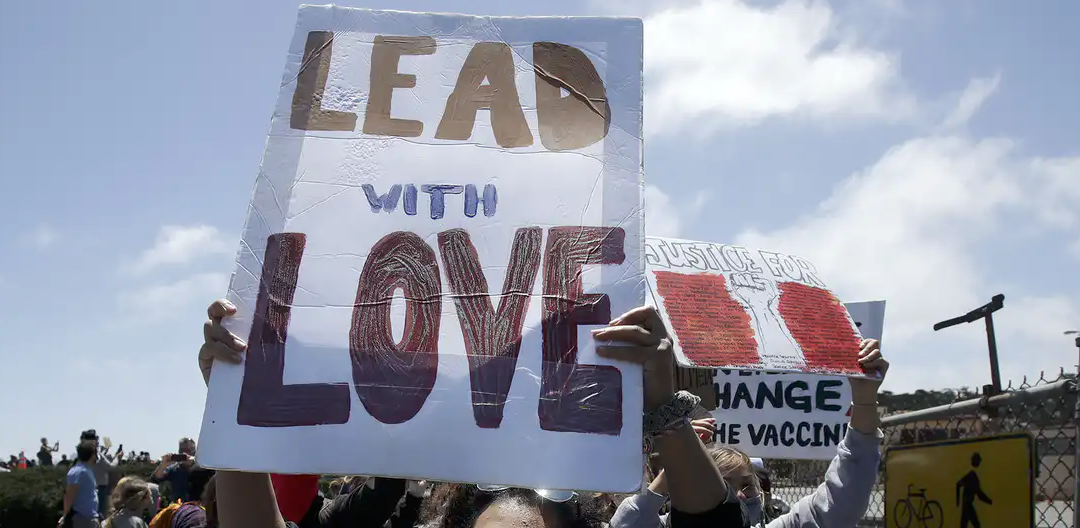
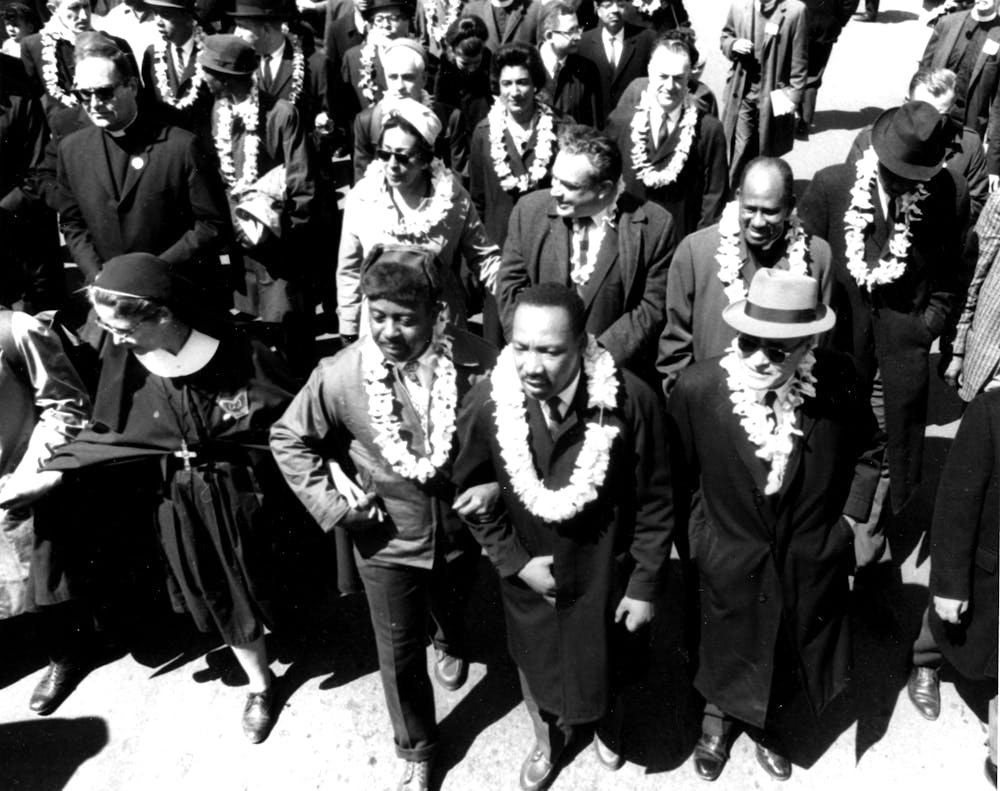

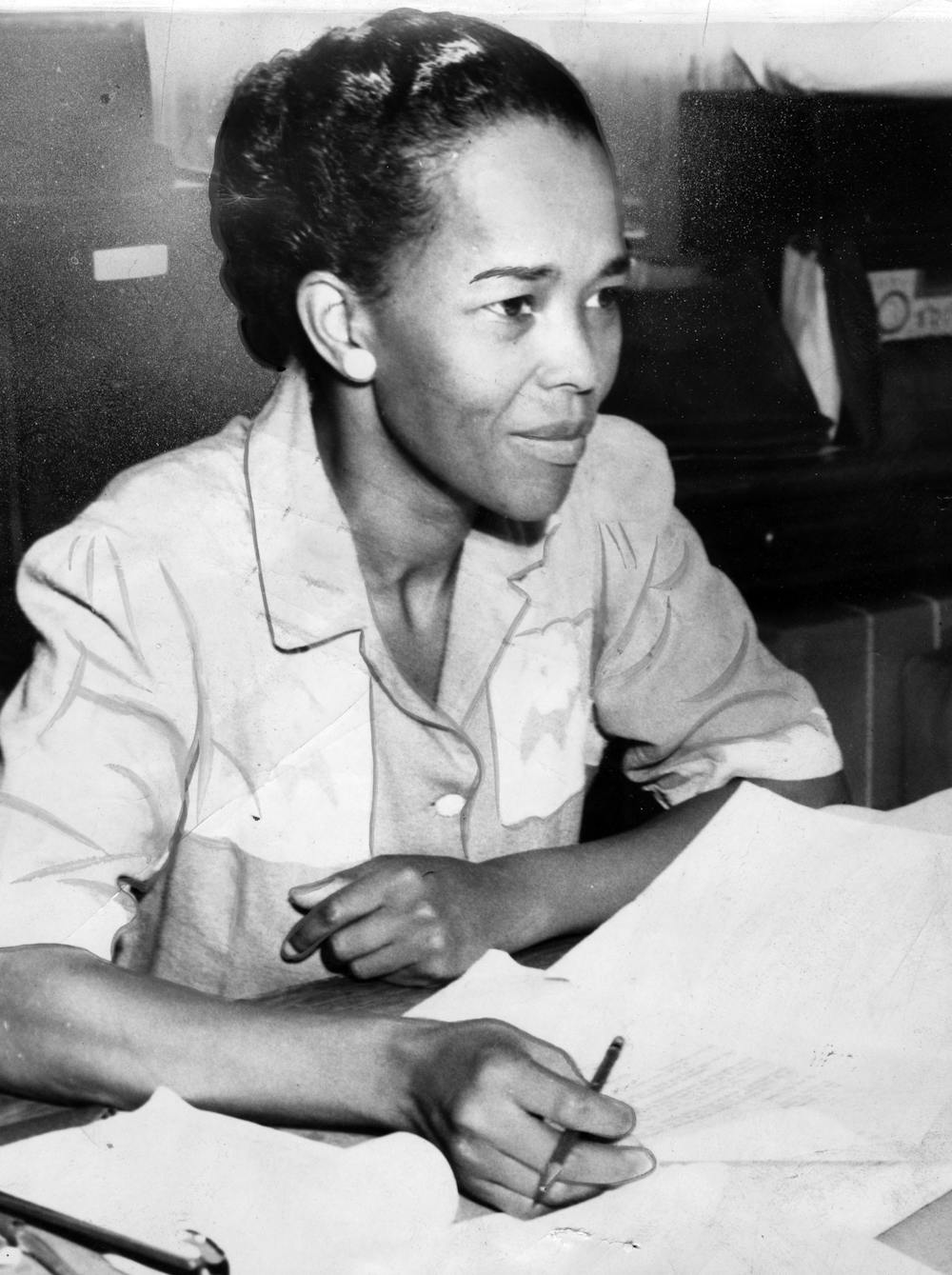
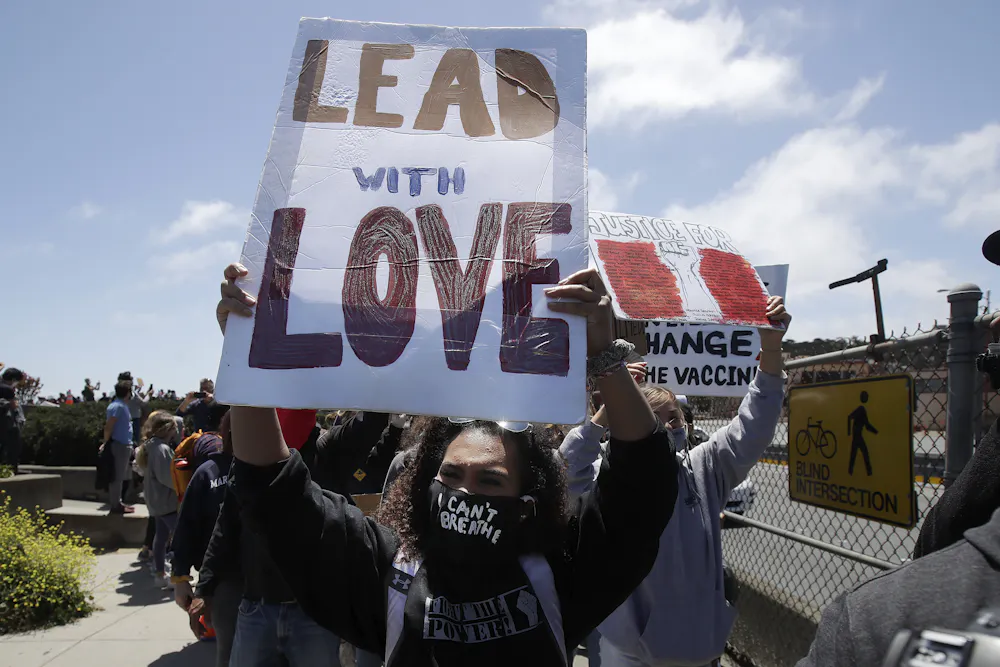
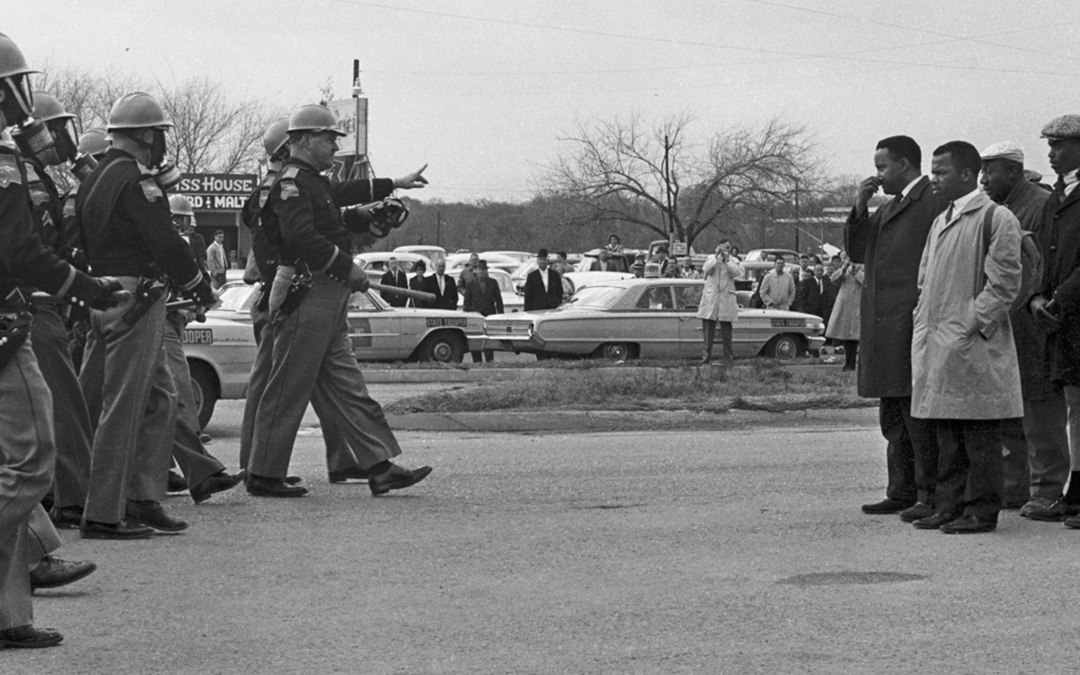
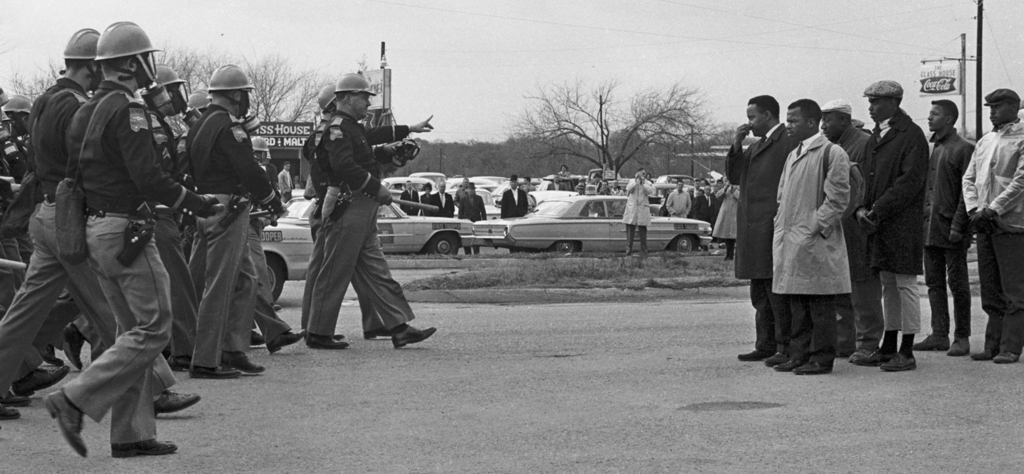
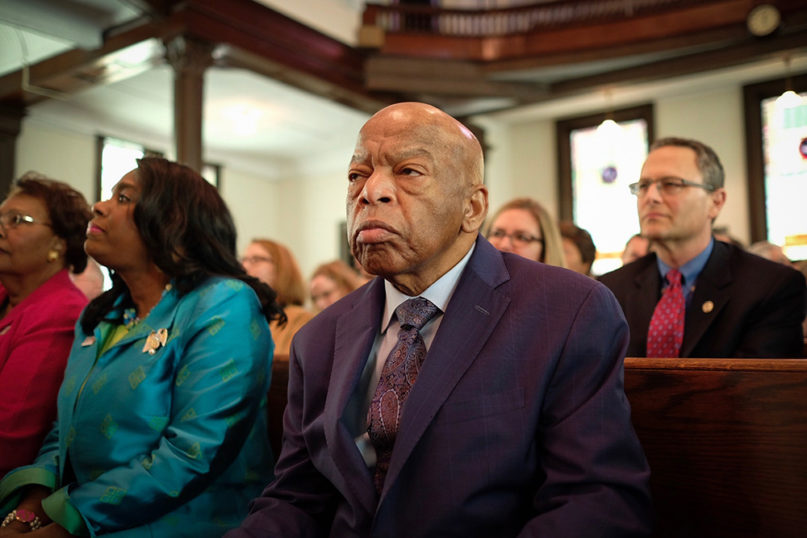
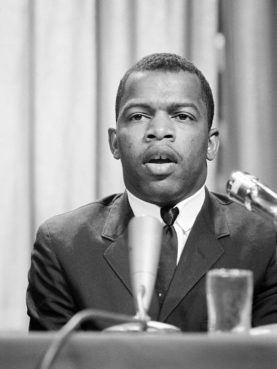
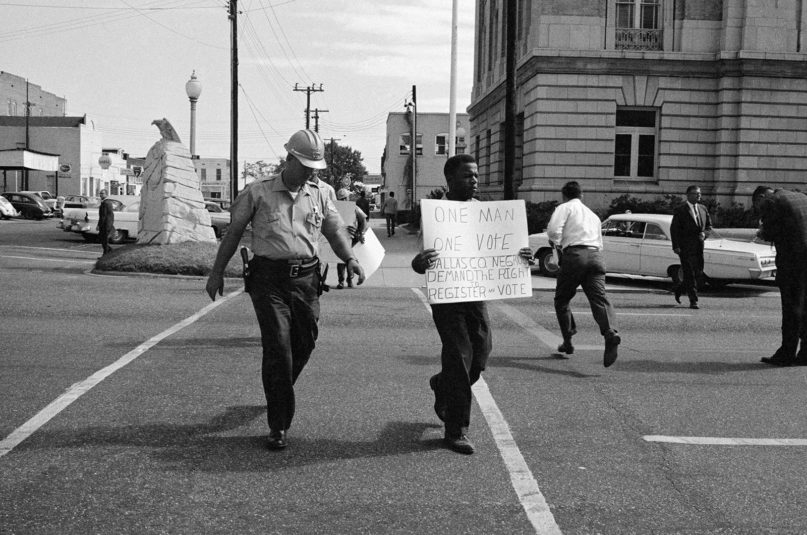
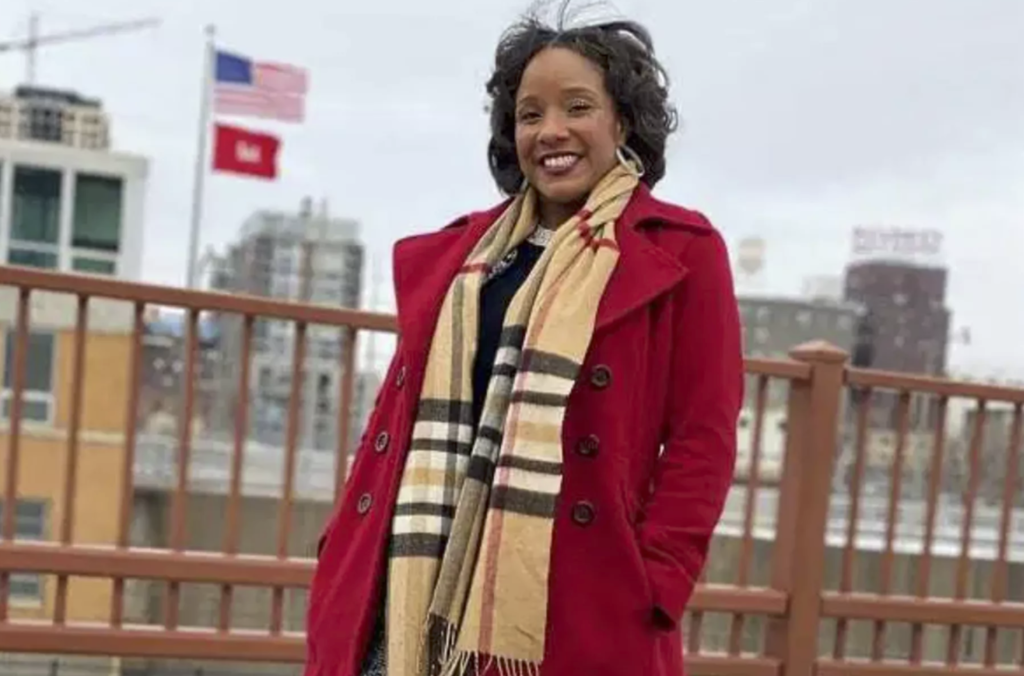
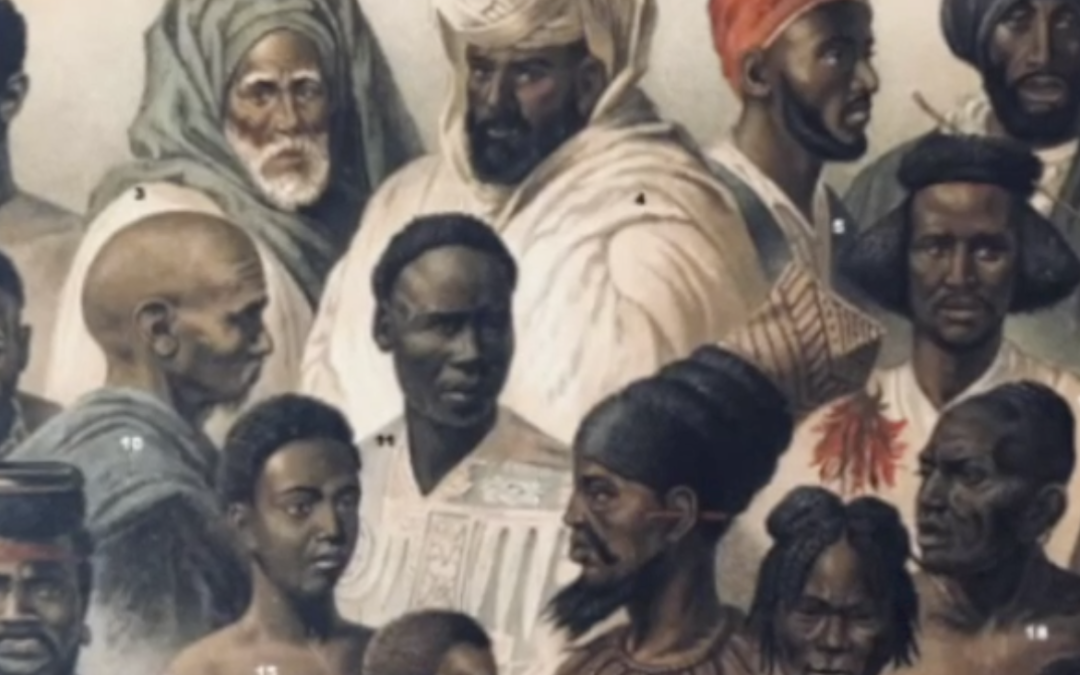
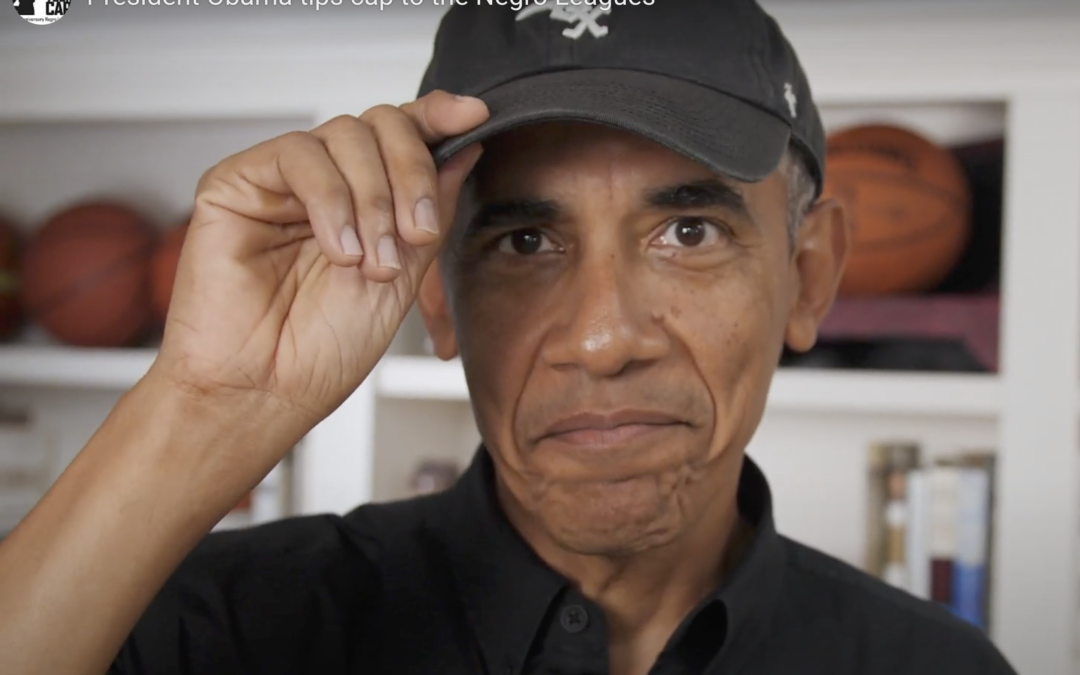


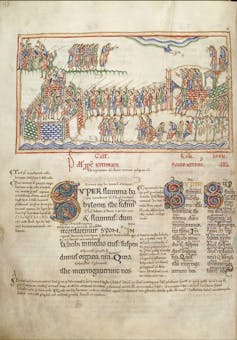
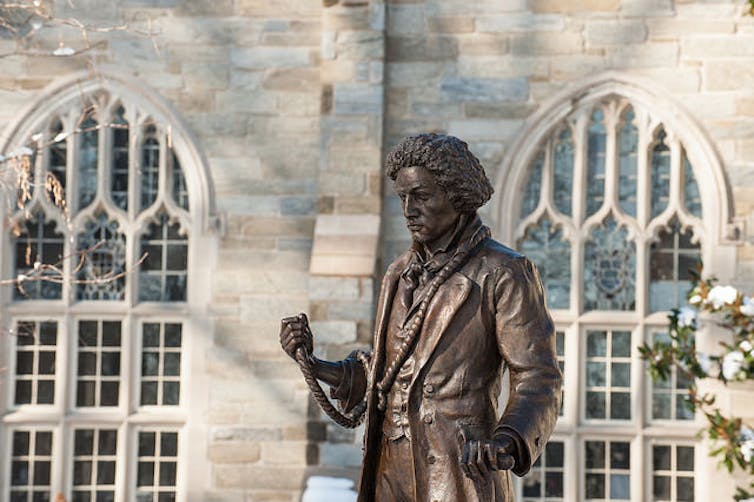

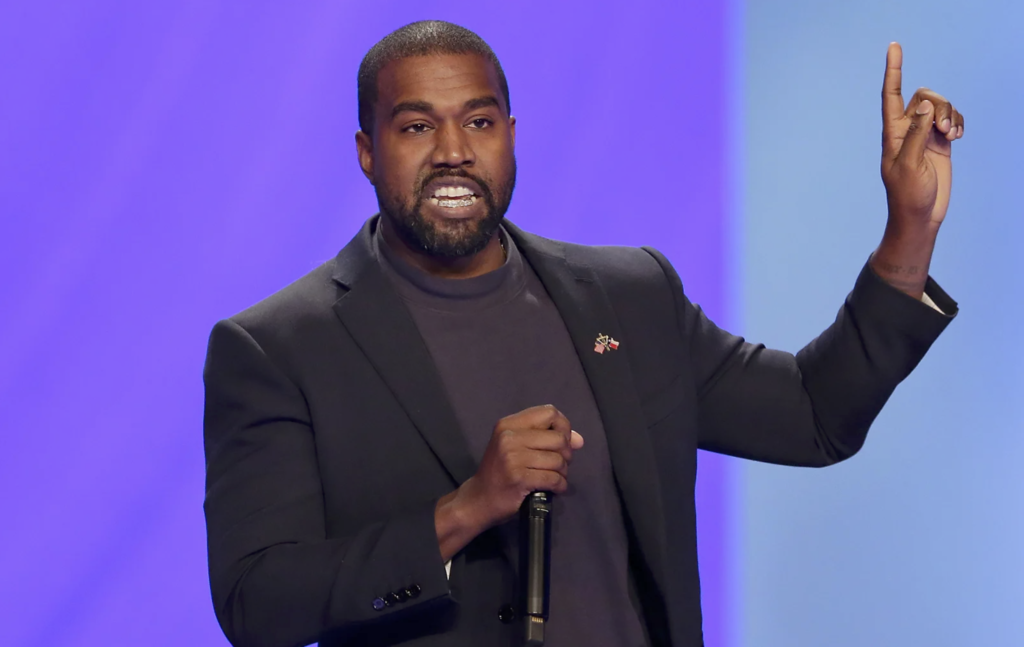
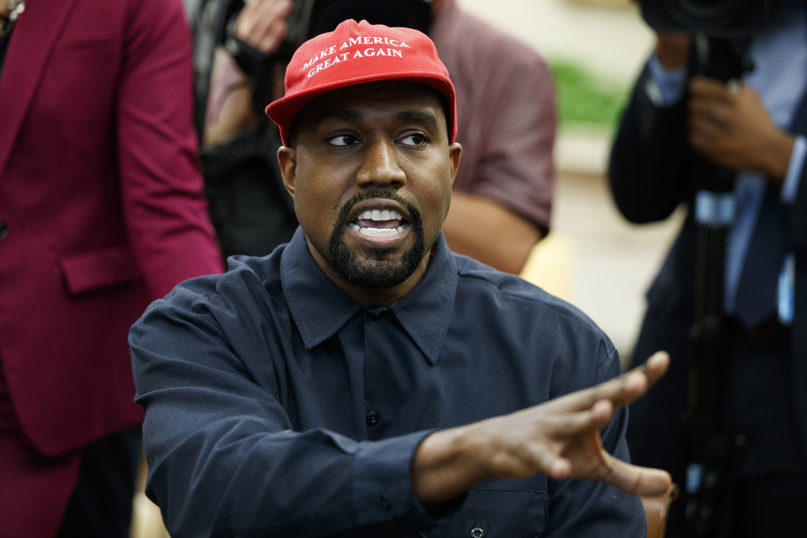
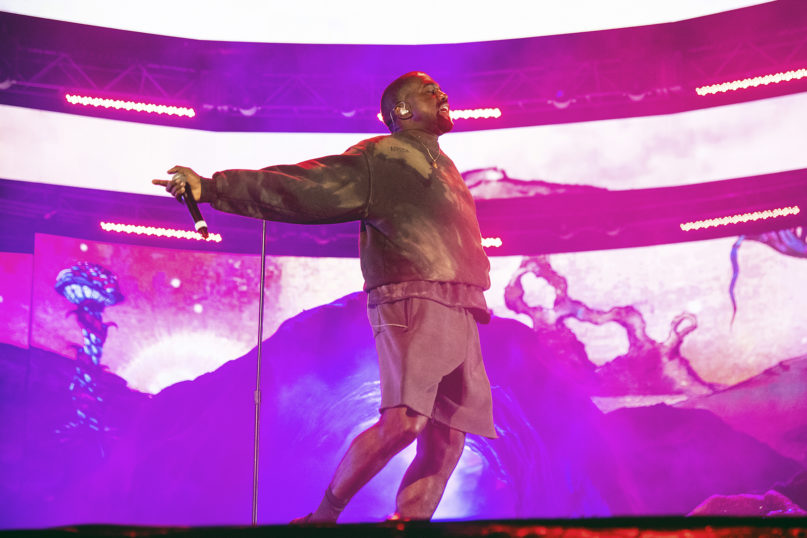

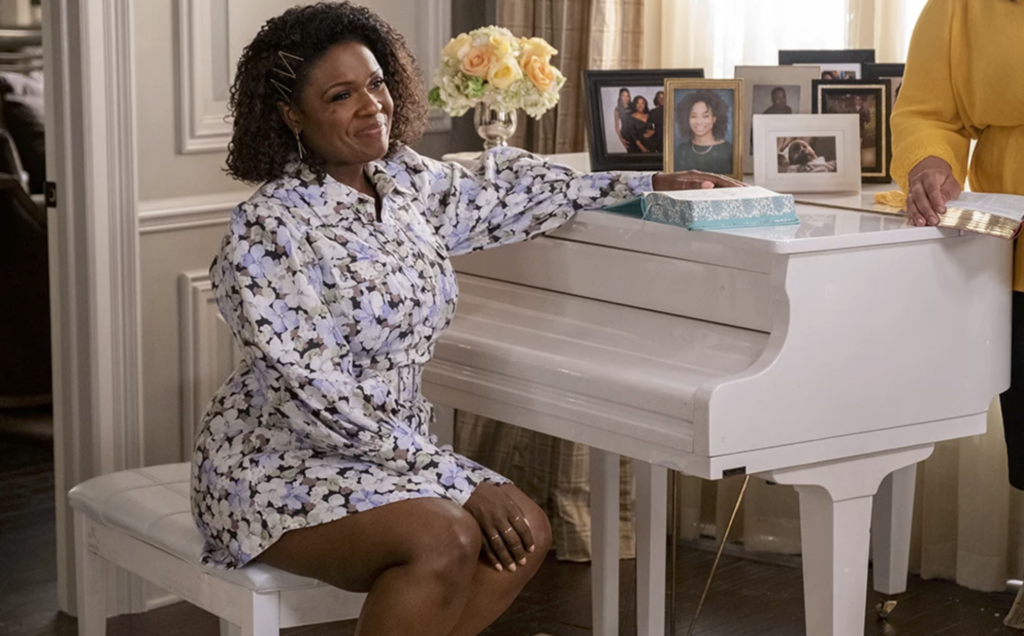
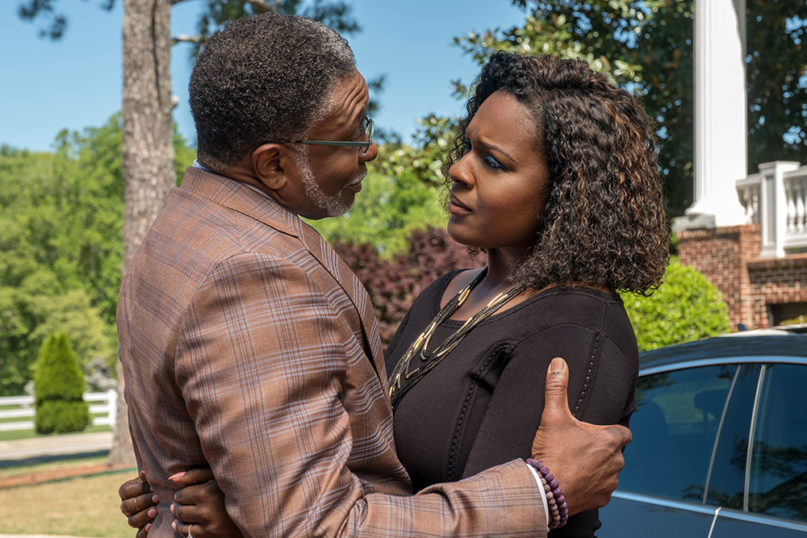
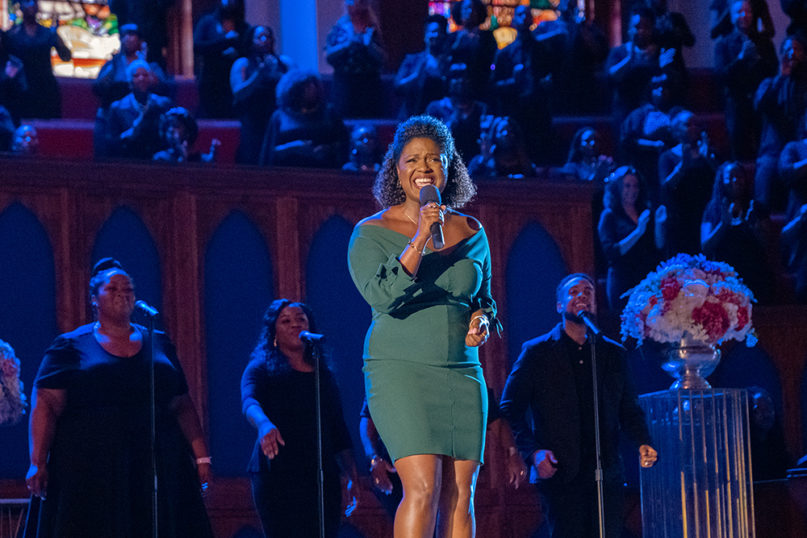
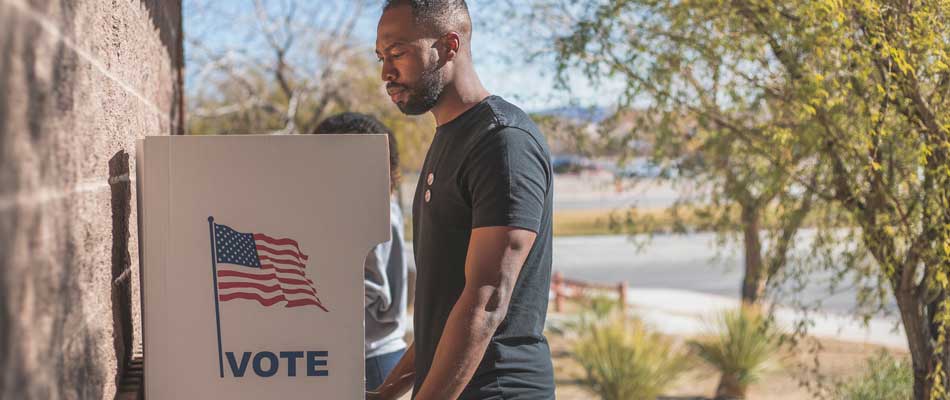
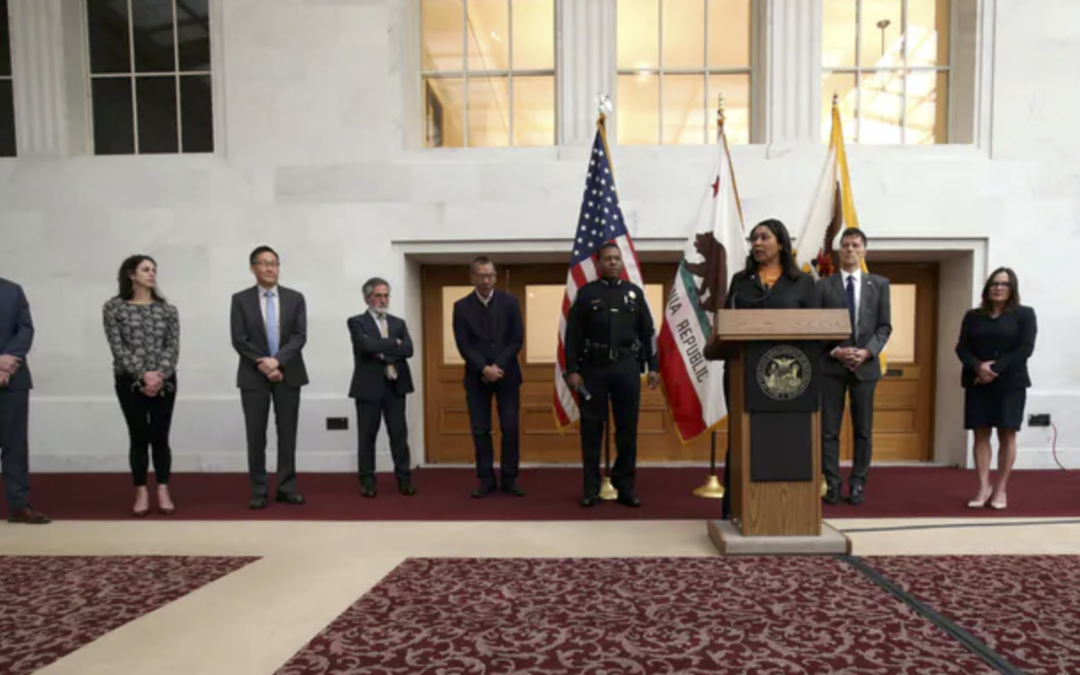
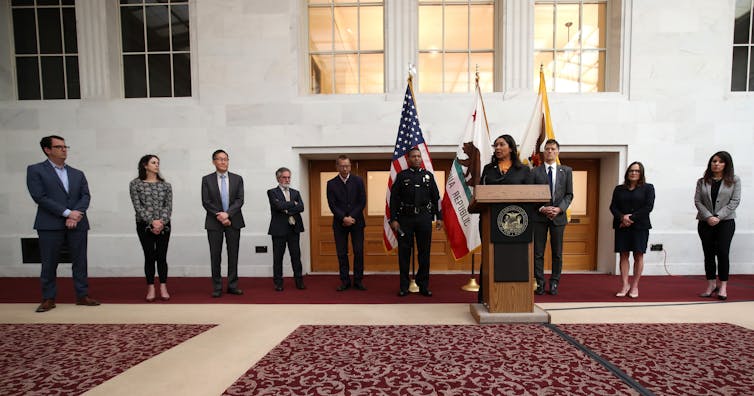
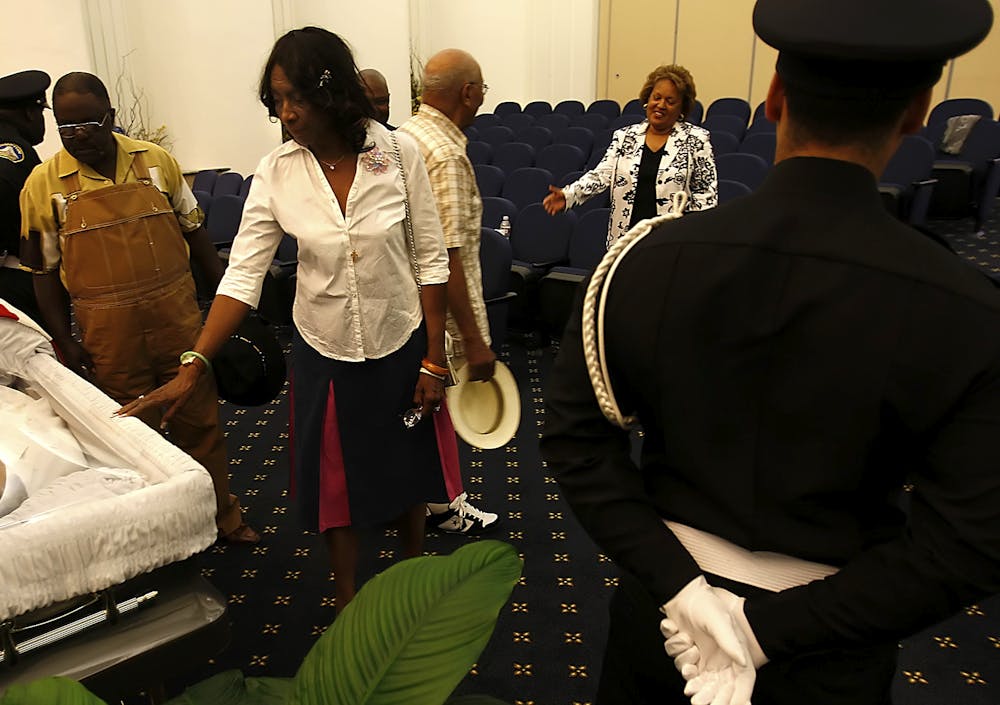


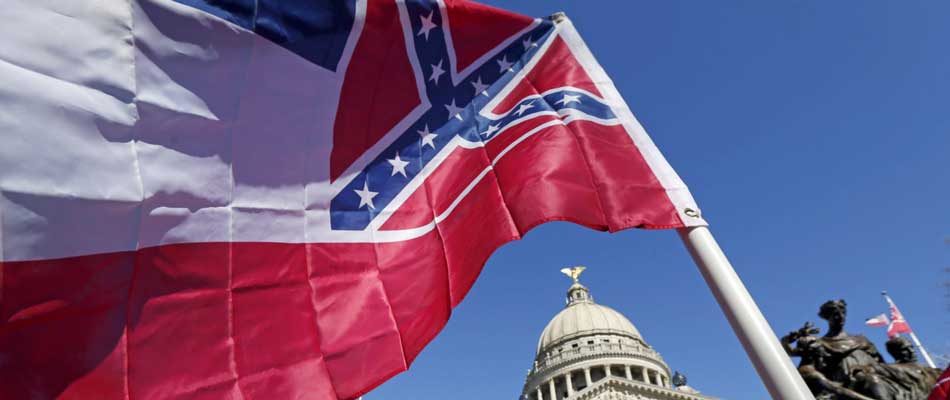
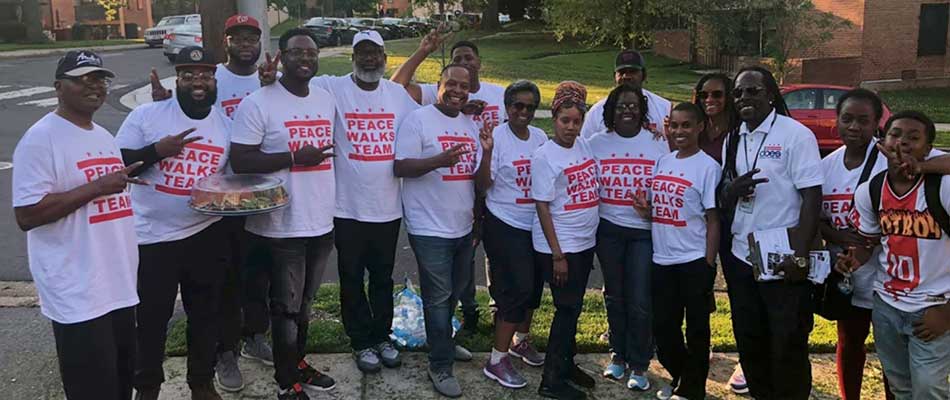
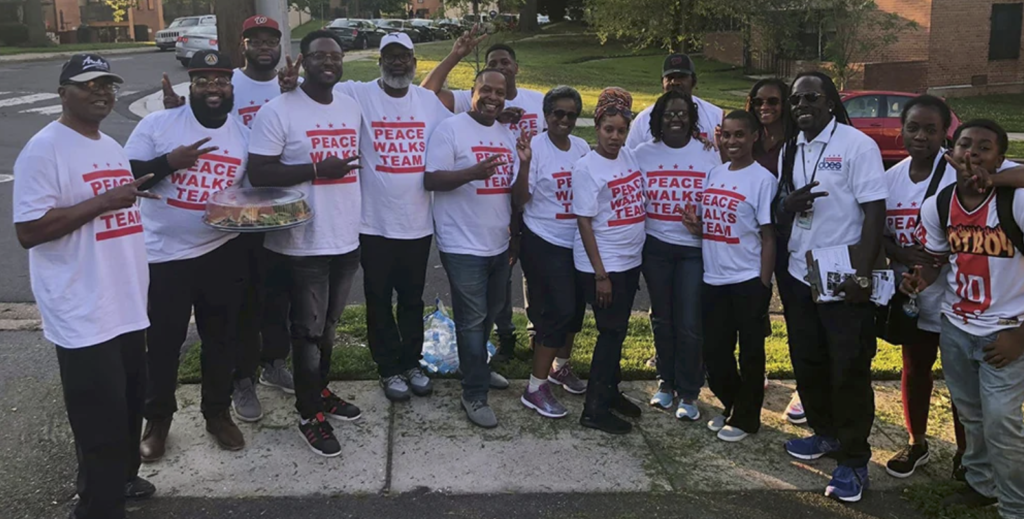
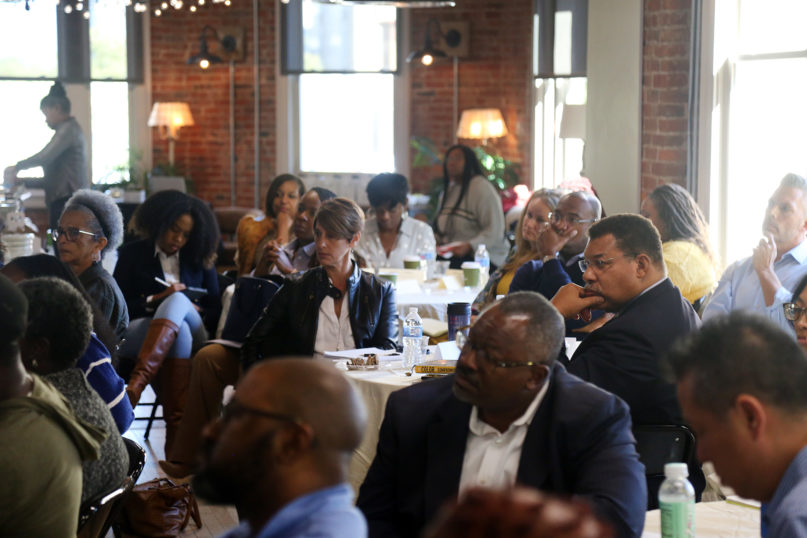
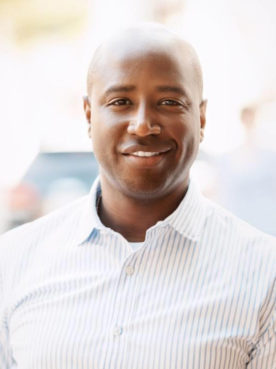
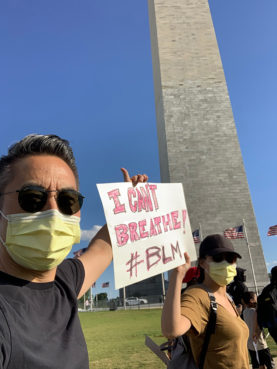
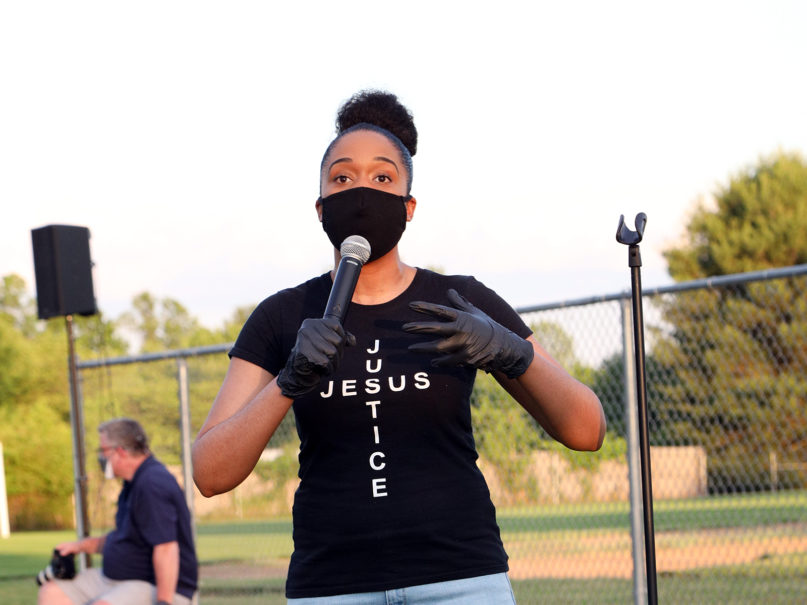
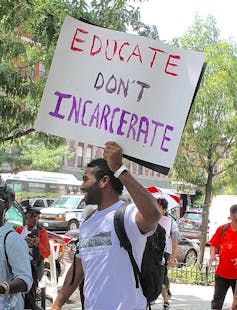


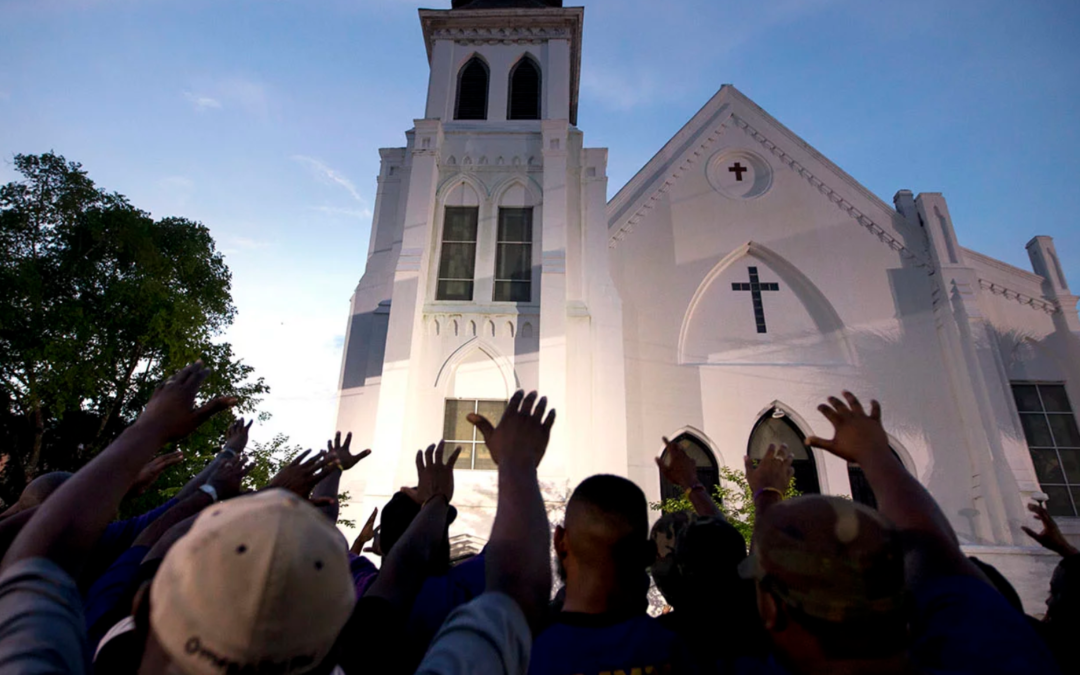
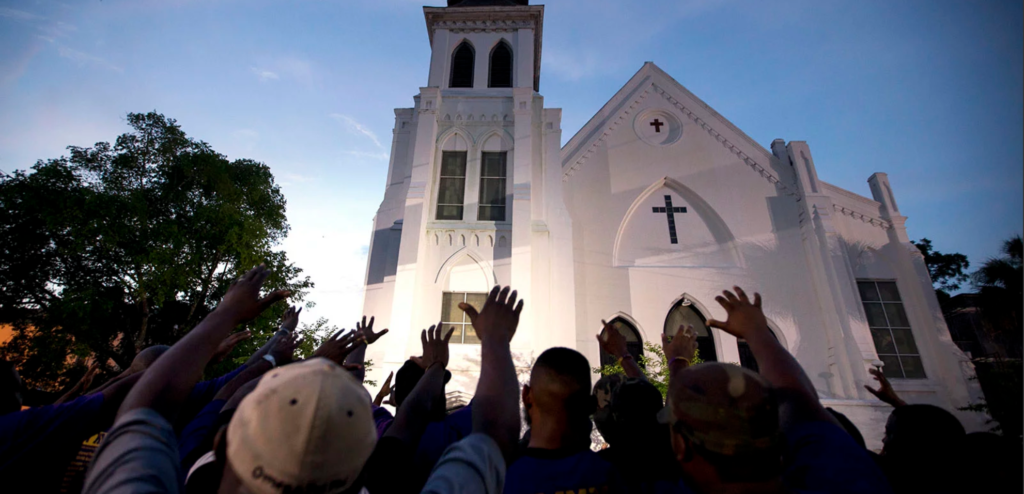
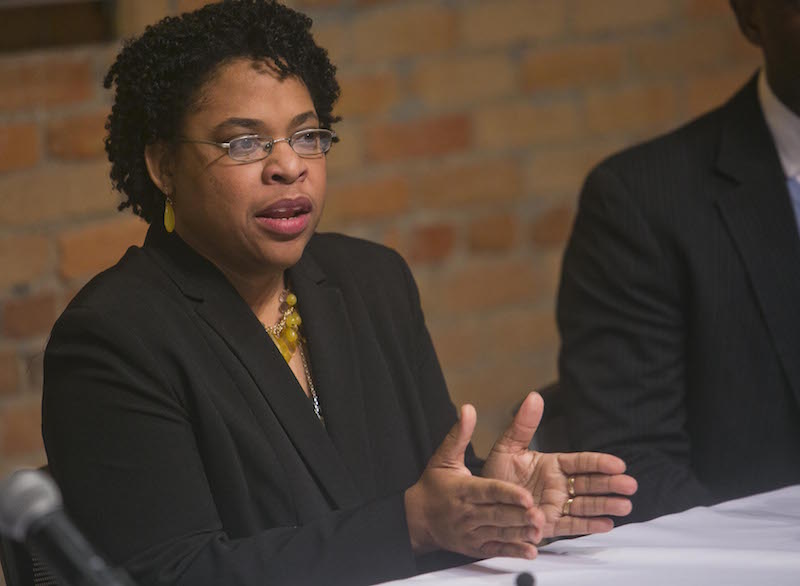
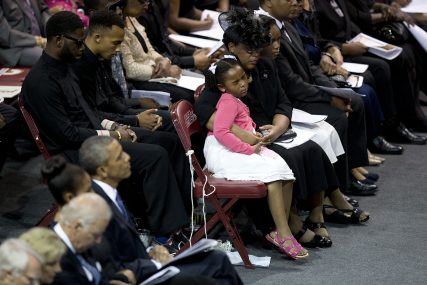
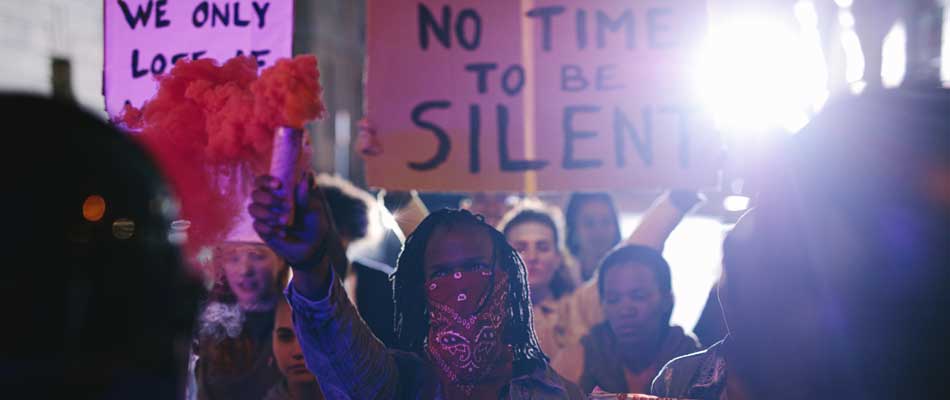


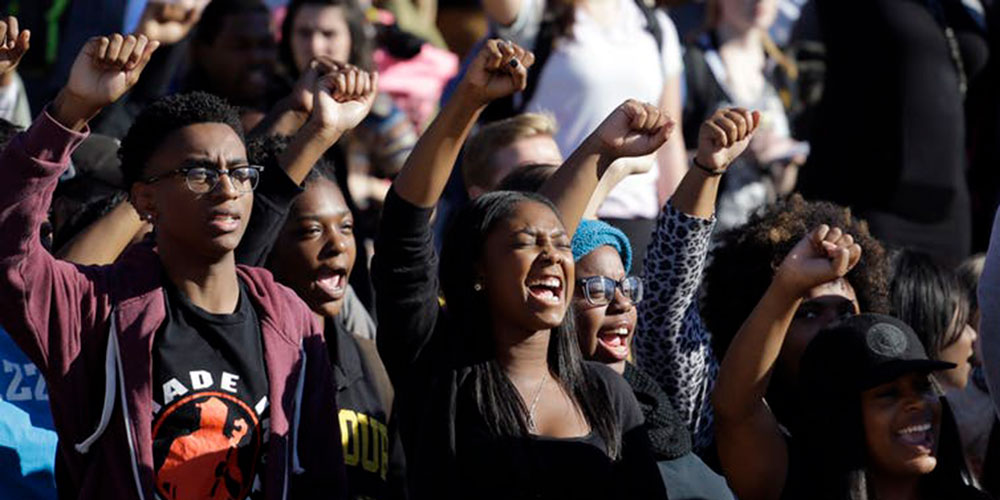
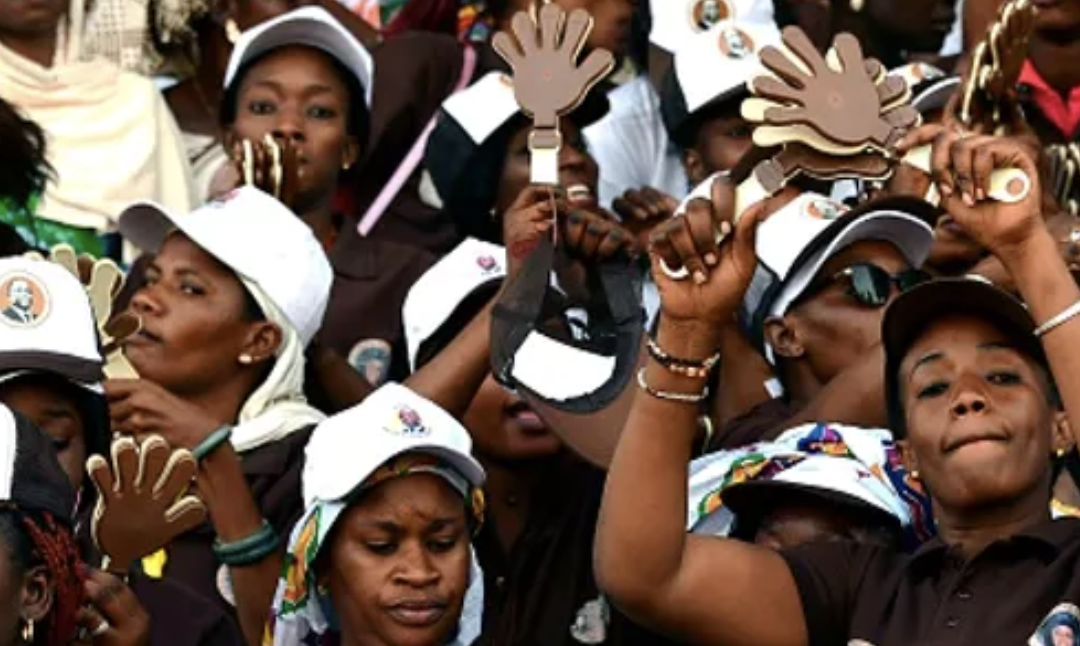
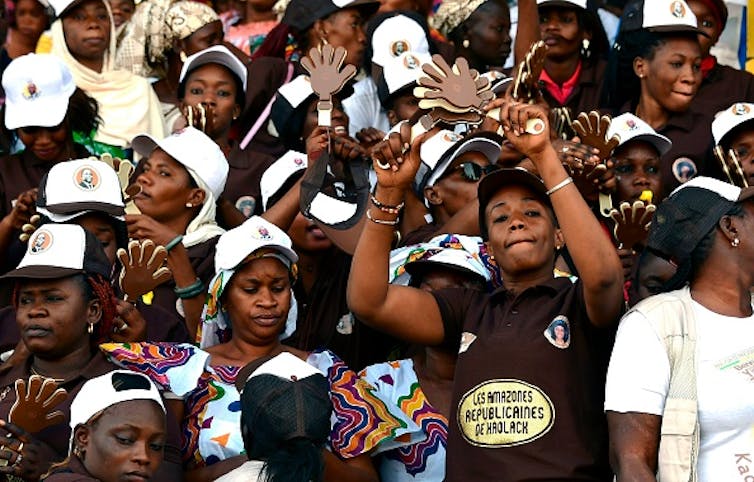


 Fighting through a dark season in your life where you find yourself depressed and at times filled with debilitating sadness is challenging enough for the average person. But it’s hard to imagine what that’s like for those in the public eye, living under social media scrutiny. In his latest book, I am Restored: How I Lost My Religion, but Found My Faith, Lecrae reveals a maturity in his faith after navigating through the uglier side of politics and Christianity, being a celebrity, a Black man, and a believer.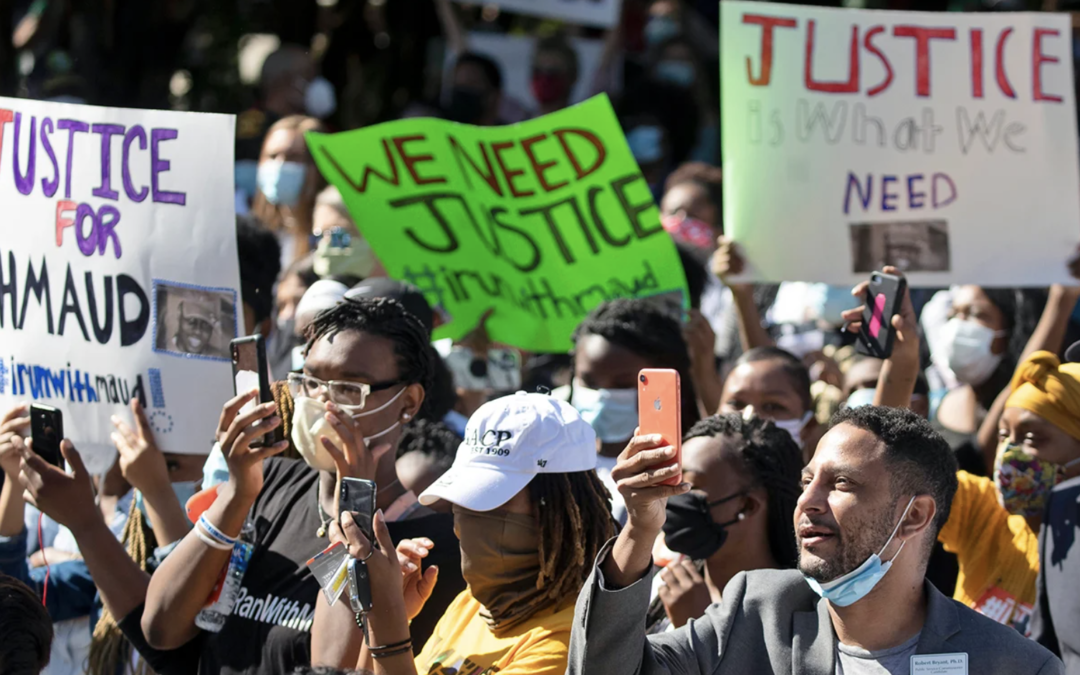
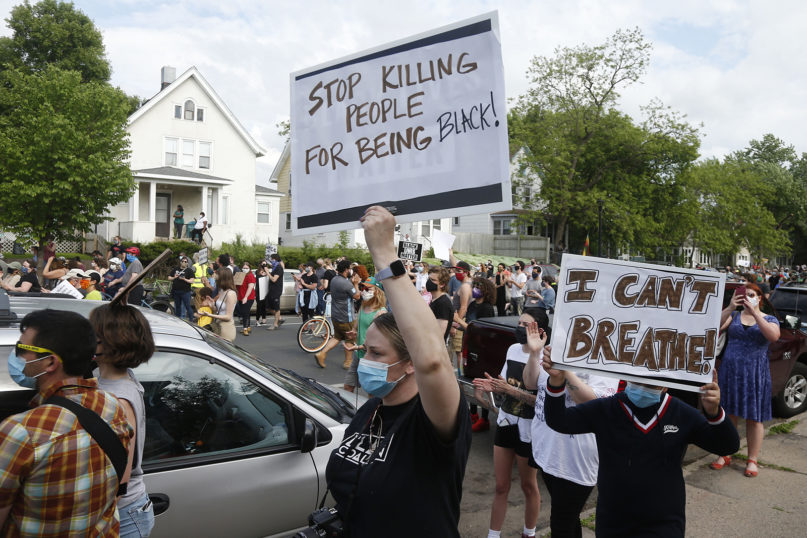
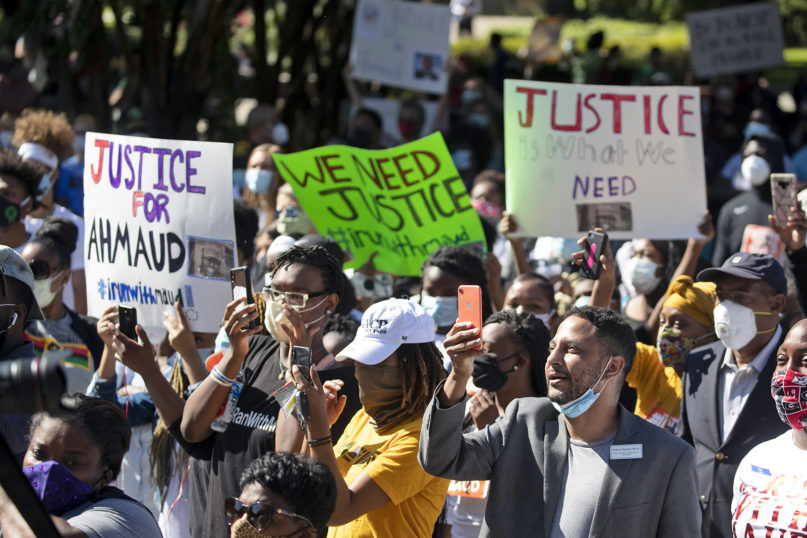





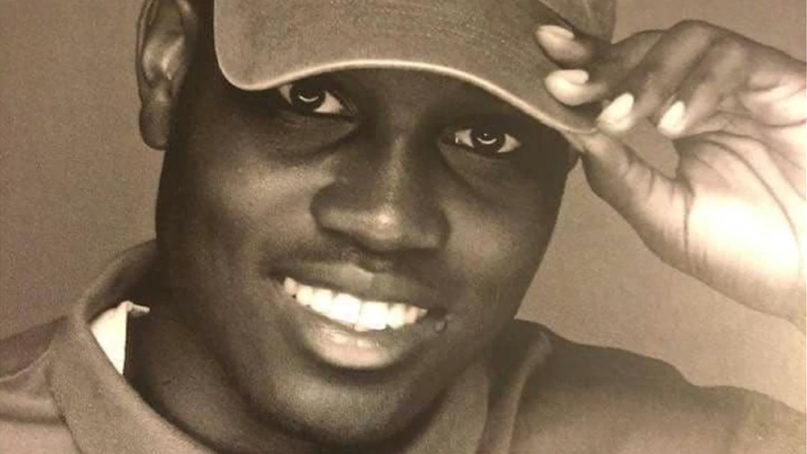


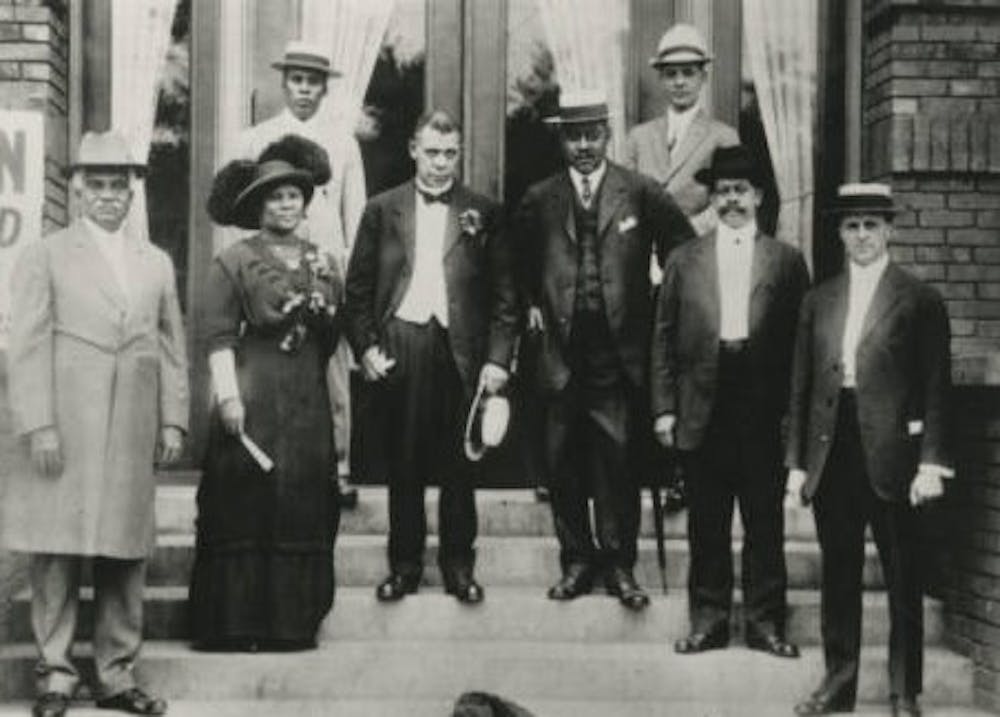

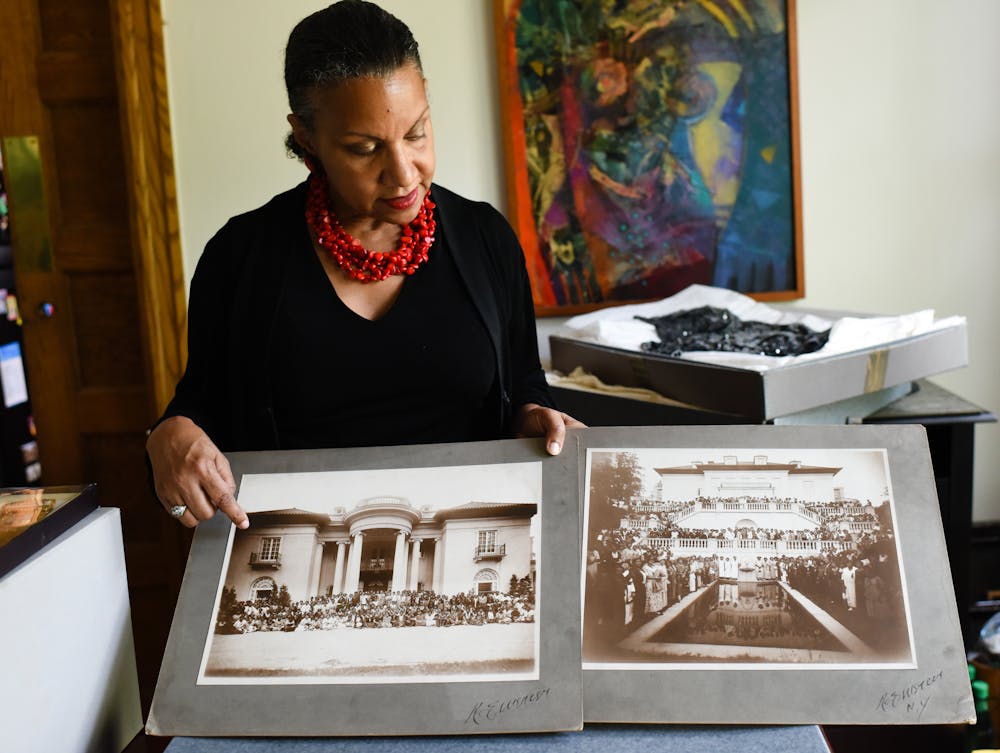

 SO: My experience in foster care was extremely lonely. I tried very hard to fit in and to avoid being a burden, even with my own family. I was put in a Kinship Placement with my grandmother at age five, but due to her alcoholism and physical and verbal abuse I was placed with my uncle until I was 13. Unfortunately, he was also physically abusive. At 13, I gathered the courage to tell someone and officially went into foster care. I lived in two different foster homes before going to live in a group home and often felt I was being punished because I did not have parents. There were people along the way that encouraged me and spoke to my potential and I am forever grateful for them. It was this and my desire to prove everyone wrong that fueled my ambition to succeed.
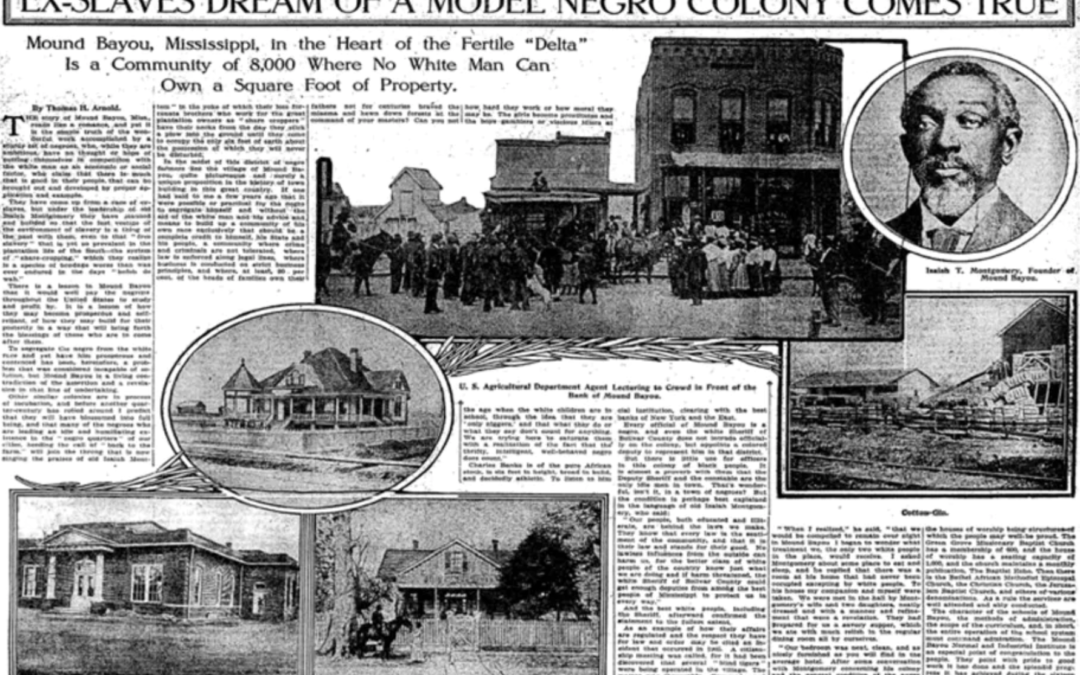

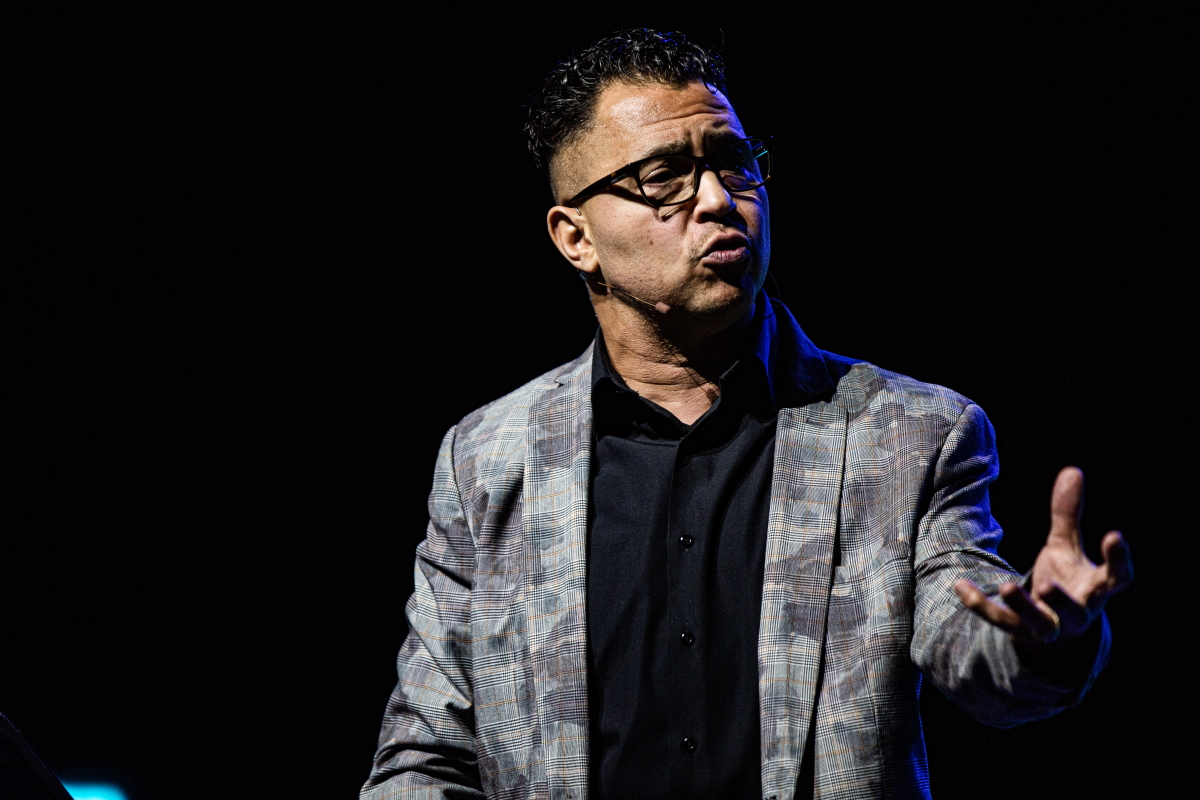
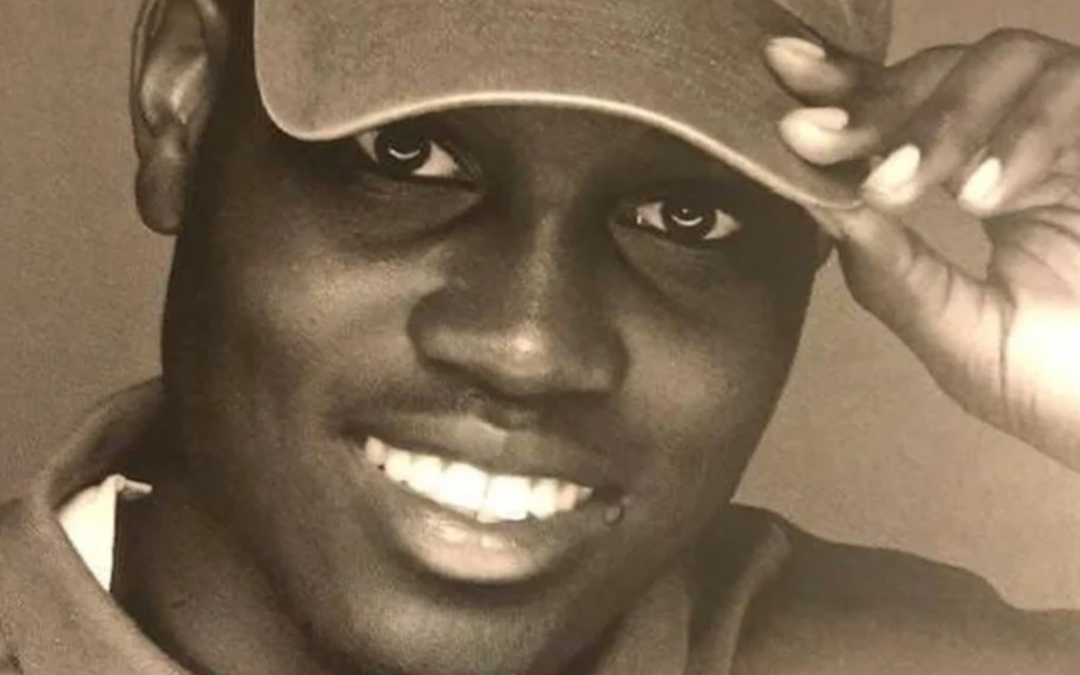


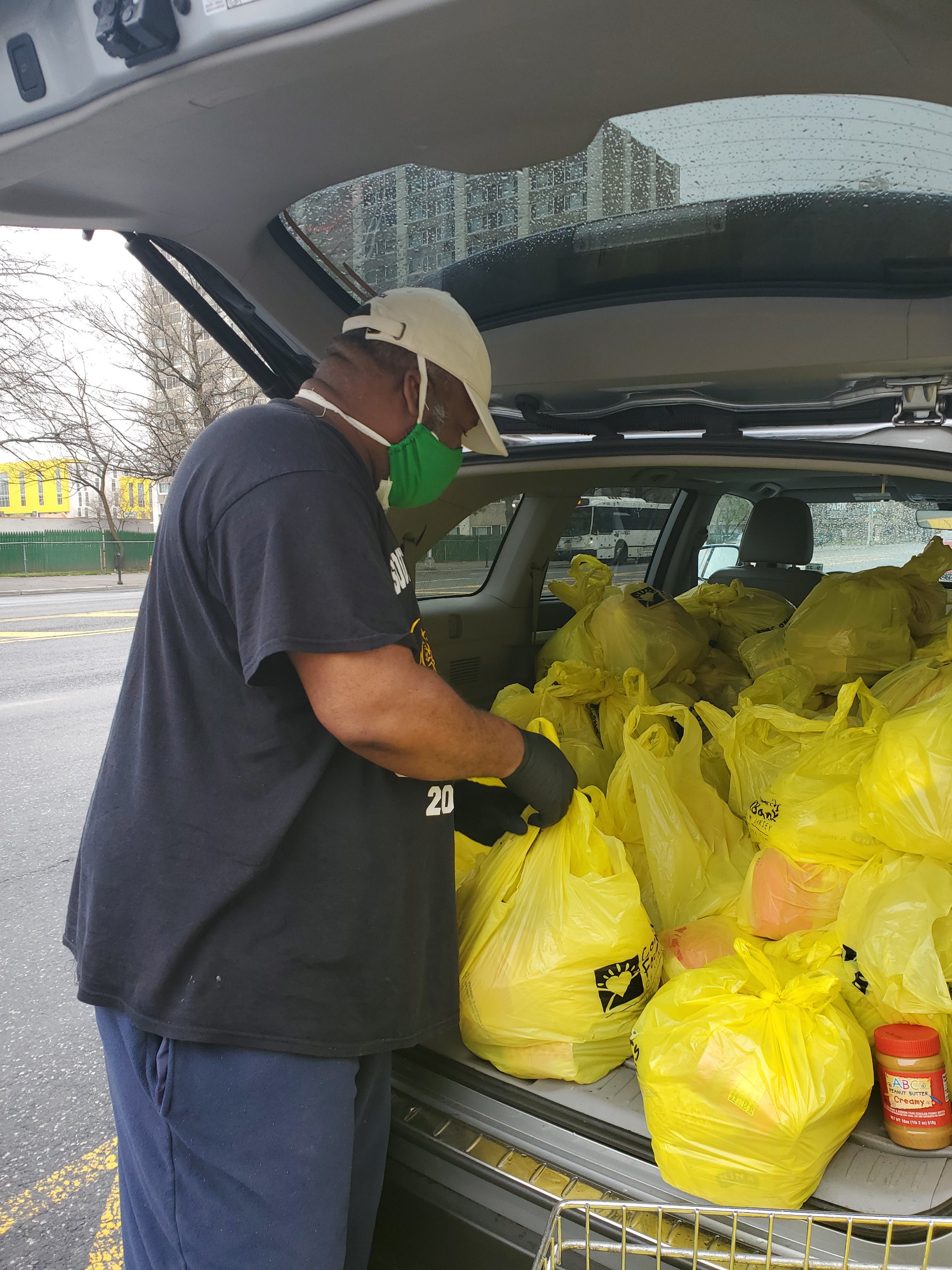 Courtesy of Douglas Freeman
 Courtesy of Marquise Singleton
 Flowers, candy, and cards are nice, but for moms, the best Mother’s Day gifts of all are the people who make us mothers.