Shamony Makeba Gibson was in her hospital room, recovering after giving birth, when she said something that worried her mother.
Gibson had just delivered her second child, Khari, a healthy baby boy, via C-section at Brooklyn’s Woodhull Hospital on Sept. 23, 2019.
But in the delivery room while prepping for her surgery, Gibson told her mother, doctors had briefly struggled to insert an IV in her hand — likely because of a blood clot, she said they informed her.
Courtesy of Gibson Family Omari Maynard holds his infant son, Khari.
Shawnee Benton-Gibson’s concern for her daughter was based on her years of reproductive justice activism in New York City, working with mothers and families dealing with issues like postpartum depression and stillbirths.
Back at home after leaving the hospital, Gibson felt fatigued and short of breath, her mother recalled in a phone interview with THE CITY.
“I talked to her about pulmonary embolisms, but she said they checked her in the hospital for it,” Benton-Gibson said.
Besides, her daughter argued, she was taking anticoagulants — commonly prescribed after surgeries, including C-sections — and was wearing compression undergarments the hospital gave her to improve circulation. But her fatigue and shortness of breath persisted.
‘My Best Friend’
One evening in early October, watching TV in the Bedford-Stuyvesant apartment she shared with her partner and their children, Gibson collapsed. EMS workers resuscitated her and rushed her to Interfaith Medical Center, the nearest hospital.
There, doctors found blood clots had spread to her lungs and legs.
Gibson — an artist who was “very funny” and “loved to sing,” according to her mother — died 14 hours later on Oct. 6, two weeks after her son was born.
The cause of death was the condition her mother had suspected: a pulmonary embolism. She was 30 years old.
Her children live with Omari Maynard, their father and Gibson’s partner of seven years.
“She was very fiery like me,” said Benton-Gibson, 51. “She was my best friend.”
Stark Disparities Persist
On Thursday, Benton-Gibson joined other women like her — grandmothers left to help raise their grandchildren after the sudden deaths of their own daughters — for #HearUs, a virtual pre-Grandparents Day event to raise awareness about Black maternal mortality.
According to the U.S. Centers for Disease Control and Prevention, 700 women die in the United States each year from pregnancy-related complications. By the CDC’s estimates, two-thirds of those deaths occur in the days and weeks postpartum — and about two-thirds of deaths overall were determined to be preventable.
A 2017 study by the medical journal The Lancet found that the United States has the highest rate of maternal deaths in the developed world — a trend that’s steadily increased over the last two decades.
Brooklyn, where Gibson lived, is home to three neighborhoods that rank highest in the city for non-fatal but serious pregnancy-related illness, or severe maternal morbidity, according to a 2016 study by the city Department of Health and Mental Hygiene.
In Brownsville, which has the city’s highest rate of such incidents at 497.4 per 10,000 deliveries, 79% of all deliveries were to Black non-Latina women.
The borough is also home to the neighborhood with the city’s lowest rate of severe maternal morbidity — largely white Borough Park, with a rate of 113.3 per 10,000 deliveries, according to that same DOHMH study.
Gibson’s death was particularly wrenching for Davis, who worked at the city’s health department for more than a decade.
She knew Gibson and her mother well from their reproductive justice work in Brooklyn. Benton-Gibson was the first person to offer Davis a public speaking opportunity on maternal well-being, she noted.
“I can tell you that she has saved lives,” Davis said of Benton-Gibson’s activism. “I can tell you that Shamony [also] has saved lives. And all that knowledge was not enough to save her own life.”
The Thursday evening event — equal parts memorial, group therapy session and rally — brought together women from New York, California, Alabama and Georgia who’d lost their daughters, and in one case, a grandchild as well, to complications stemming from childbirth.
‘All that knowledge was not enough to save her own life.’
Most of those women have embraced a life of activism after the sudden loss of their loved ones.
Among them were Maddy Oden, of Oakland, Calif., who became a doula after the 2001 deaths of her daughter, Tatia Oden French, and her grandchild Zorah, during delivery.
Also attending was Wanda Irving, mother of Shalon Irving, a 36-year-old CDC epidemiologist in Atlanta who died in 2017 from complications of high blood pressure weeks after delivering her daughter.
“Women know their bodies best and know when something doesn’t feel right,” Shanna Cox, associate director for science for CDC’s Division of Reproductive Health, told THE CITY. “The campaign is encouraging women to speak up — during and after pregnancy — if they have health concerns.”
Calls for Justice
Benton-Gibson, a longtime community organizer and licensed social worker, founded The A.R.I.A.H. — Association for Reproductive Innovation through Artistry & Healing — Foundation, which “works to stop the devastation of Black maternal mortality,” in the aftermath of her daughter’s death.
“I’m conflicted: Do I cry? Yes. Am I upset about this? Yes. Do I sometimes wake up and feel like ‘What the…?’” Benton-Gibson said at the event.
“But my bigger stand is that that girl lived all the days that she lived, and I don’t want those days that she lived to be in vain so that the day she passed took over,” she added. “But how she passed — that’s what every breath in my body will be about, because I’m making sure that this never happens again.”
It’s a similar position to the one Bruce McIntyre found himself in nearly six months ago when his partner, Amber Rose Isaac, died during delivery at Montefiore Medical Center in The Bronx in April during the coronavirus crisis.
Courtesy of Bruce McIntyre Amber Rose Isaac died shortly after giving birth at the Montefiore Medical Center in The Bronx during the coronavirus outbreak.
On Aug. 1, McIntyre hosted a “Mothers March,” a rally for Isaac and others who died from pregnancy-related causes. Dozens, including Benton-Gibson, attended the event and donned purple in Isaac’s memory.
Also at the march was the family of Sha-asia Washington, who died during delivery on July 3 at Woodhull Hospital, where Gibson gave birth last year.
“I’m staying up all night holding the baby that she should be here holding,” Desiree Williams, Washington’s mother-in-law, said at a separate rally in July in front of that hospital. “It’s not fair, it’s not right. My son is broken down, it’s not right.”
‘She Was Really Happy’
Gibson, an artist who specialized in dance, was “very savvy in graphic design,” and “loved to travel,” her mother said. The Medgar Evers College graduate had visited 10 countries.
She wanted a big family, Benton-Gibson said: five children, which she tried talking her out of, without much success.
“She loved the idea of having children,” she said.
Courtesy of Shawnee Benton-Gibson Shamony Makeba Gibson and her partner, Omari Maynard
When Benton-Gibson became pregnant for the second time in 2019, she knew exactly the kind of birth she wanted.
She had delivered her first child two years prior, a baby girl named Anari, via C-section. When she found out she was expecting Khari, she pored over information about natural births, and at one point even considered a home birth.
She researched doulas and midwives in her area and eventually hired one of each, including a Black doula who lived a short walk from her Bedford-Stuyvesant apartment.
“She was really happy, had a baby shower and everything,” Benton-Gibson said.
But after she checked into the hospital, doctors told her she needed another C-section.
Before that news, she had told her mother, “This birthing experience is going to be different.”
THE CITY is an independent, nonprofit news outlet dedicated to hard-hitting reporting that serves the people of New York.
A dozen doughnut holes. Growing up, that was a typical breakfast for Tassiana Willis, a 24-year-old African-American poet. In her family, moments of joy centered around sweets. Her grandfather, a man of few words, showed affection through weekend trips to McDonald’s.
learned to find i love you in white paper bags
instead of his lips
see, I loved food out of ritual
Willis, who grew up in San Francisco, has harnessed the power of poetry to raise awareness about Type 2 diabetes, a preventable disease caused largely by poor dietary habits and lack of exercise. It once affected mostly adults but now is spreading at alarming rates among young people, especially minorities and youth from low-income households.
“Raise your voice and change the conversation,” urges the tagline on four new videos produced for an arts and public health campaign called The Bigger Picture. The videos, including one by Willis called “The Longest Mile,” show young poets telling deeply personal stories about the life circumstances that promote diabetes.
The videos challenge viewers to look at “the bigger picture” behind the startling rise of diabetes. Instead of highlighting poor individual choices, they expose the social and economic factors — everything from food pricing and marketing to unequal access to parks and playgrounds — that conspire to push young people of color into an unhealthy lifestyle.
“The way these stories are told … really calls for social change,” said Natasha Huey, who managed the campaign for Youth Speaks, one of four youth development organizations across California that partnered with the University of California-San Francisco’s Center for Vulnerable Populations to produce the poetry videos.
The Bigger Picture, which launched in 2011, has produced more than two dozen videos about diabetes, which together have been viewed more than 1.5 million times on YouTube. They have also been presented at school assemblies for thousands of Bay Area students.
The rise in Type 2 diabetes among youth goes hand in hand with rising obesity rates.
Willis said she is obese now because of the way her financially strapped family ate when she was young. “There are powerful emotions behind why we eat what we eat,” she said in an interview.
In “The Longest Mile,” Willis recalls the humiliation of being unable to run a mile during PE class in middle school. “I wasn’t slow / I was just fat.” Obesity is fueling the spread of Type 2 diabetes, and Willis knows she’s at high risk for the disease.
by luck I escaped type 1
i feel like I’m always
1 soda away from type 2
that’s like dodging a bullet
and committing suicide with a gun
in my kitchen
Unlike Type 2 diabetes, which is related to lifestyle choices and obesity, Type 1 diabetes typically develops in early childhood and is believed to be the result of genetic factors and environmental triggers, including viruses.
Over the past decade, rates of Type 2 diabetes have tripled among Native Americans, doubled among African-Americans and increased by as much as 50 percent in the Asian, Pacific Islander and Hispanic populations, according to the federal Centers for Disease Control and Prevention.
“We’re at the tipping point in this disease,” said Dr. Dean Schillinger, a professor of medicine at UCSF and director of health communications at Zuckerberg San Francisco General Hospital and Trauma Center, who co-created the Bigger Picture campaign. “The trajectory is very scary and the rate of increase, particularly in youth of color, is exponential.”
In a recent JAMA paper featuring the new videos, he stressed the importance of shifting the way diabetes is characterized in public health education.
“The overarching objective is to change the conversation about diabetes away from it being an individual ‘shame and blame’ message to approaching it as a societal problem,” Schillinger said.
In another video, “Empty Plate,” Anthony “Joker” Orosco, a 20-year old Chicano poet, depicts his farmworker relatives who can’t afford to buy the produce they pick.
Backs breaking bones aching Harvesting healthy fruits and veggies Acre by acre, The bounty of California’s breadbasket That almost never blessed the tables of farmero families,
Orosco, who grew up in Stockton, a city in California’s agricultural San Joaquin Valley, said he was inspired to honor the hard work of immigrants who sacrificed for his generation.
Low-income people often struggle to buy fresh vegetables, whole grains and other nutritious foods, because those choices are more expensive than the sugary, fat-laden processed foods widely available in many poor neighborhoods. In a 2013 study, researchers at Harvard and Brown universities found that a healthful diet costs about $550 a year more per person than an unhealthy one.
Schillinger said that, based on his earlier experience with the AIDS epidemic and anti-tobacco campaigns, he believes there needs to be a “groundswell of grass-roots activism” if the course of Type 2 diabetes is to be reversed.
“A young person getting diabetes is an injustice, and so the campaign features young people who are targets of diabetes risk but are now becoming agents of change,” he said.
In “Monster,” Rose Bergmann, 17, and Liliana Perez, 16, talk about fathers who relied on sugar-packed energy drinks to work double shifts to support their families.
52 grams [of sugar] from the can keep his eyes open
Sugar creating their own hands around his throat
The industry that makes sweetened drinks has taken notice. “We do agree that people need to manage their sugar intake,” said Lauren Kane, senior director of communications for the American Beverage Association in Washington, D.C. She said beverage makers are “aggressively working to innovate to offer more products with less sugar … and to create interest in access to those beverages.”
McDonald’s has also recently announced new nutritional standards to reduce the number of calories in its Happy Meals, which are marketed to children.
Los Angeles poet Edgar Tumbokon, 19, said nutritious food did not play a big role in his childhood. “I grew up in a food desert surrounded by a culture and kids who loved to eat junk food,” he said. “Eating healthy was considered ‘a white thing.’”
Tumbokon, who weighed 13 pounds at birth, said his poem, “Big Boy,” was inspired by his immigrant Filipino mother, who developed gestational diabetes, which now afflicts 1 in 11 pregnant women. He grew up watching her test her blood sugar and inject herself with insulin.
Seemingly everyone has an opinion on masks: when to wear them, how to wear them, which ones are best and even whether we should be wearing them at all.
For those in this last camp, a popular argument is that the coverings aren’t the problem, but being forced by a government entity to wear one is. It’s the mandate, not the mask, some might say.
Some anti-maskers have claimed that being forced to wear a face covering violates their religious rights. Back in May, Ohio State Rep. Nino Vitale, a Republican, publicly rejected mask-wearing on the grounds that covering one’s face dishonors God. This view is echoed by some individual faith leaders, with churches flouting requirements that congregants wear masks. Meanwhile, media-savvy pastors have put anti-mask posts on Facebook that have been viewed millions of times.
And a recent study revealed that the rejection of masks is higher in populations that associate with conservative politics and the idea that the United States is a divinely chosen nation.
Is it that masks are a religious matter, or is religion being used to suit people’s political agendas? Socially speaking, both things can be true.
Using religion to support one’s political interests is generally viewed as a negative thing that represents the hijacking or twisting of religion. Such a view is echoed in the words of preacher and activist Rev. William Barber, who said Donald Trump’s alliance with evangelical Christians was a “misuse of religion.”
From a scholarly perspective, though, all forms of religion affect society in some way – even if those outcomes are deemed undesirable or unethical by certain groups. Examining how religion operates in society can help us understand why the conversation over masks has recently turned religious.
In his landmark analysis of the social impact of religion, scholar Bruce Lincoln argued that there is no realm of life that cannot somehow be made religious. This is not because there are topics that are specific or unique to religion, but because of what happens to the authority of a claim when religious language is used. In other words, when people use religious speech, their authority is often perceived to be heightened.
For example, if someone plans to marry a partner they don’t appear to like very much, their claim that “we’ve been together a long time” may not come across as a convincing argument for a wedding. But what if that same person says that “God has brought this other person into my life”? That reason may be more readily accepted if the public hearing these words is already open to religious ideas.
Taking this approach to religion doesn’t mean that all religious claims are factually true or ethical. It also doesn’t mean that the people who use religious language are insincere or even wrong. Rather, the function of religious speech is to amplify the authority of an idea through appeals to seemingly unquestionable authorities, like deities and “ultimate truths.” If a statement does this, Lincoln concludes, then it is religious.
Special authority
These are important considerations for the debate over masks. Using religious language to justify an anti-mask position is a move intended to amplify the voices of those who make this claim. And public health issues have long been a concern of American religious groups.
For example, when it comes to childhood vaccinations, arguing for exemption on philosophical or moral grounds will work in only 15 states. But arguing a religious objection will be accepted in at least 44 of 50 states. The difference is that, in the United States, religious claims are often granted a special type of authority.
Consider also that Americans generally accept the circumcision of infant boys on religious grounds. This is true despite the fact that some medical authorities and activists have questioned both the ethics and health impact of performing this specific surgery, which is otherwise elective and cosmetic, on a newborn.
This does not mean, however, that if religion is involved, then anything goes. As recently as 2014, a faith-healing couple was sentenced to jail time after the preventable deaths of two of their children. The couple claimed that seeking medical care was against their religion.
These examples provide some clarity on when religious rhetoric is successful and when it is not. Groups, beliefs or practices that are already popular or commonplace often appear to get a boost of authority when religious language is used to describe them. If the claim is unpopular or the group is not considered mainstream, then religious language may have little impact.
Barometer of public opinion
Masks are a religious issue because some people have described them that way. But this does not mean that such religious claims have successfully granted them authority. Despite an existing partisan divide on the matter, there is still no widespread sentiment among Americans that a government mask mandate is religiously problematic.
This means that those who rail against masks for religious reasons may not gain a lot of traction right now among the wider American public, when more than 6 million Americans have so far been infected with the virus. There is simply too much fear presently to make that a popular line of reasoning.
But if that number wanes, I believe it is entirely possible that religious rationales against masking could receive renewed, and even broader, support as the culture’s interests change.
This is a good reminder that whether religious ideas take hold is not so much a matter of “truth” or ethics. Rather, the issue at hand is often the barometer of public opinion.
Editor’s note: This article has been updated to clarify that 6 million Americans have been infected with the coronavirus to date.
When I first started studying the influence of pornography use on Americans’ lives six years ago, I found that people who watch porn more frequently tend to have poorer sense of personal well-being and more troubles in their relationships. But soon I noticed something that surprised me: The negative outcomes are strongest, and sometimes only, among those who are more religiously committed, and especially committed Christians.
In the below chart on personal and marital satisfaction, based on the massive opinion research operation known as the General Social Surveys, I compare the church attendance habits of Americans who did and did not use porn in the previous year.
Look at those who never attend. Whether or not they viewed pornography makes nearly no difference in their life or marital satisfaction. But look at the “happiness gap” for frequent churchgoers. Among those who attend more than once a week, there is a more substantial drop in both personal and relational happiness if they watch porn.
Predicted Probability of Americans Being “Very Happy” with Life or Marriage by Porn Use and Church Attendance. Graphic courtesy of Samuel L. Perry
Before I explain why, let’s look at a more specific indicator of personal and relational happiness, like sexual satisfaction, and a better measure of pornography use.
In the chart below I predict how satisfied Americans are with their sex lives using data from the 2017 Baylor Religion Survey. I focus on how frequently Americans watched internet porn and compare the sexual satisfaction of those who never attend religious services and those who attend most frequently.
Predicted Values of Americans’ Satisfaction with Their Sex Life by Frequency of Porn Use and Church Attendance. Graphic courtesy of Samuel L. Perry
Look again at those who never attend church. Whether they “never” view porn or view it “several times a day,” their sexual satisfaction doesn’t change. For frequent churchgoers who watch porn, it’s a different picture entirely: Though their sexual satisfaction starts off slightly higher, as their porn use increases, their sexual satisfaction declines in a linear fashion.
What’s going on here?
My frequent co-author, Bowling Green State University psychology professor Joshua Grubbs, and I have identified what we call “moral incongruence”: the experience of intentionally violating one’s deeply held moral values. Moral incongruence results in depressive symptoms and spiritual discouragement often due to shame and isolation. In other words, whatever the negative effects of porn alone, they are consistently far worse for those who seem to be violating their own moral values in watching it.
In subsequent studies (still under peer-review), we’ve found that these “moral incongruence effects” extend not just to pornography but homosexual behavior and non-marital sex as well.
When it comes to porn, studies show that, despite their beliefs, deeply religious Americans view porn only slightly less often than other Americans. They are choosing to experience psychological and relational turmoil, and not necessarily because of what pornography does to their brains, but because of what pornography means to their social group.
But beyond internal conflict, devout Americans who watch porn are also more likely than others to experience relational troubles because of their spouse’s rejection of pornography. Data from the Portraits of American Life Study show that if Americans have deeply religious spouses, the more frequently they view pornography the less satisfied they are in their marriage. Why? Because their spouses are more likely to view pornography as a betrayal, adultery, and an extreme moral failure.
Thus again, the consequences of pornography use for deeply religious Americans is more severe than for others.
The religious stigma against porn is apparently so strong that many committed Christians consider themselves addicted to pornography even when they rarely or never look at it. Let me say that again. They’ve never viewed porn but think they’re addicted to it.
The chart below shows the percentage of Americans who say they’ve never in their lives viewed pornography, but when asked about whether they were addicted to porn agreed that they were. Notice the stark difference between monthly churchgoers and born-again Christians versus other Americans.
Percent of Americans Who Say They’ve “Never” Viewed Pornography but Agree They Are “Addicted” to Porn. Graphic courtesy of Samuel L. Perry
This phenomenon may well be influencing public policy. Since 2016, at least 29 (mostly red) states have sought to pass resolutions declaring pornography a “public health crisis,” often citing pornography’s detrimental effects on marital relationships as well as on its ability to “addict” viewers.
Do my findings mean that, to paraphrase Hamlet, “pornography is neither good nor bad, but thinking makes it so”? I wouldn’t go that far. But if habitual porn use is bad, a certain kind of thinking undeniably makes it worse. Any assessment of pornography’s supposed “harms,” certainly, should recognize that these ill effects are often not universal but dependent on a community’s sanctions against it.
(Samuel L. Perry is an associate professor of sociology and religious studies at the University of Oklahoma and the author of “Addicted to Lust: Pornography in the Lives of Conservative Protestants” and a co-author of “Taking America Back for God: Christian Nationalism in the United States.” The views expressed in this commentary do not necessarily reflect those of Religion News Service.)
Amid two crises – the pandemic and the national reckoning sparked by the killing of George Floyd – there have been anguished calls for Americans to come together across lines of race and partisanship. Change would come, a USA Today contributor wrote, only “when we become sensitized to the distress of our neighbors.”
Empathy born of intimacy was the prepandemic solution to the nation’s fractured political landscape. If Americans could simply get to know one another, to share stories and appreciate each other’s struggles, civic leaders argued, we would develop a sense of understanding and empathy that would extend beyond the single encounter.
But after studying how Americans cooperate, both in moments of political upheaval and in ordinary times, I am convinced that tackling America’s political divide demands more than intimacy – and less than it.
Ordinary people, talking
Science bears out the idea that intimacy can make people more understanding of others.
A venerable tradition of social psychological research shows that people who interact with members of a stigmatized group may change their opinion of the whole group. The original research by Gordon Allport suggested that contact between members of different groups worked by giving people knowledge of the other group. But later studies found instead that it increased their empathy and willingness to take the other’s perspective.
That’s why a growing industry of professional facilitators champion carefully structured conversations as key to solving workplace conflicts, community development disputes, Americans’ political disengagement and racial division.
As partisan political divides became vitriolic, civic leaders brought ordinary people together to talk. You could join people from the left and right at a Make America Dinner Again event or a Better Angels workshop, where “you can actually become friends and colleagues with people you don’t agree with.”
Joan Blades, who created the online political advocacy group MoveOn.Org in 1997, seemed to have her finger on the pulse again when she launched Living Room Conversations in 2011. Small groups would host conversations across partisan lines.
“By the time you get to the topic you’ve chosen to discuss, you’re thinking, ‘I like this person or these people,’” Blades promised.
By the end of the 2010s, these were the terms for building unity: personal conversations in intimate settings that would produce friendship across gulfs of difference.
Commonalities and differences
The pandemic made the idea of living room conversations with anyone outside one’s household sadly unrealistic. But it may not have been the solution people were looking for in the first place.
Initiatives that bring together members of different groups, researchers have shown, are less effective in reducing prejudice when the groups participating are unequal in power and status – say, Black Americans and white ones.
Dominant group members tend to insist on talking about their commonalities with members of the disadvantaged group. That’s frustrating for the latter, who more often want to talk about their differences and, indeed, their inequalities.
Taking the perspective of someone different, moreover, works to diminish the prejudices of members of dominant groups but not those of members of disadvantaged groups. Research also shows that when people are asked to take the perspective of a person who fits a stereotype, they negatively stereotype that person even more than if they had not been asked to do so. Asking a Democrat to put herself in the shoes of a MAGA hat-wearing Republican, in other words, may backfire.
Nor does empathy always overcome political beliefs.
A recent study from the University of Houston found that people who are naturally empathetic are more likely to feel anger toward those in the opposite party and feel pleasure when they suffer. Empathy tends to be biased toward one’s own group, so it may fuel political polarization rather than counter it.
Naturally empathetic people are also more likely to suppress their feelings of compassion when those feelings conflict with their ideological views, becoming less compassionate as a result. In one study, subjects who had individualistic beliefs opposed government welfare programs even after reading a story about a man in financial need, but individualists who were naturally empathetic opposed welfare even more strongly after reading the story.
Since dialogue initiatives are voluntary, they probably attract people who are already predisposed to wanting to find connection across difference. And no one has figured out how a friendly meeting between Democratic and Republican voters, or even a hundred such meetings, can have a discernible effect on political polarization that is national in scope.
Certainly, participants who change their minds may share their new opinions with others in their circle, creating a ripple effect of goodwill. But dialogue initiatives may also crowd out ways of tackling political divisions that are likely to have wider impact.
Americans committed to living in a functioning democracy could demand that national political representatives, not ordinary citizens, sit down together to find common ground across difference. Or they could work to bring back some version of the Fairness Doctrine, a federal policy once endorsed both by both the conservative National Rifle Association and the liberal American Civil Liberties Union, that required television channels to air diverse points of view. Or people could rally to demand that Congress pass legislation like gun control that overwhelming majorities of Americans across the political spectrum want – working across party lines to win policy, not become friends.
Treating friendship as a prerequisite to cooperation also misses the fact that people have long worked together for the common good on the basis of relationships that do not resemble the intimacy of friends.
The protests after George Floyd’s death, for example, introduced many white Americans to the idea of allyship. Allies – whether white anti-racists and/or straight people or men – commit to listening more than talking and to taking direction from people without the privilege they enjoy. Allies don’t require intimate connection as the price for their involvement. They recognize that intimacy has often served to keep relationships unequal, and that is exactly what they want to change.
It is not just movement activists who expose the limits of intimacy for building unity. Black participants in the interracial dialogues political scientist Katherine Cramer studied were frustrated when they described what it was like to be discriminated against and white participants responded with their own stories about how they had never treated their Black friends any differently than their white ones.
But when participants ignored their facilitator’s plea to “dialogue, not debate,” and challenged each other on the evidence for their claims, the white participants, in particular, were stopped from sliding by with bromides about how “under the skin, we’re all the same.” It was the confrontational exchanges that led participants to recognize their real differences while still building a relationship.
In the post-9/11 public forum about rebuilding Lower Manhattan that I studied, organizers instructed participants only to share experiences and values, not bargain over options for rebuilding.
But participants described themselves as “like a mini-United Nations,” and used that metaphor to effectively hash out compromises despite their very different starting points.
Intimacy is great, but democracy requires something more demanding: a willingness to tolerate, and even cooperate with, people with whom we share a purpose, but not much else.
Our weekly newsletter is expanding! We’ll be including quotes to inspire you, devotions, news from Africa, and more. Subscribe today at UrbanFaith.com/newsletter and you’ll get the a free devotional called “Keep On Loving.”
People who fit this description are more likely to die from COVID-19 than any other group in the country.
They are perishing quietly, out of sight, in homes and apartment buildings, senior housing complexes, nursing homes and hospitals, disproportionately poor, frail and ill, after enduring a lifetime of racism and its attendant adverse health effects.
Yet, older Black Americans have received little attention as protesters proclaim that Black Lives Matter and experts churn out studies about the coronavirus.
“People are talking about the race disparity in COVID deaths, they’re talking about the age disparity, but they’re not talking about how race and age disparities interact: They’re not talking about older Black adults,” said Robert Joseph Taylor, director of the Program for Research on Black Americans at the University of Michigan’s Institute for Social Research.
A KHN analysis of data from the Centers for Disease Control and Prevention underscores the extent of their vulnerability. It found that African Americans ages 65 to 74 died of COVID-19 five times as often as whites. In the 75-to-84 group, the death rate for Blacks was 3½ times greater. Among those 85 and older, Blacks died twice as often. In all three age groups, death rates for Hispanics were higher than for whites but lower than for Blacks.
(The gap between Blacks and whites narrows over time because advanced age, itself, becomes an increasingly important, shared risk. Altogether, 80% of COVID-19 deaths are among people 65 and older.)
The data comes from the week that ended Feb. 1 through Aug. 8. Although breakdowns by race and age were not consistently reported, it is the best information available.
Mistrustful of Outsiders
Social and economic disadvantage, reinforced by racism, plays a significant part in unequal outcomes. Throughout their lives, Blacks have poorer access to health care and receive services of lower quality than does the general population. Starting in middle age, the toll becomes evident: more chronic medical conditions, which worsen over time, and earlier deaths.
Several conditions — diabetes, chronic kidney disease, obesity, heart failure and pulmonary hypertension, among others — put older Blacks at heightened risk of becoming seriously ill and dying from COVID-19.
Yet many vulnerable Black seniors are deeply distrustful of government and health care institutions, complicating efforts to mitigate the pandemic’s impact.
The infamous Tuskegee syphilis study — in which African American participants in Alabama were not treated for their disease — remains a shocking, indelible example of racist medical experimentation. Just as important, the lifelong experience of racism in health care settings — symptoms discounted, needed treatments not given — leaves psychic scars.
In Seattle, Catholic Community Services sponsors the African American Elders Program, which serves nearly 400 frail homebound seniors each year.
“A lot of Black elders in this area migrated from the South a long time ago and were victims of a lot of racist practices growing up,” said Margaret Boddie, 77, who directs the program. “With the pandemic, they’re fearful of outsiders coming in and trying to tell them how to think and how to be. They think they’re being targeted. There’s a lot of paranoia.”
“They won’t open the door to people they don’t know, even to talk,” complicating efforts to send in social workers or nurses to provide assistance, Boddie said.
In Los Angeles, Karen Lincoln directs Advocates for African American Elders and is an associate professor of social work at the University of Southern California.
“Health literacy is a big issue in the older African American population because of how people were educated when they were young,” she said. “My maternal grandmother, she had a third-grade education. My grandfather, he made it to the fifth grade. For many people, understanding the information that’s put out, especially when it changes so often and people don’t really understand why, is a challenge.”
What this population needs, Lincoln suggested, is “help from people who they can relate to” — ideally, a cadre of African American community health workers.
With suspicion running high, older Blacks are keeping to themselves and avoiding health care providers.
“Testing? I know only of maybe two people who’ve been tested,” said Mardell Reed, 80, who lives in Pasadena, California, and volunteers with Lincoln’s program. “Taking a vaccine [for the coronavirus]? That is just not going to happen with most of the people I know. They don’t trust it and I don’t trust it.”
Reed has high blood pressure, anemia, arthritis and thyroid and kidney disease, all fairly well controlled. She rarely goes outside because of COVID-19. “I’m just afraid of being around people,” she admitted.
Other factors contribute to the heightened risk for older Blacks during the pandemic. They have fewer financial resources to draw upon and fewer community assets (such as grocery stores, pharmacies, transportation, community organizations that provide aging services) to rely on in times of adversity. And housing circumstances can contribute to the risk of infection.
In Chicago, Gilbert James, 78, lives in a 27-floor senior housing building, with 10 apartments on each floor. But only two of the building’s three elevators are operational at any time. Despite a “two-person-per-elevator policy,” people crowd onto the elevators, making it difficult to maintain social distance.
“The building doesn’t keep us updated on how they’re keeping things clean or whether people have gotten sick or died” of COVID-19, James said. Nationally, there are no efforts to track COVID-19 in low-income senior housing and little guidance about necessary infection control.
Large numbers of older Blacks also live in intergenerational households, where other adults, many of them essential workers, come and go for work, risking exposure to the coronavirus. As children return to school, they, too, are potential vectors of infection.
‘Striving Yet Never Arriving’
In recent years, the American Psychological Association has called attention to the impact of racism-related stress in older African Americans — yet another source of vulnerability.
This toxic stress, revived each time racism becomes manifest, has deleterious consequences to physical and mental health. Even racist acts committed against others can be a significant stressor.
“This older generation went through the civil rights movement. Desegregation. Their kids went through busing. They grew up with a knee on their neck, as it were,” said Keith Whitfield, provost at Wayne State University and an expert on aging in African Americans. “For them, it was an ongoing battle, striving yet never arriving. But there’s also a lot of resilience that we shouldn’t underestimate.”
This year, for some elders, violence against Blacks and COVID-19’s heavy toll on African American communities have been painful triggers. “The level of stress has definitely increased,” Lincoln said.
During ordinary times, families and churches are essential supports, providing practical assistance and emotional nurturing. But during the pandemic, many older Blacks have been isolated.
In her capacity as a volunteer, Reed has been phoning Los Angeles seniors. “For some of them, I’m the first person they’ve talked to in two to three days. They talk about how they don’t have anyone. I never knew there were so many African American elders who never married and don’t have children,” she said.
Meanwhile, social networks that keep elders feeling connected to other people are weakening.
“What is especially difficult for elders is the disruption of extended support networks, such as neighbors or the people they see at church,” said Taylor, of the University of Michigan. “Those are the ‘Hey, how are you doing? How are your kids? Anything you need?’ interactions. That type of caring is very comforting and it’s now missing.”
In Brooklyn, New York, Barbara Apparicio, 77, has been having Bible discussions with a group of church friends on the phone each weekend. Apparicio is a breast cancer survivor who had a stroke in 2012 and walks with a cane. Her son and his family live in an upstairs apartment, but she does not see him much.
“The hardest part for me [during this pandemic] has been not being able to go out to do the things I like to do and see people I normally see,” she said.
In Atlanta, Celestine Bray Bottoms, 83, who lives on her own in an affordable senior housing community, is relying on her faith to pull her through what has been a very difficult time. Bottoms was hospitalized with chest pains this month — a problem that persists. She receives dialysis three times a week and has survived leukemia.
“I don’t like the way the world is going. Right now, it’s awful,” she said. “But every morning when I wake up, the first thing I do is thank the Lord for another day. I have a strong faith and I feel blessed because I’m still alive. And I’m doing everything I can not to get this virus because I want to be here a while longer.”
KHN data editor Elizabeth Lucas contributed to this story.
I am the co-founder of Black Lives Matter In All Capacities, an organization formed amid the dual pandemics of coronavirus and racism. When my co-founder, Eva, and I realized that our voices and cries as Black girls — soon-to-be Black women — had been erased from this fight, we knew we had to step up.
First, we organized a #SayHerName protest, on June 20, for Black womxn and girls killed by the police. We have since planned several virtual and in-person actions, including Instagram takeovers, political education work, and our advocacy on behalf of Grace, a 15-year-old Black girl who was sentenced to juvenile detention for not completing her online schoolwork during the pandemic. (Grace’s story was first reported by the nonprofit news organization ProPublica.)
Even as I hold America accountable for its promise of liberty and justice for all, I have seen enough to know that this country doesn’t love me, and that it grants girls like me no mercy. We aren’t allowed to make mistakes.
I must rally for Grace because she lives, because her life and freedom are intertwined with my own. I refuse to fight for Black women and girls solely after they die. As we live together, we must fight for each other.
To that end, Black Lives Matter In All Capacities organized a July 22 sit-in at the Oakland County Circuit Court in Pontiac, Michigan, where Grace was sentenced. We chanted and shared our outrage. We demanded Grace go free. As our sit-in ended, our fight was far from over.
Ama, right, with her Black Lives Matter in All Capacities co-founder, Eva. Courtesy photo
The next week, we organized an overnight occupation for Grace. I live and attend school in Detroit, and had never gone to Pontiac, Michigan, before these actions. I drove an hour out and would drive 100 hours to fight for my people.
A letter Grace wrote to her mother, which was printed in ProPublica, spoke to her extreme isolation and trauma while in detention. With our overnight effort, we wanted to show Grace that we see her and love her. We wrote letters of encouragement to her and other youth at the facility, known as Children’s Village. Representatives from advocacy groups, such as Every Black Girl and Detroit Will Breathe, participated in the event. So, too, did state Sen. Rosemary Bayer and state Rep. Brenda Carter, who addressed the crowd. Grace’s mother blessed us with her presence and shared her remarks. The nonprofit When We All Vote, registered voters at the event. We all watched the documentary “Pushout: The Criminalization of Black Girls in Schools” until the sun rose for morning yoga.
Our purpose was for Black girls to stand with Grace and emphasize that this case is not an anomaly. Too often Black girls are criminalized and treated as adults.
At 17, fighting for human rights has taken a toll on my soul, but I find peace in working for justice and equity. The harsh reality is that I will continue to see my people abused and killed until we dismantle the systems that oppress us. This fight is daunting, but it’s worth it. Because when we organize, we win.
I am extraordinarily happy to know that Grace has been released, and her case has been terminated. I am honored to have fought for the liberation of another Black girl. But this was just one battle in a war against systemic racism. We will continue to stand up for Black girls across this nation. Readers: I ask you to join us in this fight. Because Black liberation doesn’t begin and end with an Instagram post meant to show support.
Ama Russell is a youth activist and organizer. She is 17 and a rising senior at Cass Technical High School in Detroit. She strives to liberate her people and co-founded Black Lives Matter in All Capacities in June of this year.
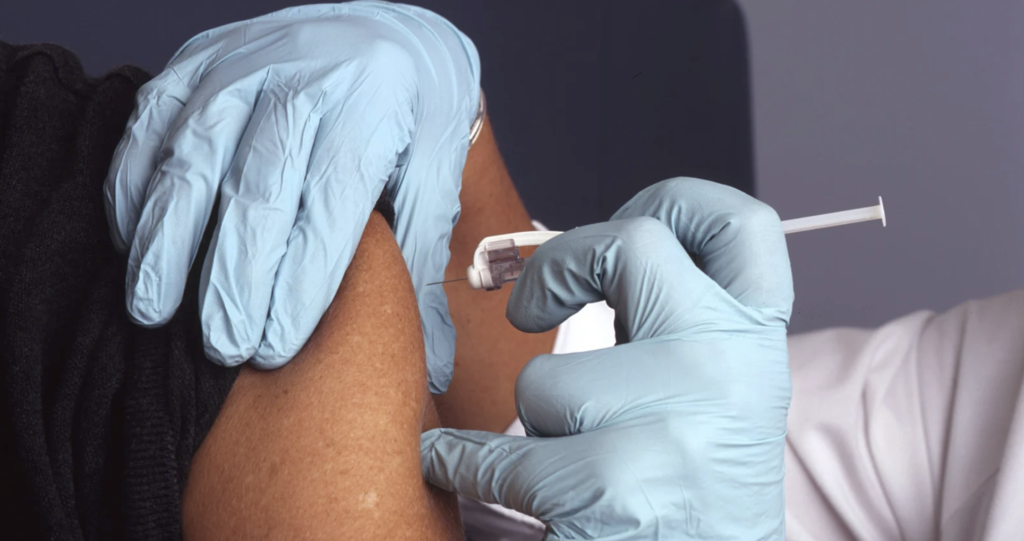
Photo by National Cancer Institute/Unsplash/Creative Commons
The presidents of two historically Black universities — one Catholic, the other Protestant — have announced that they are participating in a COVID-19 vaccine study.
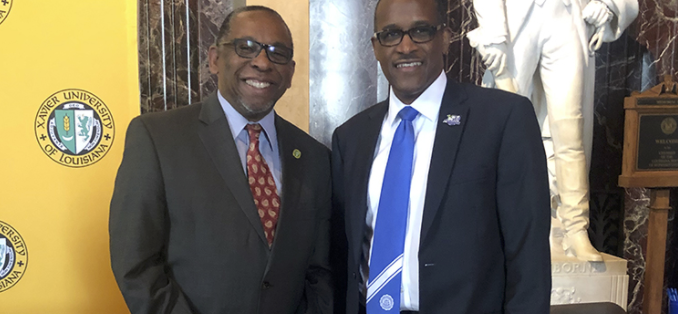
President C. Reynold Verret of Xavier University of Louisiana and President Walter M. Kimbrough of Dillard University said Wednesday (Sept. 2) they are taking part in the Phase 3 trial of the Ochsner Health System. They said they have received injections and are reporting and monitoring any side effects or symptoms.
Ochsner Health said in July that it is one of 120 sites across the world that plan to enroll as many as 30,000 trial participants, with half receiving the vaccine and half receiving a placebo. Neither the investigators nor the patients will know which they have received.
“Overcoming the virus will require the availability of vaccines effective for all peoples in our communities, especially our black and brown neighbors,” the two men wrote in a letter to the faculty, staff and students at their institutions. “It is of the utmost importance that a significant number of black and brown subjects participate so that the effectiveness of these vaccines be understood across the many diverse populations that comprise these United States.”
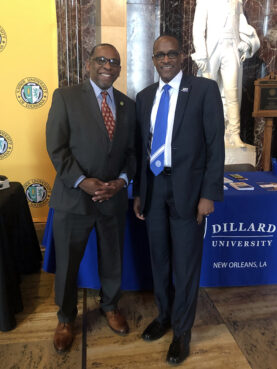
President C. Reynold Verret of Xavier University of Louisiana, left, and President Walter M. Kimbrough of Dillard University. Courtesy photo
Xavier is a Roman Catholic school and Dillard is affiliated with the United Methodist Church and the United Church of Christ.
The two presidents, whose schools are located in New Orleans, encouraged members of their academic communities and other institutions to take part in a COVID-19 vaccine trial.
“Upon our enrollment, we were fully informed, and any possible risks that would exclude us from the study were disclosed,” they said in the letter. “We are both well.”
“As presidents of HBCUs, we do recall unethical examples of medical research,” they said. “We remember the Tuskegee Syphilis Study, which misused and caused harm to African Americans and other people of color, undermining trust in health providers and caretakers.”
A Washington, D.C., religious leader has also announced his participation in a trial related to finding a vaccine to fight the coronavirus pandemic.
Rabbi Shmuel Herzfeld, the leader of Ohev Shalom, an Orthodox synagogue, has tweeted about his role in the trial and been featured in a Washington Post video explaining what happens during the study. Writing in Hebrew, he tweeted his thanks to God for his participation in the trial.
“Boruch Hashem I received my second dose of the vaccine for the covid-19 clinical trial,” he said in an Aug. 27 tweet. “Thank you to Hashem and to all those who are working day and night to bring relief from this pandemic.”
This story has been updated to correct the spelling of the first name of Rabbi Shmuel Herzfeld.
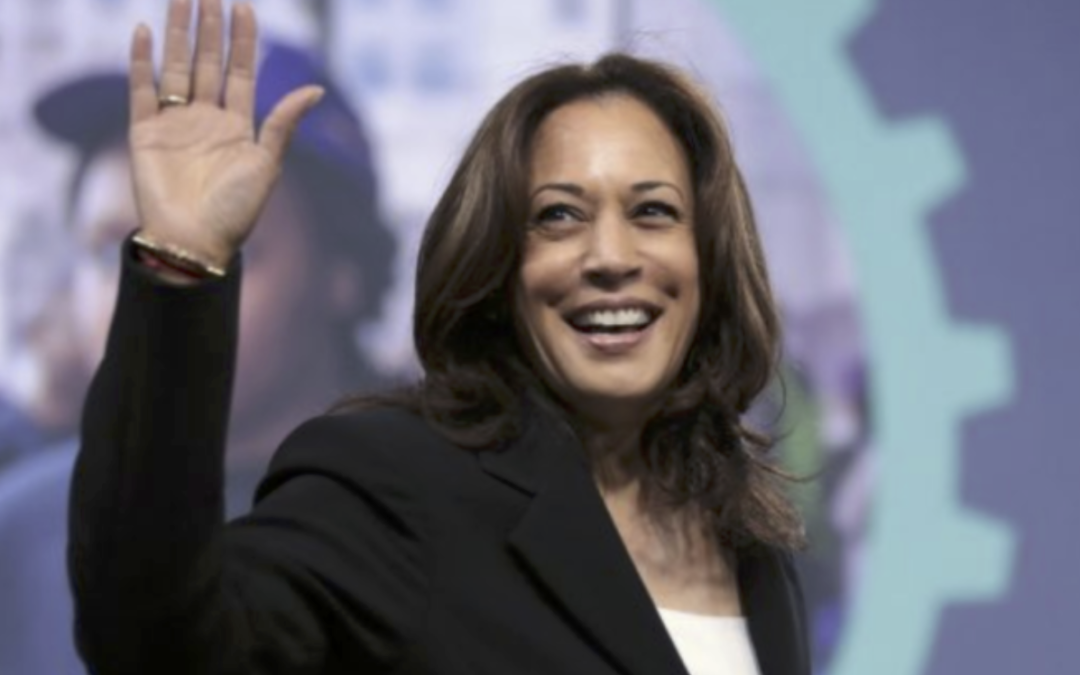
Sen. Kamala Harris announced her bid for president on Martin Luther King Day, the holiday honoring one the world’s most revered leaders. Later that day in January 2019, Harris showed up at her alma mater, Howard University, less than two miles from the White House, the place she was vying to make her home.
“Some people are asking, ‘Why are you bringing everyone together here?’” Harris said on that January day. “It is because Howard University is one of the most important aspects of my life. It is where I ran for my first elected office, which was freshman class representative of the liberal arts student council at Howard University. So, this is where it all began.”
Although Harris ultimately called her presidential campaign quits, citing a lack of funding and dropping out of the most diverse pool of candidates in history, she made history again Wednesday night when she officially accepted the nomination to be the Democratic Party’s vice president, the first woman of color on a major-party ticket.
For the alumni and students enrolled in the hundred or so historically Black colleges and universities, Harris’ ascent to be in contention for one of the highest offices in the land has been something to celebrate. Harris made sure they knew the love is mutual; in her acceptance speech at the Democratic National Convention, she counted her “HBCU brothers and sisters” as her “family.”
Harris’ supporters and critics who are bonded to her by the shared legacy of an HBCU education are weighing what this moment means to them personally, but also the potential it has to raise the profile of HBCUs more broadly.
“This is a moment in history that is empowering for women, especially women of color, and it is an opportunity to give our voice to HBCUs producing the best,” said Inez Brown, 55, who was initiated into Alpha Kappa Alpha Sorority, Inc. at Howard University with Harris in the spring of 1986.
Brown began college at Cornell University, a predominantly White institution, where she says she had a great experience but couldn’t help feeling that something was missing. After a year, she transferred to Howard. Surrounded by so much diversity — more diversity and versatility than you see anywhere else, she said — she felt supported by an institution she felt was committed at its core to her success.
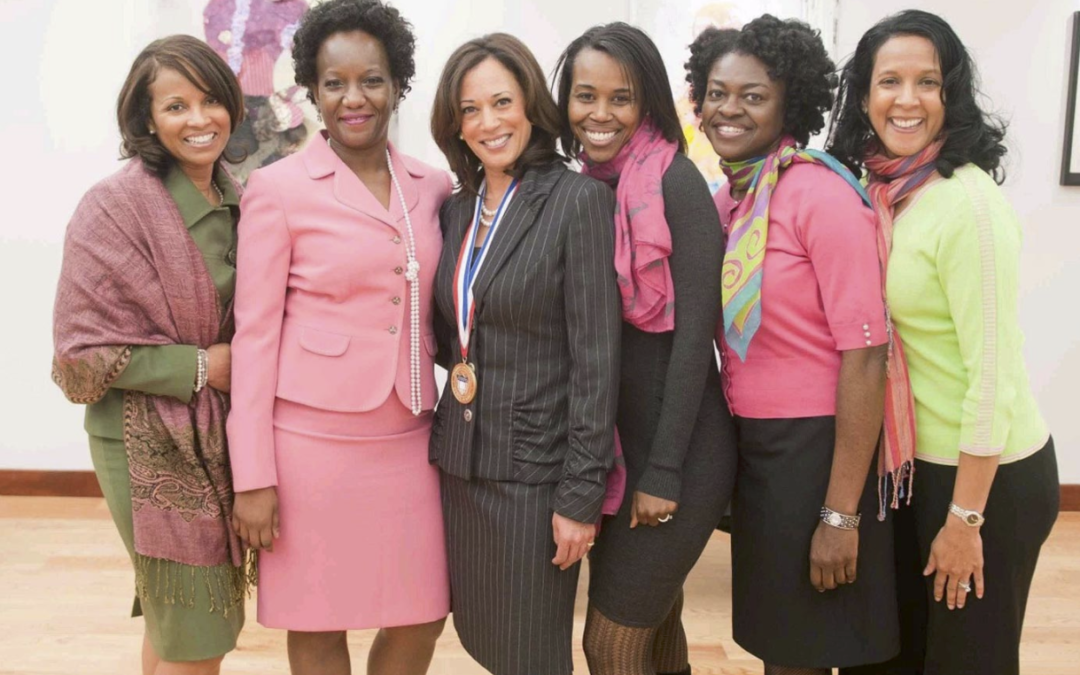
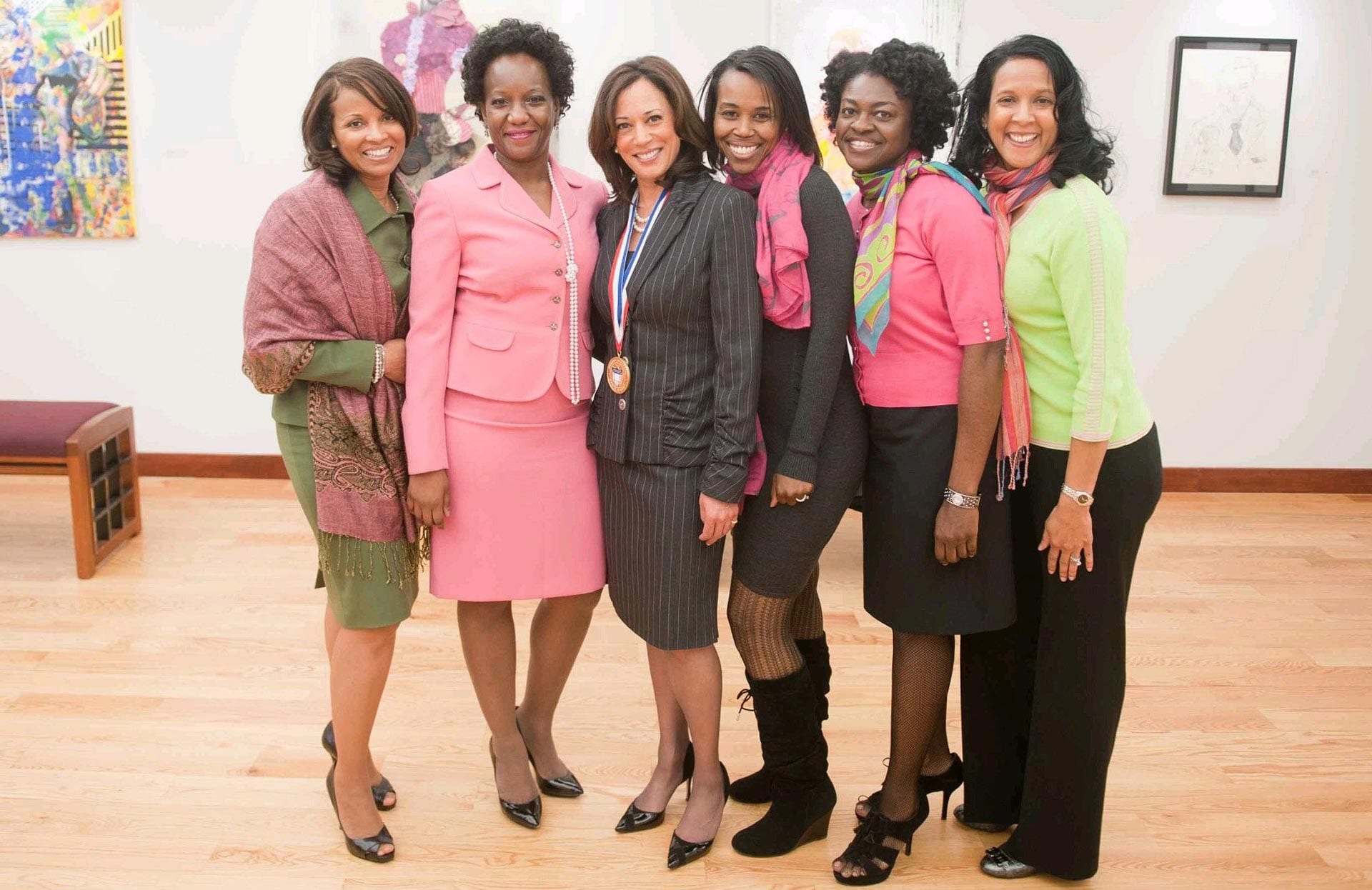
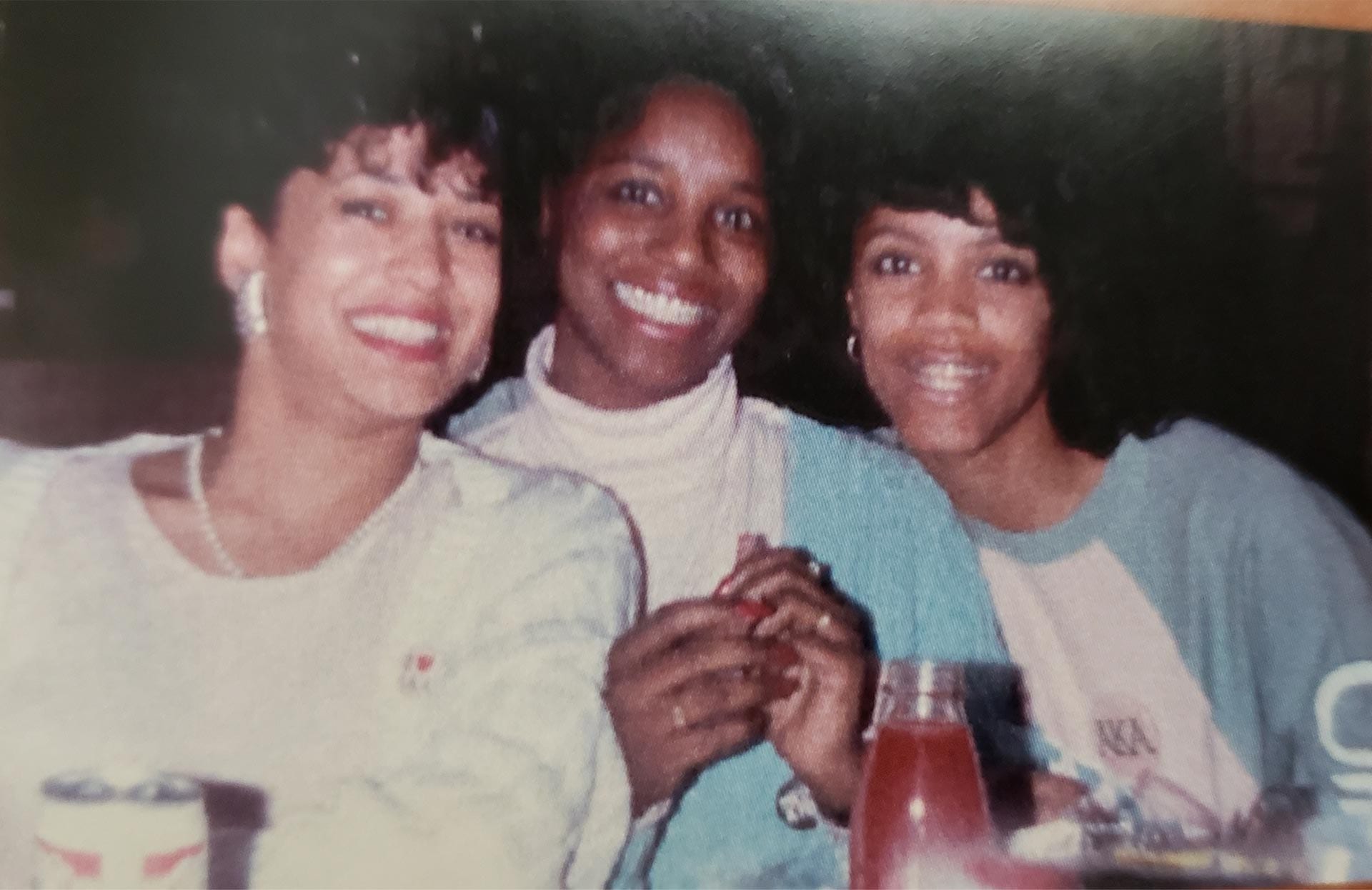
Sen. Kamala Harris at a Howard University convocation with some of her line sisters in Washington, D.C. (Courtesy of Inez Brown)
“But even some [Black people], we will sort of look at HBCUs like they are inferior to [predominantly White institutions],” Brown said. “You just have to look at the products that come out of HBCUs and you have to say to yourself, ‘How could people possibly think that way?’”
HBCUs represent just 3 percent of America’s colleges and universities, yet nearly one in five Black people with college degrees have one from these schools. Women have outnumbered men at HBCUs since the 1970s, and these institutions are helping to level the gap in science fields, producing nearly half of all Black women who earned a degree in science, technology, engineering or math from 1995 to 2004.
HBCUs, which were founded primarily after the Civil War to educate formerly enslaved people who were shut out of other higher learning institutions, continue to face their fair share of challenges to secure funding and keep accreditation. Yet they continue to do more with less, graduating more poor Black students than predominantly White schools, and more upwardly mobile Black graduates than their counterparts with much heftier endowments.
These institutions persist as academic powerhouses, producing politicians, physicians and prominent leaders in every field. Graduates are provided a bastion of Blackness before bearing the brunt of bigotry lurking beyond the gates of their campuses.
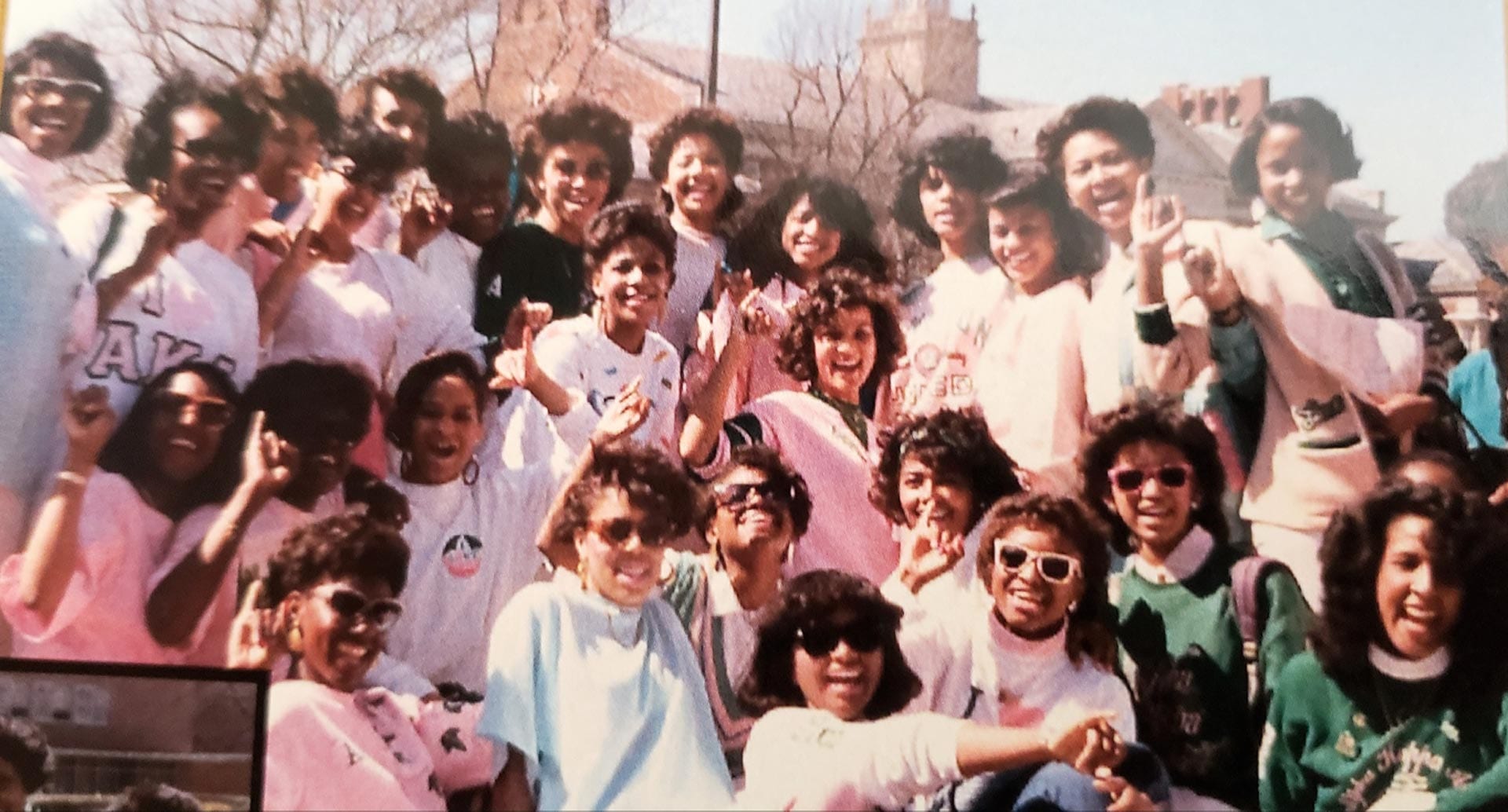
During their senior year at Howard, Brown and Harris were initiated into Alpha Kappa Alpha. Brown has known Harris longer than she hasn’t, and she said their line (the class of women who joined the sorority together) never hesitates to pick up the phone and rally around each other, or show up to an induction — or, if things work in their favor, a presidential inauguration next year.
“Through it all she has been, to us, our line sister Kamala,” Brown said. “She is so authentic, and that is so inspiring for us because you do not have to pretend, forget from where you come, assimilate into society.”
Alpha Kappa Alpha was founded in 1908 on Howard’s campus as the first sorority for Black women, boasting members such as Toni Morrison, Maya Angelou, Rosa Parks and Coretta Scott King. Brown recognizes this moment as meaningful for many, but it’s not lost on her that Harris, who’s broken so many “firsts” in her career, has done so as the member of the first chapter of the first sorority for Black women.
Through it all she has been, to us, our line sister Kamala.
Inez Brown
“It is really a nod to our founders,” Brown said. “That they were able to establish something so special and so awesome at a time it was not the norm — for Black women to get together to establish a professional organization legally. It wasn’t just a club. It is a history of excellence. ”
Nearly three decades later, Brittany Foxhall, 28, was initiated into Howard’s chapter of Alpha Kappa Alpha, the same one as Harris. And Foxhall also had the experience of the high-stakes student body elections, coming out victorious as student body president.
“That could legitimately one day be me,” Foxhall said of Harris. “It seems surreal. It’s really powerful. I think Howard kids right now are trying to take ownership over this elation right now, but it means so much more. I’m excited to share her, and share this with people who aren’t Howard alums and aren’t a part of AKA.”
The day Biden announced Harris would join his ticket, Foxhall’s group text with her sorority sisters “blew up.” She felt a mix of emotions: She chewed over not being particularly interested in a Joe Biden presidency, and the question of Harris’ record as a prosecutor.
There was Harris’ 2011 truancy policy during her time as California Attorney General — which Harris has since apologized for — and her choice to be involved with law enforcement at all. That’s just politics, Foxhall ultimately reasoned. All of them have done something that could be deemed problematic, she said. It’s not fair to expect Harris to have had a “2020 mindset” 20 years ago.
“I can’t wrap my head around how anything she’s done in her past is even close to the fascism we’re experiencing now,” Foxhall said.
Foxhall watched the Twitter battles over her “big sister,” and became alarmed that there were people who would prefer to not vote at all. Reading the conversations, Foxhall felt a sense of clarity for what her role would be heading into November.
Sen. Kamala Harris on the campus of Howard University during her senior year. (Courtesy of Inez Brown)
“As a Howard grad, as a soror, and a Black woman, there needs to be an expectation to protect her,” Foxhall said. “I’m not going to allow this to go down. She’s about to clean up a hell of a mess, and that’s going to be a lot.”
Gabrielle Horton, 29, has added her voice to some of the Twitter conversations leveling criticism against Harris. Despite their shared identities as Black women from California who graduated from an HBCU — Horton went to Spelman College in Atlanta — Harris’ nomination gave Horton no sense of excitement. She is tired.
“I think that this election cycle, 2020, the uprisings, the pandemic, the man that we have in the White House, have sucked all of the energy or any bit of joy I think I might have felt before,” she said.
Like Harris, Horton was bitten by the political bug while attending an HBCU. She worked in the late Rep. John Lewis’ office, and after graduating in 2012, she joined then-President Barack Obama’s re-election campaign as a field organizer in North Carolina.
Horton financially supported Julián Castro’s bid for the White House. The country “wasn’t ready” for him, she says, but she was hopeful the progressives like him running for office would plant new ideas and push the party more to the left.
“We need an immediate change, people who are responsible and who can step to the plate to lead,” Horton said. “It doesn’t mean that they’re perfect or that we agree on everything. We have a lot of work to do even with Kamala and Joe in office next year, but that’s an easier push than trying to do anything in this administration.”
When Harris accepted the vice presidential nomination, she credited the younger generation with pushing the country where it needs to go. For Horton, that means holding Harris and Biden accountable for their records on crime and law enforcement. In light of the uprisings in response to police brutality this summer, it’s hard to wrestle with this ticket, but at least they’re taking it seriously, Horton said.
Horton wishes she was having “a feel-good time” with an HBCU grad potentially heading to the highest office. But her complicated feelings mirror the reality of being Black in America, holding many things to be true at once — the joy and the trauma, Horton said. She is prepared to hold Harris accountable, just as she feels she has to do the same for HBCUs that have struggled to find ways to be more inclusive of trans and queer people and survivors of sexual assault.
“A lot of HBCUs, including Spelman and including Howard, respectability politics sometimes trumps how all students experience their time,” Horton said. “In many ways some of the pushing and advocacy people have been doing to make them these fully realized spaces to make sure all Black lives matter … is similar to the work we are doing, or have to do, with this Biden-Harris administration.”
But despite her hangups, Horton still feels a connection to the fellow HBCU graduate.
“There’s some experiences only we understand and have had, and it’s a very special connection and bond,” Horton said. “This is not the last HBCU alum we’re going to see in the White House. We can thank her for opening up that door.”
Bennett College, a historically Black college for women in North Carolina, almost lost its accreditation a year ago. It launched the Stand With Bennett campaign and raised more than $8 million to put toward an accreditation appeal and prove its financial viability.
This year, it has a new president at the helm, Suzanne Walsh, who is leading a fully-virtual school year for now. With the coronavirus impacting people of color disproportionately, she just couldn’t see a way to reopen in person. If there’s a silver lining, the fight for Bennett’s future positioned them to be prepared for lower enrollment, reduction in revenue.
Walsh takes pride in Harris’ achievements “as if we all personally helped her,” she said in an interview.
Walsh has worked with HBCUs through her time at different fundraising foundations, but did not attend an HBCU herself. She hopes that Harris being a product of an HBCU gives more visibility to schools like Bennett, whose students joined the Woolworth sit-ins in 1960 in Greensboro, North Carolina, as part of the fight for integration.
“I hope that people do see HBCUs as part of an incredible part of the past and history and also a vibrant springboard for the future — it really is toggling between those two worlds,” Walsh said.
And Walsh is impressed with Biden too. In the aftermath of the killing of George Floyd, she joined a conference call with Biden and a handful of other HBCU presidents — she was the only woman among them. The presidential candidate asked what issues were on their minds, and Walsh said she riffed on her concerns about Breonna Taylor and the role of Black women out in community, businesses and in the streets. Biden circled back to Walsh’s remarks, calling her madame president, and thanked her for bringing up these issues.
“He had such an appreciation and understanding that I didn’t expect for what the conversations were amongst Black women that, quite frankly, it threw me,” Walsh said. “There’s no grandstanding. This is just a tiny conversation of people, there’s no media, we’re just on a phone.”
Dana Williams, chair of the Department of English at Howard University, pointed out that the Biden-Harris ticket represents the first time a Democratic ticket is without an Ivy League degree since 1984.
Sen. Kamala Harris with her line sisters at Howard University in the spring of 1986. (Courtesy of Inez Brown)
At this moment in history, the possibility of having an HBCU graduate in the White House “rejects supremacist notions and mythologies about American exceptionalism” that Ivy League institutions uphold, she said. HBCUs have always been about advancing promise, from Howard Law School alumni Thurgood Marshall arguing Brown v. Board, and using the school’s resources to prepare the case, to their fostering of notable leaders such as Martin Luther King Jr., Oprah Winfrey, NASA scientist Katherine Johnson and W.E.B. DuBois. Their students have never had the luxury of accepting the status quo. It’s why Willams herself made the “political decision” to choose Howard, and be trained by the best scholars of literature — whether others recognize them as such or not.
Williams hopes that even if people can’t rally behind Harris, that they can rally behind Black women, who’ve been so reliable, dependable and consistent in politics. Harris’ nomination is a signal, a dare, to ever ignore them again.
“There are Black people who aren’t excited about her candidacy, but I think ultimately, it’s more important that Black women’s vote-labor has finally been acknowledged as valuable in a leadership position,” Williams said. “Black women have saved the Democratic Party over and over again only to be ignored. …We have reached the point where we have commanded the respect of people that should’ve been respecting us all along.”
Williams is a fellow member of Alpha Kappa Alpha, and has exclusively studied at HBCUs: bachelor’s degree from Grambling State University in Louisiana, master’s and doctorate from Howard. Williams said she doesn’t think she would’ve been any less excited if Harris weren’t her sorority sister, but it added a “personalization factor.”
Williams said that Harris launching her presidential campaign in January 2019 and going straight to Howard University signaled her consciousness of wanting to be perceived as undeniably Black, connected to institutions that produce “social engineers” and change agents.
“She’s so poised,” Williams said. “It’s part prosecutor, but a tremendous part of it is Black-girl confidence that comes out of an HBCU.”
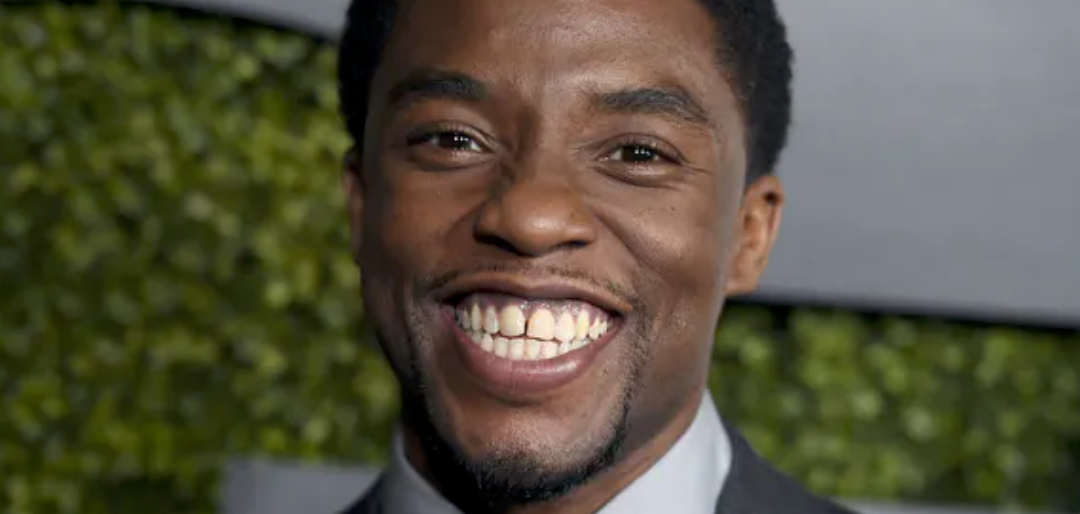
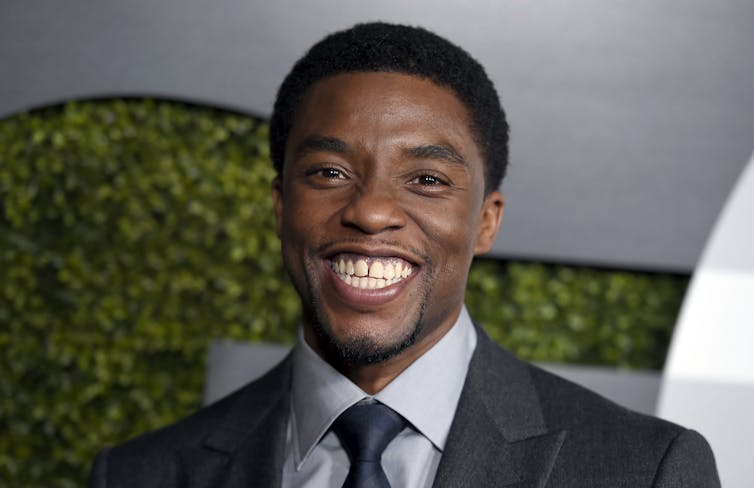
Actor Chadwick Boseman at the GQ Men of the Year party at the Chateau Marmont in Los Angeles, Dec. 3, 2015. Jordan Strauss/Invision/AP
The tragic death of Chadwick Boseman at age 43 following a four-year battle against colorectal cancer underscores two important public health concerns.
First, the incidence of colorectal cancer has risen dramatically among adults under age 50 in the U.S. and in many countries around the world. Second, African Americans have a much greater likelihood of being diagnosed and dying from the disease at any age. Both issues are important to the public health community and efforts are ongoing to address them.
Colorectal cancer remains a major source of cancer incidence and death in the U.S. The American Cancer Society estimates that in 2020, about 147,950 people will be diagnosed with colorectal cancer and 53,200 will die from the disease, making it the fourth most prevalent form of cancer and the second leading cause of cancer mortality.
In 2017, Dr. Rebecca Siegel and colleagues published detailed and compelling statistical data clearly bringing the issue into sharp focus, stimulating greater coverage in the media.
Analysis of trends in colorectal cancer incidence and mortality have clearly shown a decline in the general U.S. population overall during the past few decades. Unfortunately, this has not been the case for young adults.
For example, incidence has decreased by an average of 4% per year between 2007 and 2016 in those over 65 years of age, in contrast to an increase of 1.4% per year during the same period in those under 50. The observed decrease in older adults is likely due to preventive screening, which is recommended and advocated for people over 50 and has been undertaken by a larger fraction of the population.
Similarly, colorectal cancer mortality has declined by 3% per year between 2008 and 2017 in those over 65, while it has increased by 1.3% per year in those under 50.
I have met a number of young people, including several in their 20s and 30s, who had been diagnosed with colorectal cancer and were in the midst of fighting it. I have also met parents who lost young adult children to the disease, and were still trying to understand how this could have happened.
I have been struck by the intensity and complexity of emotions displayed by these people, including anger, resentment, embarrassment, hopelessness, fear and resolve. While a cancer diagnosis at any age is scary and disorienting, it extracts a particularly powerful psychological and social toll on young adults.
What is causing the increase in young adults? We do not know for certain. Several studies have indicated that the disease in young people is different with regard to the specific location of the tumor within the colon or rectum.
Also, the pathology, genetics and response to treatment differ. Lifestyle trends, such as overweight and obesity, lack of physical activity and changing diets, have been suggested to play roles. Studies have indicated that obesity is associated with increased risk of early-onset colorectal cancer in women.
While these trends may contribute, they are not fully explanatory. Physicians have told me anecdotally that many of their younger patients are thin, fit, physically active and in general good health, suggesting that something else must be going on.
What could that something else be? One intriguing possibility may lie in the billions of microbes, collectively termed the microbiota, that live on and within our bodies. Preliminary findings reported at the 2020 Gastrointestinal Symposium recently indicated that there may be differences between the microbiota within tumors from younger versus older colorectal cancer patients.
The death of Boseman has also underscored the long-standing racial disparity for colorectal cancer. African Americans suffer from high incidences and mortalities, regardless of age. Incidence in African Americans was 18% higher than in whites during 2012-2016, while mortality was 38% higher during the same period. For reasons we do not yet know, incidence in younger African Americans has been relatively stable in contrast to that in younger whites.
Increased incidence and death from colorectal cancer in African Americans is likely a consequence of lower rates of screening, as well as environmental, socioeconomic and lifestyle factors. Reduction of the disparities may depend upon addressing these factors.
Screening can prevent colorectal cancer
Precancerous growths called polyps can be easily removed during a colonoscopy. Sezer33/Shutterstock.com
Screening for colorectal cancer not only detects the disease but is also highly effective in preventing it. Screening can readily identify precancerous growths called polyps, as well as early-stage cancers. These often can be removed before they progress to life-threatening stages.
In addition, research is underway to find new methods for colorectal cancer screening based upon analysis of easily obtained body fluids such as blood and urine.
Based upon the knowledge that about 90% of colorectal cancer cases occurs in those 50 and over, the U.S. Preventive Services Task Force currently recommends that screening should begin at age 50 for those who have no predisposing symptoms. This population is experiencing the decrease in colorectal cancer incidence and death that is currently being observed overall.
But screening is not typically recommended for those under 50, and most health insurers do not pay for screening in this group.
This lack of screening, combined with a general lack of awareness about colorectal cancer and its symptoms among young people can result in late diagnoses. Later diagnoses can often result in more advanced stages of the disease, when it is harder to treat and significantly more lethal.
There is also a need to increase screening in the African American community. At present, recommendations vary. In contrast to the U.S. Preventive Services Task Force and the CDC, the U.S. Multi-Society Task Force recommends that screening in African Americans should begin at age 45 rather than 50. I hope these influential organizations will reach a consensus on this issue.
Sorting out the causes of age and race disparities in colorectal cancer incidences and mortalities, and understanding the nature of the disease more thoroughly, will take time.
As Boseman’s untimely death reminds us, colorectal cancer is a difficult and emotional disease for all people at any age. Awareness of signs and symptoms, along with engagement in screening as appropriate, will lead to the eventual eradication of the disease as a major form of cancer.
Hundreds of Thousands of Nursing Home Residents May Not Be Able to Vote in November Because of the Pandemic
Renowned inventor Walter Hutchins has voted in every presidential election since 1952. This year, as many states stopped sending teams to help seniors vote, his nursing home was on coronavirus lockdown and his streak was in jeopardy. Read the story.
Here’s how the voting process is changing this year due to the pandemic. (BuzzFeed News)
The USPS launched a site to answer questions on mail voting. (USPS)
Here’s advice on how to prepare your newsroom to cover voting this year. (Knight-Cronkite News Lab)
Vote by Mail News
More than 550,000 mail ballots were rejected in this year’s presidential primaries, per a new analysis. (NPR)
University of Florida professor Michael McDonald is tracking mail ballot requests by party in several states. (Michael McDonald)
North Carolina is the first state to begin voting for president and has seen 10 times the number of absentee ballot requests as in the same period in 2016. (ABC News)
Democratic super PACs plan to spend more than $7 million on ads encouraging mail voting. (CNN)
Some Black and Latino voters are distrustful of mail voting, surveys show. (Politico)
Missouri spent tens of thousands of dollars on ballot drop boxes that won’t be used the fall. (KSN)
Over the weekend, he made false claims about mail ballot drop boxes. (BuzzFeed News)
Trump continued attacks on mail voting while speaking at the RNC, and on Twitter. (Rev, Twitter)
Politico obtained audio from a conversation Trump had in 2017 in which he said that low Black voter turnout benefited him. (Politico)
The Latest on USPS
Postmaster General Louis DeJoy testified before Congress on Friday and Monday, and said postal workers would prioritize election mail ahead of other first-class mail. He said he was not trying to sabotage the election. (The Washington Post, News Hour, The New York Times)
Democrats claim DeJoy was chosen to run the Postal Service in a “highly irregular” process. (Politico)
The House of Representatives passed a bill that would provide $25 billion to the Postal Service and reverse the agency’s recent cost-cutting measures. (NPR)
On Tuesday, New York’s attorney general filed a lawsuit against the president and DeJoy over changes to the Postal Service, joined by New Jersey, Hawaii, New York City and San Francisco. (Reuters)
Enfranchisement Innovations
Pro sports teams are offering up their arenas as election super centers for fall voting. (Politico)
A new group called Black Coaches United aims to convince colleges to use their stadiums for voting centers on Election Day. (ESPN)
A Florida professor developed an app that uses a ticketing system to help reduce lines at polling places and allow voters to social distance. (4News)
A Rhode Island doctor founded an organization to help people vote who are hospitalized before the election in November. (Boston Globe)
A Missouri organization teamed up with coffee shops and restaurants to give voters easier access to notaries to sign-off on mail ballots. (KCUR)
A physicist in Maryland developed an air filtration device that he hopes can be used to make in-person voting safer at polling places in the fall. (Baltimore Sun)
A nonprofit initiative called Drag Out the Vote is recruiting drag stars to work as poll workers and election observers, and to get out the vote among the LGBTQ community. (SFist)
An athletes’ collective headed by LeBron James is planning a multimillion dollar project to ensure there are enough poll workers in Black electoral districts. (The New York Times)
Carnegie Mellon professors compiled and mapped data in swing states to identify where in-person voting bottlenecks could occur. (WESA)
The cast of “West Wing” is reuniting for an HBO special to encourage people to vote. (Reuters)
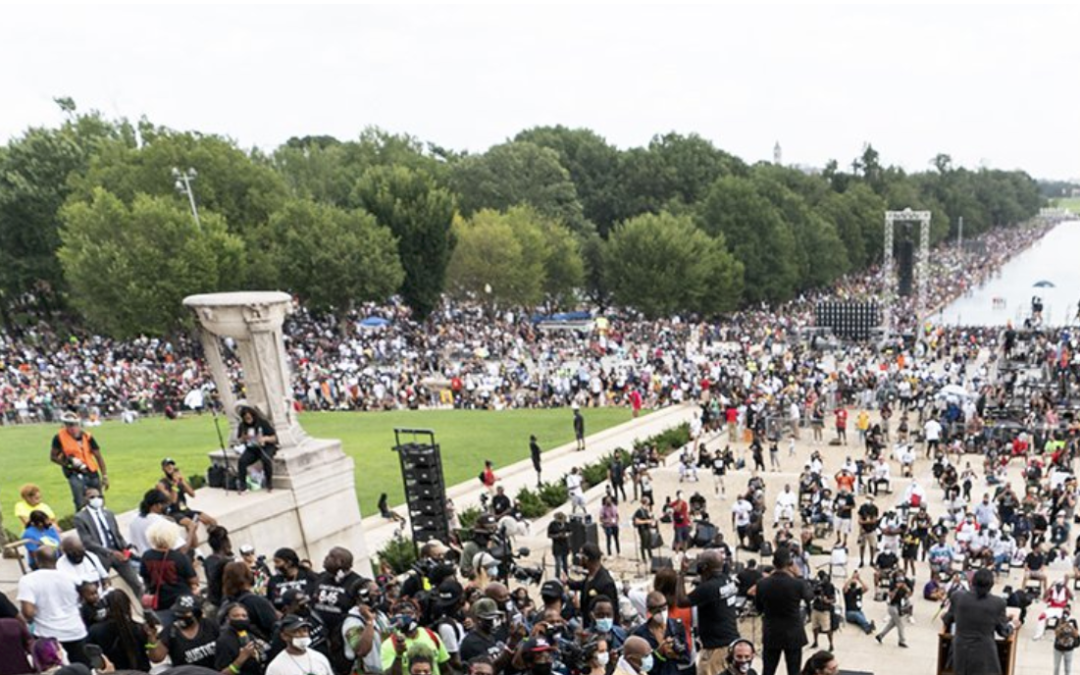
Preachers, politicians and family members of Black people who had been killed or shot by police gathered on the National Mall on the anniversary of the March on Washington.
They called for new legislation to address racial inequities in the country.
And they urged people to vote.
Among the speakers Friday (Aug. 28) was a son of Martin Luther King Jr.
He urged participants — who watched on television, online and in-person — to continue the work of the 1960s with what his father called the “coalition of conscience” by seeking a country that seeks love and health and dispels fear and hate.
“To achieve that America, we need to raise our voices and cast our votes,” King said. “There’s a knee upon the neck of democracy and our nation can only live so long without the oxygen of freedom.”
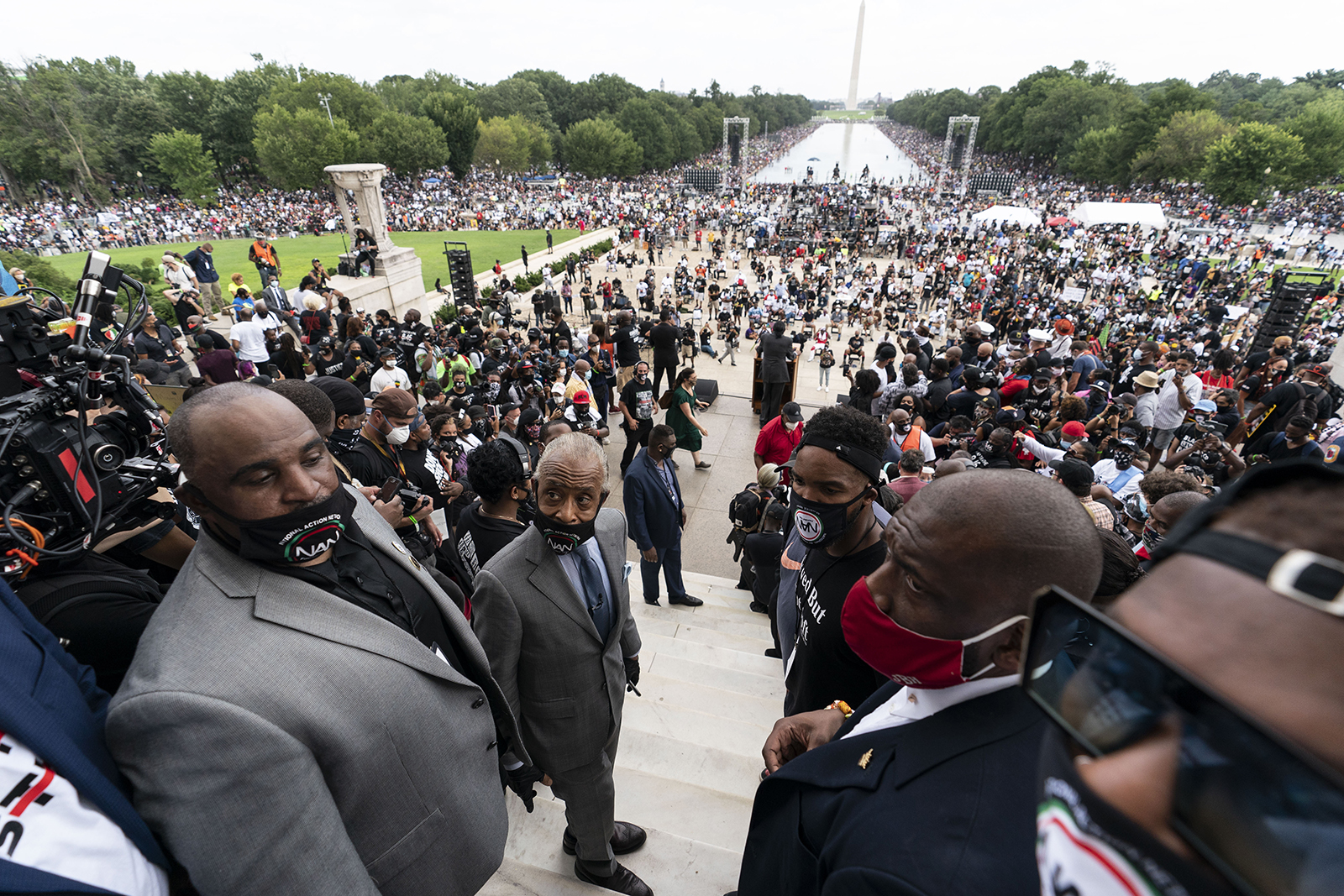
The Rev. Al Sharpton, president of the National Action Network, and other speakers echoed some of the same themes enunciated by the Rev. Martin Luther King Jr. in his “I Have a Dream” speech at the first march in 1963.
“We come in the same spiritual lineage,” said Sharpton, organizer of the Commitment March, after members of King’s family addressed the crowd. “’cause I want this country to know that even with your brutality you can’t rob us of our dreams.”
Sharpton announced the event — also called the “Get Your Knee Off Our Necks” march — as he preached at the funeral for George Floyd, a Black man who died in May under the knee of a white police officer.
Standing in front of the Lincoln Memorial before thousands, Sharpton said that Black people have long fought bigotry. But he noted that members of the interracial crowd that gathered in the same spot where others marched in 1963 have the power to move beyond their circumstances.
“We are the dream keepers, which is why we come today — black and white and all races and religions and sexual orientations — to say that this dream is still alive. You might have killed the dreamer but you can’t kill the dream.”
The Rev. Al Sharpton, left center, makes his way to the podium to speak during the March on Washington, Friday Aug. 28, 2020, at the Lincoln Memorial in Washington, on the 57th anniversary of the Rev. Martin Luther King Jr.’s “I Have A Dream” speech. (AP Photo/Alex Brandon)
Before the throngs of people started marching to the Martin Luther King Jr. Memorial, the granddaughter and a son of the famous civil rights leader took turns at the microphone to speak where their predecessor had appeared 57 years before.
“Americans are marching together — many for the first time — and we’re demanding real, lasting structural change,” said Martin Luther King III. “We are socially distanced but spiritually united. We are masking our faces but not our faith in freedom.”
The crowd was addressed by speakers mostly in person and some, including Democratic vice presidential nominee Kamala Harris, by video. Gospel singer BeBe Winans sang an original composition that he wrote to his then-15-year-old son after Freddie Gray died in the custody of Baltimore police in 2015.
“In one moment, dreams are scattered,” he sang. “Our sons and daughters matter. Black lives matter.”
Winans performed in between brief remarks by family members and lawyers of Black people who had been killed. They recalled their loved ones, thanked the crowd for their support and urged the marchers to vote. Many wore masks or T-shirts with names or images of their relatives.
“There are two systems of justice in the United States,” said the father and namesake of Jacob Blake, the man who was shot seven times in the back by police in Kenosha, Wisconsin, on Sunday. “There’s a white system and there’s a Black system. The Black system ain’t doing so well. But we’re going to stand up.”
While the elder Blake cited Allah, the Muslim name for God, in his remarks, other parents mentioned Bible verses as they urged continuing advocacy.
Sybrina Fulton, the mother of Trayvon Martin, whose killing in 2012 led to the Black Lives Matter movement, said her favorite passage is Proverbs 3:5-6, which begins: “Trust in the Lord with all your heart; lean not unto your own understanding.”
“Even though it looks dark, I want to tell you to be encouraged,” she said. “Don’t stop saying Black Lives Matter. Don’t stop peaceful protesting. Don’t stop praying. Don’t stop unifying. Stand together.”
In the pause between speeches, many of which called for legislation to improve voting rights and reform police agencies, the crowds and speakers often engaged in a call-and-response recitation of the names of people who had been killed over the years.
Event co-host Mark Thompson, a radio show host who was helping introduce the various speakers, acknowledged that many of the people representing those names didn’t have a chance to come to the microphone before it was time to march.
“Sisters and brothers,” he said, “the problem is the police have killed so many of us there’s not even enough time for us to hear from every family.”
U.S. Congressman John Robert Lewis was a Black preacher, inescapably so.
Like his spiritual mentor, the Rev. Dr. Martin Luther King Jr., the long-standing congressman was an ordained Black Baptist minister. It meant that he not only knew how to parse legislative briefs but also ancient biblical texts and extrapolate wisdom from them to address social issues of great urgency.
For Christians like Lewis, preaching, though not an end in itself, is a means by which God reminds a society of God’s concern for community wellness, life, human dignity and freedom in a less-than-perfect world.
Preaching, in their understanding, tells the truth about suffering in the contexts of fear and death. Ultimately it declares that evil and despair have an appointed end. Because of this, as John Lewis said in his posthumously penned op-ed: “Each of us has a moral obligation to stand up, speak up, and speak out.”
This is why Black preaching and Black preachers matter.
But understanding Lewis as a preacher requires far more unpacking than one might imagine. As an ordained Baptist minister and a scholar who studies the art of preaching sermons and the evolution of the Black preacher in the U.S., I understand firsthand why suspicion has long accompanied African American preachers into America’s pulpits and often extended into the halls of Congress and even newsrooms.
Clerical personas
Preachers wear performative masks. Who ministers understand themselves to be has major implications for how they prepare and perform sermons. If they see their role as social justice advocate, they will speak and act in ways that condemn oppressive systems. But if they see themselves more as offering pastoral care, they will focus on therapeutic matters requiring counseling and other means of congregational support.
A preacher’s persona or “prosopon” – meaning “face” in Greek – is not simply a mask behind which she or he performs a role in a socioreligious drama but is part of their being. The role and speaker are one.
Preachers fall broadly under different personas. Alongside the preacher as “social activist,” there is the “clerico-politician” skilled in the art and science of government politics. Then there is the “evangelical-moralist,” who typically has an encyclopedic knowledge of scripture and is skilled in teaching Christian doctrine.
Finally, there is the “entrepreneurial agent” who focuses on building financial and social capital for themselves and their congregations.
Yet, many outside the Black Church community remain badly informed about the complex roles performed by Black preachers in our society.
Take for example Tony Evans, who is both a pastor and broadcaster. As an evangelical-moralist, he places strong emphasis on the believer’s need for a personal relationship with Jesus Christ through spiritual conversion, behavior modification, evangelism and soul regeneration. Proselytizing is paramount.
Megachurch preacher Bishop T.D. Jakes, as an entrepreneurial agent, is a highly pragmatic church growth strategist largely interested in enterprising pursuits and works.
MSNBC host Rev. Al Sharpton straddles the clerico-politician and social activist identities when stirring public discontent to shame the cruel in signal moments.
Following George Floyd’s killing at the hands of a white police officer, Sharpton preached two eulogies – one in Minneapolis and the other in Houston, Floyd’s city of birth. Both of Sharpton’s sermons elicited exuberant “Amens” of celebration from face-masked mourners. More significantly, his messages had a global effect, bringing together a broad a cross-section of culturally diverse listeners.
Preachings’ heritage
No matter what persona they chose to adopt, Black clerics have long been encouraged to mute their voices in front of white audiences or adopt preaching methods not native to their cultural habitats.
There have been some very vocal black scholars in the majority-white Presbyterian Church USA who have raised their voice against racism and sexism. These include its first ordained African American woman preacher Katie Geneva Cannon and Gayraud Wilmore, author of “Black Religion and Black Radicalism,” both of whom died recently.
Yet these are not theological scholars the majority of white Christian preachers consult when preparing sermons.
America’s white preachers regularly tie their style and practice to rhetorical methods devised by New England’s Puritan and Congregationalist ministers and Great Awakening revivalists, such as Jonathan Edwards, who owned enslaved Africans, and British revivalist George Whitefield.
Without these pioneering white clerics’ preaching influence on American culture there would be no Rev. Billy Graham. Graham was dubbed “America’s Pastor” and the most celebrated preaching evangelist of our time.
Many Black preachers have modeled their preaching methods after these clerics without questioning their ideological origins and philosophical heritage.
In contrast, Black preachers like John Lewis, son of Alabama sharecroppers, embraced a preaching style focused on Jesus as a disinherited figure and grounded in a philosophy of nonviolence.
Preachers with sermons of this sort prize words that speak to distressing problems affecting society’s most vulnerable populations over rhetorical methods placing logic and Western philosophy at the center.
Sermons preached in rural or urban settings that helped African Americans make sense of their plight were far more uplifting than sermons rooted in the Celtic, Nordic, and Roman cultures of Europe.
Politics and the pulpit
The political and religious stakes are always higher for Black preachers than their racial counterparts because Black communities expect their preachers will do more than preach Sunday sermons.
Georgia U.S. Senate candidate and pastor of Dr King’s Ebenezer Baptist Church, Rev. Dr. Raphael Warnock, who officiated at Lewis’ funeral, believes as did Lewis that communities are best served when preachers work within the system. By doing so they can exercise their influence through crafting legislation, political antagonism and forming alliances deemed advantageous for the communities they serve.
A certain moral gravitas accompanies such work.
This is why the recent deaths of John Lewis and fellow preachers Joseph Lowery, and C.T. Vivian are cause for communal mourning. These religious voices are irreplaceable in the culture.
Rosyln M. Brock reflects on how her great-grandmother, Cousie Pittman, could not vote until the Voting Rights Act of 1965 passed, despite the 19th Amendment granting women the right to vote in 1920. On a video published by the First Woman Voter Campaign, she talks about how Ms. Pittman, who lived in rural Florida and the segregated South, cast her first vote in the 1968 presidential election.
“My family often shares the story of how my grandmother would get dressed up in her Sunday Best, and wait for a ride to the polls on election day,” said Brock in the video.
Brock is Associate Minister at the historic Alfred Street Baptist Church in Alexandria, VA, and a nationally recognized health policy advocate, social justice change agent, and noted public speaker. She holds the distinct honor of being the youngest person and fourth woman in 2010 elected to the role of National Board Chairman for the National Association for the Advancement of Colored People (NAACP) in its history. Brock currently serves as its Chairman Emeritus.
The First Woman Voter campaign and national women’s organizations, such as the National Women’s History Museum, the League of Women’s Voters, and Obama’s When We All Vote, celebrate the ratification of the 19th Amendment in 1920. This bipartisan campaign encourages women to pay tribute in a unique and personal short video to the first woman voter in their family or the one who most inspired them to vote. Four former first ladies, Atlanta Mayor Keisha Lance Bottoms, Chicago Mayor Lori Lightfoot, Rev. Bernice A. King, and other high-profile women in academia, business, the arts, entertainment, government, and more fields are participating in the virtual video campaign. Even with the heartwarming messages by women of all races noting the 100-year milestone, Brock’s story and others underscore acknowledging that the struggle didn’t end in1920 for many Black women in the South.
“The history has to be told that black women were fighting for the right to vote in the 1800s, through the AME clubs, the black women’s clubs … the National Association of Colored Women’s Clubs were active in the early 1800s well before the white women were organizing to think about coming into the public square,” said Brock. “White women can celebrate that they marched in 1912 or 1913 and then seven years later, in 1920, when the 19th Amendment was passed. Black women had to wait almost half a century until the 1965 Voting Rights Act before they had full, unfettered access. Now, many black women in the 1920s lived in the North and were able to vote. I was from South Florida. My grannies … it took us a little longer.”
August 2020 marks the 55th anniversary of the Voting Rights Act’s passage, which, according to the Justice Department, is hailed as the single most effective piece of civil rights legislation ever passed by Congress. However, in 2013, the Supreme Court gutted a vital part of the Voting Rights Act, which required municipalities, counties, and states to get federal approval before changing their voting laws. It didn’t take long for voter suppression efforts to resume.
“I chose to participate in the campaign because it gave me an opportunity to share my great-grandmother’s first voting experience. And I believe it’s important as a black woman in today’s society to acknowledge the role that we did play and continue to play in securing the right to the franchise,” said Brock. “As many of us know, voting remains the only power that we have to affect change in our communities. And the only language that politicians seem to understand is the power of the vote. That’s why I believe so many today are trying to suppress votes by those in minority communities.”
According to a study last year by Pew Research, Millennials and Gen Z will make up 37% of the 2020 electorate. However, older generations are more likely to go to polls or actually vote. This year, voters are highly engaged, but concerns are mounting about difficulties in actually voting. That’s a big deal when so many critical issues are top of mind for many voters — access to affordable health care in the era of COVID-19 and beyond, violence and discriminatory policing, climate change, unemployment, and homelessness.
As a leader in the social justice, racial equity, and community investment space, Brock is inspired and hopeful as she sees the next generation push forward despite the obstacles and political games. Her philosophy is embodied in an African proverb: Care more than others think is wise, risk more than others think is safe, dream more than others think is practical, and expect more than others think is possible.
“Courage must not skip this generation. And as Black women stand confidently now in their place of power, they no longer have to accept that they don’t belong at the political table or don’t have a seat. We’ve got to remember Shirley Chisholm, who said, “If they don’t have a seat for you at the table, you come in and bring your own folding chair, and you sit down.”
Grammy-winning gospel performer Kirk Franklin can’t be onstage these days but he’s featured virtually in an upcoming benefit to draw attention to poor children across the globe who are affected by COVID-19.
Franklin is joining World Vision, Food for the Hungry and Compassion International in the “Unite to Fight Poverty” virtual concert set to be televised and streamed online on Friday (Aug. 28) at 8:30 p.m. EDT on Daystar Television Network, Facebook, YouTube and PureFlix. It is also scheduled to air at 3 p.m. EDT Saturday on Fox Business.
Franklin, who won six Stellar Gospel Music Award trophies on Sunday, joins 20 other Christian artists for the two-hour fundraiser to aid the three Christian humanitarian organizations. Those groups are working to help families experiencing extreme poverty in the wake of the pandemic and natural disasters by providing hygiene supplies and clean water.
Franklin, who has traveled across the world, also recorded a new video of his song “Strong God” for Compassion to raise awareness about the crisis. Even as he’s drawing attention to the pandemic, he acknowledged it’s hard for him to not know when he’ll be able to perform in person again.
“I miss people,” said the host of the “Sunday Best” televised singing competition. “And I’m looking forward to getting back in front of people.”
Musician Kirk Franklin in 2019. Courtesy photo
Franklin, 50, talked to Religion News Service about the global effects of the coronavirus and his calls for the church to respond to racial inequities, but he declined to comment on whether his related boycott of Trinity Broadcasting Network and the Dove Awards continues.
The interview has been edited for length and clarity.
Oh, no, no, not at all. Not at all. Not at all. And I’m really appreciative and grateful for everything I get. ’Cause I know nothing is owed to me.
This is the first time that World Vision, Compassion International and Food for the Hungry have worked together on an effort like this benefit. Why did you decide to join this joint effort?
It’s because I believe in the ideals of what they stand for. And I know that even though there are many disparities and deficiencies in America, we are still a blessed country. I’ve been blessed to travel the globe and I can totally understand how, even in the middle of this global pandemic, there are many countries and many individuals that are not able to just pivot and to diversify to survive. I can totally see why this would be such a great moment to come together because we’ve never seen anything like this in our lifetime. And it makes me so proud of them to see them unify for the same cause.
What song or songs did you perform and why did you choose those selections?
Well, my song selection was not really based on the mood or the cause of the event. I just wanted to do music I thought would make people feel good. I performed “Love Theory” and “Just for Me.” I’ve been blessed by God’s guidance to have a whole bunch of songs and at this stage of my career, whatever I pick is going to be something that just feels good. But sometimes it’s hard to pick. And so you just deal with what you’re feeling at the moment.
You went to the Dominican Republic with Compassion International. How recently did you go and how long were you there?
Believe it or not, it was right before the world shut down. It was in January. And I was there almost a week.
What is it that struck you particularly about the trip?
How many people in the world still live marginalized lives, that still live under the poverty line, and how many people are forgotten by the 1%. That is just a mystery to me. And it can make me even, at times, question God’s bigger divine plan, even though I have to choose to believe, when it’s hard to believe. But that is something that has always fascinated me.
A recording set for the “Unite to Fight Poverty” virtual concert. Courtesy photo
How has COVID-19 affected you personally?
We’ve had people we know, family members have died, people in the churches we’ve been members of have died or people have been hospitalized. So we’ve seen it firsthand, we’ve seen it up close. And then also I’m in the people business. And so many artists and churches and ministers and pastors, we’re in the job of touching people and there’s something very healing and therapeutic for the soul when we do. And we have not had the opportunity to do that for almost six months.
Has the death of George Floyd and other people, Black people in particular, in police-related incidents affected you personally?
Yes, yes, of course. I’ve been very outspoken. I’ve been very engaged. I’ve been very consistent in my conversations about the disparity of how these actions are in the legal system, in the systems there to protect people, but they don’t protect all people. And also been very vocal about the lack of the church’s voice in social issues that affect people that go to these churches, that sit in these pews. And the lack of information or the lack of conversation has been really deafening.
You appeared in March on Trinity Broadcasting Network, and you discussed these very issues you just spoke of. Has anything new come of that time with TBN or any new steps since then?
I can just say that my heart and my passion won’t stop in any conversation I have that has to do with social injustice or the injustices of any group of people the Bible calls Christians to be engaged in. And, until we are more visible, more visual, more outspoken and more committed to these causes, I will continue to have conversations.
So did that appearance in some way mark an end of your boycott of TBN and the Dove Awards, or is that continuing?
Musician Kirk Franklin in 2019. Courtesy photo
I will just say I will continue to have conversations until the conversations are not needed.
I’m just going to ask one more time: In October, do you expect to be on the Dove Awards?
In October, I continue to keep the narrative of God’s heart and social injustice, and the church’s lack of engagement. We should be the ones leading the narrative and until we do, I will continue to speak up and speak loud and humble and with love until there’s tangible change.
But it sounds like you’re not ready to answer the question about whether you’re going to be there or not.
I will be where I’m supposed to be with this message. I will be at whatever platform I’m called to be able to talk about how God’s love should include everybody. And, until that happens, I will continue to preach love, truth, justice and grace.
Since you are an artist of faith who performs about faith, how do you have faith as you go through this time of the coronavirus pandemic and not being able to perform the way you’d like?
I started going back to therapy and that’s been very, very good for me. I’m a Black man that goes to therapy. I talk, I pray, and they are synonymous. It has been really, really good to be able to have somebody to be able to help you as you help other people. That’s something that can be very, very encouraging. For the first time in history, we had so many pandemics that were contemporaneous: You have racial pandemics, you have political pandemics, you have economic pandemics. So those things can be very daunting for someone that is looked at to be able to try to have all the answers.
This story was produced byWisconsin Watch, a nonprofit, nonpartisan investigative reporting organization that focuses on government integrity and quality of life issues in Wisconsin.
On May 31, the day after violence first broke out on State Street in Madison during demonstrations in response to the death of George Floyd at the hands of Minneapolis police, a transformation began.
Businesses up and down Madison’s defining corridor shuttered. Plywood sheets covered windows — some preemptively and some to cover windows already smashed by looters.
“It looked kind of dead before the murals,” said Amira Caire, a 22-year-old Madisonian and one of over a hundred artists who lent their time, talent and paint to an effort to decorate the barren spaces with colorful messages of pride, perseverance, anger, justice and unity.
Will Cioci / Wisconsin Watch
Danielle Mielke, 19 (left), and Amira Caire, 22, worked on a mural at the University Bookstore in downtown Madison, Wis., on June 9, 2020. The mural depicts Tony Robinson, a Black teenager who was shot and killed by a member of the Madison Police Department in 2015. Mielke said the mural is a way to shed light on Robinson’s death and show people how community members felt in its aftermath. “We wish we weren’t painting Tony’s face up here.”
Will Cioci / Wisconsin Watch
Artist Duowan Rimson, 35, of Madison works on his mural outside the Overture Center in downtown Madison, Wis., on June 11, 2020. Rimson said that his goal with the mural was to force white passersby to put themselves in the shoes of the police officer and understand how the police view Black people and Black children. “I’ve been wanting to do a mural since it started,” Rimson said of the recent movement to decorate State Street with public art. “It’s a good way to express not only our talent but our goals and messages. It’s not all about looting and rioting, that’s literally the tip of the surface.” Rimson expressed his frustration with how the mural projects have been carried out in some places. “I see some murals that don’t have anything to do with the cause. That’s exactly what Black people mean about us being overshadowed, about things being taken from us.” Asked about what change he hoped would come from the current movement, Rimson said, “I don’t know what change necessarily would come. But in order to change we need to gain understanding. These murals are helping the people who don’t want to go out and do the research. They’re eye openers . . . We’re not saying let us get away with murder. But we’ve been compliant and done everything, and we still get killed.”
Will Cioci / Wisconsin Watch
Activist Lilada Gee (left) and artist Cassandra Marzette pose in front of their mural-in-progress on the Overture Center on State Street in downtown Madison, Wis. on June 11, 2020. Marzette and Gee were commissioned by the city for a number of murals throughout the downtown area.
The mural project began on May 31, when both the mayor and Common Council president contacted Madison Arts Program Administrator Karin Wolf to request a “rapid response” art program for the shuttered storefronts. Working with her program’s community cultural partners, Wolf reached out to artists who had worked with the city before. In the following days, as more businesses covered their windows, the Arts Program posted an open call for artists interested in participating in the project.
The mural project was funded through another program, Arts in Public Places Looking Forward, which had been established just a few weeks earlier to support artists who have lost income due to the COVID-19 pandemic. The Madison Arts Program also prioritized artists who had been affected by racial violence and injustice, Wolf said.
Over the ensuing two weeks, more than 100 murals were painted as commissions from the city. Many more works of graffiti and other public art appeared in spaces not used by officially commissioned artists. Nearly all of the pieces focused on support for the Black Lives Matter movement or called for an end to police misconduct.
“I feel that the symbolic language of visual culture can reach people,” Wolf said. “We have to reach people on many different levels to help them understand the devastating effect that racism has had on this country.”
Will Cioci / Wisconsin Watch
Mishelle McKnight (second from left) poses with her nephews Ethan (left) and Eton Wesley (right) and her daughter Bada Scates on Lake Street in downtown Madison, Wis., on June 11, 2020. McKnight’s daughter attends O’Keeffe Middle School in Madison, which reserved a space for students to paint murals in the wake of recent protests against police misconduct and racial injustice. McKnight said she wanted to help students actively participate in the current moment, saying that, “the change that we need to see is going to be for our children.” McKnight said that both her son and the father of her children have been subject to violent policing in the past. Asked what change she would like to see, McKnight said, “treat Blacks the same as you do anybody else. Treat people like human beings.”
Will Cioci / Wisconsin Watch
Shiloah Coley, 21, looks at a reference photo of Aiyana Mo’Ney Stanley Jones as she paints a mural outside the Overture Center in downtown Madison, Wis., on June 11, 2020. Stanley was seven years old when she was shot and killed in a police raid in Detroit, Mich., in 2010. Coley used Stanley and the likenesses of other young Black people killed by police as the inspiration for the figures in her murals. Coley, originally from the suburbs of Chicago, is a recent graduate from the University of Wisconsin-Madison, where she studied public art and the criminalization of graffiti and other forms of artistic expression. “I’ve always believed in the arts as a super transformative thing,” she said. “I wanted [this mural] to be two Black teenagers with a confrontational gaze. People need to reckon with Black people in this space and taking up space in Madison.”
Will Cioci / Wisconsin Watch
Yani Thoronka, a sophomore at Madison East High School, works on a mural outside the Overture Center in downtown Madison, Wis., on June 11, 2020. The mural was designed by the Madison-based youth leadership organization Drum Power, of which Thoronka is a member. “Everything that’s happening takes a really big mental and physical toll on you,” Thoronka said. “We want to empower Black people during this time.”
Will Cioci / Wisconsin Watch
Richie Morales, 39, paints a mural on the Overture Center on State Street in downtown Madison, Wis., on June 11, 2020. Morales, born in Guatemala, has lived in Madison for two years. “America is a great continent,” Morales said. “But it needs to create a balance of power, of money, of natural resources. I want to unify America.” Morales also spoke about the value of art during social movements. “I think art can change lives. Art is essential. Sadly, sometimes art stays outside of the light because there aren’t a lot of profits in it.”
Wolf said the city officially ended the mural project on June 14. State Street businesses have since begun to unboard, taking down the murals from their windows and doors.
It is not yet clear what will happen to the artwork after it is removed. The decision lies with individual businesses and property owners about when to reopen their storefronts. Wolf said that Madison’s Central Business Improvement District, which works to coordinate and support many downtown businesses, was keeping some of the murals in storage while a plan is formulated. The city is currently collecting input through an online poll and conversations with artists to decide how to move forward. Options being considered include temporary exhibitions, auctions, or donating the works.
“I can’t speak for everyone else’s work, but I do hope they aren’t simply archived and forgotten,” said Simone Lawrence, a local artist whose portraits of Malcolm X and Colin Kaepernick have recently been taken down from the Driftless Studio windows near the top of State Street. “I’d like to see an exhibition. Even more ideally, I’d like to see them sold and the proceeds go to Black-owned organizations and/or directly to the artist.”
Will Cioci / Wisconsin Watch
Chris Lewis, 23, paints over a mural on Shortstack Eatery in downtown Madison, Wis., on June 11, 2020. Lewis said that the city government, which commissioned many of the murals, wanted to replace the existing piece with a more ambitious one. “I’m covering up this shit,” Lewis said. “The city wanted us to. They wanted something bigger, something excellent.” Lewis, who has worked with his mother, local activist Lilada Gee, and a small group of community members to paint a number of murals on State Street, said that the public art projects were exciting to be a part of. “It’s been really eye opening. It feels good to get out here and be among the people, it’s a whole art community. I’m not even really an artist, but it’s been a fun experience.” But Lewis also worried about whether the murals reflected a deeper shift in tone and thinking about issues surrounding Black lives and police brutality. “I think it’s something that’s pretty to look at. They turned something bad into something good. Which kind of pisses me off. I think in part they’re covering it — you’ve put a bandaid over a wound. For some people it’s genuine, but for most, nah. Some businesses feel like they have to let it happen because other people are out here doing it.”
Will Cioci / Wisconsin Watch
Owen Gwynne, 54, of Madison paints a mural recreating a work by DarRen Morris, a Wisconsin man sentenced to life in prison at 17 in 1995. Gwynne was invited to help paint the mural by Phil Salamone and Judy Adrian, Madison natives who Morris has developed relationships with from prison. Salamone and Adrian wanted to include Morris’ art on State Street to broaden the conversation around policing to cover the entire criminal justice system. The mural is a recreation of a work by the artist DarRen Morris, who was sentenced to life in prison in 1995. Adrian, who helped Morris to write his book “In Warm Blood,” introduced Morris to Salamone, a Madison-based artist who organized the mural as a way to broaded the ongoing conversation about policing to the entire criminal justice system. “I wanted to contribute, but I didn’t want it to be about me. DarRen represents something that people arent talking about. There are higher arrest rates, longer sentences, higher recitivism for African Americans,” Salamone said. “Paint is the strongest voice I got.”
Will Cioci / Wisconsin Watch
Shahaney Williams (left), 14, and Yasmine Clendening, 12, paint a mural on Lake Street in downtown Madison, Wis., on June 11, 2020. Both Williams and Clendening are students at O’Keeffe Middle School in Madison, and painted on space reserved for them and their classmates by O’Keefe art teacher Kati Walsh. “I thought it was important to show that some people actually care,” Williams said, speaking of the murals as an alternative to participating in the protests for young people. “Some people want to participate but they’re too afraid to walk with [protesters], because of the tear gas and rubber bullets.”
Will Cioci / Wisconsin Watch
Arielle Edmonds (second from right), 31, walked up State Street in Madison, Wis., with her four children to look at the murals on June 9, 2020. “I wanted to show my kids what’s going on so they can be aware of what’s going on in their community.”
Religious sisters attend the Regional Conference on Human Trafficking, March 18 at Arrupe Jesuit University in Harare, Zimbabwe. Center: Sr. Theresa Nyadombo of the Handmaids of Our Lady of Mount Carmel, education secretary for the Zimbabwe Catholic Bishops’ Conference, said a collaborative effort is needed to raise human trafficking awareness. (GSR photo/Doreen Ajiambo)
HARARE, ZIMBABWE — Jane sat on a hard, wooden chair at a church in Zimbabwe’s capital, Harare, and stared into space for some minutes. Then, she began to croon in worship and, a few minutes later, the gates of her heart burst open, and she began to pour out her heart to her Lord, tears flowing freely like a fountain.
“Father, I forgive my abusers and the people who caused me pain,” prayed the 37-year-old mother of two, who asked that Global Sisters Report not use her real name. “They treated me like an animal, like I didn’t matter, like I was a dog, worse than a dog. God, please heal my pain and heal my broken heart.”
Jane’s journey of pain began in 2016, when she was enticed by a trafficking agent in Harare with promises of a salary of $1,400 per month at a hotel in Kuwait, more than 3,000 miles away. Life had become unbearable in Zimbabwe after her husband lost his job as a casual laborer in a local milk factory and they were evicted from their house for nonpayment of rent.
“Life was very difficult and we barely had something to eat, and if we ate, it was one meal per day,” she said.
It was at this difficult time that she met her trafficker, who was well acquainted with her mother. Everything was planned quickly, and within one week, all her travel documents were ready, including her passport. She was given a new Islamic name: Amina Ishmael.
Religious sisters display cloth promoting work against human trafficking at the Regional Conference on Human Trafficking, March 18 at Arrupe Jesuit University in Harare, Zimbabwe. The conference was organized by the African Forum for Catholic Social Teaching and brought together various activists in the area of human trafficking. (GSR photo/Doreen Ajiambo)
Upon reaching Kuwait, she was picked up from the airport by a man who would be her boss. It was at his house that Jane realized she had been lied to and trafficked. Her host took away her travel documents and forcefully performed a medical procedure to check her overall health.
“I was raped every day, and I was helpless to do anything about it,” she said, weeping throughout the interview with GSR but insisting she wanted to tell her story. “I was forced to work day and night, beaten, restricted to go anywhere, threatened of arrest and deportation and unlawful withholding of my passport. I wasn’t even paid for the five months I worked at the home.”
When things became intolerable, she fled the home and took refuge in the Zimbabwe consulate. Jane was deported after a week, and upon arrival back in Zimbabwe, she was introduced to the religious sisters who run the African Forum for Catholic Social Teaching (AFCAST), an association of justice and peace practitioners throughout Africa, and who chaired the Counseling Services Unit, a group of doctors and counselors who assist the victims of human trafficking in Zimbabwe.
“As AFCAST, we deal with social problems that affect the people,” said Sr. Janice McLaughlin of the Maryknoll Sisters, who is one of the forum’s founders. “We focus our attention mainly on human trafficking and abuse of children and vulnerable adults. We always do our research and then we try to reach out to those affected or those we feel need help. All this is done by following Catholic social teaching and mission.”
Maryknoll Sr. Janice McLaughlin, one of the founders of the African Forum for Catholic Social Teaching, leads dozens of sisters in denouncing trafficking during the Regional Conference on Human Trafficking, March 18 at Arrupe Jesuit University in Harare, Zimbabwe. (GSR photo/Doreen Ajiambo)
‘There are no jobs here’
Jane is among the 40.3 million people who have been trafficked globally, including 24.9 million in forced labor and 15.4 million in forced marriage, according to 2016 estimates by the International Labor Organization, the most recent available data.
Human trafficking in Africa is an urgent crisis, and women and children are especially at risk. People can be trafficked within their own countries, to neighboring countries and to other continents for sexual exploitation, sexual slavery, forced marriage, domestic slavery and various forms of forced labor, according to the latest report by the United Nations.
Zimbabwe does not meet the minimum standards for eliminating human trafficking but is making significant efforts to do so, according to the 2019 Trafficking in Persons Report from the U.S. State Department. The report also notes that the southern African nation has been mapped as a source, destination and transit point for trafficking. In most of these cases, victims are vulnerable children and young adults.
In 2014, the Zimbabwe Parliament passed the Trafficking in Persons Act to identify those who have been trafficked, mitigate the illicit practice and prosecute trafficking offenders. However, it wasn’t until 2016 that the government launched the Trafficking in Persons National Plan of Action to enforce the law.
Since then, Zimbabwe’s government has made some headway in its efforts to end human trafficking. It investigated 72 potential cases of trafficking and prosecuted 42 cases in 2016, compared to none in the previous year. The government reported prosecuting 14 trafficking cases in 2017.
However, women and girls from Zimbabwean towns bordering South Africa, Mozambique and Zambia are still trafficked and subjected to forced labor and prostitution. In rural areas, men, women and children are also trafficked internally to farms for agricultural labor and to cities for forced domestic labor and commercial sexual exploitation, according to the U.S. State Department.
Along Robert Mugabe Road in Harare earlier this year, hundreds of young female travelers stood in queue, holding luggage and waiting for their turn to enter into a bus. The driver of the Citiliner bus, a South African coach company offering services from Harare to Johannesburg, told GSR that many of them were heading to neighboring South Africa to look for greener pastures.
One of them, a young blond woman in a navy dress, told GSR she felt there was no future for her in her home of Bulawayo in southwest Zimbabwe, and she was seeking opportunities in South Africa to help educate her siblings. She said her friend living in the United States had put her into contact with a woman in Johannesburg who promised to use her connections to find her a well-paying job as a maid.
She blamed poverty and lack of jobs in the country as a reason of migration. The World Bank estimates that extreme poverty in Zimbabwe has risen over the past few years, from 33.4% of the population in 2017 to 40% in 2019. The bank predicts levels will continue to rise in 2020, to between 6.6 million and 7.6 million people. That is about half of the people in this country, who are living on less than $1.90 per day.
“I have no choice but to go and try my luck,” the woman said on condition of anonymity, noting that she doesn’t even have regular migration documents. “I’m told that one needs to have at least $30 to bribe border officials, then they will let you in. There are no jobs here, so I have to try elsewhere to earn a living and help my family.”
High school students attend the Regional Conference on Human Trafficking, March 18 at Arrupe Jesuit University in Harare, Zimbabwe. Public education and awareness campaigns were launched to help especially children, since they are the most vulnerable. (GSR photo/Doreen Ajiambo)
How the sisters and AFCAST help
On the streets of Harare, people jostle for space to get a glimpse of some notice boards advertising jobs and vacancies in the Middle East, North Africa and in Italy, Spain and other European countries. The vacancies on the glass-sealed notice boards are for recruitment agents looking for saleswomen, housekeepers, hotel attendants, drivers, waitresses and chefs.
Such practices that lead to trafficking have prompted religious sisters in the country and elsewhere to stand up against it. They have been organizing workshops every month in schools and churches to create awareness and assist women and girls affected by trafficking.
McLaughlin said the African Forum for Catholic Social Teaching assists women and girls affected by human trafficking with counseling, reuniting them with their families and even helping them start self-help projects.
“I was really moved by the plight of young women and girls trafficked to Kuwait and other Gulf states when I met some of them through the migration office,” she said. “They are abused in foreign countries after being promised lucrative job offers. But it has been really rewarding to see some of them heal from trauma.”
While addressing a regional conference on human trafficking March 18 at the Arrupe Jesuit University in Harare, McLaughlin denounced human trafficking as dehumanizing.
“Human trafficking is destroying the lives of many people, especially young people and young women. Therefore, there is need for a collective effort to fight the vice,” she said.
The conference, which was organized by the African Forum for Catholic Social Teaching in partnership with the University of Nottingham in the United Kingdom, brought together various organizations involved in fighting human trafficking: the governments of Zimbabwe and the United States; survivors of trafficking; faith leaders, including Muslims; and members of civil society.
Sr. Mercy Shumbamhini of the Mary Ward Congregation of Jesus in Zimbabwe holds a Talitha Kum banner during the Regional Conference on Human Trafficking, March 18 in Harare, Zimbabwe. Talitha Kum is a Rome-based organization of Catholic women religious established by the International Union of Superiors General in 2009 to end human trafficking. (GSR photo/Doreen Ajiambo)
“It is the responsibility of each one of us to fight human trafficking,” said Maria Phiri, a detective representing the Zimbabwe Republic Police. “I would like therefore to encourage everyone to collaborate in this fight by detecting any suspicious activities and also report cases of human trafficking to the authorities.”
Human trafficking has disturbing and long-lasting effects on mental health, including post-traumatic stress disorder, anxiety, depression, anger, guilt and shame.
Sr. Elizabeth Boroma, a psychologist, has been counseling women and girls who have been trafficked for sexual exploitation, domestic servitude and forced labor. Boroma told GSR she has helped hundreds of women to come to terms with their pasts and to face their futures with confidence and dignity.
“Most of them are always hesitant at first to talk about their experiences, but with time, they open up and release it,” said Boroma of the Sisters of Notre Dame de Namur. “Some usually cry throughout the entire counseling session, and I let them do it because it’s their way of healing.”
Sarah is one the beneficiaries of Boroma’s counseling service. She recounts heartbreaking tales of desperation, rape, hunger, life on the streets and the suffering she endured in the hope of a better life four years ago in Saudi Arabia, where she thought opportunities were better.
“I wanted take away my life because of the bad experience I went through while in Saudi Arabia,” said the 28-year-old mother of one, who asked GSR not to use her real name. “I went through therapy with the help of the nun, and it helped me move on quickly. I’m now happily married and doing a grocery delivery business.”
The COVID-19 pandemic, however, has changed the nature of the sisters’ anti-trafficking work. Victims of human trafficking say they are not getting the personalized, face-to-face counseling and interaction they previously enjoyed with the sisters. They are also dealing with the loss of their livelihoods.
The sisters have adopted new ways of providing the needed follow-up counseling by communicating with the young women via WhatsApp, email, texting and phone calls.
Jane is still suffering from the sexual assault she went through while in Kuwait and hopes to attend several months of therapy to help her heal and move on.
“I want to move on, but it’s hard to forget what the man did to me,” she said. “He treated me like an animal, but I leave everything to God.”
Growing up playing music in the Church of God in Christ isn’t the only thing Clinton, Mississippi-bred bluesmen Eddie Cotton Jr. and Jarekus Singleton have in common, but it might be the most significant.
“When other churches were conservative, not letting people bring in drums, not letting people bring in guitars, at the COGIC church the lid has always been off,” says Cotton, whose father was a preacher at Christ Chapel Church of God in Clinton.
The weekly free-form church services were a training camp for both musicians — Singleton’s grandfather led the True Gospel Church of God in Christ in Jackson — challenging them to keep up with all manner of instrumentation and tempos while honing their improvisational chops.
“Anybody could get up and start to singing,” he says. “If people wanted to shout, they shouted. And being a musician, you had to put music behind what they were doing. If you couldn’t catch them, you were accused of not being able to play.”
After church services, though, Cotton turned his attention to the blues in the historic Sarah Dickey neighborhood where he grew up. That was the music he heard on 90.1 FM while riding around in his uncle’s car, from old schoolers like Howlin’ Wolf, B.B. King and Albert King to “southern soul” blues artists Tyrone Davis, Elmore James and Little Milton, who recorded for Jackson’s Malaco Records.
“Blues was played all the time around the neighborhoods, and the music fascinated me,” says Cotton. “It had a certain feel to it that I just loved even as a youngster.”
Cotton understood how the music of his church related to the music on the block. Even though the songs played in the Church of God in Christ were gospel, he says, they still used blues-based chord progressions and scales, which gave him a feel for the blues. At Jackson State University, he expanded his knowledge base and began experimenting with other kinds of music, but blues was always his foundation, and he sought out likeminded artists.
“King Edward was the first that I ever saw, that I could put my hand on, that was playing the blues like I’d never seen it before,” he recalls. “That encouraged me more than anything, because it was like I found a new home.”
Cotton struck up a friendship with Edward and began sitting in with him on guitar at live performances. “Hearing blues on a radio is one thing,” he says, “but to see somebody play it live is another. I’ve heard guitar players all my life, but they didn’t play with the mastery of lead that I saw King Edward play with. And he was doing it for a living.”
Despite being born half a generation apart, the lives of 50-year-old Cotton and 35-year-old Singleton intertwined through church, music and familial bonds.
As leaders of neighboring churches of the same faith, Eddie Cotton Sr. and Jimmy Lee Shearry, Singleton’s grandfather, preached and led revivals together. That’s how Honey Emmett Shearry, Jimmy’s brother, came to teach Cotton how to play guitar. Later, as Cotton’s popularity grew, he paid that mentorship forward by teaching Singleton’s uncle, Tony Shearry, who then opened his world to the blues.
“We all looked up to Eddie coming up,” says Singleton, who remembers seeing Cotton perform at the Alamo in Jackson while in high school. His uncle Tony would bring him to hear music at the old 930 Blue Café on North Congress Street, too, even though he was underage. “I couldn’t get in, but I’d sit outside and listen to the bands.”
Cotton and Singleton share an independent streak, and not just in their commitment to the blues. Both artists put in the work to have it their way, building their audiences and running their own businesses while continually investing back into it and becoming savvy marketers.
Although they’ve both recorded for prominent record labels, they currently maintain control over their own recording and performing careers, while others choose to work within the traditional network of booking agents, managers and publicists. Their method is becoming more common in the age of streaming, where consumers listen to music through platforms like Spotify and Apple Music instead of owning physical CDs distributed by a label.
“I wanted to do it a certain way,” Cotton explains. “I wanted to make a certain amount [of money].
And you’ve got these people, the movers and the shakers so they think, and if you don’t do it they way, they try to make it hard on you. So, I always was, ‘If you can’t get in the niche, you have to create your own.’”
As Cotton and Singleton have established themselves as popular blues musicians on both sides of the Atlantic Ocean through touring clubs and the European and U.S. festival circuit, their friendship and mutual respect endures.
“I go to his house every now and then,” Singleton says. “He’ll just grab a guitar, he’ll tell me to pick one up. He’s a phenomenal musician. He plays organ, drums — and he might can play more instruments than that.”
The artists were scheduled to perform together at the city of Clinton’s 31st July 4th Family Fireworks Extravaganza until the continued spread of COVID-19 led the city to cancel the event. Instead, Singleton has been working on his fourth album at Brudog Studios in Pelahatchie.
“The pandemic is holding us up for sure, as far as playing live,” Singleton says. But considering more recent events, he has heavier things on his mind these days.
“This racial issue we really have to address, and it’s getting out of hand. I’m just thinking about how we have to speak to this racism and this police brutality, and this unwarranted behavior toward blacks and other minorities,” he says.
The killings of George Floyd, Breonna Taylor and Ahmaud Arbery at the hands of policemen or private citizens acting in that capacity this spring have made those issues a global conversation once again.
“A policeman should be a friend of the people,” says Cotton. “He should be someone who I can trust to uphold the law. If you check history, that kind of authority is always being abused. What I think is going on now is with social media, you can’t get away with stuff you used to get away with.”
As statues and symbols honoring the Confederacy began to come down around the United States, Mississippi legislators voted to remove the state flag, which flew for 126 years with the Confederate battle emblem in the upper left corner. Gov. Tate Reeves signed the legislation to retire the flag on June 30.
“[The flag] shouldn’t even be an issue,” Cotton says. “I hear people talk about their heritage. I can understand that, but on my side, being an African American, it didn’t work for me. I don’t need to be reminded that this is what it’s about — white supremacy. That part I don’t agree with. That’s what it means.”
With some safety measures in place, 70% of churches are holding in-person services, eschewing virtual services until the pandemic is under control. Unfortunately, there are more than a few churches that are having in-person services without personal protections in place, avoiding masks and social distancing altogether. But if churches do adhere to the CDC Considerations for Communities of Faith, there’s a lot of cleaning, disinfecting, ventilating, social distancing, mask-wearing, messaging, refraining from singing, temperature-taking, monitoring, and educating that needs to happen. With that in mind, even with best CDC practices in place, is it really safe?
Bishop Joseph W. Walker, III, Senior Leader of Mt. Zion Baptist Church in Nashville, doesn’t think so. His 33,000+ member congregation will stay virtual until there is a vaccine. He is asking that other faith leaders do the same. And for those who don’t believe virtual church is a viable long-term solution, he offers eight ways to make virtual church engaging.
1) Don’t Be Tied to a Building.
Our expressions of worship and what we do as a church can happen even without the building. My understanding of 2000 years of church history proves that the church was meant to be without walls. Our work really happens outside the four walls. To reinforce this idea that there’s a necessity of needing a building to validate our experience as Christians is preposterous to me. I think that we have to reimagine what our role responsibilities are in the community. You can do that without being in a building.
2) Creatively Find Community in a Virtual Space
In a crisis, folks either crack or they create. The beauty of being a Christian for me and understanding God’s creative power is that God created something out of nothing. This is an opportunity for us to think through ways to have community in the virtual space.
In our ministry, we are doing some things like virtual connects, where social distancing doesn’t have to mean social isolation. Community is still strong in those spaces — very, very strong. That hour in traffic to come to sit at an administrative meeting at six o’clock in the evening before we go home? Now we can actually go home, have dinner with our kids, do a Zoom, and already be home when it’s done. It’s the same thing. You have to look at these things differently now and think about a post-quarantine post-COVID reality in terms of what the church looks like.
3) Look for the Low Hanging Fruit
Connect with folks who are doing virtual church well and find out the best practices. We’ve made ourselves available as a resource for thousands of churches around the country.
Facebook is free. Zoom is free. Esther Stories are free. There’s a variety of different platforms that folks can get on and create these kinds of opportunities. The other day, I had a call to all the single folks in my church who were home by themselves. I wanted to encourage them and give them some strategies on how to navigate that space being by themselves. We had 300. It’s the capacity for Zoom, and it sold out. It was free, but it was maxed out in 24 hours.
4) Change it Up
I change it up. For instance, our Mt. Zion Nashville app is free and you can access video on demand. There’s all the Bible studies I’ve done all year going back as far back as you should want. Also, the notes for the Bible studies are there as well. So anytime you want to watch, it’s like Netflix. You can go in there and join it.
There are times at which I may deal with the book of Isaiah. But then, for instance, now, we have a series called Life Plan, helping people think through purpose and strategies for your next vision assignment. So, it just fluctuates between biblical literacy and practical life application. I think people need a compass to navigate the space in terms of thinking about what their next career path is going to be. What does God’s Word say about faith and stepping out in those spaces? And so that’s what I’m hearing and moving into.
5) Be Forward-Thinking
We’ve done a lot of training on the front end. We were very blessed with the fact that Mt. Zion Church was seven years ahead of a lot of African American congregations in technology. A lot of my colleagues around the country will tell you that because they were the ones who were reaching out to me saying, “Man, how’d you do that?” We established Mt. Zion Anywhere, as a virtual space because we saw this trend coming. And many churches began to see that in the physical building, people were not packing them in like they used to. But yet when you got home and realized the level of engagement in terms of giving was going up or still consistent, you realize that there’s a shift. People find it easier — rather than just come to Bible study at seven o’clock at night, I’ll just go home, get my kids fed, get in the bed, and watch Bible study. I’m already home. The convenience, right? So, you’re really selling time if you will.
6) Lead and Be Innovative
Anytime you walk into a new space like that, there is always some small pushback. Not pushback so much from Mt. Zion Church as much as from other folks in the community. We were trying to figure it out. You got one leader who actually said, “I’m not going to stream, man, because people are not going to come to church. They are going to have an option.”
Let’s be very clear if you really think about it. In-branch banking — six, seven years ago, the banks were clear. Nobody’s coming into the branch anymore. We need to make sure we do everything right here. You can check everything on your phone. The educational system, same thing, right? You guys can go and pay tuition from your phone. See where I’m going? The church needs to lead this and be innovative enough. When you build your church on a revival-less model through your charisma, then right now, you’re struggling because there’s nobody to preach to. Nobody to say, “Man.” When you build your church on infrastructure, strategy, and technology, it sustains you in seasons like this because it becomes a normal way of existing.
Our choir has done a variety of Zoom choirs with the soloist in the middle. We’ve had guest artists to sing their particular songs with our choir surrounding them. We’ve had different camera shots of people singing from home. We’ve had our folks who dance in ministry do their dances in homes. When you see it in real-time, it’s an amazing thing. So yeah, again, it goes to just being innovative and say, “This is possible. You really can do this.” It’s just how far do you want to take it?
7) Be Present in the Community and the Giving Will Come
I think the fundamental response to giving is tied to a ministry that is doing the work. When people see you engage in the community, see you feeding 10,000 families in the city, see you constantly meeting these folks, they give. They believe in the work you’ve done. And we’ve onboarded new folks in our church who are giving, and people are joining. I’m doing new member fellowships every month. People are joining our church from everywhere now. They are giving. They’re engaged because they believe in the mission. And I think that those who are active givers are going to continue to give. Those who are looking for an excuse not to give, that’s just the way it goes.
8) Stay Connected
We do the virtual connects. Every Wednesday at 12:30 p.m. and every Thursday at 9:30 p.m., members have a chance to talk to their pastor like I’m talking to you. Ask questions. They come on. We have virtual villages — singles, married, men and women. Those are great communities where people are engaging and sharing stories, encouraging. Every Saturday night at 10 o’clock, our youth have a place to go and hang out with each other. So we’ve developed all these different communities in the virtual space that make the church still feel connected. Do we miss being with each other? Of course. Can’t wait to get back? Can’t wait. But at this point, we’re just making the best of this situation and keeping people safe.
A network of more than a dozen Christian groups is launching an initiative to address police reform.
The Prayer & Action Justice Initiative — bringing together Black, Hispanic and Asian organizations along with groups focused on prisoners, prayer and public justice — will advocate for greater equality, accountability and transparency in the criminal justice system.
“The church as a whole, especially certain parts of the church, have not been very clear where they stand on racialized violence and on racial justice in general,” said Justin Giboney, president of The AND Campaign, a group focused on applying biblical values to pressing contemporary issues, which is spearheading the formation of the network.
Justin Giboney speaks during a racial justice demonstration in Atlanta. Photo courtesy of the Prayer & Action Justice Initiative
“We don’t want any ambiguity where we stand on justice. And so our thought is that it is time for the church to unite and, through uniting, we’ll have the credibility to lead on the issue of racial justice.”
The coalition, launched Wednesday (Aug. 19), includes the National Association of Evangelicals, National Day of Prayer Task Force, Asian American Christian Collaborative, National Latino Evangelical Coalition, National Hispanic Christian Leadership Conference, OneRace and the Church of God in Christ, a historically Black Pentecostal denomination.
The coalition also includes Prison Fellowship, a Christian organization founded by the late Chuck Colson, and the Center for Public Justice, a Christian think tank. Both will lead the initiative’s nonpartisan government advocacy work.
In a “Biblical Justice and Race Statement,” the groups said they mourned the loss of George Floyd, Breonna Taylor and Ahmaud Arbery “and all others who have lost their lives due to racialized violence. The Church must take these injustices personally, and take initiative to expel racial hatred and partiality from our society.”
Citing a dual commitment to the gospel and justice, the statement tied the groups’ efforts to the New Testament Book of James’ proclamation that faith should be accompanied with action.
“Right doctrine without righteous conduct is unfaithfulness,” they said. “Accordingly, to be silent or inactive on racism is immoral.”
The groups’ document calls for “policies designed to level the playing field so that outcomes are driven more by justice than wealth or race.” The policies advocated for in the document include laws for public disclosure of deaths in custody and use-of-force reports, fairer sentences and restorative opportunities for former prisoners to be reintegrated into society.
“We know this country has to do better, especially when it comes to African Americans in our criminal justice system,” said Giboney. “We think we can do that without necessarily a completely adversarial relationship with the police.”
He said there are times when there is unnecessary police contact. The network seeks both national and local consideration of how and whether police should be involved in some kinds of situations that have previously escalated with their presence.
“We know that that’s not an easy job,” Giboney said. “Whereas they do need to be held accountable and do a better job in many instances, they’re a part of our community as well.”
Individual supporters include the Rev. Barbara Williams-Skinner, a leader of African American church coalitions; the Rev. John Jenkins, pastor of the First Baptist Church of Glenarden in Maryland; and Super Bowl champion Benjamin Watson.
Many of the initiative’s members previously worked together on the Churches Helping Churches Challenge, which has raised more than $1 million since April to provide grants to mostly minority and immigrant churches that were in danger of closing during the coronavirus pandemic.
Conceived about 50 years apart, both Black Lives Matter and the Black Panther Party for Self Defense galvanized frustration with police brutality against black people in the US.
Alicia Garza created Black Lives Matter, with Patrisse Cullors and Opal Tometi, as a call to action after the acquittal of George Zimmerman for killing 17-year-old unarmed Trayvon Martin in 2013. The Black Panther Party was formed, in part, in reaction to the police killing of Matthew Johnson, an unarmed black 16-year-old, in San Francisco in 1966.
The commonalities between Black Lives Matter and the Black Panther Party are more striking when they are compared to the mid-20th-century civil rights movement, which took place when segregation was legal and black people protested politely and defensively.
Looking ‘proper’
According to filmmaker Stanley Nelson, it was important for civil rights leaders to win the hearts and minds of the press, a majority white American public, and a cautious black middle class. In an interview with NPR, he goes on to explain that civil rights organizers insisted, “‘we’re going to look proper…’ to show the difference between them and the mobs that would be chasing them or screaming at them.”
The Black Panthers were not interested in mainstream press or general public approval. They had their own newspaper designed, art-directed and heavily illustrated by Black Panther Party artist and Minister of Culture Emory Douglas. It showed images that would never appear in the mainstream press.
“Part of Douglas’s genius was that he used the visually seductive methods of advertising and subverted them into weapons of the revolution. His images served two purposes: to illustrate conditions that made revolution a reasonable response and to construct a visual mythology of power for people who felt powerless and victimized.”
The Black Panther newspaper showed photographic evidence of police brutality along with editorial drawings and cartoons illustrating black people fighting back.
Each movement used available media to reach broad constituencies and stimulate action.
The Panthers’ messages were instructive, visual, and covered a range of ambitions, included in the party’s 10-point platform.
The phrase “Black Lives Matter” may seem deceptively simple to those who receive the words as a veiled threat. Perhaps they believe that equality has been achieved and systemic and institutionalized racism no longer exist.
In the 50 years since segregation and legal discrimination ended and the US tried to “move past” its racist history, much of that history was ignored and effectively forgotten. Blacks and whites have differing perceptions of how much progress has been made on racial equality. Polls show that white millennials have about the same racial viewpoints as baby boomers.
This racial knowledge vacuum does not allow some people to believe that black people and other people of color are routinely treated more harshly by police and law enforcement officers. Black Lives Matter’s insistence on presenting evidence of inequality is disturbing to these deniers.
At the time of the Black Panthers, just a few years after civil rights legislation, most black people still lived in poverty with substandard everything – from housing to schools to health care. Even though the political establishment disagreed on what should be done to change it, no one denied there was a problem.
Disruption and pushback
As activist Deray McKesson points out, “protest is confrontation and disruption.” In addition to protesting at the time and scene of controversial police events, Black Lives Matter protesters disrupt everyday life and activities, which creates pushback.
Minnesota Governor Mark Dayton responded to last summer’s #BlackFair protest against the small number of black vendors at the state fair by saying, “I just think the way they’re proposing to deal with it is irresponsible.” Another peaceful protest for Black Lives Matter at the Twin Cities Marathon on October 4 2015 brought disagreement between supporters of the movement. Ashley Oliver, a member of Black Lives Matter in Minneapolis and legal chairwoman of the city’s NAACP chapter, told the Star Tribune newspaper that disrupting the marathon was the wrong way to get the group’s message out. “Our message will get lost,” she claimed.
Black Lives Matter organizer Netta Elize explained why the protests must happen at seemingly nonrelated events. She said, “Black people in the US do not have free space to live. The ability to participate in everyday activities without having to think about race is a privilege.”
In their time, the Panthers were marginalized and vilified, limiting their main sphere of public operations to college campuses and other left-friendly venues. Only the most fear-producing images of Panthers appeared in mainstream press, reiterating the FBI’s claim that the organization was the greatest threat to national security.
A group of Seattle Panthers on the steps of the Capitol in Olympia. Seattle Black Panther Party History and Memory Project
Visual tactics
Like the Black Panther Party, Black Lives Matter protesters use elements of “visual theater.” The Panthers’ carefully constructed visual presence included uniforms for members, creating icons for party members that represented strength, purpose, and discipline. As Stanley Nelson’s film points out, the Panthers understood media and the power of visual images.
Black Lives Matter uses visual tactics such as light brigades and more theatrical “die-ins,” to convey an omnipresent threat of violence or death.
To comment on current conditions for black people in the US, artist Emory Douglas repurposed one of his drawings – 39 years after its original appearance in November 1976 in the pages of The Black Panther newspaper – to promote Black Lives Matter.
The original image, he said, was about justice in general, not a specific event. In the new version, Douglas made the scales of justice even larger.
This is what the school day currently looks like in many parts of the U.S. AP Photo/Jessica Hill
When nearly all U.S. brick-and-mortar schools suddenly closed in March 2020 and went online, large numbers of students simply didn’t log into class. Even if they did show up, many more weren’t paying much attention or doing their schoolwork. As a new school year gets underway, is there anything that teachers and families can do to curb these problems with remote learning due to COVID-19?
The importance of the relationships that develop in classrooms is often taken for granted. With online learning, students and teachers can no longer greet each other with high-fives and fist bumps or develop a sense of connection through direct eye contact. Their interactions are now restricted, and in a growing number of communities they are limited to communications through computers.
Teleconferencing software like Zoom can mimic face-to-face conversations and lessons. An array of digital tools can improve the quality of these sometimes awkward interactions. Some are text-based, delivered either live or pre-recorded.
Pictures, audio clips, videos, emojis and GIFs help people get their points across more clearly and colorfully. Rather than seeing them as frivolous, we recommend that families and teachers not be afraid to encourage students to use those tools to build and strengthen social relationships with their peers and their teachers.
Students will also benefit when schools create opportunities to spend non-instructional time with other students online because it makes it easier to forge personal connections. To be sure, schools also need to set and enforce clear “netiquette” – online manners – to discourage digital bullying and support a positive culture. This is especially true when a new semester gets underway.
We recommend that schools set up virtual study rooms and online discussion boards where students can be encouraged to regularly socialize and work collectively and that families encourage children to participate.
2. Stress the relevance of what students are learning
Students often question why they are required to learn various topics. What teacher or parent has never had to answer a question such as, “When will I ever need to know about the Spanish-American War?”
Technology can help. For example, videos and other online resources can instantly show students how a particular topic might be essential for certain careers. And we recommend that teachers tell students to briefly interview relatives and friends, whether by using Zoom, email or the phone, about why a particular topic that they are learning might be relevant to their own lives.
3. Establish new routines
Students benefit from routines at school, because routines help them to organize and use their time efficiently throughout the school day. These can include short breaks between classes when they can interact with their peers and take a mental break before they begin their next class. Online learning, even with some daily instruction happening in real time, is more self-paced and self-managed. Kids will benefit from a new daily routine that suits their virtual school schedule and their family’s needs. Students are likely to be more engaged with online learning if they are expected to get ready for the day by acting as though they were actually going to their school building, and not just roll out of bed and turn on the computer.
Students quite often don’t know how to effectively set reasonable goals, manage their time, take notes, study for tests, ask for help in constructive ways or plan and carry out research projects.
For example, while a student is watching an online instructional video, we recommend that parents and other guardians from time to time get them to briefly pause the clip. Try asking “Do you understand what you’ve seen so far?” If not, suggest that they start it over. Offer to help them puzzle through what’s being taught. If that doesn’t help, assist with scheduling a personal meeting with their teacher.
Two emergency room doctors, Dr. Tsion Firew in New York and Dr. Cedric Dark in Houston, discuss their cities’ coronavirus outbreaks — and responses. (Columbia University Irving Medical Center; Baylor College of Medicine)
Health workers across the country looked on in horror when New York became the global epicenter of the coronavirus. Now, as physicians in cities such as Houston, Phoenix and Miami face their own COVID-19 crises, they are looking to New York, where the caseload has since abated, for guidance.
The Guardian sat in on a conversation with two emergency room physicians — one in New York and the other in Houston — about what happened when COVID-19 arrived at their hospitals.
Dr. Cedric Dark, Houston: When did you start worrying about how COVID-19 would impact New York?
Dr. Tsion Firew, New York: Back in February, I traveled to Sweden and Ethiopia for work. There was some sort of screening for COVID-19 in both places. On Feb. 22, I came to New York City, and nothing — no screening. At that point, I thought, “I don’t think this country’s going to handle this well.”
Dark: On Feb. 26, at a department meeting, one of my colleagues put coronavirus on the agenda. I thought to myself, “Why do we even need to bother with this here in Houston? This is in China; maybe it’s in Europe?”
Firew: On March 1, we had our first case in New York City, which was at my hospital. Fast-forward 15 days and I get a call saying, “Hey, you were exposed to COVID-positive patients.” I was told to stay home.
Dark: My anxiety grew as I saw what was happening in Italy, a country I’ve visited several times. I remember seeing images of people dying in their homes and mass graves. I started to wonder, “Is this what we’ll see over here? Are my colleagues going to be dying? Is this something that’s going to get me or my wife, who’s also an ER doctor? Are we going to bring it home to our son?”
In March, we repurposed our urgent care pod, which has eight beds, into our coronavirus unit. And for a while, that was enough.
Firew: In late March, health workers without symptoms were told to come back to work. It felt like a tsunami hit. I’ve practiced in very low-resource settings and even in a war zone, and I couldn’t believe what I was witnessing in New York.
The emergency department was silent — there were no visitors, and patients were very sick. Many were on ventilators or getting oxygen. The usual human interactions were gone. Everybody was wearing a mask and gowns and there were so many people who came to help from different places that you didn’t know who was who. I spent a lot more time on the phone talking to family members about end-of-life care decisions, conversations you’d normally have face-to-face.
In New York, the severity of the crisis really depended on what hospital you were at. Columbia has two hospitals — one at 168th and one at 224th — and the difference was night and day. The one on 224th is smaller and just across the bridge from the Bronx, which was hit hard by the virus.
There, people were dying in ambulances while waiting for care. The emergency department was overwhelmed with patients who needed oxygen. Its hallways were crowded with patients on portable oxygen tanks. We ran out of monitors and oxygen for the portable tanks. Staff members succumbed to COVID-19, exacerbating shortages of nurses and doctors.
My friends who work in Lower Manhattan couldn’t believe some of the things we saw.
Dark: I went to medical school at NYU and have a lot of friends in New York I was checking in with at the time. I thought that in Houston, a city that’s almost as big, we had the conditions for a similar crisis: It’s a large city with an international airport, it attracts a lot of business travelers, and thousands of people come here each March for the rodeo.
In late March, a guy about my age came into the hospital. It was the first day we got coronavirus tests. A few days later, a nurse texted me that the patient had tested positive. He hadn’t traveled anywhere — it was proof to me that we had community transmission in Houston before any officials admitted it.
You became infected, right?
Firew: In early April, I became sick, along with my husband. I never imagined that in 2020 I would be writing out a living will detailing my life insurance policy to my family. Walking from my bed to the kitchen would make my heart race; I often wondered: Is this when I drop dead like my patient the other day?
A few days before I got sick, the president had said that anybody who wanted a test could get one. But then I was on the phone with my workplace and with the department of health begging for a test.
It was also around that time that a brown-skinned physician who was about my age died from COVID-19. So I knew being in my mid-30s wouldn’t protect me. I was even more worried when my husband became ill because, as a Black man, his chances of dying from this disease were much higher than mine. We both recovered, but I still have some fatigue and shortness of breath.
When did cases pick up in Houston?
Dark: We saw a gradual increase in cases throughout April, but it stayed relatively calm because the city was shut down. The hospital was kind of a ghost town because no one was having elective procedures. Things were quiet until Texas reopened in May.
I remember when I lost my first COVID patient. He started to crash right in front of me. We started CPR and I ran the algorithms through my mind trying to think how we could bring him back, but kept ending up at the same conclusion: This is COVID and there’s nothing I can do.
It’s like serving on the front lines of a war. We initially struggled to find our own personal protective equipment while the hospitals worked to secure the supply chain. Although that situation has stabilized, a lot of patients who come in for non-COVID reasons wind up testing positive. COVID is everywhere.
Our patient population is heavily Latino and Black and, for a time, our hospital had some of the highest numbers of COVID cases among the nearly two dozen hospitals in the Texas Medical Center network. It’s revealed the fault lines of a preexisting issue in terms of inequities in health care.
As area hospitals fill up, they reallocate additional floors to COVID patients. Who knows, if we don’t get this under control, maybe one day the whole hospital will be COVID.
Firew: Now I’m just chronically angry. The negligence came from the top all the way down. Our leaders do not lead with evidence — we knew what was going to happen when states reopened so quickly.
Dark: Yeah, this was completely avoidable, had the governor [Texas Gov. Greg Abbott] decided not to open up the economy too fast.
How are things in New York now?
Firew: There have been several days where I’ve seen zero COVID cases. If I do see a case, it’s usually someone who has traveled from abroad or other states.
People are coming in for non-COVID reasons. Recently, a woman in her early 40s came in with a massive lesion on her breast. She’d started experiencing some pain three months ago, during the peak of the pandemic, and was too frightened to come to the hospital. To make matters worse, she didn’t have insurance and couldn’t afford the telehealth that many had access to.
By the time she made it to our hospital, the mass had metastasized to her spine and lungs. Even with aggressive treatment, she likely only has a few months to live. This is one of the many cases we’re seeing now that we are back to “normal” — complications of chronic illnesses and delayed diagnoses of cancer. The burden of the pandemic layered with a broken health care system.
Dr. Tsion Firew is an assistant professor of emergency medicine at Columbia University and special adviser to the minister of health of Ethiopia.
Dr. Cedric Dark is an assistant professor of emergency medicine at Baylor College of Medicine and a board member for Doctors for America.
This conversation was condensed and edited by Danielle Renwick.
.S. Senator Kamala Harris speaking with attendees at the 2019 National Forum on Wages and Working People in Las Vegas, Nevada. Photo by Gage Skidmore on Flickr, CC BY-SA 2.0.
The August 11 announcement that Joe Biden, the Democratic party’s candidate for the presidency of the United States, had chosen Senator Kamala Harris as his running mate, has sent waves of celebration throughout the Caribbean.
Harris’ father, an economist and professor emeritus at Stanford University, was born in Jamaica when it was still under British rule — and although she identifies as American, Caribbean netizens still claim her as a descendant of the region. So, too, do Caribbean people of Indian descent, as Harris’ mother, a breast cancer scientist, was born in Madras, India.
From Trinidad and Tobago, writer Ira Mathur, herself of Indian descent, felt that the choice allowed “so many of us [to] see ourselves represented.” She wrote on Facebook:
From Madras and Jamaica with love to America […] from the West Indies to South Asia we couldn’t feel prouder or have more hope for a Trump shattered America.
In a piece for CNN, writer Fredreka Schouten contemplated what the move meant for “islanders” like herself:
I, too, am from the Caribbean […] but descended from people who came from all over what the late Barbadian poet Kamau Brathwaite once called ‘a whole underground continent of thought and feeling and history.’
We carry the archipelago within us, looking and listening, always, for bits of what we left behind […] the habit — a preoccupation, really — with detecting the Caribbean heritage in the people around us.
To the nation, Shirley Chisholm represents the first Black woman elected to Congress and the first to pursue a major-party nomination for the presidency. To me, she’s also the daughter of a seamstress from Barbados and a factory worker who came from Guyana. Colin Powell, the first African American to serve as Secretary of State? His parents hailed from Jamaica. Former Attorney General Eric Holder, Barbados roots. […]
Harris, who made a run last year for the Democratic nomination, has navigated public life as a Black woman in America.
That’s not to say she doesn’t embrace all of who she is.
Whether or not the Democrats emerge triumphant come November, Harris has already made history by becoming the first Black and South Asian American woman candidate for a well established political party.
Many social media users suspected Harris would be Biden’s vice-presidential pick, and although most were pleased with the choice, they also understood that it wasn’t a straightforward one.
Renee Cummings, a Trinidad-born criminologist and artificial intelligence (AI) strategist who lives in New York, noted:
She has the experience and she has the look and she has the energy that [Biden] doesn’t have but she also has a lot of baggage when it comes to black and brown men and the criminal justice system. But they must have worked out their strategy and messaging moving forward. She also represents ‘law and order’ and someone who was ‘tough on crime’ and ‘incarcerated a lot of black and brown men’ and they may be seeing that as a good counterbalance for the Trump campaign. She probably polled well among non people of color. She also has a white husband. So the aesthetic works politically. She’s also a very intelligent woman, articulate, and very savvy and will make a good VP. But she’s also half Jamaican so a big moment for Caribbean people in America.
She summarised her thoughts by saying Harris is “great for diversity,” adding:
She is also the daughter of immigrants and represents the promise of America pre-Trump’s attack on immigration. She ticks a lot of boxes.
I completely underestimated the enthusiasm & emotion Kamala’s selection would inspire… how much it would mean to so many. The usual corners of grumbling… but heart full from seeing how happy, proud, energised this is making people. ❤️🙏🏽
Jamaican social media users also found Harris to be a unifying force, and a firm vote of confidence came from Wayne A. I. Frederick, the Trinidad-born president of Howard University, Harris’ alma mater. Posting a photograph of himself and Harris at a graduation ceremony, Frederick said on Facebook:
Today is an extraordinary moment in the history of America and of Howard University. Senator Kamala Harris’ selection as the Democratic vice presidential candidate represents a milestone opportunity for our democracy to acknowledge the leadership Black women have always exhibited, but has too often been ignored. […] As Senator Harris embarks upon this new chapter in her life, and in our country’s history, she is poised to break two glass ceilings in our society with one fell swoop of her Howard hammer!
Harris’ unique experience as a multiethnic child of immigrant parents who were very involved in the activist movements of the 1960s — she was part of the second class of students to be desegregated through busing — undoubtedly helped shape her identity and worldview. In her announcement post on Facebook, she said:
My mom and dad, like so many other immigrants, came to this country for an education. My mother from India and my dad from Jamaica. And the Civil Rights movement of the 1960s brought them together. Some of my earliest memories are from that time: My parents being attacked by police with hoses, fleeing for safety, with me strapped tightly in my stroller.
That spirit of activism is why my mother, Shyamala, would always tell my sister and me, ‘Don’t just sit around and complain about things. Do something.’
That’s why I became a District Attorney and fought to fix a broken system from within. Why I served as California’s Attorney General. Why I’m proud to represent my state as a U.S. Senator. And it’s why, today, I’m humbled to be joining Joe Biden in the battle to defeat Donald Trump and build a country that lives up to our values of truth, equality, and justice.
Not everyone bought into her explanation. One Twitter user suggested that Harris once used her Jamaican heritage “to uphold an anti-Jamaican stereotype for unaccumulated relatability a broader white audience”. He is referring to a radio interview in which Harris joked about smoking marijuana, after which her father publicly distanced himself from her statement.
Harris’ record of incarcerating high numbers of people of colour is also proving problematic for some, and while there have been opinion pieces that declare the Biden/Harris combo as “disastrous,” some have also deemed it “wise.”
Former Jamaican prime minister P.J. Patterson, a classmate of Harris’ father, noted the ways in which she has grown:
She has been incisive, she goes to the heart of the issue that has to be resolved, particularly at this time when the US itself is going through severe challenges — including, but not confined to, matters pertaining to race. It is good to have someone on the ticket who can look at that and who has ethnic origins.
Who knows what will happen in the months ahead. But for the islanders keeping score — always reconstructing that continent of islands, if only in our minds — Harris will remain the first daughter of the West Indies on a major-party presidential ticket.
Beyoncé in her new visual album “Black Is King.” Image via Disney+
Beyoncé’s visual album “Black Is King,” released Friday (July 31) on Disney+, brings to life the music of her 2019 album, “The Lion King: The Gift.”
“Black Is King” reimagines the story of “The Lion King,” which told the tale of a young lion named Simba who flees his home after his father, the king, is killed, rediscovering himself and returning years later.
African Americans have been on a similar journey, said writer and theologian Candice Marie Benbow.
“It is this human story of both Simba and Black people — that we are trying to find home, come back to home and live into who we truly and fully are,” said Benbow, who created the #LemonadeSyllabus social media campaign after the release of Beyoncé’s previous visual album, “Lemonade.”
Spirituality plays a huge role in that journey in “Black Is King,” which draws imagery from Christianity and traditional African religions.
“It is this honoring that Black people have always been a spiritual people, full stop, and that spirituality is robust and that to demonize it in any way, shape or form is also to demonize yourself,” Benbow said.
Here are five times religion and spirituality make appearances in “Black Is King.”
1. Moses imagery
“Black Is King” may be a reimagining of “The Lion King,” but the young king’s journey of knowing and returning home to himself and his people also parallels the story of Moses told in the Hebrew Bible, said Tamisha A. Tyler, co-executive director of Art Religion Culture, or ARC, and a doctoral candidate studying theology, culture and ethics.
Moses imagery in “Black Is King.” Image via Disney+
At the time Moses was born in Egypt, Pharaoh had enslaved the Israelites and ordered all Hebrew boys who were born to be killed, according to the Book of Exodus. To save her son, Moses’ mother, Jochebed, placed him in a papyrus basket and placed it in the Nile River.
Pharaoh’s daughter discovered Moses and raised him. He went on to lead his people out of slavery in Egypt and is revered as a prophet in a number of religious traditions.
“Moses grew up to be a young man that helped his people find freedom. Moses became then the person or the symbol of liberation” for the people of Israel, Tyler said.
“Black Is King” begins with the image of a basket tumbling down a river.
Later, during the song “Otherside,” viewers see Beyoncé placing her baby into the basket as she sings, “Best believe me / You will see me / On the other side.”
“Moses has always loomed large among African-Americans seeking freedom,” critic Salamishah Tillet wrote in The New York Times.
Nicholas R. Jones, assistant professor of Spanish and Africana studies at Bucknell University, sees the Moses imagery in “Black Is King” as “this rooting and reclaiming of Christianity as a continental African type of religion in many ways.”
After all, Jones pointed out, Christianity was in Africa long before European missionaries and colonizers arrived on the continent.
2. The orishas
“The orishas hold your hand through this journey that began before you were born,” Beyoncé says as the film draws to a close. “We never forget to say thank you to the ancestors, noble and royal, anointed, our blessings in the stars.”
Orishas are “intermediaries between human beings and the higher divine” that are represented or manifested in nature, according to Yoruba spirituality, Jones said.
Beyoncé first appears in the film on the beach, dressed in white and holding the baby she presumedly has drawn from the water. She kneels in front of two men swinging censers as she describes “coils in hair catching centuries of prayers spread through smoke.”
“You are welcome to come home to yourself. Let ‘Black’ be synonymous with glory,” she says.
Beyoncé carries a child in the beginning of her new visual album, “Black Is King.” Image via Disney+
Jones and Benbow describe the scene as an offering to Olokun, the orisha who has dominion over the ocean, depths, darkness and profundity.
“You are immediately tuned into the fact that this is a deeply spiritual quest, and it begins with an offering to the African deities who have carried our ancestors and who carry us,” Benbow said.
Beyoncé also is channeling Oya, an orisha often represented by the water buffalo, when she appears wearing horns and cowhide and smoking a pipe in another scene, Jones said.
There are other spiritual beings in the film, too, including the zangbeto — shown covered in palm fronds and climbing onto the hood of the adult king’s car later in the film — who “puts things back in order and essentially demands justice,” he said.
“For me, in ‘Black Is King,’ Beyoncé is really playing with all of these types of images, iconography, so on and so forth,” Jones said.
“I really see the message being a decolonial type of spiritual project, really calling both Black people in the diaspora and in continental Africa, as well, to sort of this decolonial project to return to your roots — explore your ancestral, spiritual, religious roots.”
3. The divine feminine
Throughout the film, Beyoncé embodies the divine feminine, imagery she has evoked many times before.
Viewers of her 2017 Grammys performance spotted references to Kali, a Hindu goddess who has been worshipped as the Divine Mother and Mother of the Universe; Venus, the Roman goddess of love and beauty; and the Virgin Mary, the mother of Jesus in Christian traditions. Beyoncé also evoked images of two orishas: Yemoja and Oshun.
“Black Is King” offers glimpses of paintings in the background of several scenes in which Beyoncé is depicted as the Virgin Mary, haloed and holding a child.
Beyoncé depicted as Oshun in her new visual album, “Black Is King.” Image via Disney+
Perhaps most notably, she embodies Oshun, the orisha associated with fertility, love and beauty.
She makes this clear in the song “Mood 4 Eva,” singing, “I am Beyoncé Giselle Knowles-Carter / I am the Nala, sister of Naruba / Oshun, Queen Sheba, I am the mother.”
Like Oshun, Beyoncé is pictured in gold and yellow and often near water and waterfalls. She also is accompanied — as are several of Oshun’s avatars — by birds, including peacocks and vultures, according to Jones.
“Even in the diaspora, when enslaved Africans were clearly praying to Virgin Mary, we have to think about different forms of religious syncretism and the camouflaging of Catholic saints with different orishas or divinity,” he said.
4. Water
Beyoncé returns to water again and again in “Black Is King.”
“Water” is the name of one of the songs in the visual album, featuring Pharrell Williams and Salatiel. The film features rivers, waterfalls, the ocean, recycled water containers, even a synchronized swimming sequence, and serves as the setting for rituals and offerings.
“Water signifies life. Water signifies purity. Water signifies hope and water signifies the ability to be reborn,” says a voiceover in the film.
Water is a symbol of rebirth in the Christian rite of baptism, Benbow said. It represents life, she said, pointing out many believe the continent of Africa is the origin of all life and civilization.
“And so to go back to water, which represents life, and to see these Black people in water, dancing in water, doing all of this around water, it is again embracing the truth that this life, these contributions, what we know to be true, to be us, they don’t exist without Black people,” she said.
Water also is part of the imagery associated with several orishas, including Olokun, Yemoja and Oshun.
In “Black Is King” water is “transformative,” Cate Young wrote for NPR.
“Its mythical power is reflected in both the pain of sailing Black people across endless oceans for subjugation and its healing potential to wash away the violence of that history,” Young said.
Beyoncé performs ’Spirit’ in her new visual album, “Black Is King.” Image via Disney+
5. Coming full circle
One of the film’s most powerful moments comes near the end, when Beyoncé sings the triumphant anthem “Spirit” in what appears to be a sun-drenched chapel. She is framed in the window like a halo and surrounded by a choir dressed in purple.
Tyler sees the scene coming full circle from the opening Moses sequence.
“You can’t get that moment in ‘Spirit’ without seeing all of the orishas. All these different pieces that you see throughout the film lead up to ‘Spirit,’” she said.
“It’s a return to something that you understand at a deeper level now, so that the choir, the voices singing together, that moment in that church is deeper because you’ve reclaimed a part of yourself that people have tried to deny you.”
Even as she appears surrounded by the church choir, Beyoncé is dressed in yellow, evoking Oshun.
The moment highlights the way the spirit that has guided and continues to guide Black people is “at work in all places,” Benbow said.
“Beyoncé is a church girl, born and raised Methodist. She just released another visual album steeped in honor and reverence of the indigenous religious/spiritual practices of our ancestors,” she tweeted.
“Sis, if you have been looking for permission to explore and understand, let this be it.”
Kamala Harris, a U.S. senator from California, endorsed Joe Biden for president in March. Now she is his vice presidential nominee. Jeff Kowalsky/AFP via Getty Images
U.S. Sen. Kamala Harris, the American daughter of Jamaican and Indian immigrants, is Joe Biden’s choice for vice president. If Biden wins in November, Harris would break three centuries-old barriers to become the nation’s first female vice president, first Black vice president and first Black female vice president.
Geraldine Ferraro was the first female vice-presidential candidate on a major party ticket, in 1984. In 2008, Alaska’s then-governor Sarah Palin was Republican John McCain’s running mate.
Before Harris was picked as Biden’s running mate, she was his competitor for the Democratic presidential nomination. She is one of many Black American women who have aimed for the highest office in the land despite great odds.
Biden, himself a former vice president, understands the significance of the role. Mark Makela/Getty Images
Hands that once picked cotton
African Americans have endured many hurdles to political power in the United States, among them slavery, Jim Crow and disenfranchisement.
As a political science professor, I address issues like these in my government and minority politics classes. But I also teach my students that Black women have a history of political ambition and achievement. As the Rev. Jesse Jackson Sr. said in 1984 about the progress Black voters made last century, “Hands that once picked cotton will now pick a president.”
Now, Black women, who once had no chance of even voting for president – much less being president – will see one of their own a step away from the Oval Office.
Biden allies have reportedly suggested that he would only serve one term if elected because of his age – Biden would be 78 on Inauguration Day – but his campaign officially denies that possibility. Either way, his vice president would be in a powerful position for the 2024 campaign.
Harris is also of Indian descent, making her place on the ticket a meaningful first for two communities of color.
‘Unsuitable’ for the job?
Kamala Harris is a registered Democrat who served as California’s attorney general and later one of the state’s U.S. senators. But, historically, most Black female presidential candidates have run as independents.
In 1968, 38-year-old Charlene Mitchell of Ohio became the first Black woman to run for president, as a communist. Like many other African Americans born in the 1930s, Mitchell joined the Communist Party because of its emphasis on racial and gender equality. Black female communists fought Jim Crow, lynchings and unfair labor practices for men and women of all races.
Charlene Mitchell, America’s first Black female presidential candidate. Wikimedia Commons
Other independent Black female presidential candidates have been community organizer Margaret Wright, who ran on the People’s Party ticket in 1976; Isabell Masters, a teacher who created her own third party, called Looking Back and ran in 1984, 1992 and 2004; and teacher Monica Moorehead of the Workers World Party ticket, who ran in 1996, 2000 and 2016.
In 2008, the year Barack Obama was elected president, Cynthia McKinney, a former U.S. representative from Georgia, was a nominee of the Green Party. And in 2012, Peta Lindsay ran to unseat President Obama from the left, on the Party for Socialism and Liberation ticket.
Only one Black woman has ever pursued the Republican nomination: Angel Joy Charvis, a religious conservative from Florida, who wanted to use her 1999 candidacy to “to recruit a new breed of Republican.”
Unbought and unbossed
These Black female presidential candidates were little known. But as the first Black female member of Congress, Shirley Chisholm had years of experience in public office and a national reputation when she became the first Black American and the first woman to seek the Democratic presidential nomination in 1972. Chisholm’s campaign slogan: “Unbought and Unbossed.”
Shirley Chisholm announces her entry for the Democratic nomination. Don Hogan Charles/New York Times Co. via Getty Images
She became the target of vehement sexism. One New York Times article from June 1972 described her appearance as, “[Not] beautiful. Her face is bony and angular, her nose wide and flat, her eyes small almost to beadiness, her neck and limbs scrawny. Her protruding teeth probably account in part for her noticeable lisp.”
In most cases, my research finds, America’s Black female presidential candidates haven’t made the ballot. Those who did had trouble raising funds.
And because their candidacies weren’t taken seriously by the media, they had trouble getting their messages heard. Historically Black female presidential candidates have received no real support from any segment of American voters, including African Americans and women. Generally, people – even those who might have been heartened by the idea that someone who looked like them could aspire to the White House – thought they couldn’t win.
As a vice president for two terms who had a major role in governing under Barack Obama, Joe Biden knows what the office entails. He has now selected a woman who he believes can not only help him win the election but also to govern if he is elected. It is a watershed moment for African Americans, Asian Americans and women who’ve so long been excluded from so many aspects of politics.
The school year is about to go into full swing, which means that many are back to studying and showing themselves approved in the academic sense. Among that group are thousands of first-time and returning seminarians, people from a variety of backgrounds who aren’t just bound to be pastors, fill pulpits, and preach. But all of this is unbeknownst because most people have only known seminaries and theology schools to be the training ground for the future pastors and spiritual leaders of America. Today we will tackle some of the misconceptions that follow the seminarian. This list is by no means exhaustive but it will help shed some light on the fact that seminarians are not just holier than thou students. So without further ado, here are seven things that seminarians aren’t.
Seminarians Aren’t:
Saints
Maybe there are a few saints roaming the halls of your local seminary—doubtful considering the criteria for sainthood–but for the most part seminaries are full of everyday people who struggle with sin and salvation–especially when they are sitting in a class called “Sin and Salvation.” Their prayers don’t get to God any faster. They don’t walk around quoting the Bible—well not all of them and sometimes it’s necessary to quote and memorize scripture if you are about to walk into the Old or New Testament exam. They may not always be compelled to acts of charity and service—because the reality is their schedules might not permit for it. They are not always nice…Long story short, if there was a process for canonization available during a seminarian’s time in school, not many would make it. Blame it on the seminary or the seminarian, either way, saints are few and far between.
Prayer Warriors
It is not uncommon for someone to step into seminary and step out of the prayer closet, this happens for a variety of reasons not limited to the fact that seminarian schedules are hectic. Between coursework, internships/residency, work, family, and life, prayer can become the last thing on anyone’s mind. I say this from firsthand experience, as someone who came to seminary as a fervent and frequent pray-er, and left as a periodic pray-er because my schedule and the rigor of my courses made prayer difficult–and lest I be remiss what I learned brought my previous understanding of the spiritual of discipline into question. To this latter point, the other thing about prayer in seminary is the practice is sometimes challenged by what is learned in class. How does one pray when they think about predestination, triple pre-destination, providence, reign of God, and all of those other big theological concepts? Why pray if everything was preordained at the beginning of creation? Does prayer change God or does it change us? Prayer can be complicated in seminary both theoretically and practically speaking.
Pastors in Training
It used to be that people came to seminary because they were called to pastor a church or go into another ministerial capacity but now only 4 in 10 MDiv—Master of Divinity—students plan to go into pastoral ministry full-time. More are considering a bi-vocational path and many more aren’t considering ministry, in the traditional sense, at all. Hundreds of thousands of people go to seminary as part of vocational discernment and then discover that they want to be professors, lawyers, marriage and family therapist and counselors, non-profit leaders, hospital or corporate business chaplains, and more. Or they just want to learn and go back to whatever it was they were doing before they took the seminary detour. And lest I be remiss, because I’ve spent some time around such people, some may want to reconsider who they heard calling them to pastoral ministry. Not all seminarians should be pastors and not all seminarians want to be pastors.
Saved…or even Christian
During my time in seminary I discovered that “saved” was not a term many people liked. This went for both students and faculty. The term reminded people of some factions of conservative Christianity whose primary goal is to save people and condemn the rest to hell. “Saved” language seemed exclusive and didn’t allow for a more open understanding of what life in the faith is. My Systematic Theology professor helped open some of us up to a different understanding of the term encouraging us to reflect on being “saved from something and saved for something.” But semantics aside, a popular misconception is that everyone who goes to seminary is “saved” in the same sense. Not to say that people don’t share a common salvific experience but they don’t use the same language—and sometimes not the same narrative of “coming to Christ”—to speak of the experience. It doesn’t make them any less “saved” as it may be popular known and constructed in Christian circles, there is just a difference in how people articulate their understanding of salvation personally and communally. Furthermore, not all seminarians are Christians. In a survey done by the Association of Theological Schools of 7,075 students across 174 schools, 0.5% were Buddhist, 0.2% were Muslim, 0.8% were Muslim and 4.5% were other. These may be small percentages but they still represent the fact that theology schools across the country are not just full of Christians but people from other traditions as well.
All White Men
According to the same survey referenced above, seminaries aren’t full of white men. In fact, African Americans are the second largest enrolled group representing 16.9% of enrolled persons in MDiv programs with Asian students right behind them at 10.2%. The existence and thriving of historically black theological institutes such as the Interdenominational Theological Center in Atlanta and Payne Theological Seminary in Wilberforce, Ohio also attests to the racial diversity present in theological institutions. In terms of gender diversity, women account for 34.7% of MDiv students, and, as we have bore witness to, they are also part of the burgeoning population of women preachers, spiritual leaders and leaders in the workforce in general.
Sane, Naïve, Sure, Ready…:
I posed the question of what seminarians aren’t to my fellow seminarians past and present and the responses were many and varied. Among those responses were one-word answers such as “Sane. Naïve. Sure. Ready.” There is a measure of truth to all of these. Practically speaking, the sanity level of some people is questioned when they leave a secure career, significant others, or a hometown to pursue a theological education that will, at one point or another, drain them of everything. Yet very few seminarians are naïve about the space they have walked into, recognizing that it is going to require much of them—and possibly “steal their Jesus” as the urban legends in seminary goes. Surety and readiness are also part of the seminarian’s struggle because answering a “call” to go to seminary doesn’t mean that the called individual is sure or ready for any particular role in ministry or elsewhere. But, that is the beauty of the seminary space, that individuals who answer and engage themselves in the work of theological education are also in a space to continue to discern their call and find surety and readiness.
Just Seminarians:
One respondent to my question pointed out that seminarians aren’t just seminarians. Of this she said, “…because many of our fellow students were scientists, authors, talent agents, and business professionals, in addition to being parents, grandparents, children, brothers, sisters, nieces and nephews.” Among some of my classmates were doctors still on call, pilots, business owners, and writers just to name a few. This was in addition to the pastors and preachers who were serving congregations and traveling out of state to preach every Sunday only to get back home late Sunday night and tackle hundreds of pages of reading and dozens of pages of writing. And, lest I be remiss, there are the seminarians who are also parents—single, married, committed partnership, or other—whose other major task, aside from being a student, is raising a child or family and attending to their needs almost as much as they must attend to the seminary work.
In conclusion, while there are many things seminarians, or better put after this article, “people who attend seminary” aren’t, the argument can also be made that they are all of these things. And yet we know that they are more than can be lumped into these seven categories. They are saints and sinners, prayer warriors and prayer cowards, pastors in training and people still discerning, mostly white men and a rainbow of cultures, insane, sane, unsure, sure, ready, unprepared, etc. The moral of the story is that people who choose to go to seminary can’t be lumped into simple categories, aren’t easily defined, and do live lives similar to most everyday people. They are people who choose to make a theological institution their home for one or more years, and may use that education as a launching pad for their life in ministry or a point of departure for other endeavors, but that decision doesn’t make them unlike anyone else outside of a seminary context. Long story short—too late—people who go to seminary aren’t any one thing you think they are.
Most political analysts define “swing voters” as those who swing their support from one party to the other between election cycles – determining winners and losers in the process.
Meanwhile, by contrast, pundits often portray Black Americans as an undifferentiated mass – loyal Democrat-supporting foot soldiers who will execute their mission for The Team on Tuesday as long as some preacher provides the right marching orders on Sunday.
If these depictions have not already expired, they are certainly growing stale. Having studied electoral trends for decades, we can tell you that those undecided voters of the past are an endangered species – in the Midwest and elsewhere. These days, the only choice that most Americans make – indeed, the choice that typically “swings” the election outcome — is whether to vote at all.
That brings us to the characterization of Black Americans as Democratic loyalists.
Our new survey of 1,215 African Americans in battleground states – Wisconsin, Pennsylvania, Michigan, Florida, North Carolina and Georgia – reveals that while those over 60 remain among the most reliable of Democratic voters, and those between 40-59 are still pretty locked in as well, those under 30 (whom we oversampled to comprise half of our sample) are anything but.
Black church members are seen as key to a candidate’s election victory; here, Governor Bill Clinton and Senator Al Gore attend service at the Olivet Baptist Church in Cleveland, Ohio during the Clinton-Gore 1992 campaign. Joe Sohm/Visions of America/Universal Images Group via Getty Images
Not sold on Biden
Only 47% of those Black Americans under 30 years old that we surveyed plan to vote for the presumed Democratic presidential nominee, Joe Biden. That’s roughly the same percentage who have anything positive to say when asked what “one or two words come to mind” about the former vice president.
Cathy Cohen, a professor of political science at the University of Chicago who studies Black youths’ political views, summed up this attitude in a recent podcast: “They’ve seen the election of Black mayors, they’ve seen the election of the first Black president, and they’ve also seen that their lives have not changed.”
But survey respondents of all stripes tend to wildly overestimate their intention to vote. Indeed, about half of our Black survey respondents under 30 say they don’t often vote because it “doesn’t make a difference,” providing a somewhat more realistic estimate of the percentage who will probably just stay home – and not search for a stamp to mail in their ballot, either.
And that number does not even take into account the turnout-depressing effects of voter suppression efforts taking place across the country, the pandemic or the heavy distrust of mail-in voting that young Black people tend to express. Only 64% of young people in our sample say they trust the state to report their vote accurately, and only 30% say they plan to take advantage of mail-in voting.
Biden is courting the Black vote – here, he’s at the Bethel AME Church in Wilmington, Delaware on June 1, 2020 – but fewer than half of young Black Americans surveyed in battleground states say they will vote for him. Jim Watson/AFP via Getty Images
Not sold on the Democratic Party
Such cynicism on the part of young Black Americans is reflected in the lukewarm feelings they tend to have toward the Democratic Party more generally.
Only 47% of them say that the party is welcoming to Black Americans, and only 43% say they trust Democrats in Congress to do what’s best for the Black community. Perhaps most strikingly, unlike their older counterparts, only half of those under 30 view the Democrats as any better than the Republicans on these scores.
In both the survey responses and in the focus groups we conducted of young Black Americans in these same states, we heard repeated frustration toward what they view as a Democratic Party that expects their vote but doesn’t really do anything to deserve it other than claim to be “less racist” than the alternative.
As one of our focus group respondents put it, “I think at the end of the day, they all have the same agenda.”
In short, it appears that for Black America, the future is not necessarily “blue.” Electorally speaking, it is not necessarily anything at all. Moving forward, young Black Americans may be the real “swing voters” in the only way that term really makes much sense anymore.
I seriously dated a brother in Christ last year who happened to be a divorcée. Before then, I never thought much about divorce–let alone remarriage. Frankly, I didn’t know what either of these meant from a faith-based perspective.
I honestly didn’t think it mattered.
Yet, as I began to pray, study God’s word and talk with Christian peers who have experienced divorce and remarriage, I came to realize that my courtship could not move toward matrimony.
Don’t get me wrong. Being divorced isn’t an automatic deal-breaker for me. But I do believe there are important spiritual and practical matters to consider when dating Christians who have been previously married.
KNOW WHAT GOD SAYS ABOUT DIVORCE
God tells us in no uncertain terms that He hates divorce (Malachi 2:16). God’s perfect will is that divorce never occurs because husband and wife are ONE flesh in His eyes (Matthew 19:3-6). It is His intention that marriage be for life and that no man separate what He has joined together. Ultimately, the law of marriage is a bond that should only be broken by death (1 Corinthians 7:39; Romans 7:2).
CONSIDER THE STATISTICS
Statistics show that remarriages have a higher fail rate. While 50 percent of first marriages end in divorce, the number rises to 67 percent for second marriages (and 73 percent for third marriages). These increases are due to remarriages entered into on the rebound, spousal comparisons, children, and individuals not being fully healed from their previous unions.
These stats don’t mean a remarriage can’t succeed. But you must know what you’re up against so that you can watch for the stumbling blocks; then proceed with wisdom, caution, and lots of prayer.
KNOW WHAT YOU’RE GETTING INTO
Marriage is a blessing, but as my friend Trish admits, “It’s hard.” This is especially the case with remarriages involving young children, she says. In fact, she finds the experience of her second marriage to be more challenging than her first. “No matter how bad a [first] marriage is–yes, even with adultery–when children are involved, it is best to forgive and reconcile [with your first spouse] than to remarry and try to blend a family in a new marriage,” Trish says when thinking of her own situation.
My friend Kathy, on the other hand, shares that her second marriage has been restorative. “My first marriage was a nightmare,” she recalls. Kathy’s first husband was unfaithful, abusive and manipulative. She was extremely reluctant to remarry after him.
When she met the man who would become her second husband, she thoroughly examined his character and was eventually won over by his faith in Christ and kind spirit.“He took to my children like they were his own, and my family loved him,” she says. “I fought remarriage until they wore me out.”
And after he proposed? “The ring stayed in the box for six months until God told me to stop acting silly.”
Yes, Christians should date with the intention to marry. Nevertheless, marriage isn’t possible if your intended belongs to another in God’s eyes. As we date those who have been previously married, ask questions to learn where they stand with Christ and in their previous marriages. Then, seek the Lord to determine if you would be permitted and willing to stand with them in holy matrimony—until death.
A demonstrator heads to an anti-violence protest in Chicago, which has struggled with gun violence for decades, July 7, 2018. Jim Young/AFP via Getty Images)
Urban gun violence is an entrenched but not intractable problem, evidence shows. Since the 1990s community anti-violence initiatives – many of them run out of churches – have reduced crime locally, at least temporarily, by “interrupting” potential violence before it happens.
New York City public advocate Jumaane Williams with anti-violence activists in Brooklyn, July 14, 2020. Andrew Lichtenstein/Corbis via Getty Images
Preventable violence
One such program is Cure Violence, previously called Chicago CeaseFire. Founded in 1999 with Illinois state funding, CeaseFire employed community members with street credibility – that is, status in their community – to identify those at highest risk of being shot or being a shooter, then intervene in feuds that might otherwise end with fatal gunfire.
Working with churches, schools and community groups like the Boys and Girls Club, CeaseFire also helped gang members and at-risk youth move beyond street life by finishing their studies, finding a job or enrolling in drug and alcohol treatment.
A National Institute of Justice evaluation found that between 1991 and 2006, CeaseFire helped shootings decline 16% to 28% in four of the seven Chicago neighborhoods studied.
That’s what happened to CeaseFire Columbus, an Ohio program modeled after Chicago’s program but with a religious orientation.
Teen drummers lead a march to Columbus’s Family Missionary Baptist Church. Deanna Wilkinson
CeaseFire Columbus was run by Ministries for Movement, an anti-violence community organization founded in the deadly summer of 2009. After 20-year-old Dominique Searcy became Columbus’ 52nd murder victim that year, Dominique’s uncle, Cecil Ahad, teamed up with local youth and the former gang leader Dartangnan Hill for a “homicidal pain” march through their community of South Side Columbus.
A local pastor, Frederick LaMarr, offered his Family Missionary Baptist Church to host the group’s anti-violence work, giving rise to Ministries for Movement. In 2010, having studied Columbus’ crime data, I invited the group to implement a local CeaseFire program.
CeaseFire Columbus adopted many of Chicago’s violence interruption tactics, but the guiding philosophy of Pastor LaMarr and Brother Ahad was to meet everyone with compassion and openness, whether they were a grieving mother or a gang member.
To convince high-risk young people to stop killing each other, they used positive motivation – not threats of jail time, as some CeaseFire programs do. Evidence shows young people trapped in a cycle of violence are often willing to drop their guns for the chance of a better life: a high school degree, say, or a job offer in a field of interest.
LaMarr and Ahad also encouraged perpetrators of violence to take responsibility for their actions. Sometimes, that meant turning themselves in to authorities. Other times, it meant making amends through community service.
Ministries for Movement has helped several hundred young Columbus residents escape gangs. My evaluation for The Ohio State University found that between 2011 to 2014, CeaseFire Columbus helped to reduce shootings by 76% in our 40-block target area. For one 27-month period, no one was murdered.
CeaseFire Columbus in 2012. Courtesy of the Ohio State University
The first homicide after those two years of peace was heartbreaking. The victim, 24-year-old Rondell Brinkley, had been turning his life around with the help of Ministries for Movement. Days before his murder, Brinkley had inspired attendees at a community event with his personal story of change.
Gardening for change
Violence interruption works, but it takes intensive and sustained effort. That can be difficult with a volunteer staff.
CeaseFire Columbus achieved its best results after getting US$125,000 in grants to expand its street outreach, community mobilizing, public health messaging and conflict mediation. Funding came from The Ohio State University, the Ohio attorney general’s office and the U.S. attorney for the Southern District of Ohio.
Ministries for Movement is still active in South Side Columbus: It leads a healing march on the first Sunday of each month, among other activities. But CeaseFire became a casualty of lost funding and city politics. With gun violence quieter in our area but spiking in other parts of Columbus, Ministries for Movement is now sharing its approach with community members and faith leaders in those areas.
It is also trying something new to stop the violence: gardening.
An Urban Gardening Entrepreneurs Motivating Sustainability participant. Deanna Wilkinson
In 2015, with Department of Agriculture funding, I worked with Ohio State to launch the Urban Gardening Entrepreneurs Motivating Sustainability program and planted a garden at Pastor LaMarr’s church, replacing the overgrown rusty fence line of an abandoned neighboring house.
Urban Gardening Entrepreneurs Motivating Sustainability helps young people build skills, strengthen social connections and improve health in their communities by growing and selling fresh food. Many of the program’s 300 participants have witnessed gun violence and deaths. Many say they find gardening therapeutic.
Surveys I’ve conducted find that Urban Gardening Entrepreneurs Motivating Sustainability improves participants’ eating habits, problem-solving and leadership skills, persistence and workforce readiness.
“Personally, it has taught me a lot of things: How to eat healthier, how to grow produce,” said Nasir Groce, who is now 13 years old, back in 2017. “It’s taught me that I can do anything I put my mind to.”
People raise their fists during a rally, Friday, June 5, 2020, in Las Vegas, against police brutality sparked by the death of George Floyd, a black man who died after being restrained by Minneapolis police officers on May 25. (AP Photo/John Locher)
For decades, “racial reconciliation” has been the language many white evangelical Christians used when they talked about cultivating improved race relations. “Racial justice” — the term often heard in recent months in the wake of the deaths of George Floyd and other Black people in police custody, was avoided.
When it comes to multiracial evangelical churches, a recent study finds, the use of the two approaches has been particularly evident of a divide between catering to the comfort of white congregants and answering the calls of Black people and others to remedy racial injustices.
Michelle Oyakawa, a visiting assistant professor of sociology at Kenyon College in Ohio, studied the responses of dozens of evangelical leaders of racially and ethnically diverse congregations in the U.S. to the two “racial frames” and found that using racial reconciliation is a “middle route.” It does not favor segregation but also does not advocate for civil rights, thus downplaying religious divisions that many people of color in multiracial congregations want to see confronted, she said.
Oyakawa wrote a paper based on findings from 121 in-depth interviews with pastors of multiracial churches for the Religious Leadership and Diversity Project, led by sociologist Korie Edwards at Ohio State University. Of those, Oyakawa said, 54 were evangelical, and “the overwhelming majority” chose the frame of “racial reconciliation” instead of “racial justice.”
As an example of how talking of reconciliation can frustrate progress on racial issues, Oyakawa, who is Japanese American, cited a white clergyman who visited Ferguson, Missouri, after the death of Michael Brown, a young Black man shot by a white police officer in 2014. In an interview, the clergyman said the gospel is “bigger than politics” but he spoke of the struggles of leaders of multiracial churches when they strive to be neutral.
“So we have to address (Brown’s killing) with the humility of Gospel and lead the way without picking one side or the other, but holding both sides together for conversation and movement beyond where we’re at,” he said. “And it’s a very difficult thing.”
Oyakawa, a former research assistant with the Religious Leadership and Diversity Project, said, “It might be hard for people to truly come together across race when these racial inequalities exist and aren’t being addressed.”
Mark DeYmaz. Courtesy photo
Stewart said he remains dissatisfied with the growing discussions since the death of George Floyd in Minneapolis under a white officer’s knee.
“The conversations are centered simply on conversations,” said Stewart, now a graduate student at Emory University’s Candler School of Theology, and a minister at an Augusta, Georgia, congregation affiliated with the Progressive National Baptist Convention, a historically Black denomination. “The conversations don’t deal with the given system of injustice that we’re trying to live in, and not simply try to live in, but also trying to be Christian in.”
The official statements from white evangelical churches or multiracial churches and Twitter hashtags in recent months, he said, only go so far. “Public proclamations without public change is public performance,” said Stewart. “So people can say, ‘Black lives matter’ but then in the same breath they can say one of these fundamental organizations that are fighting for Black lives to matter in society — they say that ‘I don’t agree with the organization.’”
After the recent deaths of Floyd, Ahmaud Arbery in Georgia, Breonna Taylor in Kentucky and others, DeYmaz said that more predominantly white churches and some multiracial churches are looking to foster cross-cultural relationships within their congregations that go beyond talk.
“They want to move beyond the racial reconciliation; they want to begin to think about structural shift,” he said. “They’re coming to recognize justice is not peripheral, but intrinsic to the gospel.”
Ahead of the Trend is a collaborative effort between Religion News Service and the Association of Religion Data Archives made possible through the support of the John Templeton Foundation.
Mark DeYmaz, co-founder and president of Mosaix Global Network, said part of the problem is that many evangelical multiracial churches may look diverse in the pews, but are dominated by white staff and a white viewpoint.
“If you’re in a church of 2,000 people and it’s evangelical and you looked out on the crowd and 30% of people are nonwhite, but your whole staff is essentially white, the way you lead worship is white,” said DeYmaz, whose organization offers support and training for multiracial churches. “The structures and the systems of your church are what we might call a white church.”
Since 1998, recent data shows, evangelical multiracial congregations rose from 7% to 23%.
In the years after the 2012 death of Trayvon Martin and the start of the Black Lives Movement, Danté Stewart, a Black writer and speaker, often acted as a volunteer consultant to the predominantly white evangelical churches where he attended. Pastors and other leaders sought his advice on racial issues, or how to become more multicultural. He eventually grew tired, Stewart said, of their emphasis on “unity talk” about racial reconciliation instead of “seeing black people as full citizens.”
A demonstrator heads to an anti-violence protest in Chicago, which has struggled with gun violence for decades, July 7, 2018. Jim Young/AFP via Getty Images)
Urban gun violence is an entrenched but not intractable problem, evidence shows. Since the 1990s community anti-violence initiatives – many of them run out of churches – have reduced crime locally, at least temporarily, by “interrupting” potential violence before it happens.
New York City public advocate Jumaane Williams with anti-violence activists in Brooklyn, July 14, 2020. Andrew Lichtenstein/Corbis via Getty Images
Preventable violence
One such program is Cure Violence, previously called Chicago CeaseFire. Founded in 1999 with Illinois state funding, CeaseFire employed community members with street credibility – that is, status in their community – to identify those at highest risk of being shot or being a shooter, then intervene in feuds that might otherwise end with fatal gunfire.
Working with churches, schools and community groups like the Boys and Girls Club, CeaseFire also helped gang members and at-risk youth move beyond street life by finishing their studies, finding a job or enrolling in drug and alcohol treatment.
A National Institute of Justice evaluation found that between 1991 and 2006, CeaseFire helped shootings decline 16% to 28% in four of the seven Chicago neighborhoods studied.
That’s what happened to CeaseFire Columbus, an Ohio program modeled after Chicago’s program but with a religious orientation.
Teen drummers lead a march to Columbus’s Family Missionary Baptist Church. Deanna Wilkinson
CeaseFire Columbus was run by Ministries for Movement, an anti-violence community organization founded in the deadly summer of 2009. After 20-year-old Dominique Searcy became Columbus’ 52nd murder victim that year, Dominique’s uncle, Cecil Ahad, teamed up with local youth and the former gang leader Dartangnan Hill for a “homicidal pain” march through their community of South Side Columbus.
A local pastor, Frederick LaMarr, offered his Family Missionary Baptist Church to host the group’s anti-violence work, giving rise to Ministries for Movement. In 2010, having studied Columbus’ crime data, I invited the group to implement a local CeaseFire program.
CeaseFire Columbus adopted many of Chicago’s violence interruption tactics, but the guiding philosophy of Pastor LaMarr and Brother Ahad was to meet everyone with compassion and openness, whether they were a grieving mother or a gang member.
To convince high-risk young people to stop killing each other, they used positive motivation – not threats of jail time, as some CeaseFire programs do. Evidence shows young people trapped in a cycle of violence are often willing to drop their guns for the chance of a better life: a high school degree, say, or a job offer in a field of interest.
LaMarr and Ahad also encouraged perpetrators of violence to take responsibility for their actions. Sometimes, that meant turning themselves in to authorities. Other times, it meant making amends through community service.
Ministries for Movement has helped several hundred young Columbus residents escape gangs. My evaluation for The Ohio State University found that between 2011 to 2014, CeaseFire Columbus helped to reduce shootings by 76% in our 40-block target area. For one 27-month period, no one was murdered.
CeaseFire Columbus in 2012. Courtesy of the Ohio State University
The first homicide after those two years of peace was heartbreaking. The victim, 24-year-old Rondell Brinkley, had been turning his life around with the help of Ministries for Movement. Days before his murder, Brinkley had inspired attendees at a community event with his personal story of change.
Gardening for change
Violence interruption works, but it takes intensive and sustained effort. That can be difficult with a volunteer staff.
CeaseFire Columbus achieved its best results after getting US$125,000 in grants to expand its street outreach, community mobilizing, public health messaging and conflict mediation. Funding came from The Ohio State University, the Ohio attorney general’s office and the U.S. attorney for the Southern District of Ohio.
Ministries for Movement is still active in South Side Columbus: It leads a healing march on the first Sunday of each month, among other activities. But CeaseFire became a casualty of lost funding and city politics. With gun violence quieter in our area but spiking in other parts of Columbus, Ministries for Movement is now sharing its approach with community members and faith leaders in those areas.
It is also trying something new to stop the violence: gardening.
An Urban Gardening Entrepreneurs Motivating Sustainability participant. Deanna Wilkinson
In 2015, with Department of Agriculture funding, I worked with Ohio State to launch the Urban Gardening Entrepreneurs Motivating Sustainability program and planted a garden at Pastor LaMarr’s church, replacing the overgrown rusty fence line of an abandoned neighboring house.
Urban Gardening Entrepreneurs Motivating Sustainability helps young people build skills, strengthen social connections and improve health in their communities by growing and selling fresh food. Many of the program’s 300 participants have witnessed gun violence and deaths. Many say they find gardening therapeutic.
Surveys I’ve conducted find that Urban Gardening Entrepreneurs Motivating Sustainability improves participants’ eating habits, problem-solving and leadership skills, persistence and workforce readiness.
“Personally, it has taught me a lot of things: How to eat healthier, how to grow produce,” said Nasir Groce, who is now 13 years old, back in 2017. “It’s taught me that I can do anything I put my mind to.”
George Floyd’s senseless death has set my soul on fire.
I like to think that I am an objective, rational person. I never hitch rides on bandwagons, and I always want to know both sides of an issue before forming an opinion, and then I usually only share it with close friends and family.
But the death of George Floyd was so disgusting and incomprehensible to me that I feel compelled to use my voice, since his has been extinguished. His senseless death has set my soul on fire.
Courtesy Photo Nikia D. Garland
I am a Black educator, and I know that brutality against Black people by the police and the world at large is nothing new. In 1850, Congress passed the Fugitive Slave Act, which made the federal government accountable for locating, returning, and trying slaves that had successfully escaped. We may have been “free” since 1865, but we are still being hunted by bigots who feel obligated to return us to our “rightful” state of bondage or death.
It does not matter the perceived offense. Whether we are walking through a neighborhood where we live, selling cigarettes, watching birds, jogging, sleeping, playing with a toy gun, partying, getting a traffic ticket, lawfully carrying a weapon, shopping, reading, decorating for a party, relaxing at home, asking for help after being in a car accident, holding a cell phone, playing loud music, going to church, riding in a car, or breathing, our existence spurs the hate-mongers into action. It’s troubling and just plain sad.
There has never been a time in my life that I have not been aware of the color of my skin. During my freshman year at Broad Ripple High School, I was waiting outside — ironically, under the flag — for my stepfather to pick me up after ballet rehearsal. A car sped down the avenue, and a man screamed, “Go home, n—!” I graduated high school exactly 24 years ago, and I still recall that incident vividly.
Even today, as someone with several degrees, I am never quite certain if I am viewed as credible by white counterparts. I recently declined a position at a primarily white and affluent school to avoid dealing with racist attitudes. I understood that I would be challenged more than my white colleagues on pedagogical style and content knowledge, and I did not wish to fight that battle daily.
I have to fight as a parent, too. I have two sons, ages 21 and 10, and I have explicitly taught them how to interact with law enforcement. My older son knows to always remain calm, keep quiet unless addressed, and to be compliant. The objective for him is to leave any encounter with the police alive.
When my older son initially received his driver’s license, he did not come to a complete halt at a stop sign and received a hefty ticket. When I reviewed the ticket, I noticed it had him listed as white. I couldn’t help but wonder if that mistake had spared him harm. This is why we discuss high-profile murders and systemic racism: so that they both may understand the severity of what they are facing as Black men in America.
Each death highlights the urgency of my message. That doesn’t mean I teach that all police officers are dangerous. One of our neighbors, a white male police officer, is friendly and kind. But my sons cannot count on such treatment in America.
My daily response to this violence is to tie social justice into every facet of my high school English curriculum. My students have read about the murder of Emmett Till, responding in disbelief when I displayed the photograph of his grotesque corpse for a stream-of-consciousness writing session. We have read the story of Amadou Diallo, watched William Bonilla perform his poem “41 Shots,” and listened to the Springsteen song “American Skin.” We have read articles and watched “Fruitvale Station” to process the life and untimely demise of Oscar Grant. We used the New York Times’ 1619 Project as a prelude to reading “Kindred.” We have also combed through Brent Staples’ profound personal essay, “Just Walk On By,” which outlines his brushes with racism and how he has chosen to cope.
As an educator, I simply cannot ignore my civic duty to address current events relevant to my students. My Black students have to be taught how to “read” the world in order to navigate its mainly hostile terrain. They need to know who they are historically and culturally. And my students have truly appreciated my willingness to set aside “traditional” topics and tackle ones that matter to them and their futures.
Not having an opportunity for a face-to-face discussion with my students now, because of the coronavirus, is painful. No matter how school takes place in the fall, whether it be in the traditional setting, online, or a hybrid, this will be a first priority.
As we move forward, it would be wise to remember the words of the Holocaust and writer Elie Wiesel, who said, “We must always take sides. Neutrality helps the oppressor, never the victim. Silence encourages the tormentor, never the tormented. The opposite of love is not hate; it’s indifference.”
Sometimes we ignore what is taking place in our society no matter how vile and overt it is merely because it is uncomfortable to take action, and we “have no skin in the game.” My two precious Black sons, my Black family members and friends, and all the Black students that I teach are my skin in the game. And there is no denying that our skin, Black skin, is simply the most dangerous skin in the game.
But we all have skin in the game as Americans, and this is a fight that Black people cannot win alone. We need all our white allies to stand alongside us. White friends and colleagues, I challenge you to speak up. Use any platform you have, whether it be posting on social media, writing letters to the editor, contacting your members of Congress, participating in peaceful protests, organizing protests, informing yourself on the issues at hand, creating petitions, or talking with your children.
Enough is enough. It’s time to refuse to be silent in the face of injustice.
Nikia D. Garland is an English teacher and an adjunct professor who resides in Indianapolis.
Chalkbeat is a nonprofit news site covering educational change in public schools.
George Floyd’s senseless death has set my soul on fire.
I like to think that I am an objective, rational person. I never hitch rides on bandwagons, and I always want to know both sides of an issue before forming an opinion, and then I usually only share it with close friends and family.
But the death of George Floyd was so disgusting and incomprehensible to me that I feel compelled to use my voice, since his has been extinguished. His senseless death has set my soul on fire.
Courtesy Photo Nikia D. Garland
I am a Black educator, and I know that brutality against Black people by the police and the world at large is nothing new. In 1850, Congress passed the Fugitive Slave Act, which made the federal government accountable for locating, returning, and trying slaves that had successfully escaped. We may have been “free” since 1865, but we are still being hunted by bigots who feel obligated to return us to our “rightful” state of bondage or death.
It does not matter the perceived offense. Whether we are walking through a neighborhood where we live, selling cigarettes, watching birds, jogging, sleeping, playing with a toy gun, partying, getting a traffic ticket, lawfully carrying a weapon, shopping, reading, decorating for a party, relaxing at home, asking for help after being in a car accident, holding a cell phone, playing loud music, going to church, riding in a car, or breathing, our existence spurs the hate-mongers into action. It’s troubling and just plain sad.
There has never been a time in my life that I have not been aware of the color of my skin. During my freshman year at Broad Ripple High School, I was waiting outside — ironically, under the flag — for my stepfather to pick me up after ballet rehearsal. A car sped down the avenue, and a man screamed, “Go home, n—!” I graduated high school exactly 24 years ago, and I still recall that incident vividly.
Even today, as someone with several degrees, I am never quite certain if I am viewed as credible by white counterparts. I recently declined a position at a primarily white and affluent school to avoid dealing with racist attitudes. I understood that I would be challenged more than my white colleagues on pedagogical style and content knowledge, and I did not wish to fight that battle daily.
I have to fight as a parent, too. I have two sons, ages 21 and 10, and I have explicitly taught them how to interact with law enforcement. My older son knows to always remain calm, keep quiet unless addressed, and to be compliant. The objective for him is to leave any encounter with the police alive.
When my older son initially received his driver’s license, he did not come to a complete halt at a stop sign and received a hefty ticket. When I reviewed the ticket, I noticed it had him listed as white. I couldn’t help but wonder if that mistake had spared him harm. This is why we discuss high-profile murders and systemic racism: so that they both may understand the severity of what they are facing as Black men in America.
Each death highlights the urgency of my message. That doesn’t mean I teach that all police officers are dangerous. One of our neighbors, a white male police officer, is friendly and kind. But my sons cannot count on such treatment in America.
My daily response to this violence is to tie social justice into every facet of my high school English curriculum. My students have read about the murder of Emmett Till, responding in disbelief when I displayed the photograph of his grotesque corpse for a stream-of-consciousness writing session. We have read the story of Amadou Diallo, watched William Bonilla perform his poem “41 Shots,” and listened to the Springsteen song “American Skin.” We have read articles and watched “Fruitvale Station” to process the life and untimely demise of Oscar Grant. We used the New York Times’ 1619 Project as a prelude to reading “Kindred.” We have also combed through Brent Staples’ profound personal essay, “Just Walk On By,” which outlines his brushes with racism and how he has chosen to cope.
As an educator, I simply cannot ignore my civic duty to address current events relevant to my students. My Black students have to be taught how to “read” the world in order to navigate its mainly hostile terrain. They need to know who they are historically and culturally. And my students have truly appreciated my willingness to set aside “traditional” topics and tackle ones that matter to them and their futures.
Not having an opportunity for a face-to-face discussion with my students now, because of the coronavirus, is painful. No matter how school takes place in the fall, whether it be in the traditional setting, online, or a hybrid, this will be a first priority.
As we move forward, it would be wise to remember the words of the Holocaust and writer Elie Wiesel, who said, “We must always take sides. Neutrality helps the oppressor, never the victim. Silence encourages the tormentor, never the tormented. The opposite of love is not hate; it’s indifference.”
Sometimes we ignore what is taking place in our society no matter how vile and overt it is merely because it is uncomfortable to take action, and we “have no skin in the game.” My two precious Black sons, my Black family members and friends, and all the Black students that I teach are my skin in the game. And there is no denying that our skin, Black skin, is simply the most dangerous skin in the game.
But we all have skin in the game as Americans, and this is a fight that Black people cannot win alone. We need all our white allies to stand alongside us. White friends and colleagues, I challenge you to speak up. Use any platform you have, whether it be posting on social media, writing letters to the editor, contacting your members of Congress, participating in peaceful protests, organizing protests, informing yourself on the issues at hand, creating petitions, or talking with your children.
Enough is enough. It’s time to refuse to be silent in the face of injustice.
Nikia D. Garland is an English teacher and an adjunct professor who resides in Indianapolis.
Chalkbeat is a nonprofit news site covering educational change in public schools.
In the video above, Fukuoka residents Ruth, from Kenya, and Grace, from Tanzania, talk about how they arrived in Japan, what it is like to work at a traditional Japanese-style pub or izakaya, mastering the Japanese language at a high level, and how Japan shows “there’s life beyond a white-supremacy narrative.”
In this clip taken from one of our MFiles episodes, Tsietsi, a South African Meteorologist and Weatherman at NHK World Japan, shares his journey from South Africa to the Japanese news channel, with us.
— The Black Experience Japan (@theblackexjp) July 11, 2020
The website and YouTube channel got its start in 2017 following the launch of Ranzo’s documentary “The Truth About Being Black in Japan“, in which he answers common questions he gets asked as he goes about daily life in Japan.
From that start, The Black Experience Japan continues on with a singular mission:
We still have a burning desire to share a plethora of experiences (and all things black in Japan) in an effort to paint a more accurate picture of life in Japan for the black individual.
Reggie, aka the Sauce Man, has been living in Okinawa Japan since 1991 and has spent 28 years creating a legacy that is bottled and sold as the number one hot sauce in Japan.
In the video above, Fukuoka residents Ruth, from Kenya, and Grace, from Tanzania, talk about how they arrived in Japan, what it is like to work at a traditional Japanese-style pub or izakaya, mastering the Japanese language at a high level, and how Japan shows “there’s life beyond a white-supremacy narrative.”
In this clip taken from one of our MFiles episodes, Tsietsi, a South African Meteorologist and Weatherman at NHK World Japan, shares his journey from South Africa to the Japanese news channel, with us.
— The Black Experience Japan (@theblackexjp) July 11, 2020
The website and YouTube channel got its start in 2017 following the launch of Ranzo’s documentary “The Truth About Being Black in Japan“, in which he answers common questions he gets asked as he goes about daily life in Japan.
From that start, The Black Experience Japan continues on with a singular mission:
We still have a burning desire to share a plethora of experiences (and all things black in Japan) in an effort to paint a more accurate picture of life in Japan for the black individual.
Reggie, aka the Sauce Man, has been living in Okinawa Japan since 1991 and has spent 28 years creating a legacy that is bottled and sold as the number one hot sauce in Japan.
DENVER — Beverly Grant spent years juggling many roles before yoga helped her restore her balance.
When not doting over her three children, she hosted her public affairs talk radio show, attended community meetings or handed out cups of juice at her roving Mo’ Betta Green MarketPlace farmers market, which has brought local, fresh foods and produce to this city’s food deserts for more than a decade.
Her busy schedule came to an abrupt halt on July 1, 2018, when her youngest son, Reese, 17, was fatally stabbed outside a Denver restaurant. He’d just graduated from high school and was weeks from starting at the University of Northern Colorado.
“It’s literally a shock to your system,” Grant, 58, said of the grief that flooded her. “You feel physical pain and it affects your conscious and unconscious functioning. Your ability to breathe is impaired. Focus and concentration are sporadic at best. You are not the same person that you were before.”
In the midst of debilitating loss, Grant said it was practicing yoga and meditation daily that helped provide some semblance of peace and balance. She had previously done yoga videos at home but didn’t get certified as an instructor until just before her son’s death.
Yoga then continued to be a grounding force when the coronavirus pandemic hit in March. The lockdown orders in Colorado sent her back to long days of isolation at home, where she was the sole caregiver for her special-needs daughter and father. Then, in April, her 84-year-old mother died unexpectedly of natural causes. “I’ve been doing the best that I can with facing my new reality,” said Grant.
As a Black woman, she believes yoga can help other people of color, who she said disproportionately share the experience of debilitating trauma and grief — exacerbated today by such disparities as who’s most at risk of COVID-19 and the racialized distress from ongoing police brutality such as the killing of George Floyd in Minneapolis.
While the country still needs much work to heal itself, she wants more people of color to try yoga to help their health. She said the ancient practice, which began in India more than 5,000 years ago and has historical ties to ancient Africa, is the perfect platform to help cope with the unique stressors caused by daily microaggressions and discrimination.
“It helps you feel more empowered to deal with many situations that are beyond your control,” said Grant.
She teaches yoga with Satya Yoga Cooperative, a Denver-based group operated by people of color that was launched in June 2019, inspired partly by the Black Lives Matter and #MeToo movements. The co-op’s mission: Offer yoga to members of diverse communities to help them deal with trauma and grief before it shows up in their bodies as mental health conditions, pain and chronic disease.
“When I think about racism, I think about stress and how much stress causes illness in the body,” said Satya founder Lakshmi Nair, who grew up in a Hindu family in Aurora, Colorado. “We believe that yoga is medicine that has the power to heal.”
Satya’s efforts are part of a growing movement to diversify yoga nationwide. From the Black Yoga Teachers Alliance to new Trap Yoga classes that incorporate the popular Southern hip-hop music style to the Yoga Green Book online directory that helps Black yoga-seekers find classes, change appears to be happening. According to National Health Interview Survey data, the percentage of non-Hispanic Black adults who reported practicing yoga jumped from 2.5% in 2002 to 9.3% in 2017.
Nair seeks to plant the seeds for more: The co-op is trying to make classes more accessible and affordable for people of color. It offers many classes on a “pay what you can” model, with $10 suggested donations per session. Satya also hosts two intensive yoga instructor training sessions for people of color per year, with hopes to offer more, in an effort to diversify the pool of yoga providers.
A Unique, Healing Experience
Blacks and Latinos consistently top national health disparities lists, with elevated risks for obesity and chronic conditions such as heart disease, diabetes and some forms of cancer, which has made them more susceptible to contracting and dying of COVID-19. They also face an elevated risk for depression and other mental health conditions.
Yoga is obviously not a panacea for racism, but it has shown positive results in helping people manage stress, and as a complement to therapeutic work on trauma.
Satya co-op member Taliah Abdullah, 48, said stress brought on by a toxic work environment and family problems inspired her to finally attend classes. The effect was so life-changing that she enrolled in Satya’s teacher training.
“I didn’t know I needed this, but it’s really changed my life for the better,” she said. “I feel like now I have the tools and the toolbox that I need to better navigate the world as a woman of color.”
At a Saturday morning class Grant led before the pandemic hit, five Latina and Black women and a lone Black man sat atop colorful yoga mats in a half-circle around Grant with smoke billowing around them from a copal-scented incense stick.
Grant spoke in hushed tones during the hourlong session, leading them through cat-cow, downward dog and boat poses. The theme was more spiritual than physical, more relaxing than vigorous, as illustrated by the mantra she used to begin the class: “We are resilient, we are grounded, we are complete. And the spirit of love is in me.”
First-time attendee Ramon Gabrielof-Parish, 42, a Black professor at Naropa University in Boulder, became so relaxed that at one point he began snoring. He said that after an exhausting week he appreciated the serene vibe.
Sarah Naomi Jones, 37, who graduated from Satya’s training, said the co-op provides a safe space to bond, vent and heal — a very different vibe from predominately white yoga spaces where many people of color often feel unwelcome. She said she felt that icy reception when, as a Black yoga newbie, she attended an intensive yoga class mostly filled with white attendees.
“When I walked in, it was kind of like, ‘What are you doing here?’” recalled Jones. “The spiritual component was totally missing. It wasn’t about healing. It felt like everyone was there just to show off how much more stretchier they were than another person.”
Moving Forward in New World
Denver-based Black yogi Tyrone Beverly, 39, said the growth of yoga among people of color is a sign of yearning for more inclusivity in the practice. His nonprofit, Im’Unique, regularly hosts “Breakin’ Bread, Breakin’ Barriers” yoga sessions with a diverse mix of attendees followed by a meal and discussion on topics such as police brutality, racism and mass incarceration.
“We believe that yoga is a great unifier that brings people together,” he said.
Because of the pandemic, Beverly has moved all his events and classes online for the foreseeable future as a safety precaution. Satya took a brief hiatus of in-person classes, Grant said, but now offers some classes outdoors in parks in addition to daily online classes. Grant said that during the pandemic, even online classes could make a difference for individuals.
“That’s the beauty of yoga,” Grant said. “It can be done in a group. It can be done individually. It can be done virtually and, most importantly, it can be done at your own pace.”
John Lewis, right, marched with Dr. Rev. Martin Luther King Jr. to fight for equality. Steve Schapiro / Contributor/GettyImages
As an 18-year-old student attending a training session for activists at the Highlander Folk School in Monteagle, Tennessee, John Lewis stuttered and struggled to read. A visiting professor mocked his stammered speech and “poor reading skills” and dismissed Lewis’ potential as a “suitable leader” for the burgeoning movement.
Famed activist and organizer Septima Clark rose to his defense and her support of Lewis paid off.
The unassuming teenager from the backwoods of Troy, Alabama, became a giant of the Black freedom struggle and, ultimately, would go on to serve more than three decades in Congress. He died on July 17.
Enthralled by ‘Social Gospel’
Lewis enrolled in American Baptist Theological Seminary in Nashville, Tennessee, mainly because it charged no tuition, but also due to the profound moral calling that he felt in his life. It was in Nashville where Lewis grew fascinated with the potential of the Social Gospel – a theoretical movement that applied Christian principles to addressing social problems such as poverty and white supremacy.
He soon came under the tutelage of James Lawson, a graduate student at Vanderbilt who was fully immersed in the doctrines of non-violence. Lawson trained other notable activists such as Diane Nash, James Bevel and Bernard Lafayette – all friends and contemporaries of Lewis.
The student activism that emerged from southern Black colleges beginning in February of 1960 was the catalyst that the modern civil rights movement desperately needed to confront segregation. The thrust of direct-action protests, such as sit-ins and Freedom Rides, provided the dramatic confrontation that the earlier bus boycotts did not.
However, it was Lawson’s young pacifist disciples from Nashville that heavily influenced the ideology of the early student movement. It also aided in the creation of the Student Non-Violent Coordinating Committee, better known as SNCC.
In dedicating his life to the movement as a young student, Lewis willingly gave up the comforts, experiences and accoutrements of a typical college student. Instead of gaining traditional work experience, Lewis got an insider’s look at numerous southern jails and prisons. His activism led to 40 arrests between 1960 and 1966.
John Lewis (left) and James Zwerg (right) stand in bloodshed after being beaten by pro-segregationist. Bettmann / Contributor/GettyImages
Late-night bull sessions with his fellow SNCC activists who debated the proper path towards freedom became his laboratory. Sit-ins and Freedom Rides served as his examinations. They often resulted in beatings and bloodshed.
Lewis and other SNCC organizers were forced to swallow a bitter pill during the 1963 March on Washington for Jobs and Freedom. Although Dr. Martin Luther King Jr.’s famous “I Have a Dream” speech became a focal point, it was Lewis’ speech that drew the most controversy.
Archbishop Patrick O’Boyle, along with march organizer Bayard Rustin, forced Lewis to change his original draft that placed a heavy critique on the slow response of the Kennedy administration in protecting the civil and human rights of activists in the Deep South. The edit prompted Malcolm X to derisively refer to the event as “The Farce on Washington.” It was not the last ideological scrum SNCC would have with liberals and moderates.
During the Democratic National Convention in 1964, the Mississippi Freedom Democratic Party, or MFDP, arrived in Atlantic City, New Jersey, expecting to be the duly recognized delegation from the Magnolia State in place of the all-white delegation of the party that had used violence and intimidation in an attempt to keep Blacks from the polls.
Famed activist Fannie Lou Hamer declared that “if the MFDP is not seated now, I question America.” The party was not seated. A backroom compromise – orchestrated between traditional Black moderates such as NAACP head Roy Wilkins, SCLC organizer Bayard Rustin and Dr. King – left many younger activists bitter and broken. “This was the turning point of the civil rights movement,” Lewis declared. “We had played by the rules, done everything we were supposed to do, had played the game exactly as requested, had arrived at the doorstep, and found the door slammed in our face.”
A year after the disappointment of Atlantic City, the learning curve would continue for Lewis.
As bitter as he and other SNCC activists were about the fallout from the 1964 Democratic Convention, Lewis was still a committed ideologue who held fast to his belief in non-violence as a way of life. That position grew increasingly unpopular with younger activists who championed their constitutional right to armed self-defense in the face of tyranny.
Many SNCC activists grew wearisome of the practical politics, moderation and compromise that some (including Lewis) argued produced setbacks within the movement. This frustration was on full display during Lewis’ most famous moment – the Selma to Montgomery March of 1965. SNCC’s executive committee had voted against the organization’s involvement because they saw such protest marches as largely ineffective. Lewis participated anyway. The result was “Bloody Sunday,” a horrific display of white terrorism that served as a springboard for the passage of the Voting Rights Act later that year. The world watched in horror as television cameras captured the moment that Lewis and hundreds of other peaceful protesters were teargassed, beaten and trampled by state troopers.
Like many committed activists, the social and political education of John Lewis had numerous twists and turns – from a wide-eyed and eager disciple of nonviolence (a commitment that never wavered) to a seasoned activist and organizer whose heroics and courage made him an icon of the movement. That journey came with bumps and bruises – both literally and figuratively – and he would later employ some of those lessons as a United States congressman representing the 5th Congressional District of Georgia for 33 years. In this role, Lewis would champion legislation that upheld the ideals that made him an icon of the movement. He sponsored or co-sponsored thousands of bills targeting poverty, gun violence, civil rights, health care and reform of America’s justice system, just to name a few. He became an award-winning author, and he was lionized as “the conscience of Congress.”
While Lewis learned the fine art of negotiating during his years as a movement leader, he never compromised in his insistence for justice and equality for all. In a tweet from 2018, Lewis implored young idealists and activists to “Never, ever be afraid to make some noise and get in good trouble, necessary trouble.” Lewis remained a noise maker and a “drum major for peace” until his final days, and his courage and sacrifice should be an inspiration for us all.
In 2005, a documentary called Into Great Silence was released, which portrayed life in a monastery in the French Alps. The director Philip Groening spent months living with the monks, where after a few weeks of silence and solitude, he developed a new sense of awareness.
The quietness and inactivity of the monastic way of life had an awakening effect on him. He began to live wholly in the present, and seemingly mundane objects became intensely real and beautiful.
At the moment, during lockdown, we may not be living like monks, but we are certainly living restricted lives. Some of us may find the lack of hustle and bustle unsettling. We’re so accustomed to background white noise that when it ceases we may feel uneasy.
Quietness and solitude can also expose us to discord in our minds, which start to chatter away, creating a sense of disturbance. Negative thoughts and feelings emerge – especially during uncertain times, when there are urgent and real concerns about job security, family members and financial stability.
But as I show in my book Back To Sanity, once we get used to living more slowly, quietness can sometimes be strangely therapeutic, and help us cope with difficult moments.
The positive aspects of confinement
And while many of us are understandably finding our present predicament extremely challenging, I believe we can learn something from retreat techniques which might help.
Of course, this may not be possible for everyone. People who live in isolated or crowded conditions or who are in turbulent relationships may find it much harder. It’s partly a question of temperament too. People who are naturally introverted and reclusive will find the lockdown easier to deal with than people who are more extroverted.
But there are certain practices we can try to follow which will help us to learn from retreats how to better deal with the changed lives we are leading. Here are five tips:
Acceptance. If you keep thinking about how great your life was before the lockdown, and about how awful it is now, then you will feel frustrated and unhappy. One of the best pieces of advice I have heard is: “If you can’t change a situation, stop resisting it. Just accept it.” So tell yourself that this is the way things are, that this is your life for the time being. Don’t fight the situation – embrace and accept it.
Live in the present. Don’t think too much about the past or the future. Just live from moment to moment, taking each day as it comes. Pay attention to your experience on a moment to moment basis. Be mindful. Look out of your window or go into your garden (if you have one) and look around slowly, paying attention to everything which comes into your range of vision. Do the same when you go out shopping or for exercise, and when you eat.
Appreciate the small things. This is the time to appreciate the things in our lives which we are normally too busy to notice. It’s the time to appreciate food and drink, the natural world around us, the sky, the stars and the people who are close to us. Above all, we should feel gratitude for life itself.
Trust yourself. One thing my psychology research has taught me is that human beings are much stronger than we think. There are reserves of resilience inside us which we only become aware of when we are challenged or face difficulties. Even if you think you can’t cope with a situation, you will be surprised to find that you can.
Reframe the situation. It’s not going to last forever, and it may be a long time before anything like it happens again. Don’t think of the lockdown as imprisonment – think of it as a spiritual retreat. Some people go on meditation retreats or yoga holidays to feel rejuvenated. Now many of us are on an enforced retreat from our normal hectic, stressful lives.
In my role as a psychologist, I have become aware of the therapeutic power of these practices. At the end of this period of retreat, we may return to our normal lives feeling more human. We may become more centred in the present, and less focused on the future. We may become more aware of the beauty of our surroundings, rather than giving all our attention to tasks and activities.
Instead of losing ourselves in our roles and responsibilities, we may become attuned to our authentic selves. And rather than looking for happiness outside us, by buying and doing things, we may find a simple contentment emerges naturally just from being.
“Follower of Jesus.” A follower of Jesus myself, I normally like to see those words on someone’s Twitter profile. Lately, however, I’m reluctant to scroll down for fear that this same follower has cussed out a politician on the social media platform or tweeted nasty things at a person they disagree with.
How can people who claim Jesus as Lord act so mean?
First, we often think that because we are fighting for the right things — justice, truth, righteousness — that it doesn’t matter how we say what we say. The Apostle Peter, no stranger to impulsive talk, has a tip for us. He urged first-century believers to “have an answer for everyone for the hope that lies within you” but to do this with “gentleness and kindness.” In other words, civility and courage are not enemies, but friends. The loudest person in the room or online is not necessarily the most courageous.
Second, we go off the rails online because we forget the humanity of the person on the other end of that tweet. That person we are calling out or punching at rhetorically is not a mere avatar to be crushed, but a person, made in the image of God. Those with whom we disagree are not the sum total of their opinions. James, Jesus’ brother and another leader in the first-century church, urges us to consider the imago dei of the other before we unleash a verbal assault.
Third, we often abandon kindness because politics has replaced religion as the primary driver of our discourse. We may have Jesus in the bio, but it’s the Republican or Democratic Party that is really in our hearts.
The collapse of religious institutions and the decline of church attendance have created a vacuum that politics is only too ready to fill. But politics makes for a disappointing god. It only takes and will never fully satisfy the longings of the heart.
How do we know we are worshipping at the altar of the 24/7 political cycle? When we make every argument a political one. When every aspect of life becomes read through a narrow ideological lens. When every criticism of our candidate is perceived as an attack on our hero. When we turn a blind eye to the misdeeds of leaders in our ideological camp.
As we muddle through the coming election season and a global pandemic that has divided Americans, Christians will be more tempted than ever to abandon civility.
Christians should engage in politics, but we should do so out of responsibility. Politics should be a way to love our neighbors, to use our voices and votes to shape the world in which our neighbors live. We should hold our party affiliations loosely, refusing to give temporal institutions a primacy and authority reserved for the Bible.
As members of God’s kingdom, we are indeed “strangers and exiles,” as Peter wrote. We should always sense a dissonance between our temporal, earthly allegiances and the kingdom of God. Temporal kingdoms and leaders will only disappoint us. Our faith should shape our politics rather than our politics shape our faith.
Kindness and civility shouldn’t be confused with a syrupy niceness that refuses to take a stand against injustice and for the vulnerable. The Bible is full of prophets who refused to be silent.
Yet, we should engage with humility, holding our ideas and our opinions loosely and not taking ourselves too seriously. We should start seeing folks on the other side of the aisle not as enemies to be vanquished, but as people who may have good ideas. We are not always right about everything all the time. It’s our own prejudices and biases, in fact, that lead us to believe the worst about our ideological opponents.
Instead, we should do as James instructed: be quick to listen, slow to speak and slow to anger. In an internet age, we might repurpose his words as: be quick to read the whole story, slow to post and slow to outrage.
That’s what we should commit to when we put Jesus in our bio, and it should be evident in the words we post on our timelines.
(Daniel Darling is the senior vice president of National Religious Broadcasters and is the author of eight books, including most recently, “A Way With Words: Using Our Online Conversations for Good.” The views expressed in this commentary do not necessarily reflect those of Religion News Service.)
The article originally appeared on ProPublica, a Pulitzer Prize-winning investigative newsroom.
New From ProPublica and The Atlantic
How Voter-Fraud Hysteria and Partisan Bickering Ate American Election Oversight
The federal Election Assistance Commission has neglected key responsibilities or ceded them to other agencies — and two of its four commissioners are parroting the president’s unfounded warnings about vote by mail. Read the story.
Voting During a Pandemic
An Alabama poll worker who worked during last week’s runoff has been hospitalized with COVID-19; the state did not require voters to wear masks to vote. At least three poll workers in Texas’ McLennan County tested positive for coronavirus after working the polls; one is hospitalized. One worker estimated between 10 and 15% of voters weren’t wearing masks; the state exempted polling places from its mask mandate. (WBRC, Waco Tribune-Herald)
The Kansas secretary of state said voters won’t be turned away for not wearing a mask to the polls during the state primary. The governors of Michigan and Tennessee said masks would be encouraged, but not required, to vote in upcoming elections. (Kansas.com, Detroit Free Press, Knoxville News Sentinel)
During Geogia’s prrimary, the majority of the polling places that stayed open late were in majority non-white communities. (GPB News)
The current housing crisis and a coming wave of evictions could disrupt access to the ballot; displaced voters will have to register to vote at their new address. (Fast Company)
Preparing for In-Person Voting in the Fall
Poll worker shortages are a problem across the country; officials in Connecticut, Kentucky, Michigan, Minnesota and Tennessee have recently sounded the alarm. (NBC Connecticut, WLKY, WXYZ, KSTP, WKNO)
The Nevada secretary of state says she doesn’t have the funds to run an all-mail election in the fall, and plans to return to in-person voting. (Las Vegas Review Journal)
North Carolina’s top elections official issued an order requiring a minimum number of early voting sites across the state. The order also says poll workers will have to wear masks, but voters won’t. (Associated Press)
Maryland election officials and advocates are critical of the governor’s plan for the general election to be held primarily in-person; the Baltimore election director called it a “setup for failure.” The governor said the plan offers flexibility to voters, and blamed the debate on “partisan politics.” (Baltimore Sun)
With limited access to mail voting, Mississippi will rely heavily on in-person voting. Legislators went against the secretary of state’s proposal to expand mail voting, and also decided against giving election workers hazard pay. (Clarion Ledger)
The pandemic could dampen college student turnout in California this fall. (KQED)
Because of the pandemic, more than 300,000 immigrants may not become citizens in time to vote, including 5,000 in Arizona. (The Arizona Republic)
Vote by Mail News
At least 76% of U.S. voters will be eligible to cast a mail ballot in the fall, according to a new analysis. (The Washington Post)
Per a Pew survey, about two-thirds of Americans believe voters should be able to vote absentee or early without a documented excuse. A new ABC News/Washington Post poll found that 49% of Americans think mail voting is susceptible to fraud. (Pew Research, ABC News)
The Brookings Institution rated each state on its current vote by mail systems; only six states and the District of Columbia received an A rating. (Brookings)
The Iowa secretary of state will send absentee ballot applications to all registered voters for the general election. (CBS2 Iowa)
The Tennessee secretary of state said he opposes drop boxes for absentee ballots, claiming they posed a security issue. (AP)
The governor of West Virginia said that widespread vote by mail would be unlikely in the fall. (WV Metro News)
The D.C. Board of Elections agreed to send all registered voters a mail ballot ahead of the November election. (DCist)
President Donald Trump continued his unfounded attacks on mail voting, and worried Republican officials are reportedly asking his campaign to convince him to change his tune. (CNN)
Mail Voting Problems
Five Senate Democrats wrote a letter to the postmaster general asking him to explain the USPS’ plan to manage a huge increase in mail ballots. (Vox)
New York’s potentially high mail ballot rejection rate during the primary doesn’t bode well for the fall. Three weeks after the primary votes were still being counted, with no running count of vote totals. (The Intercept, Vice News, The New York Times)
New York City passed legislation in 2016 to create an online tracking system for absentee ballots, but the board of elections never implemented it. (Gotham Gazette)
A caveat in Tennessee’s voting law could prevent those who live in nursing homes and long-term care homes from voting absentee. (The Tennessean, ABC10)
Alaska Republicans sent out 22,000 absentee ballot applications with incorrect information prefilled on the forms. (Anchorage Daily News)
Vote by mail is worsening partisan rifts among officials in Michigan. (MLive)
Facebook said it would label posts from all presidential candidates about mail voting, regardless of whether the posts contain misinformation. (Axios)
Election Law News
Alabama: Voters won’t need an excuse to vote absentee in the fall, though they will need to provide ID and witness signatures. (WHNT, Sam Levine)
Georgia: State agencies have done little to clarify rules about voting eligibility for ex-felons who haven’t paid all their fines. If they don’t get the necessary paperwork in order to register to vote or cast a ballot, they risk prosecution. (WABE)
Idaho: The county clerk from the state’s most populous county wants the legislature to hold a special session to consider election legislation before the fall. (KTVB)
Kentucky: The secretary of state is working on cleaning up the voter rolls to remove deceased and nonresident voters. (WTVQ)
Michigan: Lawmakers aim to hold an urgent hearing on legislation that would allow clerks to start processing ballots before Election Day. (WILX)
Mississippi: The governor signed a bill that allows voters to cast an absentee ballot if a doctor asked them to quarantine or if they’re caring for someone under quarantine. (Daily Journal)
New York: Legislators reached a deal on automatic voter registration. (NY1)
Rhode Island: Lawmakers passed a bill that asks the secretary of state to send all qualified voters a mail ballot in the fall and waive mail ballot witness requirements. (Providence Journal)
The Latest From The Courts
Alabama: A federal appeals court upheld the state’s voter ID law, ruling that it is not racially discriminatory. (AP)
Alaska: Advocacy groups sued over the decision to send out absentee ballots to registered voters over age 65, excluding younger voters. (SitNews)
Arkansas: In a lawsuit over absentee voting, a circuit judge gave plaintiffs a week to prove they’d be harmed by the state’s mail voting practices. (Arkansas Democrat Gazette)
Connecticut: Two judges rejected a challenge to the state’s decision to send absentee ballots to all eligible voters. (CourtHouse News, Hartford Courant)
Florida: Parties reached a settlement over the state’s mail voting procedures. In another case, a judge refused to issue an injunction to order Miami to open more early voting sites. (Tampa Bay Times, CBSMiami)
Maine: Visually impaired voters sued the state over the accessibility of absentee ballots. (Maine Public Radio)
Michigan: An appeals court upheld the state’s identification rules for registering to vote. The ACLU sued Flint over how the city is processing absentee ballot applications. (Detroit Free Press, Michigan Radio)
New York: Candidates and voters filed a lawsuit after the state threw out thousands of ballots due to postmark problems. (Gothamist/WNYC)
North Carolina: A prosecutor doubled charges against a Black North Carolina woman who voted while on probation in 2016 and says she didn’t know she was ineligible. (The Guardian)
Tennessee: A judge upheld the state’s vote by mail laws for the state primary, but said he would consider whether to block them for the general election. A lawsuit was filed to enfranchise felons who were convicted in another state. (AP, AP)
Texas: In a lawsuit, civil rights groups asked the state to change in-person voting to protect voters’ health and prevent disenfranchisement. (Texas Tribune)
National: The Supreme Court’s recent decisions not to intervene in voting rights cases have concerned some experts. Nationwide, at least 151 election lawsuits have been filed through July 15. (The New York Times, USA Today)
Election News From Washington
Congressman and civil rights leader John Lewis passed away at age 80 last week. After his death, House Democrats plan to reveal new voting legislation that would restore parts of the Voting Rights Act, one of Lewis’ legacies. (The New York Times, The Hill)
The Senate Rules and Administration Committee held a hearing on elections yesterday as senators consider whether to provide states more funding for the general election. (CourtHouse News)
President Trump wouldn’t say if he’ll accept this year’s election results, falsely claiming the mail voting will “rig” the election. His comment alarmed experts, who warned of a potential post-election crisis. (The Washington Post, CNN)
“What the president is doing is willfully and wantonly undermining confidence in the most basic democratic process we have,” William A. Galston, chair of the Brookings Institution’s Governance Studies Program, told the Post. (The Washington Post)
Matt Masterson, a senior adviser at DHS’s Cybersecurity and Infrastructure Security Agency, warned that some city and county election officials have “been sharing passwords over email or default passwords are being used.” (State Scoop)
More than 30 states have asked the National Guard to provide cybersecurity help for the election. (WVIK)
I am firm believer that we serve a just God. His love for us extends far beyond what we could ever imagine, and as a result of His grace, we are blessed with gifts and the opportunity to reach our full potential regardless of who we are and where we come from.
Proverbs 18:16 tells us, “A man’s gift maketh room for him, and bringeth him before great men.”
I am intrigued by words. According to the Webster dictionary, the word “room” means “an extent of space occupied by or sufficient or available for something.” If a gift is capable of making room for you, that means it has the capacity to provide or provoke exactly what is needed in order to reach our full potential in a variety of areas, including career, family, and finances.
I am very blessed to have people with radical faith in my life. They have stepped out on faith and utilized the gifts that God has given them and are now living very successful lives.
I know single parents that were blessed with gifts in the hair, makeup and fashion industries. They invested in that gift and are now able to support their lives and live out their dreams, because that gift has created financial success.
I know others with a gift of music. They have never gone to music school or received formal training but they will give graduates of The Juilliard School a run for their money when they sing a note or play an instrument because their musical gift is a gift from God.
I, too, have a testimony of what God will do if you utilize the gifts He has given you. Sixteen years ago, God told me that He gave me a gift to write, and He wanted me to write because that was His desire for my life. I took that revelation and never looked back. Then, one day God surprised me with an opportunity to write for Urban Faith and share my gift with the world. It is a great honor to do so and I am grateful and honor Him for this opportunity.
But, how do you know if what you possess is a gift that God has given you? And, furthermore, how do you activate your gift to make room for you? Very simple. It is not limited to the listed points below, but they are a great start:
Believe God
God will always show you ideas and gifts inside of you that are way bigger than you. They are often bigger than what you could have ever dreamed of or expected, and that is great because it means you will need Him to bring them to pass. All you have to do is trust and believe God and what He has for you.
Plan and execute
Planning involves writing the vision and execution involves the how-to. You cannot wake up and expect your gift to magically make room for you. You need a plan. Do your research and find out who has been successful in utilizing the same gifts you have. Then, exercise patience and pray when planning and executing, because your timing is not God’s timing. Seek Him first and He will lead you.
Be willing to learn and be taught
Having a great idea and executing it is great, but to manage success and stability when your gift makes provision for you, you have to have a mindset of learning. Be open to seeking counsel, asking those who are skilled and successful in the area your gifts lie, and listening to their advice. People have sabotaged success and major breakthroughs because they were not willing to listen. Successful people listen.
Be your greatest cheerleader
If you wait for others to believe in you more than you believe in yourself, you will be waiting for a long time. Insecurity is a road block to success. If you do not believe you have a gift, then you will go on with life and never take a real chance on yourself. If you struggle with fear, I challenge you to ask yourself, “What is the worst that could happen if I really gave myself a chance?”
It’s time to look within, step out in faith, and let your gift make room for you. You only live once. What is there to lose?
When speaking out directly against injustice, our white counterparts are perceived as brave, while Black leaders see our anger weaponized.
Like most of us, my inbox has been flooded for weeks with pointed statements from organizations condemning the recent murders of Breonna Taylor, Ahmaud Arbery, Tony McDade, George Floyd, and Rayshard Brooks. Most of these messages have shown support for the calls for justice and reform being heard across the country and taken a stand against racism and hate generally, and anti-Blackness specifically.
Courtesy photo Carmita Semaan
Many organizations have been applauded for these bold and vocal stances. But I’ve noticed another dangerous and more subversive trend that has largely been ignored. Multiple — primarily Black — leaders of nonprofit and youth-serving organizations have shared with me that they have faced negative backlash from “supporters” who found their statements off-putting.
These “supporters” have found the direct reproach of abject racism and calls for justice regarding violence against Black citizens just a step too far. It turns out that sanitized language regarding the education, housing, food, and health inequities faced by people of color is palatable, but direct language about Blackness — and the reality of our country’s history of fear and weaponization of Blackness that underpins those inequities — is a bit too unpleasant.
I founded and run the Surge Institute, an organization that supports, educates, and elevates Black, brown, and Asian/Pacific Islander education leaders. It’s why we exist, which means I’ve never felt the need to sanitize or downplay who we are and why we do this work. That has admittedly made it more difficult for us to secure some investments and scale as rapidly as we would like, but that’s been a consequence I’ve been willing to accept.
I didn’t have to hesitate to publish a statement from Surge in which I said, “We must understand and never forget that the roots of this nation are forever stained with the blood of our Black ancestors … We cannot — especially now — passively accept or ignore the anti-Blackness that infects our country like a virus.” In response, one of our most dedicated white investors responded with, “Surge’s focus on strengthening Black educational leadership seems even more urgent and vital for communities these days,” and pledged to continue to work in partnership with me and my team.
Conversely, a Black colleague and CEO who sent a much tamer statement in support of Black lives was told by a donor in writing that they would cease their financial support because of the statement’s “racially divisive” tone. They went on to remind this leader that the focus of their work was “education, not race.”
I worry, too, that when speaking out directly against injustice, our white counterparts are perceived as brave, while Black leaders see our anger weaponized. This difference in reception is not news to any of the leaders of color with whom I’ve discussed this issue. Quite the contrary. We are accustomed to being held to the impossible standard of speaking our truth, but not too directly.
This is the ugly truth far too many Black leaders are facing. I’ve spoken to leaders who are now facing six- or seven-figure losses in revenue for daring to take a public stand for the calls for justice, and all of them are leading organizations that directly serve communities that are primarily Black and brown.
This backlash is not trivial. It is well documented that leaders of color face steeper challenges in securing philanthropic support than their white counterparts. And in the midst of a global pandemic that has already led to uncertain financial futures and tenuous commitments, it is the type of thing that can lead to nonprofits that disproportionately serve those who can least afford to be without their services to sunset or downsize.
And fundraising challenges aren’t the only burden of fear these leaders are carrying. They are also carrying the weight of not speaking so bluntly about their outrage and pain that they offend non-Black team members who now have a budding consciousness of the reality in which Black people lived for so long.
This is not an irrational fear. I spoke to an executive leader this week who was called to the metaphorical principal’s office by his CEO because of an email in which he shared how he had been pained within the organization and provided resources and articles regarding white fragility and unconscious bias. Apparently, a white female colleague found his email deeply troubling, even threatening, so this gentleman was given an HR warning for sharing his truth in a moment of deep reckoning in this country. The irony of this is so deep it’s almost laughable.
But it’s not funny. It’s a natural extension of what so many of us have faced for so long. In 2012, as I shopped the idea for Surge around among my network, I consistently heard, “Surge sounds like a wonderful idea, but I would suggest you tone down the specific focus on the race of your fellows” or “This sounds amazing! But could you possibly incubate under [fill-in-the-blank white leader]? I think it would be better received by funders that way.” I wish I could say those were one-off comments, but they were not.
So my privilege in this moment makes me compelled to speak up on behalf of others who find themselves caught in this bind. If they speak with raw vulnerability, they may face the wrath of those on whom they rely for the financial lifeblood of their organizations or those internally who revert to fear tactics when they are made the least bit uncomfortable. If they don’t speak at all, not only do they suffer the personal trauma of internalized pain and racism, but they are also letting down their peers and those they serve by not utilizing their proverbial “seat at the table” to lead.
So, as you’re asking yourself what you can do in this moment, I say this:
2. If you know of leaders who are being negatively affected by their vocal stance in support of Black lives in the wake of the multiple crises being faced by Black communities, applaud their courage, double your financial support of them, and encourage others to do so as well.
3. If you are a board member of an organization being led by a Black leader, create the space for them to tell you what they need you to do to support their leadership at this moment, not just share how they feel. There’s a difference.
4. If you are working within an organization being led by a Black leader who has been relatively mute in this moment, give them some grace. Don’t assume that their silence means they are asleep at the wheel. Share how this moment is impacting you and ask how you can help them create space for others. They may surprise you!
5. If you are uncomfortable with these direct stances being taken by organizations that you have otherwise ostensibly supported, or have friends who are, encourage them to explore the sources of their discomfort.
We are all angry. We are all disillusioned. But outcry is not — and has never been — enough to quell the lie of racial superiority that leads to individual, institutional, and state-sanctioned acts to demean, disempower, and damage Black people. We must act, and act with a spirit of hope and optimism.
But that spirit requires honesty. Honesty about the impediments we face, the negative consequences often associated with speaking the truth, and the disproportionate weight carried by Black leaders and other leaders of color during these times.
Carmita Semaan is the founder and CEO of the Surge Institute.
Chalkbeat is a nonprofit news site covering educational change in public schools.
When asked what she would write about if she could write about anything, Ashlee Eiland’s answer was immediate.
Kindness.
It was 2018, and the pastor said the divisiveness and contention in public conversations was weighing heavily on her. Eiland, the formation and preaching pastor at Mars Hill Bible Church near Grand Rapids, Michigan, said she felt a “holy discontent” to offer an alternative.
She wanted to help people talk across their differences and, at the same time, still be able to recognize each other’s worth as human beings created in God’s image and likeness.
“I wanted to recapture that because I feel like, especially two years ago, some of that was being lost. I was sensing that would take us down a really hard trajectory if things continued in that direction,” she said.
But kindness isn’t all holding doors and letting people merge in front of you in traffic. The goal of kindness is restoration and transformation, Eiland said.
“I think sometimes what kindness means, if we’re doing it well, is that we are righteously angry,” she said.
“We are lamenting, we are grieving and sometimes holding that grief and anger and lament with someone,” she explained. “I’m specifically thinking of people of color in this country and Black people, who, for generations, have endured an injustice. That should not be met with a pithy call to just be nice to one another, meet each other in the middle of this and this will all be OK.”
In a series of short essays, the pastor and author shares her experiences as a Black woman in predominantly white Christian spaces. She writes of encountering both racism and belonging, of confronting her fears and offering kindness even in the face of radical opposition.
Eiland talked to Religion News Service about what it means to be kind, why it’s important to be able to speak to others across divides and how churches can play a role in that.
This interview has been edited for length and clarity.
What does kindness look like in the midst of a pandemic, when fear and distrust are running high and people are unable to be in physical proximity to one another?
It is interesting talking about up-close kindness now that we are encouraged to not be so close anymore.
Before we get to this idea of outward kindness, have we truly sat with being receivers of God’s kindness toward us? Are we regularly coming back to self-kindness? One quick exercise would be over the next 24 hours just to actively note our own voice and how we speak to ourselves. And if that doesn’t reflect a level of transformation and reconciliation with ourselves, as God has offered it to us, then how are we ever going to extend that to the world around us?
I think there is a level of heart work involved before we look outward. I’m thinking of Paul’s words to the Ephesians, where he actually cautions the people of God away from hardheartedness. He says, “But be kind to one another, tenderhearted, forgiving one another as God through Christ has forgiven you.” There’s something about maintaining a tender heart first, before we can look outward to the work of forgiving, to the work of reconciliation, to the work of truth-telling.
In the book, you share the pain you felt on election night in 2016 and your fear about “what this presidency and the rhetoric that accompanied it would mean for the poor, minorities and marginalized.” Afterward, you reached out to a Republican friend to understand why she had voted for President Trump. Why do you think it is important to try to understand and have conversations across differences?
I’m thinking of the greatest commandment — to love God and to love our neighbor — and maintaining distance in an unhealthy way. There are so many good reasons to maintain distance for the sake of healthy relationship in the way of boundaries, but I’m talking about choosing to stay distanced from one another just for the sake of maintaining our own narratives. It has great potential to create a hotbed for bitterness, resentment and hate. And if our hearts are hotbeds for bitterness, resentment and hate based on the narratives that we are persistently pursuing, then we can’t love God and love our neighbor.
I didn’t really have a desire to debate her because I knew where she stood. I really wanted to know why for the sake of seeing her humanity up close. Her being my friend is a key part of this, too. This wasn’t a random person I’d just met. This was someone I’d already done relationship with, had history with, who I’d seen lead teenagers out of addiction and into relationship with Christ — I mean, a stunning legacy. I wanted to act against the potential for bitterness, anger, resentment to grow my heart by being close to her and asking God to show me how he saw her.
Because we had a relationship, the beautiful thing was she was able to hear my heart when I was able to hear hers, and our relationship to this day is wonderfully intact, and not just intact, it’s thriving. To me, the end goal of my relationship with her isn’t to hold her close in order to change her mind or to prove I’m right. I’m pursuing unity, and unity requires truth telling, it requires the pursuit of justice and reconciliation, it requires peacemaking.
You also write about the importance of speaking out and taking action. How do you balance that?
Wisdom and discernment are key here. Spout out an issue, someone’s going to have an opinion about it. We all have opinions on everything, but for me personally, that doesn’t mean my voice needs to be heard in every single instance for a couple of reasons.
You talk about racism. There are times where I feel strong in my spirit to lead and to point others in the direction of how to be a better reconciler and how to do the work of antiracism in a way that honors Christ, how to speak up and to be strong and courageous, to use one’s voice in a way that doesn’t allow the people of God to suffer. And there are times when I feel like that’s not my work to do for that moment. It doesn’t mean I don’t care about it. And it doesn’t mean I don’t have an opinion. But there are some times, for example, when you talk about racism and bigotry, where I feel more wrapped up in the community of God, when my white brothers and sisters speak up.
There’s discernment here. I don’t want to speak for the sake of just being heard. I want to speak for the sake of transformation. And that means I have to be attentive to the role my voice plays, whether in that moment I need to make room for someone else’s voice.
Social media is important, speaking outwardly is important and maybe a yard sign is important. I’m not minimizing those things, but am I doing the hard work within the relationships in the spheres of influence that have already been given to me? For some, the Thanksgiving table and the Christmas dinner table this year are going to be the battlegrounds because you’re talking across the table from someone who might hold a different opinion from you, and that might be the place that requires the most courage.
You also share a story about confronting your fear of police by inviting police over for coffee. What does that experience have to say to readers now in a moment of reckoning over systemic racism and police brutality following the deaths of George Floyd, Breonna Taylor and others?
Again, I am careful not to be prescriptive. In that moment, that felt like a good next step for me. I felt like I had the energy and the desire to really step into an engagement like that with our local police department at the time. If I’m honest, there would have been other days that would have happened and I would not have had the energy or the desire because so much of what is happening is repeated trauma. So I’d say you have to be really discerning on whether that type of proximity is a good next step.
Fear was leading me, and I didn’t want fear to lead me. I know what happens when fear leads. When fear leads, the oppressed is in danger of becoming the oppressor. When fear leads, I am paralyzed (from) carrying out the mission that God’s called and placed on my life. For so many different reasons, I was sensing fear in that moment was not leading me to the flourishing and wholeness Christ desired for me.
I felt like the next step was to humanize individuals who are part of a larger system. It was also acknowledgement that not every single individual who’s operating within the system is interested in brutalizing citizens. There are good law enforcement agents who have protected and served really well. And so I wanted to counterbalance what I was seeing in the media and seeing around my neighborhood with my own eyes. To be open to it, exploring what would it be like to share with our local law enforcement how this feels for us and to be mutually curious, almost going against my natural instinct. It wasn’t like this Hallmark moment. I think what it did is it interrupted the fear that was festering in my own heart, and it gave face to a system. I was able to engage with individuals, not with a system.
In the afterword to the book, you mention the burden of being a Black woman in a “predominantly culturally white church.” We’re in a moment when many churches are saying they want to listen, learn and do better. What’s something you would share with churches about what it means to be culturally white and how wearying that can be?
Cultural whiteness says to every other culture represented within one’s congregation or staff that ours is the norm, that cultural whiteness is the norm. There might be room made for the existence of difference, but we might be hesitant to let that difference lead us in different spaces.
One is I think for church leaders to say, “How can we get a better perspective and move away from our own blind spots by listening to Black, Indigenous, people of color within our church and staff on their perspective of what whiteness is like in our church context?” If there’s a white staff or leadership team defining the culture, it’s like being a fish swimming in the water and not even knowing you’re wet. There has to be a different perspective to help inform what its impact is for others who are entering into that environment.
So a lot of listening and then examining spaces where there’s not just representation, but leadership. You can say, “Yeah, we’re a diverse church. We have 20% Latinx people. We have 10% African American.” You can say that and think you’re diverse, but unless there is someone who’s sitting at the table, not just offering ideas, but you’re actively asking to lead you, then cultural whiteness will remain dominant. And so there has to be a real reckoning — are you willing to give up some of your own space or for someone else to lead and shape and form culture?
And it won’t be just in one space, like Black History Month or an MLK celebration. Cultural whiteness, because it can be so deeply embedded in so many different church spaces, there has to be commitment to this over time repeatedly. It might seem like you’re talking about it too much or it’s coming up too much, but if it’s not revisited regularly, and if you’re not loving people well by inviting them to the conversation to help actively shape spaces, giving them leadership and authority in some senses, then we won’t see change over the long haul.
Specifically, this shows up on platforms, in the ways of worship and preaching and teaching, all the way to children’s ministry, what Bible characters look like, who’s teaching the story. Cultural whiteness impacts not just staff teams and the racial makeup of a congregation, but systems of how ministry is done. How ministry is done is directly tied to how people are formed and their view of God and life with God and each other. There has to be a willingness to be shaped and formed in any other way.
The late John Lewis links arms with religious leaders, including Dr Martin Luther King, in 1965 Selma to Montgomery march. William Lovelace/Daily Express/Hulton Archive/Getty Images
When the Rev. Al Sharpton implored white America to “get your knee off our necks” at the memorial of George Floyd, his words were carried by news outlets across the globe. Meanwhile in the U.S., the Rev. William J. Barber II has been an ever-present voice in the protests, prompting some to place him as the successor to past civil rights greats.
That people of the cloth are at the forefront of the current protests over police brutality should not be a surprise.
From the earliest times of the United States’ history, religious leaders have led the struggle for liberation and racial justice for Black Americans. As an ordained minister and a historian, I see it as a common thread running through the history of the United States, from Black resistance in the earliest periods of slavery in the antebellum South, through the civil rights movement of the 1960s and up to the Black Lives Matter movement today.
As Patrisse Cullors, one of the founders of Black Lives Matters, says: “The fight to save your life is a spiritual fight.”
Sojourner Truth was driven to anti-slavery activism by spiritual visions. GHI Vintage/Universal History Archive/Universal Images Group via Getty Images
Spiritual calling
For many Black religious leaders in the United States, civil rights and social justice are central to their spiritual calling. Informed by their respective faith traditions, it places religion within the Black American experience while also being informed by African culture and the traumatic experience of the Transatlantic trade of African people.
We see this in Malcolm X’s 1964 exhortation that Black Americans should form bonds with African nations and “migrate to Africa culturally, philosophically and spiritually.” Malcolm X’s desire to internationalize the struggle in the U.S. after his 1964 pilgrimage to Mecca also speaks to the role he saw Islam having in the civil rights movement.
“America needs to understand Islam, because this is the one religion that erases from its society the race problem,” he wrote in a letter during his visit to Saudi Arabia. The struggle of Black Americans informed Malcolm X’s reading of the Quran.
Similarly, the interaction between religious text and real-world struggle informed earlier Black civil rights and anti-slavery leaders. Slave revolt leader Nat Turner, for example, saw rebellion as the work of God, and drew upon biblical texts to inspire his actions.
As the historian and Turner biographer Patrick Breen noted in an article for Smithsonian Magazine, “Turner readily placed his revolt in a biblical context, comparing himself at some times to the Old Testament prophets, at another point to Jesus Christ.” In his “Confessions,” dictated to a white lawyer after his 1831 arrest, Turner quoted the Gospel of Luke and alluded to numerous other passages from the Bible.
Turner had visions he interpreted as signs from God encouraging him to revolt.
Visions
Such prophetic visions were not uncommon to early anti-slavery leaders – Sojourner Truth and Jarena Lee were both spurred to action after God revealed himself to them. Lee’s anti-slavery preaching is also an early example of the important role that black religious female leaders would have in the civil rights struggle.
In arguing for her right to spread God’s message, Lee asked: “If the man may preach, because the Saviour died for him, why not the woman? Seeing he died for her also. Is he not a whole Saviour, instead of a half one?”
These early anti-slavery activists rejected the “otherworld” theology taught to enslaved Africans by their white captors, which sought to deflect attention away from their condition in “this world” with promises of a better afterlife.
Instead, they affirmed God’s intention for freedom and liberation in both this world and the next, identifying strongly with biblical stories of freedom, such as the exodus of the Hebrew community from Egyptian enslavement and Jesus’ proclamation to “set the oppressed free.”
Incorporating religion into the Black anti-slavery movement sowed the seeds for faith being central to the struggle for racial justice to come. As the church historian James Washingtonobserved, the “very disorientation of their slavery and the persistent impact of systemic racism and other forms of oppression provided the opportunity – indeed the necessity – of a new religious synthesis.”
At heart, a preacher
The synthesis continued into the 20th century, with religious civil rights leaders who clearly felt compelled to make the struggle for justice central part of the role of a spiritual leader.
Dr. Martin Luther King Jr. preaching in Chicago. Robert Abbott Sengstacke/Getty Images
“In the quiet recesses of my heart, I am fundamentally a clergyman, a Baptist preacher,” the Rev. Martin Luther King Jr. wrote in a 1965 article for Ebony Magazine.
Racial justice remains integral to Black Christian leadership in the 21st century. In an interview earlier this year, Rev. Barber said: “There is not some separation between Jesus and justice; to be Christian is to be concerned with what’s going on in the world.”
Recognizing the rich legacy of Black religious leadership in the struggle of racial justice in the United States in no way diminishes the role of historic and contemporary secular leadership. From W.E.B. DuBois to A. Philip Randolph, who helped organize 1963’s March on Washington, and up to the current day the civil rights movement has also benefited from those who would classify themselves as freethinkers or atheists.
But given the history of religion in the Black protest movement, it should be no surprise that the killing of George Floyd has unleashed an outpouring of activism from Black religious leaders – backed by supporters from different faith traditions.
We are made in the image of God, and then there is John Lewis. He was truly one-of-a-kind, a moral compass who always knew where to point us and which direction to march. To John’s family, friends, staff, and constituents, Jill and I send you our love and prayers.
NEW: Former Pres. George W. Bush on the death of Rep. John Lewis: “America can best honor John’s memory by continuing his journey toward liberty and justice for all.” https://t.co/oR6a4huCqJpic.twitter.com/Md1Jk87FRz
Congressman John Lewis spent his life fighting racism and injustice wherever he confronted it, from boycotts, sit-ins, and other protests in the streets, to championing bold, progressive policies in Congress. #ripjohnlewispic.twitter.com/Sj3joYHWni
With the passing of John Lewis, America has lost not only a man of history, but a man for our season; O how we need such men of unwavering principle, unassailable character, penetrating purpose, and heartfelt compassion.
.@RepJohnLewis was a titan of the civil rights movement whose goodness, faith and bravery transformed our nation. Every day of his life was dedicated to bringing freedom and justice to all. pic.twitter.com/xMbfAUhLUv
As a young organizer in politics, John Lewis was an icon. He was among the first Freedom Riders at 21 years old risking his life to desegregate public transportation, was a leader in organizing his generation for Civil Rights, & spoke at the 1963 March at 23 years old pic.twitter.com/SSMCCbVmI0
John Lewis was an icon who fought with every ounce of his being to advance the cause of civil rights for all Americans. I’m devastated for his family, friends, staff—and all those whose lives he touched.
John Lewis’s impact extended far beyond America’s shores. His example inspired civil rights activists in Northern Ireland where, six years ago, he joined another remarkable John crossing the Peace Bridge in Derry. His legacy on our island is a great one. He will be sorely missed. pic.twitter.com/3L9Z1OeXmT
— Embassy of Ireland USA (@IrelandEmbUSA) July 18, 2020
.@repjohnlewis was a superb man and incalculable contributor to the history of our nation. A man who rose from humble beginnings to become an American icon. pic.twitter.com/zZvSwDZxsQ
Hillary and I were blessed by his friendship, support and wise counsel. We’ll miss him so much, but we’ll always be grateful that he lived to see a new generation of Americans take to the streets in search of his long sought “beloved community.” https://t.co/gKDuLmUMLQ
My friend, role model, and activist extraordinaire has passed. Congressman John Lewis taught us how to be an activist. He changed the world without hate, rancor or arrogance. A rare and great man. Rest in Power and may God finally give you peace. #RIPJohnLewispic.twitter.com/uQY48LoFzx
To quote him,“every generation leaves behind a legacy. What that legacy will be is determined by the people of that generation. What legacy do you want to leave behind?” His presence in the halls of Congress and his legacy in our continuous fight for justice will be deeply missed pic.twitter.com/eoW5lA4pV1
John Lewis was the truest kind of patriot. He believed America could be better, even live up to its highest founding ideals of equality & liberty for all. He made good trouble to help us get there. Now it’s up to the rest of us to carry on his work. Rest in power, my friend. pic.twitter.com/a3gEAiMzp3
We are made in the image of God, and then there is John Lewis. He was truly one-of-a-kind, a moral compass who always knew where to point us and which direction to march. To John’s family, friends, staff, and constituents, Jill and I send you our love and prayers.
NEW: Former Pres. George W. Bush on the death of Rep. John Lewis: “America can best honor John’s memory by continuing his journey toward liberty and justice for all.” https://t.co/oR6a4huCqJpic.twitter.com/Md1Jk87FRz
Congressman John Lewis spent his life fighting racism and injustice wherever he confronted it, from boycotts, sit-ins, and other protests in the streets, to championing bold, progressive policies in Congress. #ripjohnlewispic.twitter.com/Sj3joYHWni
With the passing of John Lewis, America has lost not only a man of history, but a man for our season; O how we need such men of unwavering principle, unassailable character, penetrating purpose, and heartfelt compassion.
.@RepJohnLewis was a titan of the civil rights movement whose goodness, faith and bravery transformed our nation. Every day of his life was dedicated to bringing freedom and justice to all. pic.twitter.com/xMbfAUhLUv
As a young organizer in politics, John Lewis was an icon. He was among the first Freedom Riders at 21 years old risking his life to desegregate public transportation, was a leader in organizing his generation for Civil Rights, & spoke at the 1963 March at 23 years old pic.twitter.com/SSMCCbVmI0
John Lewis was an icon who fought with every ounce of his being to advance the cause of civil rights for all Americans. I’m devastated for his family, friends, staff—and all those whose lives he touched.
John Lewis’s impact extended far beyond America’s shores. His example inspired civil rights activists in Northern Ireland where, six years ago, he joined another remarkable John crossing the Peace Bridge in Derry. His legacy on our island is a great one. He will be sorely missed. pic.twitter.com/3L9Z1OeXmT
— Embassy of Ireland USA (@IrelandEmbUSA) July 18, 2020
.@repjohnlewis was a superb man and incalculable contributor to the history of our nation. A man who rose from humble beginnings to become an American icon. pic.twitter.com/zZvSwDZxsQ
Hillary and I were blessed by his friendship, support and wise counsel. We’ll miss him so much, but we’ll always be grateful that he lived to see a new generation of Americans take to the streets in search of his long sought “beloved community.” https://t.co/gKDuLmUMLQ
My friend, role model, and activist extraordinaire has passed. Congressman John Lewis taught us how to be an activist. He changed the world without hate, rancor or arrogance. A rare and great man. Rest in Power and may God finally give you peace. #RIPJohnLewispic.twitter.com/uQY48LoFzx
To quote him,“every generation leaves behind a legacy. What that legacy will be is determined by the people of that generation. What legacy do you want to leave behind?” His presence in the halls of Congress and his legacy in our continuous fight for justice will be deeply missed pic.twitter.com/eoW5lA4pV1
John Lewis was the truest kind of patriot. He believed America could be better, even live up to its highest founding ideals of equality & liberty for all. He made good trouble to help us get there. Now it’s up to the rest of us to carry on his work. Rest in power, my friend. pic.twitter.com/a3gEAiMzp3
Norman J. Williams has been in the funeral industry business long enough to remember how the HIV epidemic changed not only the way they cared for bodies, but also for those who lost loved ones to the deadly virus.
“We wanted to be compassionate. We wanted to be professional. We wanted to be understanding. We wanted to be nonjudgemental,” said Williams, president and funeral director of Unity Funeral Parlors in Chicago, a family business operating for more than 80 years.
There was stigma then, and to some degree, Williams said, that kind of shame still exists today as illness can sometimes be seen as a sign of poverty, bad behavior or misfortune.
“We learned we can do all of those things and still wear gloves and protective garments and still be careful how we treat the deceased, and recognize that how we behave is just as important as what we do,” Williams said.
These principles continue to guide Williams and his staff during the coronavirus pandemic that has claimed tens of thousands of lives in the United States.
Nearly five months since COVID-19 spurred lockdowns and shelter-in-home policies, funeral homes, green burial conservations and houses of faith are continuing to innovate and adjust to a new normal for death care. And they’re doing all of this adjusting while states reevaluate their plans for reopening as the number of coronavirus infections swells in certain areas of the country.
Early on in the pandemic, it wasn’t uncommon to see refrigerated trucks storing dead bodies in New York City as communities struggled with an increasing number of corpses.
Now, refrigerated trucks are being dispatched to funeral homes in Texas and more rural areas, said Barbara Kemmis, executive director of the Cremation Association of North America.
Kemmis said there’s increasing confusion among her members surrounding the different reopening stages in local regions across the country. CANA has about 3,300 members, including funeral homes, cemeteries and crematories.
As states reopen, one funeral home in one county may be allowed to host gatherings with 50% capacity, while a funeral home on another neighboring county could only host at 25% capacity.
Erika Bermudez becomes emotional as she leans over the grave of her mother, Eudiana Smith, after she was buried in Bayview Cemetery, Saturday, May 2, 2020, in Jersey City, New Jersey. Bermudez was not allowed to approach the gravesite until after cemetery workers had buried her mother completely. Other members of the family and friends stayed in their cars. (AP Photo/Seth Wenig)
For Kemmis, knowing there have been COVID-19 outbreaks at funeral homes and churches has provided clarity on what they can and can’t do.
“Since we know that, everyone is trying to do their best, but it’s hard,” Kemmis said. “Funeral directors, they bend over backwards to give grieving families what they want.”
Kemmis has seen funeral homes hosting drive-thru viewings or visitations, with caskets placed under tents as family and friends drive by slowly, view the deceased and share their condolences at a distance.
In other occasions, funeral homes on cemetery property have put up large movie screens in the parking lot so crowds of people can watch the services from their cars.
Kemmis knows many people would like to hold off on memorial services for loved ones until they can meet again in person, but she believes it’s important to hold some kind of service — even a virtual one — soon after a death. Kemmis’ grandmother recently passed, and, she said, logging on to her memorial was comforting.
Not doing anything, Kemmis said, “is unfortunate because even if we had a Zoom gathering and shared memories, that would be a way to comfort each other.”
In Nashville, Larkspur Conservation, a nonprofit that conserves land and promotes natural burial, is working to find ways of preserving the “participatory element” of green or natural burials.
Loved ones typically lower the casket or shrouded body into the grave. They also fill the grave themselves, said David Ponoroff, assistant director of Larkspur Conservation.
Ponoroff said before a family buries their loved ones, Larkspur staff identifies who will be participating in the burial. Each person then gets a color-coded shovel that only they will be able to use.
“We’re trying to be creative about the ways that we’re doing the work, to make sure people who come are still able to find the meaningful, beautiful ways they get to be part of burial,” Ponoroff said.
At Unity Funeral Parlors, Williams has seen how modified visitations, or wake services, have still allowed for friends and loved ones to gather to see the deceased in a socially distanced manner.
Norman J. Williams. Photo by Bill Healy/WBEZ
In Illinois, in-person gatherings were at one point limited to 10 people or less.
During visitation services, Williams said people have been able to greet survivors and see the deceased in a come-and-go manner.
“Many people still wanted a traditional service with the body present, for burial or cremation,” Williams said. “They would be able to see the body, confront death, say a word to the survivors, but not stay.”
Williams said this has offered an “opportunity for more than 10 people to participate in honoring a life because they didn’t do it all in one time.”
To make other accommodations, Williams purchased a large TV to help broadcast services on Zoom.
In one Zoom service, 10 people were in the chapel while 50 others participated by reading scripture and offering tributes from their homes.
The funeral home chapel seats 200 people, leaving attendees enough space to socially distance. But, the hardest part, Williams said, “is a natural inclination to want to hug and to comfort and express compassion.”
“That was very difficult to resist, that urge to do that,” he said.
Another issue the industry is grappling with is the high cost of burial services, Williams said. At a time when many people may be out of work due to COVID-19, Williams said more people are choosing cremation because the cost of cemetery space continues to increase.
“It has increased at a rate that has exceeded their ability to save for it or plan for it,” Williams said.
But one thing Williams said remains constant is the need for spiritual companionship, even if from a distance. Clergy, he said, are having to redefine their presence.
“Sometimes it’s going to have to be in the funeral chapel. Sometimes it’s going to have to be curbside,” he said. “Their presence is still important … There’s still a lot of desire to have that presence.”
For the Rev. Susan Russell, a priest at All Saints Church in Pasadena, California, navigating death care while adhering to social distancing has gotten a bit easier.
“There is a collective recognition that this is what we have to do right now,” Russell said.
But, she added, “It’s been one of the most challenging places for clergy to be in this time.”
In recent months, the church has lost parishioners to dementia, cancer and other illnesses.
“When it came time for them to pass, they were doing it on their own,” she said.
Ashes of some who have passed remain in a sanctuary space at All Saints, waiting for the time when loved ones can gather for services, Russell said.
While houses of worship in California can reopen for services at 25% of building capacity, or a maximum of 100 attendees, All Saints has not resumed in-person gatherings.
But, Russell said, just because their faithful can’t currently gather in person for rituals with candles, vestments and liturgy, it doesn’t make moments less holy.
Recently, Russell accompanied and prayed over a couple through Zoom after they suffered a miscarriage. While she wasn’t with them in person, “I know it was a holy moment to be present with this couple,” she said.
“As hard as this is, I believe we’re being reminded that the power of God’s love to bind us together is greater than even our most beloved rituals, liturgies and traditions,” Russell said.
Early on, relationships are easy. Everything is new and exciting. You go on dates, take trips, spend time together and intentionally cultivate experiences that allow your relationship to grow.
Then, somewhere along the way, life happens.
One study on married couples in their 30s and 40s found that their marital quality declined over the course of a year, in terms of love, passion, satisfaction, intimacy and commitment. Too often, people shrug their shoulders and convince themselves this is just how it goes. Switching to relationship autopilot feels justifiable when you’re short on time, low on energy and must focus on other priorities like careers and kids.
This is when doubt can creep in and tempt you to hit the reset button.
But maybe you’re being too hard on a perfectly good relationship. Every couple experiences ups and downs, and even the very best relationships take effort.
Rather than getting out, it’s time to get to work. Whether your relationship is already stuck in a rut, or you’re trying to avoid ending up in one, most people need to focus more on what happens between “I do” and “I don’t want to be with you anymore.” As a relationship scientist, I suggest the following four psychology research-based strategies to kickoff your relationship maintenance plan.
1. Use boredom as a pivot point
No one raises their hand and says, “Sign me up for a boring relationship.” But boredom serves a purpose. Like your phone indicating your battery is low, boredom is an early warning system that your relationship needs a recharge.
At different times, all relationships experience boredom. Psychology researcher Cheryl Harasymchuk and colleagues have explored how people react. For example, to turn things around when you’re bored, do you fall back on things that are familiar and make you feel self-assured, like taking a walk around the neighborhood? Or do you choose growth-enhancing activities – like going for a hike on a new trail in an unfamiliar park – to mix things up?
It turns out that study participants preferred growth-enhancing activities when they were bored, and when given a chance to plan a date, they incorporated more novelty into those outings. Rather than resigning yourself to boredom’s inevitability – “This is just how relationships are” – use boredom as a call to action.
2. Keep dating
Rather than wait for boredom to strike, couples would be wise to be more proactive. It’s a simple as continuing to date. Early in relationships, couples prioritize these one-on-one outings, but eventually begin to coast, just when the relationship could use an extra boost.
To recapture that early relationship magic, research shows that couples should engage in new, challenging and interesting activities. Rather than sitting at staring at your phones, couples should break their routine and try something different. It could be as simple as trying a new restaurant, or even a new dish at a favorite place.
Not only does branching out counteract boredom, but trying new things helps you grow as a person. All of this spills over into the relationship, increasing levels of passion, satisfaction and commitment.
In one study, researchers asked married couples either to play games like Jenga, Monopoly, Scrabble and UNO, or take an art class together. All couples increased their levels of oxytocin – the so-called “cuddle hormone” which helps partners bond. But the art class couples had larger oxytocin increases and touched each other more, perhaps because the activity was newer and further outside their comfort zone. That novelty may encourage them to rely on each other for assurance.
3. Movie nights
Not looking to dig out your oil paints? Here’s a lower key option: Grab a spot on the couch and have a couples movie night. Over the course of a month, researchers asked some couples to watch and discuss a romantic comedy such as “When Harry Met Sally,” while others did an intense relationship workshop. Fast forward three years, and the movie watchers were less likely to have broken up.
It probably isn’t just taking in any film, but rather that watching a romantic story gives couples a less threatening way to discuss relationship issues. It may also help them see their relationship differently. That’s important, because research from psychologist Eli Finkel and others shows that viewing your own relationship through completely neutral eyes helps couples hold off declines in marital quality.
4. Finding the bright spots
Activities are great, but you also need to do daily maintenance.
There’s an old adage in psychology research that “bad is stronger than good.” For relationships, that often means focusing on what’s wrong, while overlooking what’s right. Talk about self-defeating.
Of course, you can just as easily find the ways your relationship is thriving. Be more intentional about noticing your relationship’s bright spots. Not only will you appreciate your partner more, but you can use what’s going well to help improve less bright areas.
Too often, people wait for something to break before trying to fix it. Adopting a maintenance mentality can more proactively help your relationship.
One new study tested a way to help couples in already healthy relationships. The researchers’ intervention had couples complete research-based positive psychology activities over four weeks such as:
Write the story of their relationship, focusing on the positives, then share with their partner
Write a letter of gratitude to their partner
Identify their partner’s strengths and their strengths as a couple
Create a list of positive moments or activities partners want to share with each other. Pick one, and plan a time to do it
Create a desired happiness chart and discuss what small relationship tweaks can help make it a reality.
At the end of the month, compared to couples on the study’s waitlist, participants reported more positive emotions, better relationship functioning and improved communication. Another month later, their average relationship functioning remained better than that of the comparison group.
Few people enjoy cleaning, doing laundry or mowing the lawn. Yet, if you neglect those tasks, life quickly falls into disrepair. Your relationship is just the same. Rather than thinking about replacements when your relationship shows signs of wear, invest the time and energy into a little maintenance. Using any or all of these easy-to-implement strategies should not only help a relationship survive, but hopefully even thrive.

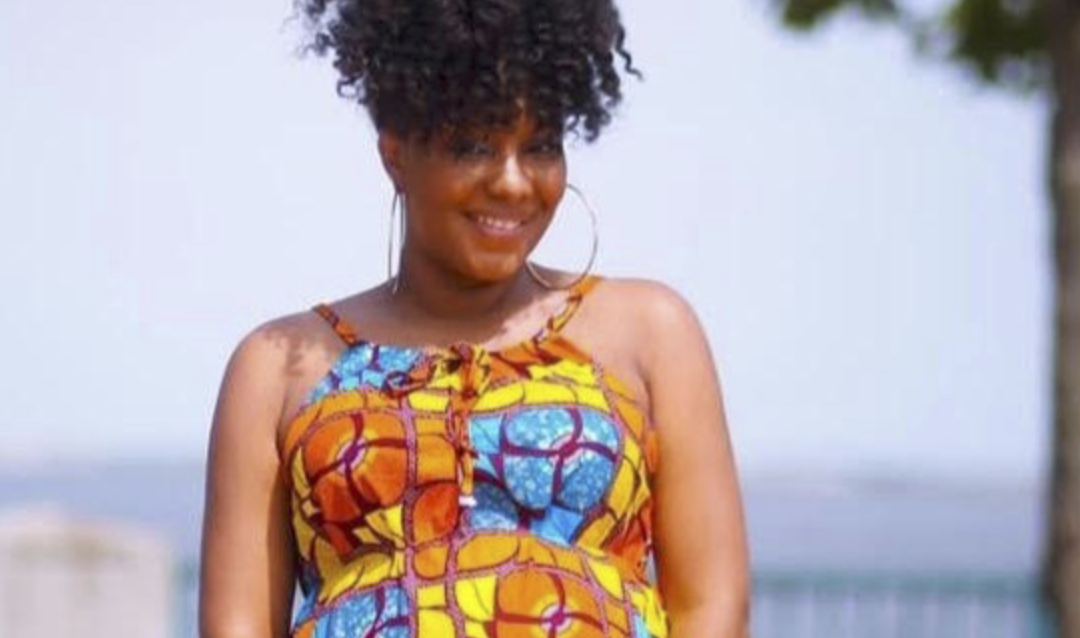
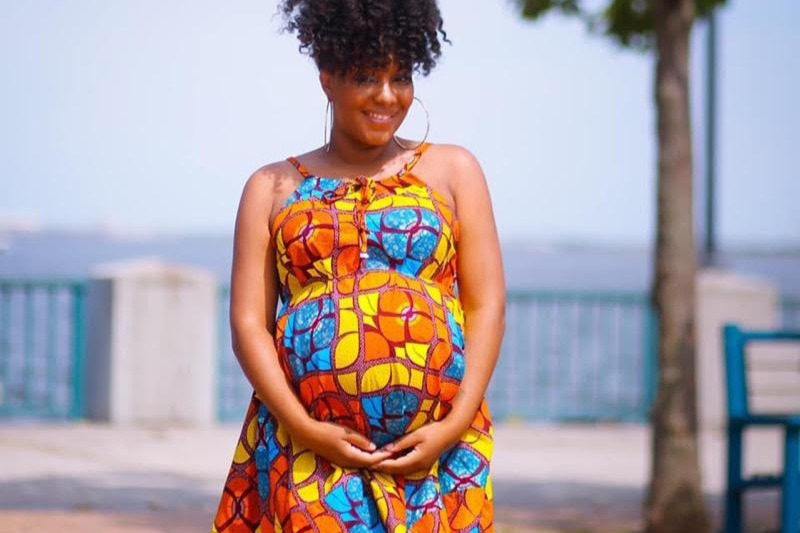
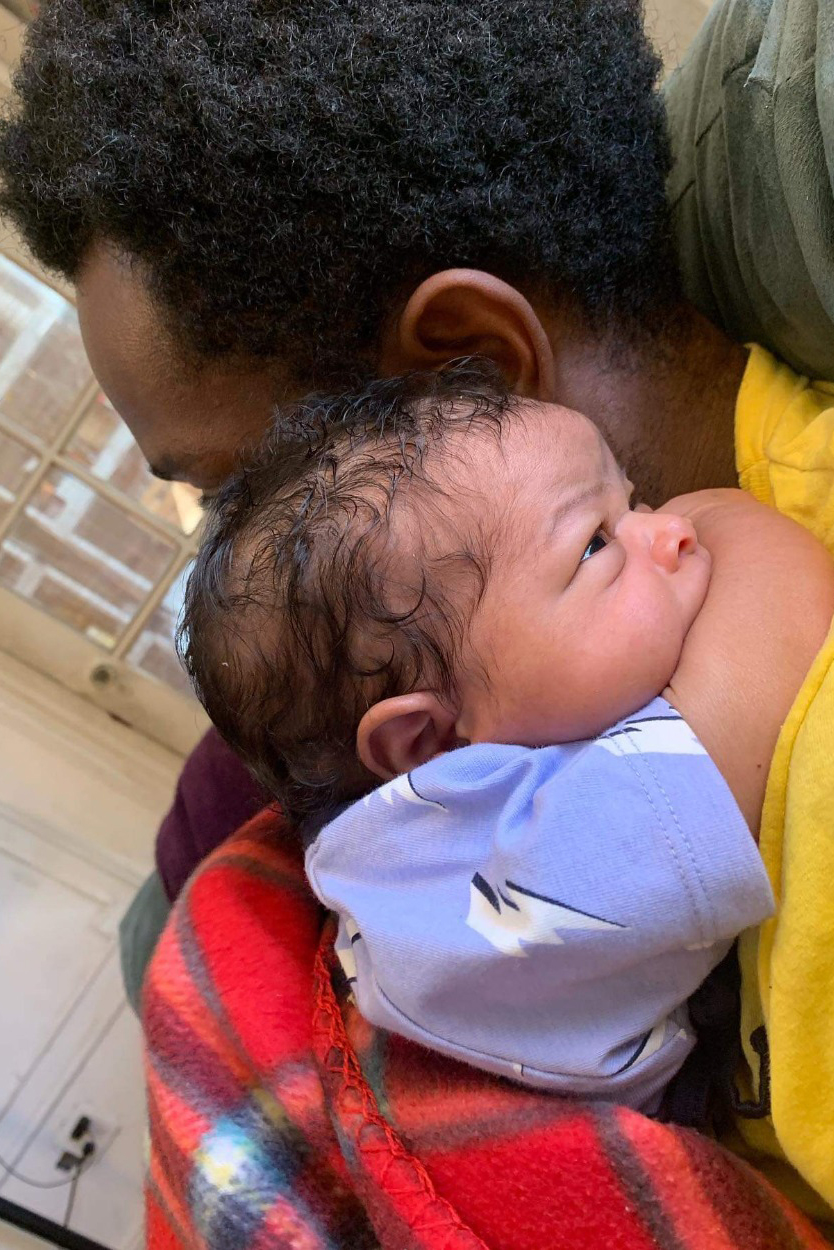



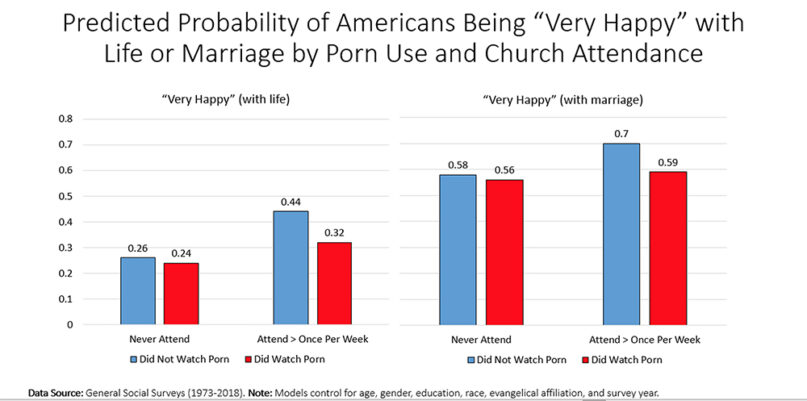
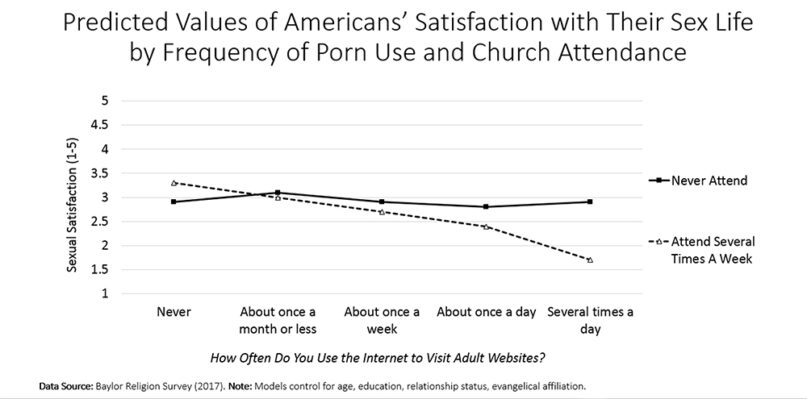
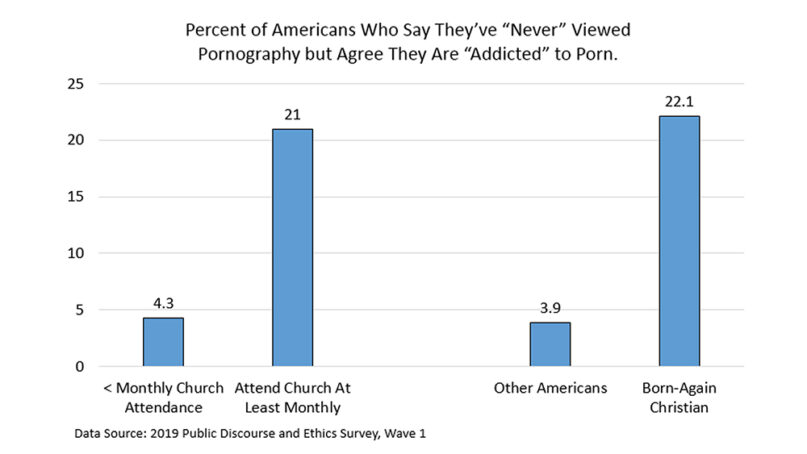



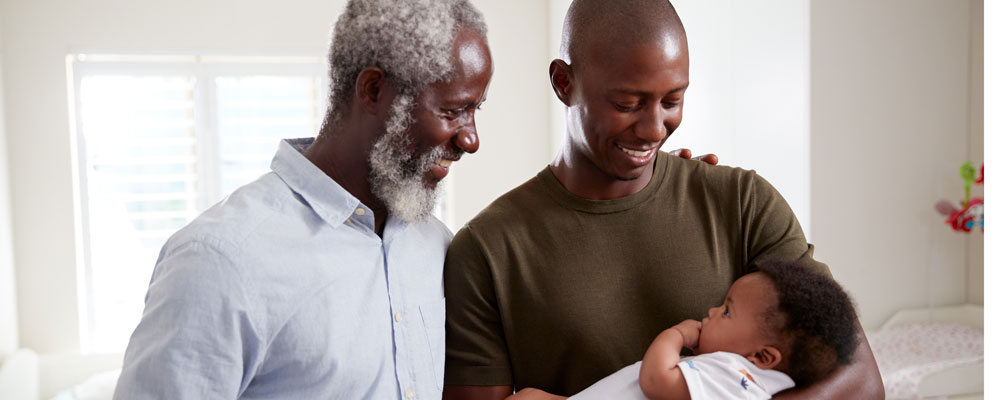
:no_upscale()/cdn.vox-cdn.com/uploads/chorus_asset/file/21785612/unnamed.jpg)
:no_upscale()/cdn.vox-cdn.com/uploads/chorus_asset/file/21787062/freegrace.jpg)