Last summer, the media couldn’t get enough of the word “entanglement” as actors Will Smith and wife Jada Pinkett Smith confronted rumors about infidelity in their relationship on an episode of Jada’s Facebook Red Table Talk show. The couple displayed a united front, forgiving the indiscretion and committing to their partnership no matter what happens.
For over two decades, people have been attempting to redefine marriage. And as commendable as pledging a lifelong commitment is, there is no difference between that and how God intended for us to approach our marriages. Marriage simply used to mean a union between one male and one female, but it is increasingly becoming a socially constructed concept with multiple meanings. People with nontraditional views of marriage seem to look down on others as closed-minded or inferior when they don’t waver in their traditional beliefs on marriage. Additionally, the concept of a life partner is gaining traction as though it supersedes marriage. However, if one looks at how God originally designed marriage, there is no need to create a “better” concept of the dyadic relationship. Perfection cannot be improved upon; it can only be tainted.
In Mark 10, Jesus says, “Therefore what God has joined together, let no one separate.” Those who take this at face value will automatically see the lifelong commitment implication here. The Biblical version of marriage is not the problem; people have started to consider these sacred words as optional. Marriage is becoming more about how we feel rather than what we do. If we feel okay with our spouse’s actions on a particular day, we are more likely to want to stay married. If we’re going through a season in our relationship where things seem strained, or we feel a disconnect with our spouse, then we look for exit strategies. Soon, a habit that our spouse has had since we’ve known them becomes magnified as well as their other flaws. Or we retroactively recall how we never prayed about this marriage in the first place and begin to convince ourselves that this person was not who God intended for us, forgetting how we’d thanked God for sending us a “soulmate” initially. Suddenly, what was a blessing, turns into the biggest mistake that we’ve ever made in our lives. (At least that’s what we tell ourselves.) It’s not that God’s statutes changed. We’ve changed our minds, and we want to make the Word fit our scenarios.
The Smiths have openly shared how they began to redefine their union during rough patches in their relationship. While some may consider it amazing that this couple has found a way to stay together, others may find the terminology and overall explanation hubristic as it implies that a life partnership somehow transcends God’s plan for marriage. When one enters into a marital relationship with the mentality that there are no exit doors other than death, then the lifetime commitment doesn’t have to be an addendum. It’s built into the fabric of the relationship. When one truly embraces all the components of love as outlined in 1 Corinthians 13:4–7, there is grace for flaws. Furthermore, an “entanglement” doesn’t have to be the end of a marriage but could signify the beginning of a new and better one. While marital healing from “entanglements” requires contrition from the entangler and forgiveness from the spouse, couples must learn that infidelity is not the problem in a marriage, only a symptom.
Having a life partnership mentality toward marriage is great, but it should not replace what God has already perfected. Marriage is not a meaningless piece of paper or a man-made control mechanism. It’s a God-ordained institution that pre-dates sin. In its heyday, it was flawless. Now that we are inhabitants of this broken world, it is stained by ideologies and philosophies that attempt to undermine its importance. A life partnership may be a verbal contract between two people, but a marriage is a covenant between the couple and God. When we realize that, we don’t have to find creative ways to ensure that we stay together because we’ve already decided that we would when we began our journey.
California Democratic Congresswoman Barbara Lee is among the names being considered to replace Sen. Kamala Harris as she heads to the White House to serve as the first woman vice president of the United States.
Lee, currently in her 12th term in the U.S. House of Representatives, is the highest-ranking Black woman in Congress as co-chair of the steering and policy committee — a position she was appointed to by Speaker Nancy Pelosi after narrowly losing her bid for Democratuc Caucus Chair. Lee got her start in politics as a college student who volunteered to work on Shirley Chisholm’s pioneering campaign for president in 1972.
California Gov. Gavin Newsom, a Democrat, will fill Harris’ vacancy. The 19th’s editor-at-large, Errin Haines, spoke to Lee on Saturday about her future and what’s next for Black women in political leadership after a year that saw record turnout, organizing and candidacies for public office for the vanguard constituency of the Democratic Party.
This interview has been edited for length and clarity.
You are somebody who is certainly in the conversation right now, so I want to talk to you about that and the future of Black women’s political power now, and people coming around to the reality that they should be following Black women’s leadership.
I got involved in politics through the presidential campaign of the first African American woman … We have thought, we’ve dreamed about this moment, but we’ve also worked for it.
I know this is a year in which we’ve seen the importance of representation in our politics. Kamala Harris launched her own campaign last year in the spirit of Shirley Chisholm. Talk a little bit about the importance of more women — and Black women, in particular — running for elected office, something I know Chisholm talked about. What do you think about where we are in this moment and where we should be going from here?
I was there when [Harris] kicked off her campaign, and I was so honored to co-chair her California presidential campaign. So for me personally, this is just a remarkable moment. And what it says, I think, is, finally! Black women have been smart, we’ve been strategic, we’ve helped elect so many candidates to public office, and we’ve always brought other Black women and other women of color with us. And so this is such a historic occasion for Black women and women of color. But it also says that more women will be able to break through and it will be a heck of a lot easier [to do so].
Sticking with the theme of representation matters: Kamala Harris breaking that barrier in California, to become the state’s first Black senator, first Black woman senator, and now she’s the only Black woman currently serving in the U.S. Senate. What has that representation meant?
With Sen. Harris in the Senate — I’ve worked with her on a variety of issues such as, for instance, the Hyde Amendment — it’s about racial justice for Black women of color, low-income women as it relates to reproductive justice. She understands why this policy has been so destructive and discriminatory against women of color and low-income women.
[Like] when you look at marijuana justice, when you look at the numbers of Black and brown people who have been incarcerated and have these drug charges, which have just stopped them, and been a barrier to moving forward with their lives.
So representation, it really does matter, because the lens by which you look at policies are lenses that others don’t have. And that’s because of who we are, our experiences and the pathways that we have had to walk and run to get to where we are. And so, you know, there’s a void when there are not the perspectives and the input and the leadership of Black women.
Yeah, absolutely. And so obviously, when [Harris] vacates that seat, there will be a void. I know you have a relationship with her. Have you spoken to the vice president-elect about when she might be vacating that seat?
Oh, no, no, no. It’s probably still too early. I don’t know, I have no idea. And I haven’t even seen any press reports. I mean, I’ve heard from her, but not about that.
Has she even given you any indication of who she might like to see as her successor?
No.
Other people have already told me they want to see you as her successor. So, I have to ask you, is a job that you are interested in?
Well, there’s several African American women who would meet the test and who would be phenomenal in the Senate. I would be honored. Because you know, public service for Black women is not just about being elected; that’s another platform and framework for public service. The governor will make his decision. We will respect his decision, because he has to determine who he thinks best will serve California, he has to take into all of his considerations, and come up with his conclusion as to who he thinks would best fill that void and who would be able to work with him as we move forward on our California agenda. So it’s up to him, quite frankly, but I know that there are several African American women on the list who are fully prepared and could serve.
If it’s not you, do you still think that whoever the next senator of California is should be a Black woman? I know, there’s been some conversation about making history with say, the first Latino to represent California…
The void that Senator Harris would leave as an African American woman is a huge void. Not speaking to any other issue or making this about beating up anyone else. It’s about the void and the fact that since the first Senate session, I believe, African American women have had a total of about 10 years with Sen. Carol Moseley Braun. So 10 years out of hundreds of years. And so this void and this gap would be tremendous. I believe that the governor will take that into consideration.
I know that you have a relationship with President Elect Biden. And so I’m just wondering what you’ve also if you’ve had a chance to speak with him, and what you’ve told him about the Black women that you’d like to see help him govern.
In the House and throughout the country, in the state legislatures, there are some brilliant and phenomenal African American women who could serve as cabinet officials. How many women do we have in the Congressional Black Caucus? All of us could serve in the cabinet. I know one consideration, of course, is making sure that the seats do not go, if they were vacated, to Republicans, but for the most part, most of the seats are strong Democratic seats. And so I think this provides a real opportunity for African American women in the House of Representatives to serve in a variety of positions.
My good friend of many years, [Ohio Democratic] Congresswoman Marcia Fudge for secretary of agriculture. I work with her — I’m on the appropriations committee, and I’m on the subcommittee on agriculture — and so I’ve had the privilege to not only work with Marcia as a colleague, but she’s a good friend. There’s nobody who knows ag issues like Congresswoman Fudge and I think she would be phenomenal as a secretary of ag, and I’m certain that her district would elect another Democrat to that seat.
Sticking with the House for a minute: Who are the other Black women that you would like to see in elected House leadership?
I think that it’s time. I think that those of us who run in the past, we’ve shattered some of those glass ceilings. And we’ve broken some of those barriers, even though we may not have won the election. I think that now, more members see that the capacity, capabilities, the value and the strategic positioning and how Black women really do have the ability to help unite the caucus and bring [it] together. And so, yes, several are running. And, you know, I’m hoping that they win and I’m going to help.
If you are not headed to the Senate or headed to the cabinet, you were discussed for Speaker of the House after the historic 2018 midterms. I know how much respect you have, among your colleagues, and especially some of the younger women of color that you have mentored. Are you considering running this time? And is it time for a Black woman to hold that gavel?
I don’t think anyone could do what Speaker Pelosi has done in keeping this caucus together and winning elections. And I fully support her. When you look at Speaker Pelosi’s history and record, she’s probably been the greatest speaker ever because she’s had the most diverse caucus. And she has had the ability to raise money to make sure we elect more Democrats. She has supported women of color to assume committee chairs and vice chairs of committees. And so I think that, you know, I mean, I know she’s gonna be reelected, and I’m working to make sure that she is reelected as our speaker.
On her historic speakership: What do you think that has done to help this country’s political imagination around women in power?
It has shown that women lead and women lead on each and every issue, not only issues perceived as women’s issues, but every issue. And I think it’s also shown that especially with Speaker Pelosi, that racial equity matters. And that racial inclusion in the House of Representatives is an asset. And that we are able, and she has seen, especially with African American women and women of color in the House, how we work and how our legislative efforts really move forward, because we work with everyone, because we know that what’s good for women, and for our communities, as women of color for low-income communities.
I mean, she appointed me to chair the majority leader’s task force on poverty and opportunity, for example. She always talks about how she came to Congress—because one in five children live below the poverty line. Her keen understanding of those issues, that poverty not only affects women, it affects families, it affects children, it affects everyone across the board. African Americans have the highest percentage, but this is low-income, working families, poor, White families.
Speaker Pelosi has been able to see the issues that I want to champion, such as lifting people out of poverty … On COVID, I negotiated this in the HEROES bill targeting resources for Black and brown communities to deal with contact tracing and testing and follow up isolation and health care. She understood this, and we worked together to negotiate that. Her impact is broad and deep. And as a Black woman, I’ve been able to really help, not only my community, but all across the country on so many issues, because she understood it, and she got it.
And now we’re going to have one of us as vice president in the White House. This has taken a lot of blood, sweat and tears, a lot of work. And a lot of hope that we never lost sight of what we were working for and toward and, you know, this is just a major milestone for everybody.
For the past 15 years my family tradition is to travel from Washington, D.C., along with both grandparents, to sunny Florida to celebrate Thanksgiving with cousins. This year we decided to skip the travel and will have fall and winter celebrations at home.
We are not canceling the holidays, but to keep ourselves and others safe, we are keeping plans small and flexible and remembering that the health of those we love is most important as we enter the season of gratitude.
Maintaining vigilant social distancing, mask-wearing and good hygiene in the weeks leading up to the holidays are the first steps to reduce risk. AP Photo/Rich Pedroncelli
Before you gather
First, it is important that everyone who will be attending any holiday celebration is on the same page about how to take precautions before getting together. The idea is to lower infection risk in the weeks leading up to the holidays and then test to confirm.
In conjunction with quarantining, testing is the second strategy.
Research has consistently shown that people are most contagious a day or two before they show symptoms, so everyone plans to get tested with an RT-PCR test within 72 hours of Thanksgiving, while still being able to get results in hand before we gather.
If the demand for tests is high and wait times are long, we will get rapid tests. But these are a second choice, as they are less reliable and can be expensive.
Where and how to eat and socialize
No matter how careful you and your family are, there is some risk that someone will be infected. With that in mind, the goal is to reduce the conditions that lead to viral spread. The biggest risks are indoor spaces with poor ventilation, large groups and close contact. So we are planning the opposite: a short outdoor Thanksgiving with a small group and plenty of space between everyone.
To reduce the risk of infection from flying and to keep the gathering small, the only people coming to Thanksgiving at my family’s home in D.C. are my mother, my aunt and my uncle – all of whom live within driving distance. This is in addition to myself, my husband and our kids. When deciding how many people will come to the holidays, keep it small and consider the amount of space you have to maintain social distancing.
If the weather cooperates, we plan to be outside for trivia games and the turkey meal. Rather than eat around one table, we will have individual tables and place settings spaced far apart and space heaters around. I’ve got a mini care package planned for each guest so that everyone will have their own blanket, hand sanitizer, utensils and a festive mask. My mother won’t be helping out in the kitchen this year and, unfortunately, that goes for cleanup too. We won’t take a group picture but I will be sure to capture some of the special moments.
If the weather doesn’t cooperate, Plan B is to be inside in the large family room with as many windows open as possible and with everyone spaced as far apart as possible. Being outside is safer, but if you must be indoors, improve ventilation by opening doors and windows. Consider turning on exhaust fans and using an air purifier.
Everyone who lives in the household will be in one section while my mom will have her own individual area, as will my aunt and uncle. Even though we won’t hold hands before sharing the meal, we will still recite that we are “thankful for family, friends and food.”
Whether outside or inside, everyone will wear masks when they aren’t eating, maintain 6 feet of distance and use the hand sanitizer that I will place throughout the house.
It is also important to be mindful of alcohol consumption, as a pandemic is not the time for lowered inhibitions and bad judgment.
After the event
I hope everyone enjoys the meal and quality time spent with one another in this melancholy year, but the work is not done once the dishes are clean and everyone is home safely.
Everyone is planning to get another COVID–19 test one week after the meal. Additionally, Thanksgiving is our family’s trial run for Christmas, so a few days after, I plan to call everyone and discuss what worked well and what didn’t. If all goes well, I hope to repeat this quarantine, test and gather process for Christmas.
The ending of 2020 deserves to be celebrated, given this difficult year. This Thanksgiving will be different from those of other years, and my kids understand they need to manage their expectations. But we still plan to uphold our tradition of writing all that we are thankful for and reading our messages aloud to one another. We will still share love, some laughs and a good meal while everyone does their part to protect one another.
The weekend before Election Day, Bishop Michael Curry, presiding bishop of the Episcopal Church, led an interfaith prayer service live-streamed from Washington National Cathedral in the nation’s capital.
It was All Saints’ Day, and there were prayers for the 200,000-plus Americans who have died from COVID-19. Their deaths are among a number of things Curry believes Americans need to grieve.
That’s the first step to hope and healing, he said.
“You can’t just jump to hope,” the presiding bishop said afterward. “There’s a process you have to go through. There are no shortcuts to it.”
Curry spoke to Religion News Service in the days between Election Day and the projection of a Joe Biden win. The presiding bishop shared his thoughts about what divides the United States, what people of faith can do to help bridge those divisions and why he believes healing is ultimately possible.
This interview has been edited for length and clarity.
Earlier this month, you led a national service for healing and wholeness. Why did that feel important in the days going into this election?
I think part of that is because the country — and the world, but, in particular, the country — has been through a lot. This is clearly a divisive election. That’s self-evident.
But that’s reflecting other things. That’s reflecting the impact of COVID-19. We still don’t know the full social, spiritual and personal impact that’s having, but we know it’s having it.
Then you add on top of that, not COVID-19, but the pandemic of 1619, which goes back into the painful reality of our racial past, of white supremacy, of domination.
So you add that racial reckoning on top of a viral pandemic and all its implications, and then on top of it, America has some deep divisions, and they’re not just racial. There are divisions of class, divisions of those who do feel left out, and they play out deeply. They played out the last time, in 2016 even, in the election.
What will it take to heal those divisions?
I didn’t tell the story at the cathedral, but this was in the 2015 campaign at a Trump rally here in North Carolina — in Fayetteville. There were protesters present. That was sort of normal, if you remember, in that last campaign. And at one of them, this one particular guy, who happened to be an older white guy, punched a younger Black guy who was one of the protesters. He was arrested and charged with assault. He apologized in court for what he did and accepted responsibility for it. And then this is the quote I can remember: He said, “We’re in a political mess, you and me, and we’ve got to do something to heal our country.”
In a subsequent story about those two, the Black guy said to the white guy, “Let’s go out and eat lunch.”
That’s what we must do in America. We must go out and eat lunch together. That’s a metaphor for the hard work of what it is going to take to heal the divisions. When people eat together, over time, they actually get to know each other. And sometimes, a whole lot of stuff you assume about the other, you discover isn’t true. At its best, you discover there’s a story behind why that person thinks or feels the way they do. You may not agree with it, but you can kind of understand it.
Then, you see, we have the capacity to figure out how to do the structural healing. You’ve got to pass laws. You’ve got to change the policy. But the truth is: Changed laws and changed policies don’t change hearts, and until you change hearts, you don’t change everything. You’ve got to take a holistic approach.
That man was right. We are in a mess. We must heal our country. I think some of that is the great work that is before us as a country, and certainly before the church and people of faith.
Can you talk about this idea of Christian unity? Does that identity supersede political beliefs or some of the other divides we might see in the wider society?
I think that is the case. I do remember some instances — I’m going back some years now — when we were close to comprehensive immigration reform. I remember going to see one particular congressperson and making the case for that. He was a devout Christian, represented himself as a conservative and a conservative Christian, but he was open, and I jokingly said, “You know, this is one subject on which I as the Episcopal bishop and the Roman Catholic bishop here, we happen to agree. And I’ve been with some Pentecostal officials and they agree.” And he said, “Oh, yeah, the Southern Baptists were here this morning, and they were making the same point.”
There is some common ground on some questions of moral, human decency and compassion. We actually share common ground because it’s so embedded into the faith, and we share it with other traditions.
You build there. You start from the common ground. You don’t start from the differences. We start from the common ground of common values. And then let that be the moral foundation for practical ways to actually live that out. That’s where there’s differences, you know? And that’s fine. That’s what democracy is about. We sort it out, figure it out, come up with the best solution.
What are some practical things people of faith can do to be part of that work?
Braver Angels has specific programs — With Malice Toward None is one — for churches and civic groups to be involved in, actually bringing together people across political differences. The Episcopal Church has a program, Make Me an Instrument of Peace, which is a five-week curriculum on civil discourse. Again, it’s not about talking nicely. It’s actually some of the dynamics of how do you foster humane, decent and respectful discourse and interchange across differences?
Nothing happens accidentally. We have to learn how to do this. There are other organizations and groups that do this. There’s plenty. We don’t have to invent the materials. We just have to implement them, bring people together for dinner.
For example, what would happen if religious communities of all stripes paired up and said: We’re going to be in a relationship for two years, and we’re going to start out by doing With Malice Toward None. We’re going to do civil discourse. And then we’re going to have a planning group that thinks through how do we nurture this relationship over time? That is very practical.
Failure to know the other is a setup for conflict.
You sound optimistic. Do you think this kind of healing is possible — that it is possible for us to bridge these divides and move forward together as a country after a really polarized season?
Oh, yes. Now, I’m not naively optimistic. I know human progress and growth is possible and can happen, but it only happens as a result of hard work, of struggle over the long haul, and that hard work and struggle includes setback.
I mean, I’m an African American man. I’m a product of the Black community. I’m a product of — go far enough back, you’re into Jim Crow; far enough back, you’re in slavery; far enough back, you’re in the Middle Passage crossing from West Africa over here. I’m a product of that tradition that has learned there is progress and there are steps forward and then there’s a pushback. There always is, but you keep moving forward. You don’t go back.
I have seen progress happen in my lifetime. I have seen the pushback, but I’ve seen we’re always moving forward. There’s a spiritual of the old slaves. I think they were talking about this when they said, “ Keep a-inchin’ along like the inchworm.” That’s how progress happens. It doesn’t happen in quantum. It happens inch by inch, pushback, inch by inch, pushback, inch by inch, pushback, inch by inch, pushback, and before you know it, you’ve moved farther down the road than you ever thought you would.
I believe it is possible for us to be instruments of healing in this culture. And I refuse to give up. As long as there’s a God and God doesn’t quit, I’m not quitting.
Editor’s note: This story first published on May 25, 2018 (Mississippi Today), after Stacey Abrams won the Democratic nomination for Georgia governor. Abrams, who grew up in Mississippi, has received national attention for her organizing efforts ahead of the 2020 presidential election and U.S. Senate races in Georgia.
Stacey Abrams, who won Georgia’s Democratic nomination for governor, grew up on the Mississippi Gulf Coast, where she and her five siblings learned about service to others from their United Methodist minister parents.
The Rev. Carolyn Abrams said she and her husband, Robert, who both now live in Hattiesburg, tried to teach their children to strive “to make things better for others. Education was key, family and God. You go to church, go to school and look out for each other.”
She said those views are central to her daughter’s political philosophy.
Stacey Abrams, 44, has received national attention in recent days after winning the nomination by a convincing 53-point margin. She is the nation’s first African American woman to win a major party’s nomination for governor and would be Georgia’s first female governor if elected in November.
Carolyn Abrams said her daughter attended pre-school through 10th grade in Gulfport after the family moved back home to Mississippi from Wisconsin. Carolyn Abrams was at the University of Wisconsin on a fellowship.
In Gulfport, Abrams said she and her husband were involved in various ministries, for the homeless, the poor and those in detention. She said their children always participated and would even perform plays at the juvenile detention centers.
“These things, I think, stayed with her,” said Carolyn. “The world could be better. I know she brings this with her in politics.”
The Abramses moved to Atlanta in 1989 where both parents pursued graduate degrees at Emory University. The parents later moved back to Mississippi where they served churches in south Mississippi in the United Methodist Conference. Stacey is not the only one of the Abrams’ children to excel. One sister is a federal judge in Georgia while others include a college professor.
In a statement from the campaign, Abrams father, referring to this daughter “as the best thing that has happened in Georgia since peanuts,” said: “I knew from a very young age that Stacey would be special. Throughout her childhood in Mississippi, I watched a young girl grow into a leader dedicated to service. Carolyn and I raised our children with the understanding that we must work everyday to do right by others”
She is known by numerous members of the Mississippi Legislature.
Former state Rep. David Baria, D-Bay St. Louis, who was the minority leader in the Mississippi House, said he had met Abrams several times.
He said Abrams “will be a powerful governor for the people of Georgia. Of course, I am proud to say she is from Mississippi.”
Williams-Barnes said she called Stacey Abrams to congratulate her after the primary victory. Mississippi Rep. Sonya Williams-Barnes, D-Gulfport, said her parents and Abrams’ parents have been friends for many years. The Abramses were mentors for her parents, RoseMary Hayes Williams and Theodore Williams Jr., when like the Abramses, they opted to become United Methodist ministers. Williams-Barnes said Carolyn Abrams did the eulogy for her mother’s funeral.
“She is excited,” Williams-Barnes said. “We have a lot of hard work ahead of us to ensure she is elected governor of Georgia.”
But Williams-Barnes said she is not surprised by Abrams’ success. Besides being a politician, Abrams is also an author and attorney.
“She comes from a family with deep roots in Christ and a belief in hard work,” Williams-Barnes said. “Her success does not surprise me at all.”
‘Homeless Jesus’ at Newman College in Melbourne, Australia. (Kaitlin Wynia Baluk), Author provided
Recently, a life-size bronze sculpture of Jesus, called Homeless Jesus, went viral after someone made a 911 call about a homeless man on a bench. The bronze sculpture by Canadian artist Timothy Schmalz depicts Jesus, identifiable by the wounds on his feet, sleeping on a street bench wrapped in a blanket.
With replicas located in prominent urban locations, such as Buenos Aires, Capernaum, New York, Madrid, Melbourne, Rome and Singapore, Homeless Jesus now dots the globe. There are six replicas in Canada alone.
On Oct. 12, 20 minutes after a replica of the sculpture was installed at St. Barnabas Episcopal Church in Bay Village, Ohio, a community member called the emergency department, mistaking it for a person in need. Saturday Night Live lampooned this story in a skit on their Oct. 17 show.
‘Homeless Jesus’ 911 call appeared on ‘Saturday Night Live’ on Oct. 17, 2020. (Saturday Night Live)
But this is not the first time the statue made headlines.
In 2013, news outlets told a rags-to-riches story: how this sculpture was rejected by prominent churches, only to be requested and blessed by Pope Francis.
I have spent the past two years looking at the news coverage of this religious public artwork to try and figure out why both faith-based organizations and secular media are fascinated by it. I examined interviews with faith leaders at organizations with a Homeless Jesus and online news articles that reference it.
Religious viewers
Regardless of one’s religiosity, viewers are captivated by the image of a Jesus as a homeless figure. For faith-based organizations, Homeless Jesus is a symbol that communicates and teaches viewers about core Christian beliefs.
Schmalz produced this sculpture as part of a series that visually depicts a passage from the Bible found in the Gospel of Matthew 25:35-45. Here, Jesus tells his followers that they are caring for him when they tend to the needs of those who are sick, poor, naked, hungry, thirsty, imprisoned and strangers.
For those familiar with the story of Jesus, the sculpture’s message may appear ostensibly obvious. Yet the sculpture asks them to take this message literally and to pay attention to the dignity of those less privileged.
Likewise, those on the margins of society may feel comforted by the notion that Jesus (considered by some to be the Son of God, and by others, a wise prophet) identifies with their situations.
Faith-based organizations that install a Homeless Jesus replica say they choose to do so because they want to make a bold public statement about their social convictions.
Secular viewers
Despite an unfamiliarity with or ambivalence toward the story of Jesus, Homeless Jesus may still resonate with secular and non-Christian viewers. The sculpture presents symbols with universal meanings: a street bench and a body trying to say warm, wrapped in blanket. These symbols say something about physical vulnerability in a public space. When combined, they become an icon of homelessness.
‘When I was Hungry and Thirsty’ by Timothy Schmalz at St. Stephen in the Fields in Kensington Market, Toronto, Ont. (Kaitlin Wynia Baluk), Author provided
Bronze sculptures are often reserved for historic monuments and statues of community heroes. When this medium is combined with an image of homelessness, it generates a clear and powerful message. The unusual combination asks viewers to see those who are homeless as people with dignity, worthy of being sculpted. At the very least: they are worthy of safe and affordable housing.
This sculpture is a challenge to the dominant tendency to ignore the needs and stories of people who are homeless. The homeless population is often perceived as “natural losers” in a competitive market economy. Capitalism justifies the presence of extreme poverty in affluent societies. Homeless Jesus presents an alternative narrative.
Religious art can communicate insight
Homeless Jesus, and its spot in the limelight, demonstrates how religious public art can play a role in promoting the ideas of an equitable society.
Back in the ‘70s, critical theorist, Herbert Marcuse, said art can oppose oppressive ways of thinking, behaving and speaking. As a scholar who left Germany shortly before the onset of the Second World War, Marcuse understood the horrors that arise when a population uncritically serves the interests of the elite.
According to Marcuse, art that offers alternative perspectives and challenges social norms, can create spaces where people can identify and question oppressive social systems.
Jürgen Habermas, another key critical theorist who is still active writing and theorising today, proposed that although religion can be prescriptive, it can also provide an alternative perspective on social reality. He said religious and secular citizens should be willing to learn from one another.
Habermas suggested that at formal levels of political decision making, religious individuals should work to translate their ideas into a language that their secular counterparts find accessible.
Homeless Jesus exemplifies how religious public art can communicate a religious belief in a manner that is respectful of and intelligible to a diverse secular audience. Religious public art can be an avenue for faith-based organizations to meaningfully contribute to the bettering of social life.
5 Faith-facts about VP-elect Kamala Harris, a Black Baptist with a Hindu family (Religious News Service)
In the centennial year of suffrage and 55 years after the passage of the Voting Rights Act, California Democratic Sen. Kamala Harris is projected to become the country’s highest-ranking woman in politics, according to Decision Desk HQ, joining President-elect Joe Biden in the White House as the first woman and Black and South Asian woman to serve as an American vice president.
It is a role that could reshape Americans’ perceptions of women and women of color in political leadership.
A century ago, when women were finally granted the right to vote, Harris’ historic candidacy was unimaginable and unthinkable for most Americans, said Johns Hopkins University historian Martha Jones.
“Except among Black women, there was no robust vision that would permit anyone to imagine where we are,” Jones said. “This is really the legacy of the Voting Rights Act. It is the legacy of women like Shirley Chisholm and Barbara Jordan, who really bring Black women to Washington and begin to lay claim to Washington as a place where Black women will be office holders, influencers and more.”
On the campaign trail, first as a presidential candidate, and then as the vice presidential nominee, Harris often referenced her candidacies as “what we know can be, unburdened by what has been.”
Her narrative has often been a departure from that of her political rivals. Harris’ ascendance has often meant being the first to hold her position, as district attorney in San Francisco, and later as the attorney general of California.
Harris, 56, is the lone Black woman in the U.S. Senate, and only the second Black woman to serve in that capacity.
Harris was also the only Black woman to run for president in 2020, and only the third Black woman to run as a candidate for a major political party, the first in more than a generation.
Despite being capable and qualified, the path to this moment was never paved with certainty, said Glynda Carr, founder of Higher Heights.
“America is totally different in 2020 than when she ran for president,” said Carr, whose organization endorsed Harris during her presidential bid before she exited the race in December 2019. “The environment around living in a global pandemic, the continued attacks on Blackness and the racial reckoning that has begun in this country created the awakening of the possibilities of having a Black woman on the ticket that didn’t exist when she ran in the Democratic primary.”
In an interview with The 19th in August, days after being named the Democratic vice presidential nominee, Harris herself said Biden choosing her was a bold decision.
“Joe Biden had the audacity to choose a Black woman to be his running mate. How incredible is that?” Harris said. “That he decided he was going to do that thing that was about breaking one of the most substantial barriers that has existed in our country — and that he makes that decision with whatever risk that brings.”
Harris has helped to shift the notion of electability in American presidential politics and galvanized a crucial part of the electorate — the Black women who have long been the vanguard of the Democratic Party and pushed this cycle to be valued for their input as well as their output, said She the People co-founder Aimee Allison.
“Electability, first and foremost, is about who Black women are inspired by, moved by and willing to put our formidable voting and organizing prowess behind,” Allison said. “Having her on the ticket made the biggest difference this year in terms of being able to reach our voters, have higher turnout and get people to see themselves in the campaign.”
Harris earned her spot on the Democratic general election presidential ticket after a grueling party primary. After returning to the Senate, she continued to push for issues around race and gender, including legislation addressing disparities in pregnancy-related deaths, and the inequalities exposed by the pandemic related to housing, employment and public health data.
On the general election campaign trail, Harris’ status as an alumnae of historically Black Howard University and a member of Alpha Kappa Alpha, Inc., sorority were also assets, fueling fundraising and mobilizing voters and volunteers.
Now a pioneer as vice president-elect, Harris will bring her lived experience as a Black and South Asian American woman to a role both symbolic and substantive, Carr said.
“Her experience as a prosecutor, an executive, and a legislator positions her to be an asset Day One in the White House,” Carr said of Harris. “She literally is going to bring the voices of women, women of color, and Black women into that room when she steps into the Oval Office for the first time.
Harris’ candidacy and future governing represent a new chapter in leadership for women of color, and Black women in particular, said veteran Democratic strategist Karen Finney.
“It normalizes the role that Black women have played throughout the history of this country, that we’re leaders,” Finney said. “For so long, Black women have been in the background and haven’t always gotten the credit they deserve. It’s a lot of pressure. It’s always hard to be the first.”
Seeing Harris at decision-making tables, tackling foreign policy, the economy, climate change or criminal justice can demonstrate that women belong in the highest positions of power, Finney said.
It is not just Harris’ political leadership as a woman of color that will be on display in 2021 and beyond, but that of an increasingly diverse Congress, said Jones.
“The hardest thing for someone like Harris is looking squarely at that gap and that distance and then asking what do you do as someone with a seat at the table to address that? We will increasingly see what it means for Black women to steer this country on critical questions.”
Harris’ candidacy and political success could serve as a model for Black women and women of color seeking higher office, on the continuum laid forth by Shirley Chisholm — in whose spirit Harris launched her campaign for president last year on Martin Luther King Jr. Day.
“There will be generations of women who use her blueprint for her political and elected leadership,” Carr said. “What she actually represents is a pipeline.”
With Harris headed to the White House, her Senate seat will be open — and while California is solidly blue, meaning that the balance of the chamber will not be disrupted by her departure, some are calling specifically for Gov. Gavin Newsom to fill Harris’ vacancy with a Black woman. The California House delegation currently includes Congressional Black Caucus Chair Karen Bass — also discussed as a potential vice presidential nominee this cycle — as well as Rep. Maxine Waters.
Harris’ candidacies have also shone a light on how far the country still has to go on issues of race and gender in politics, said Tina Tchen, chief executive officer of Times Up.
“We are trying to change cultural norms that have existed for millenia.
It wasn’t going to change in four years, and it wasn’t going to change with just one election,” Tchen continued. “Her candidacy is a huge step forward in that generations-long battle for progress. We need to celebrate that step forward and build on it.”
It used to be that you had to be stuck in bumper-to-bumper traffic to be exposed to sarcastic, misleading, and — fine, I’ll admit it — occasionally entertaining slogans about politics and spirituality.
No longer is this the case.
If you use Facebook with any kind of regularity, you’ve probably witnessed photo memes popping up like dandelions. And you may have liked them. You might have shared them. You might have even created a few. But I implore you — please stop. You’re making it hard for real communication to take place on Facebook, which is one of the few places where people with radically different worldviews can engage in honest dialogue.
Don’t believe me? I offer several reasons, with examples:
Reason No. 1: They’re often inaccurate or misleading.
Exhibit A in our proceedings is this gem above rebuking Christians for focusing on the wrong things. Now the fact is, the underlying truth behind this is something that I believe in strongly — Christians should be known more for how we help the disenfranchised than for what political stands we take. But the actual statement is just not true. Plenty of Christians line up at food banks and homeless shelters all the time — so much so, in fact, that these days it fails to even qualify as news. But you’d never know it from this meme photo, which relies more on stereotypes than actual data.
And this image is just the tip of the iceberg. With the next big story involving a church or a Christian leader, there’ll be plenty more.
And even the ones that aren’t snarky in tone can be disingenuous. If they include any kind of statistical graph, for instance, they’re bound to manipulate or distort the truth in some way. After all, there’s a reason why Mark Twain referred to statistics as the worst form of lying. The best of these are usually large and thorough enough that they require full-screen viewing to accommodate all the details. But even these should be taken with a grain of salt.
And don’t even get me started on the photos-with-long-stories-as-captions, which are often just the same recycled urban legends from email forwards.
Reason No. 2: They exist primarily to amuse or incite people who already think like you do.
Let’s be honest. People don’t encounter these photos and say, “Wow, perhaps I’ve been wrong all these years, and my long-held political and/or religious beliefs are actually dangerous and wrong.”
It never happens because these aren’t designed to engage people who hold different views. Rather, their purpose is the same as much of the partisan-slanted media we see today — to reinforce your views and help you feel better about yourself for believing that way.
Now, I’m all for exercising free speech — but images have power. And as we know from Spider-Man’s Uncle Ben, with great power comes great responsibility. And if this were only a political issue, I might not be as concerned. But in today’s political climate, where being a Christian is still associated with being Republican, these photos are making it harder for unbelievers to see the truth of the gospel because of all the political baggage.
I believe that everyone, Christian or not, has a right to participate in the political process. But Paul told the church in Galatia to avoid letting their freedom become an excuse to indulge in their sinful nature. For many of us, sharing these photos is a way of sticking it to the people who we feel are “the problem.”
As citizens of a global community, this is wrong.
Reason No. 3: If not misleading or divisive, they’re often so generic as to be meaningless.
Because “if at first you don’t succeed” at motivating your friends, maybe there’s something missing.
And that something is context. Many of these inspirational quotes and images, if they were on my refrigerator, I might find really moving. But the thing is, they would only be there if I put them there. People self-select these things. You can’t pass out inspirational nuggets like candy and expect them to be effective. One person’s inspirational quote is another person’s cheesy platitude.
And finally…
Reason No. 4: They make it harder to enjoy actual photos taken by your actual Facebook friends.
No disrespect to George Takei, the Japanese-American Star Trek alumnus whose posts get shared like crazy by his millions of Facebook fans, but he’s not my Facebook friend.
I know that in today’s relational economy Facebook friendships are slightly more meaningful than people with whom you make eye contact in elevators … but still. With so many people in my Facebook feed, I find much more meaning and significance in the large and small details that my friends post about their lives. You know, babies, vacations, meals, costumes, graduations, etc. So by constantly sharing these photo memes, you’re cluttering your feed with stuff I’m not interested in.
Because that’s the point of Facebook, right? To make connections and enjoy relationships. So if you want to be someone who builds relationships across the cultural divide, do us all a favor and stop posting these photos.
It used to be that you had to be stuck in bumper-to-bumper traffic to be exposed to sarcastic, misleading, and — fine, I’ll admit it — occasionally entertaining slogans about politics and spirituality.
No longer is this the case.
If you use Facebook with any kind of regularity, you’ve probably witnessed photo memes popping up like dandelions. And you may have liked them. You might have shared them. You might have even created a few. But I implore you — please stop. You’re making it hard for real communication to take place on Facebook, which is one of the few places where people with radically different worldviews can engage in honest dialogue.
Don’t believe me? I offer several reasons, with examples:
Reason No. 1: They’re often inaccurate or misleading.
Exhibit A in our proceedings is this gem above rebuking Christians for focusing on the wrong things. Now the fact is, the underlying truth behind this is something that I believe in strongly — Christians should be known more for how we help the disenfranchised than for what political stands we take. But the actual statement is just not true. Plenty of Christians line up at food banks and homeless shelters all the time — so much so, in fact, that these days it fails to even qualify as news. But you’d never know it from this meme photo, which relies more on stereotypes than actual data.
And this image is just the tip of the iceberg. With the next big story involving a church or a Christian leader, there’ll be plenty more.
And even the ones that aren’t snarky in tone can be disingenuous. If they include any kind of statistical graph, for instance, they’re bound to manipulate or distort the truth in some way. After all, there’s a reason why Mark Twain referred to statistics as the worst form of lying. The best of these are usually large and thorough enough that they require full-screen viewing to accommodate all the details. But even these should be taken with a grain of salt.
And don’t even get me started on the photos-with-long-stories-as-captions, which are often just the same recycled urban legends from email forwards.
Reason No. 2: They exist primarily to amuse or incite people who already think like you do.
Let’s be honest. People don’t encounter these photos and say, “Wow, perhaps I’ve been wrong all these years, and my long-held political and/or religious beliefs are actually dangerous and wrong.”
It never happens because these aren’t designed to engage people who hold different views. Rather, their purpose is the same as much of the partisan-slanted media we see today — to reinforce your views and help you feel better about yourself for believing that way.
Now, I’m all for exercising free speech — but images have power. And as we know from Spider-Man’s Uncle Ben, with great power comes great responsibility. And if this were only a political issue, I might not be as concerned. But in today’s political climate, where being a Christian is still associated with being Republican, these photos are making it harder for unbelievers to see the truth of the gospel because of all the political baggage.
I believe that everyone, Christian or not, has a right to participate in the political process. But Paul told the church in Galatia to avoid letting their freedom become an excuse to indulge in their sinful nature. For many of us, sharing these photos is a way of sticking it to the people who we feel are “the problem.”
As citizens of a global community, this is wrong.
Reason No. 3: If not misleading or divisive, they’re often so generic as to be meaningless.
Because “if at first you don’t succeed” at motivating your friends, maybe there’s something missing.
And that something is context. Many of these inspirational quotes and images, if they were on my refrigerator, I might find really moving. But the thing is, they would only be there if I put them there. People self-select these things. You can’t pass out inspirational nuggets like candy and expect them to be effective. One person’s inspirational quote is another person’s cheesy platitude.
And finally…
Reason No. 4: They make it harder to enjoy actual photos taken by your actual Facebook friends.
No disrespect to George Takei, the Japanese-American Star Trek alumnus whose posts get shared like crazy by his millions of Facebook fans, but he’s not my Facebook friend.
I know that in today’s relational economy Facebook friendships are slightly more meaningful than people with whom you make eye contact in elevators … but still. With so many people in my Facebook feed, I find much more meaning and significance in the large and small details that my friends post about their lives. You know, babies, vacations, meals, costumes, graduations, etc. So by constantly sharing these photo memes, you’re cluttering your feed with stuff I’m not interested in.
Because that’s the point of Facebook, right? To make connections and enjoy relationships. So if you want to be someone who builds relationships across the cultural divide, do us all a favor and stop posting these photos.
Children begin telling stories as young as age two or three. And they continue to develop storytelling skills in their interaction with parents and others who provide guidance and feedback.
The ability to tell a coherent and well-developed narrative may be important for children’s literacy development. However, most of the studies on children’s storytelling and reading skills have been conducted with samples of middle-class white children.
To address this gap in the research, my colleague, Iheoma Iruka, and I studied data of children from different socioeconomic and racial/ethnic groups from across the United States.
What we found surprised us.
Storytelling among African-American children
For our research, we used national data from the Early Childhood Longitudinal Study, a study of about 14,000 children born in the US in 2001, that examined their development, school readiness and early school experiences. We focused on 6,150 children who were identified as African American, Asian American, Latino and European American.
To understand the role that storytelling skills play in the link between language and early literacy, we used data from when children were two years old until they were five years old.
When the children were two years old, parents were asked to describe their children’s language abilities. Later, when children were four years old, their storytelling skills were measured by asking them to retell stories they had just heard a researcher tell them. At five years old, children were given an assessment of their early literacy.
For most racial/ethnic and socioeconomic groups of children, we found that children who had better language skills as toddlers did better on the literacy assessment when they were five years old.
But when we looked at how storytelling plays a role between early language and early literacy, we found that when it came to African-American children, it made a big difference. For these children, the higher their storytelling scores, the better they did on the early literacy assessment. Interestingly, it didn’t make a difference for the other groups.
What this study tells us
Storytelling skills may be less important for the early literacy skills of most children. But for African-American children, these skills seem to be important for early literacy in a way that may not be true of other children.
The strong storytelling skills of African-American children may stem from the cultural and historic influences that have fostered a preference for orality among African Americans.
All this should lead us to believe that African-American kids, with their strong storytelling skills, should do better with their reading skills. However, we know that African-American children are failing to learn basic reading skills. A nationwide test of reading achievement showed that four out of five African-American fourth graders failed to achieve competency in reading in 2013.
So, why are African-American children not performing better in reading? More research is needed, but possibleexplanationssuggest that the low-quality schools many of these kids go to end up having a negative impact on their reading skills. In addition, many of these kids may have language skills that differ from those expected at school.
Why does storytelling matter?
For most other kids, studies suggest that storytelling skills may show their influence when children are older.
And that could be because storytelling uses “decontextualized” language. Decontextualized language differs from conversational or contextualized language in that decontextualized language functions independently from the immediate context or shared knowledge between listeners and the storyteller.
As children tell stories, they gain practice in using the same type of language that is used in written text, which can help them as they learn to read.
While teachers and parents have been told to read books to children to support their language and literacy development, encouraging children to tell stories as a way to support language and literacy has received less attention.
So, what can teachers and parents do?
Many schools have a “show-and-tell” time that can allow children a chance to practice storytelling skills as they share information about a valued object. As teachers and peers ask questions, they can facilitate children’s storytelling skills.
Parents and teachers can also model storytelling for children by sharing their own experiences, in the form of a story that has a clear beginning, middle and end, and addresses the questions of who, what, where, when and why. Using props like wordless books, puppets, dolls and photographs may also help children in developing stories.
While learning to tell stories can be useful for all children, this skill may be most needed for those at risk of achieving reading competency.
Purpose is a word that is on the minds of many millennials, however, for many it seems to be that piece of the puzzle that is hidden; That needle in the haystack that you are searching for.
The frustration of figuring out what one is supposed to do is what seems to open a door to the spirit of heaviness that plagues so many of us. We may wonder, “Why did I go to college? What now?” You may be working a job and wondering where the end will be.
Could it be that you are looking at purpose from a different perspective? If we are to model Jesus Christ, He was first a carpenter before He revealed Himself as a Savior. Carpentry involves accuracy, commitment and focus. Think about it, you cannot build half a chair or half a table. The everyday, ordinary commitments that Jesus had to do, prepared Him for His greatest purpose on earth, the Cross.
Instead of complaining about your job, master the skills that your job allows you to learn. Be the expert at everything you do. Instead of wondering about tomorrow, maximize the 24 hours given today and commit yourself to excellence.
I view excellence like a garment worn each day to let purpose know you showed up ready to live and maximize your potential that day. The worst mistake you can make is to be a replica of someone already existing. Wasting time copying what is already there is robbing yourself of the opportunity of discovering what God the Creator had in mind when He formed you in your mother’s womb. Be inspired by what is around you, but allow yourself room to be an inspiration to others.
One of my favorite scriptures is Ecclesiastes 11:4 (Living Bible Version) “If you wait for perfect conditions, you will never get anything done.”
Instead of wondering what your purpose is, you can:
Become a student of your own life
Study what motivates you and inspires you to want to make a difference
Pray and believe God. However, as you pray, research your passions, and educate yourself. You may be pleasantly surprised that what you have been searching for, has always lied within you.
Prayer for the journey to purpose:
Dear God, as I begin this month of March, teach me to be present, to be aware of what is going on around me, to pause, and be grateful for all the wonderful things You have done for me. I release the fear of missing my purpose and destiny. I put You first and ask You to help me. I want to live a life of purpose, to glorify You. I will honor You and share with others how You have blessed me. So Lord, I exhale and release myself to you. I am ready for this journey. I am ready to take a risk of trusting You…Thank You Lord for hearing this prayer. Amen.
Children begin telling stories as young as age two or three. And they continue to develop storytelling skills in their interaction with parents and others who provide guidance and feedback.
The ability to tell a coherent and well-developed narrative may be important for children’s literacy development. However, most of the studies on children’s storytelling and reading skills have been conducted with samples of middle-class white children.
To address this gap in the research, my colleague, Iheoma Iruka, and I studied data of children from different socioeconomic and racial/ethnic groups from across the United States.
What we found surprised us.
Storytelling among African-American children
For our research, we used national data from the Early Childhood Longitudinal Study, a study of about 14,000 children born in the US in 2001, that examined their development, school readiness and early school experiences. We focused on 6,150 children who were identified as African American, Asian American, Latino and European American.
To understand the role that storytelling skills play in the link between language and early literacy, we used data from when children were two years old until they were five years old.
When the children were two years old, parents were asked to describe their children’s language abilities. Later, when children were four years old, their storytelling skills were measured by asking them to retell stories they had just heard a researcher tell them. At five years old, children were given an assessment of their early literacy.
For most racial/ethnic and socioeconomic groups of children, we found that children who had better language skills as toddlers did better on the literacy assessment when they were five years old.
But when we looked at how storytelling plays a role between early language and early literacy, we found that when it came to African-American children, it made a big difference. For these children, the higher their storytelling scores, the better they did on the early literacy assessment. Interestingly, it didn’t make a difference for the other groups.
What this study tells us
Storytelling skills may be less important for the early literacy skills of most children. But for African-American children, these skills seem to be important for early literacy in a way that may not be true of other children.
The strong storytelling skills of African-American children may stem from the cultural and historic influences that have fostered a preference for orality among African Americans.
All this should lead us to believe that African-American kids, with their strong storytelling skills, should do better with their reading skills. However, we know that African-American children are failing to learn basic reading skills. A nationwide test of reading achievement showed that four out of five African-American fourth graders failed to achieve competency in reading in 2013.
So, why are African-American children not performing better in reading? More research is needed, but possibleexplanationssuggest that the low-quality schools many of these kids go to end up having a negative impact on their reading skills. In addition, many of these kids may have language skills that differ from those expected at school.
Why does storytelling matter?
For most other kids, studies suggest that storytelling skills may show their influence when children are older.
And that could be because storytelling uses “decontextualized” language. Decontextualized language differs from conversational or contextualized language in that decontextualized language functions independently from the immediate context or shared knowledge between listeners and the storyteller.
As children tell stories, they gain practice in using the same type of language that is used in written text, which can help them as they learn to read.
While teachers and parents have been told to read books to children to support their language and literacy development, encouraging children to tell stories as a way to support language and literacy has received less attention.
So, what can teachers and parents do?
Many schools have a “show-and-tell” time that can allow children a chance to practice storytelling skills as they share information about a valued object. As teachers and peers ask questions, they can facilitate children’s storytelling skills.
Parents and teachers can also model storytelling for children by sharing their own experiences, in the form of a story that has a clear beginning, middle and end, and addresses the questions of who, what, where, when and why. Using props like wordless books, puppets, dolls and photographs may also help children in developing stories.
While learning to tell stories can be useful for all children, this skill may be most needed for those at risk of achieving reading competency.
Here, I’ll outline your rights as a voter and explain where to turn if you encounter trouble at the polls.
First, a caveat: Elections in the United States are run by the states, so there are 50 versions of everything I’m about to say – more with Washington, D.C., Puerto Rico and other overseas territories. Specific information about polling locations, voter ID requirements and how to vote can be found at the National Conference of State Legislatures website or at your state’s Secretary of State website.
Voter ID
Check your state’s requirements before you leave to vote. Thirty-five states request or require that voters to show some form of identification at the polls. Voter ID laws may be very strict, requiring a photo ID like a valid driver’s license or U.S. passport, as in Georgia, Indiana and Mississippi.
Know whether you need to bring one of those documents, or whether a current utility bill or bank statement will do, as is the case in Ohio, where I live.
In Washington, D.C. and 16 states – including New York, Minnesota and Wyoming – all voters need to do to verify their identity is state their name and address, and perhaps sign the poll book. Poll workers confirm they are registered to vote.
2020 problems
Long lines
Due to high voter turnout, as well as pandemic-related poll station closures and social distancing requirements, be prepared to stand in line. Once you’re there, stay there: Even if your polling place closes while you are in line, you still get to vote.
If someone tries to turn you away because the poll station closes, call the Election Protection Hotline. A team of nonpartisan voting rights advocates will provide information on what to do next.
A corps of civilian volunteers is dispatched to polling sites across the U.S. to help Americans vote and ensure the integrity of U.S. elections.
Poll workers
Poll workers work with local election boards to help their fellow citizens vote. They open and close the voting site, ensure that voting is a safe and organized, assist voters who need any help while voting and, after polls close, report results to the county board of elections.
The exact lineup of poll workers varies from state to state. Most will have, as Wisconsin does, a chief election inspector – also known as a precinct election officer or clerk – who verifies voters at the polling place and distributes ballots.
Some people at the polls are partisan citizen observers. “Poll watchers” are recruited by the political parties to watch for activity that could undermine the interests of their party or group. Voters may go to them with questions. Just know they are not impartial resources.
Other monitors at poll sites are nonpartisan observers, some of whom come from abroad to ensure the integrity of American elections. Academics like myself also observe elections to study the process and to offer recommendations to improve elections. Some academics may report problems to officials to ensure election integrity.
“Challengers” are a kind of poll watcher who have the authority to question voters’ eligibility to cast a vote. That’s one reason having proper identification is vital at the polls.
The number of poll watchers per precinct varies, from one in Ohio to as many as three per political party in Iowa. In some states, like Florida, poll watchers must wear a name badge.
Signs of trouble?
If someone questions your ability or qualifications to vote, first identify this person and their authority to engage with you. Are they an official poll worker or a partisan volunteer?
Members of the Proud Boys, a right-wing militant group that has threatened to stand outside poll sites, are not official U.S. election monitors. Andrew Lichtenstein/Corbis via Getty Images
There are no language requirements to vote – some states even have interpreters on site – nor must you pass a test first. If your eligibility to vote is challenged or your name is not in the poll book, ask for a provisional ballot.
Report any intimidation to the Election Protection Hotline, stay calm and follow the advice. The 2020 election is happening under difficult circumstances, but it is still a federal crime to interfere, in any way, with a person’s vote.
Tree imagery appears throughout Scripture when describing human beings. When Jesus began to heal the blind man in Mark’s Gospel, He asked him if he saw anything. The man responded and stated: “I see men like trees, walking” (see Mark 8:24, NKJV). Jesus Himself used this imagery to describe the interconnectedness of human beings. One of the most profound statements that He made was connected to something we try to figure out all the time in this life—relationships: “…for a tree is known by its fruit” (from Matthew 12:33, NKJV).
The “Job Interview”
One of the most frustrating things I notice in unhealthy or failed relationships is the lack of accounting when it comes to examining another person’s fruit. Sadly we mistake the honeymoon phase of dating relationships as the true nature of another individual. Anyone can go on a job interview dressed up and ready to answer questions impressively. This is precisely what dating tends to look like. The one thing the job interviewee knows? Putting one’s best foot forward increases his or her chances at getting hired.
I’m willing to bet you that a man will not reveal on the first date that he’s possessive, jealous, and insecure, and has expectations that you treat him like his mother treated him. I’m also pretty confident that a woman probably will not reveal that she is looking for someone to treat her like her last boyfriend or someone who knows exactly what she’s thinking without her saying it. Nor will she reveal any other emotional baggage she may carry. Let me give you a simple secret to help you see through that “impressive resume” on the first couple of dates: Time!
Taking Some Time
I know. I know. It sounds elementary and simple. I am pretty sure the heavens didn’t open up after that revelation. Sadly, this truth is avoided like the plague when it comes to entering relationships and causes more frustration than most people would like to admit. In addition to a tree being known by its fruit, Jesus also revealed that “a good tree cannot bear bad fruit, nor can a bad tree bear good fruit” (Matthew 7:18, NKJV).
Let me put it this way. Entering a new relationship is like planting a seed. When you begin to water that relationship seed, it will begin to break through any dirt (i.e., any unrevealed vices) that either one of you have and reveal one another’s true nature. Of course, that watering occurs by means of the “living water” (see John 7:38). Afterward, things will begin to bud in the relationship and eventually trees will emerge with accompanying fruit. Here’s the key. Whether or not the other person’s tree bears good fruit depends on their response to your watering.
Please hear my heart on this. Developing a healthy relationship requires an effort on behalf of both parties. If you begin to feel like you are the only one attempting to develop your relationship, then you will begin to feel unattended to and lacking nourishment.
The Fruit Test
Once you’ve overcome the time obstacle, you can begin to properly evaluate a relationship and look for fruit. The good thing about this process is that everyone produces fruit of some kind. The only difference is the marketability of that fruit. Would you go into a grocery store and buy rotten apples or oranges? Why would you do the same thing as it pertains to a relationship? Here are some things to look for when evaluating relationships: “Now the [fruit] of the flesh are evident, which are: adultery… murders…” (from Galatians 5:19–21, NKJV).
Ask yourself: Is this person adulterous? I know what you’re asking. Isn’t this supposed to be an article on dating? What does adultery have to do with dating relationships? I’m glad you asked. Jesus says that any man who looks at a woman lustfully has already committed adultery with her in his heart (see Matthew 5:28). Do you find them looking at other people when you two are together? This is an indication that they are adulterous, at least as far as their heart is concerned. This bad fruit can help you when you examine the relationship.
You might also want to ask yourself: Is this person a murderer? I don’t want to be misunderstood here. I am not talking about people who may be imprisoned for taking the life of another person. I am talking about people who are locked up in a different way. Scripture is very clear when it says, “whoever hates his brother is a murderer” (from 1 John 3:15, NKJV). Does your significant other have disdain for other ethnic groups? Does he or she make disparaging remarks about others that are hurtful? God saw fit that this issue was serious enough to warrant mentioning and should lead each of us to examine the people in our leaves for this potential bad fruit. Those are just two items on a long list of what Paul deems to be bad fruit. Check out the others on the list in Galatians 5 and determine whether your significant other shows signs of bad fruit.
The Good News
People can exhibit things you should be looking for in a significant other. The Apostle Paul calls this good fruit. Some examples of good fruit? Love, patience, goodness, faithfulness, gentleness, self-control (see Galatians 5:22–23).
Take time out now to examine past relationships in order to avoid repeating the same mistakes. Have you seen any of the fruit mentioned above at work in those relationships? More importantly, can you take lessons learned from those situations and move forward with a new conviction? The important thing about the blind man seeing “men like trees” in Mark’s Gospel was that his healing was incomplete. He needed a further touch from Jesus. With that touch he was restored and saw everyone clearly (see Mark 8:25b). Although examining the fruit of others to evaluate our relationships is important, there is still a need to rely on and allow Christ to place His hand on those relationships for full clarity and direction. If you keep these things in mind, your relationship will truly become like a tree planted by the rivers of water (see Psalm 1:3) and flourish in Christ.
We are at a unique moment in history. Two particular, ongoing events stand out. COVID-19 is one. The other is a long-overdue recognition of inequities among people in the US and worldwide, as exemplified by the Black Lives Matter movement. These issues provide a useful, timely lens through which to consider the role and value of African research.
There are many levels on which the future of the world, not just Africa’s, rests on African research. First, Africa represents the youngest and fastest growing population in the world. This makes intellectual investment an imperative, to harness talent that is a significant and growing share of the global population.
Second, Africans represent the oldest and most diverse genome in the world. Human genetics research has the potential to reveal some of the small differences in our genes that are influential in determining what makes Africa more susceptible or resistant to certain diseases. The findings can influence disease outcomes and response to treatment.
Such studies are critical not just to improve the health of Africans themselves, but also to shed light on diseases that affect people of African origin who reside all over the world.
Scientists around Africa are working at the cutting edge of research and their work is relevant beyond the continent. PIUS UTOMI EKPEI/AFP via Getty Images
Third, Africa carries about 25% of the global disease burden. This is rapidly shifting from communicable to noncommunicable causes. Of course, it’s good news that part of this equation reflects a decline in death and illness from AIDS, malaria, tuberculosis and neglected tropical diseases.
But it is also a sad story of the rapid increase in incidence in the noncommunicable diseases that have for a long time dominated in the global North. Heart and other vascular diseases, cancer and diabetes in African countries are often driven by the same excesses that exist in societies that have been prosperous for longer: obesity, smoking, and lack of exercise. By investing in African science to address African diseases, we invest in the parallel prevention and treatment of the same diseases everywhere in the world.
Fourth, scientific research is a vital driver of economies. Currently, the African continent’s scientific output represents less than 2.6% of the world’s share, according to UNESCO. Without major investments in scientific research, particularly the kind of basic research that is often not considered cost-effective for private enterprises, African economies will be at a perpetual economic disadvantage.
All of this raises the question: is there world-class research in Africa? Yes, there is. Thanks to major investment in science infrastructure, human resource training and education, the continent is well placed to lead from the front.
We and our colleagues at the African Academy of Sciences created the Alliance in 2015 through a partnership with the African Union Development Agency, founding and funding global partners, and through a resolution of the summit of African Union Heads of Governments. The Academy’s research and training programs operate under the Alliance. Its mission is to shift the centre of gravity for African science to Africa through setting agendas, mobilizing research and development funding, and managing science programs.
The Alliance for Accelerating Excellence in Science in Africa has funded 186 grantees directly. Some of them in turn offer master’s, PhD and postdoctoral fellowships. This has led to a scientific community numbering over 2,000 scientists in about 40 countries.
Among our premier programs are DELTAS Africa and Grand Challenges Africa. They tackle major infectious diseases, neglected tropical diseases and other health challenges.
All of this research can be applied in African countries and beyond. And more of it can be produced if the global scientific community, governments, funders and others come together to tackle the hurdles that African researchers still face.
Challenges
These challenges include:
Inequities within and among populations and between genders. These result in much potential talent being lost to science in general.
Exploitation by commercial enterprises that regard the African continent as a source of large populations for clinical trials.
Funding. Until more African science is predominantly performed in Africa, by Africans, and for Africans, the full potential of this work will never be realized.
The nations of the African Union have all pledged to dedicate 1% of their respective GDPs to research and development but spend an average of 0.45%. These nations are grappling with many competing needs.
Basic research is almost never attractive to commercial funders, and African governments often do not have the resources to fill this void. Or they are not in office long enough.
Western funders tend to focus on health and medical research. This is worthy. But it leaves the physical, mathematical, and chemical sciences as underfunded orphans. Big innovations are built on the foundation of basic discovery. African scientists must enjoy the opportunity to contribute to that foundation alongside their peers in countries where public investment in basic science has been provided for decades.
This article is adapted from a longer piece in ACS Omega, available here.
I have been incredibly heartened by a recent national poll of religious voters that showed 94% of Black Protestants believe that our responsibility to protect God’s Creation is an important reason to address climate. I am not surprised that Black people of faith feel this way for three important reasons.
First, as many of us know, Matthew 22:39 states: “You shall love your neighbor as yourself.” The core of this verse is about the need for empathy and community. Our community, which has been beaten down, degraded, minimized, and marginalized for over 400 years in America has survived because we look out for and care deeply about one another. Those traits of empathy and community also mean that we are able to see beyond ourselves to the wider world and recognize that our actions have degraded God’s Creation. The poll shows clearly, that as Black Americans, we demand action on Climate change because of our responsibility to protect the gift we have been given.
Second, Black Americans have been forced by circumstances to be able to address multiple traumas simultaneously. There has never been a time in our history in America where we didn’t have to deal with economic, cultural, educational, and political racism. Our ability to confront multiple crises is certainly evident in 2020. Fighting systemic racism in the criminal justice system that routinely and arbitrarily kills Black Americans, confronting a deadly pandemic that disproportionately affects Black communities, and facing an economic crisis unseen since the Great Depression is enough to break any people. And yet not only do we persist, but we are also able to hold our heads up and claim our responsibility to protect our planet.
Third, as climate change accelerates, it becomes clearer each day that those who will suffer first and most will be Black Americans. We know this because years of housing and economic policies made it so. Polluting factories are situated next to Black neighborhoods. We are forced to live in the most vulnerable and flood prone areas of coastal cities. It is no coincidence that during Hurricane Katrina, the Lower Ninth Ward flooded more and had more deaths than any area of the city. We know that we will face the brunt of the climate crisis, so it is understandable that we demand action.
As we face down a critical election, we are confronted with forces that hope to intimidate and discourage us from making our voices heard. As we have done for centuries, we will persist and fight back. Indeed, it is our duty to do so. Many of us will vote for leaders who believe in racial justice as opposed to racial discrimination. Others will vote to ensure that those who lead us will take science seriously in their efforts to curb this terrible pandemic. Still others will vote to create a more equitable society where people are paid a living wage for an honest day’s work. And some will vote to make sure that all Americans have access to quality healthcare as a right.
But what this recent poll also shows me is that many Americans, particularly Black Americans of faith, will also vote to take responsibility as guardians to the greatest gift that God has bestowed upon us.
The Rev. Dr Ambrose Carroll, Sr is founder of Green The Church, a sustainability initiative working to create a cadre of Black Church communities who are committed to green theology, promoting sustainable practices within their communities and helping to build economic & political change. He is also senior pastor at The Church by the Side of the Road in Berkeley, CA.
The article originally appeared on ProPublica.org, a Pulitzer Prize-winning investigative newsroom.
New from ProPublica
Pennsylvania’s New Vote-by-Mail Law Expands Access for Everyone Except the Poor
In America’s poorest big city, language barriers, unstable housing and lack of internet access make voting by mail difficult. So low-income Philadelphia residents will be voting in person, if at all. Read the story from ProPublica and The Philadelphia Inquirer.
A Nonprofit With Ties to Democrats Is Sending Out Millions of Ballot Applications. Election Officials Wish It Would Stop.
Election officials say a flood of mailers from the Center for Voter Information has contained mistakes and confused voters at a time when states are racing to expand vote by mail. Read the story.
How to Vote During a Pandemic
From coronavirus to vote-by-mail, the 2020 election is shaping up to be confusing. Here’s how to figure out what the heck is going on this year and what you can do to participate in our democracy. Read the story.
A Guide to In-Person Voting vs. Mail-In Voting
In 2020, every state’s voting process has changed in response to the coronavirus. Regardless of whether you plan to vote in person or by mail, there are many things to consider. Here are some of the most important. Read the story.
How to Spot (and Fight) Election Misinformation
Misinformation and disinformation, especially online, continue to play a huge role in the 2020 election. Learn more about the types of false information you’re likely to come across this year — and how you can help fight it. Read the story.
Why Do Nonwhite Georgia Voters Have to Wait in Line for Hours? Their Numbers Have Soared, and Their Polling Places Have Dwindled.
The state’s voter rolls have grown by nearly 2 million since the U.S. Supreme Court gutted the Voting Rights Act in 2013, but polling locations have been cut by almost 10%, with Metro Atlanta hit particularly hard. Read the story from ProPublica and GPB.
Spanish Translations
We’ve begun translating our election stories into Spanish, and they’re available to republish.
Mendham GOP Tells Voters They Can’t Vote In Person. That’s Not True (NorthJersey.com)
What To Do If You Haven’t Received Your NJ Mail-in Ballot For The 2020 Election (NorthJersey.com)
Gov2Go Mobile App Sends Miami Users Wrong Election Day Date (The Miami Herald)
When Pennsylvania Voter Mindy Bence Opened Her Mail-in Ballot Packet, There Was A Problem: Her Return Envelopes Had Arrived Already Sealed Shut. (Electionland)
The Latest on Misinformation
U.S. intelligence officials said they traced a wave of threatening emails sent to Democratic voters in several states back to Iran. The emails, which claimed to be from the far-right group the Proud Boys, instructed voters in at least four states to change their party affiliations and cast ballots for Trump, “or we will come after you.” Officials warned that Russian operatives also have access to voter information and may use it in the coming days. (Washington Post, NPR)
Arizona’s secretary of state is taking to Twitter to dispel misinformation about the security of mail-in voting. (KTAR)
The election administrator for El Paso County, Texas, said a Facebook post that falsely claims ballots can be thrown out if poll workers mark them in any way has spread “like wildfire.” Texas law requires that ballots be initialed by election judges. (KTSM)
False reports of voter intimidation at two ballot drop boxes in Denver, Colorado, circulated online this week, but security camera footage showed nothing inappropriate. (The Denver Post)
Election officials in Montgomery County, Maryland, had “a very terrible day” investigating and then debunking a video that went viral this week with a false claim of fraud by an election worker. (The Washington Post)
There has been a spike in misinformation targeting Latino voters in Florida, officials say. (Sun Sentinel)
Vote by Mail News
Officials in Los Angeles are investigating a fire inside an official ballot drop box. (The Guardian)
California will permit the state Republican Party to keep its own ballot collection boxes, with safeguards. (Politico)
Advocacy groups are scrambling to help voters fix ballot mistakes in time. And while some ballots are badly designed, there are ways to make sure your vote can still count. (NPR, Washington Post)
North Carolina will begin reaching out to voters about 10,000 deficient absentee ballots that have been in legal limbo. (Associated Press)
Voters are complaining about responsiveness from a swamped Texas secretary of state’s office. (Texas Tribune)
A technical glitch led to more than 1,000 Pennsylvania voters receiving two absentee ballots, but the state says only one will be counted. (WHYY)
A group led by retired military leaders says the election shouldn’t be declared until every military absentee ballot is counted. (Military Times)
A printing mistake caused ink splotches and marks on ballots in Montana. (NBC Montana)
A printing vendor in Ohio made a mistake that resulted in voters finding return envelopes to an address in Missouri. (Zanesville Times Recorder)
A bar code error on return envelopes in two New Mexico counties would have mailed ballots back to individual voters. (Taos News)
A swamped printing company in Ohio has been unable to meet the demand from election agencies. A number of counties are switching vendors. (New York Times, Cleveland.com)
There’s little oversight in Ohio over the private printing vendors that are responsible for ballot and voter purging mistakes. (Columbus Dispatch)
Lehigh County sent out an erroneous email telling people who had already voted that their ballots were on the way. (Allentown Morning Call)
Pennsylvania voters who change their minds about voting absentee will have to bring their ballots to the polls if they want to vote in person. (KDKA)
Problems have been reported with New Jersey’s and Virginia’s mail-in ballot trackers. (NJ.com, WJHL)
At least 45 million people have voted as of Oct. 22, and more than 21 million people have already voted in battleground states. (U.S. Elections Project, The Washington Post)
Ohio Governor Mike DeWine says poll workers cannot force voters to wear masks, despite a statewide mask mandate and a recent spike in cases of COVID-19. (Cleveland.com)
White House pandemic expert Dr. Anthony Fauci said he’s planning to vote in person on Nov. 3, adding that it should be safe with the proper precautions. (Yahoo! News, CNBC)
Maricopa County, Arizona, received more than 20,000 poll worker applications just over the past month, after predictions that COVID-19 would cause a shortage. (Arizona Republic)
Bannock County, Idaho, will not require masks at the polls for voters, election officials, or poll workers, as part of a “personal choice” policy. (Idaho Falls Post-Register)
In Fort Lauderdale, Florida, four maskless voters were allowed to cast their ballots during early voting, despite a county mask mandate. The voters said they had medical reasons for violating the order. (Sun Sentinel)
Indiana’s secretary of state is facing pushback from county clerks who refuse to enforce a statewide mask mandate at the polls. “I won’t be part of any government overreach,” said one clerk in rural Fountain County. (Lafayette Journal Courier)
County clerks in Kansas are coming up with their own policies on mask use. The state spent nearly $1.3 million on personal protective equipment for election workers, but there is no mandate on how to use it. (Associated Press)
Two poll workers in Denton County, Texas, walked off the job after the lead worker at their voting site refused to wear a mask. (NBCDFW)
A voter in Fort Smith, Arkansas, was turned away twice for not using a face covering, even though Arkansas hasn’t extended its mask mandate to polling sites. The voter said he had a respiratory issue, but also told a reporter he was “tired of giving up my rights.” (KFSM)
A judge in Galveston County, Texas, has ordered a $1,000 fine against any poll worker who turns away voters for not wearing masks. (KPRC)
Election officials in Sacramento and San Joaquin counties are coming up with alternatives for voters who refuse to wear masks, including take-home ballots and designated polling areas away from other voters and staff. (CBS Sacramento)
A terminally ill man in Michigan raced the clock to cast a ballot in the 2020 election. (Washington Post)
A Memphis, Tennessee, poll worker was fired for turning away voters in “I Can’t Breathe” and “Black Lives Matter” shirts. State law only bans items that feature political parties or the names of candidates. (NBC News)
News on Poll Safety
Michigan’s secretary of state banned the open carry of guns at polling places on Election Day. (Fox 17)
The Florida department of state told local election administrators that they must staff ballot drop boxes outside of early voting sites. (News Service of Florida)
A Miami police officer will be disciplined for entering an early voting site while in full uniform and wearing a Trump face mask. (Miami Herald)
A former GOP lawmaker in North Carolina was charged with assaulting an election worker at an early voting site. (News & Observer)
Some voters complained about a Trump rally held near a voting site and ballot drop box in Nevada. (ABC 10)
A New Mexico clerk reported a convoy of Trump supporters near a polling place for possible voter intimidation. (KRQE)
Florida police are investigating a case of possible voter intimidation outside an early voting site involving two men who claimed to work for a security company; one of whom was allegedly armed. The Pinellas County Sheriff says it will station officers outside of early voting sites. (WFTS, Tampa Bay Times)
New Jersey legislators are considering a bill to limit law enforcement at polling places. (NJ Spotlight)
Enfranchising Felon Voters
State officials in Florida have asked counties to remove felons who owe court fees or fines from their rolls, but county officials say they won’t have time before Nov. 3. (Tampa Bay Times)
Some fear that Florida’s request that counties purge some ineligible voters and place guards at mail ballot drop boxes could discourage or confuse voters. (The Washington Post)
The language on Iowa’s voter registration form has left some felons whose rights were restored earlier this year unsure about whether they can vote and how to register, even after the state updated the form. (KCRG)
I have been incredibly heartened by a recent national poll of religious voters that showed 94% of Black Protestants believe that our responsibility to protect God’s Creation is an important reason to address climate. I am not surprised that Black people of faith feel this way for three important reasons.
First, as many of us know, Matthew 22:39 states: “You shall love your neighbor as yourself.” The core of this verse is about the need for empathy and community. Our community, which has been beaten down, degraded, minimized, and marginalized for over 400 years in America has survived because we look out for and care deeply about one another. Those traits of empathy and community also mean that we are able to see beyond ourselves to the wider world and recognize that our actions have degraded God’s Creation. The poll shows clearly, that as Black Americans, we demand action on Climate change because of our responsibility to protect the gift we have been given.
Second, Black Americans have been forced by circumstances to be able to address multiple traumas simultaneously. There has never been a time in our history in America where we didn’t have to deal with economic, cultural, educational, and political racism. Our ability to confront multiple crises is certainly evident in 2020. Fighting systemic racism in the criminal justice system that routinely and arbitrarily kills Black Americans, confronting a deadly pandemic that disproportionately affects Black communities, and facing an economic crisis unseen since the Great Depression is enough to break any people. And yet not only do we persist, but we are also able to hold our heads up and claim our responsibility to protect our planet.
Third, as climate change accelerates, it becomes clearer each day that those who will suffer first and most will be Black Americans. We know this because years of housing and economic policies made it so. Polluting factories are situated next to Black neighborhoods. We are forced to live in the most vulnerable and flood prone areas of coastal cities. It is no coincidence that during Hurricane Katrina, the Lower Ninth Ward flooded more and had more deaths than any area of the city. We know that we will face the brunt of the climate crisis, so it is understandable that we demand action.
As we face down a critical election, we are confronted with forces that hope to intimidate and discourage us from making our voices heard. As we have done for centuries, we will persist and fight back. Indeed, it is our duty to do so. Many of us will vote for leaders who believe in racial justice as opposed to racial discrimination. Others will vote to ensure that those who lead us will take science seriously in their efforts to curb this terrible pandemic. Still others will vote to create a more equitable society where people are paid a living wage for an honest day’s work. And some will vote to make sure that all Americans have access to quality healthcare as a right.
But what this recent poll also shows me is that many Americans, particularly Black Americans of faith, will also vote to take responsibility as guardians to the greatest gift that God has bestowed upon us.
The Rev. Dr Ambrose Carroll, Sr is founder of Green The Church, a sustainability initiative working to create a cadre of Black Church communities who are committed to green theology, promoting sustainable practices within their communities and helping to build economic & political change. He is also senior pastor at The Church by the Side of the Road in Berkeley, CA.
Dr. Ala Stanford and her staff on duty a coronavirus testing site in Pennsylvania. Stanford created the Black Doctors COVID-19 Consortium and sends mobile test units into neighborhoods. (Nina Feldman/WHYY)
When the coronavirus arrived in Philadelphia in March, Dr. Ala Stanford hunkered down at home with her husband and kids. A pediatric surgeon with a private practice, she has staff privileges at a few suburban Philadelphia hospitals. For weeks, most of her usual procedures and patient visits were canceled. So she found herself, like a lot of people, spending the days in her pajamas, glued to the TV.
And then, at the beginning of April, she started seeing media reports indicating that Black people were contracting the coronavirus and dying from COVID-19 at greater rates than other demographic groups.
“It just hit me like, what is going on?” said Stanford.
At the same time, she started hearing from Black friends who couldn’t get tested because they didn’t have a doctor’s referral or didn’t meet the testing criteria. In April, there were shortages of coronavirus tests in numerous locations across the country, but Stanford decided to call around to the hospitals where she works to learn more about why people were being turned away.
One explanation she heard was that a doctor had to sign on to be the “physician of record” for anyone seeking a test. In a siloed health system, it could be complicated to sort out the logistics of who would communicate test results to patients. And, in an effort to protect health care workers from being exposed to the virus, some test sites wouldn’t let people without cars simply walk up to the test site.
“All these reasons in my mind were barriers and excuses,” she said. “And, in essence, I decided in that moment we were going to test the city of Philadelphia.”
Stanford visits a Black Doctors Consortium testing site in Darby, Pennsylvania, on Sept. 9. Stanford has largely self-funded the testing initiative.(NINA FELDMAN/WHYY)
Black Philadelphians contract the coronavirus at a rate nearly twice that of their white counterparts. They also are more likely to have severe cases of the virus: African Americans make up 44% of Philadelphians but 55% of those hospitalized for COVID-19.
Black Philadelphians are more likely to work jobs that can’t be performed at home, putting them at a greater risk of exposure. In the city’s jails, sanitation and transportation departments, workers are predominantly Black, and as the pandemic progressed they contracted COVID-19 at high rates.
The increased severity of illness among African Americans may also be due in part to underlying health conditions more prevalent among Black people, but Stanford maintains that unequal access to health care is the greatest driver of the disparity.
“When an elderly funeral home director in West Philly tries to get tested and you turn him away because he doesn’t have a prescription, that has nothing to do with his hypertension, that has everything to do with your implicit bias,” she said, referring to an incident she encountered.
Before April was over, Stanford sprang into action. Her mom rented a minivan to serve as a mobile clinic, while Stanford started recruiting volunteers among the doctors, nurses and medical students in her network. She got testing kits from the diagnostic and testing company LabCorp, where she had an account through her private practice. Fueled by Stanford’s personal savings and donations collected through a GoFundMe campaign, the minivan posted up in church parking lots and open tents on busy street corners in Philadelphia.
It wasn’t long before she was facing her own logistical barriers. LabCorp asked her how she wanted to handle uninsured patients whose tests it processed.
“I said, for every person that does not have insurance, you’re gonna bill me, and I’m gonna figure out how to pay for it later,” said Stanford. “But I can’t have someone die for a test that costs $200.”
Philadelphians live-streamed themselves on social media while they got tested, and word spread. By May, it wasn’t unusual for the Black Doctors COVID-19 Consortium to test more than 350 people a day. Stanford brought the group under the umbrella of a nonprofit she already operated that offers tutoring and mentorship to youth in under-resourced schools.
Tavier Thomas found out about the group on Facebook in April. He works at a T-Mobile store, and his co-worker had tested positive. Not long after, he started feeling a bit short of breath.
“I probably touch 100 phones a day,” said Thomas, 23. “So I wanted to get tested, and I wanted to make sure the people testing me were Black.”
Many Black Americans seek out Black providers because they’ve experienced cultural indifference or mistreatment in the health system. Thomas’ preference is rooted in history, he said, pointing to times when white doctors and medical researchers have exploited Black patients. In the 19th century American South, for example, white surgeon J. Marion Sims performed experimental gynecological treatments without anesthesia on enslaved Black women. Perhaps the most notorious example began in the 1930s, when the United States government enrolled Black men with syphilis in a study at Tuskegee Institute, to see what would happen when the disease went untreated for years. The patients did not consent to the terms of the study and were not offered treatment, even when an effective one became widely available.
“They just watched them die of the disease,” said Thomas, of the Tuskegee experiments.
“So, to be truthful, when, like, new diseases drop? I’m a little weird about the mainstream testing me, or sticking anything in me.”
Brothers Tavier Thomas (left) and McKenzie Johnson were tested for the coronavirus at a Black Doctors COVID-19 Consortium testing site. Tavier, who studies history, says he feels more comfortable getting treatment from Black medical providers because of past abuses of Black people by white doctors and medical researchers in the U.S.(NINA FELDMAN/WHYY)
In April, Thomas tested positive for the coronavirus but recovered quickly. He returned recently to be tested again by Stanford’s group, even though the testing site that day was in a church parking lot in Darby, Pennsylvania, a solid 30-minute drive from where he lives.
Thomas said the second test was just for safety, because he lives with his grandfather and doesn’t want to risk infecting him. He also brought along his brother, McKenzie Johnson. Johnson lives in neighboring Delaware but said it was hard to get tested there without an appointment, and without health insurance. It was his first time being swabbed.
“It’s not as bad as I thought it was gonna be,” he joked afterward. “You cry a little bit — they search in your soul a little bit — but, naw, it’s fine.”
Each time it offers tests, the consortium sets up what amounts to an outdoor mini-hospital, complete with office supplies, printers and shredders. When they do antibody tests, they need to power their centrifuges. Those costs, plus the lab processing fee of $225 per test and compensation for 15-30 staff members, amounts to roughly $25,000 per day, by Stanford’s estimate.
“Sometimes you get reimbursed and sometimes you don’t,” she said. “It’s not an inexpensive operation at all.”
After its first few months, the consortium came to the attention of Philadelphia city leaders, who gave the group about $1 million in funding. The group also attracted funding from foundations and individuals. The regional transportation authority hired the group to test its front-line transit workers weekly.
To date, the Black Doctors COVID-19 Consortium has tested more than 10,000 people — and Stanford is the “doctor on record” for each of them. She appreciates the financial support from the local government agencies but still worries that the city, and Philadelphia’s well-resourced hospital systems, aren’t being proactive enough on their own. In July, wait times for results from national commercial labs like LabCorp sometimes stretched past two weeks. The delays rendered the work of the consortium’s testing sites essentially worthless, unless a person agreed to isolate completely while awaiting the results. Meanwhile, at the major Philadelphia-area hospitals, doctors could get results within hours, using their in-house processing labs. Stanford called on the local health systems to share their testing technology with the surrounding community, but she said she was told it was logistically impossible.
“Unfortunately, the value put on some of our poorest areas is not demonstrated,” Stanford said. “It’s not shown that those folks matter enough. That’s my opinion. They matter to me. That’s what keeps me going.”
Now, Stanford is working with Philadelphia’s health commissioner, trying to create a rotating schedule wherein each of the city’s health systems would offer free testing one day per week, from 9 a.m. to 9 p.m.
The medical infrastructure she has set up, Stanford said, and its popularity in the Black community, makes her group a likely candidate to help distribute a coronavirus vaccine when one becomes available. Representatives from the U.S. Department of Health and Human Services visited one of her consortium’s testing sites, to evaluate the potential for the group to pivot to vaccinations.
Overall, Stanford said she is happy to help out during the planning phases to make sure the most vulnerable Philadelphians can access the vaccine. However, she is distrustful of the federal oversight involved in vetting an eventual coronavirus vaccine. She said there are still too many unanswered questions about the process, and too many other instances of the Trump administration putting political pressure on the Centers for Disease Control and Prevention and the Food and Drug Administration, for her to commit now to doing actual vaccinations in Philadelphia’s neighborhoods.
“When the time comes, we’ll be ready,” she said. “But it’s not today.”
This story originally appeared on KHN,org and is part of a partnership that includes WHYY, NPR and KHN.
Whether children are currently going to school in person, learning remotely or doing a mix of both, digital tools and texts are becoming much more commonplace for K-12 education during the COVID-19 pandemic.
I’m a professor who researches the use of technology in education. I’m also the father of three children between the ages of 4 and 9 who are all learning from home. You might think it would be easy for me to get used to this new normal. Sadly, that’s not true.
Despite all my technical know-how, even I struggle to manage the large variety of digital tools and apps that my children use for schoolwork, let alone the numerous websites, accounts and passwords from their classes that my family has to keep track of.
Beneficial but complex
The transition from relying mainly on physical textbooks printed on paper to digital educational content, tools, apps and other resources was was already underway long before the pandemic. K-12 teachers use everything from online videos to interactive websites and from games and apps to digital textbooks that meet state standards.
I believe digital educational resources have a lot going for them. In contrast with the static text in physical books, digital resources involve dynamic content such as audio, video and animations. They may also have components like games and simulations that let kids interact with technology or each other.
Some are equipped with adaptive and smart features that automatically tailor the instruction according to individual students’ mastery levels. For example, “intelligent tutors” use complex algorithms and artificial intelligence to mimic human tutors and provide students with a personalized learning experience.
These apps, texts and tools make it easier to search for key terms, take notes that kids can find and use later, assess mastery and get creative by making charts and doing other things that are typically harder to do on paper.
Wise use
With more students having their own school-issued tablet or laptop because of the pandemic, digital educational resources are likely to remain indispensable for modern K-12 classrooms even once life gets back to normal.
I consider this to be a good thing in general. At the same time, I have some concerns. One is that educators should not adopt and use these digital resources the same way as they might treat physical textbooks, because they have different characteristics.
While most had good content and aligned well with academic standards, many weren’t user-friendly enough or properly geared for K-12 use.
Supporting children who learn online
No matter how good these digital resources are, they need to be integrated with all other learning activities.
For example, a math class may take advantage of the free videos available through Khan Academy, use Zoom for group work and collaboration, and use Google classroom for organizing assignments and communicating with peers and teachers.
That means there’s a lot to keep track of. Therefore, kids – until they turn 10 or so, and their parents – need a lot of help getting the hang of all this technology.
I recommend that families help children understand when, what, why and how to use everything. One way to go is to map out the variety of URLs, apps and tools used for specific classes, alongside their child’s usernames, passwords, access codes and group names, as well as schedule details. This will help kids access their digital resources for the right class and at the right time – on their own.
I also suggest that parents monitor their child’s technology usage, taking care during the day to limit distractions that can interfere with learning. When working on digital devices, with entertainment games and YouTube videos only a click or two away, kids can easily veer away from their virtual classrooms. Especially for younger children, whose self-regulation skills are not fully developed, parents and caregivers need to attend to them periodically.
In other words: Just because kids are quietly doing something on their iPad during school hours, it does not necessarily mean they are engaged in schoolwork.
Parental controls can help. There are parental control features on individual devices like Apple’s Screen Time on iPads. There are also some features on internet routers like the Netgear’s Circle – Smart Parental Controls worth exploring. These features can limit what kids can and cannot do on their devices – such as buying stuff without permission.
Even where remote learning and socially distanced socializing are the norm, parents can still aim for a relatively healthy balance, to the degree it’s possible, between screen time and time spent offline. See if you can persuade your children to put away their screens before and after school and during their lunch breaks, whether it’s to exercise, read, cook or play board games.
Kui Xie, Cyphert Distinguished Professor; Professor of Learning Technologies; Director of The Research Laboratory for Digital Learning, The Ohio State University
Dr. Ala Stanford and her staff on duty a coronavirus testing site in Pennsylvania. Stanford created the Black Doctors COVID-19 Consortium and sends mobile test units into neighborhoods. (Nina Feldman/WHYY)
When the coronavirus arrived in Philadelphia in March, Dr. Ala Stanford hunkered down at home with her husband and kids. A pediatric surgeon with a private practice, she has staff privileges at a few suburban Philadelphia hospitals. For weeks, most of her usual procedures and patient visits were canceled. So she found herself, like a lot of people, spending the days in her pajamas, glued to the TV.
And then, at the beginning of April, she started seeing media reports indicating that Black people were contracting the coronavirus and dying from COVID-19 at greater rates than other demographic groups.
“It just hit me like, what is going on?” said Stanford.
At the same time, she started hearing from Black friends who couldn’t get tested because they didn’t have a doctor’s referral or didn’t meet the testing criteria. In April, there were shortages of coronavirus tests in numerous locations across the country, but Stanford decided to call around to the hospitals where she works to learn more about why people were being turned away.
One explanation she heard was that a doctor had to sign on to be the “physician of record” for anyone seeking a test. In a siloed health system, it could be complicated to sort out the logistics of who would communicate test results to patients. And, in an effort to protect health care workers from being exposed to the virus, some test sites wouldn’t let people without cars simply walk up to the test site.
“All these reasons in my mind were barriers and excuses,” she said. “And, in essence, I decided in that moment we were going to test the city of Philadelphia.”
Stanford visits a Black Doctors Consortium testing site in Darby, Pennsylvania, on Sept. 9. Stanford has largely self-funded the testing initiative.(NINA FELDMAN/WHYY)
Black Philadelphians contract the coronavirus at a rate nearly twice that of their white counterparts. They also are more likely to have severe cases of the virus: African Americans make up 44% of Philadelphians but 55% of those hospitalized for COVID-19.
Black Philadelphians are more likely to work jobs that can’t be performed at home, putting them at a greater risk of exposure. In the city’s jails, sanitation and transportation departments, workers are predominantly Black, and as the pandemic progressed they contracted COVID-19 at high rates.
The increased severity of illness among African Americans may also be due in part to underlying health conditions more prevalent among Black people, but Stanford maintains that unequal access to health care is the greatest driver of the disparity.
“When an elderly funeral home director in West Philly tries to get tested and you turn him away because he doesn’t have a prescription, that has nothing to do with his hypertension, that has everything to do with your implicit bias,” she said, referring to an incident she encountered.
Before April was over, Stanford sprang into action. Her mom rented a minivan to serve as a mobile clinic, while Stanford started recruiting volunteers among the doctors, nurses and medical students in her network. She got testing kits from the diagnostic and testing company LabCorp, where she had an account through her private practice. Fueled by Stanford’s personal savings and donations collected through a GoFundMe campaign, the minivan posted up in church parking lots and open tents on busy street corners in Philadelphia.
It wasn’t long before she was facing her own logistical barriers. LabCorp asked her how she wanted to handle uninsured patients whose tests it processed.
“I said, for every person that does not have insurance, you’re gonna bill me, and I’m gonna figure out how to pay for it later,” said Stanford. “But I can’t have someone die for a test that costs $200.”
Philadelphians live-streamed themselves on social media while they got tested, and word spread. By May, it wasn’t unusual for the Black Doctors COVID-19 Consortium to test more than 350 people a day. Stanford brought the group under the umbrella of a nonprofit she already operated that offers tutoring and mentorship to youth in under-resourced schools.
Tavier Thomas found out about the group on Facebook in April. He works at a T-Mobile store, and his co-worker had tested positive. Not long after, he started feeling a bit short of breath.
“I probably touch 100 phones a day,” said Thomas, 23. “So I wanted to get tested, and I wanted to make sure the people testing me were Black.”
Many Black Americans seek out Black providers because they’ve experienced cultural indifference or mistreatment in the health system. Thomas’ preference is rooted in history, he said, pointing to times when white doctors and medical researchers have exploited Black patients. In the 19th century American South, for example, white surgeon J. Marion Sims performed experimental gynecological treatments without anesthesia on enslaved Black women. Perhaps the most notorious example began in the 1930s, when the United States government enrolled Black men with syphilis in a study at Tuskegee Institute, to see what would happen when the disease went untreated for years. The patients did not consent to the terms of the study and were not offered treatment, even when an effective one became widely available.
“They just watched them die of the disease,” said Thomas, of the Tuskegee experiments.
“So, to be truthful, when, like, new diseases drop? I’m a little weird about the mainstream testing me, or sticking anything in me.”
Brothers Tavier Thomas (left) and McKenzie Johnson were tested for the coronavirus at a Black Doctors COVID-19 Consortium testing site. Tavier, who studies history, says he feels more comfortable getting treatment from Black medical providers because of past abuses of Black people by white doctors and medical researchers in the U.S.(NINA FELDMAN/WHYY)
In April, Thomas tested positive for the coronavirus but recovered quickly. He returned recently to be tested again by Stanford’s group, even though the testing site that day was in a church parking lot in Darby, Pennsylvania, a solid 30-minute drive from where he lives.
Thomas said the second test was just for safety, because he lives with his grandfather and doesn’t want to risk infecting him. He also brought along his brother, McKenzie Johnson. Johnson lives in neighboring Delaware but said it was hard to get tested there without an appointment, and without health insurance. It was his first time being swabbed.
“It’s not as bad as I thought it was gonna be,” he joked afterward. “You cry a little bit — they search in your soul a little bit — but, naw, it’s fine.”
Each time it offers tests, the consortium sets up what amounts to an outdoor mini-hospital, complete with office supplies, printers and shredders. When they do antibody tests, they need to power their centrifuges. Those costs, plus the lab processing fee of $225 per test and compensation for 15-30 staff members, amounts to roughly $25,000 per day, by Stanford’s estimate.
“Sometimes you get reimbursed and sometimes you don’t,” she said. “It’s not an inexpensive operation at all.”
After its first few months, the consortium came to the attention of Philadelphia city leaders, who gave the group about $1 million in funding. The group also attracted funding from foundations and individuals. The regional transportation authority hired the group to test its front-line transit workers weekly.
To date, the Black Doctors COVID-19 Consortium has tested more than 10,000 people — and Stanford is the “doctor on record” for each of them. She appreciates the financial support from the local government agencies but still worries that the city, and Philadelphia’s well-resourced hospital systems, aren’t being proactive enough on their own. In July, wait times for results from national commercial labs like LabCorp sometimes stretched past two weeks. The delays rendered the work of the consortium’s testing sites essentially worthless, unless a person agreed to isolate completely while awaiting the results. Meanwhile, at the major Philadelphia-area hospitals, doctors could get results within hours, using their in-house processing labs. Stanford called on the local health systems to share their testing technology with the surrounding community, but she said she was told it was logistically impossible.
“Unfortunately, the value put on some of our poorest areas is not demonstrated,” Stanford said. “It’s not shown that those folks matter enough. That’s my opinion. They matter to me. That’s what keeps me going.”
Now, Stanford is working with Philadelphia’s health commissioner, trying to create a rotating schedule wherein each of the city’s health systems would offer free testing one day per week, from 9 a.m. to 9 p.m.
The medical infrastructure she has set up, Stanford said, and its popularity in the Black community, makes her group a likely candidate to help distribute a coronavirus vaccine when one becomes available. Representatives from the U.S. Department of Health and Human Services visited one of her consortium’s testing sites, to evaluate the potential for the group to pivot to vaccinations.
Overall, Stanford said she is happy to help out during the planning phases to make sure the most vulnerable Philadelphians can access the vaccine. However, she is distrustful of the federal oversight involved in vetting an eventual coronavirus vaccine. She said there are still too many unanswered questions about the process, and too many other instances of the Trump administration putting political pressure on the Centers for Disease Control and Prevention and the Food and Drug Administration, for her to commit now to doing actual vaccinations in Philadelphia’s neighborhoods.
“When the time comes, we’ll be ready,” she said. “But it’s not today.”
This story originally appeared on KHN,org and is part of a partnership that includes WHYY, NPR and KHN.
This article originally appeared on ProPublica, a Pulitzer Prize-winning investigative newsroom.
New From ProPublica
Millions of Mail-In Votes Have Already Been Cast in Battleground States. Track Their Progress Here.
ProPublica and The Guardian are tracking mail-in votes in battleground states — how many have been requested, how many have been returned and how many have been rejected. Read the story.
Pennsylvania’s Rejection of 372,000 Ballot Applications Bewilders Voters and Strains Election Staff
Most rejected applications were deemed duplicates because voters had unwittingly checked a request box during the primary. The administrative nightmare highlights the difficulty of ramping up mail-in voting on the fly. Read the story.
Stories From Electionland Partners
Washington Post: Long lines mark the first day of early voting in Georgia as voters flock to the polls.
News & Observer: Black voters more likely to be left in limbo by NC absentee ballot dispute.
Postindustrial: Some in PA remain confused over mail-in election process.
WFSU: Sealed Absentee Ballot Return Envelopes Spark Concern From Leon County Voters.
WESA: Postcards On Voting Cause Confusion Among Some Pennsylvanians.
WESA: Your Questions On Pennsylvania Voter Registration, Mail-In Ballots, And Voting In Person, Answered.
Washington Post: Early voting begins in Texas with high turnout, despite new legal developments on voting access.
NJ Spotlight News: Missing ballots, sealed envelopes — NJ’s first mail-in election sees glitches.
CBS2 Chicago: Cook County Acknowledges Backlog As Many Voters Get Message That System Can’t Verify Their Registration.
KJRH: Tulsa County voter gets replacement ballot after he thinks first one goes missing.
News & Observer: Worried that your mail-in ballot won’t count? Here’s what you need to know.
Vote by Mail News
California’s Republican Party admitted to placing unofficial ballot drop boxes at undisclosed locations around the state after reports emerged in Fresno, Los Angeles, and Orange counties. A state party spokesman claimed the boxes were legal under the state’s “ballot harvesting” law, which allows third parties to help take ballots to the polls. But in a cease-and-desist letter, California’s attorney general said the drop boxes were missing crucial security features and could leave the party vulnerable to charges of tampering. (CBS Sacramento)
Nearly half of the North Carolina ballots that have been flagged for errors and need to be “cured” belong to Black voters. But the cure process has been suspended as a legal battle over state voting law between Democrats and Republicans makes its way through the courts. (Washington Post)
Voters in seven states — including Virginia, New Hampshire and Pennsylvania — had already returned more absentee ballots as of this week than the states saw by the end of the 2016 election. (Wall Street Journal)
More than 80 million absentee ballots had already been requested nationwide as of October 14, but some critical states — including Pennsylvania and Wisconsin — won’t allow election workers to begin processing them all until Election Day, which could lead to delays in getting results. (New York Times)
Starting Monday, Denver voters could watch election workers process ballots live on a video stream at denvervotes.org. (Associated Press)
Across Pennsylvania, voters are experiencing a deluge of election-related mail and ballot applications sent by third-party groups. Some forms have been pre-filled with inaccurate information, prompting confused calls to already busy election offices. (WITF)
At a conservative conference in D.C. in August, speakers pushed back on mail-in voting, promoted ballot harvesting and worried about Democrats stealing the election. (The Washington Post)
Voting Challenges This Week
A federal judge extended Virginia’s voter registration deadline to Thursday, after online voter systems crashed on what was supposed to be the final day of registration. The Tuesday outage was caused by a severed fiber optic line, which crews accidentally cut while doing utility work. (WDBJ, Washington Post)
Nearly 29,000 people in Allegheny County, Pennsylvania, may have received the wrong ballot as the result of a printing error by an outside vendor. Voters’ names were matched to the wrong municipalities and voting districts, county officials said. New ballots will be issued the week of October 19. (WESA)
New Jersey voters are having trouble with the state’s online system for tracking their absentee ballots. Although the platform will technically accept three different identification numbers to help track down ballots, it won’t show a result unless users put in the exact ID they used to register to vote. (WNYC)
Two state lawmakers are pushing for a refund from the printing company that accidentally sent thousands of Brooklyn voters the wrong ballot return envelopes. New York City’s Board of Elections had awarded Phoenix Printing a no-bid, $4.6 million contract to print absentee ballots, which one assemblywoman slammed as a “sweetheart deal.” (The City)
About 1,000 voters in Delaware County, Ohio, received two absentee ballots in the mail due to a “computer glitch,” according to election officials. Voters are being contacted by phone and by mail to make sure they only use one ballot. (ABC 6)
More than 1,300 Charleston voters received incorrect absentee ballots; officials say new ballots will arrive within days. (The State)
The Latest on Poll Security
A private security firm is recruiting former Special Operations soldiers to guard polling places and businesses in Minnesota during the election, despite the objections of state and local officials. (The Washington Post)
Tens of thousands of volunteers have signed up for a GOP polling watching effort. Per Politico, poll watchers will “monitor everything from voting machines to the processing of ballots to checking voter identification,” but are not allowed to interact directly with voters. (Politico)
Election officials in central Florida are training for possible disruptions, or even violence, on Election Day. (Orlando Sentinel)
Republican lawmakers are pushing back on a North Carolina State Board of Elections memo that directed local officials not to station uniformed law enforcement officers at polling places. (The News & Observer)
Misinformation on Voting
New research shows that social media influencers are helping amplify misinformation on voting. (AP)
Officials in Alabama are investigating complaints of people going door-to-door, asking voters to sign blank absentee ballot applications and provide personal information. (Dothan Eagle)
Scammers are mimicking a ballot-tracking text message service. (NBC San Diego)
USPS officials say a surge of packages from Amazon’s annual Prime Day won’t interfere with delivering ballots. (CNN)
Experts are more worried about disinformation, not coronavirus or cybersecurity, derailing the election. (Roll Call)
Whether children are currently going to school in person, learning remotely or doing a mix of both, digital tools and texts are becoming much more commonplace for K-12 education during the COVID-19 pandemic.
I’m a professor who researches the use of technology in education. I’m also the father of three children between the ages of 4 and 9 who are all learning from home. You might think it would be easy for me to get used to this new normal. Sadly, that’s not true.
Despite all my technical know-how, even I struggle to manage the large variety of digital tools and apps that my children use for schoolwork, let alone the numerous websites, accounts and passwords from their classes that my family has to keep track of.
Beneficial but complex
The transition from relying mainly on physical textbooks printed on paper to digital educational content, tools, apps and other resources was was already underway long before the pandemic. K-12 teachers use everything from online videos to interactive websites and from games and apps to digital textbooks that meet state standards.
I believe digital educational resources have a lot going for them. In contrast with the static text in physical books, digital resources involve dynamic content such as audio, video and animations. They may also have components like games and simulations that let kids interact with technology or each other.
Some are equipped with adaptive and smart features that automatically tailor the instruction according to individual students’ mastery levels. For example, “intelligent tutors” use complex algorithms and artificial intelligence to mimic human tutors and provide students with a personalized learning experience.
These apps, texts and tools make it easier to search for key terms, take notes that kids can find and use later, assess mastery and get creative by making charts and doing other things that are typically harder to do on paper.
Wise use
With more students having their own school-issued tablet or laptop because of the pandemic, digital educational resources are likely to remain indispensable for modern K-12 classrooms even once life gets back to normal.
I consider this to be a good thing in general. At the same time, I have some concerns. One is that educators should not adopt and use these digital resources the same way as they might treat physical textbooks, because they have different characteristics.
While most had good content and aligned well with academic standards, many weren’t user-friendly enough or properly geared for K-12 use.
Supporting children who learn online
No matter how good these digital resources are, they need to be integrated with all other learning activities.
For example, a math class may take advantage of the free videos available through Khan Academy, use Zoom for group work and collaboration, and use Google classroom for organizing assignments and communicating with peers and teachers.
That means there’s a lot to keep track of. Therefore, kids – until they turn 10 or so, and their parents – need a lot of help getting the hang of all this technology.
I recommend that families help children understand when, what, why and how to use everything. One way to go is to map out the variety of URLs, apps and tools used for specific classes, alongside their child’s usernames, passwords, access codes and group names, as well as schedule details. This will help kids access their digital resources for the right class and at the right time – on their own.
I also suggest that parents monitor their child’s technology usage, taking care during the day to limit distractions that can interfere with learning. When working on digital devices, with entertainment games and YouTube videos only a click or two away, kids can easily veer away from their virtual classrooms. Especially for younger children, whose self-regulation skills are not fully developed, parents and caregivers need to attend to them periodically.
In other words: Just because kids are quietly doing something on their iPad during school hours, it does not necessarily mean they are engaged in schoolwork.
Parental controls can help. There are parental control features on individual devices like Apple’s Screen Time on iPads. There are also some features on internet routers like the Netgear’s Circle – Smart Parental Controls worth exploring. These features can limit what kids can and cannot do on their devices – such as buying stuff without permission.
Even where remote learning and socially distanced socializing are the norm, parents can still aim for a relatively healthy balance, to the degree it’s possible, between screen time and time spent offline. See if you can persuade your children to put away their screens before and after school and during their lunch breaks, whether it’s to exercise, read, cook or play board games.
Kui Xie, Cyphert Distinguished Professor; Professor of Learning Technologies; Director of The Research Laboratory for Digital Learning, The Ohio State University
This article originally appeared on ProPublica, a Pulitzer Prize-winning investigative newsroom.
New From ProPublica
Millions of Mail-In Votes Have Already Been Cast in Battleground States. Track Their Progress Here.
ProPublica and The Guardian are tracking mail-in votes in battleground states — how many have been requested, how many have been returned and how many have been rejected. Read the story.
Pennsylvania’s Rejection of 372,000 Ballot Applications Bewilders Voters and Strains Election Staff
Most rejected applications were deemed duplicates because voters had unwittingly checked a request box during the primary. The administrative nightmare highlights the difficulty of ramping up mail-in voting on the fly. Read the story.
Stories From Electionland Partners
Washington Post: Long lines mark the first day of early voting in Georgia as voters flock to the polls.
News & Observer: Black voters more likely to be left in limbo by NC absentee ballot dispute.
Postindustrial: Some in PA remain confused over mail-in election process.
WFSU: Sealed Absentee Ballot Return Envelopes Spark Concern From Leon County Voters.
WESA: Postcards On Voting Cause Confusion Among Some Pennsylvanians.
WESA: Your Questions On Pennsylvania Voter Registration, Mail-In Ballots, And Voting In Person, Answered.
Washington Post: Early voting begins in Texas with high turnout, despite new legal developments on voting access.
NJ Spotlight News: Missing ballots, sealed envelopes — NJ’s first mail-in election sees glitches.
CBS2 Chicago: Cook County Acknowledges Backlog As Many Voters Get Message That System Can’t Verify Their Registration.
KJRH: Tulsa County voter gets replacement ballot after he thinks first one goes missing.
News & Observer: Worried that your mail-in ballot won’t count? Here’s what you need to know.
Vote by Mail News
California’s Republican Party admitted to placing unofficial ballot drop boxes at undisclosed locations around the state after reports emerged in Fresno, Los Angeles, and Orange counties. A state party spokesman claimed the boxes were legal under the state’s “ballot harvesting” law, which allows third parties to help take ballots to the polls. But in a cease-and-desist letter, California’s attorney general said the drop boxes were missing crucial security features and could leave the party vulnerable to charges of tampering. (CBS Sacramento)
Nearly half of the North Carolina ballots that have been flagged for errors and need to be “cured” belong to Black voters. But the cure process has been suspended as a legal battle over state voting law between Democrats and Republicans makes its way through the courts. (Washington Post)
Voters in seven states — including Virginia, New Hampshire and Pennsylvania — had already returned more absentee ballots as of this week than the states saw by the end of the 2016 election. (Wall Street Journal)
More than 80 million absentee ballots had already been requested nationwide as of October 14, but some critical states — including Pennsylvania and Wisconsin — won’t allow election workers to begin processing them all until Election Day, which could lead to delays in getting results. (New York Times)
Starting Monday, Denver voters could watch election workers process ballots live on a video stream at denvervotes.org. (Associated Press)
Across Pennsylvania, voters are experiencing a deluge of election-related mail and ballot applications sent by third-party groups. Some forms have been pre-filled with inaccurate information, prompting confused calls to already busy election offices. (WITF)
At a conservative conference in D.C. in August, speakers pushed back on mail-in voting, promoted ballot harvesting and worried about Democrats stealing the election. (The Washington Post)
Voting Challenges This Week
A federal judge extended Virginia’s voter registration deadline to Thursday, after online voter systems crashed on what was supposed to be the final day of registration. The Tuesday outage was caused by a severed fiber optic line, which crews accidentally cut while doing utility work. (WDBJ, Washington Post)
Nearly 29,000 people in Allegheny County, Pennsylvania, may have received the wrong ballot as the result of a printing error by an outside vendor. Voters’ names were matched to the wrong municipalities and voting districts, county officials said. New ballots will be issued the week of October 19. (WESA)
New Jersey voters are having trouble with the state’s online system for tracking their absentee ballots. Although the platform will technically accept three different identification numbers to help track down ballots, it won’t show a result unless users put in the exact ID they used to register to vote. (WNYC)
Two state lawmakers are pushing for a refund from the printing company that accidentally sent thousands of Brooklyn voters the wrong ballot return envelopes. New York City’s Board of Elections had awarded Phoenix Printing a no-bid, $4.6 million contract to print absentee ballots, which one assemblywoman slammed as a “sweetheart deal.” (The City)
About 1,000 voters in Delaware County, Ohio, received two absentee ballots in the mail due to a “computer glitch,” according to election officials. Voters are being contacted by phone and by mail to make sure they only use one ballot. (ABC 6)
More than 1,300 Charleston voters received incorrect absentee ballots; officials say new ballots will arrive within days. (The State)
The Latest on Poll Security
A private security firm is recruiting former Special Operations soldiers to guard polling places and businesses in Minnesota during the election, despite the objections of state and local officials. (The Washington Post)
Tens of thousands of volunteers have signed up for a GOP polling watching effort. Per Politico, poll watchers will “monitor everything from voting machines to the processing of ballots to checking voter identification,” but are not allowed to interact directly with voters. (Politico)
Election officials in central Florida are training for possible disruptions, or even violence, on Election Day. (Orlando Sentinel)
Republican lawmakers are pushing back on a North Carolina State Board of Elections memo that directed local officials not to station uniformed law enforcement officers at polling places. (The News & Observer)
Misinformation on Voting
New research shows that social media influencers are helping amplify misinformation on voting. (AP)
Officials in Alabama are investigating complaints of people going door-to-door, asking voters to sign blank absentee ballot applications and provide personal information. (Dothan Eagle)
Scammers are mimicking a ballot-tracking text message service. (NBC San Diego)
USPS officials say a surge of packages from Amazon’s annual Prime Day won’t interfere with delivering ballots. (CNN)
Experts are more worried about disinformation, not coronavirus or cybersecurity, derailing the election. (Roll Call)
Landscapers Charles Harvey (left) and Louis Charleston, both with Big Oak Lawn Maintenance, remove vines and other debris from an abandoned Gallatin Street property in Jackson. The property will be renovated into a WiFi hotspot/event space and part of a new development, The Jackson Tech District.
Nashlie Sephus/photo by Terrence Wells, 242 Creative
Driving through the edges of downtown Jackson, Mississippi, as a kid, Nashlie Sephus was fascinated with a particular abandoned factory warehouse she called “the barn.”
The barn is still stark in size and stature, towering over a major thoroughfare that’s more highly trafficked than nearly every other street in the city, but has suffered from decades of divestment despite being flanked by Jackson State University and the city’s business district. Dissected by the state’s main railroad corridor that houses Jackson’s Amtrak station and Town Creek that winds through downtown to feed the Pearl River, Sephus says North Gallatin Street is the perfect spot for the city to re-envision its future and to invest in her home.
But until recently, the property sat abandoned like much of the street and surrounding area. Sephus, 35, bought it in September along with 12 accompanying acres to create what she’s dubbed the “Jackson Tech District” — a block of now-unused industrial property she’s morphing into a technology district, mixing non- and for-profit space to create a resource, playground and potential development anchor for the community.
“I believe in all the benefits of having come from a place like Jackson and being born in Mississippi. There’s not a person who knows me who doesn’t know that I’m from Mississippi and I love to brag on it and help change people’s stereotypes,” she said. Having lived on both coasts and worked with people all over the world in the tech industry, “I like to put that front and center.”
Sephus has dedicated her career to technology equity. A Mississippi State University graduate in computer engineering, she now works for Amazon reconfiguring data patterns that show implicit bias. She also launched a non-profit in Jackson two years ago called The Bean Path, dedicated to helping everyone from children to small business owners access tech tools they need through coding and engineering programing, “tech hours” at local libraries and grant-making to encourage STEM growth in schools.
The Bean Path will own and operate arts and culture programming, tech classes and events in two of the seven buildings across the tech hub’s new district. Mixed-use development comprising housing, offices, restaurants and collaborative work spaces are planned for the other buildings, all revolving around the idea of leveling the playing field with dedicated space for and open access to tech tools.
“This (technology) is such a huge infrastructure and a part of our daily lives, it’s very important for us to keep up and not be left behind,” she said. “I think it’s really important for me to make sure I’m doing everything I can, being that I’m an expert in this industry, to make sure that other people like me have opportunities to be successful in this field and also to bridge the gap to help people with their everyday lives.”
In Jackson, classes are still virtual but resources are scarce and COVID-19 emotional and physical tolls are high, exacerbated by longstanding housing and health inequities. “(We were) thinking about kids that may need somewhere to access the internet, they need to rent laptops for a day and access a tutor, because not all parents are about that tutoring life,” Sephus said.
Landscapers Charles Harvey (left) and Louis Charleston, both with Big Oak Lawn Maintenance, remove vines and other debris from an abandoned Gallatin Street property in Jackson. The property will be renovated into a WiFi hotspot/event space called, The Jackson Tech District.
Designs for the same property as part of Jackson Tech District / rendering by Sophia Parker with Dragonfly Design Center
She added this type of strategic community planning and investment in the community has traditionally been missing from big Jackson development projects. “We can provide them a space for them to come, this belongs to the community just as much as it belongs to me. I want to make everybody a part of that, I think engaging the community is one of the biggest pieces that might be missing from that downtown area.”
As a computer engineer focused on machine learning, she looks for patterns and, often more importantly, diversions from those patterns to help artificial intelligence course-correct for bias. For AI, patterns determine everything, like the types of ads you see on social media, what kind of music and TV shows streaming services suggest for you and which routes self-driving cars pick.
But patterns meant to teach AI can also be deceiving and discriminatory if they only reflect certain groups — and it all revolves around what dataset the tech pulls from. Research shows facial recognition software works best for white men and misidentifies Black faces more often.
For AI to recognize and learn from situations, it uses information from previous datasets — when it encounters something new, the bias defaults to reject or mis-categorize it unless it fits in with pre-existing patterns. AI can be biased because the information it has to learn from is biased, particularly when it comes to race, gender and social inequity.
Sephus works on Amazon Web Services’ AI team to detect inequities in algorithms and retrain them to discern differences. Essentially, her team works to identify and recalibrate fairness within data patterns, such as facial recognition and how bank loans are awarded.
“Anything outside of those patterns shows up as an anomaly and so we’re looking at things to detect faces, even to detect my voice. If you haven’t ‘trained your algorithm’ on voices of people from the South, it probably won’t work as well for people who sound like us,” she said.
Sephus experienced the bias inherent to bank loan algorithms firsthand over the last 18 months when she fought for, and was ultimately denied, financing to buy up the now-abandoned property in downtown Jackson that she plans to develop into the tech hub.
“For me having come from Amazon, I had a startup successful acquisition, I have access to a lot of capital, a lot of it is my own — I just realized sometimes it doesn’t matter how much money you have. The banks don’t care, they’re looking for certain trends and patterns,” she said.
It took the then-landowner agreeing to owner financing and Ridgeland-based Butler Snow law firm committing to pro-bono representation to close the deal, she says. A year and half after deciding to make the tech hub reality, Sephus is breaking ground on the new project. She says it stands to not only revolutionize the community and its capital, but also transform Jackson’s infrastructure and development to be from a community, rather than just for it — issues the nearby Farish Street has been plagued with.
“I am a fairly young person, I’m a Black female. I don’t know many other people who look like me who are similar to me, who own property and are doing the same thing in the downtown area,” she said. “I think that’s kind of what it takes — for somebody who thinks differently with a different background to come in and, as we say in the start-up world, disrupt … I’m crazy enough to believe that we can pull this off.”
She lives and works in Atlanta, but is spending a lot of time home in Jackson to get the project going and funded, and is not new to homegrown non-profit work, like The Bean Path that will spearhead community programming for the new tech district. She says she hopes more infrastructure recognizes that tech equity is more than just the biases in technology itself, but access to it, like universal high speed internet access.
Jackson Tech District design/ rendering by Sophia Parker with Dragonfly Design Center
She sees the tech hub as an inflection point for the area that will not only bring economic development and impact for kids who benefit from the tech resources, but with classes, trainings and tutoring she thinks it will bring workforce skills development for people going to work within the tech industry, and increase the area’s property value and infrastructure along the way. One of her more-pressing goals is to turn the barn event space into a safe WiFi hotspot for students’ virtual learning needs.
“Especially given the things that have happened this year in terms of COVID, in terms of the Black Lives Matter movement, I think the time is now,” she said. “I just want people to understand that it shouldn’t be this hard and that I am dedicated to making sure that I bring the community along in this process and educating them on how I’m going about it and how they can also do the same thing … you can do it. Get a good support system. I definitely have more than my fair share of people that are supporting me, and that I attribute my success to. I want to be that person for the next generation.”
We are seeing an outpouring of donations from individuals, corporations and foundations that began to grow as soon as protests and other activities in support of racial and social justice started to spread across the country.
Floyd’s GoFundMe memorial campaign has garnered more donations than any other campaign in the online platform’s history, raising over $14 million with 500,000 individual donors from 140 countries worldwide. Many of these gifts to the impacted families of police violence were for $5 and few were for $50,000 or more.
2. Direct support for grassroots organizations
After Memorial Day weekend, when Floyd died while in custody of the Minneapolis police, many Black-led grassroots organizations began to draw much higher levels of support as the protests garnered more participation and attention.
For example, when protests erupted, the Minnesota Freedom Fund, which advocates for a more equitable system of cash bail, turned its attention to bailing out arrested protesters. Once the fund reached a total of $20 million in donations, its organizers urged donors to support Black-led organizations.
Other grassroots organizations and networks also received support, such as the National Bail Fund Network, which received $80 million in donations in late spring.
Even before the protests erupted, the Movement for Black Lives had received $5 million in the first five months of 2020 to support Black communities affected by the pandemic and to address broader issues of racial equity. This was nearly double the $2.7 million the group, founded in 2014 following the death of Michael Brown in Ferguson, Missouri, raised in all of 2019, according to the Chronicle of Philanthropy.
The Libra Foundation announced that a dozen grant-making organizations were joining together to give a total of $36 million to Black-led organizations and social movements like The Black Youth Project and the National Black Food and Justice Alliance.
These numbers provide only a partial estimate of total giving to these causes, and it will take at least until mid-2021 for the IRS to begin to release the official records and statistics needed for a fuller picture of giving to these groups. Based on data from Candid, a research group, institutional funders and large donors have contributed $5.9 billion for organizations primarily engaged in in racial equity work to date.
3. Shoring up HBCUs
Historically Black colleges and universities, often called HBCUs, and related groups that fund scholarships for the students who attend them, are getting more donations in 2020.
All told, the roughly 100 HBCUs have a total of only $2 billion in their endowments. By comparison, 54 predominantly white colleges and universities have $2 billion or more in their own endowment.
In 2018, for example, there were seven of these major gifts totaling $48 million. In contrast, there were at least 33 of these donations by mid-September of 2020, totaling $347 million, according a list of these donations of $1 million or more compiled by The Chronicle of Philanthropy and tracking by statistician Xiao Han of additional news reports and public information disclosed by donors and the schools.
Corporate giving for Black colleges and other causes is also on the rise. In early June, the Financial Times reported that Microsoft, Google, Amazon and other large corporations had recently pledged at least $458 million to support progress toward racial equity, including support for higher education. All told, Apple has said it donated $100 million or more to assorted racial equity initiatives.
4. Black philanthropists are leading the way
Donors from all backgrounds have turned their attention to increasing calls for racial equity. While new donors are turning their giving to racial equity issues, wealthy African Americans have contributed to causes that support racial justice and equity.
In recent years, we have continued to see affluent Black people, such as the entertainer and fashion icon Rihanna and basketball great Michael Jordan, make significant philanthropic commitments.
Along with other colleagues at the Lilly Family School of Philanthropy and in partnership with the Bank of America, we are conducting a long-term research project regarding affluent donors. Based on our findings in our 2018 report, at least half of all wealthy Black donors supported African American causes, compared to 6.5% overall of all surveyed donors.
Additionally, 43.8% of the wealthy Black donors surveyed indicated that they made giving to groups that aim to improve race relations a high priority, as opposed to an average of 5.7% all donors.
In mid-September, philanthropist Susan Sandler announced that she was giving a total of $200 million to an array of racial justice groups. Sandler’s disclosure echoed Scott’s announcement, in July 2020, that she was giving $587 million to HBCUs and racial justice organizations.
That means established civil rights organizations such as the NAACP and the Urban League, and newer racial justice groups like the Equal Justice Initiative, which aims to end mass incarceration and advance racial equity, and the Center for Policing Equity, a think tank focused on improving racial equity within police departments, are all getting a boost.
Kim Williams-Pulfer, Postdoctoral Research Appointee-Mays Family Institute on Diverse Philanthropy, IUPUI and Una Osili, Professor, Economics and Philanthropic Studies; Associate Dean for Research and International Programs, Lilly Family School of Philanthropy, IUPUI
We are seeing an outpouring of donations from individuals, corporations and foundations that began to grow as soon as protests and other activities in support of racial and social justice started to spread across the country.
Floyd’s GoFundMe memorial campaign has garnered more donations than any other campaign in the online platform’s history, raising over $14 million with 500,000 individual donors from 140 countries worldwide. Many of these gifts to the impacted families of police violence were for $5 and few were for $50,000 or more.
2. Direct support for grassroots organizations
After Memorial Day weekend, when Floyd died while in custody of the Minneapolis police, many Black-led grassroots organizations began to draw much higher levels of support as the protests garnered more participation and attention.
For example, when protests erupted, the Minnesota Freedom Fund, which advocates for a more equitable system of cash bail, turned its attention to bailing out arrested protesters. Once the fund reached a total of $20 million in donations, its organizers urged donors to support Black-led organizations.
Other grassroots organizations and networks also received support, such as the National Bail Fund Network, which received $80 million in donations in late spring.
Even before the protests erupted, the Movement for Black Lives had received $5 million in the first five months of 2020 to support Black communities affected by the pandemic and to address broader issues of racial equity. This was nearly double the $2.7 million the group, founded in 2014 following the death of Michael Brown in Ferguson, Missouri, raised in all of 2019, according to the Chronicle of Philanthropy.
The Libra Foundation announced that a dozen grant-making organizations were joining together to give a total of $36 million to Black-led organizations and social movements like The Black Youth Project and the National Black Food and Justice Alliance.
These numbers provide only a partial estimate of total giving to these causes, and it will take at least until mid-2021 for the IRS to begin to release the official records and statistics needed for a fuller picture of giving to these groups. Based on data from Candid, a research group, institutional funders and large donors have contributed $5.9 billion for organizations primarily engaged in in racial equity work to date.
3. Shoring up HBCUs
Historically Black colleges and universities, often called HBCUs, and related groups that fund scholarships for the students who attend them, are getting more donations in 2020.
All told, the roughly 100 HBCUs have a total of only $2 billion in their endowments. By comparison, 54 predominantly white colleges and universities have $2 billion or more in their own endowment.
In 2018, for example, there were seven of these major gifts totaling $48 million. In contrast, there were at least 33 of these donations by mid-September of 2020, totaling $347 million, according a list of these donations of $1 million or more compiled by The Chronicle of Philanthropy and tracking by statistician Xiao Han of additional news reports and public information disclosed by donors and the schools.
Corporate giving for Black colleges and other causes is also on the rise. In early June, the Financial Times reported that Microsoft, Google, Amazon and other large corporations had recently pledged at least $458 million to support progress toward racial equity, including support for higher education. All told, Apple has said it donated $100 million or more to assorted racial equity initiatives.
4. Black philanthropists are leading the way
Donors from all backgrounds have turned their attention to increasing calls for racial equity. While new donors are turning their giving to racial equity issues, wealthy African Americans have contributed to causes that support racial justice and equity.
In recent years, we have continued to see affluent Black people, such as the entertainer and fashion icon Rihanna and basketball great Michael Jordan, make significant philanthropic commitments.
Along with other colleagues at the Lilly Family School of Philanthropy and in partnership with the Bank of America, we are conducting a long-term research project regarding affluent donors. Based on our findings in our 2018 report, at least half of all wealthy Black donors supported African American causes, compared to 6.5% overall of all surveyed donors.
Additionally, 43.8% of the wealthy Black donors surveyed indicated that they made giving to groups that aim to improve race relations a high priority, as opposed to an average of 5.7% all donors.
In mid-September, philanthropist Susan Sandler announced that she was giving a total of $200 million to an array of racial justice groups. Sandler’s disclosure echoed Scott’s announcement, in July 2020, that she was giving $587 million to HBCUs and racial justice organizations.
That means established civil rights organizations such as the NAACP and the Urban League, and newer racial justice groups like the Equal Justice Initiative, which aims to end mass incarceration and advance racial equity, and the Center for Policing Equity, a think tank focused on improving racial equity within police departments, are all getting a boost.
Kim Williams-Pulfer, Postdoctoral Research Appointee-Mays Family Institute on Diverse Philanthropy, IUPUI and Una Osili, Professor, Economics and Philanthropic Studies; Associate Dean for Research and International Programs, Lilly Family School of Philanthropy, IUPUI
This article originally appeared on ProPublica.org, a Pulitzer Prize-winning investigative newsroom.
New From ProPublica
In Florida, the Gutting of a Landmark Law Leaves Few Felons Likely to Vote
State officials don’t know how many felons are registered or eligible to vote. So we did our own analysis and found only a very small percentage of them will be able to cast ballots this election. Some could face prosecution if they do. Read the story from The Tampa Bay Times and ProPublica.
DOJ Frees Federal Prosecutors to Take Steps That Could Interfere With Elections, Weakening Long-standing Policy
In an internal announcement, the Justice Department created an exception to a decadeslong policy meant to prevent prosecutors from taking overt investigative steps that might affect the outcome of the vote. Read the story.
The Justice Department May Have Violated Attorney General Barr’s Own Policy Memo
In a memo from May, the attorney general reminded Justice Dept. prosecutors to avoid partisan politics. Then a U.S. attorney in Pennsylvania announced an election investigation that had partisan overtones. Read the story.
Your Guide to Voting in Illinois
Everything you need to know about local election deadlines, what the pandemic has changed and casting your ballot so it counts. Read the story.
Vote by Mail News
The Postal Service is reporting some of its worst mail delays since operations bogged down in July and August, according to internal documents filed in federal court. The on-time delivery of first-class mail ― which includes absentee ballots and other election materials ― fell 4.5% over a two-week period this fall, but deliveries of magazines and marketing mail were not affected. USPS hasn’t explained the disparity. (CNN)
Texas Governor Greg Abbott issued an order that will limit drop-off locations for absentee ballots to just one per county. Partisan poll watchers will also be allowed to monitor those sites, Abbott said, in an effort to “ensure greater transparency.” (Texas Tribune)
After losing a court appeal, Ohio’s secretary of state said counties can now each install more than one ballot drop box, but the new boxes can only be placed at county election headquarters. (Cincinnati Enquirer)
A Rochester, N.Y. printing company defended its political leanings and blamed a computer glitch for misprinting ballot return envelopes for thousands of voters in Brooklyn and Long Island. (Rochester Democrat & Chronicle, The City)
North Carolina’s Board of Elections is telling voters to ignore more than 11,000 ballot applications that were pre-filled with incorrect information and mailed out by a third-party vendor. (WBTV)
Thousands of voters in Gwinnett County, Ga., are waiting longer than usual for their absentee ballots after the county enlarged its envelopes as part of a court settlement. The envelopes now feature larger font and clearer instructions, but take extra time to process. (Atlanta Journal Constitution)
The head of elections in Volusia County, Fla., said it’s perfectly legal to seal ballot envelopes with tape, after some first-time mail voters struggled with the adhesive strip. (Daytona Beach News-Journal)
But the town clerk in Cottage Grove, Wisconsin, warned that taped envelopes could be flagged as suspicious or fraudulent. A state elections spokesman clarified that usually applies to ballots that have clearly been reopened, then taped shut. (Herald-Independent)
Michigan election officials will be allowed to start prepping ballots on the morning of Nov. 2, ahead of the official count on Election Day. (WNDU)
Voters in the remote community of Torrey, Utah are trying to figure out how to cast ballots in the state’s mail-in election after their only post office shut down. (The Spectrum)
More than 25 states use “signature matching” in an effort to verify ballots against existing registration files and prevent fraud. But even when multiple judges or software programs are deployed, the results can vary widely. One elections expert said consistency is key. (The New York Times)
Election Website Issues
Pennsylvania’s voting website crashed for more than 40 hours this weekend. (Philadelphia Inquirer)
One third of county election websites in Kansas and Missouri are not secure, according to an analysis by The Beacon. (The Beacon)
Technology failures with Florida’s online voter registration tool has frustrated people trying to register to vote. The website crashed on the last day to register for the Nov. 3 election. State officials blamed a misconfigured computer server for the glitch. (Miami Herald, AP)
Florida officials responded by extending the registration deadline by one day, while an advocacy group filed a lawsuit to buy voters more time. (WMFE, Tallahassee Democrat)
In-Person Voting
On Monday, Detroit opened 23 satellite centers for early voting, plus seven absentee ballot drop boxes, after problems with its August primary. (WZXY)
As the GOP prepares to field 50,000 carefully trained election volunteers, the president’s rhetoric continues to raise concerns over voter intimidation. The Republican effort will reportedly station monitors at traditional polling places alongside early voting sites and ballot drop boxes. (The New York Times, Reuters)
Election administrators, law enforcement and federal officials are increasingly concerned about the possibility of disruptions, or even violence, on Election Day. (The New York Times, The Washington Post)
Georgetown Law created fact sheets on each state’s laws about private militia groups and what to do if they are at a polling place or registration drive. The Giffords Law Center has published a state-by-state guide to the laws around voter intimidation and having firearms at the polls (Georgetown Law, Giffords Law Center)
Iowa unveiled an updated voter registration form which reflects an August executive order that restored voting rights for thousands of felons in the state. (Des Moines Register)
In Milwaukee, Wisconsin, libraries are serving as early voting sites, hosting ballot drop boxes and providing a place for voters to get help registering, requesting an absentee ballot and more. (Milwaukee Journal Sentinel)
At least 33 states are asking voters to wear masks at the polls this year and are contending with how to respond when voters refuse. (ABC News)
For voters who decline to wear a mask inside their polling place, Connecticut plans to provide a curbside option. (The Middletown Press)
The Broward County, Florida, commission is urging its election supervisor to separate maskless voters. (Sun Sentinel)
The Latest on Misinformation
Unfounded comments by President Donald Trump about corruption at the polls in Philadelphia prompted city officials to prepare for possible voter intimidation on Election Day. (Philadelphia Inquirer)
Nearly every claim about mail-in voting made by Trump during the first presidential debate was partially or completely inaccurate, according to a fact check by CNN. (CNN)
False beliefs about election fraud are largely fueled by political elites and conservative-leaning mass media outlets repeating Trump’s claims, without framing it as disinformation, according to a new working paper. (Berkman Klein Center)
Michigan’s secretary of state asked the state’s attorney general to investigate a GOP press release making allegations about an unlocked ballot drop box, claiming the party is spreading misinformation. (Detroit News)
Alabama’s secretary of state told voters to ignore voting mailers from a third party group in Texas telling them that they’re not registered to vote. (AL.com)
Officials from Pope County, Arkansas warned voters to beware of a phone scam asking people for their social security number in order to receive a vote-by-mail ballot. (Arkansas Democrat Gazette)
Two conservative operatives were charged with felonies for robocalls aimed at dissuading Detroit residents in majority-Black areas from voting by mail. (Associated Press)
This article originally appeared on ProPublica.org, a Pulitzer Prize-winning investigative newsroom.
New From ProPublica
In Florida, the Gutting of a Landmark Law Leaves Few Felons Likely to Vote
State officials don’t know how many felons are registered or eligible to vote. So we did our own analysis and found only a very small percentage of them will be able to cast ballots this election. Some could face prosecution if they do. Read the story from The Tampa Bay Times and ProPublica.
DOJ Frees Federal Prosecutors to Take Steps That Could Interfere With Elections, Weakening Long-standing Policy
In an internal announcement, the Justice Department created an exception to a decadeslong policy meant to prevent prosecutors from taking overt investigative steps that might affect the outcome of the vote. Read the story.
The Justice Department May Have Violated Attorney General Barr’s Own Policy Memo
In a memo from May, the attorney general reminded Justice Dept. prosecutors to avoid partisan politics. Then a U.S. attorney in Pennsylvania announced an election investigation that had partisan overtones. Read the story.
Your Guide to Voting in Illinois
Everything you need to know about local election deadlines, what the pandemic has changed and casting your ballot so it counts. Read the story.
Vote by Mail News
The Postal Service is reporting some of its worst mail delays since operations bogged down in July and August, according to internal documents filed in federal court. The on-time delivery of first-class mail ― which includes absentee ballots and other election materials ― fell 4.5% over a two-week period this fall, but deliveries of magazines and marketing mail were not affected. USPS hasn’t explained the disparity. (CNN)
Texas Governor Greg Abbott issued an order that will limit drop-off locations for absentee ballots to just one per county. Partisan poll watchers will also be allowed to monitor those sites, Abbott said, in an effort to “ensure greater transparency.” (Texas Tribune)
After losing a court appeal, Ohio’s secretary of state said counties can now each install more than one ballot drop box, but the new boxes can only be placed at county election headquarters. (Cincinnati Enquirer)
A Rochester, N.Y. printing company defended its political leanings and blamed a computer glitch for misprinting ballot return envelopes for thousands of voters in Brooklyn and Long Island. (Rochester Democrat & Chronicle, The City)
North Carolina’s Board of Elections is telling voters to ignore more than 11,000 ballot applications that were pre-filled with incorrect information and mailed out by a third-party vendor. (WBTV)
Thousands of voters in Gwinnett County, Ga., are waiting longer than usual for their absentee ballots after the county enlarged its envelopes as part of a court settlement. The envelopes now feature larger font and clearer instructions, but take extra time to process. (Atlanta Journal Constitution)
The head of elections in Volusia County, Fla., said it’s perfectly legal to seal ballot envelopes with tape, after some first-time mail voters struggled with the adhesive strip. (Daytona Beach News-Journal)
But the town clerk in Cottage Grove, Wisconsin, warned that taped envelopes could be flagged as suspicious or fraudulent. A state elections spokesman clarified that usually applies to ballots that have clearly been reopened, then taped shut. (Herald-Independent)
Michigan election officials will be allowed to start prepping ballots on the morning of Nov. 2, ahead of the official count on Election Day. (WNDU)
Voters in the remote community of Torrey, Utah are trying to figure out how to cast ballots in the state’s mail-in election after their only post office shut down. (The Spectrum)
More than 25 states use “signature matching” in an effort to verify ballots against existing registration files and prevent fraud. But even when multiple judges or software programs are deployed, the results can vary widely. One elections expert said consistency is key. (The New York Times)
Election Website Issues
Pennsylvania’s voting website crashed for more than 40 hours this weekend. (Philadelphia Inquirer)
One third of county election websites in Kansas and Missouri are not secure, according to an analysis by The Beacon. (The Beacon)
Technology failures with Florida’s online voter registration tool has frustrated people trying to register to vote. The website crashed on the last day to register for the Nov. 3 election. State officials blamed a misconfigured computer server for the glitch. (Miami Herald, AP)
Florida officials responded by extending the registration deadline by one day, while an advocacy group filed a lawsuit to buy voters more time. (WMFE, Tallahassee Democrat)
In-Person Voting
On Monday, Detroit opened 23 satellite centers for early voting, plus seven absentee ballot drop boxes, after problems with its August primary. (WZXY)
As the GOP prepares to field 50,000 carefully trained election volunteers, the president’s rhetoric continues to raise concerns over voter intimidation. The Republican effort will reportedly station monitors at traditional polling places alongside early voting sites and ballot drop boxes. (The New York Times, Reuters)
Election administrators, law enforcement and federal officials are increasingly concerned about the possibility of disruptions, or even violence, on Election Day. (The New York Times, The Washington Post)
Georgetown Law created fact sheets on each state’s laws about private militia groups and what to do if they are at a polling place or registration drive. The Giffords Law Center has published a state-by-state guide to the laws around voter intimidation and having firearms at the polls (Georgetown Law, Giffords Law Center)
Iowa unveiled an updated voter registration form which reflects an August executive order that restored voting rights for thousands of felons in the state. (Des Moines Register)
In Milwaukee, Wisconsin, libraries are serving as early voting sites, hosting ballot drop boxes and providing a place for voters to get help registering, requesting an absentee ballot and more. (Milwaukee Journal Sentinel)
At least 33 states are asking voters to wear masks at the polls this year and are contending with how to respond when voters refuse. (ABC News)
For voters who decline to wear a mask inside their polling place, Connecticut plans to provide a curbside option. (The Middletown Press)
The Broward County, Florida, commission is urging its election supervisor to separate maskless voters. (Sun Sentinel)
The Latest on Misinformation
Unfounded comments by President Donald Trump about corruption at the polls in Philadelphia prompted city officials to prepare for possible voter intimidation on Election Day. (Philadelphia Inquirer)
Nearly every claim about mail-in voting made by Trump during the first presidential debate was partially or completely inaccurate, according to a fact check by CNN. (CNN)
False beliefs about election fraud are largely fueled by political elites and conservative-leaning mass media outlets repeating Trump’s claims, without framing it as disinformation, according to a new working paper. (Berkman Klein Center)
Michigan’s secretary of state asked the state’s attorney general to investigate a GOP press release making allegations about an unlocked ballot drop box, claiming the party is spreading misinformation. (Detroit News)
Alabama’s secretary of state told voters to ignore voting mailers from a third party group in Texas telling them that they’re not registered to vote. (AL.com)
Officials from Pope County, Arkansas warned voters to beware of a phone scam asking people for their social security number in order to receive a vote-by-mail ballot. (Arkansas Democrat Gazette)
Two conservative operatives were charged with felonies for robocalls aimed at dissuading Detroit residents in majority-Black areas from voting by mail. (Associated Press)
For those dipping their toes into the dating pool during stay-at-home orders, it’s been like swimming in a version of Netflix’s reality series “Love is Blind.”
In the show, contestants must get engaged before ever actually meeting one another in person. And while a lockdown engagement might be a bit extreme, it’s entirely possible that two people have grown to really like one another over the previous weeks and months. Maybe it started with a match on a dating app, followed by flirting over text. Then came regularly scheduled Zoom dates. Perhaps they’ve even started envisioning a future together.
Now, as states start to ease restrictions, some may have broached taking the next step: an in-person rendezvous.
What are the chances that their online connection will lead to true love?
In my book, “The Science of Kissing,” I describe how compatibility requires engaging all of our senses. And absent the touch, taste and smell of a potential partner, people dating online during quarantine have essentially been flying blind.
Muzzled neurotransmitters
Human attraction involves the influence of cues that evolved over millions of years.
On a traditional date in a restaurant or move theater, we actively gather details about someone by walking side by side, holding hands, hugging and – if things get far enough – kissing. These experiences send neural impulses between the brain and body, stimulating tiny chemical messengers that affect how we feel. When two people are a good match, hormones and neurotransmitters bring about the sensations we might describe as being on a natural high or experiencing the exhilaration of butterflies. Finding love isn’t rocket science – it’s anatomy, endocrinology and real chemistry.
One of the most important neurotransmitters involved in influencing our emotions is dopamine, responsible for craving and desire. This natural drug can be promoted through physical intimacy and leads to the addictive nature of a new relationship. Of course, dopamine is just one player in a chemical symphony that motivates behavior. Intimate encounters also promote the release of oxytocin, which creates a sense of attachment and affection, and epinephrine, which boosts our heart rate and reduces stress. There’s also a decrease in serotonin, which can lead to obsessive thoughts and feelings about the other person.
In fact, one study showed that people who report that they’ve just “fallen in love” have levels of serotonin similar to patients suffering from obsessive-compulsive disorder. This chemical cocktail can even lead to trouble sleeping or a loss of appetite – symptoms people often attribute to meeting “the one.”
Our noses also play a powerful role in who we fall for. The famous “sweaty t-shirt experiment” reported that a man’s natural scent may influence how women choose a partner. The women in the study nearly always expressed a preference for the odor of men who differed genetically from them in immune response to disease. Scientists theorize that selecting someone with genetic diversity in this region, called the major histocompatibility complex, could be important for producing children with flexible and versatile immune systems.
A kiss can make or break it
While a man’s natural scent may not be something women consciously notice early on in a heterosexual relationship, getting up close and personal can serve as a kind of litmus test for a couple. A kiss puts two people nose to cheek, offering a reliable sample of smell and taste unrivaled by most other courtship rituals. Perhaps that’s one reason a 2007 University of Albany study reported that 59% of men and 66% of women have broken off a budding romance because of a bad first kiss.
Complicating matters, factors that typically grab our attention in person are less obvious to recognize in a witty profile or photo. Studies of online dating behavior reveal superficial features are correlated with the level of interest an individual receives. For example, short-haired women do not tend to get as much attention from men as those with long, straight hair, while men who report a height of six-foot-three or six-foot-four fare better than their peers at interacting with women. The initial focus on appearance promotes pairing based on characteristics that aren’t significant in lasting relationships, compared with more important factors for long-term compatibility, like intimacy and shared experiences.
Still, at a time when many of us are feeling more isolated than ever, online dating does offer some benefits. Quarantine has encouraged men and women to take additional time to learn about each other prior to meeting, sparing the anxiety of rushed physical intimacy.
For some couples, a real-world date will kindle the spark that began online. Many others will realize they’re better suited as friends.
Robert Pettigrew has a mass on his lung that makes him more suscpetible to contracting COVID-19, so he had to give up his job at Motel 6 when the pandemic struck. The loss in income meant that his family had trouble paying the $600-a-month rent on their two-bedroom apartment in Milwaukee, and were served an eviction notice by their landlord after a statewide eviction moratorium expired in May. (Coburn Dukehart/Wisconsin Watch)
In August, Robert Pettigrew was working a series of odd jobs. While washing the windows of a cellphone store he saw a sign, one that he believes the “good Lord” placed there for him.
“Facing eviction?” the sign read. “You could be eligible for up to $3,000 in rent assistance. Apply today.”
It seemed a hopeful omen after a series of financial and health blows. In March, Pettigrew, 52, learned he has an invasive mass on his lung that restricts his breathing. His doctor told him his condition puts him at high risk of developing deadly complications from COVID-19 and advised him to stop working as a night auditor at a Motel 6, where he manned the front desk. Reluctantly, he had to leave that job and start piecing together other work.
With pay coming in less steadily, Pettigrew and his wife, Stephanie, fell behind on the rent. Eventually, they were many months late, and the couple’s landlord filed to evict them.
Then Pettigrew saw the rental assistance sign.
“There were nights I would lay in bed and my wife would be asleep, and all I could do was say, ‘God, you need to help me. We need you,’” Pettigrew said. “And here he came. He showed himself to us.”
As many as 40 million Americans faced a looming eviction risk in August, according to a report authored by 10 national housing and eviction experts. The Centers for Disease Control and Prevention cited that estimate in early September when it ordered an unprecedented, nationwide eviction moratorium through the end of 2020.
That move — a moratorium from the country’s top public health agency — spotlights a message experts have preached for years without prompting much policy action: Housing stability and health are intertwined.
The CDC is now citing stable housing as a vital tool to control the coronavirus, which has killed more than 200,000 Americans. Home is where people isolate themselves to avoid transmitting the virus or becoming infected. When local governments issue stay-at-home orders in the name of public health, they presume that residents have a home. For people who have the virus, home is often where they recover from COVID-19’s fever, chills and dry cough — in lieu of, or after, a hospital stay.
But the moratorium is not automatic. Renters have to submit a declaration form to their landlord, agreeing to a series of statements under threat of perjury, including “my housing provider may require payment in full for all payments not made prior to and during the temporary halt, and failure to pay may make me subject to eviction pursuant to state and local laws.”
A sign inside a Boost Mobile store in Milwaukee prompted Robert Pettigrew to call Community Advocates to ask for help paying rent on the apartment he shares with his wife, daughter and grandson. The Centers for Disease Control and Prevention said stable housing is vital to controlling the coronavirus pandemic.(COBURN DUKEHART/WISCONSIN WATCH)
Princeton University is tracking eviction filings in 17 U.S. cities during the pandemic. As of Sept. 19, landlords in those cities have filed for more than 50,000 evictions since March 15. The tally includes about 11,900 in Houston, 10,900 in Phoenix and 4,100 in Milwaukee.
It’s an incomplete snapshot that excludes some major American cities such as Indianapolis, where local housing advocates said court cases are difficult to track, but landlords have sought to evict thousands of renters.
Children raised in unstable housing are more prone to hospitalization than those with stable housing. Homelessness is associated with delayed childhood development, and mothers in families that lose homes to eviction show higher rates of depression and other health challenges.
Mountingresearch illustrates that even the threat of eviction can exact a physical and mental toll from tenants.
Nicole MacMillan, 38, lost her job managing vacation rentals in Fort Myers, Florida, in March when the pandemic shut down businesses. Later, she also lost the apartment where she had been living with her two children.
“I actually contacted a doctor, because I thought, mentally, I can’t handle this anymore,” MacMillan said. “I don’t know what I’m going to do or where I’m going to go. And maybe some medication can help me for a little bit.”
But the doctor she reached out to wasn’t accepting new patients.
With few options, MacMillan moved north to live with her grandparents in Grayslake, Illinois. Her children are staying with their fathers while she gets back on her feet. She recently started driving for Uber Eats in the Chicagoland area.
“I need a home for my kids again,” MacMillan said, fighting back tears. The pandemic “has ripped my whole life apart.”
Searching for Assistance to Stay at Home
That store window sign? It directed Pettigrew to Community Advocates, a Milwaukee nonprofit that received $7 million in federal pandemic stimulus funds to help administer a local rental aid program. More than 3,800 applications for assistance have flooded the agency, said Deborah Heffner, its housing strategy director, while tens of thousands more applications have flowed to a separate agency administering the state’s rental relief program in Milwaukee.
Persistence helped the Pettigrews break through the backlog.
“I blew their phone up,” said Stephanie Pettigrew, with a smile.
She qualifies for federal Social Security Disability Insurance, which sends her $400 to $900 in monthly assistance. That income has become increasingly vital since March when Robert left his motel job.
He has since pursued a host of odd jobs to keep food on the table — such as the window-washing he was doing when he saw the rental assistance sign — work where he can limit his exposure to the virus. He brings home $40 on a good day, he said, $10 on a bad one. Before they qualified for rent assistance, February had been the last time the Pettigrews could fully pay their $600 monthly rent bill.
Robert and Stephanie Pettigrew embrace outside their two-bedroom rental apartment in Milwaukee on Sept. 4. In August, local group Community Advocates covered more than $4,700 in the Pettigrews’ rental payments, late charges, utility bills and court fees, and is now helping them look for a more affordable place to live.(COBURN DUKEHART/WISCONSIN WATCH)
Just as their finances tightened and their housing situation became less stable, the couple welcomed more family members. Heavenly, Robert’s adult daughter, arrived in May from St. Louis after the child care center where she worked shut down because of concerns over the coronavirus. She brought along her 3-year-old son.
Through its order, the CDC hopes to curtail evictions, which can add family members and friends to already stressed households. The federal order notes that “household contacts are estimated to be 6 times more likely to become infected by [a person with] COVID-19 than other close contacts.”
“That’s where that couch surfing issue comes up — people going from place to place every few nights, not trying to burden anybody in particular, but possibly at risk of spreading around the risk of coronavirus,” said Andrew Bradley of Prosperity Indiana, a nonprofit focusing on community development.
The Pettigrews’ Milwaukee apartment — a kitchen, a front room, two bedrooms and one bathroom — is tight for the three generations now sharing it.
“But it’s our home,” Robert said. “We’ve got a roof over our head. I can’t complain.”
Housing Loss Hits Black and Latino Communities
A U.S. Census Bureau survey conducted before the federal eviction moratorium was announced found that 5.5 million of American adults feared they were either somewhat or very likely to face eviction or foreclosure in the next two months.
State and local governments nationwide are offering a patchwork of help for those people.
In Massachusetts, the governor extended the state’s pause on evictions and foreclosures until Oct. 17. Landlords are challenging that move both in state and federal court, but both courts have let the ban stand while the lawsuits proceed.
“Access to stable housing is a crucial component of containing COVID-19 for every citizen of Massachusetts,” Judge Paul Wilson wrote in a state court ruling. “The balance of harms and the public interest favor upholding the law to protect the public health and economic well-being of tenants and the public in general during this health and economic emergency.”
The cases from Massachusetts may offer a glimpse of how federal challenges to the CDC order could play out.
By contrast, in Wisconsin, Gov. Tony Evers was one of the first governors to lift a state moratorium on evictions during the pandemic — thereby enabling about 8,000 eviction filings from late May to early September, according to a search of an online database of Wisconsin circuit courts.
Milwaukee, Wisconsin’s most populous city, has seen nearly half of those filings, which have largely hit the city’s Black-majority neighborhoods, according to an Eviction Lab analysis.
In other states, housing advocates note similar disparities.
“Poor neighborhoods, neighborhoods of color, have higher rates of asthma and blood pressure — which, of course, are all health issues that the COVID pandemic is then being impacted by,” said Amy Nelson, executive director of the Fair Housing Center of Central Indiana.
“This deadly virus is killing people disproportionately in Black and brown communities at alarming rates,” said Dee Ross, founder of the Indianapolis Tenants Rights Union. “And disproportionately, Black and brown people are the ones being evicted at the highest rate in Indiana.”
Across the country, officials at various levels of government have set aside millions in federal pandemic aid for housing assistance for struggling renters and homeowners. That includes $240 million earmarked in Florida, between state and county governments, $100 million in Los Angeles County and $18 million in Mississippi.
In Wisconsin, residents report that a range of barriers — from application backlogs to onerous paperwork requirements — have limited their access to aid.
In Indiana, more than 36,000 people applied for that state’s $40 million rental assistance program before the application deadline. Marion County, home to Indianapolis, had a separate $25 million program, but it cut off applications after just three days because of overwhelming demand. About 25,000 people sat on the county’s waiting list in late August.
Of that massive need, Bradley, who works in economic development in Indiana, said: “We’re not confident that the people who need the help most even know about the program — that there’s been enough proactive outreach to get to the households that are most impacted.”
After Milwaukeean Robert Pettigrew saw that sign in the store window and reached out to the nonprofit Community Advocates, the group covered more than $4,700 of the Pettigrews’ rental payments, late charges, utility bills and court fees. The nonprofit also referred the couple to a pro-bono lawyer, who helped seal their eviction case — that means it can’t hurt the Pettigrews’ ability to rent in the future, and ensures the family will have housing at least through September. The CDC moratorium has added to that security.
Heavenly Pettigrew and her 3-year-old son moved in with her parents in May after the St. Louis child care center where she’d been working closed because of the pandemic. The two-bedroom, one-bath apartment is tight for three generations, said Heavenly’s father, Robert, “but it’s our home.”(COBURN DUKEHART/WISCONSIN WATCH)
The federal eviction moratorium, if it withstands legal challenges from housing industry groups, “buys critical time” for renters to find assistance through the year’s end, said Emily Benfer, founding director of the Wake Forest Law Health Justice Clinic.
“It’s protecting 30 to 40 million adults and children from eviction and the downward spiral that it causes in long-term, poor health outcomes,” she said.
Doctor: Evictions Akin to ‘Toxic Exposure’
Megan Sandel, a pediatrician at Boston Medical Center, said at least a third of the 14,000 families with children that seek treatment at her medical center have fallen behind on their rent, a figure mirrored in national reports.
Hospital officials worry that evictions during the pandemic will trigger a surge of homeless patients — and patients who lack homes are more challenging and expensive to treat. One study from 2016 found that stable housing reduced Medicaid spending by 12% — and not because members stopped going to the doctor. Primary care use increased 20%, while more expensive emergency room visits dropped by 18%.
A year ago, Boston Medical Center and two area hospitals collaborated to invest $3 million in emergency housing assistance as community organizing focused on affordable housing policies and development. Now the hospitals are looking for additional emergency funds, trying to boost legal resources to prevent evictions and work more closely with public housing authorities and state rental assistance programs.
“We are a safety-net hospital. We don’t have unlimited resources,” Sandel said. “But being able to avert an eviction is like avoiding a toxic exposure.”
Sandel said the real remedy for avoiding an eviction crisis is to offer Americans substantially more emergency rental assistance, along the lines of the $100 billion included in a package proposed by House Democrats in May and dubbed the Heroes Act. Boston Medical Center is among the 26 health care associations and systems that signed a letter urging congressional leaders to agree on rental and homeless assistance as well as a national moratorium on evictions for the entire pandemic.
“Without action from Congress, we are going to see a tsunami of evictions,” the letter stated, “and its fallout will directly impact the health care system and harm the health of families and individuals for years to come.”
Groups representing landlords urge passage of rental assistance, too, although some oppose the CDC order. They point out that property owners must pay bills as well and may lose apartments where renters can’t or won’t pay.
In Milwaukee, Community Advocates is helping the Pettigrews look for a more affordable apartment. Robert Pettigrew continues attending doctors’ appointments for his lungs, searching for safe work. He looks to the future with a sense of resolve — and a request that no one pity his family.
“Life just kicks you in the butt sometimes,” he said. “But I’m the type of person — I’m gonna kick life’s ass back.”
For those dipping their toes into the dating pool during stay-at-home orders, it’s been like swimming in a version of Netflix’s reality series “Love is Blind.”
In the show, contestants must get engaged before ever actually meeting one another in person. And while a lockdown engagement might be a bit extreme, it’s entirely possible that two people have grown to really like one another over the previous weeks and months. Maybe it started with a match on a dating app, followed by flirting over text. Then came regularly scheduled Zoom dates. Perhaps they’ve even started envisioning a future together.
Now, as states start to ease restrictions, some may have broached taking the next step: an in-person rendezvous.
What are the chances that their online connection will lead to true love?
In my book, “The Science of Kissing,” I describe how compatibility requires engaging all of our senses. And absent the touch, taste and smell of a potential partner, people dating online during quarantine have essentially been flying blind.
Muzzled neurotransmitters
Human attraction involves the influence of cues that evolved over millions of years.
On a traditional date in a restaurant or move theater, we actively gather details about someone by walking side by side, holding hands, hugging and – if things get far enough – kissing. These experiences send neural impulses between the brain and body, stimulating tiny chemical messengers that affect how we feel. When two people are a good match, hormones and neurotransmitters bring about the sensations we might describe as being on a natural high or experiencing the exhilaration of butterflies. Finding love isn’t rocket science – it’s anatomy, endocrinology and real chemistry.
One of the most important neurotransmitters involved in influencing our emotions is dopamine, responsible for craving and desire. This natural drug can be promoted through physical intimacy and leads to the addictive nature of a new relationship. Of course, dopamine is just one player in a chemical symphony that motivates behavior. Intimate encounters also promote the release of oxytocin, which creates a sense of attachment and affection, and epinephrine, which boosts our heart rate and reduces stress. There’s also a decrease in serotonin, which can lead to obsessive thoughts and feelings about the other person.
In fact, one study showed that people who report that they’ve just “fallen in love” have levels of serotonin similar to patients suffering from obsessive-compulsive disorder. This chemical cocktail can even lead to trouble sleeping or a loss of appetite – symptoms people often attribute to meeting “the one.”
Our noses also play a powerful role in who we fall for. The famous “sweaty t-shirt experiment” reported that a man’s natural scent may influence how women choose a partner. The women in the study nearly always expressed a preference for the odor of men who differed genetically from them in immune response to disease. Scientists theorize that selecting someone with genetic diversity in this region, called the major histocompatibility complex, could be important for producing children with flexible and versatile immune systems.
A kiss can make or break it
While a man’s natural scent may not be something women consciously notice early on in a heterosexual relationship, getting up close and personal can serve as a kind of litmus test for a couple. A kiss puts two people nose to cheek, offering a reliable sample of smell and taste unrivaled by most other courtship rituals. Perhaps that’s one reason a 2007 University of Albany study reported that 59% of men and 66% of women have broken off a budding romance because of a bad first kiss.
Complicating matters, factors that typically grab our attention in person are less obvious to recognize in a witty profile or photo. Studies of online dating behavior reveal superficial features are correlated with the level of interest an individual receives. For example, short-haired women do not tend to get as much attention from men as those with long, straight hair, while men who report a height of six-foot-three or six-foot-four fare better than their peers at interacting with women. The initial focus on appearance promotes pairing based on characteristics that aren’t significant in lasting relationships, compared with more important factors for long-term compatibility, like intimacy and shared experiences.
Still, at a time when many of us are feeling more isolated than ever, online dating does offer some benefits. Quarantine has encouraged men and women to take additional time to learn about each other prior to meeting, sparing the anxiety of rushed physical intimacy.
For some couples, a real-world date will kindle the spark that began online. Many others will realize they’re better suited as friends.
Since 1985, the month of October has become known throughout the United States as Breast Cancer Awareness Month. During this annual health campaign, charities, hospitals, retailers and others commit to raising funds earmarked for programs that aim at discovering a cause and a cure for breast cancer. Many of these programs also focus on helping women learn what they can do to minimize their risk of ever developing breast cancer in the first place.
Which would you rather do—reduce your risk for breast cancer or race around hoping for a cure? Most women, quite sensibly, would rather reduce their risk for breast cancer as much as possible. So what can you do to reduce your risk? Well, there are at least six strategies that are known and proven to reduce the risk for breast cancer: exercise regularly, maintain ideal body weight, avoid smoking, avoid alcohol, avoid oral contraceptives, and avoid hormone replacement therapy. Let’s take them one at a time. But before we dive into them, let’s first take a look at some important breast cancer facts as they relate to African American women.
According to the American Cancer Society (ACS), breast cancer is the most commonly diagnosed cancer among African American women and is the second most common cause of cancer death among African American women right behind lung cancer.
In addition, Breastcancer.org reveals on its website that while white women are slightly more likely to develop breast cancer than African American women, breast cancer is more common in African American women than white women in those under the age of 45. Research also indicates that Asian, Hispanic, and Native-American women have a lower risk of developing and dying from breast cancer than African American women. So, why is breast cancer so much more common — and deadly — among African American females?
Scientists are not certain why this is the case. Early studies suggested that African American women have, on average, fewer healthcare resources at their disposal. But further analysis shows that there is a distinctly more lethal form of breast cancer stalking black women. Until doctors can figure out precisely what is causing this different pattern of breast cancer in African American women, it just makes for them to use every means available to reduce their risk for breast cancer. So, while early diagnosis and treatment are important for improving survival from breast cancer, it is a wiser strategy to try to prevent the disease in the first place. And this leads us to the above-mentioned strategies.
Exercise, Exercise, Exercise
Moderate exercise, defined as 30 minutes of brisk walking four times per week, reduces the risk for breast cancer by 30 to 50 percent. A pair of tennis shoes is all you need. No pills; just walk! And if you are a breast cancer survivor, the same amount of exercise can reduce your risk of death by 50 percent. As far as I’m concerned, every woman newly diagnosed with breast cancer ought to be given a brand new pair of tennis shoes and told to use them regularly!
Find Your Fighting Weight
Maintaining ideal body weight is also important. Simply put, it is a matter of keeping extra body fat to a minimum. The reason this is beneficial is that estrogen — which is known to increase the risk for breast cancer — is manufactured in fat cells. So the more fat you carry around, the more estrogen you make. By maintaining ideal body weight, you reduce the amount of circulating estrogen and that will reduce your risk for breast cancer. Here’s a link you can use to calculate your ideal body weight.
Where There’s Smoke …
Steer clear of cigarettes because smoking definitely increases the risk for breast cancer; don’t let anyone tell you otherwise. And it most definitely increases the risk of death from breast cancer in those women who do smoke. Although doctors haven’t quite figured out why smoking increases the risk of death in women with breast cancer, there is no doubt that it does.
Rethink That Drink
For reasons that are not entirely clear, but may be related to elevated estrogen levels associated with alcohol intake, drinking increases a woman’s risk for breast cancer. Even half a glass of wine per day increases one’s risk. I know, cardiologists are proclaiming the heart-healthy benefits of drinking red wine, but alcohol increases your risk for breast cancer. So I recommend women steer clear of it.
Other Risk Factors
Oral contraceptives and hormone replacement therapy are also known to increase the risk for breast cancer. As a matter of fact, the World Health Organization (WHO) declared them to be Group I carcinogens, which are substances or agents that are known to cause cancer in humans in 2007, as compared to other WHO categories in which the cancer link is either questionable to yet to be confirmed. Although the FDA has not yet included the WHO analysis in the package inserts for these medications, it would be wise to avoid the use of oral contraceptives and hormone replacement therapy if you want to reduce your risk for breast cancer.
The Good News
Now, here’s some very good news: the world’s first preventive breast cancer vaccine was developed at the Cleveland Clinic in 2010 and is awaiting funding to begin clinical trials to see if it is safe for use in women. It is a very promising discovery, for the vaccine was 100 percent effective in preventing breast cancer in three different animal studies. The results were vetted by a panel of experts and published in the prestigious journal Nature Medicine in May 2010. The scientist who created the vaccine, Professor Vincent Tuohy, received the Cleveland Clinic’s Sonnes Innovation in Medicine Award that same year, and this year the vaccine has become the centerpiece of the Cleveland Clinic’s fund-raising efforts, a mark of the Clinic’s endorsement of Tuohy’s work.
In addition to this amazing development, Drs. Beatriz Pogo and James Holland, scientists working at the Mount Sinai School of Medicine in New York City, have found a virus that appears to be involved in 40-75 percent of breast cancer. They presented their results to the annual meeting of the San Antonio Breast Cancer Symposium in 2006–a very tough and demanding crowd of breast cancer experts. In fact, Pogo and Holland are just one step away from proving this virus causes breast cancer in women. Both of these areas of research, the virus and the vaccine, are now our best hope for ending breast cancer worldwide … just like we ended small pox and are ending polio.
But in the meantime, exercise regularly and maintain ideal body weight. And don’t drink alcohol, smoke, use oral contraceptives or hormone replacement therapy. Though nothing can guarantee you won’t get breast cancer, you’ll reduce your risk and be healthier for it.
Resources for the Fight
Visit the following websites for additional information and resources:
1. National Breast and Cervical Cancer Early Detection Program http://www.cdc.gov/cancer/nbccedp/screenings.htm
This is a government program created to help low-income, uninsured, and underinsured women gain access to breast cancer screenings and diagnostic services.
2. Sisters Network Inc. (SNI) http://www.sistersnetworkinc.org/index.html
SNI is a national organization that strives to educate African American women around the country about breast cancer, as well as provide support to survivors. Visit the website to locate a chapter near you.
3. Are You Dense Inc. http://www.areyoudense.org
Formed to educate the public about dense breast tissue, this organization espouses the value of adding screening ultrasounds to mammograms to increase detection of breast cancer. It also has a government relations affiliate, Are You Dense Advocacy, which aims at helping more women have access to an early breast cancer diagnosis and helps them find out what their state is doing to facilitate this. — By Shelley Bacote
Robert Pettigrew has a mass on his lung that makes him more suscpetible to contracting COVID-19, so he had to give up his job at Motel 6 when the pandemic struck. The loss in income meant that his family had trouble paying the $600-a-month rent on their two-bedroom apartment in Milwaukee, and were served an eviction notice by their landlord after a statewide eviction moratorium expired in May. (Coburn Dukehart/Wisconsin Watch)
In August, Robert Pettigrew was working a series of odd jobs. While washing the windows of a cellphone store he saw a sign, one that he believes the “good Lord” placed there for him.
“Facing eviction?” the sign read. “You could be eligible for up to $3,000 in rent assistance. Apply today.”
It seemed a hopeful omen after a series of financial and health blows. In March, Pettigrew, 52, learned he has an invasive mass on his lung that restricts his breathing. His doctor told him his condition puts him at high risk of developing deadly complications from COVID-19 and advised him to stop working as a night auditor at a Motel 6, where he manned the front desk. Reluctantly, he had to leave that job and start piecing together other work.
With pay coming in less steadily, Pettigrew and his wife, Stephanie, fell behind on the rent. Eventually, they were many months late, and the couple’s landlord filed to evict them.
Then Pettigrew saw the rental assistance sign.
“There were nights I would lay in bed and my wife would be asleep, and all I could do was say, ‘God, you need to help me. We need you,’” Pettigrew said. “And here he came. He showed himself to us.”
As many as 40 million Americans faced a looming eviction risk in August, according to a report authored by 10 national housing and eviction experts. The Centers for Disease Control and Prevention cited that estimate in early September when it ordered an unprecedented, nationwide eviction moratorium through the end of 2020.
That move — a moratorium from the country’s top public health agency — spotlights a message experts have preached for years without prompting much policy action: Housing stability and health are intertwined.
The CDC is now citing stable housing as a vital tool to control the coronavirus, which has killed more than 200,000 Americans. Home is where people isolate themselves to avoid transmitting the virus or becoming infected. When local governments issue stay-at-home orders in the name of public health, they presume that residents have a home. For people who have the virus, home is often where they recover from COVID-19’s fever, chills and dry cough — in lieu of, or after, a hospital stay.
But the moratorium is not automatic. Renters have to submit a declaration form to their landlord, agreeing to a series of statements under threat of perjury, including “my housing provider may require payment in full for all payments not made prior to and during the temporary halt, and failure to pay may make me subject to eviction pursuant to state and local laws.”
A sign inside a Boost Mobile store in Milwaukee prompted Robert Pettigrew to call Community Advocates to ask for help paying rent on the apartment he shares with his wife, daughter and grandson. The Centers for Disease Control and Prevention said stable housing is vital to controlling the coronavirus pandemic.(COBURN DUKEHART/WISCONSIN WATCH)
Princeton University is tracking eviction filings in 17 U.S. cities during the pandemic. As of Sept. 19, landlords in those cities have filed for more than 50,000 evictions since March 15. The tally includes about 11,900 in Houston, 10,900 in Phoenix and 4,100 in Milwaukee.
It’s an incomplete snapshot that excludes some major American cities such as Indianapolis, where local housing advocates said court cases are difficult to track, but landlords have sought to evict thousands of renters.
Children raised in unstable housing are more prone to hospitalization than those with stable housing. Homelessness is associated with delayed childhood development, and mothers in families that lose homes to eviction show higher rates of depression and other health challenges.
Mountingresearch illustrates that even the threat of eviction can exact a physical and mental toll from tenants.
Nicole MacMillan, 38, lost her job managing vacation rentals in Fort Myers, Florida, in March when the pandemic shut down businesses. Later, she also lost the apartment where she had been living with her two children.
“I actually contacted a doctor, because I thought, mentally, I can’t handle this anymore,” MacMillan said. “I don’t know what I’m going to do or where I’m going to go. And maybe some medication can help me for a little bit.”
But the doctor she reached out to wasn’t accepting new patients.
With few options, MacMillan moved north to live with her grandparents in Grayslake, Illinois. Her children are staying with their fathers while she gets back on her feet. She recently started driving for Uber Eats in the Chicagoland area.
“I need a home for my kids again,” MacMillan said, fighting back tears. The pandemic “has ripped my whole life apart.”
Searching for Assistance to Stay at Home
That store window sign? It directed Pettigrew to Community Advocates, a Milwaukee nonprofit that received $7 million in federal pandemic stimulus funds to help administer a local rental aid program. More than 3,800 applications for assistance have flooded the agency, said Deborah Heffner, its housing strategy director, while tens of thousands more applications have flowed to a separate agency administering the state’s rental relief program in Milwaukee.
Persistence helped the Pettigrews break through the backlog.
“I blew their phone up,” said Stephanie Pettigrew, with a smile.
She qualifies for federal Social Security Disability Insurance, which sends her $400 to $900 in monthly assistance. That income has become increasingly vital since March when Robert left his motel job.
He has since pursued a host of odd jobs to keep food on the table — such as the window-washing he was doing when he saw the rental assistance sign — work where he can limit his exposure to the virus. He brings home $40 on a good day, he said, $10 on a bad one. Before they qualified for rent assistance, February had been the last time the Pettigrews could fully pay their $600 monthly rent bill.
Robert and Stephanie Pettigrew embrace outside their two-bedroom rental apartment in Milwaukee on Sept. 4. In August, local group Community Advocates covered more than $4,700 in the Pettigrews’ rental payments, late charges, utility bills and court fees, and is now helping them look for a more affordable place to live.(COBURN DUKEHART/WISCONSIN WATCH)
Just as their finances tightened and their housing situation became less stable, the couple welcomed more family members. Heavenly, Robert’s adult daughter, arrived in May from St. Louis after the child care center where she worked shut down because of concerns over the coronavirus. She brought along her 3-year-old son.
Through its order, the CDC hopes to curtail evictions, which can add family members and friends to already stressed households. The federal order notes that “household contacts are estimated to be 6 times more likely to become infected by [a person with] COVID-19 than other close contacts.”
“That’s where that couch surfing issue comes up — people going from place to place every few nights, not trying to burden anybody in particular, but possibly at risk of spreading around the risk of coronavirus,” said Andrew Bradley of Prosperity Indiana, a nonprofit focusing on community development.
The Pettigrews’ Milwaukee apartment — a kitchen, a front room, two bedrooms and one bathroom — is tight for the three generations now sharing it.
“But it’s our home,” Robert said. “We’ve got a roof over our head. I can’t complain.”
Housing Loss Hits Black and Latino Communities
A U.S. Census Bureau survey conducted before the federal eviction moratorium was announced found that 5.5 million of American adults feared they were either somewhat or very likely to face eviction or foreclosure in the next two months.
State and local governments nationwide are offering a patchwork of help for those people.
In Massachusetts, the governor extended the state’s pause on evictions and foreclosures until Oct. 17. Landlords are challenging that move both in state and federal court, but both courts have let the ban stand while the lawsuits proceed.
“Access to stable housing is a crucial component of containing COVID-19 for every citizen of Massachusetts,” Judge Paul Wilson wrote in a state court ruling. “The balance of harms and the public interest favor upholding the law to protect the public health and economic well-being of tenants and the public in general during this health and economic emergency.”
The cases from Massachusetts may offer a glimpse of how federal challenges to the CDC order could play out.
By contrast, in Wisconsin, Gov. Tony Evers was one of the first governors to lift a state moratorium on evictions during the pandemic — thereby enabling about 8,000 eviction filings from late May to early September, according to a search of an online database of Wisconsin circuit courts.
Milwaukee, Wisconsin’s most populous city, has seen nearly half of those filings, which have largely hit the city’s Black-majority neighborhoods, according to an Eviction Lab analysis.
In other states, housing advocates note similar disparities.
“Poor neighborhoods, neighborhoods of color, have higher rates of asthma and blood pressure — which, of course, are all health issues that the COVID pandemic is then being impacted by,” said Amy Nelson, executive director of the Fair Housing Center of Central Indiana.
“This deadly virus is killing people disproportionately in Black and brown communities at alarming rates,” said Dee Ross, founder of the Indianapolis Tenants Rights Union. “And disproportionately, Black and brown people are the ones being evicted at the highest rate in Indiana.”
Across the country, officials at various levels of government have set aside millions in federal pandemic aid for housing assistance for struggling renters and homeowners. That includes $240 million earmarked in Florida, between state and county governments, $100 million in Los Angeles County and $18 million in Mississippi.
In Wisconsin, residents report that a range of barriers — from application backlogs to onerous paperwork requirements — have limited their access to aid.
In Indiana, more than 36,000 people applied for that state’s $40 million rental assistance program before the application deadline. Marion County, home to Indianapolis, had a separate $25 million program, but it cut off applications after just three days because of overwhelming demand. About 25,000 people sat on the county’s waiting list in late August.
Of that massive need, Bradley, who works in economic development in Indiana, said: “We’re not confident that the people who need the help most even know about the program — that there’s been enough proactive outreach to get to the households that are most impacted.”
After Milwaukeean Robert Pettigrew saw that sign in the store window and reached out to the nonprofit Community Advocates, the group covered more than $4,700 of the Pettigrews’ rental payments, late charges, utility bills and court fees. The nonprofit also referred the couple to a pro-bono lawyer, who helped seal their eviction case — that means it can’t hurt the Pettigrews’ ability to rent in the future, and ensures the family will have housing at least through September. The CDC moratorium has added to that security.
Heavenly Pettigrew and her 3-year-old son moved in with her parents in May after the St. Louis child care center where she’d been working closed because of the pandemic. The two-bedroom, one-bath apartment is tight for three generations, said Heavenly’s father, Robert, “but it’s our home.”(COBURN DUKEHART/WISCONSIN WATCH)
The federal eviction moratorium, if it withstands legal challenges from housing industry groups, “buys critical time” for renters to find assistance through the year’s end, said Emily Benfer, founding director of the Wake Forest Law Health Justice Clinic.
“It’s protecting 30 to 40 million adults and children from eviction and the downward spiral that it causes in long-term, poor health outcomes,” she said.
Doctor: Evictions Akin to ‘Toxic Exposure’
Megan Sandel, a pediatrician at Boston Medical Center, said at least a third of the 14,000 families with children that seek treatment at her medical center have fallen behind on their rent, a figure mirrored in national reports.
Hospital officials worry that evictions during the pandemic will trigger a surge of homeless patients — and patients who lack homes are more challenging and expensive to treat. One study from 2016 found that stable housing reduced Medicaid spending by 12% — and not because members stopped going to the doctor. Primary care use increased 20%, while more expensive emergency room visits dropped by 18%.
A year ago, Boston Medical Center and two area hospitals collaborated to invest $3 million in emergency housing assistance as community organizing focused on affordable housing policies and development. Now the hospitals are looking for additional emergency funds, trying to boost legal resources to prevent evictions and work more closely with public housing authorities and state rental assistance programs.
“We are a safety-net hospital. We don’t have unlimited resources,” Sandel said. “But being able to avert an eviction is like avoiding a toxic exposure.”
Sandel said the real remedy for avoiding an eviction crisis is to offer Americans substantially more emergency rental assistance, along the lines of the $100 billion included in a package proposed by House Democrats in May and dubbed the Heroes Act. Boston Medical Center is among the 26 health care associations and systems that signed a letter urging congressional leaders to agree on rental and homeless assistance as well as a national moratorium on evictions for the entire pandemic.
“Without action from Congress, we are going to see a tsunami of evictions,” the letter stated, “and its fallout will directly impact the health care system and harm the health of families and individuals for years to come.”
Groups representing landlords urge passage of rental assistance, too, although some oppose the CDC order. They point out that property owners must pay bills as well and may lose apartments where renters can’t or won’t pay.
In Milwaukee, Community Advocates is helping the Pettigrews look for a more affordable apartment. Robert Pettigrew continues attending doctors’ appointments for his lungs, searching for safe work. He looks to the future with a sense of resolve — and a request that no one pity his family.
“Life just kicks you in the butt sometimes,” he said. “But I’m the type of person — I’m gonna kick life’s ass back.”
This article originally appeared on ProPublica.org, is a Pulitzer Prize-winning investigative newsroom.
Vote by Mail News
The U.S. Postal Service stopped updating the national change of address system for three weeks in August, leaving more than 1.8 million records unprocessed in that period. In most states, the address database is used as a guide to keep voter rolls up-to-date. (TIME)
The New York City Board of Elections is reprinting and resending nearly 100,000 absentee ballots after voters in Brooklyn received the wrong return envelopes. If signed, the ballots inside would have been invalidated. The governor says that the city should only resend the envelopes, not the ballots. (Gothamist/WNYC, New York Daily News)
President Donald Trump’s campaign sent a letter to Republican members of county election boards in North Carolina, urging them to ignore a recent court decision that expands access to mail-in voting. “The Democrats are trying to undermine the election process through backroom shenanigans,” the letter read. (WRAL)
Some absentee voters in Illinois are jumping the gun and showing up at the polls for early voting before their ballots arrive in the mail. (WICS/WRSP, Chicago Tribune)
Iowa poll workers can start opening ballot envelopes on Oct. 31 to relieve pressure on Election Day, under a new emergency declaration from state lawmakers. (Des Moines Register)
Election workers in Michigan will get an extra 10 hours of prep time for opening envelopes, starting Nov. 2. (Detroit Free Press)
Kentucky officials are working on a standard ballot curing system so voters can fix mistakes on their absentee ballots this November. (WUKY)
Hundreds of North Carolina absentee ballots have already been sent back to voters because of missing witness information. (ABC News)
The pandemic-era shift to voting by mail is creating an “administrative nightmare” for election officials in New Mexico. (Santa Fe New Mexican)
More than 3,000 New Hampshire voters were locked out of tracking their ballots online because their birth years had defaulted to 1964 in a state database. (Concord Monitor)
New York state unveiled new absentee ballot envelopes featuring a large red “X” on the signature line, in response to problems reported in the June primary. (Gotham Gazette)
In Virginia, around 1,400 absentee voters received duplicate ballots as election workers rushed to fulfill requests. (Washington Post)
Some Charlotte, North Carolina-area voters are getting inundated with absentee ballot applications and mailing duplicate requests to their local elections offices. (13 News Now)
After a string of errors, Utah election officials are keeping a close eye on private vendors printing out absentee ballots. Democratic Party voters in one clerk’s county received GOP ballots and vice versa during the June primary. Now, the clerk said, “I’m in communication with [the printer] probably four or five times a day.” (Salt Lake Tribune)
Pandemic Voting
Some anxious Washington state voters have registered to vote or made change of address requests multiple times, which slows down the process. (Crosscut)
The Center for Public Integrity and Stateline released data for polling place locations across 30 states since 2012 to help journalists and advocates study voting accessibility. (Center for Public Integrity)
For 38 million Americans with disabilities, the pandemic has made voting more inaccessible, especially for people who need help filling out a physical ballot or using voting machines. (The New York Times)
A group started by NBA star LeBron James has signed up 10,000 people to volunteer as poll workers in Black districts around the country. (The New York Times)
Testing of Georgia’s new voting system has been halted temporarily while the state resolves issues with how candidates’ names are displayed on voting machine screens. (Georgia Public Broadcasting)
Jefferson County, Kentucky is moving forward with plans to expand the number of polling locations from 8 to 20. (Courier-Journal)
A New York state bill that would allow online voter registration is unlikely to pass in time for the general election. (Gotham Gazette)
The new county clerk in Harris County, Texas is on a mission to avoid long lines and other issues that hampered voting in the March primary. (Texas Monthly)
Milwaukee Republicans say that having mascots at early voting locations in sporting arenas constitutes illegal electioneering. (Milwaukee Journal-Sentinel)
What’s Happening With Elections in Pennsylvania
Pennsylvania’s voting website has experienced technical problems recently, preventing voters from registering and checking other election-related services. The secretary of state says there’s no “malicious activity” and that a team is working on a fix. (Penn Live)
Some voters in Western Pennsylvania reported problems getting through on the phone to local elections offices. (PostIndustrial)
A laptop and memory sticks used to program Philadelphia voting machines were stolen from a warehouse. The laptop was disabled remotely and did not have election material on it, an official said. (The Philadelphia Inquirer)
GOP state legislators are moving forward with a plan to investigate the presidential election, giving lawmakers “the authority to subpoena election officials, the U.S. postal service and examine aspects of the election, even while voting and counting are in process.” (The York Daily Record)
At the debate Tuesday night, Trump renewed his false claim that officials in Philadelphia threw observers out of a polling place. (Philadelphia Inquirer)
Luzerne County, Pa., officials say they acted quickly when they discovered that a temporary elections worker had improperly discarded nine mail-in ballots to cover up a mistake. But it was “wildly improper” for the Justice Department to announce an investigation into the matter, legal experts say. (Times Leader, The Washington Post)
Trump has used the discarded ballots in Pennsylvania, and the Justice Department’s investigation into them, to make unfounded claims about voter fraud. (CNN)
Private Funding for Election Administration
Facebook founder Mark Zuckerberg gave $300 million in grants to two organizations to be used for election administration, but a conservative group is suing to block the funding in Michigan, Minnesota, Pennsylvania and Wisconsin. (The New York Times)
Former California Gov. Arnold Schwarzenegger offered grants to local elections officials in jurisdictions formerly covered by the Voting Rights Act. He’s already started giving out the funds, awarding a $250,000 grant to a Texas county, which also received a $1.8 million grant from the Center for Tech and Civic Life. (The Hill, TPR, Valley Morning Star)
New York City joined a host of other New York state municipalities seeking private grant funding to defray the cost of holding an election during a pandemic. (The Wall Street Journal)
The Latest on Misinformation
Ongoing court battles and misleading claims about mail-in ballot fraud seem to be taking a toll on voters. More said they’ll be casting ballots in person, in a recent poll. (NPR)
The FBI is investigating a Russian group posing as an independent media outlet to target right-wing social media users. (Reuters)
Right-leaning YouTube channels are spreading misinformation about mail-in voting, raising questions about the platform’s ability to enforce its own rules. (Media Matters)
An unverified video accusing Rep. Ilhan Omar of voter fraud was part of a “coordinated disinformation campaign,” researchers say. (The New York Times)
The White House lit into FBI Director Christopher Wray this week after he told a congressional panel there was no evidence of a coordinated national voter fraud effort, undercutting claims by the president. (Reuters)
Trump claimed without evidence this week that states cannot count mail-in and absentee ballots accurately, and also tweeted misleading information about Brooklyn’s mail ballot debacle. (Twitter)
Russia is spreading disinformation about mail-in voting in the U.S. as Trump continues to attack it, intelligence officials say. (The New York Times)
Election Legal Battles
Trump’s campaign has assembled a massive legal network to monitor the election and oversee the deluge of mail-in ballots expected this year. (Politico)
A top lawyer for the Trump campaign got his start working for Democrat Al Gore’s presidential campaign. (WFAE)
A review of 90 state and federal voting lawsuits has found judges are “broadly skeptical” of GOP arguments that mail voting should be limited due to fraud concerns. (Washington Post)
Since 1985, the month of October has become known throughout the United States as Breast Cancer Awareness Month. During this annual health campaign, charities, hospitals, retailers and others commit to raising funds earmarked for programs that aim at discovering a cause and a cure for breast cancer. Many of these programs also focus on helping women learn what they can do to minimize their risk of ever developing breast cancer in the first place.
Which would you rather do—reduce your risk for breast cancer or race around hoping for a cure? Most women, quite sensibly, would rather reduce their risk for breast cancer as much as possible. So what can you do to reduce your risk? Well, there are at least six strategies that are known and proven to reduce the risk for breast cancer: exercise regularly, maintain ideal body weight, avoid smoking, avoid alcohol, avoid oral contraceptives, and avoid hormone replacement therapy. Let’s take them one at a time. But before we dive into them, let’s first take a look at some important breast cancer facts as they relate to African American women.
According to the American Cancer Society (ACS), breast cancer is the most commonly diagnosed cancer among African American women and is the second most common cause of cancer death among African American women right behind lung cancer.
In addition, Breastcancer.org reveals on its website that while white women are slightly more likely to develop breast cancer than African American women, breast cancer is more common in African American women than white women in those under the age of 45. Research also indicates that Asian, Hispanic, and Native-American women have a lower risk of developing and dying from breast cancer than African American women. So, why is breast cancer so much more common — and deadly — among African American females?
Scientists are not certain why this is the case. Early studies suggested that African American women have, on average, fewer healthcare resources at their disposal. But further analysis shows that there is a distinctly more lethal form of breast cancer stalking black women. Until doctors can figure out precisely what is causing this different pattern of breast cancer in African American women, it just makes for them to use every means available to reduce their risk for breast cancer. So, while early diagnosis and treatment are important for improving survival from breast cancer, it is a wiser strategy to try to prevent the disease in the first place. And this leads us to the above-mentioned strategies.
Exercise, Exercise, Exercise
Moderate exercise, defined as 30 minutes of brisk walking four times per week, reduces the risk for breast cancer by 30 to 50 percent. A pair of tennis shoes is all you need. No pills; just walk! And if you are a breast cancer survivor, the same amount of exercise can reduce your risk of death by 50 percent. As far as I’m concerned, every woman newly diagnosed with breast cancer ought to be given a brand new pair of tennis shoes and told to use them regularly!
Find Your Fighting Weight
Maintaining ideal body weight is also important. Simply put, it is a matter of keeping extra body fat to a minimum. The reason this is beneficial is that estrogen — which is known to increase the risk for breast cancer — is manufactured in fat cells. So the more fat you carry around, the more estrogen you make. By maintaining ideal body weight, you reduce the amount of circulating estrogen and that will reduce your risk for breast cancer. Here’s a link you can use to calculate your ideal body weight.
Where There’s Smoke …
Steer clear of cigarettes because smoking definitely increases the risk for breast cancer; don’t let anyone tell you otherwise. And it most definitely increases the risk of death from breast cancer in those women who do smoke. Although doctors haven’t quite figured out why smoking increases the risk of death in women with breast cancer, there is no doubt that it does.
Rethink That Drink
For reasons that are not entirely clear, but may be related to elevated estrogen levels associated with alcohol intake, drinking increases a woman’s risk for breast cancer. Even half a glass of wine per day increases one’s risk. I know, cardiologists are proclaiming the heart-healthy benefits of drinking red wine, but alcohol increases your risk for breast cancer. So I recommend women steer clear of it.
Other Risk Factors
Oral contraceptives and hormone replacement therapy are also known to increase the risk for breast cancer. As a matter of fact, the World Health Organization (WHO) declared them to be Group I carcinogens, which are substances or agents that are known to cause cancer in humans in 2007, as compared to other WHO categories in which the cancer link is either questionable to yet to be confirmed. Although the FDA has not yet included the WHO analysis in the package inserts for these medications, it would be wise to avoid the use of oral contraceptives and hormone replacement therapy if you want to reduce your risk for breast cancer.
The Good News
Now, here’s some very good news: the world’s first preventive breast cancer vaccine was developed at the Cleveland Clinic in 2010 and is awaiting funding to begin clinical trials to see if it is safe for use in women. It is a very promising discovery, for the vaccine was 100 percent effective in preventing breast cancer in three different animal studies. The results were vetted by a panel of experts and published in the prestigious journal Nature Medicine in May 2010. The scientist who created the vaccine, Professor Vincent Tuohy, received the Cleveland Clinic’s Sonnes Innovation in Medicine Award that same year, and this year the vaccine has become the centerpiece of the Cleveland Clinic’s fund-raising efforts, a mark of the Clinic’s endorsement of Tuohy’s work.
In addition to this amazing development, Drs. Beatriz Pogo and James Holland, scientists working at the Mount Sinai School of Medicine in New York City, have found a virus that appears to be involved in 40-75 percent of breast cancer. They presented their results to the annual meeting of the San Antonio Breast Cancer Symposium in 2006–a very tough and demanding crowd of breast cancer experts. In fact, Pogo and Holland are just one step away from proving this virus causes breast cancer in women. Both of these areas of research, the virus and the vaccine, are now our best hope for ending breast cancer worldwide … just like we ended small pox and are ending polio.
But in the meantime, exercise regularly and maintain ideal body weight. And don’t drink alcohol, smoke, use oral contraceptives or hormone replacement therapy. Though nothing can guarantee you won’t get breast cancer, you’ll reduce your risk and be healthier for it.
Resources for the Fight
Visit the following websites for additional information and resources:
1. National Breast and Cervical Cancer Early Detection Program http://www.cdc.gov/cancer/nbccedp/screenings.htm
This is a government program created to help low-income, uninsured, and underinsured women gain access to breast cancer screenings and diagnostic services.
2. Sisters Network Inc. (SNI) http://www.sistersnetworkinc.org/index.html
SNI is a national organization that strives to educate African American women around the country about breast cancer, as well as provide support to survivors. Visit the website to locate a chapter near you.
3. Are You Dense Inc. http://www.areyoudense.org
Formed to educate the public about dense breast tissue, this organization espouses the value of adding screening ultrasounds to mammograms to increase detection of breast cancer. It also has a government relations affiliate, Are You Dense Advocacy, which aims at helping more women have access to an early breast cancer diagnosis and helps them find out what their state is doing to facilitate this. — By Shelley Bacote
This article originally appeared on ProPublica.org, is a Pulitzer Prize-winning investigative newsroom.
Vote by Mail News
The U.S. Postal Service stopped updating the national change of address system for three weeks in August, leaving more than 1.8 million records unprocessed in that period. In most states, the address database is used as a guide to keep voter rolls up-to-date. (TIME)
The New York City Board of Elections is reprinting and resending nearly 100,000 absentee ballots after voters in Brooklyn received the wrong return envelopes. If signed, the ballots inside would have been invalidated. The governor says that the city should only resend the envelopes, not the ballots. (Gothamist/WNYC, New York Daily News)
President Donald Trump’s campaign sent a letter to Republican members of county election boards in North Carolina, urging them to ignore a recent court decision that expands access to mail-in voting. “The Democrats are trying to undermine the election process through backroom shenanigans,” the letter read. (WRAL)
Some absentee voters in Illinois are jumping the gun and showing up at the polls for early voting before their ballots arrive in the mail. (WICS/WRSP, Chicago Tribune)
Iowa poll workers can start opening ballot envelopes on Oct. 31 to relieve pressure on Election Day, under a new emergency declaration from state lawmakers. (Des Moines Register)
Election workers in Michigan will get an extra 10 hours of prep time for opening envelopes, starting Nov. 2. (Detroit Free Press)
Kentucky officials are working on a standard ballot curing system so voters can fix mistakes on their absentee ballots this November. (WUKY)
Hundreds of North Carolina absentee ballots have already been sent back to voters because of missing witness information. (ABC News)
The pandemic-era shift to voting by mail is creating an “administrative nightmare” for election officials in New Mexico. (Santa Fe New Mexican)
More than 3,000 New Hampshire voters were locked out of tracking their ballots online because their birth years had defaulted to 1964 in a state database. (Concord Monitor)
New York state unveiled new absentee ballot envelopes featuring a large red “X” on the signature line, in response to problems reported in the June primary. (Gotham Gazette)
In Virginia, around 1,400 absentee voters received duplicate ballots as election workers rushed to fulfill requests. (Washington Post)
Some Charlotte, North Carolina-area voters are getting inundated with absentee ballot applications and mailing duplicate requests to their local elections offices. (13 News Now)
After a string of errors, Utah election officials are keeping a close eye on private vendors printing out absentee ballots. Democratic Party voters in one clerk’s county received GOP ballots and vice versa during the June primary. Now, the clerk said, “I’m in communication with [the printer] probably four or five times a day.” (Salt Lake Tribune)
Pandemic Voting
Some anxious Washington state voters have registered to vote or made change of address requests multiple times, which slows down the process. (Crosscut)
The Center for Public Integrity and Stateline released data for polling place locations across 30 states since 2012 to help journalists and advocates study voting accessibility. (Center for Public Integrity)
For 38 million Americans with disabilities, the pandemic has made voting more inaccessible, especially for people who need help filling out a physical ballot or using voting machines. (The New York Times)
A group started by NBA star LeBron James has signed up 10,000 people to volunteer as poll workers in Black districts around the country. (The New York Times)
Testing of Georgia’s new voting system has been halted temporarily while the state resolves issues with how candidates’ names are displayed on voting machine screens. (Georgia Public Broadcasting)
Jefferson County, Kentucky is moving forward with plans to expand the number of polling locations from 8 to 20. (Courier-Journal)
A New York state bill that would allow online voter registration is unlikely to pass in time for the general election. (Gotham Gazette)
The new county clerk in Harris County, Texas is on a mission to avoid long lines and other issues that hampered voting in the March primary. (Texas Monthly)
Milwaukee Republicans say that having mascots at early voting locations in sporting arenas constitutes illegal electioneering. (Milwaukee Journal-Sentinel)
What’s Happening With Elections in Pennsylvania
Pennsylvania’s voting website has experienced technical problems recently, preventing voters from registering and checking other election-related services. The secretary of state says there’s no “malicious activity” and that a team is working on a fix. (Penn Live)
Some voters in Western Pennsylvania reported problems getting through on the phone to local elections offices. (PostIndustrial)
A laptop and memory sticks used to program Philadelphia voting machines were stolen from a warehouse. The laptop was disabled remotely and did not have election material on it, an official said. (The Philadelphia Inquirer)
GOP state legislators are moving forward with a plan to investigate the presidential election, giving lawmakers “the authority to subpoena election officials, the U.S. postal service and examine aspects of the election, even while voting and counting are in process.” (The York Daily Record)
At the debate Tuesday night, Trump renewed his false claim that officials in Philadelphia threw observers out of a polling place. (Philadelphia Inquirer)
Luzerne County, Pa., officials say they acted quickly when they discovered that a temporary elections worker had improperly discarded nine mail-in ballots to cover up a mistake. But it was “wildly improper” for the Justice Department to announce an investigation into the matter, legal experts say. (Times Leader, The Washington Post)
Trump has used the discarded ballots in Pennsylvania, and the Justice Department’s investigation into them, to make unfounded claims about voter fraud. (CNN)
Private Funding for Election Administration
Facebook founder Mark Zuckerberg gave $300 million in grants to two organizations to be used for election administration, but a conservative group is suing to block the funding in Michigan, Minnesota, Pennsylvania and Wisconsin. (The New York Times)
Former California Gov. Arnold Schwarzenegger offered grants to local elections officials in jurisdictions formerly covered by the Voting Rights Act. He’s already started giving out the funds, awarding a $250,000 grant to a Texas county, which also received a $1.8 million grant from the Center for Tech and Civic Life. (The Hill, TPR, Valley Morning Star)
New York City joined a host of other New York state municipalities seeking private grant funding to defray the cost of holding an election during a pandemic. (The Wall Street Journal)
The Latest on Misinformation
Ongoing court battles and misleading claims about mail-in ballot fraud seem to be taking a toll on voters. More said they’ll be casting ballots in person, in a recent poll. (NPR)
The FBI is investigating a Russian group posing as an independent media outlet to target right-wing social media users. (Reuters)
Right-leaning YouTube channels are spreading misinformation about mail-in voting, raising questions about the platform’s ability to enforce its own rules. (Media Matters)
An unverified video accusing Rep. Ilhan Omar of voter fraud was part of a “coordinated disinformation campaign,” researchers say. (The New York Times)
The White House lit into FBI Director Christopher Wray this week after he told a congressional panel there was no evidence of a coordinated national voter fraud effort, undercutting claims by the president. (Reuters)
Trump claimed without evidence this week that states cannot count mail-in and absentee ballots accurately, and also tweeted misleading information about Brooklyn’s mail ballot debacle. (Twitter)
Russia is spreading disinformation about mail-in voting in the U.S. as Trump continues to attack it, intelligence officials say. (The New York Times)
Election Legal Battles
Trump’s campaign has assembled a massive legal network to monitor the election and oversee the deluge of mail-in ballots expected this year. (Politico)
A top lawyer for the Trump campaign got his start working for Democrat Al Gore’s presidential campaign. (WFAE)
A review of 90 state and federal voting lawsuits has found judges are “broadly skeptical” of GOP arguments that mail voting should be limited due to fraud concerns. (Washington Post)
Kaliah Yizar, 15, on the set of the podcast. Courtesy Kimberly Grayson
As the nation reckons with racial justice and police brutality, a group of Denver students has started a podcast to elevate the voices of Black youth.
In a powerful moment from the first episode, three teenagers shared personal experiences with racism. Fifteen-year-old Dahni Austin talked about the stares she got when she walked into a summer camp where nearly all the other girls were white.
When one of the white campers called a fellow Black camper a racial slur, Austin said she was too afraid to say anything. “I was too scared to stand up for her,” Austin said, “because I felt like with all the stares we were already getting, I would be judged and I would be stereotyped.”
Austin is a rising sophomore at Denver’s Dr. Martin Luther King, Jr. Early College high school and a member of the school’s Black Student Alliance. She and other BSA members started the podcast in the wake of the police killing of George Floyd, an unarmed Black man whose killing by a white police officer in Minneapolis sparked protests nationwide, including here in Denver.
The students wanted to protest too, but their principal, Kimberly Grayson, was worried for their safety. Over group text, she encouraged them to find another way to speak up. Rising senior Jenelle Nangah said the students settled on the idea of a podcast.
“We wanted people to hear our voices,” said Nangah, 17.
Courtesy Kimberly GraysonThe four students who hosted the first episode are, from left, Alana Mitchell, Jenelle Nangah, Dahni Austin, and Kaliah Yizar.
The podcast is called “Know Justice, Know Peace: DMLK’s The Take.” The first episode was released on Facebook on the Fourth of July. (Watch it below.) It tackled the history of the holiday and why Juneteenth, a commemoration of the ending of slavery, is not as widely recognized.
“How come in this one nation — with our saying ‘One nation under God’ — our celebrations aren’t equal?” 15-year-old Kaliah Yizar, a rising sophomore, asked in the episode.
“Why is my liberation not as important as yours?”
With help from their principal, the students plan to produce eight episodes. The second episode, set to be released July 16, will focus on the history curriculum in Denver Public Schools.
Students from the school have been advocating for changes to the curriculum for months. A trip last fall to the National Museum of African American History and Culture in Washington, D.C., highlighted the shortcomings of what they’d been taught in class, the students said. Denver’s curriculum, they said, focuses on white stories and treats Black history as supplemental.
After the trip, the teachers at their school committed to making curriculum changes right away, adding units on the cultural and political history of Africa, American slave rebellions, Marcus Garvey, and Tulsa’s Black Wall Street, to name a few.
The students then set their sights on the district as a whole, advocating in front of the school board to push the changes districtwide. District officials agreed, and say the changes are now underway. Deputy Superintendent of Academics Tamara Acevedo will be a guest on the second episode of the podcast, along with Principal Grayson and other educators.
The working title? “Dead White Men Tell No Tales.”
“In the next podcast, we wanted to talk about how it’s important to not tell just one side of history,” Nangah said. When that happens, she said, “people start to believe that’s how it was. They only see us being oppressed. That honestly makes it worse.”
Yizar sees a connection between the lack of Black history education in schools and the protests happening now, which she likened to the Civil Rights Movement of the 1960s.
“Without knowing our history and what could have made things go better, it allows history to repeat itself,” Yizar said. “When we allow history to repeat itself, we are relying on the next generation to come up with something new.”
Nikole Hannah-Jones, the Pulitzer Prize-winning author behind The New York Times Magazine’s 1619 Project, focuses on racial injustice in her work at the Times.
She appeared at The Texas Tribune Festival in a conversation with Wesley Lowery, a correspondent for 60 Minutes’ “60 in 6.”
The connection between the pandemic and our dietary habits is undeniable. The stress of isolation coupled with a struggling economy has caused many of us to seek comfort with our old friends: Big Mac, Tom Collins, Ben and Jerry. But overindulging in this kind of food and drink might not just be affecting your waistline, but could potentially put you at greater risk of illness by hindering your immune system.
Hear the word “nutrition,” and often what comes to mind are fad diets, juice “cleanses” and supplements. Americans certainly seem concerned with their weight; 45 million of us spend US$33 billion annually on weight loss products. But one in five Americans consumes nearly no vegetables – less than one serving per day.
When the emphasis is on weight loss products, and not healthy day-to-day eating, the essential role that nutrition plays in keeping us well never gets communicated. Among the many things I teach students in my nutritional biochemistry course is the clear relationship between a balanced diet and a strong, well-regulated immune system.
Along with social distancing measures and effective vaccines, a healthy immune system is our best defense against coronavirus infection. To keep it that way, proper nutrition is an absolute must. Although not a replacement for medicine, good nutrition can work synergistically with medicine to improve vaccine effectiveness, reduce the prevalence of chronic disease and lower the burden on the health care system.
The impact of the Western diet
Scientists know that people with preexisting health conditions are at greater risk for severe COVID-19 infections. That includes those with diabetes, obesity, and kidney, lung or cardiovascular disease. Many of these conditions are linked to a dysfunctional immune system.
Patients with cardiovascular or metabolic disease have a delayed immune response, giving viral invaders a head start. When that happens, the body reacts with a more intense inflammatory response, and healthy tissues are damaged along with the virus. It’s not yet clear how much this damage factors into the increased mortality rate, but it is a factor.
What does this have to do with nutrition? The Western diet typically has a high proportion of red meat, saturated fat and what’s known as “bliss point foods” rich in sugar and salt. Adequate fruit and vegetable consumption is missing. Despite the abundance of calories that often accompanies the Western diet, many Americans don’t consume nearly enough of the essential nutrients our bodies need to function properly, including vitamins A, C and D, and the minerals iron and potassium. And that, at least in part, causes a dysfunctional immune system: too few vitamins and minerals, and too many empty calories.
A healthy immune system responds quickly to limit or prevent infection, but it also promptly “turns down the dial” to avoid damaging the cells of the body. Sugar disrupts this balance. A high proportion of refined sugar in the diet can cause chronic, low-grade inflammation in addition to diabetes and obesity. Essentially, that “dial” is never turned all the way off.
While inflammation is a natural part of the immune response, it can be harmful when it’s constantly active. Indeed, obesity is itself characterized by chronic, low-grade inflammation and a dysregulated immune response.
And research shows that vaccines may be less effective in obese people. The same applies to those who regularly drink too much alcohol.
How nutrients help
Nutrients, essential substances that help us grow properly and remain healthy, help maintain the immune system. In contrast to the delayed responses associated with malnutrition, vitamin A fights against multiple infectious diseases, including measles. Along with vitamin D, it regulates the immune system and helps to prevent its overactivation. Vitamin C, an antioxidant, protects us from the injury caused by free radicals.
Polyphenols, a wide-ranging group of molecules found in all plants, also have anti-inflammatory properties. There’s plenty of evidence to show a diet rich in plant polyphenols can lower the risk of chronic conditions, like hypertension, insulin insensitivity and cardiovascular disease.
Why don’t we Americans eat more of these plant-based foods and fewer of the bliss-based foods? It’s complicated. People are swayed by advertising and influenced by hectic schedules. One starting place would be to teach people how to eat better from an early age. Nutrition education should be emphasized, from kindergarten through high school to medical schools.
Millions of Americans live in food deserts, having limited access to healthy foods. In these circumstances, education must be paired with increased access. These long-term goals could bring profound returns with a relatively small investment.
Meantime, all of us can take small steps to incrementally improve our own dietary habits. I’m not suggesting we stop eating cake, french fries and soda completely. But we as a society have yet to realize the food that actually makes us feel good and healthy is not comfort food.
The COVID-19 pandemic won’t be the last we face, so it’s vital that we use every preventive tool we as a society have. Think of good nutrition as a seat belt for your health; it doesn’t guarantee you won’t get sick, but it helps to ensure the best outcomes.
Nikole Hannah-Jones, the Pulitzer Prize-winning author behind The New York Times Magazine’s 1619 Project, focuses on racial injustice in her work at the Times.
She appeared at The Texas Tribune Festival in a conversation with Wesley Lowery, a correspondent for 60 Minutes’ “60 in 6.”
The connection between the pandemic and our dietary habits is undeniable. The stress of isolation coupled with a struggling economy has caused many of us to seek comfort with our old friends: Big Mac, Tom Collins, Ben and Jerry. But overindulging in this kind of food and drink might not just be affecting your waistline, but could potentially put you at greater risk of illness by hindering your immune system.
Hear the word “nutrition,” and often what comes to mind are fad diets, juice “cleanses” and supplements. Americans certainly seem concerned with their weight; 45 million of us spend US$33 billion annually on weight loss products. But one in five Americans consumes nearly no vegetables – less than one serving per day.
When the emphasis is on weight loss products, and not healthy day-to-day eating, the essential role that nutrition plays in keeping us well never gets communicated. Among the many things I teach students in my nutritional biochemistry course is the clear relationship between a balanced diet and a strong, well-regulated immune system.
Along with social distancing measures and effective vaccines, a healthy immune system is our best defense against coronavirus infection. To keep it that way, proper nutrition is an absolute must. Although not a replacement for medicine, good nutrition can work synergistically with medicine to improve vaccine effectiveness, reduce the prevalence of chronic disease and lower the burden on the health care system.
The impact of the Western diet
Scientists know that people with preexisting health conditions are at greater risk for severe COVID-19 infections. That includes those with diabetes, obesity, and kidney, lung or cardiovascular disease. Many of these conditions are linked to a dysfunctional immune system.
Patients with cardiovascular or metabolic disease have a delayed immune response, giving viral invaders a head start. When that happens, the body reacts with a more intense inflammatory response, and healthy tissues are damaged along with the virus. It’s not yet clear how much this damage factors into the increased mortality rate, but it is a factor.
What does this have to do with nutrition? The Western diet typically has a high proportion of red meat, saturated fat and what’s known as “bliss point foods” rich in sugar and salt. Adequate fruit and vegetable consumption is missing. Despite the abundance of calories that often accompanies the Western diet, many Americans don’t consume nearly enough of the essential nutrients our bodies need to function properly, including vitamins A, C and D, and the minerals iron and potassium. And that, at least in part, causes a dysfunctional immune system: too few vitamins and minerals, and too many empty calories.
A healthy immune system responds quickly to limit or prevent infection, but it also promptly “turns down the dial” to avoid damaging the cells of the body. Sugar disrupts this balance. A high proportion of refined sugar in the diet can cause chronic, low-grade inflammation in addition to diabetes and obesity. Essentially, that “dial” is never turned all the way off.
While inflammation is a natural part of the immune response, it can be harmful when it’s constantly active. Indeed, obesity is itself characterized by chronic, low-grade inflammation and a dysregulated immune response.
And research shows that vaccines may be less effective in obese people. The same applies to those who regularly drink too much alcohol.
How nutrients help
Nutrients, essential substances that help us grow properly and remain healthy, help maintain the immune system. In contrast to the delayed responses associated with malnutrition, vitamin A fights against multiple infectious diseases, including measles. Along with vitamin D, it regulates the immune system and helps to prevent its overactivation. Vitamin C, an antioxidant, protects us from the injury caused by free radicals.
Polyphenols, a wide-ranging group of molecules found in all plants, also have anti-inflammatory properties. There’s plenty of evidence to show a diet rich in plant polyphenols can lower the risk of chronic conditions, like hypertension, insulin insensitivity and cardiovascular disease.
Why don’t we Americans eat more of these plant-based foods and fewer of the bliss-based foods? It’s complicated. People are swayed by advertising and influenced by hectic schedules. One starting place would be to teach people how to eat better from an early age. Nutrition education should be emphasized, from kindergarten through high school to medical schools.
Millions of Americans live in food deserts, having limited access to healthy foods. In these circumstances, education must be paired with increased access. These long-term goals could bring profound returns with a relatively small investment.
Meantime, all of us can take small steps to incrementally improve our own dietary habits. I’m not suggesting we stop eating cake, french fries and soda completely. But we as a society have yet to realize the food that actually makes us feel good and healthy is not comfort food.
The COVID-19 pandemic won’t be the last we face, so it’s vital that we use every preventive tool we as a society have. Think of good nutrition as a seat belt for your health; it doesn’t guarantee you won’t get sick, but it helps to ensure the best outcomes.
The Rev. Rolland Slade in October 2018. Video screengrab
In his first meeting as leader of the Southern Baptist Convention Executive Committee, the Rev. Rolland Slade called on other committee members on Tuesday (Sept. 22) to be responsible “to shepherd and to protect” survivors of church sex abuse.
Slade, senior pastor of Meridian Baptist Church in El Cajon, California, announced that the issue is “personal” for him because his wife is a survivor.
“For the last 40 years of my life, I have been in touch with a survivor of sexual abuse in the church,” he said to the 70 people attending the virtual meeting. “In fact, we’ve been married 39 years. So when I say it’s personal, it’s personal. And I encourage you to listen. You don’t have to solve it but you need to listen and share with them how much you care and what has happened to them is not what God would have happen in the church.”
Slade was elected in June as the first African American chair of the committee that runs the business of the nation’s largest Protestant denomination between its annual meetings.
The issue of sexual abuse has been a growing focus of the denomination, the country’s second largest Christian group, but has been particularly pressing since a series in the Houston Chronicle last year cataloged some 700 cases of alleged abuse by Southern Baptist pastors and other leaders over two decades. Mike Stone, the committee’s previous chairman, began a meeting of the group last year by displaying a photo of himself as a young child and sharing that he had been abused as a boy.
At the 2019 SBC annual meeting, Southern Baptists approved a new credentials committee that can recommend the disaffiliation of churches that do not properly handle instances of abuse. In February, the Executive Committee removed a Texas church that had employed a pastor who was a registered sex offender.
Jon Wilke, media relations director for the Executive Committee, told Religion News Service before Tuesday’s meeting that the credentials committee “continues to meet virtually and work on churches submitted for disfellowship.” He said the committee will not bring any new recommendations to the full Executive Committee until after it meets in person again, tentatively set for February.
SBC President J.D. Greear, one of the speakers at the Tuesday meeting, echoed Slade’s remarks on supporting abuse survivors as one of the numerous ways the Southern Baptists should focus on describing themselves as “Great Commission Baptists,” a reference to Jesus’ command to spread his message globally that is a theme of the next annual meeting.
“Our focus on the Great Commission is why we will continue to strive to make the most vulnerable in our churches — specifically victims of sexual abuse — feel safe by showing them that we will do everything in our power to keep our churches safe from abuse and safe for the abused,” Greear said.
“That’s not something we do because it’s in the media. It’s not something we do because it’s trendy,” he added.
“We do that because it’s right and because Jesus died for those that were vulnerable and said it’d be better if a millstone were hung about our neck and cast into the sea than to cause one of the little ones to believe and then to stumble.”
Slade listed abuse survivors as the second of two groups he believed his committee should give particular attention. The other is pastors of the relatively small churches that comprise the bulk of congregations affiliated with the evangelical denomination.
“I respect wholeheartedly pastors who have pastored megachurches and have great testimony of the thousands that they reach each and every week,” said Slade. “But I want to remind us that of our denomination of 48,000 churches, there are more churches that are normative size,” he said, referring to churches with Sunday attendance of fewer than 100 people.
Slade offered his own church as an example. “Meridian Baptist Church runs a little over a hundred on a really good Sunday when we count everybody who steps on the property,” he said.
Slade expressed his wish that the men who lead these congregations — often working in additional jobs and giving a portion of their salaries to support the SBC budget — should be connected with megachurch pastors and church planters, who start new congregations.
The Rev. Rolland Slade in October 2018. Video screengrab
In his first meeting as leader of the Southern Baptist Convention Executive Committee, the Rev. Rolland Slade called on other committee members on Tuesday (Sept. 22) to be responsible “to shepherd and to protect” survivors of church sex abuse.
Slade, senior pastor of Meridian Baptist Church in El Cajon, California, announced that the issue is “personal” for him because his wife is a survivor.
“For the last 40 years of my life, I have been in touch with a survivor of sexual abuse in the church,” he said to the 70 people attending the virtual meeting. “In fact, we’ve been married 39 years. So when I say it’s personal, it’s personal. And I encourage you to listen. You don’t have to solve it but you need to listen and share with them how much you care and what has happened to them is not what God would have happen in the church.”
Slade was elected in June as the first African American chair of the committee that runs the business of the nation’s largest Protestant denomination between its annual meetings.
The issue of sexual abuse has been a growing focus of the denomination, the country’s second largest Christian group, but has been particularly pressing since a series in the Houston Chronicle last year cataloged some 700 cases of alleged abuse by Southern Baptist pastors and other leaders over two decades. Mike Stone, the committee’s previous chairman, began a meeting of the group last year by displaying a photo of himself as a young child and sharing that he had been abused as a boy.
At the 2019 SBC annual meeting, Southern Baptists approved a new credentials committee that can recommend the disaffiliation of churches that do not properly handle instances of abuse. In February, the Executive Committee removed a Texas church that had employed a pastor who was a registered sex offender.
Jon Wilke, media relations director for the Executive Committee, told Religion News Service before Tuesday’s meeting that the credentials committee “continues to meet virtually and work on churches submitted for disfellowship.” He said the committee will not bring any new recommendations to the full Executive Committee until after it meets in person again, tentatively set for February.
SBC President J.D. Greear, one of the speakers at the Tuesday meeting, echoed Slade’s remarks on supporting abuse survivors as one of the numerous ways the Southern Baptists should focus on describing themselves as “Great Commission Baptists,” a reference to Jesus’ command to spread his message globally that is a theme of the next annual meeting.
“Our focus on the Great Commission is why we will continue to strive to make the most vulnerable in our churches — specifically victims of sexual abuse — feel safe by showing them that we will do everything in our power to keep our churches safe from abuse and safe for the abused,” Greear said.
“That’s not something we do because it’s in the media. It’s not something we do because it’s trendy,” he added.
“We do that because it’s right and because Jesus died for those that were vulnerable and said it’d be better if a millstone were hung about our neck and cast into the sea than to cause one of the little ones to believe and then to stumble.”
Slade listed abuse survivors as the second of two groups he believed his committee should give particular attention. The other is pastors of the relatively small churches that comprise the bulk of congregations affiliated with the evangelical denomination.
“I respect wholeheartedly pastors who have pastored megachurches and have great testimony of the thousands that they reach each and every week,” said Slade. “But I want to remind us that of our denomination of 48,000 churches, there are more churches that are normative size,” he said, referring to churches with Sunday attendance of fewer than 100 people.
Slade offered his own church as an example. “Meridian Baptist Church runs a little over a hundred on a really good Sunday when we count everybody who steps on the property,” he said.
Slade expressed his wish that the men who lead these congregations — often working in additional jobs and giving a portion of their salaries to support the SBC budget — should be connected with megachurch pastors and church planters, who start new congregations.
Cassandra Wilson holds up a voter registration form and voter registration drive flyer in downtown Clarksdale days before her first drive.
CLARKSDALE — Frustrated by the response of elected officials after the pandemic slowed her business, Cassandra Wilson has used her down time for something she’d never done before: registering Delta residents to vote.
Wilson, the 35-year-old mother of three whose taxi and tourism business went from more than 50 rides a week before the pandemic to zero, was not qualified to receive COVID-19 relief funds.
She blamed the lack of federal, state and local government leadership to ensure the financial security for people in the Mississippi Delta, where the pandemic has heightened economic and health disparities.
“I felt like a lot of little people kind of got left out the loop,” Wilson said. “If you didn’t fall on the right end of the spectrum, you lost your house, you lost everything because of these big people who could not relate to everyday, average working people who were born into poverty. There are households around here with two full-time, 40-hour working people who are barely able to stay above water.”
She wanted to change how politicians’ decisions affected her life and those around her. So with the challenge of prohibitive voting laws and a deadly pandemic, she initiated the first step: registering people to vote.
In June, Wilson set up a tent and a table on a Clarksdale street with voter registration packets, snacks, pens, masks, and sanitizers laid across the tables. Whether residents walked up to register or drove through, each individual received masks and sanitizer. With her taxi business at a halt, she decided to drop registration packets off to others who could not attend the drive due to work, she said.
She took off from work at her other full-time job, sacrificing income to work on these voter registrations drives. With help from her 13-year-old daughter and 12-year-old niece, the trio has helped 20 people register to vote so far across three Delta towns: Lula, Friars Point and Clarksdale.
Wilson’s goal is to get 200 people registered ahead of the Oct. 5 registration deadline.
One challenge Wilson has experienced is a lack of education around government and the voting process prevents people from voting.
“I think this young lady was maybe like 22 years old and she asked me, ‘What is voting? Who do you vote for?’ and I love that,” Wilson said of a registrant at one of her drives. “(I said), ‘This is how you vote, this is why you vote’ … We have a lot of that in the Delta.”
More than 23,000 people reside in Coahoma County, which has about 15,000 eligible voters. But voter turnout has remained fairly low. For example, in the March primaries, only 23% of eligible voters cast a vote, according to data from the Circuit Clerk’s office.
Ray Sykes, chair of the Coahoma County Democratic Party, said he’s heard “no one is coming out” to the polls because community members fear going grocery shopping, church and gathering in large groups.
Despite this, he expects a record turnout, but he said it falls on the local leaders to get folks out.
“Elected officials have a duty to push the turnout,” Sykes said. “Pastors have a duty to get the public involved.”
Some Delta-based political leaders expressed more concern with getting people to the polls rather than voter registration, especially now during a pandemic.
“Everyone wants to press voter registration … which is great. I’m not knocking it. The real problem is getting people out to vote,” said David Rushing, chair of the Sunflower County Democratic Party. “We’re under-resourced, and the state is under-resourced.”
But Mississippi doesn’t make it easy for people to vote.
The state has some of the most restrictive voting laws in the nation, and is one of only six states which has not taken action to make voting safer during the pandemic. For instance, Mississippians must provide an excuse in order to vote early.
In July, Gov. Tate Reeves signed a bill into law stating people could only vote early during the pandemic for two reasons: if they are under a physician-imposed quarantine or providing care for a dependent under quarantine.
“It’s not the intent (of the legislation) to make it harder to vote,” Senate Elections Chair Jennifer Branning, R-Philadelphia, told Mississippi Today.
To register to vote, an individual must be 18 or older, a resident of Mississippi, and cannot be convicted of disenfranchising crimes. On Election Day, voters must present a Mississippi voter ID, according to the Secretary of State’s Office.
Pam Shaw, a longtime Democratic political strategist and president of P3 Strategies, said it should be incumbent on circuit clerks and county supervisors to create innovative and safer ways to do voting. She suggested creating curbside voting and expanding voting hours in the weeks prior to the election.
“You do it in a way that does not compromise staff of the clerk’s office and the people who come,” Shaw said. “If you say, five days before, or two weeks before, it gives them time. … It gets rid of all of the people who may be hesitant and eases the burden you’re going to have on Election Day.”
But by taking matters into her own hands — battling a public health crisis, small town politics and what many call modern-day voter suppression — Wilson said she hopes that her small efforts will make an impact during the upcoming election, even if just one person goes to the polls because of her work.
“I just want to see a better Clarksdale, want people to do better, especially African Americans,” Wilson said. “We don’t know how this election is going to go in November, but I can tell you one thing — it’s going to be very difficult for us to go to the polls the way we used to.”
This article first appeared on Mississippi Today and is republished here under a Creative Commons license.
For Black birdwatchers, the outdoors is a relaxing space but not one free from racism and discrimination. (Shutterstock)
Birdwatching is open to all. Unless you are Black.
This is the message Christian Cooper received as he was birding in New York City’s Central Park back in June. When Cooper asked a white woman to obey the posted signs regarding off-leash dogs, she called the police, claiming that her life was being threatened by an African American man. Christian Cooper filmed the encounter, which his sister posted online. It went viral, resulting in the woman being fired from her job.
There are different ways of looking at the encounter in the park.
Birdwatching is also a racialized hobby, where whiteness and white privilege work together to keep it non-Black. What this means is that the birders are white, may belong to white birding clubs and go on birding walks in woodsy areas which are seen as white spaces. If they are lucky, they may encounter a Black birder once every decade.
I am a Black birdwatcher, and I am also a researcher whose work focuses on how race shapes conservation, environmentalism and outdoor recreation. These fields are overwhelmingly white and noted for their lack of diversity.
Rules for Black birders
Ornithologist Drew Lanham has written nine rules for Black birders, including: “Don’t bird in a hoodie. Ever.” In a recent update, he added: “Roadrunners don’t get gunned down for jogging through neighbourhoods, do they?” These pieces of advice refer to Trayvon Martin, a Black Florida teen killed while wearing a hoodie, and Ahmaud Arbery, a Black man from Georgia slain while running.
Racism in birdwatching is not a new phenomenon. The founder of modern bird conservation, John James Audubon, is rightly praised for his splendid books Birds of America. However, slavery paid for his birding activities: Audubon was born in Haiti and was the heir to a sugar plantation.
On his arrival to the United States in 1803, he remained connected to slavery by buying and selling enslaved people. In fact, Audubon painted birds on a visit to Canada in 1833, the same year that slavery was abolished in Canada and the rest of the British Empire.
Audubon’s Birds of America is a celebrated series of books cataloguing the continent’s birds. But its author, John James Audubon, was a direct beneficiary and participant in the slave trade. (John James Audubon)
Ornithology, or the study of birds, was also hatched as colonial discipline. The quest to find and classify the birds of the world flew wing by wing with the spread of European empires and colonialism. White birders are credited with discoveries, while the local people who taught them, guided them and prepared their scientific specimens are erased from the studies.
In the past, birds were hunted for food and for their feathers. Watching birds for pleasure took off in the early 1800s, as a counter to industrialization and brutish life in the cities. Early birding clubs were formed by and for white people. Modern birding and bird eco-tourism are still dominated by this demographic.
In Black Faces, White Spaces, geographer Carolyn Finney traces how the legacies of slavery warp African American experiences in outdoors recreation. Their visits to national parks are tainted by everyday racism and fears of racial violence; Black people are made to feel unwelcome, and treated as if they are intruders on what is supposedly public space.
In geography, the racialization of space and the spatialization of race describes how Black people are expected to be penned in urban areas paved with concrete, and not in parks and free to enjoy nature. Nature is thus coded as a white space and Black people who venture there are seen as out of place. The same phenomenon occurs in Canada where wilderness and whiteness go together in our land of the Great White North.
The lack of role models is another obstacle to Black people’s participation in birdwatching. In one study, two-thirds of African Americans had never met a birdwatcher. People are less likely to try a new hobby if they don’t see someone like themselves doing so.
In response, Black outdoor activists and enthusiasts have established #BlackBirdersWeek as a social media celebration. According to a statement from former U.S. president Barack Obama, it should not be the new normal, where Black people are harassed in public spaces by white people or the police, including birdwatching in a park.
I got into birding by looking out the window. I saw a flash of crimson and dashed out to check it. I thought the poor bird was spray-painted bright red, as a prank by graffiti artists working on a nearby mural. Then, I spotted another pair of crimson wings. The cardinals sparked my love of birding. I hold on to this moment, this memory of joy, when I think of other Black people’s brush with colour and birdwatching.
Cassandra Wilson holds up a voter registration form and voter registration drive flyer in downtown Clarksdale days before her first drive.
CLARKSDALE — Frustrated by the response of elected officials after the pandemic slowed her business, Cassandra Wilson has used her down time for something she’d never done before: registering Delta residents to vote.
Wilson, the 35-year-old mother of three whose taxi and tourism business went from more than 50 rides a week before the pandemic to zero, was not qualified to receive COVID-19 relief funds.
She blamed the lack of federal, state and local government leadership to ensure the financial security for people in the Mississippi Delta, where the pandemic has heightened economic and health disparities.
“I felt like a lot of little people kind of got left out the loop,” Wilson said. “If you didn’t fall on the right end of the spectrum, you lost your house, you lost everything because of these big people who could not relate to everyday, average working people who were born into poverty. There are households around here with two full-time, 40-hour working people who are barely able to stay above water.”
She wanted to change how politicians’ decisions affected her life and those around her. So with the challenge of prohibitive voting laws and a deadly pandemic, she initiated the first step: registering people to vote.
In June, Wilson set up a tent and a table on a Clarksdale street with voter registration packets, snacks, pens, masks, and sanitizers laid across the tables. Whether residents walked up to register or drove through, each individual received masks and sanitizer. With her taxi business at a halt, she decided to drop registration packets off to others who could not attend the drive due to work, she said.
She took off from work at her other full-time job, sacrificing income to work on these voter registrations drives. With help from her 13-year-old daughter and 12-year-old niece, the trio has helped 20 people register to vote so far across three Delta towns: Lula, Friars Point and Clarksdale.
Wilson’s goal is to get 200 people registered ahead of the Oct. 5 registration deadline.
One challenge Wilson has experienced is a lack of education around government and the voting process prevents people from voting.
“I think this young lady was maybe like 22 years old and she asked me, ‘What is voting? Who do you vote for?’ and I love that,” Wilson said of a registrant at one of her drives. “(I said), ‘This is how you vote, this is why you vote’ … We have a lot of that in the Delta.”
More than 23,000 people reside in Coahoma County, which has about 15,000 eligible voters. But voter turnout has remained fairly low. For example, in the March primaries, only 23% of eligible voters cast a vote, according to data from the Circuit Clerk’s office.
Ray Sykes, chair of the Coahoma County Democratic Party, said he’s heard “no one is coming out” to the polls because community members fear going grocery shopping, church and gathering in large groups.
Despite this, he expects a record turnout, but he said it falls on the local leaders to get folks out.
“Elected officials have a duty to push the turnout,” Sykes said. “Pastors have a duty to get the public involved.”
Some Delta-based political leaders expressed more concern with getting people to the polls rather than voter registration, especially now during a pandemic.
“Everyone wants to press voter registration … which is great. I’m not knocking it. The real problem is getting people out to vote,” said David Rushing, chair of the Sunflower County Democratic Party. “We’re under-resourced, and the state is under-resourced.”
But Mississippi doesn’t make it easy for people to vote.
The state has some of the most restrictive voting laws in the nation, and is one of only six states which has not taken action to make voting safer during the pandemic. For instance, Mississippians must provide an excuse in order to vote early.
In July, Gov. Tate Reeves signed a bill into law stating people could only vote early during the pandemic for two reasons: if they are under a physician-imposed quarantine or providing care for a dependent under quarantine.
“It’s not the intent (of the legislation) to make it harder to vote,” Senate Elections Chair Jennifer Branning, R-Philadelphia, told Mississippi Today.
To register to vote, an individual must be 18 or older, a resident of Mississippi, and cannot be convicted of disenfranchising crimes. On Election Day, voters must present a Mississippi voter ID, according to the Secretary of State’s Office.
Pam Shaw, a longtime Democratic political strategist and president of P3 Strategies, said it should be incumbent on circuit clerks and county supervisors to create innovative and safer ways to do voting. She suggested creating curbside voting and expanding voting hours in the weeks prior to the election.
“You do it in a way that does not compromise staff of the clerk’s office and the people who come,” Shaw said. “If you say, five days before, or two weeks before, it gives them time. … It gets rid of all of the people who may be hesitant and eases the burden you’re going to have on Election Day.”
But by taking matters into her own hands — battling a public health crisis, small town politics and what many call modern-day voter suppression — Wilson said she hopes that her small efforts will make an impact during the upcoming election, even if just one person goes to the polls because of her work.
“I just want to see a better Clarksdale, want people to do better, especially African Americans,” Wilson said. “We don’t know how this election is going to go in November, but I can tell you one thing — it’s going to be very difficult for us to go to the polls the way we used to.”
This article first appeared on Mississippi Today and is republished here under a Creative Commons license.
Cell phones and other digital devices can be a great way to keep up with the news and stay connected with friends and family, but using one excessively can increase your stress levels, negatively impact sleep and limit the amount of quality time you spend with your significant other.
Research shows the average American spends more than four hours a day using a smartphone. If that’s you, it might worth considering a digital detox, something many health experts recommend and a practice that’s becoming more popular in the digital age.
Time away
A digital detox is a period of time when a person refrains from using digital devices such as smartphones, TVs, computers, tablets and social media sites. Experts say digital detoxes can translate into more enriching interactions with others and a healthy reset of your inner psyche.
“Spending too much time on mobile devices can be a form of procrastination and a distraction from the things that matter most to us,” says Heather Partridge, a behavioral health counselor at Tidelands Health Family Medicine at Holmestown Road in Myrtle Beach. “It’s important to ask yourself, ‘What are you missing out on during those four hours that you’re on the phone every day?’”
Tech devices have been linked to an increase in stress and anxiety, and research shows using such devices at bedtime can result in shorter sleep cycles and increased bouts of insomnia.
A digital detox can improve mental well-being, relieve stress and help strengthen bonds with others, Partridge says.
Is it time?
Consider a digital detox if:
You’re “phubbing” (snubbing by using your phone) family members with phone in hand when you could be spending quality time together.
Your phone is the first and last thing you see on a daily basis.
You freak out when you’ve forgotten your phone during a trip away from the house.
You turn to your phone when you’re bored and spend time mindlessly scrolling through social media.
You’re staying up late surfing the Internet on your smartphone and compromising quality sleep time.
You’re obsessive about checking your phone for texts and the number of likes a social media post has received.
Completely detaching for a period of time may not be realistic for people whose phones are important to their livelihood, but some separation could be beneficial. It’s about setting healthy boundaries and using the device in ways that enhance both emotional and physical well-being, Partridge says.
“Moderation is key,” she adds. “Set limits and boundaries. There is a great benefit to regularly doing a digital detox.”
Better alternatives
Here are some ideas for a healthy digital detox:
Focus on self-care, such as treating yourself to a long bath or meditation instead of spending time scrolling, swiping and browsing.
Practice mindfulness; be fully present in every moment and recognize and appreciate everything around you.
Replace the time you waste on your phone with learning a new hobby such as playing the guitar or painting.
Create boundaries such as limiting the amount of time you spend answering work emails once you’re home.
Commit to no electronics at the dinner table.
Keep the phone out of your bedroom and instead try reading a book or magazine in the minutes before you drift off to sleep.
Use an alarm clock to wake you in the morning rather than depending on your phone.
Join your kids outside to shoot hoops, play catch or ride bicycles.
Detaching digitally might make you feel uneasy initially, but it can be a refreshing and rewarding experience when it’s all said and done. It can help you improve your mental health, become more personable, deepen relationships and sleep better.

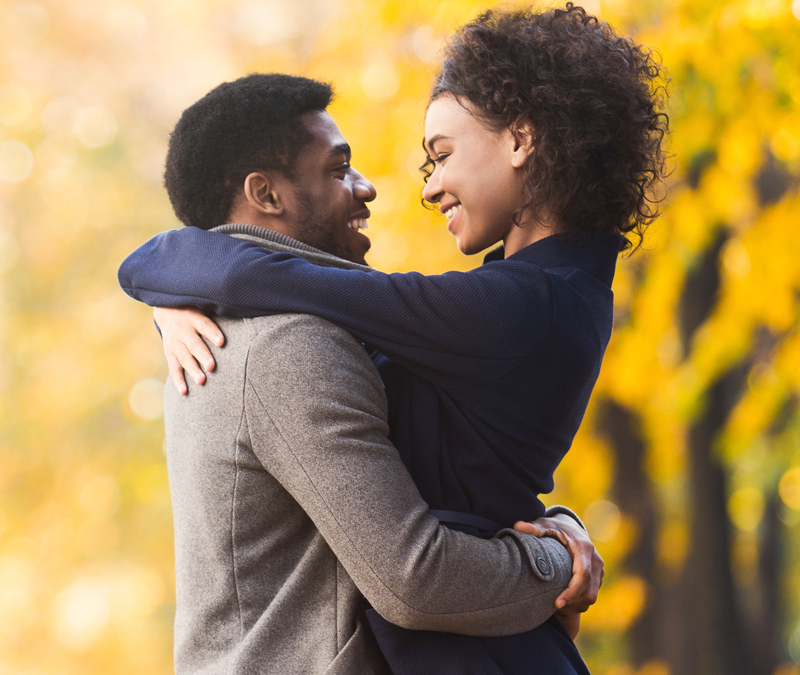
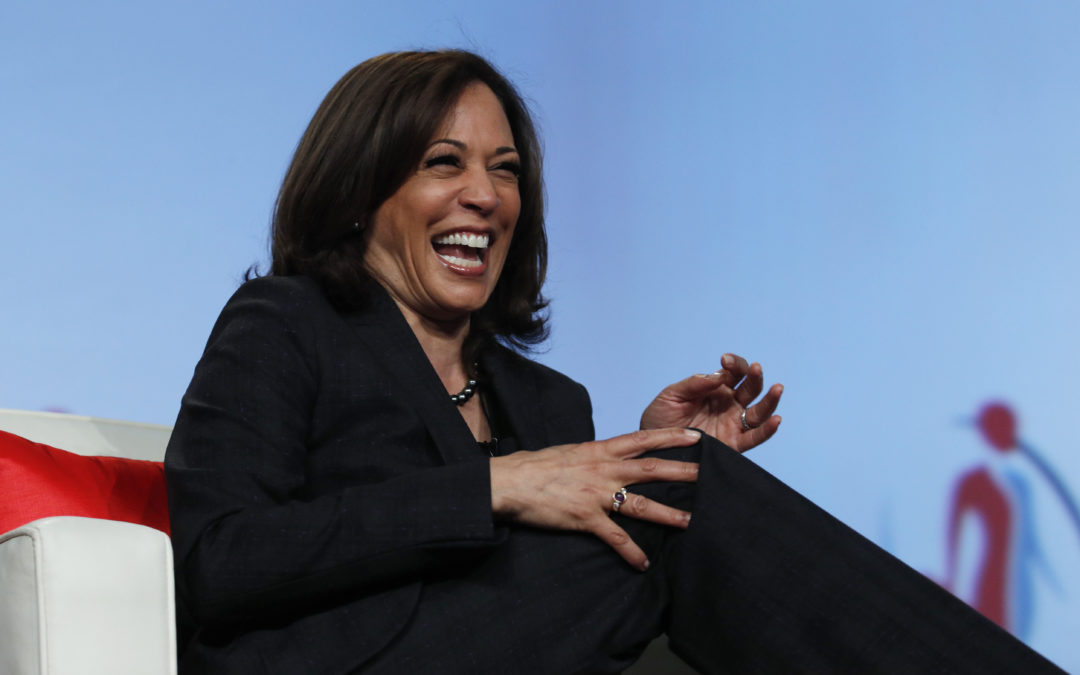
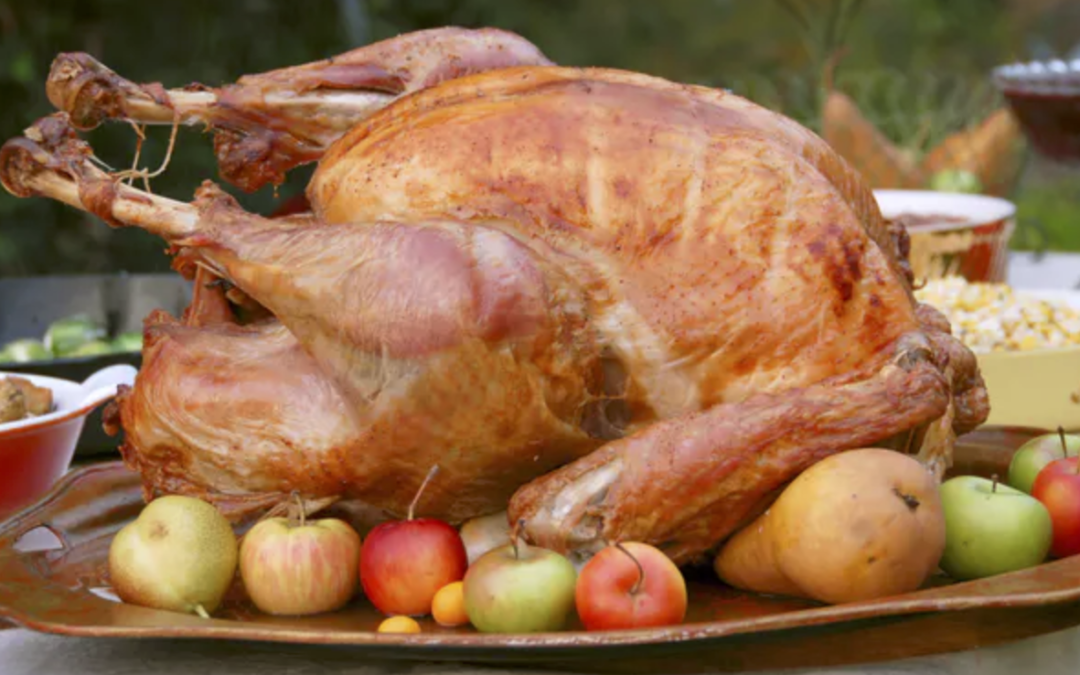
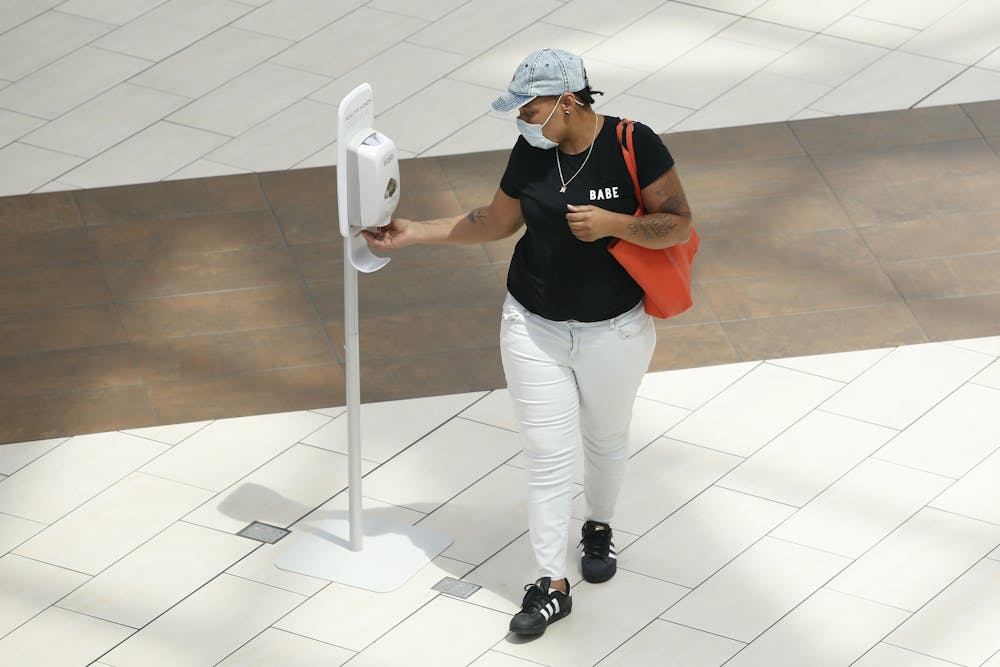

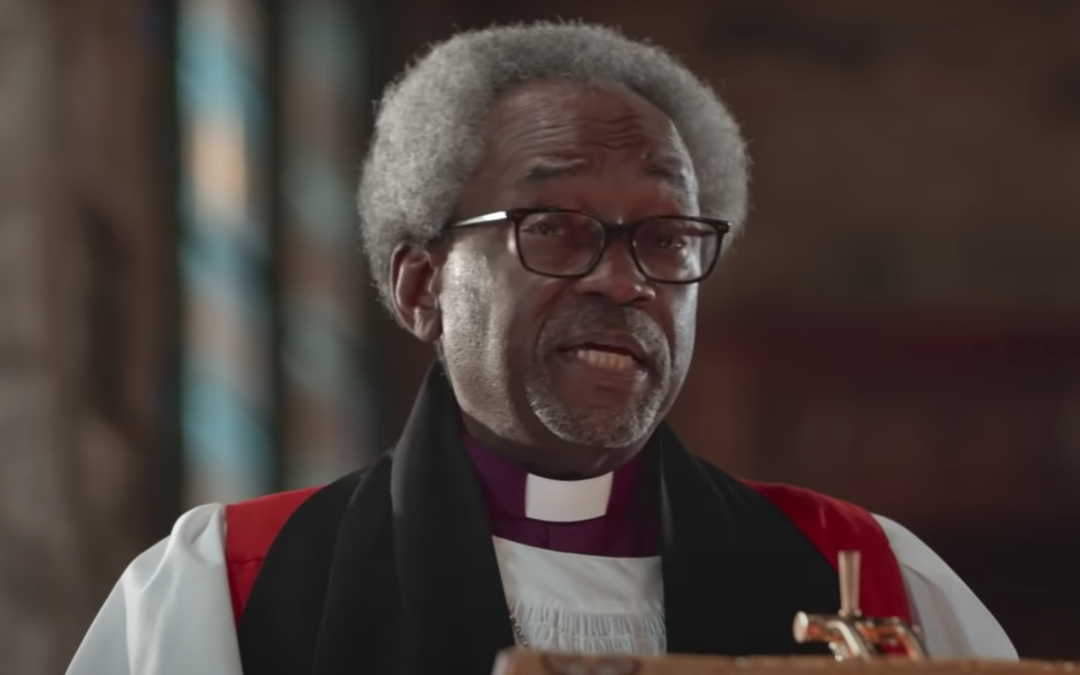
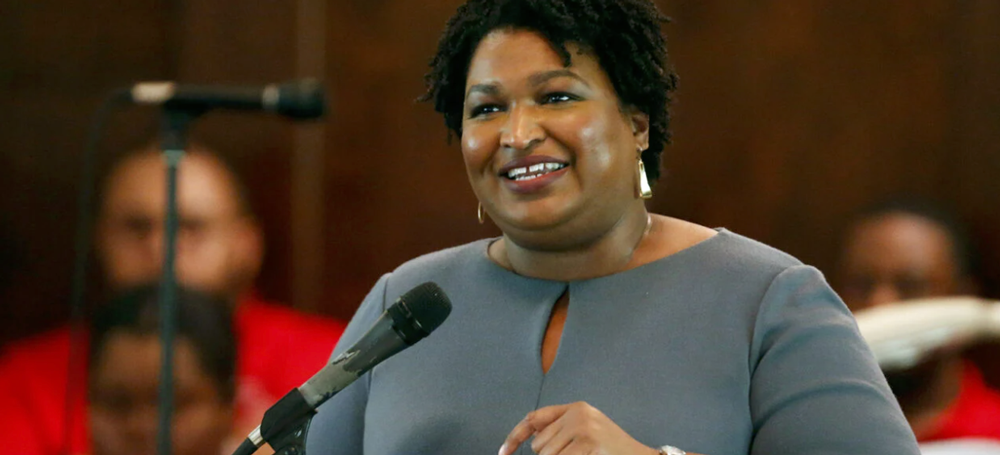
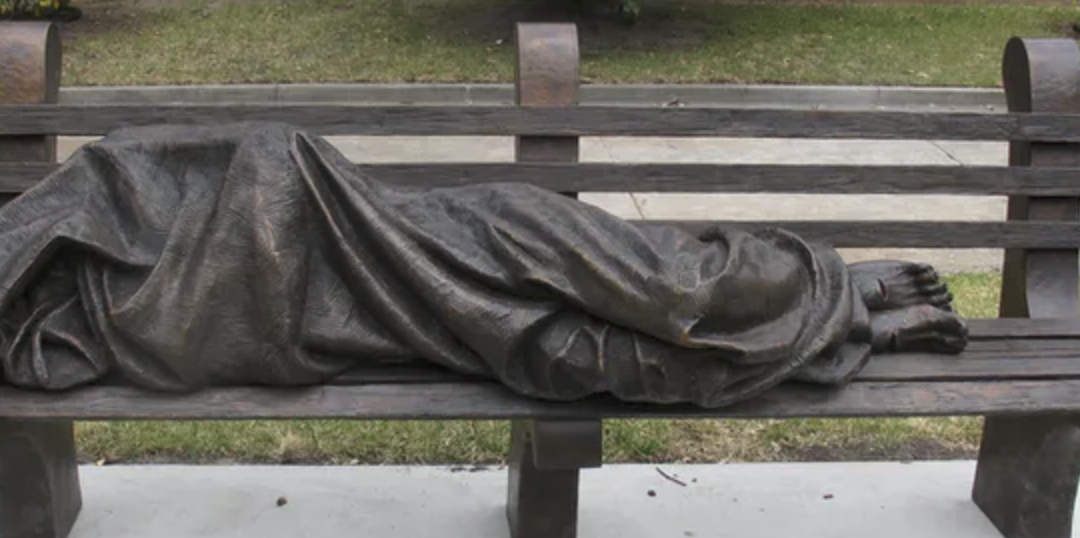
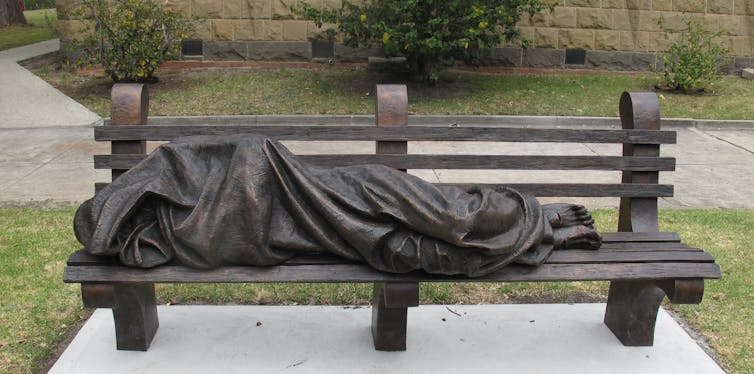
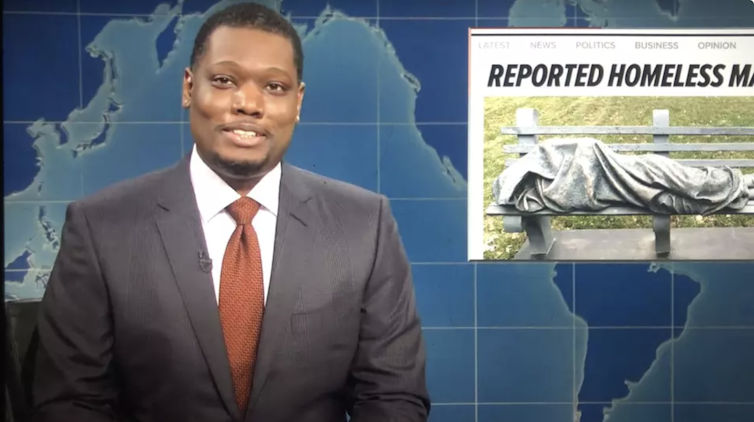
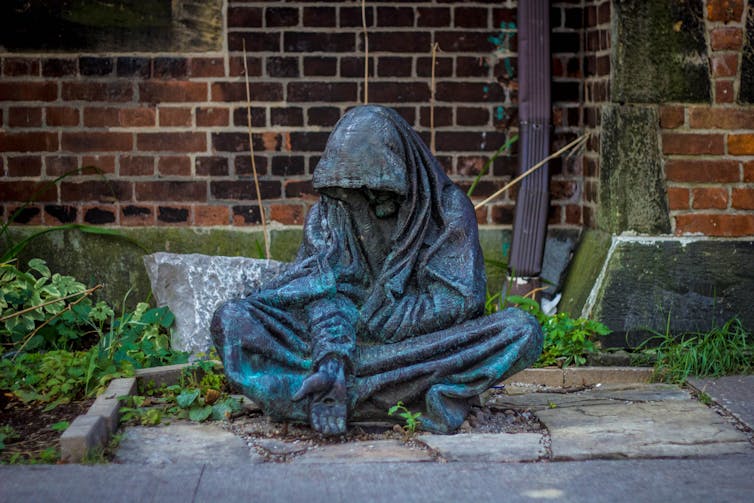

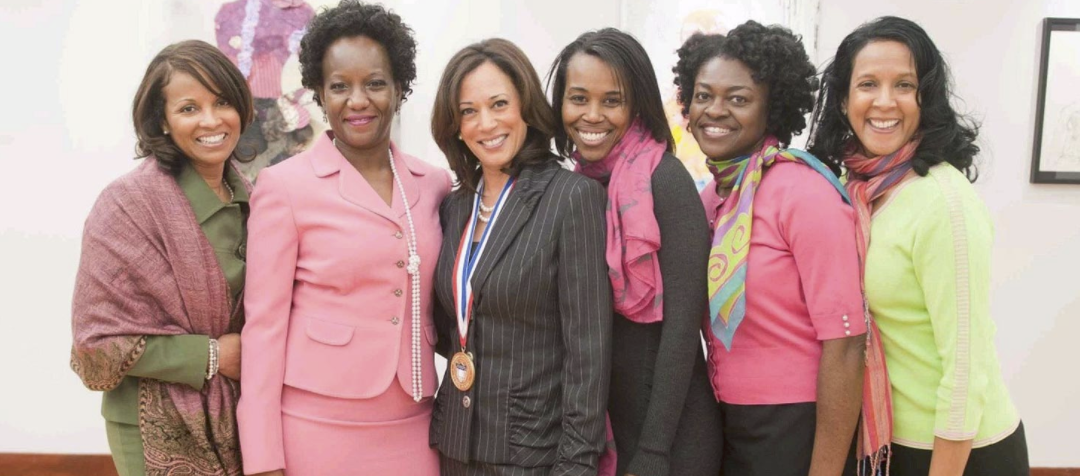
 It used to be that you had to be stuck in bumper-to-bumper traffic to be exposed to sarcastic, misleading, and — fine, I’ll admit it — occasionally entertaining slogans about politics and spirituality.


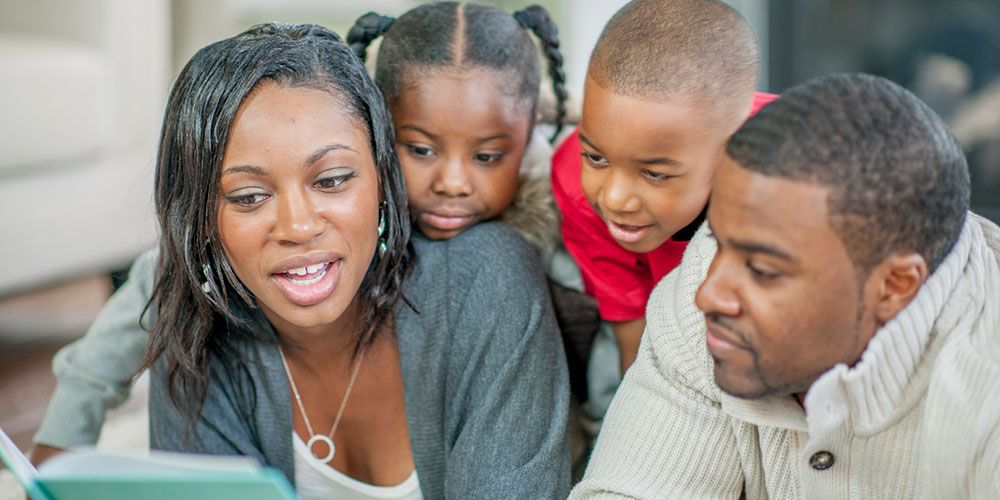
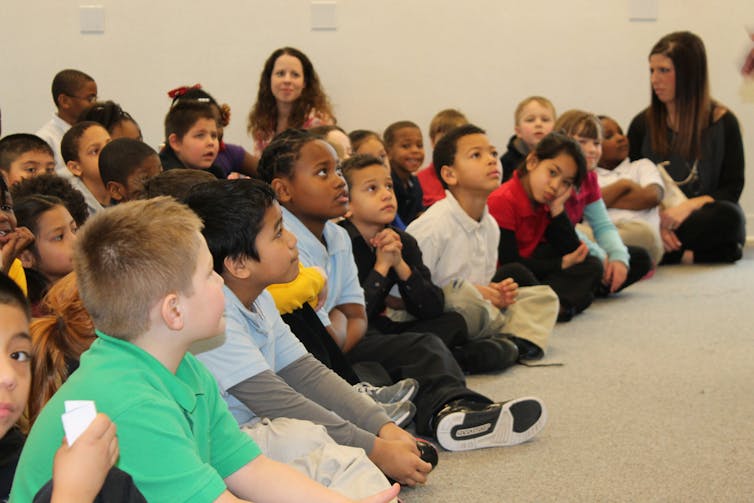
 While learning to tell stories can be useful for all children, this skill may be most needed for those at risk of achieving reading competency.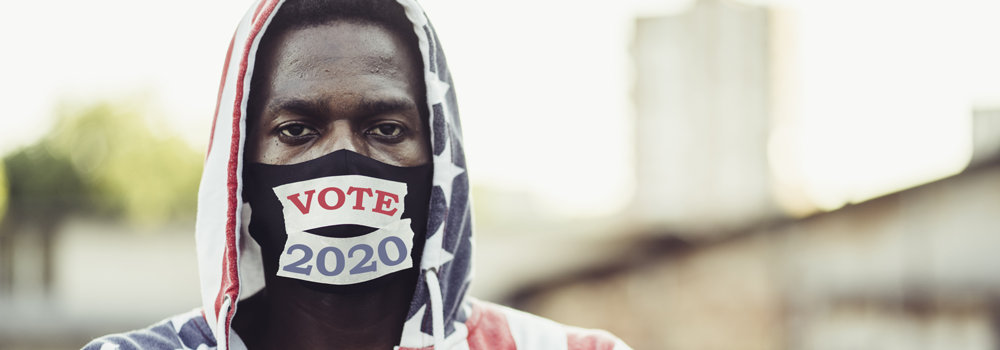
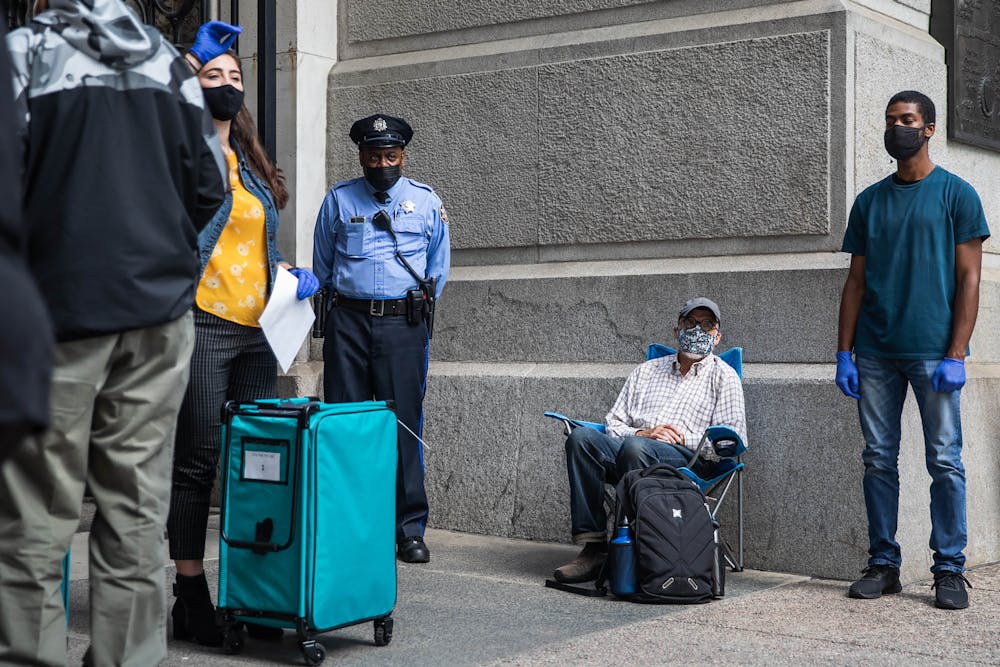
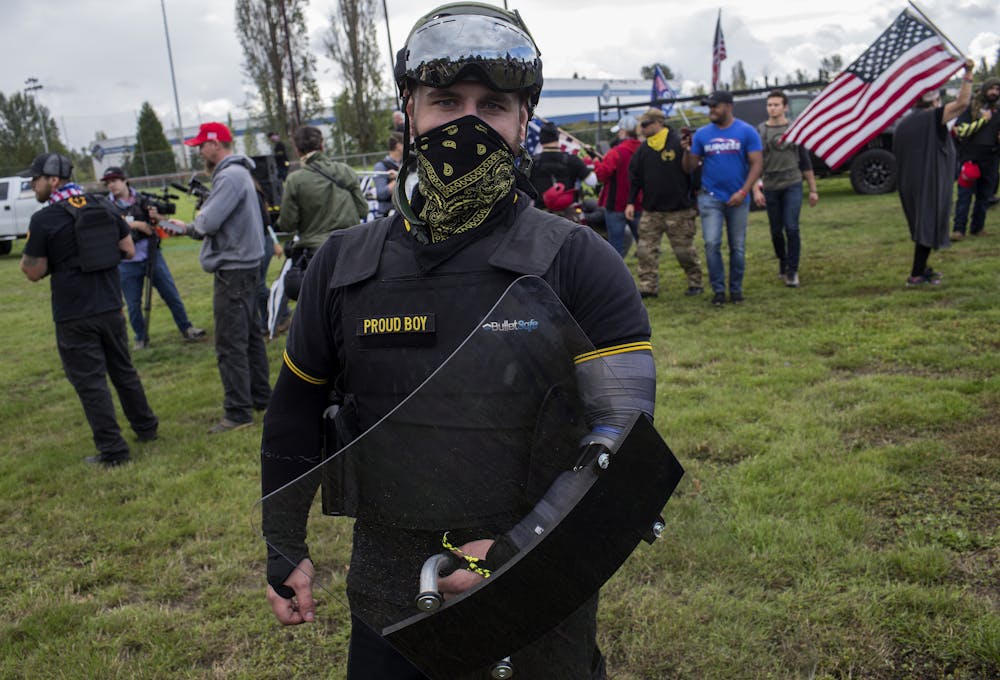

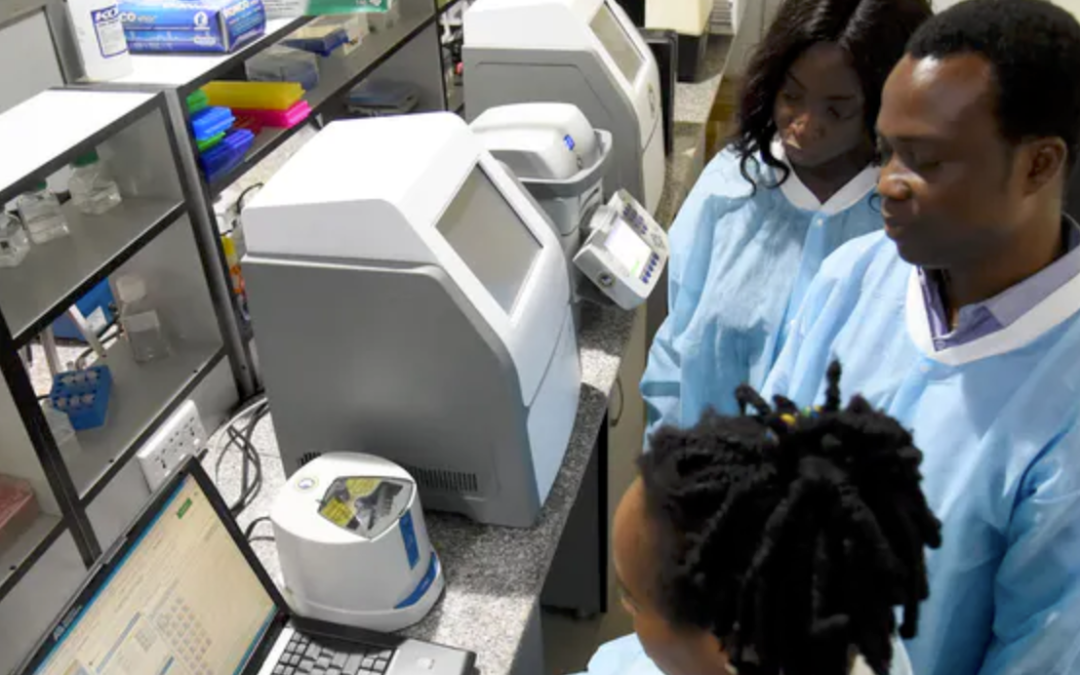
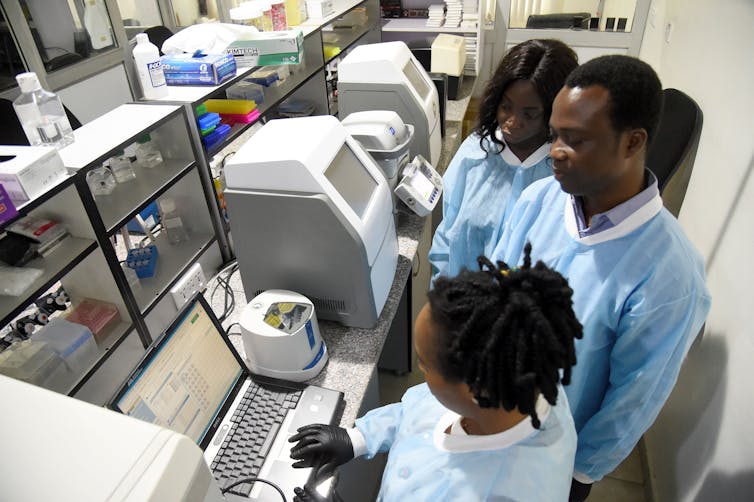


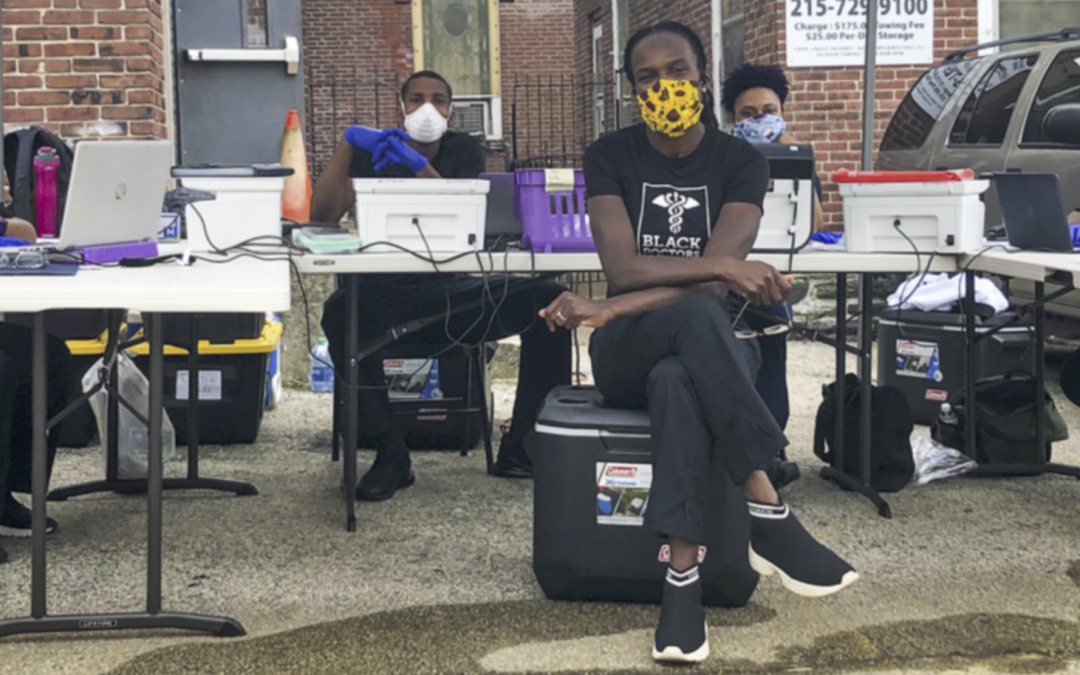
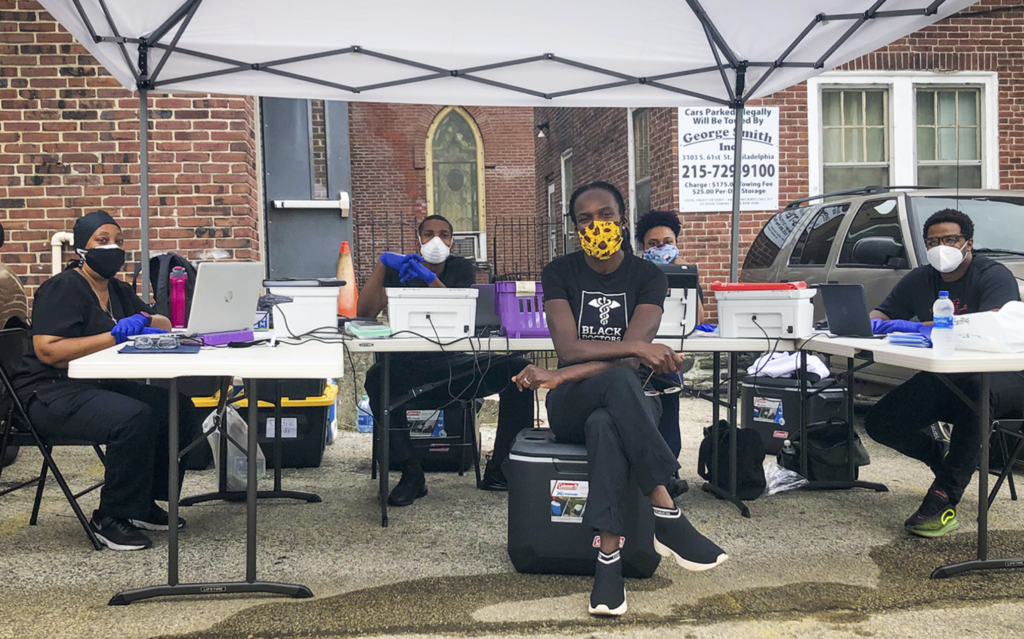
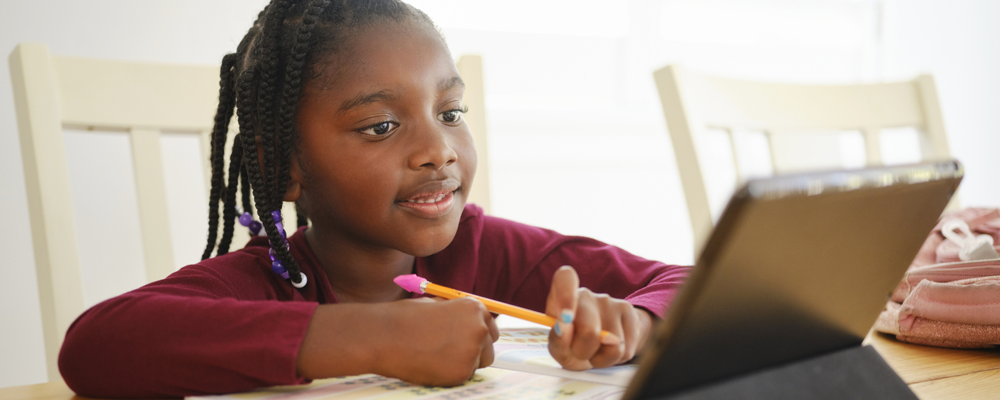

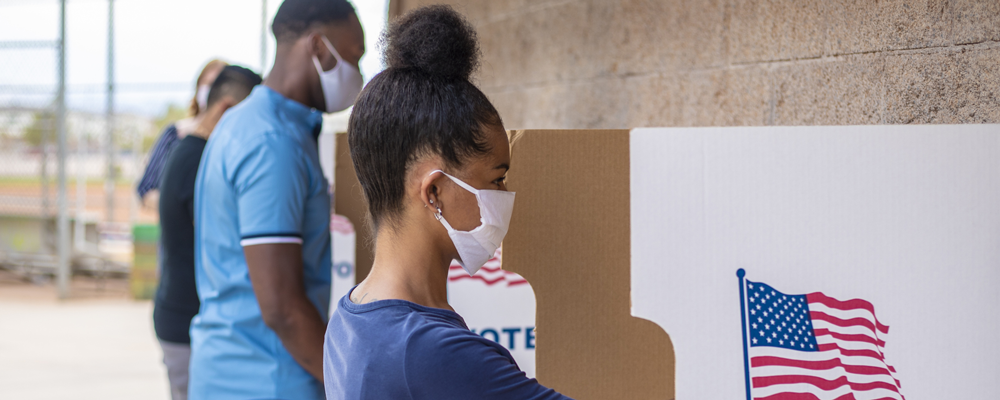
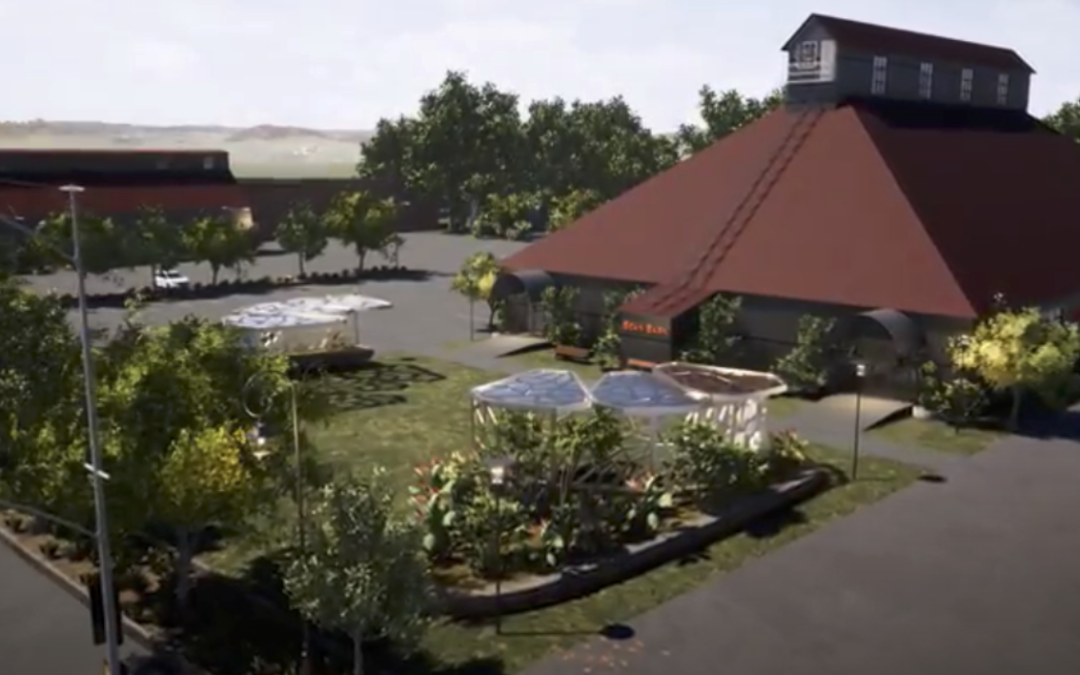
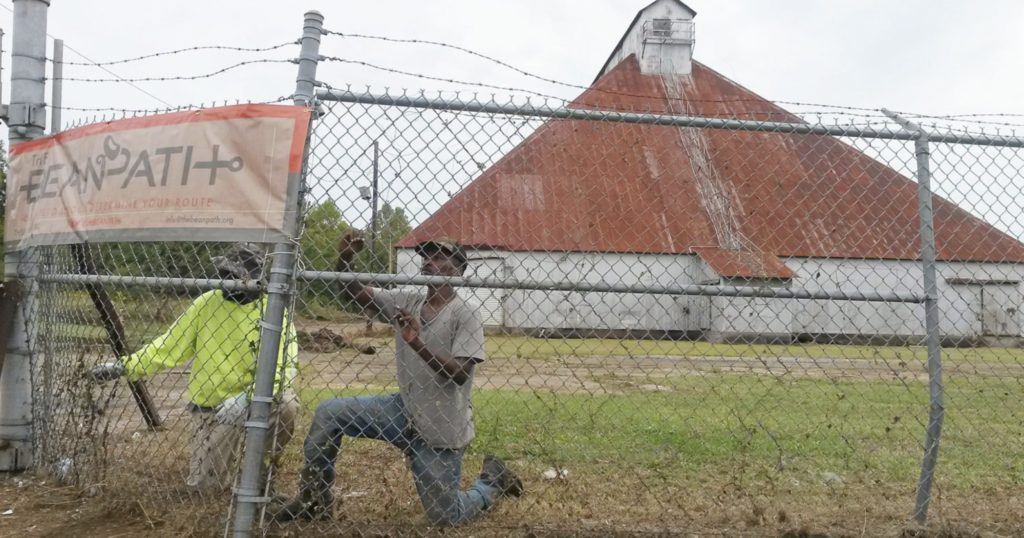





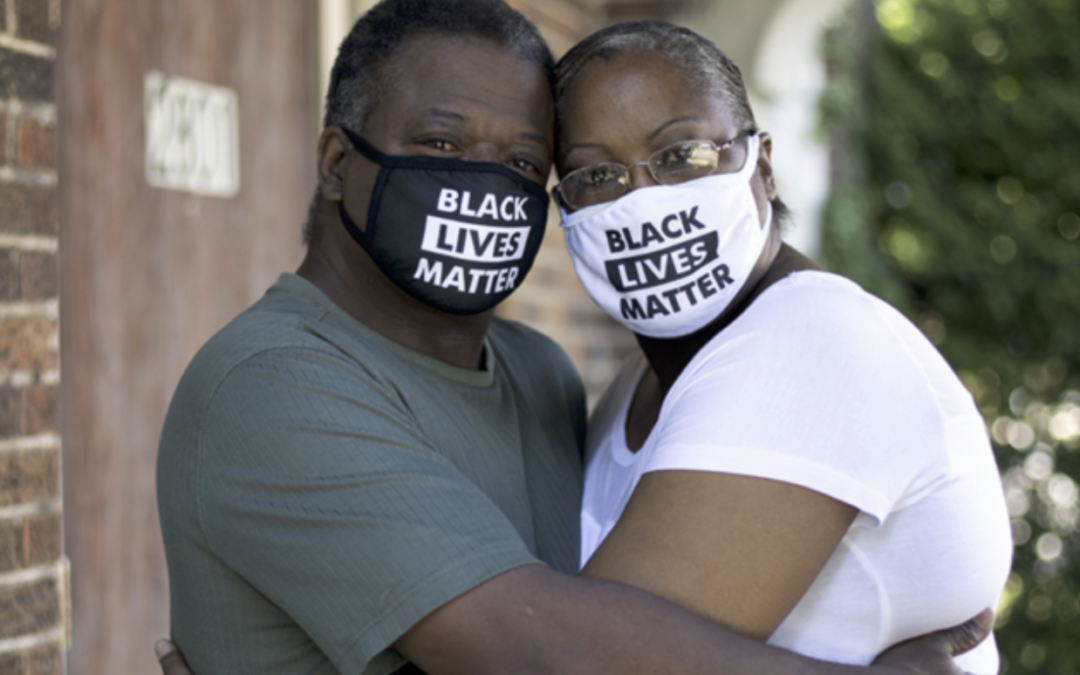
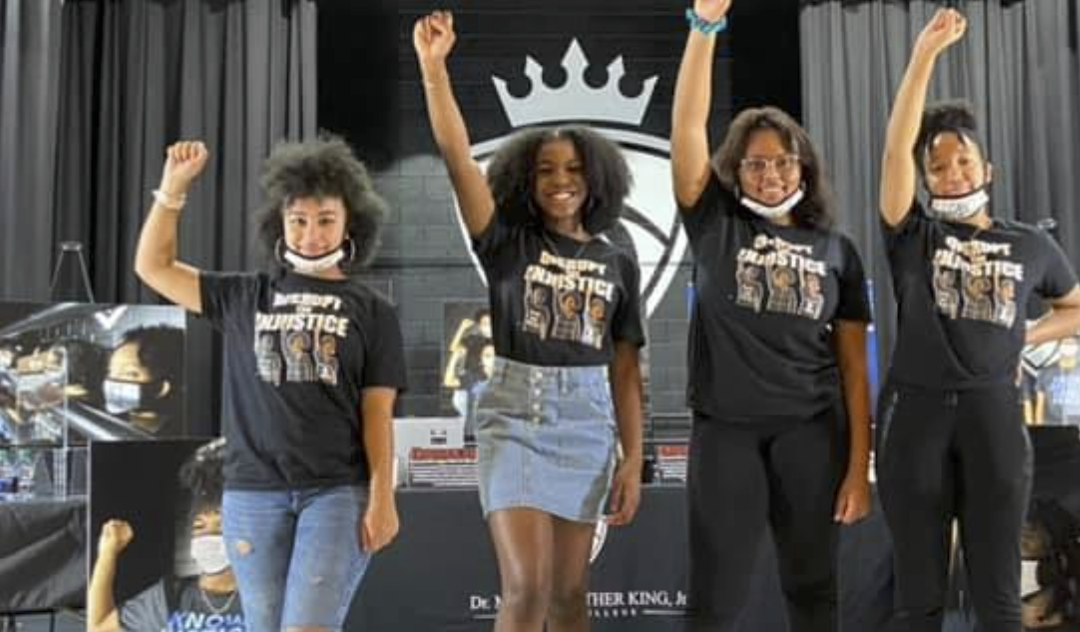
 Courtesy Kimberly Grayson