Recently, I began reading the book Christmas is not Your Birthday by Mike Slaughter, lead pastor of Ginghamsburg Church, as a part of an Advent small group series hosted by Impact Church in Atlanta, Georgia. The five-chapter book explores the idea of shifting the focus of Christmas from a me-me-me experience to one that gives-gives-gives to those who are in need. I could run the list of great points Pastor Slaughter presents about the commercialization of Christmas, but this blog is about something much more important.
The “cleaning up of Christmas,” or as Mike Slaughter puts it, “sanitizing” Christmas takes a look at our insatiable need to recreate the Christmas story into something it was not. This idea of sanitizing Christmas runs the gamut of images, new and old: there’s this peaceful, purified nativity scene, equipped with a modestly dressed Mary, an ever-loving Joseph, and a manger, though full of animals, cleaned, sterilized, and fit for a king. What the book suggests, however, is that there was nothing clean or neat about the birth of Christ.
Just think: Mary and Joseph had traveled for days to get to Bethlehem from Nazareth — no bathing, probably limited rest, and by the time they reached Bethlehem, Mary may have been in full-blown labor! (Have you ever seen a woman in labor? There’s nothing cute about that!)
We all know the story: there was no room in the inn for them to stay so they end up in a stable where animals lived. Animals, y’all. The hay that would eventually cushion Jesus’ manger (the trough from which livestock ate their food!) was the bed for sheep and goats, horses and donkeys. It was probably also their makeshift bathroom, too.
There was nothing clean or pretty about Jesus’ birth.
But we’ve spent centuries cleaning up this story to make it appear better than it really was. We’ve neatly tucked away the realities of the Christmas story, dressed it up, made it look and smell better because I mean honestly, who wants to worship a King born in the feces of barn animals? Who wants to admit that their savior found residence in the lowest of low places — a manger — surrounded by tired, weary parents who had spent days traveling to Bethlehem with nowhere to rest once they arrived?
So we clean it up! We dress Mary in her blue and white headdress, skin a-glow, hair perfectly coiffed. Joseph, in his humble attire, looks longingly at the baby resting in the feeding trough. We strategically place each lowly lamb and honorable horse at the feet of a pristine, babbling Messiah, pushing away the idea that someone who came to save the world in so much power and grandeur could be born in such a despicable and dishonorable way. And let us not forget the white-washing of the Christmas story; remember a few years ago when former FOX News commentator Megyn Kelly declared that Jesus was a white man, drudging up the age-old process of blotting out the color (read: melanin infused color) of the Jesus story. Not only have we had difficulty accepting Jesus as one who was born in the recesses of society, but we’ve also had a problem accepting Jesus, His parents, and the entire community from which he was born and lived as a people of color.
Mike Slaughter suggests that we read the Christmas story through a sanitized lens because we know what is going to happen in the end; This baby will grow up to become the Messiah, our Redeemer who spends the last three years of His life as a rabble-rouser. Because we often view Jesus from the other end of calvary, it becomes easy to retell His story in a way that is more aesthetically pleasing for us. It’s easy to make the ugliness of our stories appear beautiful when we are confident that the end will be favorable; but what happens to the story when you are not as sure?
From Mary and Joseph’s perspective, they were not sure how this birthing-the-Messiah thing would work out. The angel Gabriel brings this bazar message, and though both Mary and Joseph have some hesitation over it (depending on which of the Gospels you’re reading), they accept the Word of the Lord which results in them facing ridicule and shame for nine months. What a challenge of their faith! Remember: Mary and Joseph had not yet the privilege of knowing Jesus as risen savior as we do; their understanding of the birth of Jesus is not through the lens of Calvary. They were living in the moment! This experience, as I’ve suggested, was ugly, smelly, and quite oxymoronic considering the child being born would reign as king one day.
But, don’t we do this in our lives as well? Don’t we take the ugliest parts of ourselves and sanitize it, make it cleaner and more presentable to the public so that our story is better received? We shove down the shame, hide the hideous, remove the regretful to allow a more socially acceptable story to shine through — in hopes that those around us will accept us the way we’ve presented it. We dress up the lies, twist how the story really went so that those around us will feel better about their own stories of fear, shame, and doubt. We reframe the circumstances behind an unexpected pregnancy to appease these social pressures of single parenthood. We reshape the story to explain how a divorce shattered a seemingly picture-perfect family. We reconstruct the tale we tell about a sudden foreclosure on a sprawling mansion after keeping up with the Jones’ became just too much.
We are meticulous in repainting the picture to make it look presentable to the world. How useful could someone who has been rejected, broken, and born into a manger really be?
I think the Christmas story answers this lingering question — how useful can someone with a not-so-spectacular story be used to do great things? When we consider the realness of how Jesus was born, it allows for us to take a step back and consider the power of His birth. Jesus’ birth story was not one of pristine privilege or dressed up dramatics. It was of some young and in love folks agreeing to say “yes” to something beyond their understanding. It was a total commitment to follow through on their beliefs despite facing ridicule and having to birth their promise on top of hay full of animal crap. And despite all of those not-so-pleasurable things, Jesus’ story lives on in the annals of history. And ours will too.
What stories have you sanitized to make others (or even yourself) feel better about? This Christmas, consider removing the rose-tinted glasses from your story — share it! I’m challenging myself to be and remain transparent, to tell my story as-is, no cleaning it up. The Christmas story is much more than gift-giving and receiving — it is an opportunity for us to dig deeper into the realities of our story and use them to share the miracles in our own lives!
Sunday marks the beginning of Advent, the liturgical season observed by many Christians as a period of waiting and preparation for the Nativity of Jesus. This season begins four Sundays before Christmas and concludes on Christmas. The hanging of greens, adorning sanctuaries and wearing vestments of purple, and lighting the Advent wreath candles in order to move from darkness to light are key components in Advent observation. All of this is in anticipation of the celebration of the birth of Jesus, a birth that people anxiously awaited then and a symbolic birth we should anxiously await now. But some may ask, “Why must we wait for something that has already happened? Why exist in symbolic darkness for a time in order to celebrate that which was revealed some 2000 years ago? Why is this relevant to our time?” I suggest that we must wait in order to reclaim the wonder of the light that was brought into this world.
Earlier this year, during an Ash Wednesday service at a large Baptist church, I looked forward to ushering in the season of penitence with somber worship and a penitent message. Ash Wednesday is supposed to remind us of our finitude and it plunges us into a season of penitence, and the journey into the wilderness with Christ. But as I sat in that Ash Wednesday service, I was jolted from somber reflection with songs of joy and a sermon celebrating victory. Not a moment in the service–besides the impartation of ashes which concluded the service–was spent ushering people into the dry season ahead of them because the church couldn’t not praise. On one hand I understood the church’s inability to squelch their praise. It’s a church that has seen many trials and tribulation and its membership are a part of the resilient race in this country who can’t not praise because of how far they’ve come by faith. Why would they want to launch themselves into a period solemnity? But on the other hand, I desired for this congregation to withhold their praise and shouts of victory in order to rightfully claim it at the end of the Lenten season. In doing this, they would truly walk with their redeemer and taste the sweetness of victory because they had made the journey by way of symbolically situating themselves on Ash Wednesday as sojourners with Jesus. This too is our call during the season of Advent except that we are not sojourners with Jesus this time around but sojourners with a generation of people who were awaiting his arrival. People who heard a particular prophecy about the coming of Jesus and who were waiting and preparing for his arrival. People who didn’t have Christmas gift shopping, parties to attend, and a plethora of “holiday” distractions, but who were watching and waiting for him. I imagine that their wait was one of wonder mixed with skepticism fueled by the rumors of Mary, a virgin, who was impregnated by the Holy Spirit with the son of God. How unbelievable that had to be then and how unbelievable we should consider it now in order to rekindle the wonder of it all. Awesome wonder is what this season is about.
Yesterday in church I was reminded of how in danger we are of losing that wonder because we are so familiar with the stories that tell of the coming of Jesus. Some of us know it like the back of our hands and it has become so commonplace that the narrative of a young virgin impregnated by the Holy Spirit and giving birth to the son of God seems just as plausible as a man getting pregnant and giving birth. Some of us are no longer moved by the story because we’ve spent years with it in our churches, in our seminaries and Bible colleges, and in our homes, but we force ourselves to be moved just a few days before Christmas because that’s what we’ve been trained most to do. Many wind down and reflect as they start to wrap up their Christmas shopping, place the last few gifts under the tree, and bake the last batch of cookies. A reflection on the true significance of this moment on the Christian liturgical calendar is sometimes left as an afterthought to what is given top billing on the calendar of capitalism. But we must wait, and wait longer than a few days, to acclimate ourselves to the coming of Jesus. When we take hold of the season of waiting that Advent is, we give ourselves the opportunity to experience the wonder of every occasion that lead up to the birth of Jesus.
When we read the Gospel narratives that foretell of Jesus’ birth, of Mary’s visit to Elizabeth, of the Magnificat, we must stop ourselves from breezing through it quickly because we’ve heard it all before. Instead we should be held captive by every word as if we were hearing it for the first time and as if we may never hear it again. When we repeat the refrain, “O Come, O Come Emmanuel and ransom captive Israel, that mourns in lonely exile here, until the Son of God appear,” we are implicating ourselves as those in captivity in need of a release from our self-imposed exile. Given the capitalism and consumerism that has marked this season—and the violence it has wrought—we are now, more than ever, in the need of the discipline of waiting. We must wait in order to restore the wonder of this blessed season we are in, a season that shines light into dark places and gives many hope. We must wait, not only for ourselves but for every person who has yet to experience the great hope that many of us know so well. We must wait so that we refresh ourselves in the wondrous love to come over receiving it as an entitlement that we might take for granted. We must wait, because in waiting we are forced to slow down, and in slowing down we gain perspective on the significance of this season which brings us back to wonder. The awesome wonder of the coming of Jesus is what this season is about, just wait for it.
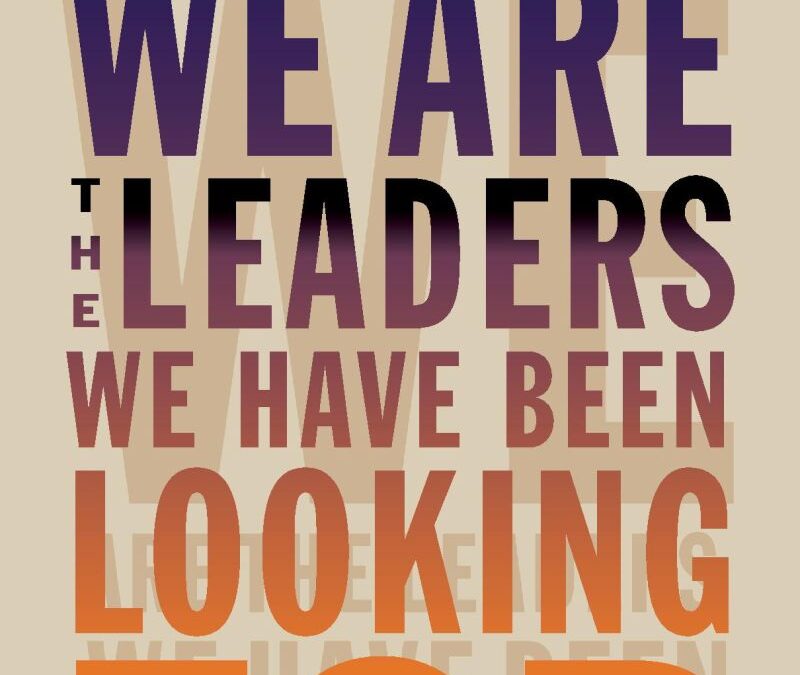
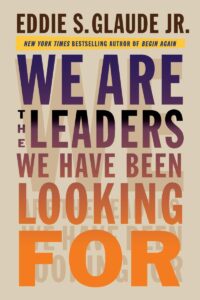
Man, one of my favorite authors, I mean, I just want to be blunt with you. Every time I see you on Meet the Press, Eddie, I’m always like, he is dead on about something. I don’t know where it comes from. So where were you when you said to yourself, “Self, I need to write a book [like] We Are The Leaders that We’ve been Looking For?”
Dr. Glaude
You know, this book is based on a set of lectures I delivered like in 2011. And I was so angry at that moment. Everybody was excited about the Obama presidency. And I was angry in some ways, doc, that people were reading Obama’s presidency as the fulfillment of the black freedom struggle. That that’s what the object of all that sacrifice was for, was to get a black man in the White House. And I just thought, that’s not true. What happened to love, what happened to justice, what happened to the moral dimension of the movement? I wanted to think through that. I wanted to figure out what were we relinquishing, what were we giving up in that moment. And then fast forward, all these years later, I returned to those lectures. And I returned to them because in some ways I had lost my footing. I was trying to figure things out because COVID had disrupted so much, I had lost two partners. I felt like I was unmoored, untethered as it were. And I knew these lectures were a moment when I was trying to usher in a new way of being for myself, a new way of thinking for myself, a new way of writing for myself. So I wanted to go back to that moment. And lo and behold, I saw what I was trying to do differently. So all of this happened in the summer of 2023. And I got to work. And then I submitted the manuscript to the editor at Harvard University Press and they were like, OMG, let’s get this out as soon as we can.
Maina
What would you say to people who feel the disillusionment of people who are going, “I don’t want to be the leader?”
Dr. Glaude
I think part of what I’m trying to argue is that when we outsource our responsibility for the house [of this country], when we say, well, I don’t want to pay the mortgage then we know what’s going to happen. And so we cannot outsource our responsibility for democracy any longer to so called prophets, to so called heroes, to politicians. We have to understand this is where Ella Baker, Miss Baker, is so important that we are our salvation in this instanc. Of course, that that doesn’t disregard one’s faith claims, but it’s what we do.And there’s a somewhat cliche at the heart of the book. And that is that if we are the leaders we’ve been looking for, then we got to become better people. We got to reach for higher forms of excellence. James Baldwin used to put it this way, the messiness of the world is often a reflection of the messiness of our interior lives. So if we don’t begin to do that hard work on becoming better people, then we can’t be the source of significant change. But I also should say this, doing the hard work of becoming a better human being must take place alongside of [and] within our ongoing effort to make a more just world. Because the world as it currently is organized gets in the way of us becoming better people. It’s almost like you’re rewarded to be selfish, you’re rewarded to be greedy, you’re rewarded to be mean spirited, you’re rewarded to be self-regarded. You’re not rewarded if you’re other regarded, if you’re not regarded if you have an I, thou relationship [with others as non-objects], you’re not regarded if you’re committed to justice, if you’re committed to the least of these, you see what I mean? If you’re maladjusted to an unjust world, you’re not rewarded. So we got to do the hard work of self-cultivation in pursuit of a more just world. That’s the heart of the book.
Maina
Which one of these people did you fall in love with the most? You’re taking some of the very, very best and you’re dropping them right in front of us and there are nuggets right in front of us. Which one did you go, “I am more in line with this leader.”
Dr. Glaude
It depends on what age you ask me. So when I was a young kid growing up in Mississippi, Dr. King meant everything. I remember checking out the album, show you how old I am. It was the vinyl of Dr. King’s “I Have a Dream” speech. It was the March on Washington. And I remember stopping it and learning it by memory from Mrs. Mitchell’s eighth grade history class. And Dr. King was so important to how I imagined myself. When I got to Morehouse, you’re baptized in King’s thought. You got the statue of him looking at you. And so King was so important for me at a young age. But then when I got to Morehouse, Malcolm became my guy. And I have my goatee to this day. I will never cut it off as kind of testimony from my first conversion experience, reading The Autobiography of Malcolm X. So here I am excited to be at King’s Alma Mater and my freshman year, this guy walks up to me and said, “You’re like a hand without a thumb. You don’t know who you are.” And he gave me Malcolm X’s autobiography. And I read it that night. And I found the language for my father’s anger. I found the language for how to imagine myself as a man, given the fact that I was so afraid because my father scared me to death. Malcolm became this hero of mine that I cut my political teeth on. And now here I am in my fifties. And Miss Baker is all up in me. It’s a more mature voice, I suppose, but we wouldn’t have a black freedom struggle of the 20th century if it wasn’t for her. And the way in which she has that wonderful line, “A strong people doesn’t need a strong leader.” And I said this once, I was speaking, I think it was in Chicago. I was like, “What happens when you have fans in the pews and a celebrity in the pulpit?” The church is dead. It’s done. I think we’re seeing a lot of that right now. What happens when you outsource your faith journey to someone else? And so part of what I’ve been trying to do is to live Miss Baker’s edict. Because the title of the book comes from her. We are the leaders we have been looking for. She says, “We have to convince people that their salvation is in their hands.” What we choose to do. Not what the preacher chooses to do, not what the politician chooses to do. So not what Malcolm inspired me to do, not what King leads me to do, but what’s coming from inside of my heart in light of the exemplars of excellence and love that inform and shape my own voice as I understand it. And that’s what I’m writing towards in the book.
Maina
You keep talking to me. So last question. Sure. Your spiritual faith journey, did that come into play in this book at all?
Dr. Glaude
It’s at work in all of my texts. To be honest with you, it’s me trying to understand what does it what does it mean to be decent and loving? What does it mean to exemplify the ministry of Jesus without it being overlaid with dogma and an institutional constraint. So when I call for a coalition of the decent, animated by the power of love, that is the exacting power of love. That is that is at the heart of my religious Christian witness, as it were. And there’s a moment in the book near the end where I’m going to invoke Jimmy Baldwin again. He has this extraordinary essay that is published after his after his death is entitled “To Crush A Serpent.” And in this in this essay, he is relentless in his critique of the Fallwells and the moral majority and the like. But he talks about what salvation involves, what it entails. And it’s an echo of an earlier essay, a talk that he gave at Kalamazoo in 1961, entitled “In Search For A Majority.” And he says salvation is found in effect in “the going towards.” Salvation is found in the going towards in some ways. And I want to suggest that salvation is found in the going towards and love is its carriage. So the short answer to the question is, is yes, me trying to figure all of this out, indebted to the Christian tradition, but not limited by it. Those lectures produced an uncommon faith. So the short answer is yes, all my books are or attempts to make sense of this complex journey that I’m making in terms of my faith.
The parable of the Good Samaritan from the Gospel of Luke is one of the most well-known passages of scripture in Christian communities and beyond. Jesus shares this parable in response to a lawyer asking if God requires that we should love our neighbors as ourselves, then who is my neighbor? The parable can be summarized this way: a Judean man is walking down a dangerous road and is robbed and beaten. He is left hurt and in need of help. A priest walks by, sees the man and walks on the side of the road to avoid him. A Levite, or worker from the local Temple also walks by and does nothing to help. Then a Samaritan man, who was a religious, historical, and cultural enemy of this Judean man, sees him in distress. The Samaritan stops, picks up the man off the road, takes him to a local inn and pays to have him rest and recover there. He promises to pay the inn keeper whatever is necessary for the man’s stay beyond what has been paid when he returns. Jesus turns the question back on the lawyer and asks which of the 3 men in the story acted as a neighbor to the injured man? The lawyer responds “the one who has shown mercy.” And Jesus responds “go and do likewise.”
I taught this lesson to my adult Bible Study class a few weeks ago in the context of talking about how we treat people who come from a different religious tradition from us. I pointed out that this was like a white man helping a black man injured on the side of the road in 1920’s Georgia. The parable was meant to be that striking of a reminder to care for people who are different than us. Our Bible study has people who are in the 30s and 90s, black and white, men and women, many liberal and some more conservative, ministers and members, professors and students all on a zoom every week. We are a diverse group to put it bluntly. But whether we agree or disagree we have chosen to be a part of this Christian community and keep showing up to talk, study, and pray together every week.
We decided to talk about faiths beyond Christianity because of an experience a few members shared. They attended an interfaith wedding where I was the celebrant. The experience raised a lot of questions and a desire to learn from one member who wanted to know more about other religions. After asking the group if they were open to it, we agreed and included it in our regular Bible study time. During our second discussion we talked about visiting a Hindu Temple, and one member voiced that she wouldn’t want to do that because she is not Hindu. Another said that she felt very comfortable because God could be there just like God was in our church. I encouraged them that they were both right, that they could respect Hindus that worshipped in a Temple and not have to go themselves. But if they did choose to go, it didn’t make them less Christian, just having a different experience.
Being a good neighbor is not about agreeing on the same things or sharing the same identities. Being a good neighbor is about how we treat each other. Being in a diverse community can sometimes make us more intolerant of people who are intolerant. I have heard it explicitly from some of my members. But the things we practice in well response are curiosity and welcome. When the Hindu man who was dating a Christian woman came to our congregation months before they were married, we didn’t single him out or question why he was there. We hugged him and offered him food. He came because someone he loved, loved us. When a Jewish Rabbi spoke to us about her pain remembering October 7, and a Christian activist talked about his disgust at the suffering by Palestinians in Gaza in the same worship service, my pastor didn’t apologize. He let them both speak. I know our congregation is unusual. But it is a constant reminder and challenge of the possibility to be together despite differences. I can only hope that as we march toward and through this season of deep division in our country around the election, people who are in communities together whether by location or intention would remember on the other side that we all still need to eat. We all still need care when we are hurt. And we can all still be good neighbors by showing compassion.
The full interview is above. Excerpts from the interview are below. Dr. Wilkes book Plenty Good Room is available for purchase here.
Allen
We have the Reverend Dr. Andrew Wilkes talking about his book today Plenty Good Room. He has written for us in the past many years ago as an intern, but now continuing his work as a political scientist, social thinker, and a pastor.
Dr. Andrew Wilkes
It’s good to see you, Allen, a joy to be in conversation, deep appreciation for Urban Faith and of course for the wider work beginning in the 70s of knowing Black folk need Black authored materials for Christian Education that are culturally relevant that you and I has been doing all down through the years.
Allen
Why did you feel like you wanted to write this and get your thoughts out in Plenty Good Room?
Dr. Andrew Wilkes
Yeah, really appreciate the question. Plenty Good Room, as I note in the preface, is part argument, part appeal, part prayer. And it’s something that I’ve been pulling together for the last 10 years or so, went through research and other means that I noted that so much of our approach to economics is still grounded on a mental model, a planning model of scarcity and austerity, rather than a beginning operating assumption of sufficiency and abundance. And so the prayer, the appeal, the argument is that if we’re in a moment where, let’s take America for instance, where we have gross domestic product of some $26 trillion, whatever we have, it’s not scarcity and it’s not austerity. We’re in a place where we have to think through the public choices and the public priorities that we make. And so Plenty Good Room is trying to argue that public choices and public policy is not simply a technical consideration for experts, but it’s rather an encompassing matter for the full body of Christ, for everybody that considers themselves to be a neighbor, or somehow enmeshed exactly as you named in this work of trying to create a better world.
Allen
A lot of folks may have heard of socialism. We certainly have black Christians. Can you define black Christian socialism for us?
Dr. Andrew Wilkes
Yeah, so I’d like to define it by image, because I think that’s helpful. Black folk play spades and when you play spades, you have a hand. And we tend to think that the hand that somebody plays with and wins depends on the skill or the savvy of the person who’s playing their particular hand. But what really is the meat and potatoes and often the most influential factor is the distribution of cars that one has in their hand. Do you have the Joker? Do you have the deuce of diamonds or the deuce of spades depending on how you play? I know black folk plays spades differently in different regions, but the question of distribution is co-equal to in some cases more important than the individual skill of the spades player. And you may have perhaps heard those who are listening may have perhaps heard folks say, I can’t even do nothing with this hand right here. And so, I talk about spades as a way to get the question of distribution and black person socialism on the table, because too often the question of what it means to be a justice-oriented Christian devolves into a kind of budget shaming or financial scolding of how folks save, invest, spend or how they don’t. Rather than having a question about how are we co-creating and distributing the resources in a context where we affirm that the earth is the Lord’s and the fullness thereof. And so, in a nutshell, black Christian socialism is about trying to pay more attention to the pre distribution and the redistribution of resources so that all of God’s children can flourish and help make decisions about stuff they help create.
Allen
I love that image. And one of the things that you lift in the pre-distribution but also in thinking about what has happened before us as you spend some time with history and I think it’s important for people to see that this is not new stuff, right. The ideas are rooted in our traditions.
Dr. Andrew Wilkes
Very much so.
Allen
Can you talk about some of that history, some of those figures you lift up, you know, Dr King and bell hooks and, and, you know, can you talk about some of why that history is important and where the historical precedence is for something like this, this black Christian socialism?
Dr. Andrew Wilkes
Absolutely. You know, in 1896 in the middle of trying to figure out how industrial capitalism and in a moment before public health codes and building codes whereas modernized as they are now, you have a Reverend Dee Ransom, who’s pastoring a church in Chicago, no, no less in the institutional and me church later to become an AME bishop, who writes in an 1896 edition of the AME church review about Christians and socialism. You have a black bishop in the Episcopal church, the door Holly, who in that same issue. Again, this is, you know, 140 years or so, prior to our current moment addressing the same and they talk about the values and the virtues of the carpenter from Galilee and how questions of socialism and Christianity need to be on the table as we think about what it means to express a kind of discipleship, civic responsibility, agitation for justice that can fully serve black people and so in terms of the history. I point out the fact that it’s not just individual outlier clergy, but this is a denominational church press, which is talking about black churches and socialism. And on just a plain level. I think it’s important to open up the continuum of optionality for Christians that there is no inherent marriage and in fact I’d argue there’s some a good deal of antagonism between Christians and Christianity as a religious tradition and capitalism. Even if one doesn’t buy that premise, certainly Christians should be able to choose the political economy that they feel best matches their vision of what Christ’s message in ministry is all about. And what I’m simply saying is that I think we need to see that the radical stream of black social Christianity has always existed and has turned towards things like mutual aid and socialism to express what it looks like to turn the world upside down.
Allen
You can’t read Acts right you can’t read Acts 2 and Acts 4 and not see this. Can you talk about some of those biblical foundations, especially for people who may not be as familiar or may have not read those scriptures? Can you talk about how that’s rooted in our faith and rooted in scripture?
Dr. Andrew Wilkes
Absolutely. Beautiful question. You know I think about a number of places we see Jesus and Luke 4 talking about how the Spirit of Lord is upon me to preach good news to the poor to bind up the broken hearted to set the captives free announce the acceptable year of the Lord’s favor. But we often miss Luke chapter one, Mary’s Magnificent where she talks about the humble being exalted, the mighty pulled down from their thrones, the rich being sent away empty and the hungry being filled with with good things, whatever that correlates to it certainly doesn’t correlate to Silicon Valley Wall Street dominated capitalism. When we look at the vision of what I think we can interpret our current moment not saying this was the concern of the office but in terms of our current moment acts to and for talks about a fellowship dedicated to the teaching of the Apostles and folks sharing all things in common. And so we have this cooperative pooling together of resources that we see as contemporary as black churches creating credit units to get away from predatory finance systems that wouldn’t give fair loans or gave predatory loans to black people like folks that wait, wait, wait, we can pull our resources together. We can have membership in a financial entity where we can resist white supremacist notions of credit worthiness and instead do what the best of church traditions have done as canonizing scripture, but also as practice by our people down through the years and so I think credit unions are one way to live into that and so we can do and for tradition. But there’s also a sense of wanting to have a comprehensive vision of economic justice and when I think of a passage like James five, which is a sim essentially a manifesto against wage theft. And so this is about how farmers farm workers had wages withheld from this. This is James words that my from from the rich and the text says that the wages cried out and that the Lord of Hosts, her. This is a kind of a caring through of that kind of Exodus 3 of God hearing the cries of folks who experienced economic oppression, and the church men called to do something about that. In a nutshell, Allen, what I am suggesting is that a model of what some economists and sociologists have called solidarity economics is a way to try to translate this beloved community, this co creating tradition that we see in the scriptures. This way we can translate that into how we do public finance, how we do nonprofit work, how we do community development, how the church engages with labor unions, and how we can think beyond the two party system in America because multi party democracy is a common thing for churches and most of God’s creation, it ought to be something that we do here in the States as well.
Allen
How can people join into these conversations or do some things on the ground to make this implemented because it is something that’s actually possible now that’s being done now?
Dr. Andrew Wilkes
Absolutely. So, a few things. I mean, on the policy front, we’ve talked a bit about calling for supporting already existing credit unions with respect to finance community land trust with respect to housing. Solid wealth funds that are democratically controlled with respect to economic development models and rural metropolitan suburban and exurban areas, calling for the use of taxation policies that prioritizes families that are rather that prioritizes working families rather than tax abatement strategies in perpetuity to build stadiums that project jobs which I’ve never quite created at the volume and at the pay rates that the models say will take places. I think there’s a way to participate specifically and land use zoning and town planning conversation that says how can we use the fiscal leverage that the public sector has in a way to generate full employment in our communities and a way to generate more catalytic investment from nonprofits from small businesses from arts and cultural institutions which are often unheralded economic drivers in terms of the demand that they bring to cities through concerts through forum through symposium. Anytime you talk about stimulating consumer demand and bringing people to an area that’s an economic impact that should be seen as such and not explained away because it may not be, you know, a cash cow in the way that say a high profit yield tech industry is. So, my point in saying that last piece and talking about equitable forms and models of economic development and getting people involved, not just in voting, but in planning conversations and city council meetings, calling for things like public banks. That is the way on the policy front that I think we can start to activate and make more actionable what may feel like a big conversation. The other piece that I’d say and I think there’s a theological piece to this explicitly that I want to name. I think it’s important to add more detail to the vision of what often goes by beloved community but so many things have been described as beloved community or social justice. And when you scratch below the surface, it’s the vision of economic empowerment for those who are already well connected, well degreed, well spoken, and those whose new divergence or whose multi-lingual gifts or who’s not quite being at the center of social status and power isn’t quite as central to those visions. I think it’s important for us to recognize that gap and then be to draw from some of our most famous and heralded figures. Martin Luther King Junior is and was known by his colleagues as a Democratic socialist to draw on late Reverend Dr. Katie Geneva Cannon, who in womanism and the soul of community. It’s drawing on the work of Oliver Cox to make a very similar point. The take home being that when we think of what it means to do justice, love mercy and walk humbly with God, the 21st century expression of that is to work in politics, to work in economics, to work for nonprofits, to work in unmet need round tables that do mutual aid. Right, because it’s not inherently turning towards government. There may be some, not maybe there are ways to distribute resources and a philanthropic and like peer to peer with that can also cause justice. And so what I’m simply saying, Allen, is that, and I know I’m taking the scenic route. Now I’m going to land the plane. The being a systems change sustainably minded Christian who’s concerned about justice, not for an election cycle and not just for the temporary upswing in a business cycle, I think has to mean that that some kind of socialism or cooperative expression is a viable consideration.
Allen
What advice would you give to younger believers about how they can try to live into a more just economy politics world that you have studied and see playing out ?
Dr. Andrew Wilkes
The first place that that go is to is to take a comprehensive, consistent and consecrated view of everything you’ve studied, including scripture, but not ending with scripture. And I’m inspired by the pause letter to the church of Philippi where he says, you know, whatsoever is good whatsoever is pleasing whatsoever is lovely whatsoever is just whatsoever is essentially virtuous thing on these things. And so that that call to consistently study to think to research, certainly is a call to dig deeply into the canon of scripture. But I think it’s equally a call to think through what does justice mean in terms of political science what does it mean in terms of the different institutions that shape identity and community that will take you to sociology What does it mean in terms of psychology what does it mean in terms of reading the newspaper consistently and beyond just Fox CNN and MSNBC like once in the local newspaper and neighborhood weekly. So that one can get a sense of how public affairs plays out in your immediate environment as well as meetings and pre existing convenings there’s almost always somebody working on what you care about exactly where you are that you just may not know about and so the call to study the call to see what’s already working and to presume that you want the only one that God has spoken to and stirred up for justice. So, the call to lock arms and join in Federation with folk who are trying to do God’s work of renewal and of making those who are too often put last in our society put first.
This Interview contains conversation about depression and suicide. If you or someone you know is dealing with depression make sure you encourage them to seek professional help. If you or someone you know is having suicidal thoughts you can call or text the 988 Suicide & Crisis Lifeline at 988. The Lifeline provides 24-hour, confidential support to anyone in suicidal crisis or emotional distress.
This interview is published in honor of World Mental Health Day. You can find April Simpkins co-authored book with her late daughter Cheslie Kryst, here.
—
Maina
Ms. Simpkins, what a powerful book. And so I’m asking this question with all sincerity. I’ve been there before. How are you doing?
April
You know, I take a temperature check on myself. And my mental health on a regular basis. Right now, honestly, out of a 1 to 5 scale, I’m a 4, which is OK. And that’s a good place. Good place. You know, losing a child is just hard. It’s just one of those things I pray that nobody goes through.
Maina
You said that she had high functioning depression. Can you explain that term to me because I think some of people may not understand that term?
April
Sure, I think most people are familiar with the term major depressive disorder. And we see that it will take over. That is when you see someone really struggling. They’re fatigued. They’re not eating. It shows in their facial expression. There are so many outwards visual appearances to having major depressive disorder. But what Cheslie had was persistent depressive disorder, which is a little different. And persistent depressive disorder shows several of the symptoms of major depressive disorder. But they’re not as critical and they don’t go away. I think for many of us who have gone through a trauma or a change that took you over, that maybe weren’t expecting, you will feel the emotion of depression. It’s the natural emotion. We all feel that.
Maina
We all go through it, yes.
April
Exactly. But that’s the key word is that we go through it. With Cheslie, she lived with it. And was still able to function. And that’s one of the challenges with persistent depressive disorder is you will think to yourself, it’s not that bad. I can still do these things or I’m still able to do these things. And that is where it gets its hybrid name, high functioning depression. I had not heard that term before. And so, I was like, that is really deep. And it made me lean into friends and family members who are in that category. Because we usually see the other side [of depression] and not this side.
Maina
Cheslie’s Foundation. How did that come into play? How’s that going?
April
Cheslie was one of the most giving people ever. Even now, I still hear stories of things she did for others. And it teaches me so much. As a matter of fact, I was just in New York on Friday and talked with a young woman who said that Cheslie had read over one of her essays she had to write for college and gave her a few tips. There are people who I know Cheslie has given them some encouragement on becoming an attorney and words of support and taking the bar exam. When she was in law school and, of course, getting her MBA simultaneously and just involved in a plethora of other organizations, she still found the time to mentor at-risk teens. And would go, I remember vividly, when she skipped a family event, which for us is sacred. But skipped a family event because she wanted to go to the graduation of one of the young women that she mentored. Cheslie gave. And she did it without boasting. She didn’t do it to win awards or anything. She did it because that was the essence of who she was. And this, for me, in my mind, is always going to be Cheslie’s book. And what do I do with what comes of her final work? And that is to allow her legacy to live on and doing that through the spirit of giving. And so, all the net proceeds from the book will go into the foundation. And then we will, in turn, send that money back out to other nonprofits that are focused on the mental health and wellness of youth and teens, our young adults and teens.




 Maina
Maina Dr. Glaude
 The parable of the Good Samaritan from the Gospel of Luke is one of the most well-known passages of scripture in Christian communities and beyond. Jesus shares this parable in response to a lawyer asking if God requires that we should love our neighbors as ourselves, then who is my neighbor? The parable can be summarized this way: a Judean man is walking down a dangerous road and is robbed and beaten. He is left hurt and in need of help. A priest walks by, sees the man and walks on the side of the road to avoid him. A Levite, or worker from the local Temple also walks by and does nothing to help. Then a Samaritan man, who was a religious, historical, and cultural enemy of this Judean man, sees him in distress. The Samaritan stops, picks up the man off the road, takes him to a local inn and pays to have him rest and recover there. He promises to pay the inn keeper whatever is necessary for the man’s stay beyond what has been paid when he returns. Jesus turns the question back on the lawyer and asks which of the 3 men in the story acted as a neighbor to the injured man? The lawyer responds “the one who has shown mercy.” And Jesus responds “go and do likewise.”