So another Black History Month is here, and for artists, writers, musicians, and other creative types that hail from the Black community, it’s an opportunity that comes with a burden.
February is a time when your workplace, school, or church might be more open to forms of artistic expression that highlights the achievements of Black people, particularly for those of you who live and/or work in a predominantly White community. And while it’s obviously a great opportunity to highlight the best of our tradition as a community, it also means that from an exposure standpoint, it’s an opening to get your songs, poems, plays, or paintings seen and heard by people who might be able to support you financially.
But the burden is the challenge of successfully executing your art without being swallowed whole by the bitterness of the struggle. I mean, let’s just be honest: struggle might be the catalyst that serves to incubate powerful works of art, but it’s terrible as a sales technique. No one can alienate their audience through their art and simultaneously persuade them to become financial supporters.
The truth is, we’ve come a long way as African Americans. No longer are we restricted to the kinds of gigs and roles that kept us docile and subservient in the minds of the majority. In recent years, there has been a greater level of visibility to the everyday struggle that Black Americans endure, and it’s also helped place a premium on authentic Black art that helps to articulate that struggle.
Still, if we’re not careful, we’ll fall into a false dichotomy, where we feel like either we must keep it fully 100 at all times with our art, or we’re selling out for the money.
But there’s a middle ground.
Discerning the Difference
Ten years ago, I was in a hip-hop duo traveling to a Christian camp to do a concert for a bunch of youth from the inner city. When I arrived onto the campus, I headed to the most logical place for music performance—the chapel.
As I walked into the chapel, I walked up to the sound booth, and told the guy that I was with the hip-hop group that was supposed to perform. He gave me this blank stare, so I thought, “Hey, it’s loud in here, so maybe he can’t hear me that well.” I tried again, a bit louder.
“I’m with the Iccsters… y’know, the hip-hop group.”
Again, he gives me this confused stare. And then he says, “This is Christian camp.”
Right then and there, I almost lost it. I could tell that he didn’t really mean to say anything offensive to me, but it was like all the years of being stereotyped as a young Black man, overlooked and misunderstood as a rap artist, all the times hip-hop had been blamed for all of society’s problems—by other Christians, no less!—almost overwhelmed me. I wanted to set him straight and tell him that there are Christians who perform hip-hop, and his assumption was shortsighted, racist, and insulting.
But I had somewhere to go, so I swallowed that rage, walked out of the room, called my contact, and located my actual destination (a different building with a smaller setup).
Often, when I’m invited to share hip-hop as a form of worship music and find myself in spaces that remind me of that day, I’m tempted to go back to that moment, tap into that rage, and give the audience a piece of my pain.
The wisdom and maturity of age helped me learn how to posture myself, not as someone with an axe to grind, but as someone with something of value to share. And when I share my pain, I do it with an eye toward giving others an opportunity to join me in my struggle, instead of guilting them for not already being onboard.
Sometimes God calls us to stand up and fight; other times, He simply gives as an opportunity to share who we are and how we got here. As an artist, my prayer is for us to flip the script and learn to discern the difference.
Before he was a Democratic congressman and before he was a civil rights activist, Rep. John Lewis preached to the chickens on his family’s farm as a young boy.
It’s a story staffers of Lewis can repeat by heart because they’ve heard it so many times.
“They would bow their heads; they would shake their heads,” he recounts in footage from an appearance at a Houston church in the new documentary “John Lewis: Good Trouble.”
“They never quite said ‘Amen,’ but they tended to listen to me much better than some of my colleagues on the other side listen to me today in the Congress.”
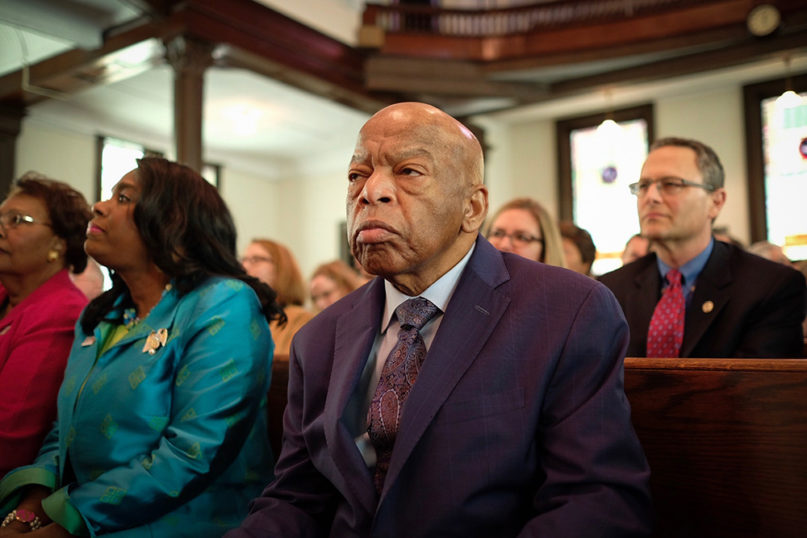
The documentary, presented through a partnership including Magnolia Pictures and CNN Films, traces the journey of Lewis, now 80, from the fields of Alabama to the halls of Congress. The film portrays how Lewis was shaped by his faith and guided by religious leaders such as the Rev. Martin Luther King Jr. and the Rev. James Lawson, two advocates for nonviolent civil rights action.
“Faith is an integral part of Mr. Lewis’ life but also part of his activism,” said Dawn Porter, director of the documentary, who filmed the congressman for more than a year starting shortly before the 2018 election.
Though he is a politician rather than a preacher per se, Lewis considers politics to be his calling, she said.
“He started preaching to chickens and now in many ways even though he’s a layperson he preaches to us,” she said of the man with a seminary degree as well as a bachelor’s degree in religion and philosophy. “That is part of the reason why people find it so motivating and so comforting when he speaks.”
The 96-minute documentary, which is to be released on demand and in select theaters on Friday (July 3), includes what has become Lewis’ mantra in its title.
“My philosophy is very simple,” he says in the film, which is also expected to air on CNN in late September. “When you see something that is not right, not fair, not just, say something. Do something. Get in trouble. Good trouble. Necessary trouble.”
The documentary’s producers have created a “Good Trouble Sunday” promotion for the movie, encouraging houses of worship to host a digital screening starting this Sunday,for which they can keep a portion of ticket sales.
Faith leaders on a mid-June conference call promoting the documentary expressed appreciation for Lewis, who was diagnosed with cancer late last year, and his long service as a role model.
The Rev. Jamal Harrison Bryant, senior pastor of New Birth Missionary Baptist Church outside Atlanta, recalled seeking advice from Lewis in the 1990s, when as the NAACP’s youth director Bryant received pushback for suggesting the civil rights organization reach out to the hip-hop generation.
“He said to me: ‘Jamal, change is never politically correct,’” Bryant recalled. “‘If everybody is in agreement, it’s not that radical.”
In the documentary, Lewis, a member of Atlanta’s historic Ebenezer Baptist Church, recalled his last meal in downtown Washington just before embarking on a trip as a Freedom Rider seeking equal access to accommodations for Black Southerners.
“Growing up in rural Alabama, I never had Chinese food before,” he recalled. “But someone that evening said, ‘You should eat well because this might be like the Last Supper.’”
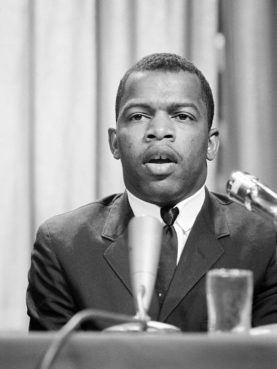
American civil rights activist John Lewis on April 16, 1964. Photo by Marion S. Trikosko/LOC/Creative Commons
Porter said those comments showed how Lewis and other young civil rights activists did not take their work lightly as they prepared for rides on segregated buses or sit-ins at segregated lunch counters.
“You’ll see in the movie that Rev. Jim Lawson, who was coaching and guiding the students, had them rehearse,” she said of Lewis and his fellow activists. “And I do think he decided that life under a segregated system was not the life that he wanted to live.”
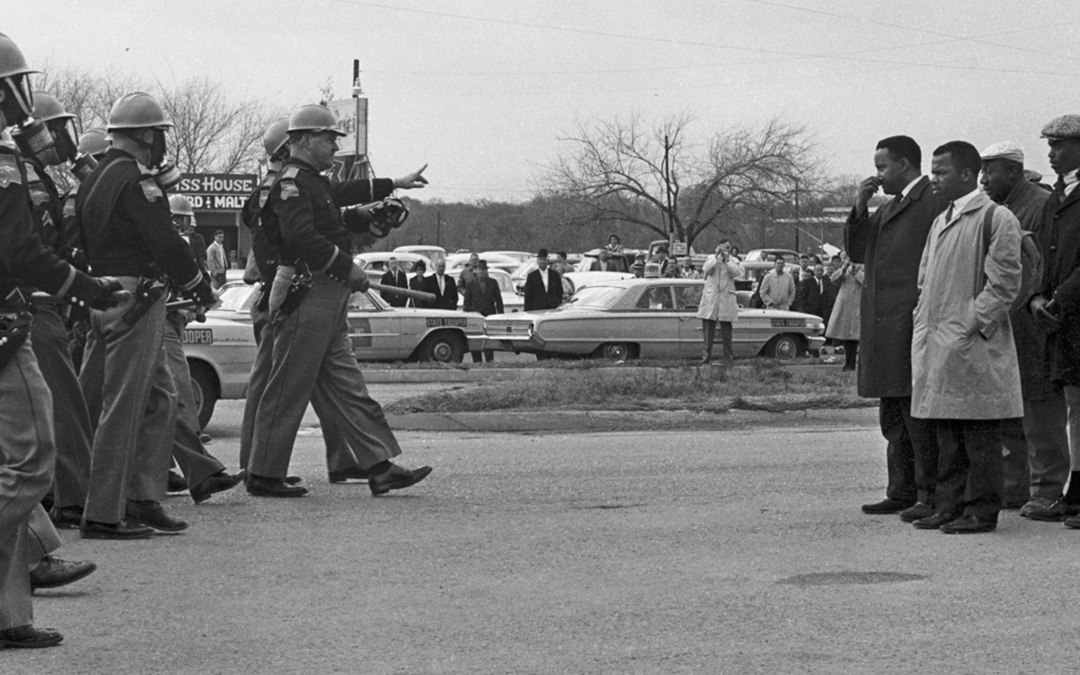
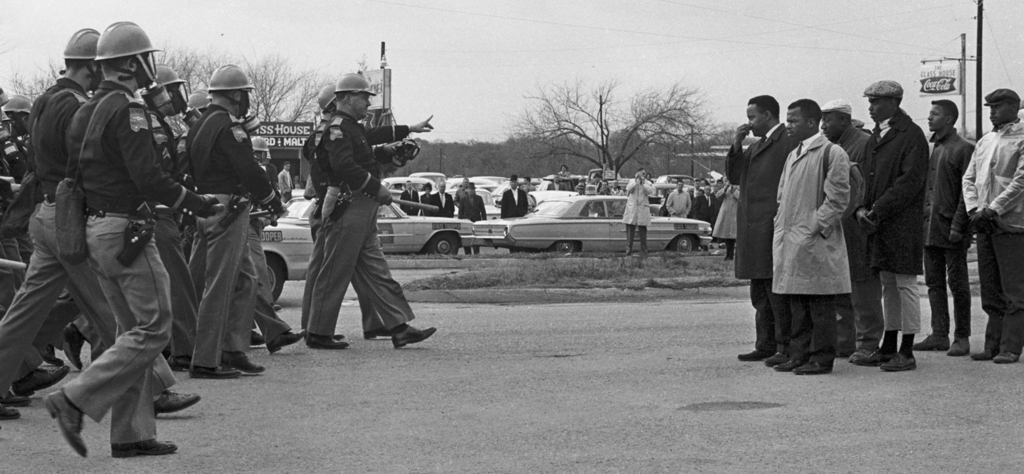
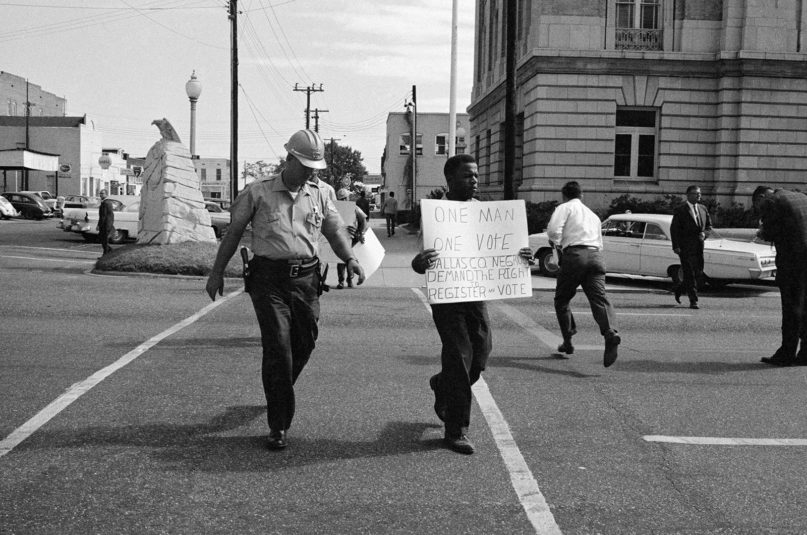
Archival footage — some of which the congressman says he’d never seen before — reviews landmark, as well as lesser-known, moments in Lewis’ history. He was the youngest speaker at the 1963 March on Washington for Jobs and Freedom. On his first attempt on “Bloody Sunday” to cross the Edmund Pettus Bridge in 1965, he was beaten by Alabama state troopers and thought he would die as he protested for voting rights.
The film’s crew followed him as he supported fellow Democrats in the recent election and traveled with a bipartisan group of politicians and faith leaders on the annual pilgrimage to Alabama with the Faith and Politics Institute.
“Congressman Lewis has conveyed to all of us over the course of his lifetime that (the) fundamental right to vote is a foundational right,” said Joan Mooney, CEO of the institute, on the recent conference call. “So more than the transactional act of voting, Congressman Lewis talks about its sacredness, and voter participation in a democracy is the active expression of the values of all human beings.”
Before he was a Democratic congressman and before he was a civil rights activist, Rep. John Lewis preached to the chickens on his family’s farm as a young boy.
It’s a story staffers of Lewis can repeat by heart because they’ve heard it so many times.
“They would bow their heads; they would shake their heads,” he recounts in footage from an appearance at a Houston church in the new documentary “John Lewis: Good Trouble.”
“They never quite said ‘Amen,’ but they tended to listen to me much better than some of my colleagues on the other side listen to me today in the Congress.”
The documentary, presented through a partnership including Magnolia Pictures and CNN Films, traces the journey of Lewis, now 80, from the fields of Alabama to the halls of Congress. The film portrays how Lewis was shaped by his faith and guided by religious leaders such as the Rev. Martin Luther King Jr. and the Rev. James Lawson, two advocates for nonviolent civil rights action.
“Faith is an integral part of Mr. Lewis’ life but also part of his activism,” said Dawn Porter, director of the documentary, who filmed the congressman for more than a year starting shortly before the 2018 election.
Though he is a politician rather than a preacher per se, Lewis considers politics to be his calling, she said.
“He started preaching to chickens and now in many ways even though he’s a layperson he preaches to us,” she said of the man with a seminary degree as well as a bachelor’s degree in religion and philosophy. “That is part of the reason why people find it so motivating and so comforting when he speaks.”
The 96-minute documentary, which is to be released on demand and in select theaters on Friday (July 3), includes what has become Lewis’ mantra in its title.
“My philosophy is very simple,” he says in the film, which is also expected to air on CNN in late September. “When you see something that is not right, not fair, not just, say something. Do something. Get in trouble. Good trouble. Necessary trouble.”
The documentary’s producers have created a “Good Trouble Sunday” promotion for the movie, encouraging houses of worship to host a digital screening starting this Sunday,for which they can keep a portion of ticket sales.
Faith leaders on a mid-June conference call promoting the documentary expressed appreciation for Lewis, who was diagnosed with cancer late last year, and his long service as a role model.
The Rev. Jamal Harrison Bryant, senior pastor of New Birth Missionary Baptist Church outside Atlanta, recalled seeking advice from Lewis in the 1990s, when as the NAACP’s youth director Bryant received pushback for suggesting the civil rights organization reach out to the hip-hop generation.
“He said to me: ‘Jamal, change is never politically correct,’” Bryant recalled. “‘If everybody is in agreement, it’s not that radical.”
In the documentary, Lewis, a member of Atlanta’s historic Ebenezer Baptist Church, recalled his last meal in downtown Washington just before embarking on a trip as a Freedom Rider seeking equal access to accommodations for Black Southerners.
“Growing up in rural Alabama, I never had Chinese food before,” he recalled. “But someone that evening said, ‘You should eat well because this might be like the Last Supper.’”
American civil rights activist John Lewis on April 16, 1964. Photo by Marion S. Trikosko/LOC/Creative Commons
Porter said those comments showed how Lewis and other young civil rights activists did not take their work lightly as they prepared for rides on segregated buses or sit-ins at segregated lunch counters.
“You’ll see in the movie that Rev. Jim Lawson, who was coaching and guiding the students, had them rehearse,” she said of Lewis and his fellow activists. “And I do think he decided that life under a segregated system was not the life that he wanted to live.”
Archival footage — some of which the congressman says he’d never seen before — reviews landmark, as well as lesser-known, moments in Lewis’ history. He was the youngest speaker at the 1963 March on Washington for Jobs and Freedom. On his first attempt on “Bloody Sunday” to cross the Edmund Pettus Bridge in 1965, he was beaten by Alabama state troopers and thought he would die as he protested for voting rights.
The film’s crew followed him as he supported fellow Democrats in the recent election and traveled with a bipartisan group of politicians and faith leaders on the annual pilgrimage to Alabama with the Faith and Politics Institute.
“Congressman Lewis has conveyed to all of us over the course of his lifetime that (the) fundamental right to vote is a foundational right,” said Joan Mooney, CEO of the institute, on the recent conference call. “So more than the transactional act of voting, Congressman Lewis talks about its sacredness, and voter participation in a democracy is the active expression of the values of all human beings.”
The innocence of the question did nothing to prevent me from being flabbergasted. As I stared into the almost cartoon-sized blue eyes of this 4-year-old boy, compassion filled my heart. I simply smiled and replied, “Why yes, of course!”
He nodded in understanding and continued playing with the toys that had previously occupied his attention. As I sat there watching his imagination create a world only he would understand, I wondered if this moment would be as memorable for him as I was sure it would be for me.
There’s a temptation to somehow prove my humanity, to validate my existence; especially because I live in a society that labels me a minority. The definition of “minority” is “a racial, ethnic, religious, or social subdivision of a society that is subordinate to the dominant group in political, financial, or social power without regard to the size of these groups.”
My nation, my homeland, defines me as a racial subordinate to the dominant group. It’s a label that follows me every time I check “Black/African-American” on any document. It’s a label that follows me any time I walk into a room and I’m the only one there who looks like me. I have a pre-disposition to believe that I am less than because it is what I’ve been told since I was born. It’s even printed on my birth certificate.
In indignation, I wear my hair natural. I comb through hundreds of photos on Instagram that have the “#BlackGirlMagic” marker. I recite Maya Angelou’s “Phenomenal Woman” at any given opportunity. I go out of my way to compliment any black woman I meet.
I vote knowing what it cost my ancestors to grant me this right. I fight to prove that no quantifiable data could box me in and keep me from living the life I want to live.
It’s funny, all of that effort did nothing to quiet the comparison or stop the Caucasian woman from accosting me and my little cousins. It did nothing to abate the voice in my head that hurls insults every time I’m in front of a mirror. The only thing that has proven strong enough to rectify my identity is the Word of God.
I am black. I am a woman. I am southern. I am a millennial. I can come up with lots of ways to identify myself. I can make a list of a thousand superlatives. However, anything I fathom about who I am does not compare to who I am in Christ.
Society has a lot to say about who we are. In fact, we have a lot to say, ourselves, about who we are, and a lot of times we are better than anyone at putting ourselves down. Is it possible that when we say “yes” to Jesus, when we surrender our lives to Him, in doing so, we subject our idea of identity to Him as well? Identity then becomes more than a list of quantifiers.
If the Word of God created the world and all we see, how much more powerful then would it be to believe His words about us? We are children of the Most High God. We are His handiwork. In the same way He created the earth, He fashioned us together in our mothers’ womb. We are fearfully and wonderfully made. We, the children of God, are His royal priesthood. We are the head and not the tail. We have every spiritual blessing made available to us through Christ. We are chosen.
We aren’t beautiful because of, or in spite of, being black. We are beautiful because we were created by Beauty Himself. My skin color becomes more than a sign of my socio-economic status; it is part of the hand-picked design as imagined by my Creator. We aren’t worthy because our society calls us worthy, but because Jesus thought us worthy enough to die for.
Our choice is this: To live subjected to societal labels or to allow this new identity to supersede what we once believed. My faith then doesn’t just inform my identity. It becomes the lens through which I’m even able to see who I really am. It doesn’t stop there.
When we are able to see ourselves through this lens, we are empowered, nay obligated, to see others the same way. It transforms a “me against the world” ideology into an understanding that it is “us under God.” The need for validation becomes obsolete and pure confidence flourishes as the love of Christ permeates the entirety of our beings.
A column by Dr. Minnie Claiborn, Ph.D., a licensed counselor, life coach and author.
There are seven basic areas wherein all human challenges lie. One of these is our relationship with self. We form many of our opinions of ourselves based on what others around us say to us and about us, or how we interpret what they say and do.
In some respects, we do come into the world with a “blank slate” and we write on it based on how we are treated. Some of us encounter rejection, abuse, abandonment, and many other hurtful experiences from our primary families or caregivers when we are young. From these experiences, which may be accompanied by ugly words, we often form unhealthy opinions of ourselves.
I had a young woman client once who in her mind and experience did not fit the societal standard of beauty. When she told me that she had been raped, she asked with incredulity, “Why would anyone rape me?” Her opinion of herself was so low, she felt so unattractive, that she was amazed that even a rapist would want her.
On the other hand, I observed a young lady whose body shape and physical features also did not meet the society standard of beauty, yet she exuded self-confidence. I discovered that she was a daddy’s girl, had a loving, doting mother and had married a man who also adored her.
Many young men who were not affirmed by their fathers suffer from a sense of insecurity, fear, rejection, lack of self-identity and a lack of belonging. Other people contributed to our being broken, but God can heal us (Luke 4:18). We can’t go back and change what was said or done to us or about us, but with new information and truth, we can change how if affects us.
Truth trumps facts. Divine truth (truth from God’s perspective) is greater than the facts of our experiences and thoughts. If you were not told that you are beautiful, or handsome or valuable by anyone else, know that God made you and He thinks you’re all of that (Psalm 139).
How do you change a wrong or bad opinion of yourself? Put God’s Word in your mouth and speak it to yourself out loud. A good place to start is by saying, “God loves me.” The entire Bible bears witness to that truth. I have witnessed the power of Scripture-based affirmations. An affirmation simply means that you affirm and agree with what is being said. Here is an affirmation that you can use every day that will help you to begin to have a winning relationship with yourself. You might know it in your head, but you need to SAY it over and over so that your subconscious will receive truth and your conscious thoughts and behaviors will begin to change. God told young Joshua to meditate on His word day and night and he (Joshua) would have prosperity and good success (Joshua 1:8). I suggest that you say this out loud at least five times per day until you know in your soul that it is true.
AFFIRMATION: God loves me. God accepts me. I love and accept myself. I invite God to change the things that do not please Him and things that are detrimental to me.