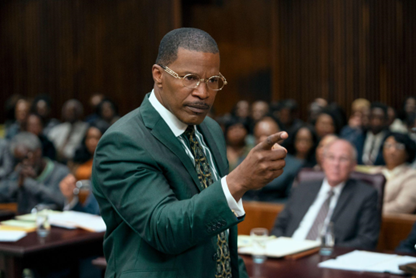
The Burial is a film inspired by the real life story of black Attorney Willie Gary known as “The Giant Killer” who takes the unexpected contract case of a white funeral home owner named Jeremiah O’Keefe in southern Mississippi. Mr. Gary is one of the most successful trial attorneys in American history who has won lawsuits against multibillion dollar corporations to protect and get justice for his clients. The inspiring story is filled with comedy and drama as what begins as a case about deal gone bad begins to expose corruption, injustice, and power that would change both men’s lives. Academy Award winner Jamie Foxx plays Willie Gary who alongside Academy Award winner Tommy Lee Jones and Jurnee Smollett deliver truly amazing performances. UrbanFaith sat down with Willie Gary, the man behind the legend to talk about the film and his hopes to inspire others. The full interview is above. The film is rated R for language, but it is a movie I will be fine watching with my kids. There is use of the n word in context which likely contributes to the rating, but this film is a cinematic take on important black history and American history. The film is in select theaters now and on Amazon Prime Video October 13!
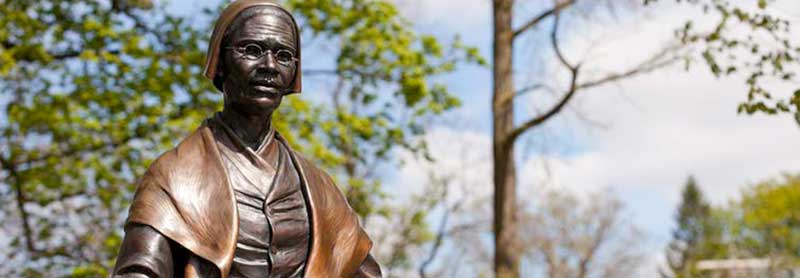
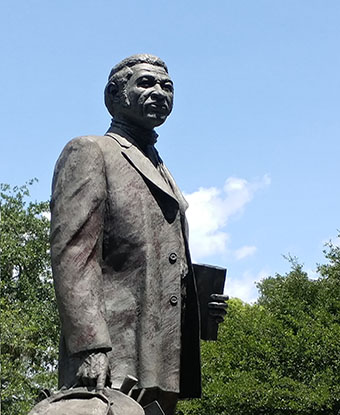
Sojourner Truth Memorial in Florence, Massachusetts. Lynne Graves, CC BY-ND
Each semester I greet the students who file into my preaching class at Howard University with a standard talk. The talk is not an overview of the basics – techniques of sermon preparation or sermon delivery, as one might expect. Outlining the basics is not particularly difficult.
The greatest challenge, in fact, is helping learners to stretch their theology: namely, how they perceive who God is and convey what God is like in their sermons. This becomes particularly important for African-American preachers, especially African-American women preachers, because most come from church contexts that overuse exclusively masculine language for God and humanity.
African-American women comprise more than 70 percent of the active membership of generally any African-American congregation one might attend today. According to one Pew study, African-American women are among the most religiously committed of the Protestant demographic – eight in 10 say that religion is important to them.
Yet, America’s Christian pulpits, especially African-American pulpits, remain male-dominated spaces. Still today, eyebrows raise, churches split, pews empty and recommendation letters get lost at a woman’s mention that God has called her to preach.
The deciding factor for women desiring to pastor and be accorded respect equal to their male counterparts generally whittles down to one question: Can she preach?
The fact is that African-American women have preached, formed congregations and confronted many racial injustices since the slavery era.
Here’s the history
The earliest black female preacher was a Methodist woman simply known as Elizabeth. She held her first prayer meeting in Baltimore in 1808 and preached for about 50 years before retiring to Philadelphia to live among the Quakers.
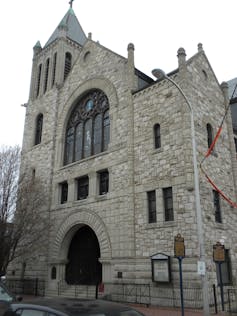
First African-American church, founded by Rev. Richard Allen. D Smith, CC BY-NC
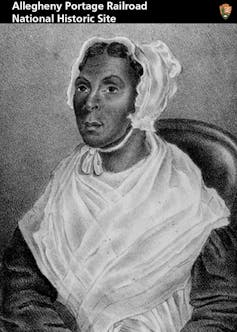
An unbroken legacy of African-American women preachers persisted even long after Elizabeth. Reverend Jarena Lee became the first African-American woman to preach at the African Methodist Episcopal (AME) Church. She had started even before the church was officially formed in the city of Philadelphia in 1816. But, she faced considerable opposition.
AME Bishop Richard Allen, who founded the AME Church, had initially refused Lee’s request to preach. It was only upon hearing her speak, presumably, from the floor, during a worship service, that he permitted her to give a sermon.
Lee reported that Bishop Allen, “rose up in the assembly, and related that [she] had called upon him eight years before, asking to be permitted to preach, and that he had put [her] off; but that he now as much believed that [she] was called to that work, as any of the preachers present.
Lee was much like her Colonial-era contemporary, the famed women’s rights activist Sojourner Truth. Truth had escaped John Dumont’s slave plantation in 1828 and landed in New York City, where she became an itinerant preacher active in the abolition and woman’s suffrage movements.
Fighting the gender narratives
For centuries now, the Holy Bible has been used to suppress women’s voices. These early female black preachers reinterpreted the Bible to liberate women.
In a skillful historical interpretation of the scriptures, in her convention address, Truth used the Bible to liberate and set the record straight about women’s rights. She professed:
“Then that little man in black there, he says women can’t have as much rights as men, because Christ wasn’t a woman! Where did your Christ come from? From God and a woman! Man had nothing to do with Him.”
Like Truth, Jarena Lee spoke truth to power and paved the way for other mid- to late 19th-century black female preachers to achieve validation as pulpit leaders, although neither she nor Truth received official clerical appointments.
The first woman to achieve this validation was Julia A. J. Foote. In 1884, she became the first woman ordained a deacon in the African Methodist Episcopal Zion AMEZ Church. Shortly after followed the ordinations of AME evangelist Harriet A. Baker, who in 1889 was perhaps the first black woman to receive a pastoral appointment. Mary J. Small became the first woman to achieve “elder ordination” status, which permitted her to preach, teach and administer the sacraments and Holy Communion.
Historian Bettye Collier-Thomas maintains that the goal for most black women seeking ordination in the late 19th and early 20th centuries was simply a matter of gender inclusion, not necessarily pursuing the need to transform the patriarchal church.
Preaching justice
An important voice was that of Rev. Florence Spearing Randolph. In her role as reformer, suffragist, evangelist and pastor, she daringly advanced the cause of freedom and justice within the churches she served and even beyond during the period of the Great Migration of 20th century.
In her sermons she brought criticism to the broken promises of American democracy, the deceptive ideology of black inferiority and other chronic injustices.
Randolph’s sermon “If I Were White,” preached on Race Relations Sunday, Feb. 1, 1941, reminded her listeners of their self-worth. It emphasized that America’s whites who claim to be defending democracy in wartime have an obligation to all American citizens.
Randolph spoke in concrete language. She argued that the refusal of whites to act justly toward blacks, domestically and abroad, embraced sin rather than Christ. That, she said, revealed a realistic picture of America’s race problem.
She also spoke about gender discrimination. Randolph’s carefully crafted sermon in 1909 “Antipathy to Women Preachers,” for example, highlights several heroic women in the Bible. From her interpretation of their scriptural legacy, she argued that gender discrimination in Christian pulpits illustrated a misreading of scripture.
Randolph used her position as preacher to effect social change. She was a member and organizer for the Woman’s Christian Temperance Union (WCTU), which led in the work to pass the 18th Amendment, which made prohibition of the production, sale and transport of alcoholic beverages illegal in the United States. Her affiliation with the WCTU earned her the title “militant herald of temperance and righteousness.”
Today, several respected African-American women preachers and teachers of preachers proudly stand on Lee’s, Small’s and Randolph’s shoulders raising their prophetic voices.
As Black History Month commences, here are a few must-have books from Black authors, spanning time periods, themes and genres. However, one thing they have in common is critical acclaim and a strong command of tackling the Black experience with grace, courage, originality, and historical context, making them essential reads during Black History Month and throughout the year.
1. Invisible Man by Ralph Ellison
Ralph Ellison’s masterpiece novel is frequently included on the list of must-read American books by one of the most prolific Black authors. The story follows an African American man whose color renders him invisible. It’s a groundbreaking take on a racially polarized society and the struggle to find oneself through it all.
2. Home by Toni Morrison
The 2012 novel by Morrison tells the story of a 20-something Korean War veteran and his journey home from an integrated army to a segregated society. The book was named one of the best novels of 2012 for its careful consideration of mental illness, race relations, family, history, and the concept of home.
3. How to Be Black by Baratunde Thurston
Baratunde Thurston, a longtime writer for The Onion, serves up laughs with this collection of comical essays, such as “How to Speak for All Black People” and “How To Celebrate Black History Month.” Thurston covers social interactions and media portrayals with an insightful and satirical perspective.
4. God’s Trombones: Seven Negro Sermons in Verse by James Weldon Johnson
James Weldon Johnson, creator of the Black National Anthem “Lift Ev’ry Voice and Sing,” first published God’s Trombones in 1927 as a book of poems. The poems take on the structure of a traditional sermon and tell several different parables and Bible stories, some of which specifically focus on the African American story. Dr. Cornel West and Henry Louis Gates have called this collection one of Johnson’s most notable works.
5. The Beautiful Struggle: A Memoir by Ta-Nehisi Coates
From the best-selling author comes a poignant tale of life and race in the inner city. Coates explains how his father worked for his sons to obtain a free education and escape Baltimore’s drug culture. This inspiring book tells a powerful narrative about community and honoring your history across generations.
6. Citizen: An American Lyric by Claudia Rankine
Citizenis an award-winning collection of literature blurring the lines between poetry and criticism. Divided into seven chapters, it provides a powerful meditation on race that creates a lyrical portrait of our current social and political climate. Hailed as “a dazzling expression of the painful double consciousness of Black life in America,” according to the Washington Post. Citizen is said to feel like an “eavesdropping on America.”
7. Malcolm X: A Life of Reinvention by Manning Marable
You may think you know Malcolm X, but you’ve never read anything like Marable’s highly-regarded biography, which provides new perspectives and information on the controversial leader. Marable connects Malcolm’s life with other leaders, faith, and Black Nationalism in a masterful, historical context and call for social change.
8. Sag Harbor by Colson Whitehead
In this novel, an African American teenager spends a summer with his brother in 1985 Sag Harbor. The work is more personal than most of Whitehead’s books and explores race, class, and commercial culture in light of a newer generation of Black Americans who are less marked by their color.
9. The Warmth of Other Suns: The Epic Story of America’s Great Migration by Isabel Wilkerson
In a classic tale, Wilkerson chronicles the journey of three African Americans who took part in the massive movement from the South to the North, Midwest, and West that millions of Black families took in the 20th century. The Warmth of Other Suns is an acclaimed historical account that studies a definitive period in American history.
10. Selected Poems of Langston Hughes by Langston Hughes
This extensive collection of poems was hand-picked by Hughes, himself, prior to his death in 1967 and span his entire career. They offer a breathtaking look at being Black in America that is contemplative, celebratory, gut-wrenching and praiseworthy. From “The Negro Speaks of Rivers” and “The Weary Blues,” to “Still Here” and “Refugee in America,” this collection directs us to fight, believe, dream, and claim our self-worth.
11. Warriors Don’t Cry by Melba Pattillo Beals
In this riveting memoir, Beals recounts her time on the front lines of school desegregation as a member of the Little Rock Nine – the group of African-American students who famously integrated Arkansas’ Central High School. Her account of the harrowing experiences that forged her courage will stick with you long after the last page.
More than 100 years later, Woodson’s goal and his work detailing the struggle of Black Americans to obtain full citizenship after centuries of systemic racism is still relevant today.
As dozens of GOP-controlled state legislatures across the U.S. have either considered or enacted laws restricting how race is taught in public schools, The Conversation U.S. has published numerous stories over the years exploring the rich terrain of Black history – and the never-ending quest to form what the Founding Fathers called a more perfect union.
1. From the Underground Railroad to Civil War battlefields
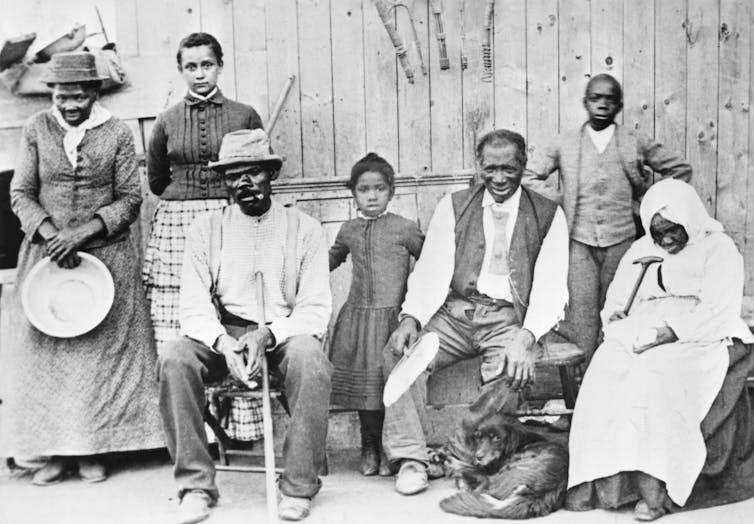
Armed with a deep faith, Harriet Tubman is most famous for her successes along the Underground Railroad, the interracial network of abolitionists who enabled Black people to escape from slavery along secret routes in the South to freedom in the North and Canada.
Harriet Tubman, far left, poses with her family, friends and neighbors near her barn in Auburn, N.Y., in the mid-to-late 1880s.Bettmann/Getty Images
But Tubman’s activities as a Civil War spy are less well known.
As historian and Tubman biographer Kate Clifford Larson wrote, Tubman’s devotion to America’s promise of freedom endured, despite suffering decades of enslavement and second-class citizenship.
“I had reasoned this out in my mind,” Tubman once said. “There was one of two things I had a right to, liberty or death. If I could not have one, I would have the other; for no man should take me alive.”
“Emancipations did not remove all the shackles that prevented Black people from obtaining full citizenship rights,” Manjapra noted. “Nor did emancipations prevent states from enacting their own laws that prohibited Black people from voting or living in white neighborhoods.”
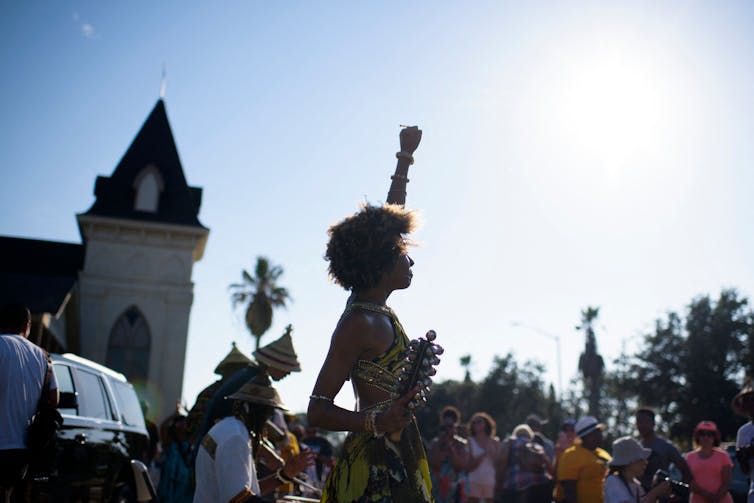
Between the 1780s and 1930s, over 80 emancipations from slavery occurred, from Pennsylvania in 1780 to Sierra Leone in 1936.
A Black woman raises her fist in the air during a Juneteenth reenactment celebration in Galveston, Texas, on June 19, 2021.Mark Felix /AFP/Getty Images
In fact, there were 20 separate emancipations in the United States alone from 1780 to 1865.
3. An image of a lynching found in a family photo album
As director of the Lynching in Texas project, historian Jeffrey L. Littlejohn
provided the very kind of analysis that Texas Gov. Greg Abbott and Republican legislators in Texas want to ban from public schools.
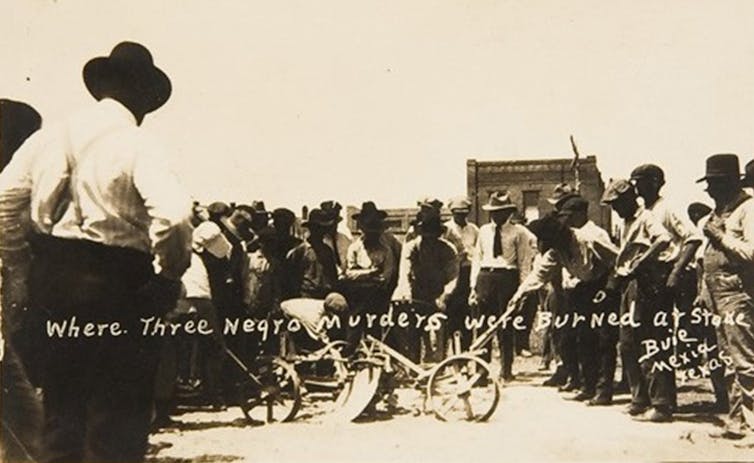
Scene of the burnings of Johnny Cornish, Mose Jones and Snap Curry in Kirvin, Texas, on May 6, 1922.Jeff Littlejohn
Among the many documents and relics Littlejohn has received, one package stood out. Inside was a family album of photographs filled with the usual images of memories – a vacation, a wedding anniversary dinner – but also, one of the lynching of a Black man.
But in 2021, the GOP-controlled state Legislature in Texas enacted a law prohibiting K-12 educators from teaching that “slavery and racism are anything other than deviations from … the authentic founding principles of the United States, which include liberty and equality.”
In other words, as Littlejohn wrote, “this interpretation holds that slavery, racism and racism’s deadly manifestation, lynching, did not serve as systemic forces that shaped Texas history but were instead aberrations.”
The photo album serves as a direct challenge to that interpretation.
4. Black soldiers fight racism and Nazis during World War II
In his book “Half American: The Epic Story of African Americans Fighting World War II at Home and Abroad,” historian Matthew Delmont explored the idea of Black patriotism and how many Black soldiers saw their service as a way to demonstrate the capabilities of their race.
Prompted by the Pittsburgh Courier, an influential Black newspaper during the 1940s, Delmont wrote that Black Americans rallied behind the Double V campaign during the war – victory over fascism abroad and victory over racism at home.
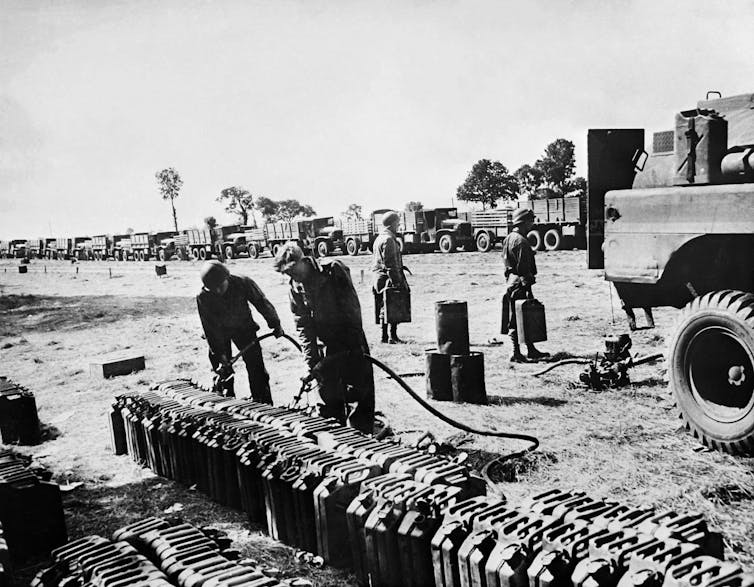
In this October 1944 photograph, Black soldiers are filling up gasoline tanks for the Red Ball Express.AFP via Getty Images
During the war, the Red Ball Express, the Allied forces’ transportation unit that delivered supplies to the front lines, was one example of such exceptional performance.
From August through November 1944, the mostly Black force moved more than 400,000 tons of ammunition, gasoline, medical supplies and rations to battlefronts in France, Belgium and Germany.
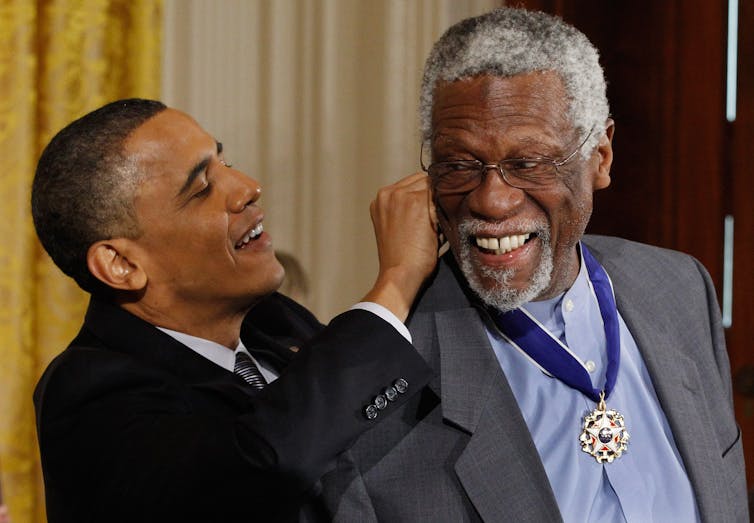
5. An NBA champion’s cerebral fight for equal rights
In his biography of Bill Russell, “King of the Court,” Aram Goudsouzian wrote that the NBA champion sought to find worth in basketball amid the racial tumult of the civil rights movement.
He emerged from that crucible by crafting a persona that one teammate called “a kingly arrogance.”
Russell, who died July, 31, 2022, was the NBA’s first Black superstar, its first Black champion and its first Black coach.
As a civil rights activist, Russell questioned the nonviolence philosophy of Martin Luther King Jr. and defended the militant ideas of Malcolm X and the Nation of Islam. He refused to accept segregated accommodations in the Deep South and recalled instances of police brutality during his childhood in Oakland, California.
“It’s a thing you want to scream,” Russell wrote. “I MUST HAVE MY MANHOOD.”
Editor’s note: This story is a roundup of articles from The Conversation’s archives.
Every Black History Month we see a million memes, quotes, and images of Black people who have played an important role in shaping the story and lives of black people in America. We have heard about Martin Luther King Jr., Harriett Tubman, Frederick Douglass, and Rosa Parks more times than we can count. If we’ve grown up with good black history education which is rare in these yet to be United States of America, then we might know Booker T. Washington or Maya Angelou. We know there is an active attempt to publicly whitewash black history as though the systemic destruction, repression, and marginalization of our history wasn’t enough. As a result it becomes more important than ever to teach and tell Black History.
But in an attempt to reclaim our history, let us not forget the key role faith played in the lives of so many of our black leaders. There is a reason why belief in God and practice of faith were so key in the lives of many (but not all) people we talk about during Black History Month. So let’s lift up the faith of our black heroines and heroes this month as we continue to live out our own faith. Below are just some notable examples of historical moments and key black leaders who were influenced by their faith.
Denmark Vesey
Denmark Vesey was an abolitionist and former slave who planned and organized an armed slave rebellion to free the slaves in Charleston, SC. Charleston was the largest slave trading port in the United States during the early 1800s. He was the slave of a ship captain who won the lottery and paid for his own freedom with his earnings, but was not able to pay for his family’s freedom. As a result he became intent on ending the institution of slavery itself. Vesey was a worshipper and small group teacher at the African Church which became Mother Emmanuel AME Church, and his faith informed his advocacy for abolition.
He was inspired by the Haitian revolution and planned to flee to Haiti with the freed slaves after the rebellion. He inspired other abolitionists such as Frederick Douglass, David Walker, and Harriet Beecher Stowe. It is well noted that the abolition of slavery was a result of the work of Christian abolitionists.
The Christianity of Vesey and David Walker after him did not advocate for passive waiting to slavery to end. As he read Isaiah, Amos, and especially Exodus he were convinced that armed rebellion could be used by God to bring freedom to enslaved Africans. He began to preach a radical liberation theology from the Old Testament almost exclusively as he prepared for rebellion. Denmark Vesey resurfaced as a popular figure in recent years in the aftermath of the horrendous shooting at Mother Emmanuel AME Church in 2016.
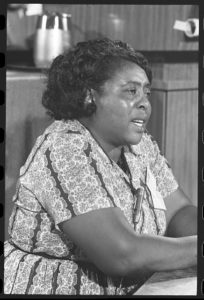
Fannie Lou Hamer
Fannie Lou Hamer was the founder and vice-chairperson of the Mississippi Freedom Democratic Party, which successfully unseated the all-white Mississippi delegation at the Democratic Party’s convention in 1968. This and other efforts earned her the title “First Lady of Civil Rights.”
In 1962, Fannie Lou became involved with the Civil Rights Movement when the Southern Christian Leadership Conference and the Student Nonviolent Coordinating Committee held a meeting in Ruleville, Mississippi. She and 17 others went to the county courthouse and tried to register to vote. Because they were African American, they were given an impossible registration test which they all failed. Fannie Lou’s life became a living hell. She was threatened, shot at, cursed and abused by angry mobs of white men including being beat almost to death by the police and imprisoned in Mississippi in 1963 for registering to vote.
Fannie Lou Hamer often sang spirituals at rallies, protests, and even in jail. Her faith in God is what she felt carried her through those difficult experiences. She quoted the Bible to shame her oppressors, encourage her followers, and hold her ministerial colleagues in the SCLC and SNCC accountable. She was a devout member of William Chapel Missionary Baptist Church, and let her faith permeate everything she did.
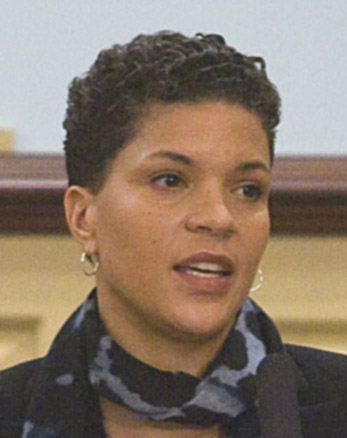
Michelle Alexander
Michelle Alexander, JD is a civil rights lawyer and advocate, a legal scholar and the author of the New York Times best seller “The New Jim Crow: Mass Incarceration in the Age of Colorblindness.” The book helped to start a national debate about the crisis of mass incarceration in the United States and inspired racial-justice organizing and advocacy efforts nationwide.
Alexander performed extensive research on mass incarceration, racism in law and public policy, and racial justice to write her book published in 2010. She has lectured and taught widely on her work as a professor of law and religion at Stanford University, The Ohio State University, and Union Theological Seminary. The New Jim Crow became a foundational text for many of the reforms being advocate for by various organizations involved in the recent push for criminal justice reform and the movement for black lives.
Alexander was driven by her faith to advocate for justice system reforms, believing that God called her to it and seeing it as her reasonable service. Her faith drives her advocacy for justice for the marginalized, care and compassion for all people, and teaching. She feels as though her work in law and faith are inextricably linked, and that people of faith are poised to serve one of the most important roles in changing the system. She is currently a visiting professor at Union Theological Seminary in New York exploring the spiritual and ethical dimensions of the fight against mass incarceration.

 Today, several respected African-American women preachers and teachers of preachers proudly stand on Lee’s, Small’s and Randolph’s shoulders raising their prophetic voices.



 Denmark Vesey
 Fannie Lou Hamer
 Michelle Alexander