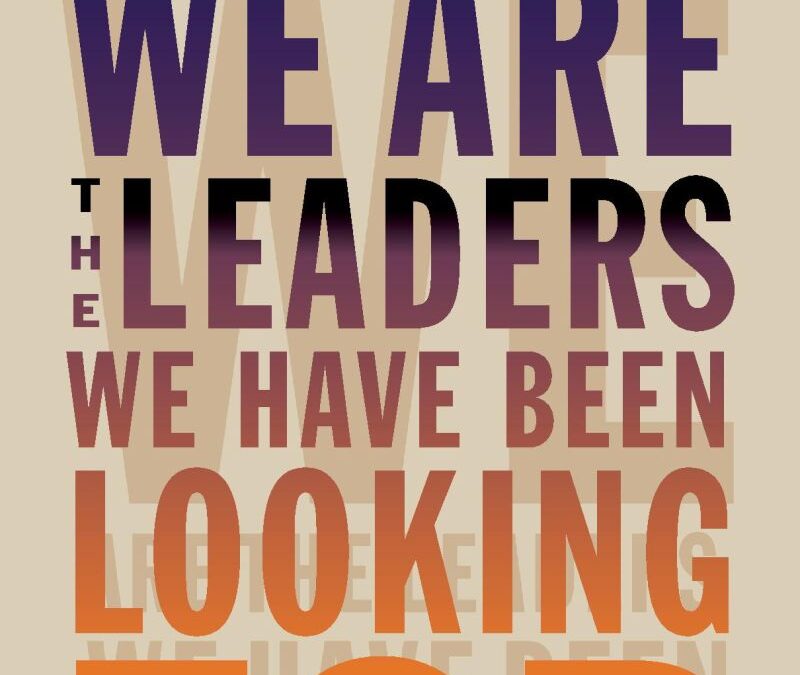
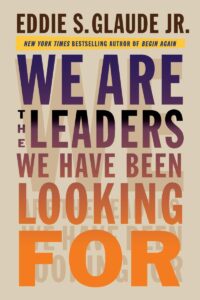
Man, one of my favorite authors, I mean, I just want to be blunt with you. Every time I see you on Meet the Press, Eddie, I’m always like, he is dead on about something. I don’t know where it comes from. So where were you when you said to yourself, “Self, I need to write a book [like] We Are The Leaders that We’ve been Looking For?”
Dr. Glaude
You know, this book is based on a set of lectures I delivered like in 2011. And I was so angry at that moment. Everybody was excited about the Obama presidency. And I was angry in some ways, doc, that people were reading Obama’s presidency as the fulfillment of the black freedom struggle. That that’s what the object of all that sacrifice was for, was to get a black man in the White House. And I just thought, that’s not true. What happened to love, what happened to justice, what happened to the moral dimension of the movement? I wanted to think through that. I wanted to figure out what were we relinquishing, what were we giving up in that moment. And then fast forward, all these years later, I returned to those lectures. And I returned to them because in some ways I had lost my footing. I was trying to figure things out because COVID had disrupted so much, I had lost two partners. I felt like I was unmoored, untethered as it were. And I knew these lectures were a moment when I was trying to usher in a new way of being for myself, a new way of thinking for myself, a new way of writing for myself. So I wanted to go back to that moment. And lo and behold, I saw what I was trying to do differently. So all of this happened in the summer of 2023. And I got to work. And then I submitted the manuscript to the editor at Harvard University Press and they were like, OMG, let’s get this out as soon as we can.
Maina
What would you say to people who feel the disillusionment of people who are going, “I don’t want to be the leader?”
Dr. Glaude
I think part of what I’m trying to argue is that when we outsource our responsibility for the house [of this country], when we say, well, I don’t want to pay the mortgage then we know what’s going to happen. And so we cannot outsource our responsibility for democracy any longer to so called prophets, to so called heroes, to politicians. We have to understand this is where Ella Baker, Miss Baker, is so important that we are our salvation in this instanc. Of course, that that doesn’t disregard one’s faith claims, but it’s what we do.And there’s a somewhat cliche at the heart of the book. And that is that if we are the leaders we’ve been looking for, then we got to become better people. We got to reach for higher forms of excellence. James Baldwin used to put it this way, the messiness of the world is often a reflection of the messiness of our interior lives. So if we don’t begin to do that hard work on becoming better people, then we can’t be the source of significant change. But I also should say this, doing the hard work of becoming a better human being must take place alongside of [and] within our ongoing effort to make a more just world. Because the world as it currently is organized gets in the way of us becoming better people. It’s almost like you’re rewarded to be selfish, you’re rewarded to be greedy, you’re rewarded to be mean spirited, you’re rewarded to be self-regarded. You’re not rewarded if you’re other regarded, if you’re not regarded if you have an I, thou relationship [with others as non-objects], you’re not regarded if you’re committed to justice, if you’re committed to the least of these, you see what I mean? If you’re maladjusted to an unjust world, you’re not rewarded. So we got to do the hard work of self-cultivation in pursuit of a more just world. That’s the heart of the book.
Maina
Which one of these people did you fall in love with the most? You’re taking some of the very, very best and you’re dropping them right in front of us and there are nuggets right in front of us. Which one did you go, “I am more in line with this leader.”
Dr. Glaude
It depends on what age you ask me. So when I was a young kid growing up in Mississippi, Dr. King meant everything. I remember checking out the album, show you how old I am. It was the vinyl of Dr. King’s “I Have a Dream” speech. It was the March on Washington. And I remember stopping it and learning it by memory from Mrs. Mitchell’s eighth grade history class. And Dr. King was so important to how I imagined myself. When I got to Morehouse, you’re baptized in King’s thought. You got the statue of him looking at you. And so King was so important for me at a young age. But then when I got to Morehouse, Malcolm became my guy. And I have my goatee to this day. I will never cut it off as kind of testimony from my first conversion experience, reading The Autobiography of Malcolm X. So here I am excited to be at King’s Alma Mater and my freshman year, this guy walks up to me and said, “You’re like a hand without a thumb. You don’t know who you are.” And he gave me Malcolm X’s autobiography. And I read it that night. And I found the language for my father’s anger. I found the language for how to imagine myself as a man, given the fact that I was so afraid because my father scared me to death. Malcolm became this hero of mine that I cut my political teeth on. And now here I am in my fifties. And Miss Baker is all up in me. It’s a more mature voice, I suppose, but we wouldn’t have a black freedom struggle of the 20th century if it wasn’t for her. And the way in which she has that wonderful line, “A strong people doesn’t need a strong leader.” And I said this once, I was speaking, I think it was in Chicago. I was like, “What happens when you have fans in the pews and a celebrity in the pulpit?” The church is dead. It’s done. I think we’re seeing a lot of that right now. What happens when you outsource your faith journey to someone else? And so part of what I’ve been trying to do is to live Miss Baker’s edict. Because the title of the book comes from her. We are the leaders we have been looking for. She says, “We have to convince people that their salvation is in their hands.” What we choose to do. Not what the preacher chooses to do, not what the politician chooses to do. So not what Malcolm inspired me to do, not what King leads me to do, but what’s coming from inside of my heart in light of the exemplars of excellence and love that inform and shape my own voice as I understand it. And that’s what I’m writing towards in the book.
Maina
You keep talking to me. So last question. Sure. Your spiritual faith journey, did that come into play in this book at all?
Dr. Glaude
It’s at work in all of my texts. To be honest with you, it’s me trying to understand what does it what does it mean to be decent and loving? What does it mean to exemplify the ministry of Jesus without it being overlaid with dogma and an institutional constraint. So when I call for a coalition of the decent, animated by the power of love, that is the exacting power of love. That is that is at the heart of my religious Christian witness, as it were. And there’s a moment in the book near the end where I’m going to invoke Jimmy Baldwin again. He has this extraordinary essay that is published after his after his death is entitled “To Crush A Serpent.” And in this in this essay, he is relentless in his critique of the Fallwells and the moral majority and the like. But he talks about what salvation involves, what it entails. And it’s an echo of an earlier essay, a talk that he gave at Kalamazoo in 1961, entitled “In Search For A Majority.” And he says salvation is found in effect in “the going towards.” Salvation is found in the going towards in some ways. And I want to suggest that salvation is found in the going towards and love is its carriage. So the short answer to the question is, is yes, me trying to figure all of this out, indebted to the Christian tradition, but not limited by it. Those lectures produced an uncommon faith. So the short answer is yes, all my books are or attempts to make sense of this complex journey that I’m making in terms of my faith.
The full interview is above. Excerpts from the interview are below. Dr. Wilkes book Plenty Good Room is available for purchase here.
Allen
We have the Reverend Dr. Andrew Wilkes talking about his book today Plenty Good Room. He has written for us in the past many years ago as an intern, but now continuing his work as a political scientist, social thinker, and a pastor.
Dr. Andrew Wilkes
It’s good to see you, Allen, a joy to be in conversation, deep appreciation for Urban Faith and of course for the wider work beginning in the 70s of knowing Black folk need Black authored materials for Christian Education that are culturally relevant that you and I has been doing all down through the years.
Allen
Why did you feel like you wanted to write this and get your thoughts out in Plenty Good Room?
Dr. Andrew Wilkes
Yeah, really appreciate the question. Plenty Good Room, as I note in the preface, is part argument, part appeal, part prayer. And it’s something that I’ve been pulling together for the last 10 years or so, went through research and other means that I noted that so much of our approach to economics is still grounded on a mental model, a planning model of scarcity and austerity, rather than a beginning operating assumption of sufficiency and abundance. And so the prayer, the appeal, the argument is that if we’re in a moment where, let’s take America for instance, where we have gross domestic product of some $26 trillion, whatever we have, it’s not scarcity and it’s not austerity. We’re in a place where we have to think through the public choices and the public priorities that we make. And so Plenty Good Room is trying to argue that public choices and public policy is not simply a technical consideration for experts, but it’s rather an encompassing matter for the full body of Christ, for everybody that considers themselves to be a neighbor, or somehow enmeshed exactly as you named in this work of trying to create a better world.
Allen
A lot of folks may have heard of socialism. We certainly have black Christians. Can you define black Christian socialism for us?
Dr. Andrew Wilkes
Yeah, so I’d like to define it by image, because I think that’s helpful. Black folk play spades and when you play spades, you have a hand. And we tend to think that the hand that somebody plays with and wins depends on the skill or the savvy of the person who’s playing their particular hand. But what really is the meat and potatoes and often the most influential factor is the distribution of cars that one has in their hand. Do you have the Joker? Do you have the deuce of diamonds or the deuce of spades depending on how you play? I know black folk plays spades differently in different regions, but the question of distribution is co-equal to in some cases more important than the individual skill of the spades player. And you may have perhaps heard those who are listening may have perhaps heard folks say, I can’t even do nothing with this hand right here. And so, I talk about spades as a way to get the question of distribution and black person socialism on the table, because too often the question of what it means to be a justice-oriented Christian devolves into a kind of budget shaming or financial scolding of how folks save, invest, spend or how they don’t. Rather than having a question about how are we co-creating and distributing the resources in a context where we affirm that the earth is the Lord’s and the fullness thereof. And so, in a nutshell, black Christian socialism is about trying to pay more attention to the pre distribution and the redistribution of resources so that all of God’s children can flourish and help make decisions about stuff they help create.
Allen
I love that image. And one of the things that you lift in the pre-distribution but also in thinking about what has happened before us as you spend some time with history and I think it’s important for people to see that this is not new stuff, right. The ideas are rooted in our traditions.
Dr. Andrew Wilkes
Very much so.
Allen
Can you talk about some of that history, some of those figures you lift up, you know, Dr King and bell hooks and, and, you know, can you talk about some of why that history is important and where the historical precedence is for something like this, this black Christian socialism?
Dr. Andrew Wilkes
Absolutely. You know, in 1896 in the middle of trying to figure out how industrial capitalism and in a moment before public health codes and building codes whereas modernized as they are now, you have a Reverend Dee Ransom, who’s pastoring a church in Chicago, no, no less in the institutional and me church later to become an AME bishop, who writes in an 1896 edition of the AME church review about Christians and socialism. You have a black bishop in the Episcopal church, the door Holly, who in that same issue. Again, this is, you know, 140 years or so, prior to our current moment addressing the same and they talk about the values and the virtues of the carpenter from Galilee and how questions of socialism and Christianity need to be on the table as we think about what it means to express a kind of discipleship, civic responsibility, agitation for justice that can fully serve black people and so in terms of the history. I point out the fact that it’s not just individual outlier clergy, but this is a denominational church press, which is talking about black churches and socialism. And on just a plain level. I think it’s important to open up the continuum of optionality for Christians that there is no inherent marriage and in fact I’d argue there’s some a good deal of antagonism between Christians and Christianity as a religious tradition and capitalism. Even if one doesn’t buy that premise, certainly Christians should be able to choose the political economy that they feel best matches their vision of what Christ’s message in ministry is all about. And what I’m simply saying is that I think we need to see that the radical stream of black social Christianity has always existed and has turned towards things like mutual aid and socialism to express what it looks like to turn the world upside down.
Allen
You can’t read Acts right you can’t read Acts 2 and Acts 4 and not see this. Can you talk about some of those biblical foundations, especially for people who may not be as familiar or may have not read those scriptures? Can you talk about how that’s rooted in our faith and rooted in scripture?
Dr. Andrew Wilkes
Absolutely. Beautiful question. You know I think about a number of places we see Jesus and Luke 4 talking about how the Spirit of Lord is upon me to preach good news to the poor to bind up the broken hearted to set the captives free announce the acceptable year of the Lord’s favor. But we often miss Luke chapter one, Mary’s Magnificent where she talks about the humble being exalted, the mighty pulled down from their thrones, the rich being sent away empty and the hungry being filled with with good things, whatever that correlates to it certainly doesn’t correlate to Silicon Valley Wall Street dominated capitalism. When we look at the vision of what I think we can interpret our current moment not saying this was the concern of the office but in terms of our current moment acts to and for talks about a fellowship dedicated to the teaching of the Apostles and folks sharing all things in common. And so we have this cooperative pooling together of resources that we see as contemporary as black churches creating credit units to get away from predatory finance systems that wouldn’t give fair loans or gave predatory loans to black people like folks that wait, wait, wait, we can pull our resources together. We can have membership in a financial entity where we can resist white supremacist notions of credit worthiness and instead do what the best of church traditions have done as canonizing scripture, but also as practice by our people down through the years and so I think credit unions are one way to live into that and so we can do and for tradition. But there’s also a sense of wanting to have a comprehensive vision of economic justice and when I think of a passage like James five, which is a sim essentially a manifesto against wage theft. And so this is about how farmers farm workers had wages withheld from this. This is James words that my from from the rich and the text says that the wages cried out and that the Lord of Hosts, her. This is a kind of a caring through of that kind of Exodus 3 of God hearing the cries of folks who experienced economic oppression, and the church men called to do something about that. In a nutshell, Allen, what I am suggesting is that a model of what some economists and sociologists have called solidarity economics is a way to try to translate this beloved community, this co creating tradition that we see in the scriptures. This way we can translate that into how we do public finance, how we do nonprofit work, how we do community development, how the church engages with labor unions, and how we can think beyond the two party system in America because multi party democracy is a common thing for churches and most of God’s creation, it ought to be something that we do here in the States as well.
Allen
How can people join into these conversations or do some things on the ground to make this implemented because it is something that’s actually possible now that’s being done now?
Dr. Andrew Wilkes
Absolutely. So, a few things. I mean, on the policy front, we’ve talked a bit about calling for supporting already existing credit unions with respect to finance community land trust with respect to housing. Solid wealth funds that are democratically controlled with respect to economic development models and rural metropolitan suburban and exurban areas, calling for the use of taxation policies that prioritizes families that are rather that prioritizes working families rather than tax abatement strategies in perpetuity to build stadiums that project jobs which I’ve never quite created at the volume and at the pay rates that the models say will take places. I think there’s a way to participate specifically and land use zoning and town planning conversation that says how can we use the fiscal leverage that the public sector has in a way to generate full employment in our communities and a way to generate more catalytic investment from nonprofits from small businesses from arts and cultural institutions which are often unheralded economic drivers in terms of the demand that they bring to cities through concerts through forum through symposium. Anytime you talk about stimulating consumer demand and bringing people to an area that’s an economic impact that should be seen as such and not explained away because it may not be, you know, a cash cow in the way that say a high profit yield tech industry is. So, my point in saying that last piece and talking about equitable forms and models of economic development and getting people involved, not just in voting, but in planning conversations and city council meetings, calling for things like public banks. That is the way on the policy front that I think we can start to activate and make more actionable what may feel like a big conversation. The other piece that I’d say and I think there’s a theological piece to this explicitly that I want to name. I think it’s important to add more detail to the vision of what often goes by beloved community but so many things have been described as beloved community or social justice. And when you scratch below the surface, it’s the vision of economic empowerment for those who are already well connected, well degreed, well spoken, and those whose new divergence or whose multi-lingual gifts or who’s not quite being at the center of social status and power isn’t quite as central to those visions. I think it’s important for us to recognize that gap and then be to draw from some of our most famous and heralded figures. Martin Luther King Junior is and was known by his colleagues as a Democratic socialist to draw on late Reverend Dr. Katie Geneva Cannon, who in womanism and the soul of community. It’s drawing on the work of Oliver Cox to make a very similar point. The take home being that when we think of what it means to do justice, love mercy and walk humbly with God, the 21st century expression of that is to work in politics, to work in economics, to work for nonprofits, to work in unmet need round tables that do mutual aid. Right, because it’s not inherently turning towards government. There may be some, not maybe there are ways to distribute resources and a philanthropic and like peer to peer with that can also cause justice. And so what I’m simply saying, Allen, is that, and I know I’m taking the scenic route. Now I’m going to land the plane. The being a systems change sustainably minded Christian who’s concerned about justice, not for an election cycle and not just for the temporary upswing in a business cycle, I think has to mean that that some kind of socialism or cooperative expression is a viable consideration.
Allen
What advice would you give to younger believers about how they can try to live into a more just economy politics world that you have studied and see playing out ?
Dr. Andrew Wilkes
The first place that that go is to is to take a comprehensive, consistent and consecrated view of everything you’ve studied, including scripture, but not ending with scripture. And I’m inspired by the pause letter to the church of Philippi where he says, you know, whatsoever is good whatsoever is pleasing whatsoever is lovely whatsoever is just whatsoever is essentially virtuous thing on these things. And so that that call to consistently study to think to research, certainly is a call to dig deeply into the canon of scripture. But I think it’s equally a call to think through what does justice mean in terms of political science what does it mean in terms of the different institutions that shape identity and community that will take you to sociology What does it mean in terms of psychology what does it mean in terms of reading the newspaper consistently and beyond just Fox CNN and MSNBC like once in the local newspaper and neighborhood weekly. So that one can get a sense of how public affairs plays out in your immediate environment as well as meetings and pre existing convenings there’s almost always somebody working on what you care about exactly where you are that you just may not know about and so the call to study the call to see what’s already working and to presume that you want the only one that God has spoken to and stirred up for justice. So, the call to lock arms and join in Federation with folk who are trying to do God’s work of renewal and of making those who are too often put last in our society put first.
“We hold these truths to be self-evident, that all men are created equal, that they are endowed by their Creator with certain unalienable rights, that among these are life, liberty and the pursuit of happiness.”
These words are among the opening lines of the Declaration of Independence. It is a bold declaration, and one that we as a nation should in every era strive towards. However, the reality is that we have yet to attain this ideal. These words written should remind each of us that we are made in the Imago Dei – the image of God. We are entitled to inalienable rights. What is an inalienable right you might wonder? It is a right to freedom; a right to have your voice heard; a right to have clean air, water, food and housing. These rights were given to us by our Creator and therefore, no government should be able to deny them. Again, we have had to strive in many ways to live up to this standard. The horrific legacy of treatment towards indigenous people, race-based chattel-slavery, lynching, black codes, Jim Crow, Voter Suppression, Red-Lining, and Mass Incarceration are indicators to us that we are still on the journey to living up to what was written in our Declaration. Within each generation there is a remnant of people of good faith who must decide to call out the present injustice and reject evil and wrongdoing at every angle.
Sojourner Truth Memorial in Florence, Massachusetts. Lynne Graves, CC BY-ND
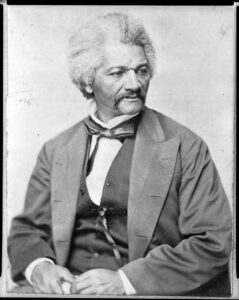
During the Abolition Movement, Frederick Douglas and Sojourner Truth were among abolition leaders who were led by their deep Christian faith to push for the abolition of race-based chattel slavery. They looked to the Declaration of Independence as a document that applied the moral laws of creation to our newly formed nation and how all people ought to be treated. The use of the declaration was much a part of the argument for abolition, and rightfully so. The argument was to highlight blatant hypocrisies that were being ignored for the benefit of the planter class. The same argument was used during America’s 2nd Reconstruction, the Civil Rights Movement of the 1950s-60s. Our country is much familiar with the name of Reverend Dr. Martin Luther King Jr. and his famous “I Have a Dream” speech. How many of us truly know what was said in that speech besides “I have a dream”? The correct title of the speech that King delivered, was “Normalcy, Never Again.” Within this speech King is quoted saying, “When the architects of our republic wrote the magnificent words of the Constitution and the Declaration of Independence, they were signing a promissory note to which every American was to fall heir. This note was a promise that all men – yes, black men as well as white men – would be guaranteed the unalienable rights of life, liberty and the pursuit of happiness.” King was appealing to our nation’s better angels and trying to reveal to us the reality that we had not been true to what we wrote on paper. In his final speech, titled “I’ve been to the Mountaintop”, delivered before a Memphis crowd on April 3rd, 1968 the day before he was assassinated, King said “All we say to America is to be true to what you said on Paper”. King was referring back to our Declaration and the bold promises of liberty and justice for all we continue to tout to this very day.
I raise the example of King, Truth, and Douglas, as they were each Christian leaders who gave themselves to the plight of justice in their respective eras. The lives of these American Christians among many others give us a glimpse into how we as Christians can engage in the movement for justice from a biblical worldview in our society today. We must ask ourselves as Christians, how can we aid in helping our nation truly live up to its highest ideals of liberty and justice for all? How can we progress our nation towards valuing everybody as image bearers in and throughout our systems?
First we have to look back at the scriptures and principles of God’s Word. Jesus shares the story of the Good Samaritan in Luke chapter 10:25-37, for good reason. He is breaking down cultural barriers and helping those of his day to see one another as fellow image bearers. Earlier in the chapter Jesus effectively answers a religious law expert’s question regarding the greatest commandments (v. 27). Jesus essentially had the man answer his own question! The passage is as follows: “He answered, ‘Love the Lord your God with all your heart and with all your soul and with all your strength and with all your mind’; and ‘Love your neighbor as yourself.’ ‘You have answered correctly,’ Jesus replied. “Do this and you will live.” But he wanted to justify himself, so he asked Jesus, “And who is my neighbor?” This is when Jesus shares the famous Good Samaritan story with him and how he was the only one of three people to stop and help the person who had just been beaten and robbed on the side of the road. The exchange between the two continues. In verses 36-37, Jesus asks him, “Which of these three do you think was a neighbor to the man who fell into the hands of robbers?” The expert in the law replied, “The one who had mercy on him.” Jesus told him, “Go and do likewise.”
This passage is timeless. It provides a view into God’s heart towards all of humanity, how Jesus came as the rendering of God’s mercy towards us, and how he requires us to show mercy to others. In Luke 4:18-19, Jesus makes his own opening declaration as he begins his three-and-a-half-year world-changing ministry. He says, “The Spirit of the Lord is on me, because he has anointed me to proclaim good news to the poor. He has sent me to proclaim freedom for the prisoners and recovery of sight for the blind, to set the oppressed free, to proclaim the year of the Lord’s favor.”
We who carry on the Great Commission, who have a duty to spread the Gospel to all, must recognize we have to fulfill this duty in word and deed. The early church in the Book of Acts spread the Gospel and they also initiated humanitarian help to those in need. There are so many issues in our modern world today, that we as the body of Christ have the capability to impact in a positive way. From helping the unhoused, resolving food insecurity in entire communities, to pushing our policy makers to make healthcare more affordable, and taking numerous policy actions that will uplift all people. We are to be a voice for the voiceless. There is no greater place of refuge and strength for the weary, the broken and the hurting than the church today. We must live the Gospel through our actions and that includes standing up for the poor, the marginalized, and the oppressed of society.
Reverend Edward Ford Jr. is a Former Elected Official in Connecticut, a Community Advocate, Organizer, Healthcare Administrator, and Public Theologian. He is currently studying for a Master’s Degree in Divinity at Yale University in New Haven, CT.
Sound of Hope: The Story of Possum Trot is a film based on the incredible true story of the Martin family from Possum Trot, TX. The husband and wife team of Bishop W.C. Martin and Lady Donna Martin ignited a movement in their small town to adopt 77 children from the foster care system and fostered over 20 themselves. We at down with Nika King who plays Lady Donna to talk about the film and her own reflections on faith and advocacy. The interview below has been edited for length and clarity. Sound of Hope will release in theaters July 4!
Allen
Alright, well thank you so much for the time, Nika. Sound of Hope: The Story of Possum Trot explores the themes of faith, community, and perseverance. And you played First Lady Donna Martin in the film. Can you talk about how she contributes to those themes of faith and community and perseverance in the film?
Nika
Well, first lady, Donna Martin, she received what I’d like to say the call. You know, she got the vision first from God to be an advocate for these vulnerable kids who, you know, were suffering and going through horrible situations. And based on the script and based on what I know, it wasn’t an easy decision because she had to convince her husband as well as her church and community to go on this journey with her. So she’s definitely a pivotal character in this story because without her, there is no moving. There is no sound of hope. You know, there is no possible faith story.
Allen
Right, which is, it just makes so much sense because that’s how our communities work, right? Can you talk about what impact or message you want audiences to get from this film?
Nika
The main message I think most people will leave the theaters with the sense of is faith. We talk a lot about faith as believers and I think sometimes your faith is tested, sometimes you have doubt about a situation or a career or a job. And I think this film really touches the heart of what faith truly is. And I think for me, you know, I can only, I can speak from being an actor as well as being a believer. You know, faith is everything for me. It’s my currency. It’s my cash app. It’s my Zelle, my Venmo. It’s the things I see and the things I don’t see, the things I touch and the things I can’t touch. So I have to really lean on that. And in the film, I think a lot of the characters go through their own journey of what faith looks like at different times in their lives.
Allen
Absolutely. Particularly your character, Donna, I mean, she stands out. You said she’s the first lady. Can you talk about what drew you to her as a character in the film?
Nika
Well, first and foremost, the script was amazing. I immediately wanted to be a part of it. And I let my mom read it because this is my mom’s story. Her mom’s mother was murdered when she was very young, which is still a cold case. And she, as well as my three uncles ended up in foster care. And so eventually, they were adopted by a pastor and his wife, and they were brought up in the church. And so, what immediately grasped me was the idea of playing this very strong woman who literally changed people’s lives and did so with such a burden in the midst of such chaos. I think we also have to understand that this is not an easy thing to do, but if we are truly God’s people, and we’re truly called by God, we have to take care of the vulnerable and in the widow. And this is a calling that, thank God, she didn’t ignore and that she basically was obedient to. And here we are 20 odd years later, and we have a film that the world is going to see.
Allen
And absolutely, you talk a little bit about calling. You recently you Spoke at Better Together, the mental health storytelling summit, you founded this nonprofit organization Rose of Sharon. How does your personal experience with mental health challenges shape your work as an actor and now an activist and your sense of calling and doing both of those things?
Nika
I grew up in a very rough part of Miami. And my childhood by I mean, listen, you know, my childhood wasn’t the best. Let’s just say that my mom was also an addict. She also dealt with mental health [issues]. Rightfully so, right, when You grow up in this world, not knowing who your mother is, not having a relationship with your father until later in life? So for me, it was important to attempt to break generational curses. I didn’t know what was happening as it’s happening. But now in hindsight, looking back, I see that God positioned me and put me in a situation where I was able to use all the pain and all the hurt and everything that I had gone through as a child to bring such powerful dynamic characters to life. And I always say, “hey, I’m glad I worked out that way.” I was able to use it to show people that these wonderful characters like First Lady Donna Martin and like Leslie Bennett on Euphoria, to really show that black women are really the matriarch of our families. And if they’re not well, then the family isn’t well.
Allen
And I love just how you’ve talked about your mom. And it seems like you’ve really gleaned a lot from her and really value that transmission from generation to generation. What advice would you give to aspiring actors or filmmakers or folks who want to tell stories even in our churches that are meaningful and impactful like sound of hope?
Nika
I would say don’t spend too much time trying to be something that you think Hollywood wants. I spent most of my time in LA, you know, 20 plus years molding myself into what I thought I needed to be. And in reality, I was everything I needed to be already because I had God. You know, the gifts and the talents that I had were God given. Nobody gave me talent. I went to class. I studied. I did the work. But ultimately, the Most High was my guiding light. And so I decided from here on out to only do projects that glorify him. Now, that’s not going to be easy. You know, they may be far and few in between, but I know that I have enough talent and creativity and I can do anything that I put my mind to because the most high is on my side. So, I would tell people to really find your voice, spend more time finding your voice than trying to be in a box because they’re going to put you in a box. So find your voice and let God guide you to projects because I’m telling you, it will happen if you if you surrender to that.
Historian Vicki Crawford was one of the first scholars to focus on women’s roles in the civil rights movement. Her 1993 book, “Trailblazers and Torchbearers,” dives into the stories of female leaders whose legacies have often been overshadowed.
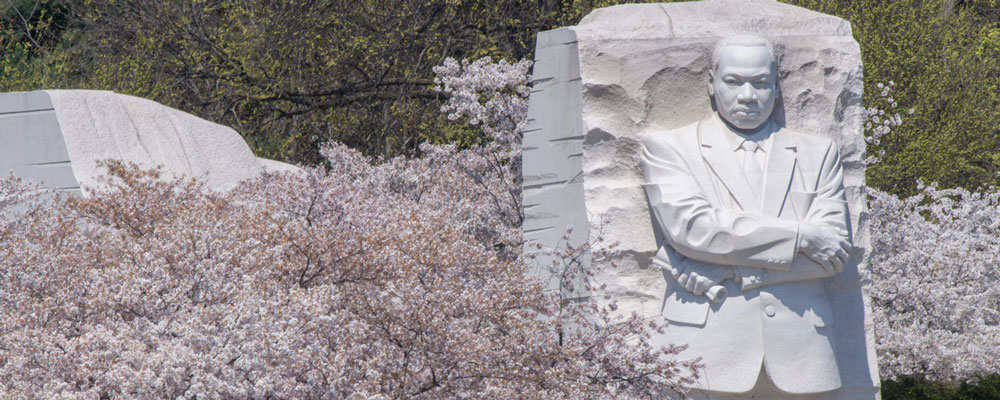
Today she is the director of the Morehouse College Martin Luther King Jr. Collection, where she oversees the archive of his sermons, speeches, writings and other materials. Here, she explains the contributions of women who influenced King and helped to fuel some of the most significant campaigns of the civil rights era, but whose contributions are not nearly as well known.
An activist in her own right
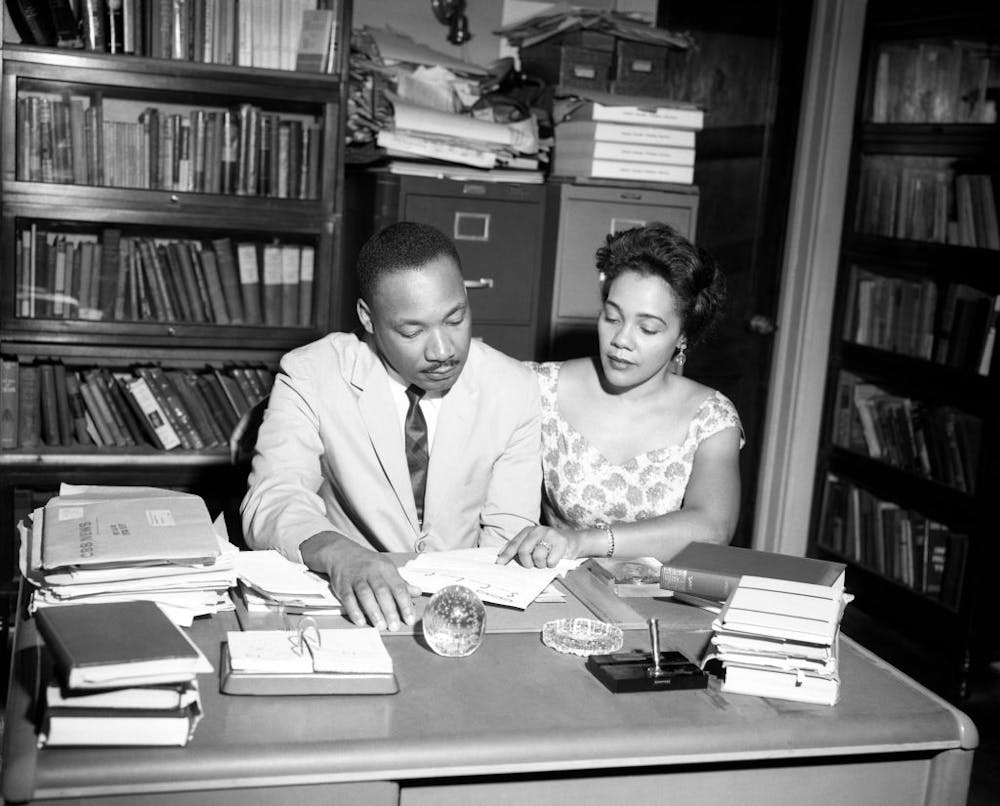
Coretta Scott King is often remembered as a devoted wife and mother, yet she was also a committed activist in her own right. She was deeply involved with social justice causes before she met and married Martin Luther King Jr., and long after his death.
Scott King served with civil rights groups throughout her time as a student at Antioch College and the New England Conservatory of Music. Shortly after she and King married in 1953, the couple returned to the South, where they lent their support to local and regional organizations such as the NAACP and the Montgomery Improvement Association.
They also supported the Women’s Political Council, an organization founded by female African American professors at Alabama State University that facilitated voter education and registration, and also protested discrimination on city buses. These local leadership efforts paved the way for widespread support of Rosa Parks’ resistance to segregation on public busing.
Following her husband’s assassination in 1968, Scott King devoted her life to institutionalizing his philosophy and practice of nonviolence. She established the King Center for Nonviolent Social Change, led a march of sanitation workers in Memphis and joined efforts to organize the Poor People’s Campaign. A longtime advocate of workers rights, she also supported a 1969 hospital workers’ strike in South Carolina, delivering stirring speeches against the treatment of African American staff.
Scott King’s commitment to nonviolence went beyond civil rights at home. During the 1960s, she became involved in peace and anti-war efforts such as the Women’s Strike for Peace and opposed the escalating war in Vietnam. By the 1980s, she had joined protests against South African apartheid, and before her death in 2006, she spoke out in favor of LGBT rights – capping a lifetime of activism against injustice and inequalities.
Women and the March
While Scott King’s support and ideas were particularly influential, many other women played essential roles in the success of the civil rights movement.
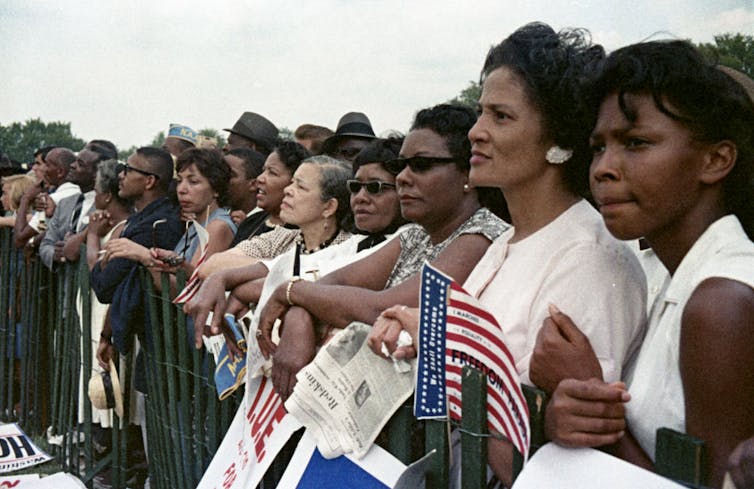
Take the most iconic moment of the civil rights struggle, in many Americans’ minds: the Aug. 28, 1963, March on Washington for Jobs and Freeedom, at which King delivered his landmark “I Have a Dream” speech on the steps of the Lincoln Memorial.
As the 60th anniversary of the march approaches, it is critical to recognize the activism of women from all walks of life who helped to strategize and organize one of the country’s most massive political demonstrations of the 20th century. Yet historical accounts overwhelmingly highlight the march’s male leadership. With the exception of Daisy Bates, an activist who read a short tribute, no women were invited to deliver formal speeches.
Women were among the key organizers of the march, however, and helped recruit thousands of participants. Dorothy Height, president of the National Council of Negro Women, was often the lone woman at the table of leaders representing national organizations. Anna Arnold Hedgeman, who also served on the planning committee, was another strong advocate for labor issues, anti-poverty efforts and women’s rights.
Photographs of the march show women attended in large numbers, yet few historical accounts adequately credit women for their leadership and support. Civil rights activist, lawyer and Episcopalian priest Pauli Murray, among others, called for a gathering of women to address this and other instances of discrimination a few days later.
Hidden in plain view
African American women led and served in all the major campaigns, working as field secretaries, attorneys, plaintiffs, organizers and educators, to name just a few roles. So why did early historical accounts of the movement neglect their stories?
There were women propelling national civil rights organizations and among King’s closest advisers. Septima Clark, for example, was a seasoned educator whose strong organizing skills played a consequential role in voter registration, literacy training and citizenship education. Dorothy Cotton was a member of the inner circle of the Southern Christian Leadership Conference, of which King was president, and was involved in literacy training and teaching nonviolent resistance.
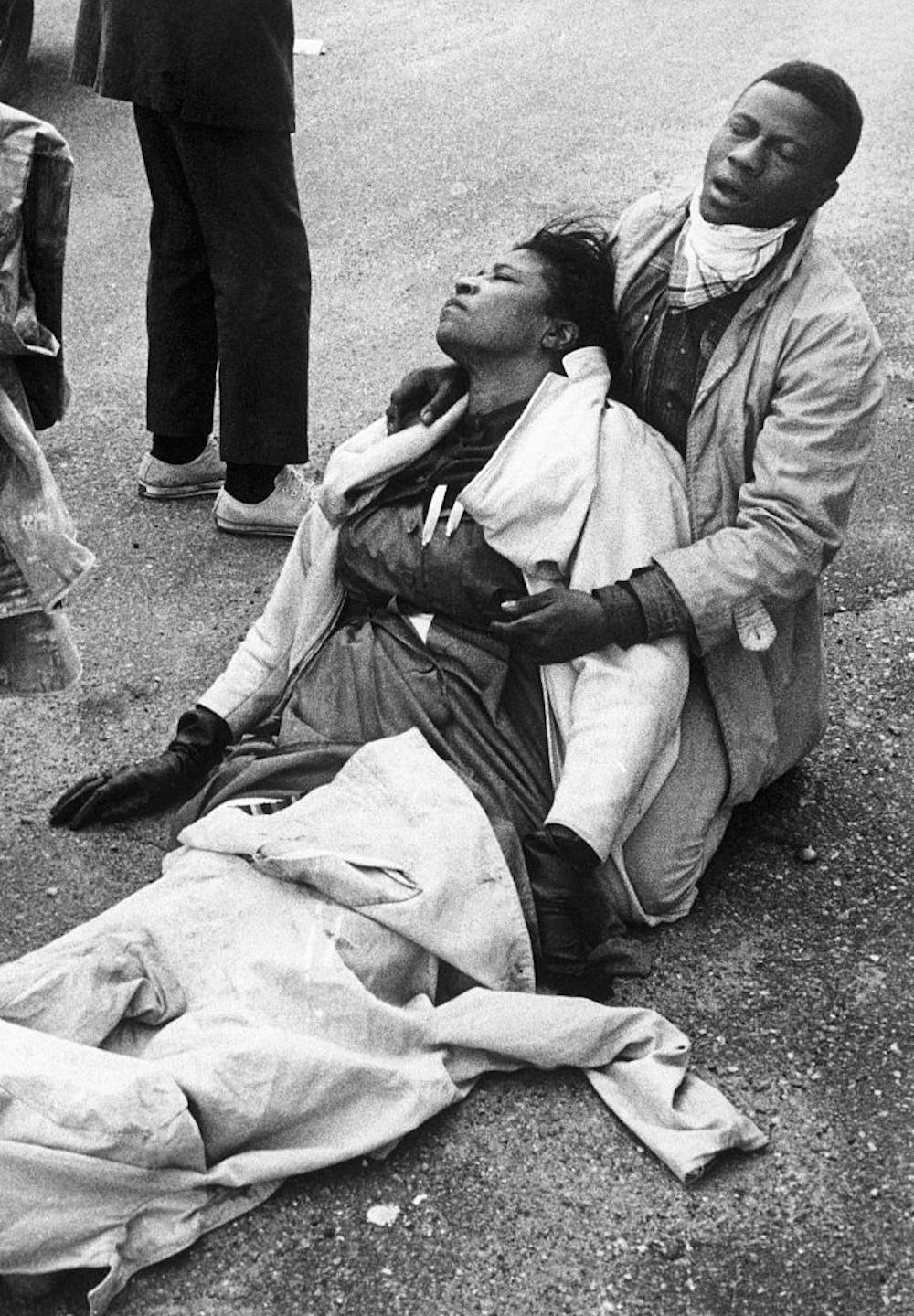
A civil rights marcher exposed to tear gas holds an unconscious Amelia Boynton Robinson after mounted police officers attacked marchers in Selma.Bettmann/Getty Images
Yet women’s organizing during the 1950s and 1960s is most evident at local and regional levels, particularly in some of the most perilous communities across the deep South. Since the 1930s, Amelia Boynton Robinson of Dallas County, Alabama, and her family had been fighting for voting rights, laying the groundwork for the struggle to end voter suppression that continues to the present. She was also key in planning the 50-mile Selma-to-Montgomery march in 1965. Images of the violence that marchers endured – particularly on the day that came to be known as Bloody Sunday – shocked the nation and eventually contributed to the passage of the landmark Voting Rights Act of 1965.
Or take Mississippi, where there would not have been a sustained movement without women’s activism. Some names have become well known, like Fannie Lou Hamer, but others deserve to be.
Two rural activists, Victoria Gray and Annie Devine, joined Hamer as representatives to the Mississippi Freedom Democratic Party, a parallel political party that challenged the state’s all-white representatives at the 1964 Democratic Convention. A year later, the three women represented the party in a challenge to block the state’s congressmen from taking their seats, given ongoing disenfranchisement of Black voters. Though the congressional challenge failed, the activism was a symbolic victory, serving note to the nation that Black Mississippians were no longer willing to accept centuries-old oppression.
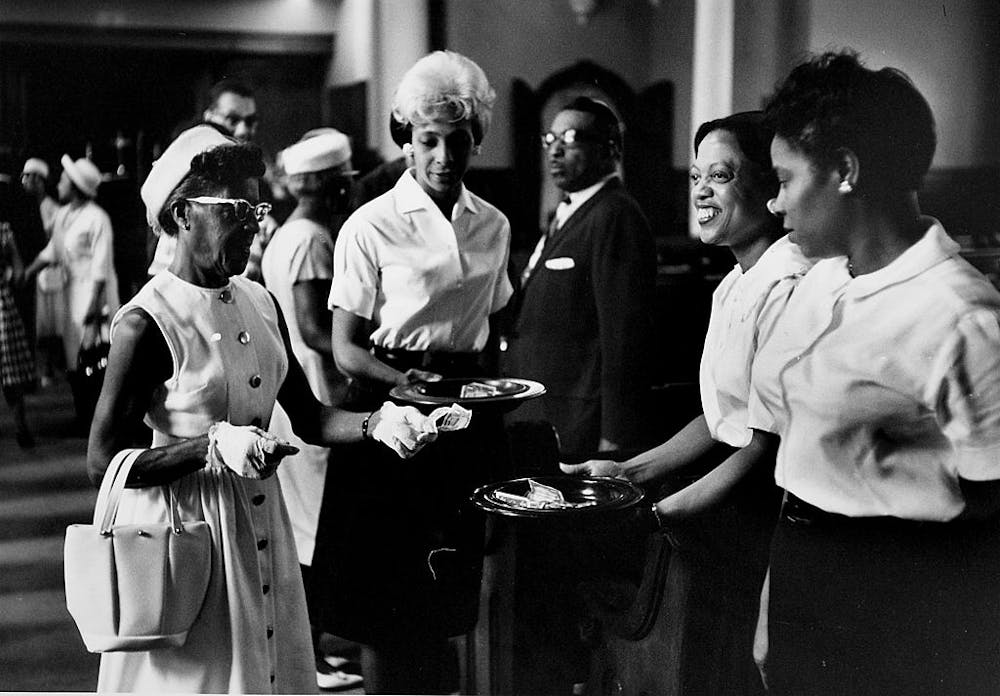
Many African American women were out-front organizers for civil rights. But it is no less important to remember those who assumed less visible, but indispensable, roles behind the scenes, sustaining the movement over time.
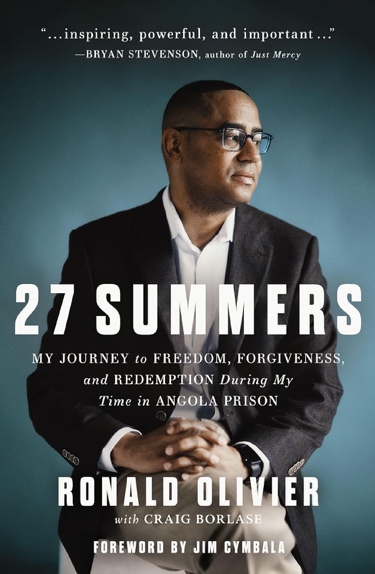
UrbanFaith Editor Allen Reynolds sat down with prison chaplain and author Ronald Olivier to talk about his story of going from a life of poverty and violence to facing a life sentence in prison to being saved and freed by the power of Jesus Christ in his amazing book 27 Summers. The full interview is above, below are excerpts edited for clarity and length.
Allen
I am excited today to have with me an author, a chaplain, a man of God who has an incredible story and an incredible journey to share. And that is Mr. Ronald Olivier sharing to tell about [his] book: 27 Summers. One of the things people don’t realize is how long the justice system can take. Can you talk a little bit about the trouble of getting used to living a life that is violent or that is trouble? And really, I’m trying to get to how the idea of living a sinful lifestyle can feel so normal that we don’t realize that sooner or later it’s gonna catch up [to us].
Ronnie
Yeah, I think one of the tricks is what the enemy uses is that belief that you will never get caught. Yeah, [they] got caught, but not you. You too slick, you too sharp. He just lets us see all that we can accumulate, all this stuff, the money, the fame that comes with it. But never let us see the end of it. And most of my friends never made it out of their teens. Murder was all around me and I really thought that was my fate. I felt that’s how I supposed to go. I thought this was a way of life. You do what you do, live as long as you can live and die. And I always thought I would die before I was 21. I never thought I’d make it out my teens.
You just become accustomed to it. It’s like I heard a story about boiling a frog. You never just put them in hot water. You put them in temperate water and let the temperature increase and he’ll stay there and boil. But if you just drop them in hot water they get out.
So that’s how sin is. You know, it progresses, and you can’t figure out how to get out. I really felt like that was my fate and I couldn’t get out. Now I can look back and see all the escape routes that God was trying to get me out on. But the enemy had been blinding my mind so much to make me think that there was no way out and that’s one of the greatest lies of the enemy. Man, you’re stuck there. You never get out. This is the way life is supposed to be. No, that’s a lie.
Allen
Yeah, and I think that’s so seductive. I want to take you to that moment which I think was God moment where you realized that you weren’t going to get the death penalty but instead, were going to get life in prison. Can you talk about just what it was like literally to be placed between death and life and to find out you got life?
Ronnie
Yes, so I’m on trial for first degree murder facing the death penalty. And up until that point, everything was fun and games to me. It wasn’t real. I thought I was getting out. I didn’t feel the weight of it until I placed in the holding tank about 12 AM, 1 AM in the morning while the jury was deliberating. I can still hear the iron door slam and the key turn. And I could still hear the guards footsteps fading off until I couldn’t hear him no more. And I’m there alone in a box. And man, the weight of that was going on came crushing down on me. I was like, whoa, there’s 12 people that don’t know anything about me that are making the decision on whether I live or die. I was like, wow. And at that moment I was like, man, I don’t wanna die. I believe God used my mother’s voice. I heard her saying this so clearly to me. It was so loud in my spirit to where she said, son, if you ever in trouble that I can’t get you out, you should call on Jesus. And at that moment, I got on my knees. I’m crying and I called out to Jesus, and I had a very simple prayer. I made a deal with God. A lot of people say you don’t make deals with God. I made a deal with Him. And I said, Lord, if you don’t let them kill me, I promise you, I’ll serve you the rest of my life. And for the first time in my life, I had experienced and felt the peace of God. There was a peace that came. I didn’t know what it was then, but I just had this inward resolve that I was gonna be okay. It was this calmness that came over me. And so the jury came back with a guilty verdict of the lesser offense. That carried a mandatory life sentence without benefits of parole or probation. In layman’s terms, you die in prison. You never get out. But I like to put it like this in that holding tank, I received two life sentences. You know, the state was giving me a life sentence with no benefits. But God was giving me a life sentence with so many benefits that he encouraged me in His word to not forget them. So there it is, man. I get this life sentence and I’m headed to penitentiary. Not just jail, but penitentiary, which is a big difference.
Allen
A lot of times we think that, you know, we give our lives to Christ and then they just get better all of a sudden. I love that your story is not a story of an instant change. Why is that important?
Ronnie
I think that’s very important because I know it helped me to be patient with other young believers because you could be you could be very judgmental if you’re not careful and say, oh, they’re not born again. They’re not. But, when you think about it, just like in the natural, when a baby comes out of the womb, the baby looks like what it came out of. And so that baby, you know, that baby don’t come out looking like the little [girl or boy they will be when they’re big.] The baby looks like a little prune with all type of afterbirth on. They have to go through a process to be clean, to be fed, to be to be changed. And the baby is totally dependent on someone else. And so that’s what the discipleship comes in, you know, and even though I knew I was born again, I look like what I came out. I still was doing some of the same things. But I continued to go to church. A lot of people [put] pressure on guys, you’re going to church, you’re still doing all that. As if you’re supposed to be perfect when you go to church. But and not realizing that the church is, it’s man, it’s a spiritual hospital. People go there because they’re sick. We’re all getting some type of treatment. If you break your arm, you don’t wait till it get well, then go to the hospital. That’s absurd, you know, I’m going to get some treatment because I’m broken because I have all these issues because, you know, I’m messed up and I’m wrapped up in sin. That’s why I’m going to church. And man, we need to have people with that understanding when guys get to church to help them to disciple, to love on them, to get them where they need to be. And that’s what guys did for me, man. They discipled me. They didn’t judge me. They kept pushing me in the right direction, kept praying for me, you know, and kept being there for me. And man, that’s so important and helping young believers because they look like they’re not nothing really changed. But something did happen in their hearts, and it takes a process. And that was going on the inside coming on outside where you can see it and enjoy.
Allen
What advice would you give to young adults now who may be feeling hopeless or may feel like there’s not any way out of their situations? Because I think your story really speaks to that.
Ronnie
One thing I would say is to have hope. Man, you got you embrace the hope of glory, which is Jesus Christ. There is absolutely no hope without him. And so I would encourage you to develop that relationship. I’m not talking about religion. I’m not talking about just going to church. I’m talking about having a real personal relationship. Spending time with him, you develop your ear to hear his voice, to distinguish his voice from any other voice and allow him to lead and direct you. I was in prison. God said, look, don’t go that way. Go over here. And something would happen over there. You know, I get drugged up or killed and all this other thing. And he was he was leading and protecting me in the midst of chaos. He would do the same thing for you. But he’s not a respecter of person, but he is a respecter of faith. He just looking for someone to believe Him at His word. And I promise you God can do exceedingly, abundantly, above all you ask or think, but it’s going to be according to the power that’s working in you. You got to let him work in you. And so I just encourage you with that.

 Maina
Maina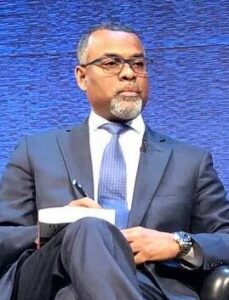 Dr. Glaude



 Reverend Edward Ford Jr. is a Former Elected Official in Connecticut, a Community Advocate, Organizer, Healthcare Administrator, and Public Theologian. He is currently studying for a Master’s Degree in Divinity at Yale University in New Haven, CT.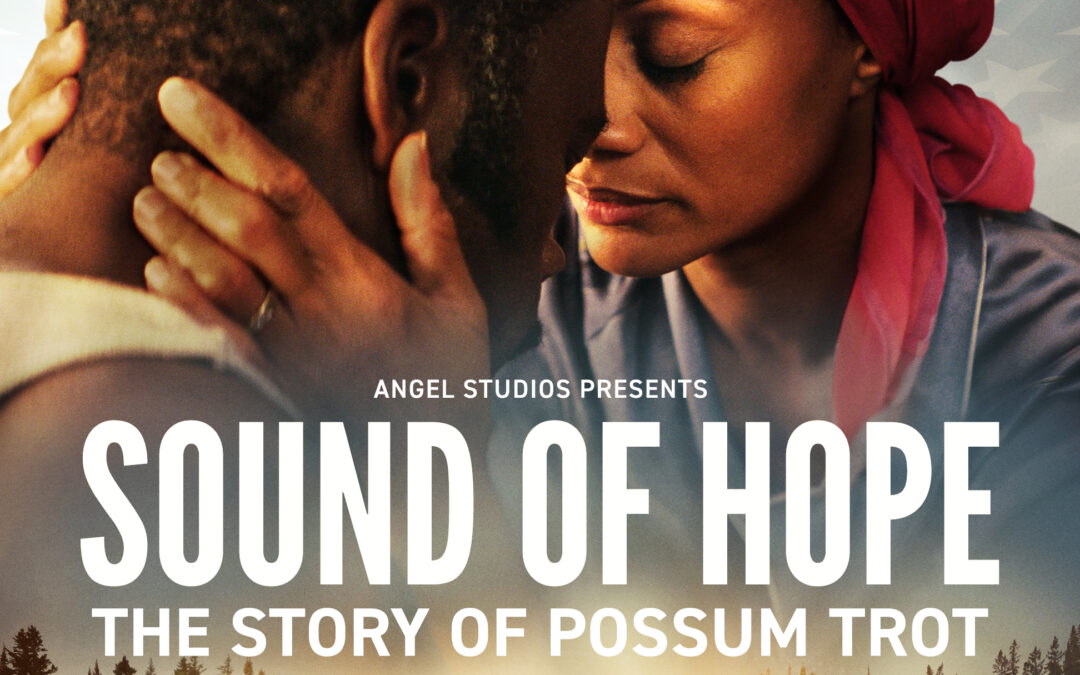
 Nika
Nika

 Allen
Allen