10 Things I’ve Learned from Homeschooling

10 Things I’ve Learned from Homeschooling

It has been six months since we started on this journey with our 14-year-old son, who began a home-based high school curriculum last fall. I’m no expert by any means, but you’d be surprised how much several trials by fire in a short amount of time can teach you. I know there’s a lot more knowledge to grasp with each year, but here are ten things I’ve learned so far.

1. You can’t just go with one curriculum.

Even though my son is enrolled in an online accredited high school, there are still gaps I need to fill. For example, Khan Academy has been vital for him (and me!) to understand Algebra. Also, it can be challenging to find Christian history, literature, and other educational materials from an African American perspective in a mainstream homeschooling curriculum. I’ve posted a few history resources here on UrbanFaith.com, but you can also check out  Store.UrbanMinistries.com.

2. Think nontraditional.

The main reason we’re going through this journey is that the structure of a brick and mortar school was not working for our son. So why repeat the exact same schooling structure at home? I’ve learned that sometimes he works better at night. He doesn’t necessarily need the weekends off. He’d rather do a little bit seven days a week instead of a normal five-day week. You can learn anywhere —  for example, we’re going to learn Spanish vocabulary in the grocery store.

3. You do need some structure.

Every kid is different, but I can’t leave the house without making sure he knows what he’s supposed to do and then following up when I get home. I’ve heard horror stories of people thinking their kids are working only to find nothing but a trail of video games and social media filling up the day. Setting boundaries are important, and you can include your child in making those decisions. For example, I will talk to my son about the week and what we are going to accomplish and we will agree on which days and times he will complete the work. Some families might have routines that are more strict. But this works for us.

4. Connecting with other homeschooling parents keeps you sane.

I’ve spent a lot of time on social media with other parents who have kids in the same program. It makes me feel less isolated as we’re all going through it together and sharing our stories. We all have kids of varying ages, but there are always a few moms with kids the same age as yours. You’d be surprised at the similarities in our stories. I’ve learned a lot from those moms and gotten great tips and teaching resources. Check out these groups when you have time.

5. You have more time in your day to make learning fun.

When you strip out lunch, advisory periods, the time between classes, gym, assemblies, and time for teachers to work with other kids, that streamlines your child’s day quite a bit. My son can pretty much do his entire day’s work in three hours. I’m finding that is common among other kids who are learning at home. So I’ve started to get creative. We’re going to take advantage of several museums that offer free museum days to area residents. Also, we’ll be going to work out together at the local YMCA, which has affordable pricing.

6. You become the school guidance counselor.

If you don’t go to an online accredited school, you’ll need to develop your own transcript for your child. The Homeschool Mom has a great blog post about this, but keeping track of all the courses, lessons, tests, and grades become your responsibility. Also, it’s on your shoulders to plan out your child’s future, making sure that they are taking in all the subjects necessary for whatever transition they plan to make after high school. I’ve created a spreadsheet for my son that goes from freshman through senior year and has all the courses he will need to take to graduate.

7. Standardized testing is a little more challenging.

My son needs to take the PSAT this spring and it was not easy to get the local high school to let him take it there. I made several calls and emails that were ignored. If you’re not enrolled in the school, don’t be surprised if they simply don’t care that much about assisting you. Unfortunately, when you call the people who administer the PSAT, they say to contact your local school. In the end, the only reason I got a response was that I pointed out that I do have another child at the school. It was very frustrating. The lesson learned here is to start a few months early if you want your child to take standardized tests. Don’t wait until a week before the test. They have to make special accommodations for homeschooled kids and that can take time.

8. It takes a village to homeschool a child.

In my opinion, homeschooling will be hard to do if you work full-time without other family members to support you. This is a tough one to write because I know not everyone can survive financially on a part-time salary. But honestly, you have to be present to make this work. You can’t give an assignment and just leave without touching base during the day and providing assistance as needed. Not to mention, it requires a lot of planning in advance on what to teach, what classes to incorporate into your curriculum, when to take time off, how to provide extra help in subject areas unfamiliar to you, etc. That said, I could see it working if there is an extended family in the house who can help share the homeschooling load. I have a friend whose mother is helping to teach her small children a few days a week. It gives her a break and grandma time to bond.

9. People will be judgemental.

I’ve had people tell me they think I made the wrong decision. That I just gave in to my son’s anxiety. They’ve said there’s no way he can learn at home what he could learn in a public school. Some scare me with warnings that he won’t get into college. It’s hard to hear. From my point of view, my son actually doesn’t mind learning now. No more “I hate school” mantras. I know we made the right choice for our family.

10. Choose your path based on your circumstances.

If your goal is to give your child a flexible schedule in the short-term and you intend for him or her to eventually go back to regular brick-and-mortar schooling, consider starting with your local public school first. A lot of school districts have home-based, online curriculum partnerships you can look into if your child has an Individualized Education Plan (IEP). Or, they may have a program where you can work with your child’s teachers and take the work home. We did that when my son was in middle school. If this is a long-term choice and there’s really no going back, do your research first before you make the leap if you have time to do so. Talk to other homeschooling moms. There are so many options now and you can tailor something specific to your child’s interests. Start with the Homeschool Legal Defense Association.

Originally published April 2019

Sound of Hope: Interview with Nika King

Sound of Hope: Interview with Nika King


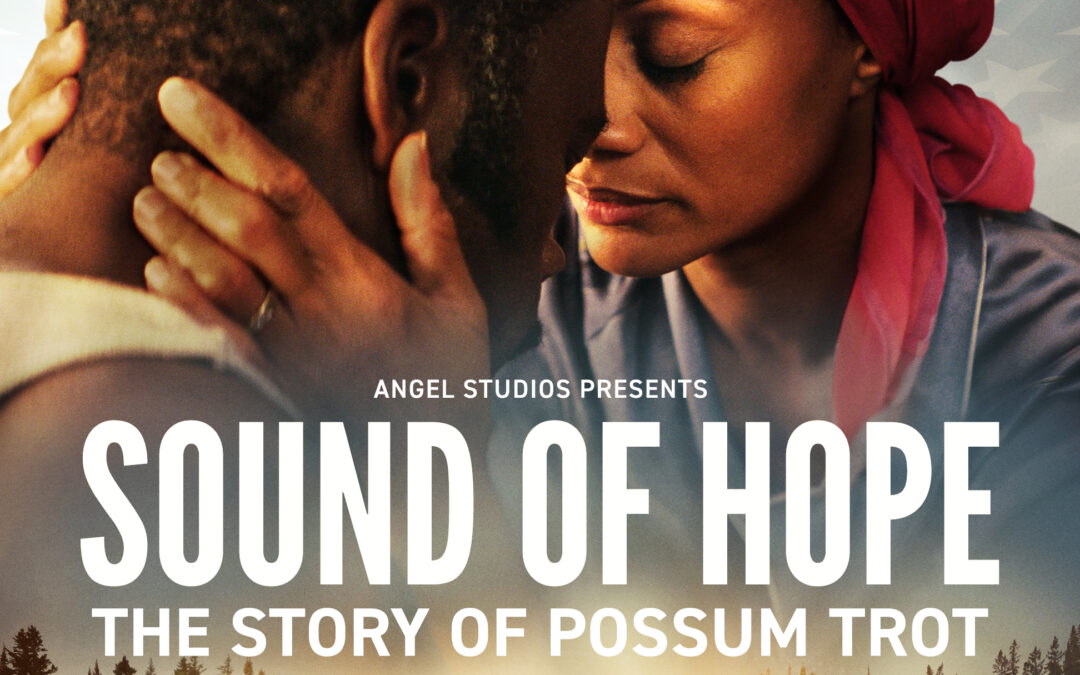
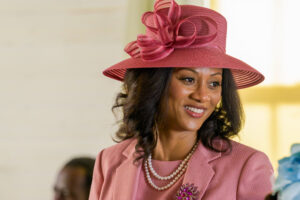
Sound of Hope: The Story of Possum Trot is a film based on the incredible true story of the Martin family from Possum Trot, TX. The husband and wife team of Bishop W.C. Martin and Lady Donna Martin ignited a movement in their small town to adopt 77 children from the foster care system and fostered over 20 themselves. We at down with Nika King who plays Lady Donna to talk about the film and her own reflections on faith and advocacy. The interview below has been edited for length and clarity. Sound of Hope will release in theaters July 4! 


Allen

Alright, well thank you so much for the time, Nika. Sound of Hope: The Story of Possum Trot explores the themes of faith, community, and perseverance. And you played First Lady Donna Martin in the film. Can you talk about how she contributes to those themes of faith and community and perseverance in the film?

Nika

Well, first lady, Donna Martin, she received what I’d like to say the call. You know, she got the vision first from God to be an advocate for these vulnerable kids who, you know, were suffering and going through horrible situations. And based on the script and based on what I know, it wasn’t an easy decision because she had to convince her husband as well as her church and community to go on this journey with her. So she’s definitely a pivotal character in this story because without her, there is no moving. There is no sound of hope. You know, there is no possible faith story.

Allen

Right, which is, it just makes so much sense because that’s how our communities work, right? Can you talk about what impact or message you want audiences to get from this film?

Nika

The main message I think most people will leave the theaters with the sense of is faith. We talk a lot about faith as believers and I think sometimes your faith is tested, sometimes you have doubt about a situation or a career or a job. And I think this film really touches the heart of what faith truly is. And I think for me, you know, I can only, I can speak from being an actor as well as being a believer. You know, faith is everything for me. It’s my currency. It’s my cash app. It’s my Zelle, my Venmo. It’s the things I see and the things I don’t see, the things I touch and the things I can’t touch. So I have to really lean on that. And in the film, I think a lot of the characters go through their own journey of what faith looks like at different times in their lives.

Allen

Absolutely. Particularly your character, Donna, I mean, she stands out. You said she’s the first lady. Can you talk about what drew you to her as a character in the film?

Nika

Well, first and foremost, the script was amazing. I immediately wanted to be a part of it. And I let my mom read it because this is my mom’s story. Her mom’s mother was murdered when she was very young, which is still a cold case. And she, as well as my three uncles ended up in foster care. And so eventually, they were adopted by a pastor and his wife, and they were brought up in the church. And so, what immediately grasped me was the idea of playing this very strong woman who literally changed people’s lives and did so with such a burden in the midst of such chaos. I think we also have to understand that this is not an easy thing to do, but if we are truly God’s people, and we’re truly called by God, we have to take care of the vulnerable and in the widow. And this is a calling that, thank God, she didn’t ignore and that she basically was obedient to. And here we are 20 odd years later, and we have a film that the world is going to see.

Allen

And absolutely, you talk a little bit about calling. You recently you Spoke at Better Together, the mental health storytelling summit, you founded this nonprofit organization Rose of Sharon. How does your personal experience with mental health challenges shape your work as an actor and now an activist and your sense of calling and doing both of those things?

Nika

I grew up in a very rough part of Miami. And my childhood by I mean, listen, you know, my childhood wasn’t the best. Let’s just say that my mom was also an addict. She also dealt with mental health [issues]. Rightfully so, right, when You grow up in this world, not knowing who your mother is, not having a relationship with your father until later in life? So for me, it was important to attempt to break generational curses. I didn’t know what was happening as it’s happening. But now in hindsight, looking back, I see that God positioned me and put me in a situation where I was able to use all the pain and all the hurt and everything that I had gone through as a child to bring such powerful dynamic characters to life. And I always say, “hey, I’m glad I worked out that way.” I was able to use it to show people that these wonderful characters like First Lady Donna Martin and like Leslie Bennett on Euphoria, to really show that black women are really the matriarch of our families. And if they’re not well, then the family isn’t well.

Allen

And I love just how you’ve talked about your mom. And it seems like you’ve really gleaned a lot from her and really value that transmission from generation to generation. What advice would you give to aspiring actors or filmmakers or folks who want to tell stories even in our churches that are meaningful and impactful like sound of hope?

Nika

I would say don’t spend too much time trying to be something that you think Hollywood wants. I spent most of my time in LA, you know, 20 plus years molding myself into what I thought I needed to be. And in reality, I was everything I needed to be already because I had God. You know, the gifts and the talents that I had were God given. Nobody gave me talent. I went to class. I studied. I did the work. But ultimately, the Most High was my guiding light. And so I decided from here on out to only do projects that glorify him. Now, that’s not going to be easy. You know, they may be far and few in between, but I know that I have enough talent and creativity and I can do anything that I put my mind to because the most high is on my side. So, I would tell people to really find your voice, spend more time finding your voice than trying to be in a box because they’re going to put you in a box. So find your voice and let God guide you to projects because I’m telling you, it will happen if you if you surrender to that.


No Failure: An Interview with Melvin Crispell III

No Failure: An Interview with Melvin Crispell III

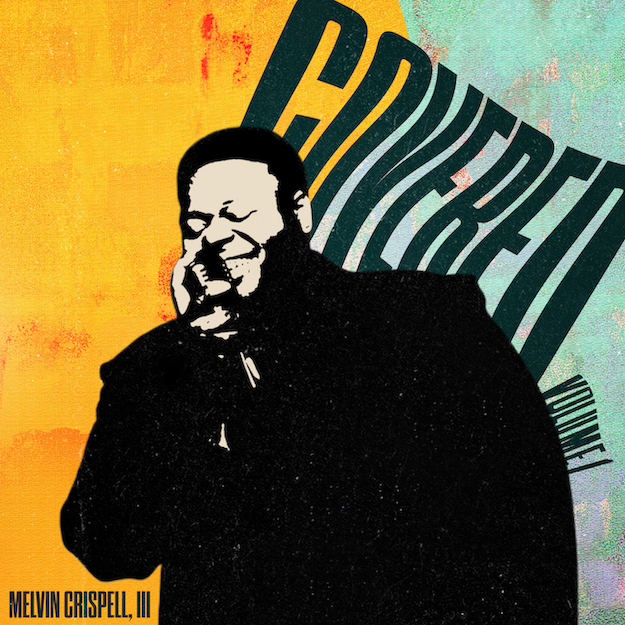
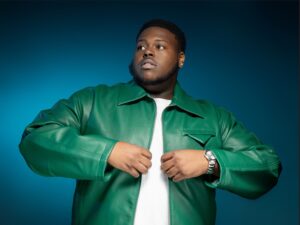
Grammy and Stellar Award nominated artist Melvin Crispell III talks with UF about his upcoming EP, his inspiration, and his quick journey to the forefronts of the Gospel Music Industry. More about Melvin is below, the full interview is above.


Melvin‘s musical calling is rooted in a rich gospel legacy, marked by his late parents, renowned gospel composer Melvin Crispell Jr. and singer Tunesha Crispell, and Melvin’s victory winning the 2019 BET “Sunday Best” singing competition. His debut album release, I’ve Got a Testimony, garnered GRAMMY, Stellar and Dove Award nominations, and featured his #1 hit single “Wonderful Is Your Name,” which was penned by his late father, renowned gospel composer Melvin Crispell Jr.  

In 2023, Melvin released his second album, “No Failure,” earning him a second GRAMMY nomination in the Best Gospel Performance/Song category for his single “God Is” and a Dove Award nomination for “Alright.” Continuing to carve out his unique path as an artist, Melvin has released two full-length albums, a holiday single, and has performed at events like the Stellar Awards and the Super Bowl Gospel Celebration. Renowned for his powerhouse vocal range and fresh artistic approach, he has garnered acclaim from both industry veterans and fans alike. This summer, Melvin is set to release his third full-length project: an EP featuring covers of gospel classics.

Juneteenth: A Commemoration of Black Independence

Juneteenth: A Commemoration of Black Independence

Video Courtesy of AL.com


Today Twitter, Facebook, Instagram; even parks and some backyards are overflowing with the celebration of “Juneteenth.”

What is it, exactly?

Juneteenth is the oldest known celebration that commemorates the actual ending of slavery in the United States. Although President Lincoln signed The Emancipation Proclamation on January 1, 1863, it was not until June 19, 1865 that the Union soldiers, led by General Gordon Granger, landed at Galveston, TX, with news that the war ended and the enslaved were free at last!

The Emancipation Proclamation had very little impact on Texas in 1863 due to the minimal number of Union troops in that area to enforce the new Executive Order. Of course some questioned President Lincoln’s authority over the rebellious states, but for whatever reason conditions in Texas remained the same well beyond what was statutory. However, with the surrender of General Lee in April of 1865, and with the arrival of General Granger’s regiment, the forces finally had enough strength to overcome the resistance.

Today, Juneteenth is experiencing an extreme growth rate within communities and organizations around the country. The Smithsonian, the Henry Ford Museum, and a few other organizations have begun sponsoring Juneteenth –centered activities. It currently celebrates African American freedom and achievement, encourages continuous self-development and respect for all cultures. Although the historic day is celebrated mostly in Texas, it is now taking on a more national and even more global perspective.

If you didn’t know your history before, now you know!

For more information on Juneteenth visit Juneteenth.com

Connecting the Dots with Linsey Davis x Michael Tyler

Connecting the Dots with Linsey Davis x Michael Tyler

UF Linsey Davis x Michael Tyler Interview

by Linsey Davis x Michael Tyler | UrbanFaith


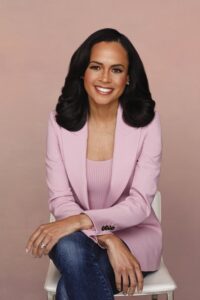
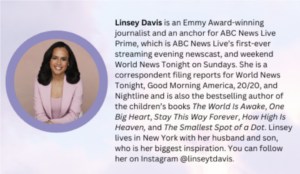
UrbanFaith contributor Maina Mwaura sat down with Linsey Davis her co-author Michael Tyler to talk about her newest children’s book The Smallest Spot of a Dot, which explores our common humanity. Excerpts of the interview are below edited for clarity and length, the full audio interview is above. 

Maina:

How do you write these books, Linsey? Like you’re on the news every day. You have a big life going on. How do you do this?

Linsey:

Well, the very easy answer is Michael Tyler. He’s the brain trustee. We started working together on the last book, “The Small Spot of a Dot,” and that was something that had really been on my heart for a long time that I wanted to do a story about the Human Genome Project, but I couldn’t figure out how to conceptualize it in a way that would be palatable for the youngest crowd. And the idea that our DNA is 99.9% alike. So I just had a brainstorming session with Michael, and he immediately came up with the idea of spots or dots. And so every since that, I was like, “All right, Michael, you roll with me. We’re gonna do the next book together as well. And he has been my partner ever since. But you know what? The thing to me is that the kids’ books for me have always been the fun part of what I do. I’ve always considered myself to be a storyteller. It’s just that normally I’m talking about murder and mayhem and missing in chaos. And so I didn’t really always want my son to watch me doing the news, but he wanted to kind of see what mom is doing. But this to me was a way to share the good news. And with my first book, “The World is Wake,” which was really an homage, just a love letter to God, just about His majesty and His creations, including us. I always feel like you make time for the things you’re passionate about. And so as far as like, how do I have the time? I, one, it’s something, it’s a nice positive outlet. It’s something that I want to do. But also I think that we make time for the things that we want to do.


Maina:

Why do you think kids resonate with your book?

Linsey

Well, I’m glad to hear that that is the case. One thing I would say early on, because my son was really my muse, I would always use him as kind of the sample audience. I would look at and study what he found interesting, intriguing in books, what really grabbed his attention, the books that he wanted to keep reading again and again. And I also kind of went into this– I always feel like whatever you do, you study the greats who did it before you. And so for me, everybody would have a different opinion about who the greats are. But for me, it was Dr. Susan, Shell Silverstein. Those were the book authors who I really loved as a child. I looked at what was really effective, what really grabbed my attention. And one of the things I thought was they all had great messaging. There was meaning. They had great rhymes, but there was [meaning]. It wasn’t just about popcorn and bubble gum for the sake of it. There were things that you could really take away. And that’s what I’m hoping [to share]. It’s kind of like candy-coated medicine. Something that’s good for you but tastes good too. It goes down smooth. And I think that’s what at least I’m aspiring for. And I hope that it is resonating with kids.

Maina

So you come up with these ideas. Do you call Michael up immediately and go, hey, I got another idea? How does that work?


Linsey

Maybe we had two or three phone calls. Michael, you could help me remember first small spot of a dot when we were coming up with that original idea. But I want to say it was within that first phone call that you came up with the dots. You correct me if I’m wrong. Do you remember how that happened?


Michael

That is correct. Because I remember you calling me up after you had done a reading to a classroom of children. And I think it was. And you discussed the human genome project with a classroom of children. And you were fascinated that they were about it. And you called me up and said, there’s something here. We got to figure out how to get them to understand that. And for me, the lessons that I got in the life that lasted the longest all came by way of metaphor. My mother was a metaphor magician. And so I always thought if you give somebody a physical model to keep in their mind, they will always be able to associate the lesson with it. And then genes and double helixes and things like that are far too complex for children to comprehend. Far too complex for many adults. For me to comprehend. And so I figured particularly when Linsey and I wanted to focus on this one salient truth that came out of human genome project. And that is that 99.9% of all of our genes are alike, are identical. That only 1/10 of 1% is different than it counts for our individual looks and individual distinction. And I am thinking, how do we show them how much that 99.9 is and how much that 0.1 is? And I could do that just by getting them to understand something that’s already in their universal frame of reference. And that’s bots and dots.


Maina

I’m talking to people all across here who are asking me, are we going to make it through this? And when I see you on in the morning times, sometimes when you’re filling in, I always go, how does she do it? There’s so much bad news. So here’s a simple question. Are we going to make it through this season? I mean, are we going to come out OK, remembering the 99% here?


Linsey

Oh, yeah. I mean, to me, there’s no benefit in being a pessimist. Right? It goes back to one of my favorite quotes to Henry Ford, whether you think you can or you can’t do something, you’re right. And so, if we set out thinking, oh, boy, this is the end, then that is going to just be the beginning of the end for you personally. Right? And so I’ve always been a glass half full kind of a girl. I feel like whether it was Vietnam, whether it was the series in the ’60s, where you had JFK, MLK, RFK assassinated, I’ll bring up this quick point. I was fortunate enough to be able to do an event with Carol Simpson at the beginning of the year. And I was telling– we were talking to a class of journalists that teach at Franklin College in India. And I was saying to her– and really, they were asking questions, but I had a question for her. And that was about are things as bad now as they were then? And she felt like even though, yes, the world is on fire right now, it was so much worse in the ’60s. That was her perspective. And so the people then in the ’60s, maybe they had that same mindset of, boy, how are we going to make it? Is this the end? But they’re just like everything in life. It’s cyclical. They’re upturns and they’re downturns. The leaves fall off. They dry up. But then in spring comes the warm weather and the sunshine. And they’re back again and new revitalized. And I just feel like that’s my outlook on life. So even when things seem like, boy, just can’t get any worse and somehow it still does, I think that’s where my faith comes in. I mean, I just have to believe that as Jeremiah 29:11 says, God has a plan. And it’s for good. It’s for hope. And I just kind of live by that. And I think to not have faith is when we would become so down and out and really feeling like nothing good can come of this. I just choose to be optimistic and choose hope.


Maina

All right, Michael, I’ve got to ask this question, man. Where do you come up with these things? You take them. And it seems like you take them to another level, man. I appreciate you saying that. Do it, man. I really appreciate you saying that. I think part of it, a large part of it for me, is intrinsic. I think that everyone has a certain intrinsic trait, quality, ability that is their genius. For some people, we see them flying through there and dunking basketballs. For some people, we hear virtuosity on a horn when I listen to John Coltrane. There’s a genius there. And so for me, part of it was I had this ability, that no matter what I looked at, I had to break it down to its least common denominator. But through the years, my brain was always trained to constantly breaking things down, analyzing things. And then that gave me the ability to do reverse order on it. How do I construct it? And as quickly as I could break it down, I was able to bring it back together again and have a different understanding of it. And my fascination with words was what really drove me to be able to do this with respect to writing. Because as long as I can remember, five years old, I was always fascinated with how language came to be. Why do we even have words?

Maina

So one of my questions is, where do you get these words from? That I ended up writing? Yeah. Because the poor children, which the books are hard, Michael, they’re not easy, right? Where does that come from?


Maina

It’s really– you hit it on the head. It’s really not easy. The hardest part is the rightful for me, our children, because you have the fewest amount of words that you have to work with. And I think what enabled me is, early on in life, when other people were– for the second, third, fourth, grade, fifth, grade, sixth grade reading books, I was reading dictionaries. Because I looked at dictionaries as a way to people look at crayons. And to me, crayons allow you to draw a beautiful picture. And to me, words allow you to speak a beautiful picture. And I always wanted to be able to create the best image possible about what was in my head by using my mouth. And that meant that I had to paint with words. I had to draw with words. I couldn’t do it with tempered paints. I couldn’t do it with finger paints. I couldn’t do it with crayons. And so instead of having that eight crayon box, I was always trying to get that 148 crayon box. And that’s what’s in my head. So it started for you early. It’s what you’ve got here.

Maina

One thing I’d like to draw before we get off is– ask Lindsay, are we going to make it through?

Michael

Yeah. We’re going to make it through this season. I do wonder sometimes. She was optimistic about it. She was optimistic. And she used the word hope. And I want to give a definition for that word. Because oftentimes what I’ve learned in life is people use words and they won’t fully understand what we’re saying. That’s why we have so much communication, confusion. If you were asked a 50-year-old and a 5-year-old to define the word hope, both of them would struggle with it. If you asked them to define a word trust or truth, they would both struggle with it. And so one of my exercises in life growing up was always a write-down my own definition for a word. And the way I describe hope– and I think it varies on to what Linsey’s optimism is– to me, hope is an emotional alignment to possibility. Where you see no possibility, you are hopeless. And hopelessness to me is the most dangerous thing to the human mind. That’s what causes us to completely give up on everything. And so as long as you can align yourself to the possibility of something being better or something being more or something being recovered or something being redeemed, as long as you can align yourself to that possibility, even if it’s a 1% chance, a 1% chance is a 100% greater than no chance at all. And so I always try to align myself to the possibility of what humanity can excel to, because we’ve nowhere near gotten to that level. And there’s a big margin for us to go ahead and move towards.

The Privilege of Prayer with Andrew Carter

The Privilege of Prayer with Andrew Carter

Have you ever wanted to pray, but it felt like a chore? Have you ever been seeking God for direction but felt like you didn’t know if you could hear Him? Have you ever wanted to pray but simply didn’t know what to say? Pastor Andrew Carter has written the book for all of us on how refocus our prayer lives. The Privilege of Prayer: Find Healing, Transformation, and Answers, is Pastor Andrew’s guide on how to help us connect with God in ways many never thought possible. The full interview is above. Excerpts and more about Pastor Andrew are below.

UF: We are excited today to have another amazing author, minister, pastor, leader, pastor Andrew Carter, who is sharing with us and we’re talking about his book, The Privilege of Prayer: Find healing, Transformation, and Answers. Can you talk about why it’s important that you frame prayer not as a formula or a way to make something happen, but really focused in on prayer as a relationship with God?

Pastor Andrew: Yeah, absolutely. I believe that all of our relationships really trickle down from our relationship with God. And I talk about just that. If you struggle to communicate with God who loves you, right, even with all of your flaws and mistakes and blunders, if you struggle to talk to the greatest lover of your soul, what does that look like when you communicate to somebody who’s not going to love you like that, your spouse or a friend? If you struggle to spend time with God, like how hard is it going to be to spend time with other people in a way that is devoted and is intimate like you would with God?

UF:

You developed a discipline of prayer in jail amid a community and I think that’s so key that we have to be surrounded by people to help disciple us and raise us up in the faith. Can you talk a little bit about why that’s important and kind of your journey to being discipled in prayer?


Pastor Andrew:

Yeah, yeah, as far as the discipline aspect goes, I grew up unruly with a lot of instability, both of my parents were drug addicts and so what I found is that in chaos, I typically match my environment. I’m chaotic as well, but when there is a sense of consistency and discipline and stability, I thrive. And so, I understood early on when you discipline yourself consistently it always equals results and I found that out in the physical fitness realm before the spiritual realm. And so really, I just adapted what worked in the physical, applied it to the spiritual and watched my prayer life just take off.


UF: Can you talk about why it’s important to see prayer as an opportunity and an honor and a privilege instead of as an obligation?


Pastor Andrew:

I mean, if you ever try to put together any kind of a toy the day after Christmas or try to put together a cabinet from Ikea, any of those things, they all come with an instruction manual. And, you know, I know that men tend to be adventurous, and we think that we can put things together without the guide. But nine times out of ten, you’ve got extra pieces laying around. You don’t know where things are supposed to go. It’s probably not sturdy. It doesn’t look the way that the manufacturer had made it out to be. It’s important that we’re praying because that is a part of the design that God made for us, this communion, for this intimacy, for this communication. So, rather than looking at it like you said an obligation, like we have the privilege to go directly to the source of the instruction, not just the instruction manual, the writer of the manual one on one to get all the direction guidance, vision, happiness, peace, enjoy that we could ever imagine. It’s really a privilege.


UF:

Can you talk a little bit about how we can overcome some barriers that keep us from connecting and communicating with God in prayer?

Pastor Andrew:

Absolutely. I would say that most of the barriers that people experience come from a lack of knowledge or understanding of the enemy uses lies to try to prevent you or stall you from entering that relationship. They’ll say “did he really say that” or you can’t hear his voice or he’s not listening and we allow these barriers to come between us and God and so one of the things that I preach all day and I’m not trying to be too preachy but like, you can’t say that God’s not talking to you if your Bible is closed, right? You can’t say that he’s not talking to you when he speaks primarily through the Word. And so many people are trying to hear God’s voice but they’re so attuned to what the world says and they got the world turned all the way up they got His voice turned all the way down. Many times, they’re not barriers at all, they’re what we perceive as barriers, but it’s many times just us not understanding who we are, based on what the scripture tells us.


UF:

Second to last question I have you a lot of the folks who are listening and hearing and engaging with us they’re young adults, and they’re trying to figure out how do I ground myself?

Pastor Andrew:

Yeah, I love that question because I work with young adults, myself here in Los Angeles and one of the things that I see about young adults right now are probably some of the most spiritual and connected individuals that I’ve met. I’m surrounded by [people in their 20s], and they are so spiritual they’re so in alignment with the voice of God, like there is an anointing on this net I get goosebumps talking about it there’s there there’s an anointing on this next generation. One of the things that they lack is consistency and discipline. They’re up until two three in the morning, doing God things right. They’re at prayer meetings and they’re doing all of these amazing things for the Lord, but they can’t even keep a regular job because they’re just following the Spirit wherever the Spirit goes and I think that a lot of them are missing that solid practical discipline and consistency because it’s not one or the other it’s both and right you need to have that that kind of spiritual, you know, alignment with the Lord but it also needs to be in a way that is discipline and consistent and has order so if I were to say one thing I would say, get yourself around a man or woman of God, who has gone before you who exemplifies the discipline and consistency. Mentorship is probably one of the most important things that I’ve done. I have leaders and mentors and accountability partners and overseers in my life who I check in with every week, to check my blind spots, and it has helped me grounded. So, in the same way young adults, don’t be afraid reach out and get yourself some good solid mentors and individuals who will disciple you.

UF:

What is the piece of advice that you would give to folks who are trying to deepen their prayer lives so what what’s the number one thing you would tell them as they go to get your book for more.

Pastor Andrew:

To be to just show up. I think that that’s one of the hardest things to do I was in the fitness industry for a long time I owned a gym, and one of the hardest things that people struggle with is just showing up like once they get there. You know, they’re able to go through the motions but getting there is many times the battle, so the same with prayer sometimes. The words come, Holy Spirit will intercede, we know Jesus intercedes on our behalf. God will speak to us, but many times it’s just getting there.  So, I would encourage people to carve out some time, set an alarm, turn everything off and just show up, and you’ll be surprised what God does in those spaces that we create and allow. He’s not always looking for ability. He’s looking for availability, and I’m a testament to that, because I am probably the least qualified to write a book, I’m probably the least deserving. There are guys who are way smarter, better communicators, more articulate, have spent more time in the Word. But the one thing that I’ve done is I made myself available and because of that availability, He’s overlooked my ability and he’s made sure that I’ve been fully prepared and equipped for every situation not by my strength, but by His. It starts with showing up

Andrew is the founder and lead pastor of Royal City Church in Los Angeles, California. He runs a popular live YouTube Bible study called ‘Coffee and Prayer’ that streams on all major podcast platforms. He appears on television networks, podcasts and stages preaching the good news of Jesus. Andrew travels the world guest speaking at conferences, churches, and events.

Andrew has become an inspiration for others who face difficult times and struggles. With millions of followers, Andrew has become an influencer for God’s Kingdom. He is a leader, speaker, writer, husband and father. Andrew and his wife, Kyra, live in Los Angeles, California. You can find Andrew on all social media platforms @andrewfcarter