We’ll All Be Free: UrbanFaith x Caroline Sumlin

We’ll All Be Free: UrbanFaith x Caroline Sumlin

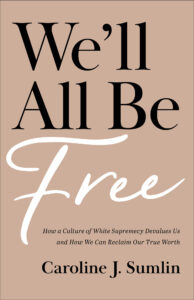
Many of us battle for self-worth in a world that is constantly bombarding us with messages that we are not enough. But author Caroline Sumlin argues that the enemy we are fighting is not just our own thoughts, but the insidious nature of white supremacy and the ways it impacts our society. UrbanFaith Editor Allen Reynolds interviewed influencer and author Caroline Sumlin about her new book We’ll All Be Free which confronts white supremacy’s assault on our self worth no matter what our background is, and shares ways we can liberate ourselves, each other, and seek healing. The book is available everywhere. The full interview is above, excerpts below have been edited for clarity and length. More about the book is below.

———————–
Allen

Hello, Urban Faith. It is a joy and a pleasure to be with just an awesome person someone who I’ve known for a long time who is doing work as an Instagram influencer as an author now that is Caroline Sumlin. And she has written a new book, We’ll All Be Free about dismantling white supremacy talking about self-worth. Why is it that you think it’s important that we deal with these difficult and tough issues?


Caroline

I think we can see the impacts of not having the tough conversations on our society. Even taking white supremacy aside, when we talk about going to therapy or we talk about dealing with mental health, we talk about trauma. We talk about those tough things. One of the most basic ways that parents sometimes explain emotions to children… is that they’re like farts. Kids don’t have any inhibitions to keep things in because they know it feels good to let out the burp, to pass gas, to cry, to get angry, to stomp our feet, right? They live and then guess what happens? They feel better because they release that stuff. As adults, we are conditioned to keep things inside, to be ashamed of it, to be ashamed of our humanity. And then what happens? The anger happens, right? The crippling and debilitating mental health [issues] happen. I could go on to name things. I mean, I even think the rise in gun violence, all of that is connected to the fact that we are not dealing with what’s going on inside, both individually, but also systemically. The culture we have created has magnified a society of people that are walking around with a lot of anger, with a lot of hurt, with a lot of unworthiness that they don’t realize is going on. Then we wonder why we see what we see in society. And I understand that people would also argue well having the conversations can also lead to “division.” And I would argue back that the reason why we see division when we have these conversations is because we have been conditioned to be defensive. We’ve been conditioned to ignore certain things and as a result we haven’t been [healthy]… But that’s all the more reason to keep going and to keep fighting and say, “Hey, we can get healthy. It takes work.” You know, no one goes to therapy and comes out smiling every day. You’re going to go to therapy and you’re going to come out with tears. You’re going to come out with anger. You may have to process some things that may feel uncomfortable at first, but then the burden starts to lift off your shoulders and it does get better. I do believe in pushing and continuing to have the conversation. I do believe that there will be a positive ending, but sometimes the messy middle is just necessary.


Allen

You have that chapter on hustle culture and how that’s tied to white supremacy. Can you just talk a little bit about that?


Caroline

Yeah, absolutely. I have an entire chapter on this because it is one of the biggest ways that white supremacy culture shows up in our daily lives. Are the entire idea of the American dream and the message that we are given as young children that if you just work hard enough and you just go to college and you’ll be able to achieve this ideal life in America, you’ll be able to buy a house, you’ll be able to have your family, you’ll be able to afford certain things and you’ll have that American dream. Over time that American dream has become a lot higher, a lot narrower. It used to be that middle class and now it’s gone beyond that at this point because again with the white supremacy culture, the standard is always moving. But I wanted to make sure that the readers were able to understand again the roots in that. I wanted to look at where [this idea comes] from where we have to achieve to be worthy. What [is] the definition of achievement, what the definition of success is, where did that come from? What is the definition of professionalism? Where does elitism come from? Where are all these different beliefs? Even the way that we look at intellect and how we score ourselves. All these things have roots, they have backgrounds. Even the economic decisions and how we’ve gotten to the point of having this free market and why again those decisions were being made.

I was able to tie all of that to racist ideas, systemic racism, white supremacy. The ideal in our country is that whiteness should always be the standard, should always be what rules the country, should always be what leads the country, should always be what’s in charge. And to be successful, you have to assimilate to that. And that comes from, again, decisions that were being made based on ensuring that there was a racial hierarchy. Creating these standards in education, these standards in professionalism, these standards in our careers to ensure that that hierarchy always maintains. If you happen to be a person of color and you happen to kind of ascend higher than what, you know, the status quo says that you’re supposed to be as a person of color, well, you had to assimilate quite a bit and you had to make sure that you essentially connect yourself or tie yourself to whiteness in order to get there. And then if you happen to be a white person, there still is the fact of the matter is the standards of whiteness are also very inhuman. They go against our natural rhythms. We’ve been conditioned to believe that going against our human rhythms, being very industrial, being very work on the clock 24/7, all those things kind of tying back to again the plantation and then the industrial revolutions, all those things [tie] to where we are now. We’re conditioned to think that that’s like normal and it’s not. Even the way that we have constructed a society to ensure that black indigenous and people of color are at the bottom, it still affects everybody because now everyone is tied to this hustle mentality, this work around the clock mentality in order to make something of yourself, in order to prove yourself worthy, in order to prove yourself to be really more white, so to speak. So that America and the western world approves of you. I could go on and on and on, which, which is why I wrote the book.

Allen

What advice would you give to the young girl, the young person who’s trying to find their self-worth in this culture that’s telling them that they’re not as valuable?

Caroline

To understand that the standards that you are being told you [must] measure up to were constructed for a reason and they were constructed not because of who you are but of maintaining that hierarchy of whiteness. So, to understand that it’s really not you. Like if you think you’re constantly swimming upstream and you’re working against a current and you just can’t figure out quite what is wrong with [you], why am I always exhausted? Why am I always trying to measure up to something? Why am I always looking in the mirror and saying something is wrong with me? It is because you’re being fed these messages left and right from every corner of society to try to tell you, “Hey, you’re not worthy,” so you can spend more money, so you can keep trying harder, so you can keep assimilating, so that white supremacy can continue to be maintained. And it’s not you. It’s them. And of course, you have to still live in this world. I wish we could just take a remote and just kind of turn it off. But unfortunately, that doesn’t work that way. And I think just knowing where it comes from and knowing that you can say no to believing those things and choosing a different route in how you approach life, I think is extremely freeing. I think the knowing the roots of it [is freeing], even if you still have to play the game a little bit. Because everyone’s gonna have to play the game a little bit, especially in the workplace. I’m not saying just, go tomorrow and start just doing things differently because you might lose your job. But I’m saying at least you know the roots of something, and you can say, “Okay. I know that it’s not me. I know that society is set up like this and I don’t have to measure my worth against this.”


Allen

What message would you give for the church about how to confront white supremacy?

Caroline

Stop being afraid to talk about it, stop being afraid to have the meetings about it and looking at how you are perpetuating white supremacy in your congregations. This is not something to be afraid of. This is not something that is against Jesus. This is something that Jesus, I believe, would be for. He would be for dismantling any system that oppresses anybody else. This is the work of Jesus. And again, it doesn’t have to be simply marching in the streets when another black person is killed or there’s another racist injustice that we see. That’s important, but it is perpetuated in our boardrooms. It’s perpetuated within leadership, and it’s perpetuated with misogyny. It’s perpetuated when you refuse to play any other worship songs in your church besides a certain group that doesn’t have any people of color in it. Let’s be real. And then you dismiss somebody that wants something else because that’s not the only way to worship. There are simple ways that white’s supremacy is perpetuated, and they all need to be talked about and confronted so that every single human being that walks through your church doors feels like they are home and welcomed there and don’t have to be on edge because they’re a person of color. But again, not even just that, for everybody because my book is We’ll All Be Free, and I make it very clear that my book is written for everybody. White supremacy harms us all. It causes all of us to deal with feeling unworthy in some type of way. And so, looking at how you’re perpetuating it is the first step to dismantling it and it’s not a conversation to be scared of. It’s not work to be scared of. It’s work that is freeing.

 

The Burial: UrbanFaith x Willie Gary

The Burial: UrbanFaith x Willie Gary

The Burial is a film inspired by the real life story of black Attorney Willie Gary known as “The Giant Killer” who takes the unexpected contract case of a white funeral home owner named Jeremiah O’Keefe in southern Mississippi. Mr. Gary is one of the most successful trial attorneys in American history who has won lawsuits against multibillion dollar corporations to protect  and get justice for his clients. The inspiring story is filled with comedy and drama as what begins as a case about deal gone bad begins to expose corruption, injustice, and power that would change both men’s lives. Academy Award winner Jamie Foxx plays Willie Gary who alongside Academy Award winner Tommy Lee Jones and Jurnee Smollett deliver truly amazing performances. UrbanFaith sat down with Willie Gary, the man behind the legend to talk about the film and his hopes to inspire others. The full interview is above. The film is rated R for language, but it is a movie I will be fine watching with my kids. There is use of the n word in context which likely contributes to the rating, but this film is a cinematic take on important black history and American history. The film is in select theaters now and on Amazon Prime Video October 13!


Here are 4 Amazingly Simple Steps To Making Godly Decisions

Here are 4 Amazingly Simple Steps To Making Godly Decisions


At some point in life we’ve all made big decisions. Whether it’s the college we attend, the person we marry, the first home or car we purchase, or the city we move to, decisions are a part of our lives. And to some degree, we always feel like we have to make the right decision. But how do we know what the right decision is? What do we do to prepare ourselves for major decisions?

A study conducted some years ago showed that the more choices we’re presented with, the more debilitat¬ing choices can become. Participants were presented with an assortment of 30 items to choose from and an assortment of 6 items to choose from. More people stopped and recognized the display with 30 choices, but a lesser percentage of those people actually made the choice to buy. We can get to a point in our lives where we think through decisions so much that we talk ourselves out of doing the very thing we set out to do in the first place—making a decision. Why? Because we don’t want to “miss God.” But is that how things work? Are we supposed to agonize over the choices we need to make?

One passage of Scripture may be helpful here: “Commit your work to the LORD, and your plans will be established” (Proverbs 16:3, ESV). Commit literally means to roll over into or put your full weight on some¬thing. It’s giving everything. Interesting that Scripture doesn’t say commit your plans to the Lord. But that’s what we do, right? We commit our plans to the Lord, rather than our work. The distinction is huge. There are four things this verse teaches us:

1. There will be times when things do not go as planned.
It’s inevitable. It’s like walking through the store with your wife and a shopping list. As much as you might want to, “Stick to the plan,” she deviates. And you may get upset when she deviates. You want her to follow the list—to the letter. But your wife has the special ability of remembering stuff that you forget. We get mad when God gets away from our list too. We make plans to be married by a certain age. We make plans to retire by a certain age. When something pops up that isn’t on the list, we are furious. God remembers the stuff we forget too.
38

Maybe we should change our approach. Stop just committing your plans to the Lord and start committing your work to the Lord. Then Scrip¬ture will make more sense when it says, “The heart of a man plans his way, but the LORD establishes his steps” (Proverbs 16:9, ESV) or “The lot is cast into the lap, but its every decision is from the LORD” (Proverbs 16:33, ESV). It is only by committing your work to Him that He establishes your plan. So stop working on that ten-year plan and start working on committing yourself fully to Him in your work.

2. There will be times when you won’t have peace about the decision you make.
Most times we feel like if we have peace about something, then it must be the right decision to make. I remember one decision I made where I didn’t have peace: the decision to move across the country to attend semi¬nary. I didn’t want to move 3,000 miles from home, but decided to do so anyway. Peace was the last thought on my mind. But, in hindsight, it was one of the best deci¬sions I ever made. If Jesus’ experience in the Garden of Gethsemane reveals a moment of agonizing conflict over the decision to bear the world’s sin, then surely there will be decisions in your life where you don’t experience peace in the short term.

3. Never think God is not at work, no matter how absent He may seem to be.
Author Tim Keller said, “God’s guidance is more something God does than something God gives.” In other words, God guides you through events and occurrences in your life, ultimately based on the choices you make. So where you find yourself right now is right in the middle of God’s guidance. Stop looking for it. God is doing it in your life right now. We spend so much time seeking God’s guidance, but don’t realize that we’re right slap dab in the middle of it.

4. God expects us to develop wisdom to discern His guidance.
“The beginning of wisdom is this: Get wisdom, and whatever you get, get insight. Prize her highly, and she will exalt you; she will honor you if you embrace her” (from Proverbs 4:7–8, ESV).
Developing wisdom accompanies our spiritual maturity. Another illustration by Tim Keller is key here: How would your parents react if you, an adult, called them to ask permission to go outside? They’d prob¬ably think you were crazy. Why? Because you are mature. As we mature in our faith, God (our Father) wants to trust us more and more to have the wisdom to make good decisions.
So after we pray, get counsel, and ask for His will, we’re ultimately left with the decision to make. In de¬veloping wisdom, we can decide with confidence that He is at work in what we decide. Decisions can be tough. Decisions can be agonizing. Decisions can be filled with uncertainty. If you have a tough decision to make, commit your work to the Lord. You’ll find out over time that in doing so, God will establish your plans.

Blue Eyes-Brown Eyes: An Interview with Jane Elliott

Blue Eyes-Brown Eyes: An Interview with Jane Elliott

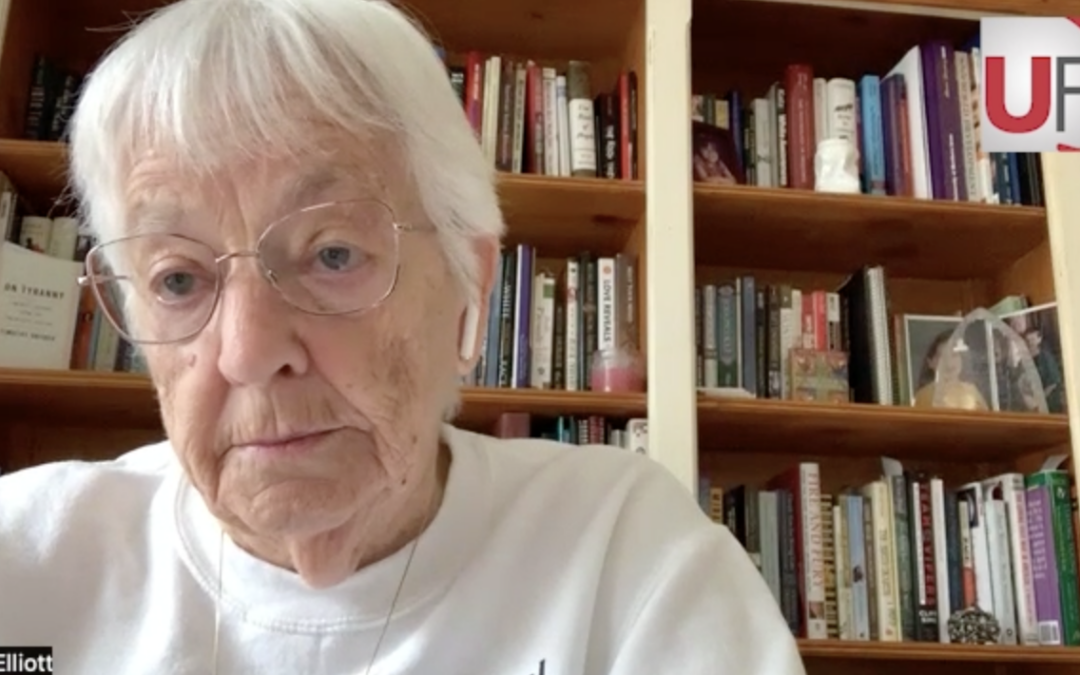
Jane Elliott is one of the most impactful educators and social activists in US history who performed experiments as a teacher that showed convincingly how racism impacted children. Her blue eyes vs. brown eyes exercise in 1968 after the assassination of Dr. Martin Luther King Jr. and subsequent world wide publicity of the exercise changed how society viewed race. Her work is a major basis for scholarship on race as a social construct. UrbanFaith contributor Maina Mwaura sat down with this hilarious and brilliant woman to discuss faith, the impact of her work, and her hopes and concerns for relationships between people from different backgrounds today. The interview above has been edited for length, clarity, and content. The views and opinions of Ms. Elliott are her own, not necessarily those of urbanfaith. 

Marriage Be Hard: Interview with @Kevonstage and @Mrskevonstage

Marriage Be Hard: Interview with @Kevonstage and @Mrskevonstage

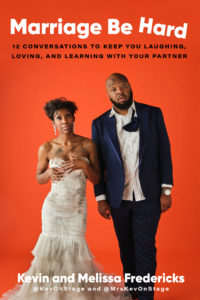
Marriage is one of the most important institutions in the lives of believers. Unfortunately it is rarely spoken about beyond the headlines of culture wars in the news or as the excuse some believers hide real conversations about sex behind. A lot of believers have a hard time keeping it real about how hard it is to be married. Kevin and Melissa Fredericks, aka KevOnStage and MrsKevOnStage, rarely hold back on keeping it real in conversations.

With over a million followers on social media (which don’t happen for church folks), they are some of the most busy and influential believers on the internet. Their authenticity and creativity have helped them connect with the “churchy” and unchurched alike. But like all married folks they have had challenges in life and in marriage. Their new book Marriage Be Hard is a candid look at their marriage and the lessons they have learned along the way through reflection, therapy, The Love Hour podcast and real work. They hope to help couples everywhere to get past “just making it” in marriage to thriving through their insights.

UrbanFaith sat down with Kevin and Melissa to talk about their journey and their book. The full interview is above, more information on the book is below.


ABOUT MARRIAGE BE HARD

Discover the keys to upholding your vows while staying sane in this hilariously candid guide to relationships, from the husband-and-wife team of comedian Kevin Fredericks and influencer Melissa Fredericks

Growing up, Kevin and Melissa Fredericks were taught endless rules around dating, sex, and marriage, but not a lot about what actually makes a relationship work. When they first got married, they felt alone—like every other couple had perfect chemistry while the two of them struggled. There were conversations that they didn’t know they needed to have, fears that affected how they related to each other, and seasons of change that put their marriage to the test.

Part of their story reads like a Christian fairytale: high school sweethearts, married in college, never sowed any wild oats, with two sons and a thriving marriage. But there’s another side of their story: the night Melissa kicked Kevin out of her car after years of communication problems, the time early in their marriage when Kevin bordered on an emotional affair, the way they’ve used social media and podcasts to conduct a no-holds-barred conversation about forbidden topics like jealousy, divorce, and how to be Christian and sex positive. (Because, as Kevin writes, “Your hormones don’t care about your religious beliefs. Your hormones want you to subscribe to OnlyFans.”)

Celebrating God’s answers

Celebrating God’s answers

Scripture Reference

The Temple’s Dedication

13 Tattenai, governor of the province west of the Euphrates River, and Shethar-bozenai and their colleagues complied at once with the command of King Darius. 14 So the Jewish elders continued their work, and they were greatly encouraged by the preaching of the prophets Haggai and Zechariah son of Iddo. The Temple was finally finished, as had been commanded by the God of Israel and decreed by Cyrus, Darius, and Artaxerxes, the kings of Persia. 15 The Temple was completed on March 12, during the sixth year of King Darius’s reign.

16 The Temple of God was then dedicated with great joy by the people of Israel, the priests, the Levites, and the rest of the people who had returned from exile. 17 During the dedication ceremony for the Temple of God, 100 young bulls, 200 rams, and 400 male lambs were sacrificed. And 12 male goats were presented as a sin offering for the twelve tribes of Israel. 18 Then the priests and Levites were divided into their various divisions to serve at the Temple of God in Jerusalem, as prescribed in the Book of Moses.

Celebration of Passover

19 On April 21 the returned exiles celebrated Passover. 20 The priests and Levites had purified themselves and were ceremonially clean. So they slaughtered the Passover lamb for all the returned exiles, for their fellow priests, and for themselves. 21 The Passover meal was eaten by the people of Israel who had returned from exile and by the others in the land who had turned from their corrupt practices to worship the Lord, the God of Israel. 22 Then they celebrated the Festival of Unleavened Bread for seven days. There was great joy throughout the land because the Lord had caused the king of Assyria to be favorable to them, so that he helped them to rebuild the Temple of God, the God of Israel.

There is a relief and a comfort that comes from the completion of a thing. When you pray and ask God to do something for you, or you step out in faith and begin a project or a task, there is a blessing when you see the completion and the success of it.

It gives you hope, courage, and strength to keep pushing especially during the times when you are waiting on God. It gives you strength in the seasons which require patience, endurance, and long suffering.


  1. Remember, God’s will for your life is continuous. He is always working on something within you to make you better. Look within yourself frequently to see what areas God is desiring to mature and grow you as you wait for the manifestation of prayers you have prayed.


  1. Everything God does that manifests as answered prayer, will bring glory to Him. You will always feel drawn to God to appreciate and honor Him.


  1. God desires to bless you and answer your prayers. He delights in fulfilling and meeting your needs. It is the will of the enemy to make you think that God desires your continuous suffering. Trust His love for you and believe that He is working it out for your good.


In Ezra 6:15, there was a date that the temple was completed. A specific month. We serve a God of specifics. He has scheduled the completion date of every test and trial that you are dealing with today.

Believe again, that very soon, you will be celebrating His goodness, faithfulness, and love towards you. You will rejoice because you will see the completion of a thing, and the power of God’s provision to see it through.

Prayer

Dear God,

There are moments in my life where I have felt a strong sense of loneliness, because I thought you forgot about me. I wondered if you would ever come through for me and bring me victory. Today I believe there is an expiration date to my trial. My answer is scheduled and very soon, by the power of perfect timing and your divine provision, I will see the completion of the promises you have shared with me.

Help me to count the many blessings I have experienced so far. Teach me not to compare myself with others. Let me steward my time, treasure, and talents with great diligence and grace as I expect the breakthrough of answered prayer. I believe this by faith, and encourage my heart to trust you again.


In Jesus Name

Amen