
No Results Found
The page you requested could not be found. Try refining your search, or use the navigation above to locate the post.

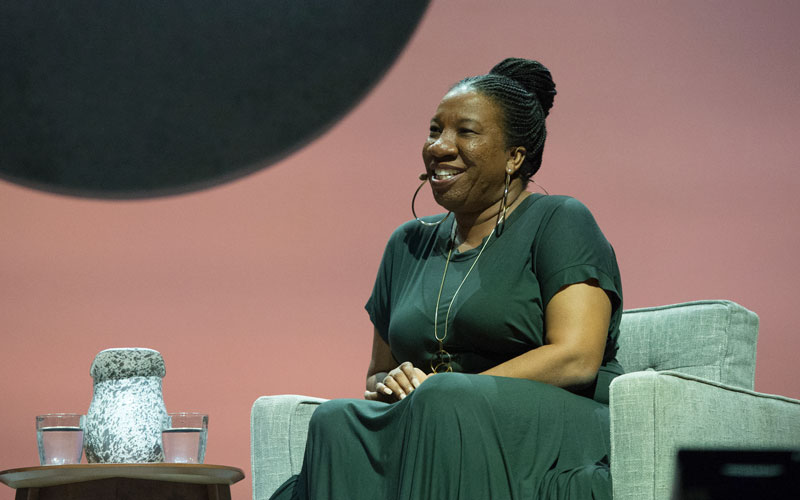
Tarana Burke seen on day two of Summit LA18 in Downtown Los Angeles on Saturday, Nov. 3, 2018, in Los Angeles. (Photo by Amy Harris/Invision/AP)
2018 was a whirlwind year for Tarana Burke, the founder of the “Me Too” movement. During the latter part of 2017, the long-time activist skyrocketed to fame as the phrase “Me Too” became a uniting force for victims of sexual violence. On October 15, 2017, actress Alyssa Milano sent a tweet in response to initial reports of allegations that Hollywood mogul Harvey Weinstein sexually assaulted numerous women. The tweet asked women who had been sexually assaulted to reply ” me too.”
That tweet made waves. Days later, millions of people used the hashtag #MeToo across social media, many of whom initially credited Milano with starting the “Me Too” movement. But Burke’s work on behalf of sexual assault survivors had been known long before Milano’s viral tweet, and it was black women who collectively spoke up to tell the actress that Burke had founded a “Me Too” movement over a decade before, during a time when there were no hashtags. Milano, who was unaware of the activist’s work, tweeted an apology. She also publicly credited Burke, and reached out to ask Burke how she could help amplify her work.
The two women traveled the media circuit together, appearing on “Meet the Press.”
Soon, organizations began to celebrate Burke in her own right. In March, she was honored at the 2018 Academy Awards. She appeared on magazine covers, including one of the six covers of TIME magazine’s “100 Most Influential People” issue, where actress Gabrielle Union, also a survivor of sexual assault, penned an essay calling Burke a “kindred spirit.”
The Bronx-born activist was the guest editor for ESSENCE magazine’s November issue, where she spoke about the future of the movement. She oversaw an edition filled with essays dedicated to black women’s right to heal after sexual violence and articles about the culture of silence around the sexual assault of black women and girls.
In an interview, the mother of “Me Too” said she never imagined she’d be in such a position of visibility. But, she didn’t feel like a hero. Instead, she told the magazine, she felt “dutiful,” and much of that duty was to ensure that black women weren’t shut out of the “Me Too” movement. While Milano’s intent wasn’t to steal Burke’s work, her celebrity status did catapult the conversation around sexual assault into the media, particularly in a way that resonated with white women. And it pained Burke to see black women erased from the narrative.
“The world responds to the vulnerability of white women,” she told ESSENCE. “Our narrative has never been centered in mainstream media. Our stories don’t get told and, as a result, it makes us feel not as valuable.”
In November, she also spoke about her duty to re-center the mission of “Me Too.” During her first TED talk, a speech dedicated to survivors and activists, she described how the past year had been an emotional roller coaster.
“This movement is constantly being called a watershed moment. Even a reckoning. But I wake up some days feeling that all evidence points to the contrary,” Burke told the audience.
A year later, “Me Too” was described as a “culture shock.” Harvey Weinstein was indicted. Bill Cosby was finally sentenced to prison in September for allegations of rape which were reignited after comedian Hannibal Buress mocked Cosby during a stand-up routine in 2014.
Despite the success of “Me Too,” Burke said the movement had become unrecognizable at times, as people, including the media, presented and interpreted “Me Too” as a vindictive plot against men, instead of as a voice of support for survivors. Her speech was a call to refocus the energy of the movement on survivors of sexual assault.
She also called to dismantle the building blocks of sexual violence: power and privilege.
Now, in 2019, it seems like her two key missions of the “Me Too” movement: visibility for black female survivors of sexual violence and the dismantling of power and privilege will finally converge.
Burke appeared in Lifetime’s six-hour docuseries, “Surviving R. Kelly.”
The three-night special is a deep dive into the background of singer R. Kelly and the decades of sexual assault allegations against him, weaving testimonies of his alleged victims — all black and brown women — with interviews from their friends, parents and teachers. Burke is part of a team of experts, including activists, journalists, and cultural critics, assembled to shed light on why the singer’s history of abuse — while heavily reported — has been ignored.
Burke has devoted her career to working at the intersection of racial justice and sexual violence, and she spent significant time in Selma laying the groundwork that would later evolve into the “Me Too” movement.
In October, days before the one-year anniversary of the tweet that launched “Me Too” on social media, Burke returned to Alabama to talk about her roots as an activist.
For Burke, that appearance was indeed a homecoming, as she stood before her elders. This included Rose Sanders, her mentor during her formative years in Selma, who waved at her from the third row of an auditorium in UAB’s Alys Stephens Center.
It was a semi-full circle moment. In March, Sanders, who made history in 1973 as the state’s first African American female judge, proudly told a room full of people in the Dallas County courthouse during the annual Bridge Crossing Jubilee that Burke started the “Me Too” movement in Selma.
As Burke took the stage to cheers and a standing ovation, she paid homage to her elders.
“I know I have my family from Selma here,” she said, lovingly holding out her hands. “You all are part of my story.”
“People keep thanking me for coming to Birmingham,” said Burke, smiling widely as the audience simmered down. “That’s because they don’t know I have ties to Alabama. I relish the opportunity to come here.”
For close to an hour, Burke talked about her childhood, her early years in Selma, and the life-changing moment that would lead her to start the movement known as “Me Too.”
THE EARLY YEARS
Burke was groomed to be an activist as a child.
“I had a normal family,” Burke told the audience. “Except for I had a grandfather that was a Garveyite.” Her grandfather, a close follower of the teachings of Marcus Garvey, made sure she was well versed in the readings of black liberation. On car rides, they would listen to cassette tapes of John Henrik Clarke, a native of Union Springs, Al. who was a scholar and pioneer in the field of Africana studies.
“You can read that Bible, but make sure you have your history right along with that,” she said he’d tell her.
Burke’s mother, while she never referred to herself as a feminist, surrounded Burke with the works of Audre Lorde and Patricia Hill Collins.
“I was wrapped in Black feminist literature growing up.”
Burke was discovered at age 14 by the 21st Century Youth Leadership Movement, an organization founded by Rose Sanders in 1985 to educate young people about voting rights and the political process. And it was through that organization that Burke says she learned about the impact youth could have.
“That was the first time an adult had said to me, ‘you have power now.’ ”
Through her work with the 21st Century Youth Leadership Movement, she became an activist. One of the first cases she worked on would be the case of the Central Park Five, a group of black and latino teenagers from Harlem who were wrongly convicted of assaulting and raping a white woman in Central Park in 1989. Their sentences would be overturned decades later.
“It’s so funny how we talk about due process in the White House now,” referencing President Donald Trump, who in the 1980s took out full page ads in four of the city’s newspapers, calling for the return of the death penalty, but in 2018 demanded due process for former White House staff secretary Rob Porter and speechwriter David Sorensen after allegations of domestic abuse, and Brett Kavanaugh, his nominee to the Supreme Court who was faced with allegations of sexual assault.
HER JOURNEY TO ALABAMA
Burke traveled to Alabama for college where she continued to organize, starting at Alabama State before transferring to Auburn University.
“Your college campus is practice for the real world,” she told the audience.
After graduation, Burke went to work in Selma, where an experience changed the trajectory of her life.
While working as a camp counselor for the 21st Century Youth Leadership Movement, she met a girl she would describe to the audience as “Heaven.”
As a counselor, she had started workshops where young girls could speak openly and reveal stories about sexual violence and assault.
One day, Heaven made a beeline for her. Immediately, Burke said, she knew something was wrong. At first she avoided Heaven because she didn’t feel equipped to provide guidance for what she knew would be devastating news.
“I thought to myself ‘I’m not a counselor,’ said Burke. “But in my heart, I thought, that happened to me too.”
But in that moment, Burke said as she lowered her voice, those words didn’t seem like enough. But later, she realized that phrase was the one thing she needed to tell Heaven.
Burke told the audience she spent years afterwards feeling guilty. Over and over again, she’d ask “what difference does ‘me too’ make?”
Turns out, the phrase would make a lot of difference.
JUST BE, INC. : THE BEGINNING OF ME TOO
In Selma, Burke started Just Be, Inc., an organization focused on the health and well being of young girls of color. As the organization grew quickly, Burke noticed a pattern — when the girls gathered together, stories started spilling out. And when the girls shared their stories, Burke said, she’d always think about her encounter with Heaven.
As her work in a Selma junior high school continued, the stories from young girls kept coming and Burke started to notice a common thread. The girls told their stories as if they were normal experiences, not revealing painful secrets. None of the girls knew they were describing acts of sexual violence.
The tipping point came when Burke saw a 12- year-old student waiting for her “boyfriend” after school — a boyfriend who was 21 years old. To make matters worse, it was a man Burke already knew. He had been dating one of the girls at a local high school the year before.
“How do you tell a 7th grade girl that this is not a relationship, this is a crime?” said Burke.
She realized it was up to her to change and translate that wording into a conversation that young girls could understand.
“So we had to figure out how to simplify that language.”
DESIGNING THE TOOLS TO TALK ABOUT SEXUAL ASSAULT
Burke had previously read about how to teach young people to talk about sexual assault, but recognized no one was relaying those messages to girls.
“Nobody was speaking healing into our community,” said Burke. “How can we heal something that we can’t name?”
She and her team started off by teaching the girls ways to recognize sexual violence.
Burke started going into the community to find resources, starting with another junior high school.
She also went into a local rape crisis center, located next to a homeless shelter. But, that environment, said Burke, wasn’t a comfortable or safe space for young girls. In order to get to the crisis center, girls would have to walk past groups of men huddled outside of the center who would often yell catcalls.
Burke says that walk into the rape crisis center was the turning point.
“That day was the nugget,” said Burke. “Adult women don’t report sexual violence. Do you think these children would go through that?”
“THE BIRTH OF ‘ME TOO’ “
Looking into the audience, Burke reflected on guidance from her mentors in Selma
“An elder once told me: you have to take what you have to get what you need.”
With that advice, she started a Myspace page for her project to gain visibility. Her goal was simple: she wanted people to see the resources she’d compiled and the work she was doing.
Soon, Burke says, people started reaching out to thank her. She knew the next step was to distribute the resources to even more people.
“I remember sitting with my two friends in my living room and wondering ‘how are we going to make this work?’ ”
The method they came up with was simple — she and her friends packed the resources into glossy folders and shipped them out around the country.
Soon after, Burke left Selma to move to Philly.
THE AFTERNOON OF 2017
“I always intended for ‘Me Too’ to be a movement for survivors,” said Burke.
But for years, the challenge was getting people in the room to have the conversation about sexual assault.
“Filling up a room like this would be impossible,” said Burke, motioning to people sitting in the Alys Stephens Center.
She said she would have to reach out to churches to ask them to speak. She describes the tweet Milano sent in 2017 as a “lightning bolt” that gave life to the healing she had been trying to bring to young girls for more than two decades.
Alyssa Milano’s “me too” tweet reached millions on Twitter in 24 hours. On Facebook, there were more than 12 million comments, posts and reactions.
But she says she wasn’t upset that it took a viral hashtag to catapult her cause.
“What I care about is getting the room full now. We are just not comfortable being uncomfortable,” said Burke. “This is hard, but we have the ability to get this right.”
And getting it right, says Burke, means believing survivors and not blaming them for being victims of sexual assault.
“If we woke up and found out that 12 million people all had a disease, we wouldn’t ask ‘well, who were they touching?'” Burke remarked, a statement met with uproarious applause.
The focus, she says, should be on what happened and how to stop it.
But people have misconstrued the message of the movement to be about taking down powerful men.
Burke told the audience she was in the room when Dr. Christine Blasey Ford testified before the U.S. Senate Judiciary Committee that she was allegedly assaulted by Kavanaugh. She says powerful men like Kavanaugh were the “epitome” of unchecked power and privilege.
“This is the first time that we’ve seen any modicum of accountability in our lifetime,” said Burke. “This is not about crime and punishment. It’s about harm and harm reductions.”
But Burke knows why the “takedown” narrative has caught on: “if you say something over and over again, people will start to believe it.”
And now, says Burke, it’s time take back the focus in order reach communities of survivors who desperately need the help of the movement.
“Outside of Black women, it astonishes me that we have no conversations about native women and sexual violence.”
“ME TOO” IN ALABAMA
Rose Sanders had to leave the Alys Stephens center early, so she didn’t get to say a formal goodbye to the activist she once mentored. But she beamed with pride as she talked about Burke, the young student she took under her wing.
“It’s awesome. She’s true to her cause. And I’m glad she’s pushing 21st Century (Leaders). And I’m hoping she’ll do it more.”
Sanders says there’s an even greater need for community focused leadership development now, and wished there were more young people involved the struggle against sexual abuse.
“When I started (the organization) it was in 1985, 20 years after the civil rights movement. It became clear to me that very few young people even knew about the movement,” said Sanders. So we were fortunate enough to get people like John Lewis, Rosa Parks and Jesse Jackson to come to our camps.”
But Sanders has plans to bridge the communication gap. She says she wants to build on Burke’s work, growing the “me too” movement into the “we too” movement.
“It’s not just about the survivors of the actual physical damage. It’s also about a mother who may not have been sexually abused, but has to suffer through (her child’s) abuse. It’s got to be “we too.”
This year, she plans to have workshops to educate attendees of the Bridge Crossing Jubilee about sexual assault, and has her vision set on bringing back Burke to speak on at least one of the panels.
“The people who are the actual victims of assault suffer the most damage, but so does everybody that’s connected to that child or that woman that’s been sexually violated,” said Sanders. “We too are also hurting and it’s going to take all of us to resolve it.”
And as Burke closed her speech, she also acknowledged that the movement was bigger than her, and challenged the room to take action after the lecture and challenge institutions to protect survivors and prevent sexual assault.
“I’m a 45-year-old black woman. It’s not enough to celebrate me if you’re not going to commit to ending sexual violence and the movement I stand for.” said Burke.
“This is really about people being able to walk through life with their dignity intact.”
Published through the AP Member Exchange
The page you requested could not be found. Try refining your search, or use the navigation above to locate the post.
Video Courtesy of Hampton City Schools Media
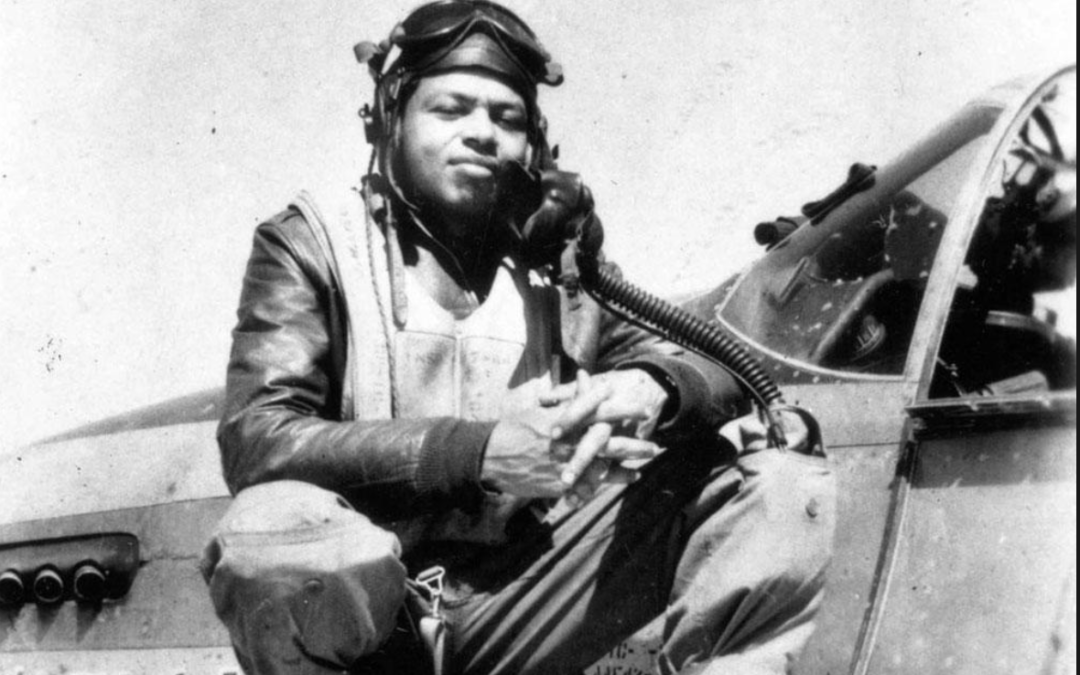
World War II fighter pilot John Lyle, a Tuskegee Airman, has died at the age of 98.
Lyle died Saturday at his home on Chicago’s South Side, his wife, Eunice, said Monday. She added that Lyle had been battling prostate cancer.
The members of the nation’s first black fighter squadron won acclaim for their aerial prowess and bravery, despite a military that imposed segregation on its African-American recruits while respecting the rights of German prisoners.
Lyle, who named his plane “Natalie” after his first wife, was credited with shooting down a German Messerschmitt.
“We flew 500 feet above the bombers to keep enemy fighters from hitting our guys,” he recalled in a 2012 interview with Jet magazine. “I loved flying, being up in the clouds, the scenery. I flew 26 combat missions, from southern Italy to Austria and southern Germany, over the Austrian Alps.”
Lyle told Jet he was fired upon several times.
“I watched bombers being torn apart, but they were performing the mission they signed up to do,” Lyle said. “And when I had to shoot the guy who was shooting at the planes I was protecting, I did not feel bad because that was my assignment.”
“He had no fear,” Eunice Lyle told the Chicago Sun-Times . “None at all.”
In 2007, President George W. Bush and Congress bestowed the Congressional Gold Medal on Lyle and other members of the squadron.
After the war, Lyle served as a police officer with the Chicago Park District and founded a tree-trimming company. He later took up sailing.
“He was an amazing sailor,” said Janet Hansen of the Jackson Park Yacht Club. “He could sail his boat in any weather.”
In addition to his wife, Lyle is survived by three step-children.
Frederick Douglass, known as the father of the civil rights movement, an abolitionist, and a former slave was also a licensed preacher.
Here are five religious facts about Douglass:
1. He was a licensed lay preacher.
Douglass was licensed to preach by a congregation of the African Methodist Episcopal Zion Church in New Bedford, Mass., and had many roles in the denomination. The AME Zion Church was where he honed his famous oratorical skills.
“He was what we call an exhorter first and then secondly, he was a licensed preacher but he was never ordained,” said the Rev. James David Armstrong, retired historian of the AME Zion Church. “He held other offices in the AME Zion Church, like steward, Sunday school superintendent, sexton.”
2. He published The North Star, an abolitionist newspaper, from the basement of an AME Zion church.
The Rev. Kenneth James, pastor of Memorial AME Zion Church in Rochester, N.Y., said the church building still exists but the congregation, now with 300 members, is in a new location. “It makes all of us proud,” James said of the statue dedication. “Especially being pastor of the church that he once was a member of, it heightens it for me.”
3. Douglass’ Washington home featured religious artifacts.
Cedar Hill, the home where Douglass lived in southeast Washington, D.C., for the last 17 years of his life, includes books, sculptures and photos that reflect his interest in religion. Ka’mal McClarin, curator of the National Park Service historic site, said the home includes images of angels and Jesus and photos of the interior and exterior of Washington’s Metropolitan African Methodist Episcopal Church. A fireplace mantle features busts of two of his favorite philosophers, David Friedrich Strauss, author of “The Life of Jesus,” and Ludwig Feuerbach, author of “The Essence of Christianity.” The library included several Bibles and books such as “History of the African Methodist Episcopal Church” and “Christianity, Islam and the Negro Race.”
“He pretty much embraced all religions,” said McClarin. “He studied all of them.”
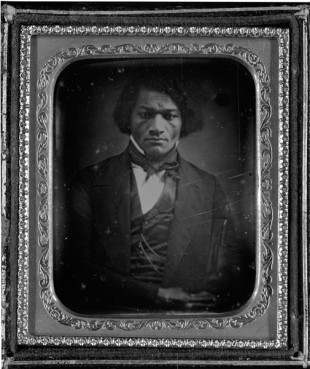
Frederick Douglass daguerreotype portrait c. 1850. Photo courtesy National Portrait Gallery/Smithsonian Institute
4. He attended several churches in Washington.
After he moved to the capital city in 1872, he had a favorite pew in Metropolitan AME Church, which now bears his name. When the church dedicated a new building in 1886, he gave it two standing candelabras. The congregation presented him with a Bible before he departed for Haiti as a U.S. diplomat. Church historian Thelma Dean Jacobs said he gave many lectures at the church, including his last major speech, “The Lesson of the Hour.” His funeral was held there in 1895.
5. A church in Elmira, N.Y., was named for him.
Frederick Douglass AME Zion Church in Elmira, N.Y., was named for the abolitionist. Its website notes that the church was inspired by an 1840 anti-slavery lecture by Douglass. It was founded by a group of slaves in the town that was a station along the Underground Railroad, which aided fugitive slaves. After its building cornerstone was laid in 1896, the church continued to grow and “was the largest Black church in the region during the late 1940’s.”
Keisha N. Blain, University of Pittsburgh
Too often, Black history focuses on black men, sidelining black women and diminishing their contributions. This is true in mainstream narratives of black nationalist movements in the United States. These narratives almost always highlight the experiences of a handful of black nationalist men, including Marcus Garvey, Malcolm X and Louis Farrakhan.
Contrary to popular conceptions, women were also instrumental to the spread and articulation of black nationalism – the political view that people of African descent constitute a separate group on the basis of their distinct culture, shared history and experiences.
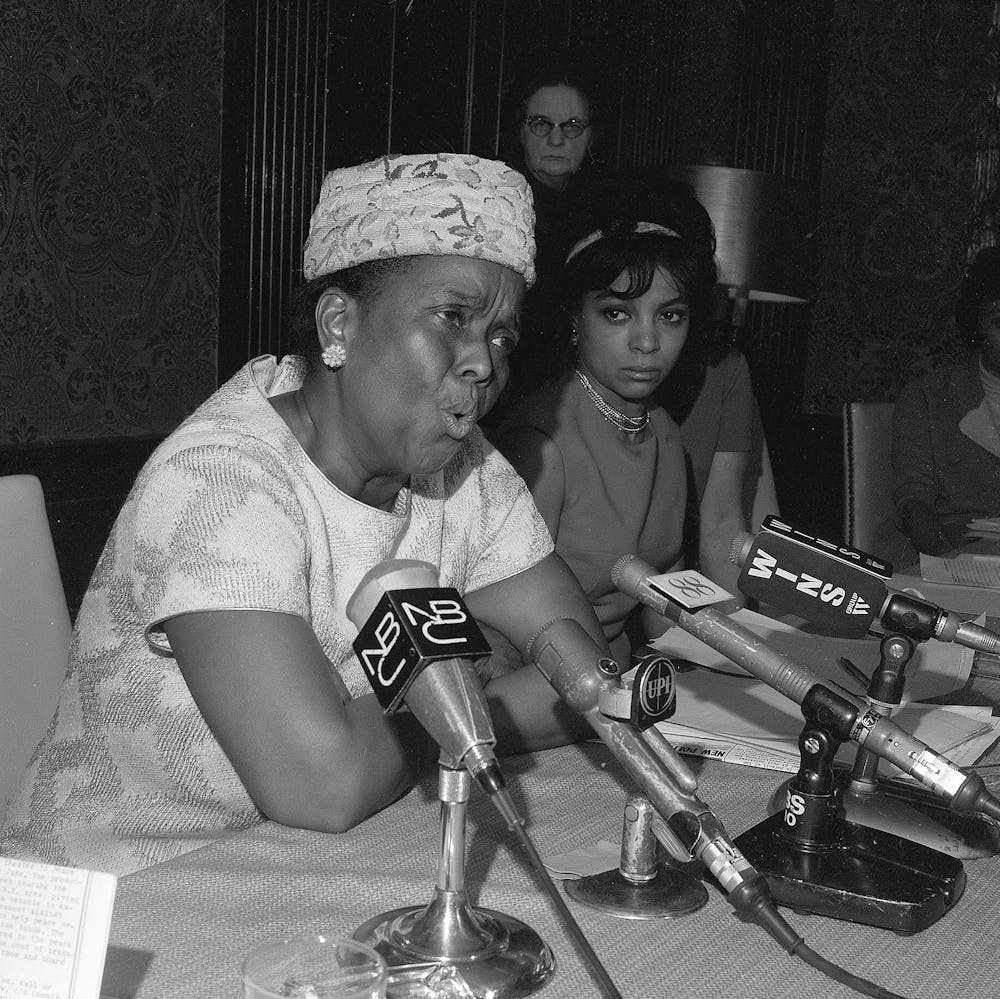
As I demonstrate in my new book, “Set the World on Fire,” black nationalist movements would have all but disappeared were it not for women. What’s more, these women laid the groundwork for the generation of black activists who came of age during the civil rights-black power era. In the 1960s, many black activists – including Ella Baker, Fannie Lou Hamer, Robert F. Williams, Malcolm X and Stokely Carmichael – drew on these women’s ideas and political strategies.
So, let’s use this Black History Month to begin to set the record straight.
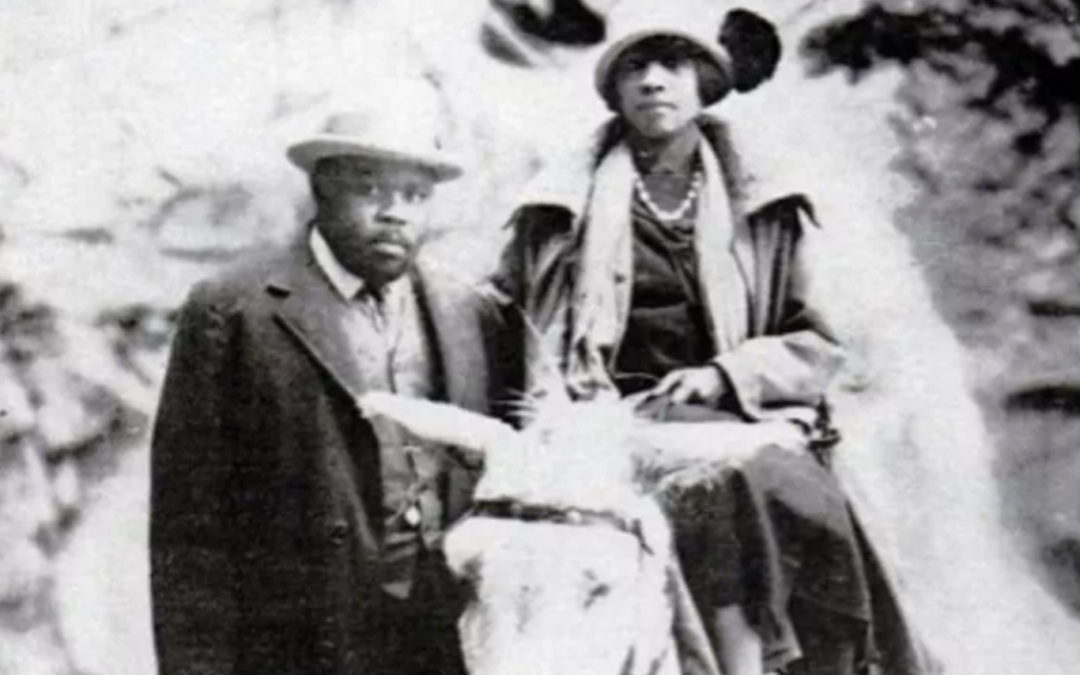
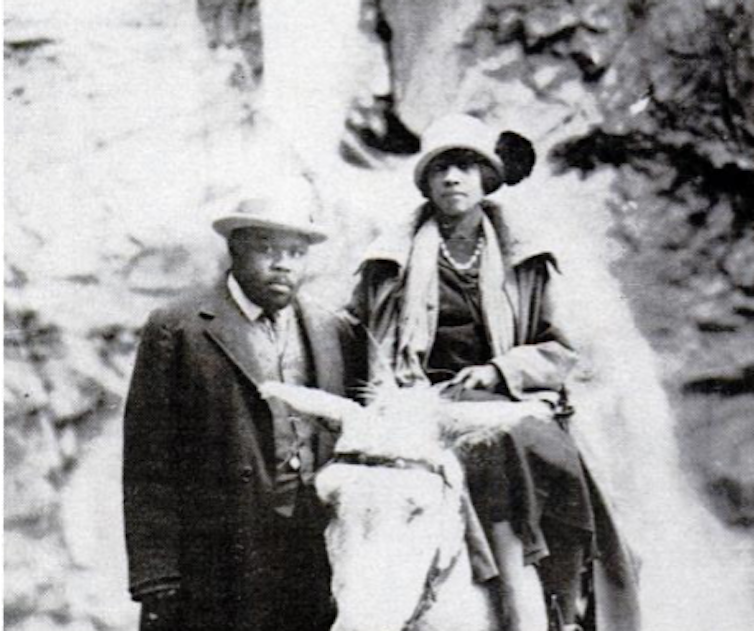
In 1914, when the Jamaican black nationalist Marcus Garvey launched the Universal Negro Improvement Association, Amy Ashwood – who later became his first wife – was the organization’s first secretary and co-founder.
Her efforts were invaluable to the success of the association, which became the most influential black nationalist organization of the 20th century. The organzation’s earliest meetings were held at the home of Ashwood’s parents. When the organization’s headquarters relocated from Jamaica to Harlem, Ashwood was actively engaged in its affairs.
In addition to serving as general secretary in the New York office, Ashwood helped to popularize the Negro World, the organization’s official newspaper. She also contributed to the financial growth of the organization, relying on her parents’ money to meet some of the growing expenses.
In 1922, months after Garvey’s divorce from Amy Ashwood, Amy Jacques became Garvey’s new wife – a position she used to leverage her involvement and leadership in the organization. During these years, she helped to popularize and preserve her husband’s ideas. When her husband was imprisoned in 1925 and later deported – on trumped-up charges of mail fraud orchestrated by the FBI – Amy Jacques Garvey oversaw the organization’s day-to-day activities.
In the aftermath of Garvey’s 1927 deportation, women helped to popularize black nationalist politics. With limited financial resources and resistance from the FBI, these women asserted their political power in various cities across the United States.
During the Great Depression, Chicago was one of the key cities where black nationalist women organized. In 1932, Mittie Maude Lena Gordon, a former member of the Universal Negro Improvement Association, established an organization called the Peace Movement of Ethiopia which became the largest black nationalist organization established by a woman in the United States. At its peak, the organization attracted an estimated 300,000 supporters in Chicago and across the country.
In 1933, Gordon initiated a nationwide emigration campaign, utilizing her widespread political networks in Chicago and across the Midwest. With the assistance of other black nationalist activists, she collected signatures for a pro-emigration petition. In August of that year, she mailed the petition to President Franklin D. Roosevelt with approximately 400,000 signatures of black Americans willing to leave the country. Drawing inspiration from FDR’s New Deal programs, Gordon requested federal support for those who desired to relocate to West Africa in hopes of securing a better life.
Gordon’s attempt to secure federal support failed. Yet she drew an even larger following of supporters who were inspired by her bold move. Many of these new members were women. Black women found in her organization a space of empowerment and opportunity. They occupied a number of visible leadership roles, working alongside the organization’s female founder.
Celia Jane Allen, a black woman from Mississippi who had relocated to Chicago, was one of these women. In the mid-1930s, she became an active member of the Peace Movement of Ethiopia. Embracing Gordon’s vision for unifying black people in the U.S. and abroad, Allen took on a leadership role in the organization. In 1937, she became one of the national organizers. From the late 1930s to the mid-1940s, Allen traveled extensively throughout the South, visiting local homes and churches to recruit new members and advocate the relocation to West Africa. By the end of World War II, she was successful in getting thousands of black southerners to join the movement and embrace black nationalist ideas.
Today, these women’s stories are largely absent in popular accounts of black nationalism. More often than not, the assumption is that men exclusively established and led black nationalist organizations. This could not be farther from the truth. As these few examples reveal, women were key players in black nationalist movements, and their efforts helped to keep black nationalist ideas alive in U.S. politics. No history of black nationalism is complete without acknowledging women’s significant contributions.
Keisha N. Blain, Assistant Professor of History, University of Pittsburgh
This article is republished from The Conversation under a Creative Commons license. Read the original article.
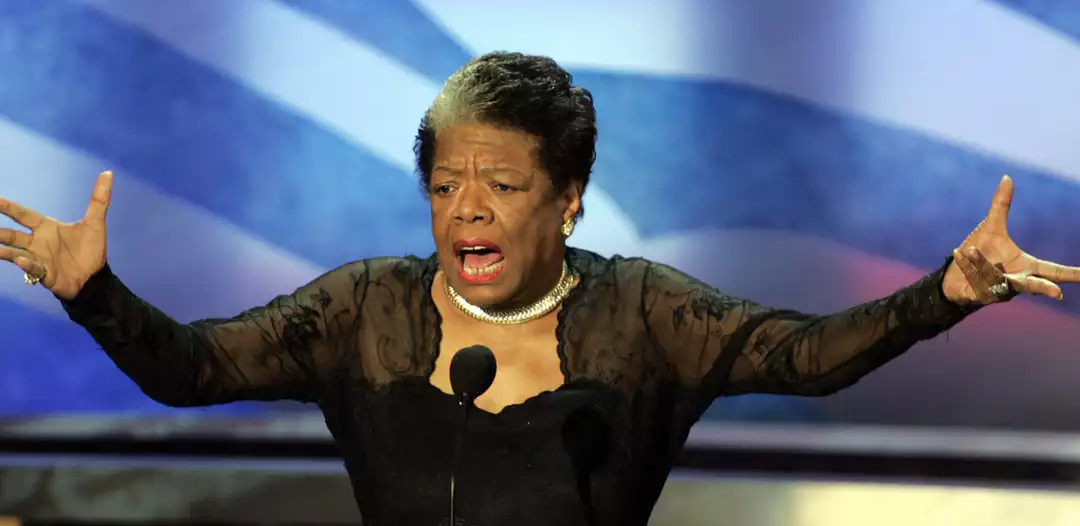
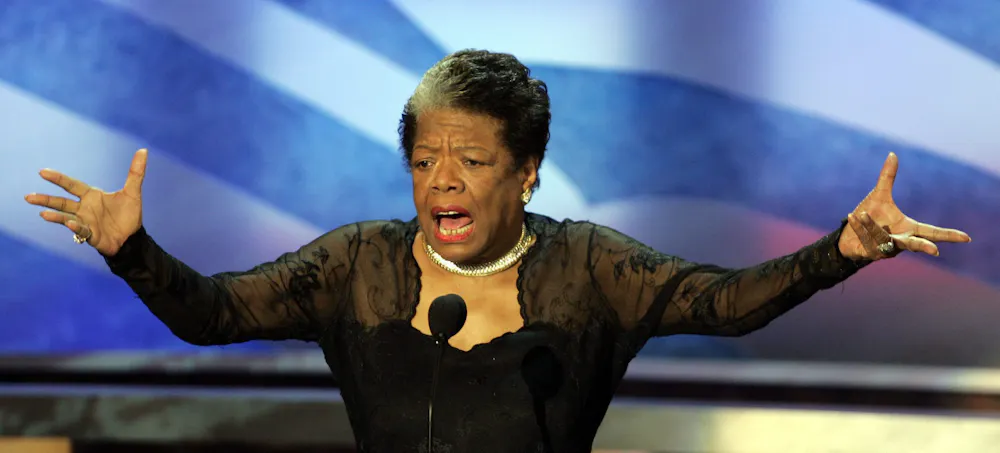
One of the many quotes from Maya Angelou that people are share is:
I’ve learned that people will forget what you said, people will forget what you did, but people will never forget how you made them feel.
My The Conversation colleague, Aaron Nyerges, has written a beautiful acknowledgement of Maya Angelou’s contributions as a poet, or as he states borrowing from Shelley, an “unacknowledged legislators of the world”. I want to acknowledge how Maya Angelou made me feel as a young black American woman, and how those feelings have defined how I experience myself as a complete human being.
I can honestly say that I actually felt Maya Angelou before I knew who she was. I was 17 years old and attending the Academy of Achievement’s Golden Plate Awards held in Chicago in 1989. I had walked to the ballroom where the keynote speakers, such as President Ronald Reagan, were to speak to those considered some of the top high school students in the United States. I opened the door, stood at the back, and instantly felt electricity go up my spine. I began to tremble. Within the first minute of her speech, I was overcome with tears.
I don’t remember what she said. All I remember is how the power of her presence – the warmth, the wisdom, the elegance, and the compassion – moved me in a way that I’d never responded to a person before. When she completed her speech, I fought my way through the crowd to meet her. Standing before her with tears streaming down my face, I blurted out, “Thank you for moving me.” I remember she took my hand in both of hers, smiled, and said: “Thank you, your response moves me.”
I vowed then that I would cultivate that kind of presence – that ability to move people’s souls. Her words have guided me on that journey by giving shape to my feelings.
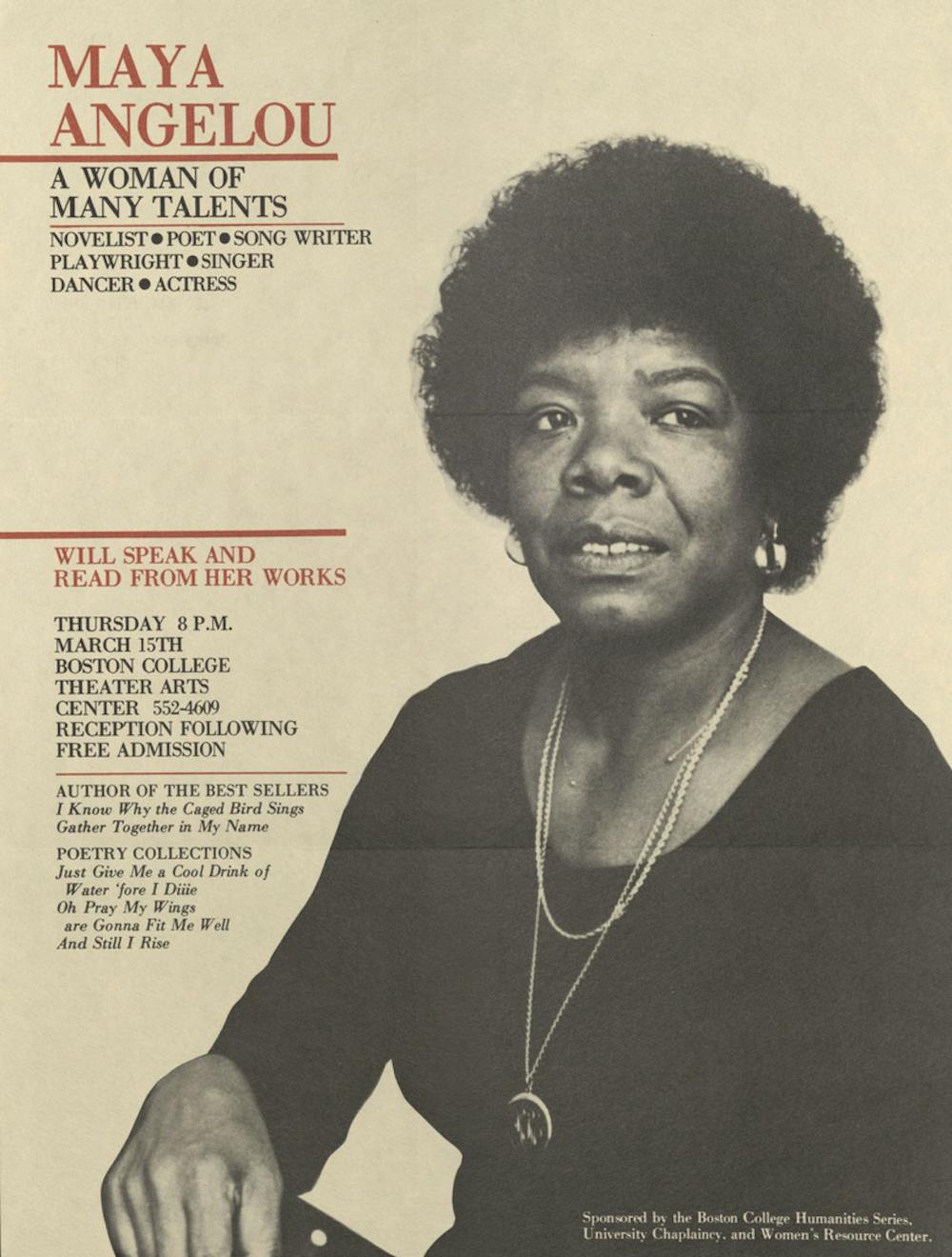
And Still I Rise
As Aaron Nyerges has pointed out, Maya Angelou’s poem And Still I Rise was published in 1978. I would have been six years old. Yet, I know the refrain from either my mother or my favourite Aunt reciting these words during our annual Kwanzaa celebrations, which is an African American holiday established by Maulana Karengal. Like a secular The Lord’s Prayer, every time that I experience the bitterness of institutional racism and anger threatens to close my heart, I whisper the words “And Still I Rise” and feel myself float above the fear and anger.
With dark skin, wide-nose, kinky-curly hair, and curvy hips, my ability to appreciate my own physical beauty is only due to a historical accident. I grew up steeped in the Black is Beautiful movement, which had reached its peak in the 1970s. As part of the Black Arts Movement, Maya Angelou’s Phenomenal Woman articulated in words the powerful images of beautiful black women who appeared on posters, magazine articles, and Blaxploitation films. Even now, I call upon those images to express my intellectual ideas, such as my QAME (questions, assumptions, methods, and evidence) Song music video.
Aaron Nyerges concludes his acknowledgement with the poem On the Pulse of Morning that Maya Angelou performed for former President Bill Clinton’s 1993 Inauguration.
This poem is what reconfirmed my decision to become an anthropologist instead of a neuroscientist, which was my original intent when attending Bryn Mawr College. As a young black woman of academic promise, one is expected to become a medical doctor, lawyer, engineer, or educator in order to contribute back to the black community.
Choosing to become an anthropologist was a risk. When I watched her on TV call forth our connections to the trees, to the rivers, and most importantly to each other as human beings, I felt that I had made the right decision. That the path of anthropology would bring me closer to my need and responsibility to promote greater respect, understanding, and love among all people, minerals, plants, and animals.
Since the moment I first felt Maya Angelou, I have actively chosen paths that would cultivate my warmth, wisdom, elegance, and compassion. I am privileged to have stood in front of crowds of hundreds, and sometimes just one-to-one encounters, in which I have given people goosebumps, made them tremble with excitement, and even moved their soul to tears.
I acknowledge that Maya Angelou, by taking my hand in both of her hands, connected me directly to a little bit of the power of her presence. But she only gave me a spark. Every day I have to work hard in opening my heart to maintain it.
Thank you Mama Maya, my great ancestor. I will never forget how you made me feel. 
Elizabeth Dori Tunstall, Associate Professor, Design Anthropology, Swinburne University of Technology
This article is republished from The Conversation under a Creative Commons license. Read the original article.