Share The Dream: Chris Broussard on MLK’s Dream

Share The Dream: Chris Broussard on MLK’s Dream

Save & Exit

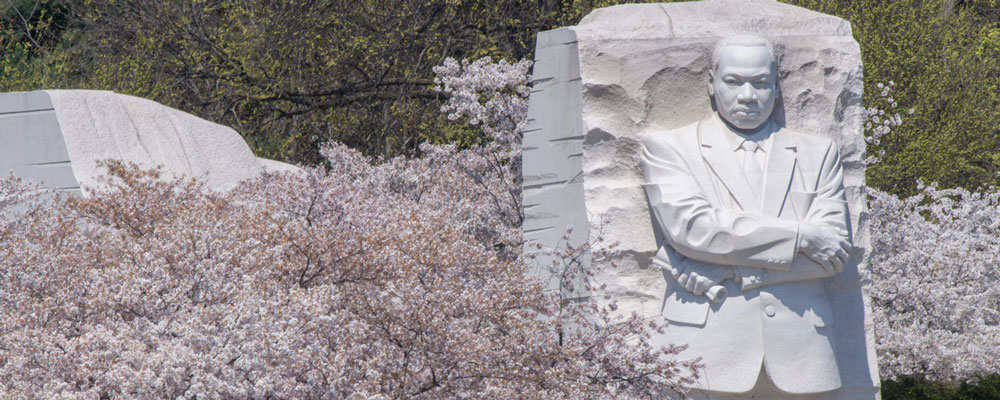
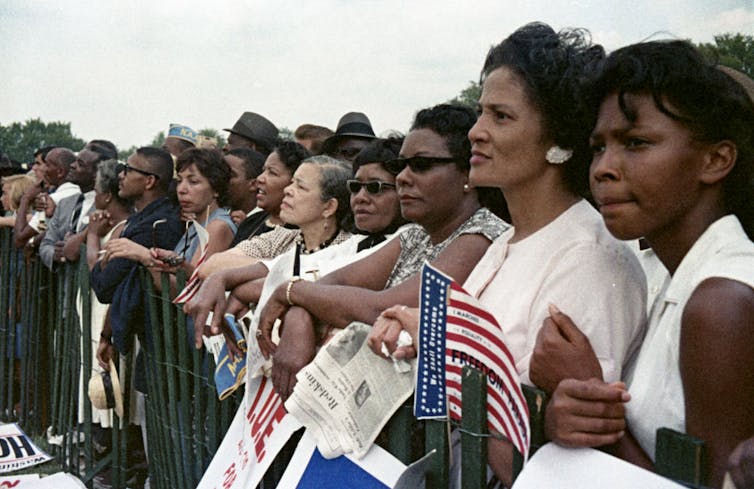
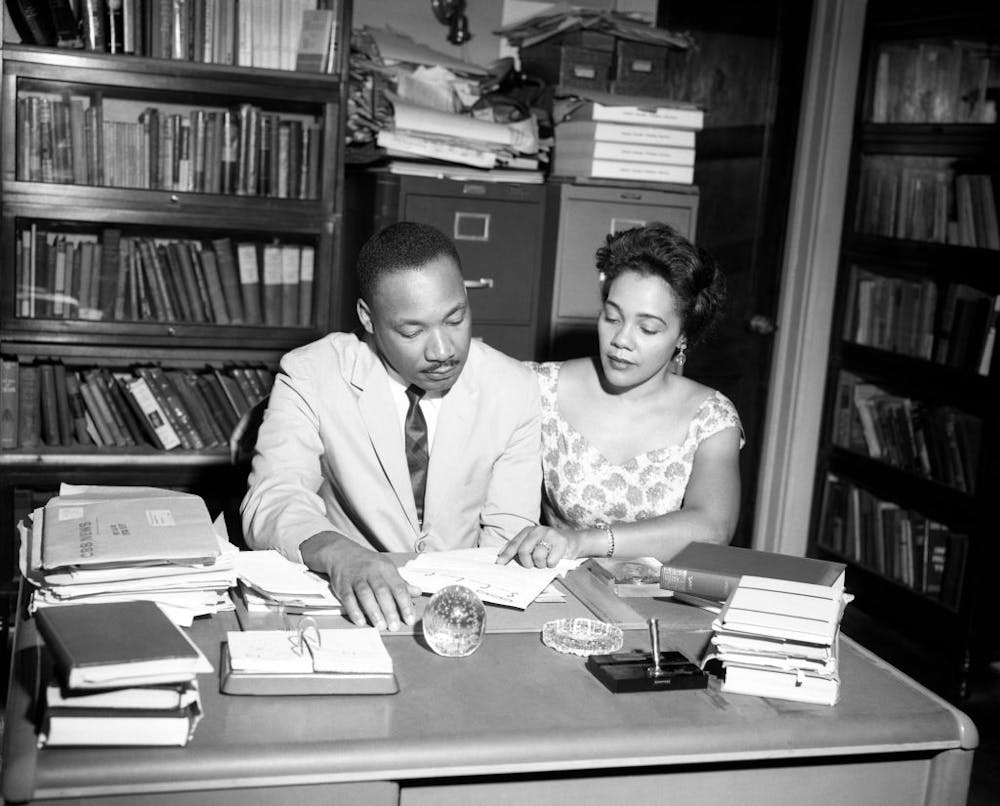
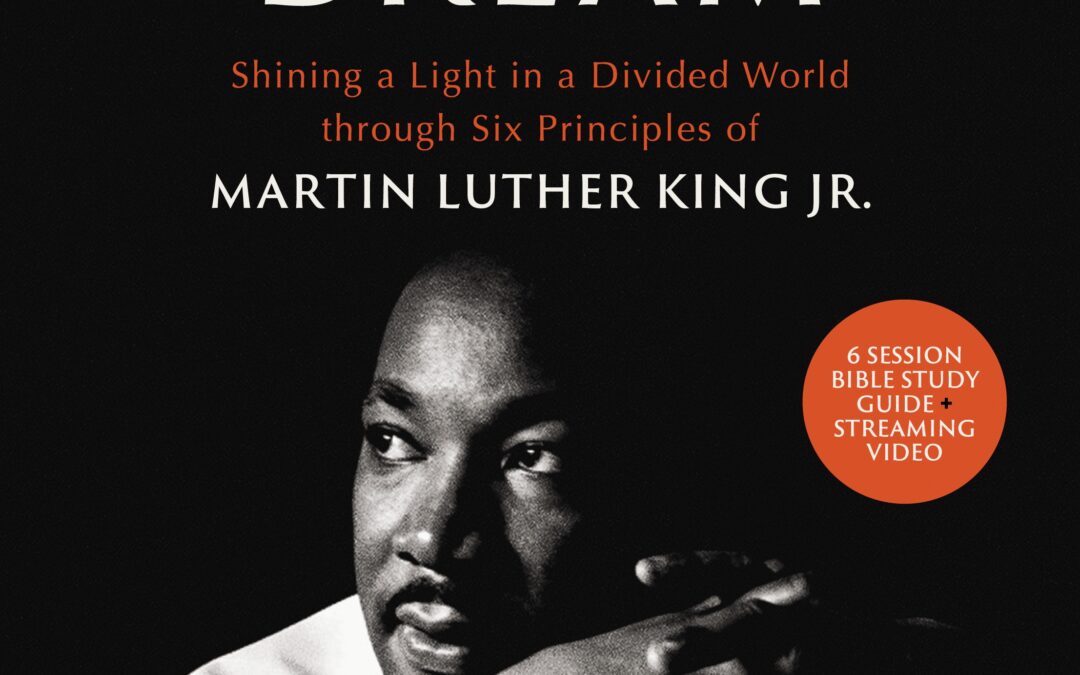
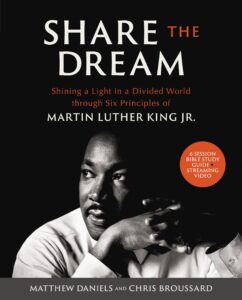
August 2023 is the 60th anniversary of the Reverend Dr. Martin Luther King, Jr.’s “I Have A Dream” speech and the historic March on Washington for Jobs and Freedom.  UMI (Urban Ministries Inc.) has partnered with Harper Christian Resources, and the K.I.N.G. Movement to honor, celebrate, and share the lessons of MLK through the Share the Dream Project and curriculum. UrbanFaith sat down with the award winning journalist and Fox Sports commentator, K.I.N.G. Movement President, and co-host of Share The Dream Chris Broussard to talk about the project and MLK’s legacy 60 years after the “I Have A Dream” speech. The full interview is above, excerpts are below edited for length and clarity. 

—–

Chris Broussard co-host of Share the Dream


Allen

We are talking about something so special, which is the 60th anniversary of the Reverend Dr. Martin Luther King, Jr.’s “I Have a Dream” speech. It has inspired us and inspire others to honor and celebrate the legacy through a project called “Shared the Dream.” And so today I am here with the commentator, the journalist, the host, the co-host for this project, Mr. Chris Broussard, who has just been someone who’s been at the forefront of helping push the dream forward.


Chris

It’s great to join you, Allen. And wow, thank you for that introduction. I’ll try to live up to it in this interview, but it’s great to be with you guys at UrbanFaith. And this Share the Dream project is something that’s special, something that’s anointed, and something that we do hope and believe can have a great impact in our country.

Allen

In a lot of ways it feels like we see Dr. King as a meme, right? Like it’s just a picture on social media with a quote taken out of context. People don’t even know for the I have a dream speech, that he starts with laying out the problems before he gets to a vision for what we could do together. Can you talk a little bit about what it looks like to have a vision going forward and why it’s so important to learn from our history and address those realities before we rush to the vision that God might have for us being united and being one?

Chris

No, that’s a great question. Because a lot of times you hear talk about racial reconciliation. And to some people, like I said, does that mean a hug? Does that mean, you know, just some superficial gatherings, but not addressing the issues that left us unreconciled and leave us unreconciled? As you said, most people don’t even know that Dr. King addressed those issues before he said, “I have a dream” and all that stuff. And of course, later in his life, he really to some degree was distraught and disheartened when he really looked at the economic differences. And obviously he knew that [before]. But, in the South the racism was so overt that they were addressing those situations. Blacks couldn’t go here; blacks couldn’t go there. You just address those issues. And then we went up to the North and you saw the economic conditions that many Africans Americans were living in. In the North there [wasn’t persistent] legal segregation, but blacks were clearly getting the short end of the stick. It really disheartened him, and he had to rethink and was in the process of even thinking like, “Okay, how are we going to address this?” And he did have ideas and he talked about redistribution of wealth and all that stuff.

I think the key is that, our white brothers and sisters, particularly in the church, have been miseducated on the history of America. All the talk about a great Christian nation, and manifest destiny and the city on the hill. What about the way African-Americans and Native Americans were treated? And so that miseducation informs the way a lot of whites view the racial situation today. And by using a lot of Dr. King’s principles and teaching, like we want to hopefully shed light on how the true racial history of America, as bad as it was, in the past, but also how it impacts us today. How it impacts the disparities you see today and the tension and the distrust that you see today and all the events that we’ve seen in the past few years. All of that is a remnant to some degree of much of the past. The wealth gap. That’s not just because whites have worked hard, and blacks haven’t. It’s not because of that at all. It is because of things like the federal housing administration loans that were given out to mainly overwhelmingly white Americans in the from the 1930s on into the 1960s that built these beautiful white suburbs. The red lining of the African-American neighborhoods that have cost African-American families on average hundreds of thousands of dollars. These are the things [that must be addressed]. It’s not just let’s go have dinner together and be friends. It is let’s address these economic issues that really were created by the racism of the past and address the those. And then [there can] be some real racial unity and we can have some real robust discussions about how we can solve these problems that we have today. So yeah, I think that’s, you know, part of what we’re trying to do with Share the Dream.

Allen

[In this curriculum] you outline the six principles of Dr. King’s legacy beautifully: Conscience, justice, perseverance, hope, freedom, and love.] What principles have you seen stand out in your own life or be most influential to you or what were your favorite ones to share in the series?

Chris

Yeah man, there’s so many. I think to some degree I’ve addressed a little bit of the conscience of really making America in particular, many of our white Christian brothers and sisters aware of the true history of this country. I’ve talked to whites who have talked about city on the hill and the great Christian heritage of America, who have talked about slavery as if it was just a little blind spot. It was just a little mistake. I’m like “No, you understand that the reason America was able to become the greatest superpower we’ve ever seen was on the backs of slavery.” So that is a part of it trying to just awaken that consciousness within white Americans to understand. So, I think that’s the conscience. I could focus more on justice as well. Yes, we see overt acts [of racism] here and there. But a lot of it is subtle. If you if you don’t have a deeper understanding of it and really dig beneath the surface, you can get the wrong idea of the racial situation in America today. [Racist policies] created the wealth gap and all of that, that’s a part of the justice we need to look at. I’ll quickly just throw out one more, the perseverance. Like a lot of time, I think a lot of people have been beaten down, particularly African Americans by the situation in America today, by the persistence of the oppression. Where they have given up, where they just decided, nothing can improve for us overall or for me individually. It can affect your decision making and things like that. Whereas you look back in the day when Dr. King was marching and even before that, in the face of even worse oppression, you did have, I would say, you probably had more perseverance and hope within the Black community than you do today. And I believe a lot of that was because Dr. King and many of the people that were working with him were rooted in Jesus Christ. And when you’re rooted in Christ, no matter how bad things look on the outside, you will have hope. As bad as things look in this country, I do have hope because of the gospel and the transformative power of the gospel and how it can change a person and a people’s outlook on life, worldview, and decision-making behavior, all of that. And I think that’s what our ancestors had. And that’s what gave them the perseverance and the hope through slavery, through Jim Crow.  We have more opportunities and freedom today, but many of us lack the same perseverance and hope that our ancestors had. So that’s something I would wanna highlight as well. Why did they have that hope? Let me tap into that reason behind their perseverance.

Allen

Yeah, I mean, they were so rooted in their faith. And I really appreciate this series pointing that out, highlighting that, bringing that to the forefront, because a lot of times people forget that Dr. King was a minister, right? Like he wasn’t just some great speaker and marcher, he was a minister. You got to work with his friend Andrew Young who was there. What are some of the lessons that you feel like people take away from being able to hear from some elders and from some other folks who are part of the project in the video series in the curriculum?

Chris

Well, I think that’s a great question. I think Ambassador Young, he obviously gets accolades and people understand and talk about what he did in the past and his involvement in the movement and all of that. But I don’t think people understand and fully give him the credit for just being how great of a man he is. And to your point, a man of faith. People want to divorce the faith of Dr. King from what he did. They want to divorce [him from his faith]. I could go on and on Frederick Douglass, Harriet Tubman, even Marcus Garvey who [was] a Christian. People want to divorce or [history from faith]. They want to look at these great actions of our ancestors and yet and not look at the sources of their power and the source of their wisdom and the things that they fought for and fought against and stated and so on and so forth. And Ambassador Young is also like that. Ambassador Young is a great man of faith. And I get that we should focus on the other things he talks about and the things he fights for. And everything’s not a religious conversation. But I think it is important that people understand, especially in this day and age, where faith is being marginalized. Christian faith has sustained us as a community and as a people and is now being marginalized, tossed aside, watered down and things like that. It’s important to see in a great man like Ambassador Young that his faith has always been vibrant and to this day is vibrant. And that that’s what motivated him and led him to be able to do and have the strength to do what he did.


 

Setting Goals

new years

Where do you see yourself in two years? What about five years? Do you have a detailed plan for achieving these goals? It’s easy to live from day to day without thinking about the specific steps you need to take to reach your future goals successfully. Many of us may be so bogged down with trying to balance work with school, responsibilities at a job, and expectations from others that we think there is no time left in the day to plan. But if we are going to be successful, we must make time to think about where we want to go, and create a map that will take us there. As a Christian, keep in mind that it is not enough for you to simply implement a plan you thought of on your own. Be sure to pray as you plan your future. Below, find three steps to help you achieve the resolutions you set for the New Year and the plans you make for your future.

1. Set a specific goal

2. Write the goal

3. Making necessary adjustments to reach the goal.

(more…)

What is Kwanzaa Really About?

Video Courtesy of Inside Edition


All week long, African Americans have been celebrating Kwanzaa across the U.S.

Perhaps you may attend a Kwanzaa celebration at your church or even participate in Kwanzaa in the comforts of your own home, but do you really know why? What is Kwanzaa and why do so many African Americans choose to celebrate the holiday?

Dr. Maulana Ron Karenga created and developed Kwanzaa in 1966. Dr. Karenga is an author, professor, and scholar-activist who is passionate about sustaining Pan-African culture in America with an emphasis on celebrating the family and the community.

There are three main ideas that are foundational to sustaining Kwanzaa tradition. The first idea is to reinstate rootedness in African culture. The second is to serve as a consistent, annual, public celebration to strengthen and confirm the bonds between people of the African diaspora. And finally, Kwanzaa is to familiarize and support the “Nguzo Saba,” also known as the “Seven Principles,” which are each celebrated during the seven days following Christmas.

These seven principles represent the values of African communication. They include the following:

  1. Umoja or Unity
  2. Kujichagulia or Self-Determination
  3. Ujima or Collective Work and Responsibility
  4. Ujamaa or Cooperative Economics
  5. Nia or Purpose
  6. Kuumba or Creativity
  7. Imani or Faith.

People celebrate Kwanzaa in numerous ways and have different practices that have been incorporated into their celebrations.

Symbolic Decor

Are you unsure as to how you and your family can participate in a Kwanzaa celebration? A good way to start is to decorate your home or living quarters with the symbols of Kwanzaa.

First start by putting a green tablecloth over a table that is centrally based in the space in the space you intend to decorate. Then, place the Mkeka, a woven mat or straw that represents the factual cornerstone of African descent, on top of the tablecloth.

Place the Mazao, the fruit or crops placed in a bowl, on top of the Mkeka symbolizing the culture’s productivity. Next, place the Kinara, a seven-pronged candle holder, on the tablecloth. The Kinara should include the Mishumaa Saba, seven candles that represent the seven central principles of Kwanzaa.

The three candles placed on the left are red, symbolizing struggle, the three candles to the right are green, symbolizing hope, and one candle placed in the center is black, symbolizing those who draw their heritage from Africa or simply just the African American people. The candles are lit each day in a certain order, and the black candle is always first.

Next, include the Muhindi, or ears of corn, used to symbolize each child. However, if there are no children present, place two ears to represent the children within the community.

Also, include Zawadi, gifts for the children, on the table. And finally, don’t forget the Kikombe cha Umoja, a cup to symbolize family and unity within the community.

Pan-African Creativity

You may also choose to decorate the rest of your home with Kwanzaa flags, called Bendera, and posters focusing on the seven principles of Kwanzaa. Some children usually take pleasure in making these flags or they may be purchased instead. African national and tribal flags can also be created to symbolize the seven principles.

Other ways to celebrate may include learning Kwanzaa greetings, such as “Habari Gani,” which is a traditional Swahili greeting for “What is the news?”

Other activities for celebrating Kwanzaa is to have a ceremony, which may include lighting the candles, musical selections played on the drums, readings of the African Pledge and the Principles of Blackness, reflections on the Pan-African colors, discussing African principles for that day and/or reciting chapters in African heritage. Be creative!


Have you and your family been participating in your own Kwanzaa traditions? Share them below.

Trolls Band Together Interview

Trolls Band Together Interview

The Trolls franchise is one of the most popular animated series in the world. It brings together recognizable music and fantastic animation to tell stories of joy and challenges in relating to one another. The new movie Trolls: Band Together explores the fun and frustrations of being part of a family. It was a fun, focused, fantastic edition to the Trolls saga that truly brings families together. UrbanFaith sat down with the Director of Trolls Walt Dohrn to talk about the new movie which is in theaters everywhere November 17. The full interview is above. A trailer for the movie is below.

Invisible Generals

Invisible Generals

In Invisible Generals: Rediscovering Family Legacy, and a Quest to Honor America’s First Black Generals, author Doug Melville tells the incredible true story of the 1st and 2nd Black Generals in the United States, Benjamin O. Davis Sr. & Benjamin O. Davis Jr. They were his extended family and were a father and son who changed our country and yet their history has rarely been told. Ben Sr. established the Tuskegee Airmen, integrated the Armed Services, and served in the Air Force for decades. Ben Jr. was the first Black 4 star General, established the TSA, and shaped the Transportation Administration. As we honor our former soldiers this Veterans Day, let us learn about these Invisible Generals who changed our nation. The edited interview is above, more about the book is below.


——

In Invisible Generals, Melville shares his quest to rediscover his family’s story across five generations, from post-Civil War America to modern day Asia and Europe. In life, the Davises were denied the recognition and compensation they’d earned, but through his journey, Melville uncovers something greater: that dedication and self-sacrifice can move proverbial mountains—even in a world determined to make you invisible.

Invisible Generals recounts the lives of a father and his son who always maintained their belief in the American dream. As the inheritor of their legacy, Melville retraces their steps, advocates for them to receive their long-overdue honors and unlocks the potential we all hold to retrieve powerful family stories lost to the past.

A God with a heart for the marginalized

Devotional Scripture

10 When you make a loan of any kind to your neighbor, do not go into their house to get what is offered to you as a pledge. 11 Stay outside and let the neighbor to whom you are making the loan bring the pledge out to you. 12 If the neighbor is poor, do not go to sleep with their pledge in your possession. 13 Return their cloak by sunset so that your neighbor may sleep in it. Then they will thank you, and it will be regarded as a righteous act in the sight of the LORD your God.
14 Do not take advantage of a hired worker who is poor and needy, whether that worker is a fellow Israelite or a foreigner residing in one of your towns. 15 Pay them their wages each day before sunset, because they are poor and are counting on it. Otherwise they may cry to the LORD against you, and you will be guilty of sin.
16 Parents are not to be put to death for their children, nor children put to death for their parents; each will die for their own sin.
17 Do not deprive the foreigner or the fatherless of justice, or take the cloak of the widow as a pledge. 18 Remember that you were slaves in Egypt and the LORD your God redeemed you from there. That is why I command you to do this.
19 When you are harvesting in your field and you overlook a sheaf, do not go back to get it. Leave it for the foreigner, the fatherless and the widow, so that the LORD your God may bless you in all the work of your hands. 20 When you beat the olives from your trees, do not go over the branches a second time. Leave what remains for the foreigner, the fatherless and the widow. 21 When you harvest the grapes in your vineyard, do not go over the vines again. Leave what remains for the foreigner, the fatherless and the widow.

Help for Homeless

Of late, I have been thinking about the orphaned, widows and those who are struggling to make ends meet. The feelings of despair and hopelessness can become every day emotions if there is no stability in the area of provision.

Currently, there are millions of people who are one paycheck away from poverty. Many carry the burden of shame, fear and trauma of what will happen to them if they are not able to make ends meet.

A lot of times, in the midst of trial and tribulation, one can feel as though no one sees or understands the plight they are going through. However, in Deuteronomy 24:10-21, we see the thoughtfulness of God.

God cares. He is thoughtful and attentive to your needs. You may not have the courage to pray or ask Him because you are afraid of disappointment. Maybe all your help is gone, you are starting over, going through a break-up or a divorce. A loved one who was your main source of support financially is gone, and now you are picking up the pieces of what is left of their memory and trying to make the best out of the situation you are in.

God’s senses are alert and keen to your needs. Provision may not appear in the form or the way that you thought God would bring it to you, but open your eyes and look again. In the times of old, He instructed those who were harvesting to leave some of the harvest behind, because He knew there were those who did not have fields to harvest from, and what was left behind would be their only meal.

God is constantly providing for you. It may be through:

  • Ideas
  • A fresh perspective
  • A helping hand from a stranger


You will never know if you do not ask, seek, or make your request known. This week, do not wallow in your sorrows, reach out for help. Sometimes your provision is a phone call or an email away.

What you need, is within arm’s reach. You have to stretch yourself by faith, be humble and ask, believing that on the other end, God has already touched a heart to help you in your time of need.

If He did it before, He is able to do it again, do not assume that God has written you off. You are in His thoughts, and He wants the best for you. He has placed the provision in your path, all you need to do is ask Him to show you what to do, and where to go, and He will guide you.

Prayer

Dear Father,

This week, to reveal to me the fears I have of receiving or asking for help. Remove any form of pride, shame or condemnation that lingers in me, that would cause me to suffer in silence. I believe what I need, you have already provided. Lead me to the path of provision that has my name on it. Open my eyes and show me who I can confide in regarding what I am dealing with, and let me have the faith that you have already made the way.

Lord, If I am the answer to someone’s prayer, show me how I can be of help, and place me in the pathway of the people I am supposed to help this week. Nudge me, when I ignore your voice and affirm me, when I do what is right. Thank you for reminding me, you will use people to bless me, and you will use me to bless others.

Regardless of what I am dealing with today, lift my spirits up, and remind me that you are a thoughtful God, you have always had me in mind, and all things will work out for my good.


In Jesus Name

Amen