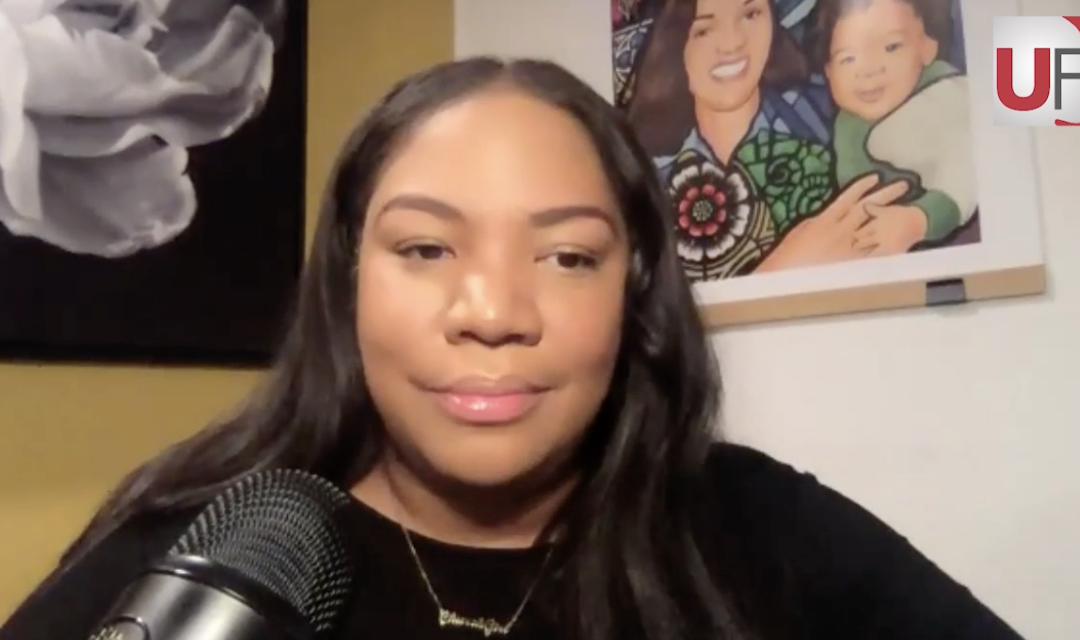
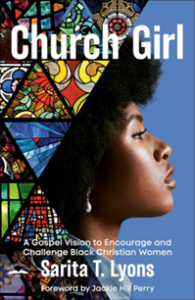
UrbanFaith interviewed minister, psychotherapist, and author Dr. Sarita Lyons about her new book Church Girl which is a comprehensive look at the blessing, challenges, and opportunities for black women to live fully as believers and part of the body of Christ. UrbanFaith editor Allen Reynolds believes it is one of the most important books of the year. The full interview is above. Excerpts below have been edited for clarity.
——-
Allen
What inspired you to write this book? You clearly, you’ve spent a lot of time doing counseling work, and then you spent a lot of time doing ministry work. Why did you decide to write a book to help black women and to help black churches to deal with everything that concerns you?
Dr. Lyons
Yeah, great question. So the thing that I’ve been saying when I get that question is, I really did feel God called me to this. I always felt like one day maybe I would write a book, but never did I imagine I would write a book about this or like this. And I’m so honored to be the vessel that God is using to do this work in the earth at this time, because I do think this is a Kairos moment, right? This, it’s a timing, everything that God does has a very specific timing. And so when I think about the lives of black women, Christian women, the church, and then the influence of the world and all the demonic schemes that are being used to get black women to not really grab hold of the faith and put their confidence in Christ. It is a very prophetic work and it’s doing damage on the kingdom of darkness. That’s the intention. I would also say as a black Christian woman, I wrote this book because Toni Morrison once said, if there’s a book you need to read and it doesn’t exist, write it. And so I have written the book that I have needed that I believe so many black women have needed from my time leading black women and teaching black women and ministering the women and counseling at the local church and in private practice. I’m like, wow, this feels like the book we’ve been craving and wanting that just really hasn’t existed. Orthodox in orthodox in terms of teaching and theology, but clear and biblical in orthopraxy, not sacrificing justice, not sacrificing human felt needs, as if they aren’t gospel driven needs and concerns. So it’s, it’s balanced in the ways in which oftentimes books that do, you know, target black women aren’t often balanced in that way. Yeah, or the other concern that many black Christian women have often felt is we’ve read a lot of good theology about biblical womanhood and what it means to be a Christian woman, but we have in some ways felt erased or missing in the message. And the star of every book, the star of every teaching should always be Jesus, but we do know the importance of contextualization. And so church girl seeks to contextualize the experience of black Christian women in a world where we’ve experienced various forms of opposition, where we have our own unique internal struggles and opposition to really living the lives that God has called us all to live. And so I jokingly say a lot of times that you know this isn’t a new gospel this isn’t a new gospel vision for black women that isn’t similar for other cultures, but in many ways I’m writing The Wiz for their Wizard of Oz.
Allen
One of the things that’s come up a lot in our culture is this thing of church hurt, and you spend two chapters kind of dealing and wrestling with it. You start out talking and comparing it to The Color Purple and Sophia and Celie. And can you tell us about what is church hurt? I mean, I know folks in our audience have felt it. It’s causing folks to leave the church, and you give ways to not only address that, but deal with it and invite people to stay in the faith, right, and to stay faithful. Can you talk about the church hurt?
Dr. Lyons
Yeah, so I mean, I think we could come up with a thousand different definitions, but the name speaks for itself. It’s any kind of injury, emotional, physical, spiritual harm that is done in God’s house among people who are professing to be believers. And oftentimes, I mean the four walls of the local church. But I also think that there can be global church hurt, meaning just when different systems of church functioning and ideology like nationalism and patriotism end up becoming more important to churchgoers than just human life, people who bear the Imago Dei, the image of God. That is a global way people can also be hurt. I’m talking about the fact that church hurt is really distressing and particularly like thinking about Harpo and Sophia. I’m making the point that all of us black girls, we have a Harpo, you know what I mean? We have someone that was supposed to love us, someone that was supposed to protect us, someone that said they were committed to us that creates an injury and Sophia had to fight Harpo. That’s her husband. No woman wants to fight, but you definitely don’t want to have to fight in your own house. And I think one of the scars, the wounds of church hurt, is that there is this expectation that people who say they love God and preach grace, mercy, truth, holiness, faithfulness, and living abundant life are not committing sins. This is the last place kind of our psyche ever expects to be hurt. We need to have a paradigm shift about that because the church is not made up of any perfect people, but we serve a perfect God. But there is a standard. We should be held to a higher standard. Church should be safe for black women. Church should be a place where black women are affirmed, not because we’re black women, but because we are image bearers because we are the daughters of the Most High God. Because like here’s the thing; don’t say women are the weaker vessel when it’s helpful for you to maintain authority. But then we’re not the weaker vessel when it’s time to protect, when it’s time to love, or when it’s time to care for well. So the first chapter is really naming the church hurt. And [it doesn’t] matter whether you’re a man, woman, black, white, or other. Everyone has a story of church hurt, some of which I talk about in the book that other people may say “I relate to that. I get that.” I really tried to spend a lot of time though I couldn’t represent every black woman because we’re not a monolith. I really tried to think of what the unique ways are black women experience church hurt that may not show up in other circles for instance being white. Sometimes depending on if you’re in a predominantly white church, or if you’re in a black church that has still prescribed to whiteness being standard of holiness and righteousness and goodness, instead of being able to see that the kingdom of God can hold the diversity of culture. We can all be godly and worship God in the uniqueness of our culture and still be on brand as Christians. And so, I’m thinking about the emotional psychological hurt, the physical hurt, the abuse, the being mis-seen, the being overseeing, even the hurt that we experience when we don’t put more emphasis on the brother sister relationship. How we [in the church] have romanticized and sexualized relationships between men and women so much that we don’t know how to just be faithful siblings in the faith, how both men and women are injured when we do not highlight that aspect of our relationship with one another. One of the other ways that we’re hurt is not just from the perpetrator, but we’re also hurt when there are people who are yes men, and yes women, and there’s cover up, and there’s no accountability, and people who have injured us are never sat down. There’s no discipline, there’s no restorative process. We’re not talking about crucifying people.
Now some people need to get arrested and go to jail for some stuff. But most of the time what people are experiencing is the kind of hurt that if we apply biblical principles to it, I believe that restoration can happen I believe that we can come out stronger. And in many instances, reconciliation can happen so that people don’t all have to leave the church every time they get hurt, because to be hurt is a normal part of the human experience. The only person that’s not going to hurt you in a maladaptive way is God, is your relationship with Jesus Christ.
So, I think that’s part of [it.] Not only are you going to get hurt. But if you tell the truth, you are going to hurt. And one of the things I really wanted to do in the chapters on church hurt was bring balance to it. I think the only place we often ever have a vision to see ourselves is as the victim. We never see ourselves as the victimizer. We never see how we have caused hurt to someone else that someone right now is going through a healing because of something you said or didn’t say or something you did. And so we don’t want to blame because people who are actually victims need to be protected and taken care of and stood up for and they need to be healed. But we also don’t want to pretend that all our hands are always clean. And so that in the same way we need forgiveness from people, we also have someone else needs our repentance. I say in the book that healing from church hurt is a form of spiritual warfare, because the enemy would love for us to get broken and devour one another and be Christian cannibals and tear each other up. But healing, he doesn’t want that because as long as we stay broken, we can walk around with our proverbial church hurt baggage. We can then project the offenses that come through people onto a holy, perfect, righteous, loving God so that He begins to bear the blame and responsibility of the unfortunate sinful acts of the people that represented him. And instead of then having problems with church people, we start having problems with the Groom of the Church. We start having problems with Christ. And so, we don’t walk away from just people sometimes we end up walking away from the faith. And because the devil is intent on robbing God of glory, the breakdown of the integrity of the local church is one way he wants to rob God of glory, get people to distrust God, distrust the community of faith that God says we need for our own sanctification and growth from spiritual immaturity to spiritual maturity. And so [the enemy] wins when we don’t heal. He wins when we stay bitter. He wins when we stay broken. He wins when we stay unreconciled. The way God wins is when we solve problems with biblical prescriptions. When we do things God’s way, from discipline to correction to restoration, we usually get God’s results.
Allen
What advice would you give to young girls and young women, trying to find their places church girls?
Dr. Lyons
I would just say, one of the main ways you just grow as a Christian is you have to grow in biblical community. Meaning [no] isolating yourself. This mantra of “it’s just me and God,” that is a lie from the pit of hell. God doesn’t even exist in isolation. God, the Father, the Son and the Holy Spirit exist in community three persons in one. I think that is one of the ways we protect ourselves from the attacks of the enemy, from false teaching, from all the things that help us drift from the faith is to be in strong biblical community with other brothers and sisters who are like minded. And we also need discipleship. Discipleship is not just finding one super saint to lock arms with, go to Starbucks and get coffee, and do fun things. That can be sometimes a part of it, but really, we need to see every aspect of the church as a means of discipleship. You showing up on Sunday and listening to the preached word, you’re being discipled, you going to women’s ministry or men’s ministry or singles or marriage ministry, you serving in the local church. Those are all contexts where you can receive discipleship. I also think really got to put our hand to the plow. And because in the context of serving the local church, not just being a consumer is when you get to be around other people you get to learn the ways of Christ. You get to give up yourself and give yourself over to the work of the Kingdom. And that’s how you grow.
I would say, not even to say this last because this is definitely like last but definitely not least, prioritize becoming a biblical scholar. And I want to say biblical scholar and theologian, not just like I read my Bible, I did my devo time, but get in the book get in the text. If you’re using devotionals use them as supplements, use them as vitamins. Vitamins are good but they’re not food to live off. Prioritize eating that book, eating that word. Research has shown, even if it was just four days a week. If a person reads the Word of God, four days a week, their life would drastically change. I tell people read something every day, because there are things we do every day like brush our teeth. We wake up, we care for our bodies, we do things every day because it just has become a natural pattern. Eating God’s Word has to become a natural pattern. You grow by the Word of God. If you get into the Book, it will drastically change your life. When God delivered me from African spiritualism and all the ways in which I drifted from the faith and into tarot cards and kyrie shells and astrology and you know just all the altar building and ancestor worship, I had a Bible that looks spanking brand new that I found where God confronted me and convicted me of my idolatry. And all I did every single day, whether I understood it or not, is I read that Book. And I still have that Book, and it is tattered and worn and half of Romans is missing. And the pages are all crinkled up, because it was in the Word of God that God strengthened me and changed my mind and changed my desires. It is getting in the Word of God every single day that will literally revolutionize your life. I would also just say, hey, being a church girl is about being unapologetic. Like you can’t be afraid of cancel culture. You can’t be out here trying to fit in with the world and be on brand as a Christian. We [must] be willing to be soldiers. There are people in other countries who are literally dying for the faith. Surely you can handle not being liked or somebody thinking you a Jesus freak. If being a Jesus freak is the worst thing you could ever be called in this life, I mean, you have surely picked up a jewel to go in your crown. We have to we have to interrogate our lives and say, God saved me from the world. But the intention was to send me back into the world and be a light and be a disciple and be an ambassador. Be a living epistle being read by man because God is making his appeal to the lost world through us. Sometimes you’re the only version of God or church that a lost person will ever met meet on their way to being a believer. And so, if we’re a living epistle, you want to look at your life and say girl, am I telling the story correctly? When people look at me, when they observe my speech, when they observe my walk, when they observe where I go, and what I do, and what I share on my social media and what I even like on social media, because I’ve been tripped out by some of the Christians liking some wild stuff, do I look like I’m a serious Christian? Do I look like I’m a serious Christian? And if not, what are the things that God says you got to die to in order to walk in obedience to [Him]? Like you just can’t live in your kind of way and call yourself a Christian. We shouldn’t just live your kind of way and just call ourselves sliding into heaven. Stealing home base ain’t the way to go. It’s not the way to go. I want to I want us to get our weight up biblically, but I’m challenging us like stop playing church. Stop being on the sidelines stop just attending on Sunday and living wild and reckless and sleeping around and smoking blunts and you ain’t got glaucoma and talking crazy and sharing dumb silly memes and laughing at the church, laughing at all kinds of foolishness. Because what you laugh at you normalize. Check the music you listen to, what are you feeding yourself? Because here’s the thing, whatever you feed will grow and whatever you starve will die. How are you feeding your flesh? And how are you starving your spirit? The goal isn’t to starve the spirit; make it weak make it impotent. [It’s] to nourish and feed the spirit man so that that can be the giant. [Then] the flesh can be the little person, but we are functioning opposite of that. I see too many of my sisters just out here, really wanting to figure out how to be a carnal Christian. And that’s corny. Being a carnal Christian is corny. We need to stop it. Be unapologetic, be bold, be courageous the Bible says the righteous are bold as a line. God wants to use you sis. And the enemy is sitting back laughing at us as he eats up our lives with us looking like we serve him and not serve God. It’s time to come up and that’s what Church Girl is doing. Get this gospel vision for your identity for your purpose, for your healing, for your rest, for your ability to live unapologetic in Babylon, so you can flourish and stop drifting away from the faith. Or my last chapter, go after the gone girl, the missing black woman from the church and help guide her home like God guided me home when I was the prodigal daughter out in the world. The book isn’t meant to beat up on you, but it is a clarion call that says where’s the remnant? Where’s the remnant? Stand up! Stand up to the glory of God.
Maya Moore was a WNBA Champion, MVP, and superstar when she left the game in her prime to pursue more justice in the US criminal justice system. The incarcerated man she advocated for, Jonathan Irons, had been advocating for prison reform from the inside. Now the two are married and sharing their story through their book Love & Justice. UrbanFaith sat down with Maya and Jonathan to talk about their incredible story following Jesus to sacrifice and live out their faith by seeking justice for the least of these. Excerpts from the interview below have been edited for length and clarity.
Allen
We are here with Jonathan Irons and Maya Moore Irons to talk about their book Love and Justice, the story of their incredible journeys; Jonathan in advocating for justice and Maya in joining in that justice fight after being a WNBA superstar. Can you talk about just that how the context and the environments that you are you all were in, allowed you to see that injustice in different ways?
Jonathan
I mean, it’s not hard. Like kids that are going on struggling and poverty and in situations that are just unfair and disadvantaged. I volunteered with kids down at the school called Peace Prep. And like they are aware, like they’re very intelligent. They are aware that they’re not getting the same type of resources and as other kids in other schools. They are aware that their city is riddled with addicts and there’s criminal activity that’s going on. They think police don’t like them and don’t care about them. And I won’t say that they’re making it up. Like I had so many different examples of things that just showed me that I wouldn’t be treated like everybody else [growing up]. And it just felt like people were being dismissive. Like my teacher didn’t like that I had so much energy. I was always up and down up and down up and down. Maya had a teacher that basically allowed her to stand around and use her energy and she turned into sports and encouraged her like, burn your energy off. Be a kid. Like for me, I didn’t have that experience. And I was aware of that. I was aware that I was treated different than other kids. I went I went to a friend’s house and they had a toilet. I didn’t have one. I’m like, man, what is that? They were like “oh that’s a toilet. That’s where we use the bathroom.” I’m used to a five gallon bucket and bathing in a tin tub. And then fast forward into prison. Like, I’m seeing like the racial inequality. I’m like, how is it that we’re the minority here [in America], but there are more black people that are in prison than there are any other race. I don’t understand this. What’s going on? And then I started to dig into it. I started to look at statistics. I started to read case law and treaties. I started to watch the news. I started asking questions. I started to let my curiosity just run wild. And I got to really see like all the injustices that are happening, happening around me. It got so bad that I overcame my own fear and I started to advocate for other people. I advocated for ice in prison because they stopped giving it to us for a long time. Filed complaints about that and basically talked to the warden face to face and like explained like, “hey, man, this is a basic human right in here that the Supreme Court has already said that we need yet we are not getting that.” And there is a list of things like you don’t have to worry about getting all those other things that were missing. Just give us this. Like just fighting for basic things. It’s like, if you if you have eyes to see, you cannot miss it. That’s why I kind of share some of the some of the things that were happening in prison to me.
Allen
And what about you Maya?
Maya
I think when we, you know, we’re born into the generation that we’re born into. And Ava DuVernay had a quote, I think she was quoting someone else about our mindset…about how we do this together. And the illustration was you inherit this house. We’re all living in this house. And we look at the house and there’s mold over here. There’s some foundations that are just rotting away. There’s broken windows over here and we say, we didn’t break that window. I’m not responsible for the mold over there. But this is the house that we’ve been given. And so it’s our responsibility to fix it as much as we can as best as we can. We have to look at people as people first and foremost. That’s the fundamental skill. Like in basketball, first thing you learn to do other than dribble is shoot. The fundamental skill is you have to be able to see people. We need other people who’ve gone before to help us know. The house is broken like what do we do? [We go to] that mom, grandma, grandpa, like somebody ahead of us. Help me know how to respond to this and say don’t panic baby I know this looks bad, but we can fix this. I had people to show me this is something we can do to help this system correct. And then also just being in relationship, that’s the majority of the work is not being afraid to be in a relationship with the people who have been stepped on. I had a measure of privilege. And I tried to use that to say hey, I’m no better than you. We’re both humans, you deserve to be treated like a human. I’m just saying everybody have basic humanity. Then your work ethic, or your gifts can kind of, you know take you where it goes but basic humanity cannot be a negotiable. So that’s kind of where I came in of like, I didn’t know this was happening. We need to do something because we can do something with this house that we inherited.
Allen
Can you talk about what you how your faith has motivated and played into [your work]?
Jonathan
Yeah, as you look into the Bible, you won’t find Superman in the Bible. You won’t find Batman. You won’t find people that were flawless outside of Jesus. Like everybody [had flaws]. Moses was a murderer. You could just pick anybody a character in the Bible any person in the Bible and see something. And what that does is it lets you know you’re not alone in your flaws and your weaknesses. And what that does, they call us to remember when we see other people that are struggling that are going through things. It calls us to look at them like, “hey, I have my weaknesses. We all need to have compassion on each other. We all need to help each other.” It calls us to remember those people that are less fortunate than we are.. We are supposed to want them to have the same things that we would want. We have to remember the vulnerable. Everybody’s got something going on, whether they want to admit it or not, whether it’s in the forefront or not, we all wrestle with things. And we are called to just lean into each other and be a part of community and show up for each other. And be present and speak out against injustice and things that are happening in this world. And me reading through the Bible and seeing that playing that out. Like, that is that is that to me that’s God talking to me through this word, and through other people, through my environment. God is asking you to remember those people and care for those people where you can that are disadvantaged.
Allen
Yeah, Matthew 25 right, if you did for the least of these you did it to me. Maya, can you talk about how your faith plays into this work? Because it’s a huge step going from where you were to where you are now and focused on caring for the least of these and seeking justice.
Jonathan
I was one of the least of these.
Maya
Man, understanding God’s story, right? God has given us a story. And he says there’s a competing story. There’s the story of the world, of the flesh, of devil is like what does that mean? And it’s a way of seeing that is contrary to the kingdom of God. Every day, we have a choice to make. Are we going to believe God’s story, which is the real story or are we going to believe this world story, this empire story? I think we just unfortunately see some of these systems that have been set up in our house right… in our culture. That are so empire and just crush people and dehumanize and devalue and use and manipulate and coerce all based off of [the idea that] I want to preserve myself.
I’m so fortunate to have been able to feel like I’ve been walking with the Lord since around middle school where my faith became my own, before my name became a name. I had that basketball experience with an awareness [that] my identity is “I’m God’s daughter,” and my purpose is not building my name [or] becoming the best, or making the most money. That wasn’t what got me up out of bed. And so when the when the time came where God was like really making it clear to my heart the shift that I needed to make out of that sports entertainment rhythm into a different rhythm that was unknown. [What was it] going to look like when I stepped away from the game in 2019? But I knew it was leading me towards doing more in this kingdom story that I was learning more about, which required me to give some stuff up; some of my comforts, my status or whatever you want to call it in order to be the hands and feet of Jesus and show up and do the hard things and get educated humble myself learn from people. When I was able to speak and use my platform, I could be helpful and accurate in trying to encourage and equip people. It’s about seeing God’s kingdom as clearly and as rightly as I can and then being able to live my life in a way that makes that kingdom a reality as much as I can every day. Which again is going to probably mean some sacrifice right, love costs. Jesus did sacrifice a lot for love, restoration, and redemption. But it was for the joy that was set before Him. Looking ahead to that future joy. We might not see the full benefit of what our lives are going to do but we’re tasting it now in bits. Until that fullness comes into play. But it is the center of all that we do.
Allen
Jonathan your story is unfortunately not unique enough that there are so many people who are subject to this criminal justice system that the statistics are pointing to that, but that you offer hope that there is something in the midst of it to be gained and that there are is a fight to be fought. Maya you gave up a lot. But showed there’s more to life than WNBA of success and living out our faith can mean a lot for us. So I just thank you both so much. Any last words of wisdom for young folks were out there?
Jonathan
I want to say you can’t make this type of story up. [The one I lived.] You can’t do that. And I’ll say this, it can be your darkest moments. Don’t forget that God loves you. And God got your back. All you got to do is seek a relationship with Him. I promise you. You won’t regret it.
Allen
Maya any parting words?
Maya
I would just say when you get discouraged because it can be [discouraging], it’s just it’s part of life. If you look into the dark it’s discouraging, but don’t stay there. There is something. There are people. There are things in motion that are happening that you can plug into. I’d say get plugged in to something because we can’t just look at the dark things by ourselves in our inner room. If we’re going to look at hard stuff you’ve to link arms and be like, we’re going to look at this together and we’re going to do something together. So, my encouragement is always get plugged in to something already happening and stuff will happen out of that. Keep encouraged and keep moving forward. The black church has modeled resilient ways for centuries. It’s not a new thing. There’s a legacy there. Learn and plug into those elders. There are people who have [wisdom], there’s jewels that are still alive that we can have conversations with and glean from. Let us continue to lift up our people who have gone before and make sure they’re appreciated and that we’re receiving what they can pour out. Because those are team members that need to be honored and still have something to offer us. Keep learning.
UrbanFaith Editor Allen Reynolds interviewed Jon M. Chu, director of the blockbuster movie Wicked featuring Cynthia Erivo and Ariana Grande. The full interview is above. The move is in theaters everywhere. The trailer is below.
Red One from Warner Brothers and MGM Studios is now in theaters everywhere. It stars Dwayne “The Rock” Johnson, Chris Evans, J.K. Simmons, and Lucy Liu and is every bit of the action adventure movie you would think of bringing together this experienced cast. Red One goes after the question: Can Santa Claus be cool again for older kids? And Red One answers with an emphatic yes.
As a father and a minister I have to say up front that this is not a movie for younger kids, nor is it in anyway a reflection of the true meaning of Christmas, which is to celebrate the birth of Jesus Christ. This movie is about as far away from putting Christ in Christmas as you can be. It doesn’t even have the normal general Christmas movie themes of giving, love, family, or faith. Instead Red One has a different mission: showing how cool Santa Claus can be.
I saw the movie in 4DX with my daughter and if you have a chance do that, you should absolutely take the opportunity. Watching a movie in 4DX is like going to an amusement park. It is a fun ride combined with a fun film. My ten year old loved it and it made Santa cooler than she had ever seen him portrayed.
Red One pulls from the German mythology around Santa Claus including witches, monsters, elves, magic, and of course lists and gifts. The Rock and Chris Evans are exciting and entertaining as they battle bad guys, joke with each other, and try to save Santa who the surface looks like he can save himself. The acting is great as one would expect it to be, and the action is greater. If you are looking for a movie to enjoy with your older children this holiday season, this is a great time.
I would not recommend Red One as a Christian, I would not recommend it for my younger kids, but I would recommend it as an action fan. It has scary moments, a decent amount of profanity, and a lot of action violence but nothing unfamiliar to fans of superhero movies. Red One makes Santa and the ELF (you’ll get it if you see it) into superheroes and reminds us that we can’t judge a book by its cover or a person by their past.
The parable of the Good Samaritan from the Gospel of Luke is one of the most well-known passages of scripture in Christian communities and beyond. Jesus shares this parable in response to a lawyer asking if God requires that we should love our neighbors as ourselves, then who is my neighbor? The parable can be summarized this way: a Judean man is walking down a dangerous road and is robbed and beaten. He is left hurt and in need of help. A priest walks by, sees the man and walks on the side of the road to avoid him. A Levite, or worker from the local Temple also walks by and does nothing to help. Then a Samaritan man, who was a religious, historical, and cultural enemy of this Judean man, sees him in distress. The Samaritan stops, picks up the man off the road, takes him to a local inn and pays to have him rest and recover there. He promises to pay the inn keeper whatever is necessary for the man’s stay beyond what has been paid when he returns. Jesus turns the question back on the lawyer and asks which of the 3 men in the story acted as a neighbor to the injured man? The lawyer responds “the one who has shown mercy.” And Jesus responds “go and do likewise.”
I taught this lesson to my adult Bible Study class a few weeks ago in the context of talking about how we treat people who come from a different religious tradition from us. I pointed out that this was like a white man helping a black man injured on the side of the road in 1920’s Georgia. The parable was meant to be that striking of a reminder to care for people who are different than us. Our Bible study has people who are in the 30s and 90s, black and white, men and women, many liberal and some more conservative, ministers and members, professors and students all on a zoom every week. We are a diverse group to put it bluntly. But whether we agree or disagree we have chosen to be a part of this Christian community and keep showing up to talk, study, and pray together every week.
We decided to talk about faiths beyond Christianity because of an experience a few members shared. They attended an interfaith wedding where I was the celebrant. The experience raised a lot of questions and a desire to learn from one member who wanted to know more about other religions. After asking the group if they were open to it, we agreed and included it in our regular Bible study time. During our second discussion we talked about visiting a Hindu Temple, and one member voiced that she wouldn’t want to do that because she is not Hindu. Another said that she felt very comfortable because God could be there just like God was in our church. I encouraged them that they were both right, that they could respect Hindus that worshipped in a Temple and not have to go themselves. But if they did choose to go, it didn’t make them less Christian, just having a different experience.
Being a good neighbor is not about agreeing on the same things or sharing the same identities. Being a good neighbor is about how we treat each other. Being in a diverse community can sometimes make us more intolerant of people who are intolerant. I have heard it explicitly from some of my members. But the things we practice in well response are curiosity and welcome. When the Hindu man who was dating a Christian woman came to our congregation months before they were married, we didn’t single him out or question why he was there. We hugged him and offered him food. He came because someone he loved, loved us. When a Jewish Rabbi spoke to us about her pain remembering October 7, and a Christian activist talked about his disgust at the suffering by Palestinians in Gaza in the same worship service, my pastor didn’t apologize. He let them both speak. I know our congregation is unusual. But it is a constant reminder and challenge of the possibility to be together despite differences. I can only hope that as we march toward and through this season of deep division in our country around the election, people who are in communities together whether by location or intention would remember on the other side that we all still need to eat. We all still need care when we are hurt. And we can all still be good neighbors by showing compassion.

 Allen
Allen Allen
Allen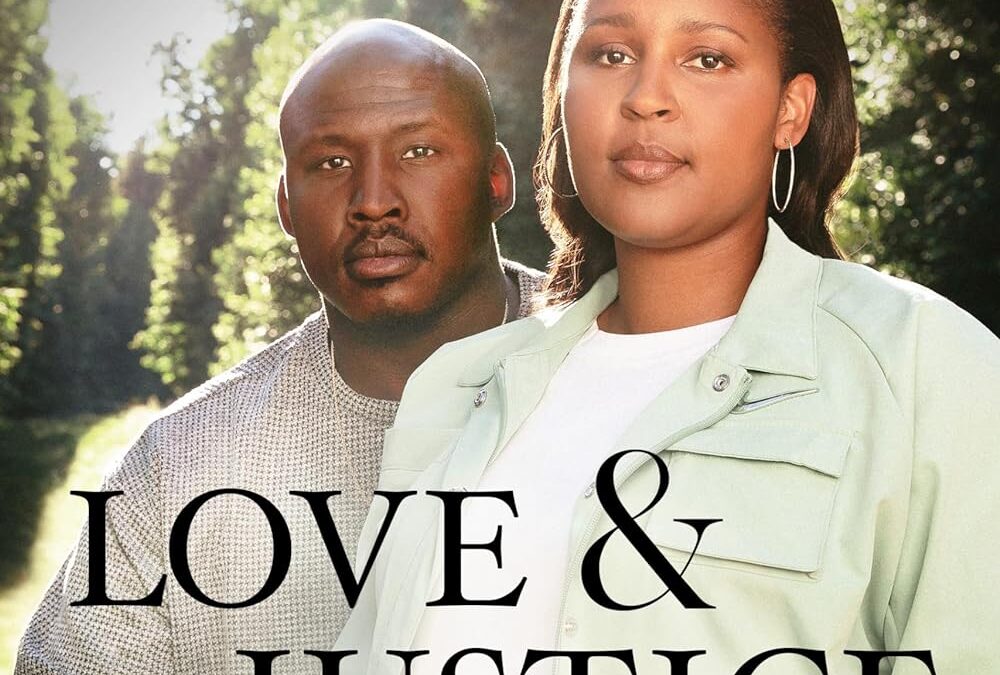





 The parable of the Good Samaritan from the Gospel of Luke is one of the most well-known passages of scripture in Christian communities and beyond. Jesus shares this parable in response to a lawyer asking if God requires that we should love our neighbors as ourselves, then who is my neighbor? The parable can be summarized this way: a Judean man is walking down a dangerous road and is robbed and beaten. He is left hurt and in need of help. A priest walks by, sees the man and walks on the side of the road to avoid him. A Levite, or worker from the local Temple also walks by and does nothing to help. Then a Samaritan man, who was a religious, historical, and cultural enemy of this Judean man, sees him in distress. The Samaritan stops, picks up the man off the road, takes him to a local inn and pays to have him rest and recover there. He promises to pay the inn keeper whatever is necessary for the man’s stay beyond what has been paid when he returns. Jesus turns the question back on the lawyer and asks which of the 3 men in the story acted as a neighbor to the injured man? The lawyer responds “the one who has shown mercy.” And Jesus responds “go and do likewise.”