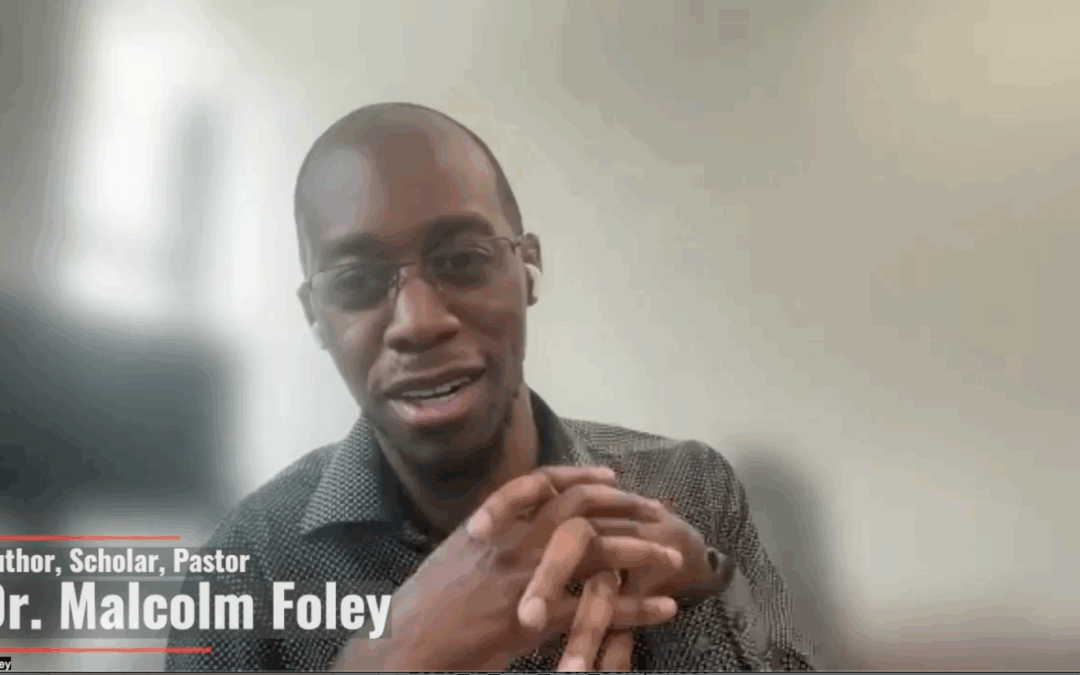
Dr. Malcolm Foley reminds believers that Jesus told us we can’t serve God and Mammon. In his book The Anti Greed Gospel, he challenges believers to confront the greed that gave birth to racism in America and continues to perpetuate injustice in our nation today. The full interview is above, excerpts below have been edited for clarity and length.
Allen
Absolutely. The first question I have for you, I mean, this subtitle, it kind of lays it out. Why the love of money is the root of racism and how the church created a new way forward. Can you talk about how is the love of money, the root of racism? This is not a thing that many people are talking about.
Malcolm
Which is so, and it’s so interesting to me that it’s not a popular account. So I, I thank the Brazos marketing people for giving me that title. It very easily explains kind of what the book is about. So, the argument of the book is that the history of race and racism is not a history fundamentally of identity or of hate or of ignorance, but that it’s a history of greed. That when, that when the Portuguese come to Africa, witness chattel slavery, decide to get involved, they don’t do so because they’re racist. They do so because they have markets they want to expand. And then as time goes on, and they have to justify that to themselves to the Pope, that’s when these narratives of blackness and whiteness pop up. It’s [that] these people are savages and heathens, and that’s why we enslaved them. It’s not, it’s not because we’re going to make a whole bunch of money, disregard that detail. It’s because of something about them. The argument that I want to make in the book is that especially this country’s history of race and racism is just a proxy battle of a cosmic war. And the combatants in that cosmic war were named by Christ in Matthew 6:24, where he says, you can’t serve two masters. You’ll either love one and hate the other, or be devoted to one and despise the other. And you can’t serve both God and [Mammon]. Jesus could have chosen any of the numerous idols that we are tempted to serve. I spent a lot of time in reform circles. There’s a lot of talk about pride. I’ll talk about self, he could have said God and self. And I already said, he says God and mammon, the Aramaic word for money and riches. And I think Jesus was right 2000 years ago. I think he’s still still right today. And this history is, I think, just a series of examples that back that up.
Allen
I love that. And I think that again, you, you’re getting at something as you continue to work that not only does Christ lift it up, but one of the lines that you say really catches me, which is that Christ says that we have to love one another. And that love is about obedience.
Malcolm
Yes.
Allen
And that love must be material, right? I can’t just have an attitude of loving. I have to do something. Can you talk a little bit more about what that means for believers to love materially and not just an attitude as we confront racism and greed?
Malcolm
Yes. Yes. Okay. So, so my account of what kind of, especially what the, what the new, how the New Testament defines love in many ways comes back to 1st John 3:16 where we’re told, this is how we know what love is, that Jesus Christ laid down his life for us. Therefore, we ought to lay down our lives for one another. And then the next verse John says, if anyone has material possessions and sees a brother or sister in need, and has no pity on them, how can you say that the love of God is in you? And what those verses then indicate is that, love is always a material relation. So like, people can think about, this is how we know what love is, that Jesus Christ laid down his life for us. And people can just think about that as just this like lofty, theological thing. And that’s not what John says. John’s saying that like Jesus did this very, very material thing for you. He died. Like that’s a very serious material act to do on behalf of someone. And then that has a bearing on the way that you love your neighbor. They said, therefore, we ought to give up our lives for one another. It’s a recognition that everything that we have been given, especially in excess of what we need, is for the service of others. And what that means, especially in our conversations about race is that we don’t address massive economic injustice through just like friendship and hanging out. We deal with it through redistribution. We deal with it through sharing. But these material acts that extend beyond just me being able to say, well, I have a bunch of multiracial friendships and we hang out and think well of each other. Like, well, that’s nice, but that’s not love according to the scriptures. And so one of the things I also want to do with our conversations about race is I want to make sure that they’re deeply material. Because the issue with race, and this is why I argue in the introduction, is that it lies, it steals, and it kills. And so, and so if we’re going to build communities that resist those lies, that theft, and that murder, it’s going to require communities that are shaped in certain material ways, material forms of, forms of solidarity, material ways that we resist, not only resist violence, but actively undermine the violence that our brothers, sisters and neighbors are subjected to, and that we like vocally tell the truth, as opposed to being captive to lies.
Allen
So, since you, you know, you raised how, you know, we want to be able to be truth tellers in this world, then how is, is filled with lies and you make this really, I mean, just really salient and graphic case about what racism history has been like in this country and it’s tied to economics. I, I want you to, to tease out just for me, how you see moving from slavery to lynching to what we’re seeing today with mass incarceration and even this other, this othering right, this, this violence that we’re seeing rising in our country that has economic motivators, right? Can you talk about how it’s important to not miss that there’s a profit motive or a greed motive instead of just a, oh, I don’t like these people. I hate these people that it’s underlying some of this.
Malcolm
It’s important to understand that I think when we look at the history of race, we are also looking at the history of capitalism. Hence why I use the language of racial capitalism, which I take from, which I take from the black radical tradition. Folks like folks like Cedric Robinson and others were very clear that the only capitalism that we know is a racial capitalism, that the capitalism that we know requires us to place people in categories of exploitable thing so that we can make money off them. And so, that history of slavery, of lynching, of mass incarceration…each of these are just instantiations of racial capitalism. Slavery is fundamentally a system of economic exploitation. Lynching, as I argue in the book, was precipitated by greed. It continued because of greed and it ended when it became bad for business. When we think about, when we think about mass incarceration, we can even think about this right now with the billions of dollars that’s now going to immigration detention centers and things like that. Like the reason why these things continue is because they make money for folks. It’s not just because you just got a whole bunch of just hateful people that just want to hurt people. And there is cruelty, but cruelty but even that cruelty is rarely done just for the sake of cruelty. It has some kind of material benefit for someone. That’s what then motivates them to continue to do it. And so, I want to continue to remind people of that fact. Because I’ve gotten this kind of in some responses from the book that a lot of people have been… like they look at the history of race and they’re confused because they’re like, wait a minute, this really just comes down to people not liking other people because they’re different? Like that just seems weird. Like it doesn’t seem like that’s a foundation strong enough to like have this continue for so long and with so much brutality. But when they’re made aware of the fact that it’s like…oh wait, money is behind it. All of the the dominoes start to fall and the gears start kind of clicking in place. That’s what that discovery did for me. And that’s why I wanted to write this book because I wanted to make sure as much as these conversations have been had in academic circles, the church broadly doesn’t see this. And so I’m like, let me, let me write a book so that people can see the way that this, the way that this actually works, but not only so that they can see the way this actually works, but that they could see the fact that Christ has actually given us the resources to be able to live in an alternative way, that we have an opportunity to show the world that this is not the only way to operate.
The Wolf, Snake, Spider, Shark, and Piranha are back in a story of second chances in all their challenges and blessings. It is hard to start a new life when society thinks you are the bad guy. But when the guys are given a chance to turn over a new leaf will they return to their old ways? The next chapter is a hilarious and heartfelt adventure that is one of the most fun movies of the summer.
UrbanFaith editor Allen Reynolds spoke with The Bad Guys 2 director Pierre Perifel about the new movie. The full interview is above.
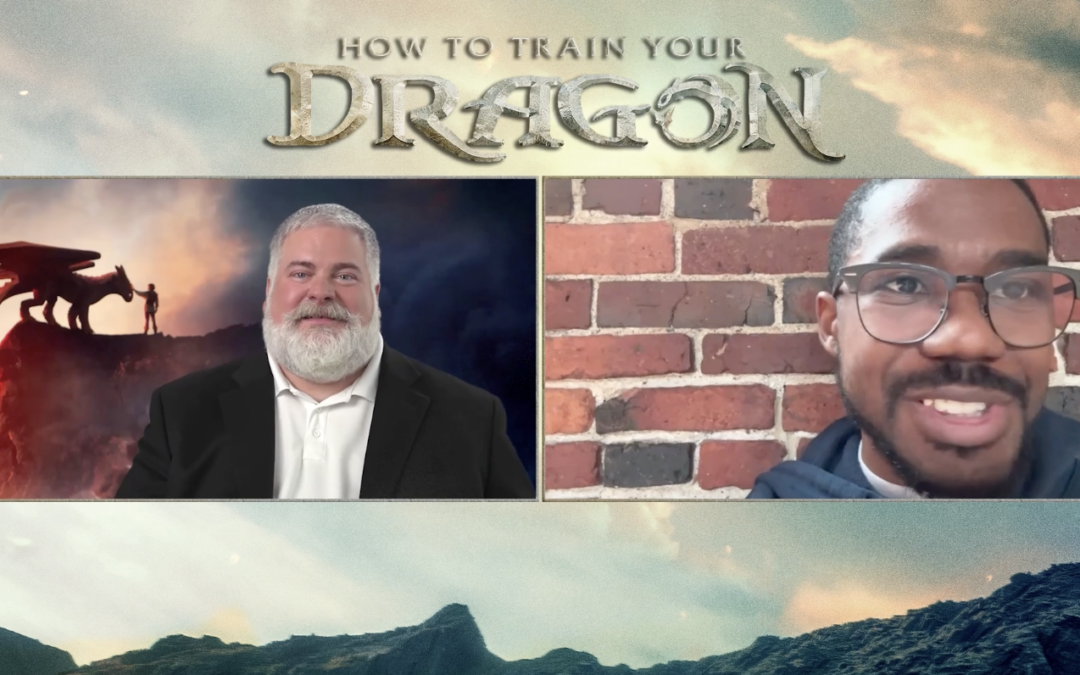
How To Train Your Dragon is now in theaters a live-action retelling of an award winning story. UrbanFaith Editor Allen Reynolds talked with the director, Dean DeBlois, about the new format and powerful original messages from the film. Dean talks about overcoming differences, making an impact, and what it is like to tell a familiar story in a new way. You can see How to Train Your Dragon in theaters everywhere.
The Life of Chuck is one of the most peculiar and delightful films I have ever seen. At face value it is hard to know what this movie is about from the outset besides that a man named Chuck will be at the center. And while that evaluation is true, this movie is about so much more than Chuck. This movie is about the multitudes of lives contained within all of us. It is a movie that makes you ask and consider hard questions. How do we face loss, death, and difficulty? What matters most when the world is falling apart around us? Why do we make the choices we make every day? How do find joy in the midst of difficulties?
I am not a normal Stephen King fan. I do not like horror films, I’m not into scary books, I don’t enjoy exploring the paranormal. But this movie was fantastic. It refuses to be pinned down into one category of movie and is not even told in a normal narrative order. But it is one of the most thought-provoking and emotionally inspiring movies I have seen in years. I would highly recommend it for anyone willing to walk into a theater with an open mind.
The Life of Chuck feels incredibly timely. I have struggled watching the news as many people have in our current historical moment. As we see natural disaster after natural disaster, wars and famines, death and destruction in a constant cycle and ignorance in echo chambers many people have responded with exasperation and apathy. Chuck responds head on to the crisis. It explores the Life of Chuck, but the contents of that life are far more expansive than I could have anticipated. Chuck is not a larger-than-life amazing figure on an adventure. He is a mundane and complex man who was once an innocent and awkward boy. The people in his life feel like people I know.
The authenticity of the performances from Chiwetel Ejiofor and Karen Gillan were so moving. The depth and complexity of young Chuck’s family made my heart ache. I felt moments of pure joy, sadness, fear, wonder, laughter, worry, inspiration, and reflection watching this movie. And Tom Hiddleston made me think and smile. I almost shouted with joy when I saw The Pocket Queen, a young woman drummer, appear on screen. I followed her on social media as a college student and to see her in this movie I was elated. When I heard Nick Offerman and saw Mark Hamill I felt tremendous nostalgia. I’m not sure how Mike Flanagan did such a seamless job balancing both familiarity and wonder. But the impact was palpable. But the questions from this film stick with you. What matters most in our lives? Chuck brings the questions to the forefront.
How should believers live with the destruction and difficulty in the world? We know what eternity holds. But being intentional and joyful about life today is something this movie left me pondering. The movie is rated R, but it is really for about 2 minutes of curse words and some mature themes dealing with death. But I would say anyone with an open mind and reasonable maturity can see this film. I would love my teenager to see it. I would love to watch it with a Bible study group. I highly recommend it as an artistic, intellectual, and emotional experience.
UrbanFaith Editor Allen Reynolds had the privilege to interview Marlene Harris-Taylor and Myesha Watkins, co-hosts of the Living for We: Keep Ya Head Up Season 2 Podcast. This season confronts how communities are working together to prevent and intervene in the cycles of gun violence that disproportionally impact urban areas. The co-hosts share stories and insights on how churches and people of faith can play a key role in Community Violence Interventions (CVI). You can stream the Living For We podcast wherever you get your podcasts or watch on Youtube and more information on the series is available at Evergreen Podcasts
The excerpts below have been edited for clarity and length. You can watch the full interview above.
Allen
You all talked a lot and gave us what this season is all about focusing on gun violence. Why is it important for us to still be talking about this with so many other things going on in our world?
Myesha
Prevention saves lives. Like when you think about gun violence, one of the things me and Marlene spent a lot of time talking about is like the underlying issues. What are the root causes of violence? Lorenzo, who’s [a] guest on our show, he said he lost his best friend, Caden Coleman, who was 10 years old, to gun violence. And he said, “sometimes we just need a hot meal.” When you think about communities where food insecurity is high, and you’ll have [someone] who is like,
“We get food stamps. My mom had to sell her food stamps in exchange for cash because we don’t have cash. So, I go to the corner store, and I steal peanut butter and jelly. And from that instance, now I’m being impacted by the system because I did a theft. But the root cause was that I was hungry.”
So, when we think about the overall crises that are impacting all our communities, this is all interconnected. And when people put CVI (Community Violence Interventions) to the side to act like it’s not a response to lack of resources, lack of accessibility to stable housing or healthcare or food, then they’re crazy. What we’re trying to do is show them how all of this is connected from several lenses. And I think Marlene can talk about the different lenses that we brought to the couch. Like it was more than just community.
Marlene
Yeah. And I also want to say that there’s sometimes there’s people who say, well, you know, gun violence is down, you know, we look at the overall stats nationally and in our large urban centers, gun violence is down. But that all depends on where you live. Yeah. For people in certain communities and certain zip codes, gun violence is not down in their world. They’re still hearing shootings every night. They’re still losing friends and family to gun violence. And for the people who live in those communities that are not directly impacted, and they think, well, that’s not my problem, because I don’t live in those areas. Gun violence doesn’t care, you know, a bullet doesn’t care who you are. So many times, the violence, the gun violence that is impacting these communities comes to other parts of the city. None of us are safe unless all of us are safe.
Allen
Myesha, any words of wisdom for you on how you saw faith play a role in this work of doing violence prevention?
Myesha
I would say too, and all that Marlene has shared, we have had church on the couch several times, praise God! There’s a national organization called Live Free USA whose main job is to bring faith leaders and violence prevention [organizations] together and not for it to be viewed as separate. And I think churches, especially in black communities, are on every single corner. And we are calling on pastors or calling on people to save not only from the pulpit, but also from the blocks. How do you come out and show that you have a safe space? You have a brave space, and your only goal is not to just preach to eulogy. But how do you speak life as a young people in an accepting way by calling them in to say there are other options and faith is one of them. I just went to the in Cincinnati. I’m here, the national underground railroad freedom center. And even on the posters, at the hardest times as a black person, you see that faith was at the center. When things get hard as they are right now in these moments, especially around gun violence and this administration, black people tend to just cling a little bit closer to God. So hopefully faith leaders are saying, “I know exactly where I need to be.” And even if that’s doing community walks and praying around the radius of my church, that’s enough to show the presence of God. It’s just not in church, but it’s wherever believers are. And so, I’m excited about the work that Live Free USA is doing, the conversations that are happening on this podcast, because it’s going to be some, “amen and thank you Jesus,” but thoughts and prayers by themselves are not enough. But collectively with lived experience and other organizations, thoughts and prayers can go a long way.
Allen
What advice would you give to young people who want to make a difference in their communities, especially around issues like this of breaking that cycle of violence or even making the impact so they can create safe and brave spaces?
Marlene
Well, I’ll start by saying you can begin at whatever age that you are in whatever space that you are in doing the work. Our episode that just dropped today featured young Lorenzo that Myesha brought up earlier, 10 years old. This young man lost his best friend to gun violence, and he decided he wanted to go talk to the mayor. He asked his mentor to go buy him a suit. So, he dressed up in his best suit, went to a community meeting with the mayor, and many other city leaders were and challenged them to say, what are you doing to save people like me? He’s like, will I die? Will I be like my best friend? And I got to tell you, Allen, he riveted the entire room. He ended up with a standing ovation from that speech. And he has been on several media outlets since then. He is already making a difference at 10 years old. So, no matter what age you are, no matter what your circumstances, by speaking out, by getting involved in this work, you can make a difference in your community.
Myesha
There are so many Lorenzo’s in our communities. Like, how do we see those skills and build them up? I think about young people who are able to organize a group of people to do anything that may not be the safest. How do we utilize those same skills as an organizer to do those things well? So young people have skills that they may not be utilizing in the right way as of now, but are skills of amazing leadership. How do we speak to that to say, “you have these great skills. I see you doing something else with them. But what would it look like to give you resources to do something well with them to keep your community safe?” So, I guess my message to young people is you are not the problem. This is a systemic and generational issue. This is caused [by] underinvestment and divestment. This is [caused by] generational trauma that is in our bodies. But what we can control is how we respond to interpersonal conflict. Interpersonal conflict and the urgency to respond to disrespect is at the all-time high. If I tell you, Allen, I don’t like your glasses, you can be so offended that you may want to handle this conflict with a firearm. How do we say it’s not worth it? Your comments aren’t worth it. Your attacks are not worth it. Nothing is worth losing my life. So, to young people who are listening, disrespect should not be the reason that you lose your life or take someone else’s life. There are other options, so many amazing options. And we actually need you. It is necessary for you to live. It’s necessary for you to be here. And it’s very unnecessary for you to risk your life or someone else is because of a conflict. It’s very preventable. And I know it sounds simple because when I was your age, I probably wouldn’t let nobody talk to me crazy. But I lived a little bit more and I want you to live. We’re here for you. I hope our podcast serve as a listening ear and a space of dialogue. But yeah, just live a little bit more so you can see that some of the decisions and choices that you are making is not worth it because baby, listen, if Instagram was around when I was younger, I probably would be in trouble. I’m glad that I’m here to tell the story. So, stay safe. We want you to be alive and free.
Marlene
Myesha, I’m so glad you mentioned Instagram because one of the things that we’ve learned. I’ve learned is so many times people get into beef on Instagram that then comes out into life. And then, something that started as this small beef on Instagram becomes somebody losing their life as a result of it. Social media is driving a lot of this, but she’s right. The systemic things behind it are really what’s driving the gun violence in our communities. And we need to know that that it’s not our fault that our communities have been under this strain of underinvestment that is there’s been this prison from school to prison pipeline that has taken so many men out of our communities. We heard over and over again from the young men who are guests on the show, that they didn’t have a father, that they were raised by their mother. And they felt this real pressure at a young age like 10, 11, 12, to help their family to survive. And many times that’s why they picked up the gun. They were just trying to survive and help their family survive. And that’s a theme we hear over and over on the program. People need to know there’s not their fault that they’re in that situation.





 I am not a normal Stephen King fan. I do not like horror films, I’m not into scary books, I don’t enjoy exploring the paranormal. But this movie was fantastic. It refuses to be pinned down into one category of movie and is not even told in a normal narrative order. But it is one of the most thought-provoking and emotionally inspiring movies I have seen in years. I would highly recommend it for anyone willing to walk into a theater with an open mind.
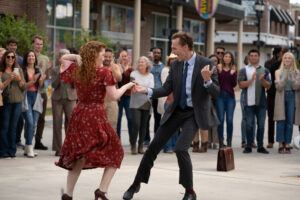 The Life of Chuck feels incredibly timely. I have struggled watching the news as many people have in our current historical moment. As we see natural disaster after natural disaster, wars and famines, death and destruction in a constant cycle and ignorance in echo chambers many people have responded with exasperation and apathy. Chuck responds head on to the crisis. It explores the Life of Chuck, but the contents of that life are far more expansive than I could have anticipated. Chuck is not a larger-than-life amazing figure on an adventure. He is a mundane and complex man who was once an innocent and awkward boy. The people in his life feel like people I know.
 The authenticity of the performances from Chiwetel Ejiofor and Karen Gillan were so moving. The depth and complexity of young Chuck’s family made my heart ache. I felt moments of pure joy, sadness, fear, wonder, laughter, worry, inspiration, and reflection watching this movie. And Tom Hiddleston made me think and smile. I almost shouted with joy when I saw The Pocket Queen, a young woman drummer, appear on screen. I followed her on social media as a college student and to see her in this movie I was elated. When I heard Nick Offerman and saw Mark Hamill I felt tremendous nostalgia. I’m not sure how Mike Flanagan did such a seamless job balancing both familiarity and wonder. But the impact was palpable. But the questions from this film stick with you. What matters most in our lives? Chuck brings the questions to the forefront.
 How should believers live with the destruction and difficulty in the world? We know what eternity holds. But being intentional and joyful about life today is something this movie left me pondering. The movie is rated R, but it is really for about 2 minutes of curse words and some mature themes dealing with death. But I would say anyone with an open mind and reasonable maturity can see this film. I would love my teenager to see it. I would love to watch it with a Bible study group. I highly recommend it as an artistic, intellectual, and emotional experience.