William H. Lamar IV on Black Ancestors, Faith, and Why Preserving Black History Matters
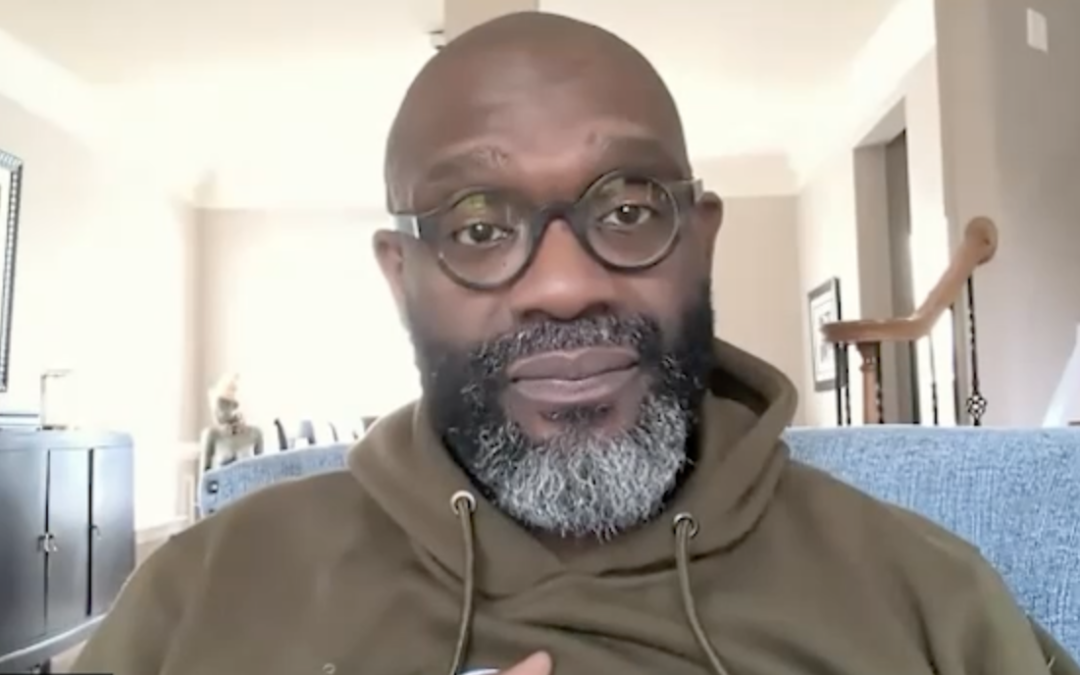
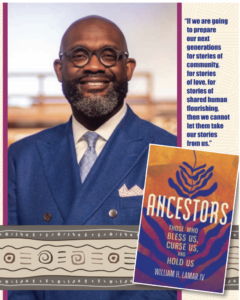
UrbanFaith editor Allen Reynolds talked with Rev. William H. Lamar IV about his book Ancestors: Those Who Bless Us, Curse Us, Hold Us. He shares how believers can follow Jesus’ example by honoring their ancestors and drawing from their strength to combat injustice today. Excerpts are below, the full interview is above.
Allen
Pastor Lamar, you have this book coming out on ancestors, something that I think is so relevant right now. We know that there is an attack on Black history happening in this country, and we’re trying to do more and more to address the importance of recognizing our history, recognizing those who have come before us. Can you talk a little bit about why you decided to write a book about ancestors for a time like this?
Pastor Lamar
Allen, there’s so many ways I could get into it. Let me begin with what was sitting deep in my soul and spirit as I was wrestling with these ideas and as these ideas were really forcing their way up through me. In my grandmother’s house at 223 Madison Street, in a smallish town in Georgia, there was a portrait that hung by the front door of her Aunt Viney, a black and white portrait in an oval frame. Many Black folks have seen kind of sepia tone portraits like that. As a child, I was always intrigued. Why is she there? Because it’s like the portrait said, “Good morning to me every morning and good night every evening.” My grandmother began to tell me the story of Aunt Viney and how when her parents died, her parents died when she was so young [that] she had no memory of them, that Aunt Viney took her in, raised her and her sisters and literally saved her life. That portrait hung in the place of honor in my grandmother’s home and now it hangs in a place of honor in my home. What I realize now is hanging that portrait was not just about remembering Aunt Viney, but my grandmother was seeking for a certain energy and spirit to be in her home. That same spirit of hospitality, that same spirit of sacrifice. When she told me that story, she was trying to help me to become not only what Aunt Viney was, but who she was, the kind of person that she had become. Black people and peoples around the world have always centered ancestral presences, ancestral images, ancestral belongings as a way to root us, as a way to anchor us and as a way to be connected with energy beyond death. What I’m trying to say in this book is that we especially now cannot be hesitant or afraid to embrace the power of ancestors, especially black people because we have been taught that venerating and honoring our ancestors is pagan, that it is un-Christian, that there is something wrong with it. When there absolutely are no people who do not venerate or honor their ancestors and do it in explicit ways. I live in Washington, DC. Part of the book talks about there is no city as steeped in ancestral veneration as Washington, DC. The name of the city, the monuments of the city, the streets and the statuary of the city. Why would I honor energies of conquest and hegemony and white supremacy and not honor and venerate the energies that have made us the beautiful, free, wonderful, struggling, committed people that we have always been? I’m just very clear, especially for those of faith, because you cannot extract ancestral veneration from reading of the [scriptures]. There is no way to know God except ancestrally. God of Abraham, God of Isaac, God of Jacob, God of our mothers, God of our fathers, and also the very fact that Jesus himself climbed a mountain and had an ancestral visitation [with Moses and Elijah]. If he needed to be visited by and needed to visit his ancestors, surely we do.
Allen
One of the things that strikes me about this moment that I want you to want to ask you about is that we know that there’s an assault right now on black history and that there’s an effort as you might put it to disconnect us from our ancestors. Right? And in our schools, in our communities, can you talk about why it’s important for us to maintain and reinforce that connection? I would even call the ancestor veneration you talk about as [embracing] living history. How do we embrace our living history as black people in a moment like this?
Pastor Lamar
So, I’m blessed to be the pastor of Ernest Green. And Ernie Green was one of the Little Rock Nine who integrated central high schools. I remember one day I was talking with Brother Ernie and I asked him, I said, “Brother Green, how did you all marshal the energy to do what you did in Little Rock, to integrate that school in the midst of all that violence?” And he told me this. He said he had a teacher who taught them about revolts amongst the enslaved and maroon communities. They said that because he had learned those stories, and I would press the language, I would say, because the energy of those ancestors via the telling of the stories, that energy became part of his energy. When it was his time to stand, he said, if they could revolt and if the maroons could leave plantation economies, go deep into the woods and build a place of freedom and protect themselves, then I could stand in my day. What they know is if these stories disappear, our fight will disappear. GPS is able to “tell you” where you are because it is sending signals to satellites. And those satellites are sending signals back. Our ancestors send us energy to tell us where we are and who we are. And if we are disconnected from those stories, then we will not fight. We will not have the joy. We will not have the cultural clarity. We will not have the creativity. So D’Angelo died, the great artist. And if you listen to D’Angelo’s music, you know that D’Angelo has spent time with Marvin Gaye. You know that D’Angelo has spent time with Teddy Pendegrass. You know that D’Angelo has spent time with Billie Holiday. So, they know that if they erase our history, then we will live as those who are starting from zero. When really, we are not starting from zero. We have gotten a baton passed to us from those who ran before. And they understand the power of history. Now for those people, now notice at the same time they’re trying to erase our history, they got a 1776 commission. They are retelling their own story and they are scrubbing it of its evil, of its conquest, of its violence. They are telling them to command all of their political impulse to tell [that] story. If you go back and read what they said it is because they don’t want white children to feel guilt. They feel bad about who they are. They are preparing the next generations to continue their story of domination. If we are going to prepare our next generations for stories of community, for stories of love, for stories of shared human flourishing, then we cannot let them take our stories from us. And even if they keep doing what they are doing, they sure can’t tell you what stories to tell your daughters. They cannot tell me what to preach. And they cannot dictate what we write, what we sing. And so, we keep going forward. We keep going forward. They will not erase us. To take our stories is to take us. And we cannot let it happen.
Allen
For young people who may be in this moment trying to figure out, how can I move forward and be fruitful and still hold on to the sankofa, look backward and move forward? What wisdom would you share? What advice would you give them about how to move forward and flourishing in a world that seems to want to erase them and their history?
Pastor Lamar
What an extraordinary question. Let me tell you, the times have changed and the vehicles are different. I think the methodology is the same. My parents took me to libraries as a child. I was surrounded by books. I remember the joy I had as a child watching PBS when it aired the Shaka Zulu miniseries and when it aired Eyes on the Prize. And when I saw those images, I pulled every biography I could. I watched and read everything I could. And those ancestors became a part of me. Just like kids hear people say you are what you eat. When you eat that ancestral energy by reading and watching and asking questions, now those things are a part of me. Those stories are a part of me. I will never forget when I first read Up from Slavery. And then a few months ago, I was actually in Tuskegee in Mr. [Booker T.] Washington’s house, in his bathroom, in his office. And on the wall in Mr. Washington’s office was a commendation given to him by the trustees of Metropolitan African Methodist Episcopal Church that he hanged in his own office. That is the connection. When you read of the ancestors, when you open yourself to their stories, they will find you over and over again and they will cajole you toward a larger humanity and toward the excellence and service and joy necessary for us to flourish in this moment when they are committed to our destruction. What I am saying is I don’t want any black person saying, “This ain’t of God.” This is exactly of God. When the scripture says, “When you cross the river, put the stones there. So when the children come back and ask what mean these stones,” that is connecting them to their ancestry. That is connecting them to the technology of sacred memory. And what it will do is open for us new avenues to hear the voice of the divine mitigated through the voices of our mothers and fathers. That is what we all are called to do, especially for the young. Surround them in their rooms with pictures of the ancestors, with books of the ancestors. Tell them stories of the ancestors, and the ancestors will help to lift them to their true vocation. And they will be the warriors we need to fight with joy in days to come.

 For Camille Joy, motherhood did not unfold the way she imagined it would. Instead, it invited her into a deeper reliance on faith, a slower understanding of joy, and a kind of love shaped by unexpected challenges. In her book Moments of Joy, Joy writes to parents who are learning how to hold gratitude and grief in the same hands. Through honest storytelling and gospel-centered hope, she reminds readers that God is present not only in answered prayers, but also in the daily, unseen moments where endurance is formed and joy quietly takes root. The full audio interview is below with written excerpts edited for clarity and length below.
 CAMILLE JOY