Trying to Avoid Racist Health Care, Black Women Seek Out Black Obstetricians

Trying to Avoid Racist Health Care, Black Women Seek Out Black Obstetricians

In South Florida, when people want to find a Black physician, they often contact Adrienne Hibbert through her website, Black Doctors of South Florida.

“There are a lot of Black networks that are behind the scenes,” said Hibbert, who runs her own marketing firm. “I don’t want them to be behind the scenes, so I’m bringing it to the forefront.”

Hibbert said she got the idea for the website after she gave birth to her son 15 years ago.

Her obstetrician was white, and the suburban hospital outside Miami didn’t feel welcoming to Hibbert as a Black woman pregnant with her first child.

“They had no singular photos of a Black woman and her Black child,” Hibbert said. “I want someone who understands my background. I want someone who understands the foods that I eat. I want someone who understands my upbringing and things that my grandma used to tell me.”

In addition to shared culture and values, a Black physician can offer Black patients a sense of safety, validation and trust. Research has shown that racism, discrimination and unconscious bias continue to plague the U.S. health care system and can cause unequal treatment of racial and ethnic minorities.

Black patients have had their complaints and symptoms dismissed and their pain undertreated, and they are referred less frequently for specialty care. Older Black Americans can still remember when some areas of the country had segregated hospitals and clinics, not to mention profoundly unethical medical failures and abuses, such as the 40-year-long Tuskegee syphilis study.

But even today, Black patients say, too many clinicians can be dismissive, condescending or impatient — which does little to repair trust. Some Black patients would prefer to work with Black doctors for their care, if they could find any.

Hibbert is working on turning her website into a more comprehensive, searchable directory. She said the most sought-after specialist is the obstetrician-gynecologist: “Oh, my gosh, the No. 1 call that I get is [for] a Black OB-GYN.”

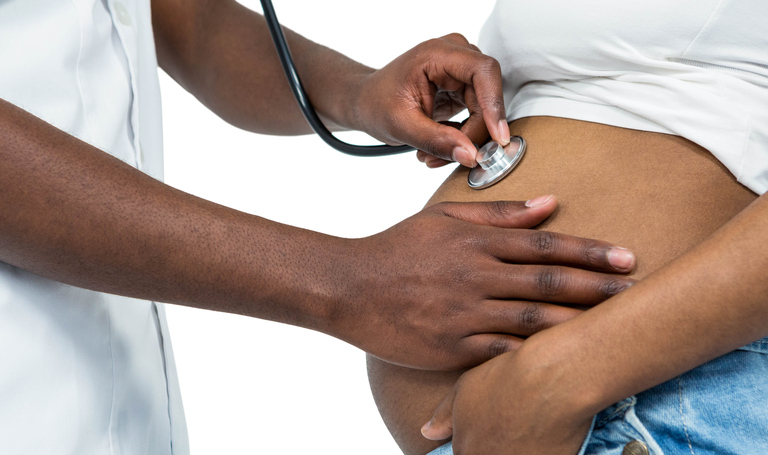
For Black women, the impact of systemic racism can show up starkly in childbirth. They are three times as likely to die after giving birth as white women in the United States.

Nelson Adams is a Black OB-GYN at Jackson North Medical Center in North Miami Beach, Florida. He said he understands some women’s preference for a Black OB-GYN but said that can’t be the only answer: “If every Black woman wanted to have a Black physician, it would be virtually impossible. The numbers are not there.”

And it’s also not simply a matter of recruiting more Black students to the fields of medicine and nursing, he said, though that would help. He wants systemic change, which means medical schools need to teach all students — no matter their race, culture or background — to treat patients with respect and dignity. In other words, as they themselves want to be treated.

“The golden rule says, ‘Do unto others as you would have them do unto you,’ so that the heart of a doctor needs to be that kind of heart where you are taking care of folks the way you would want to be treated or want your family treated,” he said.

George Floyd’s murder in Minneapolis in May 2020, and the subsequent wave of protests and activism, prompted corporations, universities, nonprofits and other American institutions to reassess their own history and policies regarding race. Medical schools were no exception. In September, the University of Miami Miller School of Medicine revamped its four-year curriculum to incorporate anti-racism training.

New training also became part of the curriculum at Florida Atlantic University’s Charles E. Schmidt College of Medicine in Boca Raton, where students are being taught to ask patients about their history and experiences in addition to their bodily health. The new questions might include: “Have you ever felt discriminated against?” or “Do you feel safe communicating your needs?”

“Different things that were questions that we maybe never historically asked, but we need to start asking,” said Dr. Sarah Wood, senior associate dean for medical education at Florida Atlantic.

The medical students start learning about racism in health care during their first year, and as they go, they also learn how to communicate with patients from various cultures and backgrounds, Wood added.

These changes come after decades of racist teaching in medical schools across the United States. Adams, the OB-GYN, completed his residency in Atlanta in the early 1980s. He recalls being taught that if a Black woman came to the doctor or hospital with pain in her pelvis, “the assumption was that it was likely to be a sexually transmitted disease, something we refer to as PID, pelvic inflammatory disease. The typical causes there are gonorrhea and/or chlamydia.”

This initial assumption was in line with a racist view about Black women’s sexual activity — a presumption that white women were spared. “If the same symptoms were presented by a Caucasian, a white young woman, the assumption would be not an STD, but endometriosis,” Adams said. Endometriosis is not sexually transmitted and is therefore less stigmatizing, less tied to the patient’s behavior.

That diagnostic rule of thumb is no longer taught, but doctors can still bring unconscious racial bias to their patient encounters, Adams said.

While they revamp their curricula, medical schools are also trying to increase diversity within their student ranks. Florida Atlantic’s Schmidt College of Medicine set up, in 2012, a partnership with Florida A&M University, the state’s historically Black university. Undergraduates who want to become doctors are mentored as they complete their pre-med studies, and those who hit certain benchmarks are admitted to Schmidt after they graduate.

Dr. Michelle Wilson took that route and graduated from Schmidt this spring. She’s headed to Phoebe Putney Memorial Hospital in Albany, Georgia, for a residency in family medicine. Wilson was drawn to that specialty because she can do primary care but also deliver babies. She wants to build a practice focused on the needs of Black families.

“We code-switch. Being able to be that comfortable with your patient, I think it’s important when building a long-term relationship with them,” Wilson said.

“Being able to relax and talk to my patient as if they are family — I think being able to do that really builds on the relationship, especially makes a patient want to come back another time and be like, ‘I really like that doctor.'”

She said she hopes her work will inspire the next generation of Black doctors.

“I didn’t have a Black doctor growing up,” Wilson said. “I’m kind of paving the way for other little Black girls that look like me, that want to be a doctor. I can let them know it’s possible.”

This story is part of a partnership that includes NPR, WLRN and KHN.

KHN (Kaiser Health News) is a national newsroom that produces in-depth journalism about health issues. Together with Policy Analysis and Polling, KHN is one of the three major operating programs at KFF (Kaiser Family Foundation). KFF is an endowed nonprofit organization providing information on health issues to the nation.

USE OUR CONTENT

This story can be republished for free (details).

Subscribe to KHN's free Morning Briefing.

Finding Faith and Community on Virtual Campuses: An Interview with Shaylen Hardy

Finding Faith and Community on Virtual Campuses: An Interview with Shaylen Hardy

Last year the pandemic disrupted the world as we know it–leaving most college students grappling with how to live in a world without access to community, coupled with the pressure of continuing their education. 

For Black students, the exposure of racism locally, nationally, and globally made the Great Disruption even more difficult. The nation witnessed the deaths of Black men and women at the hands of law enforcement and vigilantes while being forced to quarantine. White supremacy and racist rhetoric were often unveiled from the mouths of people who identified as Christian, which left many students wrestling with their faith on multiple fronts without the normal practices and people to help encourage them. 

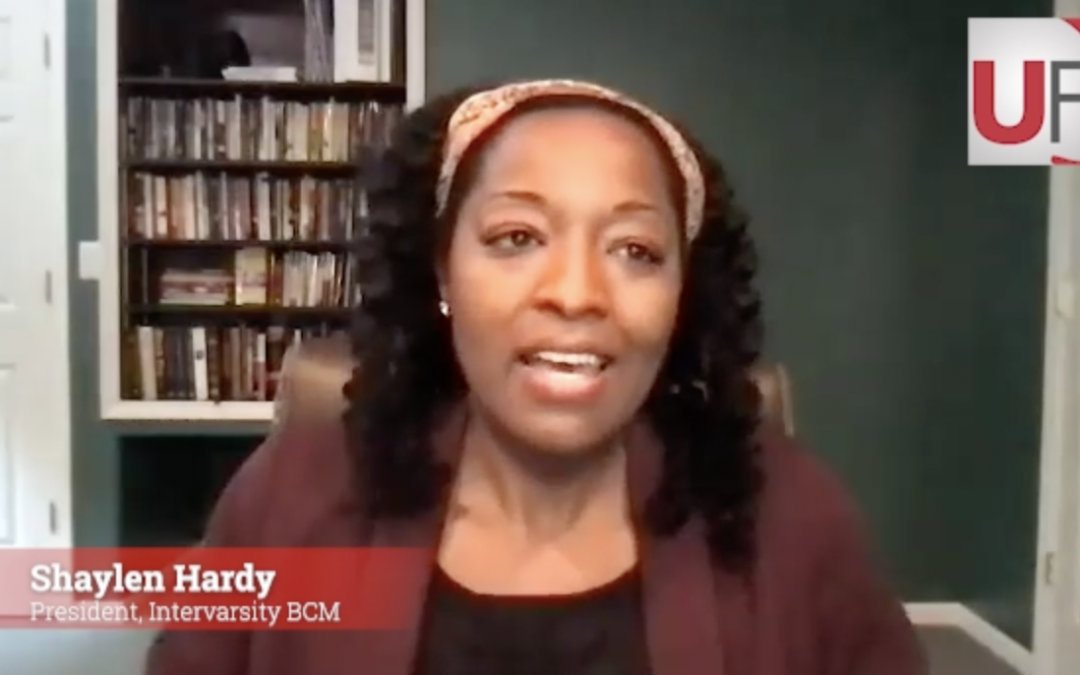
But in the midst of the turmoil and testing, leaders of campus ministries sought to support  Black students. I had the opportunity to interview Shaylen Hardy, the President of Intervarsity’s Black Campus Ministries, about her experiences and insight leading one of the largest networks of Black campus ministries through the pandemic. Some highlights of our conversation are below, and the full interview can be viewed above and on UrbanFaith.com!

The interview has been edited for clarity.


Allen:

I’ll open up our first question, Shaylen. From your perspective, what are some of the challenges that you have seen Black students face in the last year as they’ve lived through this pandemic and the social unrest in our country? 


Shaylen:

Yeah, I mean, I think you named some of the major things that they’re facing. I think another thing with Generation Z is mental health issues. We already knew coming into this year, or pre-pandemic, that Generation Z experiences significantly higher amounts of mental health issues. So as you think about it, some of the racial reckoning that we’re seeing in the nation, plus the weight of the pandemic, are actually just compounding the mental health issues that those students were experiencing already. So some of the ways in which they may have negotiated or worked through their mental health challenges, like being with friends, or engaging in activities that are life giving to them, were taken away instantly. So, the challenges of coping with mental health complications are something that we’re seeing. 

And also their academic coursework. I mean, many of us remember getting up in the morning, going to class, and just the weight of that. But there’s a different [pressure] when you have to be virtual and on Zoom calls all day long.  They are expected to retain everything that they’re hearing without the personal interaction with their teachers and other students, and just the fatigue. Many of us working via Zoom for this last year were also experiencing fatigue, but we’re not being tested week in and week out on what we heard during those calls.


Allen:  

That makes a lot of sense. A follow-up question that I have is, how are the students able to gather together in life giving ways with organizations like Intervarsity, or with one another? How, in the midst of being virtual, are they finding community?


Shaylen:

Yeah, I think part of it is being somewhat creative. And so we recognize that one of our only ways of interacting is virtually. And we know that we’re inviting them to come back into a virtual space after they’ve spent most of their day on it. But we think through developing community in a couple of different ways. 

Yes, we still do our Bible study, and yes, we still have prayer meetings and things like that. But we host virtual game nights where we invite students to come play Spades or stUno, and we have virtual movie nights where we play a movie and students can chat about what they’re experiencing. So we think that community is still very, very vital to their mental, emotional, and spiritual well-being. We just have to be creative in how we use virtual mechanisms to help build that community so that when we are able to go back to the new normal, they can pick up where they left off with one another


Allen:

Yeah, that makes a lot of sense. I think that hybrid is kind of the future of the world at this point, right? Like, things are not going back to the way that they were. You just mentioned how people are using these hybrid mediums in order to engage in order to strengthen themselves and their faith. What are some of the ways that you’ve seen students really be able to feed their faith or keep themselves encouraged?


Shaylen:

I think part of it is we do small groups on different campuses and across the country, and we have had a national virtual conference for students to engage. I think one of the things that we’re learning about Generation Z is that because they have so much content available to them, just showing them a video  isn’t enough. They’re like, help me figure out what I’m supposed to do with what I just heard. And so we’ve actually been able to have a couple breakout sessions [that are]  conversations about what’s happening in the world and what Jesus has to say about justice. And students are like, “Yeah, that was great.” And then we have to follow up by sharing the next two steps to take if you want to figure out how to be more active and engage in what’s happening in the world. So I think part of it is yes, content. But if you think about it, this generation has more access to more content than anyone has ever had. So what we’re seeing is this generation is like, “Yeah, give me content. And when you give it to me, make sure it looks good, but also help me figure out what you want me to do with what I just heard.”


Allen:

Wow, that’s huge. The application part makes a big difference for them. Now, the other thing that has been impacting us is not just a pandemic, but also this racial unrest. And I’m really curious, how have you been hearing Black students talk about this deal with this with their faith? How is the racial unrest been impacting them in particular in these times? 


Shaylen:

I think in some ways, it’s connected to some of the mental health issues.  Like, it is hard for me to show up because of all of the trauma that I’m experiencing, and so that is compounded with that mental health tension, and then I have to show up and engage academically. But also, I have to be social and be competent in my interaction with my classmates. So it’s like they’re having to pull it all together to be okay, when they don’t feel okay. So that’s definitely a tension that they’re experiencing. 

I will say that we’ve tried to have conversations to help students think through what Jesus has to say about what is happening right now. And I think that a lot of people who would challenge the Christian faith or the Christian perspective will point to broader White evangelicalism of: “That is why Jesus cannot be trusted.” And so some of our students are trying to wrestle with, if this is the fruit [meaning racism], and they say they love Jesus,, can this be compatible with me following Jesus? 

Part of what we’ve had to do is actually expose some of the lies of White evangelicalism. And yes, you can fully follow Jesus as a Black person, as a nAfrican American, as an African [person]. All of those things are compatible with Jesus. But in some ways, I think in order to make that case, we’ve had to k pull back the curtain and say things like, “These are the lies that have been intertwined with American Christianity, and this is why Jesus is trustworthy.” On the one hand, [we] also speak to what Jesus has to say about the Black experience. And I think that there have been moments when [for Black students and myself] I see what’s happening in the world and I live as a Black [person] experiencing it [and], I’m like, “Lord, when will you show up?”


Allen:

That makes a lot of sense. What are some of the other ways that you’re coming alongside these students or ministering to them with Intervarsity? Or even the wider campuses? I know that you guys do work, not just with students, but with folks who are supporting students on campuses. So what have you all been doing in the midst of all this to support campuses?


Shaylen:

I think I’m connected to some of our spaces. So we’ve had a psychologist come in and talk about racial trauma, sharing her insights. And then we had breakout rooms where students were able to discuss what they were experiencing. And then from that point, we have prayer ministry rooms. So we’re getting into spaces where students can actually share their story and not just about what they have been experiencing, but also connect to prayer ministry. 

And similarly, at our virtual student conference we had over 300 students and about 10 faculty join us. So we had a conversation and then invited people into prayer ministry rooms. One of the things that was really surprising to me is that I felt like we recruited really well for our prayer ministry rooms, but we were continually having to call in reinforcements because the need and the hunger for prayer was so strong. In a virtual space, we had a Zoom room with music playing [where people could wait for a minister to be available].  There was one point, when I was recruiting people in there who jumped on 20 minutes after we started because they needed people. And there were students just waiting quietly in the prayer room until somebody was available. I think that that was such a stark picture of how we categorize youth often, like they aren’t interested in spiritual things or they don’t love Jesus. [But] they are hungry for what Jesus wants to give them. These students sat through an hour and a half or two hours of programming. And they are sitting in a Zoom call, listening to worship music because they want somebody to pray with them. 

I think just giving those opportunities for people to have encounters with the Lord [is important]. One of the things that we’re learning about Generation Z is that they want access to experts. I think millennials want to be the experts. Generation Z is like, “Just connect me with somebody who knows what they’re doing.” I don’t know that we anticipated this or actually know how it would work virtually. But offering that prayer ministry space has been super significant for students. 

And then I think the second piece that I mentioned earlier, is just opportunities for helping them figure out how to actually do it– how to apply the message to their lives.


Allen

So that provides a really great segue for another question I have, especially for a lot of the folks in our audience. We’re touching people who are Christians and especially churches all over the place. And it sounds like there’s a space for the church and an opportunity to reach some of these students. What kind of roles do you think the church can offer to these students as they’re dealing with things on campus and going through this this time?


Shaylen

I think one of the things that as I’ve been working on and trying to identify is, how do we actually care for Black college students, and what are the support structures that exist on college campuses? For HBCUs, there’s much more of a community of people already there who can pour into you and to develop you. For students who end up at predominantly White institutions, that looks quite different. 

[On HBCU campuses] there are often support structures and Black professionals who can help pour into you in the same way you were used to in high school. It sticks out to me that Generation Z wants to be developed. They want people who know what they’re doing to guide them.But on PWI campuses, it is very hard to have access to that. And that’s compounded. Most PWIs are surrounded by churches. White churches have money, so they surround the campus. But in most campus contexts, Black churches are about 10 to 15 minutes away from most campuses. And then basically, you’re saying for a Black college student to be connected to community, or to be connected to an older people who could pour into them, pray for them, and care for them, they have to find a way to get there. 

And so I think that my question would be, are there ways that Black church communities can be intentional about supporting Black students on college campuses? Now that’s a little bit complicated due to COVID because we just don’t know how accessible campuses will be, right? But as they open [there are opportunities]. 

My church has been thinking through things like, how do we care more for Black college students? And so I [gave them suggestions’ and  we actually started partnering with a student organization. We attended their meeting every so often and brought a whole bunch of food–wings, pizza.e would let them do their meeting, then do an icebreaker and ask if anyone needed prayer. 

And then we ended up having a college day later in the semester, and we had never had so many college students at our church. I want to say that over 100 college students came over to the event. And part of it was because they saw us being active on campus–they saw us caring about them. We didn’t do a full church service. That’s something we could consider down the road. But basically, we were saying, “We just want to know what you’re going through.” We want to support you. 

Churches might think that they have to have a robust strategy for recruiting for building a whole separate ministry, but I don’t think that they need to do all that. Are there two or three students that somebody in your congregation has trust with? If the answer is yes, ask them, or, for Generation Z, tell them how you want to support them. Say, “Hey, I know that I have meetings on campus. Would it be okay, if our church sponsors dinner for you at one meeting per month? We would just love to meet them and see if there’s a way for us to pray for them.” And then figure out ways that you can invite them to partner with you for something that you’re doing in the community or invite them to church. We don’t have to have a whole robust strategy. It can really start off with relationships.


Allen

Wow, I love that relationship piece. And just allowing us to again build relationships as churches with students and be able to support them where they are. So my last question is, with all of that’s going on, are there other people who may be around campuses who  can continue to make an impact with Gen Z?


Shaylen

Yeah, so we have a ministry in a university that’s targeted towards Black graduate students and Black faculty. It is called Black Scholars and Professionals, and they recently had a prayer call with Black faculty across the country. I want to say there were 45 faculty who jumped on [the call]. art of that was for encouragement and to tell testimonies of where they’re at and to pray together. 

As we think about faculty, they are carrying tremendous weight. There is the leadership that they already have on campus, but often for Black faculty, they have the unwritten roles of caring for Black students and speaking for diversity issues. And so they are carrying tremendous weights. One of the things that we try to do is to see how we can care for this spiritual life and help a faculty. As we think about wanting to see transformation on campus, students are there for four to five years, but faculty actually have significant influence on both students [and campuses]. If we can care for the spiritual life of faculty, they have access into [students’] lives in ways that we don’t. 

We’re trying to think through what faculty need so we can be present to their needs, but also for prayer and fellowship. On the student side of things, we have a point person on most campuses  who can provide discipleship and engagement. But also, we’ve been trying to kind of brainstorm how to do this work, even if we don’t have a staff available. 

The reality is, for the amount of Black students who are on college campuses across the U.S., we don’t now, nor will we ever,  have enough campus staff to reach all of them. How can we actually empower students to reach other students? How can we empower volunteers to reach other students? We are trying to be creative [about] how to partner churches, alumni, people in the community and students  to do the work of reaching other people on campus.


Allen

Absolutely. I thank you for naming just the needs of the faculty because they don’t get thought about a lot. Is there anything else you wanted to just say?


Shaylen

So, I would say that being in college is a really, really important time. You’re figuring out who you are, what you believe, and also what you’re going to be about. A lot of the decisions that you make in college shape who you are for the next 40 to 50 years. One of the difficult parts about college is that those decisions are made when you’re the most distant you’ve ever been from your spiritual community and [broader] community. So I want to encourage college students to look for people who can support them on the journey, because it’s significant– these are important decisions. Ask your parents and pastors who they know in the school or college town. If they don’t know anyone, reach out to different networks to try to figure out who in your community will support you. 

I think about my local church community when I moved into the town. They were so extremely helpful people wanting to pour into me–people wanting to know what I was  passionate about. Generation Z, doesn’t like the idea of taking the risk and going to somebody’s church or a place you don’t know. Having to socially interact with them in person might seem very, very risky. But I think thatB the benefit will far outweigh the risk.  That’s where you can have intergenerational fellowship. I think you will get much more than you are giving, and it will be worth much more than you risk. Ask your spiritual community where you are, if there’s any connections to where you’re going, and then seek those out. And if they aren’t a good  fit for you, I promise there’s someone in the community who can help you develop into who the Lord is calling you to be.

Allen  

Well, thank you so much for this interview, Shaylen. It has been fantastic. It’s awesome work that the Intervarsity Black Campus Ministries is doing all around the country. You guys are impacting so many students, faculty, and grad students. It’s wonderful to be with you again. And I hope that people are able to take something from this. I know that I’ve learned a lot about what’s going on on campuses, especially in the pandemic with racial unrest.  God bless you in this work.

Shaylen 

Thank you. And lastly, I’ll just say, we are on social media if people kind of want to see some of the things that we’re doing. It’s under Black Campus Ministries on Instagram, and we’re on Facebook. If you want more information, you can check out our website at BCM.intervarsity.org 

A Chance In The World-Interview with Steve Pemberton

A Chance In The World-Interview with Steve Pemberton

This month is National Foster Care Awareness Month, an opportunity for people across the nation to learn about and speak about the challenges and opportunities of the foster care system in the United States. In honor of this month we are glad to share this interview with Steve Pemberton. Steve Pemberton is a man with an incredible story of resilience, determination and vision. After spending years as an executive, philanthropist, and speaker he decided to tell his story in his new USA Today Best Selling Memoir: A Chance In The World. Our UrbanFaith Contributing Writer Maina Mwaura had the opportunity to sit down with Steve and discuss the book and how his faith was at the center of his incredible journey from Foster Care to Fortune 500 companies and philanthropy.

https://www.stevepemberton.io/


Can We Respond to George Floyd’s Case with Hope?

Can We Respond to George Floyd’s Case with Hope?

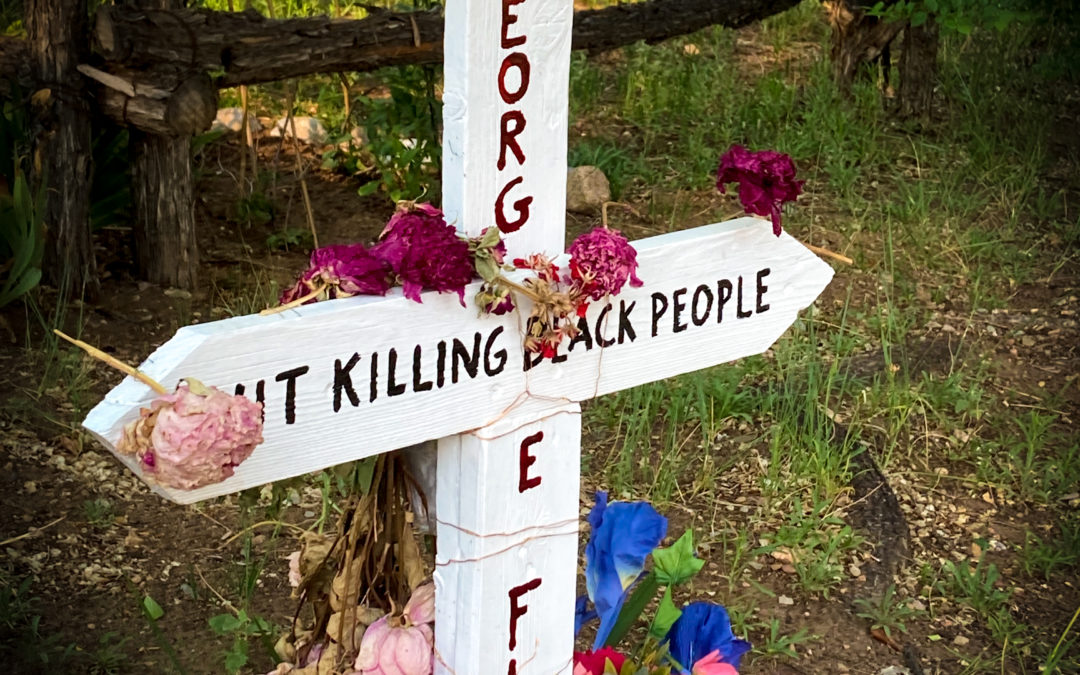
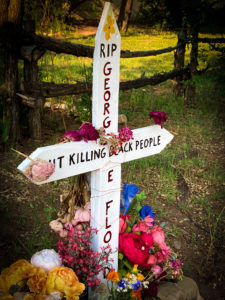
Santa Fe, NM: A roadside memorial to George Floyd Memorial near downtown Santa Fe.

On April 20 as the afternoon grew later, the world awaited one of the most anticipated verdicts in a generation. The case was the State of Minnesota v. Derek Chauvin, but it seemed as though once again the value of Black Life was on trial in the United States of America. Chauvin was accused and found guilty on all accounts for the murder of George Floyd, but the nation and the world knew more was at stake in the verdict. When George Floyd was killed in May 2020, it was a moment where  the specter of racism and police violence were thrust again into the national consciousness from their home in the daily lives of black people. The murder was particularly cruel and horrific. For nine minutes and twenty-nine seconds the former police officer Derek Chauvin kneeled on the neck and back of George Floyd, suffocating him to death as he cried out for help, for his mother, and for God. 

The incident was caught on video by a teenager who shared it to social media. Multiple news outlets picked it up and it’s playing sparked national outrage that ignited protests in large cities and small towns across America. While the world was on pause in the midst of the pandemic, millions got to see with their own eyes what many black families fear: a public death at the hands of a law enforcement officer, and another black man passing from life to become a hashtag. 

As the verdict was read, guilty on all counts, a mix of emotions could be seen and heard throughout the nation. Relief, sadness, hope, anger, fatigue, closure. At the same time there was an acknowledgment that this was not the end of the struggle for equal justice under the law for black people, but another point in the middle. For many believers it was on occasion for lamentation more than celebration for a number of reasons. People breathed a sigh of relief for accountability by a law enforcement officer, but many noted that this guilty verdict could not bring restoration of George Floyd’s life. There is still much violence in the land and great need for God’s intervention. There is a lot of change to be had, a lot of work to be done and thousands of other stories that did not end the way George Floyd’s did. Within the same week, in the same state there was yet another case of an unarmed black man who lost his life too soon in an encounter with the police. In this nation there are people who lose their lives every day to violence. It is the reason many law enforcement officers go to work everyday, to protect and serve and prevent people from losing their lives. And yet the shadow of death by violence looms large in our communities. This enduring reality causes many of us to still cry out to God for justice, mercy, and change. 

Lamentations is a book of the Bible that doesn’t get read very often, but is filled with violent and difficult imagery. The author wrote it during a time of great trauma when the children of Israel were in exile in Babylon and still facing destruction, disease, and death in the once great city of Jerusalem. They were aware that it was sin that brought the terrible conditions of suffering and injustice they experienced, but they were also aware that their hope was in God’s intervention. Our world in the wake of violence is similar to theirs in many ways, different than theirs in many others, but our hope remains the same in God’s intervention. The writer confesses his faith in the Lord and urges others to remember this time of trouble. This seems like a strange thing to do, remember a time of trouble, but it is instructive for us today. 

Lamentations 3:20-23(NLT) says: 

20 I will never forget this awful time, 

as I grieve over my loss.

21 Yet I still dare to hope

    when I remember this:

22 The faithful love of the Lord never ends!

    His mercies never cease.

23 Great is his faithfulness;

    his mercies begin afresh each morning.

It is tempting to forget pain, trauma, and the difficulty of a struggle; especially when we receive some relief. It is tempting to move on from the case of George Floyd because the verdict has been rendered, but the lessons must be enduring if we are to love in a world that keeps more people like George Floyd alive instead of relieved at their murderer being punished. This is one reason Lamentations may be in the Bible, to give hope to everyone going through a time of individual and societal struggle. It speaks to the presence of pain, but also the endurance of God’s presence in ways that encourage our souls to overcome weariness. 

Believers are invited by Lamentations to hear and remember the pain we experience, as well as the pain of others. But also to bear witness to the hope of God in the midst of it. Great is God’s faithfulness, His love never ends. Let us be lovers of ourselves, our neighbors, and our communities as we continue to cry out and advocate for God’s justice in the midst of the weariness and violence that continues to plague our land. 

Time to straighten out our Jericho Road

Video Courtesy of hardknocktv


When Jesus wanted to teach a lawyer the universal truth about what it means to be a neighbor, He told a story about a man from one ethnic group who helped a man from another ethnic group who had been beaten and left for dead along the Jericho Road. This anonymous brother’s keeper has been venerated as the Good Samaritan, and schools, hospitals, and streets are named after him. But today, if Jesus were telling this story, I wonder if He would only focus on one person helping another person. Today’s Jericho Road is not a one-person problem. If we’re to understand what it means to be a neighbor and straighten out our Jericho Road, we’ll need a national body of determined individuals who come together to fix a dangerous curve in our historical road that has caused damage to many for far too long.

What do I mean by straighten out our Jericho Road? First, a little context. In biblical times, the Jericho Road was the way from Jerusalem to Jericho, a flourishing city. The rich and famous built their vacation homes in Jericho. Religious leaders spent their days off there, perhaps resting under a palm tree. But the road to Jericho had many twists and turns where evil people lurked and attacked unsuspecting travelers. Far too many people taking the four-hour trek down the Jericho Road found themselves victims of evildoers.

Some would question why anyone would knowingly travel such a dangerous roadway, but a better question would be: Why should anyone be unable to travel to Jericho in safety? Are we to surrender our freedom because some would want to deny our right to life, liberty, and the pursuit of happiness? Why are we told to go back to Africa when our forefathers and foremothers helped build this great society—for free? When we gather for Bible study in our own churches, do we have to fear that evil people are going to jump out of nowhere and attack us?

Today’s Jericho Road is a twisted state of mind

Our Jericho Road is not offenders lurking on some mountain path over in Israel. It’s individuals with twisted states of mind who believe they can wait in their own dark shadows and then, without warning, jump out and attack people because they don’t like how they look or falsely believe that individuals searching for peace and rest are a threat to them. How do we straighten out such a mindset? Do we need metal detectors at every church door? Should we take off our shoes off before we enter our places of worship, not because we’re standing on holy ground, but because we want to ensure no one is hiding a bomb in their shoes?

When our nation has experienced natural disasters and terrorist tragedies in the past, we’ve come together, stepped up with celebrity telethons, public service announcements, days of silence, and other forms of active support to tell ourselves and the world that we’re better than this… that we shall overcome all terrorist threats to a humane society.

Go public against racial hatred

When a group of African Americans tried to cross a bridge in Selma and were denied, the country rallied. People of all ethnic stripes came against forces that wanted to infringe upon the God-given dignity of others. In one collective voice, they said, “No more. Not on my watch. Never again.”

Do we have enough Good Samaritans today who are willing to go public with their determination to end racism? Can we get enough people to just say no to racism so that our national consciousness reaches a tipping point that ends racial injustice? Will we call out and straighten out our own family members, friends, co-workers, and associates when they espouse ideas and actions that would undermine the safety and sanctity of others?

There’s been a lot of talk about having conversations about race, but as we all know, talk is cheap—unless it’s meant to broaden our understanding and respect for people who are “other” to us. Should we have such honest and transparent conversations, we’d quickly find out that underneath the skin, we’re all pretty much the same, with the same dreams and aspirations for ourselves and future generations. But until people, famous and anonymous, lock arm in arm and publicly declare that life matters and that racial hatred is wrong and will not be tolerated here, we can expect more of the same.

It’s been said that the only thing necessary for evil to triumph is for good people to do nothing. If that is true, then good people must take just actions until evildoers realize that we the people are intolerant of racial injustice. What Jesus taught must still be shared: We are all neighbors. We all are made in the image of God. Christ died so we could all experience our universal oneness in Him. When a Black child is murdered in the streets, we all suffer. When a White child is murdered in her elementary schoolroom, we all suffer. We are all human. No one else needs to be senselessly gunned down to make this heart-wrenching point.