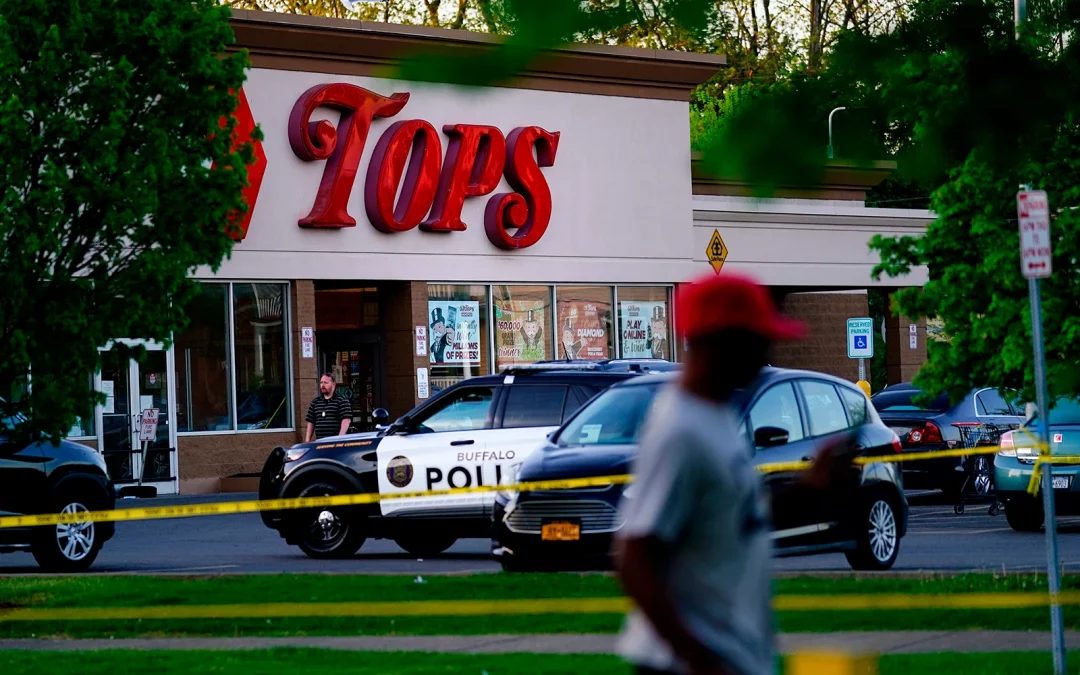
(RNS) — The man authorities say opened fire in a Buffalo grocery store Saturday (May 14), killing 10 mostly Black shoppers, was an avowed white supremacist. But his agenda went far beyond Blacks.
In the 180-page manifesto posted online two days before he carried out his attack, the 18-year-old gunman wrote that he chose the Tops Friendly Market on Buffalo’s east side because it is in an area with many Black residents. Eleven of the 13 people shot there were Black, law enforcement officials said.
Blacks, wrote Payton Gendron, come from a culture that sought to “ethnically replace my own people.”
But at the root of this xenophobic plan, known as replacement theory, are Jews to whom the alleged shooter devotes as much vitriol. Traditionally, Jews are depicted as stealth invaders who manipulate Western elites to disempower and replace white Americans.
Both Blacks and Jews are bound together in white supremacy, watchers of the movement say.
“You can’t separate the racism and antisemitism,” said Amy Spitalnick, executive director of Integrity First for America, the nonprofit that successfully sued organizers of the 2018 Unite the Right rally in Charlottesville, Virginia, where marchers chanted “The Jews will not replace us.”
“There needs to be some conspiracy responsible for everything terrible that these white supremacists think is happening to this country as a result of Black and brown people, immigrants and refugees,” said Spitalnick.
Dozens of pages in the Buffalo shooter’s manifesto are devoted first to Blacks and then to Jews, replete with photos, drawings, graphs and caricatures.
On Sunday and Monday, scores of American Jewish organizations loudly denounced the massacre, which the U.S. Justice Department is investigating as “a hate crime and an act of racially motivated violent extremism.”
The Anti-Defamation League, the National Urban League and others called on President Biden to convene a summit on hate and extremism and to develop a plan to combat hate crimes, white supremacy and violent extremism.
The “great replacement theory” that binds racism and antisemitism was once an obscure extremist idea relegated to white supremacist forums. But in recent years it has become mainstream, especially as Fox TV host Tucker Carlson has made the Democrats’ intent to dilute the white voting population a central theme of his show. Several congressional Republicans have echoed it or outright embraced the notion.
At its root, the theory holds that not only is immigration to the United States crowding out whites, but that a cadre of elites, including Jews, are intentionally encouraging that to happen.
That charge is not new, said Samuel Perry, professor of sociology and religious studies at the University of Oklahoma and a leading expert on white Christian nationalism. It’s core to many authoritarian movements, stretching back to Nazi Germany.
The idea, said Perry, is that white people aren’t fertile enough and that it is “everybody’s responsibility to outbreed the negative elements we don’t want in our society,” he said.
“It’s wrapped up in ethno-cultural outsiders: immigrants, Jews and Muslims. They are a threat to white hegemony,” Perry said.
The theory appeared to go dormant for some years but resurfaced in Norway in 2011 when Anders Behring Breivik killed 77 people. In 2019 in New Zealand, Brenton H. Tarrant killed 51 people in a pair of mosques while warning of “white genocide.”
About 20% of Gendron’s manifesto appears to be plagiarized from the declaration left by the New Zealand shooter, according to an analysis conducted by the Khalifa Ihler Institute, a Sweden-based think tank that seeks to combat extremism, The Washington Post reported.
In the U.S., white supremacy has a long history that has lately reemerged in mass-shooting sprees such as the 2015 massacre of nine people at a Black church in Charleston, South Carolina. Gendron praised Dylann Roof, the Charleston shooter, in his manifesto. Roof, like Breivik, he wrote, “fought for me and had the same goals I did.”
Three years later, Jews were the target when Robert Bowers gunned down 11 worshippers at Pittsburgh’s Tree of Life Synagogue, because he thought they were working to admit immigrant “invaders” into the United States.
For whatever reason, the Buffalo gunman sidestepped Jews this time, writing, “They can be dealt with in time.”
But he hardly spared them.
“The Jews are the biggest problem the Western world has ever had,” the manifesto reads. “They must be called out and killed, if they are lucky they will be exiled. We can not show any sympathy towards them again.”
White supremacists view American Jews as liberal, stereotypically tied up with institutions, such as government, media and academia, that are viewed as left-leaning and secular.
American Blacks, who are overwhelmingly Christian, are also on the wrong side of politics in the minds of xenophobes. Tending to vote Democratic, they are thought to support immigration — and to be a danger to white culture in themselves.
In the manifesto, Gendron writes about Blacks nearly the same way as about Jews. “We must remove blacks from our western civilizations,” his screed said.
Many Jewish groups issued statements of solidarity with Blacks Monday.
“Today, our multiracial Jewish community sits in grief, extending our love, solidarity, and support to the Black community in Buffalo and all who are in pain,” wrote Jamie Beran, interim CEO of Bend the Arc: Jewish Action. “Tomorrow, we rise in partnership to hold the politicians and corporations profiting from the spread of dangerous conspiracies accountable.”
Many are hoping the two groups can come together to fight the onslaught of hate.
“There needs to be clear recognition that you can’t take on antisemitism without taking on the various forms of hate bound up in white supremacy,” said Spitalnick. “All of our lives are intertwined.”
No one can deny that our nation is angry, hurt and frustrated due to the senseless violence that continues to plague us; however, the way we address today’s issues is absolutely critical, particularly for us as Christians. Here are a few suggestions on how we can respond to the violence and pain through active faith.
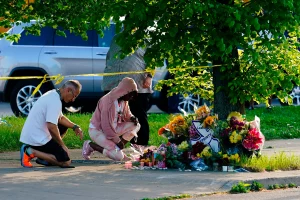
Pray in unity.
Now, more than ever, the church is commanded to pray in unity. In Matthew 18, Jesus emphasizes the importance of collective spirituality by saying, “If two of you agree here on earth concerning anything you ask, my Father in heaven will do it for you. For where two or three gather together as my followers, I am there among them.” Yes, times are tough and you may find it difficult, but praying together not only obeys these words of Christ, but also serves as a powerful tool of encouragement and reminds us that we are not alone in the struggle. Besides, Christianity is a communal faith, and historically, many African and African-influenced cultures have always valued collective spirituality. Most importantly, we must remember that we serve a God who answers prayer, not always in the ways we expect, but always effective according to His will!
Educate yourself and others.
Hosea 4:6 declares, “For my people perish for lack of knowledge.” In order to actively address today’s issues, it is absolutely critical that we are prepared, both spiritually and intellectually. Take the time to educate yourself on the laws, procedures and government systems that affect both you and your family. However, it is just as important to equip yourself with Scriptures that will assist you in learning strategies that respect government while actively advocating against injustice and violence. Throughout the Bible, Jesus teaches us the importance of knowing your rights as both citizens of your home country and citizens of God’s kingdom. (Matthew 22:15-22, Luke 4:38-53, Mark 3:1-6) It is imperative that you know your rights in order to prevent them from being violated.
Be persistent and hopeful in seeking justice.
In Luke 18, Jesus tells a parable that is not often shared among members of the Church. It is a parable about a persistent woman who goes to a judge to receive justice. Although he is not righteous, the judge gives the woman justice because of her persistence. As Christians, will we have enough faith to be persistent and seek God, even when dealing with a broken and unrighteous government?
The call to action here is clear. Keep seeking justice, even in a broken system, because the persistence will eventually bring about change.
Love your neighbor.
In the midst of all that is going on, this is the key. We have to choose to love our neighbors the way God loves (Matthew 22:38-39). We must love because we have been shown love, even when it is uncomfortable and inconvenient. Showing acts of love to our neighbors, particularly to those who historically have not always shown love in return, will begin to build the bridges across the ravines of fear that divide our nation and lead to the violence in the first place.
It is important to see here that love covers a multitude of sins, the sins that separate us from one another and God. Fear drives a lot of the sin of violence in this nation. It is the fear that we will keep killing one another, fear that things will not change, fear between races, and fear within communities. However, it is perfect love that casts out all fear (1 John 4:18). As Dr. Martin Luther King Jr. said, “I have decided to stick with love. Hate is too great a burden to bear.”
Share your thoughts on the recent violence and your plan of action as a Christian in today’s society below.
Whoopi Goldberg, co-host of ABC’s “The View,” set off a firestorm when she insisted on Jan. 31, 2022 that the Holocaust was “not about race.” Hands outstretched, she went on to describe the genocide as a conflict between “two white groups of people.”
As someone who writes and teaches about racial identity, I was struck by the firmness of Goldberg’s initial claim, her clumsy retraction and apologies, and the heated public reactions.
Her apology tour on her own show the next day, on “The Late Show with Stephen Colbert” and on Twitter
raised more questions about her views on race, antisemitism and the Holocaust. Goldberg also seemed unaware of the non-Jewish victims of the Nazis. By the end of the week, the president of ABC News described Goldberg’s remarks as “wrong and hurtful” and announced that she was suspended from the show for two weeks.
How did a conversation about the controversial banning of the Holocaust graphic book “Maus” by the Tennessee Board of Education, which Goldberg opposed, turn into such a media spectacle? And what does it tell us about the social norms guiding how we talk about race and violence?
Filling the void
Sociologist and American Civil Liberties Union attorney Jonathan Markovitz defines “racial spectacles” as mass media events surrounding some racial incident that is passionately debated before dying down.
In the absence of sustained national dialogue, shows like “The View” and comedians like Goldberg can easily become lightning rods. The American public often overestimates their ability to unpack complicated social issues. Are they public intellectuals or entertainers? Critics might also ask why someone like Goldberg, who has already demonstrated odd thinking about racial identity and a willingness to defend racist acts, would have such a huge platform in the first place. But this isn’t just about Whoopi Goldberg.
Let’s clear up a few points: Race is an elastic social category, not a fixed biological one; Jewish identity and experience are not synonymous with whiteness; and Jewish people have historically been treated as a distinct racial group. The Holocaust was the systematic genocide of some 6 million Jews from 1941 to 1945, fueled by the Nazis’ belief that they were an inferior race. Other victims included Poles, Roma, gay men, lesbians and others.
The Holocaust is one of the most extreme and tragic examples of what sociologists Michel Omi and Howard Winant referred to as “racial projects.” In their work on racial formation, they used that term to describe how racial categories are formed, transformed and destroyed over time. In other words, the fact the Jewish people themselves may disagree over whether they are a racial or ethnic group does not undo their long history of being categorized and marginalized as such.
Still, it is unsurprising that an American, perhaps especially a Black one like Goldberg or myself, would think that race is about skin color given how it plays out in our lives. As a graduate student studying racial violence and collective memory, I was stunned to learn how ideas about racial difference varied wildly across societies and how those ideas could morph within the same society over time.
I learned that race is a social idea that is propped up by observable traits, only one of which is skin color. The racialization of Jewish people may not be about complexion, but physical markers are still often used to differentiate and stereotype the Jewish body.
It is also important to understand ongoing antisemitism in the U.S. and efforts to deny that the Holocaust even happened. Goldberg’s remarks were clearly the sort of “excitable speech” that gender theorist Judith Butler writes about, disorienting us by bringing violent histories to bear on us today. The way we talk about the past matters – as does the way people are held accountable for misrepresenting it – because so much of it helps to explain the contours of existing conflict.
Another lesson
At the same time, dismissing Goldberg’s comments and the backlash would mean missing an opportunity to appreciate what can result. For example, in light of the recent controversy, the Anti-Defamation League announced it will revise its definition of racism to include both race and ethnicity.
In this moment, people are talking about Jewish identity, racism and a violent history we’re meant to “never forget.” But they’re also talking about Blackness.
What can we make of the frenzied rush to chastise and publicly ridicule a Black woman for talking about race in the wrong way? On the one hand, this is similar to other celebrities condemned for racist speech whose apologies get scrutinized.
Yet, the Goldberg affair feels different to me. It reignites a recurring suspicion that Black people, while oppressed, suffer from twisted bigoted racial thinking – that Black people are not innocent victims after all. When a Black celebrity makes racist remarks, suspicions reawaken that perhaps it is a collective failing. This sort of projection of individual acts onto an entire group as if it were a shared trait is anti-Black.
Yes, many of us think Goldberg got it horribly wrong. And yes, her apologies made matters worse. There are better ways to think and talk about race and racism.
But observers shouldn’t be surprised when these conversations go awry, considering how little time is spent openly having them in the first place.
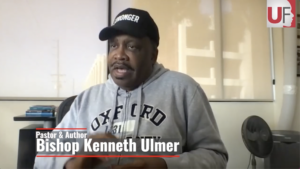
Bishop Kenneth Ulmer has been pastoring for decades in Inglewood, CA. He has seen more than his fair share of racism on the streets and on stages across the country. But he has recently launched a campaign to work toward racial understanding and reconciliation that has captured the attention of Christians across racial lines. UrbanFaith contributor Maina Mwaura sat down with him to discuss his work to confront racism and bring people together. The below interview is edited for length and clarity.
Maina
You’ve been around for a long time, you’ve seen the ups and downs when it comes to race? Why did you decide to get involved with such an event like this, for people to come together and talk about this important topic?
Bishop Ulmer
I think you just answered it, it is the the importance of coming together. And talking about it, you know, the Bible does a passage where the Bible says, Come, come, let us reason together. And our efforts is simply first of all, to start with coming together, which, especially in these days of division, and schisms, and “isms” that should be “was-ims” all the divisions in the body of Christ, just coming together is an achievement. Yes, I’ve been doing this for a while…and I don’t think I have ever in my life or ministry seen a season and a time where the world is as divided. But more importantly, and more grievously more painful, is that the church is likewise significantly divided. And I think what bothers me is that many don’t know, don’t realize it, or didn’t get the memo, or whatever. And we’re kind of going on in business as usual.
But it is not, as usual, but in many cases, in terms of COVID, and everything, will never be the same. The issue is, what are we going to look like on the other side of this, and the exhortation is, don’t come out of this empty handed. Don’t come out of this, having learned nothing, haven’t having achieved anything, having made no progress. Look around, reach around, grab around for what God is saying to you. I would say, What is God saying to the church? You know, the exhortation of, of John, he did have ears. Here, listen, get it, catch it, what the Spirit is saying to the church, what he is saying, you know, the Prophet said, God is doing a new thing. And I love that verse. And I think it’s Isaiah 43, where it says…don’t miss this…don’t you see that God is doing a new thing? And so I think, ultimately, our gathering is to come together, to reason to wrestle to dialogue, even to dispute and debate. You know, what are you hearing God’s saying, what is God saying, now? What are the words of the marching orders for the body of Christ, when we come through this thing, and of course, all of us would admit that we didn’t know we, we did, none of us knew we would still be in it this long.
And, I gotta tell you, I’m not a prophet, not a son of a prophet, but I think things may get worse before they get better. And by that, I mean, this is not going to be a quick fix. It’s a major cultural shift. And there’s a major cultural shift as relates to the body of Christ as relates to the mandate the commission of the church.
Maina:
Why do you enjoy talking about race? Like you don’t mind embracing it. Like you don’t mind stepping into it. When a lot of people are going, I think I’ll avoid that conversation. What do you enjoy about it?
Bishop Ulmer
I think it’s the new frontier. I say we’re in the desert. I think it’s the new battlefield. And I think it’s a battlefield where God can God desires. And I declared God will get glory. But it’s a battle we cannot avoid. It’s a battle we cannot did not it’s a reality that we cannot deny. But I think I think it is it’s one of those desert lands, is one of those wilderness lands, is one of those battles that God is going to bring us through. But the idea is you got to… I love that passage where in Second Chronicles, where God says to the Prophet Joshua, “Look, the battle is mine. The battle is not yours. I got this.” But then he says, “but tomorrow, you got to go to the battlefield.” Whoa, whoa, whoa, if the battle is yours, Lord, why can’t I watch you take it now? I’ll just be the cheerleader on assignment. God said No, no, no, it’s my battle. When I win through you.
And I think it’s a season where it’s those of us who are willing to take the risk of going into the battle that is in fact God’s, and that God will win. I have some white friends who admit, and I love them for admitting, “Man, I can’t even afford this.” Like I know a couple of white friends of mine who said some public stuff [that cost them]. [A friend and I] did a video about George Floyd and everything. And I have I noticed friends of mine who stood up and talked about the oneness in the body of Christ and racism and stuff. And that friend had a back door revival. He had members of families, some of them longtime families who left his church just for admitting just for mentioning it. And so, I think there’s a price to it, and I have some friends who are not willing to pay that price. But my only excitement is [that] I think it is the new battlefield where God will get glory. But he needs soldiers like us to take the battlefield.
“Do not neglect to show hospitality to strangers, for by doing that some have entertained angels without knowing it” (Hebrews 13:2, NIV).
Have you ever known someone who never meets a stranger?
Folks who live their lives in such a way that nearly everyone they meet becomes a new friend astound me with their generosity of spirit. I admire their courage and zest for life, which compels them to embrace even those they do not know well, knowing that each creature has gifts to share with the world.
As a faith leader, when I meet folks with those sorts of spirits, I see some of the Spirit of Christ who, although divine, shared meals with the poor, sick, and sinful, laid hands on the infirm, and drew close to the crowds without reservation.
Even in His dying moment, Jesus stretched His arms wide as though embracing all of us and declared forgiveness over us because we did not realize what we were doing. Jesus is the embodiment of the grace of hospitality, and I would argue that hospitality is the biggest gift we, the body of Christ, can offer the world right now.
The Fear Factor
The current social and political climates have caused me to take a step back to examine what Scripture teaches us about welcoming strangers among us. I confess that I focus much of my time concerning myself with the sins that other people perpetrate on each other. I concentrate on the news stories about hate crimes without giving much consideration to the ways that I allow hate and fear to fuel my actions.
The truth is that fear motivates so much of what we do. Our fears prevent us from loving and practicing hospitality in the ways that our faith demands of us. In today’s social media culture, many of us have a fear of rejection. As humans, many of us also have a fear of not knowing which prevents us from meeting new people and having new experiences.
We also often have fears of being powerless that cause us to try to stay in places that make us feel powerful. We allow our fears to impede upon our ability to love.
Before turning outward and critiquing national and international leaders, I want to encourage us, especially during this introspective liturgical season called Lent, to look within to ask ourselves how we are practicing the kind of hospitality that Scripture and the example of Jesus Christ demand of us.
Love Thy Neighbor?
Many of us have learned the classic stories about hospitality in Sunday School and Sunday morning sermons.
We have heard about Abraham and Sarah, who unknowingly hosted angels who foretold the birth of Sarah’s son. In the passage from Hebrews I cited at the top of this article, the author alludes to that passage from Genesis. Despite the many admonitions throughout the Hebrew Bible to care for the foreigner, widow, and orphan, we, like the lawyer in Luke 10, often ask, “Who is my neighbor?”
In response to that question, we have heard Luke’s well-known story of the Good Samaritan who, despite his vastly different culture and faith, cared for an Israelite stranger he found injured on the side of the road. Even after hearing such a dramatic story of sacrificial love, we continue to struggle with caring for our neighbors. Perhaps my favorite aspect of the story is the way it condemns us for the times we fail to show love to people who are just like us.
We have become politically motivated to care for immigrants in recent months, as we should, but we mistreat those who sit right next to us in the pew or who share our offices at work!
Jesus tells Israelite listeners the story of an Israelite man who was robbed as he traveled from Jerusalem to Jericho. A priest passed by and walked on the opposite side of the road to avoid helping. Then, a Levite, a religious leader from the priestly tribe of Levi, passed him. Only a Samaritan, a man who was from a different culture and faith background, cared for the man.
Many commentaries have explained that the priest and the Levite probably did not interact with the victim because of concerns about ritual purity, but does that not cause us to consider our priorities? We cannot prioritize legalism over mercy and love. Here was Jesus, the Lamb of God who takes away the sins of the world, essentially urging His listeners to ritually defile themselves because mercy is at the heart of the Gospel.
The Missing Link
What the world needs from the church is for us to be the church. The time is now for us to commit ourselves to following Jesus Christ in our actions. It was the way the early Church first began to thrive.
As J. Ellsworth Kalas puts it in his book The Story Continues: The Acts of the Apostles for Today, “The Christian church was born in a time and culture when the marketplace of beliefs was crowded to its borders. Religion was everywhere … This meant that it was easy to talk religion, but also that it was difficult for the decision to get serious. No wonder, then, that the followers of Christ were known as ‘people of the Way.’”
The earliest Christians stood out, and they increased in number because they lived their Christianity; for them, it was not simply an interesting intellectual idea. They attracted converts because of their countercultural way of viewing religion as more than a list of philosophies.
Rev. Dr. Martin Luther King Jr. provided a practical understanding of this concept in his sermon “A Knock at Midnight,” which appears in his 1963 book of sermons called Strength to Love. King preached, “The church must be reminded that it is not the master or the servant of the state, but rather the conscience of the state … if the church will free itself from the shackles of a deadening status quo, and, recovering its great historic mission, will speak and act fearlessly and insistently in terms of justice and peace, it will enkindle the imagination of mankind and fire the souls of men, imbuing them with a glowing and ardent love for truth, justice, and peace.”
In other words, from the Scripture we read, to the prayers we pray, to the songs we sing, our worship is real and lived and must transform us from the inside out. The church is not a place to go; the church is a thing to do. We call the physical buildings in which we worship churches, but the church is the body of Christ, at work in the world.
So, what does living our faith teach us about hospitality?
A Place Where Ministry Happens
One of my mentors in ministry began a new pastorate at the end of 2016. After examining the needs and challenges of ministry at her new church, she chose as her theme of her church “Radical Hospitality.” The new framework of thinking about the church as a place where radical hospitality happens has changed it in practical ways in just a few short months.
Church members are beginning to imagine their worship space as first and foremost a place where ministry happens. That sounds obvious, I know, but so many churches have gotten away from thinking of themselves as being ministry spaces above all else.
One of the most drastic changes she has made as pastor has been to reimagine the parsonage, the house that is owned by the church for use by pastors and their families. That house now serves a dual purpose. It is both a “meeting house” where retreats, Bible study, and meetings can occur, and it provides accommodations for the pastor and visiting ministers.
Knowing my colleague, and understanding what it means to be “radical,” I am expecting that in the months and years to come, her new ministry will continue to grow and transform to become more welcoming for all people.
It is our task, as the Samaritan did in the Gospel of Luke, to embrace all we meet. As Hebrews 13:2 reminds us, we do not know the actual identity of those we encounter each day. Scripture teaches us that if we open our hearts to the possibility, each stranger has gifts to share with us that will enhance our lives. My fellow people of the Way, let us go forward with joy to spread Christian hospitality.
Jaimie Crumley is a minister, blogger, podcaster, and ministry consultant. She blogs about race, gender, history, and Christian faith at iamfreeagent.com.
Share your thoughts on ministry and hospitality below.


 Pray in unity.



 What the world needs from the church is for us to be the church. The time is now for us to commit ourselves to following Jesus Christ in our actions. It was the way the early Church first began to thrive.