Remembering why you want to eat better and take better care of yourself can help you stick to your resolutions. Being present to family is one important reason. Prostock studio/Shutterstock.com
Yet, 80% of people agree that most people won’t stick to their resolutions. This pessimism is somewhat justified. Only 4% of people report following through on all of the resolutions they personally set.
Based on our research, we propose a potential solution to the problem of New Year’s resolutions that people can’t keep: encouraging people to reframe their resolutions to emphasize purpose-based performance.
Why the failures?
What leads to so many abandoned New Year’s resolutions?
A large body of research on goal-setting and habits provides insight into the various reasons for failed resolutions.
Many people are not framing their resolutions in ways that will motivate them over time. For example, “exercise more” is a fairly clear directive, but it lacks depth and personal meaning that could help promote follow through. Overly simplified resolutions, such as “exercise more” and “eat healthier” contribute to the ongoing problem that emerges as early as mid-January each year: unintentional neglect of important self-improvement goals.
Thinking of purpose as you ponder your resolutions can imbue them with joy and meaning. Kiefer Pix/Shutterstock.com
In the context of goal-setting for the new year, the concept of purpose-based performance becomes especially relevant. In our research, we have found that purpose-based performance is much healthier and more sustainable than outcome-driven performance.
The first thing to consider is your long-term goals, and how each resolution fits with those goals. Purpose-based performance includes goal orientation, or an internal compass that directs people toward some long-term aim. This orientation helps people organize and prioritize more immediate actions to make progress toward that aim. People who are goal-oriented and remind themselves of their “end game” live consistently with their beliefs and values and perform better on the immediate goals they set.
When setting New Year’s resolutions, many people end up with a long list of simple resolutions without thinking deeply about their rationale for each resolution, or where each resolution will take them. Linking an immediate goal with a longer-term aim can sustain progress. Thinking about who you want to become can help you decide which resolution(s) to take on.
Why is this personally important?
The next step to consider is why each resolution is personally meaningful for you. When people pursue personally meaningful goals, they are not only more intrinsically motivated but also find more joy in the process of goal pursuit. They are able to reframe challenges as opportunities for personal growth. In one study with elite athletes, we found that personal meaning helped them regulate their emotions when things didn’t go their way and display more patience as they pursued their goals.
Someone who pursues a goal for external rewards that are contingent on a particular end result – for example, validation that comes from winning – is likely to experience shame when they fall short of their goal. Even when they win, they may feel disappointed because the end result does not bring meaning to their life. This is exemplified by the “post-Olympic blues,” when Olympians experience depression after such a significant accomplishment.
Spend time thinking about your motivation for each resolution. Ask yourself, are you focused on a particular outcome because it will give you self-esteem, status or something else? It can be helpful to think about the potential meaning found in the process of pursuing a goal, regardless of whether you attain the desired outcome.
Who will be positively affected by this?
The final step is to consider who or what, beyond yourself, will be positively affected by your resolution(s). Desire to be a part of something greater than the self, or transcendent motivation, is beneficial for performance for several reasons.
Linking a resolution to transcendent motivation can be a powerful source of inspiration. Someone may link exercise goals to a charitable cause they care about, or they may think about how improving their health will make them a better partner, friend or parent. Research shows transcendent motivation improves self-regulation when things get dull or repetitive during goal pursuit, and it strengthens character virtues like patience and generosity. When someone’s transcendent motivation is prosocial in nature, they are willing to accept feedback about performance and receive increased social support in the workplace.
Think about the bigger picture. Consider whom you are helping with each goal. Potential impact beyond yourself is added fuel for your goal pursuit.
Reframing your resolutions
What might New Year’s resolutions that incorporate purpose-based performance look like? Using the three questions above, we have reworked three common resolutions to reflect purpose-based performance:
“Exercise more” becomes “I commit to working out two times per week so I can be more present and energized with my children, so they feel more loved and inspired by me.”
“Save money” becomes “I commit to saving US$100 per paycheck so I feel more secure in my role as a husband and father, which will ultimately benefit my family.”
“Lose weight” becomes “I commit to losing ten pounds so I feel more confident at work, and my coworkers will experience a more positive version of me.”
18 Yet what we suffer now is nothing compared to the glory he will reveal to us later.19 For all creation is waiting eagerly for that future day when God will reveal who his children really are.20 Against its will, all creation was subjected to God’s curse. But with eager hope,21 the creation looks forward to the day when it will join God’s children in glorious freedom from death and decay.22 For we know that all creation has been groaning as in the pains of childbirth right up to the present time.23 And we believers also groan, even though we have the Holy Spirit within us as a foretaste of future glory, for we long for our bodies to be released from sin and suffering. We, too, wait with eager hope for the day when God will give us our full rights as his adopted children,[a] including the new bodies he has promised us.24 We were given this hope when we were saved. (If we already have something, we don’t need to hope[b] for it.25 But if we look forward to something we don’t yet have, we must wait patiently and confidently.)
26 And the Holy Spirit helps us in our weakness. For example, we don’t know what God wants us to pray for. But the Holy Spirit prays for us with groanings that cannot be expressed in words.27 And the Father who knows all hearts knows what the Spirit is saying, for the Spirit pleads for us believers[c] in harmony with God’s own will.28 And we know that God causes everything to work together[d] for the good of those who love God and are called according to his purpose for them.29 For God knew his people in advance, and he chose them to become like his Son, so that his Son would be the firstborn[e] among many brothers and sisters.30 And having chosen them, he called them to come to him. And having called them, he gave them right standing with himself. And having given them right standing, he gave them his glory.
As a true child of God, there is a power and authority that we are expected to walk in and manifest. At times, the problems we see in the world create hopelessness and despair as many ask themselves, “where is God?” These are signs that there is a need for solutions from the Church of Jesus Christ.
What if our faith in God could push us to fulfill our destiny? How many times have you wallowed in sadness and discouragement wondering what will happen with your life? We may be the answer to the world’s problems.
In Romans 8:18-30, we are reminded of the beginning in the book of Genesis where the Lord gave man authority as a caretaker of the garden of Eden. That level of responsibility meant that humanity had the power to creatively come up with solutions that would impact creation.
Every day, there seems to be a new problem in our society. There is always something pending that should be handled or taken care of. This scripture is a reminder that the God we serve has great confidence in us to come up with solutions that will create positive changes.
Creation is yearning for us as children of the most High God to awaken to our divine collaboration with the Lord caretaking and providing answers to every day questions and problems. If humanity can creatively come up with a strategy and a means to travel to the moon, there is a grace that is in us to come up with answers that will transform the world we are living in a day at a time.
All it takes is a perspective of faith, belief in oneself, trusting the power of God in you, and looking around to see the problems that need to be solved. Instead of waiting and wondering what your life is about, be proactive in using what God has given you to make the world you live in a better place.
Prayer
Dear Father,
Today I ask for a change in mindset. Teach me how to think like a winner and a solutionist. Instead of complaining about the problems in my life, help me to look for opportunities to make a change. Reveal to me the gifts and graces you have bestowed upon me and help me to create answers. Let me be confident in your ability to assign me as a caretaker of the world I live in. Make it a personal responsibility to make a positive change. I believe I can do it. Show me how to do it, so that I may please you as a compliment of your faith in me.
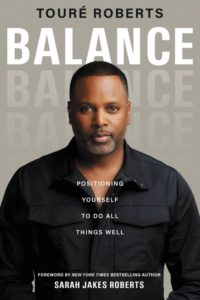
UrbanFaith sat down to interview Touré Roberts, the visionary leader and founder of ONE (formerly OneChurch LA) to discuss his new book Balance.
Touré Roberts is a man who wears many hats. He is a husband, father, producer, pastor, author, speaker, and business executive with churches and homes in two cities. His wife Sarah Jakes Roberts who wrote the foreword to his most recent book is one of the most sought after speakers in the country. Saying Roberts needs balance to maintain his success is an understatement. But Touré has uncovered an unconventional approach to balance…as a place to live from. An overview of the book is below.
Imagine learning to tap into the awareness, the sensitivity and highest thought patterns that enable the most successful outcomes in life, love and business. What would your life look like if you were able to break the patterns of inconsistency that keep you from your absolute best? These goals are not only possible—they are what you were made for! In Balance, bestselling author Touré Roberts guides us on the eye-opening journey that unpacks the divine formula that makes this a reality. This illuminating guide brings a unique and eye-opening perspective to the evasive concept of balance.
As we navigate change in our world caused by the pandemic, social, economic, and governmental transformation, wisdom of all types is necessary. Leaders are trying to find new ways to engage those they lead and everyone is working to communicate more effectively in our dynamic moment.
UrbanFaith sat down with one of the most influential leaders in the world, Bishop T.D. Jakes who has seized the opportunity to share his insight and experience on how to remain faithful to our purpose as we communicate in our dynamic context. In his new book Don’t Drop the Mic he shares his wisdom on how to faithfully communicate regardless of the audience. It has been called one of Bishop Jakes’ best books as he explores clear and effective communication in our everyday lives and on the world’s biggest platforms. Bishop Jakes has led a megachurch with tens of thousands of members, The Potter’s House for decades, become an entrepreneur, filmmaker, talk show host, producer, and raise his children without dropping the mic. Two of his children are now successful pastors in his ministry network, Sarah Jakes Roberts and Cora Jakes Coleman. This book explores how he stayed true to his message while adapting his method through the years. Full interview is linked above.
Success is a relevant but slippery topic for Christian young adults. A good number graduate from high school or college and join the workforce with a fresh enthusiasm about life. They find out, however, that the world is different than what than what they expected. Things they considered concrete might seem anything but, including how to measure accomplishments and achievements. Added to this is the idea that a massive amount of advice is available about success and what it is. Very often, the advice is given by people who have already reached the pinnacle of prosperity and spoken like the journey is merely following three simple steps. There is, however, no need to panic. Instead of finding simple steps, there are three truths a Christian young adult can use to find success. By keeping these in mind, the journey may be less daunting, but also it can be educational and be very enjoyable.
Truth #1: No Standard Definition of Success
The first truth is to throw out the cultural idea of a standard definition of success, which may be a challenge because the notion is planted in our psyche from an early age. We are told about millionaires and presidents but not crossing guards and home care nurses. Society lauds students who get full scholarships to 20 colleges but not the student who is the first person to be accepted into college. No one size fits all because no one size fits all people, especially with Christians. Jeremiah 29:11 (ESV) states, “For I know the plans I have for you, declares the Lord, plans for welfare and not for evil, to give you a future and a hope.” Ephesians 2:10 reflects this theme. “For we are his workmanship, created in Christ Jesus for good works, which God prepared beforehand, that we should walk in them.” If our lives are His plan, then He determines success. He sets the standard. He has already decided our good works, and all we have to do is find out His plan and follow along. This may be a hard habit to break, but as you continue to submit to the idea that the determination of what is “good works” is not yours, then it will be easier. Success by definition is accomplishing one’s goals. The goal doesn’t matter. The achievement of the goal does. If God directs our lives and we achieve the good works He has prepared for us, that is the highest level attainment. It doesn’t always bring money or fame. If these things are the only way a person evaluates their accomplishments, it will lead to disappointment and dissatisfaction.
Truth #2: God Tailors Your Success to You
The second truth is to realize that God tailors your success to how He made you. Many people believe that attainment is becoming an executive with a corner office, but in their hearts, they would much rather work with their hands. Or the government worker that would prefer to work in a food bank. Or a hair salon. This cognitive dissonance is akin to wearing shoes that don’t fit. Yes, they are shoes, but they may be someone else’s. Finding the right fit comes down to listening to God and watching for patterns. Hearing God is not impossible. As a matter of fact, God very much wants to guide His children to the good works He has prepared for them. The Bible is full of passages in which God promises to guide us. Psalm 32:8 (NKJV) holds God’s promise — “I will instruct thee and teach thee in the way which thou shalt go: I will guide thee with mine eye.” This model of guidance points back to the truth that God knows what a fruitful and meaningful is for you and wants to lead you there.
Truth #3: You Can Be Successful Outside Your Job
A third truth is to recognize that a job is not the only place in which a person can be successful. There is much emphasis put on having a career filled with awards and advancement. Picking the right career, right degree and right mentor, all these things are framed as the crucial steps for advancement. But what about those areas of life outside of work? Remember, success is about accomplishing the goals and can impact every area of life. One could be a good father or a caring daughter. One could find fulfillment in being a good friend or a faithful intercessor. Many find achievement in weight-loss and sobriety. By removing the constriction of an occupation, accomplishing the goals enrich a whole life and can be measured in broader terms. Instead of a hard goal like being a millionaire, a goal can be being a better friend or saving more money. God directs our achievements, and He determines the terms. He wants us to prosper in accomplishing His will. By living by these truths, letting go of the idea that there is only one route to achievement, understanding that God determines the good works in life even beyond our careers, the picture of success can become more evident. There isn’t one definition or destination. Success can, however, be reached by following God’s direction.