Gabby’s Dollhouse is a children’s entertainment phenomenon and now Gabby has her first movie! UrbanFaith interviewed “Gabby” herself, Laila Lockhart Kraner, and her grandmother “Gigi” played by the global entertainment icon Gloria Estefan about the Gabby’s Dollhouse Movie. We asked about what it was like to bring Gabby to the big screen and what Gloria would tell us about sharing joy with the next generation. Gabby’s Dollhouse the movie is now in theaters!
The Life of Chuck is one of the most peculiar and delightful films I have ever seen. At face value it is hard to know what this movie is about from the outset besides that a man named Chuck will be at the center. And while that evaluation is true, this movie is about so much more than Chuck. This movie is about the multitudes of lives contained within all of us. It is a movie that makes you ask and consider hard questions. How do we face loss, death, and difficulty? What matters most when the world is falling apart around us? Why do we make the choices we make every day? How do find joy in the midst of difficulties?
I am not a normal Stephen King fan. I do not like horror films, I’m not into scary books, I don’t enjoy exploring the paranormal. But this movie was fantastic. It refuses to be pinned down into one category of movie and is not even told in a normal narrative order. But it is one of the most thought-provoking and emotionally inspiring movies I have seen in years. I would highly recommend it for anyone willing to walk into a theater with an open mind.
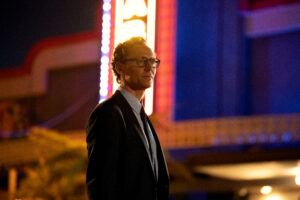
The Life of Chuck feels incredibly timely. I have struggled watching the news as many people have in our current historical moment. As we see natural disaster after natural disaster, wars and famines, death and destruction in a constant cycle and ignorance in echo chambers many people have responded with exasperation and apathy. Chuck responds head on to the crisis. It explores the Life of Chuck, but the contents of that life are far more expansive than I could have anticipated. Chuck is not a larger-than-life amazing figure on an adventure. He is a mundane and complex man who was once an innocent and awkward boy. The people in his life feel like people I know.
The authenticity of the performances from Chiwetel Ejiofor and Karen Gillan were so moving. The depth and complexity of young Chuck’s family made my heart ache. I felt moments of pure joy, sadness, fear, wonder, laughter, worry, inspiration, and reflection watching this movie. And Tom Hiddleston made me think and smile. I almost shouted with joy when I saw The Pocket Queen, a young woman drummer, appear on screen. I followed her on social media as a college student and to see her in this movie I was elated. When I heard Nick Offerman and saw Mark Hamill I felt tremendous nostalgia. I’m not sure how Mike Flanagan did such a seamless job balancing both familiarity and wonder. But the impact was palpable. But the questions from this film stick with you. What matters most in our lives? Chuck brings the questions to the forefront.
How should believers live with the destruction and difficulty in the world? We know what eternity holds. But being intentional and joyful about life today is something this movie left me pondering. The movie is rated R, but it is really for about 2 minutes of curse words and some mature themes dealing with death. But I would say anyone with an open mind and reasonable maturity can see this film. I would love my teenager to see it. I would love to watch it with a Bible study group. I highly recommend it as an artistic, intellectual, and emotional experience.
LeBron James is one of the greatest basketball players and greatest athletes of all time. But as long as he has had the professional spotlight he has been more about his team and community’s success than any of his individual accomplishments. Many have wondered what makes him such a team first star.
(from left), Willie McGee (Avery S. Wills, Jr.), LeBron James (Marquis “Mookie” Cook), Lil Dru Joyce III (Caleb McLaughlin), Sian Cotton (Khalil Everage) and Romeo Travis (Sterling “Scoot” Henderson), in Shooting Stars, directed by Chris Robinson.
Well it started with his first team as a young kid turned high school phenomenon from Akron, Ohio. Shooting Stars is a new film on NBCUniversal’s peacock platform that tells the story of LeBron James’ first team and formation into the superstar we know today. UrbanFaith sat down with the director of Shooting Stars, Chris Robinson to talk about what it was like to tell the story of the young LeBron James and his teammates. The full interview is above, more on the film is below.
The film is rated PG-13 for strong language suggestive and alcohol references . The film does not necessarily reflect the views of UrbanFaith. Viewer discretion is advised.
It’s not how you start the game. It’s how you finish.
Based on the book by LeBron James and the Pulitzer Prize winning author of Friday Night Lights, Buzz Bissinger, Shooting Stars is the inspiring origin story of a basketball superhero, revealing how LeBron James and his childhood friends become the #1 high school team in the country, launching James’s breathtaking career as a four-time NBA Champion, two-time Olympic Gold Medalist and the NBA’s all-time leading scorer.
Starring: Marquis “Mookie” Cook, Wood Harris, Caleb McLaughlin, Khalil Everage, Avery S. Willis, Jr., Sterling “Scoot” Henderson, Dermot Mulroney, Natalie Paul, Diane Howard, Algee Smith, Katlyn Nichol Director: Chris Robinson Executive Producer: Gretel Twombly Producers: Rachel Winter, p.g.a., Spencer Beighley p.g.a, LeBron James, Maverick Carter, Jamal Henderson, Terence Winter Screenplay by: Frank E. Flowers and Tony Rettenmaier & Juel Taylor, based on the book by LeBron James & Buzz Bissinger
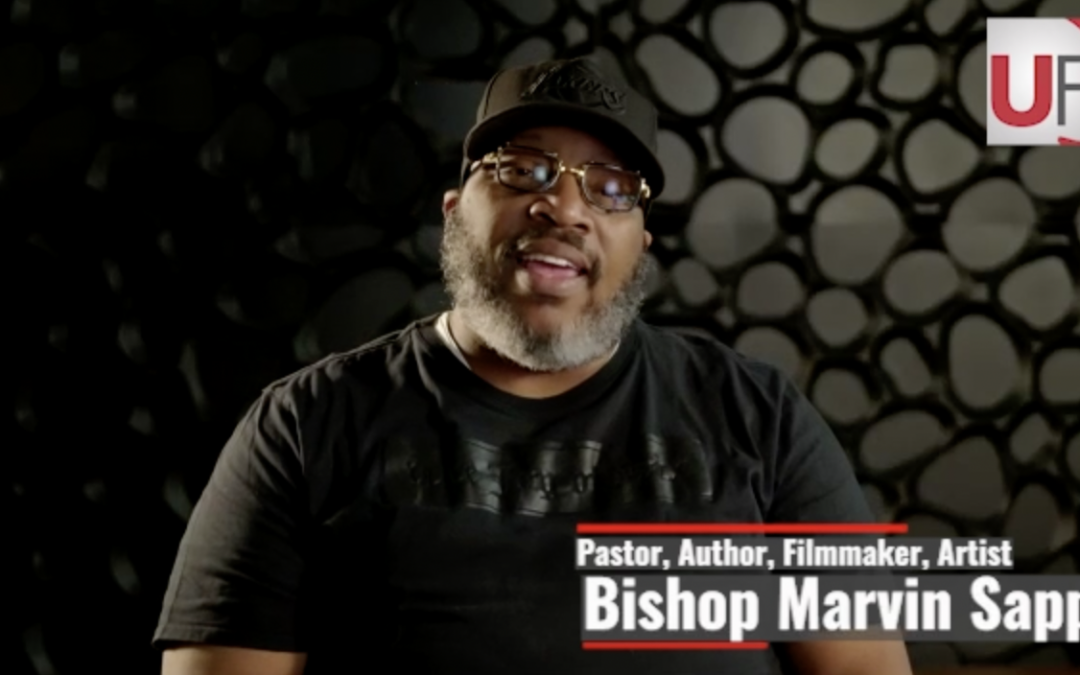
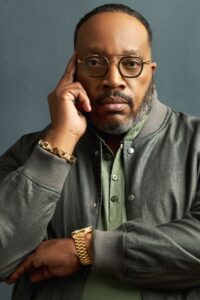
Bishop Marvin Sapp is a pastor, musician, author, artist and now filmmaker. He’s working on learning how to cook. He has over a dozen Grammy nominations, Stellar Awards, BET Awards and more as a Gospel Artist. He is the co-founder and pastor of two churches in Grand Rapids, MI and Fort Worth, TX. He is the Bishop serving over 100 congregations. He is a gifted preacher, speaker and leader. He most recently released a film with TVOne telling his testimony and was an executive producer and star of the film. To put it lightly, Marvin Sapp is a busy man of God. But it is his love for people, his incredible testimonies, and his heartfelt authenticity that have helped him be a vessel for the Holy Spirit for decades. UrbanFaith sat down with this legendary Gospel artist and minister and talked about everything from film to football and ministry to mental health. The full interview is above, more about Bishop Sapp is below.
Bishop Marvin L. Sapp is a passionate orator and biblical teacher, who desires to be a living epistle glorifying our Lord and Savior Jesus Christ both in word and in deed who is the Co-Founder of Lighthouse Full Life Center Church in Grand Rapids, Michigan and the Senior Pastor of The Chosen Vessel Cathedral in Fort Worth, Texas as well as a Metropolitan Bishop that oversees more than 100 churches in the Central Deanery of Global United Fellowship.
Bishop Sapp is a multiplatinum selling artist who has enjoyed a decorated music career receiving 13 Grammy nominations, 24 Stellar Awards, 2 Soul Train Music Awards, 2 BET Awards, 4 Dove Awards, 8 BMI songwriter’s awards for sales, Black Music Honors Gospel Music Icon Award along with many other accolades and honors from national, regional, and local institutions.
FREE AT LAST?: In ‘Runaway Slave,’ pastor and activist C.L. Bryant and other African American conservatives reject liberal politics and ask whether big government entitlements are a new form of slavery.
The title of the new film Runaway Slave might lead some to dismiss it as just another dramatization of a commonly rehearsed chapter of black history in America. But when one discovers that the film is actually a documentary about a politically liberal African American pastor’s conversion into the conservative political movement, the title suddenly takes on a much more provocative tone. On one level, Reverend C.L. Bryant’s Runaway Slave is a coming-of-age narrative about his shift from being a pastor and NAACP Chapter President to being a prominent defender of small government, free markets, and personal responsibility. On another level, however, it is a clear rebuke of what the filmmakers perceive as the black community’s enslavement to the Democratic Party and progressive politics. Bryant wants us to understand that the black community is not a political monolith, and that our moral and economic concerns might be better addressed by the Republican Party’s conservative platform.
A press release for the movie leaves no doubt about the film’s point of view. After announcing that the movie comes to us “from the creators of Tea Party: The Documentary Film,” it goes on to describe the film’s general premise:
Rev. Bryant takes viewers on an historic journey across America that traces the footsteps of runaway slaves who escaped to freedom along routes that became known as the Underground Railroad. But in the film, he also travels a “new underground railroad” upon which Black Conservatives are speaking out against big government policies which have established a “new plantation” where “overseers” like the NAACP and so-called “civil rights” leaders keep the Black community 95 percent beholden to one political party.
And interviews from such noted conservative figures as Glenn Beck, Herman Cain, Star Parker, and the late Andrew Breitbart help the film draw clear ideological lines in the sand. Fans of 2016: Obama’s America, another controversial conservative documentary released this year, will find much here to “amen” to as well.
The great achievement of Runaway Slave is its geographically and ideologically diverse portrait of black conservatism. Bryant talks with financial conservatives like Marvin Rodgers, a Rock Hill, South Carolina, an aspiring politician who emphasizes the “pocketbook politics” of supporting small businesses and encouraging entrepreneurship. He speaks with academics like the economist Thomas Sowell, conservative school-reform advocates, right-to-life activists, and small business owners. Interestingly, everyone but the Wall Street and country club conservatives are present. Their omission is noteworthy — precious few black conservatives are a part of the proverbial 1 percent. Nevertheless, by interviewing grassroots activists and organizations in nearly every region of the country, Bryant convincingly demonstrates that black conservatism is a national thread within the African American political tradition.
The film sets forth a conventionally conservative view of government: lower taxes; less government regulation; strong defense of property rights. Additionally, participants construe the government as a presumptuous behemoth that presents itself as the “Daddy,” “Slave Master,” and “God” of American citizens. In this framework, reducing the size of the public sector becomes an article of faith, not simply a political position.
Two dynamics merit mentioning here. First, deep appreciation for our nation’s originating documents — the Declaration of Independence, the Constitution, etc. — sits alongside profound disappointment with the current state of government. If our origins are laudable and our contemporary moment is lamentable, as the movie claims, then we must conclude that we lost our national footing somewhere along the way. The documentary avoids conceptual clarity about how this moment of decline happened, when it happened, and who is responsible for it. Progressives and Socialists — two distinct traditions which are conflated in the film — are blamed for leading America astray, but the accusation is too vague to persuade anyone who is not already a true believer.
Secondly, the attacks on government are general — there is no exploration of the merits and demerits of Social Security, Medicare, and the GI Bill, for instance, programs that are popular across the political spectrum. Instead, the viewer encounters Government as a monstrosity that overtaxes, overregulates, and overreaches at every turn.
Runaway Slave is also noteworthy for its conservative form of American civil religion. Many Americans are familiar with more progressive forms of civil religion — Dr. King’s “I Have A Dream” speech on the steps of the Lincoln Memorial or Abraham Lincoln’s second Inaugural Address, for example. But there is another side to American exceptionalism. U.S. congressman Allen West of Florida alludes to this tradition when citing Matthew 5 to position America as “a city set on a hill.” America, in this view, is the country where you reap what you sow. A land where hard work, education, and the hand of Providence guides families upward on the ladder of social mobility. It’s not difficult to see how many of these cultural values have become inseparable from the American brand of Christianity.
After watching the documentary, the viewer is left to wonder: what distinguishes conservative visions of government from the liberal visions? Reverend Bryant is not endorsing a libertarian or anarchist view of society. Despite his impassioned pleas about escaping from the plantation, there is no sign that he wants to destroy the master’s house. That is to say, Runaway Slave does not explicitly or implicitly advocate dismantling our social insurance system, ending subsidies to large agribusiness corporations, or stopping the Supplemental Nutrition Assistance Program (formerly known as food stamps).
Generally speaking, political realities temper the policy visions of liberals and conservatives. Bryant documents a deep commitment to liberty within the American political tradition. Rightly so. But there is little — if any — mention of our political tradition of equality, a complementary thread in our tapestry. The argument of the film would be strengthened if it directly addressed, for instance, the policy trade-offs that Presidents Nixon (expanding food stamps, starting the Environmental Protection Agency) and Bush (Medicare prescription drug program, comprehensive immigration reform proposal) made between liberty and equality. That oversight notwithstanding, Runaway Slave is one of the most expansive treatments of black conservatism currently available, and is therefore worth watching and discussing.
View the theatrical trailer below, and visit the Runaway Slave website for information on where to see the film in your area.




 I am not a normal Stephen King fan. I do not like horror films, I’m not into scary books, I don’t enjoy exploring the paranormal. But this movie was fantastic. It refuses to be pinned down into one category of movie and is not even told in a normal narrative order. But it is one of the most thought-provoking and emotionally inspiring movies I have seen in years. I would highly recommend it for anyone willing to walk into a theater with an open mind.
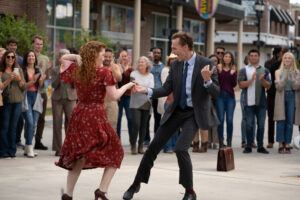 The Life of Chuck feels incredibly timely. I have struggled watching the news as many people have in our current historical moment. As we see natural disaster after natural disaster, wars and famines, death and destruction in a constant cycle and ignorance in echo chambers many people have responded with exasperation and apathy. Chuck responds head on to the crisis. It explores the Life of Chuck, but the contents of that life are far more expansive than I could have anticipated. Chuck is not a larger-than-life amazing figure on an adventure. He is a mundane and complex man who was once an innocent and awkward boy. The people in his life feel like people I know.
 The authenticity of the performances from Chiwetel Ejiofor and Karen Gillan were so moving. The depth and complexity of young Chuck’s family made my heart ache. I felt moments of pure joy, sadness, fear, wonder, laughter, worry, inspiration, and reflection watching this movie. And Tom Hiddleston made me think and smile. I almost shouted with joy when I saw The Pocket Queen, a young woman drummer, appear on screen. I followed her on social media as a college student and to see her in this movie I was elated. When I heard Nick Offerman and saw Mark Hamill I felt tremendous nostalgia. I’m not sure how Mike Flanagan did such a seamless job balancing both familiarity and wonder. But the impact was palpable. But the questions from this film stick with you. What matters most in our lives? Chuck brings the questions to the forefront.
 How should believers live with the destruction and difficulty in the world? We know what eternity holds. But being intentional and joyful about life today is something this movie left me pondering. The movie is rated R, but it is really for about 2 minutes of curse words and some mature themes dealing with death. But I would say anyone with an open mind and reasonable maturity can see this film. I would love my teenager to see it. I would love to watch it with a Bible study group. I highly recommend it as an artistic, intellectual, and emotional experience.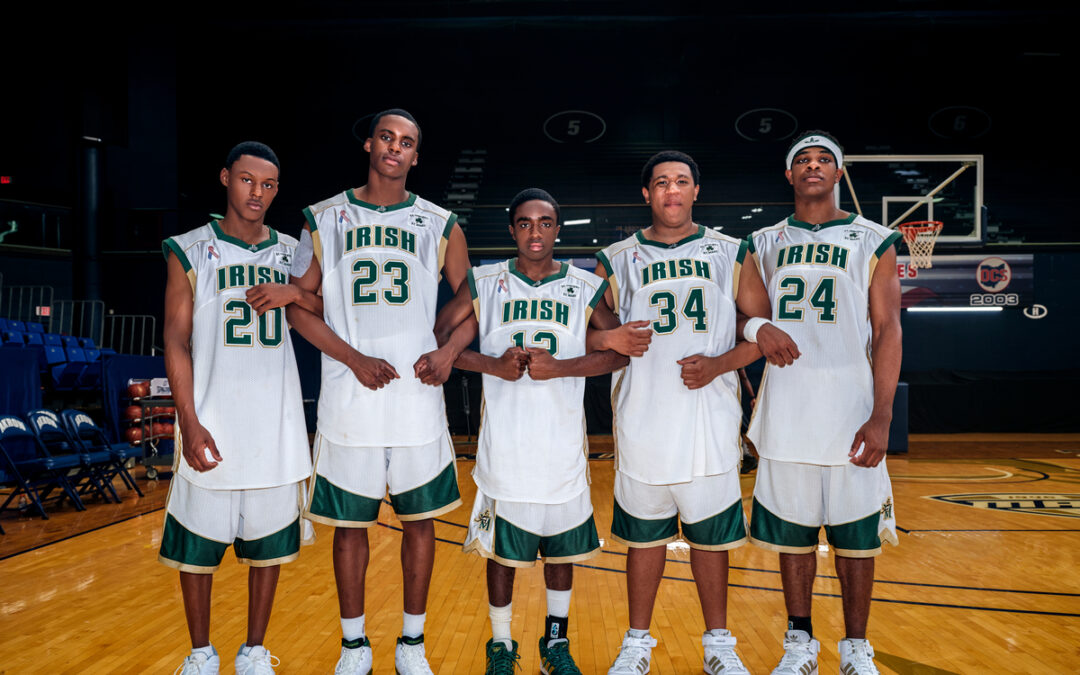



 The great achievement of Runaway Slave is its geographically and ideologically diverse portrait of black conservatism. Bryant talks with financial conservatives like Marvin Rodgers, a Rock Hill, South Carolina, an aspiring politician who emphasizes the “pocketbook politics” of supporting small businesses and encouraging entrepreneurship. He speaks with academics like the economist Thomas Sowell, conservative school-reform advocates, right-to-life activists, and small business owners. Interestingly, everyone but the Wall Street and country club conservatives are present. Their omission is noteworthy — precious few black conservatives are a part of the proverbial 1 percent. Nevertheless, by interviewing grassroots activists and organizations in nearly every region of the country, Bryant convincingly demonstrates that black conservatism is a national thread within the African American political tradition.