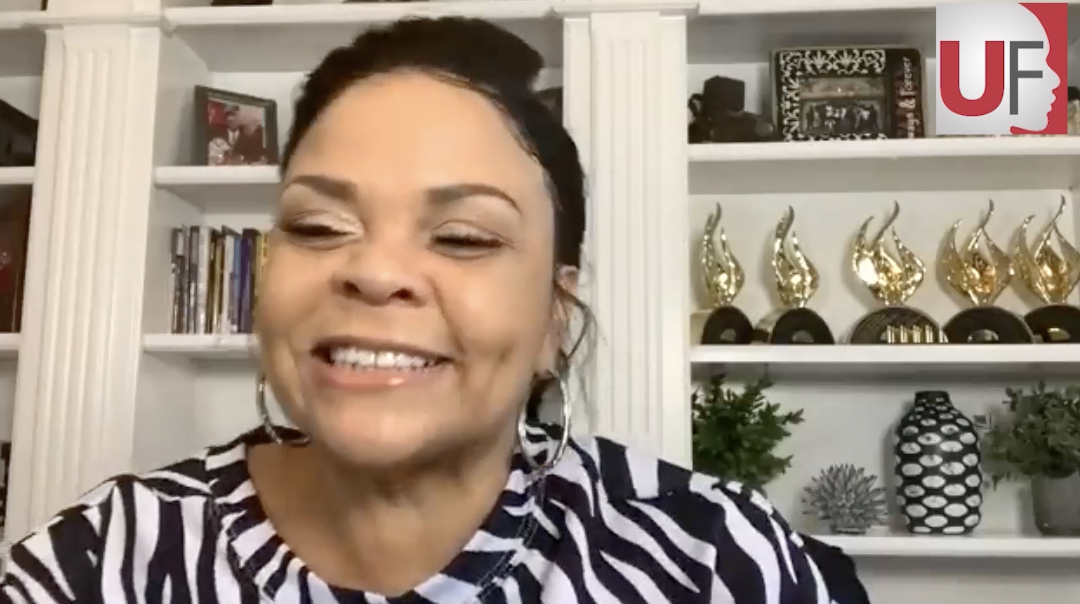
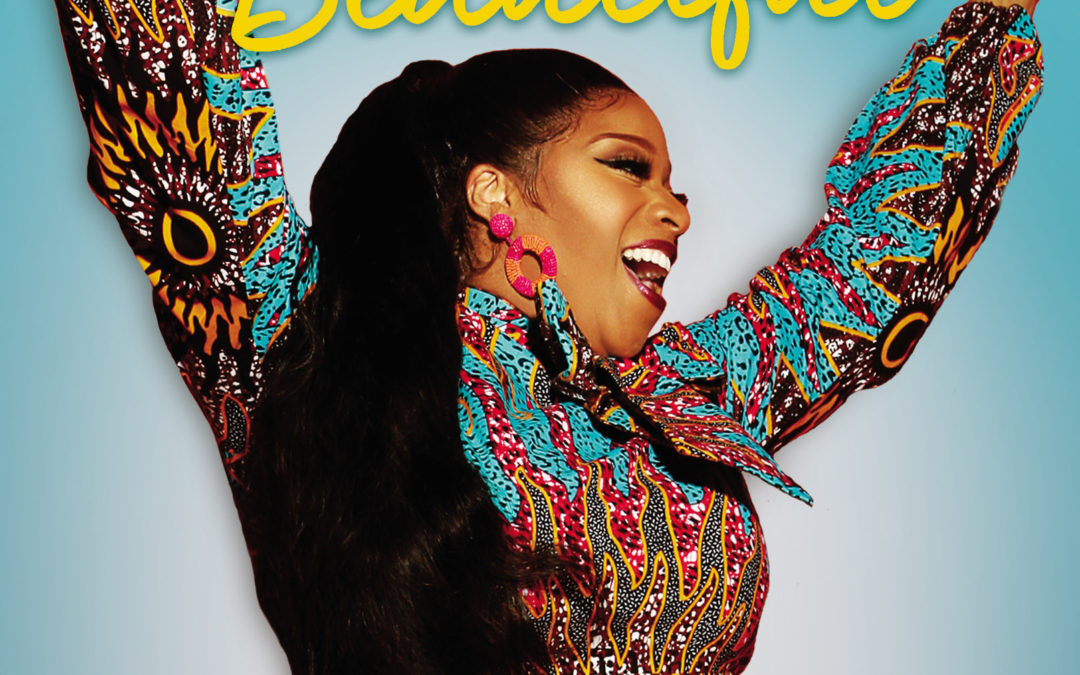
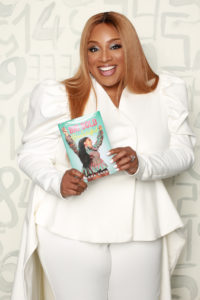
UrbanFaith Editor, Allen Reynolds, sat down with Gospel artist, entrepreneur, and new author Kierra Sheard-Kelly to talk about her new book Big, Bold, & Beautiful: Owning the Woman God Made You to Be. The book shares Kierra’s experience, wisdom, prayers, and insights in conversation with her faith as she has journeyed from being a young woman to adulthood. Her book is available everywhere books are sold and can be found here. The full video interview is above and excerpts are printed below which have been edited for clarity.
Allen
Good morning, everyone. Again, this is another awesome opportunity for UrbanFaith. We are excited to have with us today an absolute gem in Christian life, gospel music, and just our space. It’s an honor to have Mrs. Kierra Sheard-Kelly with us. We’ll be able to talk to her about her new book called Big, Bold, and Beautiful: Owning the Woman God Made You to Be. It’s an exciting opportunity for us.
So I know that you just have so many things that you’re doing. I mean, what a year for you. To be an artist, an actress, and you have gotten married–you just have so much going on in your life. What made you decide to take these thoughts and share them in a book, as opposed to sharing your message some other way?
Kierra
Yeah, well, first, thank you, Allen, for that warm introduction and the warm welcome. Why did I want to put it in a book? Actually, I’ll say this: it was unintentional. The book was unintentional. This was really a God thing. For me, I was only journaling as a form of therapy, just my way of life. That was my way of seeking the Lord: diving into Scripture, studying Scripture, and learning the depths of what I was reading. And it came out this way.
I find myself just kind of getting answers when I write down things. Sometimes you have a whole bunch of things going through your mind. And so I’ve just trained myself to not miss those moments. Because we believe the God we serve is a Spirit. So sometimes He’ll communicate from within. So that’s literally what I did. And I said, I want to share this with the world. HarperCollins Zondervan gave me the opportunity. And it was an opportunity that was in an email account that I hadn’t been checking. And something told me to check this email–it had to be the Lord. And so now they’ve given me this opportunity to share my story and my therapeutic process that just so happens to have some answers. All along, God had been writing a book through me, and I didn’t know it. So that’s really how it came about. And then I was just able to show [my life from] being single to dating to becoming a wife. We will see if there’s another book that I got to share with y’all.
Allen
Wow, for you to be able to take what God was downloading over time and turn it into the book is phenomenal. So you just brought up that journey that you took from dating to singleness to being a married person. And of course, there are a whole lot of young women thinking and wrestling with that, so what would you say helped you prepare to become a married person? Now, on the other side of that journey, which of those lessons was really key?
Kierra
That’s such a great question. It was learning to just be me, learning how to live with just myself. When you’re able to live with yourself, then that means that you’re compatible. But when you have a problem with yourself all of the time, and it’s always something to do or something to fix, you can’t be still. That is what I had to learn about myself. And [if that’s you], you’re gonna make it hard for anybody to live with you. It was also the conversations with my mother and my grandmother. I spoke about them in the first chapter.
I think, just taking trips on my own, not waiting on anyone–of course, being safe–but not waiting on a man or putting all of it on a man if he’s there or not. And that’s not me being a man basher or anything like that. But it is me just saying that I had to learn to become secure with myself and with the Lord.
God will mold you into this proverbial woman so you’re able to build your home, you’re able to be a companion, you’re able to know when to stop talking. Like this morning, I wanted to respond a few times with something to say to my husband, but I just let him have the last say. I’ve learned to submit or to hold your tongue. It doesn’t make you weak–it actually makes you very strong. It’s almost like strength behind the veil.
So those are some things that I had to learn while I was in my single space. But also, establishing the things that God has called me to do is the long, long answer, and I could go on and on about the preparation that got me to this point. But I can say in a nutshell, it was me just being and trusting God in that process. And then I developed into this woman who could be a wife.
But enjoy. I enjoyed my days, and I had a good time. You know what I’m saying? I even played the game. My Nana told me “Baby, you can date.” Even my dad said, “Don’t put down makeup.” That’s one thing. And I said it in the book. Don’t make a boyfriend a husband if it’s temporary. Don’t try and make a lifetime thing out of that if he’s not in agreement with you. And that was a mistake that I was making, which caused a lot of heartache and heartbreak. So those are some things that I did to prepare.
Allen
Well, the presence of [mentors] in our lives makes such a difference. And that’s such a theme that you came back to in your book, talking about how to choose the people around you wisely. And I just kept hearing boundaries. What is one of those key ways that you can distinguish or discern how to draw that boundary?
Kierra
I had to learn that at a young age, because I couldn’t do what a lot of my friends wanted to do. And I’m sure a lot of us can relate to this–especially as believers–when we’re growing from high school to college, college to grad school, or just college and out. There are some sifting seasons that we go through naturally in every season. And I like to acknowledge the fall season because the leaves have to fall for the new to come. But after fall, there’s a cold season. So I’d like to highlight the fact that it’s not always the summer of everyone’s life. I mean, I know there’s Cali and I know that there is Florida, but you have earthquakes and tornadoes and hurricanes there. So there are some challenges that we have to go through.
But to answer your question directly, I think the way is to acknowledge that boundaries is a part of our reality, both naturally and spiritually. And when you see those signs, don’t ignore the red flags. I’ve had a tendency to ignore the red flags because I wanted to be a loyalist, but there’s a way to be loyal and to learn to compartmentalize relationships. And that’s what I’ve had to learn to do. Because if I can’t exist with people, then I won’t know how to exist in heaven, because I’m not the only one who’s going to heaven.
So that’s how I see it: how can I love people, but re-adjust and say: okay, you know what? This relationship has depth to it, but that relationship is one where we can go to lunch and just laugh, but we don’t need to go no deeper than that. And if there is a moment, I go by God’s leading when He’s authorizing me to go a little deeper.
So I think designing is just having that on, and not ignoring what you feel. There was a chapter that I was going to write in the book, and it was called “The Vibes You Feel,” but we took it out. I don’t know if that’s a book that the Lord is having me to wait on. But we call them vibes. Now in the church, they call them a spirit. And in the street, they call it something else. So I think it really is, when you feel something, understand that it’s the Holy Spirit helping you to navigate through life. He’ll be a GPS for you. And if that is a roadblock, then acknowledge that. I hope that answers your question.
Allen
Absolutely. I think that answered a lot of things, and it brought up another good question for me. I know you’re getting your master’s degree in clinical psychology, which is just amazing that you’re doing that kind of work. What are some of the ways, and why is it important for us to maintain good mental health? Whether we’re successful or whether we’re at our low points–a lot of people think it’s only in low times that we need to be concerned. But really, you’ve made it a holistic thing in this book. So why is it important to you to maintain good mental health?
Kierra
It’s so important because first the Bible mentions it. Whenever the Word mentions something, I’m like, “Alright God.” I take it [because] it’s almost like He’s speaking to me. And there’s a Scripture that we often highlight the latter part of the clause, where it says the prayers of the righteous availeth much, but before that, it says, confess your faults one to another, that you may receive healing. Then it says, the prayers of the righteous availeth much.
When I broke down that Scripture, it was letting me know that confession is a form of therapy. You’re confessing your issues, you’re confessing your challenges, the things that may lodge in your mind–confess those things. And then it says, as you confess them, you’ll receive healing. So sometimes talking about these things and really dealing with them with a valid person, if I can say it that way, because it says the prayers of the righteous. So I like to use that as identifying a therapist, because the Bible also authorizes physicians–people who have studied the science. So, seek professional help. But maybe you’re seeking professional help from someone who has a faith-based background. They will tell you that you need to pray about this, or that’s a spirit you’re struggling with versus a mental disorder you’re struggling with. But I think it’s so important, because the Bible also talks about the emotions that have an effect on our body like jealousy.
So the Lord lets us know that these emotions that have to do with our mental housing can eventually wear and tear on our bodies. And it can overflow into our lives with how we treat people. When we’re tired, some of us get antsy, and we get snappy. We’ll say things with our tongue, because the Bible talks about how the tongue can be like a fire that just hits a tree and it sets a forest on fire. I think it all goes back to mental health.
And then I think, if the Lord speaks to us, and He’s an invisible being, and if your mind is always clouded, and you’re not there mentally, then your judgment and your discernment can be clouded. So that’s why mental health is everything to me, because the enemy will use that against us. And [the enemy] can just weigh us down and keep throwing stuff at us to where we’ll become more anxious. The Bible talks about being anxious for nothing. So if the Word is speaking about it, then I think it’s something that we should pay attention to. And that’s why it drives me. I also have family members who have wrestled or struggled with mental health. So that’s [another reason] why I’m an advocate of mental health. I could go on and on and on.
Allen
Yeah, and I love how you connect your faith in the Scriptures to that, because so many people don’t get to hear that we read the Bible, and we may not see it, or we may not hear it spoken about enough. But it’s living in you, and you talked about that so much in this book. And so one of the things that I really like about the book is that in each chapter, you had those Scriptures and those prayers. Why did you decide to do that?
Kierra
In the dedication, I said something like, I hope that this book blesses other people [like] the book Nana gave me did for me. And that book was Rick Warren’s Purpose Driven Life, which she gave me when I was 18 or 19. I read it at least two or three times, and it just changed my life. It transformed my way of hearing, listening, living. And [because of it] when I went to Bible study, I was more attentive to what my father was teaching. So me seeing what that book did for me [inspired me]. And it has Scriptures in there. I don’t remember if it has prayers in there, but I was happy to dive in deeper into God’s word and really elevate in my relationship with the Lord.
So that’s why I wanted to put those in here. Because we think that, as you mentioned, we think there’s a disconnect when it comes to the faith way of living [versus the practical way of living]. And it ties in together, So that’s why I wanted to give Scriptures, because sometimes we don’t know where to start. We don’t know how to tie these Scriptures to our everyday life. And I wanted to give basically a dose of what my father, Bishop J. Drew Sheard, gives me in a week–and I wanted to give a dose of what I got from Pastor Rick Warren. And then I wanted to give a dose of the home girl approach that I get from my mother, my Nana, and my home girls. So that’s why I wanted to give that, because I felt like it was more digestible.
Allen
Yeah. And I think that one of the impacts that it has, as I was reading through, is that it helped us to ground ourselves–not only in who God is–but to see your groundedness. You’re not just up somewhere in a tower sitting there reading your Bible, but you’re living this thing–you’re living out God’s word. And so I want to know, what’s one of the most important memories that you have as you navigated? What are your favorite memories that you have from this book, or that you shared? Something that you had to overcome, or something that really struck you?
Kierra
I think one of the challenges that I had to navigate–and I spoke about it, I don’t remember what chapter it was – was being young in the recording industry. They only wanted to take pictures from the waist up. And I was like, you know, I want to show who I am. There’s no such thing as me being a big girl and still being fly. And I was younger, but I was also bigger. I think even talking about the experiences with former relationships, where the first thing that they could do was call me a “fat B” or just go like ham with names and words.
The Lord just assured me and had me to see if that’s all you have on me–my look– then I have a reason to celebrate myself. You have nothing to say about my character. And we forget to celebrate those beautiful parts of ourselves, because the world is so locked in and zoned in on what you look like externally. But how do you look internally?
I think that even goes back to the mental health piece. There’s a peace that I have about myself now that no man can move or shake. And that’s not just speaking to men, but that’s man as in humanity in general. I used to be ready to go off, and now I’m just ready to move differently. Like, my father taught me something. He said, Kierra, if people can get you to step outside of yourself, and to step out of what you really want to give in that moment, then they have control of you. And I was like, oh, then that means I don’t have control of myself. So those are some things that I had to get over. Whether people say you are beautiful or not, how will you live your life?
And then me learning to speak up for myself. Like, when they would say, oh, you’re going to just get pictures from the waist up, I had to eventually say, No. I want a full body shot. This is who I am. And it was a challenge. But out of that challenge came peace, security and audacity. And I think that that is so important for us to have, especially because the enemy will use any and everything against you. And if you’re operating with a spirit of timidity, he’ll walk all over you. You’ll just be somewhere stuck in the dark and that’s it. But I made it up in my mind, like, no, yeah, I’m not gonna do that to me, period. That’s it. So that’s the challenge that I had to get over.
Allen
Absolutely. And you know, we’re talking so much to young people and young women, especially, [as well as] young men. I as a man was just impacted. I have three daughters, and I’m just thinking about the lessons that they can learn from this book and from your work. And I want to know, what is a message, what’s a takeaway that you would want to pass down for those younger generations and even the young girls?
Kierra
Man, it is to stand up for yourself, but remain a student [of] who you can trust and know that the village is not just for the child, the villages for you, too. So don’t get so grown for your own good to the point where you can’t listen to anyone. In the Bible it says that there is safety in the multitude of counselors. I think I flipped it, but you get what I’m saying. And I think it is so important that we bask in that part. The Lord speaks through people, and the enemy uses people also. So I would tell them to not be too grown for their own good, because even the Word says that in order to enter into the kingdom, you have to take on the disposition in the heart of a child. [A child’s heart is] innocent, but if I know it all, “can’t nobody tell you nothing.” They can’t even tell you the truth about yourself, because you’re just always on the defense. So that’s what I would tell a young woman.
And I would tell her, “You’re beautiful, and a relationship does not validate that.” A relationship does not give you your identity. You go with your identity to that relationship, and you empower it. You make it into what you want it to be. But I would also encourage young women [by saying] that whoever you connect with is almost a preview of your life. You know, your conversations are almost a preview of your life. So don’t waste so much time. But listen. There are some things that I wish I had listened to that my parents told me as I look [back on] it now. And it’s like golly, I could have saved so much time and so much money. So those are some things that I would tell young women.
Allen
Wow. So, this is your opportunity. Is there anything else you want to leave with our audience, Christian young adults all over the country and across the world? Is there any last thought that you want to share from this book or your work? We want to hear from you.
Kierra
Yeah, I would like to say, as young believers, we kind of feel like outcasts. But remember that we’re living for life after this one. And I know, it can be hard. I know it can be a challenge, especially if we’re single. And [if] we’re, you know, dating and if he’s fine, if she’s beautiful, I’m sure we can get [tempted], I understand. But I want to encourage you that there’s more to life than just that moment. And remember, our goal is to make the Lord smile. So do what you need to do to uphold your standard, to say no. Not just in those sensual moments, but even saying no for your sanity. Like, I’m not even gonna deal with this. I can’t deal with it. You can’t afford to deal with it.
So I’ll stop there. But really download what heaven is saying to do with your life, because tomorrow isn’t promised. And I think when we get that understanding that the carnal man doesn’t understand what the spiritual man understands. I think there’s more to life than bliss, if you understand what I’m saying. So hopefully, that is something.

 Briefly, the story goes like this: a man has three people that work for him. (We can call them servants or employees.) He leaves them five talents, two talents, and one talent, respectively, while he travels to another country. (A talent could be interpreted as a way of making money or money itself. For this, let’s just say a talent is worth $10,000.) When he comes back after a long time, the first employee now has ten talents ($100,000), the second has four talents ($40,000), and the last one gives his talent ($10,000) back to his employer. The employer rewards the two servants that made him money, but calls the other one wicked and “cast[s] the unprofitable servant into outer darkness” where it says there’ll be “weeping and gnashing of teeth” (Matthew 25:30, KJV). Yeah… he sends the unprofitable “wicked” servant to (symbolic) hell.