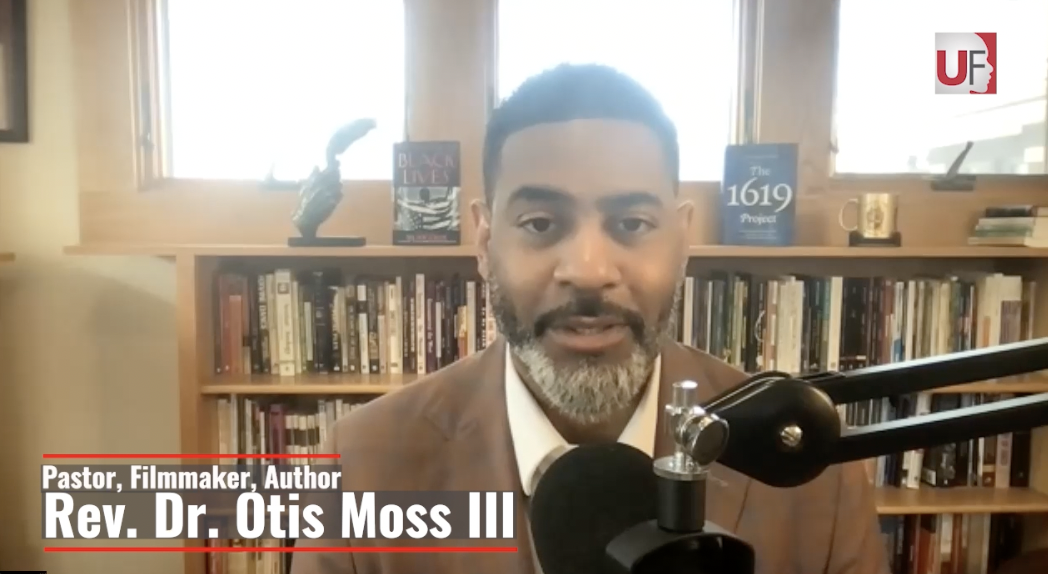
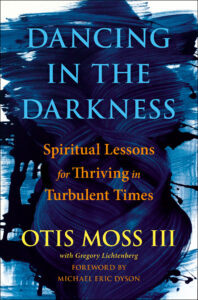
Rev. Dr. Otis Moss III is one of the most prolific prophetic voices of our generation. He is the Senior Pastor of Trinity United Church of Christ in Chicago, IL and his new book Dancing in the Darkness gives practical wisdom to face the darkness in our lives with prophetic hope. UrbanFaith editor Allen Reynolds sat down with his fellow HBCU and Yale alumnus, the one and only Rev. Moss to discuss his new book Dancing in the Darkness: Spiritual Lessons for Thriving in Turbulent Times. You can find the book everywhere books are sold and more about the book is below.
Rev. Moss serves as Senior Pastor of Trinity United Church of Christ which was the home church of President Barack and Michelle Obama. He has won multiple awards for his short film Otis’ Dream about his grandfather’s fight to vote in the United States. His parents were on the front line of the Civil Rights Movement, and he has been at the forefront of the fight for justice and civil rights in the 21st century. He calls himself a blues man committed to uniting love and justice in the tradition of Rev. Dr. Martin Luther King Jr. More about the book is below.
Once again, as Dr. Martin Luther King, Jr. first observed in the 1960s, it is midnight in America—a dark time of division and anxiety, with threats of violence looming in the shadows. In 2008, the Trinity United Church in Chicago received threats when one of its parishioners, Senator Barack Obama, ran for president. “We’re going to kill you” rang in Reverend Otis Moss’s ears when he suddenly heard a noise in the middle of the night. He grabbed a baseball bat to confront the intruder in his home. When he opened the door to his daughter’s room, he found that the source of the noise was his own little girl, dancing. She was simply practicing for her ballet recital.
In that moment, Pastor Moss saw that the real intruder was within him. Caught in a cycle of worry and anger, he had allowed the darkness inside. But seeing his daughter evoked Psalm 30: “You have turned my mourning into dancing.” He set out to write the sermon that became this inspiring and transformative book.
Dancing in the Darkness is a life-affirming guide to the practical, political, and spiritual challenges of our day. Drawing on the teachings of Dr. King, Howard Thurman, sacred scripture, southern wisdom, global spiritual traditions, Black culture, and his own personal experiences, Dr. Moss instructs you on how to practice spiritual resistance by combining justice and love. This collection helps us tap the spiritual reserves we all possess but too often overlook, so we can slay our personal demon, confront our civic challenges, and reach our highest goals.
Last summer, the media couldn’t get enough of the word “entanglement” as actors Will Smith and wife Jada Pinkett Smith confronted rumors about infidelity in their relationship on an episode of Jada’s Red Table Talk show on Facebook.
The couple displayed a united front, forgiving the indiscretion, and committing to their partnership no matter what happens. For over two decades, people have been attempting to redefine marriage. And as commendable as pledging a lifelong commitment is, there is no difference between that and how God intended for us to approach our marriages.
Marriage used to mean a union between one male and one female, but it’s increasingly becoming a socially constructed concept with multiple meanings. People with nontraditional views of marriage seem to look down on others as closed-minded or inferior when they don’t waver in their traditional beliefs on marriage.
Additionally, the concept of a life partner is gaining traction, as though it supersedes marriage. However, if one looks at how God originally designed marriage, there is no need to create a “better” concept of the dyadic relationship. Perfection can’t be improved upon; it can only be tainted.
In Mark 10, Jesus says, “Let no one split apart what God has joined together.” Those who take this at face value will automatically see the lifelong commitment implication here. The biblical version of marriage isn’t the problem; people have started to consider these sacred words as optional.
Marriage is becoming more about how we feel rather than what we do. If we feel okay with our spouse’s actions on a particular day, we are more likely to want to stay married. If we’re going through a season in our relationship where things seem strained, or we feel disconnected from our spouse, then we look for exit strategies.
Soon, a habit that our spouse has had since we’ve known him becomes magnified, as well as their other flaws. Or we retroactively recall how we never prayed about this marriage in the first place and begin to convince ourselves that this person wasn’t who God intended for us, forgetting how initially, we thanked God for sending us a “soulmate.”
Suddenly, what was a blessing, turns into the biggest mistake that we’ve ever made in our lives. (At least that’s what we tell ourselves.) It isn’t that God’s statutes have changed. We’ve changed our minds and we want to make the Word fit our scenarios.
The Smiths have openly shared how they began to redefine their union during rough patches in their relationship. While some may consider it amazing that this couple has found a way to stay together, others may find the terminology and overall explanation hubristic as it implies that a life partnership somehow transcends God’s plan for marriage. When one enters into a marital relationship with the mentality that there are no exit doors other than death, then the lifetime commitment doesn’t have to be an addendum. It’s built into the fabric of the relationship. When one truly embraces all the components of love, as outlined in 1 Corinthians 13:4–7, there is grace for flaws.
Furthermore, an “entanglement” doesn’t have to be the end of a marriage but could signify the beginning of a new and better one. While marital healing from “entanglements” requires contrition from the entangler and forgiveness from the spouse, couples must learn that infidelity isn’t the problem in a marriage, only a symptom.
Having a life partnership mentality toward marriage is great, but it shouldn’t replace what God has already perfected. Marriage isn’t a meaningless piece of paper or a man-made control mechanism. It’s a God-ordained institution that pre-dates sin. In its heyday, it was flawless. Now that we are inhabitants of this broken world, it’s stained by ideologies and philosophies that attempt to undermine its importance.
A life partnership may be a verbal contract between two people, but a marriage is a covenant between the couple and God. When we realize that, we don’t have to find creative ways to ensure that we stay together because we’ve already decided that we would when we began our journey.
It is often said that the church house is like a hospital, and the believers are the patients searching for healing. If you believe that to be at least somewhat true, then I think we should talk about what spiritual services are—and are not—being provided in the church.
We often talk about how to deal with finances, sickness, employment issues, death of loved ones, and even relationships, but one of the things that we rarely, if ever, talk about in church is sex.
Of course, the church has a biblical interest in advocating that sexual relations occur within the confines of marriage. However, church folk have gotten so good at phrases such as, “just say no,” “not until you’re married,” and “save yourself for that special someone,” that when Christians do get married, especially young couples, some may find that members of the church are at a loss for words about what to tell them when they have questions about sex.
So many people, especially young people, who wait until marriage to have sex get to their wedding night, honeymoon, and beyond and have no clue on what a healthy, sexual relationship with their spouse looks like. (And that’s not even considering the weird, sexual comments and questions that church people do feel strangely comfortable discussing. I can’t tell you how many times church folks have asked, “So when are you all going to give us some babies?”…as if our children will be theirs. It also seems as if they should dictate when we should have offspring and as if when my wife and I do decide to try for children – which involves sex – is any of their business! But I digress…)
Plenty of married couples have problems in their sex lives and want to talk to their pastor about it or have a forum about what sex means for their Christian walk. But, too often, neither the pastor nor the church want to talk about it.
Believe it or not, sexual intercourse could be considered a holy act between a husband and wife. Sex has the power and potential of drawing the bride and groom closer to one another and to create life. If that isn’t holy, I don’t know what is.
So why should the church have responsible conversations about sex? Here are a couple of reasons:
Sex is natural. It doesn’t have to be a dirty word.
Too often when people try to bring up sex, the inclination is to tell them to stop talking about it because it’s “taboo,” “dirty,” “fast” or (worst of all) “unholy,” and it quells a much-needed conversation. However, these conversations need to be had – or avoided – at the appropriate level and age of those in question, including teens.
The church has to realize that if we’re not educating teenagers and young adults on godly principles about sex, then someone somewhere is educating them about sex. And, more than likely, God has nothing to do with their teaching.
We do married couples a disservice when we avoid talking about sex.
Many church people have no problem talking about and encouraging married couples to have babies, but they like to pretend that the magical decision to start a family comes without sex. Well, it doesn’t.
In fact, many would argue that sex is just as much a part of the list of marital issues as budgeting, child-rearing, career conflicts, intimacy, not spending enough time together, bad habits, and other common marital problems. Of course, sex conversations, like all other marital conversations, should be initiated by the couple. However, if they have an issue that they raise with other members of the church community, we should be willing to tackle it—including sex.
Ultimately, sex is one thing about humanity that I don’t imagine will go away anytime soon. (And if it did, we’d be in trouble.) God created and ordained sex as a blessing for married couples and we shouldn’t shy away from that. Another thing that I don’t think will be going away anytime soon is sin. Yet, I think that the church needs a reminder that sex itself is not sinful. Sex is blessed and ordained by God and too often we foolishly conflate sex with sin and we shouldn’t.
Why do you think sex continues to be a topic that’s off limits for married couples in the church? Share your thoughts below.
Loving bravely is risking great personal cost to do good for someone, even when you know that others may ridicule you for doing so. That’s the kind of love I want to give this Valentine’s Day.
This Valentine’s Day, I’m gonna try something different. Something brave.
Brave, as in, “this-year-I-will-forgo-typical-expressions-of-love-and-instead-donate-to-her-favorite-cause” bravery.
No, that’s not what I’m planning. I’m just offering that as an example. Eschewing a gift for a donation is the kind of thing that you only do when you really know somebody well, because if you’re wrong, you will pay for it. (All the married men should be nodding their heads right now.)
That’s what I mean by brave. Something unexpected that shows how much you care, something that might seem reckless, but is, in fact, very meaningful.
I have some work to do in the bravery department. Holly and I have been married for five years now, and unfortunately, I set the bar pretty high when we got engaged.
A friend of mine was the worship director at a megachurch in the area, and his band was planning on covering Beyoncé’s “Crazy In Love,” for their worship service, since they were doing a series on relationships. So he asked me in advance to write another rap for it and bust it out during the service. So I upped the ante, and with their permission ahead of time, I wrote the rap verse as my will-you-marry-me speech, and during the middle of the song, I jumped off the stage and came down to where Holly was sitting, got down on one knee, and asked her to marry me.
It was so romantic.
Afterwards, I got mad cool points for going to such a length to surprise her. Afterwards, everyone kept echoing the same sentiment: Man, that was so brave.
Far be it from me to revise, as my grandmother used to say, even a jot or a tittle from the Bible. However, if I were to bring any editorial changes to an iconic biblical passage, I would choose 1 Corinthians 13, and right after “love is patient, love is kind,” I would add a third clause: “Love is brave.”
‘Cause seriously … ladies dig bravery. And for good reason.
Think of great leading men in popular films:
• Cary Elwes throwing himself down the hill in The Princess Bride.
• Bruce Willis fighting the terrorists in Die Hard.
• Will Smith trying to express his feelings in Hitch.
These are characters who found themselves in unfamiliar territory, and against all odds, they chose to do something good to help someone else, and found themselves being stretched (or in Smith’s case, swollen and contorted) beyond capacity in the process.
These are universal themes, for sure, but the common element here is bravery: the massive chutzpah required to stare down adversity and do the right thing anyway. It’s the stuff heroes are made from.
It’s important, though, that we not get confused about what bravery is, and more importantly, what it isn’t. Being brave, for example, is not the same thing as simply going against the flow.
Awhile back, I avoided seeing a huge James Cameron blockbuster, mostly because I figured I already had a pretty good handle on how it ended (the boat sank), but also because I got tired of the hype. I just decided at some point that I’m going to be The Guy Who Never Saw Titanic, just to show up everyone else who thought it was so great.
The sad part is, I’m tempted to do the same with Avatar, even though I’ve read countless reviews and articles (including this one by UF’s Todd Burkes) that suggest that it’s a film experience worth having. It’s like I’d rather be the guy who didn’t see it, even if it means I miss out on seeing a great film.
Being contrarian is quite a marketable skill these days, because if you want to be a celebrity in today’s celebrity-saturated media marketplace, you have to do something to stand out from the rest of the pack. The quickest, easiest way to do that is to find a stance that is accepted as conventional wisdom, and then oppose it as vociferously as possible. This is why the Internet is full of people who oppose relatively normal things, like certain typefaces, or even lowercase i’s next to capital letters.
(If you didn’t get that last reference, it’s ’cause you didn’t follow the link to the word “tittle” earlier. Go ahead, it’s not naughty or anything.)
This desire to stand out, in my opinion, is why former-NBA-journeyman-turned-culture-critic Paul Shirley once penned a crude diatribe suggesting that Haitian citizens are culpable for their deplorable living conditions. Even though there are points he made that I agree with, I don’t think it was a particularly brave thing to say. He was looking to get a reaction, and he got one. People will accuse Shirley of many things, but loving too much is not one of them.
Loving bravely is not just taking an unpopular stance; it’s risking great personal cost to do good for someone, even when you know that others may, in fact, ridicule you for doing so.
This is the truest essence of love, and as Christians we see it all over the Scriptures.
Dear friends, let us love one another, for love comes from God. Everyone who loves has been born of God and knows God. Whoever does not love does not know God, because God is love. This is how God showed his love among us: He sent his one and only Son into the world that we might live through him. This is love: not that we loved God, but that he loved us and sent his Son as an atoning sacrifice for our sins. Dear friends, since God so loved us, we also ought to love one another. No one has ever seen God; but if we love one another, God lives in us and his love is made complete in us.
This idea of sacrificial love, of doing for others what they cannot do for themselves, is one of the foundational principles that underscore all the worldwide efforts at Christian evangelism. And evangelism, as we all know, takes on many form — some subtle, and some not so subtle. The best strategies are ones that require truth and vulnerability, but still are basic and doable.
I’m reminded of “The Best Stuff In the World Today Café,” a cool little ditty by Take 6 with a nifty analogy of evangelism imagined as a downtown restaurant:
Time for lunch, my stomach said
I left the office to get fed
I had dined at every place on Main
My appetite was ripe for change.
And there stood this old restaurant
I had never seen before
And a stranger in an apron
Came bursting through the door and said
‘Welcome to The Best Stuff In the World Today Cafe
We are all believers in a better way
We were served as customers not so long ago
Now we are all waiters, we thought you oughta know’
It’s a clever song, and given the abundance of vocal talent in Take 6, I could probably listen to them sing pages of HTML source code and still love it.
Still, I wonder … what would happen if we really tried this? What would happen if I really grabbed someone off the street on an average Sunday morning and told them, “I don’t care what you planned to do, you gotta try this Jesus thing?”
I don’t know what would happen.
And that’s why it’s such a scary proposition in real life. Maybe that person would undergo a dramatic, Paul-on-his-way-to-Damascus conversion to Christianity. Or, maybe that person would give me the stink eye and say, “Dude, get your hands off me.” That’s why it’s such an act of bravery to put yourself out there like that.
And whether we recognize it or not, this holiday that we celebrate every February 14th, the one that was seemingly invented by purveyors of greeting cards, flowers, stuffed animals, and expensive chocolates … you know, Valentine’s Day?
Its origin is rooted not in empty sentiment, but in bravery.
• The name “Valentine” is derived from the Latin valens which means “worthy,” and which bears etymological resemblance to our English words “valor” and “valiant.”
• The holiday itself has roots in the Roman Catholic liturgical calendar, where it was known for centuries as the feast day of Saint Valentine
• All the romantic sentiment related to love and courtship that has been traditionally associated with this feast originated with works of art like Jacobus de Voragine’s thirteenth century Legenda Aurea (The Golden Legend) and Chaucer’s fourteenth century poem “Parliament of Foules”
• The name St. Valentine is actually an umbrella name for a number of martyred figures throughout church history, many of whom were known for various acts of kindness and bravery
• These acts include marrying and otherwise providing aid to Christians persecuted under the reign of emporer Claudius, and restoring the sight and hearing to the daughter of the jailer who subsequently imprisoned him
You put all that together, and it becomes evident that all of the sentimentality on display every year is just our society’s misguided yearning for a purer, less self-centered version of love than what we see in the movies, on television, and in gossip magazines.
It’s misguided because, sadly, we as a society keep returning to those same movies, TV shows, and gossip mags to inform our ideas of what true love looks like.
That’s why it’s incumbent on us as Christians to show, as Paul said, a more excellent way.
So this Valentine’s Day, I say be brave.
I can’t tell you what that act of bravery should be, because it’ll be different for all of us. Maybe it’ll mean being honest and really sharing feelings and issues that you would rather keep buried. Maybe it’s going out of your way to show your spouse that you love them, and doing so in the way that they really appreciate, rather than the way you happen to be good at.
Maybe it’s just stopping, out of the blue, just to say, “I love you.”
But whatever you decide, step on out there and do it.
And if it involves rapping a marriage proposal in the middle of a Sunday-morning worship service, don’t tell them I sent you.
More than 100 years later, Woodson’s goal and his work detailing the struggle of Black Americans to obtain full citizenship after centuries of systemic racism is still relevant today.
As dozens of GOP-controlled state legislatures across the U.S. have either considered or enacted laws restricting how race is taught in public schools, The Conversation U.S. has published numerous stories over the years exploring the rich terrain of Black history – and the never-ending quest to form what the Founding Fathers called a more perfect union.
1. From the Underground Railroad to Civil War battlefields
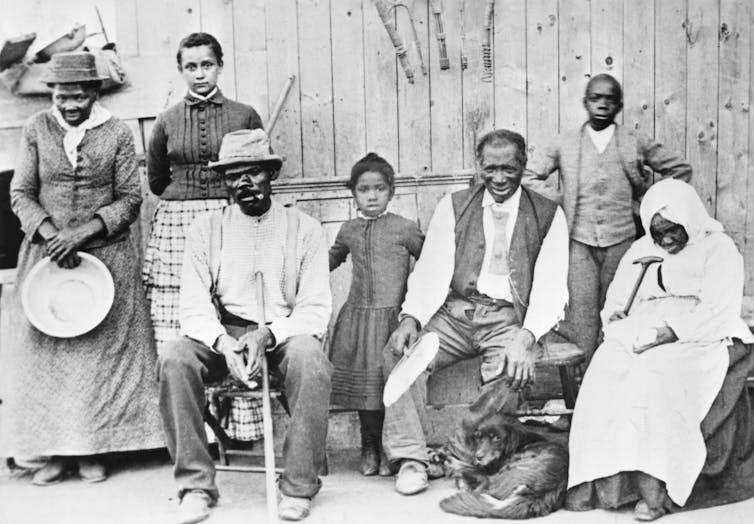
Armed with a deep faith, Harriet Tubman is most famous for her successes along the Underground Railroad, the interracial network of abolitionists who enabled Black people to escape from slavery along secret routes in the South to freedom in the North and Canada.
Harriet Tubman, far left, poses with her family, friends and neighbors near her barn in Auburn, N.Y., in the mid-to-late 1880s.Bettmann/Getty Images
But Tubman’s activities as a Civil War spy are less well known.
As historian and Tubman biographer Kate Clifford Larson wrote, Tubman’s devotion to America’s promise of freedom endured, despite suffering decades of enslavement and second-class citizenship.
“I had reasoned this out in my mind,” Tubman once said. “There was one of two things I had a right to, liberty or death. If I could not have one, I would have the other; for no man should take me alive.”
“Emancipations did not remove all the shackles that prevented Black people from obtaining full citizenship rights,” Manjapra noted. “Nor did emancipations prevent states from enacting their own laws that prohibited Black people from voting or living in white neighborhoods.”
Between the 1780s and 1930s, over 80 emancipations from slavery occurred, from Pennsylvania in 1780 to Sierra Leone in 1936.
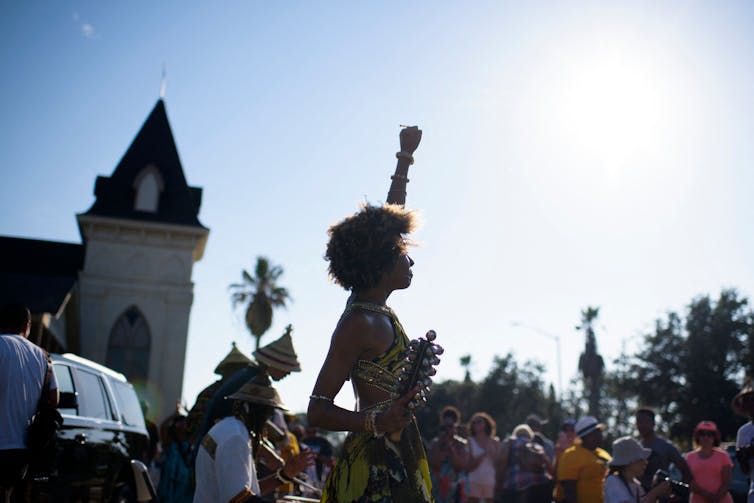
A Black woman raises her fist in the air during a Juneteenth reenactment celebration in Galveston, Texas, on June 19, 2021.Mark Felix /AFP/Getty Images
In fact, there were 20 separate emancipations in the United States alone from 1780 to 1865.
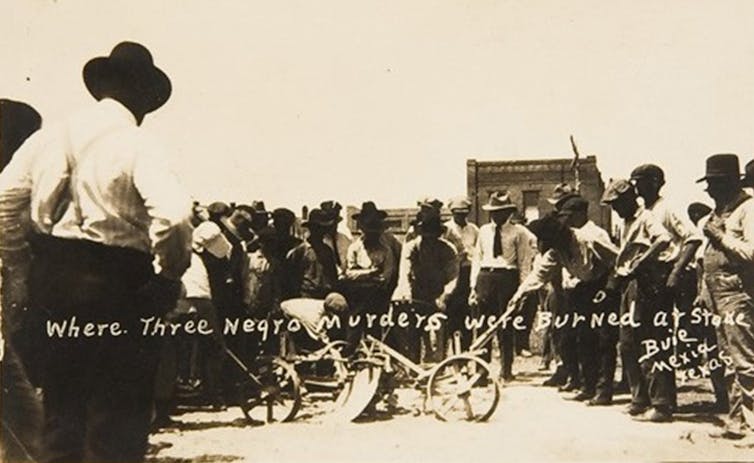
3. An image of a lynching found in a family photo album
As director of the Lynching in Texas project, historian Jeffrey L. Littlejohn
provided the very kind of analysis that Texas Gov. Greg Abbott and Republican legislators in Texas want to ban from public schools.
Scene of the burnings of Johnny Cornish, Mose Jones and Snap Curry in Kirvin, Texas, on May 6, 1922.Jeff Littlejohn
Among the many documents and relics Littlejohn has received, one package stood out. Inside was a family album of photographs filled with the usual images of memories – a vacation, a wedding anniversary dinner – but also, one of the lynching of a Black man.
But in 2021, the GOP-controlled state Legislature in Texas enacted a law prohibiting K-12 educators from teaching that “slavery and racism are anything other than deviations from … the authentic founding principles of the United States, which include liberty and equality.”
In other words, as Littlejohn wrote, “this interpretation holds that slavery, racism and racism’s deadly manifestation, lynching, did not serve as systemic forces that shaped Texas history but were instead aberrations.”
The photo album serves as a direct challenge to that interpretation.
4. Black soldiers fight racism and Nazis during World War II
In his book “Half American: The Epic Story of African Americans Fighting World War II at Home and Abroad,” historian Matthew Delmont explored the idea of Black patriotism and how many Black soldiers saw their service as a way to demonstrate the capabilities of their race.
Prompted by the Pittsburgh Courier, an influential Black newspaper during the 1940s, Delmont wrote that Black Americans rallied behind the Double V campaign during the war – victory over fascism abroad and victory over racism at home.
In this October 1944 photograph, Black soldiers are filling up gasoline tanks for the Red Ball Express.AFP via Getty Images
During the war, the Red Ball Express, the Allied forces’ transportation unit that delivered supplies to the front lines, was one example of such exceptional performance.
From August through November 1944, the mostly Black force moved more than 400,000 tons of ammunition, gasoline, medical supplies and rations to battlefronts in France, Belgium and Germany.
5. An NBA champion’s cerebral fight for equal rights
In his biography of Bill Russell, “King of the Court,” Aram Goudsouzian wrote that the NBA champion sought to find worth in basketball amid the racial tumult of the civil rights movement.
He emerged from that crucible by crafting a persona that one teammate called “a kingly arrogance.”
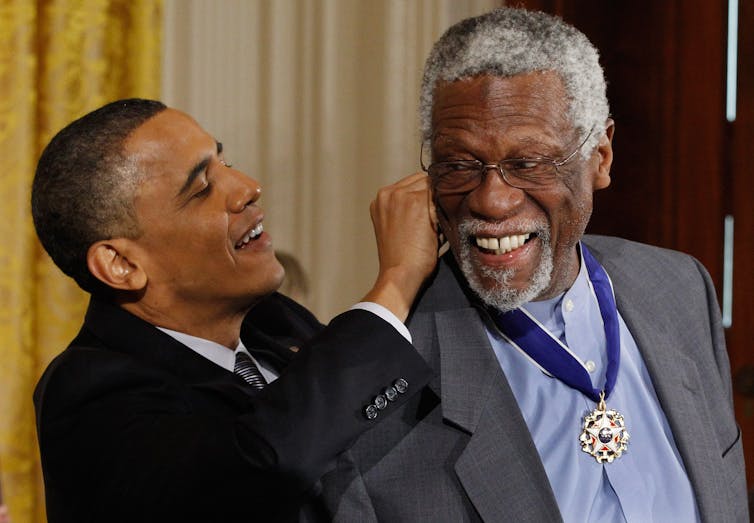
Russell, who died July, 31, 2022, was the NBA’s first Black superstar, its first Black champion and its first Black coach.
As a civil rights activist, Russell questioned the nonviolence philosophy of Martin Luther King Jr. and defended the militant ideas of Malcolm X and the Nation of Islam. He refused to accept segregated accommodations in the Deep South and recalled instances of police brutality during his childhood in Oakland, California.
“It’s a thing you want to scream,” Russell wrote. “I MUST HAVE MY MANHOOD.”
Editor’s note: This story is a roundup of articles from The Conversation’s archives.
Every Black History Month we see a million memes, quotes, and images of Black people who have played an important role in shaping the story and lives of black people in America. We have heard about Martin Luther King Jr., Harriett Tubman, Frederick Douglass, and Rosa Parks more times than we can count. If we’ve grown up with good black history education which is rare in these yet to be United States of America, then we might know Booker T. Washington or Maya Angelou. We know there is an active attempt to publicly whitewash black history as though the systemic destruction, repression, and marginalization of our history wasn’t enough. As a result it becomes more important than ever to teach and tell Black History.
But in an attempt to reclaim our history, let us not forget the key role faith played in the lives of so many of our black leaders. There is a reason why belief in God and practice of faith were so key in the lives of many (but not all) people we talk about during Black History Month. So let’s lift up the faith of our black heroines and heroes this month as we continue to live out our own faith. Below are just some notable examples of historical moments and key black leaders who were influenced by their faith.
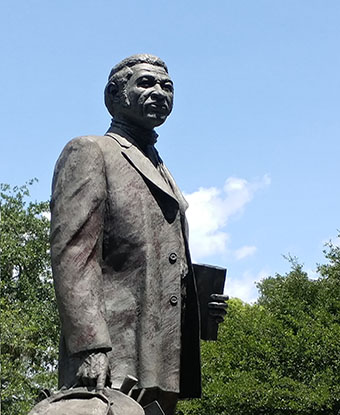
Denmark Vesey
Denmark Vesey was an abolitionist and former slave who planned and organized an armed slave rebellion to free the slaves in Charleston, SC. Charleston was the largest slave trading port in the United States during the early 1800s. He was the slave of a ship captain who won the lottery and paid for his own freedom with his earnings, but was not able to pay for his family’s freedom. As a result he became intent on ending the institution of slavery itself. Vesey was a worshipper and small group teacher at the African Church which became Mother Emmanuel AME Church, and his faith informed his advocacy for abolition.
He was inspired by the Haitian revolution and planned to flee to Haiti with the freed slaves after the rebellion. He inspired other abolitionists such as Frederick Douglass, David Walker, and Harriet Beecher Stowe. It is well noted that the abolition of slavery was a result of the work of Christian abolitionists.
The Christianity of Vesey and David Walker after him did not advocate for passive waiting to slavery to end. As he read Isaiah, Amos, and especially Exodus he were convinced that armed rebellion could be used by God to bring freedom to enslaved Africans. He began to preach a radical liberation theology from the Old Testament almost exclusively as he prepared for rebellion. Denmark Vesey resurfaced as a popular figure in recent years in the aftermath of the horrendous shooting at Mother Emmanuel AME Church in 2016.
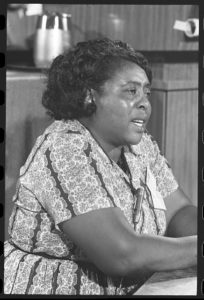
Fannie Lou Hamer
Fannie Lou Hamer was the founder and vice-chairperson of the Mississippi Freedom Democratic Party, which successfully unseated the all-white Mississippi delegation at the Democratic Party’s convention in 1968. This and other efforts earned her the title “First Lady of Civil Rights.”
In 1962, Fannie Lou became involved with the Civil Rights Movement when the Southern Christian Leadership Conference and the Student Nonviolent Coordinating Committee held a meeting in Ruleville, Mississippi. She and 17 others went to the county courthouse and tried to register to vote. Because they were African American, they were given an impossible registration test which they all failed. Fannie Lou’s life became a living hell. She was threatened, shot at, cursed and abused by angry mobs of white men including being beat almost to death by the police and imprisoned in Mississippi in 1963 for registering to vote.
Fannie Lou Hamer often sang spirituals at rallies, protests, and even in jail. Her faith in God is what she felt carried her through those difficult experiences. She quoted the Bible to shame her oppressors, encourage her followers, and hold her ministerial colleagues in the SCLC and SNCC accountable. She was a devout member of William Chapel Missionary Baptist Church, and let her faith permeate everything she did.
Michelle Alexander
Michelle Alexander, JD is a civil rights lawyer and advocate, a legal scholar and the author of the New York Times best seller “The New Jim Crow: Mass Incarceration in the Age of Colorblindness.” The book helped to start a national debate about the crisis of mass incarceration in the United States and inspired racial-justice organizing and advocacy efforts nationwide.
Alexander performed extensive research on mass incarceration, racism in law and public policy, and racial justice to write her book published in 2010. She has lectured and taught widely on her work as a professor of law and religion at Stanford University, The Ohio State University, and Union Theological Seminary. The New Jim Crow became a foundational text for many of the reforms being advocate for by various organizations involved in the recent push for criminal justice reform and the movement for black lives.
Alexander was driven by her faith to advocate for justice system reforms, believing that God called her to it and seeing it as her reasonable service. Her faith drives her advocacy for justice for the marginalized, care and compassion for all people, and teaching. She feels as though her work in law and faith are inextricably linked, and that people of faith are poised to serve one of the most important roles in changing the system. She is currently a visiting professor at Union Theological Seminary in New York exploring the spiritual and ethical dimensions of the fight against mass incarceration.






 Denmark Vesey
 Fannie Lou Hamer
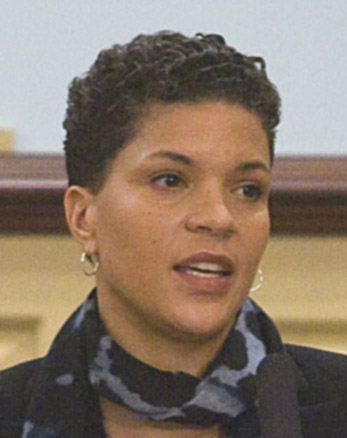 Michelle Alexander