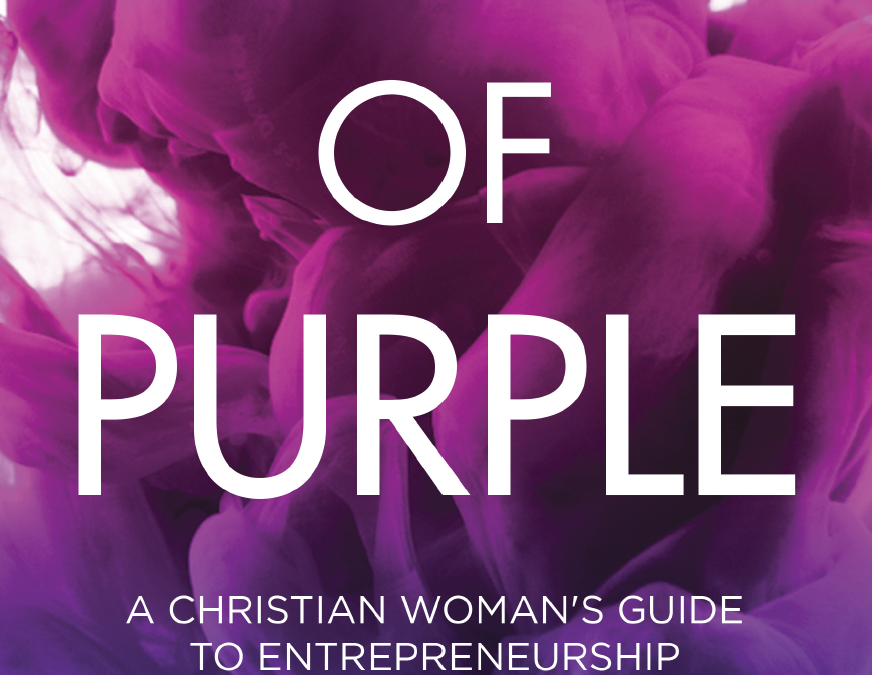
In her new book, Seller of Purple, Dr. Tasha M. Brown lays out a solid framework for newbie women entrepreneurs.
Stepping out on your own and deciding to start a business can be daunting. Most people know going in that there’s going to be a lot of time, effort, money, and sacrifice to make your entrepreneurship dreams become a reality. And if you’re a woman who is juggling work and life balance, being an entrepreneur can sometimes have its own unique challenges.
In her new book, Seller of Purple, Dr. Tasha Brown lays out a solid framework for newbie women entrepreneurs. A seasoned entrepreneur herself, who has founded six businesses and two organizations, she weaves in her sage advice with biblical principles and role models. Urban Faith® had the opportunity to chat with Dr. Brown about her new book, her practical advice for budding entrepreneurs, and what we can learn from some of the women entrepreneurs in the Bible.
When should you not venture out on your own to be an entrepreneur?
People who really need to work a job, get their credit together. Or you need to build up some capital, save up some money. Because at the core of entrepreneurship is financial risk. If you’re not in a position to do that, if you need to feed your family, then maybe you need to work a little bit. It doesn’t mean that you can’t branch out into entrepreneurship later, but there are just some things you have to have in place.
Will you have to have a quarter of a million dollars to launch out?
No, not necessarily, but should you work towards having at least $200 to pay for the Articles of Organization. Yeah. And so there are some individuals who are thinking, “I just need to launch out. I’m going to give up everything and start being an entrepreneur.” That is quite possible, but it’s just a little easier if you can manage that financial risk by planning.
What organizations have you started?
I started the Women’s Leadership Network because I recognized a gap in leadership development for women in ministry. And so back from 2008 to 2011, I was working on my Doctorate of Ministry in Pastoral and Spiritual Care. And my thesis was around women in leadership or women in ministry navigating the leadership waters. It was my hypothesis that women did not have the same type of informal spaces to learn and grow as men. And so I wanted to create that space. And then most recently the Arise Prayer and Outreach Ministries.
You’ve got makeup and hair products in your portfolio. Why did you get in the beauty business?
In 2010, I was diagnosed with breast cancer. My sister was diagnosed in 2007. And so she went through her procedure in 2010. When I was diagnosed I did not have chemo or radiation, but I did have a mastectomy. And in 2011, I had what’s called an oophorectomy. I had my ovaries removed. And so in 2011, I went into menopause. And as your body ages, as you age, there’s hair loss. I also had to take a pill daily to prevent the cancer from returning and that also caused hair loss.
And so when you are going through a stage of your body changing, you look for really quick ways to feel beautiful. And so I already was in the space of having a body that was aging well beyond my 35 years of age when I was diagnosed. And so it was at my 40th birthday in 2015, that I was with my cousins and I told them that I would use mascara and edge control to cover up my edges. And I was like, “We need to create something. We need to create something.” And Dem Edges was born. Dem Edges Tinted Edge Control. And in 2016, Dem Edges was brought to the marketplace. But I didn’t want to be a one-trick pony, so I worked with someone to get a lipstick line. So it came really out of a space of being a breast cancer survivor, wanting to feel beautiful and I didn’t see things out there that really would help me.
How do you keep your faith when it comes to starting something new? Is it tough when sometimes it works and sometimes it doesn’t?
Initially, it was. In the beginning, I just couldn’t understand because I felt like I had this vision. I felt like God was leading me in a particular direction. But on the other side of those experiences, I recognize that number one, it was really important for that to happen, the experience to occur. Because in that failure was a seed, a seed of success. In that failure was a seed of wisdom, a seed of knowledge, a seed of information. And so that failure provided so much data that informed the next steps. I mean, it’s the same thing as an inventor or even someone who is in a lab, a chemist. They’ll try different things and learn what not to do. What do I need to pull back on? What do I need to add more of? And so I’ve just learned through my walk with the Lord that there is seed in that failure. And then the second thing I learned is that God is not bound by my time, just because I think it needs to happen the first time out the gate, doesn’t mean that God is like, “Yeah, it does have to happen the first time out the gate.” Sometimes I’ve got to take a couple of laps around, but I’ll still get that wind. So I just have to trust God’s timing in all of it.
What went wrong?
Small things got us ensnared, like not filing the annual report, and just not having a business process in place. Our heart was in the right place, but we didn’t have the business acumen. We didn’t have the tools. Just not having the knowledge to keep it going.
If you could go back to when you started your business, though, what advice would you give yourself?
I would tell myself it’s a marathon, not a sprint. There is such a misconception that you become an overnight success and that people are just exploding on the scene. Well, a lot of preparation goes into that moment. And so recognizing that you may have some success right out the gate, but you have to keep planning for recurring success. It’s the long game that really works. It’s not, “Man, I did $75,000 in sales. That’s great.” And then you stop. Well, no, you gotta keep going. And so to understand and not get seduced in the trap of the immediacy of the instant gratification, but to really look further and to plan for the long haul. That’s what I would tell myself.
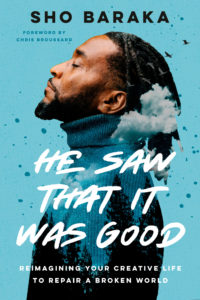
As our world becomes more divided and we seek to reconcile with ourselves and our neighbors we know we need God more than ever. But how can we hear and follow God in the midst of our fractured reality in ways that are faithful and life-giving? UrbanFaith sat down with the artist, activist, and creative Sho Baraka to talk about his new book He Saw That It Was Good, which helps us think through some of the most pressing questions of our world to see the beauty and purpose of God’s creation expressed in our lives. The full interview is above and the excerpts below have been edited for clarity and length.
Allen
Hello UrbanFaith. We have with us one of our very own gems of our generation, as I like to say, an artist and activist. He’s a historian. He’s an author now, and that is Mr. Sho Baraka. With his book, He Saw That It Was Good. And we’re going to be able to talk with him about this book, what it was that he’s thinking, and how he’s thinking through these things, because I just feel like he’s got wisdom to drop for us today. So Sho, good to have you.
My first question for you is one of the ones that people ask all the time, I know you as an artist. A lot of people have encountered you in that space. What made you decide to write down your thoughts in this book and continue to integrate your art in this form?
Sho
I think ever since I recognized that I was a creative, I think I’ve always wanted to write. As a young child, I wanted to write novels, short stories. But like my own experience, as I got older, I got introduced to hip hop and poetry from the Harlem Renaissance. And my desire for art kind of moved towards poems and music. And so I pursued more hip hop than I did writing and poetry. But I got to a place where I felt like there were there were some things that music couldn’t really quite communicate. And when we got around 2016, the political landscape started to get real divisive. People were shouting at each other, friends became disintegrated. And I said, you know, music is great, music has this place of disarming people and communicating things in ways that are really helpful to society, getting us to reimagine our world. But I feel like, I need to communicate a very straightforward, more poignant message, and also exercise these muscles that I’ve always wanted to exercise. And so in 2016, is when I really [started] to process through. All right, I think I want to write a book. The question was, what type of book?
And a lot of people wanted me to write a book about race. Because I talked about race a lot. A lot of people wanted me to write a book about politics, because I wrote about politics sometimes. But the reality of it is I’m no expert in either one of those arenas. And so what I wanted to do was say: well, what is my personal, ethical, and theological approach to work? Creativity in telling stories, which is informed by race, which is informed by politics, which is informed by our personal experiences, and therefore I can talk about race, I can talk about politics, I can talk about creativity. But ultimately, I want to show how all of those things affect how we work, and how we and how we create and tell stories in this book.
Allen
I love it. You mentioned how you’re bringing in so many different things. You talk about race here, you speak, you do poetry, you do short stories in here. You’re bringing in history, you’re talking about creativity and theology. And I would say that that makes this a true theological work because us understanding God and ourselves is multiplicity, right? And so I wonder why do you think that’s important that you’re able to bring together all those different pieces of yourself? In order to share a message why is it important that we do that kind of work?
Sho
Yeah, I think you hit on it. I think oftentimes in theological posture in America, we’ve separated. Really, we’ve created a bifurcation of the body and spirit. You know, like there’s there’s ways to fake it and there’s ways to be. And I think Jesus very much so, the Bible very much so teaches us how to be comprehensive in our beings.
[It’s okay] to weep. Jesus is very emotional with people, he has these wonderful physical relationships with people, but he also is very didactic and theoretical and philosophical. And oftentimes, we feel that we can only exist in one or two spaces. The gist, I believe, and I think this book is arguing as well, is historically, the black Christian posture has done a great job of doing both. Because you can’t separate the spiritual element, like the theory or the up in the air aspect of like, we know that Jesus is real, we know God is real. We know we believe [even when] we can’t quite feel him in that sense. But there’s also this physical aspect of: we need liberation. There’s a physical, there’s a physical desire we have, we’re on this plantation, you know, I mean, we’re asking the Lord to be rescued. But at the same time, we know that…there’s a here and now need, and then there’s a future glory that we’re going to see as well.
And Christian faith in the black tradition has always been tethered to justice. So it’s always been tethered to this physical aspect of redeeming the world that has been broken, as well as this intellectual, inner introspective. Kind of how do I how do I wrestle with my own existential experiences, if you will. And to jump to the end of the book and kind of steal some of its glory, I talked about one of my favorite people, George Washington Carver. And that I think he had this wonderful mysticism, and I don’t want to say mysticism to scare people away from…the true and the actual, but there is a bit of mysticism about our faith. And we see that throughout the scriptures. But George Washington Carver had this physical felt God, let me relationship with God, that I think we often look at is weird to have, well, he knew nature. He knew the plants he knew. He knew that because he knew God years and his relationship with God and formed his work and his relationship. So much so that he spoke to plants. Yeah. And people who said, “It’s crazy.” And so for me, what I say is there’s this aspect of us, coming into this full, comprehensive understanding of what the gospel is. It’s not just this intellectual understanding, it’s the physical body, it’s how do we get connected with our bodies, and in the sense of that, how that impacts our communities and the things we make and create.
Allen
So last question for you. And this is one of those easy takeaways, what is it that people can do? What is it that we should do now in order to live into our vocation to make a difference? How can we approach finding our next is a better way to say it?
Sho
Yeah, that’s a good one of the things I this is, you know, this is not gospel, but this is just my own personal observation. I think when we think about the word calling, I think, oftentimes, we just think about what am I good at? What what’s my skills, and let me go pursue that. And I, you know, that can be very romantic and poetic, but often think that also has its problems. I think the way we should view calling is, where’s their need? And where has God led me to fulfill this particular need? Because we see that throughout Scripture, we see Moses being called to a problem. And Moses is like, well, I don’t know if you got the right guy. And God is like, No, I’ve got the right person, I just need you to go do it. And but the reality is, is Moses does have the skill sets he was born into, I mean, he was raised in the palace, you know, he knows the laws, he knows the culture. And so to send Moses back is the most wise actions you can do. And so Moses can say he’s like, but this is not what I want to do. Oftentimes, we got to get past what we want to do in order to really see great change in our society.
I hope that we start seeing vocation apart from something we just do, but it’s a part of actually creating and cultivating society. So oftentimes, you will think of artists and creatives of people who actually create culture. But the reality is, is every vocation participates in the building up of a culture of a society. And the more we wake up every day, seeing that we have this canvas, and we can paint this beautiful image of God without work, then the more intentional we’ll be about the work, we, we choose how we work every day, and how we, you know, view other people’s work. And so don’t just work at a place just to get a check.
But if that is you, if you are in a place in your life, where you only when you have to work just to provide Yeah, a lot of us are in that situation, then figure out how do you do that for the glory of God, you know, me? Because I know some people don’t have the luxury of picking a path and picking a career. Some people just have to pay bills. Yeah. But understand even in that, that’s, that’s important. That’s just that’s God glorifying, like your work doesn’t have to be tied to some sort of social good in order to be transformative. And if you’re working at the drive thru, well, the way that you come to work and the environment, you try to create the way you interact with the customers creates culture. It creates an environment. And so I look at chick fil a, the one thing you will know about chick fil a is when you go into chick fil a people don’t be foul. They don’t be smiling, they will say My pleasure, you’re going to get a wonderful experience. I don’t know if that person can have a moment. They can have the worst day ever. They can be mad, but they don’t least fake it. Yeah.
They’ve created a culture and an environment. And I think a lot of chick fil A’s business is because of that. Yeah. what you can expect from the environment. Imagine if we all had that posture where I work, I’m going to work even if I don’t like the job to create an environment of my pleasure. And that’s that’s kind of like the way we should view our vocation. So those are a few things I think that we can do.
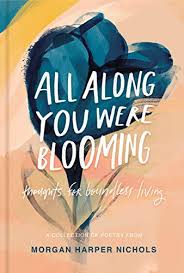
Morgan Harper Nichols describes herself as a quiet and passionate introvert longing for self-expression in a noisy world. In her book, “All Along You Were Blooming: Thoughts For Boundless Living,” Nichols not only expresses herself beautifully in both word and visual art, she holds a microphone to every person familiar with the sting of suffering and offers a poetic balm.
“All Along You Were Blooming” was originally the fruit of one of Nichols’ Instagram campaigns where she invites her 1.4 million followers to share their stories and, in turn, she responds to those stories with encouraging messages. This book is a collection of poetic encouragements and affirmations—each piece designed as an ode to those who were vulnerable enough to share their stories and their journeys to growth.
Nichols’ book appeals to both the soul and the eye. Sprinkled throughout “All Along You Were Blooming” are Instagram-worthy doodles and soft watercolor-esque visuals, giving the work both a therapeutic and aesthetically pleasing angle.
Nichols’ book not only acknowledges the reader’s wounds, traumas and hurts, but offers a constant, unrelenting, yet gentle push towards the Light. “All Along You Were Blooming” is neither a self-help book nor a polished 12-point plan on how to heal from hurt. It is the book you read if you seek encouragement, inspiration and the audacity to hope in the midst of your mess. These are the human-inspired pages you thumb through when your back is against the wall and you feel alone in your suffering. This book offers a breath of fresh air, the warmth of Light and a necessary bear hug for the soul.
To someone desiring a breakthrough but needs a nudge to step out in faith, Nichols encourages you to say: “I will go forth, with all I have now: a breath, a dozen steps, and a pocket full of fears, but no matter what tries to pull me back, I will find the strength to be here” (Page 3).
To someone actively fighting to make it through each day, she encourages you to repeat: “Even if my eyes are heavy, I will push forward with audacity, and I will rise with strength at dawn” (Page 51).
To someone eager to see the light at the end of the tunnel, Nichols proclaims: “May you know this to be true: no matter how dark the night, in the morning, Light pours through, filling every corner of the room” (Page 5).
Each line of Nichols’ work leaps out of the page with hope and welcomed, non-judgmental encouragement. The affirmations contained throughout the work are simple yet profound universal mantras for the hope-seeker. The book is a triumphant victory march for the long suffering, full of warmth and light.
Interestingly, while Nichols’ work and the basis of her encouragements appears to stem from her Christian faith, “All Along You Were Blooming” does not hold itself out as either an explicitly Christian work nor a theological examination of trauma and hope. In fact, the word “God” is only mentioned once in the entire work. Instead, Nichols may be taking a more nuanced approach to expressing her Faith through this work. Throughout the book, references to “the Light” and “Hope” are capitalized, as is typical when referring to God as the object in question. This subtlety is, perhaps, one avenue Nichols has found to be most inclusive—particularly where matters of suffering, trauma, hurt, pain and overcoming are universal experiences. Nichols does not claim to offer answers—theological or not. Through “All Along You Were Blooming”, Nichols offers a sounding board for the soul—a moment in time to feel heard and understood, regardless of where you stand religiously.
Nichols’ book can be summed up in this quote, where she hopes this for the reader: “I hope someday you know the taste of early morning mountain air, and the saltwater waves of the ocean, and the unexpected bliss of some strange sweet-bitter fruit. But I hope you also know the taste of hope on an ordinary Tuesday, when you do not feel okay, and you rise up anyway” (Page 53).
“All Along You Were Blooming” reminds us that, somedays, having and holding onto hope can be a small act of rebellion. Nichols encourages readers to strive for that hope. To go joy-hunting. And to live a life that blooms, regardless.
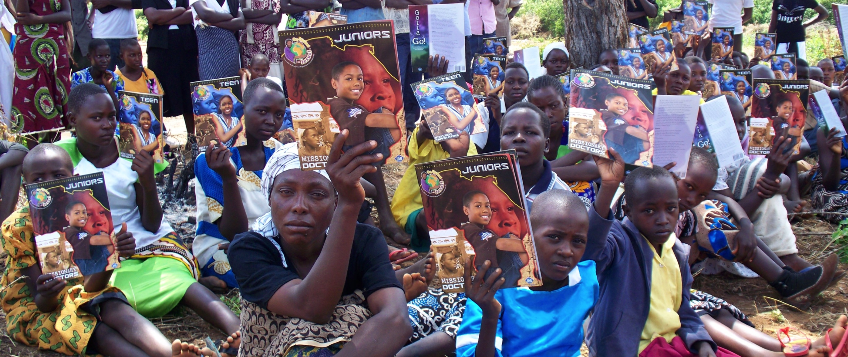
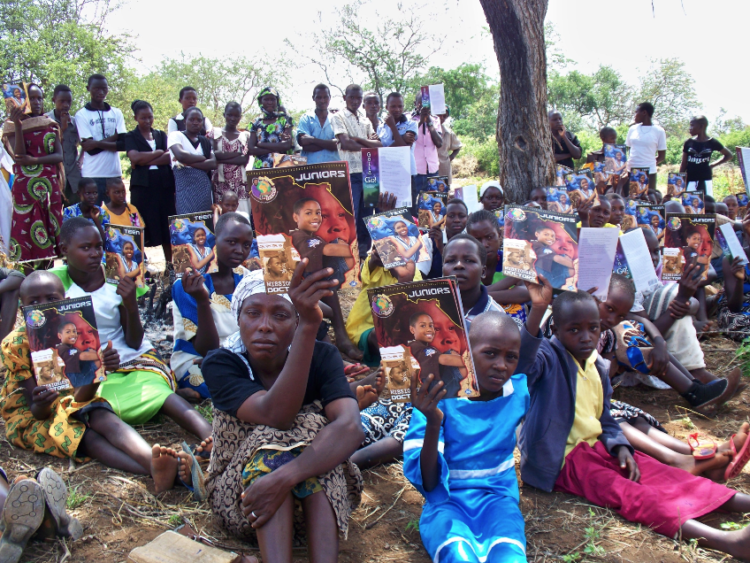
Believers in Kenya having a church meeting underneath a tree using materials from Urban Ministries, Inc.
How many of us have an old Bible on a bookshelf, a stack of old curriculum stashed in a closet, or several years of commentaries stored away in a desk? Did you know that in Africa and other parts of the world, some people are willing to walk miles just to get even one of those older pieces of Biblical literature?
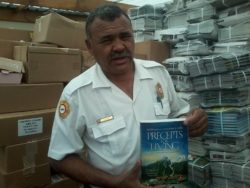
Love Packages, a nondenominational nonprofit, takes on the arduous task of sending more than 1,500 tons of donated curriculum each year from churches and individuals nationwide to people all over the world who desperately seek them. They’ve got two warehouses – one in Decatur, Alabama, and one in Butler, Illinois. At various collection points around each state, people bring their used Biblical literature in any way they can – in horse trailers, cars, vans, trucks, and tractor trailers. Nine major publishing houses, including Urban Ministries, Inc., also make donations. Once the materials reach the Love Packages warehouses, more than 1,000 volunteers go through it and sort it into six categories: Bibles, reference materials, Sunday School literature, books, magazines, and daily devotionals (music/tracts/miscellaneous). Then, in the host countries, the materials are delivered in ocean-shipping containers to distribution points where various ministries, such as Every Home for Christ Assemblies of God or Evangelical Fellowship, distribute it.
The organization’s website is filled with testimonials from all over the world. One from South Africa this past February reads: “We had meetings last week at New Stock Road. After the preaching at the campaign, 46 people gave their lives to Jesus and we gave them the Christian material that we got from you, and also the little booklet of John and Romans, it was a great time of joy. Love in Jesus Name.”
Steve Schmidt, the founder of Love Packages, shared an experience he had on a visit to Zambia in 1999. It started when he read an article about the first elected president Frederick Chiluba, who was explaining that he was a born again Christian and he wanted to do everything in his power to bring the principles, precepts and powers of God to bear on his country. However, he didn’t have any literature. He wrote a letter to President Chiluba explaining his organization and he was invited to visit the country to help them out. When he met with a Bishop who oversaw 700 churches, he learned that most of the pastors didn’t have a Bible and none had Sunday School materials.
“That was in ‘99. We’ve improved that some. We’ve sent about 400 tons of literature into Zambia and we’ve been shipping into Zimbabwe now too,” said Schmidt, who said in general they ship 20 to 40 tons of literature every week. The 20-ton containers they use cost between $3,500 to $9,000. “Every 20-ton container has at least a half a million pieces of literature in it.”
A distribution center overseas receives commentaries from Urban Ministries, Inc.
Schmidt started Love Packages in the summer of 1975. He had four-year-old old Bibles and initially thought he’d use it to prepare lessons. But God had other plans.
“I argued with the Lord for about three months. Told him I was going to use it to prepare lessons. He said, ‘No, you’re not,’” said Schmidt, who questioned, “Who am I going to give an old Bible to? I don’t know anybody who wants it.”
But then he thought of some men who had just graduated from a Bible college and were going home to their home countries in Ghana, Nigeria, India, and various other countries. He wrote them a letter, asking if they had any need for old Biblical literature.
“I didn’t know there was a great need,” Schmidt said. “I didn’t know anything! But the letters seemed like they were only gone a couple of days and they were back, and said, ‘Yes, we can use as much as we can get here, as soon as you can get it here.’”
Schmidt and his wife started in the basement of their home and in the first year sent 60 little boxes overseas from August to January. As he went to various small church events held in his community, from the Baptist chicken dinner to the Methodist Pancake breakfast, the donations started to pour in. By the second year, people began dropping off boxes on their front and back porches and their living room was full of boxes.
“It grew that second year to three and a half tons. And then, the next year, seven tons, and eleven tons… And our goal for 2020 is to ship 2,020 tons!” said Schmidt. “Even with COVID-19, we’re still at 660 tons of literature that we shipped this year so far. And that’s just the literature that’s being used in different places. We’ll send enough literature this year for about somewhere between 60 and 80 million people to read.”
Between the two states in Alabama and Illinois, Love Packages maintains three full-time staff members in each state and is supported entirely by donations from churches and individuals. Youth groups or men/women ministries going on short-term mission trips, and even families in Illinois at the Butler warehouse are able to come and stay in two dormitories, one with 25-30 rooms and the other 10-15 rooms. Groups can stay for up to a week.
“You can eat dinner with us. There’s probably a hundred or so stories. We have a chalkboard and there are stories about different testimonies that happened and people who got saved or healed or got a book for the first time or etc. And we tell stories during the lunchtime and try to encourage people to think eternally and pursue God with all their hearts,” said Schmidt.
Bishop Vashti McKenzie has started her own project to inspire gratitude during COVID-19. The aptly named Gratitude Project focuses on inspiring feelings of gratitude, inspiration and joy to combat anxiety amid COVID-19.
“I’m often asked, ‘How do you stay positive in a crisis?’ The truth is that the pool of pessimism will call my name before the porch of positivity invites me to sit down,” said Bishop McKenzie in a news release. Bishop McKenzie serves as the 117th elected and consecrated bishop of the African Methodist Episcopal Church and was the first woman elected to episcopal office in the more than two centuries history of the denomination. “How you start your day is important. I practice my spiritual disciplines daily whether through prayer, praise, study, meditation, worship, fasting and more. I read devotionals or a book, and use various apps like Abide and Calm.”
McKenzie has partnered with April Ryan, White House correspondent and Washington, D.C. bureau chief for American Urban Radio Network; Carla Harris, renown financial expert and senior client advisor managing director at Morgan Stanley; Sybrina Fulton, founder of The Trayvon Martin Foundation; and American gospel musician Earnest Pugh. She’s encouraging everyone to send their gratitude moments in to be shared via social media. You can find additional words of gratitude at http://thisisyourwakeupcallonline.com and on Bishop Vashti’s Facebook, Twitter and Instagram accounts.
“I’m inviting everyone to join me in a special Gratitude Initiative: pray a gratitude prayer daily; write at least two things about what you’re grateful for, whether in your journal or recorded on your computer, tablet or cell phone; and share what you’re grateful for online or on social media,” said Bishop McKenzie in a news release. “Let’s get this gratitude train going and keep it going! You have to work for it, so love your neighbor as yourself. Let’s be partners in hope, carriers of optimism and purveyors of joy!”
The 37-year-old is a foster care graduate who took her experiences and used them as inspiration to create the Fostering Change Network, a nonprofit that creates avenues to a successful life while eliminating the stigma of being a foster care child. The organization is based in the Washington, D.C., area. When O’Neale was approached for this interview, she was eager to tell her story so that anyone who has gone through similar troubles will be encouraged. Check out our interview with Shalita below as she shares her journey from sufferer to survivor.
THE BEGINNING OF GOD’S CHARGE
O’Neale was thrust into a horrific situation that many do not survive, but her tenacity to be loved served a purpose and she was encouraged along the way by an unlikely person.
How did you end up in foster care?
SO: My mother was murdered when I was two years old and my father was never part of my life; he drank himself to death when I was 16, but I didn’t find out until I was 19.
What was your experience in foster care?
SO: My experience in foster care was extremely lonely. I tried very hard to fit in and to avoid being a burden, even with my own family. I was put in a Kinship Placement with my grandmother at age five, but due to her alcoholism and physical and verbal abuse I was placed with my uncle until I was 13. Unfortunately, he was also physically abusive. At 13, I gathered the courage to tell someone and officially went into foster care. I lived in two different foster homes before going to live in a group home and often felt I was being punished because I did not have parents. There were people along the way that encouraged me and spoke to my potential and I am forever grateful for them. It was this and my desire to prove everyone wrong that fueled my ambition to succeed.
What are some of words inspiration that kept you going?
SO: “Be the change you wish to see in the world.” — Mahatma Gandhi
CB: Who was your role model growing up?
SO: Aaliyah! I was so lonely through my different living situations, despite that I had much older siblings (17 years older). My brother and sister were dealing with their own set of trials, because of our mother’s murder. But Aaliyah was the big sister I never had with her mix of tomboy and “girly” style, love of music, and humility that I could relate to. When she died I grieved heavily, but she still inspired me to grow into that type of woman, a woman who was loved and admired for all that she gave to the world.
PURPOSE FOUND
Shalita chased the light despite her strenuous beginnings and went on to complete her bachelor’s degree in criminal justice and her master’s degree in social work, with a concentration in community organizing and social action from the University of Maryland. Looking at Shalita, she did not seem like the hard-core detective type like Misty Knight from Luke Cage. We laughed about that. However her past did dictate what her future would become and in this case it was a good thing.
What was your “savior” moment? What made you create the Fostering Change Network?
SO: I’ve had several savior moments. Every time I wanted to give up, even end my life, there was something that removed the despair. Almost as if in the next moment, the feeling was forgotten and my will to live and to continue to move forward, replenished. I believe God has consistently used people, angels and spirit guides to intervene on my behalf. I started Fostering Change Network to show others from foster care that they are valuable contributions to this world and that they are capable of great things. I created FCN to highlight the accomplishments of alumni of foster care nationally and internationally and to provide the support they need to take their personal and professional endeavors to the next level.
Do you feel like God handed you this journey for a reason?
Shalita poses with her family. She admits that her family’s love is what keeps her motivated in spite of her past.
SO: Absolutely! I have come this far, learned so much and kept my “crown” in place during all attempts to remove it. I accept the power that I have been given and understand it is my calling to help others do the same. I’ve been married to an amazing human being for almost 10 years. He has always been very supportive of and patient with me. He was the first one to show me that you can disagree with someone without leaving them. You can love someone and not agree with everything they do or say. From my experience with my family and in foster care, I used to believe that it was normal to just leave people or force them out when you didn’t see eye to eye. My husband and I have grown together through our different journeys. He is an amazing father to our 6-year-old son, Amani. Amani has shown me what it feels like to have a heart on the outside of my body. I was afraid that I would not know how to be a good mother or wife because I have never seen it, but they have awakened those instincts in me. I may not have known what unconditional love looked like as a child, but I knew what it was supposed to feel like. I let my heart lead and I now have a family of my own to pour into, in the way I would have wanted to be poured into.
THE MARCH FORWARD
Although living a Christ-like experience we are only human and can still hold animosity towards those who have wronged us. When Shalita was asked about this, she took a breath, and with wisdom explained why it was important to forgive in order to grow into who you must become; and more importantly how it affects the future of those around you.
Do you forgive your parents? Both biological and your grandmother and uncle?
SO: Forgiveness was necessary for me to step into the person I am today. I will always be on the journey of “becoming,” but about a year ago, I was stuck and I didn’t know why. I realized that after so many years, I had not forgiven my father, mother, grandmother or uncle and so many others. I told myself I did, but the way I was living my life, making my decisions and attracting negative people and situations told me otherwise. Not only did I have to forgive them but I forgave myself, which was the hardest thing of all.
If there is never another like you, what is your hope for the future of foster care kids?
SO: I want foster children to grow up in a world where there is a universal understanding that they add value and are worthy. My hope for the future is that they see themselves and their greatness through people who have been in their shoes and lead by example. My hope is that they see the world full of opportunities that are available to them instead of a world full of people that mistreat and misunderstand them.
What is next for you. When it is time to remove your “crown”?
SO: I don’t think I will ever remove my crown; I strive to always be present with my power as a “Light Worker” in human form. Although some days its more challenging than others. In everything I do (foster care-related or otherwise) and with every person I meet, I hope even if only for a moment to help them adjust their own crown and to realize that it has always been resting there, gracefully, on their heads all along.
Do you have anything that you want the world to understand about people like you?
SO: It is time for adults who have experienced foster care at some point in their childhood to step forward. We are gifted. We are resilient. We have given so much to our communities and to the world. There are so many of us hiding in plain sight, waiting to bump into someone who can share in our experiences of foster care. We have wanted a safe space to heal and achieve with others that “get it.” Fostering Change Network is it. We are a network of alumni that have overcome the barriers associated with foster care and we are leading Fortune 500 companies. We are celebrities, legislators, community organizers, human service professionals. We are amazing parents to our children. We are not the stigma. To the alumni of foster care reading this I say: Welcome home.

 In her new book, Seller of Purple, Dr. Tasha M. Brown lays out a solid framework for newbie women entrepreneurs.
 As our world becomes more divided and we seek to reconcile with ourselves and our neighbors we know we need God more than ever. But how can we hear and follow God in the midst of our fractured reality in ways that are faithful and life-giving? UrbanFaith sat down with the artist, activist, and creative


 SO: My experience in foster care was extremely lonely. I tried very hard to fit in and to avoid being a burden, even with my own family. I was put in a Kinship Placement with my grandmother at age five, but due to her alcoholism and physical and verbal abuse I was placed with my uncle until I was 13. Unfortunately, he was also physically abusive. At 13, I gathered the courage to tell someone and officially went into foster care. I lived in two different foster homes before going to live in a group home and often felt I was being punished because I did not have parents. There were people along the way that encouraged me and spoke to my potential and I am forever grateful for them. It was this and my desire to prove everyone wrong that fueled my ambition to succeed.