When we are in times of transition, it can be easy to fall into fear. Many of us do not like change. We would rather be settled and know the ground we stand on. We like our second year at the new company. Our junior year of school. Year two of our relationship. When our organization or project is fully funded. Many of us thrive when we feel we’re on a firm foundation, and we’re nervous when we are launching into the unknown. Yet many of us find ourselves at a crossroads and long for clarity about how to move forward.
In Matthew 14:22, we read about the disciples in transition as they launched across the Sea of Galilee once again, headed from one miracle with Jesus to another. They had learned that whenever Jesus showed up in a new town, He created a stir. His presence led to crowds ready to run him out of town, plead with him for healing, press to hear him teach, or follow Him in curiosity.
But things felt uncertain on the sea that day. The Sea of Galilee was not an unfamiliar place–some of them were fishermen, and all of them lived near the sea their entire lives. The feelings of difficulty didn’t come with the place, but from the circumstances. The last time they were on the sea together, a storm almost destroyed their ship, but Jesus was there to save them. But this time they were back on the Sea of Galilee, sailing late at night without Jesus. His absence meant that anything could happen. They found their peace in His presence. Without Him, they felt a little more uneasy about everything. They knew where they were going and where they were coming from. But they were in transition without the presence of the Lord.
And then they saw a figure walking across the lake. They became terrified, and their place of transition became a place of fear. A figure out on the water with no boat walking above the waves was not a pleasant sight–it looked like a ghost. They had every reason to be afraid. We can relate to their fear of the unexpected showing up in the midst of the unknown.
Then Jesus called out to them, and they understood that what they were seeing was not a ghost. It was the Lord. In the space between the last and the next, God showed up for them in an unexpected way. Their place of uncertainty became a place of the miraculous.
Similarly, God is able to show up for us in unexpected ways when our circumstances change. It may look like we are alone as we move to new cities, start new jobs, or find new relationships. The water can seem unstable beneath us as it flows without clarity, especially when the night surrounds us. But if we remember that God is with us always and can meet us right where we are, we may find ourselves walking on the water with Jesus on the way to our destinations.
It is not often that I go to the movie theater and feel like a movie left my speechless but that is exactly how I felt about Devotion. It is based on a true story and has been the culmination of decades of work by the family and friends of Jesse Brown, a true American hero. There was a national conversation a few years ago about the “Hidden Figures” of American history. As African Americans unfortunately much of our history has gone untold, and some of it has been erased by racism, fear, and cultural amnesia. The story of Jesse Brown, one of the first black Naval Aviators to serve in an integrated unit, is a piece of history that must be remembered. It is an honor to Jesse’s daughter and grandchildren who are still alive that their grandfather’s story can finally be told. We are rooting for everybody black, and as we learn his story we help to remember more of our own history.
Jesse served during the Korean War, a war that is not often highlighted on the big screen. It is called America’s forgotten war because it was not the heroic story of good triumphing over evil from World War II and it is overshadowed by Vietnam during the Cold War in its tragedy and impact on American consciousness. But it was the first war where young Americans who were inspired by WWII joined the ranks of the military in order to fight for their country and were not drafted. Jesse Brown was like many African Americans in his era in that he was motivated not simply by patriotism, but an opportunity to help his family advance in a rapidly changing society. He saw himself not as an incredible black man, but as an incredible man. His wife and daughter were the center of his world and his purpose was to fly with the best pilots in the nation.
As we watch the impeccable talent of Jonathan Majors bring Jesse Brown to life we cannot help but to see his devotion. He was a man of faith, a man of family, and a man of fortitude. He demanded respect but rarely opened himself to trust people outside of his home. A lifetime of facing overt and structural racism had taught him to test before he trusted. A new and accomplished member of his unit Tom Hudner played by Glen Powell attempts to build a friendship across the cultural divide.
There is a special bond between team members that go through battles together, and it builds a devotion to one another and to the cause they fight for. This movie explores the depths of that passion in a profound way. But the reason why you should really see this movie is because the story of Jesse Brown needs to be told. We hear about how African Americans have to work twice as had to get half as far, Jesse Brown lived it in our military. We remember stories of American heroism trying to serve our country and protect their fellow soldiers. We rarely hear about black men in those positions. There have been countless successful war movies. This one is for our community with all of the nuance and authenticity that is true to our struggle to be part of the military let alone thrive in it. How can we honor the people in uniform for a country that has long neglected the rights and humanity of black people? Hundreds of our ancestors wore those uniforms and the story of the American struggle for freedom has been the story of the African American struggle for freedom since America’s first war. All Americans need to hear that story and be reminded of the struggle and the triumphs. We need to tell Jesse Brown’s story the same way we tell the stories of Pearl Harbor, Letters from Iwo Jima, Dunkirk, and all of the other films that share tragedies and triumphs of our veterans.
I left the theater in tears. I was moved. I could not believe I had never heard about Jesse Brown’s story, and had rarely heard about the Korean War in all of the history classes I had taken. I feel myself particularly acquainted with African American history having attended the illustrious Howard University and taken several African American history courses. I could not shake the sadness, frustration, and inspiration I felt because I had never heard the name Jesse Brown as one of the “First Black” in the long list of first blacks. We have to know and share our history. We have to share our devotion to our heritage. You have to see this movie, so that this piece of history, our history, is never forgotten again.
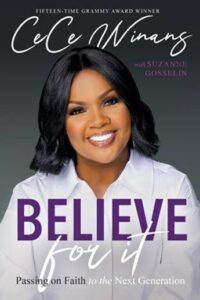
Cece Winans is one of the most celebrated Gospel music artists of all time. She has won fifteen Grammys in addition to Dove Awards, Stellar Awards, and many others. As she surpasses the achievements of some of the great artists and exemplars of the faith she looks up to such as Andre Crouch and continues to push her contemporaries and fellow Detroit natives the Clark Sisters, you would think her most important legacy would be music. However for CeCe Winans, the greatest legacy any believer can have is passing on their faith to the next generation. CeCe Winans explores her journey of lifelong faith and her pursuit pass it on to the next generation in her new book Believe For It.
CeCe Winans had an upbringing that most people could not imagine. She was raised in a home with ten siblings who formed multiple musical groups with faith in Jesus Christ at the center of their lives. She was raised in the Church of God in Christ, and like many of her contemporaries brought up in a strict but loving Christian home. She highlights that it was a very intentional decision by her parents to create a home filled with love and faith after neither of them had grown up that way. CeCe contends that it is the intentionality alongside the handwork of raising children to be strong believers that can make a difference for young believers today.
In her book she does not simply tell stories of singing and success. She provides practical principles that she is applying in her own home and church today to ensure her faith in Christ is passed down. Each chapter is broken into easily digestible principles and interlaced with testimonies and stories from Winans’ life. True to her Sunday School roots she ties everything back to scripture as she talks about the importance of starting with faith in the home that translates into the world.
What is fascinating about CeCe Winans sharing this testimony now is that she is the co-pastor of Nashville Life Church that her and her husband started in her living room that is filled with young adults. Churches across the country are struggling today with how to pass on faith to the next generation, how to do multigenerational ministry, and how to preserve the traditions that have preserved us for generations while remaining relevant. And through this book CeCe Winans gives simple and practical keys on how her and her family are doing it. She regularly engages in these topics on her YouTube show Generations, but through the book we get the depth, structure, and narrative that helps us apply the lessons to our lives.
One of the most important keys is relationships. CeCe Winans was shaped by her relationships with her family, church family, and community as a child. Her relationship with Jesus was profoundly shaped by her relationships with other believers. As we embrace new technologies, strategies, and demographics we cannot forget the value of relationships in helping us grow and persevere in faith. I love this book of wisdom. Wisdom is gained from experience and discernment, and as I read it I was able to do both as I consider the impact I have on my own children’s faith. Her legacy for music is also a legacy of sharing faith in God. There are many more keys CeCe shares and her voice through this book is wisdom the Church needs today as we share our faith with the next generation. You can find the book everywhere books are sold this week and check out her latest award winning music video below!
Every two years in the United States of America we have federal, state, and local midterm elections. And every year we hear from politicians or administrative officials about why we should vote for them (or not vote for their opponent). The people elected during midterms become the leaders who manage our communities’ money, advocate for our well being, determine how our justice system works, shape our education systems, provide for our safety, dispose of our waste, maintain our environment, and more. Local and state elections are the most impactful on our day to day lives and yet few of us even know who our representatives, administrators, or public officials are.
Our democracy is at stake. Politicians, media outlets, public figures, scholars, researchers, activists, and others have all sounded the alarm. There are thousands of people across the country working in coordinated ways to undermine our system of elections, take control of our local governments, and advocate for political violence. Many of those who are part of this movement claim to be Christians. There are politicians running and influencers on social media who have convinced millions of Americans to place greater faith in lies and liars than in Christ Himself. They devote their energy toward upholding election lies and won’t trust anyone that doesn’t agree with them. They are unmoved by evidence, only valuing the echoes of affirmation in their social circles.They have created a religion of suspicion and their faith is distrust. Believers must stand in contrast with the false followers of Jesus who are really white Christian nationalists and make sure to vote for leaders who represent justice, equality, value, and care for all people regardless of their background. We cannot support or endorse hate, fear, and violence in the name of our Lord and call it faithfulness. We have learned we cannot be slaves to single issues at the federal level and neglect policies and positions at the local and state levels. We have to vote in midterm elections like this one, or our votes may become truly meaningless in the future. It is only pride that keeps us from seeing that if fascist governments can rise in other other countries that it can happen here if we do not participate.
As a voters we fall easily and deeply into tribalism, the identification and support of leaders we feel like are part of “our group.” Unfortunately when we do not have a president to vote for, most of us don’t vote at all. According to Pew Research Center 62% of people of voting age turned out in the 2020 elections, which was a record breaking number, mostly fueled by the bitter cultural wars in the Presidential race. But consider that means that 38% of people who could vote, did not. In midterm elections the numbers are usually under 50%. Literally the minority of people elect leaders who impact all of our lives. And yet when we don’t vote or care about who to vote fore beyond the top officials, we miss out on a critical piece of our democracy.
West side of the Capitol Building at Capitol Hill in Washington DC. Daily photos in the afternoon, good for late autumn, winter and early spring illustration
We are engaged and fervent whenever we elect the president, even though most of us will never meet them and rarely understand their impact on our day to day lives. A president is a symbolic leader for many of us, representing our collective hopes, aspirations, and ultimate accountability. But a president can make none of the changes we imagine for ourselves and our communities without the cooperation and support of the legislature. The laws passed by legislative bodies are ineffective when the courts don’t enforce them. Our entire government is built on cooperation between branches and accountability through voting, both of which are under greater threat than many of us could imagine. We must vote in midterm elections, otherwise our desires to see flourishing in our communities will remain only dreams. We need to know who our tax assessor is, our city council members, our sheriffs, our judges, our attorney generals, our state representatives, our county officials, our congresspeople, and our governors.
As people of faith we have an even greater responsibility to be informed voters and to vote. The United States of America is not the Kingdom of God. Jesus is the eternal King of the Kingdom and He is not up for election. No leader can serve as proxy for Jesus over our lives or our nation. We are not voting to put Jesus Christ in office. He is already reigning over everything by His own power. But we can absolutely elect leaders who agree with our Christian principles of justice, help for the poor, safety for children, value for all lives, and care for the environment. We must look to our faith to inform what matters in our personal politics, and value other people’s faith or lack of faith enough to care for them too. Jesus taught us to seek justice for those who are different from us. Jesus taught us to hold leaders accountable. Jesus taught us to pay special attention poor people, homeless people, those from different countries, those with disabilities, those with food insecurity, and young people. Jesus taught us to love our neighbors as we love ourselves. Which means we have to vote for leaders and policies that will positively impact not just us, but members of our community.
We should vote because we need more good in our government. And we should know our leaders from city hall to capitol hill because their decisions impact us at home, work, school, church, in the park, in the street, in the store, and everywhere else in this country.
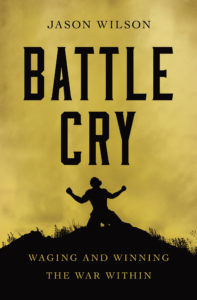
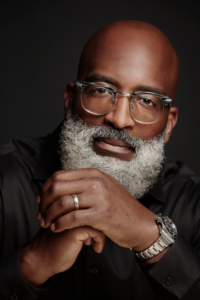
Jason Wilson has been training and mentoring men and speaking about emotional, mental, and spiritual health for decades. His new book Battle Cry shares his insights and principles for becoming the man he is and helping others become the holistically healthy people God has called them to be. UrbanFaith sat down with him to discuss his new book and his journey.
About Battle Cry
For decades, Jason Wilson tried his best to “be a man” but struggled to express the full range of human emotions because the only ones he felt comfortable expressing were the traditional “masculine” emotions–anger, aggression, and boldness. This went on until he finally released years of past trauma to attain the healing he needed to become a better man, husband, father, and leader. Learning how to master his emotions and verbally process them transformed Jason’s life and relationships in ways he never could have imagined. He now seeks to expose the lies that many men have been deceived to believe about manhood and bring healing to their lives. Battle Cry will teach men how to wage and win the war within themselves–unlearning society’s definition of masculinity and empowering them with the tools needed to freely live from their hearts instead of their fears.