
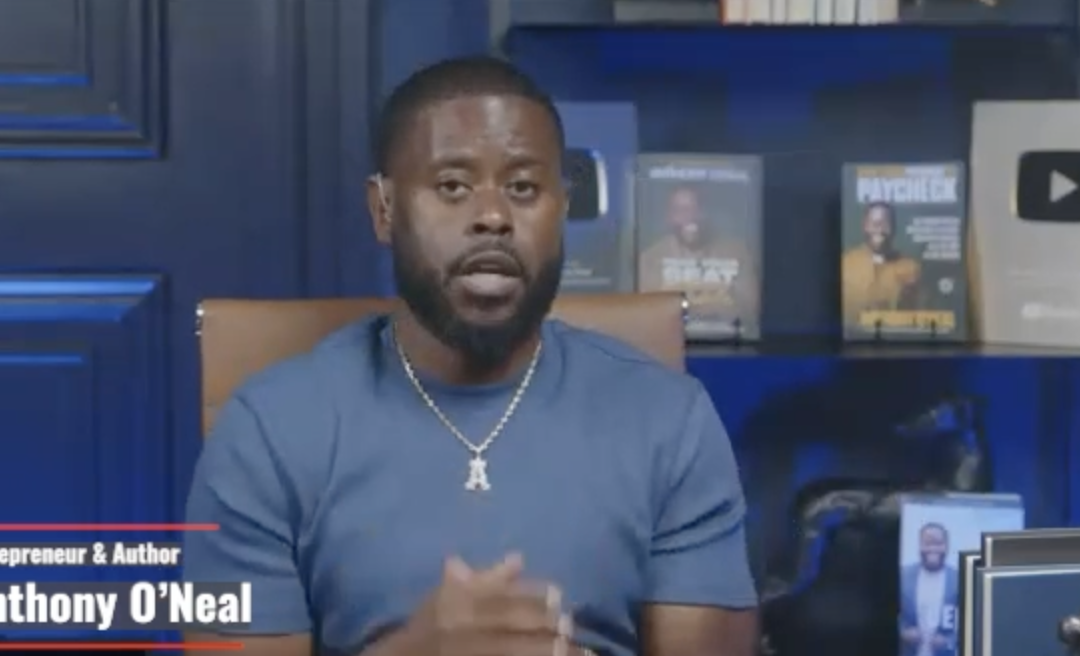
From Survival to Thriving: Anthony O’Neal on Financial Vision, Breaking Debt, and Building Wealth
In a society where over half of Americans struggle to cover an unexpected emergency, living paycheck to paycheck has become normalized. But according to financial expert, bestselling author, and speaker Anthony O’Neal, breaking free from financial struggle isn’t about getting rich quick—it’s about establishing a clear vision, unlearning bad money habits, and following a practical system. In this exclusive conversation with UrbanFaith, O’Neal breaks down the core principles behind his book, Stop Living Paycheck to Paycheck, sharing actionable advice on escaping consumer debt, creating multiple streams of income, and positioning yourself for generational wealth.
Below are selected excerpts from the interview, the full interview is above.
Maina: I got to ask you, man, when I read through the book… It was one of those things to where I was like, “Where was this book at when I was 18?” because it’s such basic principles. But at the same time, you researched this. What was the work like in bringing this all together?
Anthony O’Neal: This is research that I just have accumulated over my 42 years of living, and then also within the last 15 years of me being in the financial literacy space. I really don’t believe that there was a lot of books that speak specifically to minority issues and to middle-class issues, but still impactful to anyone who wants to read it.
I think that we don’t have really financial illiterate people. We have people—watch this—they’ve learned finances, but they’ve learned it the wrong way. Meaning that we watched Mom and Dad pay the bills. We watched Mom and Dad go to work. We may have even watched Mom and Dad pay tithes to the church. But then we also watched them live paycheck to paycheck. So, what happens is we just duplicated what we learned and what we saw. The reason why people are living paycheck to paycheck is because that’s just become the norm. The American dream keeps us in survival mode; it doesn’t keep us in thriving mode.
And just because you are out of paycheck to paycheck and let’s say you’re debt-free, consumer debt-free, that’s just the foundation. Now, how do we build wealth on your income? If you’re a school teacher making $50,000 in North Carolina, how can you still build a seven-figure portfolio and you’ve never made six figures in your life? There is a strategy and a system for that. Which is why we have the book, Stop Living Paycheck to Paycheck.
Maina: You say “write your financial vision,” man. So, where do you start with that, Anthony? What do you do first?
Anthony O’Neal: Get away from the noise. Get away from your friends and family members who can speak into your vision. Every July, I’m taking a cruise, and I honestly spend about 2-3 hours on that cruise, and I just look at my vision, and I update my vision for my life and for my money. And then when I come back, I’ll speak to like my mentors and accountability partners and explain to them what I want to do over the next 12 months.
You can’t really build wealth if you don’t have a clear vision of where you want to go. You got to identify: Where do you want to be at within the next 12 months? Where do you want to be at within the next 10 years? And where do you want to be at when it’s time for you to retire?
Number two, in order for this vision to happen, you got to have a “why.” One of my good friends, Pastor Darius Daniels, said something that was powerful. He said, “If your why doesn’t make you cry, then the price of commitment will make you cry.” And so, if you don’t have a deep enough “why” down in your soul that makes you get emotional about the vision you want to accomplish, then you’re never going to accomplish that vision.
Maina: How is America doing in general, man? When I see 54% of Americans don’t have $400 saved up, man, how are we doing as a country in this area?
Anthony O’Neal: I still think that America’s one of the best places where we can financially win, right? But again, everything comes back to system and strategies. We’re seeing that the cost of living is going up, but income is not going up. Having one source of income is outdated. You need to have two, three streams of income to really win.
I believe, especially every Black person who hears this, reads this, watches this, or listens to this, you need to be getting into some form of AI and tech on the side. Keep your 8-to-5 job, but also get into a side business that can duplicate that.
Right now, in the next 5 to 10 years, I believe we’re going to see the biggest wealth transfer. We’re going to see people who are in their senior citizen years, they’re tired of working, they’re tired of running this business, and they want to just get rid of this business and sell it. I want you to be in a position to where you can go in there and acquire the business. You take this system, add it with a new system of AI and tech, you raise it up. Now, you’re walking into a seven-figure business because you were in a position to purchase it. But you got to get out of debt first.
Maina: Can you just give us an explanation: Why is debt bad?
Anthony O’Neal: Debt is bad because you’re borrowing from your future to pay for today. And you’re borrowing for your future to fill a void and an insecurity that you have today. Debt is robbing us of our wealth-building potential. It is robbing us from true financial peace and freedom.
I am not a fan of consumer debt. I don’t have any consumer debt. I do have real estate and some business debt. So, you see, I have assets, but I do not have liabilities. Buy the purse when you can afford it. Meaning, you should be able to afford that at least two to three times minimum before you can actually afford it. Because you can make the payment today, can your tomorrow actually afford it?
Maina: Is this book for everyone, man?
Anthony O’Neal: This book is not for everyone. It’s not for the person who wants to get rich quick. It’s not for the person who doesn’t want to change their life, who’s comfortable about where they are. But this is for the person who’s like, “I’m ready. I’m ready to change.”
I believe the best time to start was yesterday. The second best time to start is today, no matter how old you are. If you pick up this book and you read it and apply it, within the next 18 to 24 months, your financial situation will be completely different, and you’ll have a different future moving forward.
 Purchasing a home is one of the biggest decisions a person will make. The process can be exciting, and equally daunting. But ultimately it’s a step toward fulfilling the American Dream.