Donnie McClurkin Interview: Why “Finally” Is His Final Album & Legacy

Donnie McClurkin Interview: Why “Finally” Is His Final Album & Legacy

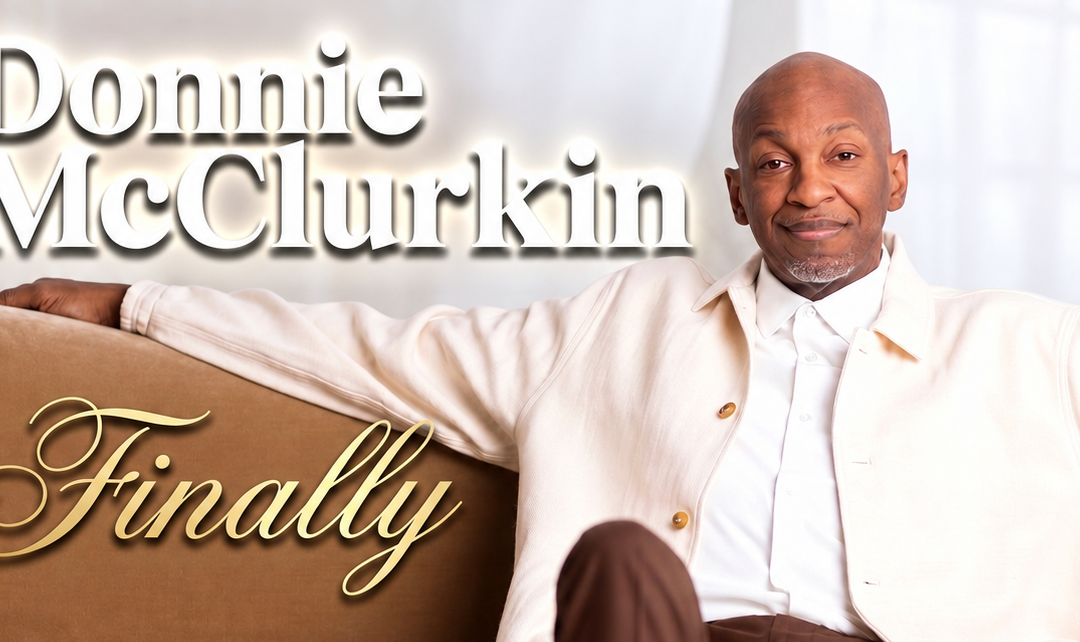
With his final recording project, Finally, gospel legend Donnie McClurkin reflects on obedience to God, returning Christ to gospel music, overcoming depression, and leaving behind a timeless spiritual legacy. The full interview is above and excerpts are below edited for clarity.
Allen Reynolds: Welcome to Urban Faith! Today we are joined by a legend of gospel music, minister, artist, and pastor—Donnie McClurkin—to share about his new album, Finally.
Donnie McClurkin: I’m glad to be here, Allen. Thank you so much.
Allen Reynolds: As I listened to this album, I was reminded of the incredible legacy of music you’ve built over the decades. Why did you decide now is the time for Finally, which I understand is your final recording project?
Donnie McClurkin: The decision really wasn’t mine, it was God’s. Everything I’ve always done, I wanted to make sure it had significance. When that significance starts to change, it’s time for me to follow wherever God is leading next. It wasn’t strategic; it was a matter of following God.
Allen Reynolds: Your sound remains so consistent and feels like a healing balm. What went into shaping the sound of this project?
Donnie McClurkin: The sound, songs, and singing flow holistically as a spiritual impartation. Whatever I hear in my head, I throw it at the great singers I work with—people I’ve collaborated with for decades who know my ministry and abilities. It’s about being bold enough to record the songs without worrying about people’s approval more than God’s.
Allen Reynolds: One thing you do so well is ensure the music points back to God rather than the artists. Why is that central to your mission?
Donnie McClurkin: The premise behind this whole project and its subtitle was “bringing gospel back to gospel music.” In many cases, we’ve turned gospel music into an entertainment form with a positive message and a little spirituality. You don’t even need a lifestyle to sing gospel anymore; it’s just a genre where Jesus isn’t always the main focus, and that’s problematic. This project is about bringing Christ back to the center of gospel music—sharing the good news of Jesus Christ, His love for us, and our love for one another through song.
Allen Reynolds: For younger generations who may not remember classics like Stand or Psalms, Hymns and Spiritual Songs, what legacy of faithfulness do you hope to leave behind?
Donnie McClurkin: The great thing about gospel music is it never ages out. Whatever is produced as gospel music has a perpetual lifespan—from Precious Lord, Take My Hand to Amazing Grace, which we’re still singing hundreds of years later. Day before yesterday, I was listening to Walter Hawkins’ Love Alive—that was 51 years ago! We’re still singing Going Up Yonder and Changed today. My legacy isn’t my concern; it’s what God established, so that He would be glorified long after I’m gone.
Allen Reynolds: Scripture shines brightly throughout this project, such as your musical adaptation of Psalm 51. Why is using music to share scripture so powerful?
Donnie McClurkin: Music is divine and comes directly from God. It helps you remember things better. When you put scriptures to music, like we used to sing Galatians 2:20 (“I am crucified with Christ…”) when I was 11 or 12 years old, it goes deep into the soul and spirit. All of Psalms is a hymnal; David’s writings were songs, and that’s how the Word becomes alive in us.
Allen Reynolds: What made this project extra special was collaborating with iconic background singers and featured artists like Michael W. Smith and Tremaine Hawkins. Can you talk about those relationships?
Donnie McClurkin: Doing a final project is emotional, but having iconic people join you makes it priceless. Beyond featured artists like Michael W. Smith and Tremaine Hawkins, my background singers—family and longtime friends like Andrea McClurkin Mellini, Jovanna Woods, and Dwan Starling—made this signature sound. We also had 28 people from across America and Canada learn the songs and fly in on their own to form the choir.
Working with Tremaine Hawkins, who sang a song I wrote specifically for her at 74 years old, and breaking down the long-standing wall between CCM and gospel alongside Michael W. Smith on Place in This World and Friends, made this more special than anything I’ve ever done.
Allen Reynolds: What is your core message to listeners, particularly the evangelistic tracks like I’ve Got Room for You and Shine On?
Donnie McClurkin: I’ve Got Room for You is an evangelistic song about reaching out to people going through deep pain, offering a God who is waiting to comfort them. Shine On came out of a deeply dark season of health struggles and depression when God rescued me. The song says, “I said I didn’t want to testify about how depressed I was… I was in darkness till you came to shine your light on me.” It’s a testimony of God pulling us out of fear and darkness.
Allen Reynolds: What encouragement would you give to young adults facing a difficult world today?
Donnie McClurkin: Knowing who God is takes away the angst. Trust in the Lord with all your heart, and don’t lean on your own understanding. If He can take me from abject poverty and difficult trials, heal me, and give me more than I could ever dream, He will do the same for you.
Allen Reynolds: Do you have a sense of what’s next as you step away from recording?
Donnie McClurkin: Haven’t a clue!  All I know is I’ll be able to go to sleep, enjoy life without worrying about the commerciality of the industry or meeting quotas, and just sing when I want to sing.
Allen Reynolds: Bless you, Pastor Donnie. Thank you so much for sharing your heart and your final project with us.
In His Own Words: Hunter Biden on Faith, Grace, and Forgiveness

In His Own Words: Hunter Biden on Faith, Grace, and Forgiveness


In a candid interview with UrbanFaith, Hunter Biden opened up about his spiritual life, navigating public shaming, and how radical transparency became a key part of his personal recovery and renewal. The full intervew is above,

Below are verbatim excerpts from the conversation, edited for clarity and length.

On Finding Faith in the Midst of Public Shaming

Hunter Biden:

“From the outside, what my life looks like in the past seven or ten years, it looks like a nightmare. The public shaming of me over the course of the past seven years has been ubiquitous. It’s everywhere.

I was given the greatest gift that I could be given to save my life in a moment in time in which I did not think I had any hope: I was given the gift of complete and utter transparency. I could not hide from my faults and my sins. I had to own them all. I had no more secrets. We are only as sick as our secrets.

Guilt is an appropriate reaction to something when you do wrong, and it is incumbent upon us to make amends with the people that we’ve harmed or hurt. Shame, however, is not. Shame is you telling yourself that you’re not worthy for the love that is being granted you—by God, or by another [person]. I don’t live in that shame anymore.”

On Recovery, Surrender, and Family Support

Hunter Biden:

“Addiction is a family disease. It affects everybody. What saved me was connection. The thing about my dad was that there was never a moment in time where I was not certain that that door would always be open if I choose to come back through it.

Unconditional love is not love without consequences. Unconditional love is not love without accountability. Unconditional love is simply leaving the door open that no matter what, that love will be there to carry you through whatever struggle or obstacle that you’re facing.

It’s really hard when you fall down this darkness of your own making and your own disease. You have to have a light at the end. He was always there, shining a light back towards me that helped me find my way home.”

On Human Connection and Faith

Hunter Biden:

“I have a deep faith—in the idea that we are all the children of God, that we are all connected.

Each one of us has an obligation to the other because there is no distance between us. In that universal philosophy is an incredibly beautiful thing, which is that we are our brothers’ keepers. To me, that’s my faith.”


Faith, Motherhood & Special Needs Parenting: Camille Joy Encourages Families

Faith, Motherhood & Special Needs Parenting: Camille Joy Encourages Families


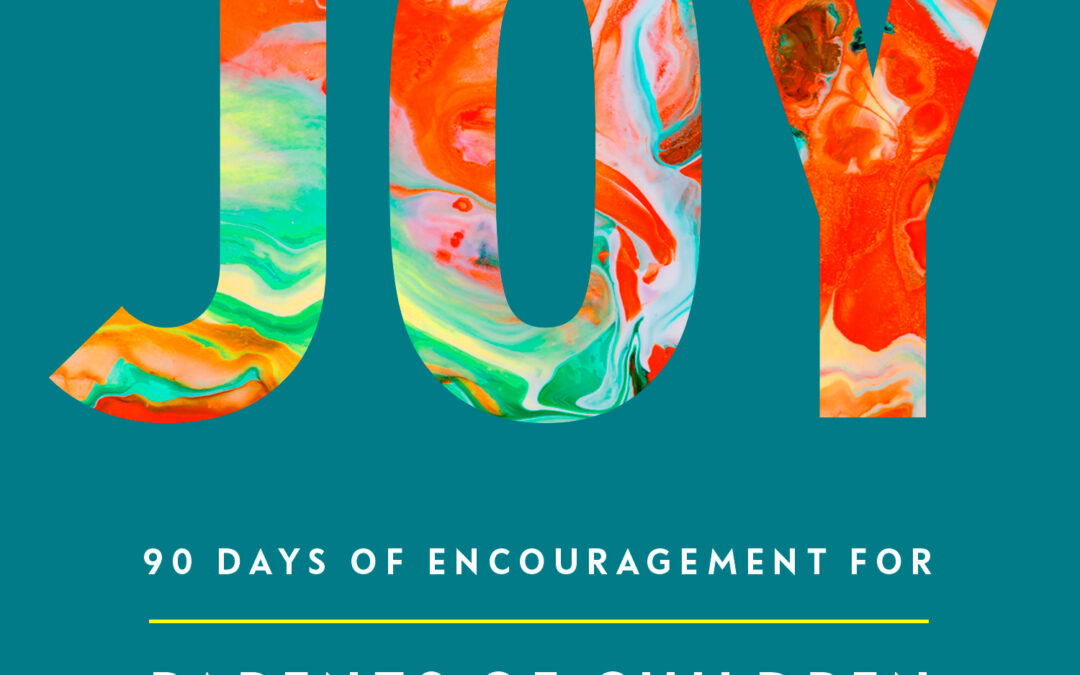
For Camille Joy, motherhood did not unfold the way she imagined it would. Instead, it invited her into a deeper reliance on faith, a slower understanding of joy, and a kind of love shaped by unexpected challenges. In her book Moments of Joy, Joy writes to parents who are learning how to hold gratitude and grief in the same hands. Through honest storytelling and gospel-centered hope, she reminds readers that God is present not only in answered prayers, but also in the daily, unseen moments where endurance is formed and joy quietly takes root. The full audio interview is below with written excerpts edited for clarity and length below.



MAINA

Where did the book come from? When did you know it was time to write it?

CAMILLE JOY

I knew it was time to write it in 2021. It took a long time to get to that place. Writing a book is very scary. Being published is even scarier. And once you get to the edits, that’s even more scary.

I knew it was time in 2021 when I began to encourage people online. I realized there were other parents like me who needed this kind of encouragement — not just kind words, but understanding that even in this diagnosis, God is still with us. That your child is still beautifully and wonderfully made.

MAINA

I have to admit, when I was reading it, I felt like it could be a book for all parents. Even though it’s inspired by parenting a child with disabilities, I kept thinking, every parent needs this.

How did you know to write it specifically for parents who have a child like Mason — especially since you have other children?

CAMILLE JOY

I do — I have four other children. Mason is my fifth.

Everyone had different needs. Even my youngest son before Mason, who is still eight years older than Mason, his needs are ever evolving as a sibling of a child with a disability. Those children often become the center of the family because of the complexity of their health and neurological needs.

Mason became the center, but I had to remember that everyone still needed me. My oldest is about to be 25, and they still need their mother forever. I need mine.

With Mason, I had to crumble up everything I thought I knew about parenting. I knew motherhood. I knew structure. But then here came a child with special needs who had sensory restrictions even around food. I found myself cooking one meal for my family and then chicken nuggets for him. That was a complete shift for me.

And within the body of Christ, these parents are often rejected. Their children are demonized. People mean well, but they say things like, “You’re not praying hard enough.” That hurt deeply. I remember Mason was in my womb. The doctor said he’s going to be born with congenital heart disease. He told us he would need several surgeries. The doctor asked, “do you want to keep this baby or not?” And of course, my husband and I were like, “What? Of course we’re going to have our child. We’re going to accept everything.” But immediately when he was born, I began to face those people who would say you need to say this scripture. You need to pray. You’re not praying hard enough. It just hit me in my heart. I think people mean well, but those things that are [hurtful] with the parent. I began to feel rejected. I knew I could pray. I knew I was an intercessor. I knew that. But what do I do when here on earth, my baby is still not healed? Now what? You know? And God is still good. He’s still faithful.

God taught me how to pray differently. He taught me compassion for parents who are isolated and often misunderstood.

MAINA

Tell me about Mason.

CAMILLE JOY

Mason is eight years old. He loves music — gospel music especially. He wants one praise song “Anthem of Praise” by the late Richard Smallwood on repeat all day. He taps us and says, “I want music.”

He also loves straws. One straw. That’s his thing. He fidgets with it constantly. That’s just how his mind works.

MAINA

On page 33, you write: “Life often throws us unexpected curveballs.”
You include this affirmation: “I embrace the unexpected with grace, knowing that each detour is an opportunity to love my child.”

Can you explain that?

CAMILLE JOY

With Mason, it has been diagnosis after diagnosis; congenital heart disease, autism, intellectual disability, ADHD. If you don’t anchor yourself in Christ, it can overwhelm you.

The first thought is often negative. It takes effort to hold on to joy. But every unexpected thing becomes an opportunity to love your child deeper and learn them better.

I allow myself a moment to feel it  and then I wipe my tears and keep going.

MAINA

How do you become grateful over circumstances as a parent of a child with special needs?

CAMILLE JOY

I take the seat of gratitude. Jeremiah 29:11 has anchored me through everything.

God has a plan for our future. Mason is His child before he is mine. That is his child. That is his baby. He has a great plan. There I can just take the seat of gratitude over any circumstance. Like you said, as a parent, it doesn’t matter even with special needs or not, there are many things that are going to happen, and you take the seat of gratitude over your circumstance. My mom used to say, we had you and we thought “we can write a book on parenting. This is easy.” And she said, then we had your sister and we said to ourselves, no, that’s not a good idea. It’s kind of one of those things where each child always brings this like – “Oh, yes,” with [raising them].

MAINA

What would you say to people who want to support friends raising children with special needs but don’t know how?

CAMILLE JOY

First, have compassion. Do not give unsolicited advice. Because although we think we know it all, this is a path you have not walked. This path, you have no idea what it takes to raise a child with special needs. When you have a friend and they have a child with special needs, you may say they make it look easy. But you don’t know what goes on behind closed doors.

If someone comes to mind, send them a Starbucks card. Send a text. Let them know they’re seen. Many parents don’t know they have community. Some feel alone. They feel isolated. And they won’t let you know. But when you say, you know, I see you…[it matters]. My sister watched my son recently. And when I went to pick him up, her husband said, “Camille, I don’t know how you guys do it.” He was like, “we only had him for eight hours.” But he saw our strength. See their strength without having to take care of the child. See their strength, even if you don’t understand their journey.

MAINA

When you hit send on the book, did you feel like you said everything you needed to say?

CAMILLE JOY

No. There’s always more to say. There’s always more encouragement to give.