Ms. Julieanna Richardson went from broadcast and television executive to the founder of an organization dedicated to preserving Black History. She now runs one of the largest organizations dedicated to the location and preservation of African American historical archives, stories, and history: The History Makers. UrbanFaith contributor Maina Mwaura sat down with her to learn about the Historymakers and get her insight on our world and history today.
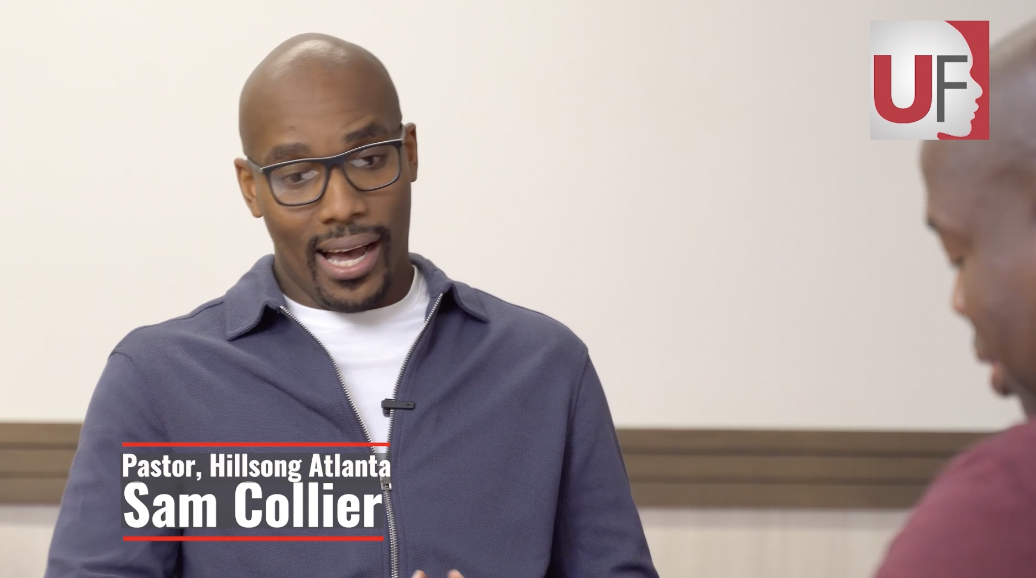
Sam Collier just started his tenure as the new lead pastor of Hillsong Church’s Atlanta location and it has come with tremendous interest. Pastor Sam is pursuing many firsts; he is the first African American pastor at a Hillsong Church, he is the first black pastor in the Hillsong global network, and this is his first time as a lead pastor after spending years serving at 20,000+ member North Point Community Church with Pastor Andy Stanley. Hillsong Church is one of the most popular church movements in the world with locations on every continent except Antarctica, music that has influenced a generation, conferences attended by hundreds of thousands, and ministries that reach around the globe. Yet in the midst of racial unrest, a global pandemic, and economic uncertainty, Hillsong church has not had an African American in pastoral leadership…until now. UrbanFaith contributor Maina Mwaura sat down to interview Pastor Sam Collier about his decision, the challenges, and his hopes in his role as the first black pastor in one of the largest most recognized church movements in the world. Full interview is above.
DESPERATE PASTORS’ WIVES?: The women of ‘The Sisterhood,’ (from left) Christina Murray, DeLana Rutherford, Tara Lewis, Ivy Couch, and Domonique Scott. (Photo courtesy of TLC)
I’ve got to admit I do watch The Real Housewives of Atlanta just about every Sunday night. And now that True Entertainment, the company that produces the raucous reality show, is producing a new reality show about Atlanta “first ladies,” I will probably be watching that show when it debuts Tuesday, Jan. 1, at 9 p.m. ET on TLC. The Sisterhood features five preachers’ wives: Christina, DeLana, Domonique, Ivy, and Tara. From the trailer many saw of the show, these preachers’ wives are not the circumspect, stand-behind-your man type of women that many would expect preachers’ wives to be. In the trailer, Domonique is a former drug addict and shows the other preachers’ wives a home in Miami where she used to smoke crack; Tara is a fitness buff with a penchant for getting tattoos and convinces Domonique to get one too; Ivy is shown getting handcuffs as a gift from her husband Mark, pastor of Emmanuel Tabernacle Church, and proceeds to share about their relationship. In fact, the trailer is so controversial that a petition to get the show off the air was initiated on change.org.
The Atlanta Journal-Constitution offered more in-depth descriptions of each first lady, which proved to be very interesting. For example, while Domonique Scott, 45, is a cast member, she is no longer technically a first lady, as she and her husband Brian had to close down their church after experiencing “hard times.” The website for Good Life International Church, however, is still up.
Christina Murray, 34, is married to Anthony, pastor of Oasis Family Life Church. The couple has two teenaged daughters who apparently will provide some drama for the show, as they are “as sassy as their mother.”
DeLana Rutherford, 37, is married to Myles Rutherford, pastor of Worship with Wonders Church. Apparently, the duo utilizes music as an integral part of their ministry, as they compose their own music and perform it each Sunday.
A former member of the ’90s R&B group Xscape, Ivy Couch, 35, is using her gifts for the Lord as a wife and mother to a 1-year-old son.
Like her fellow castmate Domonique, Tara Lewis, 41, is technically not a first lady either, as her husband, Dr. Brian Lewis, lost his position at a church after only working there for six weeks. As the couple and children recently located to the metro Atlanta area from Los Angeles, the show will demonstrate how the family is adjusting to all of these life-changing events. For future reference, this is the first lady who likes to get “tatted up” and was trying to convince Domonique to follow suit in the trailer.
After watching the trailer, I wasn’t sure what to expect, but after watching a pre-screening of the first episode, I began to believe this show could potentially offer something more valuable than the latest over-the-top drama featured on many if not most reality shows. I was also able to interview Domonique and Ivy, and they admit the trailer for the show even rattled them.
“As you can imagine when my husband gives me handcuffs, I have gotten, it has run the gamut from shock to disappointment to ‘I cannot believe this’ to some people saying, ‘Thank God y’all do have a healthy intimate life.’ I have gotten it all,” said Ivy.
However, Ivy noted that what was shown in the trailer does not entirely represent all of what transpired with her throughout the course of the season.
“I think the trailer does its job in terms of stirring up controversy, making people want to watch the show, but God gave me peace about it, and I love Him because He vindicates in due time,” she said. “And when I use the word ‘vindicate,’ I mean He will reveal the truth of who you are over time. I’m not ashamed of that, but the whole scene has not been revealed.”
Dominique has also been challenged by reactions she has received from clergy friends.
“A lot of my so-called friends, clergy members or whatever, they are like, ‘Why are you on there on telling people you used to smoke crack and why did you get a tattoo?’ And I’m like, ‘God still delivers, He still saves, right?’ I’m not ashamed of what God has done for me. If you are ashamed of Him before men, He will be ashamed of you before the Father, so I’m not ashamed of what God has done for me,” she said. “They also said, ‘Well, according to the Bible, you are not supposed to mark yourself.’ I said, ‘That was Old Testament.’…We are under the new covenant, which is grace and mercy.”
In the first episode, I saw some angst as Domonique and her husband Brian visit Christina and Anthony’s church, which seems to be growing and thriving, while their own church had to be shut down due to some admitted financial irresponsibility on their part and decreasing membership. I don’t know how this particular story line will develop, but I like it because Atlanta is likely the mecca for many of the country’s largest megachurches. Still, there are many, many churches in the metro Atlanta area that have not grown as much as others, and I imagine that many pastor’s wives feel what Domonique appeared to have felt in the first episode.
Domonique likened the scene in the first episode to the Bible story about the two women who birthed babies, one of whom died. The mother of the baby that died falsely accused the other woman of stealing her baby.
“What you saw in that scene was a little bit like, ‘God, if we would have just held on a little bit longer, or we would have done this a little bit different, or we would blah blah blah, we could be holding our own living child,’” she said. “But nevertheless I’m going to celebrate and be happy for you and know and trust and believe that God is going to bring this around back to me.”
Viewers will also learn more about what it is like to be first lady of an inner-city church through Ivy’s experiences. As her church is on Dill Avenue, in one of the rougher parts of the city, many of their church members are former prostitutes, drug dealers and gang leaders, according to Ivy. Domonique also shares her experiences as a former drug addict throughout the season.
“You’re going to experience the journey that you would think I had experienced 20 years ago. We are trained as Christians to forgive, and I forgave everybody, but I didn’t take care of me. I’m grateful to TLC because they allowed me to go back and just really deal with some things full frontal,” said Domonique.
While those story lines seemed to be the more redeeming parts of the show, every reality show worth its salt has to have some drama. In this episode, Domonique and Ivy seem to be at odds with fitness buff Tara, whose husband offers a unique perspective as a Jewish man who converted to Christianity before entering the ministry. There are also many discussions among the other wives and husbands about what could have possibly transpired to lead to the dismissal of Dr. Lewis only six weeks after arriving at a church. Tara is often seen quoting Scripture at every opportunity (even while working out), while the other women want to reveal who they truly are outside of their roles as first ladies.
“It’s very challenging to deal with anyone who just don’t keep it 100,” said Domonique about her relationship with Tara on the show. “You have to see yourself—good or bad—for what it is. And when you can’t, then for me it is a challenge to walk with you because of the places that God delivered me from. I don’t know no other way. I need for you to be who you are all the time. Don’t be this way today and this way tomorrow and be this way in front of Bishop Tulalala and be this way in front of Scooby Dooby Doo.”
I spoke with some other metro Atlanta first ladies to get their perspective on the controversial show. Of course, I had to start with my mother, Alice May Holness, who has been the first lady of Central Christian Church for over 30 years. After watching the trailer, my mother said, “I don’t think I will watch the show because I didn’t see anything that drew me to it, maybe because of the age difference between me and the women. Also, I don’t even really like the term ‘first lady,’ because people think that being a first lady is about being into fashion and wearing big hats. There is a lot more than glamour. You have to have genuine love for people to be a pastor’s wife. Your main goal is to be supportive of your husband. It’s an awesome responsibility, and there is a soberness that comes with it.”
Rev. Elaine Gattis, first lady and executive minister of the historic Mt. Olive Baptist Church in Stockbridge, had a similar reaction to the show after watching the trailer.
“At first glance, I can say that I did not like that the show seems to play into a culture of superficiality and materialism that many other shows such as The Real Housewives of Atlanta breeds,” said Gattis, who admitted she watches The Real Housewives of Atlanta as a guilty pleasure. “As Christian women, I was somewhat disappointed that there did not seem to be any display of class and modesty that first ladies should display, not just in front of the congregation but behind the scenes in ‘real life’ as well.”
However, Madelyn Battle, who is the first lady of the Upper Room Church in Riverdale, said she is somewhat intrigued by the show.
“The way it seems that first ladies are portrayed on this show is not realistic,” said Battle. “But I would like to see the show for myself in order to have a clearer understanding and perspective of the show. I think that to be a successful first lady, we need to look at 2 John for the biblical guidelines of what a first or elect lady should look like. She should first be a success as a good homemaker and support to her husband. She should also have healthy self-esteem, being aware of her own purpose and her own calling.”
Ivy said that people should tune in before making a snap judgment after seeing the trailer.
“From the trailer, you really don’t get a full picture of who we are as women or who we are as wives, but you do get some very, very controversial pieces of who we are,” said Ivy. “Watch and see because it’s going to be a ride. It’s wild. It’s funny. It’s tear-jerking. It’s very emotional. It’s cathartic. It’s all of these things rolled into one.”
TOUGH LOVE?: Pastor Creflo Dollar's mug shot from his arrest on Friday, June 8.
This is not the type of story I was expecting to read just before Father’s Day.
According to news reports,Atlanta-areamegachurch preacher Creflo Dollar was arrested for allegedly assaulting his 15-year-old daughter. The two were arguing over the daughter attending a party. According to the Fayette County police report, the argument turned physical when the preached clutched his daughter’s throat, slammed her down, punched her, and beat her with his shoe. His 19-year-old daughter corroborated the story, police said. Dollar was arrested on charges of simple battery, family violence, and child cruelty. He was released on $5,000 bond.
Being a father of a 19-year-old daughter, I have an idea of how this went down:
Dollar: Look young lady, no God-fearing daughter of mine has any business being out there “droppin’ it like it’s hot” like some video chick on BET, or worse.
Daughter: Oh, so you calling me a ho now, Daddy? You worried about me or your preacher reputation? I’m grown. I can do what I want to do. You don’t own me.
Dollar: Little girl, I brought you in this world and in the name of Jesus, I’ll take you out.
Daughter: To hell you will!
Dollar: No you didn’t! I’ll kick your …
And that’s about where the similarities end for me. Raising my hands to my daughter or to my wife is out of the question. My older sons? Well, they’re different cases. But not my only daughter who (technically) is no longer my “baby girl,” even though she’ll always be just that.
As a father, rearing a daughter is more than a notion. Especially if you know what’s out there awaiting them because of your own pre-Jesus experience running “the game” in the streets. We dedicated fathers worry about dogs … I mean, young men — many of whom do not have their fathers around to train them. We worry they’ll disrespect our daughter or outright abuse her. We have thoughts of willingly doing prison time after tracking down some punk who harmed our precious girl.
We remember the “sweet talk and conquer” mentality we had as teens and twenty-somethings and wonder if our daughter will reap what we sewed. Combine this with that neck-jerking, eye-cutting nasty attitude that often comes with the terrible teen years, as a parent you sometimes don’t know whether to pray or pull your hair because of your daughter. It’s a blessing if teens like Dollar’s daughter truly understand this.
My daughter and I have gotten into it particularly over some of her choices in skirts. I don’t like seeing her legs the way I like looking at her mother’s thighs. We also get into it because we’re stubborn debaters. We enjoy frequent rounds of verbal handball. But to get so out of control that I clutch her throat, slam her down and ball my fist? No. That’s not fatherly strength; it’s the ultimate sign of male weakness.
CELEBRITY REV: As an author, TV personality, and pastor of World Changers Church International in College Park, Georgia, Creflo Dollar gained an international following.
My daughter got spanked on the butt when she was a little girl, but I didn’t hit her when she was a 15-year-old hormone terror. You can bet your bottom dollar that I would never sink so low.
The police report for the Dollar family incident says Pastor Dollar told authorities that he tried to restrain his daughter when she “became very disrespectful” after he told her she couldn’t go to the party. Dollar admitted to spanking his daughter and wrestling her to the floor, but said it was because she hit him.
In these types of domestic cases, it’s always unwise to leap to conclusions. There are always more sides to the initial story. The truth of what happened in the Dollar household will eventually seep to the light, regardless of how the preacher will try to keep things shrouded.
Dollar later released a statement through his lawyer saying, “As a father I love my children and I always have their best interest at heart at all times, and I would never use my hand to ever cause bodily harm to my children. The facts in this case will be handled privately to further protect my children. My family thanks you for your prayers and continued support.”
You certainly have my prayers for your entire family, brother. But my respect for you as a man and a father?
If the police report is true, you’re too weak for that.
KEEPING IT REAL: Tina Campbell and Erica Campbell attending last month's New York City premiere of their new WE tv reality series, "Mary Mary." (Photo: Newscom)
Since gospel duo Mary Mary burst on the music scene with their crossover hit “Shackles (Praise You)” in 2000, sisters Erica and Tina Campbell, who named themselves after Mary, the mother of Jesus, and Mary Magdalene, have defied what it means to be gospel artists. And now with the arrival of Mary Mary, their new reality television show, the duo have another vehicle to appeal to audiences outside of the traditional gospel realm. The show recently debuted on WE tv, the same network that brought us the runaway reality TV hit Braxton Family Values.
However, outside of being network mates and powerhouse vocalists who happen to be sisters, that is where the similarities end. There are no dead-beat husbands, sisters on the verge of alcoholism, or sisters vying for breakout status by creating catchy one-liners which all end in “dot-com.” Their show is decidedly tame in comparison — which may be both good and bad. In the first episode, we get to see what goes into being a three-time Grammy Award-winning gospel act. For Erica and Tina (who happen to be married to unrelated men with the last name Campbell — now that’s some reality TV for ya), this means balancing their career ambition while being mothers to almost eight children between them (as Tina is pregnant with her fourth child) and wives to men who also have thriving careers. Warryn Campbell, married to Erica, is Mary Mary’s producer. Teddy Campbell, Tina’s hubby, is the drummer for Jay Leno’s Tonight Show band.
The duo is invited to perform at Macy’s “Great Christmas Tree Lighting” concert (a signature event for true ATLiens) on Thanksgiving Day in Atlanta. Their high-strung manager, Mitchell Solarek, appropriately frames this invitation as a good decision professionally and bad decision personally. Nevertheless, Solarek urges them to miss spending Thanksgiving with their families in Los Angeles because the Atlanta concert would give them exposure to 100,000 people and potentially garner new fans. And Atlanta is already Mary Mary’s number one sales and media market, Solarek points out.
Erica is excited about the concert and convinces her husband to forego their traditional Thanksgiving plans with extended family and pack up their kids and head to the A on Thanksgiving. Tina, who seems to be the more outspoken sister, is not as sold on the idea because her oldest daughter, Laiah, will be performing at a glee concert during that time and her husband’s work schedule may not allow him to travel with her.
In spite of her misgivings, Tina decides to perform in Atlanta and tries to explain her decision to 8-year-old Laiah. Their conversation yields the most real and tender moment of the show, as Laiah weeps on her mother’s shoulder and chides her for missing out on important family events. In the commentary, Tina admits feeling “guilt for having this lifestyle that I have.” Still, she also admits to loving her lifestyle and wanting to find a successful balance between career and family. She takes red-eye flights to her gigs to be able to tuck her children in at night, saying, “I can function on no sleep but them kids can’t function on no love.” I found it interesting that the sisters referred to themselves as Mary Mary when it came to career and Erica and Tina when they discussed their families. They appear to understand the difference.
Another opportunity for drama presents itself in the introduction of Goo Goo, Erica and Tina’s younger sister and the group stylist. Solarek readily admits that Goo Goo would not be his first choice as stylist but is forced to accept her anyway. Styling gospel artists is a tricky endeavor, he explains, as female gospel artists are either criticized for dressing like a church lady or like Jezebel. And Solarek’s confidence in Goo Goo getting it right — not to mention her reliability — is severely tested. We also get to meet Honey, Erica and Tina’s mom, who was their first choir director at their childhood church, Evangelistic Church of God in Christ in California.
By the time they arrive in Atlanta for the concert, Tina is in funky mood and reveals her resentment at being alone in a hotel room on Thanksgiving, particularly since her family seems to be having fun without her and Erica’s family are in a hotel room down the hall. “This freaking sucks,” Tina declares. I won’t reveal what happens next, in case you still have the episode on DVR, but let’s just say the show is clearly interested in affirming the positive.
What I like about Mary Mary is that it’s a real-life depiction of successful black women, who are married to good men and trying to do right by their families. It also helps that, though we see their faith expressed, the show — like Mary Mary’s music — isn’t too churchy or preachy.
A potential problem for future episodes? I fear the show may not have enough mayhem and dysfunction to satisfy today’s reality show audiences, who have been fed a steady diet of the raucous dealings of Braxtons, Kardashians, and Real Housewives. In fact, I checked my social media sites during the airing of the premiere and was dismayed to see little to no chatter. But, then again, Mary Mary’s signature hit “Shackles (Praise You)” broke the traditional gospel mold, so maybe their show will catch fire by flipping the script on the typical reality TV formula.
New episodes will air in the show’s regular timeslot, Thursdays at 9 p.m. Eastern Time, beginning April 5. If you’ve watched the show already, what do you think?