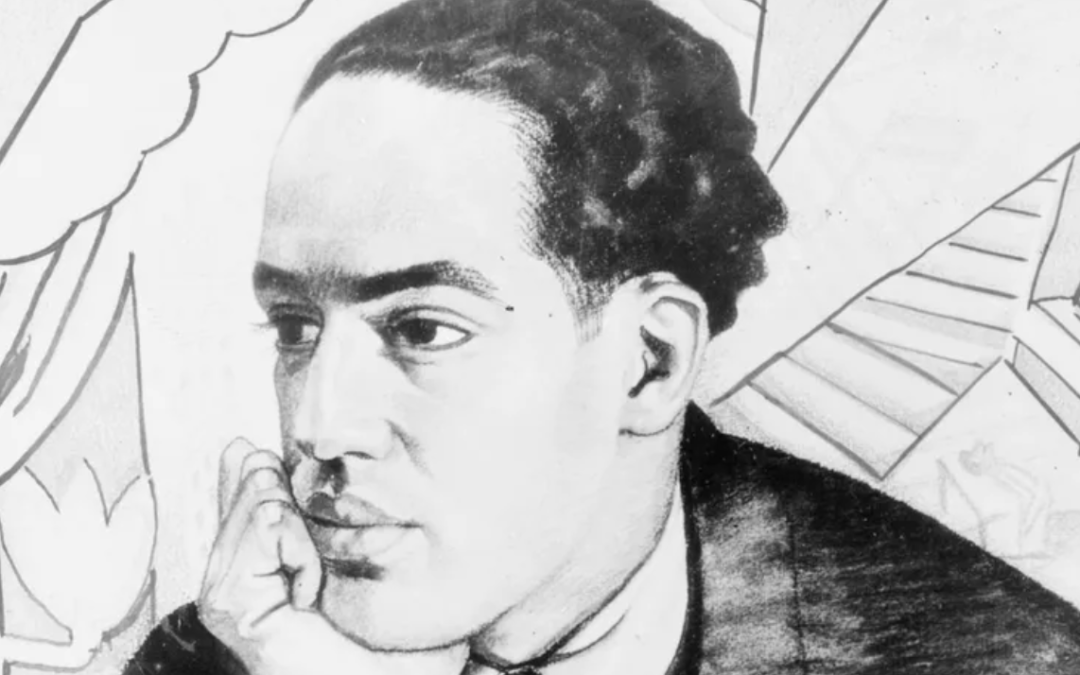
A leading figure of the Harlem Renaissance, the inspiration behind Lorraine Hansberry’s play “A Raisin in the Sun” and an uncompromising voice for social justice, Langston Hughes is heralded as one of America’s greatest poets.
It wasn’t always this way. During his career, Hughes was routinely harassed by his own government. And the nation’s literati, balking at his subversive politics, tended to overlook his work.
But the opposite was true abroad, in places like France, Nigeria and Cuba, where Hughes had legions of devoted readers who were some of the first to recognize the promise and power of the poet’s words. In my new book, “Langston Hughes: Critical Lives,” I trace Hughes’ budding international stardom, and how it clashed with the hostility he faced back home.
Building a fan base
Growing up in America, Hughes had experienced racism firsthand. As he matured as poet and writer, he started looking beyond America’s borders, curious to learn more about how racism impacted different cultures.
Between 1924 and his death in 1967, Hughes made trips to places as varied as Italy, Russia, England, Nigeria and Ghana.
During a visit to Cuba in 1930, Hughes met a young Cuban poet named Nicolás Guillén. Hughes had already successfully written dozens of poems inspired by the 12-bar structures, cadences, rhymes and subject matter of blues music. Over the course of several late-night dinners at Lolita’s restaurant in Havana, Hughes encouraged Guillén to do the same with his home country’s music.
Within days of Hughes’ departure, Guillén started writing poems making use of Cuba’s “son tradition,” a form of popular dance music. This was a key moment in the development of an artist who would go on to become Cuba’s national poet.
Hughes was also the only figure of the Harlem Renaissance who traveled to Africa. After several trips to the continent, he became determined to promote the work of his African peers – writers like Bloke Modisane and eventual Nobel Prize-winner Wole Soyinka. So in 1960, he edited his anthology “African Treasury,” which introduced many in the West to some of Africa’s greatest writers.
In countries like Nigeria, Hughes needed no introduction. In the 1940s, 1950s and 1960s, dozens of Hughes’ poems had appeared in the country’s newspapers and journals. After Nigeria elected Nnamdi Azikiwe, its first native governor-general, in 1960, Azikiwe concluded his inaugural by reciting Hughes’ poem “Youth.”
When Hughes returned to Ghana and Senegal later in the decade, he was greeted like a superstar. Scores of his admirers trailed him in the streets of Dakar, much in the way sports heroes are hounded by children for autographs.
By the 1960s, Hughes’ works were being translated into Russian, Italian, Swedish and Spanish. But the first scholarly study of his poetry appeared in France. Literary critic Jean Wagner’s 1963 book “Black Poets of the United States” highlighted the talents of Hughes as both a poet and activist. Devoting over 100 pages to Hughes, Wagner noted that African Americans would never “produce a more fiery bard” who was simultaneously “one of the community refusing to stand apart as an individual.”
As the first black writer in the United States to make his living solely by writing, Hughes ultimately galvanized scores of emerging writers and poets in Europe, Africa and South America. To them, Hughes represented a critical Western link to other people of color around the world. He was also an exemplar of the jazz and blues music they so revered. As a testament to Hughes’ popularity abroad, it was Venezuela – not the United States – that sought to nominate him for the Nobel Prize in Literature in 1960.
Making enemies at home
Back in America, Hughes certainly had his admirers, especially among the African American community. But most establishment figures – in politics, in the media and in law enforcement – viewed him as a menace.
As Hughes’ international fame grew, he was being denigrated as a subversive and a communist by his own government. Hughes had been under FBI surveillance since at least 1933, after he had traveled to Russia. Meanwhile his adamant calls for justice in the Scottsboro case of 1931 – when eight young black men were falsely accused of raping two white prostitutes – earned him the ire of FBI director J. Edgar Hoover. Hughes’ piercing critiques of capitalism didn’t help his cause, either. Hoover would go on to wage a personal vendetta against Hughes, building a 550-page file on him that highlighted poems like “Goodbye, Christ” as evidence of his communist sympathies.
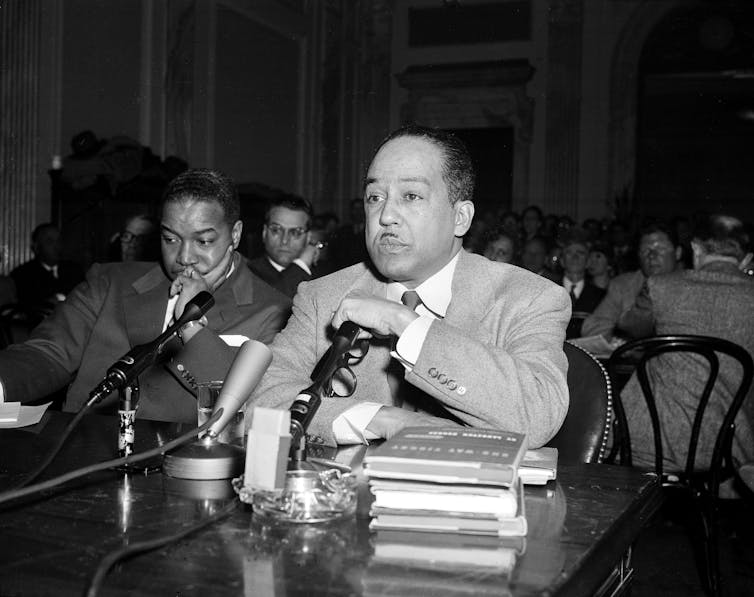
Then, in 1953, Hughes was called to testify before Sen. Joseph McCarthy, who wanted to use Hughes’ previous support of communist causes and his supposedly subversive allegiances to target suspected “reds” in the State Department.
The man who was exalted by political leaders overseas, who found himself elbowing his way through throngs of adoring crowds abroad, was attacked as “un-American” by McCarthy’s Senate Subcommittee.
Poet and author Langston Hughes speaks before the McCarthy Committee in Washington, D.C. on March 26, 1953. AP Photo
Hughes was understandably conflicted about his native country, and he explored this ambivalence in poems such as “Let America Be America Again”:
    Let America be America again.
    Let it be the dream it used to be.
    Let it be the pioneer on the plain
    Seeking a home where he himself is free.

    (America never was America to me.)
That last line still resonates for many Americans – for those who have never known a golden age, nor tasted the nation’s promise of dreams, justice and equality for all.
How long, Hughes wondered in “Harlem,” would we have to wait? And what was the cost of kicking the can down the road?
  What happens to a dream deferred?

  Does it dry up
  like a raisin in the sun?
  Or fester like a sore—
  And then run?
  Does it stink like rotten meat?
  Or crust and sugar over—
  like a syrupy sweet?

  Maybe it just sags
  like a heavy load.

  Or does it explode?
Interestingly, Hughes had ended the first draft of this famous poem with the lines, “or does it atom-like explode / and leave deaths in its wake? Does it disappear / as might smoke somewhere?”
Writing on Aug. 7, 1948, the poet was keenly aware of what had happened only three years prior when nuclear bombs were dropped on Nagasaki and Hiroshima.
To me, this perfectly encapsulates Hughes’ international appeal. The poet sympathized with those who had felt the harshest wrath of American power and politics. His intended audience was never just his fellow Americans who were grappling with fear and anxiety; it was anyone who had suffered great and devastating loss – an anguish that knows no language or borders.
April 15, 2020 marks 60 years since the founding of the Student Nonviolent Coordinating Committee, perhaps better known as SNCC, and usually pronounced as “snick.” SNCC became one of the most important organizations to engage in grassroots organizing during the modern civil rights movement and radically transformed youth culture during the decade. Jelani Favors, an associate professor of history and author of a book on how historically black colleges and universities ushered in a new era of activism and leadership, discusses SNCC’s legacy and what lessons it can offer today’s activists.
What role did SNCC play in the civil rights movement?
The founding of SNCC in April 1960 represented an important paradigm shift within the modern civil rights movement. SNCC encouraged black youth to defiantly enter spaces that they had been told to avoid all of their lives. The founding in 1960 resulted in a wave of SNCC activists being sent into the most hostile environments to register voters and mobilize African Americans for change. In doing so, SNCC ushered in the direct action phase of the movement.
Previous generations of activists had embraced lawsuits, such as the 1944 Smith v. Allwright against racial discrimination in voting, and the 1954 Brown v. Board of Education case against racial segregation in public schools. Previous generations also embraced non-direct protest tactics, such as boycotts, to bring slow change. But the sit-ins – popularized by black college students who would later form SNCC – placed black bodies on the line in ways that other tactics had not. They clogged “five and dime” stores across the South, effectively shutting them down, dramatizing the movement for black liberation as the entire world looked on through television and media coverage.
Black youth courageously courted the danger that often accompanied breaking the color line in the racially segregated South. Their actions resulted in violent clashes that fully displayed the immorality of white segregationists and simultaneously captured the nobility and courage of black youth. Perhaps most importantly, SNCC radically transformed youth culture in America. The organization took a generation of youth that Time magazine had previously labeled in 1951 as the “silent generation,” and ushered in a decade – the 1960s – that would be widely characterized and defined by the militancy and dissent of young Americans.
How did historically black colleges and universities help form SNCC and its agenda?
Black colleges served as the incubators for this militancy. For generations, historically black colleges and universities – also known as HBCUs – exposed students to a “second curriculum” that was defined by race consciousness, idealism and cultural nationalism. These concepts not only blunted the toxic effects of white supremacy, but they also empowered youth and deliberately fitted them with a mission to serve as change agents within their respective communities and professional fields. It was not happenstance that the origins of SNCC were rooted within the crucial intellectual and social spaces that were carved out within HBCUs.
The overwhelming majority of students who convened in Raleigh, North Carolina, on April 15, 1960, were from southern black colleges where the sit-ins had unfolded. And it was also no mistake that they met at Shaw University, an HBCU located in Raleigh. After all, the woman who had the vision to bring those students together – Ella Baker – was a 1927 graduate of Shaw.
For generations, black college alumni like Baker worked within religious institutions, civil rights organizations, labor unions and special interests groups. Their work within these spaces was largely informed by the “second curriculum” they had been exposed to as HBCU students. SNCC was therefore part of a long tradition of radicalism that was cultivated and produced within black colleges. This exposure equipped them with the necessary intellectual and political tools they would use to take on white supremacy and Jim Crow – the system of legalized segregation in the South.
What is SNCC’s legacy?
SNCC had a relatively short lifespan compared to other civil rights organizations. By the end of the decade their operations were defunct. Much of this was due to both external and internal pressures. Nevertheless, SNCC distinguished itself as “the most powerful energy machine” for the freedom struggle. I argue that SNCC was the most important and effective civil rights organization of the 1960s.
Unlike most other organizations, SNCC eschewed “top-down” operations that fostered elitism and “helicopter” tactics in which organizers would swoop in to inspire local folks and then leave them to manage local struggles on their own. SNCC’s objectives were completely opposite. They entered into the most dangerous, racially hostile and violent regions of the country, such as Albany, Georgia, the Delta region of Mississippi, and Lowndes County, Alabama. Once there, they set up operations that listened to and empowered local people, such as Fannie Lou Hamer, Amzie Moore, Unita Blackwell and countless others.
The relationship between SNCC and local people was reciprocal. SNCC activists learned and lived among the black proletariat – sharecroppers, farmers and day laborers. These people’s wisdom, shrewdness and practical knowledge of how to survive and navigate the worst of the Jim Crow South proved invaluable as SNCC took the fight for black liberation into the rural communities and remote areas of the South. Their blueprint became the template for local organizing for the Black Power Movement and beyond. Perhaps most importantly, their actions played a crucial role in expanding the ballot to millions of Americans who had been marginalized by racist policies and violence.
What lessons can today’s student activists learn from SNCC?
Both SNCC’s victories and defeats are very informative on the history of black social movements. Internal debates are both necessary and healthy for activist organizations. However, by 1964 SNCC’s ability to function as a cohesive unit was under serious threat. Disagreements concerning the infusion of young white activists in the organization and field operations, arguments concerning the use of non-violence as a tactic, and debate over other competing ideological tenets, such as Marxism and Black Nationalism, greatly impaired the organization’s ability to keep a unified front.
Perhaps most challenging were the external threats to SNCC’s existence. The potency of SNCC drew the attention of federal and state agencies that wanted to curb its influence and power. SNCC activists were constantly under surveillance. They lived their lives under the looming shadow of intimidation from law enforcement and the threat of being infiltrated. Today’s student activists can and should be wary of arguments that are unproductive and those who seek to derail their organizations with their own toxic agendas.
In spite of these challenges, SNCC presented a model that empowered local communities and radically transformed American democracy. By listening to and learning from aggrieved populations and empowering local folks to carry out their own agendas, today’s student activists can extend the radical tradition established by SNCC.
Four years after the assassination of Martin Luther King, Jr., the novelist James Baldwin would write on the pages of Esquire magazine, “Since Martin’s death, in Memphis, and that tremendous day in Atlanta, something has altered in me, something has gone away.”
Baldwin wrote about how “the act of faith” – that is, his belief that the movement would change white Americans and ultimately America – maintained him through the years of the black freedom movement, through marches and petitions and torturous setbacks.
After King’s death, Baldwin found it hard to keep that faith.
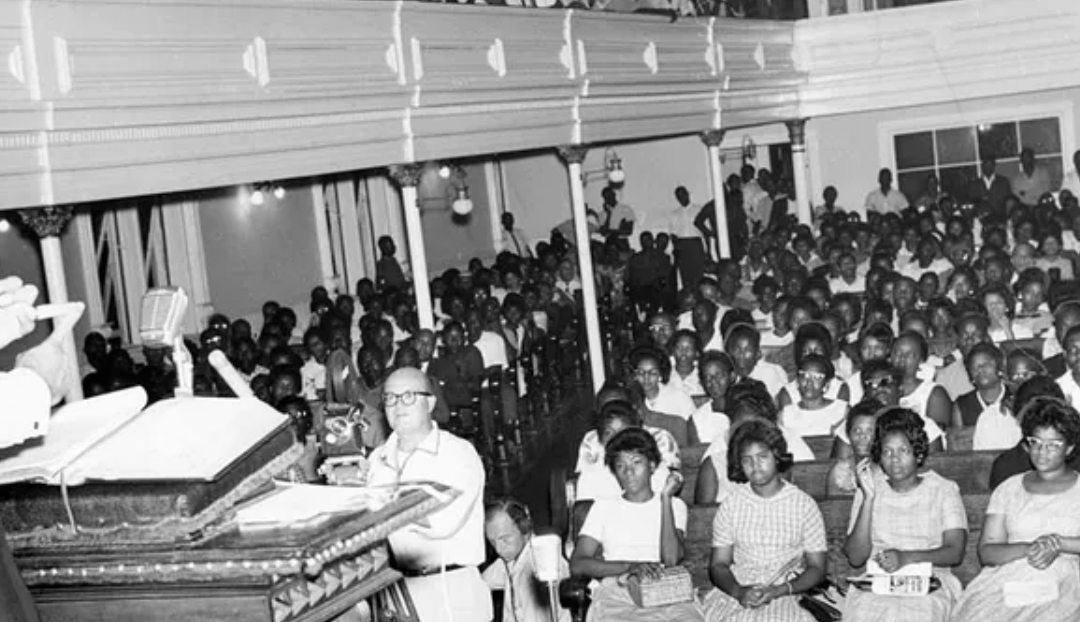
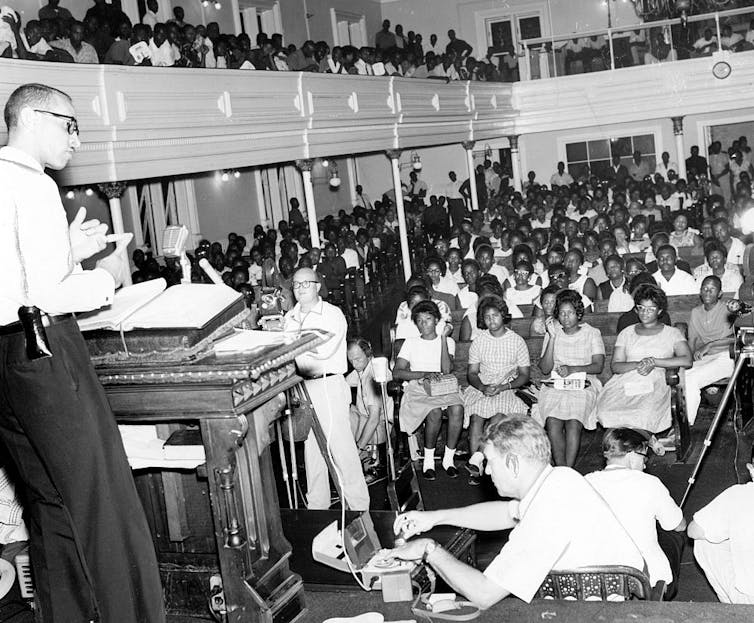
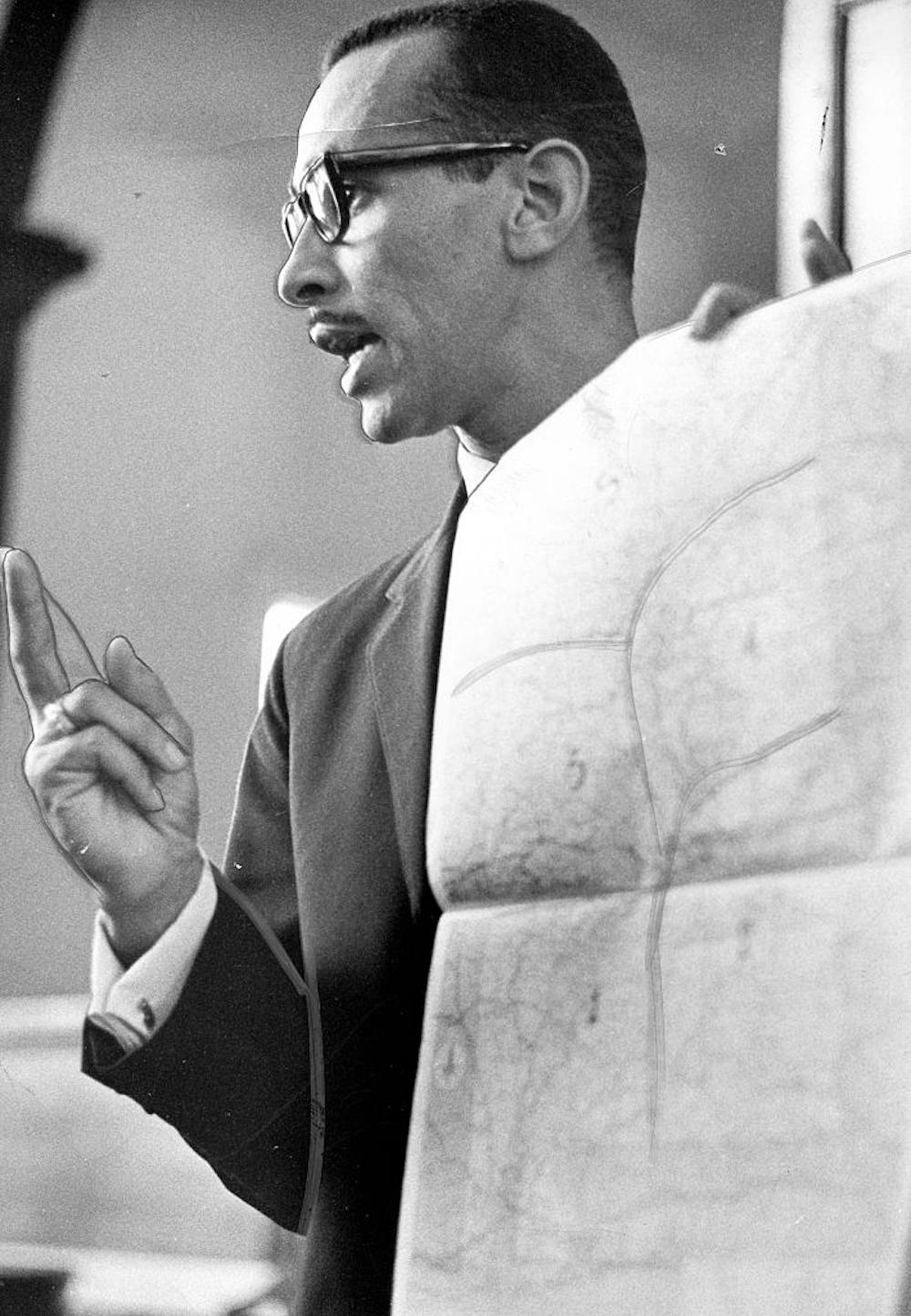
Nearly two weeks after King’s funeral, in April of 1968, King’s confidant and former strategist Wyatt Tee Walker tried to renew this faith. Drawing on a tradition of black faith, Walker encouraged a grieving community to embrace hope even in the face of despair.
Black public faith has a storied place in American life.
The black church has been a place of fellowship and affirmation from colonial America to modern day, empowering individuals to undertake public acts to transform politics and society.
The 19th-century National Negro Convention movement, which ran from 1831 to 1864, demonstrated this black faith in action. Its leaders advocated for the abolition of slavery and full citizenship for African Americans. One activist reflected years later that the “colored conventions” were “almost as frequent as church meetings.”
The civil rights movement carried this faith in action forward. Theologian Dwight Hopkins has written how the sermons and songs of black faith empowered and sustained African Americans, even in bleak times.
These practices on Sunday morning, he noted served to “recharge the worshipers’ energy” so they could deal with the “rigors and racism of ‘a cruel, cruel world’ from Monday though Saturday.”
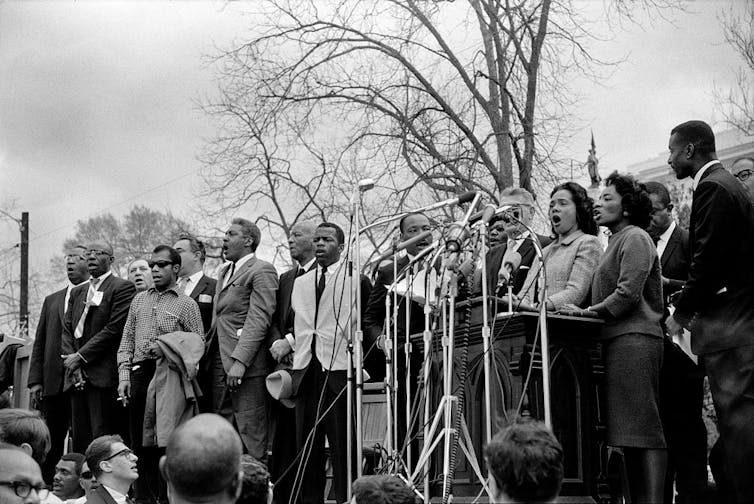
Civil rights and Union leaders sing ‘We Shall Overcome’ at the conclusion of the Selma to Montgomery civil rights march on March 25, 1965 in Montgomery, Alabama. Stephen F. Somerstein/Getty Images
It was this faith that empowered many African Americans to maintain their faith in the possibilities of democracy while facing entrenched white opposition to their civil rights. Marches, sit-ins, demonstrations and mass meetings were all public displays of black faith.
Urban rebellions erupted in the wake of King’s death. With parts of over 100 cities smoldering or in ruins, chaos seemed a more likely future in 1968 America than community.
Deftly navigating the tension between hope and despair, Walker based his message on the response of the Hebrew prophet Elisha in the Book of Kings who faced crisis and despair with an invading Syrian army, widespread famine and people ready to give up.
Drawing inspiration from the faith of the community, Elisha encouraged the community to keep faith in their nation.
Horizon of hope
Elisha’s example powered Walker’s message. At Princeton, Walker encouraged the black seminarians not to countenance a nostalgia for the past. In moments of deep discouragement, Walker said, distressed people tend to retreat into a romanticized past.
“In the jargon of the street,” Walker said, “it sounds like this: ‘Child, don’t you wish it was like it was back in the good old days… .”
“And yet,” he declared, “not by any wishing or hoping or praying or anything else can we find any day when things were better. There was no such day!”
Walker proceeded to caution his audience against maintaining the status quo. Walker proclaimed, “Whatever dream of life it is we envision for our children, ourselves, our community, our church, we will never bring it to our fingertips unless it begins first with some initial risk.”
For Walker, challenging the status quo was a fundamental aspect of existence.
“The elemental character of life is one that is moving and dynamic,” he said.
Walker closed his sermon by urging the audience to embrace hope-filled struggle. But he did not deny the desperate reality.
Instead, in the face of despair, he urged the young seminarians to take a risk of faith and build a future that has not been. For Walker, that meant “doing, trying, moving toward things which have never been tried before.”
The lasting testament of black public faith is its affirmation of new possibilities during moments of deep doubt. Rather than relying on a myth of the past or upholding the status quo, Walker offered the seminarians at Princeton a new vision of a political community.
“What I’m saying to you,” Walker declared, “is that I have the ultimate faith that we are going to find a tranquility with justice in this nation, in this world. We must! And it is conceivable it could happen in our time.”
In such times, Wyatt Tee Walker’s words can remind people to muster hope and keep faith with the possibilities of American democracy while continuing the struggle for a just society.
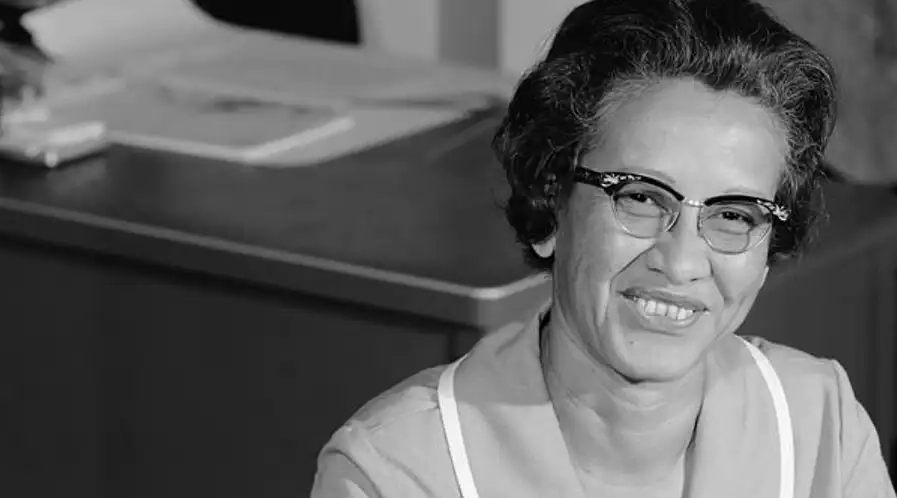
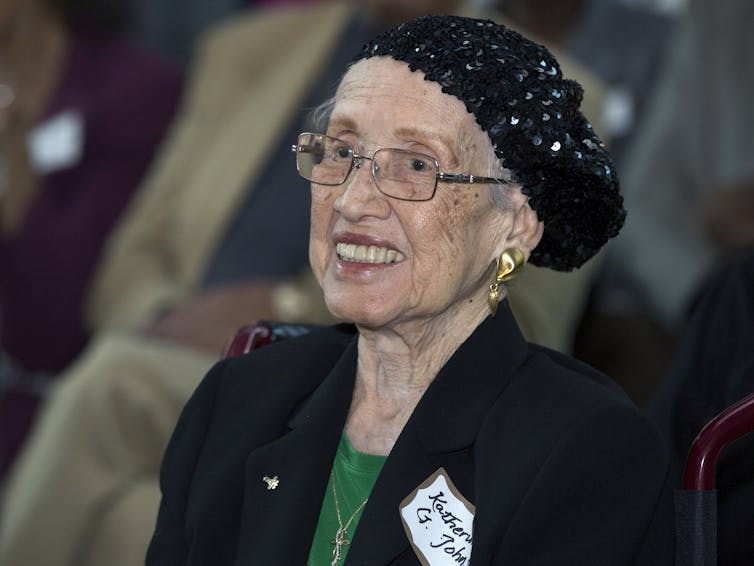
As a historian of mathematics, I have studied women in that field and use the book “Hidden Figures” in my classroom. I can point to some contemporary ideas we can all benefit from when examining Johnson’s life.
1. Mentors make a difference
Early in her life, Johnson’s parents fostered her intellectual prowess.
While at West Virginia State, Johnson took classes with Angie Turner King. King taught at the laboratory high school while she worked to become one of the first African-American women to earn masters degrees in math and chemistry. She would go on to earn a Ph.D. in math education in 1955.
King taught Johnson geometry and encouraged her mathematical pursuits. Thirteen years older than Johnson, she modeled a life of possibility.
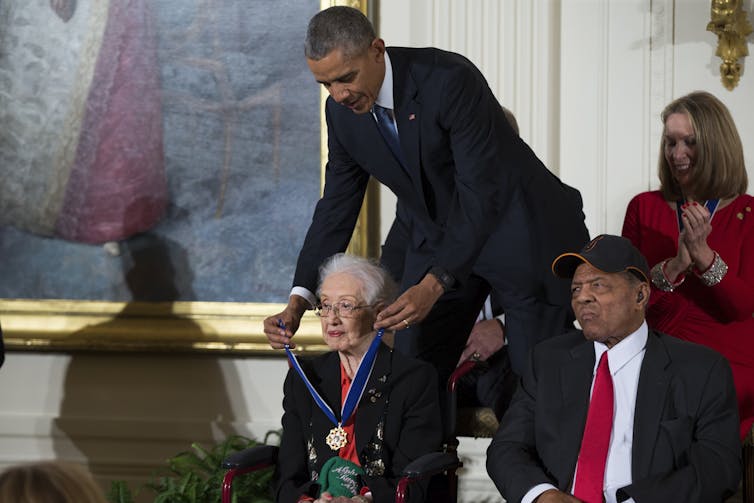
Barack Obama awarded Katherine Johnson the Presidential Medal of Freedom in 2015. AP Photo/Evan Vucci
2. High school mathematics adds up
Once Johnson completed the standard mathematics curriculum at West Virginia State College, Claytor created advanced classes just for her, including a course on analytic geometry.
Mathematics concepts build on one another and the mathematics she learned in this class helped her in her work at NASA many years later. She used these analytical skills to verify the computer calculations for John Glenn’s orbit around the earth and to help determine the trajectory for the 1969 Apollo 11 flight to the moon, among others.
3. Grit matters
Long before psychologist Angela Duckworth called attention to the power of passion and perseverance in the form of grit, Katherine Johnson modeled this stalwart characteristic.
In 1940, she agreed to serve as one of three carefully selected students to desegregate West Virginia University’s graduate program. She also had to be “assertive and aggressive” about receiving credit for her contributions to research at NASA.
In 1960, her efforts helped her become the first African-American and the first woman to have her name on a NASA research report. Currently, the NASA archives contain more than 25 scientific reports on space flight history authored or co-authored by Johnson, the largest number by any African-American or woman.
4. The power of advocating for yourself
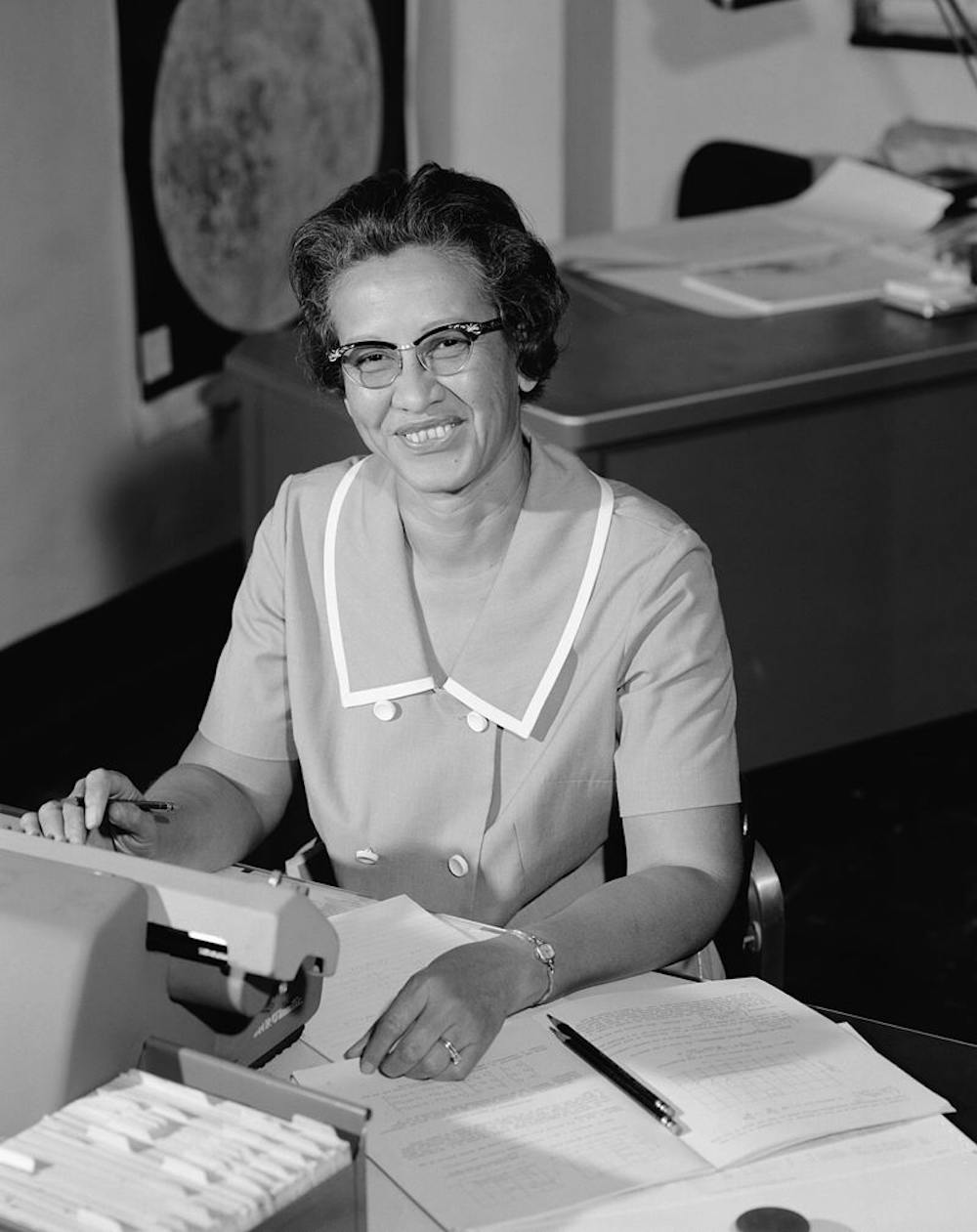
Katherine Johnson worked at NASA in 1966. NASA, CC BY
Initially, Johnson would ask questions about the briefings and “listen and listen.” Eventually, she asked if she could attend. Apparently, the men grew tired of her questions and finally allowed her to attend the briefings.
Later, she joined the West Computing Group at Langley Research Center where women “found jobs and each other.” They checked each other’s work and made sure nothing left the office with an error. They worked together to advance each other individually and collectively as they performed calculations for space missions and aviation research.
Katherine Johnson was at the Virginia Air and Space Center in Hampton, Va. in 2016. AP Photo/NASA
6. The power of women advocating for women
Although Johnson started as a human computer in the West Computing Group, after two weeks she moved to the Maneuver Load Branch of the Flight Research Division under the direction of Henry Pearson.
When it was time to make this position permanent after her six month probationary period,
Dorothy Vaughan, then the West Computing department head and Johnson’s former boss, told Pearson to “either give her a raise or send her back to me.” Pearson subsequently offered Johnson the position and the raise.
7. The legacy of possibility
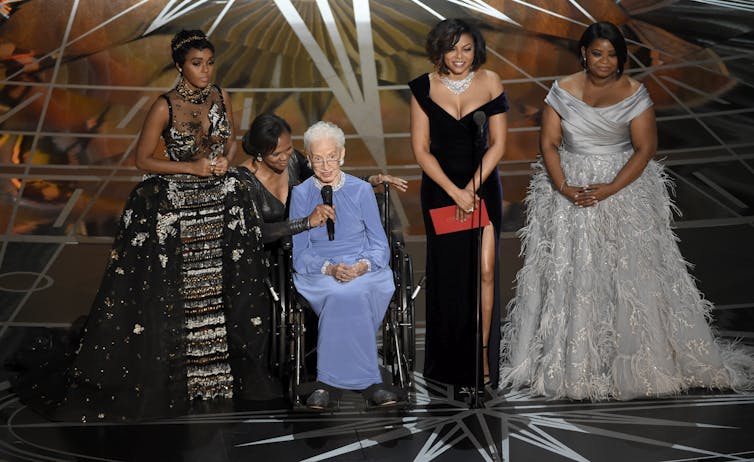
In March of 2014, Donna Gigliotti, producer of Shakespeare in Love and The Reader, received a 55-page nonfiction proposal about African-American women mathematicians at NASA in Hampton, Virginia.
A rusting chain-link fence represents a “color line” for the dead in Columbia, South Carolina. In Randolph Cemetery, separated by the barrier from the well-manicured lawn of the neighboring white graveyard, lies the remains of George A. Elmore.
A black business owner and civil rights activist, Elmore is little remembered despite his achievement. But a granite monument at his grave attests to the “unmatched courage, perseverance and personal sacrifice” that saw him take on the South Carolina Democratic Party of the 1940s over its whites-only primaries – and win.
Nearly 75 years after Elmore’s battle, the 2020 Democratic presidential candidates made fervent appeals to African American voters in South Carolina ahead of the primary being held on Feb. 29. For some of the all white front-runners in the race, it could be a make-or-break moment – a failure to win over sufficient black support would be a major setback, potentially campaign-ending.
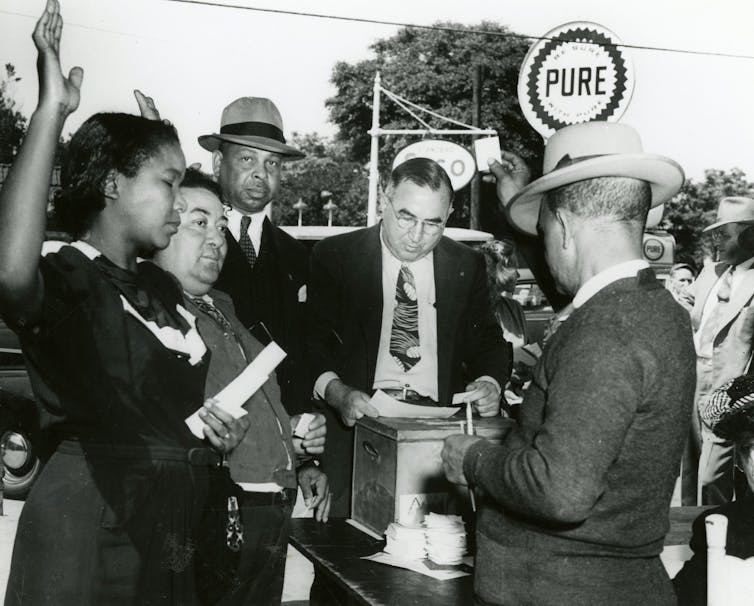
It is a far cry from the South Carolina of August 1946, when Elmore, a fair-skinned, straight-haired manager of a neighborhood five-and-dime store, consulted with local civil rights leaders and agreed to try once again to register to vote.
It followed blatant attempts to deprive African American citizens of their constitutional rights by white Democratic Party officials who would move voter registration books from store to store and hide them the moment a black voter entered.
When a clerk mistakenly allowed Elmore to register – thinking he was white, contemporary sources suggest – NAACP activists had a plaintiff to challenge the last whites-only primary in the nation.
‘Let the chips fall’
Excluding black voters at the ballot had already been ruled unconstitutional by the U.S. Supreme Court in 1944’s Smith v. Allwright decision. But in defiance, the South Carolina General Assembly simply redefined the state’s Democratic Party as a private club not subject to laws regulating primaries. Gov. Olin D. Johnston declared: “White supremacy will be maintained in our primaries. Let the chips fall where they may.”
Elmore’s name was promptly purged from the rolls and a cadre of prominent civil rights activists arranged for the NAACP to plead his case.
Columbia civil rights attorney Harold Boulware filed the federal lawsuit. In June 1947, Thurgood Marshall and Robert Carter – like Boulware, graduates of the Howard University School of Law – argued Elmore’s case as a class lawsuit covering all African Americans in the state of voting age. The trial inspired a packed gallery of African American observers, including a young Matthew J. Perry Jr., a future federal district judge, who commented: “Marshall and Carter were hitting it where it should be hit.”
In July, an unlikely ally, Charleston blueblood Judge J. Waties Waring agreed, ruling that African Americans must be permitted to enroll. “It is time for South Carolina to rejoin the Union,” he concluded. “It is time … to adopt the American way of conducting elections.”
The state Democratic Party again defied the ruling, requiring voters to sign an oath supporting segregation. Judge Waring issued a permanent injunction in 1948 to open the voting rolls: “To say that these rules conform or even pretend to conform to the law as laid down in the case of Elmore v. Rice is an absurdity.”
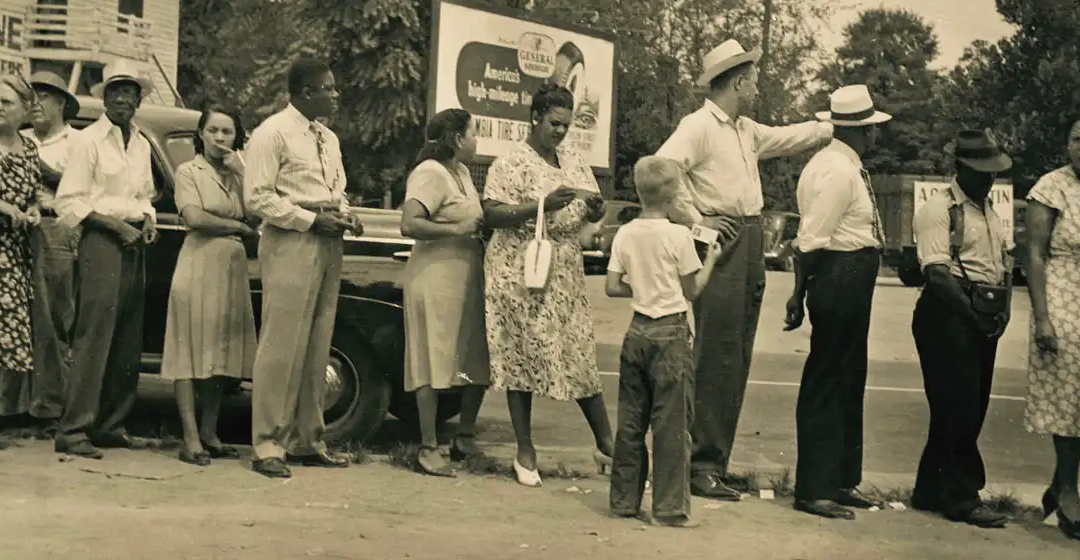
In that year’s state primary, more than 30,000 African Americans, including George Elmore and his wife Laura, voted. Elmore remarked, “In the words of our other champion, Joe Louis, all I can say is ‘I’m glad I won.’”
His photos of the long line of voters in his community’s precinct are now in the archives of the University of South Carolina where I teach history.
In the years that followed, voter education and registration programs by civil rights organizations transformed the Democratic Party in the state, both in terms of the makeup of its membership and the policies it pursued. The move sparked the departure of many white Democrats to the Republican Party, including the segregationist Sen. Strom Thurmond.
Thurmond’s defection in 1964 legitimized the move for other white Democrats and hard-core segregationists who aligned themselves with an increasingly conservative Republican Party. Not surprisingly, some of the key architects of Richard Nixon’s invidious Southern strategy, which sought to weaken the Democratic Party in the South through the use of dog-whistle politics on racial issues, came from South Carolina.
As this year’s presidential candidates focus on South Carolina, it is clear that the racial makeup of the state’s electorate is vastly different than that in Iowa or New Hampshire, two of the states where the popularity of candidates has already been tested. But Democrats should view the South Carolina primary as more than a shift from voting in small, mostly white states. They should see the state as representative of the party’s strategic core, a strong African American constituency with diverse interests and perspectives.
African Americans in South Carolina have been fighting and winning legal and political battles for voting rights and electoral power since Reconstruction and as Democrats since the 1940s.
A personal price
After Elmore’s victory in 1947, state NAACP President James M. Hinton gave a somber, prophetic warning: “White men want office, and they want the vote of our people. We will be sought after, but we must be extremely careful who we vote for. … We must have a choice between those who have fought us and those who are our friends.”
George Elmore and his family paid a price for challenging the entrenched power of the white Democratic Party in 1946. In an interview with the University of South Carolina’s Center for Civil Rights History and Research, which I lead, his 81-year-old son Cresswell Elmore recalled the retaliation the family experienced. Ku Klux Klan terrorists burned a cross in their yard and threatened their family. Laura Elmore suffered a nervous breakdown and went into a mental hospital. State agents raided Elmore’s liquor store, claiming the liquor he had bought from the standard wholesaler was illegal, and broke the bottles. Soda bottling companies and other vendors refused to send products on credit. Banks called in loans on their home and other property. Forced into bankruptcy, the family moved from house to house and the disruption scattered Cresswell and his siblings. When Elmore died in 1959 at the age of 53, only scant attention was paid to his passing.
The monument at his grave was unveiled in 1981, at a ceremony attended by civil rights veterans including his original attorney, Harold Boulware.
As the Democratic Party and presidential candidates appeal to African American voters, they would do well to remember the remarkable fight Elmore and others waged against the forces of bigotry and injustice. These historical struggles illuminate both the gains made over many generations and the ongoing battle against inequities and voter suppression tactics that persist to this day in South Carolina and across the nation.
From the moment of capture, through the treacherous middle passage, after the final sale and throughout life in North America, the experience of enslaved Africans who first arrived at Jamestown, Virginia, some 400 years ago, was characterized by loss, terror and abuse.
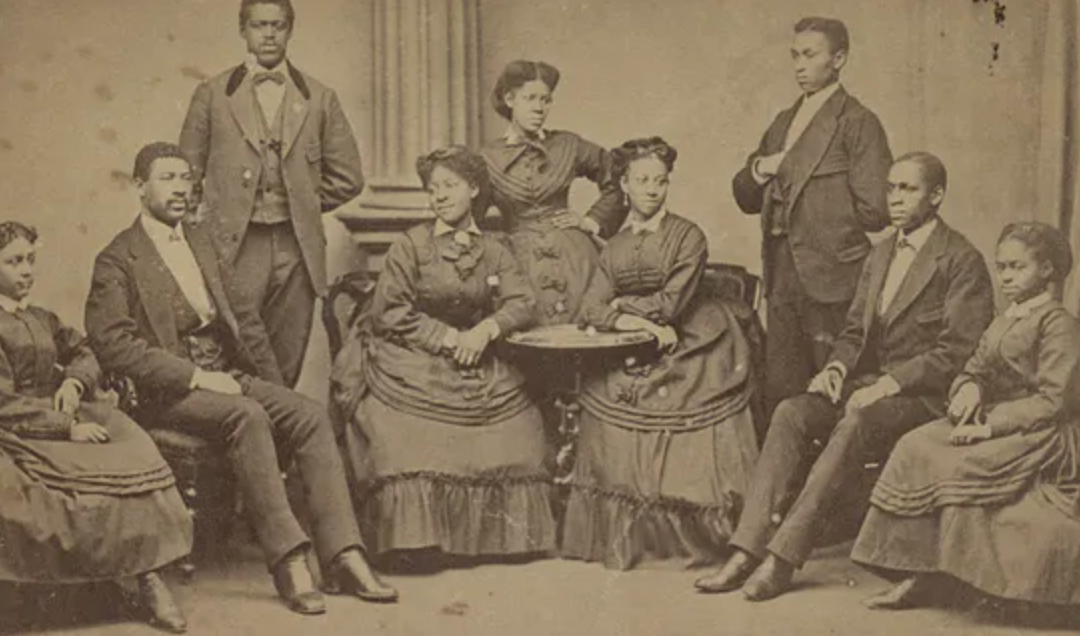
The Abolition of the Slave Trade Act of 1807 made it illegal to buy and sell people in British colonies, but in the independent United States slavery remained a prominent – and legal – practice until December 1865. From this tragic backdrop one of the most poignant American musical genres, the Negro spiritual, was birthed.
Sometimes called slave songs, jubilees and sorrow songs, spirituals were created out of, and spoke directly to, the black experience in America prior to the Emancipation Proclamation of 1863, that declared all slaves free.
West African roots
Spirituals have been a part of my life from childhood. In small churches in Virginia and North Carolina, we sang the songs of our ancestors, drawing strength and hope. I went on to study, perform and teach the spiritual for over 40 years to people across the U.S. and in various parts of the world.
Despite attempts, white slave-owners could not strip Africans of their culture. Even with a new language, English, and without familiar instruments, the enslaved people turned the peculiarities of African musical expressions into the African American sound.
Rhythms were complex and marked by syncopation, an accent on the weak beat. Call-and-response, a technique rooted in sub-Saharan West African culture, was frequently employed in spirituals. Call-and-response is very much like a conversation – the leader makes a statement or asks a question and others answer or expound.
An example of this is the spiritual, Certainly Lord. The leader excitedly queries, “Have you got good religion?” and others jubilantly respond, “Certainly, Lord.” Using repetition and improvisation, the conversation continues to build until everyone exclaims, “certainly, certainly, certainly, Lord!”
In Africa, drums were used to communicate from village to village because they could be used to mimic the inflection of voices.
As early as 1739 in the British colonies, drums were prohibited by law and characterized as weapons in an attempt to prevent slaves from building community and inciting rebellion.
As a result, enslaved people “played” drum patterns on the body. Hands clapped, feet stomped, bodies swayed and mouths provided sophisticated rhythmic patterns. This can be observed in Hambone, an example of improvised body music.
Oral tradition
Some spirituals were derived from African melodies. Others were “new,” freely composed songs with a melodic phrase borrowed from here and a rhythmic pattern from there – all combined to create an highly improvised form.
The spiritual was deeply rooted in the oral tradition and often created spontaneously, one person starting a tune and another joining until a new song was added to the community repertoire. The sophisticated result was beautifully described in 1862 by Philadelphia musicologist and piano teacher Lucy McKim Garrison.
“It is difficult to express the entire character of these negro ballads by mere musical notes and signs,” she said. “The odd turns made in the throat; the curious rhythmic effect produced by single voices chiming in at different irregular intervals, seem almost as impossible to place on score.”
Textually, the spiritual drew from the Hebrew-Christian Bible, particularly the Old Testament, with its stories of deliverance and liberation. Songs like “Go Down Moses” direct the awaited deliverer to “go down” to Southern plantations and “tell ole Pharaoh” – the masters – to “let my people go.”
Songs of survival
For the slaves, the spiritual proved to be an ingenious tool used to counter senseless brutality and the denial of personhood. In order to survive emotionally, resilience was critical. In the spirituals, slaves sang out their struggle, weariness, loneliness, sorrow, hope and determination for a new and better life.
Yet these are not songs of anger. They are songs of survival that voice an unwavering belief in their own humanity and attest to an abiding faith in the ultimate triumph of good over systemic evil.
Interspersed within these seemingly hopeless texts are phrases that reflect the heart’s hope: the words “true believer” amid the acknowledgment that “sometimes I feel like a motherless child,” for example; and “glory, hallelujah” interjected after the text, “nobody knows the trouble I see.”
People whose every movement was dictated audaciously declared, “I’ve got shoes. You’ve got shoes. All God’s children got shoes. When I get to heaven gonna put on my shoes, gonna walk all over God’s heaven.” In the same song they denounced the hypocrisy of the slaveholders’ religion: “Everybody talkin’ ‘bout heaven ain’t going there.”
Spirituals weren’t simply religious music. In his seminal work, “Narrative Of The Life of Frederick Douglass An American Slave,” published in 1845, the abolitionist explains,
“they were tones loud, long, and deep; they breathed the prayer and complaint of souls boiling over with the bitterest anguish. Every tone was a testimony against slavery, and a prayer to God for deliverance from chains.”
The spiritual served as a mediator between the dissonance of oppression and the belief that there was “a bright side somewhere.”
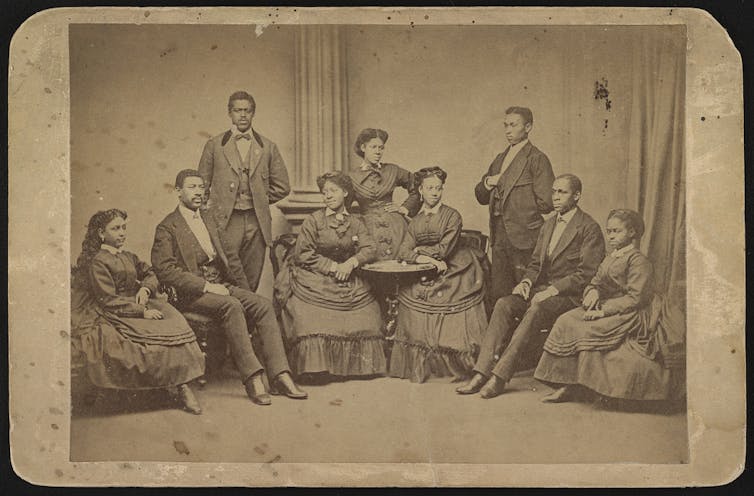
Four hundred years after the birth of slavery, as the world still struggles with racial division, injustice and a sense of hopelessness, spirituals can teach how to build hope in the face of despair and challenge the status quo.