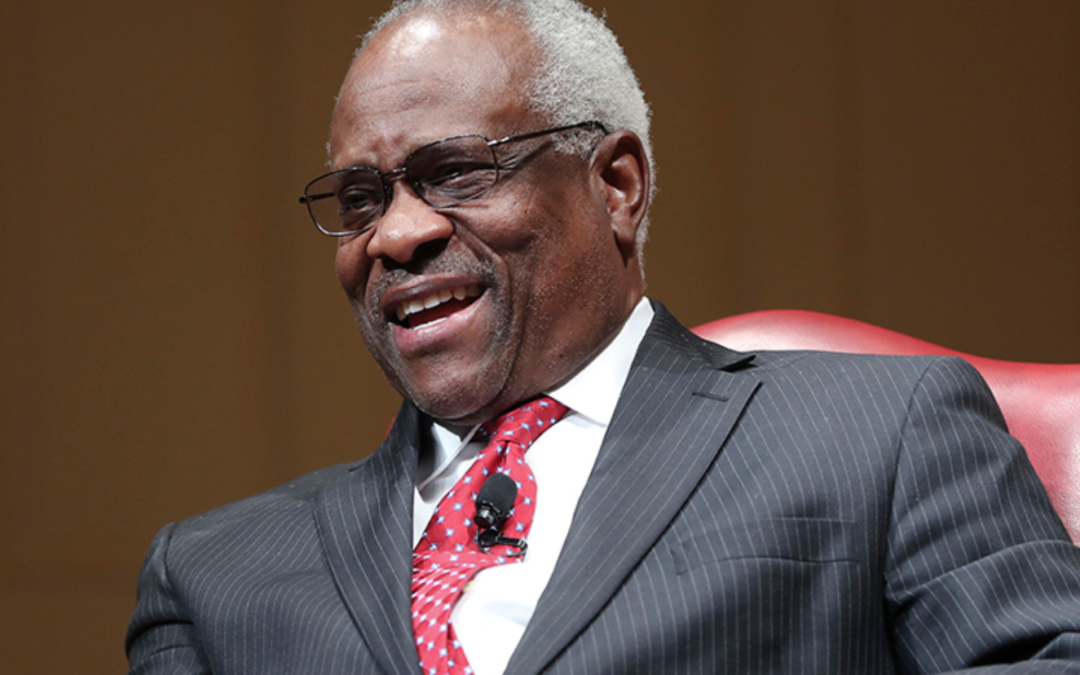
Justice Clarence Thomas, the member of the Supreme Court known for his reticence, speaks for much of a new two-hour documentary about his life.
Part of the story he tells in “Created Equal: Clarence Thomas in His Own Words” centers on his longtime Catholic faith — nurtured by his grandfather who raised him in his Georgia home, nuns who taught him in school and people who prayed with him during his confirmation process to serve on the nation’s highest court.
Producer/director Michael Pack interviewed Thomas and his wife, Virginia “Ginni” Thomas, for 30 hours for the film that is currently in 20 cities, including Washington, New York, Atlanta, Chicago and Los Angeles. Pack recently served as president of Claremont Institute, a conservative think tank, but has produced documentaries for PBS about George Washington, Alexander Hamilton and “God and the Inner City.”
He talked to Religion News Service about what he learned about Thomas’ religious life as he filmed his latest documentary. The interview has been edited for length and clarity.
What struck you most about Clarence Thomas’ faith?
I’m struck by the depth of Clarence Thomas’ faith. It was strong when he first had it, but when you have a faith, lose your faith and come back to your faith, in some ways it’s stronger then. I’m also impressed at how Justice Thomas relies on his faith to get him through the difficult and dark moments of his life, especially his contentious confirmation hearing.
Could you talk about the role of his grandfather and how the Bible shaped his philosophy and the lessons he passed on to Thomas?
Thomas’ grandfather was functionally illiterate. So what he would do with the Bible is he would try to get a few words by heart and rely on those. The values he gave to Clarence Thomas, he felt were rooted in the Bible: working from sun to sun, never quitting, being true to yourself.
In addition to his grandfather, Thomas cites the influence of nuns at a segregated Catholic school he attended.
As he says in the documentary, he felt that they loved him and he worked hard to live up to that. And even though it was segregated Savannah, he felt they were on his side. They believed in these young boys and girls. And he adopted the faith they instilled in him. He continued to visit those nuns until several of them passed away.
He has spoken in the past about wanting to be a priest at a young age, and he attended seminary before he went to college. What drew him to seminary life?
That’s right. He went first to a minor seminary for his last year of high school and then he went to a seminary for his first year of college so he went to two different seminaries. He loved the ritual. He loved the prayers. He loved the Gregorian chant. I think he loved the entire religious environment that he lived in. He found it appealing. It spoke to something deep in his soul.
He ended up leaving that second seminary. Why?
It was racist incidents. We tell a story in which he was in one class where some kid passed him a folded note and on the front of the folded note it said “I like Martin Luther King Jr.” You open it up and it said “dead.”
This sort of mockery of somebody he thought was important and of the civil rights movement was upsetting to Justice Thomas. But it confirmed his feeling that the Catholic Church wasn’t doing enough for civil rights. And don’t forget this is the late ’60s and he’s swept up in the mood of the times as well. It’s the time of black power, of rebellion, of urban riot and, I’d say, that as a young man, Justice Thomas got caught up in those ideas too.
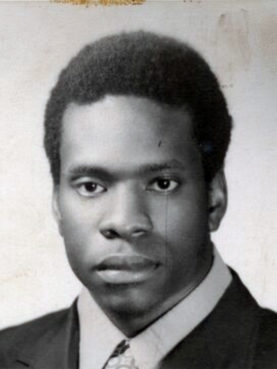
Clarence Thomas’s yearbook picture from Holy Cross College, 1969-1970. Photo courtesy of Leola Williams
How does that fit with his attendance at College of the Holy Cross?
I think that he felt he had no alternative but to go to Holy Cross. His grandfather had kicked him out of his home. He had no job. He happened to have applied to Holy Cross and had a full scholarship. So he went. But he, as soon as he got there, he hung around with Marxist students, black radicals that didn’t take religion all that seriously — even if they were at Holy Cross — so he went through a period of time where he wasn’t going to church and he wasn’t thinking about religion.
After the King assassination, Thomas said that race was his religion. But he had a turnabout in his faith again.
That’s right. He participated in an anti-war demonstration that got violent in Cambridge, Massachusetts, and he got swept up in the mob violence of the moment and he watched himself being swept up and did not like what he saw. By the time that was over and he returned to Holy Cross, it was well past midnight and everything was closed, but he went to the chapel where he had not prayed in a long time. He knelt in front of the chapel and prayed for God to take anger out of his heart. And that was the beginning of his return to his faith.
While working for the Equal Employment Opportunity Commission, Thomas delved into the history of law and particularly noted a reference to equality in the Declaration of Independence. How did those words shape his thinking about law and life?
Justice Thomas felt that the words of the declaration, “all men are created equal” and that they’re “endowed by their Creator with certain unalienable rights,” that these truths pointed to a deep basis of American life and of the Constitution. And I think that underpins his jurisprudence today.
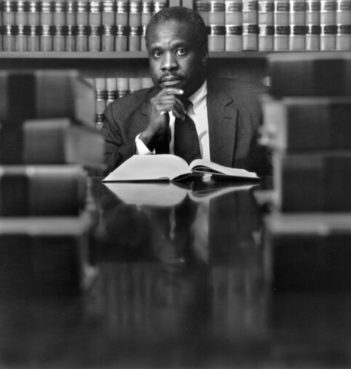
Justice Clarence Thomas sits at his desk. Photo courtesy of Justice Thomas
How has he applied that to court decisions?
His sense of what equality means underlies his jurisprudence in the Grutter decision on affirmative action. Justice Thomas was saying, I believe, that every man has that right to life, liberty and the pursuit of happiness, to succeed or fail on their own. And he felt that the affirmative action that was under discussion in the Grutter opinion was not doing that, that there were two sets of criteria for different kinds of people and he felt that was unjust in the sense that the declaration points to justice.
What role did faith play in his life as he was being considered for the Supreme Court amid allegations that he sexually harassed onetime colleague Anita Hill?
His confirmation battle had two parts and the first part was closer to a traditional confirmation battle. After that the Anita Hill allegations of sexual harassment were leaked and that leak caused the Senate Judiciary Committee to reconvene and hold several more days of hearings. And that second time, he and Ginni felt it was a spiritual battle and they felt, rather than relying on their political skills or intellectual skills, they were relying a lot on their faith to get them through.
There is a brief mention of the “prayer partners” that were important to them at that time. Did he say more about that?
They needed to pray with other people to sort of be in touch with their faith during that second part of the hearing. He needed to be sustained by prayer and by prayer with other people as well. And because the media camped out in front of his house, it was easier for people to come to his house than for him to go out to a church.
Is there anything else about his faith that ended up on the cutting room floor?
He’s always coming back to the nuns. We portray his going to parochial school at the time that it happens in his biography. But in my talking to him, he’s always talking about what his grandfather and the nuns taught him at many points in his life. It’s a touchstone that he goes back to.
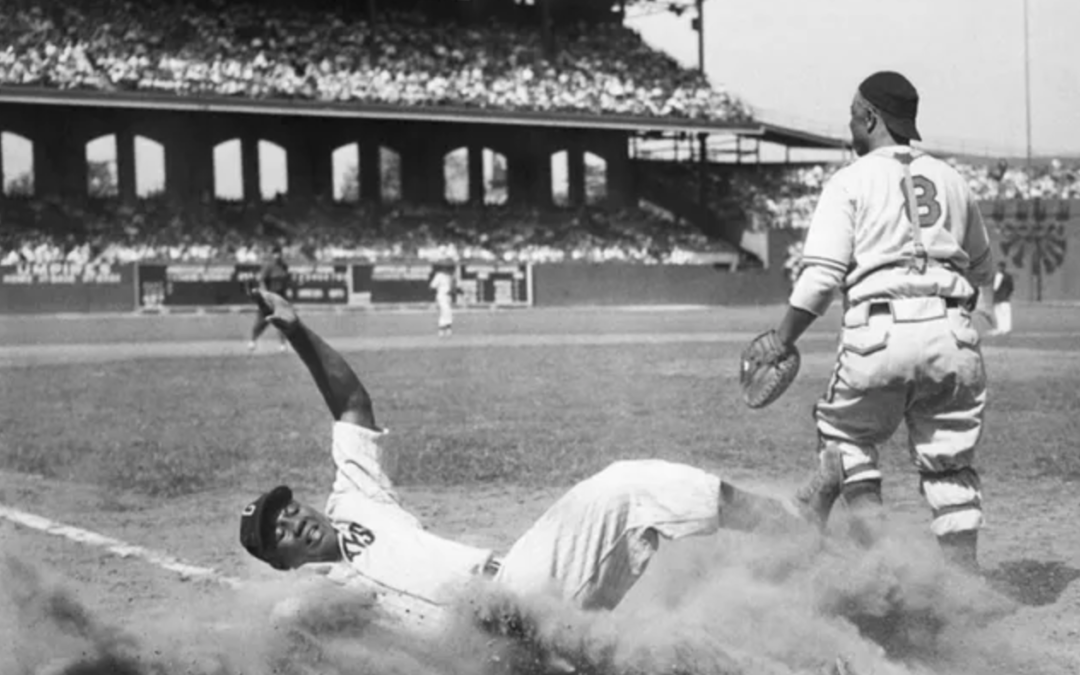
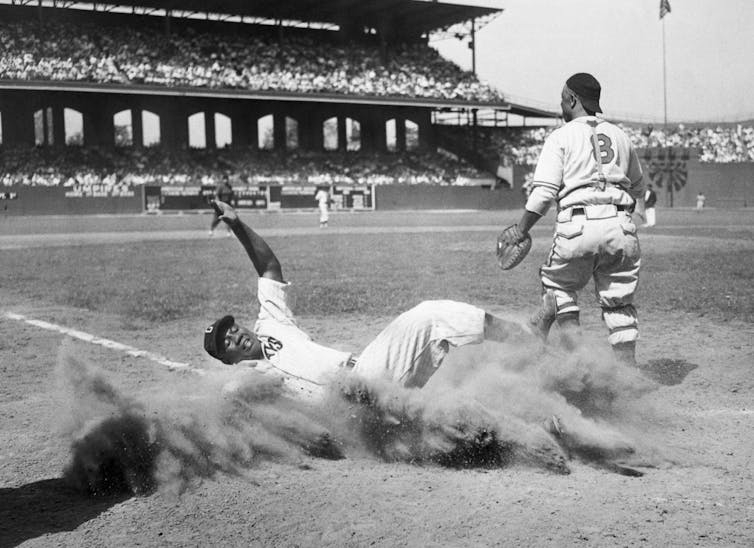
A century ago, on Feb. 13, 1920, teams from eight cities formally created the Negro National League. Three decades of stellar play followed, as the league affirmed black competence and grace on the field, while forging a collective identity that brought together Northern-born blacks and their Southern brethren. And though Major League Baseball was segregated from the 1890s until 1947, these teams played countless interracial games in communities across the nation.
After World War II, Jackie Robinson hurdled baseball’s racial divide. But while integration – baseball’s great experiment – was a resounding success on the field, at the gates and in changing racial attitudes, Negro League teams soon lost all of their stars and struggled to retain fans. The teams hung on for a bit, before eventually folding.
Years ago, when I worked on a documentary about the Negro Leagues, I was struck by how many of the interviewees looked back longingly on the leagues’ heyday. While there was the understanding that integration needed to happen, there was also the recognition that something special was forever lost.
A league of their own
Given the injustices of the 1890s – sharecropping, lynchings, disenfranchisement and the Supreme Court’s sanctioning of segregation in Plessy v. Ferguson – exclusion from Major League Baseball was hardly the most grievous injury African Americans suffered. But it mattered. Their absence denied them the chance to participate in a very visible arena that helped European immigrants integrate into American culture.
While the sons of white immigrants – John McGraw, Honus Wagner, Joe DiMaggio – became major leaguers lionized by their nationalities, blacks didn’t have that opportunity. Most whites assumed that was because they weren’t good enough. Their absence reinforced prevailing beliefs that African Americans were inherently inferior – athletically and intellectually – with weak abdominal muscles, little endurance and prone to cracking under pressure.
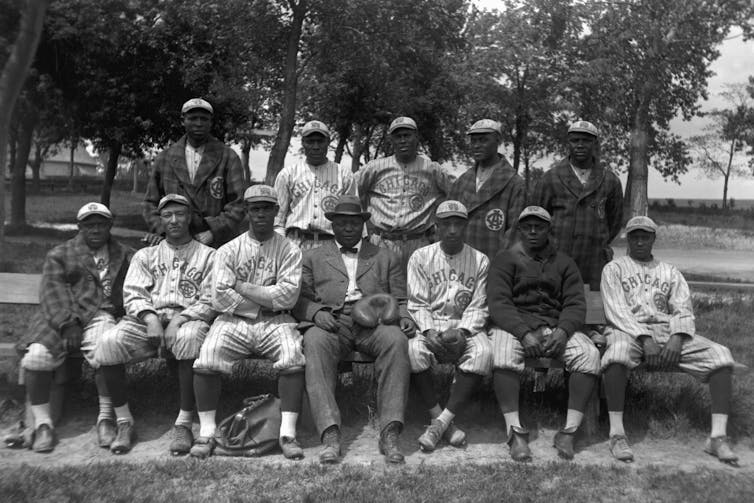
The Negro Leagues gave black ballplayers their own platform to prove otherwise. On Feb. 13, 1920, Chicago American Giants owner Rube Foster convened a meeting at the Paseo YMCA in Kansas City to organize the Negro National League. A Texas-born pitcher, Foster envisioned a black alternative to the major leagues.
Members of the Chicago American Giants pose for a team portrait in 1914. Rube Foster is seated in the center of the first row wearing a suit. Diamond Images/Getty Images
Northern black communities were exploding in size, and Foster saw the league’s potential. Teams like the American Giants and the Kansas City Monarch regularly competed against white teams, drew large crowds and turned profits. Players enjoyed higher salaries than most black workers, while black newspapers trumpeted their exploits, as did some white papers.
Other leagues cropped up; the Negro National League was soon joined by the Negro American League and the Negro Southern League. Some years, the Negro National and Negro American Leagues played a Negro League World Series. The leagues also sent their best players to the East-West All-Star Classic, an annual exhibition game in Chicago.
But the Negro National League’s ascent was stunted after Foster was exposed to a gas leak, nearly died and suffered permanent brain damage. Absent his leadership and hammered by the Great Depression, the league disbanded in 1931.
A proving ground
Gus Greenlee, who ran the popular lottery known as the numbers game, revived the league in Pittsburgh in 1933 after a sandlot club called the Crawfords, which included the young slugger Josh Gibson, approached him for support. He agreed to pay them salaries and reinforced their roster with the addition of flamethrower Satchel Paige.
Greenlee went on to build the finest black-owned ballpark in the country, Greenlee Field, while headquartering the Negro National League on the floor above the Crawford Grill, his renowned jazz club in Pittsburgh’s Hill District.
Pittsburgh soon became the mecca of black baseball. Sitting along America’s East-West rail lines, the city was a requisite stop for black entertainers, leaders and ball clubs, which traveled from cities as far away as Kansas City. Its two teams, the Homestead Grays and Pittsburgh Crawfords, won a dozen titles. Seven of the first 11 Negro Leaguers eventually inducted into the National Baseball Hall of Fame – stars like Cool Papa Bell, Oscar Charleston, Josh Gibson, Buck Leonard and Satchel Paige – played for one or both squads.
The sport, meanwhile, became a major source of black pride.
“The very best,” Pittsburgh-born author John Wideman noted, “not only competed among themselves and put on a good show, but [also] would go out and compete against their white contemporaries and beat the stuffing out of them.”
“There was so much [negativity] living over [us] which we had no control [over],” Mal Goode, the first black national network correspondent, recalled. “So anything you could hold on to from the standpoint of pride, it was there and it showed.”
Sacrificed on integration’s altar
For Major League Baseball, no moment was more transformative than the arrival of Jackie Robinson, who, in 1947, paved the way for African Americans and darker-skinned Latinos to reshape the game.
But integration destroyed the Negro Leagues, plucking its young stars – Willie Mays, Henry Aaron, Roy Campanella and Ernie Banks – who brought their fans with them. The big leagues never considered folding in some of the best black teams, and its owners rejected the Negro National League owners’ proposal to become a high minor league.
Like many black papers, colleges and businesses, the Negro National League paid a price for integration: extinction. The league ceased play after the 1948 season. Black owners, general managers and managers soon disappeared, and it would be decades before a black manager would get a chance to steer a major league ballclub.
Major League Baseball benefited from talent cultivated in the Negro Leagues and on the sandlots that sustained the sport, especially in inner cities. But when those leagues crumbled, prospective black pros were relegated to minor league teams, often in inhospitable, southern cities. Many Negro League regulars simply hung up their cleats or played in the Caribbean.
The playwright August Wilson set his play, “Fences,” which tells the story of an ex-Negro Leaguer who becomes a garbageman in Pittsburgh.
“Baseball gave you a sense of belonging,” Wilson said in a 1991 interview. At those Negro League games, he added, “The umpire ain’t white. It’s a black umpire. The owner ain’t white. Nobody’s white. This is our thing … and we have our everything – until integration, and then we don’t have our nothing.”
The story of African Americans in baseball has long been portrayed as a tale of their shameful segregation and redemptive integration. Segregation was certainly shameful, especially for a sport invested in its own rhetoric of democracy.
But for African Americans, integration was also painful. Although long overdue and an important catalyst for social change, it cost them control over their sporting lives.
It changed the meaning of the sport – what it symbolized and what it meant for their communities – and not necessarily for the better.
All over the world, community stories, customs, and beliefs have been passed down from generation to generation. This folklore is used by elders to teach family and friends about their collective cultural past. And for African Americans, folklore has played a particularly important part in documenting history too.
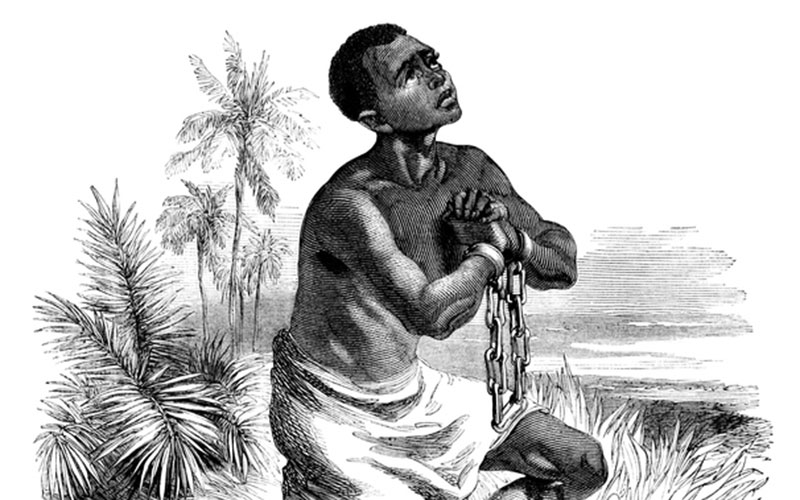
The year 1619 marked the beginning of African American history, with the arrival of the first slave ship in Jamestown, Virginia. Slavery put African Americans not only in physical shackles. They were prevented from gaining any type of knowledge, including learning to read or write during their enslavement. Illiteracy was a means to keep control as it was believed that intellectual stimulation would give African Americans ideas of freedom and independence.
The effects of slavery on African culture were huge. The slaves had to forsake their true nature to become servants to Anglo Americans. And yet, even though they were forbidden from practicing anything that related to their African culture and heritage, the native Africans kept it and their languages alive in America.
One important way of doing this was through folk tales, which the African slaves used as a way of recording their experiences. These stories were retold in secret, with elements adapted to their enslaved situation, adding in elements of freedom and hope. In the story of a slave from Guinea, recorded in The Annotated African American Folktales, he asks his white master to bury him face down when he dies, so that he may return to his home country which he believes is directly on the other side of the world:
Some of the old folks in Union County remembered that they had heard their fathers and grandfathers tell the story about Sambo who yearned to go back to Guinea. Hunters and hounds feared Sambo’s woods for more than a hundred years … I guess the hounds used to feel Sambo’s homesickness. But now, since the hounds run fast and free, I guess Sambo finally got back to Guinea.
Adapting the oral storytelling traditions of their ancestors helped slaves stolen from West Africa cope with and record their experiences in America. And later it helped other generations, particularly in the 19th century, to learn what happened to the ancestors who had been enslaved.
Folklore and genealogy
Folklore has not just helped African Americans to record and remember large-scale events, or relate morals as other folk tales do – it has helped with individual family genealogy too.
Having an aspect of genealogy in folklore makes African American history not only traceable but more approachable. The stories relate to specific people, their experiences and the places where they lived. They are not necessarily mythical tales, but stories are about real people and what happened to them. They demonstrate and track the fight for freedom and independence.
This linking of genealogy and folklore gives the oral histories continuity, and adds an element of personal curiosity to the historical past. Family history figures in many folktales makes each story unique, as one’s own heritage will be intertwined with its telling. It adds to cultural memory, too, and enhances family values as descendants are able to refer back to and honor their ancestors’ experiences. Take this extract from a retelling of The Cat-Witch, for example:
This happened in slavery times, in North Carolina. I’ve heard my grandmother tell it more than enough. My grandmother was cook and house-girl for this family of slaveowners – they must have been Bissits, ‘cause she was a Bissit.
In more recent decades, novels and book retellings of this family history have become the new way of keeping African American folklore alive. Indeed, folklore has been the inspiration behind some of the most important African American literary works. In Roots, Alex Haley’s work of historical family fiction, the main character’s father, Omoro Kinte, initiates a baptism ritual that has been transmitted throughout generations. The newborn baby is held up towards the starry night sky and then given its name. The baby is told to “behold the only thing greater than yourself”. This naming ritual is a poetic moment and has become iconic in various ways. It is even referenced in Disney’s The Lion King when Rifiki lifts Simba to the sky.
Like Roots, Margaret Walker’s Jubilee (1966) is enriched with folkloric elements. Both novels emphasize the importance of different sayings and traditions. Jubilee’s main protagonist remembers that “when she sang, the children would stop their playing and come closer to listen, for they loved all her songs – the old slave songs Aunt Sally used to sing, and the tender, lilting ballads of the war, too”. Singing folk songs was a tradition that served as entertainment or as a way to have rhythm during their work in the fields. After all, tradition is what kept the enslaved sane. Their African culture not only gave them the strength to fight for another day but it provided solace too.
For any one of us, the past is important in determining our identity and history, but without the determination and persistence of the first African Americans, it is likely that much of their story would have been lost to time. Thanks to their repeated sacrifices, African Americans can still look to their ancestors for guidance today.
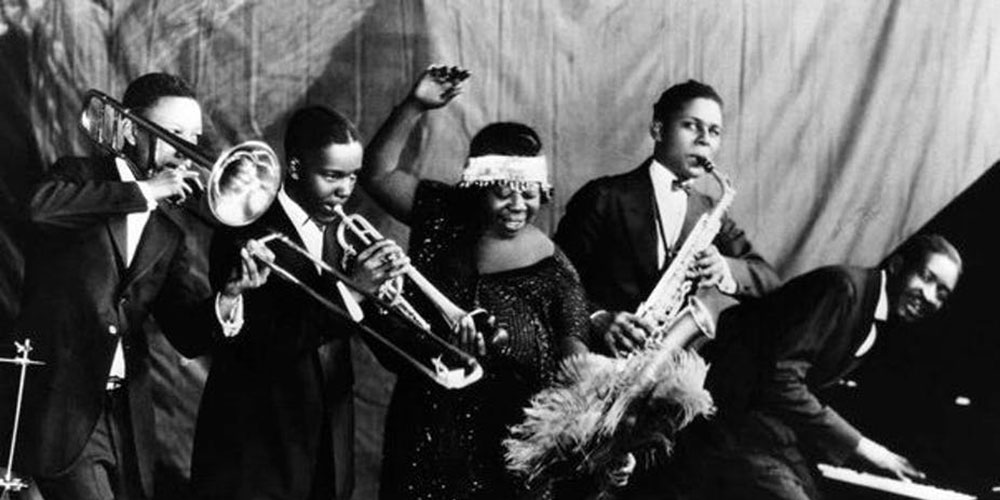
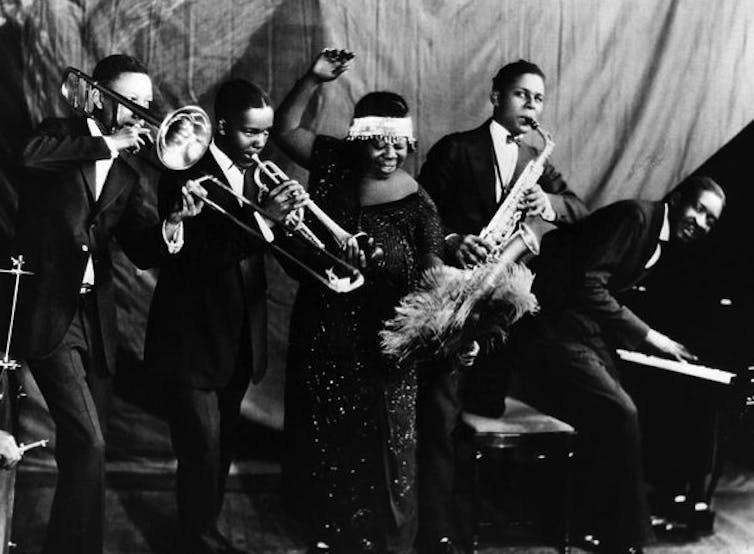
Ma Rainey was one of Paramount Records’ most popular artists. JP Jazz Archive/Redferns
In the 1920s and 1930s, record sales of black artists were very lucrative for the music industry. As a June 1926 article from Talking Machine World explained:
The Negro trade is…itself…an enormously profitable occupation for the retailer who knows his way about…. The segregation of the Negro population has enabled dealers to build up a trade catering to this race exclusively.
Yet record companies routinely took advantage of the more unschooled, vernacular performers – especially black ones, who were already denied access to broader markets. It was standard operating procedure back in the days of “race music” – the name given to recordings by black artists that were marketed to the black buying public.
“Some will rob you with a six-gun…and some with a fountain pen.” So said Woody Guthrie in his song “Pretty Boy Floyd.”
Bottom line: if record companies could get away with it, there was no bottom line. No negotiated contract to sign. No publishing. No royalties. Wham bam thank you man. Take a low-ball flat fee and hit the road. Anonymity was also implicit in the deal, so many black artists were forgotten, their only legacy the era’s brittle shellac disks that were able to withstand the wear of time.
‘Some will rob you with a six-gun…and some with a fountain pen’ – record companies like Paramount routinely exploited black musicians in the 1920s. Wikimedia Commons
One of the most prominent early race labels was Paramount Records, which, between 1917 and 1932, recorded a breathtaking cross-section of seminal African-American artists.
In 2013 I learned that Jack White of Third Man Records (in partnership with Dean Blackwood’s Revenant Records) would be putting together a compilation of Paramount’s historic recordings. The project would be a grand collaboration of two deluxe volumes that would contain a stunning 1,600 tracks.
I was part of a team of researchers and writers tasked with unearthing new information about the featured artists and their songs. For me, it was an opportunity to put a face on some of Paramount’s more enigmatic artists. Listening to track after track, a zeitgeist began to coalesce. As voices from the grooves accrued to tell a story of a collective black experience, I came to see these performances as cumulative cultural memory – each track a brushstroke in a painting of a long-forgotten landscape.
Here’s a taste of what I found.
Pullman Porters Quartette
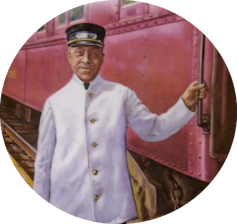
The Pullman Company, manufacturers of railroad passenger cars, was magnanimous towards its African-American workforce. Among other benefits, they provided in-house musical instruction, which included a cappella quartet singing lessons.
The Pullman Company employed a large number of African Americans as porters. Flickr/antefixus U.E., CC BY-NC-ND
The Pullman quartets, I learned, were a franchise: multiple configurations of singers performing concurrently under the company banner. They put on concerts, either performing live on the radio, or on long haul train routes as a form of passenger entertainment. The men who made the records were billed as the “President’s Own” – the working Pullman porters considered the company’s premier lineup.
In the late 1920s, The Pullman Porters Quartette of Chicago recorded a number of sides for Paramount. One tune was “Jog-a-Long Boys,” where they sang of sad roosters and being turned down by widow Brown, the “fattest gal in town.” The chorus went:
Jog-a-long, boys, jog-a-long, boys,
Be careful when you smile,
Do the latest style,
But jog-a-long, jog-a-long boys.
Jog-a-long, boys, jog-a-long, boys,
Don’t fool with google eyes,
That would not be wise,
But jog-a-long, jog-a-long boys.
At first, it seemed as if it were no more than a silly ditty performed in upbeat counterpoint harmony. Then it hit me: they were making light of a horrific reality – specifically, that a black man who dared to smile or even look askance at a white woman was putting himself in grave danger.
Look your best, but don’t forget your place…and just jog along, boys.
‘Jog-a-long Boys,’ by The Pullman Porters Quartet of Chicago.
Horace George
Horace George of Horace George’s Jubilee Harmonizers was a showman and an opportunist, a versatile musician who performed in whatever style sold, whether it was novelty gospel, blues, comedy or jazz.
His gospel group cut one record for Paramount in 1924, but he first surfaced as early as 1906, advertised in the Indianapolis Freeman as “the great clarinetist, comedian, and vocalist.” A few years later, George found himself in Seattle as the “Famous Colored Comedian…who gives correct images,” and later as the “Man with the Clarinet” in a touring black vaudeville troupe, the Great Dixieland Spectacle Company.
In the late 1910s, a black newspaper – the Indianapolis Freeman – called Horace George “a novelty on any bill.” The novelty? He could play three clarinets at once!
Rev TT Rose
Beyond the rollicking piano-driven gospel sides he cut for Paramount in the late 1920s, nothing was known of Rev T T Rose. Rose’s “Goodbye Babylon” was the title track of Dust-to-Digital’s 2004 Grammy-nominated collection, Goodbye, Babylon. It was also inspiration for a rock ‘n’ roll tune by the Black Keys. And Rose’s recording of “If I Had My Way, I’d Tear This Building Down” – later performed by artists ranging from Rev. Gary Davis to the Grateful Dead – is one of the earliest known recorded versions of that song.
Rev Rose’s personal story was the most heartening of all. He lived in Springfield, Illinois, and I located his 90-plus-year-old daughter Dorothy, who described her father as a man on a mission to end racism and institutionalized segregation.
As a child, Rose had witnessed the aftermath of the infamous 1908 Springfield Race Riots, an event that precipitated the formation of the NAACP. In the late 1920s Rose moved from Chicago to Springfield, in order to minister the city’s black community.
In an oral history recording, Rev Rose described Springfield as “just really a type of Southern town” with an “overpowering resentment of the Negro…distrust and the fear that the Negro might someday become stronger.” When he returned to Springfield, he observed that the time that had elapsed since the race riots was “a very short span of time to erase all the scars and the prejudices and the hate that was engendered…in that very unfortunate affair.”
It was a hate, he continued, that “Kind of hung like a cloud from an atomic bomb over the whole neighborhood” causing the black citizens of Springfield to go “into themselves quite a bit.”
After his short recording career with Paramount in the late 1920s, Rev Rose went on to become a regional bishop in the Church of God in Christ. He recorded because he thought songs could both uplift and spread messages of hope and perseverance in the struggle for Civil Rights. When he sang “If I Had My Way,” it’s clear that the building he wanted to tear down was no less than the edifice of racism.
It’s impossible to see from the street, so you would never know it’s there.
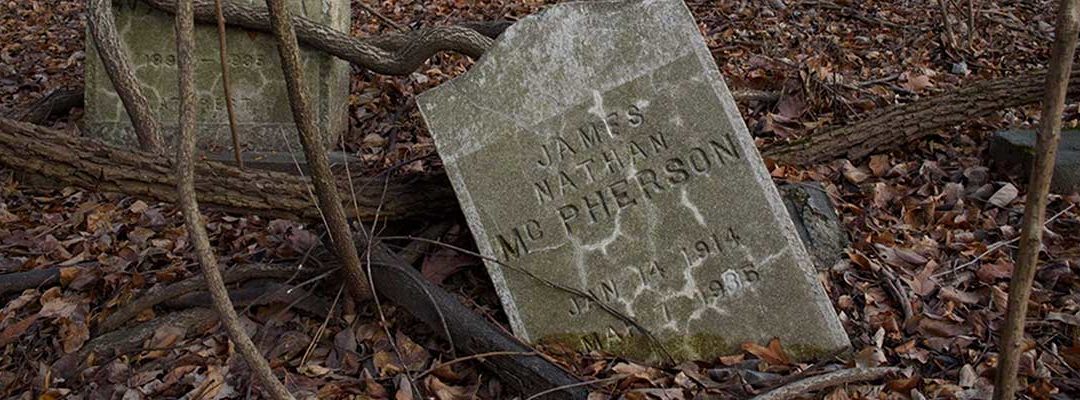
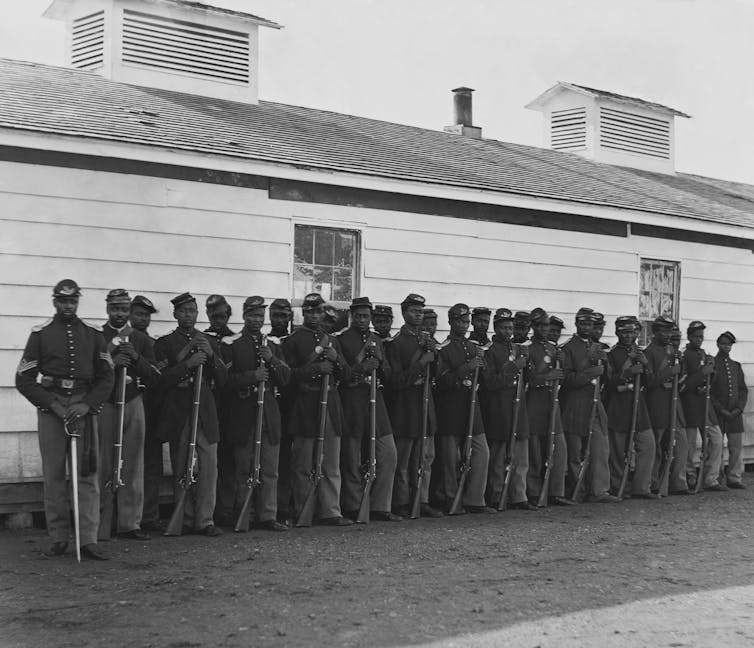
To get to St. George Cemetery, especially its oldest section, you have to make your way past branches and thorns, across the weathered hills and over downed trees. Eventually, dozens of scattered headstones, some of them knocked over, come into view. And there, sitting upright is the gravestone of William Chapman, an African-American veteran of the Civil War who died March 21, 1904.
My interest in abandoned African-American cemeteries started in graduate school when I was assigned to write a story about a black woman named Rose Sturdivant Young, who was leading the charge to restore an abandoned cemetery in North Carolina. Her father, mother and other ancestors are buried there.
African-American cemeteries across the country have largely been neglected, their powerful histories obscured by weeds, debris and, as much as anything, the passage of time. Few people know their locations. Fewer still know the stories of the people buried there.
When I came to ProPublica Illinois as a reporting fellow, I saw a chance to look into this issue. I focused on two cemeteries in St. Clair County, a few miles southeast of St. Louis across the Mississippi River: St. George and Booker T. Washington Cemetery. I spent time hiking the grounds with folks who are trying to unearth and preserve the histories of the cemeteries, as well as trying to keep up the cemeteries themselves.
Both cemeteries once served as the final resting places for the black communities in and around St. Clair County. Of the thousands of people buried in the two cemeteries, close to 30 African-American veterans have been identified, including at least one — Chapman — from the Civil War. But they were more than just cemeteries. Black residents, according to local lore, used Booker T. Washington as a shelter during the East St. Louis race riots in 1917, when white mobs murdered dozens of black citizens. After the riots, many of the victims of the violence supposedly were buried there.
“The black cemeteries are being destroyed, accidentally or on purpose,” said Judy Jennings, a U.S. Air Force contract specialist and amateur historian who, for nearly two decades, has been researching the cemeteries, especially Booker T. Washington. “It’s important to preserve this history.”
It’s difficult to estimate the number of abandoned cemeteries among the thousands of licensed and unlicensed cemeteries in Illinois. The state doesn’t seem to keep track and no one, as far as I can tell, has studied the issue in enough detail to compile a list. But funeral home directors and others I spoke with said there could be many, from plots on private farms and other family property to large cemeteries like St. George and Booker T. Washington.
As segregation eased over the decades and other cemeteries began to allow blacks to be buried, Booker T. Washington and St. George became overgrown and neglected. Over time, many people forgot they existed.
Today, Booker T. Washington sits in a large bowl at the bottom of a hill and frequently floods. Conditions at St. George, which is hidden deep in the woods, are worse. In fact, logging trucks drove through the cemetery in July 2016 and crushed a number of the headstones. Police investigated the incident but no one was charged.
After spending time in St. Clair County and talking with descendants of some of those buried at Booker T. Washington and St. George, as well as with researchers like Jennings, I concluded the abandonment of the cemeteries was mostly the result of a series of unfortunate circumstances, instead of deliberate neglect.
Other abandoned cemeteries probably faced similar fates. People stopped burying loved ones there and, because these are not public lands, there’s no taxpayer money to maintain them. Over time, no one was left to do the weeding and other necessary upkeep. Owners — private citizens when they opened — died and, according to the St. Clair County Genealogical Society, which has studied the cemeteries, it was unclear who took over ownership.
Only a few descendants still try to maintain plots.
Perhaps the best we can do after so many years is recognize that these cemeteries were once central to African-American communities and learn what we can from them. If you are aware of any abandoned historically black cemeteries in Illinois or know of historical societies researching this area, please get in touch. Email me at [email protected].
Most people recognize that there are first names given almost exclusively by black Americans to their children, such as Jamal and Latasha.
While fodder for comedians and social commentary, many have assumed that these distinctively black names are a modern phenomenon. My research shows that’s not true.
Long before there was Jamal and Latasha, there was Booker and Perlie. The names have changed, but mycolleagues and I traced the use of distinctive black names to the earliest history of the United States.
As scholars of history, demographics and economics, we found that there is nothing new about black names.
A 2012 ‘Key & Peele’ sketch poked fun of historically black names.
Until a few years ago, the story of black names depended almost exclusively on data from the 1960s onward. New data, such as the digitization of census and newly available birth and death records from historical periods, allows us to analyze the history of black names in more detail.
We used federal census records and death certificates from the late 1800s in Illinois, Alabama and North Carolina to see if there were names that were held almost exclusively by blacks and not whites in the past. We found that there were indeed.
We were interested to learn that the black names of the late 1800s and early 1900s are not the same black names that we recognize today.
The historical names that stand out are largely biblical such as Elijah, Isaac, Isaiah, Moses and Abraham, and names that seem to designate empowerment such as Prince, King and Freeman.
These names are quite different from black names today such as Tyrone, Darnell and Kareem, which grew in popularity during the civil rights movement.
Once we knew black names were used long before the civil rights era, we wondered how black names emerged and what they represented. To find out, we turned to the antebellum era – the time before the Civil War – to see if the historical black names existed before the emancipation of slaves.
Since the census didn’t record the names of enslaved Africans, this led to a search of records of names from slave markets and ship manifests.
Using these new data sources, we found that names like Alonzo, Israel, Presley and Titus were popular both before and after emancipation among blacks. We also learned found that roughly 3% of black Americans had black names in the antebellum period – about the same percentage as did in the period after the Civil War.
But what was most striking is the trend over time during enslavement. We found that the share of black Americans with black names increased over the antebellum era while the share of white Americans with these same names declined, from more than 3% at the time of the American Revolution to less than 1% by 1860.
By the eve of the Civil War, the racial naming pattern we found for the late 1800s was an entrenched feature in the U.S.
Black names tell us something about the development of black culture, and the steps whites were taking to distance themselves from it.
Scholars of African American cultural history, such as Lawrence W. Levine, Herbert Gutman and Ralph Ellison, have long held that the development of African American culture involves both family and social ties among people from various ethnic groups in the African diaspora.
In other words, people from various parts of Africa came together to form black culture as we recognize it today. One way of passing that culture on is through given names, since surnames were stolen during enslavement.
How this culture developed and persisted in a chattel slavery system is a unique historical development. As enslavement continued through the 1800s, African American culture included naming practices that were national in scope by the time of emancipation, and intimately related to the slave trade.
Since none of these black names are of African origin, they are a distinct African American cultural practice which began during enslavement in the U.S.