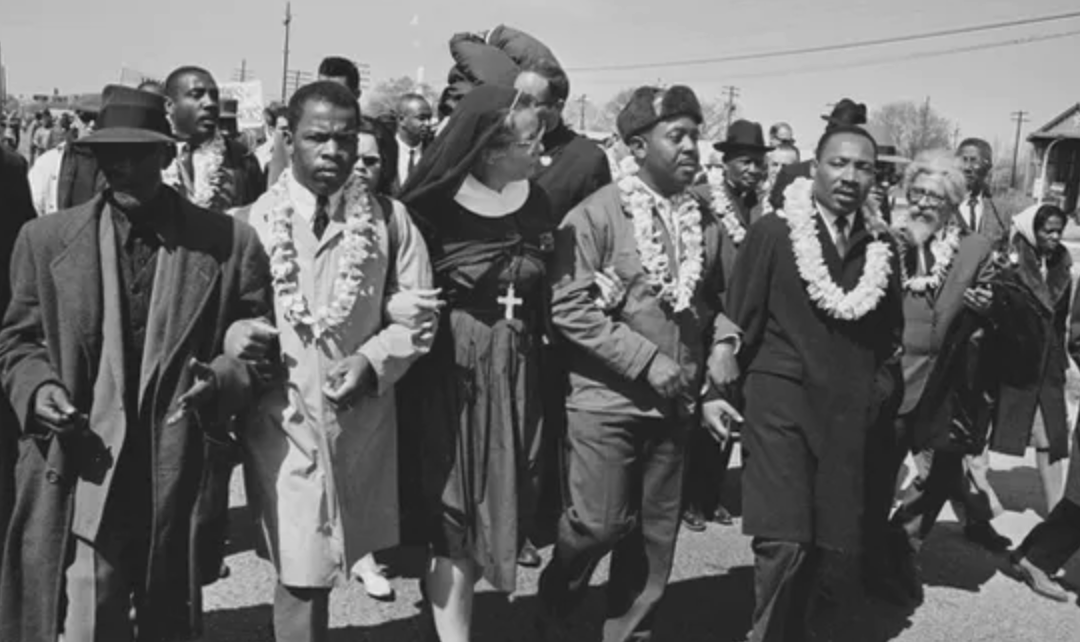
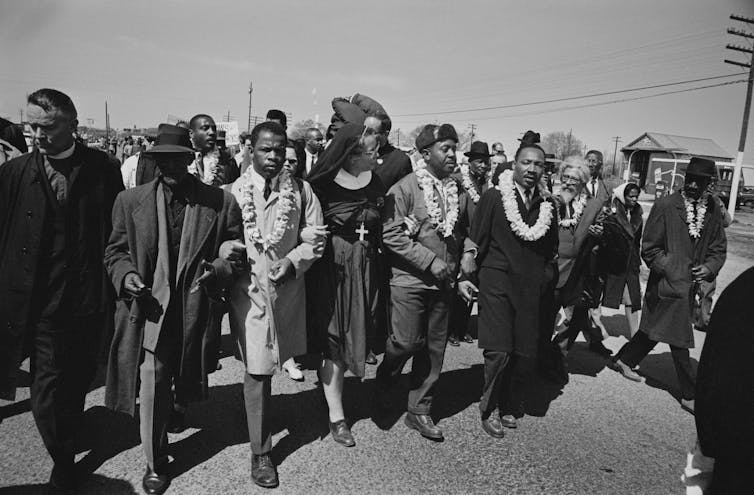
The late John Lewis links arms with religious leaders, including Dr Martin Luther King, in 1965 Selma to Montgomery march. William Lovelace/Daily Express/Hulton Archive/Getty Images
When the Rev. Al Sharpton implored white America to “get your knee off our necks” at the memorial of George Floyd, his words were carried by news outlets across the globe. Meanwhile in the U.S., the Rev. William J. Barber II has been an ever-present voice in the protests, prompting some to place him as the successor to past civil rights greats.
That people of the cloth are at the forefront of the current protests over police brutality should not be a surprise.
From the earliest times of the United States’ history, religious leaders have led the struggle for liberation and racial justice for Black Americans. As an ordained minister and a historian, I see it as a common thread running through the history of the United States, from Black resistance in the earliest periods of slavery in the antebellum South, through the civil rights movement of the 1960s and up to the Black Lives Matter movement today.
As Patrisse Cullors, one of the founders of Black Lives Matters, says: “The fight to save your life is a spiritual fight.”
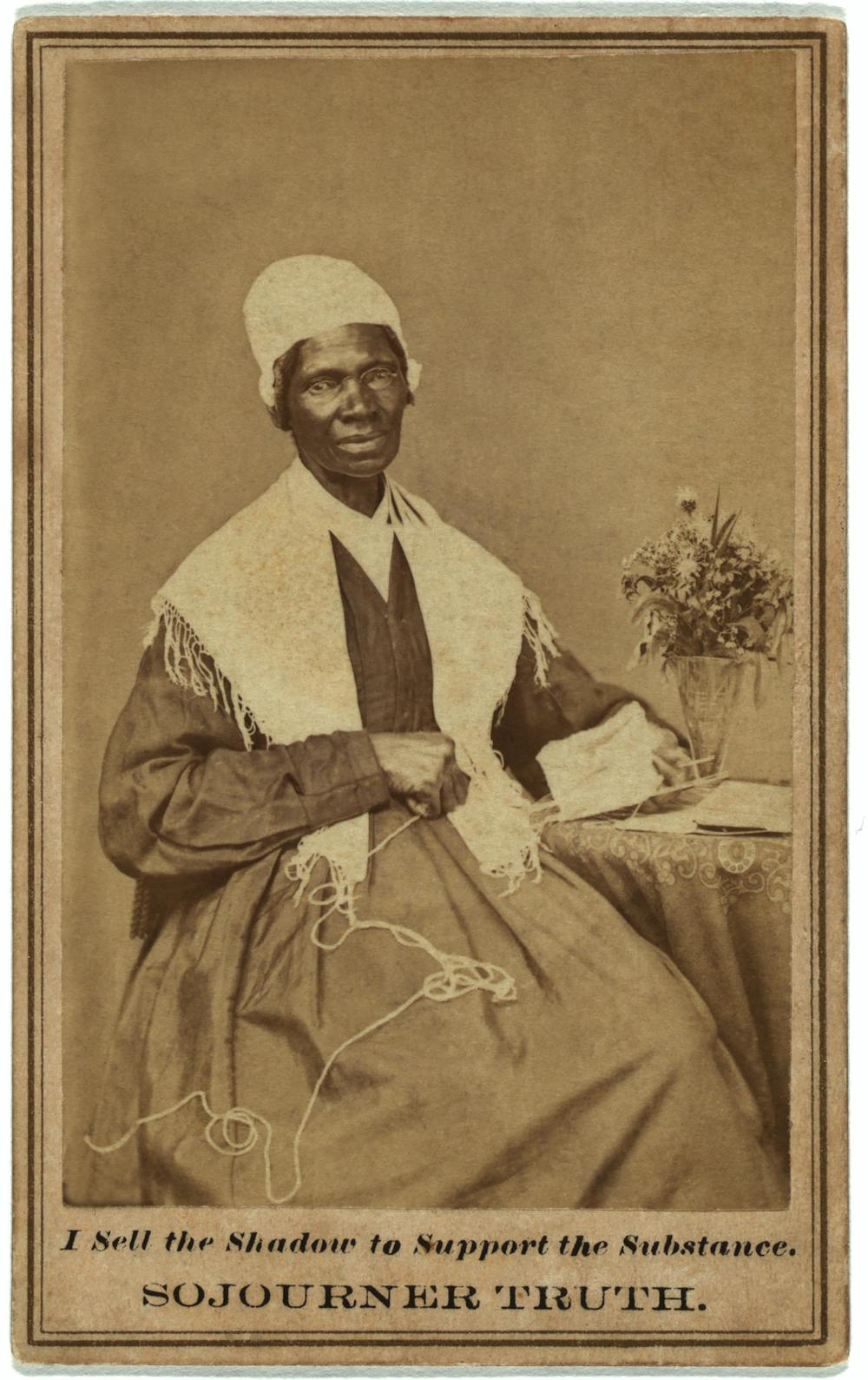
Sojourner Truth was driven to anti-slavery activism by spiritual visions. GHI Vintage/Universal History Archive/Universal Images Group via Getty Images
Spiritual calling
For many Black religious leaders in the United States, civil rights and social justice are central to their spiritual calling. Informed by their respective faith traditions, it places religion within the Black American experience while also being informed by African culture and the traumatic experience of the Transatlantic trade of African people.
We see this in Malcolm X’s 1964 exhortation that Black Americans should form bonds with African nations and “migrate to Africa culturally, philosophically and spiritually.” Malcolm X’s desire to internationalize the struggle in the U.S. after his 1964 pilgrimage to Mecca also speaks to the role he saw Islam having in the civil rights movement.
“America needs to understand Islam, because this is the one religion that erases from its society the race problem,” he wrote in a letter during his visit to Saudi Arabia. The struggle of Black Americans informed Malcolm X’s reading of the Quran.
Similarly, the interaction between religious text and real-world struggle informed earlier Black civil rights and anti-slavery leaders. Slave revolt leader Nat Turner, for example, saw rebellion as the work of God, and drew upon biblical texts to inspire his actions.
As the historian and Turner biographer Patrick Breen noted in an article for Smithsonian Magazine, “Turner readily placed his revolt in a biblical context, comparing himself at some times to the Old Testament prophets, at another point to Jesus Christ.” In his “Confessions,” dictated to a white lawyer after his 1831 arrest, Turner quoted the Gospel of Luke and alluded to numerous other passages from the Bible.
Turner had visions he interpreted as signs from God encouraging him to revolt.
Visions
Such prophetic visions were not uncommon to early anti-slavery leaders – Sojourner Truth and Jarena Lee were both spurred to action after God revealed himself to them. Lee’s anti-slavery preaching is also an early example of the important role that black religious female leaders would have in the civil rights struggle.
In arguing for her right to spread God’s message, Lee asked: “If the man may preach, because the Saviour died for him, why not the woman? Seeing he died for her also. Is he not a whole Saviour, instead of a half one?”
These early anti-slavery activists rejected the “otherworld” theology taught to enslaved Africans by their white captors, which sought to deflect attention away from their condition in “this world” with promises of a better afterlife.
Instead, they affirmed God’s intention for freedom and liberation in both this world and the next, identifying strongly with biblical stories of freedom, such as the exodus of the Hebrew community from Egyptian enslavement and Jesus’ proclamation to “set the oppressed free.”
Incorporating religion into the Black anti-slavery movement sowed the seeds for faith being central to the struggle for racial justice to come. As the church historian James Washingtonobserved, the “very disorientation of their slavery and the persistent impact of systemic racism and other forms of oppression provided the opportunity – indeed the necessity – of a new religious synthesis.”
At heart, a preacher
The synthesis continued into the 20th century, with religious civil rights leaders who clearly felt compelled to make the struggle for justice central part of the role of a spiritual leader.
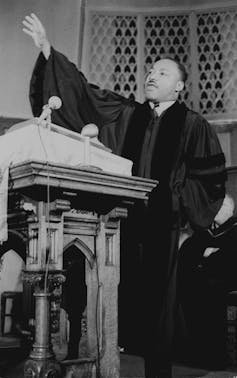
Dr. Martin Luther King Jr. preaching in Chicago. Robert Abbott Sengstacke/Getty Images
“In the quiet recesses of my heart, I am fundamentally a clergyman, a Baptist preacher,” the Rev. Martin Luther King Jr. wrote in a 1965 article for Ebony Magazine.
Racial justice remains integral to Black Christian leadership in the 21st century. In an interview earlier this year, Rev. Barber said: “There is not some separation between Jesus and justice; to be Christian is to be concerned with what’s going on in the world.”
Recognizing the rich legacy of Black religious leadership in the struggle of racial justice in the United States in no way diminishes the role of historic and contemporary secular leadership. From W.E.B. DuBois to A. Philip Randolph, who helped organize 1963’s March on Washington, and up to the current day the civil rights movement has also benefited from those who would classify themselves as freethinkers or atheists.
But given the history of religion in the Black protest movement, it should be no surprise that the killing of George Floyd has unleashed an outpouring of activism from Black religious leaders – backed by supporters from different faith traditions.
Black History 365 includes originally composed music by Grammy-nominated producer Dr. Kevin “Khao” Cates, who has worked with notables such as Jay-Z, the late Nipsey Hustle, and Ludacris. This snippet of video is from a webcast about the project.
Dr. Walter Milton, Jr., remembers the shame he felt back in elementary school when his teacher announced to the class that they were going to learn about Black history and then started with slavery. He said he wanted to hide under the table. But later when he returned home that night, he also remembers the impact his parents had on his spirit when they explained that African Americans are descendants of ancient kings and queens. Dr. Milton and his partner, Dr. Joel Freeman, want other children to have that same impactful, eye-opening experience about Black history and that’s why they created the Black History 365 education curriculum.
“We want to give the students this whole experience about the Moors, the hunting, fishing, gathering, agriculture, all these different aspects how the civilizations began throughout ancient Africa,” said Dr. Freeman, who has included his personal photo collection of artifacts from Africa in the curriculum. “So, there’s images from the collection, where I’ve had people of African descent say, ‘Wow, I almost feel like I’m in that picture. I see my ancestors. I see myself there.’”
Both Milton and Freeman have strong educational and professional bonafides to take on a mission of bringing Black history to life in an innovative and technological way that will capture the heart and spirit of a new generation. Milton served as a school superintendent for twelve years in the states of New York, Michigan, and Illinois, and he taught at several universities across the United States. He’s also published several books addressing issues related to Black parents, schools, and education. Freeman served as player development mentor and character coach for the Washington Bullets/Wizards For 20 NBA seasons. He has also worked with the Association of International Schools for Africa (AISA), traveling extensively throughout the continent of Africa and conducting a number of training events for educators, government, and business leaders. Genuine documents and artifacts from Dr. Freeman’s personal collection have been showcased in exhibitions at the United Nations, White House, and Clinton Presidential Library.
“I met Joel when I was a superintendent back in Springfield, Illinois,” said Milton, adding that a friend of his insisted that he’d have a lot to talk about with the historian, who he called a “brother, but not a brother.” Milton was perplexed. “He’s a white guy? I said, okay, a white guy with Black history. No problem. So Joel and I met each other and the rest is history. He was one of the first persons that I called to start this project,” said Milton.
A Peek Inside Black History 365
When you first see the Black History 365 history curriculum book, it looks like any other textbook. But take a peek inside and that’s where the ordinary becomes extraordinary. The artifacts from Dr. Freeman’s collection are sprinkled throughout the beautifully designed schoolbook, which begins with a chapter on Ancient Africa and ends with George Floyd. Students can scan QR codes with their smart phones that lead to originally composed music by Grammy-nominated producer Dr. Kevin “Khao” Cates, who has worked with notables such as Jay-Z, the late Nipsey Hustle, and Ludacris. Cates has a doctorate in education and through his own educational program called Bridging Da Gap, he has produced more than 600 songs for K-12 grade levels. The music is meant to engage listeners, but the QR codes also link to relevant people and places related to the subject matter. The eBook version of the book will have music and videos embedded right in it, no WIFI needed. An app is in development, too, as a way to integrate current events.
“Everyone around the country who downloads the app will get a spritz of information every morning. And then it creates this technological ecosystem where a teacher can start a class with that,” said Dr. Freeman. “Hey guys, what did you think about what you saw this morning…at the dinner table…in the grocery store? Whatever it might be, it can be sparked with these conversations.”
That said, the opportunity to bring in conversations is already a staple in the book. The “Elephant Experience” is a sidebar area to the core content of the text. It represents an opportunity to talk about hot topics that are often not so easy to discuss. In other words, the “elephant in the room.” The co-founders wanted to provide a resource that would invite students, educators, parents, and anyone else who engages with the material to become critical thinkers, compassionate listeners, fact-based and respectful communicators, and action-oriented people with solutions.
“One of the things we wanted to do with this elephant experience is deal with topics like three fifths of the human being and reparations. What about tearing down statues? And are we in a post-racial society since we had a Black president for two terms? Did Africans sell Africans into slavery? Topics that people butt heads about or talk past each other or just unfriend each other on Facebook,” said Dr. Freeman.
The Black History 365 project has expanded beyond the talents of Dr. Milton, Dr. Freeman, and Dr. Cates. The team now includes 30 additional expert educators, trainers, and instructors. Eager readers will have to wait until August to receive the curriculum, but you can pre-order it for $175 at BlackHistory365education.com.
June 19 marks Juneteenth, a celebration of the de facto end of slavery in the United States.
For hundreds of thousands of African-Americans stuck in pretrial detention – accused but not convicted of a crime, and unable to leave because of bail – that promise remains unfulfilled. And coming immediately before Father’s Day, it’s also a reminder of the loss associated with the forced separation of families.
On a very personal level, I know how this separation feels. Every Father’s Day since 2011, I’ve been reminded of the unexpected death of my dad at the age of 48. But also on a professional level, as a criminologist who has been researching mass incarceration for the past decade, I understand the disproportionate impact it’s had on African-Americans, destabilizing black families in the process.
Blacks behind bars
Juneteenth is a celebration of African-Americans’ triumph over slavery and access to freedom in the U.S., which occurred in Galveston, Texas, in June of 1865, over two and a half years after President Lincoln’s Emancipation Proclamation.
While Juneteenth is a momentous day in U.S. history, it is important to appreciate that the civil rights and liberties promised to African-Americans have yet to be fully realized. As legal scholar Michelle Alexander forcefully explains, this is a consequence of Jim Crow laws and the proliferation of incarceration that began in the 1970s, including the increase of people placed in pretrial detention and other criminal justice policies.
There are 2.3 million people currently incarcerated in American prisons and jails – including those not convicted of any crime. Black people comprise 40 percent of them, even though they represent just 13 percent of the U.S. population.
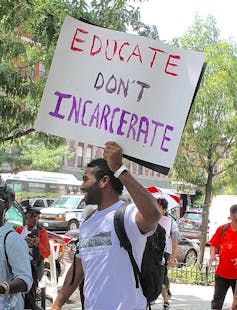
Protesters march through Harlem in the March for Justice. Rainmaker Photo/MediaPunch/IPX
Not yet guilty but not free
More troubling is the number of incarcerated individuals currently held in jail for crimes of which they have not yet been convicted.
In local jails alone, over 300,000 people are awaiting trial for property, drug or public order crimes. And again, these disproportionately black defendants are confined and separated from their families, friends and jobs simply because they lack the means to post cash bail – the only reason they can’t get out.
Toll on families
It should be no surprise, then, that 1 in 9 black children now has a parent behind bars, compared with the national rate of 1 in 28.
Being the partner of an incarcerated individual is another often stressful experience that also falls disproportionately on black citizens, particularly women.
Some good news
The good news is that such injustices are receiving growing attention nationwide.
Just City, a nonprofit organization working to reduce the harms of the criminal justice system, has campaigned to raise funds and promote awareness of its Memphis Community Bail Fund project for Father’s Day – in part because nearly half a million of the black men behind bars are dads.
The aim of the project is to provide both financial and legal support for defendants lacking resources to independently secure their pretrial release, with the goal of the campaign being the release of jailed fathers so that they could be with their kids for the holiday.
On one hand, the multiplication of these organizations is encouraging and reason for optimism. On the other, their growth is another reminder that many of the freedoms celebrated on Juneteenth remain unrealized.
Children suffer. Parents struggle. Relationships deteriorate. And as a result, so too do so many African-American communities. Lost wages matter to families, but they also matter to communities. The lower tax base that results makes it more difficult for struggling public institutions, like schools, to progress. And with such a large share of individuals removed from some communities due to incarceration, and branded as felons upon their release, these communities lose potential voters and the political capital they carry. They are too often disenfranchised and stripped of their full power and potential.
Juneteenth celebrates the freedom of black Americans and the long, hard road they were forced to traverse to gain that freedom. But as criminologists like me have maintained time and again, the U.S. criminal justice system remains biased, albeit implicitly, against them.
Walker, widely documented to have been America’s first self-made female millionaire, made her fortune building an Indianapolis-based beauty products company that served black women across the U.S. and overseas. Today it offers a product line through Sephora.
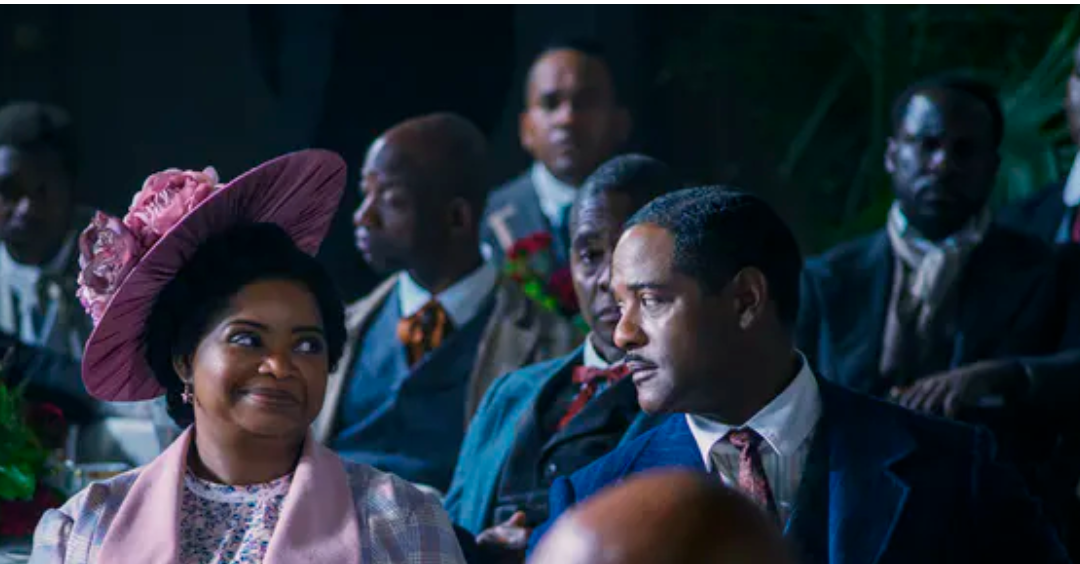
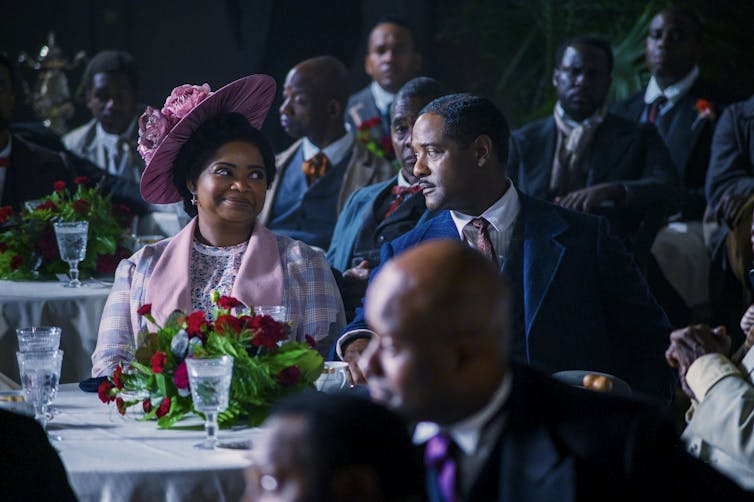
Oscar-winner Octavia Spencer stars in the miniseries about the African American entrepreneur originally named Sarah Breedlove. Born shortly after emancipation in 1867 on a cotton plantation in Louisiana to a formerly enslaved family, she later adapted the initials and last name of her third husband – played by Blair Underwood in the series. The show imagines Walker’s struggles and successes in a dramatic reinterpretation of the historical record.
Her philanthropic legacy didn’t make the cut – aside from a few visual footnotes just before final credits roll. Those footnotes touch on her charitable giving to black colleges, social services and activism with the NAACP.
While viewers will enjoy the series, I want them to learn that Walker didn’t just live a life of hard-won opulence. She exemplified black women’s generosity. Her philanthropy and activism imbued every aspect of her daily life. “I am not and never have been ‘close-fisted,’ for all who know me will tell you that I am a liberal hearted woman,” Walker told the audience of the 1913 National Negro League Business meeting sponsored by prominent black leader Booker T. Washington.
Academy Award winner Octavia Spencer stars as Madam C.J. Walker in the Netflix miniseries ‘Self Made.’
More than money
Walker distinguished herself on a philanthropic landscape dominated by white people. Men like John D. Rockefeller and Andrew Carnegie turned to large-scale philanthropy after spending their lives accumulating wealth. In contrast, Walker’s giving began in earnest when she was a poor, young, widowed mother struggling in St. Louis. She gave along the way from what she had, rather than waiting.
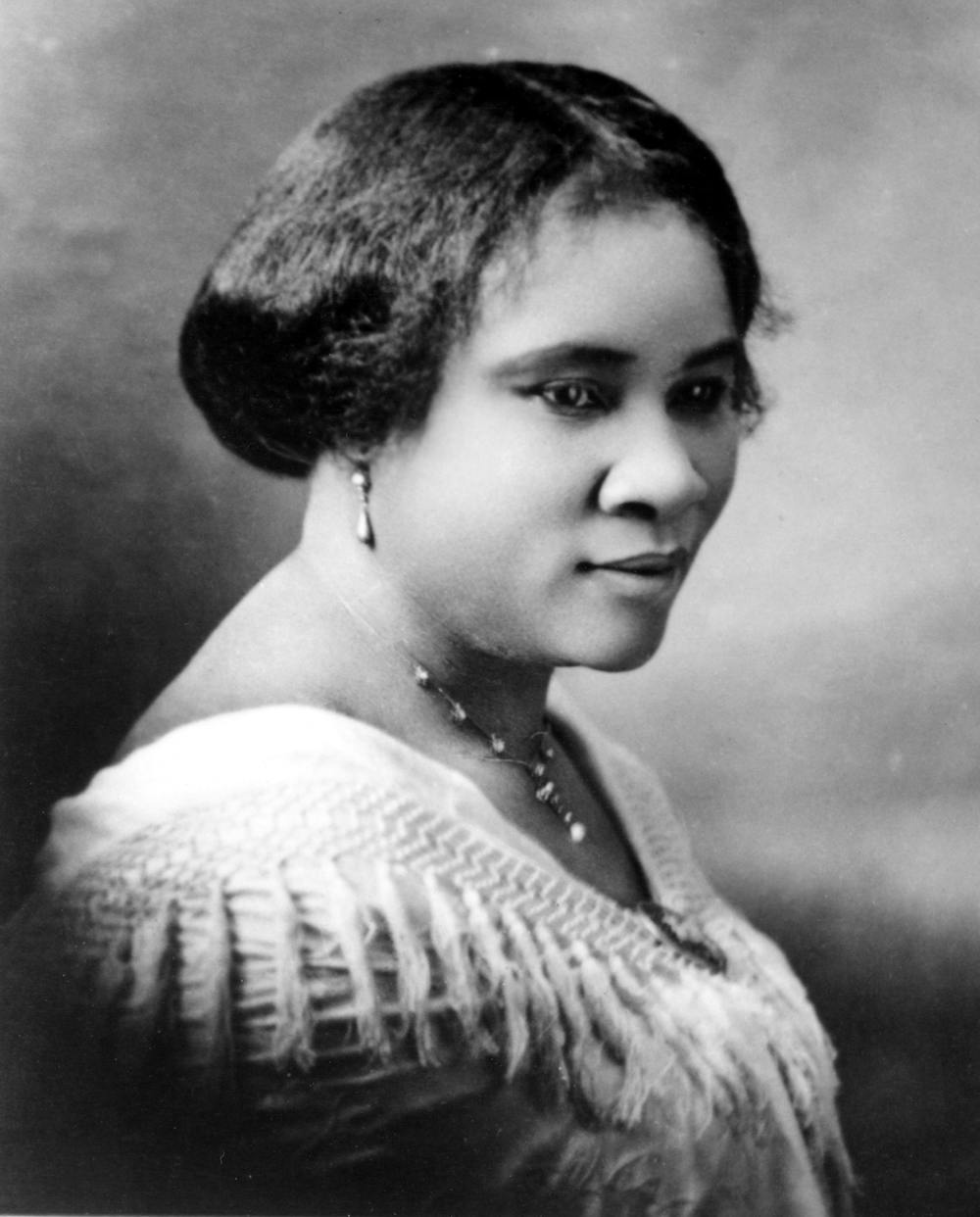
Madam C. J. Walker was the nation’s first self-made female millionaire. Michael Ochs Archives/Getty Images
She had much in common with other black churchwomen, club women, educators and activists. Like Mary McLeod Bethune, Nannie Helen Burroughs and Ida B. Wells-Barnett – and tens of thousands of other working and middle class black women – Walker embodied a versatile generosity that sought to meet communal needs and topple widespread discrimination.
Treasure
Walker was a highly prized donor in the black community. Constantly solicited, she gave money to black-serving organizations across the Midwest and the South.
The Netflix miniseries briefly references her gifts to social services. She supported organizations like Flanner House in Indianapolis, which helped African Americans get jobs, an education and childcare. She made sure that poor families could eat at Christmastime.
The “Indianapolis Freeman,” a black newspaper, reported in 1915 how her company’s office resembled a grocery store due to all the gift baskets that were filled with food. In 1918, she gave US$500 to support the National Association of Colored Women’s campaign to purchase and preserve Cedar Hill, home of abolitionist Frederick Douglass, which still stands today in Washington, D.C.
Walker lacked formal education but she was a lifelong learner who donated thousands of dollars to the Tuskegee Institute in Alabama and other black schools.
She also patronized the arts, supporting Indianapolis painters such as William Edouard Scott and John Wesley Hardrick, whom she wanted to help gain national stature as an artist.
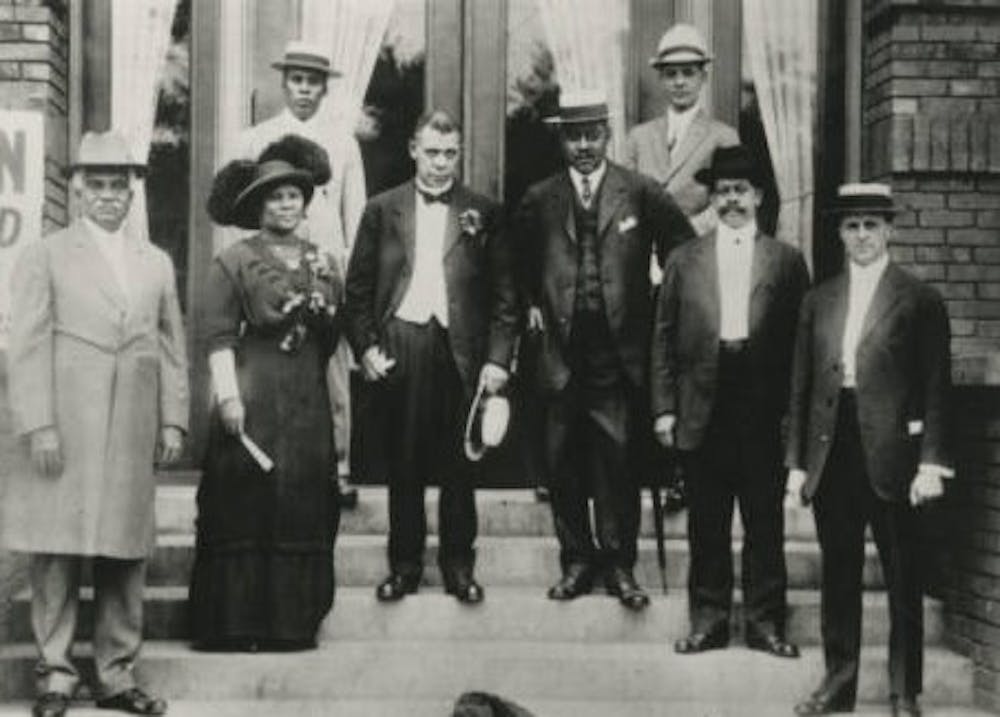
Walker, second from left, and Booker T. Washington (holding his hat) at the opening of a black YMCA in Indianapolis that she supported with her own money and fundraising efforts. Madam C. J. Walker Collection, Indiana Historical Society, CC BY-ND
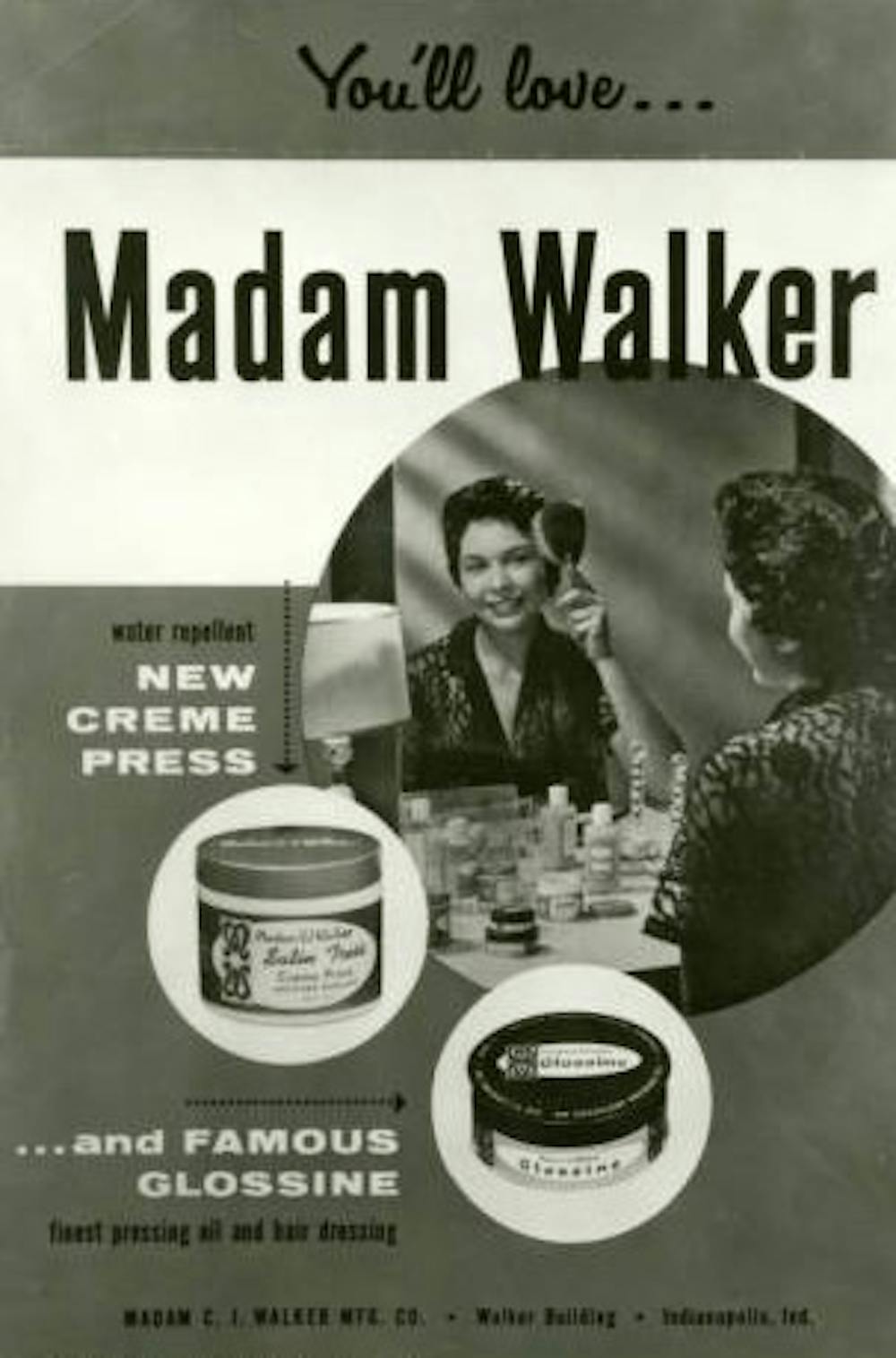
The entrepreneur made her fortune by creating hair care products for African American women. Madam C. J. Walker Collection, Indiana Historical Society, CC BY-NC-ND
She helped the poor through the Mite Missionary Society of St. Paul’s African Methodist Episcopal Church in St. Louis. She supported the National Association of Colored Women, which provided educational and social services to black communities around the country, and advocated for changing public policies.
Testimony
Walker also expressed her generosity by using her voice to speak out against the injustices of Jim Crow discrimination and oppression. She drew attention to sick and injured black soldiers during World War I by visiting and entertaining them at military camps in the Midwest. To black and white audiences, she spoke out publicly about black soldiers’ patriotic sacrifice overseas for freedoms denied them at home, and her full expectation that such freedoms be granted upon their return.
At her first national convention of her sales agents held in Philadelphia, she and her agents collectively raised their voices through a telegram against lynching sent to President Woodrow Wilson. She wanted the government to make lynching a federal crime.
Walker also advocated for temperance, women’s suffrage, female empowerment and civil rights. She secured a pardon for a black man jailed for an alleged murder in Mississippi. And she shared her own encouraging story of success with audiences around the country as an affirmative testimony of the value and dignity of black life amid pervasive hateful and hurtful Jim Crow stereotypes.
‘Netflix and engage’
I hope that many viewers who see “Self-made” and feel inspired by Walker’s story consider a new way to binge on TV: “Netflix and Engage.”
The miniseries is based on a book by A’Lelia Bundles, Walker’s great-great-granddaughter. Sarah L. Voisin/The Washington Post via Getty Images
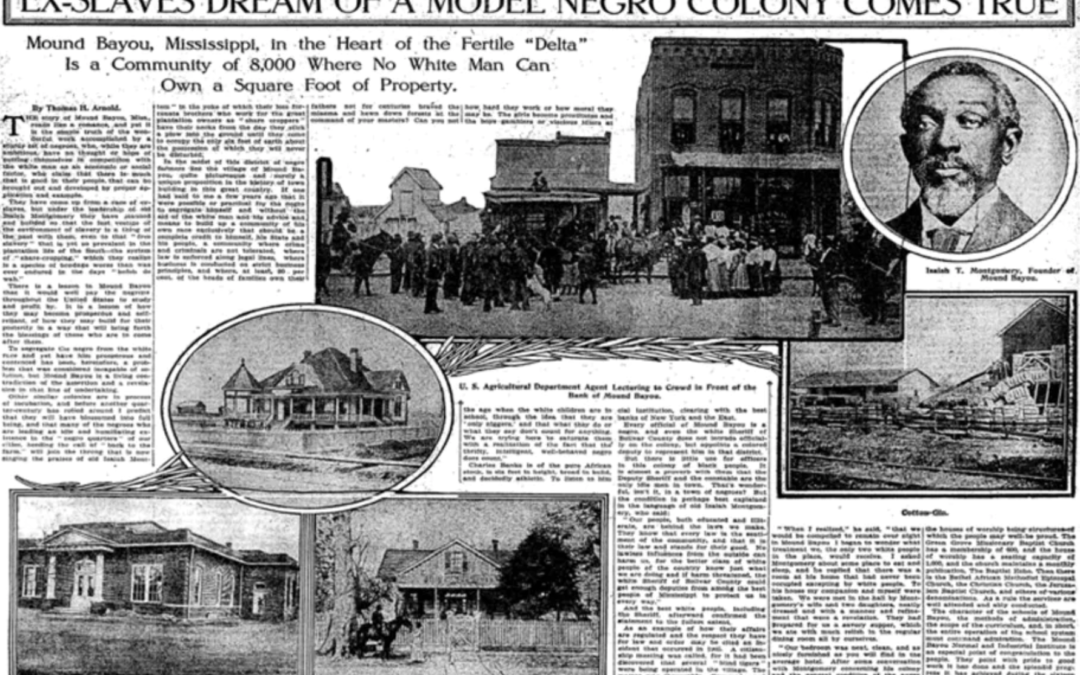
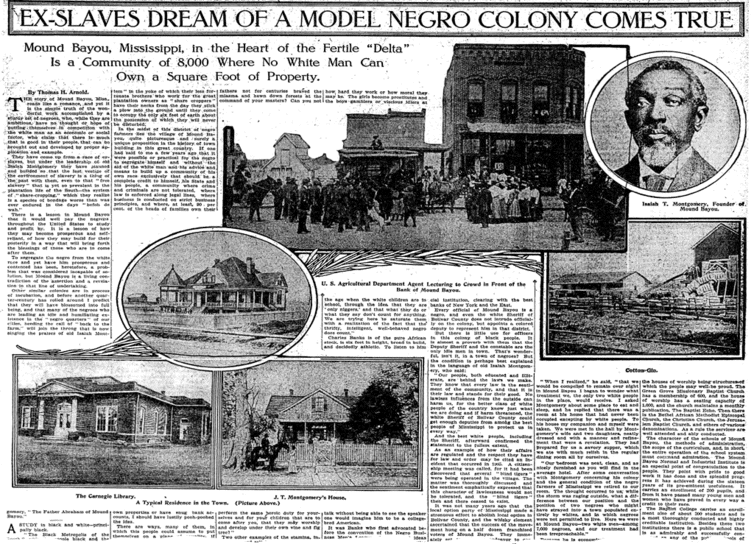
A New York Times article from 1910 describes founding of Mound Bayou, a town founded on the wealth of a steamboat patent. SundayMagazine.org
America has long been the land of innovation. More than 13,000 years ago, the Clovis people created what many call the “first American invention” – a stone tool used primarily to hunt large game. This spirit of American creativity has persisted through the millennia, through the first American patent granted in 1641 and on to today.
One group of prolific innovators, however, has been largely ignored by history: black inventors born or forced into American slavery. Though U.S. patent law was created with color-blind language to foster innovation, the patent system consistently excluded these inventors from recognition.
As a law professor and a licensed patent attorney, I understand both the importance of protecting inventions and the negative impact of being unable to use the law to do so. But despite patents being largely out of reach to them throughout early U.S. history, both slaves and free African-Americans did invent and innovate.
Why patents matter
In many countries around the world, innovation is fostered through a patent system. Patents give inventors a monopoly over their invention for a limited time period, allowing them, if they wish, to make money through things like sales and licensing.
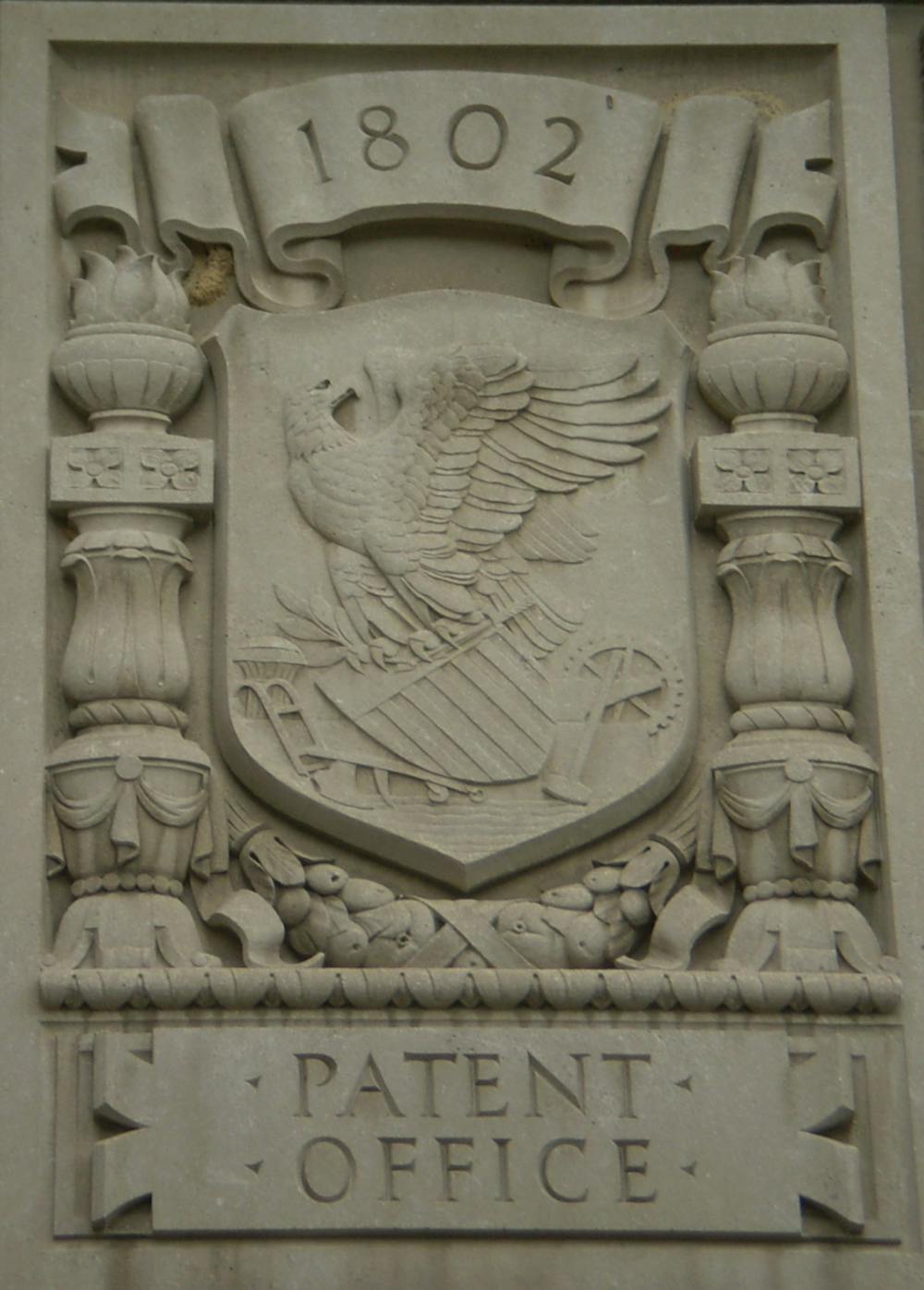
Patent Office relief on the Herbert C. Hoover Building. Neutrality
The patent system has long been the heart of America’s innovation policy. As a way to recoup costs, patents provide strong incentives for inventors, who can spend millions of dollars and a significant amount of time developing a invention.
The history of patents in America is older than the U.S. Constitution, with several colonies granting patents years before the Constitution was created. In 1787, however, members of the Constitutional Convention opened the patent process up to people nationwide by drafting what has come to be known as the Patent and Copyright Clause of the Constitution. It allows Congress:
“To promote the Progress of Science and useful Arts, by securing for limited Times to Authors and Inventors the exclusive Right to their respective Writings and Discoveries.”
This language gives inventors exclusive rights to their inventions. It forms the foundation for today’s nationwide, federal patent system, which no longer allows states to grant patents.
Though the language itself was race-neutral, like many of the rights set forth in the Constitution, the patent system didn’t apply for black Americans born into slavery. Slaves were not considered American citizens and laws at the time prevented them from applying for or holding property, including patents. In 1857, the U.S. commissioner of patents officially ruled that slave inventions couldn’t be patented.
Slave owners often took credit for their slaves’ inventions. In one well-documented case, a black inventor named Ned invented an effective, innovative cotton scraper. His slave master, Oscar Stewart, attempted to patent the invention. Because Stewart was not the actual inventor, and because the actual inventor was born into slavery, the application was rejected.
Stewart ultimately began selling the cotton scraper without the benefit of patent protection and made a significant amount of money doing so. In his advertisements, he openly touted that the product was “the invention of a Negro slave – thus giving the lie to the abolition cry that slavery dwarfs the mind of the Negro. When did a free Negro ever invent anything?”
Reaping benefits of own inventions
The answer to this question is that black people – both free and enslaved – invented many things during that time period.
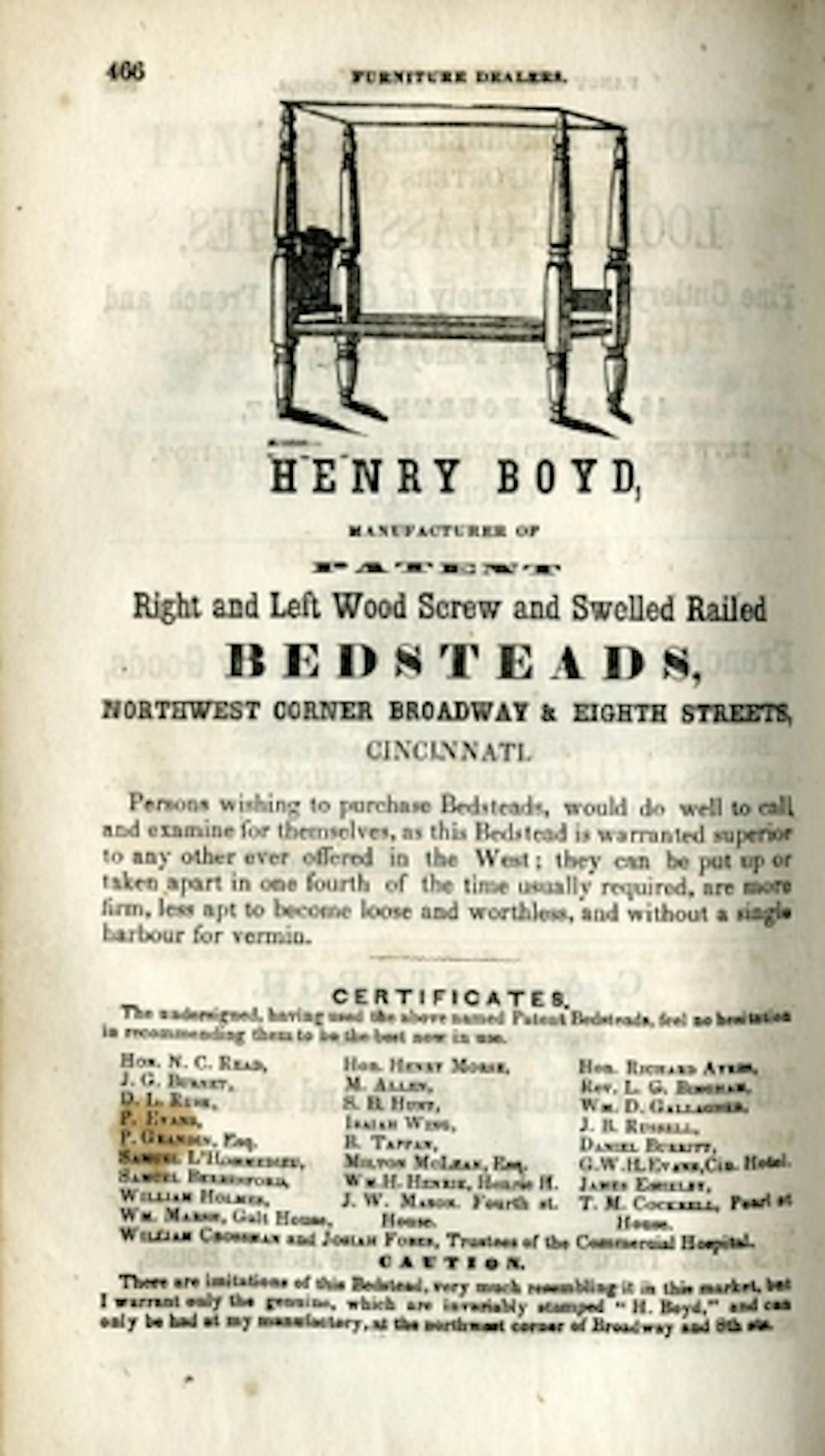
One such innovator was Henry Boyd, who was born into slavery in Kentucky in 1802. After purchasing his own freedom in 1826, Boyd invented a corded bed created with wooden rails connected to the headboard and footboard.
The “Boyd Bedstead” was so popular that historian Carter G. Woodson profiled his success in the iconic book “The Mis-education of the Negro,” noting that Boyd’s business ultimately employed 25 white and black employees.
Though Boyd had recently purchased his freedom and should have been allowed a patent for his invention, the racist realities of the time apparently led him to believe that he wouldn’t be able to patent his invention. He ultimately decided to partner with a white craftsman, allowing his partner to apply for and receive a patent for the bed.
Some black inventors achieved financial success but no patent protection, direct or indirect. Benjamin Montgomery, who was born into slavery in 1819, invented a steamboat propeller designed for shallow waters in the 1850s. This invention was of particular value because, during that time, steamboats delivered food and other necessities through often-shallow waterways connecting settlements. If the boats got stuck, life-sustaining supplies would be delayed for days or weeks.
Montgomery tried to apply for a patent. The application was rejected due to his status as a slave. Montgomery’s owners tried to take credit for the propeller invention and patent it themselves, but the patent office also rejected their application because they were not the true inventors.
Even without patent protection, Montgomery amassed significant wealth and become one of the wealthiest planters in Mississippi after the Civil War ended. Eventually his son, Isaiah, was able to purchase more than 800 acres of land and found the town of Mound Bayou, Mississippi after his father’s death.
A legacy of black innovators
The patent system was ostensibly open to free black people. From Thomas Jennings, the first black patent holder, who invented dry cleaning in 1821, to Norbert Rillieux, a free man who invented a revolutionary sugar-refining process in the 1840s, to Elijah McCoy, who obtained 57 patents over his lifetime, those with access to the patent system invented items that still touch the lives of people today.
This legacy extends through the 21st century. Lonnie Johnson generated more than US$1 billion in sales with his Super Soaker water gun invention, which has consistently been among the world’s top 20 best-selling toys each year since 1991. Johnson now owns more than 80 patents and has since developed different green technologies.
Black women are also furthering the legacy of black inventors. Lisa Ascolese, known as “The Inventress,” has received multiple patents and founded the Association for Women Inventors and Entrepreneurs. Janet Emerson Bashen became the first black woman to receive a patent for a software invention in 2006. And Dr. Hadiyah Green recently won a $1 million grant related to an invention that may help treat cancer.
True to the legacy of American innovation, today’s black inventors are following in the footsteps of those who came before them. Now patent law doesn’t actively exclude them from protecting their inventions – and fully contributing to American progress.
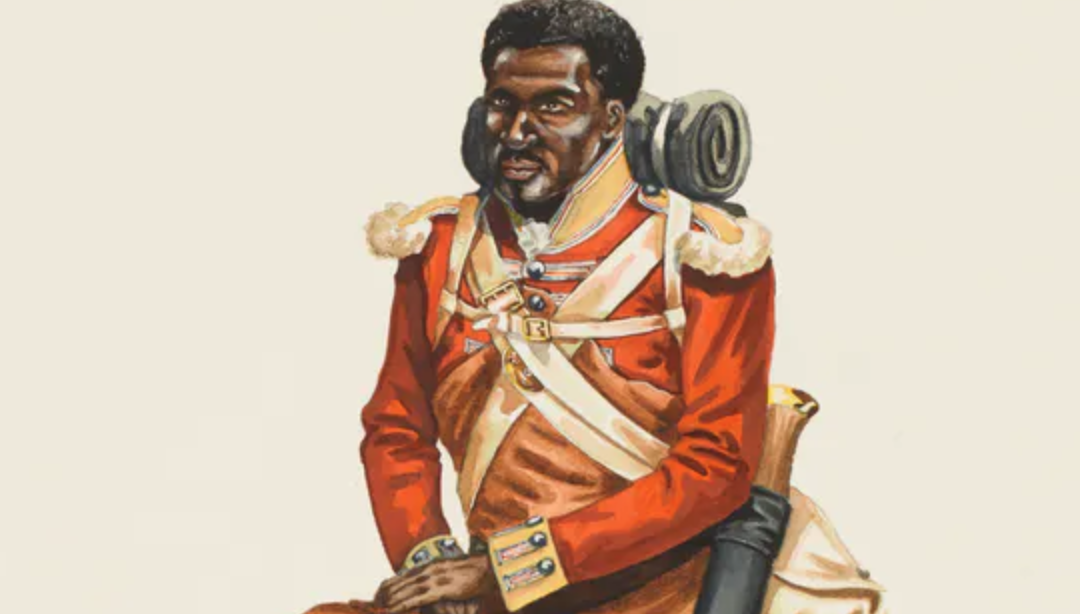
John Marrion depicted here was part of the 104th (New Brunswick) Regiment of Foot. The 104th soldiers once snowshoed over 621 miles in about fifty days during the War of 1812. Beaverbrook Collection of War Art/Canadian War Museum/CWM 19810948-008 (NO REUSE)
Snowshoeing in the woods on a sunny winter’s day is my idea of fun. When playing in the snow, winter seems to pass faster.
Over two-thirds of Canadians participate in outdoor recreation, according to Statistics Canada. Some 13 percent of these nature fans enjoy snowshoeing. Compared to skiing, snowshoeing is low key, inexpensive, and easy to learn. And it can be done anywhere as long as there is snow.
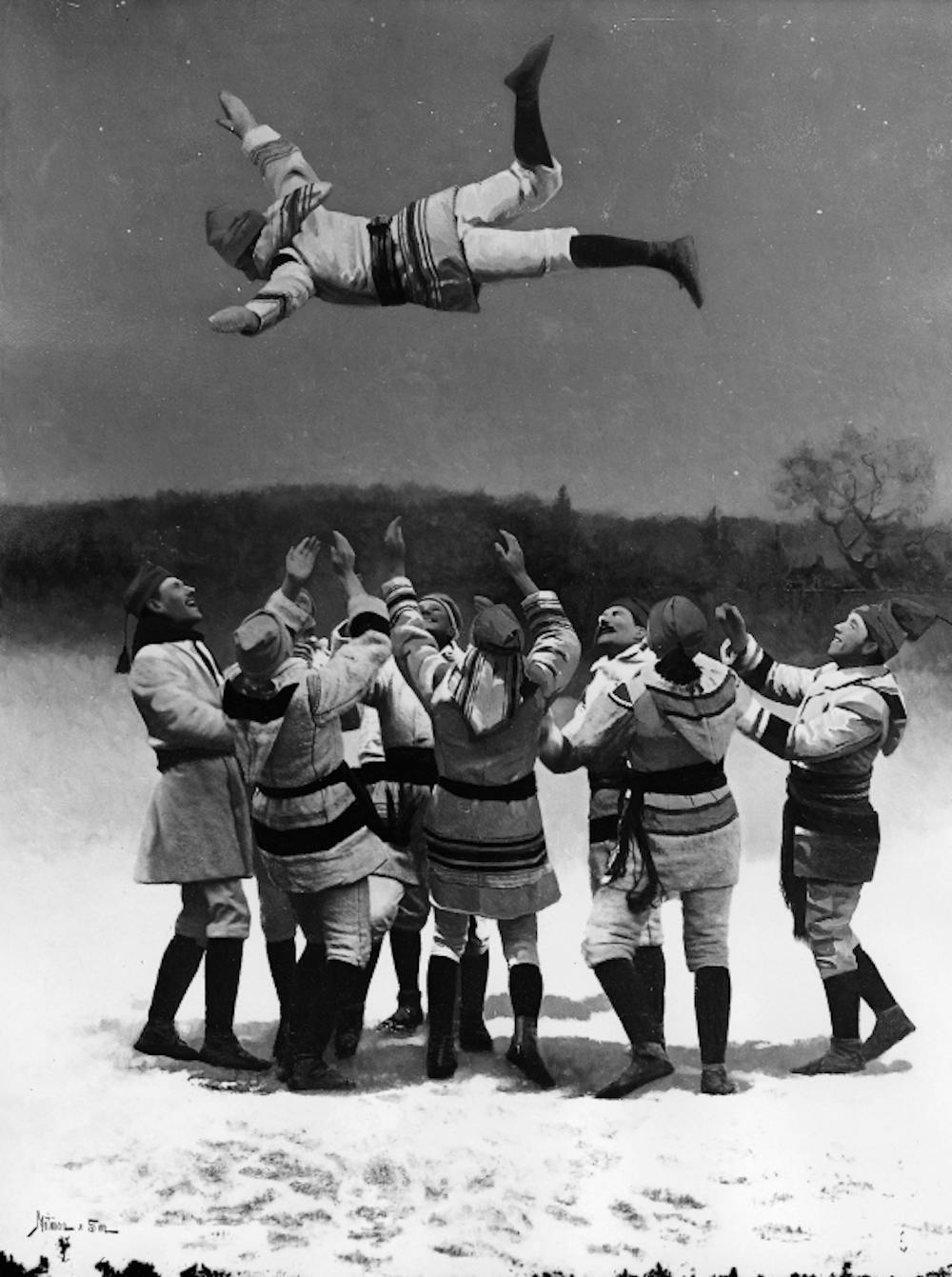
Lord Stanley of Preston being ‘bounced’ as a member of the Montréal Snowshoe Club in 1866. Wm. Notman & Son/McCord Museum /VIEW-2425
Snowshoe walks and races were once the most popular winter sports in Canada, long before hockey seized that prize. A century ago, snowshoe clubs were scattered all over the country. The most important was the Montréal Snowshoe Club, formed in 1840. It organized professional and amateur races.
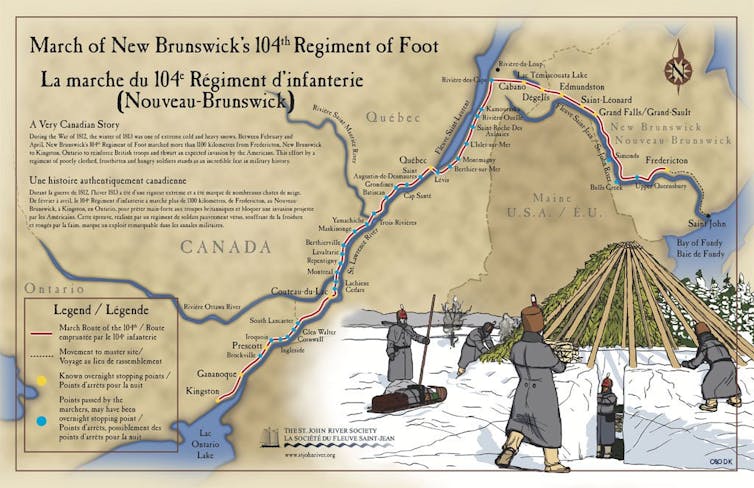
Some Black men once snowshoed over 621.3 miles in about 50 days. The epic trek took them from Fredericton, N.B., to Kingston, Ont. Unlike us, these men were not doing it for outdoor recreation.
The 600 or so soldiers of the 104th trekked across the country to bolster Canadian defenses against an impending United States invasion. This became known as the War of 1812, even though the conflict was spread out over the next two years.
The Black men in the 104th included Harry Grant, Richard Houldin and Henry McEvoy. They are a minor footnote in the War of 1812 and are usually ignored in accounts of the conflict.
The erasure of these Black soldiers of the 104th follows the usual pattern of deleting Black people from the mainstream history of Canada, as their presence or absence raises questions about race and empire, and genocide and slavery.
When Black people are acknowledged, it is usually in reference to the Underground Railroad, and the fugitives’ flight from slavery to freedom in the Great White North. The focus on this part of history ignores the 200 years of slavery in Canada, and how living in its wake continues to shape Black lives today.
The men wore moccasins. These Indigenous shoes are perfect for walking on ice or snow as they are light, warm, and waterproof.
Then there were the Indigenous snowshoes. They were essential winter gear as they were the easiest way to move in thick snow — if you were a hunter, soldier, or just out for a walk.
With just boots on, with each step, one would sink up to knees or hips in the white stuff. In a different situation, this could be lethal. Cold legs are prone to frostbite and frostbite can end in amputation or death. Snowshoes spread the body’s weight so that one can walk and not sink into the powder, and can travel further with less effort.
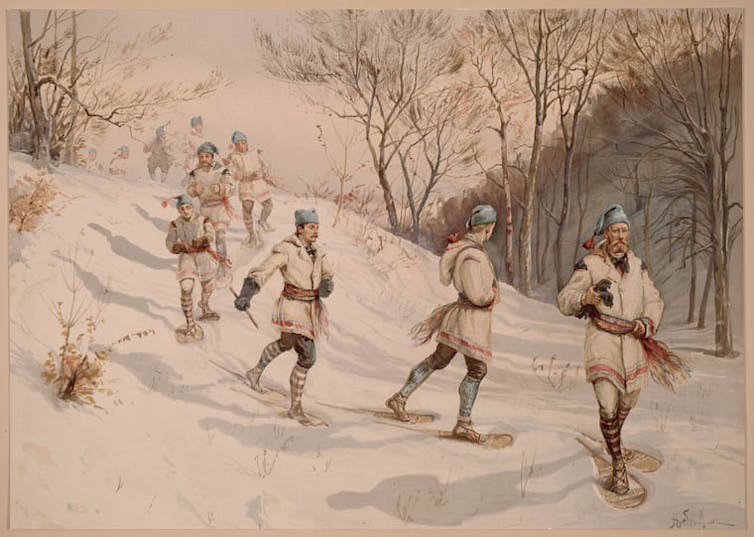
Lithograph on wove paper of ‘Snowshoeing Club of Montréal.’ Several men are depicted walking in the snowy woods with snowshoes. Henry Sandham (1842-1910)/Library and Archives Canada, Acc. No. R9266-1432, CC BY-NC
On a recent snowshoe hike, I passed through a strand of cedar trees, brushing a few twigs as I trudged by. The trees released a perfume that was fresh and invigorating. In my mind, it is the smell of Christmas.
The men of the 104th also liked the cedars. And not just for the scent. They used the branches to make a bed each evening, as they huddled in a makeshift teepee made from saplings and insulated with branches and moss. A blanket and a fire in the middle kept them warm in the sub-zero nights.
In the images of the campaign, pioneers and later athletes skied, hiked, and tobogganed in a winter wonderland. Almost all the people visible in the advertisement are white. Thus it made an explicit connection between race, winter, and outdoors recreation. It reflected two dominant nationalist mythologies of Canada — as the “the Great White North” and the “great outdoors.”
There are many issues with the advert, but I am interested in how it whitewashed Canadian history and outdoor recreation. What has changed in the past decade?
Snowshoes are cheap to rent at ski resorts and parks and from outdoor recreation stores. Snowshoeing is marketed as a truly Canadian winter sport that is accessible to different age groups, fitness levels, and abilities.
It’s a great way for families to spend a winter day outdoors. The marketing photographs are filled with happy white people, in bright neon-colored jackets, romping in the snow. What is missing from the images are Indigenous, Black, and other people of color. Snow is free, but race plays a role in who is wanted and who gets access to snowshoeing.
The joy of the outdoors
On my snowshoeing ramble, other people were racing through the woods. They were snowshoe runners, dressed in light running gear. Lots of lycra and color. They shouted greetings as they sailed by.
Something was drilling in the woods. I followed my ears, swiveled my head, and spotted a hairy woodpecker getting its lunch of grubs out of the bark of a tree. The little patch of red on the back of its head was a bold splash of natural color in a landscape of white snow and beige trees.
I snowshoed about 3.7 miles on my minuscule trek that day. And then I was done. Tired, ready for hot chocolate and cake in a warm café.
The Black soldiers and their fellow 104th snowshoers would have taken about two hours to do that distance. They had 621.3 miles to snowshoe. One day I plan to recreate their historic feat as part of my project of mapping how race intersects with outdoor recreation, geography, and adventure travel.