Since 1986, the third Monday of January has been reserved to commemorate the birthday, life and legacy of one of the nation’s greatest leaders, Dr. Martin Luther King Jr.
Dr. King—a Baptist preacher, scholar, and arguably the greatest leader of the Civil Rights Movement, selflessly fought for the equal rights of not only African Americans but all people.
In a time when Jim Crow and legal segregation were the law of the land, Dr. King became the face of a movement that sought to dismantle the institution of racial injustice. He advocated for persons in poverty, spoke against the Vietnam war, and worked to ensure that all Americans had equal rights and protections under the law. Nearly 50 years after Dr. King’s assassination, his legacy lives on.
Although MLK Day is a national holiday, the ways in which people choose to celebrate—or not—are endless. Many schools and organizations across the nation will have the day off and/or host an MLK Day program, while others may participate in a community service project or attend city-wide marches and rallies.
Just Another Day Off?
As our nation continues to fight issues of social injustice and racial tension, many question whether or not the ideals memorialized on MLK Day—a day of peace and tolerance—hold true throughout the year.
“We need to understand as a country that what [Dr. King] fought for still needs to be fought for today,” says Thomas McElroy, a long-time musician from Seattle Washington. “The path towards a country united under the principals he laid down for all of us still needs to be worked on.”
So, the question becomes, does MLK Day hold any true meaning in present-day society? Or, has it been reduced to a day off from work and school?
According to Erin Jones, “We have turned the day into an opportunity to rehearse the ‘I Have a Dream’ speech.”
“I can honestly say that, personally, I have never celebrated the holiday and have taken it as a vacation day,” says Elisabeth Scott, a recent college graduate of Western Washington University. “It wasn’t until going to my current church, that I participated in an MLK service. Had I not sung [during service], I probably wouldn’t have attended.”
However, Sergeant First Class Derek White, a 16-year member of the armed forces still sees the value in MLK Day, and what it means to the future of our society.
“I think that MLK being observed most definitely holds weight for both older and the younger generations. One way to ensure that our past does not repeat itself is by honoring people like Dr. King and his legacy and what he fought for and stood for.”
The Importance of Generational Knowledge
As an educator, Erin Jones argues that celebrating MLK Day does not have the same significance for young people today.
“Students have no context to understand the gravity of what Dr. King and his peers accomplished,” the educator says. “That being said, I believe it is our responsibility to communicate the value of this holiday, which is why I agreed to speak at so many schools.”
As a professional mentor to students, Jessica Crenshaw believes in giving back to the community but admits that she does not celebrate Martin Luther King Jr Day—for many different reasons.
“I do not celebrate MLK day as a holiday because I feel the significance of the day has been diminished,” Jessica says. “I feel it has been cheapened down for a “get-off-of-work-free card.”
For Jessica, an authentic celebration of MLK Day should include not only service to the community, rallies, and celebration events, but should serve as a day to reflect and organize for long-term change.
“I feel as if people should really take time to reflect over what Dr. King was trying to accomplish, and actually sit down and have planning meetings to plan out actions to make sure that his dream gets fulfilled,” she says. “Concerts and protests are good, but if you don’t continue to do this work after January 20th then you’re not doing it for a real reason.”
Since 1986, the third Monday of January has been reserved to commemorate the birthday, life and legacy of one of the nation’s greatest leaders, Dr. Martin Luther King Jr.
Dr. King—a Baptist preacher, scholar, and arguably the greatest leader of the Civil Rights Movement, selflessly fought for the equal rights of not only African Americans but all people.
In a time when Jim Crow and legal segregation were the law of the land, Dr. King became the face of a movement that sought to dismantle the institution of racial injustice. He advocated for persons in poverty, spoke against the Vietnam war, and worked to ensure that all Americans had equal rights and protections under the law. Nearly 50 years after Dr. King’s assassination, his legacy lives on.
Although MLK Day is a national holiday, the ways in which people choose to celebrate—or not—are endless. Many schools and organizations across the nation will have the day off and/or host an MLK Day program, while others may participate in a community service project or attend city-wide marches and rallies.
Just Another Day Off?
As our nation continues to fight issues of social injustice and racial tension, many question whether or not the ideals memorialized on MLK Day—a day of peace and tolerance—hold true throughout the year.
“We need to understand as a country that what [Dr. King] fought for still needs to be fought for today,” says Thomas McElroy, a long-time musician from Seattle Washington. “The path towards a country united under the principals he laid down for all of us still needs to be worked on.”
So, the question becomes, does MLK Day hold any true meaning in present-day society? Or, has it been reduced to a day off from work and school?
According to Erin Jones, “We have turned the day into an opportunity to rehearse the ‘I Have a Dream’ speech.”
“I can honestly say that, personally, I have never celebrated the holiday and have taken it as a vacation day,” says Elisabeth Scott, a recent college graduate of Western Washington University. “It wasn’t until going to my current church, that I participated in an MLK service. Had I not sung [during service], I probably wouldn’t have attended.”
However, Sergeant First Class Derek White, a 16-year member of the armed forces still sees the value in MLK Day, and what it means to the future of our society.
“I think that MLK being observed most definitely holds weight for both older and the younger generations. One way to ensure that our past does not repeat itself is by honoring people like Dr. King and his legacy and what he fought for and stood for.”
The Importance of Generational Knowledge
As an educator, Erin Jones argues that celebrating MLK Day does not have the same significance for young people today.
“Students have no context to understand the gravity of what Dr. King and his peers accomplished,” the educator says. “That being said, I believe it is our responsibility to communicate the value of this holiday, which is why I agreed to speak at so many schools.”
As a professional mentor to students, Jessica Crenshaw believes in giving back to the community but admits that she does not celebrate Martin Luther King Jr Day—for many different reasons.
“I do not celebrate MLK day as a holiday because I feel the significance of the day has been diminished,” Jessica says. “I feel it has been cheapened down for a “get-off-of-work-free card.”
For Jessica, an authentic celebration of MLK Day should include not only service to the community, rallies, and celebration events, but should serve as a day to reflect and organize for long-term change.
“I feel as if people should really take time to reflect over what Dr. King was trying to accomplish, and actually sit down and have planning meetings to plan out actions to make sure that his dream gets fulfilled,” she says. “Concerts and protests are good, but if you don’t continue to do this work after January 20th then you’re not doing it for a real reason.”
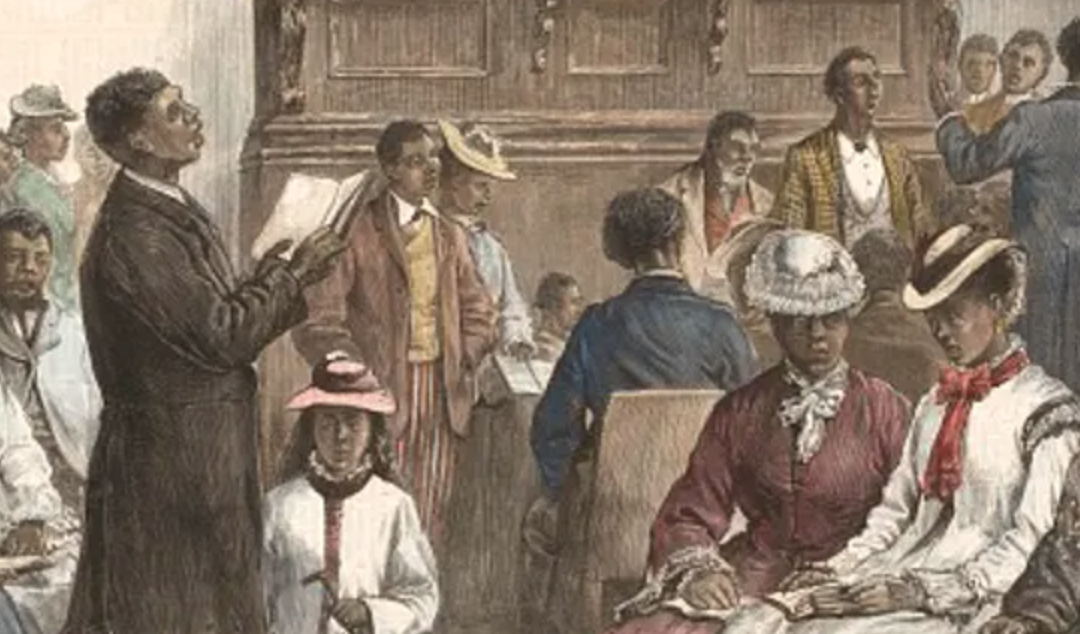
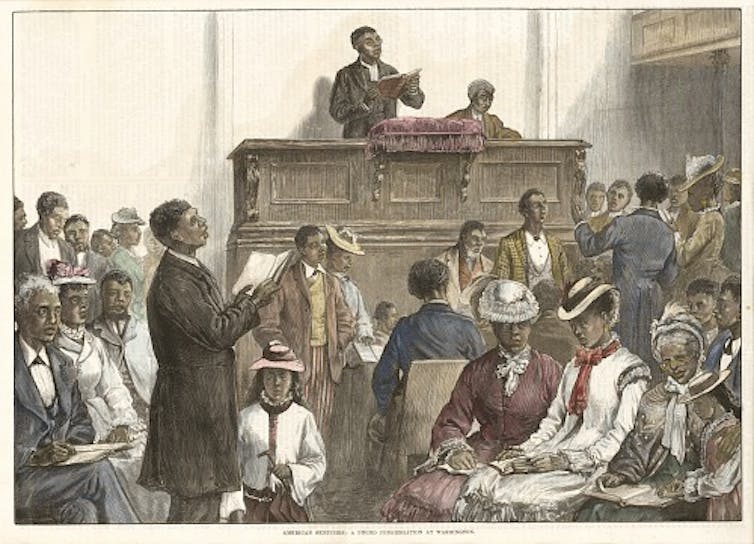
Many African Americans made education a high priority after the Civil War.National Museum of African American History and Culture
I’ll never forget a student’s response when I asked during a middle school social studies class what they knew about black history: “Martin Luther King freed the slaves.”
Martin Luther King Jr. was born in 1929, more than six decades after the time of enslavement. To me, this comment underscored how closely Americans associate black history with slavery.
While shocked, I knew this mistaken belief reflected the lack of time, depth and breadth schools devote to black history. Most students get limited information and context about what African Americans have experienced since our ancestors arrived here four centuries ago. Without independent study, most adults aren’t up to speed either.
I’m excited about new resources for teaching children, and everyone else, more about the history of slavery through The New York Times’ “1619 Project.” But based on my experience teaching social studies and my current work preparing social studies educators, I also consider understanding what happened during the Reconstruction essential for exploring black power, resilience and excellence.
As most students do learn, the U.S. gained three constitutional amendments that extended civil and political rights to newly freed African Americans following the Civil War.
The 13th, ratified in 1865, banned slavery and involuntary servitude except for the punishment of a crime.
The 14th, ratified three years later, granted citizenship and equal protection under the law to all people born in the United States, as well as naturalized citizens – including all previously enslaved individuals.
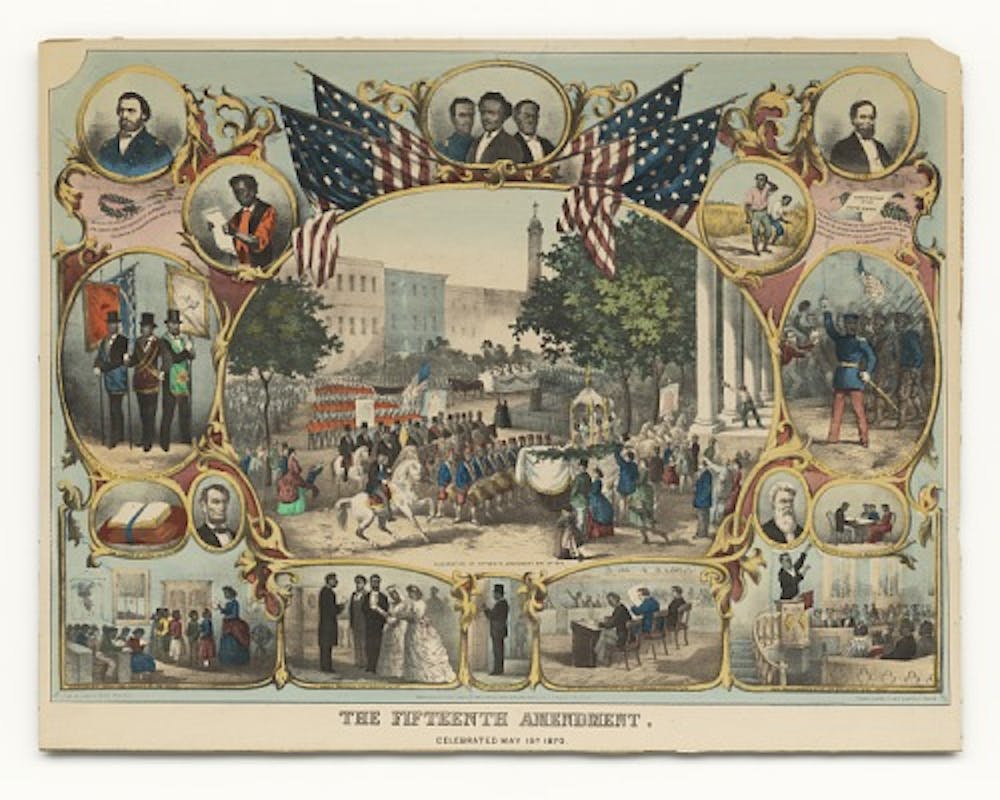
Then, the 15th Amendment asserted that neither the federal government nor state governments could deny voting rights to any male citizen.
The year 2020 marks the 150th anniversary of the ratification of the 15th Amendment on Feb. 3, 1870. The anniversary is a good opportunity to learn about how the amendment was supposed to guarantee that the right to vote could not be denied based on “race, color, or previous condition of servitude.”
What few history and social studies classes explore is how these changes to the Constitution made it possible for African American men to use their newfound political power to gain representation.
White supremacist groups like the Ku Klux Klan also formed following the Civil War. These terrorist groups engaged in violence and other racist tactics to intimidate African Americans, people of color, black voters and legislators. They thus made the accomplishments of African American politicians even more impressive as they served as public officials under the constant threat of racial violence.
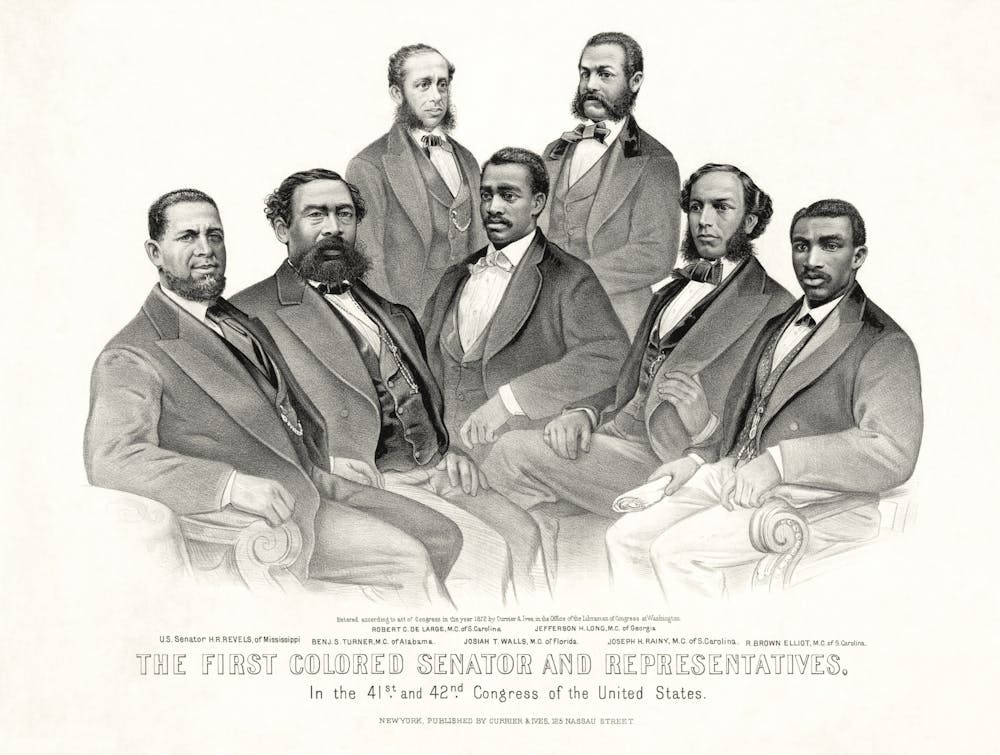
The first African American members of Congress were elected after the Civil War.Currier and Ives via the Library of Congress
Black activist women
African American women technically gained the right to vote in 1920, when the 19th Amendment passed. However, their constitutional right was limited in many states due to discriminatory laws.
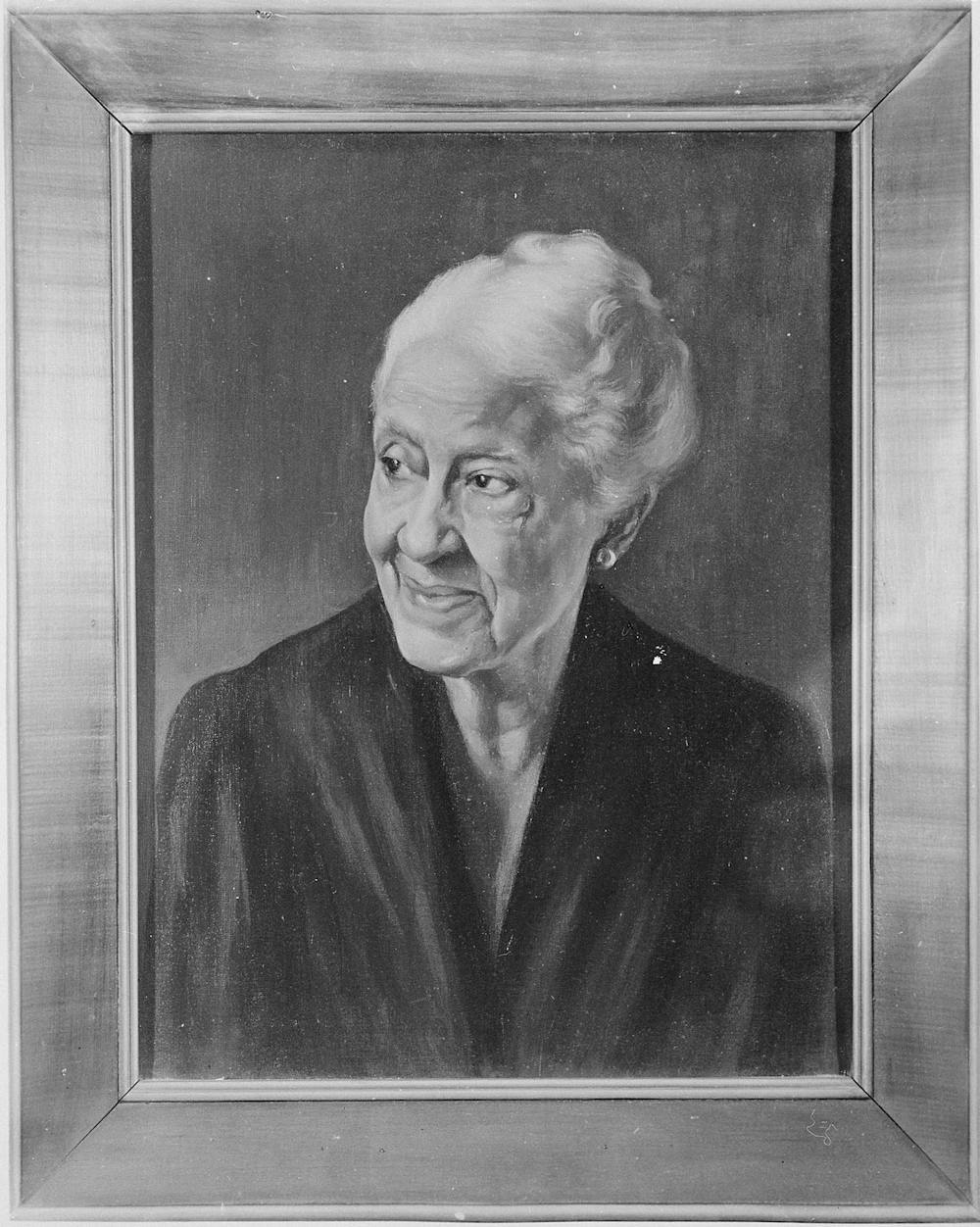
Mary Church Terrell, an educator, fought for the rights of women of color.National Archives Docs Teach collection
Many black women were activists and women’s suffrage movement leaders. Through public speaking, prolific writing and developing organizations dedicated to racial and and gender equality, they fought for equal rights and dignity for all.
Among the black women who were activists during Reconstruction were the five Rollins sisters of South Carolina, who fought for female voting rights; Maria Stewart, an outspoken abolitionist before the Civil War and suffragist once it ended; and Mary Ann Shadd Cary, the first black woman in North America to edit and publish a newspaper, one of the first black female lawyers in the country and an advocate for granting women the right to vote.
Other women of color who played key roles in the suffrage movement included Ida B. Wells, the journalist and civil rights advocate who raised awareness of lynching, and Mary Church Terrell, founder of the National Association of Colored Women.
Higher education
Before the Civil War, many states made teaching enslaved individuals to read a crime. Education quickly became a top priority for black Americans once slavery ended.
While northern, largely white philanthropists and missionary groups and the U.S. Bureau of Refugees, Freedmen, and Abandoned Lands, better known as the Freedmen’s Bureau, did help create new educational opportunities, the African American public schools established after the Civil War ended were largely built and staffed by the black community.
These schools trained black people to become teachers and ministers, doctors and nurses. They also prepared African Americans for careers in industrial and agricultural fields.
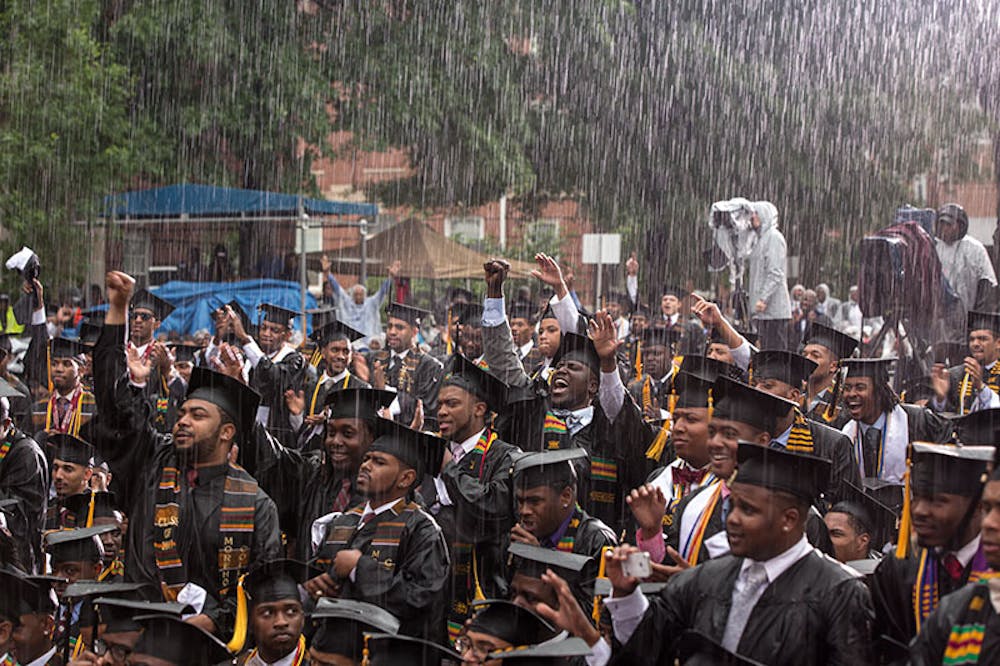
Morehouse graduates from the class of 2013 celebrated in the rain when President Obama delivered their commencement address. Official White House Photo by Pete Souza
Historical experiences
Storytelling, multimedia experiences and trips to historic sites and creative museums help get people of any age interested in learning about history.
Depending on where you live, you may want to embark on a family outing or school field trip.
The National Constitution Center in Philadelphia has a new permanent exhibit on the Civil War and Reconstruction.
The National Museum of African American History and Culture, which opened in Washington, D.C. in 2017, contains artifacts from the Reconstruction era. It’s also making the records of the Freedmen’s Bureau, including the names of formerly enslaved individuals following the Civil War, available online.
“The slave went free; stood for a brief moment in the sun; then moved back again toward slavery,” he explained.
This was by no means voluntary. Intimidated and threatened by black enfranchisement and excellence in the era of Reconstruction, white supremacists attempted to enforce subordination through violence, such as lynching; and in systemic ways through Jim Crow laws. African Americans continued to assert their civil and constitutional rights as activists, politicians, business owners, teachers and farmers in the midst of white supremacist backlash.
With the latest voter suppression efforts restricting access to the ballot box for voters of color and the resurgence of racist violence and vitriol today, DuBois’ words sound eerily familiar. At the same time it’s reassuring to recall how quickly formerly enslaved African Americans made their way to schoolhouses and public offices.
Many African Americans made education a high priority after the Civil War.National Museum of African American History and Culture
I’ll never forget a student’s response when I asked during a middle school social studies class what they knew about black history: “Martin Luther King freed the slaves.”
Martin Luther King Jr. was born in 1929, more than six decades after the time of enslavement. To me, this comment underscored how closely Americans associate black history with slavery.
While shocked, I knew this mistaken belief reflected the lack of time, depth and breadth schools devote to black history. Most students get limited information and context about what African Americans have experienced since our ancestors arrived here four centuries ago. Without independent study, most adults aren’t up to speed either.
I’m excited about new resources for teaching children, and everyone else, more about the history of slavery through The New York Times’ “1619 Project.” But based on my experience teaching social studies and my current work preparing social studies educators, I also consider understanding what happened during the Reconstruction essential for exploring black power, resilience and excellence.
As most students do learn, the U.S. gained three constitutional amendments that extended civil and political rights to newly freed African Americans following the Civil War.
The 13th, ratified in 1865, banned slavery and involuntary servitude except for the punishment of a crime.
The 14th, ratified three years later, granted citizenship and equal protection under the law to all people born in the United States, as well as naturalized citizens – including all previously enslaved individuals.
Then, the 15th Amendment asserted that neither the federal government nor state governments could deny voting rights to any male citizen.
The year 2020 marks the 150th anniversary of the ratification of the 15th Amendment on Feb. 3, 1870. The anniversary is a good opportunity to learn about how the amendment was supposed to guarantee that the right to vote could not be denied based on “race, color, or previous condition of servitude.”
What few history and social studies classes explore is how these changes to the Constitution made it possible for African American men to use their newfound political power to gain representation.
White supremacist groups like the Ku Klux Klan also formed following the Civil War. These terrorist groups engaged in violence and other racist tactics to intimidate African Americans, people of color, black voters and legislators. They thus made the accomplishments of African American politicians even more impressive as they served as public officials under the constant threat of racial violence.
The first African American members of Congress were elected after the Civil War.Currier and Ives via the Library of Congress
Black activist women
African American women technically gained the right to vote in 1920, when the 19th Amendment passed. However, their constitutional right was limited in many states due to discriminatory laws.
Mary Church Terrell, an educator, fought for the rights of women of color.National Archives Docs Teach collection
Many black women were activists and women’s suffrage movement leaders. Through public speaking, prolific writing and developing organizations dedicated to racial and and gender equality, they fought for equal rights and dignity for all.
Among the black women who were activists during Reconstruction were the five Rollins sisters of South Carolina, who fought for female voting rights; Maria Stewart, an outspoken abolitionist before the Civil War and suffragist once it ended; and Mary Ann Shadd Cary, the first black woman in North America to edit and publish a newspaper, one of the first black female lawyers in the country and an advocate for granting women the right to vote.
Other women of color who played key roles in the suffrage movement included Ida B. Wells, the journalist and civil rights advocate who raised awareness of lynching, and Mary Church Terrell, founder of the National Association of Colored Women.
Higher education
Before the Civil War, many states made teaching enslaved individuals to read a crime. Education quickly became a top priority for black Americans once slavery ended.
While northern, largely white philanthropists and missionary groups and the U.S. Bureau of Refugees, Freedmen, and Abandoned Lands, better known as the Freedmen’s Bureau, did help create new educational opportunities, the African American public schools established after the Civil War ended were largely built and staffed by the black community.
These schools trained black people to become teachers and ministers, doctors and nurses. They also prepared African Americans for careers in industrial and agricultural fields.
Morehouse graduates from the class of 2013 celebrated in the rain when President Obama delivered their commencement address. Official White House Photo by Pete Souza
Historical experiences
Storytelling, multimedia experiences and trips to historic sites and creative museums help get people of any age interested in learning about history.
Depending on where you live, you may want to embark on a family outing or school field trip.
The National Constitution Center in Philadelphia has a new permanent exhibit on the Civil War and Reconstruction.
The National Museum of African American History and Culture, which opened in Washington, D.C. in 2017, contains artifacts from the Reconstruction era. It’s also making the records of the Freedmen’s Bureau, including the names of formerly enslaved individuals following the Civil War, available online.
“The slave went free; stood for a brief moment in the sun; then moved back again toward slavery,” he explained.
This was by no means voluntary. Intimidated and threatened by black enfranchisement and excellence in the era of Reconstruction, white supremacists attempted to enforce subordination through violence, such as lynching; and in systemic ways through Jim Crow laws. African Americans continued to assert their civil and constitutional rights as activists, politicians, business owners, teachers and farmers in the midst of white supremacist backlash.
With the latest voter suppression efforts restricting access to the ballot box for voters of color and the resurgence of racist violence and vitriol today, DuBois’ words sound eerily familiar. At the same time it’s reassuring to recall how quickly formerly enslaved African Americans made their way to schoolhouses and public offices.
All week long, African Americans have been celebrating Kwanzaa across the U.S.
Perhaps you may attend a Kwanzaa celebration at your church or even participate in Kwanzaa in the comforts of your own home, but do you really know why? What is Kwanzaa and why do so many African Americans choose to celebrate the holiday?
Dr. Maulana Ron Karenga created and developed Kwanzaa in 1966. Dr. Karenga is an author, professor, and scholar-activist who is passionate about sustaining Pan-African culture in America with an emphasis on celebrating the family and the community.
There are three main ideas that are foundational to sustaining Kwanzaa tradition. The first idea is to reinstate rootedness in African culture. The second is to serve as a consistent, annual, public celebration to strengthen and confirm the bonds between people of the African diaspora. And finally, Kwanzaa is to familiarize and support the “Nguzo Saba,” also known as the “Seven Principles,” which are each celebrated during the seven days following Christmas.
These seven principles represent the values of African communication. They include the following:
Umoja or Unity
Kujichagulia or Self-Determination
Ujima or Collective Work and Responsibility
Ujamaa or Cooperative Economics
Nia or Purpose
Kuumba or Creativity
Imani or Faith.
People celebrate Kwanzaa in numerous ways and have different practices that have been incorporated into their celebrations.
Symbolic Decor
Are you unsure as to how you and your family can participate in a Kwanzaa celebration? A good way to start is to decorate your home or living quarters with the symbols of Kwanzaa.
First start by putting a green tablecloth over a table that is centrally based in the space in the space you intend to decorate. Then, place the Mkeka, a woven mat or straw that represents the factual cornerstone of African descent, on top of the tablecloth.
Place the Mazao, the fruit or crops placed in a bowl, on top of the Mkeka symbolizing the culture’s productivity. Next, place the Kinara, a seven-pronged candle holder, on the tablecloth. The Kinara should include the Mishumaa Saba, seven candles that represent the seven central principles of Kwanzaa.
The three candles placed on the left are red, symbolizing struggle, the three candles to the right are green, symbolizing hope, and one candle placed in the center is black, symbolizing those who draw their heritage from Africa or simply just the African American people. The candles are lit each day in a certain order, and the black candle is always first.
Next, include the Muhindi, or ears of corn, used to symbolize each child. However, if there are no children present, place two ears to represent the children within the community.
Also, include Zawadi, gifts for the children, on the table. And finally, don’t forget the Kikombe cha Umoja, a cup to symbolize family and unity within the community.
Pan-African Creativity
You may also choose to decorate the rest of your home with Kwanzaa flags, called Bendera, and posters focusing on the seven principles of Kwanzaa. Some children usually take pleasure in making these flags or they may be purchased instead. African national and tribal flags can also be created to symbolize the seven principles.
Other ways to celebrate may include learning Kwanzaa greetings, such as “Habari Gani,” which is a traditional Swahili greeting for “What is the news?”
Other activities for celebrating Kwanzaa is to have a ceremony, which may include lighting the candles, musical selections played on the drums, readings of the African Pledge and the Principles of Blackness, reflections on the Pan-African colors, discussing African principles for that day and/or reciting chapters in African heritage. Be creative!
Have you and your family been participating in your own Kwanzaa traditions? Share them below.