A rusting chain-link fence represents a “color line” for the dead in Columbia, South Carolina. In Randolph Cemetery, separated by the barrier from the well-manicured lawn of the neighboring white graveyard, lies the remains of George A. Elmore.
A black business owner and civil rights activist, Elmore is little remembered despite his achievement. But a granite monument at his grave attests to the “unmatched courage, perseverance and personal sacrifice” that saw him take on the South Carolina Democratic Party of the 1940s over its whites-only primaries – and win.
Nearly 75 years after Elmore’s battle, the 2020 Democratic presidential candidates made fervent appeals to African American voters in South Carolina ahead of the primary being held on Feb. 29. For some of the all white front-runners in the race, it could be a make-or-break moment – a failure to win over sufficient black support would be a major setback, potentially campaign-ending.
It is a far cry from the South Carolina of August 1946, when Elmore, a fair-skinned, straight-haired manager of a neighborhood five-and-dime store, consulted with local civil rights leaders and agreed to try once again to register to vote.
It followed blatant attempts to deprive African American citizens of their constitutional rights by white Democratic Party officials who would move voter registration books from store to store and hide them the moment a black voter entered.
When a clerk mistakenly allowed Elmore to register – thinking he was white, contemporary sources suggest – NAACP activists had a plaintiff to challenge the last whites-only primary in the nation.
‘Let the chips fall’
Excluding black voters at the ballot had already been ruled unconstitutional by the U.S. Supreme Court in 1944’s Smith v. Allwright decision. But in defiance, the South Carolina General Assembly simply redefined the state’s Democratic Party as a private club not subject to laws regulating primaries. Gov. Olin D. Johnston declared: “White supremacy will be maintained in our primaries. Let the chips fall where they may.”
Elmore’s name was promptly purged from the rolls and a cadre of prominent civil rights activists arranged for the NAACP to plead his case.
Columbia civil rights attorney Harold Boulware filed the federal lawsuit. In June 1947, Thurgood Marshall and Robert Carter – like Boulware, graduates of the Howard University School of Law – argued Elmore’s case as a class lawsuit covering all African Americans in the state of voting age. The trial inspired a packed gallery of African American observers, including a young Matthew J. Perry Jr., a future federal district judge, who commented: “Marshall and Carter were hitting it where it should be hit.”
In July, an unlikely ally, Charleston blueblood Judge J. Waties Waring agreed, ruling that African Americans must be permitted to enroll. “It is time for South Carolina to rejoin the Union,” he concluded. “It is time … to adopt the American way of conducting elections.”
The state Democratic Party again defied the ruling, requiring voters to sign an oath supporting segregation. Judge Waring issued a permanent injunction in 1948 to open the voting rolls: “To say that these rules conform or even pretend to conform to the law as laid down in the case of Elmore v. Rice is an absurdity.”
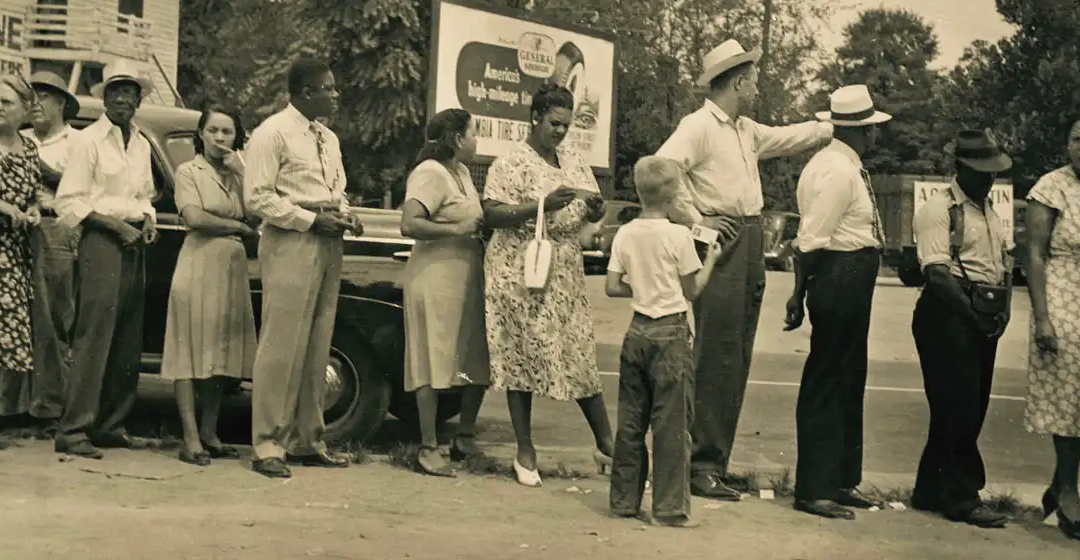
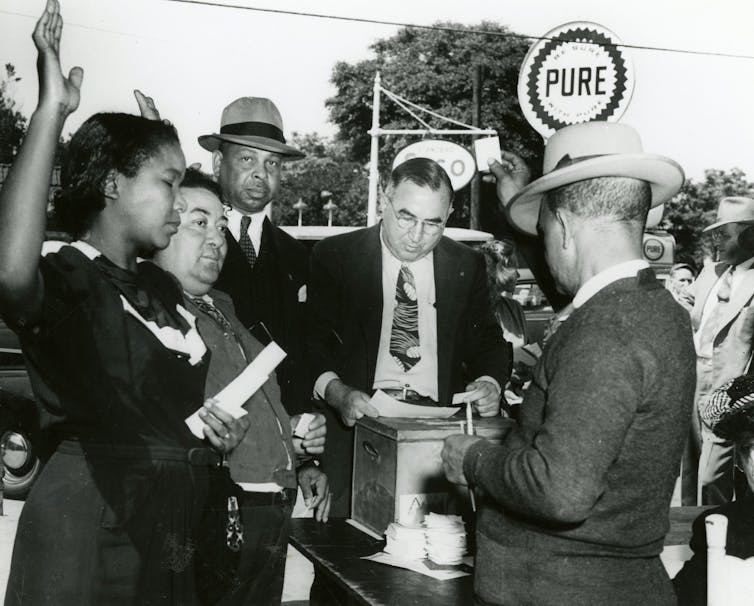
In that year’s state primary, more than 30,000 African Americans, including George Elmore and his wife Laura, voted. Elmore remarked, “In the words of our other champion, Joe Louis, all I can say is ‘I’m glad I won.’”
His photos of the long line of voters in his community’s precinct are now in the archives of the University of South Carolina where I teach history.
In the years that followed, voter education and registration programs by civil rights organizations transformed the Democratic Party in the state, both in terms of the makeup of its membership and the policies it pursued. The move sparked the departure of many white Democrats to the Republican Party, including the segregationist Sen. Strom Thurmond.
Thurmond’s defection in 1964 legitimized the move for other white Democrats and hard-core segregationists who aligned themselves with an increasingly conservative Republican Party. Not surprisingly, some of the key architects of Richard Nixon’s invidious Southern strategy, which sought to weaken the Democratic Party in the South through the use of dog-whistle politics on racial issues, came from South Carolina.
As this year’s presidential candidates focus on South Carolina, it is clear that the racial makeup of the state’s electorate is vastly different than that in Iowa or New Hampshire, two of the states where the popularity of candidates has already been tested. But Democrats should view the South Carolina primary as more than a shift from voting in small, mostly white states. They should see the state as representative of the party’s strategic core, a strong African American constituency with diverse interests and perspectives.
African Americans in South Carolina have been fighting and winning legal and political battles for voting rights and electoral power since Reconstruction and as Democrats since the 1940s.
A personal price
After Elmore’s victory in 1947, state NAACP President James M. Hinton gave a somber, prophetic warning: “White men want office, and they want the vote of our people. We will be sought after, but we must be extremely careful who we vote for. … We must have a choice between those who have fought us and those who are our friends.”
George Elmore and his family paid a price for challenging the entrenched power of the white Democratic Party in 1946. In an interview with the University of South Carolina’s Center for Civil Rights History and Research, which I lead, his 81-year-old son Cresswell Elmore recalled the retaliation the family experienced. Ku Klux Klan terrorists burned a cross in their yard and threatened their family. Laura Elmore suffered a nervous breakdown and went into a mental hospital. State agents raided Elmore’s liquor store, claiming the liquor he had bought from the standard wholesaler was illegal, and broke the bottles. Soda bottling companies and other vendors refused to send products on credit. Banks called in loans on their home and other property. Forced into bankruptcy, the family moved from house to house and the disruption scattered Cresswell and his siblings. When Elmore died in 1959 at the age of 53, only scant attention was paid to his passing.
The monument at his grave was unveiled in 1981, at a ceremony attended by civil rights veterans including his original attorney, Harold Boulware.
As the Democratic Party and presidential candidates appeal to African American voters, they would do well to remember the remarkable fight Elmore and others waged against the forces of bigotry and injustice. These historical struggles illuminate both the gains made over many generations and the ongoing battle against inequities and voter suppression tactics that persist to this day in South Carolina and across the nation.
From the moment of capture, through the treacherous middle passage, after the final sale and throughout life in North America, the experience of enslaved Africans who first arrived at Jamestown, Virginia, some 400 years ago, was characterized by loss, terror and abuse.
The Abolition of the Slave Trade Act of 1807 made it illegal to buy and sell people in British colonies, but in the independent United States slavery remained a prominent – and legal – practice until December 1865. From this tragic backdrop one of the most poignant American musical genres, the Negro spiritual, was birthed.
Sometimes called slave songs, jubilees and sorrow songs, spirituals were created out of, and spoke directly to, the black experience in America prior to the Emancipation Proclamation of 1863, that declared all slaves free.
West African roots
Spirituals have been a part of my life from childhood. In small churches in Virginia and North Carolina, we sang the songs of our ancestors, drawing strength and hope. I went on to study, perform and teach the spiritual for over 40 years to people across the U.S. and in various parts of the world.
Despite attempts, white slave-owners could not strip Africans of their culture. Even with a new language, English, and without familiar instruments, the enslaved people turned the peculiarities of African musical expressions into the African American sound.
Rhythms were complex and marked by syncopation, an accent on the weak beat. Call-and-response, a technique rooted in sub-Saharan West African culture, was frequently employed in spirituals. Call-and-response is very much like a conversation – the leader makes a statement or asks a question and others answer or expound.
An example of this is the spiritual, Certainly Lord. The leader excitedly queries, “Have you got good religion?” and others jubilantly respond, “Certainly, Lord.” Using repetition and improvisation, the conversation continues to build until everyone exclaims, “certainly, certainly, certainly, Lord!”
In Africa, drums were used to communicate from village to village because they could be used to mimic the inflection of voices.
As early as 1739 in the British colonies, drums were prohibited by law and characterized as weapons in an attempt to prevent slaves from building community and inciting rebellion.
As a result, enslaved people “played” drum patterns on the body. Hands clapped, feet stomped, bodies swayed and mouths provided sophisticated rhythmic patterns. This can be observed in Hambone, an example of improvised body music.
Oral tradition
Some spirituals were derived from African melodies. Others were “new,” freely composed songs with a melodic phrase borrowed from here and a rhythmic pattern from there – all combined to create an highly improvised form.
The spiritual was deeply rooted in the oral tradition and often created spontaneously, one person starting a tune and another joining until a new song was added to the community repertoire. The sophisticated result was beautifully described in 1862 by Philadelphia musicologist and piano teacher Lucy McKim Garrison.
“It is difficult to express the entire character of these negro ballads by mere musical notes and signs,” she said. “The odd turns made in the throat; the curious rhythmic effect produced by single voices chiming in at different irregular intervals, seem almost as impossible to place on score.”
Textually, the spiritual drew from the Hebrew-Christian Bible, particularly the Old Testament, with its stories of deliverance and liberation. Songs like “Go Down Moses” direct the awaited deliverer to “go down” to Southern plantations and “tell ole Pharaoh” – the masters – to “let my people go.”
Songs of survival
For the slaves, the spiritual proved to be an ingenious tool used to counter senseless brutality and the denial of personhood. In order to survive emotionally, resilience was critical. In the spirituals, slaves sang out their struggle, weariness, loneliness, sorrow, hope and determination for a new and better life.
Yet these are not songs of anger. They are songs of survival that voice an unwavering belief in their own humanity and attest to an abiding faith in the ultimate triumph of good over systemic evil.
Interspersed within these seemingly hopeless texts are phrases that reflect the heart’s hope: the words “true believer” amid the acknowledgment that “sometimes I feel like a motherless child,” for example; and “glory, hallelujah” interjected after the text, “nobody knows the trouble I see.”
People whose every movement was dictated audaciously declared, “I’ve got shoes. You’ve got shoes. All God’s children got shoes. When I get to heaven gonna put on my shoes, gonna walk all over God’s heaven.” In the same song they denounced the hypocrisy of the slaveholders’ religion: “Everybody talkin’ ‘bout heaven ain’t going there.”
Spirituals weren’t simply religious music. In his seminal work, “Narrative Of The Life of Frederick Douglass An American Slave,” published in 1845, the abolitionist explains,
“they were tones loud, long, and deep; they breathed the prayer and complaint of souls boiling over with the bitterest anguish. Every tone was a testimony against slavery, and a prayer to God for deliverance from chains.”
The spiritual served as a mediator between the dissonance of oppression and the belief that there was “a bright side somewhere.”
Four hundred years after the birth of slavery, as the world still struggles with racial division, injustice and a sense of hopelessness, spirituals can teach how to build hope in the face of despair and challenge the status quo.
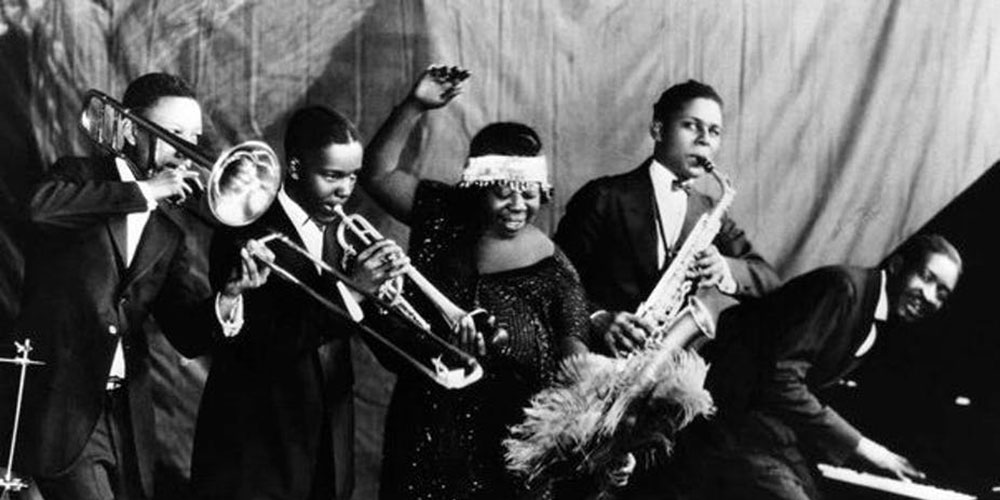
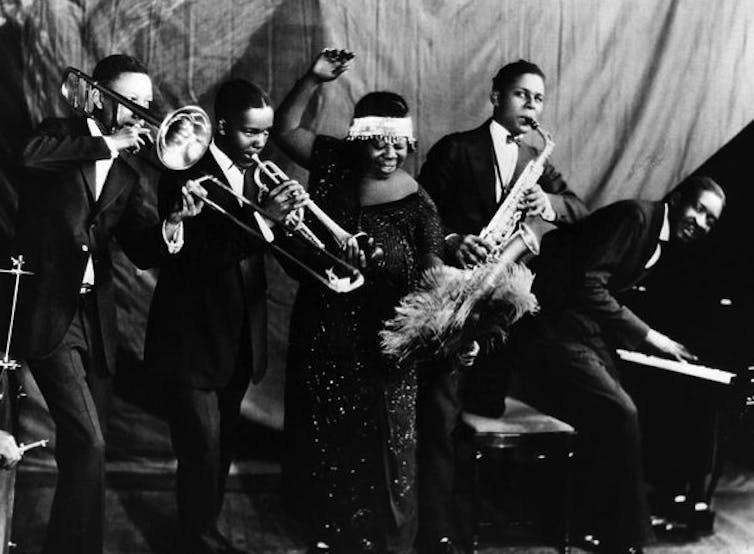
Ma Rainey was one of Paramount Records’ most popular artists. JP Jazz Archive/Redferns
In the 1920s and 1930s, record sales of black artists were very lucrative for the music industry. As a June 1926 article from Talking Machine World explained:
The Negro trade is…itself…an enormously profitable occupation for the retailer who knows his way about…. The segregation of the Negro population has enabled dealers to build up a trade catering to this race exclusively.
Yet record companies routinely took advantage of the more unschooled, vernacular performers – especially black ones, who were already denied access to broader markets. It was standard operating procedure back in the days of “race music” – the name given to recordings by black artists that were marketed to the black buying public.
“Some will rob you with a six-gun…and some with a fountain pen.” So said Woody Guthrie in his song “Pretty Boy Floyd.”
Bottom line: if record companies could get away with it, there was no bottom line. No negotiated contract to sign. No publishing. No royalties. Wham bam thank you man. Take a low-ball flat fee and hit the road. Anonymity was also implicit in the deal, so many black artists were forgotten, their only legacy the era’s brittle shellac disks that were able to withstand the wear of time.
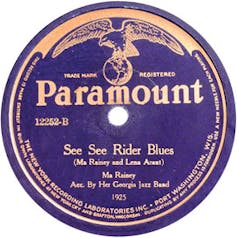
‘Some will rob you with a six-gun…and some with a fountain pen’ – record companies like Paramount routinely exploited black musicians in the 1920s. Wikimedia Commons
One of the most prominent early race labels was Paramount Records, which, between 1917 and 1932, recorded a breathtaking cross-section of seminal African-American artists.
In 2013 I learned that Jack White of Third Man Records (in partnership with Dean Blackwood’s Revenant Records) would be putting together a compilation of Paramount’s historic recordings. The project would be a grand collaboration of two deluxe volumes that would contain a stunning 1,600 tracks.
I was part of a team of researchers and writers tasked with unearthing new information about the featured artists and their songs. For me, it was an opportunity to put a face on some of Paramount’s more enigmatic artists. Listening to track after track, a zeitgeist began to coalesce. As voices from the grooves accrued to tell a story of a collective black experience, I came to see these performances as cumulative cultural memory – each track a brushstroke in a painting of a long-forgotten landscape.
Here’s a taste of what I found.
Pullman Porters Quartette
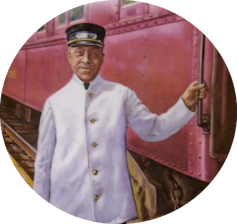
The Pullman Company, manufacturers of railroad passenger cars, was magnanimous towards its African-American workforce. Among other benefits, they provided in-house musical instruction, which included a cappella quartet singing lessons.
The Pullman Company employed a large number of African Americans as porters. Flickr/antefixus U.E., CC BY-NC-ND
The Pullman quartets, I learned, were a franchise: multiple configurations of singers performing concurrently under the company banner. They put on concerts, either performing live on the radio, or on long haul train routes as a form of passenger entertainment. The men who made the records were billed as the “President’s Own” – the working Pullman porters considered the company’s premier lineup.
In the late 1920s, The Pullman Porters Quartette of Chicago recorded a number of sides for Paramount. One tune was “Jog-a-Long Boys,” where they sang of sad roosters and being turned down by widow Brown, the “fattest gal in town.” The chorus went:
Jog-a-long, boys, jog-a-long, boys,
Be careful when you smile,
Do the latest style,
But jog-a-long, jog-a-long boys.
Jog-a-long, boys, jog-a-long, boys,
Don’t fool with google eyes,
That would not be wise,
But jog-a-long, jog-a-long boys.
At first, it seemed as if it were no more than a silly ditty performed in upbeat counterpoint harmony. Then it hit me: they were making light of a horrific reality – specifically, that a black man who dared to smile or even look askance at a white woman was putting himself in grave danger.
Look your best, but don’t forget your place…and just jog along, boys.
‘Jog-a-long Boys,’ by The Pullman Porters Quartet of Chicago.
Horace George
Horace George of Horace George’s Jubilee Harmonizers was a showman and an opportunist, a versatile musician who performed in whatever style sold, whether it was novelty gospel, blues, comedy or jazz.
His gospel group cut one record for Paramount in 1924, but he first surfaced as early as 1906, advertised in the Indianapolis Freeman as “the great clarinetist, comedian, and vocalist.” A few years later, George found himself in Seattle as the “Famous Colored Comedian…who gives correct images,” and later as the “Man with the Clarinet” in a touring black vaudeville troupe, the Great Dixieland Spectacle Company.
In the late 1910s, a black newspaper – the Indianapolis Freeman – called Horace George “a novelty on any bill.” The novelty? He could play three clarinets at once!
Rev TT Rose
Beyond the rollicking piano-driven gospel sides he cut for Paramount in the late 1920s, nothing was known of Rev T T Rose. Rose’s “Goodbye Babylon” was the title track of Dust-to-Digital’s 2004 Grammy-nominated collection, Goodbye, Babylon. It was also inspiration for a rock ‘n’ roll tune by the Black Keys. And Rose’s recording of “If I Had My Way, I’d Tear This Building Down” – later performed by artists ranging from Rev. Gary Davis to the Grateful Dead – is one of the earliest known recorded versions of that song.
Rev Rose’s personal story was the most heartening of all. He lived in Springfield, Illinois, and I located his 90-plus-year-old daughter Dorothy, who described her father as a man on a mission to end racism and institutionalized segregation.
As a child, Rose had witnessed the aftermath of the infamous 1908 Springfield Race Riots, an event that precipitated the formation of the NAACP. In the late 1920s Rose moved from Chicago to Springfield, in order to minister the city’s black community.
In an oral history recording, Rev Rose described Springfield as “just really a type of Southern town” with an “overpowering resentment of the Negro…distrust and the fear that the Negro might someday become stronger.” When he returned to Springfield, he observed that the time that had elapsed since the race riots was “a very short span of time to erase all the scars and the prejudices and the hate that was engendered…in that very unfortunate affair.”
It was a hate, he continued, that “Kind of hung like a cloud from an atomic bomb over the whole neighborhood” causing the black citizens of Springfield to go “into themselves quite a bit.”
After his short recording career with Paramount in the late 1920s, Rev Rose went on to become a regional bishop in the Church of God in Christ. He recorded because he thought songs could both uplift and spread messages of hope and perseverance in the struggle for Civil Rights. When he sang “If I Had My Way,” it’s clear that the building he wanted to tear down was no less than the edifice of racism.
It’s impossible to see from the street, so you would never know it’s there.
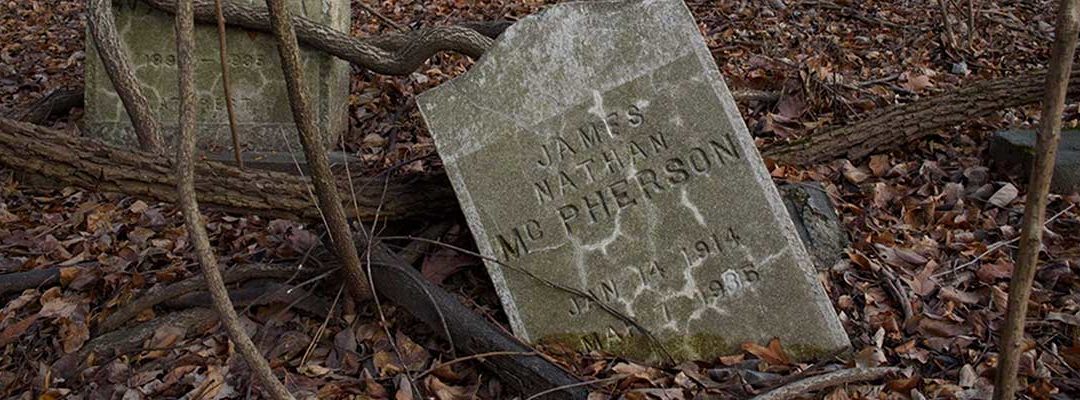
To get to St. George Cemetery, especially its oldest section, you have to make your way past branches and thorns, across the weathered hills and over downed trees. Eventually, dozens of scattered headstones, some of them knocked over, come into view. And there, sitting upright is the gravestone of William Chapman, an African-American veteran of the Civil War who died March 21, 1904.
My interest in abandoned African-American cemeteries started in graduate school when I was assigned to write a story about a black woman named Rose Sturdivant Young, who was leading the charge to restore an abandoned cemetery in North Carolina. Her father, mother and other ancestors are buried there.
African-American cemeteries across the country have largely been neglected, their powerful histories obscured by weeds, debris and, as much as anything, the passage of time. Few people know their locations. Fewer still know the stories of the people buried there.
When I came to ProPublica Illinois as a reporting fellow, I saw a chance to look into this issue. I focused on two cemeteries in St. Clair County, a few miles southeast of St. Louis across the Mississippi River: St. George and Booker T. Washington Cemetery. I spent time hiking the grounds with folks who are trying to unearth and preserve the histories of the cemeteries, as well as trying to keep up the cemeteries themselves.
Both cemeteries once served as the final resting places for the black communities in and around St. Clair County. Of the thousands of people buried in the two cemeteries, close to 30 African-American veterans have been identified, including at least one — Chapman — from the Civil War. But they were more than just cemeteries. Black residents, according to local lore, used Booker T. Washington as a shelter during the East St. Louis race riots in 1917, when white mobs murdered dozens of black citizens. After the riots, many of the victims of the violence supposedly were buried there.
“The black cemeteries are being destroyed, accidentally or on purpose,” said Judy Jennings, a U.S. Air Force contract specialist and amateur historian who, for nearly two decades, has been researching the cemeteries, especially Booker T. Washington. “It’s important to preserve this history.”
It’s difficult to estimate the number of abandoned cemeteries among the thousands of licensed and unlicensed cemeteries in Illinois. The state doesn’t seem to keep track and no one, as far as I can tell, has studied the issue in enough detail to compile a list. But funeral home directors and others I spoke with said there could be many, from plots on private farms and other family property to large cemeteries like St. George and Booker T. Washington.
As segregation eased over the decades and other cemeteries began to allow blacks to be buried, Booker T. Washington and St. George became overgrown and neglected. Over time, many people forgot they existed.
Today, Booker T. Washington sits in a large bowl at the bottom of a hill and frequently floods. Conditions at St. George, which is hidden deep in the woods, are worse. In fact, logging trucks drove through the cemetery in July 2016 and crushed a number of the headstones. Police investigated the incident but no one was charged.
After spending time in St. Clair County and talking with descendants of some of those buried at Booker T. Washington and St. George, as well as with researchers like Jennings, I concluded the abandonment of the cemeteries was mostly the result of a series of unfortunate circumstances, instead of deliberate neglect.
Other abandoned cemeteries probably faced similar fates. People stopped burying loved ones there and, because these are not public lands, there’s no taxpayer money to maintain them. Over time, no one was left to do the weeding and other necessary upkeep. Owners — private citizens when they opened — died and, according to the St. Clair County Genealogical Society, which has studied the cemeteries, it was unclear who took over ownership.
Only a few descendants still try to maintain plots.
Perhaps the best we can do after so many years is recognize that these cemeteries were once central to African-American communities and learn what we can from them. If you are aware of any abandoned historically black cemeteries in Illinois or know of historical societies researching this area, please get in touch. Email me at [email protected].
Most people recognize that there are first names given almost exclusively by black Americans to their children, such as Jamal and Latasha.
While fodder for comedians and social commentary, many have assumed that these distinctively black names are a modern phenomenon. My research shows that’s not true.
Long before there was Jamal and Latasha, there was Booker and Perlie. The names have changed, but mycolleagues and I traced the use of distinctive black names to the earliest history of the United States.
As scholars of history, demographics and economics, we found that there is nothing new about black names.
A 2012 ‘Key & Peele’ sketch poked fun of historically black names.
Until a few years ago, the story of black names depended almost exclusively on data from the 1960s onward. New data, such as the digitization of census and newly available birth and death records from historical periods, allows us to analyze the history of black names in more detail.
We used federal census records and death certificates from the late 1800s in Illinois, Alabama and North Carolina to see if there were names that were held almost exclusively by blacks and not whites in the past. We found that there were indeed.
We were interested to learn that the black names of the late 1800s and early 1900s are not the same black names that we recognize today.
The historical names that stand out are largely biblical such as Elijah, Isaac, Isaiah, Moses and Abraham, and names that seem to designate empowerment such as Prince, King and Freeman.
These names are quite different from black names today such as Tyrone, Darnell and Kareem, which grew in popularity during the civil rights movement.
Once we knew black names were used long before the civil rights era, we wondered how black names emerged and what they represented. To find out, we turned to the antebellum era – the time before the Civil War – to see if the historical black names existed before the emancipation of slaves.
Since the census didn’t record the names of enslaved Africans, this led to a search of records of names from slave markets and ship manifests.
Using these new data sources, we found that names like Alonzo, Israel, Presley and Titus were popular both before and after emancipation among blacks. We also learned found that roughly 3% of black Americans had black names in the antebellum period – about the same percentage as did in the period after the Civil War.
But what was most striking is the trend over time during enslavement. We found that the share of black Americans with black names increased over the antebellum era while the share of white Americans with these same names declined, from more than 3% at the time of the American Revolution to less than 1% by 1860.
By the eve of the Civil War, the racial naming pattern we found for the late 1800s was an entrenched feature in the U.S.
Black names tell us something about the development of black culture, and the steps whites were taking to distance themselves from it.
Scholars of African American cultural history, such as Lawrence W. Levine, Herbert Gutman and Ralph Ellison, have long held that the development of African American culture involves both family and social ties among people from various ethnic groups in the African diaspora.
In other words, people from various parts of Africa came together to form black culture as we recognize it today. One way of passing that culture on is through given names, since surnames were stolen during enslavement.
How this culture developed and persisted in a chattel slavery system is a unique historical development. As enslavement continued through the 1800s, African American culture included naming practices that were national in scope by the time of emancipation, and intimately related to the slave trade.
Since none of these black names are of African origin, they are a distinct African American cultural practice which began during enslavement in the U.S.