
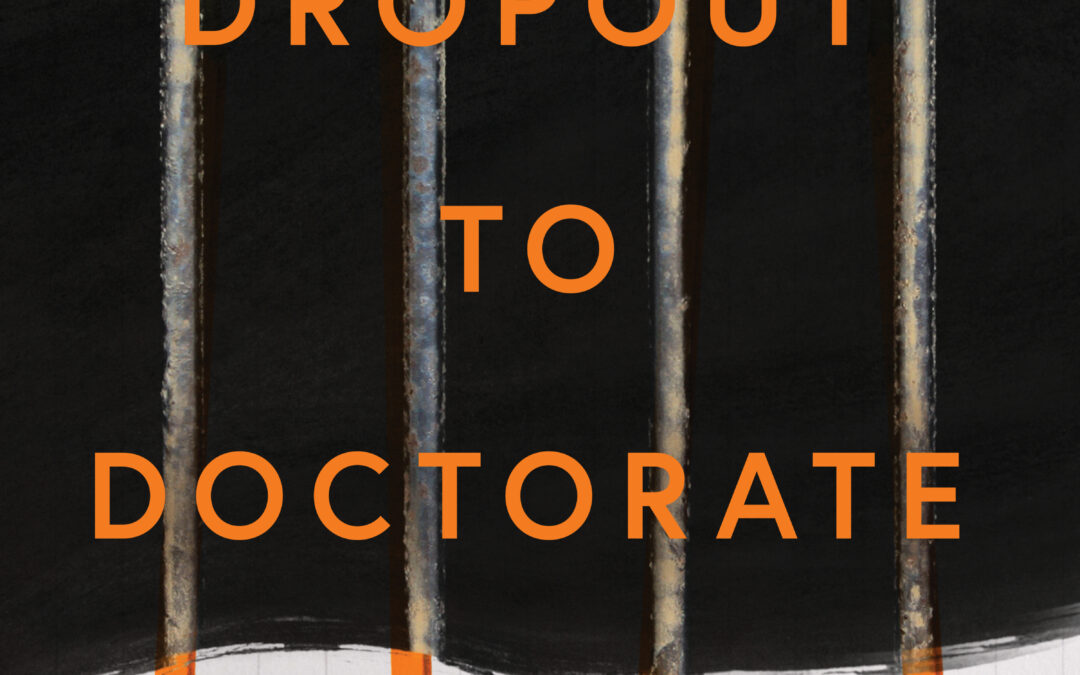
From Dropout to Doctorate: UF x Dr. Terence Lester

From Dropout to Doctorate: UF x Dr. Terence Lester
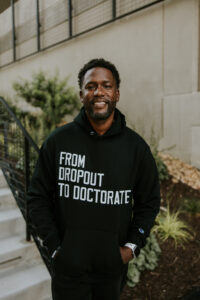
 

Dr. Terence Lester photo credit Dani Guerra

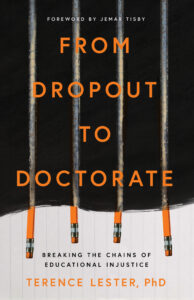
UrbanFaith Editor Allen Reynolds spoke with Dr. Terence Lester about his new book From Dropout to Doctorate: Breaking the Chains of Educational Injustice. He addresses generational trauma, past and current educational injustice, and wisdom for young people trying to achieve from difficult circumstances. The excerpts from the interview below have been edited for length and clarity. 

Allen

Can you talk a little bit about why conversations around generational trauma and immediate trauma from environment are more important than ever for students as they’re trying to get an education?

Dr. Lester

Yeah, so very unique question. I normally answer this, because when we talk about trauma, trauma itself can be many things. And so, I normally talk about trauma in terms of, I guess, two lanes, right? You have historical trauma, right? This is the collective and cumulative emotional harm experienced by a group of people over time. So like this can be caused by systemic oppression, violence, marginalization, right? You have the impact of things like Jim Crow, redlining, you know, the genre type of laws that actually created barriers for people of color, specifically black people or people who derive from historically marginalized communities. Let’s take for instance, if you were born in a predominantly poor or impoverished environment, chances are there may be a food desert. Chances are you might not have [adequate] access to healthcare. Chances are that the school systems that you may frequent are underfunded, right? And so that can be historically designed due to things related to racism, oppression, and things like that. I argue in the book that this creates the environment for generational trauma to happen. You know, when you grow up in a food desert and you don’t have access to nutritious foods. And that impacts your health. Or you grow up in an environment where the environment itself is being divested or gentrified and you don’t have access to some of the things that are coming in. And that impacts your occupational journey. You grow up in environments where there’s a lot of lack. And so that can create more of the generational trauma that could be passed down. I was telling this story the other day to this guy. My grandmother is 93. She’s still alive. And she talks to me often. She still walks two miles a day. She text messages me and we have these very in-depth conversations. And she talks to me about how she grew up not being able to walk over to the water fountain or not being able to work in certain stores in the community that we live in…that black and brown people frequent these days, or not being able to go to certain parts of town. And that kind of informed how she made decisions, what school she went to or did not go to. That informed how she raised her children. That informed her ability to dream beyond some of the oppression that she is talking to me about today because obviously I’m living in a time where I can pursue more things. I have to fight a little harder, but she’s given me an opportunity to look into her life and see through her lens and how she is describing some of the generational trauma that is passed down based on the historical trauma that our ancestors had to face. And so those things are important to me. And I think it’s important too to be trauma informed. And when I talk about being trauma informed, I’m talking about creating environments that are safe. Where people feel emotionally and physically safe and secure. I’m talking about trustworthiness and transparency, where people are able to communicate and articulate their own narratives without it being edited through a single narrative lens. I’m talking about having support and collaboration and a sense of empowerment and cultural humility, right? Because being trauma informed is asking the question: what happened to you versus what’s wrong with you? And I think most times that lack of awareness doesn’t create the opportunities where we can really understand the context of a community, but also how to show up and support those who may be still struggling.
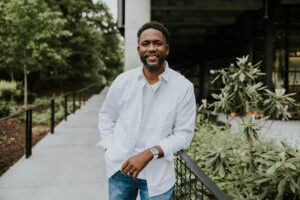
photo credit Dani Guerra

Allen

Can you talk about what you’re seeing and why that’s still valuable? Why is education, especially after high school, still valuable as a tool for helping us to break free and help to break down some of these systems?

Dr. Lester

Yeah, I think you’re right that we should call out that when political shifts happen and you pull resources from those who are poor or those who need it most, it puts them at a greater disadvantage. We have seen these types of funding cuts and political shifts impact students who are marginalized, specifically those who come from historically marginalized communities. We’ve seen this impact on students who are living with disabilities. We’ve seen reduced staffing when it comes to the Department of Education, which was a sector of government that was to uphold this promise of equal education to its populace or its citizens. The protection of several civil rights, the protection of students who genuinely want to receive an education. I think to answer your question, education is still beneficial, whether it’s the traditional route or independent scholarship. Education gives you the ability to dream beyond your circumstances. It gives you the articulation or the critical thought. To give a social critique of what’s happening in today’s society. Education can grow you in your character, in your integrity, in your worldview, right? It expands your perspective. It allows you to travel into communities that you’ve never been a part of to understand how people think. It gives you a perspective of the global economy or what ML King describes as the global village, right? It opens us up to be able to see the world through multiple lenses instead of allowing us to have a narrow focus. I think education itself gives you the skills needed to pursue particular career paths. I think education is able to build you up in ways that you could not otherwise be built up had you not had direct contact to those who have had the proper training. I think one of the things that I’m fearful of right now is that social media has given everybody access to self-assert themselves as experts. Sometimes we see people online and they will say, “I’m a person that helps people heal.” But they’ve never gone through clinical training. They don’t have an understanding of theoretical approaches. They don’t have the training in diagnosing someone. [What if] somebody says, “I’m a pilot. I’m a self-taught pilot.” Would you hop on a plane with someone who has not gone through aviation school? And so, I think there’s some benefits still when it comes to education because it allows you to have that expertise and that training that you can’t get from any other place.

However, I still do believe in independent scholarship. I believe that there is a sector of people who are disciplined enough to read and to understand concepts without a traditional instructor. I still do believe that people are starting to tap into entrepreneurship and really create and build their own tables. And I think that is a form of hands-on education that you can’t get through any other means but by lived experience. And so, I believe in the both and, right? I’m an entrepreneur, but I’m also a scholar. I’m a practitioner, but I’m also an academic. And I often say in the educational space that I’m a practitioner scholar because I was practicing the work and doing the work long before I had any philosophical inquiries. And so, I think they both can be beneficial. I don’t want to exclude a group of people who don’t feel education is their path, but I don’t want to exclude the group who says education is for me. I think there are non-traditional students and there are traditional students and both are valuable.
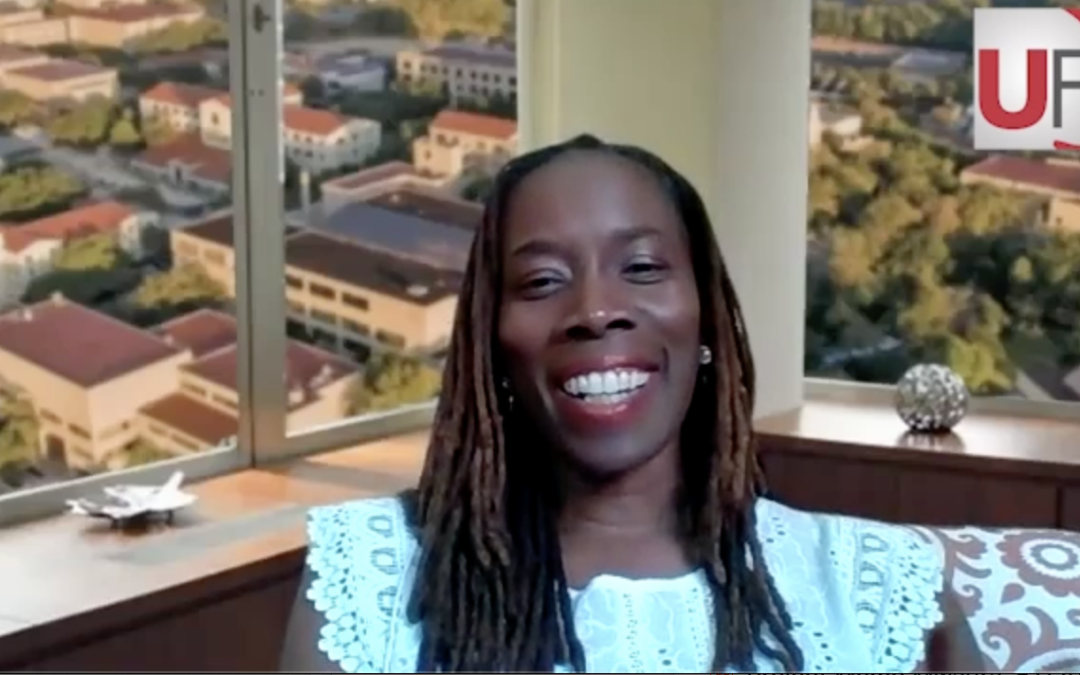
Homecoming: An Interview with Thema Bryant

Homecoming: An Interview with Thema Bryant

Dr. Thema Bryant is a psychologist and minister who has become one of the most influential voices addressing mental health and spiritual health. UrbanFaith sat down to interview her about her new book Homecoming: Overcome Fear and Trauma to Reclaim Your Whole, Authentic Self. The interview is above, more information about the book is below.

In the aftermath of stress, disappointment, and trauma, people often fall into survival mode, even while a part of them longs for more. Juggling multiple demands and responsibilities keeps them busy, but not healed. As a survivor of sexual assault, racism, and evacuation from a civil war in Liberia, Dr. Thema Bryant knows intimately the work involved in healing. Having made the journey herself, in addition to guiding others as a clinical psychologist and ordained minister, Dr. Thema shows you how to reconnect with your authentic self and reclaim your time, your voice, your life.

Signs of disconnection from self can take many forms, including people-pleasing, depression, anxiety, and resentment. Healing starts with recognizing and expressing emotions in an honest way and reconnecting with the neglected parts of yourself, but it can’t be done in a vacuum. Dr. Thema gives you the tools to meaningfully connect with your larger community, even if you face racism and sexism, heartbreak, grief, and trauma. Rather than shrinking in the face of life’s difficulties, you will discover in Homecoming the therapeutic approaches and spiritual practices to live a more expansive life characterized by empowerment, healthier relationships, gratitude, and a deeper sense of purpose.

No More Drive-By Youth Ministry

Inner-city life is hard. The complexities of life in “da hood” should encourage those seeking to serve inner-city youth to approach individuals with humility and long-term relationships. For years, I have been bothered by drive-by “mercy ministry” approaches by those who pull up in vans from outside low-income neighborhoods to “do ministry” as if those complexities do not exist. Granted, intentions are good and many are thankful that real concern is evidenced, but drive-by ministries are under the delusion that spending a few hours with inner-city youth from difficult circumstances is actually helping them in the long-run. The truth is that “making a difference” in the life of youth from difficult circumstances takes years of personal care and discipleship, not just a few hours of games, Bible stories, and listening to testimonies every month. Many of the problems in “da hood” are systemic and generational because the chain of child trauma has not been intercepted and healed.

Child trauma is devastating and is one of the ways in which sin and evil destroy the lives of many people early in life, igniting a life of self-destruction and hurting others. Children who experience trauma become teens who present typical reactions like impaired cognitive function, impaired academic performance, feelings of depression, anxiety, irritability, despair, apathy, irrational guilt, easy and frequent crying, increased feelings of insecurity, social isolation, sleep difficulties, and acting out or anti-social behaviors that may lead to juvenile delinquency, substance abuse, sexual promiscuity, fatigue, hypertension, psychosomatic and somatic symptoms, and the like.

In Ten Things Every Juvenile Court Judge Should Know About Trauma and Delinquency, from the National Council of Juvenile and Family Court Judges, Kristine Buffington, Carly Dierkhising, and Shawn Marsh offer a highly informative perspective that I argue is just as needed for those working with inner-city youth from difficult circumstances. The authors make the following points trauma exposed children:

(1) A traumatic experience is an event that threatens someone’s life, safety, or well-being. Trauma can include a direct encounter with a dangerous or threatening event, or it can involve witnessing the endangerment or suffering of another living being. A key condition that makes these events traumatic is that they can overwhelm a person’s capacity to cope, and elicit intense feelings such as fear, terror, helplessness, hopelessness, and despair. Traumatic events include: emotional, physical, and sexual abuse; neglect; physical assaults; witnessing family, school, or community violence; war; racism; bullying; acts of terrorism; fires; serious accidents; serious injuries; intrusive or painful medical procedures; loss of loved ones; abandonment; and separation.

(2) Child traumatic stress can lead to Post Traumatic Stress Disorder (PTSD). Rates of PTSD in juvenile justice-involved youth are estimated between 3 percent to 50 percent making it comparable to the PTSD rates (12 percent-20 percent) of soldiers returning from deployment in Iraq.

(3) Trauma impacts a child’s development and health throughout his or her life. Exposure to child abuse and neglect can restrict brain growth especially in the areas of the brain that control learning and self regulation. Exposure to domestic violence has also been linked to lower IQ scores for children. Youth who experience traumatic events may have mental and physical health challenges, problems developing and maintaining healthy relationships, difficulties learning, behavioral problems, and substance abuse issues.

(4) Complex trauma is associated with risk of delinquency. In fact, about 72 percent of youth that enter the juvenile justice system have diagnosable psychiatric and psychological disorders. Moreover, research shows that youth who experience some type of trauma of any kind are at elevated risk of entering the juvenile justice system. Even worse, about 50 percent of the male victims of child maltreatment later became juvenile delinquents.

(5) Traumatic exposure, delinquency, and school failure are related. Success in school requires confidence, the ability to focus and concentrate, the discipline to complete assignments, the ability to regulate emotions and behaviors, and the skills to understand and negotiate social relationships. When youth live in unpredictable and dangerous environments they often, in order to survive, operate in a state of anxiety and paranoia often expressed through “abnormally increased arousal, responsiveness to stimuli, and scanning of the environment for threats,” according to the Dorland’s Medical Dictionary for Health Consumers.

(6) Trauma assessments can reduce misdiagnosis, promote positive outcomes, and maximize resources. Often trauma exposed children are often misdiagnosed as hyperactive, having attention deficits, or general behavior disorders when, in fact, there are deeper issues present.

(7) There are mental health treatments that are effective in helping youth who are experiencing child traumatic stress. As much as I believe in biblical counseling, because of the physical damage done to the brain of trauma-exposed children, there needs to be more openness for some youth to get clinical help.

(8) There is a compelling need for effective family involvement. Youth who do not have helpful and consistent family support are at higher risk of violence and prolonged involvement in the court system.

(9) Youth are highly resilient. Resiliency is the capacity for human beings to thrive in the face of adversity like trauma. Research suggests that the degree to which one is resilient is influenced by a complex interaction of risk and protective factors that exist across various domains, such as individual, family, community and school. Research on resiliency suggests that youth are more likely to overcome adversities when they have caring adults in their lives.

(10) The juvenile justice system needs to be trauma-informed at all levels — and so should church youth workers serving kids from difficult circumstances.

What Buffington, Deirkhising, and Marsh present above is the beginning to changing how we think about urban ministry. Low-income children from broken families living in rough inner-city neighborhoods are at risk of exposure to multiple traumas in ways that middle-class youth are not. To not understand the pervasiveness of trauma is to not take “da hood” seriously as a potential trauma zone.

The inference should not be that all inner-city kids are trauma victims, but that trauma must be a variable in considering how to help those in need and assessing whether or not current programs are capable of dealing with root issues. I am guilty of making this mistake in the past. I could have been far more helpful and patient had I been a trauma-informed inner-city church worker.

In the final analysis, I would argue that only healthy local churches are capable of bringing the kind of holistic community required to address urban pain and dysfunction. Only a committed community of believers can provide the long-term care, compassion, and discipleship needed to increase resilience and heal trauma-exposed communities.

While drive-by mercy ministry is great for PowerPoint presentations and fundraising brochures, holistic liberation driven by the Greatest Commandment (Matt. 22:34-40) requires a long-term commitment to loving relationships.