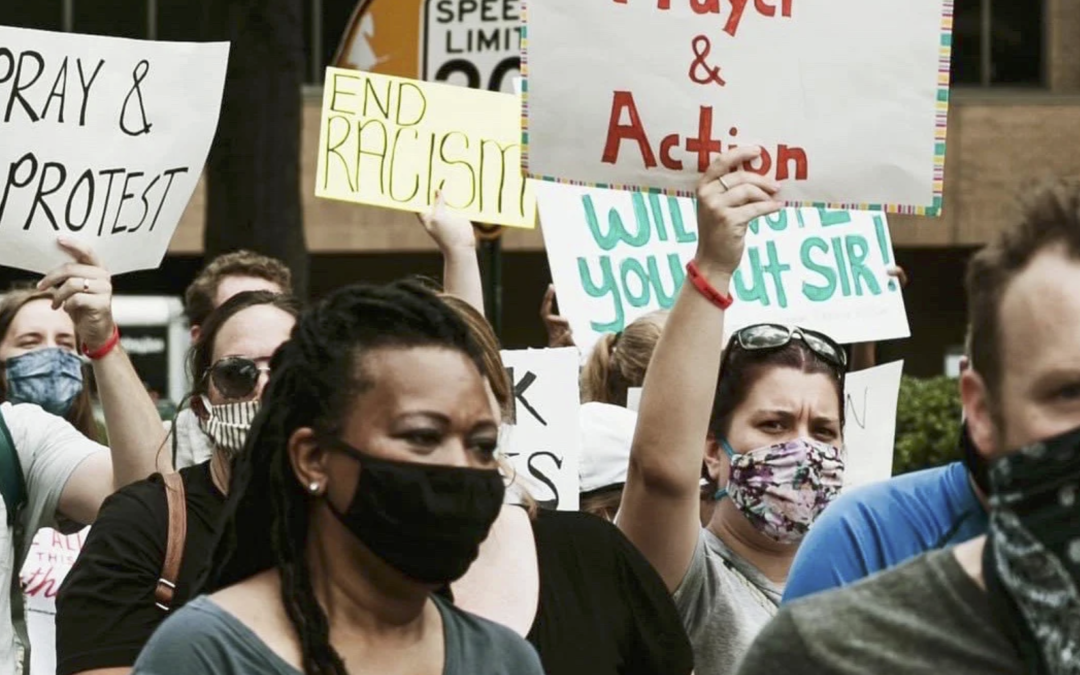
A network of more than a dozen Christian groups is launching an initiative to address police reform.
The Prayer & Action Justice Initiative — bringing together Black, Hispanic and Asian organizations along with groups focused on prisoners, prayer and public justice — will advocate for greater equality, accountability and transparency in the criminal justice system.
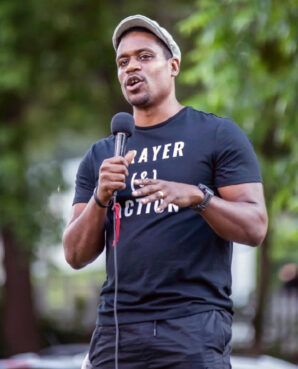
“The church as a whole, especially certain parts of the church, have not been very clear where they stand on racialized violence and on racial justice in general,” said Justin Giboney, president of The AND Campaign, a group focused on applying biblical values to pressing contemporary issues, which is spearheading the formation of the network.
Justin Giboney speaks during a racial justice demonstration in Atlanta. Photo courtesy of the Prayer & Action Justice Initiative
“We don’t want any ambiguity where we stand on justice. And so our thought is that it is time for the church to unite and, through uniting, we’ll have the credibility to lead on the issue of racial justice.”
The coalition, launched Wednesday (Aug. 19), includes the National Association of Evangelicals, National Day of Prayer Task Force, Asian American Christian Collaborative, National Latino Evangelical Coalition, National Hispanic Christian Leadership Conference, OneRace and the Church of God in Christ, a historically Black Pentecostal denomination.
The coalition also includes Prison Fellowship, a Christian organization founded by the late Chuck Colson, and the Center for Public Justice, a Christian think tank. Both will lead the initiative’s nonpartisan government advocacy work.
In a “Biblical Justice and Race Statement,” the groups said they mourned the loss of George Floyd, Breonna Taylor and Ahmaud Arbery “and all others who have lost their lives due to racialized violence. The Church must take these injustices personally, and take initiative to expel racial hatred and partiality from our society.”
Citing a dual commitment to the gospel and justice, the statement tied the groups’ efforts to the New Testament Book of James’ proclamation that faith should be accompanied with action.
“Right doctrine without righteous conduct is unfaithfulness,” they said. “Accordingly, to be silent or inactive on racism is immoral.”
The groups’ document calls for “policies designed to level the playing field so that outcomes are driven more by justice than wealth or race.” The policies advocated for in the document include laws for public disclosure of deaths in custody and use-of-force reports, fairer sentences and restorative opportunities for former prisoners to be reintegrated into society.
“We know this country has to do better, especially when it comes to African Americans in our criminal justice system,” said Giboney. “We think we can do that without necessarily a completely adversarial relationship with the police.”
He said there are times when there is unnecessary police contact. The network seeks both national and local consideration of how and whether police should be involved in some kinds of situations that have previously escalated with their presence.
“We know that that’s not an easy job,” Giboney said. “Whereas they do need to be held accountable and do a better job in many instances, they’re a part of our community as well.”
Individual supporters include the Rev. Barbara Williams-Skinner, a leader of African American church coalitions; the Rev. John Jenkins, pastor of the First Baptist Church of Glenarden in Maryland; and Super Bowl champion Benjamin Watson.
Many of the initiative’s members previously worked together on the Churches Helping Churches Challenge, which has raised more than $1 million since April to provide grants to mostly minority and immigrant churches that were in danger of closing during the coronavirus pandemic.
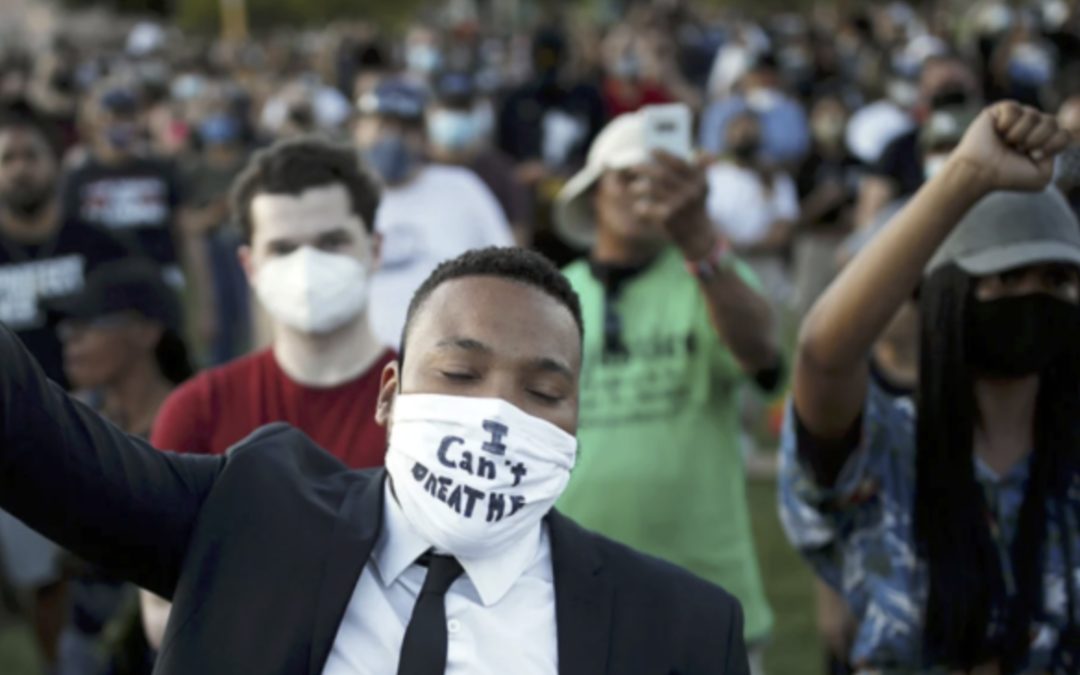
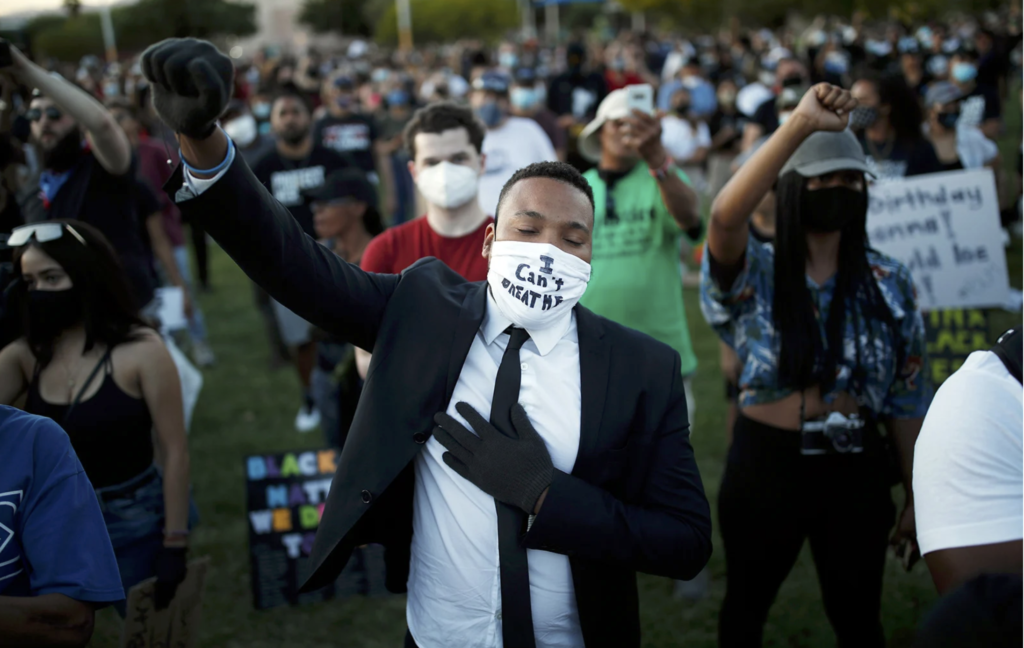
People raise their fists during a rally, Friday, June 5, 2020, in Las Vegas, against police brutality sparked by the death of George Floyd, a black man who died after being restrained by Minneapolis police officers on May 25. (AP Photo/John Locher)
For decades, “racial reconciliation” has been the language many white evangelical Christians used when they talked about cultivating improved race relations. “Racial justice” — the term often heard in recent months in the wake of the deaths of George Floyd and other Black people in police custody, was avoided.
When it comes to multiracial evangelical churches, a recent study finds, the use of the two approaches has been particularly evident of a divide between catering to the comfort of white congregants and answering the calls of Black people and others to remedy racial injustices.
Michelle Oyakawa, a visiting assistant professor of sociology at Kenyon College in Ohio, studied the responses of dozens of evangelical leaders of racially and ethnically diverse congregations in the U.S. to the two “racial frames” and found that using racial reconciliation is a “middle route.” It does not favor segregation but also does not advocate for civil rights, thus downplaying religious divisions that many people of color in multiracial congregations want to see confronted, she said.
Oyakawa wrote a paper based on findings from 121 in-depth interviews with pastors of multiracial churches for the Religious Leadership and Diversity Project, led by sociologist Korie Edwards at Ohio State University. Of those, Oyakawa said, 54 were evangelical, and “the overwhelming majority” chose the frame of “racial reconciliation” instead of “racial justice.”
As an example of how talking of reconciliation can frustrate progress on racial issues, Oyakawa, who is Japanese American, cited a white clergyman who visited Ferguson, Missouri, after the death of Michael Brown, a young Black man shot by a white police officer in 2014. In an interview, the clergyman said the gospel is “bigger than politics” but he spoke of the struggles of leaders of multiracial churches when they strive to be neutral.
“So we have to address (Brown’s killing) with the humility of Gospel and lead the way without picking one side or the other, but holding both sides together for conversation and movement beyond where we’re at,” he said. “And it’s a very difficult thing.”
Oyakawa, a former research assistant with the Religious Leadership and Diversity Project, said, “It might be hard for people to truly come together across race when these racial inequalities exist and aren’t being addressed.”
Mark DeYmaz. Courtesy photo
Stewart said he remains dissatisfied with the growing discussions since the death of George Floyd in Minneapolis under a white officer’s knee.
“The conversations are centered simply on conversations,” said Stewart, now a graduate student at Emory University’s Candler School of Theology, and a minister at an Augusta, Georgia, congregation affiliated with the Progressive National Baptist Convention, a historically Black denomination. “The conversations don’t deal with the given system of injustice that we’re trying to live in, and not simply try to live in, but also trying to be Christian in.”
The official statements from white evangelical churches or multiracial churches and Twitter hashtags in recent months, he said, only go so far. “Public proclamations without public change is public performance,” said Stewart. “So people can say, ‘Black lives matter’ but then in the same breath they can say one of these fundamental organizations that are fighting for Black lives to matter in society — they say that ‘I don’t agree with the organization.’”
After the recent deaths of Floyd, Ahmaud Arbery in Georgia, Breonna Taylor in Kentucky and others, DeYmaz said that more predominantly white churches and some multiracial churches are looking to foster cross-cultural relationships within their congregations that go beyond talk.
“They want to move beyond the racial reconciliation; they want to begin to think about structural shift,” he said. “They’re coming to recognize justice is not peripheral, but intrinsic to the gospel.”
Ahead of the Trend is a collaborative effort between Religion News Service and the Association of Religion Data Archives made possible through the support of the John Templeton Foundation.
Mark DeYmaz, co-founder and president of Mosaix Global Network, said part of the problem is that many evangelical multiracial churches may look diverse in the pews, but are dominated by white staff and a white viewpoint.
“If you’re in a church of 2,000 people and it’s evangelical and you looked out on the crowd and 30% of people are nonwhite, but your whole staff is essentially white, the way you lead worship is white,” said DeYmaz, whose organization offers support and training for multiracial churches. “The structures and the systems of your church are what we might call a white church.”
Since 1998, recent data shows, evangelical multiracial congregations rose from 7% to 23%.
In the years after the 2012 death of Trayvon Martin and the start of the Black Lives Movement, Danté Stewart, a Black writer and speaker, often acted as a volunteer consultant to the predominantly white evangelical churches where he attended. Pastors and other leaders sought his advice on racial issues, or how to become more multicultural. He eventually grew tired, Stewart said, of their emphasis on “unity talk” about racial reconciliation instead of “seeing black people as full citizens.”
Before he was a Democratic congressman and before he was a civil rights activist, Rep. John Lewis preached to the chickens on his family’s farm as a young boy.
It’s a story staffers of Lewis can repeat by heart because they’ve heard it so many times.
“They would bow their heads; they would shake their heads,” he recounts in footage from an appearance at a Houston church in the new documentary “John Lewis: Good Trouble.”
“They never quite said ‘Amen,’ but they tended to listen to me much better than some of my colleagues on the other side listen to me today in the Congress.”
The documentary, presented through a partnership including Magnolia Pictures and CNN Films, traces the journey of Lewis, now 80, from the fields of Alabama to the halls of Congress. The film portrays how Lewis was shaped by his faith and guided by religious leaders such as the Rev. Martin Luther King Jr. and the Rev. James Lawson, two advocates for nonviolent civil rights action.
“Faith is an integral part of Mr. Lewis’ life but also part of his activism,” said Dawn Porter, director of the documentary, who filmed the congressman for more than a year starting shortly before the 2018 election.
Though he is a politician rather than a preacher per se, Lewis considers politics to be his calling, she said.
“He started preaching to chickens and now in many ways even though he’s a layperson he preaches to us,” she said of the man with a seminary degree as well as a bachelor’s degree in religion and philosophy. “That is part of the reason why people find it so motivating and so comforting when he speaks.”
The 96-minute documentary, which is to be released on demand and in select theaters on Friday (July 3), includes what has become Lewis’ mantra in its title.
“My philosophy is very simple,” he says in the film, which is also expected to air on CNN in late September. “When you see something that is not right, not fair, not just, say something. Do something. Get in trouble. Good trouble. Necessary trouble.”
The documentary’s producers have created a “Good Trouble Sunday” promotion for the movie, encouraging houses of worship to host a digital screening starting this Sunday,for which they can keep a portion of ticket sales.
Faith leaders on a mid-June conference call promoting the documentary expressed appreciation for Lewis, who was diagnosed with cancer late last year, and his long service as a role model.
The Rev. Jamal Harrison Bryant, senior pastor of New Birth Missionary Baptist Church outside Atlanta, recalled seeking advice from Lewis in the 1990s, when as the NAACP’s youth director Bryant received pushback for suggesting the civil rights organization reach out to the hip-hop generation.
“He said to me: ‘Jamal, change is never politically correct,’” Bryant recalled. “‘If everybody is in agreement, it’s not that radical.”
In the documentary, Lewis, a member of Atlanta’s historic Ebenezer Baptist Church, recalled his last meal in downtown Washington just before embarking on a trip as a Freedom Rider seeking equal access to accommodations for Black Southerners.
“Growing up in rural Alabama, I never had Chinese food before,” he recalled. “But someone that evening said, ‘You should eat well because this might be like the Last Supper.’”
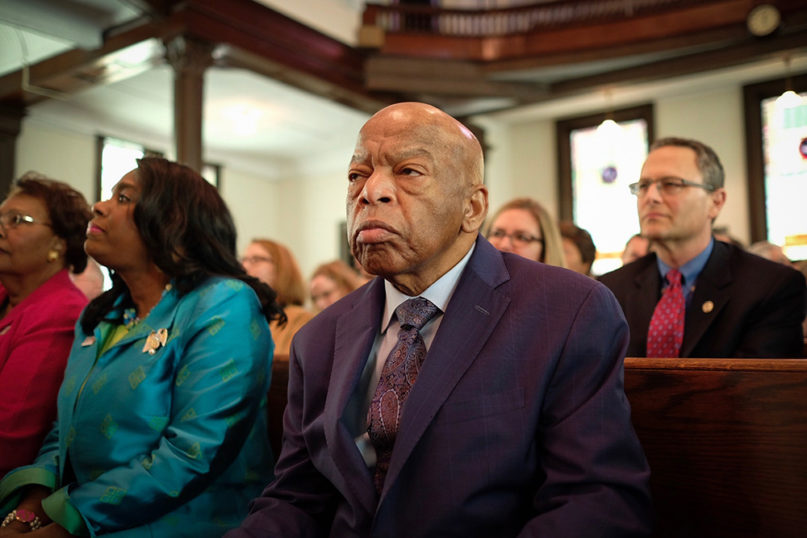
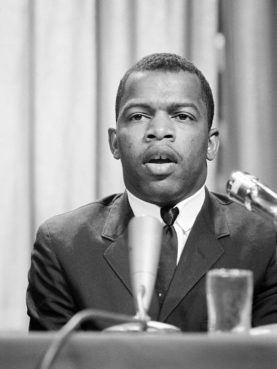
American civil rights activist John Lewis on April 16, 1964. Photo by Marion S. Trikosko/LOC/Creative Commons
Porter said those comments showed how Lewis and other young civil rights activists did not take their work lightly as they prepared for rides on segregated buses or sit-ins at segregated lunch counters.
“You’ll see in the movie that Rev. Jim Lawson, who was coaching and guiding the students, had them rehearse,” she said of Lewis and his fellow activists. “And I do think he decided that life under a segregated system was not the life that he wanted to live.”
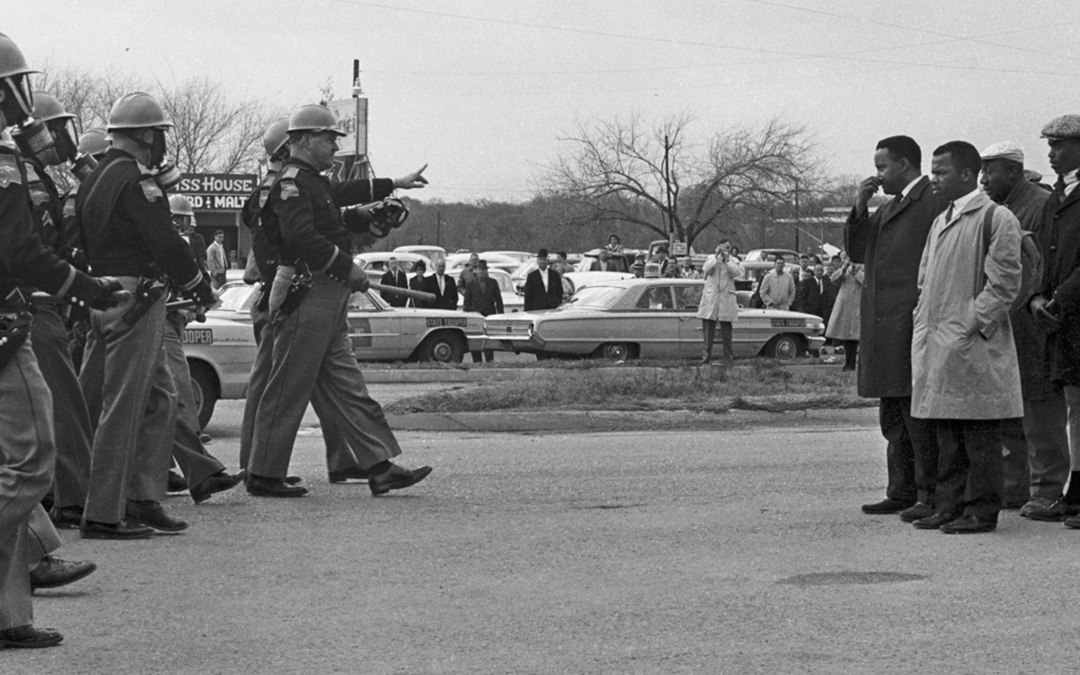
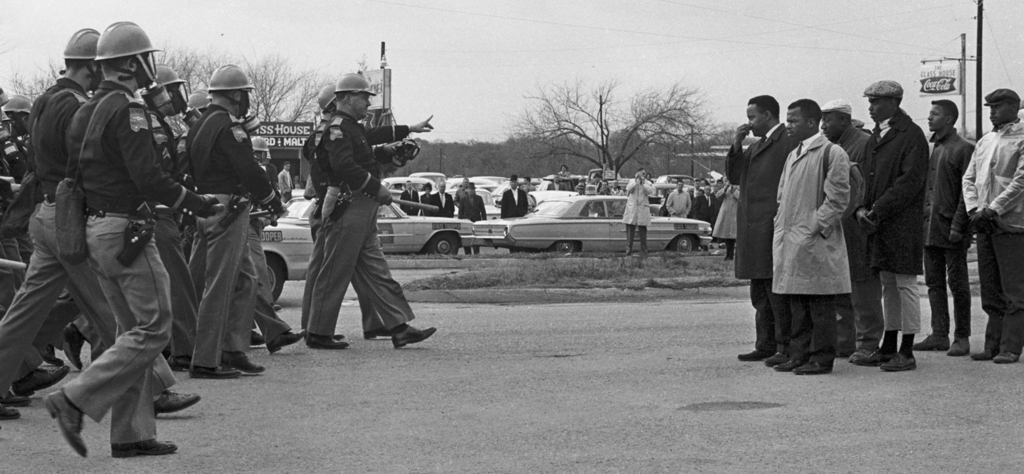
Archival footage — some of which the congressman says he’d never seen before — reviews landmark, as well as lesser-known, moments in Lewis’ history. He was the youngest speaker at the 1963 March on Washington for Jobs and Freedom. On his first attempt on “Bloody Sunday” to cross the Edmund Pettus Bridge in 1965, he was beaten by Alabama state troopers and thought he would die as he protested for voting rights.
The film’s crew followed him as he supported fellow Democrats in the recent election and traveled with a bipartisan group of politicians and faith leaders on the annual pilgrimage to Alabama with the Faith and Politics Institute.
“Congressman Lewis has conveyed to all of us over the course of his lifetime that (the) fundamental right to vote is a foundational right,” said Joan Mooney, CEO of the institute, on the recent conference call. “So more than the transactional act of voting, Congressman Lewis talks about its sacredness, and voter participation in a democracy is the active expression of the values of all human beings.”
On the anniversary of America’s independence, the abolitionist leader Frederick Douglass made a biblical Psalm – Psalm 137 – best known for its opening line, “By the Rivers of Babylon,” a centerpiece of his most famous speech, “What to the Slave Is the Fourth of July?”.
Douglass told the audience at Corinthian Hall in Rochester, New York, on July 5, 1852, that for a free black like himself, being expected to celebrate American independence was akin to the Judean captives being mockingly coerced to perform songs in praise of Jerusalem.
Not only did it inspire the famous abolitionist, this 2,500-year-old Hebrew psalm has long served as an uplifting historical analogy for a variety of oppressed and subjugated groups, including African Americans.
Origins of the psalm
Psalm 137, the subject of my book, “Song of Exile,” is unique in the Bible. The only one out of 150 psalms to be set in a particular time and place, it relates to the Babylonian Exile – the period between 587-586 B.C. in Israel’s history, when Jews were taken captive in Babylon and the Jerusalem temple was destroyed.
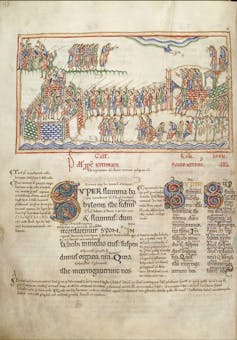
Psalm 137 in 12th-century Eadwine Psalter. By Anonymous (Fitzmuseum) [Public domain], via Wikimedia Commons
Its nine verses paint a scene of captives mourning “by the rivers of Babylon,” mocked by their captors. It expresses a vow to remember Jerusalem even in exile, and closes with fantasies of vengeance against the oppressors. The Babylonian exile served as a crucible, forcing the Israelites to rethink their relationship to Yahweh, reassess their standing as a chosen people and rewrite their history.
The exile story, which echoes through the Bible, is central to the major prophets, Jeremiah, Ezekiel, Daniel, Lamentations and Isaiah. And the aftermath of exile, when Cyrus the Great conquered Babylon and allowed the Judeans to return to Israel, is narrated in books of Ezra and Nehemiah. Bible scholar Rainer Albertzestimates that “about 70 percent of the Hebrew Bible tackles the questions of how the catastrophe of exile was possible and what Israel can learn from it.”
Inspiring music
Because the psalm deals with music – a famous verse asks, “How could we sing the Lord’s song in a foreign land?” – it has been like “poetic catnip” – intriguing to musicians and composers. Bach, Dvorak and Verdiall wrote musical settings for it. Verdi’s first popular opera, “Nabucco,” retells the story of the captivity.
The psalm has also inspired numerous political leaders and social movements, and immigrants as varied as Irish and Korean have identified with the story.
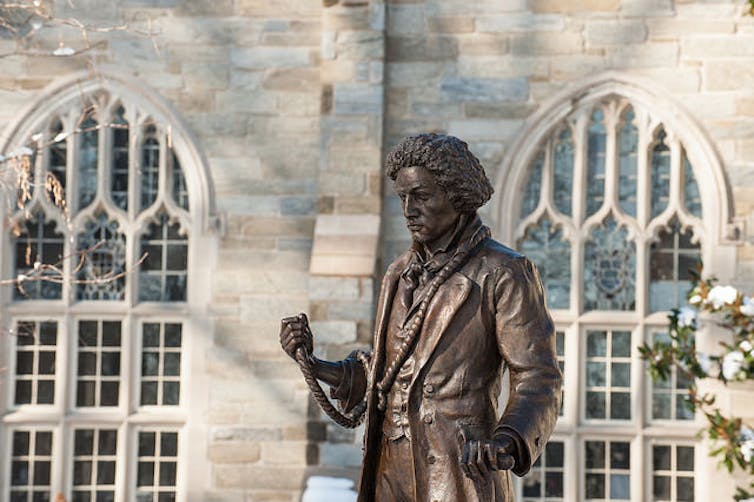
Statue of Frederick Douglass. West Chester University, CC BY-NC-ND
Frederick Douglass, of course, claimed the message of the psalm for enslaved African Americans.
In the wake of World War II, the dissident actor and singer Paul Robeson saw deep parallels between the plight of Jews and African Americans and loved to perform Dvorak’s setting of the psalm.
Some of the most celebrated African-American preachers, including C. L. Franklin of Detroit (Aretha Franklin’s father), also preached on the psalm. C.L. Franklin answered the psalm’s central question of whether to sing with a resounding yes. So did Jeremiah Wright, who was Barack Obama’s pastor when he lived in Chicago.
Valuing the act of remembrance
So, what is the central message of the psalm for today’s world?
Meanwhile, Bible scholars are working to interpret a trove of cuneiform tablets that give a more nuanced picture of what life was really like in Babylon for the Judean exiles. And rightly so. For in the midst of all the injustices that confront us every time we check news headlines, remembering is as crucial as forgiving.
That was Frederick Douglass’ point as well. He said of his enslaved compatriots,
“If I do forget, if I do not faithfully remember those bleeding children of sorrow this day, ‘may my right hand forget her cunning, and may my tongue cleave to the roof of my mouth!’”
Remembering their history is what many Jews worldwide will do when they observe Tisha B’av, the most somber of Jewish holidays. It commemorates the destruction of the two temples in Jerusalem, first by the Babylonians and centuries later by the Romans. Jews will reflect on these two historic calamities along with many others.
And that is the message of Psalm 137 as well. It captures succinctly the ways people come to grips with trauma: disbelief, turning inward and venting their rage. There is a reason it continues to resonate with people.
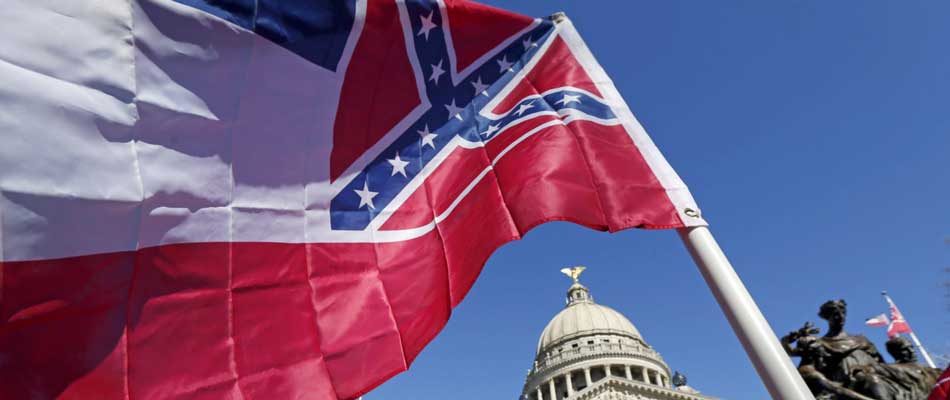
The powerful Mississippi Baptist Convention on Tuesday called for state leaders to change the Mississippi flag, with its Confederate battle emblem in one corner.
“It has become apparent that the discussion about changing the flag of Mississippi is not merely a political issue,” Baptist leaders said in a statement. “… The racial overtones of the flag’s appearance make this discussion a moral issue. Since the principal teachings of Scripture are opposed to racism, a stand against such is a matter of biblical morality.”
The convention includes about 2,100 churches in Mississippi, and Baptists are the largest denomination in the state, with over 500,000 members. Leaders said their stance on the flag doesn’t represent every member church, but they believe it represents a majority and asked for “Mississippi Baptists to make this a matter of prayer and to seek the Lord’s guidance in standing for love instead of oppression, unity instead of division, and the gospel of Christ instead of the power of this world.”
The convention’s statement said: “Given the moral and spiritual nature of this issue, Mississippi Baptist leaders offer prayers for our state officials to have wisdom, courage and compassion to move forward. We encourage our governor and state Legislature to take the necessary steps to adopt a new flag for the state of Mississippi that represents the dignity of every Mississippian and promotes unity rather than division.”
Under growing pressure to change the flag after decades of bitter debate, Mississippi legislative leaders say they are discussing the issue, but lack votes to change it as their regular session draws to a close.
Mississippi business, church and community leaders have called for a change, and the state faces intensified national scrutiny amid calls for removal of relics of slavery and the Confederacy.
On Monday, Mississippi State’s star running back Kylin Hill tweeted that he would not play football until the flag changed.
The Mississippi Economic Council, the state’s chamber of commerce, has long called for new state flag. In a statement last week, MEC said the current flag “Is offensive to many, not representative of all Mississippians and perpetuates negative stereotypes of our state.”
“MEC feels strongly that adoption of a new flag is a timely and high profile action that would improve Mississippi’s image, advance a new narrative about our state, and set the stage to enhance economic opportunities and improve quality of life in a fair and inclusive manner for every Mississippian.”
Poll: For first time ever, most Mississippians support changing state flag
The state’s chamber of commerce has released a new poll that shows a seismic shift among Mississippi voters in favor of changing the state flag to remove its Confederate battle emblem.
The poll released by the Mississippi Economic Council shows voters favorable to changing the flag 55% to 41%, a flip from a 2019 poll that showed 54% of voters favored keeping the current flag. MEC says polling data supports its call for the Legislature to act this week to “change the flag now.”
The poll was conducted last week by the Tarrance Group, a company with extensive political polling experience in Mississippi that has polled voters on the flag issue for years. It also showed that support for changing the flag jumped to 72% when people were asked about changing to a “state seal flag” that includes the motto “In God We Trust.” The survey showed the state seal version has support from a majority of Black and white Mississippians.
That the poll was backed by MEC will likely carry weight with lawmakers, who often look to the influential chamber of commerce for economic development counsel.
“In the nearly 20 years we have held the position of changing the state flag, we have never seen voters so much in favor of change,” said Scott Waller, president of MEC. “These recent polling numbers show what people believe, and that the time has come for us to have a new flag that serves as a unifying symbol for our entire state.”
Waller continued: “The Mississippi Legislature is poised to do the right thing this week, and we wholeheartedly support their efforts. As we seek to recover from crippling economic losses from COVID-19, we must show Mississippi is open for business to everyone – and no person should feel left out. Our state flag must be the flag for all of our people, and I cannot think of a better change for our state than to include the national motto ‘In God We Trust,’ which was also recently added to our state’s seal.”
MEC also launched an “It’s Time” campaign today to lend support with the efforts to change the flag, with a full-page ad placed in newspapers across the state. The campaign is supported by more than 100 business and industry leaders and includes full-page ads in newspapers across the state.
Separately, the Mississippi Association of Realtors on Wednesday issued a statement calling for lawmakers to change the state flag.
“The current Mississippi flag serves as an unnecessary hindrance to progress and growth,” the statement said, “and the Mississippi Realtors support swift legislative action to retire the current flag and replace it with a flag that reflects the enduring and remarkable qualities that make Mississippi a wonderful state to call home.”
Lawmakers in both the Senate and House have engaged in conversations about changing the state flag the past two weeks as protests about racial equality have continued across the state and nation. Tens of thousands of protesters in Mississippi have focused their demands around the state flag.
Late last week, as pressure to change the flag continued to grow, lawmakers discussed two options: adopting a second official state flag or letting Mississippi voters decide the fate of the current flag. In a 2001 referendum, 64% of voters voted to keep Mississippi’s current flag. Leaders who support changing the flag today fear a similar outcome would stall efforts to change the flag for years to come.
“I trust our leadership to pass this critical legislation at this important moment for our state,” said Mississippi Power President and CEO Anthony Wilson, who serves as Chairman of MEC. “They can take comfort in knowing that many Mississippians stand behind them. MEC not only represents the interests of Mississippi employers but also their employees. Our business members’ long-standing position to see the state flag changed not only reflects their desire to foster a more open business climate in our state but also reflects the overwhelming sentiment of thousands of their Mississippi employees as well.”
The Tarrance poll was conducted from June 16-18, with a sample size of 500 likely voters and a margin of error of 4.5%.
A poll conducted earlier this month by Mississippi-based Chism Strategies found 46% support for retaining the old flag compared to 44.9% who support changing it. In terms of polling, the outcome would essentially be considered a statistical tie. That poll indicated momentum for changing the flag was growing. In September 2017, when Chism polled on the same question, the result was 49% to 41% in favor of the old flag.
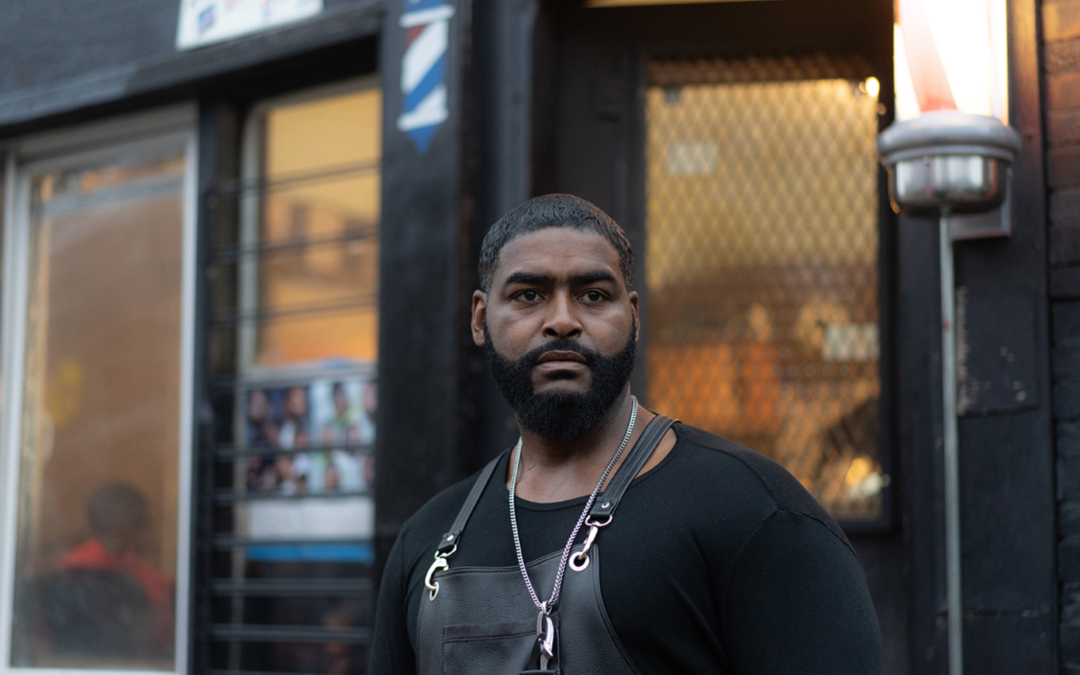
Antoine Dow has been cutting hair for 24 years. Dow, who owns a barbershop in West Baltimore, gives many of his clients their last haircut at local funeral homes, after losing them to gun violence. (NATE PALMER FOR KHN)
Quant’e Boulware combs the hair of Davonte Robinson before cutting his hair.(NATE PALMER FOR KHN)
BALTIMORE — The barber had with him his tools of trade: a black leather smock, a razor, clippers, scissors and tufts of black locks he had collected from the floor of his shop.
He would use them to try to cover the bullet hole that tore through his client’s head.
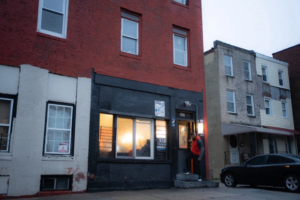
Antoine Dow owns a barbershop in the Druid Heights neighborhood of West Baltimore and has often been called upon to provide clients who have been gunned down with their final haircut. It’s a ritual that he says helps bring some dignity to the young black men whose lives are disproportionately affected by gun violence, many of whom Dow knew and serviced while they were still alive.
“When I walked into the room and saw his body, I didn’t recognize him because the trauma to the skull was so bad,” Dow said of Deontae Taylor, 20, a young man who was killed last fall. “The entry wound was a hole and the exit wound was sewed up in the back like a football,” he said.
After he finished, he called Taylor’s mother. “I did the best I could do.”
The decline in gun deaths in some major cities across the country has made headlines, but in places like Baltimore, the numbers remain high. There were 348 homicides in Baltimore last year, up more than 12% from the year before, and only five fewer than the record set in 1993. Firearms were involved in 312 of the 348 killings, according to an analysis of the latest numbers in the Baltimore Police Department Crime Stats Open Data database by Kaiser Health News.
On Saturdays, the busiest day at Antoine Dow’s barbershop in the Druid Heights neighborhood of West Baltimore, Dow can be found cutting hair from 6:30 a.m. to as late as 9 p.m., cutting the hair of roughly 72 clients in a single day.(NATE PALMER FOR KHN)
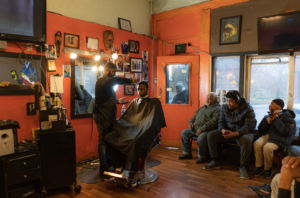
Dow has been cutting hair for 24 years. He started when he was 19, giving haircuts to friends in his father’s basement. In 2001, at age 27, he found a small shop with a reasonable rent that had only enough room for one barber. He had the shop remodeled and has been open ever since. On Saturdays, he can be found cutting hair for as many as 70-odd clients, his barber chair positioned at the shop entrance, where he can greet each person as they enter.
“I always wanted my own barbershop. I pretty much knew what I wanted to do, because I enjoyed it, and people would pay me for it,” he said.
The issue of gun violence has followed Dow for years. In 2000, at a barbershop on the corner of Lafayette and Division streets in West Baltimore where he worked, Dow was shot in the leg after he tried to intervene in an argument between a client and another man. His client, Howard Robinson, 35, was shot in the back and died later that day.
Typically, funeral homes dress the bodies of the deceased and cut their hair, if necessary. But sometimes a favored barber is brought in.
Dow was 26 when he performed his first haircut for a deceased client. In that case, it was an older man who had died of natural causes, circumstances that Dow said are much easier to manage than a shooting victim. He has continued to take on the difficult task of providing haircuts for clients who have been killed, for a straightforward reason, as he sees it — “because I cut their hair while they were alive.”
And as his business has expanded, Dow has hired other barbers who have also learned the trade of post-mortem hair cutting.
Quant’e Boulware, 24, has worked for Dow the past four years and has cut the hair of two customers no longer alive. One was a 2-year-old child who died in a car crash — his godson. “I rather me cut his hair than somebody else,” he said softly.
Antoine Dow cuts a customer’s hair as others wait in line at his barbershop in the Druid Heights neighborhood of West Baltimore.(NATE PALMER FOR KHN)
When clients leave Dow’s shop, he said he tells them to “please be safe,” but he knows that can be hard in a city like Baltimore. He estimates that as many as eight of his clients were murdered in the last year alone.
Dontae Breeden, one of Dow’s younger clients, said that he and his peers often feel invisible in a city where violence is so common and that some young men turn to gun violence out of desperation. “People just want to be known for something,” said Breeden, 22. “They just want recognition.”
Rashad Jones has been a client of Dow’s for three years. In March 2019, he was shot at a bus stop on East Northern Parkway after work. Not only has Jones lost two of his best friends to gun violence this year, but in 2013 his brother was shot and paralyzed from the waist down at age 25.
The barbershop is one of the few places in West Baltimore where Jones, 29, said he feels safe and Dow has tried to provide that comfort to his clients, both in life and in death.
He talks to his clients while cutting their hair, even those who have passed away, like the young man who had been shot in the head.
“I was talking to him while I was cutting his hair, like I do a lot of my deceased clients,” said Dow. “I just said, you know, ‘I hope you rest well.’”
KHN reporter Victoria Knight contributed to this article.