Every single day, black women are recreating the narrative of what it means to be a black woman as they fight against the preconceived notions, unwarranted judgment, and degrading labels society has given them.
Despite the odds stacked against them, we continue to read the stories about black women soaring in entertainment, media, education, and literature.
“So … well-read black girl. What does that even mean?” I wondered as I fixed my eyes on the cover of Glory Edim’s Well-Read Black Girl: Finding Our Stories, Discovering Ourselves, an anthology of powerful, uplifting, and inspiring essays by black women writers.
Reading the title, I wondered: “Am I a well-read black girl too?”
Turning one page after another, the answer was simple. For Edim, it started as an inside joke about being someone who “read a lot always and had a book with me in bed.”
“That’s me too,” I thought to myself.
Edim wore a T-shirt with the words plastered on it, sparking conversations here and there from others about her favorite books and authors. This T-shirt birthed a nationwide book club, a literary festival in Brooklyn and a sisterhood among women of color across the world.
Edim created a space where, she writes, “Black women’s voice could be centered” and “a call to action for Black women to freely define their own narratives on their own terms.”
Well-Read Black Girl: Finding Our Stories, Discovering Ourselves provides black women and girls with a variety of selections and pays homage to great writers who paved the way such as Toni Morrison, who passed away recently, Zora Neale Hurston, Alice Walker and Maya Angelou.
The crux of the book dives into an important discussion of representation in the literary world.
It featured these 21 esteemed Black women authors and writers:
Each of them recalled their first time seeing themselves reflected in literature. Sounds simple, right?
It wasn’t. It was complex, intricate, and intimate. These stories weren’t just about finding a character to identify with.
It was more.
It was about the journey of finding themselves and escaping into a different reality than their own. It was learning how literature shaped, questioned, and challenged their lives, their identities, their beliefs, their family structure, their struggles, triumphs, and ultimately, finding their voices.
“Reading highlights the intersection of narrative and self-image to create compelling explorations of identity. Reading allows us to witness ourselves,” Edim writes. “Being a reader is an incredible gift, providing me with the lens to interpret the world.”
And with that, Edim forced me to ask myself: “When did I first see a reflection of me in books?”
This article first appeared on Mississippi Today and is republished here under a Creative Commons license.
Aallyah Wright is a native of Clarksdale, and a Mississippi Delta reporter covering education and local government. She is also a weekly news co-host on WROX Radio (97.5 FM) and collaborator with StoryWorks/Reveal Labs from the Center for Investigative Reporting. Aallyah has a bachelor’s in journalism with minors in communications and theater from Delta State University. She is a 2018 Educating Children in Mississippi Fellow at the Hechinger Report, and co-founder of the Mississippi Delta Public Newsroom.
When I see celebrities interviewed, I often marvel at how they seem to have it so together. Their confidence radiates when they are “on.” It’s almost as if they are on another plane than us regular folk. But after watching a few episodes of the new docuseries “Behind Her Faith,” I found myself forgetting that the women sharing their intimate stories of disappointment, triumph, and faith with honesty and raw emotion are famous people.
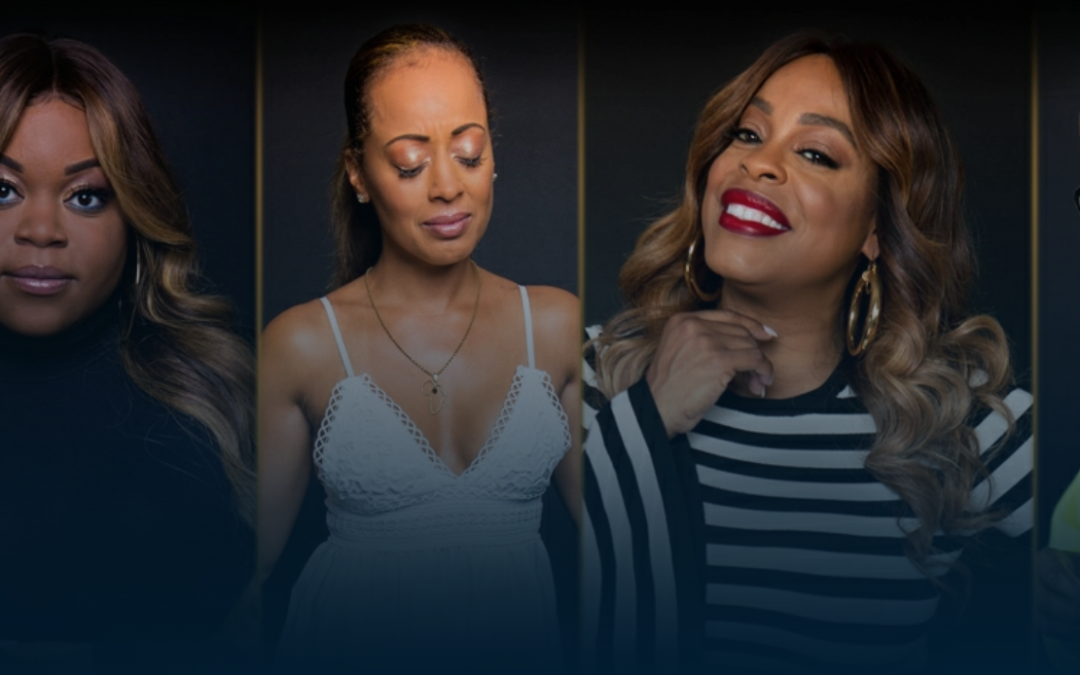
“Behind Her Faith,” created by writer/director Paula Bryant-Ellis, features Essence Atkins(“Marlon,” “Ambitions”), Aisha Hinds (“Underground,” The Hate U Give), Niecy Nash(“Claws,” “When They See Us”) and Angelica Nwandu, founder of The Shade Room. The docuseries launched its first season with each woman in one of four installments airing on the Urban Movie Channel, a subscription streaming service dedicated to Black film and television from AMC Networks’ privately-owned subsidiary, RLJ Entertainment.
“You see the glamour, you see the red carpet, you see the television shows, and then you say, even if they have problems, oh, they’re rich. Oh, they’re successful. They can get through. No, they’re just like us. They feel pain, just like we do,” said Bryant-Ellis.
The Urban Movie Channel, which launched in 2018, is in growth mode as it works to expand its viewership. As support grows for Bryant-Ellis’ vision, she’ll expand her circle of stories in future seasons to include accomplished women of faith in entertainment, sports, music, business, politics, and ministry. Behind Her Faith is the first major foray into filmmaking for Bryant-Ellis, as she has held multiple leadership roles in banking and finance. She’s a graduate of the Massachusetts Institute of Technology (MIT) Sloan School of Management, has an MBA from the University of Phoenix, and also a BA in Accounting from Concordia University. It was her son, Jay Ellis, who encouraged her to make the move. He’s the executive producer of the show and you may recognize his name from the actor’s lead roles on HBO’s “Insecure” (Lawrence) and the horror film Escape Room (Jason).
“He [Jay] was the one that said, ‘Mom, I think you should get into entertainment.’ After I left corporate America, he said, ‘I think you should start checking into producing so that we can do projects together.’ And so that’s pretty much what I did. And then, from there, I went back to school and took classes, and the creativity started to kind of bubble up, and I had a chance to create this show,” said Bryant-Ellis, who studied filmmaking and producing at the New York Film Academy in New York and Los Angeles.
It was her love and passion for Christ that inspired Bryant-Ellis to do the series. She had been praying for guidance on what to do next and feeling a strong desire to create positive content that inspires, especially since she believes that women of color are not typically represented well on television.
“God had my heart at the time. He put this show in my spirit to do. I wanted to use women that we knew their faces, but we didn’t know their backstory. We get sound bites a lot of times through interviews, but there wasn’t a form where they could just sit and tell you about what their journey looked like and the challenges that they faced and how they have endured and then the importance of a relationship with God in their life. All the women were women that I prayed about. God made it possible for each one of them to bring their stories,” said Bryant-Ellis.
She has a strong relationship with God now, but Bryant-Ellis says it took a while for her to mature in her faith. She grew up in a Baptist church and accepted God into her life as a teen, desperate for a lifeline from the pain she experienced when her parents divorced.
“I was just in this broken place. My parents had divorced, and I was trying to figure this thing out. I was 13 at the time. By the time I’m 16, I’m still sitting in all this pain, and I don’t know what to do with it. Back then, they called it, ‘join the church.’ You had to join the church, well technically, that meant you were giving your life to Christ.'” shared Bryant-Ellis.
And she did. But the experience left her heartbroken because she thought her life would immediately be better, and it wasn’t. For her, life got worse before it got better.
“In that moment that we accept Christ, our life does change. But nobody tells you about walking out that journey and the importance of a relationship. It was a long time before I picked up the Bible. I was very angry, very broken. It was a long time before I prayed. And in my twenties, I got on my knees, and I told God, I said, ‘You know what? If I’m going to be saved, you’re going to have to do better, because I can’t do church. I want a relationship,'” explained Bryant-Ellis, who said from that moment on, she was on an “amazing” journey to find that intimacy with God. “If I call you father, I want to have the same conversations with you that I would with my father. I want to laugh with you. I want to cry with you. I want to come to you for advice,” she continued.
Over the years, she has gone back to attending church off and on and credits one former pastor for giving her a love of studying the Bible.
“I go to church to get my Word, and then I’m out of there. I go to church to get fed. But then I know the responsibility of growing in the Word — that onus is on me. I have to be active and learning the Word and sitting with God, spending that quiet time with him in my praise, in my worship. That’s my responsibility,” said Bryant-Ellis.
And that intimacy is at the core of her message to viewers. When you listen to each woman in the episodes, openly claiming her faith and stories, it’s clear that they all have an authentic relationship with God, and it’s a genuine part of how they live their lives.
“I feel so honored that God trusted me with these stories and honored that these women trusted me with their voice. I feel like a shepherd of their stories right now,” said Bryant-Ellis.
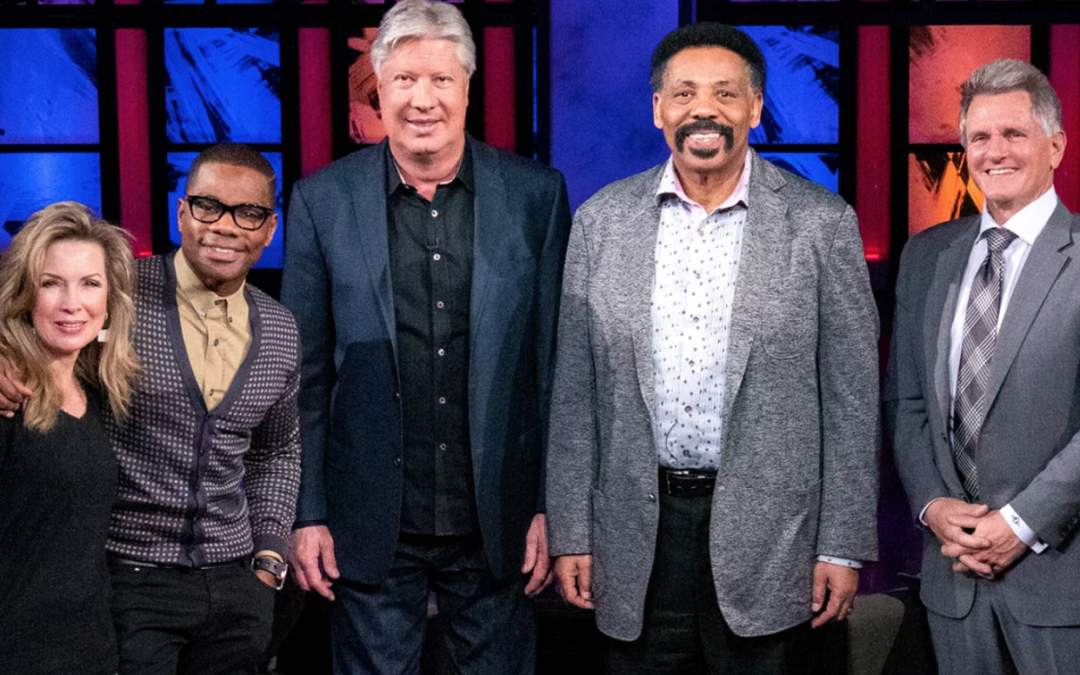
Laurie Crouch, from left, Kirk Franklin, Pastor Robert Morris, Pastor Tony Evans, and Trinity Broadcasting Network President Matt Crouch meet in early March 2020. Photo courtesy of Trinity Broadcasting Network
Gospel singer Kirk Franklin, in a discussion to be broadcast this week on Trinity Broadcasting Network, called on white Christian leaders to move beyond “kumbaya moments” and to speak from the pulpit when black people are the subjects of “social injustice happening in the streets.”
Franklin made his remarks on TBN’s “Praise” show in a conversation with the network’s president, Matt Crouch, and Dallas pastors Tony Evans and Robert Morris. Their talk is scheduled to air at 8 p.m./7 p.m. Central on Thursday (March 12) on the Christian network.
The conversation stemmed from Franklin’s announcement in the fall that he would boycott the Gospel Music Association’s Dove Awards after comments he made about race and police shootings during the GMA’s Oct. 15 awards show were edited from the show’s broadcast on TBN. Franklin, who also said that he would boycott TBN and the GMA, said that similar editing occurred when the 2016 show aired.
“This is not a conversation of me attempting to make white people feel bad for being white,” Franklin said at the start of the “Praise” show. “It is to give a bigger perspective on the heartbreaks and the hurts, that black and brown people in America are looking for the church to be a safe haven but at times it isn’t always answering to that call.”
Franklin recounted how earlier in his career a verse he wrote for a song he co-wrote with TobyMac, a white member of the Christian rap trio dcTalk, and Mandisa, a black Christian singer, was left out of the recording that played on Christian radio.
“I believe that black and brown people in this country continuously feel like they’re edited out,” Franklin said.
Minutes later, Crouch beckoned Franklin into a hug.
“Whatever happened, I want to personally apologize so that we get past this, and this program, and others like it in the future, make progress,” Crouch said. “I want to profoundly thank you for helping us understand an issue that maybe some people don’t, including us, including Robert and I.”
Crouch, who is white, also thanked Franklin for “putting this together.”
But Franklin chose not to let the moment where the two men hugged and expressed love for one another pass without clarification. He noted that “this embrace as brothers” came after off-camera discussion.
“I do know that for a lot of black and brown people, just even the optics of what just happened can be very problematic, because throughout history a lot of times white people have sometimes come across that the issues are fixed with the kumbaya moment,” Franklin said. “The kumbaya moment is really, for this generation, is antiquated.”
Evans, whom Franklin has said he consulted before making his boycott decision, described “decade after decade” of personal experiences with racism, including applying to a seminary at a time when some theological schools would only admit blacks on a “probation” status. Evans said he later was excluded from a Christian radio network because, he was told, “it would offend too many of my white listeners.”
He cited an “absence of equity,” in which the emphasis in some churches is that the “life of the unborn matters.
“But when they hear about other groups calling for other lives mattering there is a negative response,” Evans continued. “And while it is maybe legitimate to have a negative response about methodology, there should not be a negative response about mattering.”
Morris, founding lead senior pastor of Gateway Church, said he’d known Franklin for years but had not heard the story of his verse being omitted.
“When you hear this as a white Christian, your heart should break; it absolutely should break,” said Morris of Franklin’s story and other instances of racial injustice. “And then you should say to your brothers, ‘How can I be a part of the solution?’”
Morris, who, like Evans, has his own program on TBN, later said that if white clergy aren’t already discussing race in their pulpit, they should begin, as he has in recent years.
“I started teaching our people about a lack of understanding, and you don’t know that you’re prejudiced but you probably are,” he said.
Franklin noted that evangelist Billy Graham at one time criticized the Rev. Martin Luther King Jr. but later worked to integrate his crusades.
“We need to be able to see where the mistakes are, and to be willing to acknowledge them and to be agents of change,’’ Franklin said, “because if you’re not willing to get your feet and hands dirty on this issue, especially this issue, it won’t be anything but kumbaya.”
Back in the 1990s, before cellphones and email and the internet were a thing, when George H.W. Bush was in his final year as president, I headed to college. I had moved from East Tennessee to Philadelphia to go to Eastern University, a little Christian college known for holding together faith and social justice.
As I settled in and began studies, I kept hearing about a guy named Bryan Stevenson, an Eastern alumnus, class of 1981, who was doing some pretty amazing things with his life.
Bryan was a bit of a legend at the university, and his story had already been told and retold to me by our mutual friend and professor, Tony Campolo, a well-known preacher who has a reputation for “remembering big.”
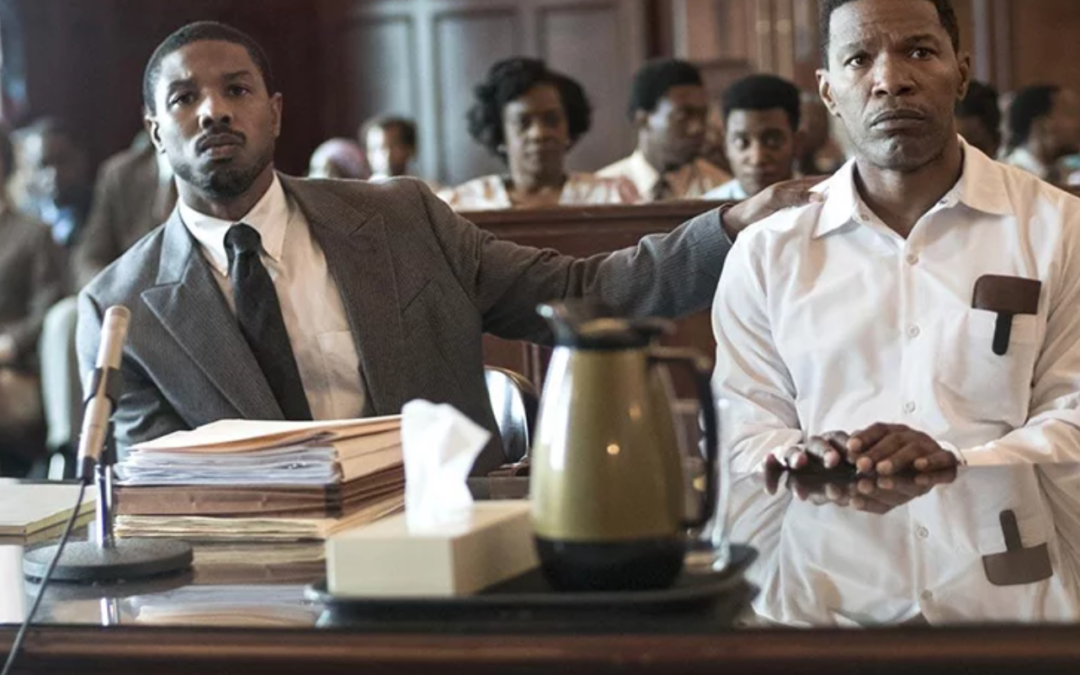
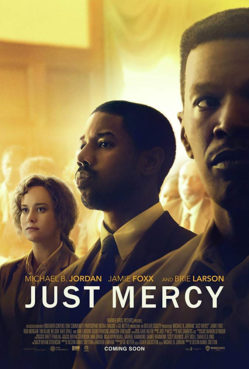
But it turns out Bryan’s life is as big as the story Tony remembered. Bryan turned it into a book, and now a film, titled “Just Mercy,” which opened on Christmas and stars Michael B. Jordan, Jamie Foxx and Brie Larson.
Bryan went from our alma mater in Philly to attend Harvard Law School, where he graduated with honors. Immensely gifted and with a Harvard degree, he could have gotten a job with pretty much any firm he wanted, and name his salary.
Instead, Bryan headed to Alabama, where the residue of slavery is so clearly visible in a criminal justice system that enshrines racism. He moved into a one-room apartment in Montgomery “with nothing but a soccer ball” (according to our friend with the tendency to remember big) and started defending people on death row.
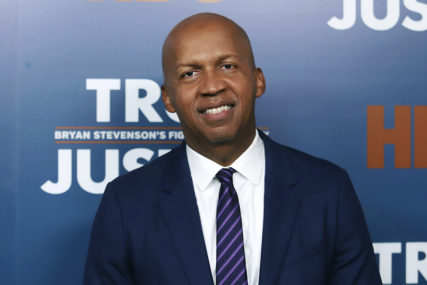
Bryan Stevenson, founder and executive director of the Equal Justice Initiative, attends a special screening of “True Justice: Bryan Stevenson’s Fight for Equality,” at the SVA Theatre on June 24, 2019, in New York. (Photo by Greg Allen/Invision/AP)
A century ago, as Bryan knew well, Alabama was one of the states with the most lynchings, and to this day it’s one of the states with the most executions. It is no coincidence that the states that held on to slavery the longest continue to hold on to the death penalty, in a direct correlation between racism of the past and racism of the present. That’s where Bryan felt led, even called.
Particularly urgent for Bryan were the cases of those who were wrongfully convicted, often because of the color of their skin.
He was not only looking out for the prisoners, but for the system that they had been caught up in. One of the first quotes I ever heard from Bryan was this one: “We have a justice system that treats you better if you are rich and guilty than if you are poor and innocent.” He sought to ensure that “equal justice under the law” was not just an aspirational slogan inscribed on the Supreme Court, but became a reality.
In 1989 he founded the Equal Justice Initiative in Montgomery, which has now helped save the lives of over 125 men on death row and in 2018 opened the Legacy Museum and National Memorial for Peace and Justice, known as the National Lynching Memorial.
His TED Talk got the longest standing ovation in the history of TED Talks and has been viewed over 6 million times. South African Archbishop Desmond Tutu called Bryan “America’s Nelson Mandela.” Time magazine recognized him as one of 100 most influential people. There were even whispers that someday Bryan might be a justice on the Supreme Court.
Stunned by the simplicity and humility of his life, one reporter said to Bryan, “Why would you be this kind of lawyer?” Bryan’s winsome response: “Why would I not be this kind of lawyer?”
The more I learned about Bryan, the more his decisions made sense. He had grown up in segregated public schools and steeped in the historic black church, where liberation and justice flow like baptismal waters. (At Eastern, he had directed the gospel choir.) Early in his career, as he arrived to defend a young white man at trial, he was scolded by the judge who said only “counsel” were allowed in the courtroom.
For many, Bryan Stevenson is a superhero akin to the Avengers fittingly played onscreen by the actor who played Erik Killmonger in “Black Panther.” Jordan has said he was intimidated when he first met Bryan.
Eventually, I got to meet Bryan, and for the past 10 years it has been an honor to call him a friend. He inspired me to write “Executing Grace,” my book on the death penalty, and helped me to craft it. Bryan has been a mentor not only in justice, but also in hope. Indeed, nearly every time Bryan speaks, he talks about “protecting our hope,” a precious, timely message. In his words, “Hopelessness is the enemy of justice.”
“Protecting our hope” means never losing hope that love is more powerful than hatred, life more powerful than death, mercy more powerful than condemnation. As Bryan says, “We are all more than the worst thing we’ve ever done.”
A “Just Mercy” movie poster. Image courtesy of Warner Bros. Pictures
“Just Mercy” is not a film about a man. It is about a movement to heal the wounds of racism and hatred. More than knowing his name, Bryan wants people to know the names of the 4,000 African Americans lynched as victims of racial terror and too often forgotten — people like Mary Turner, who was eight months pregnant when she was hung upside down by a white mob, set on fire and even cut open so her baby could be stomped to death.
He wants people to know the name of George Junius Stinney, who died in the electric chair at the age of 14, convicted by an all-white jury that deliberated for 10 minutes after a trial that lasted less than two hours with no witnesses called and no defense presented, no physical evidence — and whose sentence was vacated 70 years after his execution.
Bryan wants people to know the name of his friend Anthony Ray Hinton, who survived over 30 years on death row for a crime he didn’t commit, one of over 160 wrongfully convicted survivors of death row. Bryan wants us to know their names, not his.
He wants America to know the names of the casualties of racial terror throughout American history, and those who are next in line to be those casualties, as 1 in every 3 black boys born today can expect to go to prison.
During the filming of “Just Mercy,” I was invited on set to watch a scene being shot in an abandoned prison in Georgia. At one point a bitter white corrections officer throws a prisoner against a wall. Undaunted, the man smiles with a defiant hope, eyes set on heaven, and begins singing an old hymn: “I’m pressing on the upward way, new heights I’m gaining every day, still praying as I’m onward bound, Lord, plant my feet on higher ground.”
Later, I got to meet a bunch of the actors, including the man who played the correctional officer. He smiled when I mentioned how good he was at being bad. As we ate, I saw an image of the world Bryan is building: prison guards and death row inmates talking and laughing over lunch. It was a world in which each of us is more than the worst things we’ve done. Where if we have the courage, we can see past the costumes we wear and get to know each other as children of God, and we can recognize and celebrate the dignity of every person.
Please watch “Just Mercy” with this in mind. Don’t just munch your popcorn and go home talking about what a hero Bryan is. Doing so dismisses what Bryan is really about because it lets you off the hook. Walk away from “Just Mercy” dreaming and scheming about the hero you want to be.